16S rRNA Gene Sequencing: A Comprehensive Guide for Microbiome Analysis in Biomedical Research
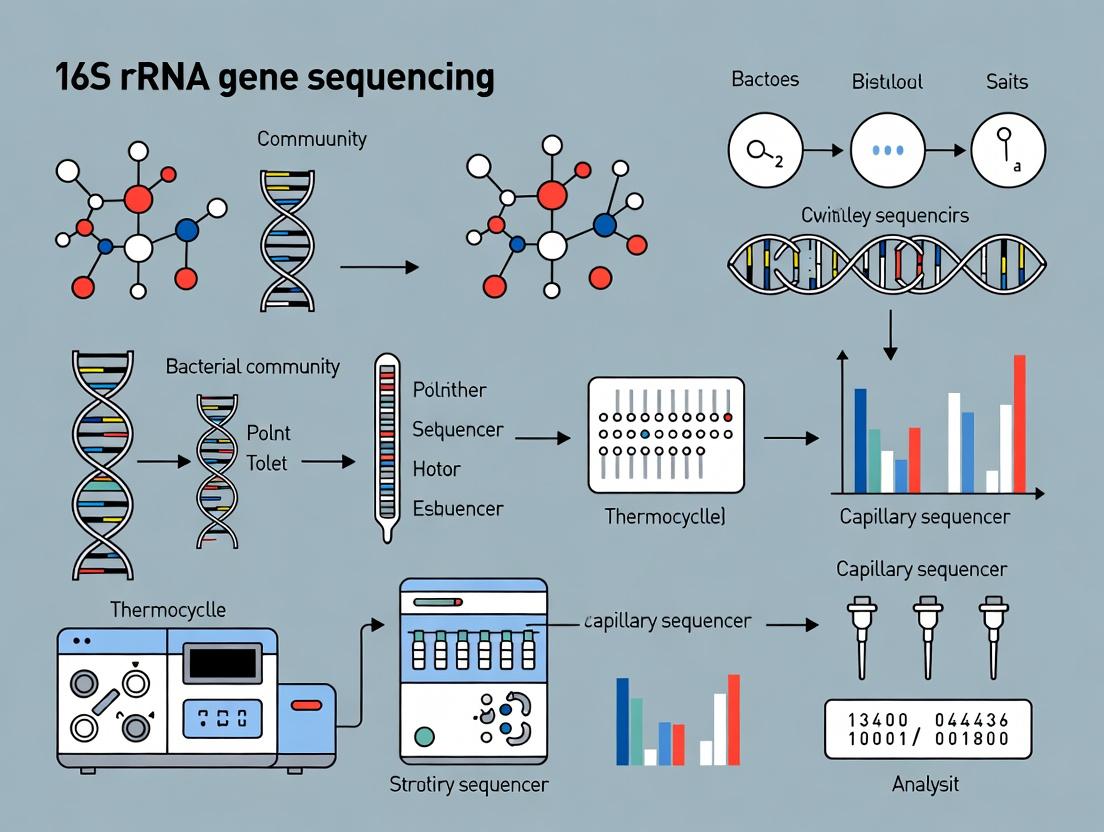
This comprehensive guide provides researchers, scientists, and drug development professionals with an in-depth exploration of 16S rRNA gene sequencing for bacterial community analysis.
16S rRNA Gene Sequencing: A Comprehensive Guide for Microbiome Analysis in Biomedical Research
Abstract
This comprehensive guide provides researchers, scientists, and drug development professionals with an in-depth exploration of 16S rRNA gene sequencing for bacterial community analysis. It covers foundational principles, from the historical significance of the 16S gene to the core concepts of alpha and beta diversity. We detail the complete methodological pipeline, including sample collection, primer selection, bioinformatics workflows (QIIME 2, mothur, DADA2), and statistical interpretation. Critical troubleshooting sections address common pitfalls in contamination, PCR bias, and data sparsity. Finally, the guide validates the technique by comparing it with shotgun metagenomics and metabolic functional inference tools (PICRUSt2, Tax4Fun2), establishing its enduring value and appropriate applications in clinical and pharmaceutical research contexts.
The 16S rRNA Gene: Why It's the Gold Standard for Microbial Census
Within the context of 16S rRNA gene sequencing for bacterial community analysis, the 16S rRNA gene serves as a universal marker due to its evolutionary history. It contains highly conserved regions for primer binding and variable regions for species differentiation, providing a phylogenetic framework for identifying bacteria and profiling complex microbiomes. This application note details protocols and reagent solutions essential for robust analysis.
Table 1: Characteristics of the 16S rRNA Gene as an Identification Marker
| Property | Description/Value | Significance for Identification |
|---|---|---|
| Gene Size | ~1,540 base pairs | Large enough for informative variation. |
| Conserved Regions | 9 (V1-V9) | Enable universal PCR primer design across bacteria. |
| Variable Regions | 9 (V1-V9) | Provide sequence diversity for taxonomic differentiation. |
| Sequence Database Size (e.g., SILVA, RDP) | >10 million curated sequences | Enables robust comparative taxonomy. |
| Typical Identification Resolution | Genus-level (often), Species-level (with sufficient variable region data) | Community profiling and pathogen detection. |
Table 2: Comparative Analysis of Commonly Targeted 16S Variable Regions
| Variable Region | Amplicon Length | Taxonomic Resolution | PCR Amplification Bias Notes |
|---|---|---|---|
| V1-V3 | ~500 bp | Good for Gram-positives, lower for some Gram-negatives | Can overrepresent Firmicutes. |
| V3-V4 | ~460 bp | Balanced; widely used for microbiome studies | Robust amplification across taxa. |
| V4 | ~250 bp | High for most phyla; recommended for Illumina MiSeq | Minimal amplification bias. |
| V4-V5 | ~390 bp | Good for environmental and complex samples | Good balance of length and resolution. |
Experimental Protocols
Protocol 1: Sample Preparation and DNA Extraction
Objective: To obtain high-quality, inhibitor-free genomic DNA from a bacterial culture or complex sample (e.g., stool, soil).
- Cell Lysis: Use a bead-beating step with 0.1mm glass beads for 2 minutes at maximum speed to mechanically disrupt cells, especially for Gram-positive bacteria.
- Enzymatic Digestion: Incubate lysate with 20 µL of lysozyme (10 mg/mL) and 20 µL of proteinase K (20 mg/mL) at 56°C for 30 minutes.
- DNA Purification: Use a silica-membrane spin column kit. Bind DNA, wash twice with ethanol-based buffers, and elute in 50-100 µL of nuclease-free TE buffer or water.
- Quality Control: Quantify DNA using a fluorometric method (e.g., Qubit). Verify purity via A260/A280 ratio (~1.8) and check for degradation on a 1% agarose gel.
Protocol 2: PCR Amplification of the 16S rRNA Gene Region
Objective: To amplify a targeted variable region (e.g., V3-V4) with barcoded primers for multiplex sequencing.
- Primer Set: Use universal primers (e.g., 341F:
CCTACGGGNGGCWGCAGand 806R:GGACTACHVGGGTWTCTAATfor V3-V4). - Reaction Mix (25 µL):
- 12.5 µL 2x High-Fidelity Master Mix
- 1.0 µL Forward Primer (10 µM, with sequencing adapter)
- 1.0 µL Reverse Primer (10 µM, with adapter+barcode)
- 1.0 µL Template DNA (1-10 ng)
- 9.5 µL Nuclease-Free Water
- Thermocycling Conditions:
- 94°C for 3 min (Initial Denaturation)
- 25-30 cycles of: 94°C for 45 sec, 55°C for 60 sec, 72°C for 90 sec
- 72°C for 10 min (Final Extension)
- Clean-up: Purify amplicons using magnetic beads (0.8x ratio) to remove primers and dimer artifacts.
Protocol 3: Illumina Library Prep and Sequencing
Objective: To prepare and sequence the 16S amplicon library.
- Index PCR: Add unique dual indices and full sequencing adapters via a limited-cycle (8 cycles) PCR.
- Library Purification: Clean indexed library with magnetic beads (0.9x ratio).
- Pooling & Quantification: Quantify each library by qPCR, then pool equimolarly. Measure pool concentration accurately.
- Sequencing: Denature and dilute the pool to 4-6 pM. Load on an Illumina MiSeq system using a 2x250 bp or 2x300 bp v2/v3 reagent kit to achieve sufficient overlap for paired-end assembly.
Visualization of Workflows
Title: 16S rRNA Gene Sequencing & Analysis Workflow
Title: 16S rRNA Gene Structure & Primer Binding
The Scientist's Toolkit
Table 3: Essential Research Reagent Solutions for 16S rRNA Gene Sequencing
| Item | Function & Rationale | Example Product/Kit |
|---|---|---|
| Mechanical Lysis Beads | Ensures uniform disruption of tough bacterial cell walls (Gram-positives, spores) for unbiased DNA extraction. | 0.1mm zirconia/silica beads |
| Inhibitor Removal Buffers | Critical for complex samples (stool, soil) to remove humic acids, bilirubin, etc., that inhibit PCR. | PowerSoil Pro Kit reagents |
| High-Fidelity DNA Polymerase | Reduces PCR errors in amplicons, crucial for accurate sequence data and variant calling. | Q5 Hot-Start Polymerase |
| Universal 16S Primers | Target conserved flanking regions to amplify the variable region from a broad bacterial range. | 27F/1492R (full gene); 341F/806R (V3-V4) |
| Magnetic Bead Clean-up Kit | For size-selective purification of PCR products, removing primers, dimers, and non-specific fragments. | AMPure XP Beads |
| Dual-Indexed Primer Kit | Allows multiplexing of hundreds of samples by tagging each with unique index combinations. | Nextera XT Index Kit |
| Library Quantification Kit | Accurate qPCR-based quantification is essential for balanced library pooling prior to sequencing. | KAPA Library Quantification Kit |
| PhiX Control v3 | Spiked into runs for Illumina sequencing quality monitoring, especially for low-diversity libraries. | Illumina PhiX Control |
This document provides detailed application notes and protocols for 16S rRNA gene analysis, framed within a broader thesis on microbial ecology and therapeutic development. The 16S rRNA gene is the cornerstone of bacterial phylogeny and community profiling. Its structure—comprising nine hypervariable regions (V1-V9) interspersed with conserved sequences—enables the design of universal primers for broad taxonomic surveys while providing the sequence divergence necessary for species-level discrimination. Accurate characterization of these regions is critical for research in dysbiosis, antibiotic development, and biomarker discovery.
The discriminatory power and length of the nine hypervariable regions vary significantly, influencing primer choice and sequencing platform selection.
Table 1: Characteristics of the 16S rRNA Gene Hypervariable Regions (V1-V9)
| Region | Approximate Position (E. coli 16S rDNA) | Average Length (bp) | Relative Discriminatory Power | Common Primer Targets (Examples) |
|---|---|---|---|---|
| V1 | 69–99 | ~70 | High | 27F |
| V2 | 137–242 | ~105 | High | 338F, 338R |
| V3 | 433–497 | ~65 | High | 341F, 518R |
| V4 | 576–682 | ~105 | Medium-High | 515F, 806R |
| V5 | 822–879 | ~60 | Medium | 806F, 926R |
| V6 | 986–1043 | ~60 | Medium-Low | 1061F, 1175R |
| V7 | 1117–1173 | ~60 | Low | 1099F, 1193R |
| V8 | 1243–1294 | ~50 | Low | 1243F, 1294R |
| V9 | 1435–1465 | ~70 | Low | 1387F, 1510R |
Note: Position based on *E. coli numbering (accession J01859). Discriminatory power is a generalized consensus; optimal region(s) depend on the specific bacterial community under study.*
Experimental Protocols
Protocol 3.1: 16S rRNA Gene Amplicon Library Preparation for Illumina Sequencing
Objective: To generate sequencing libraries from genomic DNA for profiling bacterial communities via the V3-V4 hypervariable regions.
Materials: See The Scientist's Toolkit (Section 5). Procedure:
- Primer Design & Synthesis: Select region-specific primers (e.g., 341F and 805R for V3-V4) with overhang adapters attached (Illumina forward/reverse sequencing adapters).
- First-Stage PCR (Amplification):
- Prepare 25 µL reactions: 12.5 µL 2x PCR Master Mix, 1 µL each forward/reverse primer (10 µM), 1-10 ng genomic DNA template, nuclease-free water to volume.
- Thermocycling: Initial denaturation: 95°C for 3 min; 25 cycles of [95°C for 30 sec, 55°C for 30 sec, 72°C for 30 sec]; Final extension: 72°C for 5 min.
- PCR Clean-up: Purify amplicons using a magnetic bead-based clean-up system (e.g., AMPure XP beads). Follow manufacturer's protocol for a 0.8x beads-to-sample ratio.
- Index PCR (Barcoding):
- Attach dual indices and Illumina sequencing adapters using a limited-cycle PCR (e.g., Nextera XT Index Kit).
- Thermocycling: Initial denaturation: 95°C for 3 min; 8 cycles of [95°C for 30 sec, 55°C for 30 sec, 72°C for 30 sec]; Final extension: 72°C for 5 min.
- Library Clean-up & Normalization: Perform a second magnetic bead clean-up (0.8x ratio). Quantify libraries via fluorometry (e.g., Qubit). Pool libraries at equimolar concentrations (e.g., 4 nM each).
- Quality Control: Assess library fragment size using a bioanalyzer or tape station (expected peak ~550-600 bp for V3-V4).
- Sequencing: Denature and dilute the pooled library per Illumina guidelines for loading on a MiSeq, iSeq, or NovaSeq system with a 2x250 or 2x300 bp paired-end kit.
Protocol 3.2: In Silico Evaluation of Primer Pair Specificity and Coverage
Objective: To computationally assess the theoretical performance of 16S primer pairs.
Materials: QIIME 2, SILVA or Greengenes reference database, in silico PCR tool (e.g., search_pcr in QIIME2).
Procedure:
- Environment Setup: Activate a QIIME 2 environment and import a representative 16S reference sequence database (e.g., SILVA 138 SSU Ref NR99) as a QIIME 2 artifact.
- Define Primer Sequences: Create a text file with the forward and reverse primer sequences in FASTA format.
- Run In Silico PCR: Use the
search_pcrcommand:qiime feature-classifier search-pcr --i-query-sequences reference_db.qza --p-forward-primer "CCTACGGGNGGCWGCAG" --p-reverse-primer "GACTACHVGGGTATCTAATCC" --o-search-results pcr_matches.qza - Analyze Output: Visualize the matched sequences to determine the percentage of target taxa amplified from the database. Generate a taxonomy bar plot to identify any primer biases (e.g., against certain phyla).
Visualizations
Diagram 1: 16S rRNA Gene Structure & Primer Design
Diagram 2: 16S Amplicon Sequencing Workflow
The Scientist's Toolkit: Research Reagent Solutions
Table 2: Essential Reagents for 16S rRNA Gene Amplicon Sequencing
| Item | Function & Rationale |
|---|---|
| High-Fidelity DNA Polymerase (e.g., KAPA HiFi, Q5) | Reduces PCR errors in the amplicon sequence, critical for accurate variant calling. |
| Magnetic Bead Clean-up Kits (e.g., AMPure XP) | For size-selective purification of PCR products, removing primers, dimers, and contaminants. |
| Indexing Kit (e.g., Nextera XT, 16S Metagenomic Kit) | Provides unique dual indices (barcodes) and full sequencing adapters for multiplexing samples. |
| Fluorometric Quantitation Kit (e.g., Qubit dsDNA HS) | Accurately measures low-concentration dsDNA for library normalization, superior to absorbance. |
| Bioanalyzer/TapeStation & Kits (e.g., Agilent High Sensitivity DNA) | Provides precise size distribution and quality assessment of final libraries prior to sequencing. |
| PhiX Control v3 (Illumina) | A spiked-in control for monitoring sequencing quality, error rate, and cluster identification on Illumina flow cells. |
| Validated Primer Pairs (e.g., 341F/805R, 515F/806R) | Standardized, well-characterized primers targeting specific hypervariable regions (e.g., V3-V4, V4). |
| Reference Database (e.g., SILVA, Greengenes) | Curated collection of aligned 16S sequences with taxonomy for accurate bioinformatic classification. |
This Application Note details the evolution and methodology of 16S rRNA gene sequencing for bacterial community analysis. Framed within a broader thesis investigating soil microbiome responses to pharmaceutical contamination, this document provides the technical protocols and comparative data essential for researchers transitioning from traditional Sanger sequencing to Next-Generation Sequencing (NGS) platforms.
Comparative Analysis of Sequencing Technologies
Table 1: Key Quantitative Metrics of Sanger vs. NGS for 16S rRNA Sequencing
| Metric | Sanger (Capillary Electrophoresis) | NGS (Illumina MiSeq) | Notes |
|---|---|---|---|
| Reads/Run | 96 | 25 million | NGS enables deep community profiling. |
| Read Length | ~900 bp | 2x300 bp (paired-end) | Sanger provides longer contiguous reads. |
| Cost per 1k Reads | ~$500 | ~$0.10 | NGS cost efficiency is transformative. |
| Time per Run | 2-3 hours | 56 hours | Includes library prep and sequencing. |
| Throughput (Bases/Run) | ~0.1 Mb | ~15 Gb | NGS throughput is orders of magnitude higher. |
| Error Rate | ~0.1% | ~0.1% (Phred Q30) | Both are highly accurate. |
| Best Application | Isolate validation, clone checking | Complex community diversity, rare taxa detection |
Experimental Protocols
Protocol 1: Sanger Sequencing of 16S rRNA from Bacterial Colonies
Objective: To sequence the near-full-length 16S rRNA gene from a purified bacterial colony for identification.
Materials:
- Bacterial colony.
- PCR reagents: primers 27F (5'-AGA GTT TGA TCM TGG CTC AG-3') and 1492R (5'-GGT TAC CTT GTT ACG ACT T-3'), Taq polymerase, dNTPs.
- PCR purification kit.
- Sanger sequencing kit (e.g., BigDye Terminator v3.1).
- Capillary sequencer.
Method:
- Colony PCR: Resuspend a single colony in 20 µL PCR mix containing universal primers 27F and 1492R.
- Thermocycling: 95°C for 5 min; 30 cycles of (95°C 30s, 55°C 30s, 72°C 90s); 72°C for 7 min.
- Purification: Clean PCR product using a spin-column kit to remove primers and dNTPs.
- Sequencing Reaction: Set up a 10 µL reaction with purified PCR product, primer (10 µM), and sequencing chemistry.
- Clean-up & Run: Purify sequencing reaction and load onto capillary sequencer.
Protocol 2: Illumina MiSeq Amplicon Sequencing of 16S rRNA V3-V4 Region
Objective: To prepare and sequence multiplexed 16S rRNA gene amplicons from complex microbial community DNA (e.g., soil extract).
Materials:
- Extracted genomic DNA from community sample.
- Primers: 341F (5'-CCT ACG GGN GGC WGC AG-3') and 806R (5'-GGA CTA CHV GGG TWT CTA AT-3') with Illumina adapter overhangs.
- High-fidelity DNA polymerase (e.g., KAPA HiFi).
- Indexing primers (Nextera XT Index Kit).
- AMPure XP beads.
- Agilent Bioanalyzer.
- Illumina MiSeq System with v3 (600-cycle) kit.
Method:
- First-Stage PCR (Amplicon): Amplify target region using adapter-overhang primers. Cycle: 95°C 3min; 25 cycles of (95°C 30s, 55°C 30s, 72°C 30s); 72°C 5min.
- Amplicon Purification: Clean PCR products with AMPure XP beads (0.8x ratio).
- Indexing PCR: Attach unique dual indices and sequencing adapters via a limited-cycle (8 cycles) PCR.
- Library Purification & Validation: Clean indexed libraries with AMPure XP beads (0.8x ratio). Assess fragment size (~550 bp) and concentration using Bioanalyzer.
- Pooling & Denaturation: Normalize libraries, pool equimolarly, and dilute to 4 nM. Denature with NaOH.
- Sequencing: Dilute to final loading concentration (e.g., 8 pM) with 10% PhiX control. Load onto MiSeq cartridge and run.
Visualizations
Title: Evolution of Sequencing Technology Paradigms
Title: NGS 16S rRNA Amplicon Library Prep Workflow
The Scientist's Toolkit: Research Reagent Solutions
Table 2: Essential Materials for 16S rRNA NGS Amplicon Studies
| Item | Function & Application | Example Product |
|---|---|---|
| High-Fidelity DNA Polymerase | Reduces PCR errors during amplicon generation, critical for accurate sequence data. | KAPA HiFi HotStart ReadyMix |
| Magnetic Bead Clean-up Kit | Size-selective purification of PCR products and final libraries; removes primers, dNTPs, and short fragments. | AMPure XP Beads |
| Indexing Kit | Provides unique dual indices (barcodes) for multiplexing samples on a single NGS run. | Illumina Nextera XT Index Kit v2 |
| Library Quantification Kit | Accurate fluorometric quantification of double-stranded DNA library concentration for pooling. | Qubit dsDNA HS Assay Kit |
| Library QC Instrument | Analyzes fragment size distribution and quality of final sequencing libraries. | Agilent 2100 Bioanalyzer (HS DNA chip) |
| Sequencing Control | Phage genome spiked into runs to monitor error rates and assess matrix diversity. | Illumina PhiX Control v3 |
| Bioinformatics Pipeline | Software for processing raw sequences: demultiplexing, quality filtering, OTU/ASV clustering, taxonomy, and stats. | QIIME 2, DADA2, MOTHUR |
Within the broader thesis on 16S rRNA gene sequencing for bacterial community analysis, defining and measuring diversity is paramount. Microbial ecology employs two core concepts: Alpha Diversity, the diversity within a single sample, and Beta Diversity, the diversity between samples. This Application Note details the key metrics, their calculations, and standardized protocols for their application in therapeutic and drug development research.
Key Concepts & Quantitative Data
Alpha Diversity Metrics
Alpha diversity metrics summarize the structure of a microbial community within a sample using two primary components: Richness (the number of different taxa) and Evenness (the relative abundance of those taxa).
Table 1: Core Alpha Diversity Metrics
| Metric | Formula/Description | Measures | Sensitivity | Typical Range |
|---|---|---|---|---|
| Observed Richness (S) | S = Count of distinct ASVs/OTUs | Richness Only | Highly sensitive to sequencing depth | 0 - Total ASVs |
| Shannon Index (H') | H' = -∑(pi * ln(pi)); p_i = proportion of species i | Richness & Evenness | Weighted by abundance; robust | 0 (low diversity) to ~5+ (high) |
| Simpson's Index (λ) | λ = ∑(p_i²) | Evenness & Dominance | Sensitive to dominant species | 0 (high diversity) to 1 (low) |
| Pielou's Evenness (J') | J' = H' / ln(S) | Evenness | Pure evenness measure; requires richness | 0 (uneven) to 1 (perfectly even) |
| Faith's Phylogenetic Diversity | Sum of branch lengths in phylogenetic tree for all present species | Phylogenetic Richness | Incorporates evolutionary distance | 0+ (units of branch length) |
Beta Diversity Metrics
Beta diversity quantifies the (dis)similarity between microbial communities from different samples. It is foundational for multivariate statistical analysis (e.g., PERMANOVA).
Table 2: Core Beta Diversity Dissimilarity Metrics
| Metric | Formula/Description | Incorporates | Range | Interpretation |
|---|---|---|---|---|
| Bray-Curtis Dissimilarity | BCij = (∑‖Si - Sj‖) / (∑(Si + S_j)) | Abundance (Counts) | 0 to 1 | 0 = identical composition; 1 = no shared species. Sensitive to composition & abundance. |
| Jaccard Distance | J_ij = 1 - (∣A ∩ B∣ / ∣A ∪ B∣) | Presence/Absence | 0 to 1 | 0 = identical species sets; 1 = no shared species. Ignores abundance. |
| Weighted UniFrac | (∑ bl * |pi(l) - pj(l)|) / (∑ bl * (pi(l) + pj(l))) | Abundance & Phylogeny | 0 to 1 | 0 = identical communities; 1 = maximally distinct. Considers species abundance & evolutionary distance. |
| Unweighted UniFrac | (∑ bl * I(pi(l)>0 ≠ pj(l)>0)) / (∑ bl) | Presence/Absence & Phylogeny | 0 to 1 | 0 = identical presence/absence on tree; 1 = no shared branches. Considers phylogenetic lineage presence/absence. |
Experimental Protocols
Protocol 1: Standard 16S rRNA Gene Amplicon Sequencing Workflow for Diversity Analysis
Objective: Generate sequence data from microbial samples suitable for calculating alpha and beta diversity metrics.
- Sample Collection & DNA Extraction:
- Use a validated, bead-beating-enhanced kit (e.g., DNeasy PowerSoil Pro Kit) for efficient lysis of Gram-positive bacteria.
- Include extraction negative controls.
- Quantify DNA using a fluorometric assay (e.g., Qubit dsDNA HS Assay).
- Library Preparation (Dual-Indexing):
- Amplify the hypervariable region (e.g., V3-V4) using tailed primer pairs (e.g., 341F/806R).
- Perform a limited-cycle PCR (25-30 cycles) to attach full Illumina adapter sequences and unique dual indices.
- Clean PCR products using magnetic bead-based purification (e.g., AMPure XP beads).
- Quantify & Pool libraries equimolarly.
- Sequencing:
- Sequence on an Illumina MiSeq or NovaSeq platform using 2x250 bp or 2x300 bp chemistry to ensure sufficient overlap.
- Bioinformatic Processing (QIIME 2/DADA2 pipeline):
- Demultiplex reads.
- Denoise & Infer ASVs: Use DADA2 to correct errors, remove chimeras, and generate exact Amplicon Sequence Variants (ASVs).
- Taxonomic Assignment: Classify ASVs against a curated database (e.g., SILVA 138 or Greengenes2) using a naive Bayes classifier.
- Phylogenetic Tree Construction: Align ASVs (MAFFT) and build a phylogenetic tree (FastTree) for phylogenetic diversity metrics.
- Diversity Analysis:
- Rarefy the ASV table to an even sampling depth (per-sample sequence count) to correct for uneven sequencing effort.
- Calculate Metrics: Use the
q2-diversityplugin in QIIME 2 or theveganandphyloseqpackages in R.
Protocol 2: Calculating & Visualizing Beta Diversity with PCoA
Objective: Generate a Principal Coordinates Analysis (PCoA) plot to visualize sample clustering based on beta diversity.
- Input: Rarefied ASV/OTU table and a chosen dissimilarity matrix (e.g., Bray-Curtis, Weighted UniFrac).
- Calculate Distance Matrix: Using
q2-diversity core-metrics-phylogeneticorvegdist()in R. - Perform PCoA: Decompose the distance matrix into orthogonal axes using eigenvalue decomposition (
cmdscale()orpcoa()). - Statistical Testing: Perform PERMANOVA (adonis2
invegan`) to test if group differences are significant. - Visualization:
- Plot the first two or three PCoA axes.
- Color points by experimental metadata (e.g., treatment, disease state).
- Ellipses can be added to show group confidence intervals.
Visualizations
Title: 16S rRNA Sequencing & Diversity Analysis Workflow
Title: Logical Hierarchy of Diversity Metrics
The Scientist's Toolkit
Table 3: Essential Research Reagent Solutions for 16S Diversity Studies
| Item | Function & Rationale |
|---|---|
| Bead-Beating Lysis Kit (e.g., PowerSoil Pro) | Mechanically disrupts tough microbial cell walls (Gram-positives, spores) for unbiased DNA extraction. |
| PCR Inhibitor Removal Beads | Critical for complex samples (stool, soil) to remove humic acids, bile salts, etc., that inhibit downstream PCR. |
| High-Fidelity DNA Polymerase (e.g., Q5, KAPA HiFi) | Minimizes PCR errors during library amplification, ensuring accurate ASV inference. |
| Unique Dual Index (UDI) Primer Sets | Allows multiplexing of hundreds of samples while eliminating index-hopping cross-talk in Illumina sequencing. |
| AMPure XP Beads | For precise size-selection and cleanup of PCR products, removing primers, dimers, and contaminants. |
| Quant-iT PicoGreen / Qubit dsDNA HS | Fluorometric assays specific for dsDNA, providing accurate library quantification over spectrophotometry. |
| PhiX Control v3 | Spiked into Illumina runs (1-5%) for quality control, especially important for low-diversity libraries. |
| Bioinformatic Pipelines (QIIME 2, mothur) | Integrated, reproducible platforms for processing raw sequences into diversity metrics and visualizations. |
This document outlines the core principles and standardized protocols for 16S rRNA gene amplicon sequencing analysis, framed within a thesis investigating microbial community dynamics in human health and drug development. The "Central Dogma" describes the irreversible flow from raw sequence data to operational taxonomic units (OTUs) or amplicon sequence variants (ASVs), culminating in taxonomic classification—a foundational process for hypothesis generation in microbiome research.
Key Quantitative Comparisons: OTU vs. ASV Approaches
Table 1: Comparative Analysis of OTU-Clustering vs. ASV-Denoising Methods
| Parameter | OTU-Clustering (97% similarity) | ASV-Denoising (DADA2, UNOISE3, Deblur) | Implication for Research |
|---|---|---|---|
| Resolution | Approximate, cluster-based | Exact, single-nucleotide | ASVs detect subtle strain-level shifts. |
| Biological Basis | Arbitrary similarity threshold | Biological sequences inferred from error model | ASVs are reproducible across studies. |
| Typical Output Count | 1,000 - 10,000 OTUs/sample | 1,500 - 15,000 ASVs/sample | ASV tables are typically sparser but more precise. |
| Computational Demand | Moderate | High | ASV generation requires more RAM/CPU. |
| Inter-study Reproducibility | Low; OTUs differ between pipelines. | High; ASVs are consistent. | ASVs facilitate meta-analyses. |
| Common Pipelines/Tools | QIIME1 (pick_otus), MOTHUR, VSEARCH | QIIME2 (DADA2), mothur (unoise3), DADA2 R | Choice dictates downstream analysis. |
Table 2: Typical 16S Sequencing Run Metrics (MiSeq 2x300 bp V3-V4)*
| Metric | Typical Value Range | Protocol Target |
|---|---|---|
| Raw Reads per Sample | 50,000 - 100,000 | >50,000 |
| Post-QC/Denoising Retention | 70% - 90% | >80% |
| Mean Read Length (post-trim) | 400 - 450 bp | >400 bp |
| Chimeric Sequence Proportion | 1% - 20% | <5% (post-removal) |
| Final ASVs/OTUs per Study | 5,000 - 50,000 | N/A |
*Data synthesized from current Illumina recommendations and recent literature (2023-2024).
Detailed Experimental Protocols
Protocol 1: Library Preparation (Illumina MiSeq, V4 Region)
- Principle: Amplify hypervariable region V4 (515F/806R) for maximal taxonomic resolution and compatibility.
- Reagents: KAPA HiFi HotStart ReadyMix, validated primer set with Illumina overhang adapters, AMPure XP beads.
- Steps:
- Genomic DNA QC: Verify input DNA integrity (≥10 ng/µL, fragment size >1kb) via fluorometry.
- Primary PCR: Amplify V4 region in triplicate 25 µL reactions: 12.5 µL master mix, 0.5 µM each primer, 1-10 ng DNA. Cycle: 95°C/3min; 25-30 cycles of (95°C/30s, 55°C/30s, 72°C/30s); 72°C/5min.
- PCR Clean-up: Pool replicates, purify with 0.8x AMPure XP beads, elute in 30 µL.
- Index PCR & Clean-up: Attach dual indices and sequencing adapters using Nextera XT Index Kit. Perform a second 0.9x AMPure bead clean-up.
- Library QC & Pooling: Quantify by qPCR (KAPA Library Quant Kit), normalize, and pool equimolarly. Final pool size: 4-6 nM. Denature with 0.2N NaOH, dilute to 8 pM for loading.
Protocol 2: Bioinformatic Processing via QIIME2/DADA2 (ASV Workflow)
- Principle: Use error modeling to infer exact biological sequences, removing substitution and indel errors.
- Input: Demultiplexed paired-end FASTQ files.
- Steps:
- Import: Import sequences into a QIIME2 artifact (
qiime tools import). - Denoising & Chimera Removal: Run DADA2:
qiime dada2 denoise-paired. Key parameters:--p-trunc-len-f 280,--p-trunc-len-r 220,--p-trim-left-f 0,--p-trim-left-r 0,--p-max-ee 2.0. - Generate Feature Table & Sequences: Output:
feature-table.qza(counts) andrepresentative-sequences.qza(ASVs). - Taxonomic Classification: Train a classifier on the Silva 138 99% NR database for the V4 region. Classify:
qiime feature-classifier classify-sklearn. - Phylogenetic Tree: Align (MAFFT), mask, and build tree (FastTree) for diversity analyses.
- Import: Import sequences into a QIIME2 artifact (
Protocol 3: Taxonomic Analysis & Differential Abundance
- Principle: Assign taxonomy and identify features differentially abundant between sample groups.
- Input: ASV/OTU table, taxonomic assignments, sample metadata.
- Steps:
- Filtering: Remove low-abundance features (<0.005% total reads) and assign "Unassigned" at respective levels.
- Normalization: For diversity metrics, rarefy to even sampling depth. For differential abundance, use DESeq2 (model-based variance stabilization).
- Analysis: Perform alpha/beta diversity analysis in QIIME2. Export data for statistical testing in R.
- Differential Abundance: Use DESeq2 (for count data) or ANCOM-BC in R, correcting for multiple comparisons (FDR < 0.05).
Visualization: The 16S Analysis Workflow
Title: 16S rRNA Analysis Pipeline from Sample to Data
The Scientist's Toolkit: Research Reagent & Software Solutions
Table 3: Essential Reagents and Software for 16S Analysis
| Item | Function/Description | Example Product/Software |
|---|---|---|
| High-Fidelity DNA Polymerase | Reduces PCR errors during amplicon generation, critical for ASV fidelity. | KAPA HiFi HotStart, Q5 Hot Start |
| Magnetic Bead Clean-up System | Size-selective purification of PCR amplicons, removing primers and dimers. | AMPure XP, SPRIselect |
| Indexing Kit | Attaches unique dual indices to each sample for multiplexed sequencing. | Illumina Nextera XT Index Kit v2 |
| Quantification Kit (qPCR) | Accurately quantifies library concentration for optimal cluster density on flow cell. | KAPA Library Quant Kit |
| Bioinformatics Pipeline | Integrated platform for processing, analyzing, and visualizing microbiome data. | QIIME2 (2024.2), mothur (v.1.48.0) |
| Denoising Algorithm | Infers exact biological sequences from noisy read data, generating ASVs. | DADA2, UNOISE3 |
| Reference Database | Curated set of 16S sequences for taxonomic classification and phylogenetic placement. | SILVA 138, Greengenes2, RDP |
| Statistical Analysis Environment | Open-source environment for advanced differential abundance and statistical modeling. | R (phyloseq, DESeq2, vegan) |
| Positive Control (Mock Community) | Defined mix of known bacterial genomes to assess pipeline accuracy and bias. | ZymoBIOMICS Microbial Community Standard |
From Lab Bench to Data: A Step-by-Step 16S rRNA Sequencing Protocol
Within a thesis on 16S rRNA gene sequencing for bacterial community analysis, Phase 1 is critical for data integrity. Biases introduced during sample storage and preservation can skew microbial composition and diversity results, leading to erroneous biological conclusions. This document outlines key biases, quantitative impacts, standardized protocols, and essential reagents to mitigate preservation artifacts.
Quantified Impact of Storage Conditions on Microbial Integrity
The following tables summarize empirical data on bias magnitude from recent studies.
Table 1: Effect of Temperature and Time on Bacterial Community Fidelity (Relative to Immediate Processing)
| Preservation Method | Storage Temp | Duration | Key Metric Impact (Mean ± SD or Range) | Primary Taxa Affected |
|---|---|---|---|---|
| None (Direct) | 22°C (Room Temp) | 2 hours | Alpha Diversity (Shannon): -2.1% ± 0.8% | Fast-growing copiotrophs (e.g., Pseudomonadota) |
| RNAlater | -20°C | 30 days | Community Similarity (Bray-Curtis): 98.5% ± 0.5% | Minimal significant shift |
| 95% Ethanol | 4°C | 7 days | Genus-Level Composition: 85.7% ± 3.2% similarity | Increase in Firmicutes; decrease in Bacteroidota |
| Flash Freezing (LN₂) | -80°C | 6 months | Alpha Diversity (Shannon): 99.0% ± 0.3% similarity | No consistent, significant changes observed |
| OMNIgene•GUT Kit | Ambient | 7 days | Firmicutes:Bacteroidota Ratio: Δ < 5% | Designed for stool stability |
Table 2: Bias from Delayed Preservation in Fecal Samples
| Delay Time at 4°C | Change in Relative Abundance | Notable Functional Group Shift |
|---|---|---|
| 0 hours (Control) | Baseline | Baseline |
| 6 hours | +15% for Streptococcus; -8% for Ruminococcus | Increase in facultative anaerobes |
| 24 hours | +32% for Escherichia/Shigella; -18% for Prevotella | Significant overgrowth of enteric facultative anaerobes |
| 48 hours | Bray-Curtis Similarity < 70% to baseline | Profound dysbiosis, non-representative community |
Detailed Application Notes & Protocols
Protocol 3.1: Immediate Stabilization of Fecal Samples for 16S Analysis
Objective: To preserve in vivo microbial community structure at the moment of collection. Materials: See "Scientist's Toolkit" (Section 6). Procedure:
- Collection: Using a sterile spatula, transfer approximately 200 mg of fecal material into a pre-labeled cryovial containing 2 mL of stabilization reagent (e.g., RNAlater or kit-specific buffer).
- Homogenization: Vortex the tube vigorously for 1 minute or use a sterile pestle to create a homogeneous slurry.
- Initial Incubation: Store the vial at 4°C for 4-24 hours to allow reagent penetration.
- Long-term Storage: After penetration, aliquot if necessary, and transfer samples to -80°C freezer. Avoid repeated freeze-thaw cycles.
- Documentation: Record exact delay time between collection and stabilization, and storage temperature history.
Protocol 3.2: Comparative Testing of Preservation Methods (Bench Experiment)
Objective: To empirically determine the optimal preservation method for a specific sample type (e.g., soil, saliva, mucosa). Procedure:
- Sample Pooling: For a homogeneous starting material, split a single sample into 5 aliquots of equal mass/volume.
- Application of Methods: Process each aliquot immediately with a different method:
- A1: Flash freeze in liquid nitrogen (Positive Control).
- A2: Add equal volume of 95% ethanol.
- A3: Submerge in 5x volume of RNAlater.
- A4: Place into commercial stabilization kit tube.
- A5: Leave untreated at 4°C (Negative Control).
- Storage Simulation: Store aliquots A2-A5 at intended temperatures (e.g., -80°C, -20°C, 4°C, ambient) for a predetermined stress period (e.g., 1 week, 1 month).
- Parallel Processing: Extract DNA from all aliquots (including A1) simultaneously using the same extraction kit and protocol.
- Sequencing & Analysis: Perform 16S rRNA gene sequencing (V3-V4 region) on the same MiSeq run. Compare beta-diversity (Bray-Curtis PCoA) and relative abundances of key taxa to the flash-frozen control (A1).
Visualization of Workflows and Biases
Diagram 1: Sample Preservation Method Decision Workflow
Diagram 2: Mechanisms of Bias from Poor Storage & Outcomes
The Scientist's Toolkit: Key Research Reagent Solutions
| Item Name | Primary Function in Preservation | Key Considerations for 16S Studies |
|---|---|---|
| RNAlater Stabilization Solution | Penetrates tissues to stabilize and protect cellular RNA & DNA. Inactivates RNases/DNases. | Effective for diverse samples. Requires 24hr 4°C incubation before long-term -80°C storage. May inhibit downstream enzymes if not removed. |
| OMNIgene•GUT (OM-200) | Non-toxic, ambient-temperature collection kit for stool. Stabilizes microbial profile for 60 days at room temp. | Ideal for remote collection. Maintains Firmicutes:Bacteroidota ratio. Compatible with major extraction kits. |
| Zymo Research DNA/RNA Shield | Instant lysis and stabilization of nucleic acids at room temperature. Inactivates nucleases and microbes. | Suitable for swabs, liquid samples, and tissue. Allows safe shipment. Works directly in many lysis buffers. |
| QIAGEN PowerSoil Pro Kit | High-efficiency DNA extraction with inhibitor removal technology. | Often used as the post-preservation extraction standard. Bead-beating is critical for Gram-positive lysis. |
| Mo Bio (Now QIAGEN) Bead Tubes | Contain silica/zirconium beads for mechanical lysis during extraction. | Bead size and material affect lysis efficiency. Standardization across samples is vital. |
| PCR Inhibitor Removal Tools (e.g., PVPP, BSA) | Added to PCR mix to bind humic acids, bile salts, and other co-extracted inhibitors. | Reduces false negatives in amplification, improving diversity assessment. |
| Liquid Nitrogen (LN₂) & Cryovials | Provides instantaneous freezing, halting all biological activity. | Gold standard but often logistically impossible in field studies. |
1. Introduction This protocol details the critical Phase 2 within a thesis on 16S rRNA gene sequencing for bacterial community analysis. The integrity of downstream bioinformatics hinges on high-quality, inhibitor-free genomic DNA and the strategic selection of PCR primers that balance broad taxonomic coverage (specifically of the V3-V4 hypervariable regions) with minimal amplification bias. This phase directly influences the accuracy of alpha/beta diversity metrics and taxonomic assignment.
2. DNA Extraction: Protocols for Diverse Sample Types The optimal extraction method minimizes contamination, maximizes lysis of diverse cell walls (Gram-positive/negative), and removes PCR inhibitors (e.g., humic acids, bile salts).
2.1. Standardized Protocol for Complex Samples (Stool, Soil)
- Principle: Mechanical and chemical lysis combined with silica-membrane-based purification.
- Reagents: See "The Scientist's Toolkit" (Table 1).
- Workflow:
- Homogenization: Weigh 180-220 mg of sample into a tube containing 1.4 mm ceramic beads and 1 mL InhibitEX Buffer. Vortex vigorously for 10 min.
- Heating: Incubate at 95°C for 5 minutes to further lyse cells and degrade nucleases. Centrifuge at 13,000 x g for 1 min.
- Inhibitor Removal: Transfer supernatant to a new tube. Add 1 tablet of InhibitEX. Vortex for 1 min until dissolved. Incubate at room temp for 1 min. Centrifuge at 13,000 x g for 3 min.
- DNA Binding: Transfer all supernatant to a new tube. Add 1.5 volumes of Binding Buffer. Mix. Load onto a QIAamp spin column. Centrifuge at 8,000 x g for 1 min. Discard flow-through.
- Washes: Wash twice with 700 µL Wash Buffer (AW1) and 500 µL Wash Buffer (AW2), centrifuging after each.
- Elution: Elute DNA in 50-100 µL of 10 mM Tris-HCl, pH 8.5. Pre-heat elution buffer to 55°C for higher yield.
- QC: Measure DNA concentration (fluorometric) and purity (A260/280 ~1.8-2.0; A260/230 >2.0).
2.2. Alternative Protocol for Low-Biomass Samples (Swabs, Filters)
- Principle: Enzymatic lysis followed by magnetic bead-based clean-up, ideal for small volumes.
- Workflow:
- Enzymatic Lysis: Resuspend sample in 200 µL of lysozyme solution (20 mg/mL). Incubate 37°C, 30 min.
- Proteinase K Digestion: Add 20 µL Proteinase K and 200 µL AL Buffer. Incubate at 56°C for 30 min.
- Binding: Add 200 µL of 100% ethanol. Mix. Transfer to a plate containing magnetic beads. Mix and incubate at RT for 5 min.
- Washes: Place on magnet. Discard supernatant. Wash beads twice with 80% ethanol.
- Elution: Air-dry beads for 10 min. Elute in 50 µL 10 mM Tris.
3. Primer Selection for V3-V4 Amplification: Quantitative Comparison The 16S rRNA gene's V3-V4 region offers a balance between length (~460 bp) for high-quality sequencing and information content for genus-level resolution. Primer choice impacts coverage and specificity.
Table 1: Quantitative Comparison of Common V3-V4 Primer Pairs
| Primer Pair Name | Forward Primer (5'->3') | Reverse Primer (5'->3') | Amplicon Length | Key Strengths | Reported Bias / Limitations |
|---|---|---|---|---|---|
| 341F-806R (Klindworth et al., 2013) | CCTACGGGNGGCWGCAG | GGACTACHVGGGTWTCTAAT | ~460 bp | Widely validated; standard for MiSeq. | Under-represents Bifidobacterium, Lactobacillus. |
| 347F-803R (Liu et al., 2021) | GGAGGCAGCAGTRRGGAAT | CTACCRGGGTATCTAATCC | ~456 bp | Improved coverage of Bifidobacterium. | Slight under-representation of some Bacteroidetes. |
| 338F-806R (EMPIRE Protocol) | ACTCCTACGGGAGGCAGCAG | GGACTACHVGGGTWTCTAAT | ~468 bp | Good overall coverage. | Similar bias to 341F/806R. |
| Pro341F-Pro805R (Takahashi et al., 2014) | CCTACGGGNBGCASCAG | GACTACNVGGGTWTCTAATCC | ~464 bp | Designed for Bacteria and Archaea. | May amplify non-16S targets in complex samples. |
4. Experimental Protocol: Library Preparation (Two-Step PCR) Step 1: Target Amplification
- Reaction Mix (25 µL): 12.5 µL 2x KAPA HiFi HotStart ReadyMix, 5-20 ng gDNA, 0.2 µM each primer (with Illumina overhang adapters), nuclease-free water to volume.
- Cycling: 95°C 3 min; 25 cycles of [95°C 30s, 55°C 30s, 72°C 30s]; 72°C 5 min.
- Clean-up: Purify amplicons using magnetic beads (0.8x ratio).
Step 2: Indexing PCR
- Reaction Mix (25 µL): 12.5 µL 2x KAPA HiFi, 5 µL purified amplicon, 5 µL each Nextera XT index primer.
- Cycling: 95°C 3 min; 8 cycles of [95°C 30s, 55°C 30s, 72°C 30s]; 72°C 5 min.
- Clean-up & QC: Purify (0.8x beads), quantify (qPCR or fluorometry), and pool libraries equimolarly.
5. Visualizing the Experimental Workflow
Title: 16S rRNA Sequencing Workflow from Sample to Sequencer
Title: Primer Selection Logic: Coverage vs. Specificity
6. The Scientist's Toolkit
Table 2: Essential Research Reagent Solutions for DNA Extraction & 16S Library Prep
| Item | Function & Rationale |
|---|---|
| InhibitEX Buffer (Qiagen) | Chemo-mechanical lysis and initial binding of PCR inhibitors (humic acids, polyphenols) common in stool/soil. |
| QIAamp PowerFecal Pro DNA Kit | Integrated kit for tough samples. Includes inhibitor removal technology and silica-membrane columns for high yield. |
| KAPA HiFi HotStart ReadyMix | High-fidelity polymerase for minimal PCR bias during target amplification and indexing. Essential for accuracy. |
| MiSeq Reagent Kit v3 (600-cycle) | Standard Illumina chemistry for 2x300 bp paired-end sequencing, optimal for ~460 bp V3-V4 amplicons. |
| AMPure XP Beads | Magnetic beads for size-selective clean-up of PCR products, removing primers, dimers, and large contaminants. |
| PicoGreen dsDNA Assay | Fluorometric quantification superior to absorbance (A260) for low-concentration DNA and library pools. |
| Nextera XT Index Kit | Provides unique dual indices (i5/i7) for multiplexing hundreds of samples, enabling cost-effective sequencing. |
Within a thesis on 16S rRNA gene sequencing for bacterial community analysis, Phase 3 represents the critical transition from extracted genomic DNA to sequence-ready libraries. This phase involves the targeted amplification of hypervariable regions (e.g., V3-V4) of the 16S rRNA gene, followed by the addition of platform-specific adapters and indices (barcodes) to enable pooled, multiplexed sequencing on high-throughput platforms. The choice between platforms like the Illumina MiSeq and NovaSeq hinges on the project's scale, required depth, and budget.
MiSeq is the workhorse for moderate-scale amplicon studies, offering rapid turnaround, long paired-end reads (up to 2x300 bp) ideal for full-length hypervariable region overlap, and sufficient output (up to 25 million reads) for most microbial ecology projects.
NovaSeq enables population-scale studies, generating billions of reads per run. It is cost-effective for ultra-deep sequencing of thousands of samples or when integrating 16S data with other 'omics' datasets within a large thesis project, though shorter read lengths (2x150 bp) are typical.
Quantitative Platform Comparison
Table 1: Comparison of Illumina Sequencing Platforms for 16S rRNA Amplicon Sequencing
| Parameter | MiSeq | NovaSeq 6000 (SP Flow Cell) | Relevance to 16S Thesis Research |
|---|---|---|---|
| Max Output | 15-25 Gb | 325-400 Gb | NovaSeq for population-scale studies; MiSeq for focused cohorts. |
| Read Length (Paired-End) | Up to 2x300 bp | Typically 2x150 bp | Longer MiSeq reads improve taxonomic resolution via full V3-V4 overlap. |
| Reads per Flow Cell | Up to 25 million | Up to 1.6 billion | Drives sample multiplexing capacity and sequencing depth per sample. |
| Run Time | 4-56 hours | 13-44 hours | MiSeq offers rapid validation; NovaSeq prioritizes throughput. |
| Approx. Cost per 1M Reads | Higher | Significantly Lower | NovaSeq reduces per-sample cost for very large projects (n > 1000). |
| Optimal Project Scale | 10 - 500 samples | 500 - 10,000+ samples | Dictates platform choice based on thesis sample size. |
Detailed Experimental Protocol: 16S Amplicon Library Preparation
This protocol is adapted for the Illumina 16S Metagenomic Sequencing Library Preparation guide, using a two-step PCR approach.
Protocol 3.1: Amplicon PCR and Indexing
Objective: To amplify the 16S rRNA V3-V4 region and attach unique dual indices and full adapter sequences.
Materials & Reagents:
- Extracted genomic DNA (5-50 ng/µL in 10 mM Tris pH 8.5).
- KAPA HiFi HotStart ReadyMix (2X): High-fidelity polymerase for accurate amplification.
- 16S Amplicon PCR Forward/Reverse Primer Mix (1 µM each): Contains target-specific sequences with overhang adapter sequences (e.g., Illumina forward overhang:
TCGTCGGCAGCGTCAGATGTGTATAAGAGACAG-[locus-specific]). - Nextera XT Index Kit v2 (Illumina): Provides unique dual index (i7 and i5) primers for sample multiplexing.
- AMPure XP Beads (Beckman Coulter): For PCR clean-up and size selection.
- Library Quantification Kit (qPCR-based): e.g., KAPA Library Quantification Kit for Illumina.
- Ethanol (80%), freshly prepared.
- Low EDTA TE Buffer (10 mM Tris-HCl, 0.1 mM EDTA, pH 8.0).
Procedure:
A. First-Stage PCR (Amplify Target Region with Overhangs)
- Prepare Reaction Mix (50 µL total):
- 25 µL KAPA HiFi HotStart ReadyMix (2X)
- 5 µL Forward Primer (1 µM)
- 5 µL Reverse Primer (1 µM)
- 10 µL Nuclease-free water
- 5 µL DNA Template (1-50 ng total)
- Thermocycling Conditions:
- 95°C for 3 min (initial denaturation)
- 25 cycles of: 95°C for 30 s, 55°C for 30 s, 72°C for 30 s
- 72°C for 5 min (final extension)
- Hold at 4°C.
- Clean-up PCR Product with AMPure XP Beads (0.8X ratio):
- Transfer PCR reactions to a microplate.
- Add 40 µL (0.8X) of room-temperature AMPure XP beads. Mix thoroughly.
- Incubate 5 min at room temperature.
- Place plate on magnet for 2 min until supernatant clears.
- Discard supernatant.
- With plate on magnet, wash beads twice with 200 µL 80% ethanol.
- Air-dry beads for 5 min.
- Remove from magnet. Elute in 42.5 µL Low EDTA TE Buffer. Mix well.
- Place on magnet for 2 min. Transfer 40 µL of supernatant to a new plate.
B. Second-Stage PCR (Indexing and Adapter Attachment)
- Prepare Reaction Mix (50 µL total):
- 25 µL KAPA HiFi HotStart ReadyMix (2X)
- 5 µL Nextera XT i7 Index Primer
- 5 µL Nextera XT i5 Index Primer
- 10 µL Nuclease-free water
- 5 µL Cleaned first-stage PCR product
- Thermocycling Conditions:
- 95°C for 3 min
- 8 cycles of: 95°C for 30 s, 55°C for 30 s, 72°C for 30 s
- 72°C for 5 min
- Hold at 4°C.
- Clean-up Final Library with AMPure XP Beads (0.9X ratio):
- Repeat clean-up as in Step A.3, but using a 0.9X bead ratio (45 µL beads to 50 µL PCR product).
- Elute in 27.5 µL TE Buffer and transfer 25 µL of final eluate.
Protocol 3.2: Library Pooling and Sequencing
- Quantify and Normalize Libraries:
- Quantify each indexed library using a qPCR-based kit following manufacturer's instructions.
- Normalize all libraries to 4 nM based on quantification values.
- Pool Libraries:
- Combine equal volumes (e.g., 5 µL) of each 4 nM normalized library into a single tube.
- Mix the pool thoroughly.
- Denature and Dilute for Sequencing:
- Denature the pooled library with NaOH per Illumina protocol.
- Dilute to a final loading concentration (e.g., 8-12 pM for MiSeq; refer to platform-specific guide for NovaSeq).
- Sequencing Run:
- Load denatured, diluted library onto the Illumina MiSeq or NovaSeq flow cell.
- Use a 2x300 bp v3 kit for MiSeq or a 2x150 bp kit for NovaSeq.
- Include 5-10% PhiX Control v3 to improve low-diversity amplicon run metrics.
Visualized Workflows
Diagram 1: 16S Library Prep & Sequencing Workflow
Title: 16S Amplicon Library Preparation and Sequencing Steps
Diagram 2: Platform Selection Logic for Thesis
Title: Decision Logic for Selecting Sequencing Platform
The Scientist's Toolkit: Key Research Reagent Solutions
Table 2: Essential Reagents for 16S Amplicon Library Prep
| Reagent/Material | Supplier Example | Function in Protocol |
|---|---|---|
| KAPA HiFi HotStart ReadyMix | Roche Sequencing | High-fidelity PCR enzyme mix for accurate, robust amplification in both PCR stages. |
| 16S V3-V4 PCR Primer Mix | Illumina / Custom | Contains locus-specific sequences flanked by Illumina overhang adapters for initial amplification. |
| Nextera XT Index Kit v2 | Illumina | Provides unique combinatorial dual indices (i7 & i5) for multiplexing hundreds of samples. |
| AMPure XP Beads | Beckman Coulter | Magnetic beads for size-selective clean-up of PCR products, removing primers, dimers, and salts. |
| KAPA Library Quantification Kit | Roche Sequencing | qPCR-based assay for accurate measurement of amplifiable library concentration prior to pooling. |
| PhiX Control v3 | Illumina | Sequencing control added to low-diversity amplicon runs to improve cluster detection and data quality. |
| MiSeq Reagent Kit v3 (600-cycle) | Illumina | Chemistry for 2x300 bp paired-end sequencing on MiSeq, ideal for full V3-V4 overlap. |
| NovaSeq 6000 SP Reagent Kit | Illumina | High-output chemistry for cost-effective, large-scale 16S sequencing projects. |
Application Notes
This phase is critical in 16S rRNA gene sequencing for bacterial community analysis, transforming raw sequencing reads into a high-quality, sample-specific, and artifact-free feature table. In the broader thesis context, this pipeline's robustness directly determines downstream alpha/beta diversity metrics and taxonomic classification accuracy, which are foundational for hypotheses regarding microbial dysbiosis in disease or therapeutic intervention effects.
Demultiplexing assigns each read to its sample of origin using barcode sequences, preserving experimental design integrity. Quality Filtering removes technical noise—sequencing adapters, low-quality bases, and short fragments—that can inflate diversity estimates or cause false negatives. Chimera removal is paramount, as these PCR artifacts create spurious Operational Taxonomic Units (OTUs) or Amplicon Sequence Variants (ASVs), leading to incorrect ecological inferences about community richness.
Recent benchmarks (2023-2024) indicate that stringent quality control can reduce initial read counts by 15-30%, but dramatically improve the fidelity of subsequent analyses. The choice between OTU clustering and ASV inference often dictates the chimera removal stage's placement, with the latter frequently employing statistical models within the DADA2 or deblur workflows.
Protocols
Protocol 1: Demultiplexing withq2-demuxin QIIME 2
Methodology:
- Input Preparation: Ensure raw paired-end FASTQ files (often named
Undetermined_S0_L001_R1_001.fastqandUndetermined_S0_L001_R2_001.fastq) and a sample metadata sheet containing barcode sequences are ready. - QIIME 2 Environment Activation: Activate the conda environment where QIIME 2 is installed (
conda activate qiime2-2024.5). - Import Data: Use the
qiime tools importcommand with theEMPPairedEndSequencestype to create a QIIME 2 artifact (demux-raw.qza). - Execute Demultiplexing: Run
qiime demux emp-pairedon the artifact, specifying the barcode-containing column from the metadata. - Summarize & Visualize: Generate a visual summary (
demux.qzv) to assess per-sample read counts and average quality scores. - Output: The process yields a
demux.qzaartifact containing sample-paired reads and ademux-details.qzawith barcode error correction details.
Protocol 2: Quality Filtering & Trimming with Trimmomatic and FastQC
Methodology:
- Initial Quality Assessment (FastQC):
- Run FastQC on a subset of demultiplexed forward and reverse reads:
fastqc sample_R1.fastq sample_R2.fastq -o ./fastqc_raw/. - Examine HTML reports for per-base quality, adapter content, and sequence length distribution.
- Run FastQC on a subset of demultiplexed forward and reverse reads:
- Trimming and Filtering (Trimmomatic):
- Execute Trimmomatic in paired-end mode:
- Execute Trimmomatic in paired-end mode:
- Post-Filtering Quality Assessment: Re-run FastQC on the
*_paired.fastqoutputs to confirm improvement.
Protocol 3: Chimera Removal using DADA2 within QIIME 2
Methodology:
- Input: Quality-filtered, demultiplexed paired-end reads (
demux.qza). - Run DADA2 Denoising Pipeline: This process performs quality-aware error correction, read merging, and chimera removal in one step.
- Output: The core outputs are a feature table (
table.qza, counts per ASV per sample) and representative sequences (rep-seqs.qza, the unique ASV sequences). Thedenoising-stats.qzadetails reads lost at each step.
Data Presentation
Table 1: Typical Read Counts and Losses Through Pipeline Stages (Based on Illumina MiSeq 2x300 V3 Data)
| Pipeline Stage | Tool/Process | Input Read Count (Example) | Output Read Count (Example) | Approx. Loss (%) | Primary Reason for Loss |
|---|---|---|---|---|---|
| Raw Data | N/A | 1,000,000 | 1,000,000 | 0% | Starting point |
| Demultiplexing | q2-demux | 1,000,000 | 950,000 | 5% | Unmatched barcodes, low quality barcode reads |
| Quality Filtering | Trimmomatic | 950,000 (per sample aggregate) | 750,000 | ~21% | Short reads, low overall quality, adapter contamination |
| Denoising & Chimera Removal | DADA2 | 750,000 | 600,000 | 20% | Merge failures, error correction, removal of chimeric sequences |
| Cumulative | Full Pipeline | 1,000,000 | 600,000 | 40% | Sum of technical and biological artifacts |
Table 2: Key Trimmomatic Parameters for 16S rRNA Sequencing
| Parameter | Typical Setting | Function |
|---|---|---|
ILLUMINACLIP |
TruSeq3-PE-2.fa:2:30:10:2:keepBothReads |
Remove Illumina adapters. 2 seed mismatches, 30 palindrome threshold, 10 simple clip threshold. |
LEADING |
3 | Remove bases from start if quality < 3. |
TRAILING |
3 | Remove bases from end if quality < 3. |
SLIDINGWINDOW |
4:15 |
Scan read in 4-base windows, cut if average quality < 15. |
MINLEN |
100 | Discard reads shorter than 100 bp after trimming. |
Visualizations
Diagram 1: Core Bioinformatics Pipeline Workflow
Diagram 2: DADA2 Denoising and Chimera Removal Process
The Scientist's Toolkit
Table 3: Essential Research Reagent Solutions & Computational Tools
| Item | Function in Pipeline |
|---|---|
| Illumina TruSeq DNA PCR-Free/LT Kit | Library preparation kit; determines adapter sequences for trimming. |
| Nextera XT Index Kit (v2) | Provides dual indices (i5 & i7) for multiplexing; barcode sequences are used in demultiplexing. |
| QIIME 2 (v2024.5) | Primary platform for orchestrating the pipeline, especially demultiplexing and DADA2. |
| Trimmomatic (v0.39) | Flexible tool for read trimming and quality filtering, handling adapter removal. |
| FastQC (v0.12.1) | Provides visual QC reports pre- and post-filtering to guide parameter selection. |
| DADA2 (v1.28.0) / deblur (v1.1.0) | Algorithms for error correction and chimera-aware inference of exact sequence variants (ASVs). |
| VSEARCH / UCHIME2 | Standalone tools for reference-based chimera checking, often used in OTU pipelines. |
| Greengenes2 (2022.10) / SILVA (v138.1) | Curated 16S rRNA reference databases used for reference-based chimera checking and taxonomy assignment. |
| High-Performance Computing (HPC) Cluster | Essential for processing large batch sizes, as denoising is computationally intensive. |
Within a 16S rRNA gene sequencing bacterial community analysis research thesis, the transition from Operational Taxonomic Units (OTUs) to Amplicon Sequence Variants (ASVs) represents a critical methodological evolution. This phase evaluates three primary tools for resolving sequence variants: DADA2 and UNOISE3 for denoising (ASV generation), and VSEARCH for clustering (OTU generation). The choice between these pipelines fundamentally impacts resolution, reproducibility, and downstream ecological inference.
Core Algorithm Comparison & Performance Metrics
Table 1: Algorithmic Approach and Key Characteristics
| Feature | DADA2 (v1.28+) | UNOISE3 (via USEARCH/v11) | VSEARCH (v2.26.0+) |
|---|---|---|---|
| Core Method | Divisive, parametric error modeling | Denoising via clustering & centroiding | Heuristic clustering (UPARSE-OTU algorithm) |
| Primary Output | Amplicon Sequence Variants (ASVs) | Zero-radius OTUs (zOTUs, effectively ASVs) | Operational Taxonomic Units (OTUs) |
| Error Rate Model | Sample-specific, parametric (PacBio CCS-aware) | Denoising via abundance sorting & UNOISE algorithm | Relies on pre-filtered error rates |
| Chimera Removal | Integrated (consensus & pooled) | Integrated (UCHIME2, de novo & reference) | Integrated (de novo UCHIME2, reference) |
| Speed | Moderate | Fast | Very Fast |
| Memory Usage | Moderate | Low | Moderate |
| Key Distinction | Error model infers true sequences; retains rarity. | Discards all singletons pre-emptively; priority on speed. | Traditional, similarity-based clustering (e.g., 97%). |
Table 2: Comparative Benchmarking on Mock Community Data (Theoretical)
Data derived from synthetic mock community studies (e.g., ZymoBIOMICS, Even/Staggered). Performance is tool-version and dataset-dependent.
| Metric | DADA2 | UNOISE3 | VSEARCH (97% OTUs) |
|---|---|---|---|
| Recall (True Positives) | High | High | Moderate |
| Precision (False Positives) | Very High | High | Lower (within-cluster variation) |
| Sensitivity to Singletons | Retains (if error-corrected) | Discards | May cluster or discard |
| Runtime (on 10^6 seqs) | ~30-60 mins | ~10-20 mins | ~5-15 mins |
| Resolution | Single-nucleotide | Single-nucleotide | ~3% nucleotide divergence |
Detailed Experimental Protocols
Protocol 1: DADA2 Workflow for Paired-End Illumina Reads
Objective: Generate error-corrected ASVs from raw FASTQ files.
Research Reagent Solutions:
- Silva 138.1 NR99 database: For taxonomic assignment and chimera checking.
- Cutadapt (v4.7+): For primer removal.
- R 4.3+ with DADA2 (v1.28+), ShortRead, ggplot2: Core analysis environment.
- High-performance computing node: Recommended for large studies (>50 samples).
Steps:
- Quality Profile Inspection: Visualize forward/reverse read quality plots using
plotQualityProfile(). - Filtering & Trimming: Trim based on quality plots. Example:
- Error Rate Learning: Learn nucleotide transition error rates from data:
errF <- learnErrors(filtFs);errR <- learnErrors(filtRs). - Sample Inference (Core Denoising): Apply the error model to infer true sequences:
dadaFs <- dada(filtFs, err=errF, pool="pseudo"). - Read Merging: Merge paired reads:
mergers <- mergePairs(dadaFs, filtFs, dadaRs, filtRs, verbose=TRUE). - Sequence Table Construction: Build an ASV table:
seqtab <- makeSequenceTable(mergers). - Chimera Removal: Remove chimeric sequences:
seqtab.nochim <- removeBimeraDenovo(seqtab, method="consensus"). - Taxonomic Assignment: Assign taxonomy via RDP or SILVA:
taxa <- assignTaxonomy(seqtab.nochim, "silva_nr99_v138.1_train_set.fa.gz").
Protocol 2: UNOISE3 Workflow via USEARCH
Objective: Generate zOTUs from merged/paired reads.
Research Reagent Solutions:
- USEARCH v11 (licensed) or VSEARCH: For executing UNOISE algorithm commands.
- Gold standard database (e.g., SILVA, Greengenes): For taxonomy.
- FastQC & Trimmomatic: For initial quality control and adapter trimming.
Steps:
- Input Preparation: Provide a single, pre-merged (or forward-read-only) FASTA file of quality-filtered reads. Ensure headers contain abundance information (e.g.,
size=XXX). - Dereplication: Dereplicate reads, sorting by abundance:
usearch -fastx_uniques merged.fa -fastaout uniques.fa -sizeout. - UNOISE Denoising: Apply the UNOISE3 algorithm to generate zOTUs:
Create ZOTU Table: Map original reads to zOTUs:
Chimera Filtering: (Optional post-hoc step) Use UCHIME2:
usearch -uchime2_ref zotus.fa -db gold_db.fa -strand plus -nonchimeras zotus_clean.fa.- Taxonomic Assignment: Use SINTAX:
usearch -sintax zotus_clean.fa -db silva_db.udb -tabbedout zotus.sintax -strand both.
Protocol 3: VSEARCH Clustering for 97% OTUs
Objective: Generate traditional 97% similarity OTUs.
Research Reagent Solutions:
- VSEARCH (v2.26.0+): Open-source clustering tool.
- QIIME2 (2024.5+) or mothur (v1.48.0+): Optional pipeline wrappers.
- Reference database for open-reference clustering: SILVA or Greengenes.
Steps:
- Dereplication:
vsearch --derep_fulllength merged.fa --output uniques.fa --sizeout --relabel Uniq. - Chimera Removal (Pre-clustering):
vsearch --uchime_denovo uniques.fa --nonchimeras uniques_nc.fa - Clustering (de novo): Cluster at 97% similarity using the
cluster_sizecommand.
OTU Table Construction: Map reads to OTU centroids.
Taxonomic Assignment: Use
--sintaxor integrate with QIIME2's classifier.
Visualization of Workflows
Title: Comparative Workflow: DADA2, UNOISE3, and VSEARCH Pipelines
Title: Algorithm Logic: DADA2 Error Inference vs. VSEARCH Clustering
The Scientist's Toolkit: Essential Research Reagent Solutions
Table 3: Key Materials and Tools for 16S rRNA ASV/OTU Analysis
| Item | Function & Rationale |
|---|---|
| Curated Reference Database (e.g., SILVA, Greengenes, RDP) | Essential for accurate taxonomic assignment and chimera checking. Must match the amplified 16S region. |
| Mock Community Control (e.g., ZymoBIOMICS) | Gold standard for benchmarking pipeline accuracy, precision, and recall in a known sample. |
| High-Fidelity Polymerase (e.g., Q5, KAPA HiFi) | Minimizes PCR errors at the source, reducing spurious variants and improving denoising accuracy. |
| Dual-Indexed PCR Barcodes (Nextera XT, 16S V4 Kit) | Enables high-throughput multiplexing while minimizing index-hopping (misassignment) artifacts. |
| Bioinformatics Pipeline Manager (Snakemake, Nextflow) | Ensures computational reproducibility, scalability, and efficient resource use across hundreds of samples. |
| GPU-Accelerated HPC Access | Significantly speeds up computationally intensive steps like all-vs-all read alignment for large datasets. |
Within a 16S rRNA gene sequencing thesis, taxonomic assignment is the critical step where raw amplicon sequence variants (ASVs) or operational taxonomic units (OTUs) are transformed into biological identities. This phase bridges computational output with ecological and clinical interpretation. The choice of reference database—SILVA, Greengenes, or the Ribosomal Database Project (RDP)—directly impacts classification resolution, accuracy, and reproducibility, influencing downstream analyses of bacterial community structure in drug development and biomedical research.
The three primary curated databases differ in update frequency, taxonomic scope, and alignment methodology. Table 1 summarizes their current key characteristics.
Table 1: Comparative Analysis of Major 16S rRNA Reference Databases
| Database | Current Version (as of 2024) | Last Major Update | Taxonomic Coverage & Philosophy | Primary Locus & Length | Curated Alignment? | Primary Classifier Compatibility | Notable Features |
|---|---|---|---|---|---|---|---|
| SILVA | SSU r138.1 | 2020 | Comprehensive; includes Bacteria, Archaea, Eukarya. Follows LTP taxonomy. | Full-length and partial 16S/18S SSU rRNA. | Yes, manually refined (ARB). | DADA2, QIIME2, mothur, MEGAN. | Extensive quality-checking, includes non-type material. Most comprehensive for environmental sequences. |
| Greengenes | gg138 / 2022.10 | 2022 (re-release) | Bacterial and Archaeal. Based on a de novo phylogeny. | 16S rRNA V4 hypervariable region (primarily). | Yes (PyNAST). | QIIME1, PICRUSt (for functional prediction). | Designed for microbiome studies; offers a consistent taxonomy for the V4 region. |
| RDP | RDP 11. Update 11 | 2022 (regular updates) | Bacterial and Archaeal. Hierarchical, based on Bergey's Manual. | Full-length 16S rRNA. | Yes (secondary structure aware). | RDP Classifier, mothur. | High-quality, type-strain focused. Offers well-established Naive Bayesian Classifier tool. |
Detailed Application Notes
Database Selection Criteria
- Research Question: For clinical/human microbiome studies targeting the V4 region, Greengenes offers optimized compatibility. For studies of diverse or novel environments requiring broad phylogenetic placement, SILVA is superior. For high-confidence identification of cultivable taxa, RDP is recommended.
- Sequence Region: Ensure the database is trimmed to the exact primer region used in your study. SILVA and Greengenes offer pre-formatted regions.
- Update Frequency: SILVA and RDP are more regularly updated than the classic Greengenes, though its 2022 re-release addresses this gap.
- Toolchain Integration: The choice is often dictated by the bioinformatics pipeline (e.g., QIIME2 has native imports for all three).
Common Pitfalls and Solutions
- Inconsistent Taxonomy: Merging results from different databases is not advised. Stick to one database for an entire project.
- Database Versioning: Always report the exact database name and version (e.g.,
silva_nr99_v138.1). - Low-Confidence Assignments: Set a confidence threshold (e.g., 0.7 for RDP Classifier, 0.8 for QIIME2). Sequences below this threshold should be assigned as "unclassified" at the relevant rank.
Experimental Protocols
Protocol A: Taxonomic Assignment in QIIME2 using a Pre-trained Classifier
Objective: Classify representative ASV/OTU sequences against the SILVA database.
Materials: QIIME2 environment, representative sequences (rep-seqs.qza), SILVA classifier (pre-trained for your primer set, downloaded from QIIME2 Resources).
Procedure:
- Import Pre-trained Classifier: If not already done, download and import the appropriate SILVA classifier.
Execute Taxonomic Classification:
Generate Visual Report:
Export Results for Analysis:
Protocol B: Assignment using the RDP Classifier within mothur
Objective: Classify sequences using the RDP reference and the Bayesian method. Materials: mothur software, RDP training set (v18), unique sequence list.
Procedure:
- Download and Format RDP Database:
Perform Classification:
Output: Generates
final.rdp.wang.taxonomyandfinal.rdp.wang.tax.summaryfiles containing classifications and confidence scores.
Visualization of Workflow
Title: Taxonomic Assignment Workflow & Confidence Filter
The Scientist's Toolkit: Research Reagent Solutions
Table 2: Essential Materials for Taxonomic Assignment
| Item/Reagent | Function & Application Notes | Example Vendor/Resource |
|---|---|---|
| Curated Reference Database (FASTA & Taxonomy) | Contains aligned reference sequences and associated taxonomic lineages. The core classification material. | SILVA Project, Greengenes, RDP Archive |
| Pre-trained Classifier (.qza/.pkl) | Machine-learning model (e.g., Naive Bayes) trained on a specific database and primer region for fast, accurate classification in pipelines like QIIME2. | QIIME2 Data Resources |
| QIIME2 Core Distribution | Integrated pipeline environment for executing end-to-end taxonomic analysis, including classifier training and assignment. | qiime2.org |
| mothur Software Suite | Alternative pipeline offering native implementation of the RDP Classifier and Greengenes alignment. | mothur.org |
| RDP Classifier Standalone Jar | Java implementation of the RDP Naive Bayesian classifier for custom scripts or external pipelines. | RDP GitHub Repository |
| High-Performance Computing (HPC) Cluster Access | Taxonomic classification, especially alignment, is computationally intensive. Cloud or local HPC resources are often essential. | AWS, Google Cloud, Local University HPC |
| Taxonomic Table Manipulation Scripts (Python/R) | Custom scripts (using pandas, phyloseq, tidyverse) to filter, aggregate, and reformat taxonomy tables for downstream analysis. | Bioconductor, GitHub gists |
Within the broader thesis investigating dysbiosis in inflammatory bowel disease (IBD) via 16S rRNA gene sequencing, this phase transforms processed amplicon sequence variant (ASV) data into statistically robust insights and visualizations. It bridges bioinformatic processing with biological interpretation, identifying key microbial taxa associated with disease states to inform potential therapeutic targets.
Core Analytical Workflow
The statistical analysis follows a multi-tiered approach, moving from community-level ecology to differential abundance testing for biomarker discovery.
Diagram Title: Statistical Analysis Workflow for 16S Data
Key Quantitative Metrics & Tests
Table 1: Core Alpha & Beta Diversity Metrics in Community Analysis
| Metric Category | Specific Metric | Package/Function | Primary Interpretation |
|---|---|---|---|
| Alpha Diversity | Observed ASVs, Shannon Index, Faith's PD | phyloseq::estimate_richness, picante::pd |
Within-sample richness/evenness. Lower in IBD. |
| Beta Diversity | Weighted/Unweighted UniFrac, Bray-Curtis | phyloseq::distance, vegan::vegdist |
Between-sample community dissimilarity. |
| Statistical Test | PERMANOVA, ANOSIM, Kruskal-Wallis | vegan::adonis2, vegan::anosim |
Tests significance of group clustering. |
Table 2: LEfSe Analysis Parameters & Output
| Parameter | Typical Setting | Purpose |
|---|---|---|
| LDA Effect Size Threshold | 2.0 (log10) | Filters biomarkers by effect magnitude. |
| Alpha Value (Kruskal-Wallis) | 0.05 | Significance for initial differential testing. |
| Alpha Value (Pairwise Wilcoxon) | 0.05 | Significance for subsequent pairwise tests. |
| Multi-class Strategy | all-against-all | For >2 groups. |
Detailed Experimental Protocols
Protocol 4.1: Integrated Analysis in R with Phyloseq & Vegan
Objective: Perform comprehensive alpha/beta diversity analysis on a 16S dataset comparing IBD patients (n=30) vs. healthy controls (n=30).
Materials: R (v4.3+), RStudio, Phyloseq (v1.44+), Vegan (v2.6+), ggplot2.
Procedure:
- Create Phyloseq Object:
- Alpha Diversity Analysis:
- Calculate indices:
richness <- estimate_richness(ps, measures=c("Observed", "Shannon")) - Merge with metadata:
df_alpha <- cbind(sample_data(ps), richness) - Perform Kruskal-Wallis test:
kruskal.test(Shannon ~ Group, data=df_alpha) - Visualize with boxplots using
ggplot2.
- Calculate indices:
- Beta Diversity Analysis:
- Calculate distance matrix:
dist <- phyloseq::distance(ps, method="bray") - Perform PCoA:
pcoa <- ordinate(ps, method="PCoA", distance=dist) - Plot with
plot_ordination(ps, pcoa, color="Group") + stat_ellipse()
- Calculate distance matrix:
PERMANOVA Testing:
Differential Abundance with DESeq2 (via Phyloseq):
Protocol 4.2: Biomarker Discovery with LEfSe
Objective: Identify high-dimensional biomarkers distinguishing IBD subtypes (Crohn's, Ulcerative Colitis, Healthy).
Materials: Huttenhower Lab LEfSe Galaxy server (or Python lefse package), input data formatted for LEfSe.
Procedure:
- Prepare Input File:
- Format: First column = taxonomic classification, second column = sample ID, third column = numerical abundance, fourth column = class label (e.g., CD, UC, Healthy).
- Generate from Phyloseq using a custom R script.
- Run LEfSe on Galaxy:
- Upload data to galaxyproject.org.
- Use "LEfSe" tool under "Microbiome Analysis".
- Set parameters: LDA effect size threshold = 2.0, Alpha for Kruskal-Wallis = 0.05, test for multi-class = all-against-all.
- Execute.
- Interpret Output:
lefse_internal_res: Raw statistical results.lefse.LDA: Cladogram visualizing biomarkers on taxonomic tree.lefse_res: Final list of biomarkers with LDA scores and p-values.
- Visualization:
- Generate bar plot of LDA scores for significant biomarkers using the provided Galaxy visualization tool.
Diagram Title: LEfSe Algorithm Logic Flow
The Scientist's Toolkit: Research Reagent Solutions
Table 3: Essential Tools for Statistical Analysis of Microbiome Data
| Item/Category | Specific Example/Function | Purpose in Analysis |
|---|---|---|
| R/Package Suite | Phyloseq, Vegan, ggplot2, DESeq2, Maaslin2 | Core environment for data handling, ecology stats, visualization, and differential abundance testing. |
| Biomarker Discovery Tool | LEfSe (Galaxy or CLI) | Identifies statistically significant and biologically consistent biomarkers among groups. |
| Standardized Input | BIOM file (v2.1), QIIME2 artifacts, Phyloseq object | Ensures interoperability between processing pipelines (DADA2, QIIME2) and statistical tools. |
| Statistical Reference | Guide to STATS in R (e.g., Oksanen et al. Vegan Guide) | Provides correct application and interpretation of multivariate statistical methods. |
| Visualization Library | ggplot2 extensions: ggpubr, microbiomeViz, ggtree | Creates publication-quality graphs for diversity, ordination, and phylogenetic data. |
| High-Performance Compute | RStudio Server, Jupyter Lab, Slurm clusters | Enables analysis of large-scale datasets (100s of samples) efficiently. |
Solving Common 16S Pitfalls: Contamination, Bias, and Data Interpretation
Identifying and Mitigating Laboratory & Reagent Contamination (Including Negative Controls)
In 16S rRNA gene sequencing for bacterial community analysis, contamination from laboratory environments and molecular biology reagents is a pervasive and critical challenge. These exogenous nucleic acids can significantly bias results, especially in low-biomass samples. This Application Note details protocols for identifying, quantifying, and mitigating such contamination, with a focus on rigorous negative control strategies essential for high-fidelity thesis research.
Quantitative Data on Common Contaminants
Table 1: Common Bacterial Contaminants in 16S rRNA Gene Sequencing Reagents and Controls
| Contaminant Genus | Typical Source | Average Reads in Negative Controls* | Impact on Low-Biomass Samples |
|---|---|---|---|
| Pseudomonas | Ultrapure water systems, lab surfaces | 50-500 | High; can dominate aqueous samples. |
| Burkholderia | Commercial DNA extraction kits | 20-300 | Very High; frequent kit contaminant. |
| Ralstonia | Laboratory water, salt solutions | 30-400 | High; thrives in oligotrophic environments. |
| Bradyrhizobium | Soil, possible aerosol from plant labs | 10-150 | Moderate; context-dependent. |
| Propionibacterium/Cutibacterium | Human skin, laboratory personnel | 100-1000+ | Extreme; primary source in handling. |
| Bacillus | Environmental spores, lab dust | 50-300 | Moderate; resilient spores. |
*Read numbers are highly dependent on sequencing depth and kit lot. Values represent aggregated data from recent literature.
Experimental Protocols
Protocol 1: Comprehensive Negative Control Strategy
Objective: To track contamination across all stages of 16S rRNA gene sequencing workflow. Materials: Sterile nuclease-free water, DNA extraction kits, PCR master mix, sterile swabs, filter tips, UV-irradiated workstations. Procedure:
- Sample Collection Controls: Include a "field blank" (sterile collection device exposed to the sampling environment but without sample).
- DNA Extraction Controls: For every extraction batch, include at least two types of negative controls: a. Kit Reagent Blank: Process a volume of sterile water equivalent to your sample through the entire extraction protocol. b. Equipment/Environmental Blank: Swab the interior of a sterile laminar flow hood or the exterior of a sample tube, then process with extraction kit.
- PCR Amplification Controls: For every PCR plate, include a "No-Template Control" (NTC) containing master mix and primers but using sterile water instead of DNA.
- Library Preparation Controls: Carry a negative control from the PCR stage through library preparation and sequencing.
- Sequencing: Pool all negative controls alongside samples on the same sequencing run.
Protocol 2: In Silico Identification and Subtraction of Contaminants
Objective: To bioinformatically identify and filter contaminant sequences derived from controls. Procedure:
- Sequence Processing: Process raw sequences through a pipeline (e.g., QIIME 2, DADA2) to generate Amplicon Sequence Variants (ASVs).
- Contaminant Identification: Use the
decontamR package (frequency or prevalence method). a. Prevalence Method: ASVs more prevalent in negative controls than in true samples are identified as contaminants. b. Frequency Method: ASVs whose concentration (read count) correlates negatively with DNA concentration are identified as contaminants. - Filtering: Remove contaminant ASVs from the feature table. Note: Retain a record of all removed sequences for thesis methodology transparency.
Visualizations
Title: Integrated Negative Control Workflow for 16S Sequencing
Title: Bioinformatic Contaminant Removal with Decontam
The Scientist's Toolkit: Research Reagent Solutions
Table 2: Essential Materials for Contamination Control
| Item | Function in Contamination Control |
|---|---|
| UV-Irradiated PCR Workstation | Cross-links ambient DNA prior to setting up sensitive reactions, reducing airborne contamination. |
| Nuclease-Free, Certified DNA-Free Water | Used for all reagent preparation and as negative control; sourced from ultrapure systems with UV/ultrafiltration. |
| Low-DNA-Binding Microtubes and Filter Tips | Minimizes adsorption and aerosol cross-contamination between samples. |
| Commercial "Clean" PCR Reagents | PCR master mixes and primers treated with DNase or manufactured under conditions that minimize bacterial DNA. |
| DNA Extraction Kits with Contaminant Tracking | Some manufacturers provide lot-specific contaminant profiles for informed analysis. |
| Ethylene Oxide Sterilized Plasticware | More effective than autoclaving for destroying contaminating DNA on tubes and plates. |
| Post-PCR Uracil-DNA Glycosylase (UDG) | Incorporates dUTP in PCR; UDG degrades amplicons from previous runs, preventing carryover. |
| Digital PCR (dPCR) Systems | Allows absolute quantification of target DNA, distinguishing true low biomass from contaminant background. |
This application note details critical protocols for mitigating PCR amplification bias in 16S rRNA gene sequencing, a cornerstone of bacterial community analysis. Bias primarily arises from primer-template mismatches and the enzymatic properties of DNA polymerases, leading to skewed community representation. These protocols are framed within a thesis investigating the fidelity of microbial community profiling for drug development research.
Table 1: Impact of Primer Mismatch Position & Type on Amplification Efficiency
| Mismatch Position (5'→3') | Mismatch Type | Relative Amplification Efficiency (%) | Key Reference |
|---|---|---|---|
| Terminal (3'-end) | A:A | 0.1 - 1 | Bru et al., 2022 |
| Terminal (3'-end) | G:G | 0.5 - 2 | Bru et al., 2022 |
| Penultimate (2nd base) | All | 15 - 40 | Wu et al., 2021 |
| Internal (middle) | All | 60 - 90 | Wu et al., 2021 |
Table 2: Performance Comparison of High-Fidelity Polymerases in 16S Amplicon Sequencing
| Polymerase Blend | Error Rate (per bp) | Processivity | Bias Reduction (vs. Taq) | Optimal For |
|---|---|---|---|---|
| Taq-only | 1.1 x 10⁻⁴ | High | Baseline | Routine PCR |
| Phusion / Q5 | 4.4 x 10⁻⁷ | Moderate | Moderate | Full-length 16S |
| KAPA HiFi HotStart | 2.8 x 10⁻⁷ | High | High | Hypervariable regions |
| Platinum SuperFi II | 3.5 x 10⁻⁷ | Very High | Very High | Mismatch-prone primers |
Data synthesized from recent NGS benchmarking studies (2022-2024).
Experimental Protocols
Protocol 3.1: In Silico Primer Mismatch Analysis and Redesign
Objective: To identify and mitigate primer-template mismatches against a target 16S rRNA database. Materials: SILVA or Greengenes database, Geneious Prime or DECIPHER (R package), standard computer. Steps:
- Retrieve Target Sequences: Download the latest version of the 16S rRNA gene database (e.g., SILVA SSU Ref NR 99).
- Align Primer Set: Align your forward and reverse primers (e.g., 27F/1492R, V4 primers) to the database using the
alignSequencefunction in DECIPHER. - Identify Mismatches: Calculate the frequency of mismatches at each position. Pay critical attention to the 3'-terminal 5 bases.
- Design Degenerate Primers: For positions with high natural sequence variation (e.g., V1-V2, V4 regions), introduce controlled degeneracy (IUPAC codes) to increase coverage.
- Validate In Silico: Re-align redesigned primers to assess theoretical coverage improvement.
Protocol 3.2: Empirical Testing of Polymerase Blends for Bias Minimization
Objective: To empirically determine the optimal high-fidelity polymerase for your specific 16S amplicon. Materials: Genomic DNA from a mock microbial community (e.g., ZymoBIOMICS D6300), selected high-fidelity polymerases (see Table 2), standard NGS library prep kit. Steps:
- Template Preparation: Dilute mock community DNA to 1 ng/µL in nuclease-free water.
- PCR Setup: Set up identical 25 µL reactions for each polymerase, using manufacturer-recommended buffer conditions and the same primer set (e.g., 515F/806R for V4).
- Cycling Conditions: Use a touchdown protocol: 98°C for 30s; 10 cycles of 98°C for 10s, 65-55°C (-1°C/cycle) for 30s, 72°C for 30s; 20 cycles of 98°C for 10s, 55°C for 30s, 72°C for 30s; final extension 72°C for 2 min.
- Library Preparation & Sequencing: Purify amplicons, prepare NGS libraries, and sequence on an Illumina MiSeq (2x300 bp).
- Bioinformatic Analysis: Process reads through DADA2 or QIIME2 pipeline. Compare observed relative abundances to the known composition of the mock community. Calculate Bray-Curtis dissimilarity between observed and expected profiles.
Visualizations
Diagram Title: Workflow for Addressing 16S PCR Bias
Diagram Title: Sources and Consequences of PCR Bias
The Scientist's Toolkit: Research Reagent Solutions
| Item | Function in Bias Mitigation |
|---|---|
| ZymoBIOMICS D6300 Mock Community | Defined mix of 8 bacterial and 2 fungal strains. Gold standard for empirically measuring PCR and sequencing bias. |
| SILVA SSU rRNA Database | Curated, high-quality reference alignment for in silico primer matching and mismatch analysis. |
| KAPA HiFi HotStart ReadyMix | High-fidelity polymerase blend combining low error rate with high processivity, optimal for amplicons with secondary structure. |
| Platinum SuperFi II DNA Polymerase | Engineered for high fidelity and exceptional mismatch tolerance, useful for degenerate primers. |
| DECIPHER (R/Bioconductor Package) | Tool for aligning primers to 16S sequences and evaluating coverage/degeneracy needs. |
| DADA2 (R Package) | Error-correcting algorithm for amplicon data that models and reduces sequencing errors, complementing wet-lab bias reduction. |
| NEBNext Ultra II FS DNA Library Prep Kit | Includes a fragmentation and size selection step, allowing use of longer, less biased amplicons (e.g., near-full-length 16S). |
Rarefaction is a statistical technique used to standardize sequencing depth across samples in microbial ecology to compare alpha diversity metrics. The debate centers on whether this subsampling introduces more bias than it corrects, especially with modern high-throughput 16S rRNA gene sequencing. This document provides application notes and protocols for researchers navigating this methodological decision within bacterial community analysis for drug development and basic research.
Core Concepts & Current Data
Key Arguments in the Rarefaction Debate
Table 1: Proponents and Opponents of Rarefaction
| Position | Core Argument | Primary Citation(s) | Recommended Use Case |
|---|---|---|---|
| For Rarefaction | Enables fair comparison of alpha diversity (e.g., Chao1, Shannon) by eliminating library size bias. | Weiss et al., 2017 (mSystems) | Comparing diversity across samples with >10% variation in sequencing depth. |
| Against Rarefaction | Discards valid data, introduces unnecessary variance and statistical noise; use raw counts with appropriate models. | McMurdie & Holmes, 2014 (PLoS Comput Biol) | Differential abundance testing, when using compositional data analysis methods. |
| Conditional Approach | Rarefy only for alpha diversity visualization/exploration, but not for beta-diversity or differential testing. | Callahan et al., 2016 (Nat Methods) | Initial exploratory analysis in a multi-stage workflow. |
Table 2: Impact of Rarefaction on Common Diversity Metrics (Simulated Data)
| Metric | Coefficient of Variation (Raw Counts) | Coefficient of Variation (After Rarefaction) | % Change in Perceived Significance (p-value shift) |
|---|---|---|---|
| Observed ASVs | 25.3% | 18.7% | -26.0% |
| Shannon Index | 12.1% | 14.5% | +19.8% |
| Faith's PD | 19.8% | 22.4% | +13.1% |
| Simpson Index | 8.5% | 9.2% | +8.2% |
Simulation based on a mock community dataset (n=50 samples, mean depth: 40,000 reads, SD: 15,000). Rarefaction depth set to 25,000 reads.
Detailed Experimental Protocols
Protocol 1: Standard Rarefaction and Alpha Diversity Analysis
Objective: To compare alpha diversity metrics across samples after standardizing sequencing effort. Reagents & Equipment: Processed ASV/OTU table (QIIME 2, DADA2, or mothur output), R (v4.3+) with phyloseq, vegan, and ggplot2 packages.
Procedure:
- Data Import: Load your feature table (counts), taxonomic assignments, and sample metadata into a
phyloseqobject. - Depth Assessment: Plot library sizes using
phyloseq::sample_sums()to determine variation. Calculate the median and minimum sequencing depth. - Rarefaction Threshold: Set a rarefaction depth. A common heuristic is to use the minimum library size of samples you wish to retain, or the 90% of the minimum to avoid dropping low-depth samples.
- Subsampling: Perform rarefaction without replacement using
phyloseq::rarefy_even_depth(). Setrngseedfor reproducibility.
Alpha Diversity Calculation: Calculate desired metrics on the rarefied object.
Statistical Testing: Perform ANOVA or Kruskal-Wallis test between sample groups.
- Visualization: Generate boxplots of diversity indices grouped by experimental condition.
Protocol 2: Alternative - Compositional Data Analysis (ANCOM-BC2)
Objective: To perform differential abundance testing without rarefaction, using a compositional framework. Reagents & Equipment: R with ANCOMBC package, ASV table.
Procedure:
- Data Preprocessing: Remove features with zero counts in >70% of samples. Do not rarefy.
- Run ANCOM-BC2: This method estimates sample-specific sampling fractions and corrects for them.
- Interpret Output: The
resobject contains log-fold changes, standard errors, p-values, and q-values for each taxon. - Volcano Plot: Visualize significant differentially abundant taxa, plotting log-fold change against -log10(q-value).
Workflow Visualizations
Title: Decision Workflow for Rarefaction in 16S Analysis
Title: Rarefaction Pros and Cons Summary
The Scientist's Toolkit: Research Reagent Solutions
Table 3: Essential Materials for 16S rRNA Gene Sequencing Diversity Analysis
| Item | Function & Description | Example Product/Kit |
|---|---|---|
| High-Fidelity DNA Polymerase | PCR amplification of the 16S hypervariable regions with minimal bias and errors. | Phusion Plus PCR Master Mix (Thermo) |
| Dual-Index Barcoding Kit | Allows multiplexing of hundreds of samples with unique forward/reverse index pairs. | Nextera XT Index Kit v2 (Illumina) |
| Magnetic Bead Cleanup | For consistent post-PCR purification and library normalization, critical for even depth. | SPRISelect Beads (Beckman Coulter) |
| Quantification Kit (dsDNA) | Accurate measurement of library concentration prior to pooling and sequencing. | Qubit dsDNA HS Assay Kit (Thermo) |
| Mock Microbial Community | Control for DNA extraction, PCR, and bioinformatic bias. Essential for validation. | ZymoBIOMICS Microbial Community Standard |
| Bioinformatics Pipeline | Software for processing raw sequences into an ASV/OTU table. | DADA2 (R package) or QIIME 2 |
| Statistical Software Suite | Environment for data transformation, statistical testing, and visualization. | R with phyloseq, vegan, DESeq2, ANCOMBC |
Within a thesis on 16S rRNA gene sequencing for bacterial community analysis, a primary methodological challenge is the accurate characterization of samples with minimal microbial biomass. Clinical swabs (e.g., from skin, nares, or low-biomass mucosal sites) and small tissue biopsies are quintessential low-biomass samples. Their analysis is fraught with risks of contamination from reagents, the environment, and human handlers, which can critically obscure true biological signals. These Application Notes detail specialized considerations and protocols to ensure data integrity from such samples.
Key Challenges & Contamination Mitigation
The primary hurdles in low-biomass 16S rRNA gene sequencing are:
- Background Contamination: Reagents (e.g., DNA extraction kits, polymerase, water) contain trace microbial DNA that becomes proportionally significant when sample biomass is low.
- Cross-Contamination: During sample collection and processing.
- Low Signal-to-Noise Ratio: Genomic material from the host or environment can overwhelm target bacterial DNA.
- Inhibition: Residual compounds from swabs or tissues can inhibit downstream PCR.
Mitigation Strategy: The implementation of stringent, integrated controls across the entire workflow—from collection to bioinformatics—is non-negotiable.
Data derived from recent contamination audits of common laboratory reagents.
| Contamination Source | Typical 16S rRNA Gene Copy Number Detected | Predominant Contaminant Genera | Impact on Low-Biomass Samples |
|---|---|---|---|
| DNA Extraction Kit Buffers | 10^2 - 10^4 copies per µL | Pseudomonas, Delftia, Burkholderia | High - Can constitute >50% of final reads |
| PCR Master Mix (unpurified) | 10^1 - 10^3 copies per reaction | Bacillus, Propionibacterium | Moderate-High |
| Molecular Grade Water | 10^0 - 10^2 copies per mL | Ralstonia, Bradyrhizobium | Moderate |
| Sterile Swab (untreated) | 10^1 - 10^3 copies per swab | Staphylococcus, Corynebacterium | High - Direct sample addition |
| Laboratory Environment (on bench) | Variable; can add 10^2 - 10^3 copies | Human-associated skin flora | Moderate-High without clean practices |
Experimental Protocols
Protocol 1: Rigorous Pre-Processing for Tissue and Swabs
Aim: To maximize bacterial DNA yield while minimizing contamination and inhibitors.
- Tissue Homogenization:
- For biopsies (<10 mg), use a sterile, single-use micro-pestle in a DNA/RNA-free 1.5 mL tube containing 100-200 µL of a suitable lysis buffer (e.g., from a Mo Bio PowerLyzer kit).
- Process in a dedicated, UV-irradiated laminar flow hood.
- Include a "buffer-only" homogenization control.
- Swab Elution and Concentration:
- Place the swab tip in a sterile tube with 500 µL of sterile, DNA-free PBS or TE buffer.
- Vortex vigorously for 2 minutes. Rotate the swab against the tube wall. Repeat.
- Centrifuge the tube at 10,000 x g for 5 minutes to pellet any cells.
- Carefully aspirate and discard ~450 µL of supernatant, leaving the pellet in ~50 µL.
- Proceed directly to DNA extraction from this concentrated suspension.
Protocol 2: DNA Extraction with Enhanced Controls
Aim: To extract microbial DNA while tracking contamination.
- Reagent Selection: Use extraction kits validated for low-biomass and designed to remove PCR inhibitors (e.g., Qiagen DNeasy PowerLyzer, Mo Bio PowerSoil Pro, or specialized kits for formalin-fixed tissue).
- Essential Controls:
- Negative Extraction Control (NEC): Process a tube containing only the lysis buffer used for samples. This controls for kit reagent contamination.
- Positive Extraction Control (PEC): Use a defined, low-concentration mock microbial community (e.g., ZymoBIOMICS Microbial Community Standard diluted to 10^4 cells). This controls for extraction efficiency and bias.
- Procedure: Perform all steps in a dedicated, clean hood if possible. Use filtered pipette tips and change gloves frequently. Process NECs and PECs alongside every batch of samples.
Protocol 3: 16S rRNA Gene Amplicon Library Preparation
Aim: To generate sequencing libraries while minimizing contamination and PCR bias.
- Primer Selection: Use primers with overhang adapters (e.g., 16S V3-V4, 341F/806R) that have been rigorously quality-controlled (e.g., HPLC-purified). Test primer lots for contamination via PCR with NEC DNA.
- PCR Setup in a Clean Environment:
- Use a UV-PCR workstation or dead-air box for master mix preparation.
- Use a polymerase mixture with high fidelity and low microbial DNA contamination.
- Keep sample tubes closed except when adding template.
- PCR Cycling with Inhibition Management:
- Use a reduced number of PCR cycles (e.g., 25-30 cycles) to limit amplification of background.
- Include a PCR-negative control (water) and a PCR-positive control (mock community DNA) in each run.
- Consider using a "pre-cleaned" polymerase or an additive like bovine serum albumin (BSA) if inhibition is suspected.
Protocol 4: Bioinformatic Decontamination
Aim: To computationally identify and subtract contaminant sequences.
- Sequence Processing: Use DADA2 or QIIME 2 for standard denoising, quality filtering, and ASV (Amplicon Sequence Variant) generation.
- Contaminant Identification: Employ the
decontampackage (R) orsource trackingalgorithms.- Frequency-Based Method: Correlate ASV frequency with DNA concentration of the sample. Contaminants show higher prevalence in lower-concentration samples.
- Prevalence-Based Method: Identify ASVs significantly more prevalent in Negative Extraction Controls (NECs) than in true samples.
- Filtering: Remove ASVs identified as contaminants by either method with a user-defined threshold (e.g., p < 0.1). Caution: Apply conservatively to avoid removing rare, true taxa.
Workflow and Data Analysis Visualization
Diagram 1: Low-biomass 16S workflow with critical controls.
Diagram 2: Bioinformatic decontamination workflow.
The Scientist's Toolkit: Research Reagent Solutions
| Item | Function & Rationale for Low-Biomass Work |
|---|---|
| DNA/RNA-Free Swabs (e.g., Puritan HydraFlock) | Pre-sterilized and certified nucleic-acid free to minimize introduction of contaminating bacterial DNA during sample collection. |
| UltraPure DNase/RNase-Free Water | Tested via rigorous qPCR to ensure extremely low levels of microbial DNA background. Essential for PCR master mixes and sample rehydration. |
| "Clean" PCR Enzymes (e.g., Invitrogen Platinum II Taq) | Polymerase blends that have undergone proprietary purification processes to remove contaminating bacterial DNA, reducing background amplification. |
| Mock Microbial Community Standards (e.g., ZymoBIOMICS) | Defined mixtures of known bacterial genomes at low concentrations. Serves as a Positive Extraction Control (PEC) to monitor extraction efficiency, PCR bias, and limit of detection. |
| DNA Extraction Kits for Low Biomass (e.g., Qiagen DNeasy PowerLyzer, Mo Bio PowerSoil Pro) | Optimized for maximal lysis of difficult-to-lyse cells and include inhibitor removal technology specific to tissue or swab matrices. |
| UV-PCR Workstation/Clean Hood | A dedicated, UV-sterilized enclosure for preparing PCR reactions and handling extracted DNA to prevent environmental and cross-contamination. |
| Barrier/PCR Clean Pipette Tips with Filters | Prevent aerosol contamination of pipette shafts from entering reactions, a critical vector for cross-contamination between samples. |
Bioinformatic Decontamination Tools (R decontam package) |
Statistical package designed specifically to identify and remove contaminant sequences from amplicon data using control-based and frequency-based models. |
Overcoming Data Sparsity and Compositionality Effects in Microbiome Data
Within the broader thesis on 16S rRNA gene sequencing for bacterial community analysis, two fundamental statistical challenges consistently impede robust ecological inference and biomarker discovery: data sparsity (an excess of zero counts due to sampling depth and biological absence) and compositionality (the constraint that data represent relative, not absolute, abundances). These effects distort distance metrics, bias differential abundance tests, and confound correlation networks. This document provides application notes and detailed protocols to recognize, diagnose, and overcome these challenges.
Table 1: Common Metrics Distorted by Sparsity and Compositionality
| Metric/Method | Primary Distortion | Typical Impact | Recommended Alternative |
|---|---|---|---|
| Bray-Curtis Dissimilarity | Exaggerated by shared zeros; compositionality | Overestimation of beta-diversity | Aitchison Distance (after imputation) or Robust Aitchison |
| Pearson Correlation (on relative abundance) | Spurious; due to compositional closure | False-positive associations | SparCC, propr, or MIC (on CLR-transformed data) |
| Differential Abundance (Wilcoxon/t-test) | Inflated Type I error; sensitivity to zeros | False biomarker discovery | ANCOM-BC, ALDEx2, or DESeq2 (with careful filtering) |
| Alpha Diversity (Observed OTUs) | Highly dependent on sequencing depth | Misleading richness estimates | Chao1, ACE, or rarefaction to even depth |
Table 2: Effects of Common Data Transformations
| Transformation | Handles Zeros? | Compositional? | Best Use Case |
|---|---|---|---|
| Centered Log-Ratio (CLR) | No (requires imputation) | Yes | Distance calculation, PCA |
| Additive Log-Ratio (ALR) | No (requires imputation) | Yes | Modeling with a reference taxon |
| Rarefaction | Yes (by sub-sampling) | Yes, indirectly | Alpha diversity comparison at even depth |
| Pseudo-count addition | Yes (adds small value) | No, distorts ratios | Simple visualization, not for statistics |
| Bayesian-multiplicative replacement (e.g., cmultRepl) | Yes (imputes sensibly) | Yes, preserves ratios | Pre-processing for any log-ratio analysis |
Application Notes & Protocols
Protocol 3.1: Diagnosing Sparsity and Compositionality in a Dataset
Objective: Quantify the degree of sparsity and compositionality effects in your 16S rRNA feature table.
Materials:
- ASV/OTU abundance table (BIOM or TSV format)
- Associated sample metadata
- R environment (v4.0+) with packages:
phyloseq,mia,zCompositions,compositions
Procedure:
- Calculate Sparsity:
- Assess Compositionality Effect via a Sanity Check:
- Randomly split the abundance table into two sub-compositions (e.g., by selecting half the taxa).
- Calculate correlations between the same taxon's proportions in the full and sub-compositional data. High divergence indicates strong compositionality effect.
Protocol 3.2: A Robust Workflow for Compositional Data Analysis (CoDA)
Objective: Perform differential abundance and beta-diversity analysis corrected for compositionality.
A. Data Preprocessing & Zero Imputation
- Low-count filtering: Remove features present in less than 10% of samples or with less than 10 total counts (mitigates sparsity from sampling).
- Bayesian-multiplicative zero imputation: Use the
cmultReplfunction from thezCompositionsR package with the "CZM" method.
B. Central Log-Ratio (CLR) Transformation & Downstream Analysis
- Apply CLR:
- Beta-diversity: Perform Principal Components Analysis (PCA) on the CLR-transformed covariance matrix (aka Aitchison distance).
- Differential Abundance: Use a linear model (e.g.,
limma) on the CLR-transformed data for gentle effects, or employ ANCOM-BC for more rigorous testing.
Protocol 3.3: Network Inference Resistant to Compositionality
Objective: Construct a microbial co-occurrence network using tools designed for compositional data.
Materials: CLR-transformed abundance matrix from Protocol 3.2.
Procedure using SParCC (Python):
- Install
SpiecEasiin R or use thepysparccPython module. - Run SParCC with bootstrap iterations:
- Threshold correlations (e.g., |r| > 0.3, p < 0.05) and visualize network in
Cytoscape.
Visualization of Workflows and Relationships
Diagram 1: Overcoming Data Sparsity & Compositionality Workflow
Diagram 2: Compositionality Effect on Correlation
The Scientist's Toolkit: Research Reagent Solutions
Table 3: Essential Reagents & Computational Tools
| Item/Tool | Function | Key Consideration |
|---|---|---|
| QIIME 2 (2024.2+) | End-to-end pipeline for 16S data processing from raw reads to feature table. | Plugins like deblur or dada2 for denoising. Use q2-composition for ancom. |
R Package phyloseq/mia |
Data structure and core functions for organizing and analyzing microbiome data. | Essential for integrating OTU tables, taxonomy, metadata, and phylogeny. |
R Package zCompositions |
Implements Bayesian-multiplicative methods for replacing zeros in compositional data. | Critical pre-processing step before any log-ratio transformation. |
R Package ANCOMBC |
Statistical framework for differential abundance testing accounting for compositionality and sampling fraction. | Preferred over legacy tools like LEfSe for controlled false discovery rates. |
R Package SpiecEasi |
Infers microbial ecological networks from compositional data using SPIEC-EASI or SParCC algorithms. | Corrects for compositionality, unlike Pearson correlation on CLR data. |
R Package microViz |
Provides simplified, tidy workflows for complex analyses including CLR-based ordination. | Excellent for creating publication-ready visualizations. |
| PBS Buffer & Beads (for lab) | For physical sample homogenization prior to DNA extraction. | Inconsistent homogenization is a major pre-sequencing contributor to data sparsity. |
| Mock Community DNA (e.g., ZymoBIOMICS) | Control for sequencing run accuracy, batch effects, and bioinformatic pipeline performance. | Use to calibrate and identify technical vs. biological zeros. |
| DNeasy PowerSoil Pro Kit | Standardized, high-yield DNA extraction from complex microbial communities. | Reduces technical variation and extraction bias, a source of compositionality. |
Beyond Taxonomy: Validating 16S Data and Comparing to Metagenomics
Application Notes: Assessing Taxonomic Resolution
The utility of 16S rRNA gene sequencing for microbial community profiling is well-established, but its resolution at the species and strain level remains a critical consideration for researchers in drug development and translational science. Within a thesis on bacterial community analysis, understanding this resolution is paramount for linking microbiome shifts to phenotypic outcomes.
Core Challenge: The 16S rRNA gene is a conserved marker. While hypervariable regions (V1-V9) provide differential power, many species and most strains share identical or near-identical 16S sequences. Accurate resolution often requires full-length (~1500 bp) sequencing, which is not standard in high-throughput studies using short-read platforms (e.g., Illumina MiSeq, which typically sequences ~250-300 bp paired-end reads covering 1-3 hypervariable regions).
Current State (2023-2024): Advances in long-read sequencing (PacBio HiFi, Oxford Nanopore) and sophisticated bioinformatics algorithms have improved species-level identification, but strain-level resolution remains largely elusive with 16S data alone. The integration of accessory genomic elements or functional genes is often necessary for strain tracking.
Table 1: Resolution Capability of 16S Sequencing Platforms & Regions
| Platform / Approach | Typical Read Length | Target Region(s) | Genus-Level ID | Species-Level ID | Strain-Level ID | Key Limitation |
|---|---|---|---|---|---|---|
| Illumina MiSeq (2x300 bp) | ~550 bp contig | V3-V4 | >95%* | 50-70%* | <1%* | Short reads limit discriminatory power. |
| PacBio SEQUEL II (HiFi) | Full-length (~1500 bp) | V1-V9 | >99%* | 80-90%* | 5-10%* | Higher cost, lower throughput. |
| Oxford Nanopore (R10.4.1) | Full-length | V1-V9 | >98%* | 75-85%* | 5-15%* | Higher raw error rate requires robust correction. |
| Typical Reference DB | Coverage | # of Unique 16S Sequences | # of Species | Avg. % ID for Conspecifies | Avg. % ID for Strains | |
| SILVA 138.1 / RDP | Full-length | ~2.2M | ~50,000 | >99% | >99.5% | Many species share >99% 16S identity. |
| Greengenes2 (2022) | V4 region | ~0.5M | ~30,000 | NA | NA | Curated for short-read analysis. |
*Estimated accuracy for well-characterized, cultivable bacteria under ideal bioinformatic conditions. Performance drops significantly in complex, novel communities.
Table 2: Bioinformatic Tools for Enhanced Resolution
| Tool (Latest Version) | Algorithm Type | Primary Use | Claimed Species-Level Precision | Key Requirement |
|---|---|---|---|---|
| DADA2 (1.28) | ASV (Amplicon Sequence Variant) | Denoising; exact sequence inference | High (exact SNP detection) | High-quality, error-corrected reads. |
| QIIME 2 (2023.9) | Pipeline w/ multiple classifiers | End-to-end analysis | Varies by classifier & DB | Custom reference databases improve accuracy. |
| IDTAXA (2022.10) | Machine-learning classifier | Taxonomic assignment | Improved over RDP | Training set quality is critical. |
| SPINGO (1.3) | Specificity-based classifier | Species-level assignment from short reads | Moderate | Carefully curated species DB. |
Experimental Protocols
Protocol 1: Optimized Wet-Lab Workflow for Maximal 16S Resolution
Objective: Generate full-length 16S rRNA gene amplicons for high-resolution taxonomic profiling on a PacBio HiFi platform.
Materials: See The Scientist's Toolkit below. Steps:
- DNA Extraction: Use a bead-beating mechanical lysis kit (e.g., DNeasy PowerSoil Pro) to ensure broad cell wall disruption. Include extraction controls.
- PCR Amplification:
- Primers: 27F (5'-AGRGTTTGATYMTGGCTCAG-3') and 1492R (5'-RGYTACCTTGTTACGACTT-3').
- Reaction: 25 µL total volume. 1X HiFi PCR buffer, 200 µM dNTPs, 0.5 µM each primer, 1 U of high-fidelity polymerase (e.g., KAPA HiFi), 10-50 ng gDNA.
- Cycling: 95°C/3 min; 30 cycles of [98°C/20 s, 55°C/30 s, 72°C/90 s]; 72°C/5 min.
- Amplicon Purification: Double-sided size selection using SPRIselect beads (0.5X and 0.8X ratios) to remove primers and non-specific products.
- SMRTbell Library Prep: Use the PacBio 'Barcoded Universal Primer' kit. Ligate SMRTbell adapters to the purified amplicons per manufacturer's instructions.
- Sequencing: Load library on a Sequel IIe system with Sequel II Binding Kit 3.0 and a 30h movie time. Target >50,000 reads per sample for sufficient depth.
Protocol 2: Bioinformatic Pipeline for Species-Level Calling from Full-Length Reads
Objective: Process PacBio HiFi reads to generate an Amplicon Sequence Variant (ASV) table with species-level annotations.
Software: QIIME 2, DADA2, Cutadapt. Steps:
- Demultiplex & Import: Generate a
demux.qzafile from raw bcl data usingq2-demux. Import into QIIME 2. - Quality Filter & Denoise: Use the
q2-dada2plugin with--p-trunc-len 0(no truncation for HiFi),--p-max-ee 1.0, and--p-chimera-method consensus. This produces a feature table (table.qza) of ASVs and their sequences (rep-seqs.qza). - Taxonomic Assignment:
- Train a classifier: Use
qiime feature-classifier fit-classifier-naive-bayeson a custom, high-quality, full-length 16S reference database (e.g., from GTDB or SILVA) that includes species labels. - Classify: Run
qiime feature-classifier classify-sklearnwith the trained classifier onrep-seqs.qza.
- Train a classifier: Use
- Filtering: Remove reads classified as chloroplast, mitochondria, or Eukaryota. Consider filtering ASVs with very low total abundance (<0.001% of total reads).
- Analysis: Export the final filtered ASV table and taxonomy for downstream statistical analysis.
Mandatory Visualization
Title: High-Resolution 16S Sequencing & Analysis Workflow
Title: Logical Flow of 16S Resolution Limitations & Impacts
The Scientist's Toolkit
Table 3: Key Research Reagent Solutions for High-Resolution 16S Studies
| Item | Example Product (Brand) | Function in Protocol | Critical for Resolution? |
|---|---|---|---|
| High-Fidelity DNA Polymerase | KAPA HiFi HotStart ReadyMix | Minimizes PCR errors to ensure accurate ASV sequences. | Yes - Prevents artificial diversity. |
| Bead-Beating Lysis Kit | DNeasy PowerSoil Pro Kit | Effective lysis of diverse, hard-to-lyse bacteria (e.g., Gram-positives). | Yes - Avoids community bias. |
| Size Selection Beads | SPRIselect / AMPure XP Beads | Precise removal of primer dimers and non-target fragments. | Yes - Clean library improves sequencing quality. |
| SMRTbell Adapter Kit | PacBio Barcoded Universal Primer Kit | Prepares amplicons for PacBio circular consensus sequencing. | Yes - Enables HiFi long reads. |
| Full-Length 16S Primer Set | 27F/1492R (universal) | Amplifies the entire ~1500 bp 16S gene for maximal information. | Yes - Captures all hypervariable regions. |
| Custom Curated Database | GTDB-r214 / SILVA 138.1 + species labels | Reference for accurate species-level taxonomic classification. | Yes - Public DBs often lack species labels. |
| Positive Control (Mock Community) | ZymoBIOMICS Microbial Community Standard | Validates entire workflow accuracy and detection limits. | Highly Recommended - Essential for QC. |
| PCR Inhibitor Removal Beads | OneStep PCR Inhibitor Removal Kit | Cleans environmental/clinical DNA extracts for robust PCR. | Context-Dependent - Critical for complex samples. |
Within the broader thesis on 16S rRNA gene sequencing for bacterial community analysis research, this application note provides a critical, updated comparison between the established 16S amplicon method and whole-genome shotgun (WGS) metagenomics. For researchers, scientists, and drug development professionals, selecting the appropriate method is paramount for accurate microbiome characterization, impacting fields from diagnostics to therapeutic discovery. This document details protocols, data, and practical considerations to guide this decision.
Table 1: Core Methodological and Performance Comparison
| Feature | 16S rRNA Gene Amplicon Sequencing | Whole-Genome Shotgun Metagenomics |
|---|---|---|
| Target Region | Hypervariable regions (e.g., V3-V4) of the 16S rRNA gene | All genomic DNA in sample |
| Primary Output | Operational Taxonomic Unit (OTU) or Amplicon Sequence Variant (ASV) tables | Metagenome-Assembled Genomes (MAGs), gene/pathway abundance |
| Taxonomic Resolution | Genus to species-level (rarely strain-level) | Species to strain-level, enables tracking of genetic variants |
| Functional Insight | Indirect, via inference from reference databases (e.g., PICRUSt2) | Direct, via annotation of sequenced genes and pathways |
| Host DNA Burden | Low (specific amplification) | High (requires sufficient sequencing depth) |
| Cost per Sample (Relative) | Low to Medium | High (3-10x higher than 16S) |
| Bioinformatics Complexity | Moderate (standardized pipelines: QIIME 2, mothur) | High (complex workflows: KneadData, MetaPhlAn, HUMAnN) |
| PCR Bias | Present (primer selection critical) | Absent (but extraction bias remains) |
| Standardization | Highly standardized (MIxS) | Evolving standards |
Table 2: Typical Experimental Output Metrics (Based on Current Illumina Platforms)
| Metric | 16S Amplicon Sequencing | WGS Metagenomics |
|---|---|---|
| Recommended Sequencing Depth | 20,000 - 50,000 reads/sample | 20 - 40 million reads/sample (gut microbiome) |
| Detection Limit (Relative Abundance) | ~0.1% | ~0.01% (highly depth-dependent) |
| Multikingdom Detection | Primarily Bacteria & Archaea (with specific primers) | All domains (Bacteria, Archaea, Eukarya, Viruses) |
| Turnaround Time (Seq. to Results) | 1-3 days | 5-10+ days |
Detailed Experimental Protocols
Protocol 1: 16S rRNA Gene Amplicon Sequencing (V3-V4 Region, Illumina MiSeq)
Objective: To profile bacterial community composition from genomic DNA.
Materials & Reagents:
- Extracted microbial genomic DNA.
- Primers: 341F (5'-CCTACGGGNGGCWGCAG-3') and 805R (5'-GACTACHVGGGTATCTAATCC-3').
- High-Fidelity DNA Polymerase (e.g., Q5 Hot Start, NEB).
- AMPure XP beads (Beckman Coulter) for purification.
- Illumina sequencing kit (e.g., MiSeq Reagent Kit v3, 600-cycle).
Procedure:
- PCR Amplification: Perform first-round PCR to amplify the V3-V4 region using barcoded primers. Use 25-35 cycles. Include negative controls.
- Amplicon Purification: Clean PCR products using AMPure XP beads.
- Index PCR: Perform a second, limited-cycle PCR to attach full Illumina adapters and dual indices.
- Library Purification & Quantification: Purify the final library with AMPure XP beads. Quantify using fluorometry (e.g., Qubit) and assess fragment size (e.g., Bioanalyzer).
- Pooling & Sequencing: Normalize and pool libraries equimolarly. Denature and dilute per Illumina protocol. Load onto MiSeq flow cell.
- Bioinformatics: Process raw reads through a pipeline like QIIME 2: demultiplexing, denoising (DADA2 or Deblur), chimera removal, taxonomy assignment (Silva/GTDB database), and diversity analysis.
Protocol 2: Whole-Genome Shotgun Metagenomic Sequencing (Illumina NovaSeq)
Objective: To comprehensively profile all genetic material (taxonomic and functional) in a microbial community.
Materials & Reagents:
- High-quality, high-molecular-weight genomic DNA.
- DNA Fragmentation System (e.g., Covaris ultrasonicator or enzymatic fragmentation kit).
- Library Preparation Kit (e.g., Illumina DNA Prep).
- Size Selection Beads (e.g., SPRIselect, Beckman Coulter).
- Illumina sequencing kit (e.g., NovaSeq 6000 S4 Reagent Kit).
Procedure:
- DNA Fragmentation: Fragment 100-500 ng of input DNA to a target size of ~350 bp using a Covaris sonicator.
- Library Preparation: Follow manufacturer's protocol for end-repair, A-tailing, and adapter ligation. Use dual-index adapters.
- Library Amplification & Cleanup: Amplify the adapter-ligated DNA with 4-8 cycles of PCR. Clean up with SPRIselect beads.
- Library QC & Quantification: Assess library size distribution (Bioanalyzer/TapeStation) and quantify precisely via qPCR (KAPA Library Quant Kit).
- Pooling & Sequencing: Pool libraries at equimolar concentrations. Sequence on a high-throughput platform (e.g., NovaSeq) to achieve desired depth (e.g., 40M 150bp paired-end reads/sample).
- Bioinformatics:
- Preprocessing: Quality trim (Fastp) and remove host reads (KneadData/Bowtie2).
- Taxonomic Profiling: Use marker-based (MetaPhlAn 4) or read-based (Kraken 2/Bracken) classifiers.
- Functional Profiling: Align reads to protein databases (DIAMOND) and analyze pathways (HUMAnN 3).
- Assembly: De novo co-assembly (MEGAHIT) and binning into MAGs (MetaBAT 2).
Visualizations
Title: Workflow Comparison: 16S Amplicon vs. WGS Metagenomics
Title: Decision Tree for Selecting Metagenomic Method
The Scientist's Toolkit: Essential Research Reagents & Materials
Table 3: Key Research Reagent Solutions
| Item | Function in Analysis | Example Product/Brand |
|---|---|---|
| DNA Extraction Kit (Inhibitor-Removal Focus) | Isolates high-purity, inhibitor-free microbial DNA from complex matrices; critical for PCR efficiency in 16S and library prep for WGS. | DNeasy PowerSoil Pro Kit (QIAGEN), MagAttract PowerMicrobiome Kit (QIAGEN) |
| High-Fidelity DNA Polymerase | Ensures accurate amplification of 16S target region with low error rates, minimizing spurious ASVs/OTUs. | Q5 Hot Start (NEB), KAPA HiFi HotStart ReadyMix (Roche) |
| Metagenomic-Grade Library Prep Kit | Optimized for low-input and fragmented DNA common in metagenomic samples; includes adapter ligation and indexing for WGS. | Illumina DNA Prep, KAPA HyperPrep Kit (Roche) |
| Size Selection Beads | Enables precise selection of fragment sizes post-library prep (WGS) or post-amplicon clean-up, crucial for sequencing uniformity. | SPRIselect (Beckman Coulter), AMPure XP (Beckman Coulter) |
| Quantification Kit (qPCR-based) | Accurately quantifies sequencing libraries by measuring amplifiable fragments, essential for equitable pooling prior to WGS. | KAPA Library Quantification Kit (Roche) |
| Positive Control Mock Community | Standardized mix of known bacterial genomes; used to validate 16S and WGS workflows, assess bias, and benchmark bioinformatics. | ZymoBIOMICS Microbial Community Standard (Zymo Research) |
| Bioinformatics Standard Databases | Curated reference databases for taxonomy assignment (16S/WGS) and functional annotation (WGS). | Silva & GTDB (Taxonomy), UniRef90 (Proteins), MetaCyc (Pathways) |
Within the broader context of 16S rRNA gene sequencing for bacterial community analysis, a critical question persists: "What are these microbes doing?" While shotgun metagenomics provides direct functional insight, its cost and complexity are prohibitive for large-scale studies. This has driven the development of computational tools that predict functional potential from standardized 16S rRNA gene amplicon data. This application note details the protocols, performance metrics, and caveats of three prominent tools: PICRUSt2, Tax4Fun2, and BugBase, providing a framework for their effective application in research and drug development pipelines.
Tool Comparison and Quantitative Accuracy
The accuracy of prediction tools is benchmarked against shotgun metagenomics data. Key performance metrics include correlation (e.g., Spearman's ρ) and error measures between predicted and observed gene family abundances.
Table 1: Comparison of Key Features and Reported Accuracy
| Feature | PICRUSt2 | Tax4Fun2 | BugBase |
|---|---|---|---|
| Core Principle | Phylogenetic placement & pre-computed trait databases (EMPP, EC, KO). | Mapping OTUs to pre-computed functional profiles from reference genomes. | Predicts organism-level, not gene-level, phenotypes (e.g., aerobic, Gram-positive). |
| Primary Database | Integrated Microbial Genomes (IMG) / KEGG | Prokaryotic reference genomes from NCBI RefSeq & KEGG | Custom database derived from trait-mapped reference genomes. |
| Input Requirement | ASV/OTU table & representative sequences. | Same as PICRUSt2, or directly a SILVA ID/Nucleotide sequence. | ASV/OTU table (requires GreenGenes IDs for legacy version). |
| Output | Pathway abundances (e.g., MetaCyc), Enzyme Commission (EC) numbers, KEGG Orthologs (KO). | KO abundances, pathway abundances (KEGG/MetaCyc). | Sample-level relative abundances of predicted phenotypic traits. |
| Reported Correlation (ρ) vs. Metagenomics | 0.6 - 0.8 for common MetaCyc pathways* | 0.7 - 0.85 for KEGG pathways in similar habitats* | Validation is against known phenotype databases; not directly comparable. |
| Key Strength | Extensive, curated pathway inference; continuous phylogenetic integration. | Fast; incorporates 16S copy number and rRNA operon variability. | Unique focus on interpretable, higher-order phenotypes. |
| Major Caveat | Relies on reference genomes; poor prediction for novel lineages. | Performance decreases with phylogenetic distance from references. | Limited to a predefined set of ~10 phenotypes; less granular. |
*Correlation ranges are habitat-dependent and represent optimistic scenarios with well-represented communities.
Detailed Application Protocols
Protocol 1: Functional Prediction with PICRUSt2
Objective: To infer MetaCyc pathway abundances from 16S rRNA gene amplicon data. Reagents & Solutions:
- ASV Table (BIOM or TSV): Frequency table of Amplicon Sequence Variants per sample.
- ASV Representative Sequences (FASTA): Nucleotide sequences for each ASV.
- PICRUSt2 Software (v2.5.0): Installed via conda (
conda install -c bioconda picrust2). - QIIME2 (2024.5 optional): For upstream ASV generation and format conversion.
Methodology:
- Placement: Run
place_seqs.pyto place ASV sequences into a reference tree. - Hidden-State Prediction: Execute
hsp.pyto predict gene family abundances (KOs) for each ASV using the castor R package and theEC/KOdatabases. - Metagenome Inference: Run
metagenome_pipeline.pyto calculate sample-wise KO abundances by multiplying ASV abundances by their predicted gene content. - Pathway Inference: Use
pathway_pipeline.pyto convert KO abundances to MetaCyc pathway abundances via MinPath. - Output Analysis: The final
path_abun_unstrat.tsvfile contains predicted pathway abundances per sample, ready for statistical analysis.
Protocol 2: Functional Profiling with Tax4Fun2
Objective: To predict KEGG functional profiles from 16S data. Reagents & Solutions:
- OTU Table (TSV): With SILVA IDs as row names.
- Tax4Fun2 R Package (v1.1.5): Installed from GitHub or Bioconductor.
- Reference Blast Files: Downloaded automatically on first run (
Tax4Fun2_ReferenceData_v2).
Methodology:
- Data Preparation: Convert OTU table to a
phyloseqobject or ensure correct format. - Functional Prediction: Run the core function:
- Output: The function returns a list of KEGG Ortholog (KO) abundance tables. Further aggregation to KEGG pathways is performed using the
calcPathwayAbundancehelper function.
Protocol 3: Phenotype Prediction with BugBase
Objective: To predict microbial community phenotypes (e.g., aerobic, pathogenic). Reagents & Solutions:
- BIOM-Format Table: ASV/OTU table with GreenGenes (v13.5/99) taxonomic IDs (for QIIME1 version) or a generic table (for open-source re-implementation).
- BugBase (Web interface or standalone): Access via https://bugbase.cs.umn.edu or run locally.
Methodology (Web Interface):
- Upload: Upload a BIOM file and associated metadata.
- Select Phenotypes: Choose from: Gram Stain, Oxygen Tolerance, Biofilm Formation, etc.
- Normalize & Run: The tool internally normalizes the data and runs its prediction algorithm.
- Download Results: Output includes per-sample relative abundance of each phenotype and significance testing based on associated metadata (e.g., "Case vs Control").
Visualizations
Title: Workflow Comparison of Three Prediction Tools
Title: PICRUSt2 Analysis Pipeline
The Scientist's Toolkit: Essential Research Reagents & Materials
Table 2: Key Reagents and Computational Tools for Functional Prediction
| Item | Function in Analysis | Example/Note |
|---|---|---|
| Curated 16S Dataset | High-quality, denoised ASV/OTU table with taxonomy. | Output from DADA2, deblur, or QIIME2. Foundation for all predictions. |
| Reference Database (IMG, KEGG, RefSeq) | Provides the genomic "lookup table" linking phylogeny to function. | PICRUSt2 uses IMG, Tax4Fun2 uses RefSeq/KEGG. Choice influences results. |
| PICRUSt2 Software Suite | Executes the complete phylogenetic placement and prediction pipeline. | Available via Bioconda. Requires careful installation of dependencies. |
| Tax4Fun2 R Package | Provides fast, mapping-based functional profile prediction. | Easier to implement for R-users; less computationally intensive. |
| BugBase (Web Portal) | Simplifies phenotype prediction without local installation. | Ideal for initial exploration. For reproducible workflows, consider local implementation. |
| QIIME2 Environment (Optional) | Facilitates seamless upstream processing and format conversion for PICRUSt2. | q2-picrust2 plugin integrates the pipeline. |
| R/Python for Statistics | Required for downstream analysis of predicted functional tables. | Packages: phyloseq, DESeq2, edgeR, statsmodels, scikit-bio. |
Within the broader thesis on 16S rRNA gene sequencing for bacterial community analysis, a key limitation is the inference of function from phylogenetic identity. While 16S profiling robustly characterizes "who is there," it provides limited insight into microbial activity, gene expression, or molecular output. This application note details protocols to transcend this limitation by integrating 16S-derived community profiles with metatranscriptomics (microbial gene expression) and metabolomics (chemical milieu) to move from structure to function, enabling causal hypotheses in host-microbe interactions, therapeutic modulation, and drug development.
Table 1: Common Quantitative Outputs and Correlation Metrics from Integrated Multi-Omics Analyses
| Data Type | Primary Metrics | Typical Correlation Method | Interpretation |
|---|---|---|---|
| 16S rRNA (Amplicon) | Relative Abundance (%), Alpha/Beta Diversity, ASV/OTU Table | Spearman’s Rank; Mantel Test; SPIEC-EASI | Basis for community structure; correlates with expressed functions or metabolite pools. |
| Metatranscriptomics | Gene Counts (TPM), Pathway Abundance (KEGG/GO) | Procrustes Analysis; mmvec (Neural Networks); Canonical Correspondence |
Links active microbial transcripts to community members and metabolite concentrations. |
| Metabolomics | Peak Intensity, Metabolite Concentration (µM), m/z RT | Sparse PLS; mixOmics; Network Inference (e.g., Co-occurrence) |
Functional readout; metabolites can be correlated to specific microbial taxa or transcripts. |
Table 2: Comparison of Bioinformatics Tools for Integration
| Tool/Package | Primary Use | Input Data Types | Key Output |
|---|---|---|---|
| QIIME 2 & PICRUSt2 | Infer metagenome from 16S | 16S ASVs | Predicted KEGG pathways for correlation with metabolomics. |
mmvec (QIIME 2) |
Microbe-Metabolite Covariance | 16S counts, Metabolite intensities | Ranked microbe-metabolite pairs (conditional probability). |
mixOmics (R) |
Multivariate Integration | All omics tables (e.g., 16S, RNA, Metab) | DIABLO framework: selects multi-omics biomarkers driving sample separation. |
| MANTEL & Procrustes | Overall Data Set Correlation | Distance matrices (e.g., Bray-Curtis, Euclidean) | Test statistic (r) and significance (p-value) for congruence between omics layers. |
Experimental Protocols
Protocol 1: Coordinated Sample Processing for 16S, Metatranscriptomics, and Metabolomics Objective: To obtain matched, high-quality molecular extracts from a single sample (e.g., stool, biopsy). Materials: See "Scientist's Toolkit" below. Procedure:
- Sample Homogenization & Aliquoting: Homogenize sample (e.g., in PBS or specific preservation buffer) under anaerobic conditions if required. Immediately aliquot into three sterile, DNase/RNase-free tubes: 200 mg for metabolomics (snap-freeze in liquid N₂), 200 mg for metatranscriptomics (submerge in RNA stabilization reagent), 200 mg for 16S (preserve in DNA/RNA shield or similar).
- Parallel Nucleic Acid Extraction:
- 16S DNA: Extract using a bead-beating protocol (e.g., DNeasy PowerSoil Pro Kit). Validate quality (A260/280 ~1.8) and quantity.
- Metatranscriptomic RNA: Extract using a protocol optimized for co-isolation of mRNA and small RNAs (e.g., RNeasy PowerMicrobiome Kit). Include an on-column DNase I step. Assess integrity (RIN >7 via Bioanalyzer).
- Metabolite Extraction: For the frozen aliquot, add 80% methanol (chilled, -80°C) in a 1:5 (w/v) ratio. Vortex vigorously, incubate at -20°C for 1 hr, centrifuge (15,000 x g, 20 min, 4°C). Collect supernatant for LC-MS (store at -80°C).
Protocol 2: Bioinformatics Workflow for Correlation Analysis using mixOmics (DIABLO)
Objective: Identify multi-omics features (taxa, transcripts, metabolites) that jointly discriminate sample groups.
Procedure:
- Data Preprocessing: Generate three separate feature tables: (a) 16S genus-level relative abundance (filtered >0.1% prevalence), (b) metatranscriptomic KEGG ortholog (KO) counts normalized as TPM, (c) metabolomic peak area table (log-transformed, Pareto-scaled).
- DIABLO Framework Setup (in R):
- Model Tuning & Feature Selection: Use
tune.block.splsda()to optimize the number of components and features per component via repeated cross-validation. - Visualization & Interpretation: Plot sample plots (
plotIndiv), correlation circle plots (plotVar), and key driver networks to identify correlated features across omics layers.
Visualization: Experimental Workflow and Logical Relationships
Title: Integrated Multi-Omics Analysis Workflow
Title: From Correlation to Inferred Microbial Activity
The Scientist's Toolkit: Research Reagent Solutions
Table 3: Essential Materials for Integrated Multi-Omics Studies
| Item | Function & Rationale |
|---|---|
| DNA/RNA Shield (e.g., Zymo Research) | Preserves nucleic acid integrity at ambient temperature for transport/storage, critical for accurate 16S and RNA profiles. |
| RNAlater Stabilization Solution | Rapidly permeates tissues to stabilize and protect cellular RNA for metatranscriptomics, preventing degradation. |
| PowerSoil Pro Kit (QIAGEN) | Gold-standard for microbial genomic DNA extraction from complex samples; removes PCR inhibitors. |
| RNeasy PowerMicrobiome Kit (QIAGEN) | Simultaneously isolates microbial RNA and DNA; includes DNase step for pure RNA. |
| Methanol (LC-MS Grade) | High-purity solvent for metabolite extraction; minimizes background noise in mass spectrometry. |
| Zirconia/Silica Beads (0.1 mm) | Used in bead-beating lysis to efficiently disrupt tough microbial cell walls for nucleic acid/metabolite release. |
| Internal Standards (e.g., deuterated metabolites) | Spiked into samples pre-extraction for normalization and quantification in LC-MS metabolomics. |
| Mock Microbial Community (e.g., ZymoBIOMICS) | Positive control for evaluating extraction efficiency, sequencing bias, and bioinformatics pipeline accuracy across omics. |
Within the broader thesis on 16S rRNA gene sequencing for bacterial community analysis, this case study examines its translational application in precision drug development. The central hypothesis is that inter-individual variation in gut microbiome composition, quantifiable via 16S rRNA sequencing, can serve as robust biomarkers for stratifying patient populations, thereby enhancing clinical trial success rates and enabling targeted therapies.
Current State: Quantitative Data from Recent Studies
The following table summarizes key findings from recent clinical trials and cohort studies utilizing microbiome biomarkers for stratification in metabolic and oncology drug development.
Table 1: Microbiome Biomarkers in Recent Patient Stratification Studies
| Therapeutic Area | Target Drug/Class | Key Bacterial Taxa (Biomarker) | Association with Response | Reported Effect Size (Odds Ratio/Relative Risk) | Study Type | Year |
|---|---|---|---|---|---|---|
| Metabolic Disease | GLP-1 Agonists | Prevotella spp. vs. Bacteroides spp. ratio | High Prevotella correlates with improved glycemic response | OR: 3.2 (95% CI: 1.8–5.7) | Prospective Cohort | 2023 |
| Immuno-Oncology | Anti-PD-1 (Checkpoint Inhibitors) | Akkermansia muciniphila abundance | High abundance associated with positive clinical response | RR: 2.9 (95% CI: 1.5–5.6) | Retrospective Analysis | 2024 |
| Inflammatory Bowel Disease | Anti-TNFα (e.g., Infliximab) | Faecalibacterium prausnitzii levels | Baseline abundance predicts remission | OR: 4.1 (95% CI: 2.1–8.0) | Clinical Trial Sub-study | 2023 |
| NAFLD/NASH | FXR Agonists | Ruminococcaceae diversity | Low diversity linked to greater reduction in liver fat fraction | Cohen's d: 0.8 | Phase IIb Trial | 2024 |
Application Notes: A Protocol for Biomarker Discovery & Validation
Phase 1: Pre-Trial Biomarker Discovery
Objective: Identify candidate microbial taxa associated with disease endotypes from a well-phenotyped cohort.
Protocol 1.1: 16S rRNA Gene Sequencing for Cohort Profiling
- Sample Collection & Stabilization: Collect patient stool samples using a DNA/RNA shield stabilization kit. Store at -80°C.
- DNA Extraction: Use a bead-beating mechanical lysis kit optimized for Gram-positive and negative bacteria. Include extraction controls.
- PCR Amplification: Amplify the V3-V4 hypervariable region using primers 341F (5′-CCTACGGGNGGCWGCAG-3′) and 805R (5′-GACTACHVGGGTATCTAATCC-3′). Use a high-fidelity polymerase. Perform in triplicate.
- Library Prep & Sequencing: Pool purified amplicons, quantify, and sequence on an Illumina MiSeq platform using 2x300 bp paired-end chemistry. Target 50,000 reads per sample.
- Bioinformatic Processing:
- Demultiplexing & QC: Use
demuxplugin in QIIME 2 (2024.2). Trim primers withcutadapt. - DADA2: Denoise, merge paired ends, and generate Amplicon Sequence Variants (ASVs). Remove chimeras.
- Taxonomy Assignment: Classify ASVs against the SILVA 138.1 reference database using a naïve Bayes classifier.
- Statistical Analysis: Perform differential abundance analysis (e.g., DESeq2, ANCOM-BC) correlating taxa with clinical metadata. Adjust for covariates (age, BMI, antibiotics).
- Demultiplexing & QC: Use
Phase 2: Assay Development & Clinical Trial Integration
Objective: Translate discovery findings into a scalable, validated assay for prospective patient stratification.
Protocol 2.1: qPCR Assay Validation for a Candidate Biomarker
- Primer/Probe Design: Design TaqMan assays specific for the biomarker taxon (e.g., Akkermansia muciniphila) from the 16S sequence data.
- Standard Curve Generation: Clone the target 16S fragment into a plasmid. Create a 10-fold serial dilution (10^7 to 10^1 copies/μL) to assess assay efficiency (goal: 90–110%).
- Clinical Sample Testing: Run qPCR on DNA from the discovery cohort to confirm correlation with sequencing abundance (R² > 0.85).
- Define Cut-off: Using ROC analysis against the primary clinical endpoint, establish a quantitative threshold (e.g., gene copies/ng DNA) for patient stratification into "Biomarker High" vs. "Biomarker Low" groups.
Diagram Title: Workflow for Microbiome Biomarker-Driven Patient Stratification
The Scientist's Toolkit: Research Reagent Solutions
Table 2: Essential Materials for 16S-Based Biomarker Studies
| Item Category | Specific Product/Kit Example | Critical Function |
|---|---|---|
| Sample Stabilization | OMNIgene•GUT Kit, DNA/RNA Shield | Preserves in vivo microbial ratio at room temperature for transport. |
| DNA Extraction | DNeasy PowerSoil Pro Kit, MagAttract PowerMicrobiome Kit | Efficient lysis of diverse bacterial cell walls; removes PCR inhibitors. |
| PCR Amplification | KAPA HiFi HotStart ReadyMix, Platinum SuperFi II DNA Polymerase | High-fidelity amplification of 16S regions with low error rates. |
| Sequencing Library Prep | Illumina MiSeq Reagent Kit v3 (600-cycle) | Provides reagents for cluster generation and sequencing. |
| Positive Control | ZymoBIOMICS Microbial Community Standard | Defined mock community for quantifying technical variation and accuracy. |
| qPCR Assay | TaqMan Fast Advanced Master Mix, Custom TaqMan Assay | Sensitive, specific quantification of target bacterial taxa for validation. |
| Bioinformatics Pipeline | QIIME 2.0, DADA2 plugin, SILVA database | Standardized, reproducible analysis from raw sequences to taxonomy. |
Integrated Pathway: From Microbiome to Drug Response
The mechanistic link between microbiome biomarkers and drug efficacy often involves microbial modulation of host signaling pathways.
Diagram Title: Mechanistic Link of Microbiome Biomarker to Drug Response
Conclusion
16S rRNA gene sequencing remains an indispensable, cost-effective tool for profiling bacterial communities, providing robust taxonomic insights that are foundational to microbiome research. While methodological rigor—from meticulous experimental design to informed bioinformatics choices—is paramount to generating reliable data, understanding its limitations is equally critical. The technique excels at rapid, large-scale comparative ecology but requires complementary methods like shotgun metagenomics for functional and strain-level analysis. For researchers and drug developers, its primary power lies in identifying microbial signatures associated with health, disease, and treatment response. Future directions will focus on integrating 16S data into multi-omics frameworks, standardizing protocols for clinical diagnostics, and leveraging machine learning to extract predictive biomarkers, solidifying its role in personalized medicine and novel therapeutic discovery.