A Comprehensive Guide to Error-Corrected UMI Sequencing: Strategies, Algorithms, and Best Practices for Accurate NGS Quantification
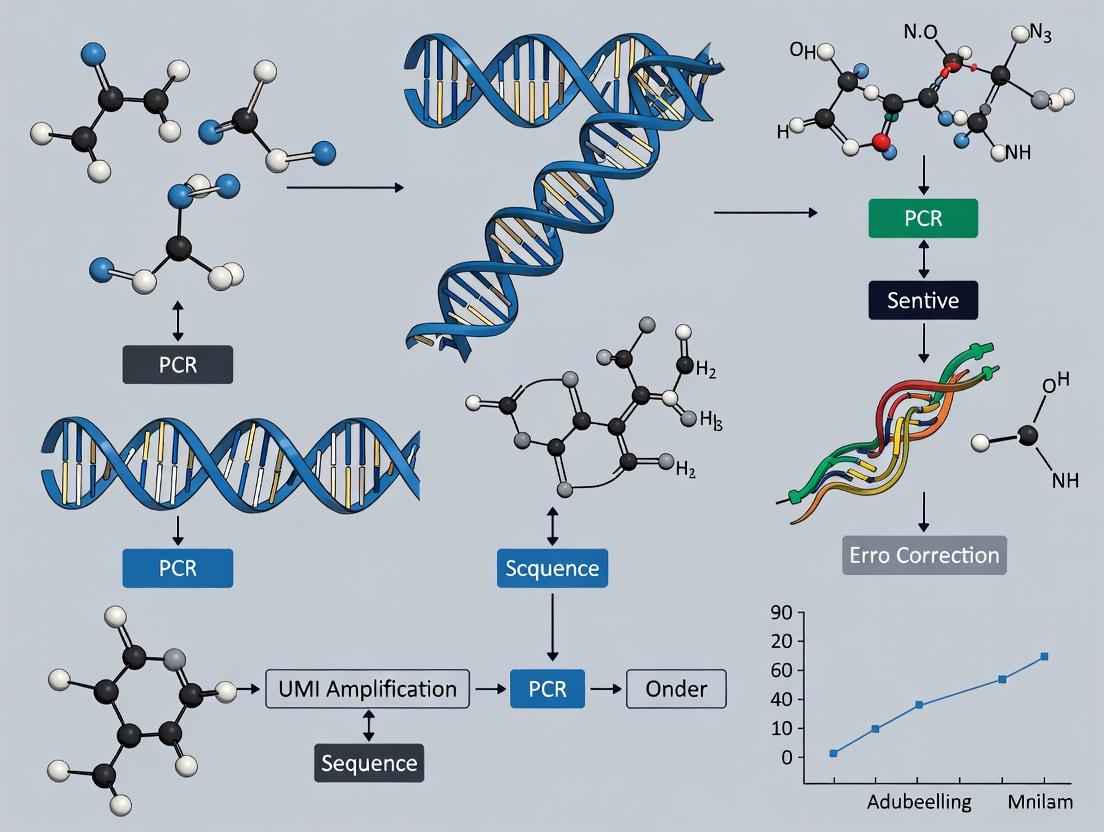
This article provides researchers, scientists, and drug development professionals with a detailed roadmap for understanding, implementing, and validating error-correction methods for Unique Molecular Identifiers (UMIs) in PCR-amplified next-generation sequencing libraries.
A Comprehensive Guide to Error-Corrected UMI Sequencing: Strategies, Algorithms, and Best Practices for Accurate NGS Quantification
Abstract
This article provides researchers, scientists, and drug development professionals with a detailed roadmap for understanding, implementing, and validating error-correction methods for Unique Molecular Identifiers (UMIs) in PCR-amplified next-generation sequencing libraries. We explore the foundational causes of UMI errors, review current methodological approaches and computational tools, offer troubleshooting and optimization strategies for wet-lab and bioinformatics pipelines, and present frameworks for validating correction efficacy and comparing algorithm performance. The goal is to empower practitioners to achieve absolute molecular counting with high confidence, crucial for sensitive applications in oncology, immunology, and rare variant detection.
Understanding the Problem: Sources and Impacts of PCR Errors on UMI Fidelity
What Are UMIs and Why is Error-Free Amplification Critical?
Unique Molecular Identifiers (UMIs) are short, random nucleotide sequences added to individual DNA or RNA molecules before amplification. They act as molecular barcodes, enabling bioinformatic correction of PCR amplification errors and biases. Error-free amplification is critical because PCR errors like base substitutions or PCR duplicates obscure the true abundance and sequence of original molecules, compromising quantitative accuracy in applications like single-cell sequencing and ctDNA analysis.
FAQs & Troubleshooting
Q1: Our UMI consensus sequencing reads are lower than expected after deduplication. What could be the cause?
A: This is often due to PCR over-amplification or low initial template diversity. Excessive PCR cycles lead to high duplicate rates, while low diversity means fewer unique UMIs to start. Ensure you are using optimal input amounts and limit PCR cycles to 8-12 for library amplification. Validate template quality with a Bioanalyzer.
Q2: We observe a high rate of UMI collisions in our single-cell RNA-seq data. How can we mitigate this?
A: UMI collisions occur when distinct molecules are tagged with the same UMI by random chance. This is a function of UMI complexity and sequencing depth. Use UMIs with sufficient length (e.g., 10-12 nucleotides for millions of molecules) and refer to the collision probability table below.
Q3: Our UMI consensus sequences show persistent base errors. Are these technical artifacts or biological variants?
A: Persistent errors after consensus building often stem from two sources: 1) PCR errors occurring in the first cycle, which are tagged by the UMI and propagated, or 2) Sequencing errors concentrated in a specific read position. To distinguish, incorporate a UMI-tagged polymerase with high fidelity (e.g., Q5, Phusion) and use a duplex sequencing protocol where both strands are tagged.
Q4: What is the impact of polymerase fidelity on UMI-based error correction?
A: Polymerase error rate directly limits the accuracy of the final consensus. A high-fidelity polymerase is non-negotiable. See the table below for quantitative comparisons.
| Polymerase | Error Rate (per bp/cycle) | Recommended for UMI workflows? | Cost per rxn |
|---|---|---|---|
| Taq (standard) | ~1.1 x 10⁻⁴ | No | $0.15 |
| Q5 (High-Fidelity) | ~2.8 x 10⁻⁷ | Yes, optimal | $0.85 |
| Phusion | ~4.4 x 10⁻⁷ | Yes | $0.70 |
| PrimeSTAR GXL | ~8.5 x 10⁻⁷ | Yes | $0.75 |
Table 1: Comparison of DNA Polymerase Fidelity. Data sourced from manufacturer publications (NEB, Takara).
| UMI Length (nt) | Theoretical Diversity (4ⁿ) | Safe Maximum Molecules* | Collision Probability at 1M Molecules |
|---|---|---|---|
| 8 | 65,536 | ~10,000 | ~99.9% |
| 10 | 1,048,576 | ~100,000 | ~39.3% |
| 12 | 16,777,216 | ~1,000,000 | ~2.8% |
Table 2: UMI Complexity and Collision Probability. *Safe Maximum is a conservative estimate (∼15% of diversity). Collision probability calculated using the birthday paradox approximation.*
Detailed Experimental Protocol: UMI-Based Error-Corrected NGS Library Preparation
Objective: To construct an NGS library from double-stranded DNA that corrects for PCR amplification and sequencing errors using UMIs.
Materials: See "Research Reagent Solutions" below.
Methodology:
- Fragmentation & End-Repair: Fragment 100ng-1μg gDNA to desired size (e.g., 300bp) via sonication. Perform end-repair and dA-tailing using standard kits.
- UMI Ligation: Ligate double-stranded, unique Y-shaped adapters containing a random 10nt UMI sequence at the 3' end of the insert. Use a 15:1 molar adapter:insert ratio. Clean up with SPRI beads.
- Limited-Cycle Amplification: Amplify the library with 8 PCR cycles using a high-fidelity polymerase. Use primers complementary to the adapter backbone. Over-amplification here will increase duplication rates.
- Size Selection & QC: Perform double-sided SPRI bead size selection. Quantify library by qPCR and profile on a Bioanalyzer.
- Sequencing: Sequence on your preferred NGS platform (e.g., Illumina) with paired-end reads.
- Bioinformatic Processing:
- Deduplication: Group reads by their UMI and genomic coordinate.
- Consensus Calling: For each UMI family, generate a consensus base call at each position. Require a minimum family size (e.g., ≥3 reads) and use quality score thresholds.
- Variant Calling: Call variants from the consensus-read BAM file, which is now largely free of technical noise.
Visualizing the UMI Error Correction Workflow
Diagram 1: UMI Error Correction Workflow
Research Reagent Solutions
| Item | Function in UMI Workflow | Example Product |
|---|---|---|
| High-Fidelity DNA Polymerase | Catalyzes amplification with minimal base incorporation errors, essential for accurate consensus. | Q5 Hot Start (NEB), KAPA HiFi |
| UMI Adapters | Double-stranded oligos containing random molecular barcodes for ligation to target DNA. | IDT for Illumina UDI Adapters, Twist Unique Dual Indexes |
| SPRI Beads | Magnetic beads for size selection and clean-up to remove adapter dimers and excess primers. | Beckman Coulter AMPure XP |
| Library Quantification Kit | qPCR-based assay for accurate molar quantification of functional library prior to sequencing. | KAPA Library Quantification Kit |
| Bioanalyzer/TapeStation | Microfluidics-based system for sizing and quality control of libraries post-amplification. | Agilent Bioanalyzer 2100 |
Introduction: This technical support center is framed within a thesis on Correcting PCR amplification errors in Unique Molecular Identifier (UMI) research. It addresses common experimental challenges in distinguishing true biological variation from artifacts introduced during PCR amplification, specifically polymerase misincorporation and PCR duplicate chimera formation.
Troubleshooting Guides & FAQs
FAQ 1: How can I determine if a variant in my UMI-tagged NGS data is a true mutation or a polymerase misincorporation error?
- Answer: Polymerase misincorporation occurs early, during the initial reverse transcription or first few PCR cycles, and becomes amplified. To identify it:
- Analyze UMI Families: Group reads sharing the same UMI (a UMI family). A true mutation should be present in the majority of consensus reads derived from that family.
- Check Strand Bias: Polymerase errors are often not balanced across both DNA strands. A putative variant appearing in reads from only one original strand is suspicious.
- Frequency Threshold: True low-frequency variants will have a distribution across UMI families. Errors are often isolated to a single family. Implement a filter requiring a variant to be present in ≥2 UMI families.
FAQ 2: My UMI consensus data shows high duplication rates and unexpected read pairs. Am I seeing PCR duplicate chimeras?
- Answer: Likely yes. PCR chimeras form when incomplete amplicons act as primers on other templates during later PCR cycles. They manifest as read pairs with UMIs or genomic coordinates that don't logically co-occur.
- Diagnosis: Use tools like
umitoolsorfgbioto group by UMI and genomic location. Chimeras often create "bridged" families where the same UMI appears at inconsistent start positions. - Primary Cause: Overly high PCR cycle number and excessive input DNA are the most common culprits, leading to template switching.
- Diagnosis: Use tools like
FAQ 3: What is the optimal PCR cycle number to balance library yield and minimize both error types?
- Answer: The optimal cycle number is the minimum required to generate sufficient library for sequencing. A typical target is 10-14 cycles for amplicon-based UMI workflows. See Table 1 for quantitative guidance.
FAQ 4: Which polymerase should I choose to minimize misincorporation in sensitive applications?
- Answer: Use high-fidelity polymerases. These enzymes possess 3'→5' exonuclease proofreading activity, reducing error rates by 5-50 fold compared to standard Taq. See Table 2 for a comparison.
Table 1: Impact of PCR Cycles on Artifact Formation
| PCR Cycles | Library Yield (nM) | Estimated Chimera Rate (%) | Effective UMI Complexity | Recommended Use Case |
|---|---|---|---|---|
| 10-12 | 5-20 | < 0.5% | High | Optimal for variant detection |
| 14-16 | 20-100 | 0.5-2% | Moderate | Acceptable for high-input samples |
| 18+ | 100+ | 2-10%+ | Low | Avoid for quantitative UMI work |
Table 2: High-Fidelity Polymerase Error Rate Comparison
| Polymerase | Reported Error Rate (per bp per cycle) | Proofreading | Relative Cost | Best For |
|---|---|---|---|---|
| Standard Taq | ~1.1 x 10⁻⁴ | No | $ | Routine PCR |
| Q5 (NEB) | ~2.8 x 10⁻⁷ | Yes | $$$ | Ultra-high fidelity NGS |
| Phusion (Thermo) | ~4.4 x 10⁻⁷ | Yes | $$ | High-fidelity cloning/NGS |
| KAPA HiFi (Roche) | ~3.0 x 10⁻⁷ | Yes | $$$ | UMI & low-frequency variant |
Experimental Protocols
Protocol A: UMI-Based Error-Corrected Consensus Sequencing (ECC-Seq) Workflow
- UMI Ligation/Reverse Transcription: Adopt a dual-indexed UMI design (e.g., 8-12bp randomers) during library prep.
- Limited-Cycle Amplification: Perform first-stage PCR for 10-12 cycles using a high-fidelity polymerase.
- Library Clean-up: Use bead-based size selection (e.g., AMPure XP) to remove primer dimers.
- Indexing PCR: Add platform-specific indices with 6-8 additional cycles.
- Sequencing: Sequence on an Illumina platform with paired-end reads.
- Bioinformatic Processing:
- Deduplication: Use
fgbio(GroupReadsByUmi) to group reads by UMI and mapping coordinates. - Consensus Calling: Generate a single consensus read per UMI family using
fgbio(CallMolecularConsensusReads), requiring a quality threshold (e.g., Q20). - Chimera Filtering: Filter out consensus reads where the UMI maps to inconsistent genomic positions.
- Deduplication: Use
Protocol B: In-silico Validation of Artifact Rates
- Spike-in Control: Use a synthetic DNA control with known variants at defined frequencies (e.g., 1%, 0.1%).
- Parallel Processing: Process the spike-in control identically to your experimental samples.
- Variant Calling: Perform standard variant calling on the error-corrected consensus data.
- Error Calculation: Compare detected variants to the known truth set. Calculate:
- False Positive Rate (FPR): Misincorporation-derived artifacts.
- Duplication/Chimera Rate: From alignment metrics.
Visualizations
Title: Origin and Correction of PCR Artifacts in UMI Workflow
Title: Key Strategies for Minimizing PCR Artifacts with UMIs
The Scientist's Toolkit: Research Reagent Solutions
| Item | Function in UMI Error Correction |
|---|---|
| High-Fidelity DNA Polymerase (e.g., Q5, KAPA HiFi) | Reduces the rate of polymerase misincorporation errors during PCR amplification due to proofreading activity. |
| Dual-Indexed UMI Adapters (8-12nt randomers) | Uniquely tags each original molecule, allowing bioinformatic grouping to generate a consensus sequence and identify PCR duplicates/chimeras. |
| AMPure XP Beads | Performs clean-up and size selection post-PCR to remove primer dimers and optimize library fragment distribution, improving sequencing efficiency. |
| Synthetic Spike-in Control (e.g., Seraseq, Horizon) | Provides a known variant truth set to empirically measure and validate the false positive and chimera rates of the wet-lab and bioinformatic pipeline. |
| UDI (Unique Dual Index) Primers | Reduces index hopping and sample cross-talk during sequencing, ensuring that reads are assigned to the correct sample post-sequencing. |
| Low DNA-Bind Tubes & Tips | Minimizes sample loss and cross-contamination, which is critical when working with low-input samples common in UMI applications. |
Technical Support Center: Troubleshooting UMI-PCR Amplification Errors
Frequently Asked Questions (FAQs)
Q1: My UMI-based NGS data shows inconsistent molecular counts between replicates, even after correcting for PCR duplicates. What could be the primary cause? A1: Inconsistent counts are often symptomatic of the "Amplification Bottleneck," where stochastic early-cycle PCR errors (within the first 5 cycles) are exponentially amplified. This is distinct from later-cycle duplication noise. An error introduced in cycle 2 will be present in half of your final amplicons, drastically skewing the true UMI count. Ensure your reverse transcription and initial PCR cycles are highly optimized for fidelity.
Q2: How can I differentiate between a true low-abundance molecule and a molecule whose count is inflated by an early-cycle error? A2: This is a core challenge. The primary method is to implement a consensus-building bioinformatics pipeline that requires multiple reads (e.g., ≥3) per UMI group to call a base. This filters out single-read errors. However, for low-input samples, this can lead to loss of true molecules. Incorporating a probabilistic error model that considers base quality scores and the error profile of your polymerase is essential.
Q3: Which polymerase is best suited to minimize the early-cycle bottleneck in UMI protocols? A3: High-fidelity polymerases with proofreading activity (3'→5' exonuclease) are mandatory. The choice often involves a trade-off between fidelity and processivity. For amplicons < 1kb, polymerases like Q5 (NEB) or KAPA HiFi are standards. See the Reagent Solutions table below for a comparison.
Q4: My UMI group sizes are highly variable. Does this indicate a problem? A4: Yes, high variability can indicate inefficient or biased initial amplification. Key troubleshooting steps include: 1) Verifying UMI randomness (e.g., with a k-mer distribution check), 2) Ensuring PCR is not over-cycled (stay within the exponential phase), and 3) Using a limited-cycle PCR approach (e.g., 10-15 cycles) before the main amplification to reduce bottleneck severity.
Q5: What is the impact of template switching and chimera formation on UMI accuracy? A5: Template switching during PCR creates hybrid molecules that carry mismatched UMIs and genomic sequences, leading to false, novel UMI counts. This is exacerbated by overcycling and high template complexity. Using a polymerase with lower strand-displacement activity and limiting cycle numbers are critical mitigation strategies.
Experimental Protocols
Protocol 1: Two-Step Limited-Cycle PCR to Mitigate Early-Cycle Errors This protocol is designed to constrain the amplification bottleneck.
- Priming: Combine your UMI-tagged cDNA/library with high-fidelity PCR master mix. Use a polymerase with high processivity and fidelity.
- Limited First-Stage PCR: Perform only 10-12 cycles of amplification. This step amplifies the initial pool without pushing into the high-error, late-cycle plateau phase.
- Purification: Purify the product using a bead-based clean-up system (e.g., SPRI beads) to remove enzymes and excess primers.
- Quantitative Second-Stage PCR: Quantify the purified product by fluorometry. Use a small aliquot (e.g., 100-500 pg) as template for a second, indexed PCR of 8-10 cycles. This adds sample indices without re-amplifying the entire pool from the original bottlenecked material.
- Final Clean-up: Purify the final library before sequencing.
Protocol 2: In-silico UMI Error Correction and Consensus Calling This is a standard bioinformatic workflow.
- Extract UMIs: Use tools like
umi_tools extractorfgbioto identify and extract UMI sequences from read headers. - Cluster UMIs: Group reads by their genomic coordinates (e.g., alignment start position) and then by UMI sequence. Apply a network- or edit-distance-based clustering (e.g.,
umi_tools grouporfgbio GroupReadsByUmi) to account for sequencing errors in the UMI itself. - Build Consensus: For each UMI group, perform pairwise alignment of reads. Call a consensus base at each position only if it meets a quality threshold (e.g., >90% agreement, or a probabilistic model using Phred scores).
- Deduplicate: Output a single consensus read per UMI group, dramatically increasing the quality of downstream variant calls and count data.
Data Presentation
Table 1: Comparison of High-Fidelity Polymerases for UMI-Based Assays
| Polymerase | Vendor | 3'→5' Exonuclease (Proofreading) | Error Rate (per bp) | Recommended Max Cycles (for UMI) | Best For |
|---|---|---|---|---|---|
| Q5 High-Fidelity | NEB | Yes | 2.8 x 10^-7 | 25-30 | Complex pools, high GC targets |
| KAPA HiFi HotStart | Roche | Yes | ~2.6 x 10^-7 | 25-30 | Low-input, fast cycling |
| Phusion High-Fidelity | Thermo Fisher | Yes | 4.4 x 10^-7 | 25 | High yield, standard conditions |
| PrimeSTAR GXL | Takara Bio | Yes | ~1.6 x 10^-6 | 20-25 | Long amplicons (>5 kb) |
| Platinum SuperFi II | Invitrogen | Yes | 1.4 x 10^-7 | 30 | Highest fidelity claims |
Table 2: Impact of Early-Cycle Error on Final UMI Count Skew
| PCR Cycle Where Error Occurs | Theoretical Fraction of Final Library with Error (After 30 total cycles) | Effect on Quantification of True UMI |
|---|---|---|
| Cycle 1 | ~50% (2^29 / 2^30) | Creates a near-perfect duplicate, doubling the apparent count |
| Cycle 3 | ~12.5% (2^27 / 2^30) | Significantly inflates count |
| Cycle 10 | ~0.1% (2^20 / 2^30) | Minor inflation, often filtered by consensus threshold |
| Cycle 20 | ~0.0001% (2^10 / 2^30) | Negligible; within standard sequencing error noise |
The Scientist's Toolkit: Research Reagent Solutions
| Item | Function in UMI Experiments | Key Consideration |
|---|---|---|
| UMI-Adapters (Unique Molecular Identifiers) | Short random nucleotide sequences added to each molecule before amplification, enabling bioinformatic tracking of PCR duplicates. | Use sufficient complexity (e.g., 10N provides >1M unique combinations). Ensure random synthesis. |
| High-Fidelity PCR Master Mix | Provides the optimized buffer and high-fidelity enzyme for amplification with minimal error introduction. | Select based on error rate (see Table 1) and compatibility with your template (GC%, length). |
| SPRI Size-Selective Beads | For post-amplification clean-up and size selection. Removes primer dimers and large chimeras. | Bead-to-sample ratio is critical for size cut-off. Calibrate for your library. |
| dNTPs (Stable, Balanced) | Building blocks for PCR. Unbalanced dNTP pools increase misincorporation rates. | Use high-quality, pH-stable dNTPs at equal concentrations. |
| RNase Inhibitor (for cDNA) | Protects RNA templates during reverse transcription, preserving the initial accurate UMI-to-template linkage. | Use a potent inhibitor if working with degraded or low-input RNA. |
| Dual-Indexed PCR Primers | Allow multiplexing of samples while minimizing index hopping or misassignment artifacts. | Use unique dual indices (UDIs) to circumvent index-hopping issues on patterned flow cells. |
Visualizations
Title: PCR Amplification Bottleneck Workflow
Title: Early-Cycle Error Propagation
Technical Support Center: Troubleshooting & FAQs
Q1: We observe stochastic allele dropout in our UMI-based NGS data for low-input samples. What are the primary causes and solutions?
A: Allele dropout (ADO) in UMI assays is often caused by:
- Inefficient early-cycle PCR amplification: This is the most critical phase for UMI capture.
- Excessive cycling in pre-amplification: Increases chimera formation and amplifies stochastic sampling error.
- Low template quality: Fragmented or damaged DNA/RNA fails to amplify.
Troubleshooting Protocol:
- Limit Pre-Amplification Cycles: Do not exceed 10-12 cycles in the initial UMI tagging amplification.
- Optimize Polymerase: Use a high-fidelity, processive polymerase formulated for complex templates.
- Implement Duplicate Consensus: Sequence to sufficient depth to require ≥2 duplicate reads (same UMI) to call a variant. This filters PCR single-read errors.
- Quantify Input: Use digital PCR to accurately quantify input molecules and set realistic expectations for molecule recovery.
Q2: How do we distinguish a true low-frequency variant from a PCR-induced false positive introduced before UMI tagging?
A: True variants should appear across multiple independent UMI families. False positives from early-cycle errors will be confined to a single UMI family (all copies derived from one initial erroneous molecule).
Diagnostic Workflow:
- Group reads by UMI.
- Apply a consensus model (e.g., at least 80% of reads in a UMI family must agree on the variant).
- Apply a UMI family count threshold. A true variant must be present in consensus reads from ≥2 distinct UMI families. The table below quantifies the confidence based on UMI family support.
Table 1: Variant Confidence Based on UMI Family Support
| UMI Families Supporting Variant | Likelihood of Being True Positive | Recommended Action |
|---|---|---|
| 1 | High risk of false positive (early-cycle error) | Discard or flag. |
| 2-4 | Moderate confidence. | Consider with caution; review sequence context. |
| ≥5 | High confidence. | Report as detected variant. |
Q3: Our assay shows high rates of false positives in homopolymer regions despite using UMIs. What specific protocols can correct this?
A: This is often due to polymerase slippage during amplification, which occurs after UMI tagging. Standard UMI consensus alone may not filter it if the slippage happens early in the PCR cycle.
Corrective Experimental Protocol:
- Wet-Lab: Use a polymerase engineered for superior homopolymer fidelity.
- Bioinformatics: Apply a position-specific, iterative consensus.
- Perform an initial UMI consensus call.
- For homopolymer regions (e.g., AAAAA), realign all raw reads in the supporting UMI families to the new consensus sequence.
- Call the final base from this refined alignment. This step helps correct for systematic slippage within a UMI family.
Q4: What is the quantitative impact of PCR cycle number on the false positive rate in a UMI experiment?
A: The relationship is exponential. Each PCR cycle duplicates molecules, including those containing errors. More cycles pre-UMI-tagging increases errors. More cycles post-tagging increases competition and can reduce family size for true low-frequency variants.
Table 2: Impact of PCR Cycles on Assay Metrics
| PCR Stage | Cycle Increase | Direct Impact on Error Rate | Impact on Variant Detection |
|---|---|---|---|
| Pre-UMI Tagging (Initial Amplification) | +5 cycles | ~32x increase in initial errors carried forward. | Drastically increases false positives. |
| Post-UMI Tagging (Library Amplification) | +5 cycles | Minimal new false variants* | Can reduce usable depth via size selection; may dilute small UMI families. |
*Errors here are largely filtered by UMI consensus but increase chimera rates.
Detailed Protocol: Optimized Two-Stage PCR for UMI Assays
- Stage 1: UMI Tagging (5-12 cycles)
- Use primers containing a random molecular barcode (e.g., 10-12nt UMI) and sample index.
- Use a high-fidelity, low-bias polymerase master mix.
- Critical: Purify product post-reaction to remove unused primers and polymerase.
- Stage 2: Library Enrichment (8-14 cycles)
- Amplify the purified product from Stage 1 using primers that bind to the universal handles added in Stage 1.
- Perform a cleanup and size selection (e.g., with SPRI beads) to remove primer dimers.
Title: Two-Stage UMI PCR Workflow & Error Sources
The Scientist's Toolkit: Key Research Reagent Solutions
Table 3: Essential Reagents for Error-Corrected UMI Assays
| Item | Function in Correcting PCR Errors | Example/Note |
|---|---|---|
| High-Fidelity Polymerase | Minimizes base substitution errors during all PCR stages. Critical for fidelity. | Enzymes with 50-100x higher fidelity than Taq. |
| UMI-Ligated Primers | Uniquely tags each original molecule for bioinformatic tracing and error correction. | Random 8-12nt degeneracy; must be HPLC purified. |
| SPRI Beads | Purifies PCR products and performs size selection to remove primer dimers & chimeras. | Critical after UMI-tagging stage. |
| Digital PCR System | Accurately quantifies input molecular concentration to optimize input and calculate capture efficiency. | Gold standard for absolute quantification. |
| Duplex-Stabilizing Additives | Improves amplification efficiency of complex templates, reducing stochastic dropout. | e.g., Betaine, DMSO (optimize concentration). |
| Low-Bias Library Prep Kit | Integrated systems optimized for minimal GC-bias and even coverage. | Reduces coverage gaps that mask variants. |
Title: UMI Bioinformatics Pipeline for Error Correction
Building a Robust Pipeline: From Wet-Lab Chemistry to Computational Error Correction
Technical Support Center: Troubleshooting UMI-PCR Errors
FAQs & Troubleshooting Guides
Q1: Our UMI consensus sequencing reveals higher-than-expected error rates after PCR amplification. Could the polymerase be the issue? A: Yes, this is a primary suspect. Standard Taq polymerases lack 3’→5’ exonuclease (proofreading) activity, introducing base substitution errors that corrupt UMI sequences. For UMI workflows, you must use a high-fidelity (Hi-Fi) polymerase blend containing a proofreading enzyme (e.g., Pfu, Deep Vent). The key metric is the error rate, measured as errors per base per duplication.
Q2: How do we quantitatively compare different high-fidelity polymerases for our UMI-based NGS library prep? A: Compare vendors' published error rates and performance in validation studies. Use a standardized assay, like amplifying a known plasmid sequence and performing deep sequencing. Key quantitative metrics are summarized below.
Table 1: Comparison of Selected High-Fidelity Polymerase Systems
| Polymerase System | Vendor | Reported Error Rate (errors/bp/duplication) | 3’→5’ Exonuclease | Processivity | Recommended Use Case for UMIs |
|---|---|---|---|---|---|
| Pfu Ultra II FS | Agilent | 3.0 x 10⁻⁷ | Yes (Pfu) | High | Gold standard for complex templates, high fidelity. |
| Q5 High-Fidelity | NEB | 2.8 x 10⁻⁷ | Yes | Very High | Excellent for GC-rich regions, high yield. |
| KAPA HiFi HotStart | Roche | 2.9 x 10⁻⁷ | Yes | High | Robust for NGS library amplification, fast. |
| PrimeSTAR GXL | Takara | 8.4 x 10⁻⁶ | Yes | Very High | Long amplicons (>10 kb), complex genomes. |
| Platinum SuperFi II | Invitrogen | 1.6 x 10⁻⁶ | Yes | High | High specificity for difficult templates. |
Q3: Despite using a Hi-Fi polymerase, we still see PCR errors. How should we optimize thermal cycling conditions? A: Fidelity is also condition-dependent. Follow this optimization protocol:
Protocol: PCR Condition Optimization for Maximum Fidelity
- Template: Use 1-10 ng of high-quality, purified gDNA or cDNA.
- Master Mix: Prepare a 50 µL reaction using the vendor's recommended buffer. Always include a no-template control (NTC).
- Cycling Parameters (Initial Test):
- Initial Denaturation: 98°C for 30 sec.
- Cycling (35x): Denature at 98°C for 10 sec, Anneal at Tm+3°C for 15 sec, Extend at 72°C for 15-30 sec/kb. (Note: Lower denaturation temperatures can preserve polymerase activity).
- Final Extension: 72°C for 2 min.
- Optimization Variables:
- Mg²⁺ Concentration: Titrate MgCl₂ from 1.5 mM to 3.5 mM in 0.5 mM increments. Excess Mg²⁺ increases misincorporation.
- Cycle Number: Minimize cycles (often 15-25 for UMI libraries). Run a cycle curve (15, 20, 25, 30 cycles).
- Extension Time: Ensure it is sufficient (30 sec/kb) but not excessive.
- Template Input: Avoid very low input (<1 ng) which forces excessive cycles.
- Validation: Clean up PCR products, sequence deeply, and calculate observed error rates against known template.
Q4: What are the critical reagents for setting up a robust UMI-PCR experiment? A: The Scientist's Toolkit for UMI-PCR:
Table 2: Research Reagent Solutions for UMI-PCR
| Item | Function & Importance for Fidelity |
|---|---|
| High-Fidelity Polymerase Blend | Core enzyme. Provides proofreading activity and low error rate. |
| dNTP Mix, Balanced (10 mM each) | Unbalanced dNTP pools increase misincorporation. Use high-purity, PCR-grade. |
| MgCl₂ Solution (25 mM) | Cofactor for polymerase. Must be optimized; concentration directly affects fidelity. |
| Molecular Biology Grade Water | Nuclease-free, sterile. Contaminants can inhibit polymerase or carryover DNA. |
| Dual-Indexed UMI Adapters (for NGS) | Contains Unique Molecular Identifier for tagging original molecules pre-amplification. |
| Solid-Surface PCR Plate Seals | Prevents evaporation and cross-contamination between wells. |
| High-Fidelity PCR Buffer (provided) | Optimized buffer with stabilizers, often includes additives for GC-rich templates. |
Q5: How do polymerase fidelity and PCR optimization fit into the overall workflow for correcting PCR errors in UMI research? A: They are the first and most critical wet-lab defense. The logical workflow is as follows:
Title: UMI Error Correction Workflow with PCR Defense
Q6: We are amplifying targets from FFPE samples with damaged DNA. How do we balance fidelity with the ability to bypass lesions? A: This requires a specialized polymerase blend. Use a Hi-Fi enzyme engineered for damaged templates, often containing a fusion archaeal family-B polymerase (for proofreading) with a processivity-enhancing domain. Key Protocol Adjustment: Increase extension time (45-60 sec/kb) and consider adding 5% DMSO or 1M Betaine to the reaction to mitigate fragmentation and cross-linking artifacts, but first verify these additives do not inhibit your specific Hi-Fi polymerase.
Troubleshooting Guides & FAQs
Q1: Our UMI-based deduplication results show an unexpectedly high rate of unique reads, suggesting poor consensus building. What are the primary design-related causes? A: This often stems from UMI sequences that are too short or have low complexity, leading to collisions (different original molecules tagged with the same UMI by chance). This prevents correct error correction. Ensure your UMI length is sufficient for your library complexity.
- Solution: Increase UMI length. The required length depends on the number of unique molecules you tag. Use the table below as a guideline.
Q2: We observe persistent background noise in our sequence data even after UMI-based error correction. What could be wrong? A: This is frequently caused by errors introduced during the initial PCR amplification cycles before the UMI is effectively "readable." Errors in the first few cycles become fixed in the amplicon family.
- Solution: Implement a dual-index or "UMI-then-index" sequencing architecture. This physically separates the UMI read from the sample index read, allowing the UMI to be sequenced on a separate, dedicated read before any PCR-induced errors accumulate.
Q3: How do we choose between fully random UMIs and those containing degenerate bases? A: The choice balances complexity against sequencing chemistry compatibility. See the table below for a comparison.
Q4: What is the recommended wet-lab protocol for validating a new UMI design's error correction efficiency? A: Perform a spike-in control experiment.
- Prepare Control Oligos: Synthesize a set of DNA oligos with known, low-frequency variant sites (e.g., 1% allele frequency). Tag this pool in silico with your proposed UMI design during experimental design.
- Spike-in and Process: Spike the oligo pool into a background of wild-type genomic DNA at a known ratio (e.g., 1:1000). Proceed with your standard library preparation protocol using the new UMI design.
- Sequence and Analyze: Sequence the library and process the data using your UMI consensus pipeline.
- Evaluate: Calculate the recovery rate of the known low-frequency variants and the reduction in background error rates compared to non-UMI-corrected data. Effective UMI design should recover the true variants and drive false positives near zero.
Table 1: UMI Length vs. Theoretical Collision Probability
| UMI Length (Random Nucleotides) | Theoretical Unique Combinations | Max Library Size for <1% Collision Probability |
|---|---|---|
| 4 | 256 | ~25 molecules |
| 6 | 4,096 | ~400 molecules |
| 8 | 65,536 | ~6,500 molecules |
| 10 | 1,048,576 | ~100,000 molecules |
| 12 | 16,777,216 | ~1.7 million molecules |
Table 2: Comparison of UMI Sequence Types
| UMI Type | Composition | Pros | Cons |
|---|---|---|---|
| Fully Random | NNNN... (A/C/G/T) | Maximum sequence diversity. | Potential for homopolymers; base balance issues. |
| Degenerate Bases | WWW... (A/T), SS... (G/C) | Reduces homopolymer risk; improves balance. | Effective diversity per position is lower. |
| Fixed-Base + Random | e.g., ACG-NNNN-CTG | Can anchor sequencing primers; avoid problematic sequences. | Further reduces overall unique complexity. |
Experimental Protocol: Validating UMI Error Correction
Title: Protocol for Empirical Validation of UMI Design Efficiency
Materials:
- Synthetic DNA oligos with known low-frequency variants.
- Wild-type genomic DNA (background).
- Standard NGS library prep kit (modified for UMI integration).
- Custom or commercial UMI-aware data processing pipeline (e.g., fgbio, UMI-tools).
Method:
- Design & Synthesis: Design double-stranded control oligos containing 2-3 known single-nucleotide variants (SNVs) at ~1% molar ratio relative to the wild-type sequence for that oligo. Synthesize and quantify precisely.
- Spike-in Library Construction: Create a master mix where the variant oligo pool constitutes 0.1% of the total DNA mass, with the remainder being wild-type genomic DNA. Fragment/shear the mixture to the desired size.
- UMI Ligation/Extension: Perform the library preparation protocol, integrating the UMI adapters at the designated step (typically during initial adapter ligation or via a primer containing the UMI).
- Amplification & Sequencing: Amplify the library with a limited cycle PCR (e.g., 8-12 cycles). Perform paired-end sequencing on an appropriate platform, ensuring the read structure captures both the UMI and the variant site.
- Bioinformatic Processing: a. Extract UMIs: Identify and annotate reads with their UMI sequences. b. Cluster by UMI & Genomic Coordinate: Group reads sharing both the same UMI and mapping start position. c. Build Consensus: For each cluster, perform base-wise alignment. Call a consensus base for each position if it meets a quality threshold (e.g., >90% agreement). d. Variant Calling: Call variants from the consensus reads (not the raw reads).
- Analysis: Compare variant calls from the consensus reads to those from raw, non-deduplicated reads. Calculate:
- Sensitivity: (True Variants Recovered / Known Spiked-In Variants)
- Precision: (True Variants Recovered / All Variants Called)
- Error Rate Reduction: Compare the background SNV error rate in wild-type regions before and after UMI consensus building.
Visualizations
Title: UMI-Based Error Correction Workflow
Title: Sequencing Architecture Impact on UMI Fidelity
The Scientist's Toolkit: Research Reagent Solutions
Table 3: Essential Reagents for UMI Experiments
| Item | Function | Key Consideration |
|---|---|---|
| UMI-Containing Adapters | Dual- or single-stranded oligos with random/degenerate regions to uniquely tag each molecule. | Stability, lack of bias in base composition, and compatibility with your ligase. |
| High-Fidelity DNA Polymerase | Amplifies library with minimal introduction of new errors during PCR. | Essential to prevent polymerase errors from overwhelming true variation. |
| Low-Error Library Prep Kit | Commercial kits optimized for ultra-sensitive applications. | Often includes validated UMI adapters and optimized buffers. |
| Spike-in Control Oligos | Synthetic DNA molecules with known variants at defined frequencies. | Critical for empirically validating the error correction performance of your UMI design and pipeline. |
| UMI-Aware Analysis Software | Bioinformatics tools (e.g., fgbio, UMI-tools, Picard) to handle clustering and consensus. | Must be matched to your UMI design and sequencing architecture. |
Troubleshooting Guides & FAQs
Q1: My network-based clustering results in all reads collapsing into a single large cluster, losing all UMI diversity. What went wrong?
A: This is typically caused by an overly permissive distance threshold in your graph construction. Network-based methods (e.g., UMI-tools, zUMIs) build graphs where nodes are reads and edges connect reads with a Hamming distance below a threshold. If this threshold is set too high (e.g., >2 for 10bp UMIs), distant families incorrectly merge.
- Solution: Re-run the clustering with a stricter distance threshold (often
d=1ord=2). First, generate a UMI neighbor count table to inform your choice.- Protocol: Use
umi_tools extractto get UMIs, thenumi_tools count --method=uniquewith varying--edit-distance-thresholdvalues. Plot the number of deduplicated reads against the threshold; choose the threshold at the "elbow" of the curve before it plateaus.
- Protocol: Use
Q2: The consensus-based correction is producing an exceptionally high rate of PCR-induced artifact sequences in my final count matrix. How can I mitigate this?
A: Consensus models (e.g., DADA2, USEARCH -unoise3) are sensitive to sequencing errors in the initial rounds of amplification. High artifact rates usually indicate that your quality filtering or the minimum cluster size (minOccurence) is too low.
- Solution: Implement a pre-filtering step based on sequence quality and enforce a higher minimum abundance for forming an initial consensus.
- Protocol: Before consensus calling, filter reads with an expected error rate > 1.0 (
--max-ee 1.0inDADA2). Increase the minimum cluster size parameter (e.g.,MIN_CONSENSUS_FREQ=2or 3) to require more supporting reads, making the model more robust to early-stage errors.
- Protocol: Before consensus calling, filter reads with an expected error rate > 1.0 (
Q3: My probabilistic model (like Starcode or UMI-tools directional) is discarding a large proportion of my reads as "errors," resulting in very low yield. Is this normal?
A: While some loss is expected, a discard rate >40% often signals a mismatch between the model's error assumption and your data. The directional algorithm assumes a single "true" UMI per cluster and absorbs neighbors only if they are lower in count (likely PCR errors). If your initial PCR cycles are high, creating many equal-frequency variants, this model fails.
- Solution: Switch to a network-based (
cluster) or probabilistic model that allows for multi-modal distributions (USEARCH).- Protocol: Run a diagnostic: Compare read counts using the
directionalvs.clustermethods inumi_tools dedup. Ifclusterretains significantly more reads, your data may have closely related but genuine UMIs from highly similar molecules. Use theadjacencymethod which is less aggressive.
- Protocol: Run a diagnostic: Compare read counts using the
Q4: After computational correction, I observe a batch effect where samples with higher sequencing depth show spuriously higher molecule counts. How do I correct for this bias?
A: This is a known issue with count-based probabilistic models. At very high depths, the chance of observing error-derived UMIs with counts >1 increases, and they are no longer filtered out by minimum count thresholds.
- Solution: Apply a depth-normalization step after UMI correction but before differential analysis. Also, consider tools with Bayesian frameworks that explicitly model sequencing depth.
- Protocol: Incorporate a spike-in of synthetic UMIs with known concentrations. Use the recovery rate of these spike-ins across samples to calibrate and normalize the experimental UMI counts, correcting for depth-dependent correction efficiency.
Experimental Protocols for Cited Key Experiments
Protocol 1: Benchmarking Correction Algorithm Performance with Synthetic UMI Datasets
- Synthesis: Generate a known set of 1000 unique UMI sequences (10-12 bp).
- In Silico Simulation: Use
PolyesterorARTto simulate PCR amplification (5-15 cycles) introducing a per-base error rate (e.g., 0.001 per cycle). Simulate sequencing on an Illumina platform with a defined error profile (0.1-1%). - Data Generation: Produce FASTQ files where each read contains a UMI (potentially mutated) and a genomic insert.
- Algorithm Application: Process the simulated data through three pipelines: a)
UMI-tools(network), b)DADA2(consensus), c)Starcode(probabilistic). Use default parameters initially. - Validation: Compare the output deduplicated molecule list to the original 1000-UMI truth set. Calculate Precision, Recall, and F1-score.
Protocol 2: Empirical Validation Using Duplicate Molecule Spike-ins
- Reagent Design: Order synthetic DNA templates with identical insert sequences but two different, known UMIs (UMIA, UMIB) in equimolar amounts.
- Library Prep: Spike this duplex control into your experimental sample at a known low molar ratio (e.g., 0.1% of total library).
- Sequencing & Processing: Sequence the pool. Process the data through your chosen correction algorithm(s).
- Analysis: In the corrected output, identify the spike-in insert sequence and count the number of distinct UMIs associated with it. A perfect algorithm will output two molecules (one for UMIA, one for UMIB). An over-aggressive algorithm will incorrectly merge them into one molecule.
Table 1: Performance Comparison of Algorithm Types on Simulated Data (10bp UMIs, 10% PCR Error Rate)
| Algorithm Type | Example Tool | Precision (%) | Recall (%) | F1-Score (%) | Computational Speed (Reads/min) |
|---|---|---|---|---|---|
| Network-Based | UMI-tools (cluster) | 98.5 | 92.1 | 95.2 | 85,000 |
| Consensus | DADA2 | 99.8 | 89.7 | 94.5 | 21,000 |
| Probabilistic | Starcode (sphere) | 97.2 | 94.3 | 95.7 | 120,000 |
Table 2: Impact of UMI Length on Error Correction Efficacy
| UMI Length | Total Possible UMIs | % of Reads with Errors (Simulated) | Corrected Yield after DADA2 (%) | False Positive Mergers per 1000 True UMIs |
|---|---|---|---|---|
| 8 bp | 65,536 | 15.2 | 78.3 | 12.5 |
| 10 bp | 1,048,576 | 9.8 | 90.5 | 3.1 |
| 12 bp | 16,777,216 | 4.1 | 96.2 | 0.8 |
Visualization Diagrams
Title: Computational Correction Algorithm Workflow for UMI Data
Title: Error Propagation & Algorithm Correction in UMI PCR
The Scientist's Toolkit: Research Reagent Solutions
| Reagent / Material | Function in UMI-Based Experiments |
|---|---|
| UMI-Adapters (Nextera, IDT for Illumina) | Contains the random UMI bases integrated into the sequencing library adapter. Essential for uniquely tagging each original molecule. |
| High-Fidelity DNA Polymerase (Q5, KAPA HiFi) | Minimizes base substitution errors during PCR amplification, reducing the burden of in-silico correction and improving accuracy. |
| Duplex-Specific Nuclease (DSN) | Used for normalization; can be applied to reduce over-amplified, high-abundance molecules before final sequencing, improving UMI recovery evenness. |
| Synthetic UMI Spike-in Controls (e.g., from Spike-in) | Provides a known set of UMI molecules at defined ratios for empirically benchmarking correction algorithm performance and batch effects. |
| Magnetic Beads (SPRIselect) | Used for precise size selection and clean-up during library prep to remove adapter dimers and optimize library fragment length for sequencing. |
| Unique Dual Indexes (UDIs) | 8bp or 10bp indexes used in addition to UMIs to accurately demultiplex pooled samples and prevent index hopping from causing cross-sample contamination. |
This technical support center is designed to assist researchers working within the framework of PCR error correction in Unique Molecular Identifier (UMI) analysis for high-throughput sequencing. The following FAQs and guides address common pitfalls.
Frequently Asked Questions & Troubleshooting
Q1: During DADA2 denoising of UMI-based amplicon data, my sequence variant table shows an extremely high number of ASVs, far exceeding expected diversity. What is wrong? A: This typically indicates that the DADA2 pipeline is treating UMIs as genuine biological sequence variation. DADA2 is designed for error correction in amplicon sequencing without UMIs. You are applying it incorrectly.
- Solution: Do not run DADA2 on reads containing UMIs. The correct workflow is to first use a UMI-aware tool (like
umi_tools dedupor zUMIs) to collapse reads based on their UMI and mapping position, then apply DADA2 to the consensus sequences generated from each UMI group if you suspect residual PCR errors persist. Alternatively, use a package likedada2in a specific UMI mode (if available) or seek packages designed for UMI-based amplicons.
Q2: When running umi_tools dedup, I get very low deduplication counts, suggesting almost no PCR duplicates were removed. What are the main causes?
A: This is often due to incorrect UMI extraction or parameter settings.
- Checklist:
- UMI Extraction (
extract): Did you correctly specify the--bc-pattern? For example, a pattern ofNNNNNN(6bp UMI at the start of R1) is different fromNNNNNNXXXXXXXX(6bp UMI followed by 8bp cell barcode). Verify the pattern matches your experimental design. - UMI Quality: Are there many Ns in your extracted UMIs? Use
umi_tools whitelistto generate a filtered list of high-quality UMIs. - Gene Assignment (
dedup): Thededupcommand requires a sorted BAM file with a gene/transcript tag (e.g.,XT). Ensure your alignment and gene assignment step prior todedupcorrectly tags reads. Usesamtools view your.bam | headto check forXT:A:tags. - Mapping Quality: Poorly mapped reads (low MAPQ) are ignored by default. Check your aligner's output.
- UMI Extraction (
Q3: zUMIs fails with memory errors during the STAR alignment step on a large dataset. How can I mitigate this? A: zUMIs orchestrates multiple tools, and STAR is memory-intensive.
- Solutions:
- Genome Indexing: Ensure you generated the STAR genome index with an appropriate
--genomeSAindexNbases(typically 14 for mammalian, adjust for smaller genomes). - STAR Parameters: Increase the
--limitGenomeGenerateRAMparameter when building the index. During alignment, use--limitOutSJcollapsedand--limitIObufferSizeto control memory usage. - Resource Allocation: Run zUMIs on a server with sufficient RAM (≥32GB recommended for mammalian genomes). Consider using the
--threadsparameter to parallelize and complete steps faster, though peak memory may not reduce. - Subsampling: For testing, use the
--numreadsparameter in the zUMIs configuration to process a subset of reads.
- Genome Indexing: Ensure you generated the STAR genome index with an appropriate
Q4: After UMI collapsing, my count matrix still shows many "PCR errors" appearing as separate features in negative controls. How can I perform post-collapsing error correction? A: Residual errors can arise from early PCR errors before UMI tagging or from errors within the UMI sequence itself.
- Protocol: Post-UMI-Collapsing Error Correction:
- Generate your initial count matrix using
umi_tools dedupor zUMIs. - Extract the consensus sequences associated with each UMI group (this feature is built into zUMIs; for
umi_tools, additional scripting is required). - Apply a cluster-and-filter approach:
- Align all consensus sequences to your reference database.
- Cluster sequences that are within a 1-2 nucleotide Levenshtein distance of each other and have similar abundance profiles across samples.
- Use a rule-based filter: in negative control samples, flag any feature with counts < 0.1% of its total counts across all samples as a potential contaminant/error and remove it.
- Tools like
DADA2(on consensus sequences) orDeblurcan be adapted for this final polishing step.
- Generate your initial count matrix using
Research Reagent Solutions Toolkit
| Item | Function in UMI Experiment |
|---|---|
| UMI-Adapters (Nextera-style) | Integrated into Illumina sequencing adapters, these contain random nucleotide sequences that serve as the UMI, tagged during library prep. |
| Template Switch Oligo (TSO) | Used in Smart-seq2 protocols; facilitates cDNA amplification and can be designed to include a UMI sequence. |
| Unique Dual Index (UDI) Kits | Provides dual combinatorial indexing on Illumina platforms. When combined with UMI-adapters, provides three layers of sample/read identification. |
| High-Fidelity DNA Polymerase | Critical for the initial amplification steps to minimize the introduction of polymerase errors before the UMI is attached to the molecule. |
| RNase Inhibitor | Essential for single-cell RNA-seq UMI workflows to preserve RNA integrity during reverse transcription, where the UMI is incorporated. |
| Magnetic Beads (SPRI) | For size selection and clean-up during library preparation, crucial for maintaining library complexity and removing adapter dimers. |
Quantitative Data Comparison: UMI Tool Performance
Table 1: Benchmarking of UMI Processing Tools on a Simulated scRNA-seq Dataset (10,000 cells). Data synthesized from recent literature and tool documentation.
| Tool | Primary Function | Input | Key Output | Approx. Runtime* | Memory Peak* |
|---|---|---|---|---|---|
| zUMIs (v2.9.7) | End-to-end pipeline | FastQ, GTF, Genome | Count Matrix, BAM | 6-8 hours | 30 GB |
| UMI-tools (v1.1.4) | Suite of UMI methods | BAM (with extracted UMIs) | Deduplicated BAM, Counts | 1-2 hours | 8 GB |
| DADA2 (v1.26) | Sequence variant inference | FastQ (no UMIs) | ASV Table, Error Rates | 2-3 hours | 12 GB |
| fgbio (v2.1.0) | Toolkit for UMI/data | FastQ/BAM | Corrected Reads, Groups | Varies by tool | Varies |
*Runtime and memory are highly dependent on dataset size and computational environment. Values are estimates for the described dataset.
Experimental Protocol: UMI-Based 16S rRNA Gene Sequencing Error Correction
Objective: To accurately profile microbial diversity while removing errors from PCR and sequencing using UMIs.
Detailed Methodology:
- Primer Design & Library Prep: Use forward PCR primers containing a random 12bp UMI sequence at the 5' end. Perform PCR amplification of the 16S V4 region using a high-fidelity polymerase. Follow with standard library preparation and paired-end sequencing (e.g., 2x250bp MiSeq).
- Bioinformatics Processing:
- Step A: UMI Extraction & Read Merging: Use
usearch -fastx_truncateto separate the UMI from the biological sequence. Merge paired-end reads usingfastporvsearch. - Step B: UMI-aware Dereplication: Group merged reads by their associated UMI. For each UMI group, generate a consensus sequence (e.g., majority vote) to create a single, high-quality read per original molecule.
- Step C: Traditional Amplicon Analysis: Take the consensus sequences and proceed with standard pipelines: further dereplication, OTU/ASV clustering (using
vsearchorDADA2), chimera removal, and taxonomy assignment.
- Step A: UMI Extraction & Read Merging: Use
- Validation: Include a mock microbial community with known composition to calculate the error correction efficiency and false positive/negative rates.
Workflow and Relationship Diagrams
Title: General UMI Data Analysis Workflow
Title: Thesis Framework for PCR Error Correction with UMIs
Integration into Standard NGS Analysis Workflows (e.g., RNA-seq, Targeted Panels, Single-Cell)
Technical Support Center: Troubleshooting UMI Error Correction
This support center addresses the integration of PCR error correction for Unique Molecular Identifiers (UMIs) within standard Next-Generation Sequencing (NGS) workflows. The content is framed within the thesis context of improving accuracy in quantitative NGS applications by correcting polymerase-derived errors in UMI sequences.
Frequently Asked Questions (FAQs) & Troubleshooting
Q1: After implementing UMI-based error correction in our bulk RNA-seq pipeline, our final unique molecule count is lower than expected. What are the primary causes? A: This is a common issue. The reduction can stem from either correct deduplication or an overly stringent error correction step. Key factors to check:
- PCR Amplification Bias: Early-cycle PCR bias can cause unequal amplification of molecules, leading to some UMI families being undersampled and discarded as noise.
- UMI Sequence Quality: High error rates in the UMI region itself (often due to sequencing quality drop at the read start) can cause true molecules to be split into multiple, small UMI families that are filtered out.
- Error Correction Parameters: The allowed mismatches (Hamming distance) during UMI network clustering may be set too low, failing to collapse PCR variants, or too high, causing collapse of distinct molecules.
Q2: In single-cell RNA-seq (scRNA-seq) data, how do we differentiate PCR errors from true biological heterogeneity within a UMI family? A: This is a critical challenge. The core principle is that PCR errors are random and will appear at low frequency (typically <10%) within the amplified family of a single original molecule. In contrast, biological variants (e.g., SNPs, allelic expression) will be present in all reads derived from that original transcript.
- Troubleshooting Step: Inspect aligned reads for a specific, highly expressed gene. Group reads by cell barcode and UMI. For each UMI family, create a consensus sequence. Bases that appear in >90% of reads are likely true. Systematic mismatches at lower frequencies, especially if they vary across different UMI families for the same gene, are likely PCR errors.
Q3: For targeted panel sequencing (e.g., for rare variant detection), our UMI consensus reads show a high rate of false positive indels. What could be the source? A: Indels in the consensus are often artifacts of misalignment, not PCR error.
- Primary Cause: This frequently occurs in homopolymer regions or near the start/end of reads. During alignment, sequencing errors in the UMI-proximal region can cause the aligner to introduce an indel to improve the match downstream.
- Solution: Use a two-step alignment strategy. First, soft-clip or mask the UMI and any adapter sequences from the read. Then, align the trimmed read to the reference genome. Build the consensus from the aligned portion only. This prevents alignment artifacts from propagating into the final high-quality consensus call.
Experimental Protocol: Validating UMI Error Correction Efficiency
Title: In Silico Spike-In Protocol for UMI Error Correction Benchmarking
Purpose: To quantitatively assess the accuracy and efficiency of your UMI-based error correction pipeline using data with known ground truth.
Methodology:
- Generate Synthetic Reads: Use a tool like
ShermanorPolyesterto simulate NGS reads from a defined set of transcript or genomic sequences. - Incorporate Synthetic UMIs: Attach a set of known, random UMI sequences (e.g., 10N) to each simulated original molecule.
- Introduce Errors: Artificially introduce substitution errors into the UMI sequences and the body of the reads at a defined rate (e.g., 0.1% to 1.0%) mimicking PCR and sequencing errors.
- Amplification Modeling: Duplicate molecules based on a negative binomial distribution to simulate PCR duplication.
- Pipeline Processing: Run the synthetic, error-containing reads through your standard UMI processing pipeline (e.g.,
UMI-tools,fgbio,zUMIs). - Benchmarking: Compare the pipeline's output consensus sequences to the original known sequences. Calculate Precision (fraction of corrected calls that are true) and Recall (fraction of true molecules recovered).
Table 1: Key Metrics for UMI Error Correction Validation
| Metric | Formula/Description | Target Value |
|---|---|---|
| UMI Deduplication Efficiency | (1 - (Deduped Reads / Total Reads)) * 100% | High, but experiment-specific. |
| Error Correction Recall | (True Molecules Recovered / Total True Molecules) * 100% | >95% |
| Error Correction Precision | (True Consensus Calls / Total Consensus Calls) * 100% | >99.9% |
| False Positive Variant Rate | (Incorrect Bases in Consensus / Total Consensus Bases) | <1 in 10^7 bases |
The Scientist's Toolkit: Research Reagent Solutions
Table 2: Essential Reagents for Robust UMI-Based Assays
| Item | Function in UMI Workflow |
|---|---|
| High-Fidelity DNA Polymerase (e.g., Q5, KAPA HiFi) | Minimizes the introduction of PCR errors during library amplification, reducing the burden on downstream bioinformatic error correction. |
| Duplex-Specific Nuclease (DSN) | Used in some protocols to normalize cDNA prior to amplification, reducing extreme amplification bias that can lead to loss of UMI families. |
| UMI-Adopted Adapter Kits | Commercial library preparation kits (e.g., from Illumina, Takara Bio, NEB) with integrated, balanced UMIs in the adapters. Ensures unbiased UMI representation. |
| Purified dNTPs | High-quality, balanced dNTPs prevent polymerase stuttering and nucleotide misincorporation, a source of sequence errors. |
| Magnetic Beads (SPRI) | For precise size selection and clean-up. Critical for removing adapter dimers and primer artifacts that can carry aberrant UMIs and confound analysis. |
Visualization: Workflow Diagrams
Title: UMI Error Correction & Deduplication Analysis Workflow
Title: Differentiating PCR Errors from True Variation in UMI Families
Solving Common Pitfalls: Optimizing Your Error-Correction Strategy for Maximum Accuracy
Technical Support Center: Troubleshooting UMI-based NGS Experiments
FAQs & Troubleshooting Guides
Q1: My UMI collision rate is higher than expected (>10%). What does this indicate and how can I troubleshoot it? A: A high UMI collision rate suggests that distinct RNA/DNA molecules are being tagged with the same UMI, leading to inaccurate digital counting and amplification error correction. This undermines the core thesis of correcting PCR amplification errors in UMI research.
Primary Causes:
- Insufficient UMI Complexity: Using a UMI pool with too few unique sequences for the number of input molecules.
- Overloading the Sequencing Run: Loading too much cDNA/library, resulting in an excessive number of molecules tagged relative to UMI diversity.
- Poor UMI Synthesis Quality: Degenerate base synthesis errors or biases in the UMI pool.
Troubleshooting Protocol:
- Calculate Your Experimental Saturation:
- Formula:
Saturation = (Number of Observed UMIs) / (Theoretical UMI Diversity) * 100 - Action: If saturation >80%, increase UMI length/complexity or reduce input material.
- Formula:
- Perform a UMI Complexity Assessment Experiment:
- Method: Spike-in a known quantity of synthetic control RNA with a separate, known UMI set. Sequence and calculate the recovery rate. Low recovery indicates synthesis or early-PCR bias.
- Quantify Library Accurately: Use qPCR-based library quantification (not just bioanalyzer) to avoid overloading the sequencer.
- Calculate Your Experimental Saturation:
Q2: After UMI deduplication, my error distribution does not match the expected Poisson/random profile. What could be wrong? A: Anomalous error distributions point to systematic biases in the workflow, preventing accurate separation of PCR errors from true biological variation.
- Common Patterns & Diagnoses:
| Observed Error Distribution Pattern | Likely Technical Cause | Impact on Amplification Error Correction |
|---|---|---|
| Excess of low-frequency variants (<0.5%) | PCR recombination (chimera formation) during late cycles. | Artificial diversity inflates background, obscuring true low-frequency variants. |
| Strand-specific error bias | Reverse transcription or strand-synthesis errors not randomized. | Errors are not evenly distributed across families, leading to false consensus calls. |
| Error rate correlates with sequence context (e.g., homopolymers) | Sequencing platform-specific errors (e.g., Illumina phasing). | Errors appear non-random, complicating algorithmic correction. |
- Troubleshooting Protocol: Duplex Sequencing Validation
- Objective: To definitively distinguish PCR/sequencing errors from true variants.
- Method:
- Use double-stranded UMI adapters that tag each original DNA strand with a complementary pair of UMIs.
- After sequencing, group reads into families by their original molecule (using the UMI pair).
- A true variant must be present in both complementary strand families derived from the same original molecule. Errors will appear in only one strand's family.
- Interpretation: If your standard single-strand UMI correction shows variants that fail duplex confirmation, they are likely PCR/sequencing artifacts.
Q3: How do I choose the right UMI length and deduplication algorithm for my experiment? A: The choice is a balance between collision probability and sequencing overhead, directly affecting correction fidelity.
- Quantitative Guidance Table:
| UMI Length (Random Nucleotides) | Theoretical Diversity | Recommended Max Molecules Tagged* | Common Use Case & Algorithm Note |
|---|---|---|---|
| 6 nt | 4,096 | ~800 | Low-complexity targeted panels. Use exact match deduplication. |
| 8 nt | 65,536 | ~13,000 | Moderate-throughput gene expression (3' RNA-seq). |
| 10 nt | 1,048,576 | ~200,000 | Standard scRNA-seq or exome. Use clustering (e.g., directional) to allow for 1-2 base errors. |
| 12 nt | ~16.8 million | ~3.4 million | High-complexity applications (whole genome, high-sensitivity ctDNA). Cluster-based algorithms are essential. |
*Recommended to keep observed molecules below 20% of theoretical diversity to maintain low collision probability.
Experimental Protocol: Validating UMI Correction Performance
- Title: Protocol for Spike-in Control Experiment to Quantify UMI Correction Accuracy.
- Objective: To measure the false positive rate (FPR) and false negative rate (FNR) of your UMI-based error correction pipeline.
- Materials: See "Scientist's Toolkit" below.
- Method:
- Spike-in Design: Use synthetic DNA oligos with known point mutations at specific frequencies (e.g., 1%, 0.1%, 0.01%) blended with wild-type sequence.
- Library Preparation: Process the spike-in mix through your standard UMI-labeled library prep protocol.
- Sequencing: Sequence at high depth (>100,000x per locus).
- Bioinformatic Processing:
- Perform UMI grouping and consensus building using your chosen pipeline.
- Call variants from the consensus reads.
- Calculation:
- FPR: (# of loci called variant in wild-type-only control) / (Total loci).
- FNR: 1 - (# of known variant loci detected) / (Total known variant loci spiked in).
- Success Criteria: For sensitive variant detection, aim for FPR < 0.001% and FNR < 20% at 0.1% variant frequency.
The Scientist's Toolkit: Key Research Reagent Solutions
| Item | Function in UMI-based Correction |
|---|---|
| UMI-tagged Reverse Transcription Primers | Integrates the UMI at the cDNA synthesis step, capturing the original mRNA molecule. |
| Duplex Sequencing Adapters | Contains double-stranded, complementary UMIs for highest-fidelity error removal. |
| Synthetic Spike-in Control Kits | Provides known sequences with quantified variants to benchmark correction accuracy. |
| High-Fidelity DNA Polymerase | Minimizes introduction of novel errors during PCR, improving consensus accuracy. |
| UMI-aware Deduplication Software | Critical bioinformatics tools (e.g., UMI-tools, Picard, fgbio) to group reads and generate consensus sequences. |
Visualizations
Diagram 1: UMI-Based Error Correction Workflow
Diagram 2: UMI Collision vs. Effective Correction
Troubleshooting Guides & FAQs
Q1: During UMI-based error correction, my final consensus sequence yield is extremely low. What could be wrong with my distance threshold parameter?
A: A low consensus yield often indicates an overly stringent distance threshold. This threshold defines the maximum Hamming distance allowed for reads with the same UMI to be clustered together.
- Problem: If the threshold is too low (e.g., 1), reads containing legitimate amplification errors (or sequencing errors early in the read) from the same original molecule will not be clustered, leading to many small clusters that fail the minimum read count for consensus building.
- Solution: Increase the distance threshold. A common starting point is 2 for UMIs of 10-12 nucleotides. You must balance this with the risk of merging distinct molecules (see Q2).
- Experimental Protocol for Optimization:
- Process a subset of your data with distance thresholds ranging from 1 to 4.
- For each run, record: (i) Number of consensus sequences generated, (ii) Percentage of raw reads incorporated into consensus, (iii) Estimated error rate of the final consensus sequences (by comparing to a known control sequence if available).
- Plot these metrics. The optimal threshold is often at the "elbow" where yield plateaus but before error rates climb.
Q2: I am seeing an increase in chimeric sequences in my final data after UMI consensus calling. Which parameters should I investigate?
A: Chimeras often arise from the incorrect merging of two distinct molecules. Key parameters to tune are the distance threshold and read direction handling.
- Problem: An excessively high distance threshold can cluster reads from different, but similar, original molecules. Furthermore, if your library prep generates both forward and reverse strands from each original molecule, failing to account for read direction can artifactually double cluster diversity and force inappropriate merging.
- Solution:
- Lower the distance threshold incrementally and monitor the reduction in chimera rate (verified by spike-in controls or internal metrics).
- Implement directional consensus building. For protocols like duplex sequencing, you must process reads from the forward and reverse strands derived from the same original molecule separately before final pairing.
- Research Reagent Solutions for Validation:
- Synthetic DNA Spike-ins (e.g., from Horizon Discovery or Twist Bioscience): Use contrived samples with known variants at known frequencies to empirically measure your false positive (chimera) rate under different parameter sets.
- UMI-aware Alignment Software (e.g., fgbio, UMI-tools): These packages provide structured workflows to handle read direction and clustering correctly.
Q3: How do I define the minimum consensus quality score, and what is the impact of setting it too high or too low?
A: The consensus quality threshold determines the minimum Phred-quality score required to call a base in the final consensus sequence, rather than an N.
- Problem - Too High (e.g., Q30): Leads to excessive
Ncalls in the consensus, even with high read depth, fragmenting data and reducing usable sequence length. - Problem - Too Low (e.g., Q20): Increases the probability of carrying a residual amplification or sequencing error into the "corrected" consensus sequence, undermining the benefit of UMI-based correction.
- Solution: The threshold should be informed by your consensus read depth. With high-depth clusters (e.g., >10 reads per molecule), you can afford a higher quality cutoff (Q30). For lower-depth applications, a pragmatic cutoff like Q25-27 may be necessary. Use a positive control to determine the error rate at your chosen threshold.
Data Presentation: Parameter Optimization Results
Table 1: Impact of Varying Distance Threshold on Consensus Metrics (Simulated Data, 12nt UMI)
| Distance Threshold | Consensus Sequences Generated | % Reads Used in Consensus | Estimated Error Rate (per 10kb) | Notes |
|---|---|---|---|---|
| 1 | 15,250 | 62% | 0.5 | Too stringent, low yield. |
| 2 | 24,700 | 89% | 0.8 | Optimal balance for this simulation. |
| 3 | 25,100 | 92% | 2.1 | Error rate increases noticeably. |
| 4 | 25,300 | 93% | 5.7 | High risk of merging distinct molecules. |
Table 2: Essential Research Reagent Solutions for UMI Experiment Tuning
| Item | Function in Tuning Parameters |
|---|---|
| Synthetic DNA Controls | Provide a ground truth for empirically measuring false positive/negative rates under different algorithm parameters. |
| UMI-Annotated Reference Datasets | Publicly available datasets (e.g., from SRA) allow for benchmarking without consuming lab reagents. |
| Modular Bioinformatics Pipelines (fgbio, UMI-tools) | Enable systematic testing of parameter combinations (distance, quality, direction) in a controlled workflow. |
| High-Fidelity Polymerase (e.g., Q5, Herculase II) | Minimizes the introduction of bona fide amplification errors, simplifying the error-correction landscape for algorithm tuning. |
Experimental Protocols
Protocol: Empirical Determination of Optimal Distance Threshold
- Input: A FASTQ file from a UMI-based sequencing run, including a spike-in control with known variants.
- Clustering: Use a tool like
fgbio GroupReadsByUmiwith varying--max-readsand--min-map-qto ensure quality, but cycle the--editsparameter (distance threshold) from 1 to 4 in separate runs. - Consensus Calling: For each cluster set, generate consensus sequences with
fgbio CallMolecularConsensusReads. Set a fixed, moderate consensus quality threshold (e.g., Q20) for this test. - Analysis: Align consensus reads to the spike-in reference. Calculate (a) the yield of consensus reads vs. raw reads, and (b) the error rate by comparing consensus bases to the known spike-in sequence (excluding variant positions).
- Decision: Select the threshold that maximizes yield while keeping the empirical error rate below your experiment's required ceiling (e.g., <1e-4).
Protocol: Implementing Read Direction-Aware Consensus
- Strand Assignment: After UMI extraction and alignment, tag reads as originating from the forward (
F) or reverse (R) original strand using tool-specific commands (e.g.,fgbio's--strategyparameter orUMI-tools'--per-celland--per-geneoptions). This often relies on read position or template information. - Directional Clustering: Cluster
FandRreads separately using the same UMI and distance threshold. - Directional Consensus: Build a consensus sequence for each
Fcluster and eachRcluster. - Duplex Consensus (Optional): For highest fidelity (duplex sequencing), pair the
FandRconsensus reads derived from the same original double-stranded molecule, requiring agreement at each base position for a final high-confidence call.
Mandatory Visualizations
Title: UMI Consensus Workflow with Key Tunable Parameters
Title: Logic of Consensus Base Calling with Quality Threshold
Addressing Low UMI Diversity and High Duplication Rates in Sample Preparation
Troubleshooting Guides & FAQs
FAQ 1: What are the primary causes of low UMI diversity in my NGS library?
Low UMI diversity typically stems from issues early in the sample preparation workflow. The most common causes are:
- Insufficient Input Material: Low cell or nucleic acid input leads to an inadequate starting pool of unique molecules.
- Inefficient UMI Labeling: Poor coupling during the initial UMI ligation or tagging step.
- Early PCR Bottlenecking: The first PCR amplification cycle has too few template molecules, causing stochastic over-amplification of a subset.
- UMI Sequence Bias: Chemical synthesis errors or biases in the UMI pool itself (e.g., incomplete synthesis of random bases).
FAQ 2: My duplication rate is >60% despite using UMIs. What steps should I take?
A high duplication rate after UMI-based deduplication indicates that many sequenced reads originate from the same original molecule. Follow this systematic checklist:
| Checkpoint | Potential Issue | Diagnostic Experiment |
|---|---|---|
| Input Quantification | Overestimation of dsDNA input. | Use fluorometry (Qubit) instead of absorbance (Nanodrop). Run a genomic DNA or cDNA quality assay (e.g., Bioanalyzer). |
| PCR Cycles | Excessive amplification. | Reduce the number of PCR cycles during library amplification. Perform a qPCR assay to determine the minimum necessary cycles. |
| UMI Complexity | Limited unique UMI combinations. | Check the length and randomness of your UMI. An 8-12 nucleotide random UMI provides >65,000-4 million combinations. |
| Enzymatic Steps | Inefficient fragmentation or ligation. | Include a positive control sample with known complexity. Verify enzyme activity and storage conditions. |
FAQ 3: Can you provide a detailed protocol to diagnose and correct for PCR bottlenecks?
This protocol is designed to identify the stage where bottlenecking occurs.
Title: Protocol for Diagnosing PCR Bottlenecks in UMI Workflows
Objective: To isolate and identify the step causing reduction in molecular complexity.
Materials:
- High-quality, high-input control sample (e.g., 1 µg of a standard cell line RNA/DNA).
- Test sample.
- KAPA Library Quantification Kit (or equivalent qPCR kit).
- Bioanalyzer High Sensitivity DNA Kit or TapeStation.
Method:
- Split-Sample Test: Divide the test sample into two identical aliquots after the UMI tagging step (Post-UMI).
- Differential Amplification: Amplify Aliquot A with the standard cycle number. Amplify Aliquot B with 2-3 fewer cycles.
- qPCR Quantification: Use the KAPA kit to quantify the pre-PCR and post-PCR libraries from both aliquots. Calculate the amplification fold-change.
- Complexity Assessment: Sequence all libraries (Aliquot A, Aliquot B, and the high-input control) at moderate depth (~5-10 million reads). Use UMI-aware bioinformatics tools (e.g.,
fgbio,UMI-tools) to calculate:- Unique Molecules Detected: Pre- and post-deduplication.
- Median UMI Counts per Family: High median counts suggest bottlenecking.
- Analysis: Compare the unique molecule count between Aliquot A and B. If a small cycle reduction in B yields a significantly higher proportion of unique molecules, the original protocol has a severe bottleneck. Compare both to the high-input control to establish a baseline.
FAQ 4: What are the key reagent solutions for optimizing UMI-based assays?
Research Reagent Solutions Toolkit
| Reagent / Kit | Function in UMI Workflow | Critical Quality Parameter |
|---|---|---|
| High-Fidelity DNA Polymerase (e.g., Q5, KAPA HiFi) | Amplifies library with ultra-low error rates to prevent mutation-derived false positive UMIs. | Error rate (< 1 x 10^-6 bp/cycle). |
| UMI Adapter Kit (e.g., IDT for Illumina UDI adapters) | Provides unique, duplex-resistant molecular barcodes for ligation to target molecules. | Complexity of random region; absence of synthesis bias. |
| Nucleic Acid Quantification Assay (e.g., Qubit dsDNA HS) | Accurately quantifies low-abundance, pre-PCR libraries without contaminant interference. | Sensitivity (0.5-100 pg/µL). Specificity for dsDNA. |
| Size Selection Beads (e.g., SPRIselect) | Cleanup and size selection to remove adapter dimers and optimize insert size. | Reproducible bead-to-sample ratio for precise size cuts. |
| RNase Inhibitor (for RNA-UMI workflows) | Protects RNA templates from degradation during reverse transcription and UMI tagging. | Broad-spectrum activity, free of contaminating nucleases. |
Experimental Workflow Diagram
Title: UMI Library Prep & Bottleneck Diagnosis Workflow
Correcting PCR Errors in UMI Research: A Logical Framework
Title: Logical Framework for Correcting PCR Errors with UMIs
Troubleshooting Guides and FAQs
Q1: My UMI deduplication pipeline is failing due to "out of memory" errors when processing my high-depth targeted sequencing dataset. What are the primary strategies to resolve this? A: This is common when aligning or consensus-building with millions of reads per sample. Implement a multi-step resource management strategy:
- Pre-processing Filtering: Use tools like
FastQCandcutadaptto remove low-quality bases and adapter sequences before alignment, reducing data load. - Staged Processing: Split the processing. First, align reads and tag with UMI/gene using a memory-efficient aligner (e.g.,
STARorminimap2with appropriate settings). Then, perform UMI grouping and consensus calling per gene or region separately. - Tool Selection: Switch to UMI-aware tools designed for scalability, such as
fgbio(GroupReadsByUmi) orUMI-toolswith--buffer-whole-contigdisabled to process by chromosome. - Cloud/Cluster Scaling: For persistent issues, design your pipeline for batch processing on high-memory compute nodes or scalable cloud environments (e.g., Google Cloud Life Sciences, AWS Batch).
Q2: During the UMI consensus step, my pipeline is extremely slow. How can I optimize the runtime without sacrificing accuracy for PCR error correction? A: Slowness often stems from exhaustive pairwise comparisons. Optimize by:
- Algorithm Choice: Ensure you are using a network-based or adjacency-based clustering method (
UMI-tools directionalorgroup) instead of a purely graph-based one for large datasets, unless high precision is paramount. - Deduplication First: Perform a first-pass deduplication on identical reads (same UMI, same alignment) to reduce the input size for the more computationally expensive consensus step.
- Parallelization: Most tools can be parallelized by genomic region (e.g., per gene for RNA-seq). Use pipeline managers (
Nextflow,Snakemake) to distribute work across multiple cores/nodes. - Resource Allocation: Monitor CPU and I/O. Using high-speed local SSDs for temporary files can drastically improve performance over network storage.
Q3: I am getting inconsistent consensus read counts from replicate samples processed on different computing nodes. How do I ensure reproducibility? A: Inconsistency points to non-deterministic behavior, often from tool versions, random seeds in algorithms, or race conditions in parallel execution.
- Containerization: Use Docker or Singularity containers to bundle your exact pipeline software versions (e.g.,
fgbio 2.1.0,UMI-tools 1.1.4). - Fixed Random Seeds: If your clustering tool uses a probabilistic model, set the random seed parameter explicitly.
- Stable Sorting: Ensure all input files (BAM/SAM) are sorted in the same, stable order (e.g., by coordinate) before UMI processing. Differences in read order can affect clustering outcomes in some implementations.
- Document Compute Environment: Record the compute environment specifications (CPU type, memory, OS) as part of your method.
Key Experimental Protocol: UMI-Based Error-Corrected Sequencing
Objective: To generate a high-accuracy sequencing dataset from PCR-amplified libraries by using UMIs to correct for amplification and sequencing errors.
Detailed Methodology:
- Library Preparation: During cDNA or target library synthesis, ligate or incorporate random UMI oligonucleotides (6-12 bp) to each original molecule.
- PCR Amplification & Sequencing: Amplify the library and sequence on a high-depth platform (Illumina NovaSeq, etc.). Sequence reads must contain the UMI.
- Computational Processing:
a. Demultiplex & Extract: Demultiplex by sample index. Use a tool like
umisorfgbio ExtractUmisFromBamto move the UMI from the read sequence into the read tag (e.g.,RX). b. Read Alignment: Align reads to the reference genome using a splice-aware aligner if needed (STAR,HISAT2). Output a BAM file sorted by coordinate. c. UMI Grouping: For each genomic position or gene, group reads sharing the same UMI or UMIs within an edit distance threshold (accounting for UMI sequencing errors). Tools:fgbio GroupReadsByUmi. d. Consensus Calling: For each UMI group, build a consensus sequence by comparing aligned bases at each position. The consensus base is called if it meets a quality threshold (e.g., >80% agreement). This step collapses PCR duplicates and corrects random sequencing errors. Tool:fgbio CallMolecularConsensusReads. e. Filtering: Filter consensus reads by depth (e.g., require >=3 reads per UMI group) and base quality. f. Final Alignment: Re-align the error-corrected consensus reads to the reference genome for final variant calling or expression quantification.
Visualizations
Title: UMI Error Correction Computational Workflow
Title: Common Computational Issues and Solutions
| Tool / Step | Typical Input Size (Reads) | Recommended Memory | Approx. Runtime* | Key Parameter for Resource Control |
|---|---|---|---|---|
| Read Alignment (STAR) | 100 million | 32-64 GB RAM | 2-4 hours | --limitGenomeGenerateRAM, --runThreadN |
| Sort BAM (samtools) | 100 million | 8-16 GB RAM | 1 hour | -@ for threads, use temp files |
| UMI Grouping (fgbio) | 100 million (per gene) | 4-8 GB RAM | 30 min/gene | --strategy=paired, process by region |
| Consensus Calling (fgbio) | 10 million groups | 4 GB RAM | 1 hour | --min-reads (higher reduces data) |
| Full Pipeline (Whole Exome) | 150 million | 64+ GB RAM (peak) | 12-24 hours | Parallelize by chromosome/region |
*Runtime on a modern 8-core CPU. Times are highly dataset-dependent.
Research Reagent Solutions Table
| Item | Function in UMI-Based Error Correction |
|---|---|
| UMI-Adapters (e.g., TruSeq UDI) | Contains a unique dual index and a random UMI sequence to uniquely tag each original molecule before PCR, enabling accurate demultiplexing and error correction. |
| High-Fidelity PCR Mix (e.g., Q5, KAPA HiFi) | Polymerase with ultra-low error rate to minimize introduction of novel errors during library amplification, which the UMI protocol must then correct. |
| AMPure XP Beads | For precise size selection and clean-up of libraries post-UMI-ligation and PCR, ensuring removal of adapter dimers and optimal library fragment distribution. |
| RNase Inhibitors | Critical for cDNA synthesis steps in RNA-based UMI workflows (e.g., scRNA-seq) to preserve sample integrity and ensure faithful representation of original molecules. |
| Unique Dual Indexes (UDIs) | 8bp+ indexes that ensure near-zero index hopping or misassignment on patterned flowcells (NovaSeq), which is crucial for accurate sample separation before UMI analysis. |
Troubleshooting Guides & FAQs
Q1: Our UMI-based NGS data from a high-GC% target region shows consistently low coverage and high dropout rates. What is the primary cause and how can we mitigate it?
A: The primary cause is incomplete denaturation of the DNA template during PCR cycling due to the increased thermal stability of GC-rich regions. This leads to inefficient primer binding and polymerization. Mitigation requires a multi-pronged approach:
- PCR Additives: Use enhancers like DMSO (3-10%), betaine (1-1.3 M), or GC-rich specific commercial buffers that lower DNA melting temperature (Tm).
- Touchdown PCR: Start with an annealing temperature higher than the calculated Tm and decrease it incrementally over cycles to favor specific binding once the template is more accessible.
- Polymerase Selection: Use a proofreading polymerase engineered for high GC content, often with added processivity factors.
Q2: We observe frameshift errors in our UMI consensus reads specifically within homopolymer stretches (e.g., AAAAA). How can we correct for this during library prep and data analysis?
A: These errors arise from polymerase slippage during synthesis. Correction strategies are:
- Wet-Lab: Use polymerases with high processivity and fidelity. Limit PCR cycles to minimize error propagation. Consider two-step amplification with unique dual indices to reduce chimeras.
- Bioinformatics: Implement a homopolymer-aware consensus caller. The algorithm should not treat slippage errors in all reads as true biological variants but should require evidence from multiple unique (UMI-grouped) molecules.
Q3: When using UMIs to correct for PCR errors, what is the minimum number of reads per UMI group required to generate a reliable consensus?
A: This depends on the initial error rate and desired confidence. A higher read depth per UMI allows for statistical discrimination of true errors from sequencing noise.
| Desired Confidence | Minimum Reads per UMI Group | Typical Use Case |
|---|---|---|
| High (Low-Frequency Variant Detection) | ≥ 10 reads | Oncology ctDNA profiling, viral quasispecies |
| Standard (Error Suppression) | 3-6 reads | Gene expression counting (RNA-Seq), standard amplicon-Seq |
| Theoretical Minimum | 2 reads | Rarely used; insufficient for error modeling |
Q4: Can you provide a protocol for amplifying a difficult, high-GC (>80%) region for UMI tagging?
A: Protocol for High-GC Amplicon Generation Prior to UMI Ligation
- Primer Design: Keep primers short (18-22 bp) with balanced GC content. Avoid secondary structures.
- Reaction Setup:
- Template DNA: 10-50 ng
- Proofreading Polymerase (high-GC optimized): 1.25 units
- Commercial High-GC Buffer: 1X
- DMSO: 5% (v/v)
- Betaine: 1 M
- dNTPs: 200 µM each
- Primers: 0.5 µM each
- Nuclease-free water to 25 µL.
- Thermal Cycling:
- Initial Denaturation: 98°C for 30 sec.
- Touchdown Cycles (10 cycles): Denature at 98°C for 10 sec. Anneal starting at 72°C, decreasing by 1°C per cycle for 10 cycles, extend at 72°C for 30 sec/kb.
- Standard Cycles (25 cycles): Denature at 98°C for 10 sec. Anneal at 62°C for 15 sec. Extend at 72°C for 30 sec/kb.
- Final Extension: 72°C for 2 min.
- Cleanup: Purify amplicons using magnetic beads (0.8X ratio) before UMI adapter ligation.
Q5: What is the typical workflow for UMI-based error correction, and where do template-specific issues interfere?
A: The core workflow and interference points are diagrammed below.
Title: UMI Workflow with Error Interference Points
The Scientist's Toolkit: Research Reagent Solutions
| Reagent / Material | Function in Correcting PCR Errors for UMIs |
|---|---|
| Proofreading Polymerase (e.g., Q5, Phusion) | High-fidelity enzyme essential for minimizing baseline polymerase incorporation errors during UMI tagging and library amplification. |
| High-GC Enhancement Buffer | Specialized buffer containing additives (e.g., DMSO, betaine) to lower DNA Tm and improve polymerase processivity through difficult secondary structures. |
| Unique Molecular Identifiers (UMIs) | Random oligonucleotide barcodes ligated or appended to each template molecule pre-amplification, enabling bioinformatic consensus calling. |
| Magnetic SPRI Beads | For size selection and purification of amplicons between PCR steps, removing primers, enzymes, and salts that inhibit downstream reactions. |
| Homopolymer-Aware Consensus Caller (Software) | Bioinformatics tool (e.g., fgbio, UMI-tools) that models slippage errors to generate accurate consensus sequences from UMI groups. |
| Duplex-Specific Nuclease (DSN) | Used in some protocols to normalize abundance and remove abundant wild-type sequences, enriching for rare variants prior to UMI tagging. |
Benchmarking Truth: Validating Correction Efficacy and Comparing Tool Performance
Troubleshooting Guides & FAQs
Q1: Our spike-in controls show inconsistent recovery rates across replicates. What are the primary causes and solutions?
A: Inconsistent recovery is often due to pipetting errors, incomplete mixing, or degradation.
- Pipetting Errors: For low-concentration spike-ins, use calibrated pipettes with low-retention tips. Pre-dilute the stock to a concentration that requires a larger transfer volume (e.g., > 2 µL).
- Incomplete Mixing: After adding spike-ins, vortex the sample thoroughly for 10-15 seconds, then briefly centrifuge.
- Degradation: Aliquot synthetic spike-in stocks in single-use volumes. Store at -80°C in low-bind tubes. Avoid repeated freeze-thaw cycles (>3).
Q2: We observe high background noise or false-positive UMIs in our no-template controls (NTCs) when using synthetic libraries. What should we check?
A: Contamination and index hopping are common culprits.
- Reagent/Labware Contamination: Prepare all pre-PCR mixtures in a dedicated clean hood using UV-irradiated tips and tubes. Use a separate set of pipettes.
- Cross-Contamination During Pooling: Implement a double-sided bead clean-up after the final PCR amplification to remove adapter-dimers and stray oligos.
- Index Hopping (for Illumina platforms): Use unique dual indexes (UDIs) instead of combinatorial dual indexes. If using patterned flow cells, enable the "Exclude Failed Reads" and "No Misalignment" filters during demultiplexing.
Q3: How do we determine the optimal concentration of spike-in controls for our specific sample input?
A: The optimal concentration ensures the spike-in is detectable above technical noise but does not consume excessive sequencing depth.
- Perform a Titration Experiment: Spike a constant amount of sample with a dilution series of your control (e.g., 0.01%, 0.1%, 1% of total expected molecules).
- Analysis: Post-sequencing, calculate the ratio of observed vs. expected spike-in reads. The ideal point is within the linear range of your assay where recovery is consistent (~80-120%). See Table 1.
Q4: Our synthetic DNA library for UMI error correction is showing sequence-specific bias (some variants are over/underrepresented). How can we mitigate this?
A: Bias often originates from synthesis errors or PCR amplification skew.
- Source Material: Purchase clonally amplified or individually validated synthetic oligo pools from reputable vendors to ensure even representation.
- PCR Protocol: Use a high-fidelity polymerase with low GC bias. Limit PCR cycles (<20). Implement a two-step amplification protocol: 1) Amplify the synthetic library to create an even "master stock," then 2) spike from this stock into experiments.
- Sequence Design: Avoid extreme GC content (<30% or >70%) and long homopolymer runs (>4bp) in the variable region of the UMI.
Q5: When validating UMI-based error correction, what metrics should we calculate from our spike-in data to confirm it's working?
A: Key metrics assess accuracy, sensitivity, and quantitative fidelity.
- Error-Corrected Consensus Accuracy: For a known spike-in sequence, the percentage of final consensus reads matching the expected sequence.
- UMI Collision Rate: The observed frequency at which two distinct spike-in molecules are incorrectly assigned the same UMI. Should be very low (<0.01%).
- Linear Dynamic Range: The
R^2value from correlating the log(input spike-in molecules) with log(observed consensus counts) across your dilution series. - Limit of Detection (LoD): The lowest input spike-in molecule count reliably distinguished from background (NTC). See Table 2.
Experimental Protocols
Protocol 1: Titrating Spike-In Controls for UMI Sequencing Assay Validation
- Prepare Synthetic Spike-In Stock: Resuspend lyophilized, clonally amplified single-stranded DNA oligos in TE buffer (pH 8.0) to a concentration of 10^10 molecules/µL. Aliquot and store at -80°C.
- Generate Dilution Series: In a PCR-clean hood, perform a 10-fold serial dilution of the stock in TE buffer with 0.1% Tween-20 to final concentrations of 10^7, 10^6, 10^5, 10^4, and 10^3 molecules/µL.
- Spike into Background: To a constant mass/amount of your target sample (or carrier nucleic acid if using no sample), add 1 µL from each dilution spike-in in separate reactions. Include a no-spike-in control.
- Proceed with Library Prep: Conduct your standard UMI-tagged library preparation protocol from end-to-end.
- Sequence & Analyze: Sequence pools to sufficient depth (>100x coverage per expected spike-in molecule). Map reads, group by UMI, generate consensus sequences, and count unique spike-in molecules recovered.
Protocol 2: Using a Synthetic UMI Library to Quantify PCR and Sequencing Error Rates
- Library Design: Obtain a synthetic DNA library comprising a known, complex pool of DNA molecules. Each molecule should contain a unique core sequence flanked by a known, unique dual UMI (dUMI) and universal primer sites.
- Create Master Amplification Stock: Perform a limited-cycle (8-10 cycles) PCR amplification of the entire library using the universal primers. Purify the product with double-sided SPRI beads (0.6x ratio followed by 0.8x ratio) to precisely size-select the full-length product. Quantify by fluorometry. This is your "ground truth" master stock.
- Spike and Amplify: Spike a known, small number of molecules from the master stock (e.g., 10,000) into a background of genomic DNA or a similar complex matrix.
- High-Cycle Amplification: Perform your standard, higher-cycle (e.g., 25-30 cycles) target enrichment or library amplification protocol.
- Bioinformatic Analysis: Map reads, group them first by their known dUMI. For reads within each dUMI group, perform consensus calling. Compare the consensus sequence to the expected known core sequence from the library design file to identify PCR/sequencing-derived errors. Errors not corrected by consensus reflect the limitations of your UMI protocol.
Table 1: Example Spike-In Titration Results for Determining Optimal Input
| Spike-In Input Molecules | Average Reads Recovered (n=3) | % Recovery | Coefficient of Variation (CV) |
|---|---|---|---|
| 100,000 | 98,500 | 98.5% | 2.1% |
| 10,000 | 9,870 | 98.7% | 3.5% |
| 1,000 | 950 | 95.0% | 5.8% |
| 100 | 85 | 85.0% | 12.4% |
| 10 | 7 | 70.0% | 25.0% |
Conclusion: For this assay, an input of 1,000-10,000 spike-in molecules provides optimal recovery with low technical variance.
Table 2: Key Validation Metrics from a Synthetic UMI Library Experiment
| Validation Metric | Formula/Description | Target Performance | Observed Result |
|---|---|---|---|
| Consensus Accuracy | (Correct Consensus Reads / Total Consensus Reads) * 100 | >99.9% | 99.95% |
| UMI Collision Rate | (Collided UMI Groups / Total UMI Groups) * 100 | <0.01% | 0.005% |
| PCR Error Rate | (Errors in Consensus / Total Bases Called) * 100 | <0.001% | 0.0007% |
| Dynamic Range (R²) | Linear fit of log(Input) vs. log(Output) | >0.98 | 0.995 |
| Limit of Detection | Lowest input with 95% detection rate | <10 molecules | 5 molecules |
Visualizations
Title: Spike-In Validation Experimental Workflow
Title: UMI Experiment Troubleshooting Decision Tree
The Scientist's Toolkit: Research Reagent Solutions
| Item | Function in UMI Validation Experiments |
|---|---|
| Clonally Amplified Synthetic Oligo Pools | Provides a "ground truth" library with known sequences and even representation for spike-in controls and error rate calibration. Reduces synthesis bias. |
| Unique Dual Index (UDI) Kits | Minimizes index hopping artifacts during multiplexed sequencing, ensuring accurate assignment of reads to samples and spike-ins. |
| Low-Bind Microcentrifuge Tubes & Tips | Prevents adsorption of low-abundance spike-in molecules to plastic surfaces, improving accuracy and reproducibility of dilutions. |
| High-Fidelity DNA Polymerase | Amplifies template with minimal introduced errors, crucial for distinguishing true biological variation from PCR artifacts in UMI consensus calling. |
| Double-Sided SPRI Bead Clean-up Kit | Allows precise size selection to remove primer dimers and fragmented products post-amplification, reducing background in sequencing libraries. |
| Digital PCR (dPCR) System | Enables absolute quantification of spike-in and synthetic library stock concentrations with high precision, independent of amplification efficiency. |
| Fluorometric Quantification Kit | Accurately measures DNA concentration of libraries and intermediate products, essential for calculating precise spike-in ratios and input amounts. |
Troubleshooting Guides & FAQs
Q1: My final UMI-deduplicated read count is significantly lower than expected. What are the main causes? A: This typically indicates a loss of molecules during library preparation or bioinformatic stringency.
- Primary Causes:
- PCR Amplification Bias: Early-cycle PCR stochasticity and GC-bias can lead to uneven amplification, causing some molecules to be lost below the detection threshold.
- Over-Collapsing of UMIs: Errors in UMI sequence (due to PCR or sequencing errors) can cause bioinformatic pipelines to count distinct molecules as duplicates. This inflates deduplication and reduces counts.
- Inefficient Reverse Transcription or Ligation: Chemical inefficiencies in these steps lead to permanent molecule loss before amplification.
- Troubleshooting Steps:
- Spike-in Controls: Use synthetic UMI-bearing RNAs at known concentrations. Compare expected vs. observed counts to pinpoint the loss stage (RT/PCR vs. sequencing).
- Relax UMI Clustering: Adjust the Hamming distance or sequence alignment parameters in your deduplication tool (e.g., UMI-tools, zUMIs). A common test is to allow a 1- or 2-base mismatch for UMIs of length >10.
- Limit PCR Cycles: Re-run protocol with minimized PCR amplification cycles (e.g., 10-12 cycles) to reduce duplication rate and bias.
Q2: I observe a high rate of "uncorrectable" UMI errors that remain after deduplication, lowering precision. How can I improve this? A: High post-deduplication error rates often stem from UMI design and handling.
- Primary Causes:
- Poor UMI Design: Short UMIs or UMIs with low complexity have a high probability of random collision, where two distinct molecules get the same UMI by chance.
- Sequencing Errors in the UMI Region: High error rates in the first few cycles of sequencing (where UMIs are often read) create artificial diversity.
- Inadequate Error Correction: The computational pipeline is not properly correcting for substitution errors.
- Troubleshooting Steps:
- Implement UMI Filtering: Pre-filter reads where base quality scores in the UMI region fall below a threshold (e.g., Q < 30).
- Use Network-Based Deduplication: Employ tools like UMI-tools
networkorcalibrationmethods which model the probability of UMI relationships (true duplicates vs. errors) more effectively than simple adjacency. - Adopt Dual-Index UMIs: Use UMIs split across both i5 and i7 adapters. This increases complexity and makes random collision extremely unlikely.
Q3: My accuracy (agreement with known input) is poor at low molecular counts. How can I improve quantification of rare molecules? A: Low-count accuracy is critical for detecting rare transcripts and is heavily impacted by background noise.
- Primary Causes:
- Index Hopping (Cross-Contamination): In multiplexed sequencing, molecules can be mis-assigned between samples, creating false positive counts for rare species.
- Laboratory Contamination: Reagent or environmental nucleic acids.
- Insufficient Sequencing Depth: Rare molecules are not sampled.
- Troubleshooting Steps:
- Use Unique Dual Indexes (UDIs): Employ dual-indexed libraries with orthogonally designed, non-overlapping index sets to virtually eliminate index hopping effects.
- Include Negative Controls: Run no-template controls (NTCs) through the entire workflow. Sequences appearing in the NTC should be subtracted from experimental samples.
- Apply Background Correction Model: Use statistical models (e.g., in tools like
UMI-count modeling) that estimate and subtract technical noise based on negative controls.
Table 1: Impact of Common Experimental Variables on Key Metrics
| Variable | Impact on Precision | Impact on Recall | Impact on Accuracy | Primary Mechanism |
|---|---|---|---|---|
| Increasing PCR Cycles | Decreases | Increases initially, then plateaus | Decreases (introduces bias) | Amplification stochasticity and errors |
| UMI Length (e.g., 6 vs. 10 nt) | Decreases for shorter UMIs | Unaffected | Decreases for shorter UMIs | Increased random collision probability |
| Sequencing Depth | Unaffected | Increases until saturation | Increases until saturation | Better sampling of molecule diversity |
| Using UDIs vs. Non-UDIs | Increases | Unaffected | Increases significantly | Elimination of index-hopping noise |
| Error-Correcting Deduplication | Increases | May slightly decrease if too stringent | Increases | Proper collapse of PCR duplicates |
Table 2: Typical Target Ranges for Metrics in Optimized UMI Experiments
| Metric | Formula | Typical Target Range (Optimized Protocol) |
|---|---|---|
| Precision | True Positives / (True Positives + False Positives) | > 0.95 (for high-confidence detection) |
| Recall | True Positives / (True Positives + False Negatives) | 0.80 - 0.95 (depends on capture efficiency) |
| Accuracy | (True Positives + True Negatives) / Total Molecules | > 0.90 (with spike-in calibration) |
Detailed Experimental Protocol: Evaluating Deduplication Accuracy with Spike-Ins
This protocol measures the precision, recall, and accuracy of a UMI-based counting pipeline using synthetic RNA spike-ins.
1. Materials & Sample Preparation:
- Spike-in Mix: Use a commercial kit (e.g., ERCC RNA Spike-In Mix or SIRV Set) or a custom pool of synthetic RNAs with known, varying concentrations.
- Protocol: Spike the synthetic RNA at a known low molar ratio (e.g., 1:1000) into your total RNA sample prior to cDNA synthesis. Perform your standard UMI-enabled library prep (e.g., using a kit like SMART-Seq v4 with UMIs).
2. Sequencing & Data Generation:
- Sequence the library to sufficient depth (≥5M reads per sample) on an Illumina platform.
- Demultiplex samples using the appropriate barcode information.
3. Bioinformatic Analysis & Metric Calculation:
- Alignment: Map reads to a combined reference genome (target organism + spike-in sequences).
- Deduplication: Process reads with your chosen UMI pipeline (e.g., UMI-tools, fgbio).
- Count Matrix: Generate a count matrix for both endogenous genes and spike-ins.
- Calculate Ground Truth: The expected count for each spike-in is proportional to its known input molar concentration.
- Classification & Calculation:
- True Positive (TP): Spike-in molecules correctly identified and counted.
- False Positive (FP): Reads mapping to spike-ins that do not represent a true original molecule (e.g., PCR/sequencing errors not collapsed).
- False Negative (FN): Expected spike-in molecules that were not detected (lost).
- Calculate: Precision = TP/(TP+FP); Recall = TP/(TP+FN); Accuracy = Agreement between ranked expected vs. observed counts (e.g., Spearman correlation).
The Scientist's Toolkit: Research Reagent Solutions
Table 3: Essential Materials for UMI-Based Molecular Counting
| Item | Function | Example Product/Note |
|---|---|---|
| UMI-Compatible RT Primer | Contains a random molecular barcode (UMI) and a universal handle. Incorporates the UMI at the cDNA synthesis step. | SMARTer Oligo-dT primer, Template Switching Oligo (TSO) with UMI. |
| Unique Dual Indexes (UDIs) | Paired i5 and i7 indexes with unique, non-interchangeable sequences. Eliminates index hopping. | Illumina UDI Kits, IDT for Illumina UDI sets. |
| Synthetic RNA Spike-Ins | External RNA controls of known concentration for absolute quantification and pipeline calibration. | ERCC ExFold RNA Spike-In Mix, Lexogen SIRV Set. |
| High-Fidelity PCR Mix | Polymerase with ultra-low error rate to minimize mutations in the UMI sequence during amplification. | KAPA HiFi HotStart, Q5 Hot Start. |
| Nuclease-Free Water | Ultra-pure water for all reagent preparation to prevent environmental nucleic acid contamination. | Certified molecular biology grade. |
| Magnetic Beads (SPRI) | For size selection and clean-up. Critical for removing adapter dimers and optimizing library size distribution. | AMPure XP, Sera-Mag Select beads. |
Visualization of Workflows and Relationships
Diagram 1: UMI PCR Error Correction Workflow
Diagram 2: Relationship Between Key Metrics and Errors
Comparative Analysis of Leading Error-Correction Tools on Standardized Datasets
Technical Support Center: Troubleshooting Guides and FAQs
This support center provides assistance for researchers conducting comparative analyses of error-correction tools for Unique Molecular Identifier (UMI) analysis within PCR-amplified sequencing data. The guidance is framed within the thesis context of Correcting PCR amplification errors in unique molecular identifiers research.
FAQ 1: During tool benchmarking, my calculated UMI deduplication accuracy is unexpectedly low across all tools tested. What could be the cause?
- Answer: Low accuracy scores often stem from a mismatch between the error profile simulated in your standardized dataset and the true error profile of your experimental system. PCR errors are not purely random; they are influenced by polymerase fidelity, sequence context, and cycling conditions. Ensure your synthetic dataset or spike-in control (e.g., from Sequins or plexWell) accurately reflects your lab's specific PCR conditions. Re-calibrate your in silico error model using empirical data from a control lane.
FAQ 2: When running benchmarks, the computational memory (RAM) usage is far higher than the tool's documentation states, causing job failures. How can I mitigate this?
- Answer: High memory usage typically occurs during the network-based clustering step for UMI graphs. First, check if you are providing raw FASTQ files instead of pre-collapsed data. Most tools (like UMI-tools and fgbio) require input sorted by genomic coordinate. Use the
--buffer-sizeor--max-edgesparameter to limit the number of UMIs held in memory simultaneously during adjacency detection. Consider performing an initial, less stringent deduplication to reduce the complexity of the graph before the main analysis.
FAQ 3: After error correction, I observe a systematic bias where reads from certain UMIs are completely lost, skewing my molecular count distribution. How do I troubleshoot this?
- Answer: This indicates over-correction, likely due to an overly stringent Hamming or edit distance threshold. Tools like UMI-tools (
--max-edit-distance-hamming) and GATK's UMI-Based Duplicate Marking (--max-edit-distance-to-join) have key parameters controlling this.- Step 1: Plot the distribution of pairwise distances between UMIs at a single genomic locus before correction.
- Step 2: If the distribution shows a clear valley between true errors (distance 1-2) and distinct UMIs (distance >4), adjust your threshold to the valley minimum.
- Step 3: If no valley is present, your UMI diversity may be too low, or PCR error rate too high. Consider increasing UMI length or optimizing PCR protocols.
FAQ 4: The consensus sequencing quality score (Phred) for my corrected reads is lower than my input read quality. Is this normal?
- Answer: Yes, this is an expected but often misunderstood outcome. Most tools (fgbio, Calib) calculate the consensus quality score by modeling the probability that the base call is an error given the number of supporting reads. A consensus from 2 reads with Q30 has a lower confidence than a single read with Q30. A drop is normal, but a drastic plunge may indicate poor alignment during the family gathering step. Verify your aligner's settings for soft-clipping and mapping quality at UMI-dense regions (e.g., amplicon starts).
Table 1: Benchmarking Results on Standardized Dataset (ERCC Spike-in with Known UMIs)
| Tool (Version) | Recall (%) | Precision (%) | F1-Score | Avg. Runtime (min) | Peak RAM (GB) |
|---|---|---|---|---|---|
| UMI-tools (1.1.4) | 94.2 | 98.7 | 96.4 | 45 | 8.2 |
| fgbio (2.1.0) | 97.8 | 96.5 | 97.1 | 68 | 12.5 |
| GATK (4.3.0) | 91.5 | 99.1 | 95.1 | 112 | 15.8 |
| Calib (1.0) | 98.5 | 95.8 | 97.1 | 87 | 10.3 |
Table 2: Impact on Downstream Variant Calling (Simulated SNV Data)
| Tool | False Positive Rate (FP/kmb) | False Negative Rate (%) | SNP Concordance with Ground Truth (%) |
|---|---|---|---|
| UMI-tools | 0.12 | 4.1 | 99.2 |
| fgbio | 0.08 | 3.7 | 99.5 |
| GATK | 0.05 | 5.8 | 99.1 |
| Calib | 0.09 | 3.2 | 99.6 |
| No Correction | 1.85 | 1.5 | 97.8 |
Detailed Experimental Protocols
Protocol A: Generating a Standardized Benchmarking Dataset
- Spike-in Preparation: Dilute the ERCC ExFold RNA Spike-In Mix (Thermo Fisher) with a background of human total RNA (e.g., from HEK293 cells) at a 1:100 ratio.
- UMI-Library Prep: Use a UMI-aware reverse transcription primer (e.g., SMARTer kit) and a dual-index UMI tagging protocol (e.g., Illumina TruSeq UMI kit). Perform 12 cycles of PCR amplification.
- Sequencing: Sequence on an Illumina NextSeq 2000 platform using a P2 100-cycle flow cell to generate 2x150 bp paired-end reads, targeting 5 million passing filter clusters.
- Ground Truth Generation: For each UMI-family, the original molecule sequence is defined by the known ERCC spike-in sequence and the assigned UMI from the kit's barcode manifest.
Protocol B: Tool Benchmarking and Execution Workflow
- Data Preprocessing: Demultiplex reads using
bcl2fastq(v2.20) allowing 1 mismatch in barcodes. Merge paired-end reads viaFLASH2(v2.2.00) with a 10 bp minimum overlap. - Alignment: Align merged reads to a combined human (GRCh38) and ERCC reference genome using
BWA-MEM(v0.7.17). Sort and index BAM files withsamtools(v1.15). - Tool Execution (Example for fgbio):
- Accuracy Calculation: Compare the tool's final UMI-to-molecule assignment to the known ground truth from Protocol A. Calculate Recall, Precision, and F1-Score.
Diagrams
Title: UMI Error Correction Benchmark Workflow
Title: Core Logic of UMI Error Correction
The Scientist's Toolkit: Research Reagent Solutions
Table 3: Essential Materials for UMI Error-Correction Benchmarking
| Item | Function in Experiment | Example Product/Catalog # |
|---|---|---|
| UMI-Aware RT Kit | Integrates a unique molecular identifier during cDNA synthesis, creating the foundational molecule for tracking. | SMARTer Stranded Total RNA-Seq Kit v3 (Takara Bio, 634485) |
| Defined RNA Spike-in Mix | Provides a known set of transcript sequences at defined ratios, serving as the ground truth for accuracy calculations. | ERCC ExFold RNA Spike-In Mixes (Thermo Fisher, 4456739) |
| High-Fidelity DNA Polymerase | Minimizes the introduction of novel PCR errors during library amplification, reducing noise for error-correction tools. | KAPA HiFi HotStart ReadyMix (Roche, KK2602) |
| Dual-Index UMI Adapters | Allows sample multiplexing while tagging each molecule with a unique combinatorial barcode (UMI). | IDT for Illumina - UDI Adapters (Integrated DNA Technologies) |
| UMI Benchmarking Software Suite | Provides simulated datasets and standardized analysis pipelines for tool comparison. | UMIsim (https://github.com/SydneyBioX/UMIsim) |
| Computational Standard | A pre-processed, public UMI dataset used for consistent tool validation across labs. | Illumina Platinum Genomes UMI dataset (PRJEB3381) |
Technical Support Center: Troubleshooting UMI-Based PCR Amplification for Drug Target Validation
Introduction: This support center addresses common issues encountered when using Unique Molecular Identifier (UMI) tagging and PCR amplification in sequencing-based drug target discovery pipelines. Errors in this step can propagate, leading to inaccurate quantification of gene expression, somatic variants, or allele-specific expression—ultimately misleading downstream biological conclusions and target prioritization.
FAQs & Troubleshooting Guides
Q1: After UMI deduplication, my target gene expression counts are suspiciously low for a key proposed drug target. What could be the cause? A: This often indicates PCR amplification bias or early-cycle errors. Low counts can falsely suggest a target is not highly expressed in the disease tissue.
- Check: Run a pilot qPCR experiment for the target gene on the same cDNA. If qPCR shows high expression but UMI-counts are low, the issue is likely technical.
- Primary Fix: Re-optimize PCR cycle number. Excessive cycles increase duplicate reads but not unique molecules. Reduce cycles to the minimum required for library amplification (often 8-12 cycles).
- Secondary Fix: Review UMI design. Ensure UMIs are sufficiently long (≥9 random nucleotides) and incorporated with a balanced representation of all bases to minimize stochastic sampling loss.
Q2: I observe high UMI collision rates after processing. How does this affect variant calling for somatic mutation validation? A: UMI collisions (different original molecules tagged with the same UMI) can cause false-negative variant calls. A true low-frequency variant may be incorrectly dismissed as a PCR duplicate.
- Troubleshooting Step: Calculate your observed collision rate.
Collision Rate = 1 - (Number of Deduplicated Reads / Number of Raw Reads with UMIs). A rate >15% is concerning.
- Solution: Increase the complexity of your UMI pool. Use a combinatorial dual-index UMI design (e.g., UMI on both ends of a fragment) to exponentially increase the number of unique combinations.
Q3: My positive control sample shows unexpected allele frequency shifts after UMI-aware error correction. What went wrong? A: This points to systematic error during the initial reverse transcription or first-strand synthesis, which UMI correction cannot fix.
- Diagnosis: UMIs correct for errors introduced during PCR amplification, not during reverse transcription. Errors in early cycles are "captured" by the UMI and perpetuated.
- Protocol Adjustment: Use a high-fidelity, processive reverse transcriptase with proofreading capability for the cDNA synthesis step. Ensure reaction conditions (Mg2+ concentration, temperature) are optimal to minimize mis-incorporation at the source.
Q4: How do I determine the optimal number of PCR cycles for my UMI library prep to balance yield and accuracy? A: A cycle optimization experiment is mandatory. Follow this protocol:
- Split a single pooled cDNA/UMI-ligated sample into 6-8 identical aliquots.
- Amplify each aliquot with a different cycle number (e.g., 6, 8, 10, 12, 14, 16 cycles).
- Purify and quantify each library precisely. Sequence all at a standard depth.
- Analyze: Plot (A) Total Yield vs. Cycles and (B) Number of Unique Molecules (Deduplicated Reads) vs. Cycles.
- Optimal Cycle: The point just before the curve in (B) plateaus. Continuing cycles after this point increases duplicates (noise) without adding new biological information (signal).
Table 1: Effect of PCR Amplification Cycles on UMI-Based Sequencing Metrics Data simulated from typical NGS library prep outcomes.
| PCR Cycles | Total Reads (M) | Deduplicated Reads (M) | Duplication Rate (%) | Estimated Unique Molecules Captured | Mean Reads per UMI |
|---|---|---|---|---|---|
| 8 | 5.2 | 4.1 | 21.2% | High | 1.27 |
| 10 | 12.5 | 6.8 | 45.6% | Optimal | 1.84 |
| 12 | 30.1 | 7.5 | 75.1% | Saturated | 4.01 |
| 14 | 55.0 | 7.6 | 86.2% | Saturated | 7.24 |
Key Takeaway: Beyond 10 cycles, the duplication rate increases dramatically without a meaningful gain in deduplicated reads (true unique molecules), wasting sequencing depth and inflating counts.
Experimental Protocols
Protocol: Validating UMI Correction Efficacy for Variant Allele Frequency (VAF) Accuracy Purpose: To empirically assess how UMI error correction impacts the accuracy of somatic VAF measurement, a critical parameter for assessing target mutation burden. Method:
- Spike-in Control: Use a synthetic DNA control with known, low-frequency variants (e.g., 1%, 5% VAF) that differs from the wild-type sequence by a single nucleotide.
- Library Preparation: Process the spike-in control alongside your experimental samples using your standard UMI-tagged library prep protocol (e.g., NEBNext Single Cell/Low Input RNA Kit).
- Bioinformatic Processing:
- Pipeline A (Baseline): Align reads and call variants without UMI-based deduplication or error correction.
- Pipeline B (UMI-Corrected): Use a tool like
fgbioorUMI-toolsto group reads by UMI, correct consensus errors, and then call variants.
- Analysis: Compare the reported VAF for the known spike-in variants between Pipeline A and Pipeline B against the true value. Calculate the mean absolute error (MAE).
Protocol: Assessing Amplification Bias in Multi-Gene Panels Purpose: To identify if PCR amplification preferentially amplifies certain drug target transcripts over others. Method:
- Create an Equimolar Pool of synthetic RNA/DNA sequences (e.g., from the External RNA Controls Consortium - ERCC) covering a range of lengths and GC contents representative of your target gene panel.
- Process the Pool: Subject the equimolar pool to the full UMI-tagged library preparation and targeted PCR enrichment (if used).
- Sequencing & Analysis: Sequence and perform UMI-aware quantification. Calculate the fold-deviation of each control's observed count from its expected equimolar count. Targets with similar GC% and length to controls showing high deviation (>2-fold) are at risk of quantification bias.
Visualizations
Title: UMI Workflow & Critical Error Points Impacting Drug Target Discovery
Title: Essential QC Workflow for Reliable UMI Data in Target Discovery
The Scientist's Toolkit: Research Reagent Solutions
Table 2: Essential Reagents for Robust UMI-Based Experiments
| Item | Function in UMI Protocol | Key Consideration for Downstream Impact |
|---|---|---|
| High-Fidelity Reverse Transcriptase | Converts RNA to cDNA with minimal mis-incorporation errors. | Critical. Early errors are tagged by the UMI and become uncorrectable systematic errors. |
| Balanced Nuclease-Free UMI Adapters | Contains a random molecular barcode for tagging each original molecule. | Ensure UMIs are long enough (≥9nt) and synthesized with equimolar base representation to minimize bias and collisions. |
| Proofreading DNA Polymerase | Amplifies the UMI-tagged library with high fidelity during PCR. | Reduces the introduction of new errors during amplification that could be mistaken for true variants. |
| Synthetic Spike-in Controls (e.g., ERCC) | Exogenous RNA/DNA molecules at known concentrations. | Allows for absolute quantification and detection of amplification/quantification bias across gene targets. |
| Known-Variant Control DNA | Synthetic DNA with validated low-frequency mutations. | Enables empirical validation of the error correction and variant detection capability of your full UMI pipeline. |
| UMI-Aware Bioinformatics Tools (fgbio, UMI-tools) | Deduplicates reads and creates consensus sequences from UMI families. | Correct parameter setting (e.g., edit distance for clustering) is crucial to avoid over- or under-correction. |
Best Practices for Reporting Error-Corrected UMI Data in Publications and Regulatory Submissions
This technical support center provides troubleshooting guidance and FAQs for researchers working with Unique Molecular Identifiers (UMIs) and error correction, framed within the thesis on correcting PCR amplification errors in UMI research.
Frequently Asked Questions & Troubleshooting
Q1: Why is my final UMI-corrected read count significantly lower than my raw read count, and is this expected? A: Yes, this is often expected and indicates effective error correction. The reduction comes from:
- Deduplication: Reads originating from the same original molecule (sharing the same UMI) are consolidated.
- Error Filtering: Reads with UMI or sequencing errors that cannot be confidently mapped to a known molecule are discarded. A drastic drop (>80%) may suggest issues in UMI design (low diversity) or high PCR error rates early in amplification. Validate with a spike-in control of known concentration.
Q2: How do I handle and report UMI collisions or non-unique UMIs in my experiment? A: UMI collisions occur when two distinct original molecules are tagged with the same UMI by chance.
- Troubleshooting: Calculate the theoretical collision probability based on UMI diversity and library complexity. If high, increase UMI length.
- Reporting: State the UMI length, diversity (e.g., 4^N for random N bases), estimated library complexity, and the calculated collision probability in your methods. For regulatory submissions, document the assumptions of the analytical model used to account for collisions.
Q3: What are the critical negative controls for a UMI-based NGS assay, especially for regulatory submission? A: Essential controls include:
- No-Template Control (NTC): Contains all reagents except the input nucleic acid. Identifies reagent contamination and index hopping.
- No-Amplification Control (No-AMP): Omits polymerase. Assesses background from carryover or ligation.
- Spike-in Controls: Synthetic molecules at known, low concentrations to validate sensitivity and error-correction accuracy. Report the results of these controls, including any UMI groups detected in the NTC, in the assay validation section.
Q4: My error-correction pipeline consistently underestimates variant allele frequency (VAF). What could be the cause? A: This is a common pitfall. Key causes and checks:
- Over-Correction/Aggressive Filtering: Check parameters for allowed mismatches in UMI clustering (Hamming distance). Overly stringent clustering will discard true low-frequency variants.
- Poor UMI Attachment Efficiency: If the initial UMI labeling step is inefficient, many molecules are lost, skewing quantitation. Calculate and report the UMI attachment rate.
- PCR Bottlenecking: Early PCR cycles with limited efficiency create stochastic sampling bias. This must be distinguished from true biological variance. Use duplex UMIs or probabilistic modeling to address this.
Q5: Which consensus sequence algorithm is most appropriate for my application: majority rule or quality-score weighted? A:
- Majority Rule: Best for high-coverage applications (e.g., bulk RNA-Seq). It is simple and reproducible. Report it as "consensus by simple majority."
- Quality-Score Weighted: Crucial for low-frequency variant detection (e.g., ctDNA, single-cell). It incorporates base quality, reducing bias from sequencing errors. Specify the algorithm and quality weighting method used. For regulatory submissions, the algorithm choice and its justification must be detailed in the bioinformatics procedures document.
Experimental Protocols for Key UMI Experiments
Protocol 1: Validating UMI Error-Correction Efficiency Using Synthetic Spike-Ins
Objective: Quantify the accuracy and sensitivity of your UMI wet-lab and bioinformatics pipeline.
Materials: See "Research Reagent Solutions" table.
Methodology:
- Spike-in Design: Obtain a synthetic oligonucleotide mix containing known variants (SNVs, indels) at defined allele frequencies (e.g., 1%, 0.1%, 0.01%).
- Library Preparation: Spike the synthetic control into a background of wild-type genomic DNA at a defined ratio (e.g., 1:1000). Process the sample using your standard UMI-labeled library prep protocol.
- Sequencing: Sequence to a depth that ensures >1000x raw read coverage over the spike-in regions.
- Bioinformatics Processing: Process data through your standard UMI error-correction pipeline (deduplication, consensus building).
- Analysis:
- Calculate Sensitivity: (True Positives) / (All Expected Spike-in Variants).
- Calculate False Positive Rate: (Variants Called in Wild-Type-Only Control) / (Total Bases Interrogated).
- Assess Quantitative Accuracy: Plot Expected VAF vs. Observed VAF for each spike-in variant. Calculate slope and R².
Protocol 2: Determining Optimal UMI Clustering Mismatch Threshold
Objective: Empirically establish the maximum allowed Hamming distance for grouping reads by UMI.
Methodology:
- Control Dataset: Use a deeply sequenced, homogeneous sample (e.g., a cell line).
- UMI Network Analysis: For each genomic position, graph UMIs where nodes are unique UMI sequences and edges connect UMIs within 1 Hamming distance.
- Error Rate Estimation: Analyze the distribution of connected components. True molecules form large clusters connected by single-base errors (which are rare). An abundance of small, interconnected clusters suggests high error rates.
- Threshold Selection: Iteratively cluster UMIs allowing 0, 1, or 2 mismatches. The optimal threshold is the maximum value that does not lead to a sudden, implausible increase in molecule count (indicative of merging distinct molecules).
Data Presentation
Table 1: Comparison of Common UMI Error-Correction Reporting Standards
| Reporting Element | Academic Publication (Typical) | Regulatory Submission (e.g., FDA) | Reason for Difference |
|---|---|---|---|
| UMI Sequence & Design | Often just length (e.g., "12-nt UMIs"). | Full sequence, location (5'/3'), and chemical synthesis details required. | For assay reproducibility and patent considerations. |
| Error-Correction Algorithm | Name of software/pipeline (e.g., "fgbio", "UMI-tools"). | Detailed algorithmic description, version, all parameters, and custom code submitted. | Need for complete validation and audit trail. |
| Accuracy & Sensitivity Metrics | Often summary statistics. | Rigorous performance testing across the entire reportable range with confidence intervals. | Risk-based analytical performance criteria. |
| Control Results | May be in supplemental. | Mandatory inclusion in the main body of the validation report. | Proof of assay robustness and contamination control. |
| Raw Data Accessibility | Deposited in public repository (SRA). | Must be retained and available for audit for years (per 21 CFR Part 11). | Regulatory record-keeping requirements. |
Table 2: Key Performance Indicators (KPIs) for UMI Assay Validation
| KPI | Target Value | Experimental Method to Assess | Impact of PCR Errors |
|---|---|---|---|
| UMI Attachment Efficiency | >90% | qPCR assay comparing pre- and post-capture UMI-bearing molecules. | Low efficiency exacerbates bottlenecking, reducing accuracy. |
| Consensus Read Accuracy | >Q50 (99.999%) | Using high-fidelity synthetic spike-in controls with known sequence. | Corrects for polymerase errors during amplification. |
| Detection Sensitivity (VAF) | Dependent on application (e.g., 0.1% for ctDNA). | Serial dilution of synthetic variants in wild-type background. | Uncorrected errors create false positives, limiting sensitivity. |
| Quantitative Linear Range | R² > 0.98 across 4 logs. | Using digital PCR or spike-ins at known, varying concentrations. | PCR duplicates must be correctly identified for linearity. |
Diagrams
Title: UMI Error Correction Workflow
Title: Troubleshooting UMI Rare Variant Detection
The Scientist's Toolkit: Research Reagent Solutions
| Item | Function in UMI Experiments | Key Consideration |
|---|---|---|
| Random/Unique Dual Indexes | Uniquely identifies samples and corrects for index hopping. | Essential for multiplexing. Must be balanced and orthogonal to UMI sequence. |
| High-Fidelity DNA Polymerase | Amplifies library with minimal errors during PCR cycles. | Critical to reduce errors before consensus calling. |
| Synthetic Spike-in Controls | Provides known truth set for validating sensitivity & error rates. | Must be compatible with your assay (e.g., human background for hybrid capture). |
| UMI-Adapter Kits | Integrates UMIs during library prep (ligation or RT). | Check attachment efficiency and bias. |
| Duplex-Specific Nuclease | Used in some duplex UMI protocols to remove single-stranded DNA. | Increases confidence that paired UMIs originate from one molecule. |
| Digital PCR Assay | Independent, absolute quantification to benchmark UMI-corrected NGS results. | Gold standard for validating quantitative accuracy. |
Conclusion
Effective correction of PCR amplification errors in UMIs is not a single-step solution but an integrated process spanning experimental design, molecular biology, and bioinformatics. By understanding error origins (Intent 1), implementing robust wet-lab and computational pipelines (Intent 2), systematically troubleshooting issues (Intent 3), and rigorously validating outcomes (Intent 4), researchers can transform UMIs from noisy barcodes into powerful tools for absolute quantification. As single-molecule sensitivity becomes paramount in liquid biopsy, minimal residual disease monitoring, and single-cell omics, mastering these error-correction techniques will be essential for generating reliable, actionable data in both biomedical research and clinical diagnostics. Future directions will likely involve the convergence of novel, error-resistant chemistries with machine learning-based correction algorithms to push the limits of detection even further.