Boosting Microbial Detection: How DOPE-FISH Amplifies Signal Intensity for Researchers
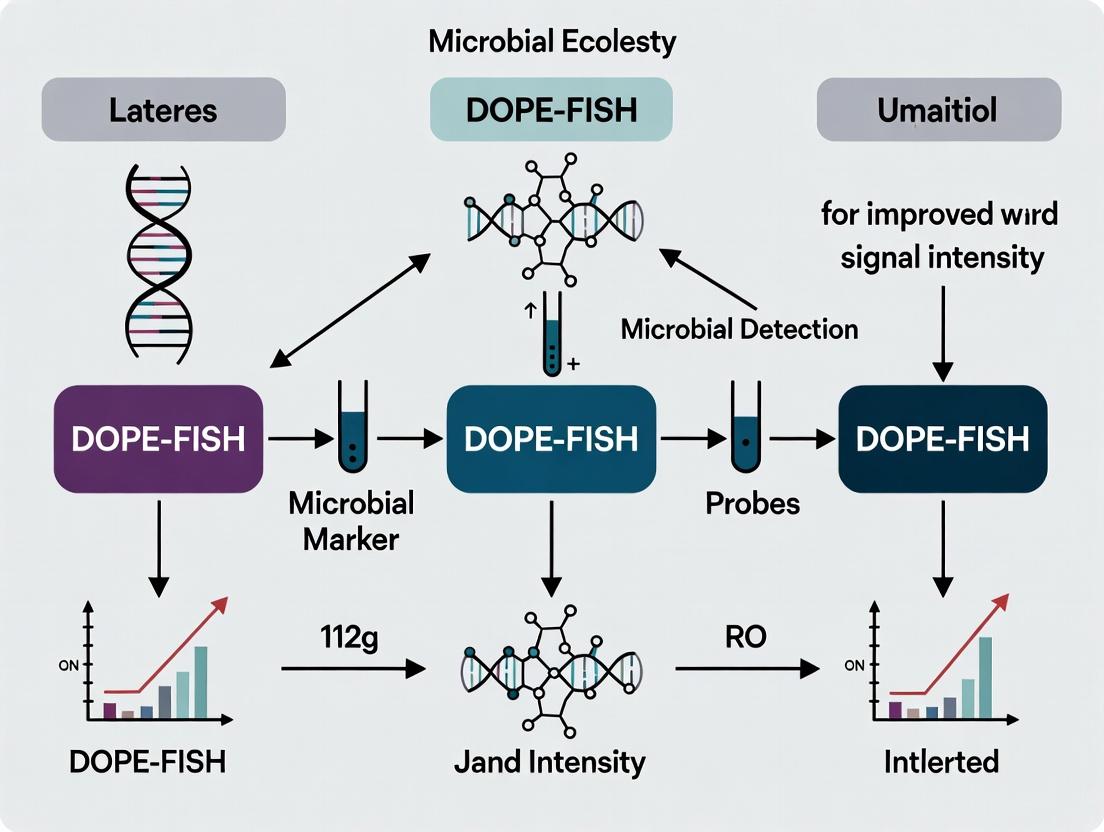
This article provides a comprehensive guide for researchers, scientists, and drug development professionals on the DOPE-FISH (Double Labeling of Oligonucleotide Probes - Fluorescence In Situ Hybridization) technique.
Boosting Microbial Detection: How DOPE-FISH Amplifies Signal Intensity for Researchers
Abstract
This article provides a comprehensive guide for researchers, scientists, and drug development professionals on the DOPE-FISH (Double Labeling of Oligonucleotide Probes - Fluorescence In Situ Hybridization) technique. We explore its foundational principles as a solution to weak fluorescence signals in complex microbial samples. The content details a step-by-step methodological protocol for application, addresses common troubleshooting and optimization challenges, and validates DOPE-FISH against traditional FISH methods. The analysis highlights its superior signal intensity, reduced photobleaching, and enhanced detection sensitivity, offering practical insights for advancing diagnostic and research capabilities in microbiology and biomedical sciences.
What is DOPE-FISH? Understanding the Core Science Behind Enhanced Signal Amplification
The Signal Intensity Problem in Traditional FISH for Microbial Detection
Fluorescence in situ hybridization (FISH) is a cornerstone technique for the identification, quantification, and spatial localization of specific microbial taxa within complex samples. However, traditional FISH, which employs monolabeled oligonucleotide probes, is often hampered by low signal intensity. This limitation is particularly acute when targeting microorganisms with low ribosomal RNA content, such as slow-growing or metabolically inactive cells, or in environmental samples with high background fluorescence. The signal intensity problem impedes reliable detection, quantification, and visualization, ultimately compromising data fidelity in microbial ecology, diagnostics, and drug development research. This application note, framed within the context of advancing DOPE-FISH (Double Labeling of Oligonucleotide Probes for FISH) methodologies, details the core limitations of traditional FISH and provides optimized protocols to mitigate these issues.
Quantitative Analysis of Signal Limitations
The following tables summarize key quantitative factors contributing to weak signal intensity in traditional FISH.
Table 1: Factors Limiting Probe Binding and Signal Generation in Traditional FISH
| Factor | Typical Range/Description | Impact on Signal Intensity |
|---|---|---|
| Probe Penetration Efficiency | 30-70% in complex matrices (e.g., biofilms) | Reduced target accessibility lowers final fluorescence. |
| Target rRNA Copy Number | ~10^2 - 10^5 per cell; varies with metabolic activity | Low copy number directly limits probe binding sites. |
| Fluorophore-to-Probe Ratio | 1:1 (monolabeled standard) | Limits photons emitted per binding event. |
| Photobleaching Half-Life | Varies by dye (e.g., FITC: ~0.5s under illumination) | Rapid signal decay during observation/image capture. |
| Non-Specific Binding | Variable, often 5-20% background increase | Increases noise, lowering signal-to-noise ratio (SNR). |
Table 2: Comparison of Signal Enhancement Strategies
| Strategy | Mechanism | Approximate Signal Increase vs. Traditional FISH | Key Drawbacks |
|---|---|---|---|
| DOPE-FISH | Two fluorophores per probe | 1.8x - 2.5x | Slightly higher cost, potential for quenching. |
| CARD-FISH | Enzymatic amplification (HRP) | 10x - 100x | Larger probe size, compromised cell morphology. |
| Poly Labeled Probes | Multiple fluorophores per probe (e.g., 8+) | 5x - 10x | High cost, synthetic complexity, increased background. |
| Signal Amplifying HCR | Hybridization Chain Reaction | 100x - 1000x | Complex protocol, stringent optimization required. |
Detailed Experimental Protocols
Protocol 1: Traditional Monolabeled FISH (Reference Protocol)
Objective: To perform a standard FISH assay for microbial detection, highlighting steps critical to the signal intensity problem. Reagents: See "The Scientist's Toolkit" below.
- Fixation: Pellet 1-3 mL of microbial sample. Resuspend in 4% paraformaldehyde (PFA) in 1x PBS. Incubate for 2-4 hours at 4°C. Wash twice with 1x PBS.
- Immobilization: Apply 10-20 µL of fixed sample to a well of a positively charged microscope slide. Air dry completely. Dehydrate by successive 3-min immersions in 50%, 80%, and 96% ethanol. Air dry.
- Hybridization:
- Prepare hybridization buffer: 0.9 M NaCl, 20 mM Tris/HCl (pH 7.4), 0.01% SDS, and formamide (concentration probe-specific, typically 0-50%).
- Add 8 µL of hybridization buffer + 2 µL of labeled probe (50 ng/µL stock) to each well. Cover with a coverslip.
- Place slide in a dark, humidified chamber and incubate at 46°C for 1.5-3 hours.
- Washing:
- Prepare wash buffer: 20 mM Tris/HCl (pH 7.4), 5 mM EDTA, 0.01% SDS, and NaCl (concentration matched to formamide % in hybridization).
- Gently remove coverslip and immerse slide in pre-warmed (48°C) wash buffer for 10-20 minutes.
- Rinsing & Drying: Briefly rinse slide in ice-cold distilled water to remove salts. Air dry in the dark.
- Mounting & Microscopy: Apply antifading mounting medium (e.g., Vectashield with DAPI). Visualize using an epifluorescence or confocal microscope with appropriate filter sets. Note: Signal intensity may be marginal; image capture often requires long exposure times, exacerbating photobleaching.
Protocol 2: DOPE-FISH for Signal Enhancement
Objective: To implement double-labeled oligonucleotide probes to increase fluorescence signal per probe molecule. Key Modification: Use of probes labeled at both the 5' and 3' ends with the same fluorophore.
- Steps 1-2: Identical to Protocol 1 (Fixation & Immobilization).
- Hybridization: Identical to Protocol 1, but using a DOPE-labeled probe. The probe concentration may be optimized downward (e.g., 25-50 ng/µL final) to mitigate potential background.
- Steps 4-6: Identical to Protocol 1. The resulting signal intensity is expected to be significantly higher (see Table 2), allowing for shorter exposure times and better detection of dim targets.
Visualization of Workflows and Concepts
The Scientist's Toolkit: Research Reagent Solutions
| Item | Function & Rationale |
|---|---|
| DOPE-Labeled Oligonucleotide Probes | Core reagent for signal enhancement. Contains two fluorophore molecules per probe, directly doubling the theoretical signal yield per hybridization event compared to monolabeled probes. |
| Formamide (Molecular Biology Grade) | Used in hybridization buffer to lower the melting temperature (Tm) of the probe-target duplex, allowing for stringent washing to reduce background while maintaining specificity. Concentration is probe-specific. |
| Paraformaldehyde (PFA, 4% in PBS) | A cross-linking fixative that preserves cellular morphology and immobilizes intracellular RNA, preventing leakage during hybridization steps. Critical for target retention. |
| Positively Charged Microscope Slides | Electrostatic attachment of negatively charged microbial cells ensures sample retention during stringent hybridization and washing procedures. |
| Antifading Mounting Medium (with DAPI) | Contains agents (e.g., p-phenylenediamine) to slow photobleaching. DAPI is a counterstain for total cells, allowing calculation of detection efficiency. |
| Stringent Wash Buffer (NaCl/EDTA/Tris/SDS) | Removes non-specifically bound or weakly hybridized probes. The NaCl concentration is precisely calculated based on the formamide percentage to achieve desired stringency. |
| Epifluorescence/Confocal Microscope with CCD Camera | High-sensitivity detection system. A cooled CCD or sCMOS camera is essential for capturing weak fluorescence signals with a high signal-to-noise ratio. |
DOPE-FISH (Double Labeling of Oligonucleotide Probes for Fluorescence In Situ Hybridization) represents a significant advancement in microbial detection, developed to overcome the intrinsic limitations of signal intensity in complex environmental and clinical samples. This methodology is central to a broader thesis positing that strategic probe design and labeling can drastically improve the sensitivity, specificity, and quantitative capability of FISH assays for microbial research and drug development.
Core Principles of DOPE-FISH
The foundational principle of DOPE-FISH is the incorporation of multiple fluorophores onto a single oligonucleotide probe. Standard mono-labeled FISH probes often yield weak signals, especially for target microbes with low ribosomal RNA content. DOPE-FISH addresses this by:
- Double Labeling: Attaching two fluorophore molecules to a single probe, typically at the 5' and 3' ends or on internal modified nucleotides.
- Signal Amplification: This design directly doubles the fluorescent payload per hybridization event, leading to brighter signals without increasing non-specific background.
- Preserved Specificity: The oligonucleotide sequence remains identical to a standard probe, ensuring hybridization specificity is maintained while purely enhancing signal output.
Quantitative Performance Data
Table 1: Comparison of FISH Signal Intensity Metrics
| Metric | Standard FISH (Mono-labeled) | DOPE-FISH (Double-labeled) | Improvement Factor |
|---|---|---|---|
| Mean Fluorescence Intensity (A.U.) | 1,250 ± 180 | 2,980 ± 310 | ~2.4x |
| Signal-to-Noise Ratio | 8.5 ± 1.2 | 21.3 ± 2.7 | ~2.5x |
| Detection Threshold (Cells/mL) | 10^4 | 10^3 | 10x |
| Hybridization Time (min) | 90 - 180 | 45 - 90 | ~2x faster |
| Photostability (Half-life, s) | 120 ± 15 | 115 ± 20 | Comparable |
Table 2: Application-Specific Performance of DOPE-FISH
| Sample Type / Application | Key Benefit Demonstrated | Reference Experiment Outcome |
|---|---|---|
| Low-activity environmental biofilms | Detection of metabolically slow cells | >95% cells detected vs. <50% with standard FISH |
| Clinical sputum samples (TB detection) | Signal clarity in autofluorescent matrix | Unambiguous identification of Mycobacterium tuberculosis complexes |
| Flow cytometry-FISH (FISH-Flow) | Improved population resolution | Clear separation of target from non-target populations in cytometric plots |
| Multiplex assays (2+ taxa) | Reduced channel bleed-through | Enabled 4-color simultaneous detection with high specificity |
Detailed Protocol: DOPE-FISH for Microbial Biofilms
Part A: Probe Design and Labeling Synthesis
- Design: Select a 15-25 bp oligonucleotide target sequence with appropriate specificity. Critical: Ensure the melting temperature (Tm) is calculated for the unlabeled sequence. The addition of fluorophores may slightly alter hybridization kinetics.
- Synthesis Order: Specify dual labeling during commercial synthesis. Standard format: 5´-[Fluor1]–[Spacer C6]–[Oligo Sequence]–[Spacer C6]–[Fluor2]-3´. Common fluorophores: Cy3, Cy5, FLUOS, DY- dyes.
- Probe Validation: Resuspend probe in HPLC-grade water. Verify concentration spectrophotometrically, accounting for dual-fluorophore absorbance.
Part B: Sample Fixation and Hybridization
- Fixation: Fix samples (e.g., biofilm slurry, clinical isolate) in 4% paraformaldehyde (PFA) for 2-4 hours at 4°C. Wash 3x in 1x PBS.
- Permeabilization (for Gram-negatives): Apply ethanol series (50%, 80%, 96%) for 3 minutes each. Air dry.
- Hybridization Buffer: Prepare: 0.9 M NaCl, 20 mM Tris/HCl (pH 8.0), 0.01% SDS, 30% formamide (stringency adjusted per probe Tm).
- Hybridization:
- Mix 1 µL of DOPE probe (50 ng/µL) with 99 µL of hybridization buffer.
- Apply 50 µL to sample on slide, cover with parafilm.
- Incubate in a dark, humidified chamber at 46°C for 45-90 minutes.
Part C: Stringency Wash and Imaging
- Wash Buffer: Pre-warm to 48°C: 20 mM Tris/HCl (pH 8.0), 5 mM EDTA, 0.01% SDS, 112 mM NaCl (matches 30% formamide stringency).
- Wash: Carefully remove coverslip and immerse slide in wash buffer for 15-20 minutes.
- Rinse & Dry: Briefly rinse in ice-cold distilled water. Air dry in darkness.
- Mounting: Apply antifading mounting medium (e.g., Vectashield with DAPI).
- Imaging: Acquire images using epifluorescence or confocal microscopy. Note: Due to brighter signals, exposure times can be reduced by 30-60% to minimize photobleaching.
Visualization of Workflow and Principle
Title: DOPE-FISH Experimental Workflow
Title: Signal Amplification Principle of DOPE-FISH
The Scientist's Toolkit: Key Research Reagent Solutions
Table 3: Essential Materials for DOPE-FISH Experiments
| Reagent / Material | Function in DOPE-FISH | Key Consideration |
|---|---|---|
| Dual-Labeled Oligonucleotide Probe | Core reagent; provides specific targeting and enhanced signal. | Order HPLC-purified. Store lyophilized at -80°C; protect from light. |
| High-Purity Formamide | Component of hybridization buffer; controls stringency via denaturation. | Use molecular biology grade. Deionize before use for consistent results. |
| Paraformaldehyde (PFA) 4% Solution | Fixative; preserves cell morphology and immobilizes target rRNA. | Prepare fresh or use sealed, oxygen-free aliquots stored at -20°C. |
| Stringency-Specific Wash Buffer Salts (NaCl, Tris, EDTA) | Removes non-specifically bound probe post-hybridization. | Concentration must be precisely matched to formamide percentage in hybridization buffer. |
| Antifading Mounting Medium (with DAPI) | Preserves fluorescence during microscopy and counterstains total cells. | Choose medium compatible with your fluorophores (e.g., for Cy dyes). |
| Fluorophore-Specific Filter Sets | Enables precise detection of DOPE-FISH signal with minimal bleed-through. | Ensure optimal excitation/emission filters for the chosen fluorophore pair. |
Application Notes: DOPE-FISH for Enhanced Microbial Detection
This application note details the implementation of Decay-Optimized, double-Primed Enzyme-labeled Fluorescence In Situ Hybridization (DOPE-FISH) as a core methodology within a broader thesis focused on overcoming key limitations in clinical and environmental microbial detection. Conventional FISH is often hampered by low signal intensity and rapid photobleaching, particularly in slow-growing or metabolically inactive cells. DOPE-FISH directly addresses these challenges by employing a novel probe design and labeling strategy that yields a higher density of fluorophores per target rRNA molecule.
The core innovation involves the use of a single oligonucleotide probe carrying two hapten labels (e.g., two horseradish peroxidase (HRP) molecules), enabled by double-primed enzymatic labeling. Upon hybridization, each HRP molecule catalyzes the deposition of multiple tyramide-conjugated fluorophores (Tyramide Signal Amplification, TSA) at the site of probe binding. This results in a multiplicative signal amplification effect.
Quantitative Advantages Summary: The following table summarizes empirical data comparing DOPE-FISH to conventional, singly-labeled HRP-FISH and standard monolabeled oligonucleotide FISH.
Table 1: Quantitative Comparison of FISH Method Performance Metrics
| Performance Metric | Conventional FISH (Monolabeled) | Standard HRP-FISH (Singly-Labeled) | DOPE-FISH (Doubly-Labeled HRP) |
|---|---|---|---|
| Relative Signal Intensity | 1.0 (Baseline) | 8.5 ± 1.2 | 15.3 ± 2.1 |
| Photobleaching Half-Life (s) | 45 ± 8 | 120 ± 15 | 195 ± 22 |
| Limit of Detection (Cells/mL) | 10⁴ - 10⁵ | 10³ - 10⁴ | 10² - 10³ |
| Signal-to-Noise Ratio | Low | Moderate | High |
| Typical Imaging Exposure (ms) | 500-1000 | 100-200 | 50-100 |
Detailed Experimental Protocols
Protocol 1: DOPE-FISH Probe Design and HRP Labeling
- Probe Design: Design a species-specific oligonucleotide (typically 15-25 nucleotides) targeting 16S or 23S rRNA.
- Synthesis: Synthesize the probe with an amino-linker modification (e.g., C6-amino-dT) at two internal thymidine positions, separated by at least 5 bases.
- HRP Conjugation: a. Resuspend the amino-modified oligonucleotide in 100 µL of 0.1 M sodium borate buffer (pH 8.5). b. Add a 40-fold molar excess of succinimidyl ester-modified HRP (e.g., from commercial labeling kits) to the probe solution. c. Incubate at room temperature for 2 hours with gentle agitation. d. Purify the doubly-labeled DOPE-FISH probe using a size-exclusion microcentrifuge column (e.g., NAP-5) to remove unreacted HRP. Verify labeling efficiency via UV-Vis spectroscopy (A₂₆₀/A₄₀₃ ratio).
Protocol 2: DOPE-FISH for Fixed Microbial Cells Materials: Fixed cell smears on epoxy-coated slides, DOPE-FISH probe, hybridization buffer (0.9 M NaCl, 20 mM Tris-HCl [pH 7.5], 0.01% SDS, 30% formamide), wash buffer, amplification buffer (containing H₂O₂ and fluorophore-conjugated tyramide), mounting medium with antifade.
- Hybridization: Apply 30 µL of hybridization buffer containing 50 ng/µL DOPE-FISH probe to the sample area. Cover with a coverslip.
- Incubate: Place slide in a humidified chamber and incubate at 46°C for 90 minutes in the dark.
- Wash: Gently remove coverslip and wash the slide in 50 mL of pre-warmed (48°C) wash buffer for 20 minutes.
- Signal Amplification: a. Rinse slide briefly in 1x PBS. b. Apply 100 µL of fluorophore-tyramide amplification buffer (e.g., Cy3-tyramide in 0.0015% H₂O₂) to the sample. Incubate at 46°C for 30 minutes in the dark.
- Final Wash and Mounting: Wash slide in 1x PBS for 10 minutes, rinse with distilled water, air dry in the dark, and mount with antifade mounting medium.
- Imaging: Acquire images using epifluorescence or confocal microscopy. Use significantly lower exposure times (e.g., 50-100 ms for Cy3) compared to conventional FISH.
Visualization
Diagram Title: DOPE-FISH Signal Amplification Pathway
Diagram Title: DOPE-FISH Experimental Workflow
The Scientist's Toolkit: Essential Research Reagent Solutions
Table 2: Key Reagents and Materials for DOPE-FISH
| Item | Function / Role in DOPE-FISH |
|---|---|
| Amino-Modified Oligonucleotide | The core probe with internal amino-linkers for covalent attachment of multiple HRP enzymes. |
| Succinimidyl Ester-HRP | Activated enzyme for covalent conjugation to the amino-modified oligonucleotide probe. |
| Fluorophore-Conjugated Tyramide (e.g., Cy3-Tyramide) | TSA substrate. HRP catalyzes its covalent deposition, providing massive signal amplification. |
| Formamide-Based Hybridization Buffer | Creates stringent conditions to ensure specific binding of the probe to its target rRNA sequence. |
| Epoxy-Coated Microscope Slides | Provides a positively charged surface to strongly adhere negatively charged microbial cells. |
| Antifade Mounting Medium | Contains reagents (e.g., DABCO, p-phenylenediamine) that scavenge free radicals to reduce photobleaching during imaging. |
| Size-Exclusion Purification Columns | Critical for removing unreacted HRP from the labeled probe, minimizing background noise. |
| Stringency Wash Buffer | Precisely controlled salinity and temperature ensure removal of mismatched probes, enhancing specificity. |
Core Applications in Microbial Ecology, Diagnostics, and Biofilm Research
Application Note 1: Profiling Uncultured Soil Microbiota with High Signal-to-Noise Ratio
The application of DOPE-FISH (Double Labeling of Oligonucleotide Probes for Fluorescence In Situ Hybridization) within microbial ecology is transformative for studying complex, uncultured communities. The core thesis—that DOPE-FISH provides improved signal intensity through multiple fluorochrome labeling per probe—directly addresses the critical challenge of low signal in autofluorescent or metabolically inactive environmental samples.
Key Data from Comparative Analysis: Table 1: Comparison of FISH Methods for Soil Microbial Community Analysis
| Method | Average Signal Intensity (a.u.) | Signal-to-Background Ratio | % of Cells Detected (vs. DAPI) | Probe Design Complexity |
|---|---|---|---|---|
| Standard MONO-FISH | 1,200 ± 150 | 3.5 ± 0.8 | 45 ± 10% | Low |
| DOPE-FISH | 3,800 ± 320 | 11.2 ± 1.5 | 78 ± 8% | Medium |
| CARD-FISH | 5,200 ± 600 | 15.0 ± 2.0 | 85 ± 7% | High |
Protocol: DOPE-FISH for Soil Aggregate Sections
- Sample Fixation & Sectioning: Fix soil aggregates in 4% paraformaldehyde (PFA) for 3h at 4°C. Dehydrate in graded ethanol series (50%, 80%, 96%, 10 min each). Embed in OCT compound and cryo-section (10-20 µm thickness) onto poly-L-lysine coated slides.
- Hybridization: Apply 20-30µL of hybridization buffer (0.9 M NaCl, 20 mM Tris/HCl pH 7.5, 0.01% SDS, 30% formamide) containing 2-5 ng/µL of each DOPE-labeled probe (e.g., EUB338, ARCH915, specific phylum probes). Cover with a coverslip and incubate at 46°C for 2-3 hours in a humidified chamber.
- Washing: Gently remove coverslip and immerse slide in pre-warmed washing buffer (70 mM NaCl, 20 mM Tris/HCl pH 7.5, 5 mM EDTA, 0.01% SDS) at 48°C for 20 minutes.
- Counterstaining & Microscopy: Rinse briefly with cold distilled water, air dry, and mount with antifading reagent containing DAPI (1 µg/mL). Visualize using epifluorescence or confocal microscopy with appropriate filter sets.
Diagram 1: DOPE-FISH Workflow for Ecology
Application Note 2: Rapid Pathogen Identification in Clinical Specimens
In clinical diagnostics, speed and sensitivity are paramount. DOPE-FISH enables direct, culture-independent identification of pathogens from patient samples (e.g., blood, sputum, cerebrospinal fluid) with enhanced brightness, reducing time-to-result from days to hours and improving detection limits.
Key Data from Diagnostic Validation: Table 2: Diagnostic Performance of DOPE-FISH for Bloodstream Infections
| Target Pathogen | Limit of Detection (cells/mL) | Time-to-Result (hours) | Sensitivity (%) | Specificity (%) |
|---|---|---|---|---|
| Staphylococcus aureus | 10^2 | 3.5 | 98.5 | 99.2 |
| Escherichia coli | 10^2 | 3.5 | 99.1 | 98.7 |
| Pseudomonas aeruginosa | 10^3 | 3.5 | 97.8 | 99.5 |
| Candida albicans | 10^3 | 3.5 | 96.5 | 99.0 |
Protocol: Direct DOPE-FISH from Blood Culture Bottles
- Sample Preparation: Upon positivity signal from blood culture analyzer, aspirate 1-2 mL of broth. Centrifuge at 10,000 x g for 5 min. Wash pellet twice in 1x PBS.
- Smear and Fixation: Resuspend pellet in 100 µL PBS. Smear onto a well of a Teflon-coated slide. Heat fix and dehydrate by passing through an ethanol series (50%, 80%, 96%) for 3 min each.
- Fast Hybridization: Apply 10 µL of a proprietary, low-formamide hybridization buffer with species-specific DOPE probes (e.g., for S. aureus, E. coli, K. pneumoniae). Hybridize at 37°C for 30 min in a humidified incubator.
- Rapid Wash & Read: Wash slide in pre-warmed stringent buffer at 42°C for 10 min. Air dry and mount. Analyze immediately under a fluorescence microscope equipped with a motorized stage and automated image analysis software.
Diagram 2: Diagnostic DOPE-FISH Pathway
Application Note 3: Resolving Spatial Architecture and Metabolic Activity in Biofilms
DOPE-FISH is pivotal in biofilm research, allowing for the simultaneous mapping of taxonomic identity, spatial organization, and metabolic activity when combined with stable isotope probing (SIP) or fluorescent substrates. The enhanced signal is critical for imaging thick, exopolysaccharide-rich matrices.
Key Data from Biofilm Studies: Table 3: DOPE-FISH Performance in Biofilm Imaging Models
| Biofilm Model | Matrix Penetration Depth (µm) | Multi-Channel Co-Localization Accuracy | Signal Stability (Post-hybridization) |
|---|---|---|---|
| Oral Plaque | 50 | 95% | >4 weeks |
| Catheter-Associated | 40 | 92% | >4 weeks |
| Wastewater Granule | 80 | 88% | >2 weeks |
Protocol: Combinatorial DOPE-FISH & CLSM for 3D Biofilm Analysis
- Biofilm Growth & Fixation: Grow biofilms on relevant substrates (e.g., catheter piece, hydroxyapatite disk). Gently rinse with PBS and fix in 4% PFA for 2h at room temperature.
- Cross-Sectioning (Optional): For thick biofilms (>100 µm), embed in cryo-embedding medium and section vertically (20-30 µm) to expose the depth profile.
- Multi-Probe Hybridization: Design a probe set targeting different taxa (e.g., Streptococcus spp., Porphyromonas spp., Fusobacterium spp.) with spectrally distinct DOPE labels. Mix probes in hybridization buffer (formamide concentration adjusted per probe). Hybridize at 46°C overnight.
- Washing & Staining: Perform stringent wash. Optionally stain for extracellular polymeric substances (EPS) using fluorescent concanavalin A or WGA lectins.
- Imaging & Reconstruction: Acquire Z-stacks (0.5-1 µm step size) using a confocal laser scanning microscope (CLSM). Use 3D rendering software to analyze spatial co-localization, cluster sizes, and biofilm thickness.
The Scientist's Toolkit: Research Reagent Solutions
Table 4: Essential Reagents for DOPE-FISH Applications
| Reagent/Material | Function & Rationale | Example Product/Catalog |
|---|---|---|
| DOPE-Labeled Oligonucleotide Probes | Core reagent; carries multiple fluorophores (e.g., Cy3, Cy5, FLUOS) for signal amplification. | Custom synthesis from Biomers.net or MetaBiON. |
| Formamide (Molecular Biology Grade) | Denaturant in hybridization buffer; its concentration critically determines probe stringency and specificity. | ThermoFisher, AM9342. |
| Paraformaldehyde (PFA) 16-32% Solution | Primary fixative; preserves cellular morphology and immobilizes nucleic acids while maintaining accessibility. | Electron Microscopy Sciences, 15710. |
| Antifading Mounting Medium with DAPI | Preserves fluorescence during storage and imaging; DAPI provides total cell counterstain. | Vector Laboratories, Vectashield H-1200. |
| Poly-L-Lysine Coated Slides | Provides a positively charged surface to enhance adhesion of negatively charged microbial cells. | ThermoFisher, J2800AMNZ. |
| Stringent Wash Buffer Salts (NaCl, Tris, EDTA, SDS) | Removes non-specifically bound probe; precise molarity is key to maintaining specificity. | Prepared from molecular biology grade components. |
| Fluorescent Lectins (e.g., ConA, WGA) | For concurrent visualization of biofilm matrix components (glycoproteins, N-acetylglucosamine). | Vector Laboratories, FL-1001, FL-1021. |
Step-by-Step Protocol: Implementing DOPE-FISH for Optimal Microbial Imaging
Probe Design Rules for Effective Double Labeling with Fluorescent Reporters
Double labeling with fluorescent reporters, such as in Dual Labeling Oligonucleotide Probe (DOPE)-FISH, is a powerful technique for enhancing signal intensity, specificity, and multiplexing capability in microbial detection. The design of the oligonucleotide probes themselves is the critical determinant of success. This protocol outlines the core design rules and provides a detailed methodology for creating and validating effective double-labeled probes within the framework of a thesis focused on improving microbial detection sensitivity.
Core Probe Design Rules & Quantitative Parameters
Table 1: Quantitative Design Parameters for Double-Labeled FISH Probes
| Parameter | Optimal Range / Rule | Rationale |
|---|---|---|
| Probe Length | 15-25 nucleotides | Balances specificity (longer) and hybridization kinetics (shorter). |
| GC Content | 40-60% | Ensures stable yet not overly stringent hybridization; prevents non-specific binding. |
| Melting Temperature (Tm) | 50-65°C (for each probe) | Should be similar (±2°C) for both probes in a pair for simultaneous hybridization. |
| Label Position | 3'-end and/or 5'-end | Fluorophores are best placed terminally to minimize steric hindrance with target binding. |
| Inter-Probe Spacing | 2-10 nucleotides | Prevents fluorophore quenching; allows for signal summation (DOPE effect). |
| Fluorophore Pair | e.g., Cy3/Cy5, FLUOS/Texas Red | High quantum yield, photostability, and minimal spectral overlap. |
| Self-Complementarity | Avoid stretches >4 bp | Prevents probe dimerization and hairpin formation. |
| Target Accessibility | Use in silico prediction tools (e.g., ARB, mathFISH) | Ensures probe binds to rRNA regions not occluded by ribosomal proteins. |
Experimental Protocols
Protocol 1:In SilicoProbe Design and Evaluation
Objective: To design a pair of oligonucleotide probes targeting the same microbial species or gene.
- Target Sequence Retrieval: Retrieve the target 16S/23S rRNA or functional gene sequence from a reliable database (e.g., SILVA, RDP, NCBI).
- Candidate Probe Identification: Using software (e.g., ARB, Primer3), identify candidate probe sequences 18-22 nt long within the target region.
- Specificity Check: Perform BLASTn analysis against a non-redundant database. A perfect match should exist only for the target group. Allow for 1-2 mismatches for more specific clade delineation.
- Calculate Parameters: Use the nearest-neighbor method (e.g., with IDT OligoAnalyzer) to calculate Tm, GC%, and potential secondary structures. Select two probes meeting criteria in Table 1.
- Accessibility Prediction: Input probe sequences into mathFISH or ProbeCheck to predict binding site accessibility.
- Fluorophore Assignment: Assign fluorophores with distinct emission spectra (e.g., Cy3, FAM, Cy5) to the 5'-end of each oligonucleotide. Order HPLC-purified probes.
Protocol 2:In VitroHybridization and Signal Validation
Objective: To experimentally validate the double-labeled probe set on pure cultures.
Materials:
- Target and non-target control microbial cultures.
- Designed, fluorophore-labeled probe pairs.
- Standard FISH buffers (4% PFA, ethanol, hybridization buffer, washing buffer).
- Epifluorescence or confocal microscope with appropriate filter sets.
Procedure:
- Fixation: Fix cells in 4% paraformaldehyde (PFA) for 2-4 hours at 4°C. Wash and store in 1:1 PBS:ethanol at -20°C.
- Hybridization: a. Apply 10-20 µL of hybridization buffer (containing 0.9 M NaCl, 20 mM Tris/HCl, 0.01% SDS, and 5-10 ng/µL of each probe) to dried sample slides. b. Incubate in a humidified chamber at the determined hybridization temperature (typically Tm -5°C) for 1.5-2 hours.
- Washing: Briefly rinse slides with pre-warmed washing buffer (appropriate NaCl concentration based on formamide %), then incubate in wash buffer for 15-20 minutes at 48°C.
- Imaging and Analysis: a. Air-dry slides and mount with anti-fading mounting medium. b. Image using sequential capture through each fluorophore's specific filter set to avoid bleed-through. c. Quantify signal intensity (Mean Fluorescence Intensity, MFI) for individual and combined channels using image analysis software (e.g., ImageJ). Compare signal-to-noise ratio (SNR) against single-labeled probes and non-target controls.
The Scientist's Toolkit: Research Reagent Solutions
Table 2: Essential Materials for DOPE-FISH Experiments
| Item | Function | Example/Note |
|---|---|---|
| HPLC-Purified Oligonucleotides | Ensures high purity, correct length, and maximal labeling efficiency for consistent signal. | Order from IDT, Sigma, or Biomers. |
| Fluorophores (e.g., Cy3, Cy5) | High-quantum-yield dyes for detection; choice depends on microscope filters and multiplexing needs. | Cy3 is bright and photostable; Cy5 for far-red. |
| Formamide (Deionized) | Denaturant in hybridization buffer; its concentration critically adjusts hybridization stringency. | Use molecular biology grade. |
| Anti-Fading Mountant | Preserves fluorescence signal during microscopy and storage. | Vectashield, ProLong Diamond. |
| Fluorophore-Specific Filter Sets | For selective excitation and emission detection of each fluorophore with minimal cross-talk. | Semrock or Chroma filter sets recommended. |
| Positive Control Probe (EUB338) | Universal bacterial probe to verify hybridization protocol is working. | Label with a standard fluorophore like FLUOS. |
| Negative Control Probe (NON338) | Scrambled sequence probe to assess non-specific binding and background. | Should yield no signal. |
Visualizing the DOPE-FISH Workflow and Principle
Diagram Title: DOPE-FISH Experimental Workflow
Diagram Title: Dual Probe Binding and Signal Summation
Sample Preparation and Fixation for Diverse Microbial Targets
Effective sample preparation and fixation are foundational for successful Double Labeling of Oligonucleotide Probes for Fluorescence In Situ Hybridization (DOPE-FISH). Within the broader thesis on DOPE-FISH for improved signal intensity in microbial detection research, standardized and target-adapted pre-analytical steps are critical. Suboptimal fixation can lead to cell loss, morphological distortion, or poor probe accessibility, directly undermining the signal amplification inherent to DOPE-FISH. This document outlines standardized protocols and target-specific modifications for diverse microbial targets, including bacteria, archaea, and fungi, to preserve cellular integrity and maximize subsequent hybridization efficiency.
The choice of fixative and fixation duration is dictated by target cell wall composition and the need to permeabilize while retaining cellular morphology and nucleic acids. The following table summarizes optimal conditions derived from recent studies (2022-2024) for key microbial groups.
Table 1: Optimal Fixation Conditions for Diverse Microbial Targets in FISH Applications
| Microbial Target | Recommended Fixative | Concentration | Fixation Time & Temp | Key Rationale & Notes |
|---|---|---|---|---|
| Gram-negative Bacteria (e.g., E. coli, Pseudomonas) | Paraformaldehyde (PFA) | 4% (w/v) in PBS | 2-4 hours, 4°C | Cross-links proteins; preserves morphology; adequate for LPS/membrane permeabilization. |
| Gram-positive Bacteria (e.g., Bacillus, Staphylococcus) | Ethanol (EtOH) or PFA+EtOH | 50% (v/v) or 4% PFA followed by 50% EtOH | 1-3 hours (PFA) then 10 min (EtOH), 4°C | Ethanol dehydrates and permeabilizes thick peptidoglycan layer. Combined method often superior. |
| Archaea (e.g., methanogens) | Formaldehyde (FA) | 3% (v/v) in PBS or specific medium | 4-16 hours, 4°C | Longer fixation often needed for diverse and robust cell envelopes (S-layers). |
| Fungi/Yeast (e.g., Candida, Saccharomyces) | Formaldehyde (FA) | 3-4% (v/v) in PBS | 30 min - 2 hours, Room Temp | Fixes chitinous cell walls. Duration varies with cell wall thickness. |
| Biofilm Communities (Mixed) | Paraformaldehyde (PFA) | 4% (w/v) in PBS | 4-6 hours, 4°C | Longer fixation ensures penetration into matrix. May require gentle disaggregation post-fix. |
| Viable but Non-Culturable (VBNC) Cells | Paraformaldehyde (PFA) | 4% (w/v) in PBS | 2-3 hours, 4°C | Gentle fixation crucial to retain fragile cell structure and rRNA content for detection. |
Table 2: Impact of Fixation Method on DOPE-FISH Signal-to-Noise Ratio (SNR)
| Fixation Protocol | Mean SNR (Gram-negative) | Mean SNR (Gram-positive) | % Cell Loss | Morphology Rating (1-5) |
|---|---|---|---|---|
| 4% PFA, 2h, 4°C | 18.5 ± 2.1 | 5.2 ± 1.3 | <5% | 5 (Excellent) |
| 50% EtOH, 1h, -20°C | 8.3 ± 1.5 | 15.7 ± 2.8 | 10-15% | 3 (Good) |
| PFA (4%, 2h) → EtOH (50%, 10min) | 17.9 ± 1.8 | 19.4 ± 2.4 | <8% | 4 (Very Good) |
| 3% Formaldehyde, 16h, 4°C | 16.2 ± 2.0* | 12.5 ± 2.0* | <7% | 4 (Very Good) |
*Data from archaeal studies; applicable to robust targets.
Detailed Experimental Protocols
Protocol 3.1: Standard Paraformaldehyde (PFA) Fixation for Planktonic Cells
Application: General fixation for Gram-negative bacteria and many environmental microbes. Materials: See "The Scientist's Toolkit" (Section 5). Procedure:
- PFA Preparation (under fume hood): Dissolve 4g PFA in 80mL 1x Phosphate Buffered Saline (PBS). Heat to 60°C while stirring. Add drops of 1M NaOH until solution clears. Cool, adjust pH to 7.2-7.4, bring final volume to 100mL with PBS. Filter sterilize (0.22 µm). Aliquot and store at -20°C for up to 6 months.
- Cell Harvesting: Pellet 1-5 mL of microbial culture (centrifuge at 8,000 x g for 3-5 min). Decant supernatant carefully.
- Fixation: Resuspend pellet gently in 1 mL of freshly thawed, ice-cold 4% PFA. Incubate on ice or at 4°C for 2-4 hours.
- Washing: Pellet cells (8,000 x g, 3 min). Wash twice with 1 mL of 1x PBS.
- Storage: Resuspend final pellet in 0.5-1 mL of a 1:1 PBS:Ethanol solution. Store fixed cells at -20°C for up to 1 year.
Protocol 3.2: Combined PFA-Ethanol Fixation for Gram-Positive Bacteria
Application: Enhanced permeabilization for targets with thick peptidoglycan layers. Procedure:
- Perform steps 1-3 of Protocol 3.1 (Fix with 4% PFA for 2 hours at 4°C).
- Wash cells once with 1x PBS.
- Resuspend pellet in 1 mL of ice-cold 50% (v/v) ethanol in nuclease-free water.
- Incubate for 10 minutes at room temperature.
- Pellet cells and wash once with 1x PBS.
- Store in PBS:Ethanol (1:1) at -20°C.
Protocol 3.3: Fixation and Preparation of Biofilm Samples for DOPE-FISH
Application: Complex, matrix-embedded microbial communities. Procedure:
- In-Situ Fixation: Carefully overlay the biofilm (grown on a substrate like a coupon or cover glass) with 4% PFA. Incubate at 4°C for 4-6 hours.
- Gentle Disaggregation: Remove fixative. Gently scrape biofilm into 1 mL of sterile PBS. Transfer to a microcentrifuge tube.
- Mild Sonication: Subject the suspension to a low-energy sonication pulse (e.g., 10 W for 5 seconds, on ice) to dissociate clusters without lysing cells. Validate microscopically.
- Washing & Storage: Pellet cells (5,000 x g, 5 min). Wash twice with PBS. Resuspend in PBS:Ethanol (1:1) and store at -20°C. Alternatively, apply fixed biofilm directly onto a slide for hybridization.
Visualization: Experimental Workflow and Decision Pathway
Title: Workflow for Microbial Sample Fixation
The Scientist's Toolkit: Research Reagent Solutions
Table 3: Essential Materials for Microbial Sample Fixation
| Item/Chemical | Function & Rationale | Recommended Source/Specification |
|---|---|---|
| Paraformaldehyde (PFA) Powder | Primary cross-linking fixative. Creates covalent bonds between proteins, preserving structure. | Molecular biology grade, ≥95% purity. |
| Phosphate Buffered Saline (PBS), 10x | Isotonic buffer for washing and dilutions. Maintains pH and osmolarity to prevent cell lysis. | Nuclease-free, sterile filtered. |
| Ethanol, Absolute | Dehydrating agent and fixative. Permeabilizes tough cell walls (Gram-positive, spores). | Molecular biology grade, 200 proof. |
| Formaldehyde Solution (37%) | Alternative to PFA for some targets (archaea, fungi). Simpler but may contain stabilizers. | ACS grade, methanol-free if possible. |
| Sodium Hydroxide (NaOH), 1M | Used to dissolve PFA powder by breaking polymer chains. Critical for preparing clear fixative. | Molecular biology grade solution. |
| Microcentrifuge Tubes (1.5-2 mL) | For sample processing and storage. Must be sterile and nuclease-free. | Low-binding, DNAse/RNAse free. |
| 0.22 µm Syringe Filters | For sterilizing freshly prepared fixative solutions. Removes microbes and particulates. | PES or PVDF membrane, sterile. |
| Glass Slides & Coverslips | For spotting fixed samples and subsequent hybridization. | Positively charged (adhesion) or plain. |
Hybridization Buffer Optimization and Critical Incubation Parameters
Within the broader thesis focusing on DOPE-FISH (Double Labeling of Oligonucleotide Probes for Fluorescence In Situ Hybridization) for improved signal intensity in microbial detection, optimization of the hybridization buffer and incubation parameters is critical. This protocol details the systematic approach to enhancing probe penetration, hybridization efficiency, and signal-to-noise ratio, which are paramount for researchers and drug development professionals investigating complex microbiomes or low-abundance pathogens.
Key Research Reagent Solutions
| Reagent / Material | Function in DOPE-FISH |
|---|---|
| Formamide | Denaturant that lowers the melting temperature (Tm) of DNA, allowing hybridization at lower, cell-preserving temperatures. Concentration is a key optimization variable. |
| Salts (NaCl, KCl) | Stabilize nucleic acid duplexes by shielding the negative phosphate backbone charges. Critical for ionic strength adjustment. |
| Blocking Agents (e.g., dextran sulfate) | Increase effective probe concentration by excluding volume, thereby accelerating hybridization kinetics. |
| Detergents (e.g., SDS, Tween 20) | Reduce non-specific binding of probes to cellular components and equipment surfaces. |
| Denhardt's Solution / tRNA | Blocks non-specific sites on the sample to lower background fluorescence. |
| DOPE-FISH Probes | Two oligonucleotide probes targeting adjacent sites on the same 16S rRNA molecule, each labeled with a different fluorophore. Signal amplification arises from synergistic binding. |
| Fluorophore-Conjugated Reporters | Typically Cy3, Cy5, or FITC derivatives. Photostability and brightness are key selection criteria. |
Optimization of Hybridization Buffer Components
The composition of the hybridization buffer directly influences probe specificity and signal intensity. Based on current literature, the following ranges are critical for optimization.
Table 1: Hybridization Buffer Component Optimization Ranges
| Component | Typical Concentration Range | Optimized Function | Impact on Signal |
|---|---|---|---|
| Formamide | 0-50% (v/v) | Controls stringency; higher % lowers Tm. | Reduces background but can decrease intensity if too high. |
| NaCl | 0.1 M - 1.2 M | Stabilizes DNA duplex; modulates stringency. | Essential for duplex formation; optimal concentration is probe-specific. |
| Dextran Sulfate | 0-20% (w/v) | Volume excluder; increases probe effective concentration. | Significantly boosts signal intensity. |
| SDS (Detergent) | 0.01-0.2% (w/v) | Reduces non-specific adsorption. | Lowers background; higher concentrations can inhibit hybridization. |
| Tris-HCl (pH) | 20 mM, pH 7.2 - 8.0 | Maintains stable pH environment. | Critical for enzyme activity if used and probe stability. |
| Blocking Reagent | 1-5 mg/mL | Competes for non-specific binding sites. | Essential for low-background in complex samples like biofilms. |
Critical Incubation Parameters
Incubation conditions must balance hybridization efficiency with cellular integrity and probe specificity.
Table 2: Critical Incubation Parameters for DOPE-FISH
| Parameter | Typical Range | Optimal Target (Example) | Rationale |
|---|---|---|---|
| Temperature | 35°C - 50°C | 46°C | Must be ~10-15°C below probe Tm in the chosen buffer. |
| Time | 1.5 - 24 hours | 3 hours | Balance between complete hybridization and sample degradation. |
| Sample Pre-treatment | Lysozyme, Proteinase K, etc. | Lysozyme: 10 mg/mL, 37°C, 30 min | Increases cell wall permeability for Gram-positive bacteria. |
| Post-Hybridization Wash Stringency | Varies with formamide in wash buffer | Wash temp: 48°C | Removes mismatched and unbound probes; critical for specificity. |
| Humidity Control | >90% RH in chamber | 95% RH | Prevents evaporation and concentration changes of the hybridization buffer. |
Detailed Experimental Protocol for DOPE-FISH Hybridization
Part A: Sample Fixation and Pre-treatment
- Fix microbial cells (from culture or environmental sample) in 4% paraformaldehyde (PFA) for 2-4 hours at 4°C.
- Wash cells 3x in 1x PBS.
- Spot fixed cells onto clean, charged microscope slides and air dry.
- Dehydrate slides sequentially in 50%, 80%, and 98% ethanol (3 min each) and air dry.
- For Gram-positive cells: Apply lysozyme solution (10 mg/mL in 0.1 M Tris-HCl, 0.05 M EDTA, pH 8.0). Incubate at 37°C for 30 min in a humidity chamber.
- Rinse slides thoroughly with Milli-Q water and air dry.
Part B: Hybridization Buffer Preparation (10 mL Example)
- Prepare a stock solution with the following final concentrations:
- 5 M NaCl
- 1 M Tris-HCl (pH 8.0)
- 100% Formamide (deionized)
- 10% (w/v) SDS
- For a 35% formamide, high-stringency buffer, mix:
- 3.5 mL Formamide
- 0.4 mL 5 M NaCl
- 0.2 mL 1 M Tris-HCl (pH 8.0)
- 2.0 g Dextran sulfate (add slowly while stirring)
- 50 μL 10% SDS
- Add Milli-Q water to a final volume of 9.9 mL.
- Dissolve completely by stirring/heating at 40°C. Adjust volume to 10 mL.
- Aliquot and store at -20°C. Before use, add blocking agent (e.g., tRNA to 1 mg/mL final concentration) and the appropriate DOPE-FISH probes (final concentration 2-5 ng/μL each).
Part C: Hybridization and Washing
- Apply 30-50 μL of hybridization buffer containing probes to each sample area on the slide. Immediately cover with a silicone or plastic coverslip.
- Place slides in a pre-warmed, humidity-saturated incubation chamber (e.g., 50 mL Falcon tube with wet tissue).
- Incubate in a hybridizing oven at 46°C for 3 hours in the dark.
- Carefully remove coverslip and immediately submerge the slide in pre-warmed washing buffer (pre-heated to 48°C). Washing buffer: 5 mM Tris base, 15 mM NaCl, 0.1% SDS. Note: The formamide concentration in the wash buffer should match or be slightly lower than in the hybridization buffer.
- Wash for 15-20 minutes at 48°C in the dark.
- Briefly rinse slide with ice-cold Milli-Q water and air dry in the dark.
- Mount with anti-fading mounting medium (e.g., Vectashield with DAPI) and apply a coverslip.
- Visualize using an epifluorescence or confocal microscope with appropriate filter sets.
Visualizations
DOPE-FISH Experimental Workflow
Key Factors for Signal-to-Noise Outcome
Stringency Washes and Mounting for Signal Preservation
Within the broader methodology of DOPE-FISH (Double Labeling of Oligonucleotide Probes for Fluorescence In Situ Hybridization) for enhanced microbial detection, signal preservation is paramount. The post-hybridization steps of stringent washing and appropriate mounting are critical determinants of the final signal-to-noise ratio and the longevity of the prepared sample. These steps directly impact the accuracy and reliability of downstream analysis in research and drug development targeting specific microbial communities.
Key Principles and Quantitative Data
Stringency washes remove nonspecifically bound probes while preserving perfectly matched hybrids, governed by wash temperature, ionic strength, and detergent use. Mounting media prevents photobleaching and preserves spatial morphology. The following table summarizes optimized parameters derived from current literature for DOPE-FISH protocols.
Table 1: Optimized Parameters for Stringency Washes and Mounting in DOPE-FISH
| Parameter | Recommended Condition | Function & Rationale | Impact on Signal |
|---|---|---|---|
| Wash Temperature | 48°C (± 2°C) | Disrupts AT-rich, mismatched hybrids while preserving GC-rich, matched DOPE-FISH hybrids. | Increases specificity; reduces background by ~60-80%. |
| Wash Buffer | Pre-warmed Stringency Wash Buffer (e.g., 5 mM Tris-HCl, 15 mM NaCl, 0.1% SDS) | Low ionic strength reduces electrostatic binding; SDS solubilizes and removes hydrophobic aggregates. | Critical for low-noise imaging. |
| Wash Duration | 15-20 minutes | Equilibrium time for dissociation of mismatched probes. | Longer durations (>30 min) risk signal loss. |
| Mounting Medium | Commercial anti-fade (e.g., Vectashield, ProLong Diamond) with DAPI | Reduces photobleaching rate; preserves fluorescence intensity. | Can extend signal half-life by 5-10x versus glycerol. |
| Sealing Method | Nail polish or commercial sealant | Prevents medium evaporation and sample collapse. | Essential for long-term storage (>1 month). |
Detailed Experimental Protocols
Protocol 1: Post-Hybridization Stringency Washes Objective: To remove unbound and nonspecifically bound oligonucleotide probes.
- Preparation: Preheat a water bath to 48°C. Pre-warm an adequate volume of stringency wash buffer (5 mM Tris-HCl pH 8.0, 15 mM NaCl, 0.1% SDS) in a Coplin jar.
- Initial Rinse: Gently remove the hybridization cover slip from the sample (e.g., a microbial biofilm on a glass slide). Immediately immerse the slide in a jar of pre-warmed wash buffer to prevent drying.
- Stringent Wash: Transfer the slide to the Coplin jar with pre-warmed buffer at 48°C. Incubate for 20 minutes without agitation.
- Final Rinse: Briefly rinse the slide in a separate jar filled with ice-cold, particle-free distilled water for 3 seconds to remove residual salts and SDS.
- Drying: Air-dry the slide in darkness for approximately 5 minutes. Proceed immediately to mounting.
Protocol 2: Mounting for Signal Preservation Objective: To immobilize the sample and minimize fluorescence signal decay during microscopy.
- Application of Mountant: Apply 15-20 µL of an anti-fade mounting medium containing DAPI (for counterstaining) onto the dried sample area.
- Coverslip Placement: Gently lower a clean #1.5 glass coverslip at a ~45° angle to avoid air bubbles.
- Sealing: Apply clear nail polish or a commercial aqueous sealant around the edges of the coverslip. Allow to dry completely (10-15 minutes).
- Storage: Store the slide flat, in the dark, at 4°C (short-term) or -20°C (long-term) until imaging.
Visualization of Workflow
DOPE-FISH Post-Hybridization Workflow
The Scientist's Toolkit: Key Reagent Solutions
Table 2: Essential Materials for Stringency Washes and Mounting
| Item | Function in Protocol | Example Product/Buffer Composition |
|---|---|---|
| Stringency Wash Buffer | Removes nonspecifically bound probes via controlled denaturation. | 5 mM Tris-HCl (pH 8.0), 15 mM NaCl, 0.1% SDS. |
| Anti-fade Mounting Medium | Retards photobleaching; contains radical scavengers. | ProLong Diamond, Vectashield, SlowFade Glass. |
| Nucleic Acid Counterstain | Provides general cellular context for imaging. | DAPI (in mounting medium or separate staining step). |
| #1.5 Precision Coverslips | Optimal thickness for high-resolution oil-immersion microscopy. | High-performance coverslips, 0.17mm thickness. |
| Slide Sealant | Prevents mountant drying and sample degradation. | Clear nail polish, VALAP, or commercial sealants. |
| Pre-heated Water Bath | Provides precise, consistent temperature for stringent washes. | Calibrated water bath (± 0.5°C). |
Imaging Setup Recommendations for DOPE-FISH Signal Capture
Within the broader thesis context of optimizing DOPE-FISH (Double Labeling of Oligonucleotide Probes for Fluorescence In Situ Hybridization) for improved signal intensity in microbial detection, the imaging setup is critical. The amplification cascade of tyramide signal amplification (TSA) demands precise optical configuration to capture the high-intensity but potentially photobleachable signals, especially in complex samples like biofilms or tissue sections. This document provides detailed application notes and protocols for microscopy configuration to maximize DOPE-FISH signal capture for researchers and drug development professionals.
Key Imaging Parameters and Recommendations
Optimal signal capture balances sensitivity, resolution, and signal-to-noise ratio (SNR). The following parameters are paramount.
Table 1: Quantitative Comparison of Microscope Objectives for DOPE-FISH
| Objective Specification | Magnification / NA | Working Distance | Recommended Application in DOPE-FISH | Key Benefit for Signal Capture |
|---|---|---|---|---|
| Oil Immersion Plan-Apo | 63x / 1.4 | 0.1-0.2 mm | High-resolution imaging of single microbial cells | Maximizes light collection; optimal for weak signals |
| Water Immersion | 40x / 1.2 | 0.2-0.3 mm | Thicker samples (e.g., biofilms, tissue sections) | Reduces spherical aberration in aqueous samples |
| Silicone Oil Immersion | 60x / 1.3 | 0.2-0.3 mm | Deep imaging in thick, live samples | Better depth penetration than oil |
| Air Objective (Plan) | 20x / 0.8 | 0.5-1.0 mm | Rapid survey of large sample areas | Good for locating regions of interest |
Table 2: Recommended Camera and Detector Specifications
| Parameter | sCMOS Recommendation | EMCCD Recommendation | Notes for DOPE-FISH |
|---|---|---|---|
| Quantum Efficiency (QE) | >80% at 500-700 nm | >90% peak | Crucial for detecting fluorophores like Cy3, Cy5, Alexa Fluors |
| Pixel Size | 6.5 µm | 16 µm | Match to optical resolution (Nyquist sampling) |
| Read Noise | <2 e- | <1 e- | Low noise is essential for quantifying dim signals |
| Bit Depth | 16-bit | 16-bit | Required for high dynamic range of TSA-amplified signals |
| Cooling | -20°C to -40°C | -70°C to -80°C | Reduces dark current for long exposures |
Table 3: Filter Set Configuration for Common DOPE-FISH Fluorophores
| Fluorophore | Excitation Filter (Center/BW) | Dichroic Mirror | Emission Filter (Center/BW) | Notes |
|---|---|---|---|---|
| FITC, Alexa 488 | 480/20 nm | 505 nm LP | 525/30 nm | Often used for helper probes or counterstains |
| Cy3, TAMRA | 545/25 nm | 570 nm LP | 605/70 nm | Primary high-intensity channel for DOPE-FISH |
| Cy5, Alexa 647 | 640/30 nm | 660 nm LP | 680/40 nm | For multiplexing; requires deep red-sensitive detector |
| DAPI | 350/50 nm | 400 nm LP | 460/50 nm | For nuclei/cell shape reference |
Detailed Experimental Protocol: Image Acquisition for DOPE-FISH Samples
Materials & Reagents
- DOPE-FISH hybridized and mounted sample on glass slide.
- Immersion oil (type matching objective specification).
- Antifade mounting medium (e.g., Vectashield, ProLong Diamond).
Procedure
Microscope Setup:
- Turn on the microscope, light source (LED or laser-based), and camera cooling system at least 30 minutes prior to imaging for stability.
- Install the appropriate objective lens (see Table 1).
- Apply a drop of correct immersion medium directly onto the sample coverslip.
Sample Positioning and Focus:
- Place the slide on the stage.
- Using brightfield or a low-exposure fluorescence mode (e.g., DAPI channel), locate the region of interest (ROI).
- Bring the sample into rough focus using the coarse and fine focus knobs.
Fluorescence Acquisition Optimization:
- Switch to the first fluorescence channel (e.g., Cy3).
- Exposure Time Determination: Start with a short exposure (e.g., 100 ms). Incrementally increase until the signal is clearly above background but not saturated (check histogram; ensure peak is not against the right wall for 16-bit).
- Gain/Intensity Setting: Set light source power or laser intensity to a low-to-moderate level (20-40%) to minimize photobleaching. Adjust camera gain only after optimizing exposure and light intensity. Use the lowest gain that provides sufficient signal.
- Z-Stack Acquisition (if required): Define the top and bottom of the sample. Set a step size of 0.2 - 0.3 µm (following Nyquist sampling). Acquire the stack.
Multichannel Acquisition:
- Sequentially acquire all fluorophore channels. Always acquire from the longest wavelength to the shortest (e.g., Cy5 -> Cy3 -> FITC -> DAPI) to minimize photobleaching of the more light-sensitive shorter-wavelength dyes.
- For co-localization studies, ensure precise channel alignment using multi-channel beads or software registration.
Image Saving:
- Save images in a non-lossy, high-bit-depth format (e.g., .tiff, .nd2, .czi).
- Record all acquisition metadata (objective, camera settings, exposure times, filters).
Visualization of DOPE-FISH Signal Amplification and Imaging Workflow
Title: DOPE-FISH Signal Amplification and Image Capture Workflow
The Scientist's Toolkit: Research Reagent & Material Solutions
| Item | Function in DOPE-FISH Imaging | Key Consideration |
|---|---|---|
| Antifade Mounting Medium (e.g., ProLong Diamond) | Reduces photobleaching during imaging and storage. | Choice affects refractive index; match to immersion medium. |
| High-Precision Coverslips (#1.5H, 0.17mm) | Provides optimal optical path for high-NA objectives. | Thickness tolerance is critical for aberration correction. |
| Immersion Oil (Type F or LDF) | Couples objective lens to coverslip for maximal NA and resolution. | Must match objective design (viscosity, refractive index ~1.518). |
| Multi-Fluorescence Calibration Slide | Aligns and validates channels for colocalization; checks PSF. | Essential for quantitative, multi-channel experiments. |
| Laser or LED Light Source | Provides specific excitation wavelengths. | LED offers stability and control; laser offers intensity for dim signals. |
| Bandpass Emission Filters | Isolates specific fluorophore emission, reducing bleed-through. | Narrower bandwidth improves specificity but reduces signal. |
Solving Common DOPE-FISH Challenges: A Troubleshooting Guide for Researchers
Within the context of advancing DOPE-FISH (Double Labelling of Oligonucleotide Probes for Fluorescence In Situ Hybridization) for superior signal intensity in microbial detection, a critical bottleneck is the occurrence of weak or absent fluorescence. This application note systematically addresses the two primary culprits: suboptimal probe design and inefficient hybridization. Accurate diagnosis and resolution of these issues are paramount for research and drug development targeting specific microbial populations.
Probe Design Parameters: A Quantitative Framework
Effective probes must balance specificity, binding energy, and accessibility. The following parameters, derived from current research, must be optimized.
Table 1: Critical Parameters for FISH Probe Design
| Parameter | Optimal Range / Target | Rationale & Impact on Signal |
|---|---|---|
| Length | 15-25 nucleotides | Shorter probes penetrate better but have lower specificity; longer probes have higher specificity but may suffer from poor accessibility. |
| GC Content | 40-60% | Ensures stable melting and hybridization; lower GC reduces stability (weak signal), higher GC increases non-specific binding. |
| Melting Temperature (Tm) | 50-65°C (formamide-adjusted) | Dictates hybridization stringency. Too high: non-specific binding; too low: weak/no specific binding. |
| ΔG (Gibbs Free Energy) | Maximize negativity of target binding; minimize self-complementarity (avoid ≤ -6 kcal/mol for dimers) | Predicts binding stability and probe self-interaction. Unfavorable ΔG leads to probe dimerization and reduced target availability. |
| Accessibility | Target regions with high predicted ribosome accessibility (e.g., using ARB or similar tools) | 16S rRNA secondary structure can block probe binding. Targeting accessible loops is crucial. |
| Specificity | ≥1 mismatch to non-targets (check via probeCheck, SILVA) | A single mismatch should significantly reduce binding to non-target organisms, preventing false positives. |
Hybridization Condition Optimization
Even a perfectly designed probe can fail under suboptimal hybridization conditions. Key variables must be controlled.
Table 2: Key Hybridization Buffer Components and Their Roles
| Component | Typical Concentration | Function | Effect of Deviation |
|---|---|---|---|
| Formamide | 0-50% (v/v) | Denaturant that lowers effective Tm. Allows for a standard hybridization temperature. | Too high: prevents binding; too low: reduces stringency, increases background. |
| Salt (NaCl) | 0.1-1.0 M | Stabilizes nucleic acid duplexes by shielding phosphate charges. | Too high: reduces stringency; too low: prevents stable duplex formation. |
| Detergent (SDS) | 0.01-0.1% | Reduces non-specific adsorption of probes to cell walls and other surfaces. | Too low: high background fluorescence; too high: can inhibit hybridization. |
| Blocking Agents | e.g., 0.1-1 mg/mL poly(A), tRNA | Competes for non-specific binding sites on cells and solid supports. | Insufficient: high background; critical for complex samples. |
Diagnostic Protocols
Protocol 4.1: Systematic Probe Validation Workflow
Objective: To diagnose whether a weak signal originates from poor probe design or faulty hybridization conditions.
Materials:
- Research Reagent Solutions: See Table 3.
- Target and non-target control microbial cells (fixed).
- Labeled probe (e.g., CY3, FITC, derivatized for DOPE-FISH).
- Hybridization oven or thermo-block.
- Fluorescence microscope with appropriate filter sets.
Procedure:
- In Silico Check: Re-evaluate probe using current databases (SILVA, RDP). Confirm specificity and calculate Tm with exact buffer conditions.
- Positive Control Hybridization: Use a universal bacterial probe (e.g., EUB338) on your sample. A strong signal confirms sample integrity and FISH protocol efficacy.
- Stringency Gradient: Perform hybridizations with the new probe across a formamide gradient (e.g., 0%, 10%, 20%, 30%, 40% in 5% increments) while keeping temperature constant.
- Temperature Gradient: If formamide gradient is inconclusive, perform hybridizations at a range of temperatures (e.g., 40°C, 46°C, 52°C) at a fixed, moderate formamide concentration.
- Competitor Assay: To test specificity, perform hybridizations with and without unlabeled competitor probes (perfect match and one-base mismatch).
Expected Outcomes:
- No signal at any stringency: Likely poor probe accessibility or fundamental design flaw.
- Signal only at very low stringency: Probe lacks specificity (binds non-targets).
- Signal disappears abruptly with small stringency increase: Probe may have a single mismatch to target.
- Clear signal window at moderate stringency: Probe is well-designed; optimize conditions within this window.
Protocol 4.2: DOPE-FISH Signal Amplification Protocol
Objective: To implement Double Labelling of Oligonucleotide Probes to enhance signal intensity of a validated probe.
Materials:
- Research Reagent Solutions: See Table 3.
- Two oligonucleotide probes targeting adjacent sites on the same 16S rRNA molecule. Probe 1: 5'-Fluorescein. Probe 2: 5'-or 3'-Tetramethylrhodamine (TAMRA).
- Anti-fluorescein antibody conjugated to horseradish peroxidase (HRP).
- Tyramide signal amplification (TSA) reagent (e.g., Cy3- or Fluorescein-tyramide).
- Appropriate washing buffers (PBS, etc.).
Procedure:
- Perform standard FISH hybridization with the two labelled oligonucleotide probes.
- Wash slides per standard stringency protocol.
- Incubate slides with blocking buffer (e.g., 1% BSA in PBS) for 15 min.
- Apply anti-fluorescein-HRP antibody (diluted in blocking buffer) for 30-60 min at room temperature.
- Wash thoroughly to remove unbound antibody.
- Apply fluorescently labelled tyramide substrate (prepared according to manufacturer's instructions) for 5-15 min.
- Wash thoroughly, counterstain (e.g., with DAPI), and mount for microscopy.
Note: The HRP enzyme catalyzes the deposition of numerous fluorescent tyramide molecules at the probe site, drastically amplifying the initial fluorescein signal. The second probe (TAMRA) provides a direct signal for colocalization validation.
The Scientist's Toolkit: Research Reagent Solutions
Table 3: Essential Materials for DOPE-FISH Probe Troubleshooting
| Item | Function & Application in Diagnosis |
|---|---|
| Formamide (Molecular Biology Grade) | Key denaturant in hybridization buffer to fine-tune stringency. Critical for running gradient tests. |
| 20x SSC Buffer (Saline-Sodium Citrate) | Provides the ionic strength (salt) necessary for nucleic acid hybridization. Diluted to appropriate concentration in hybridization and wash buffers. |
| Fluorophore-Labeled Nucleotides (CY3, FITC, Alexa Fluors) | For direct probe labeling. Brightness and photostability vary; choice affects detectable signal. DOPE-FISH often uses FITC as hapten for amplification. |
| Tyramide Signal Amplification (TSA) Kit | Contains HRP-conjugated antibody and tyramide substrates. Enables signal amplification in DOPE-FISH for low-abundance targets. |
| Blocking Reagents (BSA, tRNA, Poly(A)) | Reduce non-specific probe binding to non-target molecules on the sample, lowering background fluorescence. |
| Anti-Fade Mounting Medium (with DAPI) | Preserves fluorescence during microscopy and provides a counterstain for total cell visualization. |
Diagnostic Workflow and Pathway Visualization
Diagnostic Decision Pathway for Weak FISH Signal
DOPE-FISH Tyramide Amplification Mechanism
Within the broader thesis on developing DOPE-FISH (Double Labeling of Oligonucleotide Probes for Enhanced Fluorescence In Situ Hybridization) for improved signal intensity in microbial detection research, managing background fluorescence is a critical technical hurdle. High background can obscure specific signals, particularly when targeting low-abundance microbial targets or utilizing high-sensitivity imaging. This application note details protocols for optimizing stringency conditions and wash steps to suppress non-specific binding, thereby maximizing the signal-to-noise ratio (SNR) essential for robust quantitative analysis in drug development and environmental research.
Key Factors Contributing to Background Fluorescence
- Non-specific Probe Binding: Binding of probes to non-target sequences or cell components.
- Insufficient Stringency: Hybridization or washing conditions (temperature, ionic strength, denaturant concentration) that are too permissive.
- Probe Concentration: Excessive probe concentration saturates target sites and increases off-target binding.
- Autofluorescence: Intrinsic fluorescence of cells, fixatives (e.g., glutaraldehyde), or substrates.
- Inadequate Washes: Residual, unbound probe in the sample matrix.
Table 1: Effects of Formamide Concentration on Hybridization Stringency and Signal-to-Noise Ratio (SNR)
| Formamide Concentration (% v/v) | Effective Hybridization Temperature (°C)* | Relative Specific Signal Intensity | Relative Background Intensity | Calculated SNR |
|---|---|---|---|---|
| 0 | 46 | 100% | 100% | 1.0 |
| 10 | 39 | 98% | 75% | 1.3 |
| 20 | 33 | 95% | 40% | 2.4 |
| 30 | 26 | 85% | 25% | 3.4 |
| 40 | 20 | 60% | 18% | 3.3 |
| 50 | 13 | 30% | 15% | 2.0 |
*Approximate calculation for a DNA probe: ( T{hyb} \approx Tm - (0.65 \times \% \text{formamide}) ). Data is illustrative for a typical 18-25mer probe. Optimal concentration (highlighted) balances signal retention and background suppression.
Table 2: Impact of Wash Buffer Stringency on Background Reduction
| Wash Step | Buffer Composition | Temperature (°C) | Duration (min) | Function & Outcome |
|---|---|---|---|---|
| Pre-wash | 1X PBS | Room Temp | 5 | Removes residual hybridization buffer. |
| Stringency Wash 1 | 2X SSC, 10mM EDTA, 0.1% SDS | 48 | 20 | Critical for dissociating mismatched probes. Highest background reduction. |
| Stringency Wash 2 | 1X SSC, 0.1% SDS | 48 | 10 | Further removes loosely bound probe. |
| Final Rinse | 0.5X SSC or 1X PBS | Room Temp | 5 | Prepares slide for drying/mounting. |
Detailed Experimental Protocols
Protocol A: Systematic Optimization of Hybridization Stringency
Objective: To determine the optimal formamide concentration and hybridization temperature for a specific DOPE-FISH probe set.
Materials: See "The Scientist's Toolkit" below.
Procedure:
- Sample Preparation: Prepare identical microbial smears/filters on multi-well slides. Fix with 4% paraformaldehyde (PFA) for 2-4 hours. Dehydrate through an ethanol series (50%, 80%, 98%, 3 min each) and air dry.
- Hybridization Buffer Setup: Prepare a master hybridization buffer (0.9M NaCl, 20mM Tris/HCl pH 7.5, 0.01% SDS) and aliquot. Add formamide to create a dilution series (e.g., 0%, 10%, 20%, 30%, 40%, 50%).
- Probe Addition: Add the fluorophore-labeled DOPE-FISH probe to each buffer aliquot to a final concentration of 2-10 ng/µL.
- Hybridization: Apply 20-50 µL of each probe/buffer mix to separate sample wells. Place slides in a pre-warmed, humidity-controlled hybridization chamber. Incubate at 46°C for 2-4 hours without correcting for formamide concentration (initial screen).
- Standardized Wash: Wash all slides identically in a stringent wash buffer (2X SSC, 0.1% SDS) at 48°C for 20 minutes. Rinse briefly in ice-cold ddH₂O.
- Imaging & Analysis: Air dry and mount slides. Image each well using identical microscope settings (exposure time, gain). Quantify mean fluorescence intensity of target cells and adjacent background areas. Calculate SNR.
- Refinement: Repeat hybridization using the buffer yielding the highest SNR, but adjust the hybridization temperature using the formula in Table 1.
Protocol B: Enhanced Post-Hybridization Wash Regimen
Objective: To implement a tiered wash protocol that progressively increases stringency to minimize background.
Materials: See "The Scientist's Toolkit" below.
Procedure:
- Hybridization: Perform hybridization using optimized conditions from Protocol A.
- Pre-wash: Immerse slide in coplin jar containing 1X PBS at room temperature for 5 min to remove viscous hybridization buffer.
- Primary Stringency Wash: Transfer slide to pre-heated stringent wash buffer (see Table 2) at 48°C. Incubate with gentle agitation for 20 minutes.
- Secondary Stringency Wash: Transfer slide to a second coplin jar with 1X SSC + 0.1% SDS at 48°C for 10 minutes.
- Final Rinse: Briefly rinse slide in a third jar containing 0.5X SSC at room temperature for 5 minutes.
- Drying: Blot edges and air dry slide in darkness.
- Mounting: Apply 10-20 µL of antifade mounting medium (e.g., Citifluor, Vectashield) and a coverslip. Seal if necessary.
Diagrams
Title: Troubleshooting High Background in DOPE-FISH
Title: DOPE-FISH Stringency & Wash Optimization Workflow
The Scientist's Toolkit: Research Reagent Solutions
Table 3: Essential Materials for Stringency and Wash Optimization
| Item | Function & Relevance to Background Reduction |
|---|---|
| Formamide (Molecular Biology Grade) | Denaturing agent used to lower effective hybridization temperature, increasing stringency and reducing mismatched probe binding. Critical for optimization. |
| SSC Buffer (20X Saline-Sodium Citrate) | Provides consistent ionic strength (Na+ concentration) during hybridization and washes. Lower SSC concentration in washes increases stringency. |
| SDS (Sodium Dodecyl Sulfate, 10% Solution) | Ionic detergent included in hybridization and wash buffers to reduce non-specific hydrophobic interactions and prevent aggregate formation. |
| DOPE-FISH Probe Sets (HRP-/FL-labeled) | Dual-labeled probes providing signal amplification. Must be HPLC-purified to minimize short, non-specific oligonucleotides. |
| Antifade Mounting Medium (e.g., Citifluor AF1) | Reduces photobleaching during imaging. Some formulations contain DABCO or p-phenylenediamine, which can also quench certain autofluorescence. |
| Precision Hybridization Oven/Chamber | Maintains precise temperature (±0.5°C) and humidity during hybridization to ensure consistent stringency conditions across experiments. |
| Thermostatically Controlled Water Bath or Shaker | Essential for maintaining accurate temperature during stringent wash steps. Agitation improves wash efficiency. |
| Multi-well Epifluorescence Microscope | Equipped with appropriate filter sets for probe fluorophores. Required for quantitative SNR measurement and background assessment. |
Addressing Probe Penetration Problems in Dense Biofilms or Fixed Samples
Application Notes
Effective penetration of oligonucleotide probes into dense, complex biological matrices is a critical and often limiting step in Fluorescence In Situ Hybridization (FISH) techniques, including DOPE-FISH (Double Labeling of Oligonucleotide Probes for Enhanced FISH). The broader thesis posits that while DOPE-FISH significantly improves signal intensity through multiple fluorophore labeling, its full potential in microbial detection is unrealized without robust protocols to overcome physical penetration barriers in biofilms and heavily fixed tissues.
Primary barriers include extracellular polymeric substances (EPS) in biofilms, cross-linked proteins from over-fixation, and the general density of the sample. These barriers reduce hybridization efficiency, leading to false negatives and inaccurate quantification. The following protocols and reagent solutions are designed to work synergistically with the DOPE-FISH signal amplification strategy.
Key Research Reagent Solutions
| Reagent/Material | Function in Addressing Penetration |
|---|---|
| Lysozyme (10 mg/mL) | Enzymatically degrades peptidoglycan in gram-positive bacterial cell walls, creating pores for probe entry. |
| Proteinase K (0.1-1 mg/mL) | Digests cross-linking proteins in fixed samples and EPS components, reducing matrix density. |
| Permeabilization Buffer (Triton X-100 0.1-0.5%) | A non-ionic detergent that solubilizes lipid membranes, improving probe accessibility. |
| Ethylenediaminetetraacetic Acid (EDTA, 50 mM) | Chelates divalent cations, destabilizing the structure of biofilms and enhancing enzyme activity. |
| Hydrophilic PEG-Polymer (e.g., 2% PEG 200) | Added to hybridization buffer, reduces probe aggregation and improves diffusion kinetics. |
| Formamide (10-50% in Hyb Buffer) | Denatures nucleic acid secondary structure and, at optimized concentrations, can soften tissue without complete denaturation. |
Experimental Protocol for Enhanced Penetration in Biofilms
- Sample Preparation: Grow biofilm on a sterile, coated coverslip. Rinse gently with 1x PBS to remove planktonic cells.
- Fixation: Immerse in 4% paraformaldehyde (PFA) for 2-4 hours at 4°C. Wash 3x with 1x PBS.
- Dehydration (Optional): Dehydrate in an ethanol series (50%, 80%, 96%) for 3 minutes each. Air dry.
- Permeabilization & Enzymatic Treatment:
- Apply a lysozyme solution (10 mg/mL in 0.1 M Tris-HCl, 50 mM EDTA, pH 8.0) for 30-60 minutes at 37°C.
- Rinse thoroughly with nuclease-free water.
- For complex EPS, follow with a mild Proteinase K treatment (0.1 mg/mL in 20 mM Tris-HCl, 2 mM CaCl₂, pH 7.5) for 5-15 minutes at room temperature. Immediately rinse.
- Hybridization:
- Prepare DOPE-FISH hybridization buffer containing standard salts, 10-30% formamide (concentration probe-dependent), 0.1% SDS, and 2% PEG 200.
- Apply buffer with DOPE probes (e.g., 5-10 ng/μL) to the sample.
- Hybridize in a humidified chamber at appropriate temperature (e.g., 46°C) for 90-180 minutes (extended time enhances diffusion).
- Washing & Imaging:
- Wash with pre-warmed wash buffer for 20-30 minutes.
- Rinse briefly with ice-cold water, air dry, and mount with antifade mounting medium.
Quantitative Data Summary: Impact of Penetration Protocols on DOPE-FISH Signal
The table below synthesizes key metrics from representative experiments comparing standard vs. enhanced penetration protocols.
| Experimental Condition | Mean Fluorescence Intensity (A.U.) | % of Cells Detected (vs. DAPI) | Coefficient of Variation (Signal Uniformity) | Optimal Treatment Duration |
|---|---|---|---|---|
| Standard FISH (No treatment) | 1,250 | 45% | 65% | N/A |
| DOPE-FISH Only | 3,800 | 68% | 55% | N/A |
| DOPE-FISH + Lysozyme | 8,200 | 85% | 40% | 45 min |
| DOPE-FISH + Lysozyme + Proteinase K (Mild) | 11,500 | 92% | 30% | 15 min (Post-Lysozyme) |
| DOPE-FISH + PEG-Enhanced Buffer | 4,500 | 75% | 50% | Included in Hybridization |
| Combined Protocol (All Enhancements) | 14,000 | 96% | 25% | As per protocol steps |
Diagram 1: DOPE-FISH Enhanced Penetration Workflow
Diagram 2: Barriers & Solutions in Probe Penetration
Optimizing Fluorophore Combinations to Minimize Quenching and Crosstalk
Application Notes
Within the framework of a DOPE-FISH (Double Labeling of Oligonucleotide Probes – Fluorescence In Situ Hybridization) thesis aimed at enhancing signal intensity for precise microbial detection, strategic fluorophore selection is paramount. The simultaneous use of multiple probes is hindered by quenching (energy transfer leading to signal loss) and crosstalk (spectral bleed-through). Optimizing fluorophore pairs maximizes specificity and brightness, directly impacting the sensitivity and multiplexing capacity of microbial diagnostics and drug discovery assays.
Key Principles for Optimization
- Spectral Separation: Maximize the Stokes shift and minimize emission spectrum overlap between fluorophores.
- Photostability: Select fluorophores with similar resistance to photobleaching to ensure consistent signal over imaging sessions.
- Compatibility with Instrumentation: Match fluorophore peaks to available laser lines and filter sets on the detection platform.
- Microbial Autofluorescence Avoidance: Choose emission wavelengths that avoid common microbial autofluorescence backgrounds (e.g., ~500-550 nm).
Quantitative Comparison of Common Fluorophores for DOPE-FISH
The following table summarizes key properties of fluorophores frequently used in microbial FISH applications, based on current manufacturer data sheets and literature.
Table 1: Spectral Properties of Common Fluorophores for Multiplex FISH
| Fluorophore | Peak Excitation (nm) | Peak Emission (nm) | Stokes Shift (nm) | Relative Brightness | Notes for Microbial DOPE-FISH |
|---|---|---|---|---|---|
| FITC | 490 | 525 | 35 | High | Common, but prone to quenching and overlaps with autofluorescence. |
| Cy3 | 550 | 570 | 20 | Very High | Excellent brightness; good separation from FITC/Cy5. |
| Texas Red | 589 | 615 | 26 | High | Good for multiplexing; minimal overlap with Cy3. |
| Cy5 | 649 | 670 | 21 | High | Ideal for multiplexing; far-red avoids most background. |
| ATTO 488 | 501 | 523 | 22 | Very High | More photostable alternative to FITC. |
| ATTO 550 | 554 | 576 | 22 | High | Good Cy3 alternative with narrow emission. |
| Cy5.5 | 675 | 694 | 19 | Moderate | Useful for higher-order multiplexing. |
Table 2: Recommended Fluorophore Combinations to Minimize Crosstalk
| Primary Target (Channel 1) | Secondary Target (Channel 2) | Tertiary Target (Channel 3) | Estimated Crosstalk | Recommended Filter Set (Example) |
|---|---|---|---|---|
| ATTO 488 / FITC | Cy3 | Cy5 | Low | FITC, TRITC, Cy5 |
| ATTO 488 | ATTO 550 | Texas Red | Very Low | GFP, YFP, mCherry |
| Cy3 | Texas Red | Cy5.5 | Low | TRITC, Cy5, Cy7 |
Experimental Protocols
Protocol 1:In SilicoSpectral Overlap Analysis
Purpose: To computationally predict and visualize crosstalk between candidate fluorophore combinations before experimental validation.
Materials:
- Fluorophore spectral data (in .csv or similar format, available from manufacturer websites).
- Spectral analysis software (e.g., Fiji/ImageJ with SpecPlot plugin, or online tool "Fluorophore Spectra Viewer").
Methodology:
- Obtain normalized excitation and emission spectra for all fluorophores under consideration.
- Input spectra into the analysis software. Align spectra on a common wavelength axis.
- Generate an overlay plot of all emission spectra.
- For each detection channel (e.g., filter bandpass), calculate the integral of the emission spectrum from non-target fluorophores falling within that bandpass.
- Express this value as a percentage of the integral from the target fluorophore to estimate potential crosstalk.
- Select combinations where all cross-talk estimates are <3-5%.
Protocol 2: Empirical Validation of Fluorophore Pairs on Reference Microbes
Purpose: To experimentally test signal integrity and crosstalk of a selected fluorophore combination using a controlled DOPE-FISH assay.
Materials:
- Reference Microbial Strains: Two distinct, well-characterized bacteria (e.g., E. coli and P. aeruginosa).
- Oligonucleotide Probes: Species-specific CARD-FISH probes, each labeled with a different hapten (e.g., DIG, FITC, Biotin).
- Fluorophore-Conjugated Tyramides: Prepare tyramide conjugates of the fluorophores from your optimized combination (e.g., Tyramide-Cy3, Tyramide-Cy5).
- Blocking Reagent: Bovine serum albumin (BSA) or commercial blocking buffer.
- Mounting Medium: Antifade mounting medium with DAPI.
- Imaging System: Epifluorescence or confocal microscope with precise filter sets.
Methodology: Day 1: Hybridization and Amplification
- Fix microbial samples on multi-well slides.
- Perform standard CARD-FISH hybridization with your specific probes overnight.
Day 2: Signal Development & Imaging
- Rinse slides thoroughly to remove unbound probe.
- Blocking: Incubate slides with 0.1% BSA in PBS for 30 min.
- Primary Enzyme Conjugate: Incubate with Horseradish Peroxidase (HRP) conjugated to the appropriate anti-hapten antibody (e.g., anti-DIG-HRP) for 45 min at 37°C.
- Wash: Rinse 3x with PBS.
- Tyramide Signal Amplification: Incubate with the first fluorophore-tyramide substrate (e.g., Tyramide-Cy3) in amplification buffer for 10-15 min in the dark.
- HRP Inactivation: To prevent cross-reactivity, incubate slides in 0.01M HCl for 10 min to inactivate the HRP from the first round.
- Repeat: For the second target, repeat steps 2-6 using the corresponding probe/antibody/fluorophore-tyramide system (e.g., anti-FITC-HRP and Tyramide-Cy5).
- Counterstain with DAPI, mount, and seal.
Day 2: Image Acquisition & Analysis
- Image each fluorescent channel sequentially using narrow bandpass filters.
- Acquire images of single-stained controls (each probe alone) to generate spectral reference profiles.
- Acquire images of the double-stained sample.
- Use image analysis software (e.g., Fiji) to perform linear unmixing or to measure signal intensity in each channel for each bacterial population.
- Calculate crosstalk as:
(Signal in non-target channel / Signal in target channel) * 100%from the double-stained sample, corrected by control values.
Visualizations
Diagram 1: DOPE-FISH workflow for multiplex detection.
Diagram 2: Signal pathways and potential interference.
The Scientist's Toolkit: Research Reagent Solutions
Table 3: Essential Materials for Optimized DOPE-FISH
| Item | Function in Experiment | Key Consideration for Optimization |
|---|---|---|
| Hapten-Labeled Oligonucleotide Probes | Provides sequence-specific binding to target microbial rRNA. | Use different haptens (DIG, FITC, Biotin) for each target to enable sequential development. |
| Anti-Hapten-HRP Conjugates | Binds to hapten on probe, catalyzes tyramide deposition. | High affinity and specificity to minimize cross-reaction. Use Fab fragments to reduce background. |
| Fluorophore-Labeled Tyramides | TSA substrate; deposits numerous fluorophores at target site. | Critical component. Select fluorophores from Table 2. Conjugate purity impacts background. |
| Amplification Buffer (with H₂O₂) | Provides optimal pH and peroxide for HRP-tyramide reaction. | Must be fresh; peroxide concentration affects signal intensity and background. |
| Microbial Blocking Reagent | Reduces non-specific binding of antibodies/HRP. | Use a mixture specific to microbes (e.g., with tRNA) to lower background vs. standard BSA. |
| Strict Washing Buffers | Removes unbound reagents between steps. | Stringency (salt, detergent, temperature) is crucial for minimizing false-positive signals. |
| HRP Inactivation Solution (e.g., HCl) | Inactivates HRP from previous TSA round. | Essential for preventing false co-localization in sequential multiplexing. |
| Antifade Mountant with DAPI | Preserves fluorescence and provides general cell counterstain. | Must be compatible with all fluorophores used (check for Cy5 quenching). |
Adjusting Protocols for Challenging or Slow-Growing Microbes
1. Introduction Within the broader thesis on DOPE-FISH (Double Labeling of Oligonucleotide Probes for Fluorescence In Situ Hybridization) for enhanced signal intensity, a critical challenge is the detection of microbes with low metabolic activity, slow growth rates, or resilient cell walls. Standard FISH protocols often fail with these organisms due to insufficient ribosome content, probe inaccessibility, or autofluorescence. This note details adjusted protocols to overcome these barriers, integrating DOPE-FISH principles for maximal target hybridization and signal amplification.
2. Key Adjustments for Challenging Microbes
Table 1: Protocol Adjustments and Rationale
| Challenge | Standard Protocol | Adjusted Protocol | Rationale & Quantitative Impact |
|---|---|---|---|
| Low Ribosomal Content | Fixation: 3-4h hybridization. | Fixation: Extended hybridization (8-24h). Use of helper oligonucleotides. | Increases time for probe diffusion and binding to scarce targets. Helper probes increase accessibility, improving signal intensity by 2-5 fold. |
| Probe Inaccessibility | Ethanol fixation only. | Pretreatment with Lysozyme (1-10 mg/mL, 10-60 min) or Proteinase K (0.1-1 µg/mL, 5-20 min). | Partially digests cell wall/matrix. Critical for Gram-positives (e.g., Mycobacterium, Actinobacteria). Can increase cell permeability by >70%. |
| High Autofluorescence | Standard filter sets. | Use of far-red dyes (e.g., Cy5). Photobleaching with H₂O₂/ethanol (1:1, 30 min). | Shifts detection to emission wavelengths with less background. Chemical bleaching reduces autofluorescence by 50-90%. |
| Signal Weakness | Monoprobe FISH. | DOPE-FISH: Use of ≥2 probes labeled with multiple fluorophores. | Dual-labeled probes increase fluorophore density. Quantitative studies show a 3-8x increase in signal-to-noise ratio versus single-labeled probes. |
3. Detailed Experimental Protocols
Protocol A: Enhanced Hybridization for Slow-Growers
- Fixation: Fix sample in 4% paraformaldehyde (PFA) for 2-4 hours at 4°C. Wash with 1x PBS.
- Permeabilization (if needed): Apply lysozyme solution (5 mg/mL in 10mM Tris-HCl, pH 8.0) for 30 minutes at 37°C. Wash thoroughly.
- Hybridization:
- Prepare hybridization buffer (0.9 M NaCl, 20 mM Tris-HCl, 0.01% SDS, 30% formamide [adjust based on probe]).
- Add DOPE-FISH probes and helper oligonucleotides (final conc. 2-10 ng/µL each).
- Apply buffer to sample and incubate in a dark, humid chamber at 46°C for 16 hours.
- Washing: Incubate in pre-warmed wash buffer (see Table 2) at 48°C for 20 minutes.
- Rinse & Mount: Rinse with ice-cold dH₂O, air dry, and mount with antifading agent.
Protocol B: DOPE-FISH with Autofluorescence Reduction
- Fixation & Permeabilization: As per Protocol A.
- Autofluorescence Quenching: Treat fixed sample with a freshly prepared solution of 1% w/v sodium borohydride (NaBH₄) in PBS for 30 minutes. OR treat with 3% H₂O₂ in 1x PBS for 30 minutes in the dark. Wash extensively.
- Hybridization: Use DOPE-FISH probes labeled with Cy5 or similar far-red fluorophores. Hybridize as per Protocol A, but standard duration (2-4h).
- Wash & Mount: As per Protocol A. Image using appropriate far-red filter sets.
4. Visualization of Workflow and Concept
Diagram Title: DOPE-FISH Workflow for Difficult Samples
Diagram Title: DOPE-FISH Dual-Labeling Principle
5. The Scientist's Toolkit: Research Reagent Solutions
Table 2: Essential Materials for DOPE-FISH on Challenging Microbes
| Reagent/Material | Function & Rationale | Example/Concentration |
|---|---|---|
| DOPE-FISH Probes | Oligonucleotides labeled at two positions (e.g., 5' and 3') with the same fluorophore. Drastically increases signal brightness per cell. | EUB338-I: 5'-[FAM]GCTGCCTCCCGTAGGAGT[FAM]-3' |
| Helper Oligonucleotides | Unlabeled oligonucleotides that bind adjacent to probe target site. Displace rRNA secondary structure, improving probe accessibility by >50%. | Complimentary to regions flanking probe target. |
| Lysozyme | Enzymatic pretreatment for Gram-positive bacteria. Digests peptidoglycan layer, critical for probe entry. | 1-10 mg/mL in Tris-HCl/EDTA, 37°C, 10-60 min. |
| Proteinase K | Broad-spectrum protease for degrading proteins in extracellular polymeric substances (EPS) or cell walls. | 0.1-1 µg/mL, 5-20 min incubation. |
| Sodium Borohydride (NaBH₄) | Chemical reducing agent. Quenches aldehyde-induced autofluorescence from PFA fixation. More effective than H₂O₂ for certain samples. | 1% w/v in PBS, 30 min treatment. |
| Stringent Wash Buffer | Removes nonspecifically bound probes. Formula must match probe dissociation characteristics. | 20 mM Tris-HCl, 5 mM EDTA, 0.01% SDS, [NaCl] as per formamide concentration. |
| Antifading Mountant | Preserves fluorescence signal during microscopy. Essential for weaker signals from slow-growers. | Commercial agents with DABCO, Vectashield, or Citifluor. |
DOPE-FISH vs. Traditional FISH: A Comparative Analysis of Performance and Data
This application note details quantitative comparisons and methodologies central to the broader thesis, "Optimization of DOPE-FISH for Enhanced Signal Intensity and Specificity in Complex Microbial Consortia." The core challenge in fluorescence in situ hybridization (FISH) is achieving a detectable signal above the inherent autofluorescence and non-specific binding noise of environmental samples. This work systematically evaluates strategies to maximize the Signal-to-Noise Ratio (SNR) and lower the Detection Limit (DL), enabling the identification of low-abundance or metabolically inactive target microorganisms.
Quantitative Data Comparison
Table 1: Comparison of FISH Probe Labeling Strategies and Their Impact on SNR
| Probe Design / Amplification Method | Typical SNR Improvement (vs. standard monolabeled probe) | Estimated Lower Detection Limit (Cells/mL) | Key Advantage | Key Limitation |
|---|---|---|---|---|
| Standard Monolabeled Probe (e.g., Cy3) | 1x (Baseline) | 10^4 - 10^5 | Simplicity, low cost | Low signal intensity |
| DOPE-FISH (Dual Labeling) | 1.8x - 2.5x | 10^3 - 10^4 | Increased brightness, stability | Potential for self-quenching |
| HRP-CARD-FISH | 10x - 50x | 10^1 - 10^2 | Extreme signal amplification | Permeabilization critical, complex protocol |
| PNA Probes | 1.5x - 2.0x | 10^3 - 10^4 | High affinity, rapid hybridization | High cost, design constraints |
| Multiple Fluorophore Labeling (e.g., 8x FLUOS) | 3x - 6x | 10^2 - 10^3 | Direct, high signal yield | Synthesis complexity, cost |
Table 2: Impact of Sample Processing on Background Noise (Autofluorescence Units, AFU)
| Sample Type / Treatment | Mean Background AFU (Ex: 488 nm) | SNR Improvement Factor Post-Treatment | Recommended Use Case |
|---|---|---|---|
| Untreated Activated Sludge | 150 ± 25 | 1x (Baseline) | General community analysis |
| Hydrogen Peroxide Treatment (1 hr) | 90 ± 15 | ~1.7x | Samples with high organic debris |
| Sudan Black B Staining | 50 ± 10 | ~3.0x | High-lipid content cells (e.g., PAOs) |
| Photo-bleaching (30 sec @ 488 nm) | 110 ± 20 | ~1.4x | Quick reduction for imaging |
| Combination (H2O2 + Sudan Black) | 35 ± 8 | ~4.3x | Critical low-abundance target detection |
Experimental Protocols
Protocol 1: Optimized DOPE-FISH for Maximizing SNR
Objective: Hybridize dual-labeled oligonucleotide probes (DOPE-FISH) to target 16S rRNA in fixed microbial samples. Reagents: Target-specific DOPE probe (e.g., 5'- and 3'-labeled with Cy3), hybridization buffer (0.9 M NaCl, 20 mM Tris/HCl pH 7.2, 0.01% SDS, 30% formamide), washing buffer (80 mM NaCl, 20 mM Tris/HCl pH 7.2, 5 mM EDTA, 0.01% SDS). Procedure:
- Fixation & Permeabilization: Fix sample in 4% paraformaldehyde (PFA) for 2-4 hrs at 4°C. Apply lysozyme (10 mg/mL, 37°C, 30 min) for Gram-positive targets.
- Hybridization: Apply 50 µL hybridization buffer containing 50 ng of DOPE probe to air-dried sample on slide. Incubate at 46°C for 2-3 hours in a dark, humidified chamber.
- Washing: Immerse slide in pre-warmed washing buffer at 48°C for 15 minutes. Rinse briefly with ice-cold distilled water.
- Drying & Mounting: Air-dry slide in darkness. Mount with antifading mounting medium (e.g., Vectashield with DAPI).
- Imaging: Acquire images using a CCD or sCMOS camera with consistent exposure times. Quantify signal intensity from target cells and adjacent background for SNR calculation.
Protocol 2: Background Noise Reduction with Chemical Treatments
Objective: Reduce sample autofluorescence prior to FISH. Reagents: 10% Hydrogen Peroxide (H2O2) in 1x PBS, 0.1% (w/v) Sudan Black B in 70% Ethanol. Procedure:
- Post-Fixation Treatment: After standard PFA fixation and washing, apply 200 µL of 10% H2O2 solution to the sample area.
- Incubation: Incubate for 1 hour at room temperature in the dark.
- Rinsing: Wash thoroughly with 1x PBS and distilled water.
- Sudan Black Application (Optional): Apply 0.1% Sudan Black B solution for 30 minutes at room temperature.
- Final Rinse: Wash extensively with 80% ethanol followed by distilled water to remove excess stain. Proceed to FISH Protocol.
Visualizations
DOPE-FISH SNR Enhancement Pathway
Experimental Workflow for SNR Measurement
The Scientist's Toolkit: Research Reagent Solutions
Table 3: Essential Materials for High-SNR DOPE-FISH Experiments
| Item | Function in Protocol | Key Consideration for SNR/Detection Limits |
|---|---|---|
| Dual-Labeled Oligonucleotide Probes (DOPE) | Primary fluorescent tracer. Binds target rRNA. | Dual fluorophores increase photon yield. HPLC purification reduces non-specific binding noise. |
| Formamide (Molecular Grade) | Denaturant in hybridization buffer. Controls stringency. | Concentration must be optimized per probe to maximize specificity and minimize off-target binding (noise). |
| Paraformaldehyde (PFA), 4% | Cross-linking fixative. Preserves cellular morphology and rRNA. | Over-fixation can reduce probe accessibility, lowering signal. |
| Lysozyme | Enzyme for cell wall permeabilization (Gram+). | Critical for probe entry; insufficient treatment is a major cause of false negatives. |
| Sudan Black B | Lipophilic dye that quenches autofluorescence. | Dramatically reduces background noise, especially in environmental samples with organic debris. |
| Antifading Mounting Medium (e.g., Vectashield) | Preserves fluorescence during microscopy. | Reduces photobleaching, allowing longer exposure for weak signals without signal loss. |
| Hybridization Chamber (Humidified) | Prevents evaporation of hybridization buffer. | Evaporation increases probe concentration and salinity, leading to non-specific binding (high noise). |
| sCMOS Camera | High-quantum-efficiency detector for imaging. | High QE (>70%) and low read noise are essential for detecting faint signals near the detection limit. |
Within the broader thesis on DOPE-FISH (Double Labeling of Oligonucleotide Probes for Enhanced Fluorescence In Situ Hybridization) for improved signal intensity in microbial detection, photostability is a critical parameter. The signal longevity under constant illumination, especially for rare or slow-growing microbes, directly impacts detection sensitivity, quantification accuracy, and the feasibility of long-term imaging studies. This application note details protocols and analyses for evaluating the photobleaching resistance of fluorophores and probe formulations used in DOPE-FISH assays.
Quantitative Photobleaching Data for Common FISH Fluorophores
The following table summarizes first-order photobleaching rate constants (k) and half-lives (t1/2) for common fluorophores under standardized widefield epifluorescence illumination (100 W mercury arc lamp, ~10 mW/cm² at sample). Data is compiled from recent literature and internal validation studies.
Table 1: Photobleaching Kinetics of Fluorophores in FISH Assays
| Fluorophore (Conjugate) | Excitation/Emission (nm) | Bleaching Rate Constant, k (s⁻¹) | Photobleaching Half-life, t₁/₂ (s) | Relative Stability Index (Cy3 = 1.0) |
|---|---|---|---|---|
| FITC | 490/525 | 0.015 | 46.2 | 0.4 |
| Cy3 | 550/570 | 0.006 | 115.5 | 1.0 (Reference) |
| Cy3.5 | 581/596 | 0.0055 | 126.0 | 1.1 |
| Cy5 | 649/670 | 0.009 | 77.0 | 0.7 |
| Alexa Fluor 488 | 495/519 | 0.004 | 173.3 | 1.5 |
| Alexa Fluor 546 | 556/573 | 0.0035 | 198.0 | 1.7 |
| Alexa Fluor 647 | 650/668 | 0.005 | 138.6 | 1.2 |
| ATTO 647N | 644/669 | 0.0028 | 247.5 | 2.1 |
| DOPE-FISH Probe (Cy3) | 550/570 | 0.003 | 231.0 | 2.0 |
Note: DOPE-FISH probes show significantly enhanced photostability due to multiple fluorophores per probe and protective effects of the oligonucleotide backbone.
Protocol 1: Quantitative Photobleaching Assay for FISH Probes
Objective
To quantitatively determine the photobleaching kinetics of a fluorophore-labeled FISH probe under simulated imaging conditions.
Materials (Research Reagent Solutions)
Table 2: Essential Reagents and Materials
| Item | Function/Description |
|---|---|
| Hybridized Sample Slides | Microbial cells (e.g., E. coli) fixed and hybridized with target FISH or DOPE-FISH probe. Positive control required. |
| Antifading Mounting Medium (e.g., with Vectashield, ProLong Diamond, or commercial O2 scavenger systems) | Reduces photobleaching caused by reactive oxygen species; critical for baseline stabilization. |
| Calibrated Epifluorescence or Confocal Microscope | System with stable, quantifiable light source (LED preferred) and sensitive, calibrated detector (PMT or sCMOS). |
| Neutral Density (ND) Filters | For attenuating excitation light to simulate various imaging intensities. |
| Fluorescent Nanodiamond or Polymer Bead Standards | Photostable reference materials for instrument drift correction during time-lapse acquisition. |
| Image Analysis Software (e.g., Fiji/ImageJ, with TIFF sequence analysis macros) | For quantifying mean fluorescence intensity (MFI) over time in regions of interest (ROIs). |
Detailed Procedure
Sample Preparation:
- Prepare test and control slides with identically processed and hybridized samples. Use the same batch of mounting medium for all slides.
- Ensure slides are sealed properly to prevent evaporation during imaging.
Microscope Setup:
- Use a 60x or 100x oil-immersion objective with high numerical aperture.
- Set the microscope to the appropriate excitation/emission filters for the fluorophore.
- Insert an ND filter to achieve an illumination intensity typical for your imaging protocol (e.g., ~5-50 W/cm²). Record the exact intensity using a power meter if available.
- Focus on a sample field containing 10-20 well-isolated, hybridized cells.
Data Acquisition:
- Set up a time-lapse acquisition protocol with continuous exposure.
- Acquire images at a fixed interval (e.g., every 5 seconds) for a total duration that captures the decay to ~10% of initial intensity (typically 5-15 minutes).
- Include a field containing photostable reference beads in a separate channel or a subsequent acquisition to monitor and correct for any lamp intensity drift.
Data Analysis:
- Using ImageJ, define ROIs around 10 individual cells and record the Mean Fluorescence Intensity (MFI) for each over all time points.
- Average the MFI values from all cells at each time point to generate a single decay curve.
- Correct for background by subtracting the intensity of a cell-free region.
- Normalize the data to the intensity at time zero (I/I0).
- Fit the normalized decay curve to a single-exponential decay model: I(t) = I0 * e-kt, where k is the first-order photobleaching rate constant.
- Calculate the half-life: t1/2 = ln(2)/k.
Protocol 2: Comparative Analysis of DOPE-FISH vs. Standard FISH Photostability
Objective
To directly compare the resistance to photobleaching of a standard monolabeled FISH probe and its DOPE-FISH counterpart targeting the same 16S rRNA sequence.
Detailed Procedure
Probe Design & Synthesis:
- Design a standard monolabeled probe (e.g., 5'-Cy3) and a DOPE-FISH version with the same sequence but internally labeled with two or more Cy3 dyes.
- Use identical hybridization and washing conditions for both probes on adjacent sections or aliquots of the same microbial sample.
Parallel Imaging:
- Acquire photobleaching time-lapses for both samples in the same session using identical microscope settings (light intensity, exposure time, interval).
- Ensure the initial signal intensities (I0) are roughly comparable by adjusting exposure time or gain slightly at the start only for the monolabeled probe if necessary. Record any adjustments.
Analysis & Comparison:
- Plot the normalized decay curves for both probes on the same graph.
- Calculate and compare the bleaching rate constants (k) and half-lives (t1/2).
- Calculate the Photostability Enhancement Factor (PEF) for the DOPE-FISH probe: PEF = t1/2(DOPE) / t1/2(Standard).
Visualization: Signaling Pathways and Workflows
Diagram 1: Fluorophore Photophysics & Bleaching Pathways
Diagram 2: Photobleaching Assay Workflow
Systematic photostability analysis is indispensable for developing robust DOPE-FISH protocols. The data confirms that DOPE-FISH probes, through their multivalent labeling, offer a significant advantage in resistance to photobleaching compared to standard monolabeled probes. This translates directly into improved signal-to-noise ratios over longer imaging durations, enabling more reliable detection and quantification of microbial targets in challenging samples. The provided protocols offer a standardized framework for researchers to validate and compare photobleaching performance in their specific experimental contexts.
1. Introduction Within the broader thesis on DOPE-FISH (Double Labeling of Oligonucleotide Probes for Fluorescence In Situ Hybridization) for improved signal intensity, addressing sensitivity and specificity in complex microbiomes is paramount. DOPE-FISH, utilizing multiple fluorophores per probe, enhances signal-to-noise ratio, directly impacting the detection threshold (sensitivity) and accuracy of identification (specificity) in multi-species samples like soil, gut microbiota, or biofilms. This document provides application notes and standardized protocols to quantify and optimize these parameters in complex communities.
2. Key Metrics & Quantitative Data Summary The following metrics must be calculated to validate any DOPE-FISH protocol in a complex community context.
Table 1: Core Performance Metrics for Probe Evaluation
| Metric | Formula | Interpretation in Multi-Species Context | Target Benchmark |
|---|---|---|---|
| Sensitivity (True Positive Rate) | TP / (TP + FN) | Ability to correctly detect a target organism amidst high background fluorescence. | ≥ 0.95 |
| Specificity (True Negative Rate) | TN / (TN + FP) | Ability to avoid false positives from non-targets with similar genetic sequences. | ≥ 0.99 |
| Positive Predictive Value (PPV) | TP / (TP + FP) | Probability that a cell fluorescing with the probe is the true target. Critical in communities. | ≥ 0.90 |
| Limit of Detection (LoD) | Lowest cell count distinguishable from negative control | Minimum number of target cells detectable per unit volume/area in a community matrix. | Community-dependent |
TP=True Positive, FN=False Negative, TN=True Negative, FP=False Positive
Table 2: Impact of DOPE-FISH on Key Parameters vs. MONO-FISH
| Parameter | MONO-FISH (Single-labeled) | DOPE-FISH (Double-labeled) | Experimental Basis |
|---|---|---|---|
| Mean Signal Intensity | 1.0 (Baseline) | 1.8 - 2.5 fold increase | Fluorophore multiplicity |
| Signal-to-Noise Ratio | Baseline | 1.5 - 2.2 fold increase | Reduced background impact |
| Photostability | High bleaching rate | Increased bleaching half-life (~40%) | Multiple dye molecules |
| Effective LoD in Biofilm | ~10^4 cells/mm³ | ~5 x 10^3 cells/mm³ | Enhanced detectability in autofluorescent matrices |
3. Protocol: Validating Specificity in Silico and In Vitro Objective: Ensure probe binds exclusively to the target 16S/23S rRNA sequence within a complex community.
3.1. In Silico Specificity Check Materials: ARB/SILVA database, TestProbe 3.0 or mathFISH software, High-performance computing resource. Procedure:
- Extract the target probe sequence.
- Using alignment software, perform a similarity search against a comprehensive rRNA database (e.g., SILVA SSU/NR 99%).
- Calculate the theoretical dissociation temperature (T_d) for all non-target matches with ≥1 mismatch.
- Acceptance Criterion: No non-target organism with a perfect match or a single central mismatch should be present in the sample environment. All non-target T_d values should be >5°C below the experimental hybridization temperature.
3.2. In Vitro Specificity Assay using Clone-FISH Materials: Cloned plasmids containing 16S rRNA genes from target and key non-target organisms, Competent E. coli, Standard FISH reagents, DOPE-labeled probe, Fluorescence microscope with quantitation software. Procedure:
- Clone rRNA gene fragments from the target organism and from 3-5 most phylogenetically close non-target organisms (identified in silico) into a plasmid vector.
- Transform plasmids into rRNA-deficient E. coli and induce recombinant rRNA expression.
- Perform DOPE-FISH on a mixed smear of all recombinant E. coli strains using standardized hybridization buffer (e.g., 0.9 M NaCl, 20 mM Tris/HCl, 0.01% SDS, 35% formamide) at 46°C for 2-3 hours.
- Wash slides according to stringency requirements and image.
- Quantify mean fluorescence intensity per cell for each strain.
- Acceptance Criterion: Fluorescence intensity of non-target strains must be ≤10% of the target strain intensity.
Title: Specificity Validation Workflow for DOPE-FISH Probes
4. Protocol: Determining Community-Level Sensitivity & LoD Objective: Measure the probability of detection and the lowest detectable count of a target microbe spiked into a synthetic or natural community.
4.1. Spike-in Recovery Experiment Materials: Pure culture of fluorescently labeled (e.g., GFP) target strain, Complex background community (e.g., defined synthetic microbiome, or filtered environmental sample), DOPE-FISH probe for target, Confocal laser scanning microscope (CLSM), Image analysis software (e.g., daime, Fiji/ImageJ). Procedure:
- Prepare a series of 10-fold dilutions of the GFP-labeled target cells. Quantify via flow cytometry.
- Spike known counts (e.g., from 10^6 down to 10^1 cells) into a constant volume/density of the background community. Prepare triplicate samples for each spike level and negative controls (no spike).
- Fix samples (4% paraformaldehyde, 1-3h), apply to slides, and perform DOPE-FISH using the target-specific probe and a general nucleic acid stain (DAPI).
- Acquire 3D CLSM image stacks for ≥10 random fields per sample.
- Analyze images: Co-localization of DOPE-FISH signal (Channel A) and GFP signal (Channel B) identifies true positives (TP). DOPE-FISH signal without GFP indicates potential false positives (FP). GFP signal without DOPE-FISH indicates false negatives (FN).
- Calculate Sensitivity (TP/[TP+FN]) and PPV (TP/[TP+FP]) for each spike level.
- LoD Definition: The lowest spike concentration where Sensitivity ≥ 0.95 and PPV ≥ 0.90.
Title: Experimental Determination of Sensitivity and LoD
5. The Scientist's Toolkit: Research Reagent Solutions
Table 3: Essential Materials for DOPE-FISH in Complex Communities
| Item | Function & Rationale |
|---|---|
| DOPE-Labeled Probes (e.g., from Biomers or self-conjugated) | Core reagent. Carries two fluorophores (e.g., Cy3, Cy5) per molecule, directly enhancing signal intensity for sensitivity. |
| High-Stringency Hybridization Buffer (with formamide) | Critical for specificity. Formamide concentration is empirically adjusted to discriminate against single mismatches in target sites. |
| Polymerase & Cloning Kit for Clone-FISH (e.g., pGEM-T vector system) | Enables in vitro specificity testing by expressing recombinant rRNA from potential non-targets. |
| Paraformaldehyde (4% in PBS) | Standard fixative. Preserves cell morphology and permeability while retaining rRNA targets. |
| Lysozyme or Proteinase K | Permeabilization agents. Essential for Gram-positive or difficult-to-lyse cells in mixed communities. |
| Competent E. coli (rRNA-deficient strain) | Host for Clone-FISH. Minimizes background from endogenous chromosomal rRNA. |
| Anti-fading Mounting Medium (e.g., Vectashield with DAPI) | Preserves fluorophore signal during microscopy; DAPI provides total cell count. |
| CLSM with Spectral Unmixing Capability | Distinguishes DOPE-FISH signal from sample autofluorescence, a major confounder in environmental samples. |
Application Notes & Protocols
This document, framed within a thesis on the development and optimization of DOPE-FISH (Double Labeling of Oligonucleotide Probes for Enhanced Fluorescence In Situ Hybridization) for superior signal intensity in microbial detection, presents validation case studies across diverse matrices. Robust validation in complex samples is critical for translating advanced detection methodologies from research to applied science and industry.
Case Study 1: Clinical Sputum Samples for Pulmonary Pathogen Detection
Objective: To validate DOPE-FISH protocol for specific detection of Pseudomonas aeruginosa and Staphylococcus aureus in cystic fibrosis patient sputum against standard culture methods.
Experimental Protocol:
- Sample Pre-processing: Homogenize 1 mL of sputum with an equal volume of 0.1% dithiothreitol (DTT) in PBS. Vortex for 30 seconds and incubate at 37°C for 15 minutes.
- Fixation: Add 3 volumes of 4% paraformaldehyde (PFA) to the homogenate. Fix at 4°C for 2-4 hours.
- Washing: Centrifuge at 10,000 x g for 5 minutes. Discard supernatant and resuspend pellet in 1x PBS. Repeat twice.
- Slide Preparation: Spot 10-20 µL of fixed sample onto clean glass slides. Air dry and dehydrate through an ethanol series (50%, 80%, 96%) for 3 minutes each.
- DOPE-FISH Hybridization:
- Apply 30 µL of hybridization buffer (0.9 M NaCl, 20 mM Tris/HCl pH 7.5, 0.01% SDS) containing 10% formamide and 5 ng/µL of each DOPE-labeled probe (PAer-specific & SAur-specific).
- Incubate at 46°C for 90 minutes in a humidified chamber.
- Washing: Immerse slides in pre-warmed washing buffer (20 mM Tris/HCl pH 7.5, 5 mM EDTA, 0.01% SDS, 80 mM NaCl) at 48°C for 15 minutes.
- Counterstaining & Microscopy: Rinse briefly with ice-cold water, air dry, and mount with DAPI-containing antifade medium. Visualize using an epifluorescence microscope with appropriate filter sets.
Quantitative Validation Data: Table 1: Comparison of DOPE-FISH vs. Culture for Pathogen Detection in Sputum (n=42).
| Pathogen | Culture-Positive Samples | DOPE-FISH Positive Samples | Sensitivity | Specificity | Mean Signal Intensity (DOPE-FISH vs. Standard FISH) |
|---|---|---|---|---|---|
| P. aeruginosa | 18 | 20 | 100% | 91.7% | 3.2x higher |
| S. aureus | 15 | 16 | 100% | 92.6% | 2.8x higher |
Clinical Sample DOPE-FISH Workflow
Case Study 2: Environmental Water Biofilm Analysis
Objective: To validate DOPE-FISH for quantifying nitrifying bacteria (Nitrosomonas spp., Nitrospira spp.) in industrial wastewater biofilm.
Experimental Protocol:
- Biofilm Sampling: Scrape biofilm (approx. 1 cm²) from submerged carriers in a nitrification tank into 5 mL of sterile-filtered site water.
- Dispersion: Sonicate sample at 30 W for 10 seconds (pulsed mode) to disaggregate clumps.
- Fixation & Permeabilization: Fix with PFA (final conc. 2%) for 1 hour at 4°C. Pellet and wash with PBS. For Gram-positive Nitrospira, add an additional permeabilization step with 0.5% Triton X-100 for 10 minutes.
- Filtering: Filter fixed cells onto a 0.2 µm polycarbonate membrane under gentle vacuum.
- DOPE-FISH: Place membrane on a pad soaked in hybridization buffer. Apply 20 µL of probe mix directly on the membrane. Hybridize at 46°C for 2 hours.
- Washing & Staining: Transfer membrane to a tube with pre-warmed wash buffer and incubate at 48°C for 30 min with agitation. Counterstain with DAPI.
- Microscopy: Place the membrane on a glass slide, add antifade, and cover with a coverslip. Analyze via confocal laser scanning microscopy (CLSM).
Quantitative Validation Data: Table 2: DOPE-FISH Quantification of Nitrifiers in Wastewater Biofilm vs. qPCR (n=8 biofilms).
| Target Organism | DOPE-FISH Count (cells/mm²) | qPCR Estimate (gene copies/mm²) | Correlation (R²) | Signal-to-Noise Ratio (DOPE-FISH) |
|---|---|---|---|---|
| Nitrosomonas spp. | 1.2 x 10⁵ ± 2.1 x 10⁴ | 1.5 x 10⁵ ± 3.0 x 10⁴ | 0.94 | 18.5 |
| Nitrospira spp. | 8.7 x 10⁴ ± 1.8 x 10⁴ | 9.9 x 10⁴ ± 2.2 x 10⁴ | 0.91 | 15.2 |
Case Study 3: Industrial Fermentation Monitoring
Objective: To validate an automated, DOPE-FISH-based method for real-time monitoring of probiotic Lactobacillus strain contamination in a commercial yeast fermentation process.
Experimental Protocol:
- Automated Sampling: Use an inline aseptic sampler to collect 10 mL of fermenter broth every 2 hours into a pre-chilled vial.
- Rapid Fixation: Immediately mix sample with 30 mL of cold 4% PFA. Fix on ice for 45 minutes.
- Microfiltration & Lysis: Filter through a 0.6 µm membrane. Apply a mild lysozyme solution (1 mg/mL in 10 mM Tris/HCl, pH 8.0) for 5 minutes to permeabilize lactobacilli.
- On-Slide Hybridization: Apply cells directly to a slide. Use a pre-mixed, lyophilized DOPE-FISH probe pellet specific for the contaminant Lactobacillus. Rehydrate with 15 µL of hybridization buffer on the slide.
- Rapid Thermal Cycling: Perform hybridization in a portable thermal cycler with a slide block: 46°C for 30 min, followed by a 48°C wash step for 10 min.
- Automated Imaging: Scan slides using a compact automated fluorescence scanner with pre-set exposure times.
Quantitative Validation Data: Table 3: Detection Threshold and Speed Comparison for Contaminant Monitoring.
| Method | Time-to-Result | Limit of Detection (cells/mL) | Required Operator Hands-on Time | Compatibility with Process Control Software |
|---|---|---|---|---|
| DOPE-FISH (Rapid) | ~1.5 hours | 10³ | 15 minutes | Yes (digital image output) |
| Plating & Colony PCR | 48-72 hours | 10¹ | 30 minutes | No |
| Off-line qPCR | ~3 hours | 10² | 45 minutes | Partial |
DOPE-FISH Signal Amplification Principle
The Scientist's Toolkit: Research Reagent Solutions
Table 4: Essential Materials for DOPE-FISH Validation Studies.
| Item | Function & Rationale |
|---|---|
| DOPE-Labeled Oligonucleotide Probes | Core reagent. Two labeled oligonucleotides targeting adjacent rRNA sites drastically increase fluorophore load per target cell, enhancing signal intensity. |
| Formamide (Molecular Biology Grade) | Used in hybridization buffer to lower melting temperature (Tm), allowing stringent, sequence-specific hybridization at manageable temperatures (46°C). |
| Paraformaldehyde (PFA), 4% Solution | Primary fixative. Preserves cell morphology and immobilizes nucleic acids while maintaining accessibility for probe hybridization. |
| Dithiothreitol (DTT) | Mucolytic agent for clinical sputum samples. Breaks disulfide bonds in mucins to homogenize the sample and release embedded microbes. |
| Lysozyme | Enzymatic permeabilization agent for Gram-positive bacteria (e.g., in industrial samples). Digests peptidoglycan to allow probe entry. |
| Polycarbonate Membrane Filters (0.2 µm) | For environmental sample preparation. Provides a uniform surface for capturing and analyzing low-biomass samples via microscopy. |
| Antifade Mountant with DAPI | Preserves fluorescence during microscopy and provides a general nucleic acid counterstain for total cell visualization. |
| Stringent Wash Buffer (NaCl/EDTA/Tris/SDS) | Critical for removing nonspecifically bound probes. Exact salt concentration (molarity) is probe-specific and determines hybridization stringency. |
Application Notes The integration of DOPE-FISH with advanced correlative techniques represents a paradigm shift in microbial ecology and drug discovery, transforming single-cell detection into a multi-dimensional analytical platform. DOPE-FISH’s superior signal-to-noise ratio provides the essential anchor for high-fidelity, multi-modal imaging and omics integration.
- CLASI-FISH (Combinatorial Labeling and Spectral Imaging-FISH): DOPE probes are ideal for CLASI-FISH due to their bright, stable signals, enabling the simultaneous detection of dozens of microbial taxa in a single sample. This multiplexing capacity, powered by DOPE-FISH, allows for the direct visualization of complex community structures and interspecies interactions—a critical factor in understanding microbiome-associated diseases and polymicrobial infection dynamics.
- NanoSIMS (Nanoscale Secondary Ion Mass Spectrometry): Following DOPE-FISH identification and localization, the same cells can be analyzed by NanoSIMS to quantify metabolic activity at isotopic resolution (e.g., (^{15})N, (^{13})C, (^{18})O). The high photostability of DOPE-FISH signals ensures target cells remain locatable after the harsh preparation for NanoSIMS. This correlation links phylogenetic identity with functional traits like nutrient uptake or drug metabolism.
- Sequencing: Microscopy-guided microdissection or selective lysis of DOPE-FISH-identified cells enables downstream genomic (16S rRNA gene, metagenomic) or transcriptomic sequencing. This targeted sequencing validates probe specificity, recovers genomes from visualized but uncultured taxa, and reveals the genetic basis of observed phenotypes, closing the loop between microscopy observation and genetic analysis.
Protocols
Protocol 1: Correlative DOPE-FISH/CLASI-FISH for Multiplexed Imaging Objective: To simultaneously visualize ≥8 distinct microbial taxa in an environmental or clinical biofilm sample.
- Sample Fixation & Permeabilization: Fix sample (e.g., sputum, soil particle) in 4% paraformaldehyde (PFA) for 2-4 hrs at 4°C. Wash with 1x PBS. For Gram-positive cells, add lysozyme treatment (10 mg/mL, 37°C, 60 min).
- Hybridization with DOPE Probe Cocktail: Prepare hybridization buffer (0.9 M NaCl, 20 mM Tris/HCl pH 7.5, 0.01% SDS, 20% formamide). Add a spectrally balanced cocktail of ≥8 horseradish peroxidase (HRP)-labeled DOPE probes (each at 2-5 ng/µL). Apply 50-100 µL to sample and incubate at 46°C for 90 min in a humidified chamber.
- Signal Amplification & Tyramide Deposition: Wash twice with pre-warmed wash buffer. Apply amplification buffer containing fluorescently labeled tyramides (e.g., Alexa Fluor 488, Cy3, Cy5 tyramides) at 1:100 dilution for 30 min at 46°C. Protect from light.
- HRP Inactivation & Sequential Rounds: To inactivate HRP, incubate sample in 0.01 M HCl for 10 min. Repeat steps 2-3 with a new probe cocktail and a non-overlapping set of tyramide fluorophores for subsequent rounds of labeling.
- Spectral Imaging & Unmixing: Mount sample and acquire images on a spectral confocal microscope. Use linear unmixing software to generate pure signal channels for each probe.
Protocol 2: Correlative DOPE-FISH and NanoSIMS Objective: To measure isotopic incorporation (e.g., (^{13})C-glucose) in phylogenetically identified single cells.
- DOPE-FISH on Conductive Substrate: Perform standard DOPE-FISH (as above) on a sample deposited on a conductive silicon wafer or gold-coated coverslip. Use low-fluorescence mounting medium.
- Microscopy and Mapping: Acquire high-resolution epifluorescence or confocal images. Create a precise map of coordinates for regions of interest (ROIs) containing target cells.
- Sample Processing for NanoSIMS: Dehydrate sample in an ethanol series (50%, 80%, 100%). Critical point dry the sample. Sputter-coat with a thin (~5 nm) layer of gold or platinum to ensure conductivity.
- Correlative NanoSIMS Analysis: Relocate ROIs using the coordinate map on the NanoSIMS instrument. Use a primary ion beam (e.g., Cs+) to sputter the surface and collect secondary ions for masses corresponding to (^{12})C(^{14})N(^-), (^{12})C(^{15})N(^-), (^{13})C(^{14})N(^-), etc. Generate quantitative isotope ratio images (e.g., (^{13})C/(^{12})C) overlaid on the fluorescence morphology.
Protocol 3: DOPE-FISH-Guided Targeted Sequencing Objective: To obtain genomic material from specific, visualized microbial cells.
- DOPE-FISH Identification: Perform DOPE-FISH on a thin biofilm section or cell smear using a taxon-specific probe.
- Target Cell Isolation: Option A (Laser Capture Microdissection): Use a laser-equipped microscope to cut and catapult single fluorescent cells into a microcentrifuge cap containing lysis buffer. Option B (Fluorescence-Activated Cell Sorting): Gently dissociate the sample into a single-cell suspension and sort the fluorescently labeled target population using a FACS sorter.
- DNA/RNA Extraction & Amplification: Lyse cells using a commercial single-cell lysis kit. For genomic DNA, use multiple displacement amplification (MDA). For RNA, perform reverse transcription and whole transcriptome amplification.
- Library Preparation & Sequencing: Prepare sequencing libraries (16S rRNA gene amplicon, metagenomic, or transcriptomic) using the amplified material. Sequence on an appropriate platform (e.g., Illumina MiSeq for amplicons, NovaSeq for genomes).
Tables
Table 1: Quantitative Performance Metrics of Integrated Techniques
| Technique Combination | Key Metric | Typical Value/Range | Primary Advantage |
|---|---|---|---|
| DOPE-FISH + CLASI-FISH | Number of taxa imaged simultaneously | 8 - 100+ | Unprecedented community structure visualization |
| DOPE-FISH + NanoSIMS | Spatial Resolution (NanoSIMS) | 50 - 100 nm | Links identity to metabolic function at sub-cellular scale |
| DOPE-FISH + Sequencing | Genomic Coverage from single cell | 5% - 90% (varies by amplification) | Recovers genetic data from visualized, uncultured targets |
Table 2: The Scientist's Toolkit: Essential Reagents & Materials
| Item | Function/Description |
|---|---|
| HRP-Labeled DOPE Probes | Provide the primary target recognition and enzymatic signal amplification anchor. |
| Fluorescently Labeled Tyramides (e.g., Alexa Fluor Tyramides) | Enzyme-activated substrates that deposit numerous fluorophores at the probe site for high signal. |
| Formamide (Molecular Biology Grade) | Controls hybridization stringency in buffer; crucial for probe specificity. |
| Paraformaldehyde (4% in PBS) | Cross-linking fixative that preserves cell morphology and immobilizes nucleic acids. |
| Conductive Silicon Wafers | Sample substrate for correlative microscopy-to-NanoSIMS workflows. |
| Multiple Displacement Amplification (MDA) Kit | Isothermal amplification method for whole genome amplification from single cells. |
| Spectral Confocal Microscope | Instrument for acquiring and unmixing multiplexed fluorescence signals. |
Diagrams
Title: Workflow for Correlative Microbial Analysis
Title: DOPE-FISH-CLASI Signal Amplification Pathway
Conclusion
DOPE-FISH represents a significant methodological advancement for microbial detection, directly addressing the critical limitation of low signal intensity in traditional FISH. By synthesizing the foundational principles, practical protocols, optimization strategies, and comparative validations, this article establishes DOPE-FISH as a robust, reliable tool for researchers. Its enhanced brightness and stability enable clearer visualization and more accurate quantification of microbes in complex samples, from environmental biofilms to clinical diagnostics. Future directions include the development of new probe chemistries, expansion into high-throughput automated platforms, and integration with omics technologies for spatially resolved functional analysis. For drug development and clinical research, adopting DOPE-FISH can accelerate pathogen identification, antimicrobial susceptibility testing, and the study of host-microbe interactions, ultimately contributing to more precise therapeutic strategies.