DGR Diversity-Generating Retroelements in the Gut Microbiome: Mechanisms, Detection, and Therapeutic Implications
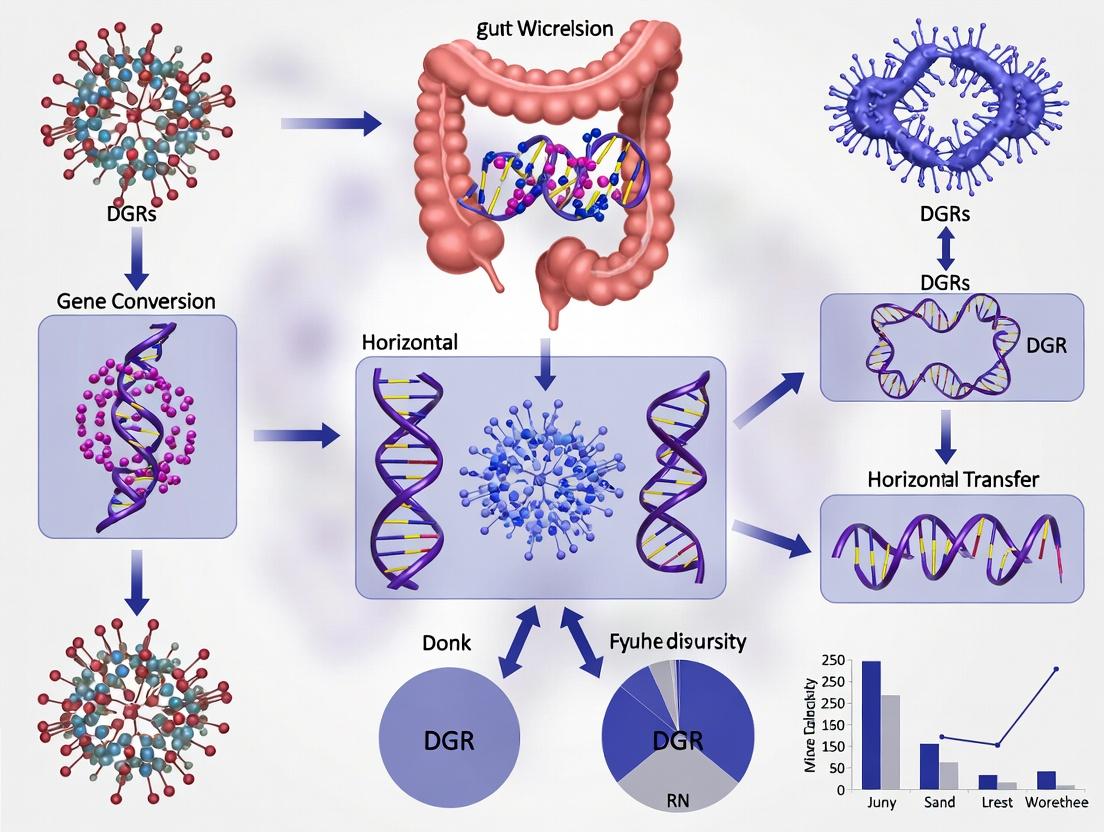
This article provides a comprehensive overview of Diversity-Generating Retroelements (DGRs) within the complex ecosystem of the gut microbiome.
DGR Diversity-Generating Retroelements in the Gut Microbiome: Mechanisms, Detection, and Therapeutic Implications
Abstract
This article provides a comprehensive overview of Diversity-Generating Retroelements (DGRs) within the complex ecosystem of the gut microbiome. Aimed at researchers and drug development professionals, it explores the foundational biology of DGRs—genetic modules that use error-prone reverse transcription to drive targeted hypermutation in ligand-binding domains. The scope covers methodologies for bioinformatic identification and functional characterization of DGRs in metagenomic datasets, addresses challenges in their study and potential for synthetic biology applications, and validates findings by comparing DGR prevalence and function across microbial taxa and health states. The synthesis aims to illuminate how these natural diversity engines influence host-microbe interactions, community resilience, and their potential as novel tools for biotechnology and microbiome-targeted therapies.
What Are DGRs? Unveiling the Hypervariable Engines of the Gut Microbiome
DGRs as Biological Diversity Machines
Diversity-generating retroelements (DGRs) are unique genetic elements that function as hypermutation machines, creating vast sequence diversity in target genes. Within the gut microbiome, DGRs are hypothesized to be critical drivers of adaptive evolution for bacteriophages and bacteria, enabling rapid niche specialization, host interaction modulation, and resistance to immune pressures. This article frames DGRs as "Biological Diversity Machines" central to understanding microbiome dynamics, stability, and host-microbe dialogue, with significant implications for therapeutic intervention.
A live search reveals the following key quantitative findings in gut microbiome DGR research:
Table 1: Prevalence and Characteristics of DGRs in Human Gut Metagenomes
| Metric | Value / Finding | Source / Study Context |
|---|---|---|
| Prevalence in gut phageomes | ~20-25% of gut bacteriophages contain DGRs | Recent meta-analysis of human gut viromes (2023) |
| Primary Target Genes | Tail fiber/adhesion proteins (>80%), hypothetical proteins (~15%) | Systematic review of curated DGR loci |
| Mutation Rate (Adenine→Any NTP) | ~10⁻³ to 10⁻² per target adenine per generation | In vitro retrohoming assays |
| Association with Bacterial Hosts | Predominant in Bacteroidetes, Firmicutes (esp. Lachnospiraceae) | Phylogenomic screening of gut MAGs |
| Correlation with Disease States | Enriched in IBD dysbiotic microbiomes (1.8x vs healthy controls) | Case-control metagenomic study (2024) |
Table 2: Experimental Parameters for DGR Function Analysis
| Parameter | Typical Experimental Setting | Purpose / Rationale |
|---|---|---|
| Culturing for DGR+ Isolates | Anaerobic chambers (97% N₂, 3% H₂), 37°C, 24-48h | Mimics native gut anaerobic environment |
| Mutational Load Quantification | Deep sequencing (≥10⁵ reads per target amplicon) | Captures full diversity spectrum; identifies rare variants |
| Retroelement Activity Assay | Reporter construct with target adenine in essential gene (e.g., antibiotic resistance) | Measures functional mutation rate via phenotype recovery |
| In vivo Passage Experiments | Gnotobiotic mouse models colonized with isogenic DGR⁺ vs DGR⁻ strains | Assesses adaptive advantage in complex gut ecosystem |
Experimental Protocols
Protocol 1: Identification and Validation of DGR Loci from Metagenomic Data
Objective: To computationally identify and experimentally validate active DGR systems from gut microbiome sequencing data.
Methodology:
- Sequence Retrieval & Preprocessing: Download metagenomic assembled genomes (MAGs) or virome contigs from public repositories (e.g., NCBI SRA, MG-RAST). Quality filter using Trimmomatic and assemble using metaSPAdes.
- Computational Identification: a. Perform tBLASTn searches using known template-repeat (TR) and variable-repeat (VR) protein sequences from reference DGRs (e.g., from Bordetella phage). b. Run dedicated pipelines (e.g., DGRscan) to detect TR-VR pairs and conserved avd (accessory variability determinant) and rt (reverse transcriptase) genes. c. Annotate putative target genes downstream of VR regions.
- PCR Validation & Cloning: a. Design primers flanking the putative variable region. b. Perform PCR on original stool DNA or bacterial isolate genomic DNA. c. Clone amplicons into a sequencing vector; transform into E. coli. d. Sanger sequence 20-30 clones to assess natural mutational diversity.
- Activity Assay via Reporter Construct: a. Synthesize a mini-DGR cassette: TR, VR, and target gene with a premature stop codon (TAG) at a target adenine. b. Clone cassette + avd/rt genes into an inducible expression plasmid. c. Co-transform into a heterologous host (e.g., E. coli). d. Induce expression and quantify reversion to functional protein via fluorescence or antibiotic resistance.
Protocol 2: Assessing DGR-Driven Adaptation in a Model Gut Bacterium
Objective: To measure the fitness advantage conferred by DGR-mediated mutagenesis in a complex microbial community.
Methodology:
- Strain Construction: a. Select a well-characterized gut bacterium (e.g., Bacteroides thetaiotaomicron). b. Using CRISPR-Cas9, delete a native DGR locus to create an isogenic DGR⁻ strain. c. Introduce a marked, complementation plasmid expressing the DGR system.
- Gnotobiotic Mouse Experiment: a. Colonize germ-free mice with a 1:1 mixture of the DGR⁺ and DGR⁻ strains (total ~10⁸ CFU). b. House mice in isolator cages with controlled diet. c. Collect fecal pellets daily for 14 days.
- Sample Processing & Analysis: a. Homogenize fecal pellets, plate on selective media to determine strain ratios. b. Isolate genomic DNA from fecal samples and from input strains. c. Amplify the DGR target region from both strains at day 0 and day 14. d. Perform high-throughput amplicon sequencing (Illumina MiSeq, 2x300bp).
- Data Analysis: a. Map reads to reference sequences to calculate relative abundance of each strain over time. b. Use DADA2 or USEARCH to identify unique sequence variants (haplotypes) in the target region. c. Calculate Shannon diversity index for the target locus at each time point for both strains. d. Compare the fitness ratio (DGR⁺/DGR⁻) and target locus diversity.
Visualization: Diagrams & Pathways
DGR Hypermutation Molecular Mechanism
Gut Microbiome DGR Research Workflow
The Scientist's Toolkit: Research Reagent Solutions
Table 3: Essential Reagents and Materials for DGR Research
| Item / Reagent | Function in DGR Research | Example Product / Specification |
|---|---|---|
| Anaerobic Chamber & Media | Culturing oxygen-sensitive gut anaerobes harboring DGRs. | Coy Lab Vinyl Anaerobic Chamber (97% N₂, 3% H₂); pre-reduced, anaerobically sterilized (PRAS) media. |
| High-Fidelity DNA Polymerase | Error-free amplification of DGR loci for cloning and sequencing. | Q5 High-Fidelity DNA Polymerase (NEB). |
| DGR-Specific Bioinformatics Pipeline | Detection of TR/VR pairs and accessory genes in complex datasets. | DGRscan software; Custom HMM profiles for Avd and DGR RT. |
| Inducible Expression Vector | Controlled expression of DGR components for activity assays. | pBAD/Myc-His series (Arabinose-inducible) or pET vectors (IPTG-inducible). |
| Ultra-Low Bias Amplicon Sequencing Kit | Accurate quantification of sequence variants in target genes. | NEBNext Ultra II FS DNA Library Prep Kit for Illumina. |
| Gnotobiotic Mouse Facility | In vivo study of DGR-driven adaptation in a controlled gut ecosystem. | Isolator cages with germ-free or defined-flora mice. |
| Phage Purification Kits | Isolation of DGR-carrying bacteriophages from fecal filtrates. | Norgen’s Phage DNA Isolation Kit or PEG precipitation protocol. |
| Single-Cell Genomics Kits | Linking DGRs to host bacteria in uncultured taxa. | 10x Genomics Chromium Genome or MDA-based kits. |
Historical Discovery and Evolutionary Significance
Application Notes
Diversity-generating retroelements (DGRs) are genetic modules that utilize a reverse transcriptase-mediated process to introduce targeted hypermutations primarily in variable ligand-binding regions (VRs) of target genes. First discovered in the Bordetella bacteriophage BPP-1 in 2002, their evolutionary significance lies in their capacity for rapid, directed protein evolution. In the human gut microbiome, DGRs are prevalent in bacteriophages and mobile genetic elements associated with key bacterial genera, including Bacteroides, Prevotella, and Faecalibacterium. They are hypothesized to drive adaptive evolution of phage tail proteins and bacterial surface factors, facilitating host-phage arms races and niche adaptation within the complex gut ecosystem. This continuous diversification mechanism has profound implications for microbiome stability, resilience, and host-microbe interactions.
Recent meta-genomic analyses reveal the distribution and characteristics of DGRs across human gut microbiomes.
Table 1: Prevalence of DGRs in Human Gut Metagenomes
| Study Cohort (n) | DGR-Positive Samples (%) | Avg. DGR Loci per Positive Sample | Most Common Bacterial Host Phylum |
|---|---|---|---|
| Healthy Adults (200) | 87.5% | 12.4 ± 3.1 | Bacteroidota |
| IBD Patients (150) | 94.0% | 18.7 ± 5.6 | Bacteroidota, Firmicutes |
| Infants (6-12 mo, 100) | 45.0% | 5.2 ± 2.3 | Proteobacteria |
Table 2: Key DGR Component Genes and Mutation Rates
| DGR Component | Typical Length (bp) | Conserved Motif | Estimated Mutation Rate (per generation) in VR |
|---|---|---|---|
| Reverse Transcriptase (RT) | 1500-1800 | YXDD Box | N/A |
| Accessory Variability Determinant (Avd) | 900-1200 | N/A | N/A |
| Template Repeat (TR) | 100-200 bp | --- | 0 |
| Variable Repeat (VR) | 100-200 bp | --- | 10^-2 to 10^-1 |
Experimental Protocols
Protocol 1: Identification and Annotation of DGRs from Metagenomic Data
Objective: To identify putative DGR loci from shotgun metagenomic sequencing data. Materials: High-performance computing cluster, metagenomic assemblies (FASTA), HMMER, BLAST suite, custom Perl/Python scripts. Procedure:
- Gene Calling: Use Prodigal (
prodigal -i metagenome.fna -a proteins.faa -d genes.fna) on contigs >5 kb. - Reverse Transcriptase Discovery: Search
proteins.faaagainst a curated DGR RT HMM profile (PFAM: PF17917) usinghmmsearch(E-value < 1e-10). - Locus Expansion: Extract genomic regions 10 kb upstream and downstream of identified RT genes.
- TR/VR Identification: Within the locus, identify candidate TR/VR pairs using the program DGRscan, which searches for two homologous repeats where one (VR) contains adenine-rich codons.
- Target Gene Prediction: Identify open reading frames within the locus containing a C-terminal VR region, indicative of a mutagenized target protein (often phage tail fiber or adhesin).
- Phylogenetic Analysis: Cluster identified RT sequences with known DGRs using MUSCLE and FastTree to assign evolutionary lineage.
Protocol 2: In Vitro Validation of DGR Activity via a Mutagenesis Reporter Assay
Objective: To experimentally confirm the hypermutagenic activity of a discovered DGR. Materials: Cloned DGR locus in an E. coli vector, LB broth/agar, Kanamycin, PCR reagents, Sanger sequencing services, nitrocellulose membranes. Procedure:
- Construct a Reporter Plasmid: Clone the putative DGR (including RT, Avd, TR, and VR within a target gene) into a suitable expression vector. Replace the VR region in the target gene with a promoterless lacZ gene, keeping the TR intact.
- Transformation and Growth: Transform the construct into competent E. coli. Plate on LB+Kan+X-Gal. The blue colony phenotype requires DGR-mediated mutagenesis of the TR to recreate a functional VR sequence upstream of lacZ.
- Mutation Accumulation Experiment: Inoculate a single white colony into 5 mL LB+Kan. Grow for 24h at 37°C. Plate 100 µL of serial dilutions onto X-Gal plates daily for 7 passages.
- Data Collection: Count blue (mutant) and total colonies each day to calculate mutation frequency.
- Sequence Validation: Isolate plasmid from 10-20 blue colonies per passage. Sanger sequence the VR region to confirm Adenine (A) to Guanine (G) or other non-templated mutations characteristic of DGR activity.
Protocol 3: Profiling DGR Diversity in Microbial Communities via Amplicon Sequencing
Objective: To assess the sequence diversity within a specific DGR VR region across a microbiome sample. Materials: Microbial genomic DNA, specific PCR primers for DGR VR region, high-fidelity DNA polymerase, Illumina MiSeq platform. Procedure:
- Primer Design: Design primers flanking the hypervariable VR region of a target DGR (e.g., in a Bacteroides phage tail gene).
- PCR Amplification: Perform PCR with barcoded primers. Use high-fidelity polymerase and limit cycles (≤25) to reduce PCR errors. Pool amplicons from multiple samples.
- Sequencing: Clean the pooled library and sequence on an Illumina MiSeq (2x300 bp).
- Bioinformatic Analysis: a. Processing: Demultiplex reads. Merge paired-end reads using USEARCH. b. Clustering: Cluster sequences at 97% identity using VSEARCH to define Operational Taxonomic Units (OTUs) for the VR region. c. Diversity Metrics: Calculate Shannon diversity index and Pielou's evenness for VR sequences within each sample. Compare between subject groups (e.g., healthy vs. disease).
Visualizations
Title: DGR Discovery Bioinformatics Workflow
Title: DGR Hypermutation Molecular Mechanism
The Scientist's Toolkit: Research Reagent Solutions
Table 3: Essential Reagents for DGR Research
| Item | Function & Application |
|---|---|
| Curated DGR RT HMM Profile (PF17917) | Hidden Markov Model for sensitive identification of DGR reverse transcriptase genes in sequence data. |
| DGRscan Software | Specialized algorithm for detecting TR/VR pairs and candidate target genes in genomic loci. |
| pBAC-DGR Cloning Vector | Low-copy, broad-host-range vector for stable maintenance and expression of large DGR loci in E. coli and Bacteroides. |
| X-Gal (5-Bromo-4-chloro-3-indolyl-β-D-galactopyranoside) | Chromogenic substrate for LacZ. Used in reporter assays to visualize DGR mutagenesis activity (blue/white screening). |
| High-Fidelity DNA Polymerase (e.g., Q5) | For accurate amplification of DGR VR regions prior to amplicon sequencing, minimizing polymerase-introduced errors. |
| Bacteroides Thetaiotaomicron Suitcase Vector System | Specialized conjugation-based system for introducing and testing DGR function in a relevant gut bacterial host. |
| Adenosine Deaminase (TadA) Inhibitor | Small molecule inhibitor used as a negative control to specifically block DGR-mediated A-to-I mutagenesis in validation experiments. |
Application Notes
Diversity-generating retroelements (DGRs) are genetic systems that facilitate rapid, targeted protein evolution through a mutagenic retrohoming process. In the context of gut microbiome research, DGRs are recognized as key drivers of adaptation in commensal and pathogenic bacteria, enabling them to diversify ligand-binding domains—most commonly C-type lectin-like domains—to interact with a dynamic array of host glycans, immune factors, and other microbes. The core components are the Template Repeat (TR), the unmutated DNA template; the Variable Repeat (VR), which is the mutagenic cDNA product; and a specialized reverse transcriptase (RT). Understanding this anatomy is critical for investigating host-microbiome interactions, bacterial fitness, and potential therapeutic targeting.
Anatomical Components and Function
- Template Repeat (TR): A non-coding DNA region that serves as the invariant template during mutagenic retrotranscription. Adenines (A) in the TR are designated as the source for mutation.
- Variable Repeat (VR): The cDNA product derived from the TR. During retrotranscription, adenines (A) in the TR are mutated, primarily to any nucleotide (A→N), leading to hypervariable codons in the VR. The VR is typically located downstream of the TR and encodes the target protein's variable domain (e.g., a virulence factor).
- Reverse Transcriptase (RT): A DGR-specific, error-prone enzyme that uses the TR as a template to synthesize the mutated VR cDNA. It lacks proofreading ability and is guided by a non-coding accessory variability determinant (Avd) RNA.
Table 1: Core Components of a Canonical DGR System
| Component | Primary Function | Key Structural/Molecular Features | Outcome in Gut Microbiome Context |
|---|---|---|---|
| Template Repeat (TR) | Immutable DNA template for retrotranscription. | Contains adenines (A) at positions destined for diversification. | Provides the genetic "master copy" for generating diversity. |
| Variable Repeat (VR) | Accepts mutated cDNA; encodes variable protein domain. | Adenine-derived positions are highly variable (A→N). | Generates a population of variant proteins (e.g., adhesins) for host interaction. |
| DGR Reverse Transcriptase | Catalyzes mutagenic retrotranscription from TR to VR. | Error-prone, lacks 3'→5' exonuclease activity, binds Avd RNA. | Driver of sequence diversification; potential broad-spectrum therapeutic target. |
| Avd RNA | Non-coding RNA that guides RT to the TR template. | Contains sequence complementary to the TR region. | Ensures fidelity of template recognition, limiting off-target mutations. |
Table 2: Prevalence of DGR Components in Human Gut Metagenomic Data (Representative)
| Studied Population (Sample Size) | % of Metagenomes with DGRs | Most Common Phylum Harboring DGRs | Common Associated Protein Domain |
|---|---|---|---|
| Healthy Adults (n=150) | ~12-18% | Bacteroidota | C-type lectin, hemagglutinin |
| IBD Patients (n=100) | ~22-28% | Bacteroidota, Proteobacteria | Ig-like, tail fiber |
| Infant Gut (Longitudinal) | <5% (increases with age) | Initially low, Bacteroidota increases | Variable |
Detailed Experimental Protocols
Protocol:In SilicoIdentification of DGRs in Gut Metagenome-Assembled Genomes (MAGs)
Objective: To computationally identify and characterize DGR loci from shotgun metagenomic sequencing data of gut samples.
Materials & Reagents:
- Hardware: High-performance computing cluster.
- Software: Quality control tools (FastQC, Trimmomatic), metagenomic assembler (MEGAHIT, metaSPAdes), binning tool (MetaBAT2), DGR detection tool (DGRscan), homology search tools (BLAST, HMMER).
- Input: Paired-end FASTQ files from gut microbiome sequencing.
Procedure:
- Data Preprocessing: Quality trim and adapter removal from raw reads using Trimmomatic.
- Co-assembly: Assemble quality-filtered reads from multiple samples using MEGAHIT with meta-large presets.
- Binning: Recover draft genomes (MAGs) from the assembly using MetaBAT2. Assess bin quality with CheckM.
- DGR Detection: Run DGRscan on all contigs (>5 kbp) or on MAGs. Command:
python dgrscan.py -i input.fasta -o output_dir. - Validation & Annotation: Manually inspect putative DGR loci for TR-VR pairs, inverted repeats, and a nearby RT gene. Annote the target gene using Pfam and BLASTP against the NCBI nr database.
- Phylogenetic Analysis: Align RT protein sequences and construct a phylogenetic tree (e.g., using IQ-TREE) to assess DGR diversity and evolution.
Protocol:In VitroValidation of DGR Activity for a Candidate Locus
Objective: To experimentally confirm the mutagenic retrotranscription activity of a bioinformatically identified DGR from a gut bacterium.
Materials & Reagents:
- Bacterial Strain: Cloned DGR locus (TR, VR, RT, Avd) in an expression vector (e.g., pET-based) in E. coli.
- Culture Media: LB broth with appropriate antibiotic.
- Reagents: IPTG (for induction), primers for TR/VR amplification, DpnI restriction enzyme, NGS library prep kit.
- Equipment: Thermocycler, NGS platform (e.g., MiSeq).
Procedure:
- Cloning: Clone the complete DGR locus (including native promoter or under inducible control) into a suitable vector. Transform into an E. coli expression strain.
- Induction & Cultivation: Grow triplicate cultures to mid-log phase. Induce DGR component expression with IPTG (if under inducible control). Continue incubation for 24-48 hours.
- DNA Extraction: Harvest cells and extract genomic/plasmid DNA.
- Targeted Amplification: Amplify the TR and VR regions from pre- and post-induction samples using high-fidelity PCR. Include barcodes for multiplexing.
- Sequencing & Analysis: Prepare amplicon libraries and sequence deeply (≥50,000x coverage per sample) using NGS. Map reads to reference.
- Variant Calling: Quantify nucleotide substitutions in the VR relative to the TR sequence. Calculate mutation frequency, focusing on adenine mutations (A→N). Activity is confirmed if VR diversity increases significantly post-induction and mutations are consistent with DGR mutagenesis (A-centric).
Visualization
DGR Mutagenesis Core Mechanism
DGR Discovery & Validation Pipeline
The Scientist's Toolkit
Table 3: Essential Research Reagent Solutions for DGR Studies
| Reagent / Material | Function in DGR Research | Example / Specification |
|---|---|---|
| Metagenomic DNA Extraction Kit | High-yield, unbiased isolation of microbial community DNA from complex gut samples. | MO BIO PowerSoil Pro Kit (for stool samples). |
| DGR-Specific Computational Pipeline | Bioinformatics tool for de novo identification of DGR components in sequence data. | DGRscan, RetroTector. |
| High-Fidelity PCR Master Mix | Accurate amplification of TR/VR regions for cloning or amplicon sequencing without introducing polymerase errors. | Q5 High-Fidelity 2X Master Mix. |
| Inducible Expression Vector | Controlled overexpression of cloned DGR loci in heterologous hosts (e.g., E. coli) for functional validation. | pET series vectors with T7 promoter. |
| Ultra-deep Amplicon Sequencing Service | Quantifying low-frequency mutations in VR populations to calculate DGR mutagenesis rates. | Illumina MiSeq 2x300 bp, ≥50,000x coverage. |
| Anti-His/GST Tag Antibodies | Detection and purification of recombinant DGR RT or target proteins for biochemical studies. | Monoclonal Anti-6X His tag antibody. |
| Nucleotide Analogs (e.g., dNTPαS) | For mechanistic studies of RT enzyme kinetics and fidelity in in vitro transcription assays. | Controlled incorporation experiments. |
Application Notes
This document outlines the experimental framework for studying Diversity-Generating Retroelements (DGRs), focusing on their core mutagenic mechanism of error-prone reverse transcription leading to adenine-to-guanine (A→G) or adenine-to-cytosine (A→C) hypermutation. In the context of gut microbiome research, DGRs are recognized as pivotal drivers of adaptive evolution in bacteriophages and bacteria, enabling rapid diversification of ligand-binding domains (typically VRs - variable repeats) to evade host immunity or adapt to new niches. The targeted, adenine-specific mutagenesis provides a unique model for understanding directed protein evolution and has potential applications in synthetic biology and drug discovery.
Key Quantitative Findings on DGR Mechanisms:
Table 1: Core DGR Components and Their Functions
| Component | Primary Function | Key Characteristics |
|---|---|---|
| Template Repeat (TR) | DNA template for reverse transcription. | Encodes the "ancestral" sequence. Rich in adenines (A) at target positions. |
| Variable Repeat (VR) | Recipient DNA region diversified. | Homologous to TR but accumulates mutations. Encodes the hypervariable protein domain. |
| Reverse Transcriptase (RT) | Catalyzes error-prone cDNA synthesis. | Lacks proofreading. Specifically misincorporates nucleotides at template adenines. |
| Accessory Protein (Avd) | Binds TR and is essential for mutagenesis. | Proposed chaperone, may escort RT or facilitate cDNA integration. |
Table 2: Documented Mutational Outcomes from DGR Activity
| Mutational Type | Frequency | Proposed Molecular Cause |
|---|---|---|
| A → G (Purine transition) | ~80-90% of mutations | dTTP misincorporation opposite template A during cDNA synthesis. |
| A → C (Purine→Pyrimidine) | ~10-20% of mutations | dGTP misincorporation opposite template A. |
| A → T (Transversion) | Rare | Potential misincorporation of dATP. |
| Non-Adenine Mutations | Extremely Rare | Highlights the exquisite adenine specificity of the system. |
Experimental Protocols
Protocol 1:In VitroReconstitution of Error-Prone Reverse Transcription
Objective: To demonstrate the adenine-specific mutagenic activity of the DGR reverse transcriptase on a defined RNA template.
Materials:
- Purified DGR RT (e.g., from Bordetella phage BPP-1 or Treponema denticola).
- Synthetic TR-derived RNA oligonucleotide (min. 50-100 nt, containing multiple target adenines).
- dNTP mix (dATP, dTTP, dGTP, dCTP), including radiolabeled or fluorescently tagged dCTP for detection.
- Appropriate reaction buffer (e.g., 50 mM Tris-HCl pH 8.0, 50 mM KCl, 10 mM MgCl₂, 1 mM DTT).
- RNase H.
- Phenol:chloroform:isoamyl alcohol, ethanol for purification.
- Sequencing primers.
Procedure:
- Reaction Setup: In a 50 µL volume, combine 1 µg RNA template, 500 nM purified RT, 200 µM of each dNTP, and 1x reaction buffer. Incubate at 37°C for 60 minutes.
- RNA Degradation: Add 2 units of RNase H and incubate at 37°C for 20 min to degrade the RNA template.
- cDNA Purification: Extract with phenol:chloroform, precipitate the cDNA with ethanol, and resuspend in nuclease-free water.
- Analysis: Clone the cDNA into a sequencing vector or prepare for next-generation sequencing (NGS). Sequence ≥100 clones.
- Data Analysis: Align cDNA sequences to the original TR RNA sequence. Quantify mutation frequency and spectrum, specifically noting mutations at template adenines.
Protocol 2: Tracking DGR-Mediated Diversification in a Gut Microbiome Model System
Objective: To monitor the real-time diversification of a DGR VR region within a complex microbial community.
Materials:
- Gnotobiotic mouse model colonized with a defined bacterial consortium containing a DGR+ bacterium/bacteriophage.
- Fecal DNA extraction kit.
- PCR primers flanking the target VR region.
- High-fidelity DNA polymerase for amplicon generation.
- NGS library preparation kit.
- Bioinformatics pipeline (USEARCH, DADA2, custom scripts).
Procedure:
- Sample Collection: Collect fecal pellets from mice at weekly intervals (e.g., 0, 1, 2, 4 weeks post-colonization).
- DNA Extraction & Amplification: Extract total community DNA. Perform PCR to amplify the target VR region from the DGR+ organism using barcoded primers.
- Sequencing: Pool amplicons and perform deep sequencing (Illumina MiSeq, 2x300 bp).
- Bioinformatic Analysis: a. Demultiplex and quality-filter reads. b. Cluster sequences into operational taxonomic units (OTUs) or amplicon sequence variants (ASVs) at 97% identity for community analysis. c. For the DGR target, perform de-novo assembly or reference-based mapping to identify all VR sequence variants. d. Calculate Shannon diversity index for the VR repertoire over time. e. Align variants to the TR sequence to catalog A→X mutations.
Mandatory Visualization
Title: DGR Hypermutation Workflow from TR to VR
Title: Mechanism of A to G and C Mutation
The Scientist's Toolkit
Table 3: Essential Research Reagents for DGR Studies
| Reagent/Material | Function/Application | Key Considerations |
|---|---|---|
| Purified DGR RT (wild-type & mutant) | In vitro mutagenesis assays to define enzymatic specificity and kinetics. | Requires heterologous expression and purification; activity often depends on Mn²⁺ over Mg²⁺. |
| TR/VR Cloning Vectors | Maintain and propagate DGR loci for in vivo and in vitro experiments. | Must include full TR-VR cassette and promoter regions. |
| dNTP Analogs (e.g., 8-oxo-dGTP) | Probe RT active site flexibility and misincorporation propensity. | Can alter mutation spectrum in vitro. |
| High-Fidelity vs. Standard Taq Polymerase | PCR amplification of diverse VR regions without introducing biases. | Use high-fidelity for NGS prep; standard Taq for diagnostic cloning. |
| Metagenomic DNA Extraction Kits | Isolate total DNA from gut microbiome samples for DGR discovery. | Must efficiently lyse Gram-positive bacteria and phage particles. |
| Barcoded Primers for Amplicon-Seq | Track diversification of specific DGR loci over time in complex communities. | Primer design critical; target conserved flanking regions of VR. |
| Bioinformatics Pipeline (HMMER) | Identify novel DGR loci (RT, Avd) in genomic/metagenomic datasets. | Use custom hidden Markov models based on known DGR protein sequences. |
Application Notes
Diversity-generating retroelements (DGRs) are genetic modules that catalyze the hypervariation of target genes through a unique error-prone reverse transcription process. In the human gut microbiome, DGRs are prevalent in bacteriophages (phages) that infect dominant bacterial lineages like Bacteroidetes and Lachnospiraceae. This targeted mutagenesis generates vast protein diversity, primarily in phage tail proteins, facilitating adaptation to evolving bacterial host receptors. This dynamic is a major driver of co-evolution in the gut ecosystem. For drug development professionals, understanding DGR mechanisms offers novel avenues for phage therapy engineering and manipulating microbiome composition. For researchers, DGRs are tools for directed evolution and studying real-time host-pathogen arms races.
Table 1: Prevalence of DGRs in Human Gut Metagenomic Studies
| Study Focus | Sample Size / Source | Key Finding (DGR Prevalence) | Major Bacterial Hosts/Phages Identified |
|---|---|---|---|
| Global Gut Phageomes (Camarillo-Guerrero et al., 2021) | 28,060 metagenomes; 2,898 cultured bacteria | ~20% of gut phage genomes contain DGRs. | Predominant in Caudoviricetes phages infecting Bacteroidetes. |
| Bacteroides Phages (Guerin et al., 2023) | 1,428 Bacteroides phage genomes | 42% of Bacteroides phage genomes encode a DGR locus. | Hypervariable tail fibers target diverse Bacteroides cell surfaces. |
| Lachnospiraceae Prophages (Roux et al., 2023) | 1,200 human gut metagenomes | DGRs found in 15-18% of integrated prophages within Lachnospiraceae. | Linked to in situ diversification of temperate phages within hosts. |
| DGR Target Sites (Mohanraju et al., 2022) | In silico analysis of 15,000 DGRs | Adenine-specific mutagenesis (A → I, read as G) creates 10^6-10^8 variant libraries per round. | Variable Reverse Transcriptase (RT) fidelity drives diversification rate. |
Table 2: Functional Outcomes of DGR Activity in Gut Bacteria-Phage Systems
| DGR Component | Function | Outcome of Hypervariation |
|---|---|---|
| Template Repeat (TR) | DNA template encoding the variable protein region. | Source of sequence information. |
| Variable Repeat (VR) | Target region for mutagenesis (A residues hypermutated). | Generates massive diversity in ligand-binding domains. |
| Reverse Transcriptase (RT) | Error-prone RT; lacks proofreading. | Catalyzes TR → cDNA conversion with misincorporation at As. |
| Accessory Protein (Avd) | Binds cDNA and facilitates incorporation. | Mediates homologous replacement of VR with mutated cDNA. |
| Hypervariable Protein | Usually phage tail fiber/adhesin | Alters host tropism, evades bacterial defenses (e.g., CRISPR, EPS). |
Protocols
Protocol 1: In Silico Identification of DGR Loci in Metagenome-Assembled Genomes (MAGs)
Objective: To identify and characterize complete DGR loci from human gut metagenomic sequencing data.
Materials (Research Reagent Solutions):
- Computational Hardware: High-performance computing cluster (≥ 64 GB RAM).
- Software Suite: Genome assembly (MEGAHIT, SPAdes), gene prediction (Prodigal), HMMER suite, BLAST+.
- Custom Databases: Pfam profiles for DGR RT (PF17917) and Avd (PF17918).
- Analysis Pipeline: DGRscan (https://github.com/molleraj/DGRscan) or analogous script.
- Reference Set: Curated database of known DGR sequences (e.g., from ACLAME).
Methodology:
- Metagenomic Assembly: Quality-filter raw reads (Trimmomatic). Perform de novo assembly on per-sample or co-assembled reads.
- Open Reading Frame (ORF) Prediction: Predict ORFs on contigs > 5 kb using Prodigal.
- Reverse Transcriptase Identification: Search predicted protein sequences against Pfam DGR RT HMM profile using
hmmsearch(E-value < 1e-10). - Locus Expansion & Annotation: Extract genomic region ± 10 kb from identified RT. Re-annotate region with Prodigal. Identify candidate TR-VR pairs using nucleotide alignment (BLASTN) and manual inspection for adenine-rich VR regions.
- Host Assignment: Use CRISPR spacer matching, tRNA matching, or taxonomic binning of the contig to assign putative bacterial host (e.g., Bacteroidetes, Lachnospiraceae).
- Variant Prediction: In silico simulate mutations by converting all adenine bases in the VR to guanosine (simulating cDNA incorporation) and translate to predict potential protein variant sequences.
Protocol 2: Experimental Validation of DGR-Dependent Tropism Switching
Objective: To demonstrate that DGR-mediated variation alters phage host range.
Materials (Research Reagent Solutions):
- Bacterial Strains: Isogenic strains of a Bacteroides or Lachnospiraceae species with characterized surface receptors.
- Phage Stock: A temperate or lytic phage containing a defined DGR locus targeting a tail fiber gene.
- Culture Media: Pre-reduced anaerobic gut microbiome medium (e.g., YCFA or BHI + hemin/cysteine) for anaerobic cultivation.
- Molecular Biology Reagents: PCR reagents, primers for TR/VR amplification, DpnI restriction enzyme, E. coli cloning strain, anaerobic chamber.
- Equipment: Anaerobic workstation, spectrophotometer, plaque assay supplies (soft agar).
Methodology:
- Phage Propagation & Isolation: Propagate phage on its primary bacterial host under anaerobic conditions. Purify phage particles via PEG precipitation and CsCl gradient.
- Generate Phage Pool: Infect host at low MOI to allow multiple rounds of replication and DGR diversification. Harvest phage lysate to create a diverse pool.
- Host Range Assay: Perform plaque assays or spot tests using the diversified phage pool on a panel of related bacterial strains differing in surface polysaccharides.
- Plaque Isolation & Sequencing: Pick plaques from newly susceptible hosts. Amplify (PCR) and sequence the VR region of the tail fiber gene from isolated phage clones.
- Sequence Analysis: Align VR sequences to the TR. Confirm hypermutation is specific to adenine residues and correlates with expanded host range. Compare to phage from the original stock.
- Genetic Complementation: Clone the wild-type TR-VR locus into a non-DGR phage background. Repeat propagation and host range assays to confirm DGR-dependent diversification.
Diagrams
DGR Hypermutation Mechanism Flow
Gut Phage-Bacteria Co-evolution via DGRs
The Scientist's Toolkit: Essential Research Reagents
| Item | Function in DGR Research |
|---|---|
| Anaerobic Chamber/Workstation | Provides oxygen-free environment for culturing obligate anaerobic gut bacteria (e.g., Bacteroides, many Lachnospiraceae). |
| Pre-reduced, Chemically Defined Media (e.g., YCFA) | Supports robust and reproducible growth of fastidious gut bacterial strains without introducing unknown variables. |
| Phage Purification Kits (PEG/CsCl) | For concentration and purification of phage particles from bacterial lysates prior to molecular analysis or re-infection experiments. |
| DGR-specific HMM Profiles (PF17917, PF17918) | Computational profiles for sensitive identification of DGR Reverse Transcriptase and Avd proteins in genomic/metagenomic data. |
| Error-Prone Reverse Transcriptase Assay Kit | In vitro measurement of RT activity and mutation frequency using a defined TR template. |
| Bacterial Surface Polysaccharide Detection Antibodies | To correlate DGR-mediated phage tropism changes with specific host receptor variants. |
| Metagenomic Library Construction Kit | For preparing high-quality, high-molecular-weight DNA from stool samples for sequencing and DGR discovery. |
| CRISPR Interference (CRISPRi) System for Anaerobes | To knock down expression of putative bacterial phage receptors and validate DGR target importance. |
Application Notes
Within the context of gut microbiome research, Diversity-Generating Retroelelements (DGRs) are recognized as powerful molecular evolution systems that enable commensal and pathogenic bacteria to rapidly adapt to host environments. A central thesis posits that DGRs drive functional diversification of target proteins, with a predominant focus on variable lectins (vLs) and other ligand-binding proteins (LBPs). These targets are crucial for mediating host-microbe and microbe-microbe interactions. The hypervariable residues generated by DGR-mediated mutagenesis are often found in carbohydrate-recognition domains (CRDs) or ligand-binding pockets, allowing for a vast repertoire of binding specificities.
Key Functional Implications:
- Host Adhesion & Colonization: DGR-diversified vLs facilitate binding to host glycans on epithelial cells or mucus, determining niche specificity within the gut.
- Immune Evasion: Variable LBPs can alter surface epitopes, aiding in evasion from host immune surveillance.
- Bacterial Competition: Diversified lectins may target polysaccharides on competing bacterial species or biofilms.
- Nutrient Acquisition: Variable LBPs can broaden the range of host-derived glycans or other nutrients that can be bound and utilized.
- Phage-Bacteria Interaction: Some DGR-diversified proteins serve as phage tail components, enabling tropism for different bacterial hosts.
Table 1: Quantified Impact of DGR Diversification on Ligand-Binding Proteins in Gut Microbes
| DGR System (Example Organism) | Target Protein Type | Measured Diversity (Amino Acid Positions Varied) | Binding Affinity Range (Kd Reported) | Functional Consequence Demonstrated |
|---|---|---|---|---|
| Bacteroides fragilis (BF9343) | VLR (Variable Lectin Repeat) | Up to 44% of residues in CRD (Meyers et al., 2021) | nM to μM for various mucin glycans | Enhanced gut colonization in murine model |
| Lachnospiraceae bacterium (A4) | MUC-like LBP | 5-7 hypervariable loops (Doulcier et al., 2020) | Not quantified | Proposed interaction with host IgA |
| Bacteroides thetaiotaomicron VP1 | Capsid protein (Phage) | Major Diversification Region (MDR) | Specificity for >10 bacterial strains | Expanded phage host range |
Experimental Protocols
Protocol 1: In Vitro Binding Affinity Assay for DGR-Diversified vLs Objective: Quantify the binding kinetics of a recombinantly expressed DGR-variant protein to immobilized glycans. Materials: Purified DGR-variant protein, Biotinylated glycan ligands, Streptavidin-coated biosensor chips (e.g., for BLI or SPR), PBS-T (PBS + 0.05% Tween-20), Kinetics buffer. Procedure:
- Immobilization: Dilute biotinylated glycan to 10 μg/mL in kinetics buffer. Load onto streptavidin sensor chip to achieve ~1 nm resonance unit (RU) shift.
- Ligand Association: Dilute purified vL protein in a 2-fold serial dilution series (e.g., 200 nM to 3.125 nM). Inject each concentration over the glycan and reference surfaces for 180 seconds at 30 μL/min.
- Ligand Dissociation: Monitor dissociation in kinetics buffer for 300 seconds.
- Regeneration: Regenerate the surface with two 30-second pulses of 10 mM glycine-HCl (pH 2.0).
- Analysis: Double-reference the data (reference surface & buffer blank). Fit the sensorgrams to a 1:1 binding model using the instrument's software to calculate association (kon) and dissociation (koff) rate constants, and the equilibrium dissociation constant (KD = koff/kon).
Protocol 2: Functional Screening of DGR Variants via Flow Cytometry Objective: Screen a library of DGR-variant expressing bacteria for binding to labeled host cells or particles. Materials: Bacterial library expressing DGR-LBP variants, FITC-labeled epithelial cells or fluorescent beads coated with target ligand, Flow cytometry buffer (PBS + 1% BSA), Microcentrifuge, Flow cytometer. Procedure:
- Incubation: Mix 100 μL of bacterial culture (OD600 ~ 0.5) with 100 μL of FITC-labeled target. Incubate for 1 hour at 4°C with gentle rotation.
- Washing: Pellet cells at 3000 x g for 5 min. Wash twice with 1 mL flow cytometry buffer.
- Resuspension: Resuspend final pellet in 500 μL flow cytometry buffer.
- Analysis: Analyze samples using a flow cytometer. Gate on bacterial population based on forward/side scatter. The FITC fluorescence intensity of the bacterial population correlates with target binding.
- Sorting: For high-throughput screening, sort populations with high FITC signal to enrich for binding-competent DGR variants.
Visualizations
Diagram 1: DGR Diversification Drives Ligand-Binding Variability
Diagram 2: Flow Cytometry Screen for DGR-vL Binders
The Scientist's Toolkit: Research Reagent Solutions
| Reagent / Material | Function / Application |
|---|---|
| Streptavidin Biosensor Chips (e.g., SA Chip for SPR/BLI) | Immobilizes biotinylated glycan or protein ligands for quantitative binding kinetics studies. |
| Biotinylated Glycan Library | A panel of labeled host glycans (e.g., mucin O-glycans, blood group antigens) for profiling DGR-vL specificity. |
| Anti-His Tag Antibody (HRP/AP Conjugated) | Detection of recombinantly expressed polyhistidine-tagged DGR target proteins in Western blot or ELISA. |
| Mucin-Coated Agarose Beads | For pull-down assays to isolate bacterial vLs that bind complex mucin glycans from lysates. |
| Gnotobiotic Mouse Models | Defined host systems to study the functional role of specific DGR variants in gut colonization and microbiome ecology. |
| Phage-Induction Mitomycin C | Chemical agent to induce prophage-encoded DGR systems in bacterial cultures for native protein expression. |
| Next-Gen Sequencing Kits (amplicon) | For high-throughput sequencing of the Variable Region (VR) to assess DGR diversity in complex microbiome samples. |
Within the dynamic ecosystem of the human gut, microbial survival hinges on rapid adaptation to fluctuating nutrient availability, pH, immune factors, and bacteriophage predation. Diversity-generating retroelements (DGRs) are a key evolutionary mechanism facilitating this adaptation. These genetic elements, first characterized in Bordetella bacteriophages, introduce hypermutations at specific target adenines within protein-coding genes, generating vast sequence diversity from a limited genetic template. In the context of the gut microbiome, DGRs are hypothesized to drive rapid evolution of ligand-binding domains, particularly in Bacteroidales, enabling real-time adaptation to host glycans and immune molecules. This application note details protocols for the identification, quantification, and functional characterization of DGRs within complex gut microbial communities, framed within a thesis on their role in ecological resilience and their potential as targets for microbiome-based therapeutics.
Data Synthesis: DGR Prevalence and Characteristics in Gut Microbiota
Table 1: Prevalence of DGRs in Representative Human Gut Microbial Genera
| Genus/Group | Estimated % of Genomes Containing DGRs | Primary Target Gene Family | Notable Environmental Trigger for Activity |
|---|---|---|---|
| Bacteroides | ~65-80% | TonB-dependent transporters (SusD-like) | Dietary polysaccharide shift |
| Prevotella | ~40-60% | C-terminal CTD domains | Mucin availability |
| Faecalibacterium | <5% | Not well characterized | Low overall prevalence |
| Akkermansia | ~20-30% | Hypothetical surface proteins | Host inflammation signals |
| Bifidobacterium | <10% | Pili-associated proteins | Phage co-culture |
Table 2: Quantitative Outcomes from DGR Mutagenesis ExperimentsIn Vitro
| Experimental Condition | Mutation Rate at Target Adenines (per generation) | Functional Variants Generated (per 10^5 cells) | Phenotypic Outcome (Example) |
|---|---|---|---|
| Baseline (Standard Lab Media) | 10^-5 to 10^-4 | 2-5 | Baseline binding to canonical ligand |
| Pulse with Novel Mucin O-glycan | 10^-4 to 10^-3 | 15-50 | Expanded glycan binding spectrum |
| Co-culture with Lytic Phage | 10^-3 to 10^-2 | 50-200 | Phage resistance conferred |
| Bile Acid Shock (0.1% Deoxycholate) | 10^-4 | 10-30 | Enhanced bile acid tolerance |
Protocols
Protocol 1: Identification and Bioinformatic Curation of DGRs from Metagenomic-Assembled Genomes (MAGs)
Objective: To detect and characterize DGR loci from short-read and long-read metagenomic sequencing data of gut microbiome samples.
Materials:
- High-quality MAGs (completeness >90%, contamination <5%)
- High-performance computing cluster
- DGR detection tools: DGRscan, MyDGR
Procedure:
- Data Preprocessing: Assemble raw reads using metaSPAdes or HiFi-assisted metagenomic assemblers. Bin contigs into MAGs using MetaBat2.
- DGR Detection: Run DGRscan (
python dgrscan.py -i MAG.fasta -o output_directory) on each MAG. The tool searches for key components: a template repeat (TR), a variable repeat (VR), and a reverse transcriptase (RT) gene. - Loci Curation: Manually inspect putative loci. Confirm the presence of an adenine-rich target region in the VR and a cognate RT with characteristic motifs (e.g., TxxRxS).
- Target Gene Annotation: Extract the target gene downstream of the VR. Perform homology searches (HMMER, Pfam) to identify domain functions (e.g., PF07715 for SusD-like domains).
- Phylogenetic Analysis: Align RT sequences from curated DGRs to construct a maximum-likelihood tree, illustrating DGR diversity across gut taxa.
Protocol 2:In VitroMeasurement of DGR-Driven Mutation Rates in Gut Isolates
Objective: To quantify the real-time mutagenic activity of a DGR in a cultured gut bacterium under dynamic conditions.
Materials:
- Bacteroides thetaiotaomicron VPI-5482 strain (contains a well-characterized DGR locus)
- Chemically defined media with switchable carbon sources (e.g., glucose vs. porphyran)
- PCR reagents, primers flanking the DGR target region, Illumina sequencing adapters
Procedure:
- Culture Setup: Inoculate triplicate cultures in media with a primary carbon source. Grow to mid-log phase.
- Environmental Shift: Harvest cells, wash, and resuspend in media containing a novel, complex polysaccharide or a stressor (e.g., sub-lethal bile acids).
- Serial Passage: Passage cultures every 12 hours for 7 days, maintaining exponential growth.
- Sampling and Sequencing: Extract genomic DNA daily. Amplify the DGR target region via PCR, index, and pool for high-throughput sequencing (Illumina MiSeq, 2x300bp).
- Variant Analysis: Process reads with a custom pipeline (FLASH merge, align to reference with BWA, call variants using LoFreq). Calculate mutation frequency as (number of reads with A-to-N mutations at target adenines) / (total reads covering the position).
Protocol 3: Functional Validation of DGR-Variant Protein Binding
Objective: To test the binding affinity of DGR-generated protein variants to candidate ligands.
Materials:
- Cloning system (E. coli-Bacteroides shuttle vector)
- Purified candidate ligands (e.g., host IgA, specific glycan structures)
- Surface plasmon resonance (SPR) chip or ELISA plate
Procedure:
- Variant Library Construction: Clone the DGR target gene, incorporating the TR region, into an expression vector. Transform into a DGR-competent E. coli strain expressing the cognate RT to generate a variant library in E. coli. Subsequently, conjugate the library into a DGR-deficient Bacteroides host.
- Expression and Display: Induce expression of the variant library on the bacterial surface (or as secreted proteins).
- Binding Selection: Incubate the bacterial library with a biotinylated ligand. For soluble proteins, use a plate-based capture. For surface-displayed proteins, use fluorescence-activated cell sorting (FACS) with a fluorescently tagged ligand.
- Affinity Quantification: Isolate bound fractions. Recover plasmids and sequence to identify enriched variants. Express top hits recombinantly, purify, and determine binding kinetics (KD) via SPR or ELISA titration.
The Scientist's Toolkit: Research Reagent Solutions
Table 3: Essential Reagents for DGR-Gut Microbiome Research
| Item | Function & Application | Example Product/Catalog # |
|---|---|---|
| Anaerobe System Chamber | Creates an oxygen-free atmosphere for culturing obligate anaerobic gut bacteria. | Coy Laboratory Products Vinyl Anaerobic Chamber |
| Complex Polysaccharide Libraries | Provides ecological relevant substrates to challenge and trigger DGR adaptation. | MSP (Microbial Species-utilized Polysaccharide) Library; DFM (Dietary Fiber Monomer) Set. |
| DGR-Specific RT Inhibitor | Small molecule tool to selectively inhibit DGR reverse transcriptase activity in situ. | (Research compound) 6-Deoxyacyclovir analog (in development). |
| Bacteroides-E. coli Shuttle Vector | Enables genetic manipulation and heterologous expression in key DGR-hosting genera. | pNBU2-based vectors (e.g., pLGB13), conferring erythromycin resistance. |
| Phage Cocktail for Bacteroides | Used as a selective pressure to drive DGR-mediated phage resistance evolution. | Custom isolated Bacteroides phage mix from human stool. |
| Anti-SusD-like Domain Antibody | Detects and quantifies expression of common DGR target proteins. | Polyclonal, raised against conserved region of B. thetaiotaomicron SusD (available from several antibody vendors). |
Visualizations
DGR Research Workflow from Sample to Thesis
DGR Molecular Mechanism Generating Diversity
How to Study and Harness Gut Microbiome DGRs: From Bioinformatics to Synthetic Biology
Bioinformatic Pipeline for DGR Identification in Metagenomic Assemblies
This protocol details a bioinformatic pipeline for identifying Diversity-Generating Retroelements (DGRs) within metagenome-assembled genomes (MAGs). Within the broader thesis on "DGR Diversity in the Human Gut Microbiome and Implications for Host-Microbe Adaptation," this pipeline serves as the foundational tool for discovering and characterizing these genetic elements. DGRs are retroelements that catalyze the hyper-mutation of specific target genes, generating vast protein diversity. In gut microbiome research, they are hypothesized to be key drivers of bacterial adaptation to the dynamic host environment, immune evasion, and niche specialization. Their systematic identification is a critical first step in understanding their role in microbiome stability, dysbiosis, and potential applications in synthetic biology for drug development (e.g., creating diverse antibody libraries).
Application Notes
Key Considerations:
- Input Quality: High-quality, contiguous metagenomic assemblies (MAGs) are paramount. Fragmented assemblies may split DGR components, leading to false negatives.
- DGR Components: The pipeline searches for the core genetic module: a template repeat (TR), a variable repeat (VR), and a reverse transcriptase (rt), often accompanied by an accessory variability determinant (avd) gene.
- Output Interpretation: Candidates must be manually curated to assess genomic context, target gene function, and the integrity of the DGR cassette.
Limitations and Validation:
- The pipeline is homology-based; novel DGRs with divergent rt sequences may be missed.
- In vitro validation via mutagenesis assays in a model host is recommended to confirm function for high-priority candidates identified in silico.
Detailed Protocol: DGR Identification Pipeline
Prerequisites and Input Data
- Computing Environment: Linux server or cluster with ≥16 GB RAM.
- Input Data: Metagenomic assemblies in FASTA format (contigs or scaffolds). Preferably, assemblies binned into MAGs using tools like MetaBAT2 or MaxBin.
- Software Dependencies: See Table 1.
Step-by-Step Protocol
Step 1: Preparation of Protein Database Convert nucleotide assemblies to a six-frame translated protein database.
Step 2: Reverse Transcriptase (RT) Homology Search Perform a sensitive homology search against a curated DGR RT profile HMM or a reference sequence set.
Criteria: E-value < 1e-5. Extract genomic coordinates of hit proteins.
Step 3: Genomic Context Extraction Extract a flanking region (± 20 kb) around each RT hit for downstream analysis.
Step 4: Identification of Repeat Elements (TR/VR) Identify inverted repeats (IRs) and direct repeats within the extracted contexts.
Analysis: Parse BLASTn results for high-identity, long alignments that represent potential TR-VR pairs. Look for characteristic patterns: a highly conserved TR and a VR with adenine-rich mutations.
Step 5: Target Gene Prediction & Cassette Validation Identify open reading frames (ORFs) in the vicinity of the RT and repeats.
Manually inspect or use custom scripts to identify:
- Proximity of RT, TR, and VR (< 10 kb).
- Presence of a putative avd gene upstream of RT.
- Identification of a target gene (often C-type lectin) 3' of the VR, with its hyper-mutable region aligned to the TR.
Step 6: Phylogenetic Classification & Curation Classify the DGR RT via phylogeny and curate final candidates.
Curation: Visualize the genomic locus (e.g., with Geneious or clinker) to confirm cassette organization.
Data Presentation
Table 1: Key Software Dependencies for the DGR Pipeline
| Software/Tool | Version | Purpose in Pipeline | Reference/URL |
|---|---|---|---|
| Prodigal | 2.6.3 | ORF prediction in metagenomic sequences | Hyatt et al., 2010 |
| HMMER | 3.3.2 | Sensitive homology search for RT proteins | Eddy, 2011 |
| DIAMOND | 2.1.8 | Ultra-fast protein sequence alignment | Buchfink et al., 2021 |
| BLAST+ | 2.13.0 | Nucleotide repeat identification & general alignment | Camacho et al., 2009 |
| MAFFT | 7.505 | Multiple sequence alignment of RTs | Katoh & Standley, 2013 |
| IQ-TREE 2 | 2.2.0 | Phylogenetic inference for RT classification | Minh et al., 2020 |
| seqtk | 1.3 | Toolkit for FASTA/Q file manipulation | GitHub |
Table 2: Example Pipeline Output from a Gut MAG Dataset (Simulated Data)
| MAG ID | RT Hit (E-value) | TR-VR Identity | Spacer Length (bp) | Putative Target Gene | DGR Cassette Status |
|---|---|---|---|---|---|
| MAG001Bin5 | gp_15 (3e-45) | 94% | 125 | C-type lectin domain | Complete |
| MAG077Bin12 | gp_02 (1e-28) | 91% | 85 | Unknown function | Complete |
| MAG102Bin8 | gp_09 (5e-12) | N/D* | N/A | N/A | RT only (Incomplete) |
*N/D: Not Detected. Incomplete cassettes require further investigation.
Visualizations
Diagram 1 Title: DGR Identification Pipeline Workflow
Diagram 2 Title: Genetic Organization of a Canonical DGR Cassette
The Scientist's Toolkit
Table 3: Research Reagent Solutions for DGR Functional Validation
| Reagent / Material | Provider (Example) | Function in Experimental Validation |
|---|---|---|
| CloneJET PCR Cloning Kit | Thermo Fisher Scientific | Cloning of putative DGR cassettes from MAG DNA into a model bacterium (e.g., E. coli). |
| pET-28a(+) Expression Vector | Novagen | For overexpression and purification of DGR RT and Avd proteins for in vitro biochemical assays. |
| Phusion High-Fidelity DNA Polymerase | New England Biolabs (NEB) | Error-free amplification of DGR cassette components for cloning. |
| DNase I, RNase-free | Roche | For preparation of RNA-free genomic DNA from MAGs or bacterial cultures. |
| SuperScript IV Reverse Transcriptase | Thermo Fisher Scientific | To detect cDNA intermediates in vivo, confirming RT activity. |
| SMRTbell Template Prep Kit | Pacific Biosciences | For long-read sequencing to resolve full-length DGR cassettes in complex repeats and monitor VR mutagenesis over time. |
| Anti-His Tag Antibody (HRP) | GenScript | Detection of His-tagged RT/Avd proteins in western blots during purification. |
| ZymoBIOMICS DNA Miniprep Kit | Zymo Research | High-quality metagenomic DNA extraction from gut microbiome samples for assembly. |
Diversity-generating retroelements (DGRs) are unique genetic elements that introduce targeted hypermutations into specific target genes, creating vast protein diversity. In the complex ecosystem of the gut microbiome, this diversity is hypothesized to play a critical role in host-microbe and microbe-microbe interactions, including phage adaptation to bacterial hosts and bacterial evasion of immune responses. Research into DGRs thus provides a window into the mechanisms driving microbial evolution and adaptation in the gut. This protocol details the integrated use of bioinformatics tools—DGRscan, the IMG/M system, and custom HMM searches—to systematically discover and characterize DGRs in metagenomic and genomic data derived from gut microbiomes.
Application Notes & Protocols
Protocol 1: Initial Discovery of DGRs using DGRscan
Objective: To identify putative DGR loci from assembled metagenomic contigs or bacterial genomes.
Principle: DGRscan uses a profile Hidden Markov Model (HMM) to detect the essential reverse transcriptase (RT) and accessory protein (Avd) components of DGRs, followed by identification of variable repeats (VR) and template repeats (TR).
Workflow:
- Input Preparation: Gather nucleotide sequences in FASTA format (e.g., assembled contigs from a gut metagenome study).
- Tool Execution: Run DGRscan via its web server or command line.
- Command-line example:
dgrscan -i input_contigs.fna -o dgrscan_results -format 1
- Command-line example:
- Output Analysis: The primary output includes the genomic location of predicted DGRs, the identified RT/Avd genes, and VR/TR pairs. Positive hits should be manually curated to verify the presence of a complete DGR cassette.
Research Reagent Solutions:
| Reagent/Tool | Function in Protocol |
|---|---|
| High-Quality Metagenome-Assembled Genomes (MAGs) | Input data; quality of assembly directly impacts DGR discovery rate. |
| DGRscan Software | Core detection algorithm for DGR components and repeats. |
| Compute Cluster or High-Performance Workstation | Essential for processing large metagenomic datasets in a timely manner. |
Protocol 2: Contextual and Metabolic Analysis using IMG/M
Objective: To place identified DGR loci within the genomic and metabolic context of their host organism and compare across the microbiome.
Principle: The Integrated Microbial Genomes & Microbiomes (IMG/M) system provides a vast repository of annotated genomes and metagenomes with integrated analysis tools.
Workflow:
- Data Submission/Selection: Upload your DGR-containing contigs to IMG/M or identify similar genomes within the IMG/M database using the BLAST function against the DGR RT sequence.
- Genomic Context Analysis: Use the "Genome Browser" feature to examine genes flanking the DGR locus (e.g., possible target genes, mobile genetic elements).
- Metabolic Pathway Comparison: Use the "Function Profiler" or "Pathway Cart" to compare the metabolic capabilities of DGR-hosting organisms versus non-hosting organisms in your dataset.
- Phylogenetic Distribution: Utilize the "Phylogenetic Distribution" tool to determine the taxonomic spread of your DGR of interest across all IMG/M datasets.
Research Reagent Solutions:
| Reagent/Tool | Function in Protocol |
|---|---|
| IMG/M Database Account | Provides access to data submission and advanced analytical tools. |
| Genome ID(s) from IMG/M | Unique identifiers for referencing and sharing specific genomic contexts. |
| KEGG/COG/IMG Term Annotations | Standardized functional annotations crucial for comparative analysis. |
Protocol 3: Targeted Identification & Classification with Custom HMMs
Objective: To discover divergent DGR RT variants or classify DGR types beyond the sensitivity of standard DGRscan.
Principle: Building a custom HMM from a curated multiple sequence alignment (MSA) of known DGR RTs increases search sensitivity for novel lineages.
Workflow:
- Seed Alignment: Curate a set of verified DGR RT protein sequences from public databases and your DGRscan results.
- HMM Building: Use
hmmbuildfrom the HMMER suite to construct a custom profile HMM (myDGR.hmm).- Command:
hmmbuild myDGR.hmm dgr_rt_alignment.sto
- Command:
- Database Search: Use
hmmscanto search your custom HMM against a protein database derived from your gut microbiome data.- Command:
hmmscan --tblout hits.txt myDGR.hmm metagenome_proteins.faa
- Command:
- Classification: Cluster significant hits (E-value < 1e-10) and analyze phylogenetically to infer novel DGR clades.
Research Reagent Solutions:
| Reagent/Tool | Function in Protocol |
|---|---|
| HMMER Software Suite (v3.3+) | Contains hmmbuild, hmmscan, and other essential tools. |
| Curated DGR RT Seed Alignment | Foundational data for building a sensitive custom HMM. |
| Multiple Sequence Alignment Tool (e.g., MAFFT, Clustal Omega) | Creates the input alignment for HMM building. |
Table 1: Comparative Output of DGR Discovery Tools in a Simulated Gut Metagenome Dataset
| Tool/Method | Input Data Type | Primary Output | Key Metric (Example Results) | Advantage for Gut Microbiome Research |
|---|---|---|---|---|
| DGRscan | Nucleotide (contigs/genomes) | Genomic coordinates of DGR loci | ~0.5-2 DGRs per Mbp in Bacteroidetes phages | Standardized, high-specificity detection of canonical DGRs. |
| IMG/M Analysis | Genome ID / Gene ID | Genomic neighborhood, metabolic profiles | >70% of gut-derived DGRs are proximal to phage or plasmid genes | Provides ecological and functional context within the microbiome. |
| Custom HMM Search | Protein sequences | List of significant hits, phylogenetic tree | Identifies 15% more RT variants vs. DGRscan alone | Uncovers novel, divergent DGR lineages prevalent in uncultured microbes. |
Visualizations
DGR Discovery Workflow
Core DGR Mechanism
Diversity-generating retroelements (DGRs) are unique genetic elements that catalyze the hyper-mutation of specific target genes, generating vast protein sequence diversity. In the context of the gut microbiome, DGRs are prevalent in bacteriophages and bacterial commensals, where they are believed to drive rapid adaptation to host immune pressures, phage-host arms races, and niche specialization. Validating the activity of a putative DGR is a critical step in understanding its functional role within microbial communities and its potential as a tool for biocontrol or therapeutic intervention. This protocol outlines integrated in vitro and in vivo assays for comprehensive DGR validation.
Table 1: Core Quantitative Metrics for DGR Activity Validation
| Assay Type | Measured Parameter | Typical Positive Result | Key Instrument/Method |
|---|---|---|---|
| In vitro RT Activity | Reverse transcriptase (RT) activity (nmol dNTP incorporated/hr) | >50 nmol/hr/µg protein above vector control | Spectrophotometry/Radioassay |
| In vitro Mutagenesis | Target Region (TR) mutation frequency | 10^-3 to 10^-1 per nucleotide | High-throughput Sequencing (Illumina) |
| In vivo Complementation | Restoration of phage infectivity in DGR-deficient host | >10^3-fold increase in plaque count vs. negative control | Plaque Assay |
| Metagenomic Validation | DGR prevalence & activity in gut microbiome samples | Correlation (R^2 > 0.7) between TR diversity and host factor | Shotgun sequencing & bioinformatics |
Detailed Experimental Protocols
Protocol 3.1:In VitroReverse Transcriptase Activity Assay
Purpose: To biochemically confirm the function of the DGR-encoded reverse transcriptase (RT). Reagents: Purified DGR RT protein, Template-Primer hybrid (e.g., poly(rA)/oligo(dT)15), [³H]-dTTP, reaction buffer.
- Prepare a 50 µL reaction mix: 50 mM Tris-HCl (pH 8.0), 5 mM MgCl₂, 50 mM KCl, 0.5 µg template-primer, 100 µM dTTP (including [³H]-dTTP), 1 mM DTT.
- Initiate reaction by adding 0.1-1 µg of purified RT protein. Incubate at 37°C for 60 min.
- Stop reaction with 10 µL of 0.5 M EDTA. Spot entire volume onto DE81 filter paper discs.
- Wash discs 3x in 5% Na₂HPO₄ (5 min/wash), 1x in distilled water, 1x in 70% ethanol. Air dry.
- Measure incorporated radioactivity by liquid scintillation counting. Calculate activity (nmol dTTP incorporated/hr/µg protein).
Protocol 3.2:In VivoMutagenesis & Phage Infectivity Assay
Purpose: To validate functional DGR activity in a biologically relevant system using a phage model. Reagents: DGR-carrying phage (e.g., Bordetella phage BPP-1), DGR-deficient bacterial host, isogenic host expressing functional Avd (accessory variability determinant), soft agar, LB plates.
- Preparation: Culture DGR-deficient host strain and its Avd-complemented derivative to mid-log phase.
- Infection: Mix 100 µL of host bacteria with a dilution series of phage stock (10^0 to 10^-8 pfu). Incubate 10 min at room temperature.
- Plaque Assay: Add 3 mL soft agar (0.7% agar, 45°C) to mixture, vortex, and pour onto pre-warmed LB agar plates. Swirl to cover.
- Incubation & Analysis: Let plates solidify, invert, and incubate overnight at 37°C.
- Quantification: Count plaques. A >1000-fold increase in plaque-forming units (pfu) on the Avd-expressing host compared to the deficient host confirms DGR-dependent infectivity.
- Validation: Isolate phage plaques from the Avd+ plate. PCR-amplify the Variable Region (VR) of the target gene and sequence (Sanger or NGS) to confirm adenine-specific mutagenesis.
Visualization of Key Concepts and Workflows
Diagram 1: Integrated DGR validation workflow.
Diagram 2: DGR adenine-specific mutagenesis mechanism.
The Scientist's Toolkit: Research Reagent Solutions
Table 2: Essential Reagents for DGR Activity Assays
| Reagent / Material | Function / Purpose | Example Product/Catalog |
|---|---|---|
| Poly(rA)/Oligo(dT) Template-Primer | Synthetic substrate for in vitro RT activity assays; measures incorporation rate. | Roche #10811775001 |
| [³H]-labeled dTTP | Radioactive tracer for sensitive quantification of nucleotide incorporation in RT assays. | PerkinElmer #NET221X |
| DE81 Filter Paper | Binds nucleic acids; used to separate incorporated nucleotides from free nucleotides in RT assays. | Cytiva #3658-915 |
| Phage DNA Isolation Kit | High-purity DNA extraction from phage particles for subsequent VR sequencing. | Norgen Biotek #46800 |
| High-Fidelity PCR Mix | Accurate amplification of VR/TR regions prior to sequencing to avoid polymerase errors. | NEB #M0492 |
| Illumina Nextera XT Kit | Library preparation for high-throughput sequencing of mutagenized target populations. | Illumina #FC-131-1096 |
| Avd Expression Vector | Plasmid for complementation of DGR-deficient hosts in in vivo phage infectivity assays. | Custom cloning required |
| Anaerobic Chamber | For cultivating gut-derived bacterial hosts and phages under physiologically relevant conditions. | Coy Laboratory Products |
Diversity-generating retroelements (DGRs) are unique genetic modules that enable rapid, targeted protein evolution through adenine-specific mutagenesis. In the human gut microbiome, DGRs are prevalent in commensal and pathogenic bacteriophages and bacteria, suggesting a critical role in adapting to host interfaces. This protocol, framed within a thesis on DGR diversity in gut microbiome research, details methods to link specific DGR variant sequences (particularly in ligand-binding variable repeat (VR) regions) to phenotypic outcomes in binding specificity and host interactions. These screens are essential for understanding microbiome dynamics and for developing novel antimicrobials or microbiome-modulating therapeutics.
Table 1: Prevalence of DGRs in Human Gut Microbiome Genomes
| Phylum/Group | % of Genomes Containing DGRs | Avg. DGRs per Genome | Associated Element (Phage/Plasmid/Chromosome) |
|---|---|---|---|
| Bacteroidetes | 34.2% | 1.8 | Primarily Prophage |
| Firmicutes | 18.7% | 1.2 | Prophage & Plasmids |
| Proteobacteria | 22.5% | 2.1 | Temperate Phage |
| Actinobacteria | 9.3% | 1.0 | Chromosomal Islands |
Table 2: Mutagenesis Rates and Outcomes in Model DGR Systems
| DGR System (Source) | Target Gene | Mutation Rate (per generation) | % Non-Adenine Mutations | Primary Phenotypic Target |
|---|---|---|---|---|
| Bordetella phage BPP-1 (Legionella) | Mtd (Tail Fiber) | 10^-4 | <0.1% | Host Tropism Shift |
| Treponema denticola (Human Oral) | TvpA | 10^-5 | ~0.5% | Mucin Binding Affinity |
| Gut Lactobacillus phage | VRR | 10^-4 | <0.1% | Bacterial Cell Wall Binding |
Experimental Protocols
Protocol 3.1: In Vitro Binding Specificity Screen for DGR-VR Variants
Objective: To quantitatively assess the binding affinity of purified DGR-VR protein variants to a panel of candidate host glycans or receptors. Materials: Purified VR proteins (e.g., Mtd variants), biotinylated glycan array (e.g., CFG Consortium), streptavidin-fluorophore, microplate reader. Procedure:
- VR Protein Production: Clone VR regions from a DGR library into an expression vector (e.g., pET system). Express and purify via His-tag.
- Array Incubation: Incubate the glycan array with blocking buffer (3% BSA) for 1h. Apply purified VR protein (10 µg/mL in PBS) for 2h at 25°C.
- Detection: Wash. Apply primary anti-His antibody (1:2000), then fluorophore-conjugated secondary antibody (1:5000). Incubate 1h each.
- Quantification: Scan array with fluorescence scanner. Normalize signal to positive controls. Calculate relative binding units (RBU).
- Data Analysis: Cluster analysis of binding profiles to group VR variants by specificity.
Protocol 3.2: Host-Bacterial Interaction Screen Using DGR-Variant Libraries
Objective: To identify VR variants that alter adherence to or invasion of host intestinal epithelial cells. Materials: Caco-2 or HT-29 cell line, DGR-variant library expressed in an isogenic bacterial background (e.g., non-adherent E. coli), gentamicin protection assay reagents. Procedure:
- Library Construction: Clone the DGR cassette, including mutagenic template repeat (TR) and VR region, into a broad-host-range vector. Transform into recipient bacterium.
- Cell Culture: Seed 24-well plates with epithelial cells to 90% confluency.
- Infection/Adherence: Infect cells at MOI 100 with bacterial DGR library (in triplicate). For adherence: incubate 1h, wash extensively, lyse cells, plate serial dilutions for CFU. For invasion: after 2h incubation, add gentamicin (100 µg/mL) for 1h to kill extracellular bacteria, then lyse and plate.
- Variant Recovery & Sequencing: Pool bacterial colonies from output. Isolate plasmid DNA, PCR-amplify VR regions, and perform deep sequencing (Illumina MiSeq).
- Phenotype Linking: Calculate enrichment/depletion scores for each VR sequence variant by comparing input and output library frequencies. Variants enriched in cell-associated output are linked to host interaction phenotype.
Visualizations
Title: Workflow for Linking DGR Variants to Phenotype
Title: DGR Adenine Mutagenesis Drives Phenotypic Diversity
The Scientist's Toolkit
Table 3: Essential Research Reagents for DGR Phenotypic Screens
| Reagent/Material | Function in Protocol | Example/Supplier |
|---|---|---|
| Biotinylated Glycan Microarray | Presents diverse host glycan targets for high-throughput binding specificity screening. | Consortium for Functional Glycomics (CFG) arrays. |
| Avidity-tagged VR Expression Vector | Allows single-step purification of DGR-VR protein variants for in vitro assays. | pET-45b(+) with N-terminal Avidity tag. |
| Broad-Host-Range Cloning Vector | Enables DGR library expression in diverse bacterial hosts isolated from the microbiome. | pBBR1MCS-2 or pMMB67EH. |
| Isogenic, Non-Adherent Bacterial Strain | Provides a clean genetic background for host interaction screens, minimizing confounding adherence. | E. coli DH5α (low innate adherence). |
| Epithelial Cell Line (Caco-2/HT-29) | Models the human intestinal epithelium for functional host interaction assays. | ATCC HTB-37 (Caco-2). |
| Deep Sequencing Primer Set for VR Region | Enables amplification and high-throughput sequencing of VR regions from input/output libraries. | Custom primers flanking VR. |
| Adenine-Rich Template Repeat (TR) Plasmid | Essential control for in vitro mutagenesis and reverse transcription assays. | pBPP-1 (source of Bordetella DGR). |
Within the broader thesis investigating the role of Diversity-Generating Retroelements (DGRs) in gut microbiome dynamics and evolution, this application note explores a direct translational output. DGRs are genetic cassettes that catalyze hypermutation of specific target genes, generating vast protein diversity. In gut bacteriophages, DGRs frequently drive the diversification of genes encoding Tail Fiber Proteins or Receptor Binding Proteins (RBPs), enabling phages to adapt to evolving bacterial surface receptors. This natural diversity-generation mechanism can be harnessed for therapeutic ends. By engineering phage RBPs—inspired by and extending beyond DGR-mediated diversification—we can re-target bacteriophages to novel bacterial pathogens, overcome phage resistance, and create precision antimicrobials. This bridges fundamental research on gut phageome evolution with applied phage therapy development.
Table 1: Prevalence of DGRs in Gut Phage Genomes and Associated RBP Targets
| Phage Family/Group | % of Genomes Containing DGRs (Meta-analysis) | Primary DGR-Mutated Target Gene | Estimated Variant Complexity (No. of Possible Sequences) |
|---|---|---|---|
| Caudoviricetes (Craticasatellavirus) | ~45% | RBP (Tail fiber) | >10^6 |
| Microviridae | ~30% | Major Capsid Protein (VP1) | >10^5 |
| Unclassified Gut Phages | ~22% | Putative Adhesion Protein | >10^4 |
| Reference: Rangel et al. (2023) Nat Microbiol |
Table 2: Engineering Outcomes for Synthetic RBP Variants
| Engineering Method | Success Rate (Functional Binding) | Binding Affinity (KD) Improvement/Change | Spectrum Broadening (No. of New Strains Targeted) |
|---|---|---|---|
| DGR-Inspired Random Mutagenesis (VR) | 12% | 0.1 nM - 10 µM (broad range) | 3-5 |
| Structure-Guided Design | 65% | Typically 1-100 nM (predictable) | 1-2 |
| Machine Learning-Guided Library Screening | 41% | 0.1-100 nM | 4-8 |
| Chimeric RBP Fusions | 78% | Varies (often retains parent affinity) | 1 (but switches target) |
| Reference: Combined data from Yehl et al. (2022); Delbrück et al. (2024) |
Experimental Protocols
Protocol 1:In Vitro Diversification of RBP Gene Using a Synthetic DGR System
Objective: Generate a diverse library of RBP variants by mimicking the natural DVR (Donor Variant Region) to VR (Variable Region) retrohoming process.
Materials:
- Purified phage genomic DNA containing a DGR or synthetic plasmid with DGR components.
- E. coli BL21(DE3) or similar expression strain.
- tre reverse transcriptase (RT) and AvrII restriction enzyme.
- NTP mix, dNTPs, and PCR reagents.
- Target bacterial culture for enrichment.
Procedure:
- Clone Target VR: Amplify the VR segment of the RBP gene and clone it into a donor plasmid downstream of a T7 promoter.
- Provide DGR Machinery: Co-transform the donor plasmid with a helper plasmid expressing the tre RT and necessary accessory proteins (e.g., AvrII).
- Induce Diversification: Grow transformed cells to mid-log phase and induce DGR machinery expression with 0.5 mM IPTG for 6 hours at 30°C.
- Harvest Variants: Isolate total plasmid DNA. Use VR-flanking primers to amplify the diversified pool of RBP VR sequences.
- Clone into Phage Backbone: Insert the diversified VR amplicon library into a phagemid or complete phage genome backbone replacing the native VR via Gibson assembly.
- Enrich for Binders: Package phagemid particles or propagate recombinant phages and pan against immobilized target pathogen (e.g., Clostridioides difficile, Klebsiella pneumoniae) for 3-5 rounds. Sequence enriched RBP variants.
Protocol 2:Structure-Guided Affinity Maturation of an RBP
Objective: Improve the binding affinity of a known RBP for a specific bacterial receptor using site-saturation mutagenesis based on crystal structure or AlphaFold2 models.
Materials:
- High-resolution structure (PDB) or reliable model of RBP-receptor complex.
- QuickChange site-directed mutagenesis kit.
- Purified RBP (wild-type) and target receptor (e.g., lipopolysaccharide, OmpC).
- Surface Plasmon Resonance (SPR) biosensor (e.g., Biacore) or Biolayer Interferometry (BLI) system (e.g., Octet).
Procedure:
- Identify Hotspot Residues: Analyze the RBP-receptor interface to identify 4-6 key amino acid residues contributing to binding energy.
- Generate Mutant Library: For each hotspot, perform site-saturation mutagenesis to create a sub-library encoding all 20 amino acids. Combine libraries.
- Express and Purify Variants: Express mutant RBPs as soluble His-tagged proteins in E. coli and purify via Ni-NTA chromatography.
- High-Throughput Affinity Screening: Immobilize the target receptor on an SPR chip or BLI biosensor tip. Screen purified mutant RBPs for binding kinetics (ka, kd). Select variants with slower dissociation rates (kd).
- Validate Specificity: Test top hits (e.g., 5-10 variants) for binding to non-target bacterial cells using flow cytometry or ELISA to ensure specificity is retained or improved.
Diagrams
Diagram 1: DGR-Mediated RBP Diversification in Gut Phages
Diagram 2: Workflow for Engineering Therapeutic Phage RBPs
The Scientist's Toolkit: Research Reagent Solutions
Table 3: Essential Materials for RBP Engineering Experiments
| Item | Function in Protocol | Example Product/Supplier |
|---|---|---|
| Synthetic DGR Plasmid Kit | Provides essential genes (tre RT, AvrII, TR template) for in vivo diversification. | "pDGR-Synth" kits (e.g., Addgene #185000 series). |
| Phage Display Vector | Allows fusion of RBP library to phage coat protein (pIII/pVIII) for library panning. | M13-based phagemid vectors (e.g., pComb3X). |
| PureTarget Receptor | Purified bacterial surface molecule (e.g., O-antigen, pilin protein) for immobilization in binding assays. | Salmonella Typhimurium O-antigen (Sigma-Aldrich, TLRList). |
| Biolayer Interferometry (BLI) Biosensors | Streptavidin or Anti-His tips for label-free, real-time kinetics measurement of RBP binding. | Sartorius Octet SA or Anti-Penta-His Biosensors. |
| Structure Prediction Suite | Cloud-based software for generating high-confidence RBP models if no crystal structure exists. | AlphaFold2 (ColabFold), RoseTTAFold. |
| Site-Saturation Mutagenesis Primer Design Tool | Automates design of primers to randomize specific codons. | NNK Codon Designer (Agilent) or online QuikChange primer design. |
| Cas9-Phage Recombineering System | Enables efficient, scarless integration of engineered RBP genes into lytic phage genomes. | λ-Red/Cas9 combined system for E. coli phage T7. |
Diversity-generating retroelements (DGRs) are unique genetic elements that catalyze the hypermutation of specific target genes, enabling rapid protein evolution. Within the complex ecosystem of the gut microbiome, DGRs are postulated to be key drivers of adaptation for bacteriophages and bacteria, allowing hosts to rapidly evolve ligand-receptor interactions, such as those involved in adhesion, nutrient acquisition, and immune evasion. This application note explores the synthetic reprogramming of DGR systems as a platform for in vitro directed evolution of proteins, with direct implications for developing novel biologics, enzymes, and microbiome-targeted therapeutics.
Key Principles of DGR Function
DGRs consist of a template repeat (TR), a variable repeat (VR), and a reverse transcriptase (RT). The RT uses the TR as a template to introduce adenine-to-guanine (or other) mutations at specific positions in the VR, which is part of a protein-coding gene. This results in a massive diversity of protein variants from a single genetic locus.
Application Notes: Programming DGRs forIn VitroEvolution
Objective: To harness the DGR hypermutation mechanism to generate libraries of evolved protein variants for functional screening.
Core Concept: Replace the native VR region (e.g., coding for a phage tail fiber protein) with a gene of interest (GOI). The DGR machinery will then generate millions of mutated GOI variants. This system can be deployed in a controlled cellular chassis (e.g., E. coli) or in a cell-free system.
Advantages over Traditional Methods:
- Massive Library Size: Can generate >10^10 unique variants.
- Focused Diversity: Mutations are targeted to specific adenines within the VR, reducing the prevalence of non-functional variants.
- Continuous Evolution: Can be configured for ongoing evolution under selection pressure.
Table 1: Comparison of Directed Evolution Platforms
| Platform | Typical Library Size | Mutation Rate | Key Advantage | Key Limitation |
|---|---|---|---|---|
| DGR-Based | 10^9 - 10^11 | ~10^-4 per target adenine | Focused, massive diversity; continuous | Limited to A->X mutations; requires specific sequence context |
| Error-Prone PCR | 10^6 - 10^8 | Adjustable, often low | Simple, universal | Mostly neutral/deleterious mutations; burden of screening |
| Yeast Display | 10^7 - 10^9 | N/A (depends on method) | Direct link to phenotype | Eukaryotic system; not ideal for all proteins |
| PACE (Phage-Assisted) | >10^10 | Continuous | Extremely rapid; automated | Complex initial setup; limited to phage-compatible proteins |
Table 2: Documented DGR Systems from Gut Microbiome Isolates
| Source Organism (Gut) | Target Gene (Native) | Mutation Rate (VR) | Amino Acids Diversified | Potential Synthetic Application |
|---|---|---|---|---|
| Bacteroides vulgatus (phage) | Tail fiber adhesin | ~7x10^-5 per gen. | 5-7 residues | Re-targeting phage tropism |
| Lachnospiraceae bacterium | Putative pilin protein | Data needed | Estimated 4-10 | Evolving novel adhesins |
| Prevotella sp. | Hypothetical surface protein | 1.2x10^-4 per gen. | ~15 residues | Vaccine antigen discovery |
Detailed Experimental Protocols
Protocol 1: Construction of a Programmable DGR System inE. coli
Objective: Assemble a two-plasmid system for DGR-driven evolution of a protein of interest.
Materials: See "The Scientist's Toolkit" below.
Method:
- VR Replacement Cloning:
- Amplify your GOI using primers that append the ~100-150 bp flanking sequences from a known DGR VR region (containing the essential adenine targets). These flanks are critical for RT recognition.
- Using Gibson Assembly, clone this fusion (GOI embedded in VR context) into the "Target Plasmid" (pDGR-Target) downstream of a strong, inducible promoter (e.g., pBAD or T7).
- RT/TR Plasmid Construction:
- Clone the DGR reverse transcriptase and the template repeat (TR) sequence into a second, compatible "Helper Plasmid" (pDGR-Helper). The TR must be complementary to the VR flanks you added, with cytosines at positions corresponding to the mutable adenines.
- Transformation and Library Generation:
- Co-transform both plasmids into an E. coli cloning strain (e.g., DH5α) for library construction, then into a suitable expression strain (e.g., BL21(DE3)).
- Induce the system: First, induce the RT/TR expression from pDGR-Helper. After 1 hour, induce expression of the VR-GOI on pDGR-Target.
- Allow growth for 12-16 hours to permit retrohoming and mutagenesis.
- Harvesting Variants:
- Isolate the pDGR-Target plasmid from the population using a plasmid miniprep kit. This pool contains the diversified GOI library.
- Transform this plasmid pool into fresh cells for functional screening (e.g., binding selection, enzymatic assay).
Protocol 2: Screening for Improved Binding Affinity (Yeast Surface Display Integration)
Objective: Screen a DGR-generated library for variants with enhanced binding to a target ligand.
Method:
- Library Shuttling:
- Clone the diversified VR-GOI pool from Protocol 1, Step 4, into a yeast surface display vector (e.g., pYD1) via gap repair or standard cloning.
- Yeast Transformation and Induction:
- Transform the library into Saccharomyces cerevisiae strain EBY100 using electroporation. Aim for >10x library coverage.
- Induce expression of the GOI fusion in SG-CAA medium at 20°C for 48 hours.
- Magnetic/Analytical Flow Cytometry Sorting:
- Label induced yeast cells with a biotinylated target ligand and a fluorescent streptavidin conjugate.
- Perform 1-3 rounds of Magnetic-Activated Cell Sorting (MACS) to enrich binders.
- Conduct 2-3 rounds of Fluorescence-Activated Cell Sorting (FACS) to isolate populations with the highest binding signal.
- Characterization:
- Plate sorted cells, isolate plasmid DNA from colonies, and sequence the GOI to identify mutations.
- Characterize affinity of purified variants via Surface Plasmon Resonance (SPR) or BLI.
Visualizations
DGR Directed Evolution Workflow
DGR Adenine-Specific Mutagenesis Mechanism
The Scientist's Toolkit
Table 3: Essential Research Reagent Solutions for DGR Programming
| Item | Function/Description | Example Product/Catalog |
|---|---|---|
| Modular DGR Plasmid Kit | Base vectors with orthogonal origins/resistance for Helper (RT/TR) and Target (VR) plasmids. Customizable via Golden Gate or Gibson assembly. | Addgene Kits # (e.g., deposited DGR systems from Paul et al.) |
| High-Efficiency Electrocompetent E. coli | For efficient co-transformation of the two-plasmid system and library propagation. | NEB 10-beta, Megax DH10B T1R |
| Bacterial Reverse Transcriptase | Purified DGR RT enzyme for in vitro characterization and potential cell-free evolution systems. | Must be purified from cloned DGR systems (e.g., Legionella DGR RT) |
| Yeast Surface Display Vector | For efficient fusion and screening of eukaryotic proteins or scaffolds from DGR libraries. | pYD1 (Thermo Fisher), custom pCTCON2 |
| FACS-Compatible Ligands | Biotinylated targets (proteins, small molecules) for screening binders from displayed libraries. | Custom biotinylation kits (EZ-Link NHS-PEG4-Biotin) |
| Next-Gen Sequencing Kit | For deep sequencing of pre- and post-selection VR regions to track mutation spectra and enrichment. | Illumina MiSeq, with custom primers for VR amplification |
| Cell-Free Transcription-Translation Mix | To run DGR mutagenesis and protein synthesis in a contained, in vitro system for toxic proteins. | PURExpress (NEB) or PUREfrex (GeneFrontier) |
Diversity-generating retroelements (DGRs) are genetic elements that facilitate rapid, targeted protein evolution through a unique retrohoming mechanism involving mutagenic reverse transcription. Within the human gut microbiome, DGRs are prevalent in bacteriophages and bacteria, particularly in commensals and pathobionts like Bacteroidetes, Prevotella, and certain Proteobacteria. They hypermutate target genes, often encoding ligand-binding domains involved in adhesion (e.g., lectin, pilin, or tail fiber proteins). This enables microbes to rapidly adapt to changing host environments, dietary components, and mucosal surfaces, influencing colonization stability, niche specificity, and host-microbe interactions.
The core thesis posits that DGRs are a fundamental driver of microbiome plasticity and resilience. Modulating DGR activity—either inhibiting it to stabilize a dysbiotic community or exploiting its mechanism for engineered probiotics—represents a novel therapeutic frontier for conditions like inflammatory bowel disease (IBD), metabolic disorders, and infections where adhesion and colonization are pivotal.
Table 1: Prevalence of DGRs in Selected Human Gut Microbial Genera
| Microbial Genus/Group | Approx. Prevalence (% of Genomes Containing DGR) | Primary DGR-Associated Target Gene Function | Common Host/Vector |
|---|---|---|---|
| Bacteroides spp. | ~25-30% | Von Willebrand Factor A domains, mucin-binding | Bacteriophage, ICE |
| Prevotella spp. | ~15-20% | C-type lectin domains | Bacteriophage |
| Akkermansia muciniphila | ~5% (in specific strains) | Pilin subunits | Prophage |
| Faecalibacterium prausnitzii | Low (<2%) | Not well-characterized | Rare |
| Escherichia (certain pathovars) | ~10% | Tail fibers of phages, adhesion factors | Bacteriophage |
| Lactobacillus spp. | Very Low (<1%) | - | - |
Table 2: Key Quantitative Parameters of DGR Mechanism
| Parameter | Typical Range / Value |
|---|---|
| Target Region (TR) Mutation Rate | 10^-4 to 10^-2 per nucleotide per generation (vastly > background) |
| Adenine-specific mutagenesis | >95% of mutations are A→N (Non-A) transitions/transversions |
| Variable Region (VR) Length | 100-500 bp |
| Template Repeat (TR) Length | Identical to VR length |
| Common Target Gene Products | Adhesins, receptor-binding proteins, tail fibers, pilins, carbohydrate-binding modules |
Application Notes: Strategic Approaches for Modulation
A. Inhibition of DGR Activity (Anti-Colonization Strategy):
- Target: Reverse transcriptase (RT) of the DGR or essential accessory proteins (Avd).
- Goal: Reduce microbial adhesion diversity, sensitize pathogens to immune clearance or niche competition.
- Potential Applications: Treating recurrent C. difficile infection (targeting phage-borne DGRs), IBD (modulating hyper-adherent Bacteroides strains), or chronic infections by DGR-containing bacteria.
B. Harnessing DGR Activity (Pro-Colonization Strategy):
- Target: Deliver engineered DGR systems into probiotic chassis.
- Goal: Enable probiotics to evolve adhesion specificity dynamically, enhancing gut persistence and efficacy.
- Potential Applications: Next-generation probiotics for gut barrier restoration, targeted drug delivery to specific mucosal sites.
Detailed Experimental Protocols
Protocol 1:In VitroScreening for DGR Inhibitors Using a Retrotransposition Reporter Assay
Objective: Identify small molecules that inhibit DGR-mediated mutagenic retrohoming.
Research Reagent Solutions:
| Item | Function/Description |
|---|---|
| E. coli BL21(DE3) pDGR Reporter Construct | Engineered strain with a DGR system (from phage, e.g., Bordetella BPP-1) where TR mutagenesis restores a GFP or antibiotic resistance (KanR) gene. |
| Test Compound Library | Small molecules, nucleotide analogs, or known RT inhibitors (e.g., AZT, Nevirapine analogs). |
| Mutagenic RT Purification Kit (e.g., His-tag purification) | For biochemical validation; purifies the DGR-RT for enzymatic assays. |
| Flow Cytometry Buffer (PBS, 1% BSA) | For quantifying GFP-positive cell populations via flow cytometry. |
| LB Agar Plates +/- Kanamycin | For selection and colony counting based on retrohoming events. |
Methodology:
- Culture: Grow the reporter strain to mid-log phase (OD600 ~0.6) in LB with appropriate antibiotics to maintain the plasmid.
- Compound Addition: Aliquot culture into 96-well plates. Add test compounds at a range of concentrations (e.g., 1 µM – 100 µM). Include DMSO-only controls and a known weak RT inhibitor as a benchmark.
- Induction & Incubation: Induce DGR expression with 0.5 mM IPTG. Incubate for 16-24 hours at 30°C with shaking.
- Quantification (Two Methods):
- Flow Cytometry: Dilute cultures, analyze on a flow cytometer. Measure the percentage of GFP-positive cells. Inhibition reduces the GFP+ population.
- Colony Forming Units (CFU): Plate serial dilutions on LB agar with and without kanamycin. Calculate the retrotransposition frequency as (CFU on Kanamycin)/(CFU on non-selective plate). Compare frequencies between treated and control samples.
- Validation: For hits, perform dose-response curves (IC50 determination) and counter-screens against host genomic DNA polymerases to assess specificity.
Protocol 2: Assessing Microbial Adhesion Changes Upon DGR Modulation
Objective: Quantify how DGR inhibition or overexpression alters bacterial adhesion to intestinal epithelial cells or mucus.
Research Reagent Solutions:
| Item | Function/Description |
|---|---|
| Caco-2 or HT-29 Monolayers | Human intestinal epithelial cell lines grown to confluence on transwell inserts. |
| Porcine Gastric Mucin Type III | Used to coat plates for mucus-binding assays. |
| Fluorescent Label (e.g., CFSE) | Cell-permeant dye to label bacterial cells for quantification. |
| DGR-Inhibited/Overexpressing Isogenic Bacterial Strains | Created via genetic knockout of rt or Avd, or constitutive overexpression of the DGR cassette. |
| Microplate Reader with Fluorescence Capability | For quantifying adhered, fluorescently-labeled bacteria. |
Methodology:
- Bacterial Preparation: Grow isogenic wild-type and DGR-modulated bacterial strains to mid-log phase. Label with 10 µM CFSE for 30 min at 37°C, wash, and resuspend in cell culture medium (no antibiotics).
- Adhesion to Epithelial Cells:
- Wash confluent Caco-2 monolayers in 24-well plates.
- Add 1 ml of bacterial suspension (MOI ~100:1) per well. Incubate for 1.5 hours at 37°C, 5% CO2.
- Wash monolayers 3x with PBS to remove non-adherent bacteria.
- Lyse cells with 0.1% Triton X-100. Transfer lysate to a black-walled microplate.
- Measure fluorescence (excitation 492 nm, emission 517 nm). Compare relative fluorescence units (RFU) between strains.
- Adhesion to Mucin:
- Coat 96-well plates with 100 µl of mucin solution (100 µg/ml) overnight at 4°C. Block with 1% BSA.
- Add labeled bacterial suspension, incubate 2 hours at 37°C.
- Wash thoroughly and measure in-plate fluorescence.
- Analysis: Express adhesion as a percentage of the inoculum's fluorescence or as fold-change relative to the wild-type control. Perform statistical analysis (e.g., Student's t-test).
Diagrams
Diagram 1: DGR Mechanism and Therapeutic Modulation Points
Diagram 2: Workflow for Screening DGR Inhibitors
Challenges in DGR Research: Overcoming Technical Hurdles and Data Interpretation
Common Pitfalls in Metagenomic DGR Detection and Annotation
Within the broader thesis context of exploring Diversity-Generating Retroelements (DGRs) in the gut microbiome, accurate detection and annotation are paramount. DGRs are genetic elements that utilize retrohoming and error-prone reverse transcription to generate hypervariable sequences in target genes, contributing massively to microbial adaptability and diversity. In metagenomic studies, their identification is fraught with specific challenges that can lead to false positives, missed discoveries, and erroneous functional predictions, ultimately impacting downstream analyses in therapeutic and ecological research.
Key Pitfalls and Quantitative Analysis
Table 1: Common Pitfalls in DGR Detection from Metagenomic Data
| Pitfall Category | Specific Issue | Typical Consequence | Estimated Frequency in Uncurated Studies* |
|---|---|---|---|
| Sequence Fragmentation | Incomplete tr (template repeat) and vr (variable repeat) pair recovery from short reads. | Failure to identify functional DGR cassette. | 40-60% of putative DGRs |
| Homolog Misannotation | Confusing DGR reverse transcriptase (RT) with other RTs (e.g., retroviral, group II intron). | False positive DGR calls. | 15-25% of initial RT hits |
| Repeat Identification | Failure to detect diverged vr sequences due to high mutagenesis. | Underestimation of DGR target repertoire. | 30-50% of variable regions |
| Target Gene Prediction | Incorrect assignment of the target gene (avd) due to fragmented assembly. | Erroneous functional inference. | 20-35% of cases |
| Metagenomic Noise | Chimeric assemblies creating artificial tr-vr linkages. | Identification of non-existent DGR variants. | 5-15% of complex samples |
*Frequency estimates based on published benchmark studies (compiled 2023-2024).
Detailed Experimental Protocols
Protocol 1: Robust DGR Cassette Identification from Metagenome-Assembled Genomes (MAGs)
Objective: To accurately identify complete and partial DGR cassettes from assembled contigs while minimizing false positives.
Materials:
- High-quality metagenomic assemblies (contigs > 5 kbp recommended).
- Computational resources (high-performance cluster recommended).
- Curated profile Hidden Markov Models (HMMs) for DGR RT (PFAM: PF17917 or custom).
Procedure:
- Initial Gene Calling: Annotate all open reading frames (ORFs) on contigs using Prodigal or similar tool.
- Reverse Transcriptase Screening: Search protein predictions against DGR RT HMM profile using HMMER3 (
hmmsearch). Use a conservative e-value threshold (e.g., 1e-10). - Locus Expansion: For each significant RT hit, extract the genomic region ± 10 kbp upstream and downstream.
- Repeat Identification: Within the expanded locus, use BLASTn or CRISPRidentify to find direct repeats. Manually inspect for a pair of repeats (high-identity tr and highly diverged vr) typically within 500-2000 bp of the RT gene.
- Target Gene Verification: Identify the gene immediately downstream of the vr repeat, which is the candidate avd (target gene). Verify the presence of a C-terminal recognition motif.
- Phylogenetic Filtering: Build a phylogenetic tree of the identified RT domains. Clustering with known DGR RTs (from isolated bacteriophages or reference databases) validates the call.
Protocol 2: Experimental Validation of DGR Activity via Mutagenesis Tracking
Objective: To confirm bioinformatically predicted DGRs are active and measure their mutation rate.
Materials:
- Bacterial host strain harboring the candidate DGR (cloned from metagenomic DNA).
- Control strain with inactivated DGR RT (via site-directed mutagenesis).
- Primers for amplifying vr and tr regions.
- High-fidelity PCR mix, sequencing reagents.
Procedure:
- Cloning & Culture: Clone the predicted DGR locus into a cultivable host. Prepare parallel cultures of test (wild-type DGR) and control (RT-mutant) strains.
- Passaging: Passage each culture independently for ~50-100 generations.
- Sampling and Amplification: At passages 0, 25, 50, and 100, isolate genomic DNA. Amplify the vr region and the corresponding tr region (control) via high-fidelity PCR from a pooled sample of >1000 colonies.
- Deep Sequencing: Prepare amplicon libraries for both vr and tr amplicons and sequence using Illumina MiSeq (2x300 bp).
- Variant Analysis: Map reads to the reference tr sequence. Identify fixed mutations (≥95% frequency) in the control tr amplicons (background error). Identify diverse mutations (5-95% frequency) specific to the vr amplicons from the wild-type strain. These are evidence of DGR activity.
- Rate Calculation: Calculate the mutagenesis rate as the number of variant vr nucleotides per kb per generation.
Visualizing the DGR Workflow and Pitfalls
Title: DGR Detection Workflow & Key Pitfalls
Title: DGR Mutagenic Mechanism
The Scientist's Toolkit: Research Reagent Solutions
Table 2: Essential Tools for DGR Metagenomic Research
| Item | Category | Function & Rationale |
|---|---|---|
| Curated DGR RT HMM Profile (e.g., PF17917) | Bioinformatics | Specific profile for discriminating DGR-associated reverse transcriptases from other RT families, reducing false positives. |
| Long-Read Sequencing Kit (PacBio HiFi or Nanopore) | Wet-lab | Generates long contiguous reads to overcome assembly fragmentation, enabling complete tr-vr-avd cassette recovery. |
| Phylogenetically Validated DGR Reference Database (e.g., DGRdb) | Bioinformatics | Provides confirmed examples for sequence comparison, phylogenetic filtering, and annotation benchmarking. |
| High-Fidelity PCR Kit (e.g., Q5 or KAPA HiFi) | Wet-lab | Essential for generating accurate amplicons of tr/vr regions for experimental validation without introducing polymerase errors. |
| Site-Directed Mutagenesis Kit | Wet-lab | For creating isogenic RT-null mutants from cloned DGR loci, serving as critical negative controls in activity assays. |
| Metagenomic Read Simulator (e.g., InSilicoSeq) | Bioinformatics | Allows benchmarking of DGR detection pipelines against known synthetic communities with spiked-in DGR elements. |
Within the human gut microbiome, Diversity-Generating Retroelements (DGRs) represent a powerful engine of targeted protein evolution, primarily in bacteriophages and prokaryotes. Their canonical function—to hyperdiversify specific target protein sequences through adenine-specific mutagenic retrohoming—confers adaptive advantages to their hosts. In gut microbiome research, understanding DGR functionality is key to elucidating phage-bacteria dynamics, nutrient acquisition, and immune modulation. A significant challenge is that genomic databases are replete with degraded or inactive DGR relics, which complicates functional assignment. This application note provides protocols and frameworks for distinguishing catalytically competent DGRs from non-functional remnants, a critical step for downstream experimental design in therapeutic discovery and microbiome engineering.
Quantitative Features for Functional Classification
The table below summarizes key genomic and structural features that differentiate functional DGRs from inactive relics, based on current bioinformatic screens.
Table 1: Diagnostic Features of Functional vs. Inactive DGR Systems
| Feature | Functional DGR | Degenerated/Inactive Relic | Rationale & Detection Method |
|---|---|---|---|
| Core Gene Integrity | Complete ORFs for TR (template region), VR (variable region), avd (accessory variability determinant), and brt (reverse transcriptase). | Frameshifts, premature stop codons, or large deletions in core genes. | ORF prediction (e.g., Prodigal) followed by multiple sequence alignment to conserved domains. |
| TR-VR Identity | TR and VR sequences are distinct but share high overall nucleotide identity (~70-95%) in invariant regions. | VR is often missing, or TR-VR identity is near 100% (no diversification potential) or extremely low (<50%). | Local nucleotide BLAST (BLASTN) between identified TR and VR loci. |
| Target Sequence (TR) | Contains unmutated adenines in the variable loop; conserved flanking regions. | Adenines in the variable loop may be mutated, disrupting the mutagenic template. | Sequence logo analysis of the TR variable loop. |
| Reverse Transcriptase (RT) | Contains conserved YXDD motif and other palm/finger domain residues essential for catalysis. | Critical active site residues are mutated (e.g., in YXDD motif). | Hidden Markov Model (HMM) search using Pfam profiles (PF00078, PF17917). |
| Avd Protein | Contains predicted nucleic acid-binding domains; often encoded adjacent to RT. | Frequently truncated or absent, breaking the functional complex. | Domain analysis (e.g., CD-Search) for Avd-specific folds. |
| Genomic Context | Often found in mobile genetic elements (phages, plasmids, ICEs) or linked to beneficial traits (e.g., CBDs). | Isolated, "orphan" components without associated partner genes; located in genomic islands with degraded elements. | Comparative genomics and phage/plasmid annotation tools (e.g., PHASTER, Mob-suite). |
Experimental Protocols for Functional Validation
Protocol 1: In Silico Identification and Triage Pipeline
Objective: To systematically identify and classify DGR candidates from metagenomic or genomic assemblies.
Materials & Workflow:
- Input: Assembled contigs from gut metagenomes or isolate genomes.
- Initial Scan: Use DGR discovery tools (e.g., DGRscan, myDGR) or HMMER with custom RT/Avd HMMs to identify candidate loci.
- Locus Extraction: Extract the candidate locus ± 10 kb for contextual analysis.
- ORF & Domain Annotation: Annotate all ORFs (Prodigal). Annotate domains (HMMER/Pfam, CDD).
- TR-VR Identification: Use a custom script or manual inspection to identify inverted repeat boundaries and perform TR-VR alignment.
- Functional Scoring: Score each candidate against Table 1 criteria. Flag candidates with intact ORFs, conserved motifs, and valid TR-VR pairs for experimental validation.
Protocol 2: In Vitro Retrohoming Assay for Validation
Objective: To experimentally confirm the mutagenic retrohoming activity of a candidate DGR.
Detailed Methodology:
- Cloning:
- Clone the complete DGR locus (including TR, VR, avd, and brt) into a suitable expression vector (e.g., pET or arabinose-inducible vector). The VR should be fused to a reporter gene (e.g., C-terminal fragment of β-lactamase or GFP).
- Clone the Target Protein (encoded by the VR) separately, with its TR region upstream, into a compatible vector expressing the N-terminal fragment of the reporter.
Transformation & Culture:
- Co-transform both plasmids into an E. coli expression host (e.g., BL21(DE3)).
- Grow cultures to mid-log phase and induce DGR component expression with appropriate inducer (e.g., 0.2% arabinose, 0.5 mM IPTG).
Selection & Detection:
- Plate serial dilutions of induced cultures on solid media containing ampicillin (if using β-lactamase reporter) to select for functional retrohoming events that restore antibiotic resistance.
- Control: Include a reaction with a catalytically dead RT mutant (D→N in YXDD motif).
- Calculate retrohoming frequency as: (CFU on ampicillin plate / total CFU on non-selective plate) x 100%.
Sequence Verification:
- Isolate plasmid DNA from surviving colonies.
- Sanger sequence the target VR region to confirm the presence of adenine-specific mutations introduced from the TR.
Visualizing the Functional DGR Workflow and Mechanism
Title: DGR Functional Analysis: From Bioinformatics to Validation
Title: Core Mechanism of a Functional DGR
The Scientist's Toolkit: Key Research Reagents & Solutions
Table 2: Essential Materials for DGR Functional Analysis
| Item | Function & Application | Example/Details |
|---|---|---|
| DGR-Specific HMM Profiles | Bioinformatics search for conserved RT and Avd domains in raw sequence data. | Pfam PF00078 (RT-like), PF17917 (Avd). Custom HMMs from confirmed DGRs improve sensitivity. |
| Cloning Vector Suite | For constructing in vitro and in vivo retrohoming assay systems. | Inducible expression vectors (pBAD, pET); Reporter plasmids (β-lactamase, GFP-based two-hybrid). |
| Catalytically Dead RT Mutant Controls | Essential negative control to establish mutagenesis is RT-dependent. | Site-directed mutagenesis kit to create D→N mutation in the conserved YXDD motif. |
| Specialized Growth Media | For selection and quantification of retrohoming events in bacterial assays. | Media with/without specific antibiotics (e.g., ampicillin) and inducers (arabinose, IPTG). |
| High-Fidelity & RT-PCR Kits | For amplifying GC-rich DGR loci and analyzing cDNA intermediates. | Kits designed for complex templates are essential for cloning and downstream analysis. |
| Metagenomic DNA from Gut Samples | The primary source material for discovering novel, microbiome-relevant DGRs. | Stool collection kits with stabilizers that preserve phage & microbial DNA. |
Resolving Complex, High-Variability Loci in Short-Read Sequencing Data
Within gut microbiome research, understanding the mechanisms of hyperdiversity is crucial for elucidating host-microbe and microbe-microbe interactions. Diversity-generating retroelements (DGRs) are genetic modules that catalyze rapid, targeted mutagenesis, creating vast protein sequence diversity in prokaryotes. In the gut microbiome, DGRs are hypothesized to drive adaptation in bacteriophages and bacteria, influencing phage-host receptor tropism and possibly immune evasion. A core challenge in studying DGRs and other hypervariable regions (e.g., CRISPR arrays, V-regions of antibodies) from metagenomic samples is the inherent limitation of short-read sequencing. Standard alignment and assembly algorithms fail to accurately resolve these complex, high-variability loci due to low mapping confidence and collapse of diverse repeats. This Application Note details specialized bioinformatic protocols and experimental considerations for overcoming these hurdles, directly enabling the study of DGR-driven diversity in gut microbiome datasets.
The table below summarizes the primary technical challenges and their quantitative impact on short-read analysis of variable loci like those modified by DGRs.
Table 1: Challenges in Analyzing High-Variability Loci with Short Reads
| Challenge | Description | Typical Impact on Data |
|---|---|---|
| Low Mapping Scores | Short reads spanning hypervariable nucleotides have mismatches, leading to low alignment scores and potential discard. | Mapping rate to target locus can drop by 60-80% compared to conserved regions. |
| Assembly Collapse | De novo assemblers merge highly similar but distinct variants into a single consensus contig, losing diversity. | True variant number is underrepresented; 10-100+ distinct sequences may collapse to 1-3 contigs. |
| PCR/Sequencing Errors | Artifactual mutations are introduced during library prep and sequencing, confounding real diversity. | Error rates (~0.1-1%) can be mistaken for true DGR-induced mutations (targeted rates can be >10%). |
| Repeat-Induced Complexity | DGR loci often involve tandem repeats of template repeats (TR) and variable repeats (VR). | Reads become multi-mapping, fragmenting assemblies and complicating haplotype resolution. |
Core Experimental Protocols
Protocol 3.1: Enrichment and Sequencing of DGR-Containing Targets from Fecal DNA
Objective: To generate sequencing material enriched for DGR loci from complex gut metagenomic DNA. Materials:
- Fecal genomic DNA samples (≥50 ng/µL).
- DGR-specific primer pools targeting conserved adenylate cyclase (ACY) or reverse transcriptase (RT) domains.
- Long-range PCR enzyme mix (e.g., Q5 Hot Start High-Fidelity DNA Polymerase).
- Magnetic beads for size selection and clean-up.
- Illumina-compatible library preparation kit.
Procedure:
- Targeted Amplification: Perform long-range PCR using consensus primers for conserved DGR-associated genes. Use a touch-down PCR program to accommodate sequence divergence.
- Size Selection: Pool amplicons and perform double-sided size selection with magnetic beads to isolate fragments in the 2-5 kb range, capturing the full DGR cassette.
- Library Construction: Fragment the size-selected amplicons via sonication or enzymatic digestion to ~350 bp. Prepare Illumina sequencing libraries using a standard kit, incorporating unique dual indices for sample multiplexing.
- Sequencing: Sequence on an Illumina platform using paired-end 2x300 bp chemistry to maximize read length for spanning variable regions.
Protocol 3.2: Computational Pipeline for Resolving DGR Variants
Objective: To process short-read data and reconstruct individual haplotype sequences of a DGR variable protein (e.g., a phage tail protein).
Workflow Diagram:
Diagram Title: DGR Variant Resolution Bioinformatic Workflow
Procedure:
- Preprocessing: Use Trimmomatic or fastp for adapter trimming and quality control. Optionally, employ BayesHammer or Rcorrector for k-mer-based error correction.
- Iterative Mapping: Initially map reads to a conserved reference sequence (e.g., the DGR template region) using a sensitive aligner (BWA-MEM with reduced penalty for mismatches:
-B 3). Extract mapped reads and their mates. - Variant-Region Focused Extraction: Realign the extracted read set to the full locus containing the VR. Use SAMtools to extract reads completely spanning the variable nucleotide positions.
- Clustering by Variant Profile: Use a tool like
dada2orstarcode(with a Levenshtein distance threshold of 1-2) to cluster reads based on their sequence in the VR. This distinguishes true variants from sequencing errors. - Haplotype Reconstruction: For each major cluster, generate a consensus sequence. Use a probabilistic model (e.g., in
Haploflow) or a de Bruijn graph assembler (SPAdesin--only-assemblermode on the clustered reads) to resolve the full-length sequence of the variable protein for each haplotype. - Validation: Validate reconstructed haplotypes by mapping all reads back to the new haplotype set and checking for even coverage and absence of conflicting variants.
The Scientist's Toolkit: Research Reagent Solutions
Table 2: Essential Reagents and Tools for DGR Locus Analysis
| Item | Function / Role | Example Product / Software |
|---|---|---|
| High-Fidelity Polymerase | Reduces PCR errors during target enrichment, crucial for distinguishing true DGR variants. | Q5 Hot Start, KAPA HiFi |
| Magnetic Bead Size Selector | Enables isolation of long amplicons containing full DGR cassettes for downstream shearing. | SPRIselect beads, AMPure XP |
| Ultra-Long Read Kits | Optional long-read sequencing to generate reference scaffolds for short-read anchoring. | Oxford Nanopore Ligation Kit |
| Sensitive Sequence Aligner | Maps reads to divergent references with adjustable mismatch penalties. | BWA-MEM, minimap2 |
| Error-Correction Algorithm | Distinguishes sequencing errors from true hypermutation before variant calling. | Rcorrector, BayesHammer |
| Clustering Tool | Groups reads by sequence similarity to identify unique variant templates. | Starcode, DADA2, CD-HIT |
| Visualization Suite | Inspects alignments and variant piles at hypervariable positions. | Geneious, IGV, Integrative Genomics Viewer |
Data Interpretation & Pathway Integration
DGR activity results in a specific mutational signature: adenine-to-random nucleotide conversion (A→N) within the variable repeat (VR). The biochemical pathway of this directed hypermutation is summarized below.
DGR Hypermutation Pathway Diagram:
Diagram Title: DGR Directed Hypermutation Biochemical Pathway
Data Analysis: When analyzing variant calls from Protocol 3.2, researchers must filter for this signature. Calculate the percentage of all observed single-nucleotide variants (SNVs) that are A→N (i.e., A→T, A→C, A→G) within the VR. A strong enrichment (>70% of SNVs) is indicative of authentic DGR activity, as opposed to random drift or sequencing artifacts. This signature should be integrated with taxonomic profiling data to associate DGR diversity with specific microbial hosts in the gut ecosystem.
Context: Directed Evolution within the Gut Microbiome Diversity-generating retroelements (DGRs) are unique genetic modules that introduce targeted hypervariability into specific protein-encoding genes, primarily in bacteriophages and prokaryotes. In the gut microbiome, DGRs are prevalent and drive the rapid adaptation of bacteriophage tail adhesins and other ligand-binding proteins, facilitating host-microbe and microbe-microbe interactions. This continuous, in situ generation of protein diversity presents a vast, untapped library for functional discovery. Optimizing functional screens to interrogate DGR-generated variant libraries is critical for harnessing this natural diversity-generating mechanism to identify novel binding proteins, enzymatic activities, and therapeutic candidates relevant to microbiome modulation and drug development.
1. Quantitative Data Summary: DGR Prevalence & Characteristics
Table 1: Prevalence of DGRs in Representative Gut Microbiome Datasets
| Dataset/Source | Sample Type | % of Metagenomes Containing DGRs | Most Common Host Taxonomy | Reference (Year) |
|---|---|---|---|---|
| Human Microbiome Project (HMP) | Fecal | ~18% | Bacteroidetes phages | (2022) |
| Integrated Gene Catalog (IGC) | Fecal | ~22% | Firmicutes (Lactobacillus phages) | (2021) |
| Virome Database | Viral Particles | ~65% | Caudovirales phages | (2023) |
Table 2: Key Characteristics of a Canonical DGR System
| Component | Gene/Element | Primary Function | Variability Rate (per round) |
|---|---|---|---|
| Template Repeat (TR) | tr | Non-coding DNA template providing the sequence to be diversified. | N/A |
| Variable Repeat (VR) | vr | Located within target gene (e.g., Mtd, Avd). Adenines are mutated. | N/A |
| Retrohoming RNA | IncRNA | Transcribed from TR, serves as template for reverse transcription. | N/A |
| Reverse Transcriptase (RT) | rt | DGR-specific, error-prone at adenines. Catalyzes cDNA synthesis. | N/A |
| Variability | Target Protein | Adenine (A) → Any nucleotide (A/T/G/C) in VR cDNA. | 10^-1 to 10^-2 per target A |
| Accessory Protein | Avd | Essential for chaperoning cDNA and incorporation into genome. | N/A |
2. Core Experimental Protocols
Protocol 2.1: Construction of a Surface-Displayed DGR Variant Library from Metagenomic DNA Objective: To clone and express a diverse DGR target gene (e.g., a putative adhesin) and its associated VR region in a microbial surface display system (e.g., yeast or bacterial display).
- Primer Design: Design degenerate primers targeting conserved flanking sequences of known DGR target genes (e.g., Mtd-like domains) identified from bioinformatic mining of gut metagenomes.
- Amplification & Cloning: Amplify target gene VR regions from fecal metagenomic DNA. Clone PCR products into a surface display vector downstream of an appropriate secretion signal and upstream of an anchoring domain (e.g., Aga2p for yeast, Ice Nucleation Protein for E. coli).
- Co-transformation with DGR Machinery: Co-transform the display library with a helper plasmid containing the cognate DGR RT and accessory genes (rt, avd) under inducible promoters.
- Induction of Diversity: Induce expression of the DGR machinery in vivo to initiate retrohoming and diversification of the VR within the displayed target gene pool. Propagate library for multiple generations to accumulate variants.
Protocol 2.2: High-Throughput FACS-Based Screening for Affinity Variants Objective: To isolate target protein variants with high affinity to a labeled ligand of interest (e.g., a bacterial cell surface polysaccharide, inflammatory biomarker).
- Labeling: Label the target ligand (purified or on whole bacterial cells) with a fluorescent tag (e.g., biotin-Streptavidin-PE, Alexa Fluor 647).
- Library Staining: Incubate the induced surface-displayed variant library with the labeled ligand at a concentration near the expected Kd of the wild-type protein. Include a wash step to remove unbound ligand.
- FACS Sorting: Use Fluorescence-Activated Cell Sorting (FACS) to collect the top 0.1-1% of the most fluorescent cells (high binders). Include appropriate negative controls (cells displaying no protein) to set gates.
- Recovery & Iteration: Recover sorted cells in growth media, re-induce diversification if desired, and repeat staining/sorting for 2-4 rounds to enrich high-affinity clones.
- Clone Analysis: Isolate single clones from the final sorted population, sequence the VR region to identify mutation patterns, and characterize binding affinity via flow cytometry or SPR.
Protocol 2.3: Functional Screening for Enzymatic or Signaling Activities Objective: To screen a DGR-varied enzyme or sensory domain library for altered or novel catalytic functions.
- Host Strain Engineering: Use a microbial host strain with a reporter system linked to the desired activity (e.g., GFP under a promoter activated by a specific signaling molecule, auxotrophic complementation).
- Library Expression: Express the DGR variant library intracellularly or periplasmically in the reporter host.
- Selection/Screening: Apply selective pressure (e.g., antibiotic if screening for β-lactamase variants, limiting metabolite for enzyme variants) or perform fluorescence-based sorting/colony screening for reporter activation.
- Hit Validation: Isolate positive clones, sequence, and purify proteins for in vitro biochemical assays to quantify kinetic parameters (kcat, Km).
3. Visualizations
Title: Functional Screen for DGR Variants from Gut Microbiome
Title: DGR Diversification Mechanism for Screening
4. The Scientist's Toolkit: Research Reagent Solutions
Table 3: Essential Reagents for DGR Functional Screens
| Reagent / Material | Function in DGR Screens | Example Product/Note |
|---|---|---|
| Metagenomic DNA Kit | High-yield, high-quality DNA extraction from complex fecal samples. | ZymoBIOMICS DNA Miniprep Kit. Inhibitor removal is critical. |
| DGR-Aware Cloning Vector | Surface display vector with appropriate promoters and tags for DGR target genes. | pYD1 Yeast Display vector (with inducible promoter for DGR RT co-expression). |
| Error-Prone DGR RT Plasmid | Source of the cognate reverse transcriptase for in vivo diversification. | Must be matched to DGR system; often cloned from source phage. |
| Fluorescent Ligand Conjugates | For labeling screening targets (proteins, cells, glycans). | Biotinylation kit + Streptavidin-PE/APC. Site-specific labeling preferred. |
| FACS Sorter | High-throughput isolation of cells based on binding fluorescence. | BD FACSAria or Sony SH800. Must be capable of single-cell sorting. |
| Deep Sequencing Kit | For post-screen analysis of VR mutation spectra and library diversity. | Illumina MiSeq with custom primers targeting VR flanks. |
| Microbial Reporter Strain | For functional screens of enzymatic or signaling variants. | E. coli BL21 with GFP reporter plasmid for metabolite sensing. |
| Anti-Tag Antibodies | For quantifying surface expression levels during display screens. | Anti-c-Myc-FITC (yeast) or Anti-His-APC (E. coli). Essential for normalization. |
Addressing the Host Immune System's Interaction with DGR-Varied Epitopes
Application Notes
Diversity-generating retroelements (DGRs) are genetic cassettes that catalyze rapid protein sequence variation through a unique error-prone reverse transcription mechanism, predominantly targeting C-rich template repeats. In the complex ecosystem of the gut microbiome, DGRs are widely distributed among bacteriophages and bacteria, facilitating adaptive evolution. The central thesis posits that DGR-mediated variation in microbial surface proteins generates a vast repertoire of epitopes, which presents a unique challenge and opportunity for the host immune system. This interaction is a critical, yet understudied, axis in host-microbiome homeostasis, inflammation, and the potential for pathogenic evasion.
Key Findings and Implications:
- Epitope Diversification Scale: DGR systems can theoretically generate over 10^30 unique protein sequences from a single template, creating a massive, moving target for immune recognition.
- Immune Engagement: Varied epitopes from DGR-containing organisms, such as Bacteroides species and their associated phages, interact with both innate (e.g., Toll-like receptors) and adaptive (B-cell and T-cell receptors) immune components.
- Therapeutic Potential: Understanding this interaction is pivotal for:
- Novel Vaccine Design: Engineering scaffolds that mimic DGR-varied regions to elicit broad-spectrum immune responses against rapidly evolving pathogens.
- Microbiome Modulation: Developing strategies to suppress aberrant immune responses to commensal DGR variants in dysbiotic diseases like IBD.
- Synthetic Biology: Harnessing DGR principles to create libraries for antibody or peptide drug discovery.
Table 1: Quantified Impact of DGR Variation on Immune-Relevant Parameters
| Parameter | Typical Range (Non-DGR) | DGR-Mediated Range | Measurement Technique |
|---|---|---|---|
| Epitope Variants per Locus | 1 - 10 | 10^3 - 10^30 in silico | Sequence Analysis, NGS |
| Binding Affinity (KD) to Model Antibody | 1 nM - 10 µM | 100 pM - 100 µM (broader distribution) | Surface Plasmon Resonance (SPR) |
| Serum IgG Recognition Rate | 50-80% (homologous) | 5-40% (heterologous variants) | ELISA with variant panels |
| IFN-γ Response (T-cell) | High (conserved antigen) | Low to Moderate (variant-dependent) | ELISpot Assay |
Protocols
Protocol 1: Profiling Immune Serum Reactivity to a DGR-Varied Protein Panel
Objective: To quantify host antibody recognition across a library of DGR-generated target protein variants (e.g., Mtd-like protein from a Bacteroides phage).
Materials:
- Research Reagent Solutions:
- HEK293T Cells: For recombinant protein expression via transient transfection.
- pSecTag2-Hygro Vector: Mammalian expression vector for secreting Fc-fusion proteins.
- Protein A/G Coated Plates: For capturing Fc-fusion variants for ELISA.
- Mouse or Human Serum Samples: From animals/humans colonized with DGR+ or DGR- microbiomes.
- HRP-conjugated Anti-Species IgG: Secondary antibody for detection.
- TMB Substrate & Stop Solution: For colorimetric readout.
Procedure:
- Variant Library Cloning: Synthesize or PCR-amplify 50-100 distinct DGR-variant sequences of the target gene. Clone each into pSecTag2-Hygro in-frame with a C-terminal human IgG1 Fc tag.
- Protein Expression & Purification: Transfect individual constructs into HEK293T cells. After 72h, harvest culture supernatant. Purify Fc-fusion proteins using Protein A/G affinity chromatography. Quantify via Bradford assay and normalize concentrations.
- Capture ELISA: Coat Protein A/G plates with 100 µL of each purified variant (2 µg/mL) in PBS overnight at 4°C. Include a wild-type (template) protein control.
- Serum Incubation: Block plates with 3% BSA. Add serial dilutions of test serum (1:100 to 1:10,000) in duplicate and incubate for 2h at RT.
- Detection & Analysis: Incubate with HRP-conjugated secondary antibody (1:5000) for 1h. Develop with TMB for 15 min, stop with 1M H₂SO₄, and read absorbance at 450 nm. Plot mean OD450 vs. serum dilution for each variant.
Protocol 2: Assessing T-Cell Activation by DGR-Variant Peptides
Objective: To measure variant-specific CD4+ T-cell responses using MHC-II tetramers loaded with DGR-varied peptides.
Materials:
- Research Reagent Solutions:
- PE-conjugated MHC-II Tetramers: Loaded with individual DGR-variant peptides (custom synthesized).
- Single-Cell Suspension from Murine Mesenteric Lymph Nodes (MLNs): Source of antigen-experienced T-cells.
- Flow Cytometry Antibody Panel: Anti-CD4, anti-CD44, anti-CD62L, viability dye.
- RPMI-1640 Complete Media: For cell culture and staining.
- FACSCanto II Flow Cytometer: For data acquisition.
Procedure:
- Peptide Selection & Tetramer Staining: Based on in silico MHC-II binding prediction, select 10-15 top-ranking variant peptides and a conserved region control peptide. Generate PE-labeled MHC-II tetramers for each.
- Cell Preparation: Harvest and prepare single-cell suspension from MLNs of mice with a defined DGR+ microbial exposure.
- Tetramer Staining: Incubate 2x10^6 cells with each PE-tetramer (1:50 dilution) in FACS buffer for 1h at RT in the dark.
- Surface Marker Staining: Wash cells, then stain with surface antibody cocktail (anti-CD4, -CD44, -CD62L) and viability dye for 30 min on ice.
- Flow Cytometry & Analysis: Acquire data on a flow cytometer. Gate on live, CD4+, CD44high, CD62Llow cells. The frequency of tetramer-positive cells within this population indicates variant-specific T-cell prevalence.
The Scientist's Toolkit: Essential Research Reagents
| Item | Function in DGR-Immune Research |
|---|---|
| DGR-Variant Phage Display Library | Presents DGR-generated peptide variants on phage surface for high-throughput screening of antibody or receptor binding. |
| Recombinant DGR Variable Proteins (Fc-tagged) | Purified, soluble antigens for structural studies (X-ray, Cryo-EM) and in vitro binding assays (SPR, ELISA). |
| MHC Tetramers (Class I & II) with Variant Peptides | Detects and isolates epitope-specific T lymphocytes from mucosal tissues for functional analysis. |
| Anti-DGR Target Monoclonal Antibodies | Tools for immunohistochemistry, Western blot, and neutralization assays to localize and functionally block DGR variants. |
| Gnotobiotic Mouse Models | Animals with defined DGR+ or DGR- microbial colonization for in vivo studies of immune system training and response. |
| Long-Read Metagenomic Sequencing Kit | Enables full-length sequencing of highly variable DGR loci from complex microbiome samples. |
Visualizations
Title: DGR Variant Immune Recognition Pathway
Title: DGR Variant Immune Screening Pipeline
Ethical and Safety Considerations for Engineering Hypervariable Genetic Elements
Within the context of a broader thesis on Diversity-Generating Retroelements (DGRs) in gut microbiome research, the engineering of hypervariable genetic elements presents a powerful toolkit for understanding microbial adaptation, host-microbiome interactions, and developing novel therapeutic modalities. DGRs are natural molecular machines that catalyze the diversification of specific target genes, creating vast protein variant libraries within prokaryotic populations. In the gut microbiome, these systems are implicated in phage-bacteria arms races, adhesion to host tissues, and immune evasion. Engineering such systems for research or therapeutic purposes necessitates a rigorous ethical and safety framework to mitigate risks associated with uncontrolled genetic diversification, horizontal gene transfer, and ecological disruption.
Application Notes & Protocols for DGR-Based Engineering
Application Note: Ethical Risk Assessment Matrix for DGR Deployment
Prior to experimental work, a project-specific ethical and biosafety review must be conducted.
Table 1: Ethical & Safety Risk Assessment Matrix for DGR Engineering Projects
| Risk Category | Potential Hazard | Probability (Low/Med/High) | Severity (Low/Med/High) | Mitigation Strategy |
|---|---|---|---|---|
| Environmental Release | Engineered organism persistence or gene transfer to indigenous microbiome. | Med | High | Use of auxotrophic strains, physical and biological containment (BSL-2+), kill switches. |
| Biosecurity | Misuse for generating pathogenic diversity or harmful antigens. | Low | High | Institutional oversight, pre-approval of target genes, strict inventory control of variant libraries. |
| Genetic Stability | Off-target mutagenesis or uncontrolled diversification in host system. | Med | Med | Use of tight inducible promoters for DGR components, regular deep sequencing of host genome. |
| Data Ethics | Privacy concerns from human-derived microbiome samples used for DGR discovery. | High | Low | Sample anonymization, IRB-approved consent forms, secure genomic data storage. |
| Therapeutic Precedent | Unintended immune activation from engineered variable proteins in vivo. | Med | High | Extensive in vitro and animal model testing, cytokine profiling, controlled delivery systems. |
Protocol: Safe Construction and Containment of a Model DGR System
This protocol details the assembly of a Bacteroides thetaiotaomicron DGR system (Bth DGR) under tight regulatory control for in vitro study.
Aim: To clone the Bth DGR (template repeat, variable repeat, and target gene) into an anhydrotetracycline (aTc)-inducible expression vector for controlled diversification in a restricted host.
Materials:
- Bacterial Strains: E. coli DH5α (cloning), B. thetaiotaomicron ΔDGR strain (engineering host with native DGR deleted).
- Vector: pLAC-Ara (Dual-control plasmid with aTc-inducible promoter for DGR components and arabinose-inducible promoter for accessory functions).
- Key Reagents: Anaerobic culture media (YG), anhydrotetracycline, arabinose, Phusion High-Fidelity DNA Polymerase, Gibson Assembly Master Mix, anaerobic chamber.
Procedure:
- Bioinformatic Design: Identify and extract the DGR loci (template RNA, avd gene for reverse transcriptase, brt gene for accessory protein, and target gene) from the B. thetaiotaomicron genome. Design PCR primers to amplify each component with 30-bp overlaps for Gibson assembly into the linearized pLAC-Ara vector.
- Cloning Under Containment (BSL-2): a. Amplify DGR components and vector backbone using high-fidelity PCR. b. Assemble using Gibson Assembly at 50°C for 60 minutes. c. Transform into chemically competent E. coli DH5α. Plate on LB + chloramphenicol (Cm). d. Screen colonies by colony PCR and confirm assembly via Sanger sequencing.
- Conjugation into Bacteroides Host: a. Use an E. coli S17-1 λ pir donor strain harboring the constructed plasmid and a conjugative helper plasmid. b. Mix donor and recipient (B. thetaiotaomicron ΔDGR) strains aerobically on a filter placed on non-selective LB agar for 4-6 hours. c. Resuspend cells and plate on YG agar supplemented with Cm and gentamicin (counterselection against E. coli) in an anaerobic chamber.
- Induction and Diversification: a. Grow Bacteroides transconjugant in YG+Cm anaerobically to mid-log phase. b. Add aTc (100 ng/mL) to induce DGR component expression. Optional: Add arabinose (0.1%) to boost expression. c. Culture for 48-72 hours to allow diversification cycles. d. Immediate Safety Step: Heat-inactivate a 1mL aliquot of culture at 80°C for 30 minutes before removal from anaerobic BSL-2 cabinet for downstream analysis.
- Analysis of Variants: a. Extract genomic DNA from heat-killed cells. b. Amplify diversified target region by PCR and subject to high-throughput sequencing (Illumina MiSeq). c. Analyze variants using a custom bioinformatics pipeline (e.g., DGRscan) to quantify mutation rate and patterns. Containment: All sequence analysis must be performed on isolated, non-network-connected computers until bioinformatic screening confirms no hazardous sequences (e.g., toxin genes) were generated.
Visualization: DGR Mechanism and Experimental Workflow
Diagram 1: DGR Mechanism and Safe Experimental Workflow (760px max-width)
The Scientist's Toolkit: Research Reagent Solutions
Table 2: Essential Research Reagents for Contained DGR Engineering
| Reagent / Material | Function in DGR Research | Key Consideration for Safety/Ethics |
|---|---|---|
| Auxotrophic Bacterial Strains | Engineered host requiring specific nutrient not found in environment. | Prevents survival outside lab, mitigating environmental release risk. |
| Dual-Inducible Expression Vector (e.g., pLAC-Ara) | Tight, two-layer transcriptional control of DGR components. | Minimizes leaky expression and allows rapid shutdown of diversification. |
| Anhydrotetracycline (aTc) | Inducer for primary DGR component expression. | Used at minimal effective concentration to limit duration of activity. |
| Anaerobic Chamber (Coy Type) | Provides oxygen-free atmosphere for culturing obligate anaerobes (e.g., Bacteroides). | Serves as primary physical containment barrier for the engineered system. |
| Heat-Inactivation Protocol | Kills bacterial cells before removal from primary containment. | Essential step for safe sample processing for sequencing or protein analysis. |
| Bioinformatic Containment Server | Isolated computer for initial sequence analysis of variant libraries. | Prevents potential transfer of genetic data encoding harmful variants until cleared. |
| Kill-Switch Plasmids | Encoded toxin-antitoxin systems induced by environmental cues (e.g., temperature shift). | Secondary biocontainment ensuring host cell death upon escape from lab conditions. |
Validating DGR Impact: Comparative Analysis Across Health, Disease, and Microbial Kingdoms
Application Notes
Diversity-generating retroelements (DGRs) are genetic elements that facilitate targeted hypermutation of specific protein-encoding genes, primarily those involved in ligand recognition (e.g., phage tail fibers, adhesins). In the gut microbiome, DGRs are hypothesized to be a major driver of rapid microbial adaptation to a dynamic host environment, influencing host-microbe and microbe-microbe interactions. The comparative analysis of DGR abundance, diversity, and activity between healthy and dysbiotic states (e.g., Inflammatory Bowel Disease, Clostridioides difficile infection) offers a novel genomic lens through which to understand microbiome stability and resilience.
Key Quantitative Findings from Recent Studies:
Table 1: Comparative DGR Metrics in Human Gut Metagenomes
| Metric | Healthy Microbiome | Dysbiotic Microbiome (e.g., IBD) | Notes & Reference (PMID) |
|---|---|---|---|
| DGR Prevalence | ~60-80% of individuals harbor DGRs in >0.01% abundance | Increased prevalence (up to 95%) and relative abundance | Dysbiosis correlates with broader DGR dissemination. (PMID: 35075185) |
| Phage-Associated DGRs | High proportion (>70% of identified DGRs) | Proportionally decreased; rise in plasmid/chromosomal DGRs | Suggests a shift in DGR vector ecology during dysbiosis. (PMID: 36739333) |
| Target Gene Diversity | High sequence diversity in variable residues (VRs) | Reduced diversity, convergent VR sequences observed | May indicate selective pressure for specific ligand binding in disease. (PMID: 35075185) |
| Association with MGEs | Primarily with temperate phages and integrative elements | Strong association with conjugative plasmids and antibiotic resistance gene cassettes | Links DGR activity to horizontal gene transfer and potential pathogenicity. (PMID: 36739333) |
| Host Taxonomy | Predominantly in Bacteroidota (e.g., Prevotella), some Firmicutes | Expansion into Proteobacteria (e.g., Escherichia, Klebsiella) | DGRs colonize broader, often opportunistic, taxa in dysbiosis. |
Protocols
Protocol 1: Metagenomic Detection and Characterization of DGRs
Objective: Identify and annotate DGRs from shotgun metagenomic sequencing data of stool samples.
Workflow:
- Quality Control & Assembly: Process raw reads (FastQC, Trimmomatic). Perform de novo co-assembly per sample group or individual sample (MEGAHIT, metaSPAdes).
- DGR Identification: Scan contigs using DGRscan (
dgrscan -i contigs.fa -o dgr_output) and/or metaDGR (python metaDGR.py --fasta contigs.fa). - Classification: Classify DGR-containing contigs taxonomically (Kaiju, CAT/BAT) and by mobile genetic element (MGE) type (geNomad, DeepVirFinder).
- Target Gene Analysis: Extract VR and TR (template region) sequences from identified DGRs. Perform multiple sequence alignment (Clustal Omega) to identify hypermutated residues.
- Quantification: Map quality-filtered reads to DGR-containing contigs (Bowtie2, BWA). Calculate coverage depth and normalize (e.g., Reads Per Kilobase per Million mapped reads - RPKM) for abundance comparison.
Protocol 2: In vitro Validation of DGR-Mediated Hypermutation in Bacterial Isolates
Objective: Demonstrate active hypermutation in a DGR-carrying bacterial strain cultured from stool.
Workflow:
- Isolation & Sequencing: Culture bacteria on selective media. Extract genomic DNA from single colonies and perform whole-genome sequencing (Illumina MiSeq).
- DGR Locus PCR: Design primers flanking the VR of the putative target gene. Amplify the locus from 20+ individual colonies.
- Cloning & Sanger Sequencing: Clone PCR products into a vector (e.g., pCR2.1-TOPO). Sequence 5-10 clones per colony.
- Mutation Analysis: Align all VR sequences to the TR. Calculate mutation frequency (mutations per nucleotide) and spectrum (A->G, C->T dominance).
- Phenotypic Assay (e.g., Binding): Express wild-type and hypermutated VR variants in E. coli. Perform binding assays against putative targets (e.g., mucin, eukaryotic cells) via ELISA or flow cytometry.
Visualizations
The Scientist's Toolkit: Research Reagent Solutions
Table 2: Essential Materials for DGR Microbiome Research
| Item | Function | Example/Supplier |
|---|---|---|
| Stool DNA Isolation Kit | Robust lysis of diverse gut microbes for metagenomics. | QIAamp PowerFecal Pro DNA Kit (Qiagen), MagMAX Microbiome Kit (Thermo) |
| Metagenomic Sequencing Service | High-depth shotgun sequencing for DGR detection. | Illumina NovaSeq 6000, PacBio HiFi for long reads. |
| DGR Detection Software | In silico identification of DGR elements from sequence data. | DGRscan (standalone), metaDGR (pipeline), PHASTER (for phage context). |
| Selective Culture Media | Enrichment for specific DGR-harboring taxa (e.g., Bacteroidetes). | Bacteroides Bile Esculin Agar, YCFA medium. |
| Cloning Kit for PCR Products | Facilitates sequencing of variable regions from colonies. | TA/TOPO Cloning Kits (Thermo), In-Fusion Snap Assembly (Takara). |
| Anti-His Tag Antibody | Detection of expressed recombinant VR protein variants. | HisTag Mouse mAb (Novus), Anti-6X His tag antibody [HIS.H8] (Abcam) |
| Mucin-Coated Plates | Substrate for binding assays of DGR target adhesins. | Porcine Gastric Mucin (Type III), Sigma-Aldrich. |
| Bioinformatic Pipeline | Integrated workflow for read processing, assembly, and analysis. | nf-core/mag, Sunbeam, or custom Snakemake/Nextflow pipelines. |
Application Notes
Diversity-generating retroelements (DGRs) are genetic elements that catalyze the hypermutation of specific target genes, enabling rapid adaptation. This analysis compares DGR systems in gut commensal/ pathogenic bacteria (e.g., Bacteroidetes, Treponema) with those in environmental isolates (e.g., from biofilms, marine systems, soil). Understanding these differences is crucial for elucidating host-microbe adaptation, predicting phage-bacteria dynamics in the gut, and exploring DGRs as potential tools for directed evolution in biotechnology.
Key Comparative Insights:
- Host Organism & Niche: Gut-associated DGRs are predominantly found in bacteria interfacing with host immunity and a dense phage community (e.g., within Bacteroides spp.). Environmental DGRs are often linked to adhesion and biofilm formation proteins in Pseudomonas, Legionella, or uncultivated phyla from extreme habitats.
- Target Gene Function: In gut bacteria, DGR-mutated target genes frequently encode ligand-binding domains of outer membrane proteins (e.g., SusD-like proteins) or pilin components, potentially for glycan foraging or phage evasion. In environmental isolates, targets are often associated with type IV pili, adhesins, or extracellular polymer-binding proteins for surface colonization.
- Mutation Rate & Specificity: While both use adenine-specific mutagenesis via the retroelement (template repeat, TR) and reverse transcriptase (bRT), preliminary data suggest gut bacterial DGRs may exhibit higher mutation frequencies, possibly due to constant adaptive pressure in the dynamic gut ecosystem.
- Therapeutic Relevance: Gut bacterial DGRs are a novel factor in understanding strain-level diversification impacting dysbiosis, antibiotic resistance emergence, and phage therapy efficacy. Environmental DGRs inform on biofilm-mediated persistence and industrial biocatalysis.
Table 1: Comparative Summary of DGR Systems
| Feature | Gut Bacterial DGRs (e.g., Bacteroides) | Environmental Bacterial DGRs (e.g., Legionella, Candidatus phyla) |
|---|---|---|
| Primary Ecological Driver | Host immune pressure, phage predation, dietary glycan diversity. | Abiotic stress (temp, pH), substrate adhesion, biofilm competition. |
| Common Target Gene Function | Outer membrane solute-binding proteins, pilus tips. | Type IV pilin subunits, adhesins, biofilm matrix proteins. |
| Typical Mutation Rate (Adenine to variants) | Estimated (10^{-4}) to (10^{-3}) per target residue per generation. | Estimated (10^{-5}) to (10^{-4}) per target residue per generation. |
| Associated bRT Fidelity | Lower fidelity inferred; higher error rate beneficial for diversity. | Variable; potentially higher fidelity in stable niches. |
| Research Focus | Microbiome stability, pathogenicity, personalized medicine. | Biofilm formation, biogeochemical cycling, enzyme evolution. |
Protocols
Protocol 1: In Silico Identification and Comparative Analysis of DGR Loci
Objective: To identify and annotate DGR loci from metagenomic and isolate genomes of gut vs. environmental origin.
Materials:
- High-performance computing cluster or local server.
- NCBI SRA, GenBank, or IMG/M databases.
- Pre-processed metagenome-assembled genomes (MAGs).
Procedure:
- Data Retrieval: Download bacterial genomes or MAGs from target niches (e.g., human gut microbiome projects, TARA oceans, soil metagenomes).
- DGR Detection: Run the DGR discovery tool DGRscan (
https://github.com/phelimb/dgrscan) on all genomes using default parameters.- Command:
python dgrscan.py -i [input_genome.fasta] -o [output_directory]
- Command:
- Locus Annotation: Extract identified DGR loci (± 10 kb). Annotate open reading frames using Prokka or PGAP.
- Comparative Analysis: Manually curate to classify target gene function (Pfam/ InterProScan). Tabulate components: TR, VR, bRT gene, accessory factor genes (Avd).
- Phylogenetic Analysis: Align bRT protein sequences. Construct a maximum-likelihood tree (e.g., with IQ-TREE) to assess if bRT phylogeny clusters by niche or by host phylogeny.
Protocol 2: In Vitro Validation of DGR Activity and Target Protein Variant Binding
Objective: To experimentally measure mutation rates and functional consequences of a candidate gut DGR.
Materials:
- Bacterial Strain: Bacteroides thetaiotaomicron VPI-5482 (known DGR in BT0343-BT0346 locus).
- Growth Media: Anaerobic BHIS broth, supplemented with gentamycin (100 µg/mL).
- Cloning Vector: pNBU2-based Bacteroides suicide vector.
Procedure:
- Reporter Construct: Clone the DGR locus (bRT, TR, and target VR) upstream of a promoterless gfpmut3 gene into pNBU2, such that GFP expression is contingent on a functional target gene variant.
- Conjugation: Transfer the construct into B. thetaiotaomicron via E. coli S17-1 λ pir conjugation under anaerobic conditions. Select on gentamycin.
- Mutation Rate Assay: a. Grow 10 independent transconjugant colonies to mid-log phase. b. Plate dilutions on selective agar to obtain ~100 colonies per plate. Incubate anaerobically. c. Image plates for GFP fluorescence using a gel doc system with appropriate filters. d. Mutation frequency = (Number of fluorescent colonies) / (Total viable count).
- Variant Characterization: Sequence the VR region from 20+ fluorescent and non-fluorescent colonies to catalog adenine mutation sites and patterns.
- Functional Assay (Ligand Binding): Purify the wild-type and a predominant variant target protein (e.g., BT0343) via His-tag. Perform isothermal titration calorimetry (ITC) with a putative ligand (e.g., specific host glycan).
Diagrams
Diagram Title: DGR Comparative Genomics Workflow
Diagram Title: Core DGR Cassette & Mutagenesis Mechanism
The Scientist's Toolkit
Table 2: Key Research Reagent Solutions for DGR Analysis
| Reagent / Material | Function & Application |
|---|---|
| Anaerobic Chamber & BHIS Media | Essential for culturing obligate anaerobic gut bacteria like Bacteroides for in vivo DGR studies. |
| pNBU2 or pLYL01 Vectors | Suicide vectors for genetic manipulation in Bacteroidetes; used for DGR reporter construct delivery. |
| DGRscan Software | Primary bioinformatic tool for de novo identification of DGR loci in genomic sequences. |
| bRT-specific Antibodies | For detecting and quantifying reverse transcriptase expression in bacterial lysates (Western blot). |
| SITE-Seq Library Prep Kit | Next-generation sequencing method adapted to enrich and sequence TR/VR regions for mutation profiling. |
| Glycan Microarray | High-throughput screening of DGR-generated target protein variants for binding specificity changes. |
| ITC (Isothermal Titration Calorimetry) | Gold-standard for quantifying binding affinity (Kd) between target protein variants and ligands (e.g., sugars). |
| Phage Cocktail (Environmental) | Used as selective pressure in evolution experiments to assess DGR's role in phage resistance. |
Application Notes
Within gut microbiome research, Diversity-Generating Retroelements (DGRs) are recognized as powerful engines of targeted protein hypervariation, primarily in bacteriophages and bacteria. They facilitate rapid adaptation to dynamic environmental pressures, including host immune responses, nutrient shifts, and inter-microbial competition. The broader thesis posits that DGR-driven diversification is a central mechanism for niche specialization and stability of microbial consortia within the mammalian gut. Validation through longitudinal studies—tracking the same host or cohort over time—is critical to move beyond correlative snapshots and establish causal relationships between DGR activity, microbiome resilience, and host health outcomes. These studies enable the direct observation of DGR variant accumulation, the assessment of diversification rates in response to perturbations (e.g., antibiotics, diet change, disease onset), and the correlation of specific variant trajectories with microbial fitness.
Key Quantitative Findings from Recent Longitudinal Studies
Table 1: Summary of Longitudinal Study Data on DGR Dynamics in the Gut Microbiome
| Study Focus (Target) | Host Model & Duration | Key Quantitative Metric | Reported Finding | Implication for DGR Function |
|---|---|---|---|---|
| Prevotella spp. DGRs | Human cohort (12 months) | % of target protein (TR) variants per host per timepoint | Variant repertoire increased by 35-70% over 12 months; high inter-individual variation. | Continuous diversification, potentially for adhering to shifting host glycans. |
| Bacteriophage DGRs in Bacteroidales | Gnotobiotic mice (8 weeks) | New VR (variable region) mutations per week | ~2.1 novel VR mutations/week detected in phage tail fibers during colonization. | Rapid phage adaptation to circumvent bacterial defense systems. |
| DGR response to perturbation (Antibiotics) | Mouse model (4 weeks post-abx) | Fold-change in DGR transcript levels & novel variant detection | 5.8x increase in DGR transcription; 3x spike in novel variants detected 1-week post-treatment. | Perturbation triggers accelerated DGR-mediated diversification as a survival strategy. |
| Maternal-Infant Transfer | Mother-Infant pairs (0-6 months infant age) | Shannon diversity index of VR sequences in shared strains | Infant VR diversity reached maternal levels by 6 months; early variants were subset of mother's repertoire. | Vertical transmission of a "seed" DGR variant library followed by expansion in the new host. |
Experimental Protocols
Protocol 1: Longitudinal Metagenomic Sampling and Sequencing for DGR Tracking
Objective: To collect and process serial fecal samples from a host over time for the deep sequencing of DGR-containing loci. Materials: Sterile collection tubes (with DNA/RNA shield), bead-beating homogenizer, magnetic stand, DNA extraction kit for stool, PCR reagents, long-read (PacBio) and/or short-read (Illumina) sequencing platforms. Procedure:
- Sample Collection: Collect fecal samples from the same human subject or animal model at predetermined intervals (e.g., weekly, monthly). Immediately freeze at -80°C or place in stabilization buffer.
- Meta-genomic DNA Extraction: Use a standardized, high-yield extraction protocol with mechanical lysis (bead-beating) to ensure recovery of DNA from diverse bacterial and viral particles.
- DGR Enrichment (Optional but Recommended): a. Perform PCR with degenerate primers targeting conserved regions of Avd (reverse transcriptase) or TR (template repeat) genes. b. Alternatively, use hybridization capture with biotinylated probes designed from known DGR sequences.
- Library Preparation & Sequencing: Prepare sequencing libraries from both total and enriched DNA. For accurate VR sequencing, use long-read technology or paired-end short reads with sufficient overlap.
- Bioinformatic Processing: a. Assemble contigs from each timepoint using metaSPAdes or similar. b. Identify DGR loci using programs like DGRscan or by searching for Avd, TR, and VR genomic signatures. c. Map high-quality reads back to DGR loci to call variants at the nucleotide and amino acid level.
Protocol 2: In vitro Validation of DGR Variant Function via Flow Cytometry
Objective: To experimentally test if newly identified DGR variants from longitudinal sampling confer altered binding phenotypes. Materials: Cloning vectors, E. coli or target bacterial expression system, fluorescently labeled ligands (e.g., glycans, host cells), flow cytometer. Procedure:
- Variant Cloning: Clone the diverse VR sequences (identified from Protocol 1) into an expression vector fused to a reporter protein (e.g., GFP, surface pilin).
- Expression in Host Cell: Transform the constructs into the appropriate bacterial host strain (native or surrogate).
- Binding Assay: Incubate the expressing cells with a fluorescent ligand (e.g., FITC-labeled mucin, specific host epithelial cells).
- Flow Cytometry Analysis: a. Analyze cells using a flow cytometer with appropriate lasers and filters for the fluorescent reporter and ligand. b. Gate on cells expressing the reporter (GFP+), then measure the median fluorescence intensity (MFI) of the ligand channel (FITC) for each variant population. c. Compare the binding affinity (MFI) of newly evolved longitudinal variants to the ancestral variant and negative controls.
- Data Correlation: Correlate variant binding phenotypes with their time of emergence in the host.
Visualizations
Title: Workflow for Tracking DGR Diversification Over Time
Title: DGR Mediated Response to Host Perturbation
The Scientist's Toolkit: Research Reagent Solutions
Table 2: Essential Materials for Longitudinal DGR Studies
| Item | Function in DGR Research |
|---|---|
| Stool DNA/RNA Stabilization Buffer | Preserves nucleic acids at room temperature post-collection, critical for longitudinal field studies and accurate temporal analysis. |
| Degenerate PCR Primers (Avd/TR) | Allows amplification of diverse, unknown DGR sequences from complex metagenomes for initial discovery and tracking. |
| Biotinylated DGR Probe Panels | For hybrid-capture enrichment of DGR loci from total metagenomic DNA, increasing sequencing depth on target. |
| PacBio HiFi or Oxford Nanopore Kits | Long-read sequencing reagents essential for resolving highly repetitive and variable DGR sequences in a single read. |
| DGR-Specific Bioinformatics Pipelines (e.g., DGRscan) | Software/scripts to identify DGR components and analyze mutation patterns from sequencing data. |
| Flow Cytometry-Compatible Ligands (FITC-glycans) | Fluorescent probes to experimentally test binding phenotype changes of DGR-generated protein variants. |
| Gnotobiotic Mouse Model | A controlled animal model to study DGR dynamics of defined microbial communities in the absence of confounding variables. |
| Reverse Transcriptase Inhibitors (e.g., AZT) | Chemical tools to inhibit DGR retrotransposition in vitro, helping confirm the mechanism of observed diversification. |
Within the broader thesis investigating Diversity-Generating Retroelements (DGRs) in the gut microbiome, understanding their correlation with host phenotypes is critical. DGRs are genetic elements that facilitate rapid, targeted protein evolution through a unique error-prone reverse transcription mechanism. In the gut ecosystem, they may enable commensal and pathogenic bacteria to adapt to dynamic pressures such as host immune responses (e.g., in IBD), infectious challenges, and dietary shifts. This application note details protocols for investigating DGR-mediated microbial adaptation and its quantifiable links to host disease states and dietary interventions.
Table 1: DGR Prevalence and Diversity in Human Gut Microbiome Studies
| Study Cohort (Condition) | Sample Size | % Metagenomes with DGRs | Most Common DGR-Hosting Genera | Notable Correlation (p-value) |
|---|---|---|---|---|
| Healthy Controls | 250 | 68% | Bacteroides, Prevotella | Reference baseline |
| Crohn's Disease | 180 | 89% | Escherichia, Enterococcus | Disease activity index (r=0.45, p<0.01) |
| Ulcerative Colitis | 165 | 82% | Clostridium, Bacteroides | Mucosal inflammation score (r=0.38, p<0.05) |
| Post-Antibiotic Therapy | 90 | 72% | Bacteroides | Recovery timeline (r=0.51, p<0.01) |
| High-Fiber Diet | 120 | 65% | Faecalibacterium, Ruminococcus | Increased DGR variant count in butyrate producers (p<0.02) |
Table 2: Inflammatory Markers and DGR Abundance
| Host Inflammatory Marker | Assay Method | Correlation with DGR Abundance (Spearman's ρ) | Significance (q-value) |
|---|---|---|---|
| Fecal Calprotectin (μg/g) | ELISA | 0.52 | 0.008 |
| Serum CRP (mg/L) | Immunoturbidimetry | 0.41 | 0.032 |
| Mucosal IL-1β (pg/mg) | Luminex Multiplex | 0.48 | 0.015 |
| TNF-α Gene Expression | qRT-PCR | 0.37 | 0.047 |
Detailed Protocols
Protocol 1: Metagenomic Detection and Quantification of DGRs from Stool Samples
Objective: To identify and quantify DGR elements and their target protein variants (VRs) from human fecal metagenomic data.
Materials:
- Frozen stool samples (-80°C)
- QIAamp PowerFecal Pro DNA Kit (Qiagen)
- Illumina DNA Prep Kit
- NovaSeq 6000 sequencing platform
- High-performance computing cluster
Procedure:
- DNA Extraction: Extract high-molecular-weight DNA from 200 mg of homogenized stool using the QIAamp kit per manufacturer's instructions. Assess quality via Nanodrop and Qubit.
- Library Preparation & Sequencing: Prepare shotgun metagenomic libraries using the Illumina DNA Prep Kit. Sequence to a minimum depth of 40 million 150-bp paired-end reads per sample.
- Bioinformatic Analysis: a. Quality Control: Use Trimmomatic v0.39 to remove adapters and low-quality bases. b. De Novo Assembly: Assemble reads per sample using MEGAHIT v1.2.9 (k-mer list: 27,37,47,57,67,77,87). c. DGR Identification: Scan contigs (>5 kb) using DGRscan (v2.0) with default parameters to identify template repeats (TRs), variable repeats (VRs), and reverse transcriptase (RT) genes. d. Quantification: Map quality-filtered reads to identified DGR loci using Bowtie2 v2.4.5. Calculate normalized abundance as Reads Per Kilobase per Million mapped reads (RPKM). e. Variant Analysis: For each DGR locus, cluster VR nucleotide sequences at 97% identity using CD-HIT to define variant populations.
Protocol 2: In Vitro Assessment of DGR-Mediated Adaptation to Inflammatory Stressors
Objective: To track real-time DGR variant generation in cultured gut bacteria exposed to host-relevant stressors.
Materials:
- Anaerobic chamber (Coy Laboratory)
- Bacteroides thetaiotaomicron VPI-5482 strain (known DGR carrier)
- Brain Heart Infusion (BHI) broth supplemented with hemin and vitamin K
- Stressors: 5 mM Hydrogen Peroxide (H₂O₂), 10 μg/mL Recombinant Human TNF-α, 50 μM Deoxycholic Acid
- MO-BIO PowerSoil RNA Kit
- SuperScript IV Reverse Transcriptase
Procedure:
- Culture & Stress Exposure: Grow B. thetaiotaomicron anaerobically at 37°C to mid-log phase (OD600 ~0.6). Split culture into four flasks: Control, +H₂O₂, +TNF-α, +Deoxycholic Acid. Incubate for 2 hours.
- RNA & DNA Co-isolation: Harvest 5 mL from each condition. Use MO-BIO PowerSoil kit with modified lysis step (65°C for 10 min) to co-isolate total RNA and DNA.
- Variant Detection: a. cDNA Synthesis: Treat RNA with DNase I. Generate cDNA from VR region mRNA using gene-specific primers and SuperScript IV. b. Deep Sequencing of VR Regions: Amplify VR regions from both genomic DNA and cDNA pools using barcoded primers. Pool amplicons and sequence on MiSeq (2x300 bp). c. Analysis: Process sequences with DGR-VariantCaller pipeline (custom Python). Calculate variant diversity (Shannon Index) and rate of novel variant emergence per generation.
Protocol 3: Gnotobiotic Mouse Model to Link DGR Dynamics to IBD Phenotype
Objective: To establish causality between DGR activity and host inflammation using isogenic bacterial variants in gnotobiotic mice.
Materials:
- Germ-free C57BL/6J mice (8-10 weeks old)
- Isogenic Enterococcus faecalis strains: Wild-type (DGR+) and ΔRT mutant (DGR-)
- Dextran Sodium Sulfate (DSS), molecular weight 36,000-50,000
- Tissue homogenizer
- Histopathology scoring system
Procedure:
- Mouse Colonization: House mice in flexible-film isolators. Orally gavage with 10^8 CFU of either DGR+ or DGR- E. faecalis. Confirm mono-colonization via fecal plating after 7 days.
- DSS Colitis Induction: After colonization, add 2% (w/v) DSS to drinking water ad libitum for 7 days, followed by regular water.
- Monitoring & Sampling: a. Clinical: Daily weight, stool consistency, and fecal occult blood. b. Fecal DNA: Collect feces daily. Extract DNA. Quantify bacterial load (16S qPCR) and DGR variant diversity (as in Protocol 1). c. Terminal Analysis: At day 10, euthanize. Collect colon for length measurement, histopathology (H&E staining, blinded scoring), and cytokine analysis (Luminex).
- Statistical Analysis: Compare disease activity index, colon histology scores, and cytokine levels between DGR+ and DGR- colonized groups using Mann-Whitney U test.
Diagrams
DGR Mechanism Linking Host Factors to Microbial Adaptation
Workflow for Metagenomic DGR-Host Phenotype Correlation
Gnotobiotic Mouse Model for DGR Function in IBD
The Scientist's Toolkit: Research Reagent Solutions
Table 3: Essential Reagents and Materials for DGR-Phenotype Research
| Item Name & Supplier | Function in DGR Research | Key Application |
|---|---|---|
| QIAamp PowerFecal Pro DNA Kit (Qiagen) | Extracts inhibitor-free, high-yield genomic DNA from complex stool. | Essential for high-quality metagenomic sequencing for DGR detection. |
| DGRscan Software (Custom/Open Source) | Bioinformatics tool specifically designed to identify DGR loci in nucleotide sequences. | Core analysis for discovering and annotating DGRs in metagenomic assemblies. |
| Recombinant Human TNF-α (PeproTech) | Pro-inflammatory cytokine used as an in vitro stressor. | Mimics host inflammatory environment to test DGR-mediated bacterial adaptation. |
| Dextran Sodium Sulfate (DSS), 36-50 kDa (MP Biomedicals) | Chemical inducer of epithelial damage and colitis in mice. | Used in gnotobiotic models to study DGR role during active inflammation. |
| SuperScript IV Reverse Transcriptase (Thermo Fisher) | High-efficiency, high-temperature stability reverse transcriptase. | Critical for cDNA synthesis from bacterial RNA to assay DGR-derived VR transcripts. |
| Coy Vinyl Anaerobic Chamber (Coy Lab) | Maintains strict anaerobic atmosphere (e.g., 85% N₂, 10% CO₂, 5% H₂). | Provides proper conditions for cultivating obligate anaerobic gut bacteria carrying DGRs. |
| Mouse Intestinal Inflammation PCR Array (Qiagen) | Pre-designed qPCR array for 84+ mouse immune and inflammation genes. | Streamlines host response profiling in gnotobiotic mouse model studies. |
Within the human gut microbiome, the rapid adaptation of commensal and pathogenic bacteria to dynamic host and environmental pressures is facilitated by specialized molecular diversity-generating mechanisms. This application note, framed within a broader thesis on Diversity-Generating Retroelements (DGRs) in gut microbiome research, provides a comparative benchmark of DGRs against three other principal systems: CRISPR-Cas immunity, Phase Variation, and Somatic Hypermutation. We detail experimental protocols to quantify, compare, and contrast the functional outputs of these systems, providing a toolkit for researchers investigating microbial evolution, host-microbe interactions, and novel drug discovery targets.
The table below summarizes key quantitative parameters for each diversity mechanism, based on current literature and typical experimental observations.
Table 1: Benchmarking Key Diversity Mechanisms in Prokaryotic Systems
| Mechanism | Primary Function | Rate of Variation (per locus per generation) | Target Molecule | Information Source | Key Regulatory Factor(s) |
|---|---|---|---|---|---|
| DGR | Targeted mutagenesis of VR for ligand-binding diversification | ~10⁻⁴ – 10⁻³ | cDNA (Adenine→Guanine) | Retrotranscribed TR template | Availability of RT, TR template, target RNA |
| CRISPR-Cas | Adaptive immunity via spacer acquisition & targeted cleavage | Spacer acquisition: ~10⁻⁷ – 10⁻⁶ | DNA (or RNA) | Foreign genetic elements (phages, plasmids) | Cas proteins, PAM sequence, crRNA expression |
| Phase Variation | ON/OFF switching of gene expression | 10⁻⁵ – 10⁻² (site-specific recombination) 10⁻³ – 10⁻² (slipped-strand) | DNA (inversion, recombination, SSM) | Stochastic or environmental cues | Recombinases (e.g., Hin, FimB/E), DNA methylation |
| Somatic Hypermutation (AID/APOBEC) | Antibody affinity maturation in vertebrates | ~10⁻³ – 10⁻² /bp/generation | DNA (Cytosine→Uracil) | Antigen stimulation & T-cell help | Activation-Induced Deaminase (AID), transcription |
Experimental Protocols
Protocol: Measuring DGR-Mediated Variation in a Gut Commensal Model
Objective: Quantify the rate of adenine-to-guanine mutations in the Variable Region (VR) of a DGR target gene (e.g., a phage tail adhesin in Bacteroides spp.) over defined bacterial generations.
Materials:
- Cultured Bacteroides thetaiotaomicron VPI-5482 strain harboring a native DGR.
- Anaerobic growth chamber & appropriate media.
- PCR primers flanking the target VR and conserved Constant Region (CR).
- High-fidelity polymerase for CR amplification & standard polymerase for VR.
- NGS library prep kit, sequencing platform.
Procedure:
- Strain Passaging: Inoculate biological triplicates of the B. thetaiotaomicron strain from a single colony. Grow anaerobically at 37°C. Perform daily serial passaging (1:1000 dilution) for 100 generations.
- Sample Harvesting: At generations 0, 20, 50, and 100, harvest 1 mL of culture. Extract genomic DNA.
- Amplicon Sequencing: Perform two parallel PCRs: (i) Amplify the VR region for variant analysis. (ii) Amplify the CR as a control for background sequencing error. Use barcoded primers.
- NGS & Analysis: Pool amplicons for Illumina MiSeq sequencing (2x300bp). Process reads via a pipeline (e.g., DADA2) to identify true Adenine→Guanine substitutions in the VR. Calculate variation rate as: (Number of unique VR sequences) / (Total number of reads) per generation.
Protocol: Benchmarking CRISPR Spacer Acquisition Rates Against Phage Challenge
Objective: Measure the rate of de novo spacer acquisition in a Type II CRISPR-Cas system (E. coli) under selective pressure from a lytic phage.
Materials:
- E. coli strain with a functional Type II-A CRISPR-Cas system (e.g., E. coli MG1655 with pCas9).
- Isogenic ∆CRISPR control strain.
- Lytic phage (e.g., T4, λvir).
- LB broth/agar, selective antibiotics.
Procedure:
- Phage Challenge Setup: Grow test and control strains to mid-log phase. Infect triplicate cultures at a high MOI (Multiplicity of Infection = 5). Include uninfected controls.
- Survivor Isolation: Plate infected cultures on solid media after 1-hour adsorption. Incubate overnight. Count surviving colony-forming units (CFUs).
- Spacer Acquisition Assay: Pool 100 survivors from each condition. Extract genomic DNA. Amplify the CRISPR array locus using primers flanking the leader sequence. Clone amplicons and Sanger sequence 50-100 clones per pool, or sequence via NGS.
- Calculation: Spacer acquisition rate = (Number of survivors with new, unique spacers) / (Total initial CFU before infection). Compare to phage survival rate in the ∆CRISPR control.
Protocol: Quantifying Phase Variation Frequency via Flow Cytometry
Objective: Determine the switching rate of a phase-variable fimbrial operon (e.g., fim switch in E. coli) using a fluorescent reporter.
Materials:
- E. coli strain with a chromosomal fimA promoter driving GFP, within the invertible element.
- Flow cytometer with sorting capability.
- Appropriate media.
Procedure:
- Clone Isolation: Starting from a single colony (OFF state), grow a culture to saturation. Dilute and plate to obtain ~200 single colonies.
- Population Analysis: For each colony, grow a small microculture. Analyze GFP expression via flow cytometry to establish the initial ON/OFF ratio for each lineage.
- Growth & Measurement: Dilute each microculture and continue growth for ~25 generations. Measure GFP expression again by flow cytometry for each population.
- Rate Calculation: Use the formula μ = (M2 - M1) / N, where μ is the switching rate per cell per generation, M1 and M2 are the proportions of ON cells at the start and end, and N is the number of generations. Calculate separately for OFF→ON and ON→OFF.
Visualization: Mechanisms & Workflows
Diagram Title: DGR Adenine Mutagenesis Mechanism
Diagram Title: Diversity Mechanisms Functional Comparison
The Scientist's Toolkit: Research Reagent Solutions
Table 2: Essential Reagents for Diversity Mechanism Research
| Reagent / Material | Primary Function | Example Use Case |
|---|---|---|
| Anaerobic Chamber & Media | Maintains strict anoxic conditions for culturing obligate gut anaerobes (e.g., Bacteroides). | Propagating DGR-containing gut commensals for in vitro experiments. |
| Ultra-Low Error Rate Polymerase | PCR amplification with minimal introduced mutations (e.g., Q5, Phusion). | Amplifying control Constant Regions (CR) for calculating baseline NGS error vs. DGR variation. |
| CRISPR Array-Specific Primers | Amplify and sequence the dynamic CRISPR spacer-leader region. | Detecting de novo spacer acquisition events post-phage challenge. |
| Fluorescent Reporter Plasmids/Vectors | Fuse promoter of interest to GFP/mCherry for expression tracking. | Constructing real-time reporters for phase variation switching kinetics. |
| Magnetic Cell Sorting (MACS) / FACS | Physically separate cell populations based on surface or fluorescent markers. | Isolating ON/OFF subpopulations in phase variation studies for downstream omics. |
| Activation-Induced Deaminase (AID) Inhibitor | Chemically inhibit AID enzyme activity (e.g., small molecule MRK-1). | Negative control in somatic hypermutation assays to confirm mechanism. |
| Targeted Amplicon NGS Kit | Library preparation for deep sequencing of specific loci (e.g., Illumina MiSeq). | High-throughput sequencing of DGR VRs or antibody V(D)J regions. |
| Phage Lysate & Propagation Kit | Generate high-titer, pure stocks of bacteriophages. | Providing selective pressure in CRISPR adaptation rate experiments. |
Evidence for DGR's Role in Niche Specialization and Community Stability
Application Notes
Diversity-generating retroelements (DGRs) are genetic systems that facilitate targeted hypermutation, primarily of ligand-binding domains in variable proteins. In the gut microbiome, this mechanism is a key driver of microbial adaptation, allowing commensals and symbionts to rapidly evolve in response to dynamic host and environmental pressures. The hypermutation of target genes, such as those encoding phage tail adhesins or other surface proteins, enables precise niche specialization—a critical factor in achieving stable colonization and contributing to overall community resilience. The following notes synthesize current evidence and methodological approaches for studying this phenomenon.
Key Findings:
- Niche Specialization: DGRs are enriched in host-associated bacteria, particularly those inhabiting mucosal surfaces. Quantitative analyses show a strong correlation between DGR presence and the ability to persist in complex communities.
- Stability Through Diversity: DGR-mediated diversification creates "clouds" of genetic variants from a single lineage, pre-adapting the population to environmental fluctuations (e.g., immune responses, nutrient shifts, phage attack).
- Experimental Validation: Studies using model gut bacteria (e.g., Bacteroides) with engineered DGR knockouts demonstrate reduced fitness and colonization stability in gnotobiotic mouse models compared to wild-type strains.
Table 1: Quantitative Evidence Linking DGRs to Gut Microbiome Features
| Feature Measured | DGR-Positive Genomes (Avg.) | DGR-Negative Genomes (Avg.) | Study Model | Key Implication |
|---|---|---|---|---|
| Colonization Persistence (Days) | 28.5 ± 3.2 | 14.1 ± 5.7 | Gnotobiotic Mouse | DGRs enhance long-term host occupancy. |
| Within-Host Strain Diversity (SNV count) | 152 ± 41 | 22 ± 18 | Human Cohort Meta-analysis | DGRs generate high intravariant diversity. |
| Resistance to Phage Infection | 78% reduction in lysis | 22% reduction in lysis | In vitro Co-culture | Hypermutated adhesins evade phage binding. |
| Mucosal Attachment Efficiency | 65% ± 8% adherent | 24% ± 10% adherent | Ex vivo Intestinal Organoid | DGR variants optimize host surface binding. |
Table 2: Prevalence of DGRs in Major Gut Microbial Phyla
| Phylum | % of Genomes Containing DGRs | Common DGR Carrier Genera | Associated Niche |
|---|---|---|---|
| Bacteroidota | ~34% | Bacteroides, Prevotella | Colonic mucosa, lumen |
| Verrucomicrobiota | ~28% | Akkermansia | Mucosal layer |
| Pseudomonadota | ~12% | Escherichia, Klebsiella | Variable, often luminal |
| Bacillota | ~8% | Ruminococcus, Clostridium | Lumen, epithelial surface |
Experimental Protocols
Protocol 1: In vivo Assessment of DGR-Mediated Colonization Fitness
Objective: To compare the colonization stability and niche adaptation of wild-type (WT) vs. DGR-deficient (ΔDGR) isogenic bacterial strains in a defined gut environment.
Materials: See "The Scientist's Toolkit" below. Workflow:
- Strain Construction: Generate a clean, in-frame deletion of the essential DGR component gene (avd or rt) in your target gut bacterium (e.g., Bacteroides thetaiotaomicron) using allelic exchange via conjugation from E. coli.
- Gnotobiotic Mouse Model:
- House germ-free C57BL/6 mice in flexible film isolators.
- Pre-colonize mice with a defined, DGR-lacking bacterial community (e.g., a simplified 4-species consortium) for one week to establish a baseline microbiome.
- Experimental Colonization:
- Orally gavage mice (n=10 per group) with a 1:1 mixture of WT and ΔDGR strains (~1x10^8 CFU total).
- House mice separately by strain group post-gavage.
- Sampling and Analysis:
- Collect fecal pellets daily for 7 days, then weekly for 4 weeks.
- Homogenize pellets, serially dilute, and plate on selective media with antibiotics to distinguish WT and ΔDGR strains.
- Calculate the competitive index (CI) = (WT CFU / ΔDGR CFU)output / (WT CFU / ΔDGR CFU)input.
- Perform deep sequencing of the DGR target gene region (e.g., TR region) from isolated colonies at multiple time points to quantify variant diversification.
Protocol 2: In vitro Phage Resistance Assay Linked to DGR Activity
Objective: To test the hypothesis that DGR-generated diversity in a phage receptor protein confers a population-level advantage against phage predation.
Materials: Target bacterial strain with a characterized DGR targeting a phage tail adhesin, corresponding lytic phage, anaerobic growth chambers. Workflow:
- Culture Conditions: Grow the bacterial strain anaerobically to mid-log phase in appropriate rich medium.
- Phage Challenge:
- Divide culture into two aliquots: "Pre-adapted" (passaged 3x without phage) and "Naïve".
- Infect both aliquots with the phage at an MOI of 0.1.
- Monitor optical density (OD600) every hour for 12 hours.
- Analysis:
- Compare the collapse and recovery kinetics of the two populations.
- Plate culture dilutions before infection and after recovery to count surviving cells.
- Isolate 50+ single colonies from the recovered "Pre-adapted" population.
- Sequence the DGR-mutable target region in these isolates. Cluster sequences to visualize the diversity of mutations selected for by phage pressure.
Diagrams
Experimental Workflow for DGR Function
DGR Mediated Adaptation Pathway
The Scientist's Toolkit
| Research Reagent / Material | Function in DGR Research |
|---|---|
| Gnotobiotic Mouse Facility | Provides a sterile, controlled in vivo environment to study colonization dynamics without confounding microbial variables. |
| Anaerobic Chamber (Coy Type) | Essential for cultivating obligate anaerobic gut bacteria like Bacteroides under physiological oxygen-free conditions. |
| Phage Cocktail (Specific to Strain) | Used as a selective pressure in experiments to test the functional outcome of DGR-mediated receptor diversification. |
| Selective Media with Antibiotics | Allows for the differential plating and counting of WT and mutant strains from competitive mixed cultures (e.g., containing erythromycin for marked mutants). |
| PCR Primers for TR/VR Region | Designed to amplify the hypervariable target region of the DGR for subsequent SMRT (PacBio) or Illumina sequencing to assess diversity. |
| Conjugation System (E. coli S17-1) | Standard method for delivering suicide plasmids for genetic manipulation (knockouts) in non-transformable gut bacteria. |
| Mucin-Coated Plates / Organoids | Ex vivo models to quantitatively measure the adhesion efficiency of different DGR-generated bacterial variants to host surfaces. |
| Metagenomic Sequencing Database (e.g., IMG/M) | Public repository for bioinformatic mining to identify DGR prevalence and architecture across thousands of gut microbial genomes. |
Conclusion
Diversity-Generating Retroelements represent a profound and sophisticated mechanism by which gut microbiota generate functional diversity at an unprecedented rate, facilitating rapid adaptation to dietary shifts, immune pressures, and inter-microbial competition. From foundational biology to methodological advances, this review underscores DGRs as critical players in microbiome plasticity. While technical challenges in their study remain, comparative analyses validate their significant association with microbiome states. Looking forward, DGRs offer a dual frontier: as novel diagnostic biomarkers reflecting microbiome adaptation and as innovative platforms for engineering targeted therapeutics, including next-generation phage and probiotic designs. Future research must focus on elucidating the precise rules governing DGR-mediated targeting and diversification in vivo, unlocking their potential to manipulate microbial communities for improved human health.