Microbial Community Composition and Structure Analysis: From Foundational Concepts to Advanced Applications in Biomedical Research
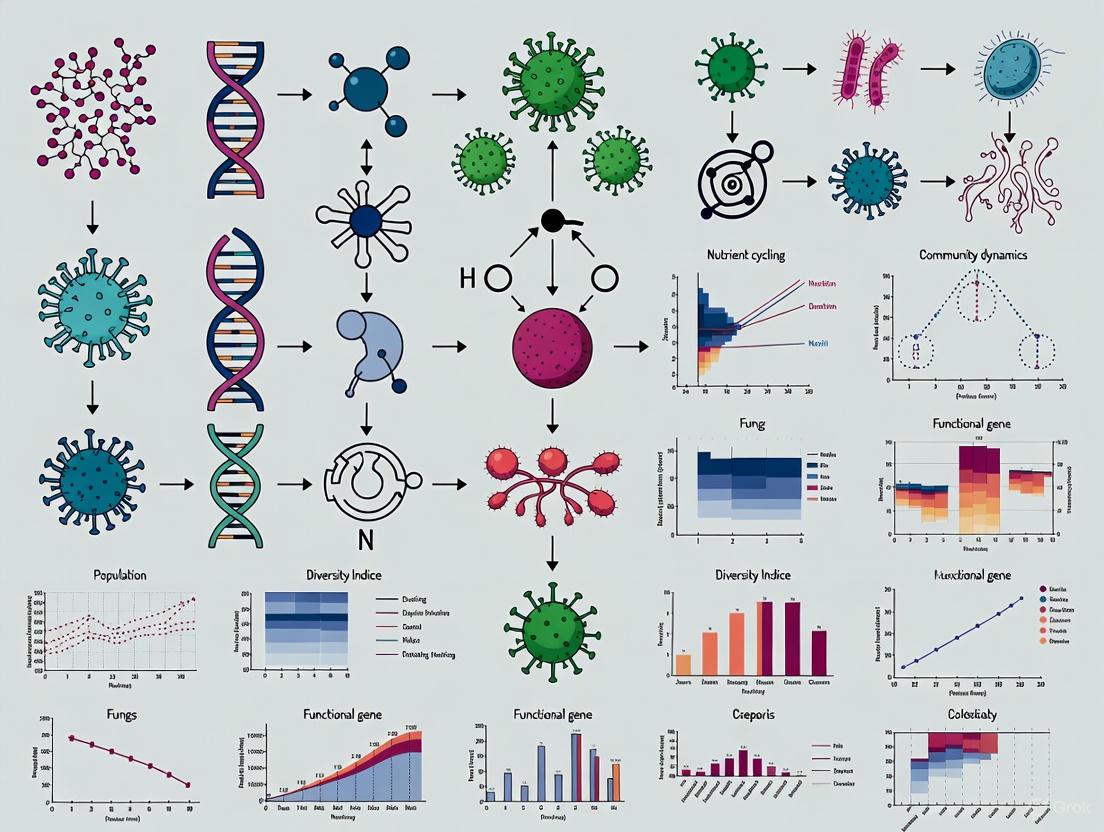
This comprehensive review explores the rapidly evolving field of microbial community analysis, addressing the critical needs of researchers and drug development professionals.
Microbial Community Composition and Structure Analysis: From Foundational Concepts to Advanced Applications in Biomedical Research
Abstract
This comprehensive review explores the rapidly evolving field of microbial community analysis, addressing the critical needs of researchers and drug development professionals. We cover foundational ecological principles governing community assembly and delve into cutting-edge molecular techniques, including high-throughput 16S rRNA sequencing and shotgun metagenomics. The article provides rigorous methodological comparisons and introduces advanced computational approaches like graph neural networks and LSTM models for predicting community dynamics. Special emphasis is placed on troubleshooting common experimental pitfalls in low-biomass studies like cancer microbiome research and optimizing bioinformatics pipelines. By synthesizing validation frameworks and comparative performance metrics across tools and environments—from human gut to wastewater ecosystems—this resource offers both theoretical understanding and practical guidance for robust experimental design and data interpretation in biomedical applications.
Understanding Microbial Ecosystems: Core Principles and Ecological Significance
Microbial community structure represents a foundational concept in microbial ecology, describing the organization and interplay of microorganisms within a shared environment. This structure is defined by three core pillars: composition (the identity of the taxa present), diversity (the variety and abundance distribution of these taxa), and dynamics (the temporal changes in community properties) [1]. Understanding these elements is critical for researchers and drug development professionals as it provides insights into community function, stability, and its impact on host health and disease states. The complex nature of microbiome data—characterized by high dimensionality, compositionality, and zero-inflation—requires sophisticated statistical models and experimental methods to accurately describe and predict community behavior [2]. This guide synthesizes current methodologies and analytical frameworks for defining microbial community structure within the broader context of microbial ecology and therapeutic development.
Core Components of Microbial Community Structure
Composition: The "Who is There"
Community composition refers to the identity of the microorganisms present in a sample, typically characterized using taxonomic labels from domain to species level. Advances in culture-independent metagenomic sequencing have revealed that the human microbiome comprises thousands of taxa from Archaea, Bacteria, and Eukarya, with the gut hosting the highest microbial load and functional potency [1]. A key challenge is that a significant portion of microbial sequences remains unassigned, corresponding to "microbial dark matter," which necessitates complementary culture-dependent approaches for comprehensive characterization [3].
Diversity: The Variety of Life
Microbial diversity quantifies the variety of microorganisms within a community, encompassing multiple levels of biological organization from genetic to ecological diversity [4]. This concept is operationalized through several key metrics:
- Alpha Diversity describes the diversity within a single community, incorporating species richness (the number of different species) and species evenness (how evenly individuals are distributed across those species) [5].
- Beta Diversity measures the similarity or dissimilarity in taxonomic diversity between different microbial communities [5].
- Gamma Diversity represents the overall diversity for all different ecosystems within a larger region [5].
Table 1: Common Alpha Diversity Metrics
| Metric | Description | Formula/Principle |
|---|---|---|
| Margalef's Richness | Estimates species richness, accounting for community size. | ( D = \frac{(S - 1)}{\log(n)} ) where (S) is total species and (n) is total individuals [5]. |
| Chao1 | Estimates true species richness, incorporating unobserved rare species. | ( S{chao1} = S{obs} + \frac{n{1}(n{1} - 1)}{2(n2 + 1)} ) where (n1) is singletons and (n_2) is doubletons [5]. |
| ACE (Abundance-based Coverage Estimator) | Estimates species richness based on abundance distribution, incorporating rare species. | Not covered in detail by search results. |
Dynamics: Temporal Changes and Interactions
Dynamics refer to the temporal changes in community composition, diversity, and function. Individual species abundances can fluctuate greatly over time with limited recurring patterns, making accurate forecasting a major challenge [6]. These dynamics are shaped by a complex interplay of deterministic factors (e.g., temperature, nutrients, predation), stochastic factors (e.g., immigration), species-species interactions, and evolutionary processes [6] [7]. Emerging graph neural network models can now predict species-level abundance dynamics up to 2-4 months into the future using historical relative abundance data [6].
Methodologies for Analysis
A comprehensive analysis of microbial community structure requires an integrated approach, combining both classical and modern molecular techniques.
Traditional Culture-Dependent Methods
Traditional methods rely on microbial isolation and pure culture, using microscopic observation and physiological characterization to understand community structure. While foundational, these methods have critical limitations, as a large proportion of environmental microorganisms are unculturable, making it impossible to capture the full community diversity [4].
- Experimental Protocol: Experienced Colony Picking (ECP)
- Sample Preparation: Fresh fecal sample (0.5 g) is homogenized with 4.5 g of distilled water, and tenfold serial dilutions are prepared in 0.85% NaCl solution [3].
- Plating: Aliquots (200 µL) from dilutions (e.g., 10â»Â³ to 10â»â·) are plated on various agar media types (e.g., nutrient-rich, selective, oligotrophic) [3].
- Incubation: Plates are incubated anaerobically (95% N₂, 5% H₂) and aerobically at 37°C for 5-7 days [3].
- Colony Selection & Purity: One or two single colonies of the same type are selected based on size, shape, color, and protrusion. Selected colonies are streaked on solid medium for purification to obtain pure culture isolates [3].
- Identification: DNA of isolated strains is extracted, and the 16S rRNA gene is amplified via PCR and sequenced for taxonomic identification [3].
Modern Culture-Independent Molecular Methods
These methods bypass the need for cultivation, providing a more comprehensive view of microbial communities.
Metagenomic Sequencing: This involves the functional and sequence-based analysis of the collective microbial genomes contained in an environmental sample. It provides a comprehensive view of genetic diversity, species composition, and functional potential [4].
- Experimental Protocol: Culture-Independent Metagenomic Sequencing (CIMS)
- DNA Extraction: Metagenomic DNA is extracted directly from a sample (e.g., ~100 mg of stool) using a commercial kit (e.g., QIAamp Fast DNA Stool Mini Kit) [3].
- Library Preparation & Sequencing: DNA libraries are constructed from fragments (~300 bp) and sequenced using a high-throughput platform (e.g., Illumina HiSeq 2500) to generate paired-end reads (e.g., 100 bp forward and reverse) [3].
- Bioinformatic Analysis: Low-quality reads, adapters, and host contaminants are removed. Taxonomic profiling is performed using tools like MetaPhlAn2, and functional analysis is conducted by aligning reads to databases like UniRef and KEGG [3].
- Experimental Protocol: Culture-Independent Metagenomic Sequencing (CIMS)
Hybrid Approaches: Newer methodologies aim to bridge the gap between culture-dependent and independent methods.
- Experimental Protocol: Culture-Enriched Metagenomic Sequencing (CEMS)
- Culturing: Samples are cultured extensively under multiple conditions (e.g., 12 different media, anaerobic/aerobic) [3].
- Harvesting: Instead of picking single colonies, all colonies from the culture plates are collected by scraping the plate surfaces and pooling the biomass [3].
- DNA Sequencing & Analysis: Metagenomic DNA is extracted from this pooled biomass and subjected to shotgun metagenomic sequencing, followed by the same bioinformatic analysis as in CIMS [3]. This method identifies a broader spectrum of culturable microorganisms than conventional ECP [3].
- Experimental Protocol: Culture-Enriched Metagenomic Sequencing (CEMS)
Other Molecular Techniques: Several other techniques are used for microbial community fingerprinting, including Denaturing Gradient Gel Electrophoresis (DGGE), Terminal Restriction Fragment Length Polymorphism (T-RFLP), and Fluorescent In Situ Hybridization (FISH) [4].
The following workflow diagram illustrates the key steps and decision points in selecting an appropriate method for profiling microbial community structure.
Statistical Modeling and Data Visualization
Statistical models are essential for describing and simulating realistic microbial community profiles, accounting for their unique properties like compositionality, sparsity, and high dimensionality.
SparseDOSSA Model: SparseDOSSA (Sparse Data Observations for the Simulation of Synthetic Abundances) is a hierarchical model that captures the main characteristics of microbiome data [2].
- Components: It uses zero-inflated log-normal distributions for marginal microbial abundances, a multivariate Gaussian copula to model feature-feature correlations, and a multinomial model for the read count generation process, while also accounting for compositionality [2].
- Application: This model can be fit to real data to parameterize community structures and then "reversed" to simulate synthetic, realistic microbial profiles with known ground truth. This is invaluable for benchmarking analytical methods, conducting power analyses, and spiking-in known microbial-phenotype associations [2].
Data Visualization Rules: Effective colorization of biological data visualizations is critical for clear communication. Key rules include [8]:
- Rule 1: Identify the nature of your data (e.g., Nominal: species names; Ordinal: disease severity; Quantitative: age, abundance).
- Rule 2: Select an appropriate color space (e.g., perceptually uniform CIE Luv/Lab is superior to standard RGB).
- Rule 7: Be aware of color conventions in your discipline.
- Rule 8: Assess color deficiencies to ensure accessibility.
The Scientist's Toolkit: Research Reagent Solutions
Table 2: Essential Research Reagents and Materials for Microbial Community Analysis
| Reagent/Material | Function/Application | Specific Examples / Notes |
|---|---|---|
| Culture Media | To support the growth of specific microbial groups from complex communities. | LGAM, PYG (nutrient-rich); PYA, PYD (probiotic enrichment); selective media like MRS-L for Bifidobacterium, RG for Lactobacillus [3]. |
| DNA Extraction Kits | To isolate high-quality metagenomic DNA directly from samples or cultured biomass. | QIAamp Fast DNA Stool Mini Kit [3]. |
| 16S rRNA Gene Primers | To amplify a phylogenetic marker gene for identification of bacterial isolates or community profiling via amplicon sequencing. | Universal primers for PCR amplification followed by Sanger sequencing of isolates [3]. |
| Metagenomic Sequencing Kits | To prepare DNA libraries for high-throughput sequencing on platforms like Illumina. | Illumina library preparation kits for 300 bp fragments and 100 bp paired-end sequencing on HiSeq 2500 [3]. |
| Bioinformatic Tools & Databases | For taxonomic profiling, functional annotation, and diversity analysis of sequencing data. | Kraken2/Bracken (taxonomic profiling), HUMAnN2/MetaPhlAn2 (community profiling & function), MiDAS database (ecosystem-specific taxonomy) [6] [5] [3]. |
| Statistical Software & Models | For modeling community structure, simulating data, and performing differential analysis. | SparseDOSSA2 (R/Bioconductor package for modeling/simulation) [2]. |
| Kadsuracoccinic Acid A | Kadsuracoccinic Acid A, MF:C30H44O4, MW:468.7 g/mol | Chemical Reagent |
| (+)-Thienamycin | (+)-Thienamycin, CAS:65750-57-4, MF:C11H16N2O4S, MW:272.32 g/mol | Chemical Reagent |
Interplay Between Structure, Function, and Dynamics
A central question in microbial ecology is the relationship between community structure ("who is there") and ecosystem function ("what they are doing"). The strength of this relationship is mediated by several factors [7]:
- Trait-Based Approaches: The distribution of functional traits within a community (e.g., plasticity, redundancy, enzyme production) provides a mechanistic link between structure and function. Communities with greater functional redundancy may be more resilient to perturbations [7].
- Species Interactions: Interactions such as cooperation, competition, and cheating (organisms using a public good without contributing) can significantly alter the relationship between biodiversity and ecosystem function [7].
- Evolutionary Dynamics: Horizontal gene transfer and within-lineage diversification can decouple phylogenetic structure from functional output, emphasizing the need for fine-scale resolution in analyses [7].
- Community Assembly: The processes governing how communities form (deterministic vs. stochastic) can influence the subsequent link between the resulting structure and its function [7].
- Physical Dynamics: Community structure is most likely to influence ecosystem function when biological processes are rate-limiting, rather than when physical constraints (e.g., diffusion limitations) dominate [7].
The following diagram illustrates the complex, interconnected factors that govern the relationship between microbial community structure and its resulting function, as identified in contemporary research.
Advanced Predictive Modeling of Community Dynamics
Accurately forecasting the future dynamics of individual microbial species remains a major challenge. A recently developed graph neural network (GNN) model demonstrates the ability to predict species-level abundance dynamics up to 2-4 months into the future using only historical relative abundance data [6].
- Model Architecture and Workflow:
- Input: Moving windows of 10 consecutive historical time points from a multivariate cluster of Amplicon Sequence Variants (ASVs) [6].
- Processing Layers:
- Graph Convolution Layer: Learns and extracts interaction features and relational dependencies between ASVs [6].
- Temporal Convolution Layer: Extracts temporal features across the time series data [6].
- Output Layer: Uses fully connected neural networks to predict the relative abundances of each ASV for the next 10 time points [6].
- Pre-clustering: Pre-clustering ASVs (e.g., using graph network interaction strengths or ranked abundances) before model training significantly enhances prediction accuracy compared to clustering by known biological function [6].
- Application: This approach, implemented as the "mc-prediction" workflow, was validated on 24 wastewater treatment plants and also shown to be suitable for other ecosystems like the human gut microbiome [6].
Microbial interactions function as a fundamental unit in complex ecosystems, serving as a critical determinant of community composition, structure, and function [9]. These interactions, ranging from positive to negative and neutral, are ubiquitous, diverse, and critically important in the function of any biological community, influencing processes from global biogeochemistry to human health and disease [9] [10]. Understanding the nature of these dynamic relationships allows researchers to unravel the ecological roles of microbial species, predict community behavior, and manipulate consortia for applications in biotechnology, medicine, and environmental management [9]. The characterization of these interactions—including their directionality, reciprocity, strength, and mode of action—provides invaluable insights into the stability and functional output of microbial systems [9]. This guide provides a comprehensive technical framework for classifying and analyzing these relationships within the context of microbial community composition and structure analysis research, equipping scientists with the methodologies and conceptual models needed to decipher complex microbial ecosystems.
A Classification System for Microbial Interactions
Microbial interactions are fundamentally categorized based on the net effect they have on the interacting partners, classified as positive, negative, or neutral [9] [10]. In these dynamic systems, positive interactions are defined as those wherein at least one partner benefits, negative interactions are those where one microbial population negatively affects another, and neutral interactions have no measurable effect [9]. The table below provides a systematic overview of these interaction types, their effects on the involved organisms, and specific examples.
Table 1: Classification of Microbial Interaction Types
| Interaction Type | Effect on Organism A | Effect on Organism B | Description | Examples |
|---|---|---|---|---|
| Mutualism [10] | Benefit | Benefit | An obligatory relationship where both organisms are metabolically dependent on each other [10]. | Lichens (fungi + algae), syntrophic methanogenic consortia in sludge digesters [10]. |
| Protocooperation [10] | Benefit | Benefit | A non-obligatory mutualistic interaction [10]. | Desulfovibrio and Chromatium; N2-fixing and cellulolytic bacteria [10]. |
| Commensalism [10] | Benefit | Neutral | One organism benefits while the other remains unaffected [10]. | E. coli consumes oxygen, creating an anaerobic environment for Bacteroides [10]. |
| Predation [10] | Benefit | Harm | One organism (predator) engulfs or attacks another (prey), typically causing death [10]. | Protozoa feeding on soil bacteria; predatory bacteria like Bdellovibrio [10]. |
| Parasitism [10] | Benefit | Harm | One organism (parasite) derives nutrition from a host, harming it over a prolonged period [10]. | Bacteriophages; Bdellovibrio as an ectoparasite of gram-negative bacteria [10]. |
| Competition [10] | Harm | Harm | Both populations are adversely affected while competing for the same limited resources [10]. | Paramecium caudatum and P. aurelia competing for the same bacterial food source [10]. |
| Amensalism (Antagonism) [10] | Neutral (or unaffected) | Harm | One population produces substances that inhibit another population [10]. | Lactic acid bacteria inhibiting Candida albicans in the vaginal tract [10]. |
Methodologies for Characterizing Interactions
Qualitative and Observational Methods
Qualitative assessment forms the foundational step in identifying microbial interactions, focusing on phenotypic changes and spatial structures [9]. These methods provide direct observation of inter-species dynamics.
- Co-culturing Experiments: Cultivating microbial species together, either with direct cell-cell contact or separated by a membrane, allows for the observation of directional interactions, mode of action, and spatiotemporal variation [9]. This can include plating assays, two-chamber systems, and host-microbe co-cultures to mimic in vivo conditions [9].
- Microscopy and Imaging: Techniques like scanning electron microscopy (SEM), transmission electron microscopy (TEM), and confocal laser scanning microscopy (CLSM) are used to visualize mixed-species biofilm structures, morphological changes, and physical co-aggregation [9]. Time-lapse imaging in specialized chambers (e.g., MOCHA) can track colony morphology dynamics and morphogenesis in response to co-culturing [9].
- Analysis of Chemical Compounds: Microbial interactions are often mediated by secreted compounds.
- Volatile Compounds: Assessing the transcriptional or growth response of one microbe to volatiles produced by a co-inhabitant [9].
- Quorum Sensing Signals: Using liquid chromatography-mass spectrometry (LC-MS) to identify and quantify autoinducers and other signaling molecules involved in microbial communication [9].
- Metabolite Exchange: Detecting cross-fed metabolites, enzymes, or nutrients that suggest syntrophy or competition [9].
Quantitative and Computational Methods
Quantitative methods leverage high-throughput data and computational models to infer interactions and predict community dynamics, offering a systems-level perspective [6] [9].
- Network Inference and Construction: Microbial association networks are constructed from abundance data (e.g., from 16S rRNA amplicon sequencing) to visualize and quantify potential positive and negative correlations between species [9]. This helps generate hypotheses about interaction partners.
- Dynamic Modeling with Machine Learning: Advanced computational models, such as Graph Neural Networks (GNNs), use historical relative abundance data to predict future community dynamics [6]. These models learn interaction strengths and temporal features to accurately forecast species-level abundances multiple time points into the future, without relying on environmental parameters [6].
- Functional Prediction from Genomic Data: Tools like PICRUSt2 are used to predict the metabolic functional potential of a microbial community based on marker-gene sequencing data [11]. This helps infer the ecological roles of symbionts and how their functional profiles (e.g., denitrification, vitamin synthesis) contribute to interactions and host health [11].
- Synthetic Microbial Consortia: Designed communities of known species are constructed to quantitatively test and validate hypothesized interactions in a controlled setting, providing a framework for understanding the principles of community assembly and function [9].
The following workflow diagram illustrates the integration of these diverse methodologies to progress from observation to prediction in microbial interaction analysis.
Diagram 1: An integrated workflow for analyzing microbial interactions, combining qualitative observations with quantitative modeling.
Advanced Computational Modeling: Predicting Community Dynamics
The ability to predict the temporal dynamics of individual microbial species is a major frontier in microbial ecology. A graph neural network (GNN)-based approach demonstrates the power of computational models to forecast community structure [6].
- Model Architecture: The GNN model uses only historical relative abundance data (e.g., from 16S rRNA amplicon sequencing) as input. Its architecture consists of:
- Graph Convolution Layer: Learns the interaction strengths and extracts relational features between amplicon sequence variants (ASVs) [6].
- Temporal Convolution Layer: Extracts temporal features across consecutive time points [6].
- Output Layer: Uses fully connected neural networks to predict future relative abundances of each ASV [6].
- Input and Output: The model is trained on moving windows of 10 consecutive historical samples to predict the next 10 consecutive time points, enabling predictions 2-4 months into the future [6].
- Pre-clustering for Accuracy: Model performance is optimized by pre-clustering ASVs (e.g., into groups of 5) before training. Clustering based on graph network interaction strengths or by ranked abundances yields the highest prediction accuracy, outperforming clustering by biological function [6].
This modeling approach, implemented in the "mc-prediction" software workflow, is generic and has been successfully applied to ecosystems ranging from wastewater treatment plants to the human gut microbiome [6].
The Scientist's Toolkit: Essential Reagents and Materials
Table 2: Key Research Reagents and Materials for Studying Microbial Interactions
| Reagent / Material | Function / Application |
|---|---|
| PET Membranes / Two-Chamber Assays [9] | Enables co-culturing of microbes with indirect contact, allowing study of metabolite and volatile compound exchange. |
| Fluorescent Labels & Tags [9] | Used for tracking and visualizing specific microorganisms within mixed communities via microscopy (e.g., CLSM). |
| Sterile Swabs & Cell Lifters [11] | For the non-destructive collection of mucosal surface microbiota (e.g., gill, skin, intestinal mucus) from host organisms. |
| DNA Extraction Kits [6] [11] | Essential for extracting high-quality genomic DNA from complex community samples for subsequent sequencing. |
| 16S rRNA Gene Primers & Sequencing Kits [6] [11] | Allows for amplicon sequencing to determine microbial community composition and structure at high resolution. |
| PCTE Membrane Filters (0.2µm) [11] | For filtering water samples to collect microbial biomass for environmental association analysis. |
| LC-MS Reagents & Columns [9] | For identifying and quantifying metabolites, quorum sensing molecules, and other chemical mediators of interaction. |
| ELISA Kits (e.g., for cortisol, estradiol) [11] | To measure host stress or physiological response biomarkers correlated with shifts in microbial communities. |
| IOX5 | IOX5, MF:C17H19F3N4O2, MW:368.35 g/mol |
| Amylin (8-37), human | Amylin (8-37), human, MF:C138H216N42O45, MW:3183.4 g/mol |
Visualization and Data Interpretation Guidelines
Effective visualization is critical for interpreting complex interaction data, such as microbial networks. Adherence to design principles ensures clarity and accuracy.
- Color Contrast in Diagrams: For node-link diagrams, ensure sufficient contrast between all elements (nodes, edges, labels) and the background [12]. When nodes are colored to represent quantitative attributes (e.g., abundance), use shades of blue over yellow for better perception, and pair with complementary-colored or neutral gray links to enhance node color discriminability [13].
- Color Palette and Order: Use a controlled color palette with distinct hues and consistent perceived lightness to represent different microbial groups or interaction types [14]. If coloring edges based on a node attribute, carefully consider the rationale—using source node color, target node color, or a mix of both—and randomize edge drawing order to prevent visual bias [14].
The following diagram illustrates a generalized model of positive and negative interaction mechanisms at the metabolic level.
Diagram 2: Mechanisms of positive (syntrophy) and negative (amensalism) microbial interactions.
Understanding the ecological drivers of microbial community assembly is a fundamental pursuit in microbial ecology, with significant implications for environmental management, biotechnology, and human health. The structure, dynamics, and function of any microbial community are ultimately determined by the complex interplay between environmental conditions, biological interactions, and stochastic processes. This review synthesizes current knowledge on how environmental factors shape community assembly, framing this understanding within the broader context of microbial community composition and structure analysis research. We examine the mechanistic pathways through which abiotic and biotic drivers filter and select for specific microbial taxa, thereby determining community trajectories and ecosystem functioning. By integrating findings from diverse ecosystems—including wastewater treatment, forest soils, and host-associated environments—this guide provides a technical framework for researchers investigating the principles governing microbial assembly patterns across different habitats and scales.
Key Environmental Drivers of Microbial Community Assembly
Environmental factors act as selective filters that determine microbial community composition by favoring taxa with specific functional traits adapted to prevailing conditions. The relative importance of these drivers varies across ecosystems, but several fundamental factors consistently emerge as primary determinants of community structure across diverse habitats.
Table 1: Key Environmental Drivers of Microbial Community Assembly
| Environmental Driver | Mechanism of Influence | Ecosystem Examples | Technical Measurement Approaches |
|---|---|---|---|
| Temperature | Regulates enzyme kinetics, membrane fluidity, and metabolic rates; selects for thermal adaptation traits | Activated sludge systems, soils, host-associated environments | Amplicon sequencing with temperature covariation analysis; microcosm experiments with temperature gradients |
| pH | Affects membrane potential, nutrient solubility, and enzyme conformation; imposes physiological constraints | Soils, aquatic systems, engineered bioreactors | pH manipulation experiments; biogeographic surveys across natural pH gradients |
| Nutrient Availability | Determines energy and biomass yield; selects for resource acquisition strategies and metabolic pathways | Wastewater treatment, agricultural soils, gut microbiome | Chemical assays (N, P, S); stoichiometric analysis; isotopic tracing |
| Water Availability | Influences osmotic stress, diffusion rates, and cellular hydration; selects for osmoregulation capabilities | Arid soils, hypersaline environments, mucosal surfaces | Water potential measurements; osmolyte profiling; desiccation experiments |
| Toxic Compounds | Creates stress conditions that eliminate sensitive taxa; selects for detoxification and resistance mechanisms | Industrial wastewater, contaminated sites, antibiotic-exposed microbiomes | Toxicity assays; resistance gene quantification; functional enrichment analysis |
| Oxygen Availability | Determines metabolic pathways (aerobic vs. anaerobic); creates redox gradients that partition communities | Sediments, biofilms, gut environments, activated sludge | Microsensor profiling; redox potential measurements; anaerobic cultivation |
Beyond these fundamental abiotic factors, biotic interactions including competition, predation, mutualism, and facilitation further refine community composition by altering the outcome of environmental selection. The physical structure of the environment also plays a crucial role by creating microhabitats with distinct conditions and limiting dispersal, thereby influencing both deterministic and stochastic assembly processes [6] [15] [11].
In wastewater treatment plants (WWTPs), for instance, both stochastic factors (e.g., immigration) and deterministic factors (e.g., temperature, nutrients, predation) significantly influence community structure, though their relative contributions vary across systems [6]. Similarly, in forest litter decomposition, climate, litter quality, and microbial communities collectively control decomposition rates, with microbial functional groups (e.g., copiotrophs and oligotrophs) responding differently to these environmental constraints [15].
Methodologies for Investigating Environmental Drivers
Experimental Approaches for Establishing Causality
Determining causal relationships between environmental factors and community assembly requires carefully designed experiments that manipulate driver variables while controlling for confounding factors. Several established protocols enable researchers to disentangle the complex effects of multiple environmental parameters.
Microcosm/Mesocosm Experiments: These controlled system approaches involve manipulating environmental factors in laboratory or semi-natural settings to observe community responses. A typical protocol involves: (1) collecting inoculum from the natural environment; (2) establishing replicate cultures in controlled environments; (3) applying specific environmental treatments (e.g., temperature gradients, nutrient amendments, pH manipulation); (4) monitoring community dynamics over time through sampling; and (5) analyzing compositional and functional changes using molecular methods [15].
Cross-System Comparative Studies: This approach leverages natural environmental gradients to identify relationships between environmental factors and community composition. The MIMICS model calibration study exemplifies this approach, using litterbag decomposition experiments across 10 temperate forest NEON sites to quantify how soil moisture, litter lignin:N ratio, and microbial community composition (represented as copiotroph-to-oligotroph ratio) interact to control decomposition rates [15]. The methodological framework involves: (1) selecting sites across environmental gradients; (2) standardizing sample collection and processing; (3) measuring environmental parameters; (4) characterizing microbial communities; and (5) using statistical modeling to identify driver-response relationships.
Longitudinal Time-Series Analysis: This approach examines how temporal environmental variation influences community dynamics. The WWTP study demonstrating graph neural network prediction of microbial dynamics exemplifies this method, involving 4,709 samples collected over 3-8 years with 2-5 sampling points per month [6]. The protocol includes: (1) high-frequency temporal sampling; (2) standardized DNA extraction and sequencing; (3) precise recording of operational parameters; (4) time-series statistical modeling; and (5) validation of predictions against held-out data.
Table 2: Analytical Methods for Linking Environmental Factors to Community Structure
| Method Category | Specific Techniques | Data Outputs | Statistical Approaches |
|---|---|---|---|
| Community Characterization | 16S rRNA amplicon sequencing, Metagenomics, Metatranscriptomics | Relative abundance tables, Phylogenetic trees, Gene abundance, Functional potential | Diversity indices (alpha, beta), Compositional analysis, Phylogenetic conservation |
| Environmental Measurement | Chemical assays, Sensor networks, Isotopic tracing, Metabolic profiling | Concentration data, Process rates, Reaction norms, Stoichiometric ratios | Correlation analysis, Regression modeling, Multivariate statistics |
| Integration Methods | Mantel tests, Canonical correspondence analysis, Structural equation modeling, Network analysis | Variance partitioning, Path coefficients, Interaction networks, Driver effect sizes | Model selection criteria, Permutation tests, Cross-validation |
Special Considerations for Low-Biomass Environments
Investigating environmental drivers in low-biomass systems requires specialized methodologies to avoid contamination artifacts that can compromise data interpretation. A recent consensus statement outlines essential practices for such studies [16]:
Contamination-Aware Sampling Protocols:
- Decontaminate all sampling equipment using 80% ethanol followed by nucleic acid-degrading solutions
- Use personal protective equipment (PPE) including gloves, cleansuits, and masks to minimize human-derived contamination
- Include appropriate controls: empty collection vessels, swabs of sampling environment air, and samples of preservation solutions
- Process controls alongside actual samples through all downstream steps to identify contamination sources
DNA Extraction and Sequencing Considerations:
- Use extraction kits specifically designed for low-biomass samples
- Include multiple extraction negative controls
- Utilize DNA-free reagents and consumables
- Apply bioinformatic decontamination tools specifically validated for low-biomass data
These precautions are particularly crucial when studying environments like atmospheric samples, deep subsurface habitats, certain human tissues (respiratory tract, blood), drinking water, and other systems where microbial biomass approaches detection limits [16].
Technical Implementation and Workflows
Data Integration and Modeling Approaches
Modern analysis of environmental drivers in microbial ecology increasingly relies on computational approaches that can handle the high-dimensional, compositionally complex nature of microbiome data. Several advanced modeling frameworks have demonstrated particular utility for elucidating driver-community relationships.
Graph Neural Network (GNN) Models: For predicting microbial community dynamics based on environmental parameters and historical abundance data, GNNs offer a powerful approach. The "mc-prediction" workflow exemplifies this method [6], implementing the following steps: (1) input historical relative abundance data as multivariate time series; (2) apply graph convolution layers to learn interaction strengths between microbial taxa; (3) use temporal convolution layers to extract temporal features across timepoints; (4) employ fully connected neural networks to predict future abundances; (5) validate predictions against held-out data. This approach has successfully predicted species dynamics up to 10 time points ahead (2-4 months) in WWTP systems [6].
Process-Based Model Integration: The MIMICS (MIcrobial-MIneral Carbon Stabilization) model represents another approach, integrating empirical microbial data into process-based ecosystem models [15]. The calibration protocol involves: (1) measuring empirical effect sizes for environmental drivers (e.g., soil moisture, litter quality, microbial community composition); (2) setting up the model to provide comparable modeled effect sizes; (3) using Monte Carlo parameterization to calibrate the model to both process rates and their empirical drivers; (4) validating the calibrated model against independent data; (5) projecting responses under future scenarios (e.g., climate change). This approach ensures that models capture not only current system behavior but also the underlying mechanisms governing responses to environmental change.
Visualization Strategies for Communicating Driver-Community Relationships
Effective visualization of microbiome data in the context of environmental drivers requires careful selection of plot types based on the specific research question and data structure [17].
For comparing taxonomic diversity across environmental conditions:
- Alpha diversity: Box plots with jittered data points for group-level comparisons; scatter plots for sample-level visualization
- Beta diversity: Principal Coordinates Analysis (PCoA) plots with environmental vector overlays for group-level patterns; dendrograms or heatmaps for sample-level relationships
For displaying taxonomic distributions in response to environmental gradients:
- Relative abundance: Stacked bar charts for group-level comparisons; heatmaps for sample-level patterns
- Differential abundance: Bar graphs showing effect sizes across environmental treatments
For identifying core taxa across environmental conditions:
- UpSet plots for comparing taxon intersections across more than three environmental conditions
- Venn diagrams for simpler comparisons (three or fewer conditions)
For visualizing microbial interactions modulated by environmental factors:
- Network plots showing correlation structures under different environmental conditions
- Correlograms displaying relationships between microbial taxa and environmental parameters
All visualizations should be optimized for interpretability by including descriptive titles, clear axis labels, careful color selection (using consistent, color-blind-friendly palettes), and strategic ordering of data (e.g., by median values or environmental gradients) [17].
Essential Research Reagents and Computational Tools
Table 3: Research Reagent Solutions for Microbial Community Analysis
| Reagent/Tool Category | Specific Examples | Function/Application | Technical Considerations |
|---|---|---|---|
| DNA Extraction Kits | DNeasy PowerSoil Pro Kit, MagAttract PowerSoil DNA Kit | Extracts microbial DNA from complex environmental samples while inhibiting PCR inhibitors | Critical for low-biomass samples; includes inhibition removal technology |
| Sequencing Reagents | Illumina 16S rRNA gene sequencing panels, Shotgun metagenomics kits | Provides comprehensive profiling of microbial community composition and functional potential | 16S for taxonomic profiling; shotgun for functional capacity assessment |
| PCR Reagents | HotStart Taq DNA polymerase, Phusion High-Fidelity DNA Polymerase | Amplifies target genes for sequencing; high-fidelity enzymes reduce amplification errors | Choice of polymerase affects error rates and amplification efficiency |
| Bioinformatic Tools | QIIME 2, mothur, DADA2, PICRUSt2 | Processes raw sequencing data; performs diversity analysis; predicts functional potential | Essential for transforming sequence data into ecological insights |
| Statistical Packages | R vegan package, phyloseq, DESeq2 | Performs multivariate statistics, differential abundance testing, and diversity calculations | Enables rigorous statistical testing of environmental driver effects |
| Contamination Controls | DNA-free water, synthetic microbial community standards, extraction blanks | Identifies and quantifies contamination in low-biomass studies | Critical for validating results from low-biomass environments [16] |
Conceptual Framework and Experimental Workflows
The relationship between environmental factors and community assembly follows a logical progression from driver imposition to community response and eventual ecosystem outcome. The diagram below illustrates this conceptual framework:
Conceptual Framework of Ecological Drivers in Microbial Community Assembly
A typical experimental workflow for investigating these relationships integrates field sampling, laboratory processing, and computational analysis, as illustrated below:
Experimental Workflow for Investigating Ecological Drivers
Environmental factors shape microbial community assembly through deterministic selection processes that filter taxa based on their functional traits, while stochastic processes introduce additional variability. The integration of advanced molecular methods with sophisticated computational modeling now enables researchers to not only document these patterns but also predict community responses to environmental change. As research in this field advances, emerging approaches that incorporate empirical microbial data into process-based models, leverage large-scale comparative datasets, and employ machine learning for pattern recognition will further enhance our ability to understand and forecast how environmental drivers structure microbial communities across diverse ecosystems. This knowledge is essential for addressing pressing challenges in environmental management, climate change mitigation, and microbiome-based therapeutics, where predicting and managing microbial community responses to changing conditions is of paramount importance.
The study of microbial communities, or microbiomes, has revolutionized our understanding of life on Earth, from human health to ecosystem functioning. This whitepaper provides a technical guide for researchers, scientists, and drug development professionals, framed within the broader context of microbial community composition and structure analysis research. The human body harbors approximately 39 trillion bacterial cells, rivaling the number of human cells, with collective microbial genomes containing millions of genes compared to the approximately 23,000 in the human genome [18] [19]. This genetic complexity enables microbiomes to influence processes ranging from ecosystem biogeochemistry to cancer pathogenesis and response to immunotherapy.
Advancements in sequencing technologies and computational methods have enabled high-resolution analysis of microbial communities across diverse habitats. This document presents a comparative analysis of three critical microbiome niches: the human gut, environmental ecosystems (specifically wastewater treatment plants), and cancer-associated microbial communities. By examining their structural features, functional roles, and analytical approaches, this guide aims to equip researchers with the methodological frameworks needed to advance microbiome science across basic and applied research domains, particularly in therapeutic development.
Comparative Analysis of Microbial Communities
Table 1: Structural and Functional Comparison of Major Microbiome Types
| Feature | Human Gut Microbiome | Environmental Microbiome (Wastewater Treatment) | Cancer-Associated Microbiome |
|---|---|---|---|
| Total Microbial Abundance | ~100 trillion microorganisms [19] | Varies by plant size; 52-65% of DNA sequences from top 200 ASVs in Danish WWTPs [6] | Low biomass; heterogeneous distribution [20] |
| Key Dominant Taxa | Bacteroides, Prevotella, Faecalibacterium, Akkermansia, Bifidobacterium [18] [19] | Polyphosphate accumulating organisms (PAOs), Glycogen accumulating organisms (GAOs), Filamentous bacteria [6] | Fusobacterium spp. (OSCC), Helicobacter pylori (gastric), Akkermansia muciniphila (multiple cancers) [18] [21] |
| Diversity Metrics | Shannon/Simpson/Chao1 indices; Higher diversity correlates with better psychological well-being (zr = 0.215) [19] | Bray-Curtis dissimilarity; Mean Absolute Error; Mean Squared Error for predictive models [6] | Varies by cancer type; often reduced diversity with specific pathogen enrichment [18] [20] |
| Primary Functions | Metabolism, immune regulation, neuroendocrine signaling, drug metabolism [18] [19] | Pollutant removal, nutrient cycling, energy recovery [6] | Modulating TME, affecting therapy response, promoting chronic inflammation [18] [21] |
| Influencing Factors | Diet, age, medications, genetics, lifestyle [18] [19] | Temperature, nutrients, predation, immigration, operational parameters [6] | Tumor type, immune status, compromised mucosal barriers [18] [20] |
Table 2: Impact of Specific Microbial Taxa on Cancer Immunotherapy
| Microbial Taxon | Cancer Type | Impact on Therapy | Proposed Mechanism |
|---|---|---|---|
| Bifidobacterium spp. | Melanoma, NSCLC | Enhanced anti-PD-1/PD-L1 efficacy [21] | Dendritic cell maturation, enhanced CD8+ T cell activity [21] |
| Akkermansia muciniphila | NSCLC, RCC, HCC | Improved anti-PD-1 response [21] | Modulation of immune cell infiltration in TME [21] |
| Bacteroides fragilis | Melanoma | Restored anti-CTLA-4 efficacy [21] | Th1 cell activation in tumor-draining lymph nodes [21] |
| Faecalibacterium | Multiple cancers | Generally compromised in aged adults [18] | Production of anti-inflammatory metabolites like butyrate [18] |
| Fusobacterium spp. | Colorectal cancer, OSCC | Cancer progression and therapy resistance [18] | DNA damage, chronic inflammation, mucosal barrier disruption [18] |
Experimental Protocols and Methodologies
Microbial Community Profiling Techniques
16S rRNA Gene Sequencing: This amplicon-based approach remains the gold standard for microbial community structural analysis due to its cost-effectiveness and well-established bioinformatics pipelines [20]. The protocol involves: (1) DNA extraction from samples using bead-beating or enzymatic lysis protocols; (2) Amplification of hypervariable regions (V3-V4) using primer pairs (e.g., 341F/806R); (3) Library preparation and sequencing on Illumina platforms; (4) Bioinformatic processing including quality filtering, ASV/OTU clustering, taxonomic classification using reference databases (Silva, Greengenes, or ecosystem-specific databases like MiDAS 4 for wastewater samples) [6] [20]. This method provides robust community composition data but limited functional information.
Shotgun Metagenomics: For functional potential assessment, shotgun metagenomics sequences all genomic DNA in a sample [20]. The protocol includes: (1) High-quality DNA extraction; (2) Library preparation without target-specific amplification; (3) High-throughput sequencing on Illumina, PacBio, or Oxford Nanopore platforms; (4) Computational analysis including quality control, assembly, binning, gene prediction, and functional annotation using databases like KEGG, COG, and eggNOG [20]. This approach provides species-level resolution and insights into functional potential but requires higher sequencing depth and computational resources.
Microbial Single-Cell Sequencing: To address microbial heterogeneity, emerging techniques like microSPLiT and smRandom-seq2 enable transcriptome profiling at single-microbe resolution [20]. The workflow involves: (1) Sample dissociation and single-cell encapsulation; (2) Cell lysis and mRNA capture; (3) Reverse transcription and library preparation; (4) Sequencing and bioinformatic analysis to identify cellular subpopulations and rare cell states [20]. This method reveals functional heterogeneity but requires specialized equipment and expertise.
Predictive Modeling of Microbial Dynamics
Graph Neural Network (GNN) Approach: A recently developed methodology for predicting microbial community dynamics uses historical relative abundance data to forecast future compositions [6]. The "mc-prediction" workflow implements the following steps: (1) Data preprocessing and normalization of time-series data; (2) Pre-clustering of Amplicon Sequence Variants (ASVs) using graph network interaction strengths or ranked abundances; (3) Model training with moving windows of 10 consecutive samples as input; (4) Graph convolution layer to learn ASV interaction strengths; (5) Temporal convolution layer to extract temporal features; (6) Output layer with fully connected neural networks to predict future relative abundances [6]. This approach has successfully predicted species dynamics up to 10 time points ahead (2-4 months) in wastewater treatment plants and human gut microbiomes.
Spatial Analysis of Tumor Microbiome
Spatial Transcriptomics with Microbiome Mapping: To understand the spatial distribution of microbes within the tumor microenvironment, an integrated approach combines: (1) Tissue sectioning and spatial barcoding using 10x Visium platform; (2) Hybridization capture of microbial transcripts; (3) In situ sequencing; (4) Computational deconvolution of host and microbial signals; (5) Correlation with histopathological features [20]. This methodology has revealed that bacterial communities in tumors are distributed across highly immunosuppressive microecological landscapes.
Visualization of Key Concepts
Signaling Pathways in Cancer-Associated Microbiome
Figure 1: Microbial Modulation of Cancer Signaling. Intratumoral microbes activate multiple signaling pathways including TLRs, STING, NF-κB, ERK, and WNT/β-catenin through microbial components and metabolites, promoting inflammation, proliferation, immune evasion, and metastasis [20].
Predictive Modeling Workflow
Figure 2: Microbial Community Prediction Workflow. GNN-based prediction workflow using historical abundance data to forecast future microbial community structures through preprocessing, clustering, and temporal modeling [6].
The Scientist's Toolkit: Research Reagent Solutions
Table 3: Essential Research Reagents and Materials for Microbiome Studies
| Reagent/Material | Function | Application Examples |
|---|---|---|
| 16S rRNA Primers (341F/806R) | Amplification of hypervariable regions for bacterial community profiling | Human gut, environmental, and intratumoral microbiome characterization [6] [20] |
| MiDAS 4 Database | Ecosystem-specific taxonomic classification reference | Species-level classification of wastewater treatment plant microbiomes [6] |
| SPRi-based Barcoding Beads | Single-cell encapsulation and mRNA capture for microbial transcriptomics | Identification of functional heterogeneity in bacterial subpopulations using microSPLiT [20] |
| Graph Neural Network Framework | Modeling relational dependencies in multivariate time series data | Predicting future microbial community structure in WWTPs and human gut [6] |
| Spatial Barcoding Slides (10x Visium) | In situ capture of transcriptomic data with spatial coordinates | Mapping microbial communities within tumor microenvironments [20] |
| Fecal Microbiota Transplantation (FMT) Material | Microbial community transfer between donors and recipients | Overcoming immunotherapy resistance in melanoma patients [21] |
| CB-7921220 | CB-7921220, MF:C14H12N2O2, MW:240.26 g/mol | Chemical Reagent |
| ZEN-2759 | ZEN-2759, MF:C17H16N2O2, MW:280.32 g/mol | Chemical Reagent |
This comparative analysis demonstrates both shared principles and unique characteristics across human gut, environmental, and cancer-associated microbiomes. While all microbial communities follow ecological principles of diversity, succession, and environmental response, their specific compositions, functions, and applications differ significantly. The human gut microbiome exhibits remarkable plasticity in response to dietary interventions and represents a promising therapeutic target for enhancing cancer immunotherapy outcomes [21]. Environmental microbiomes, such as those in wastewater treatment systems, demonstrate predictable dynamics that can be modeled for process optimization [6]. Cancer-associated microbiomes present unique configurations that influence disease progression and treatment response, offering novel diagnostic and therapeutic opportunities [18] [20].
Emerging technologies including single-cell microbiome sequencing, spatial transcriptomics, and graph neural network-based predictive models are advancing our capacity to understand and manipulate these complex communities. As the field progresses, integrating multi-omics data with advanced computational models will be essential for translating microbiome research into clinical applications and environmental solutions. The global microbiome market, projected to reach $1.52 billion by 2030, reflects the growing recognition of these microbial communities as fundamental drivers of health, disease, and ecosystem functioning [22].
Advanced Analytical Techniques: From Laboratory Methods to Computational Modeling
The analysis of microbial community composition and structure is a cornerstone of modern microbiology, enabling advancements in human health, agriculture, and environmental science. The choice of sequencing methodology profoundly influences the resolution, depth, and biological insights attainable from any microbiome study. Two principal high-throughput sequencing approaches have emerged as critical technologies for taxonomic profiling: 16S ribosomal RNA (rRNA) gene sequencing and shotgun metagenomic sequencing. Each method offers distinct advantages and limitations, making them suited for different research objectives and resource constraints. This technical guide provides an in-depth comparison of these foundational methods, detailing their experimental protocols, analytical capabilities, and performance characteristics to inform researchers and drug development professionals in selecting the optimal approach for their specific investigative needs.
16S rRNA gene sequencing (metataxonomics) employs polymerase chain reaction (PCR) to amplify specific hypervariable regions (e.g., V3-V4) of the bacterial and archaeal 16S rRNA gene, which are then sequenced, typically using Illumina short-read or Nanopore/PacBio long-read platforms [23] [24]. In contrast, shotgun metagenomic sequencing is an untargeted approach that involves randomly fragmenting and sequencing all DNA present in a sample, enabling simultaneous identification of bacteria, archaea, viruses, fungi, and other microorganisms without amplification biases [23] [25].
Table 1: Core Characteristics of 16S rRNA Sequencing vs. Shotgun Metagenomics
| Feature | 16S rRNA Sequencing | Shotgun Metagenomics |
|---|---|---|
| Sequencing Target | Specific hypervariable regions of the 16S rRNA gene [23] | All genomic DNA in a sample [23] |
| Taxonomic Scope | Limited to Bacteria and Archaea [23] | Comprehensive: Bacteria, Archaea, Viruses, Fungi, Eukaryotes [23] [26] |
| Typical Taxonomic Resolution | Genus-level (short-read); Species-level with full-length [24] | Species to Strain-level [26] |
| Functional Potential | Not available (must be inferred) | Direct characterization of functional genes and pathways [27] [28] |
| Relative Cost | Lower | Higher |
| Computational Demand | Lower | Higher, requires extensive bioinformatics resources [26] |
| Primary Biases | Primer selection, PCR amplification [29] | Database completeness, host DNA contamination [26] |
Table 2: Quantitative Performance Comparison from Comparative Studies
| Performance Metric | 16S rRNA Sequencing | Shotgun Metagenomics | Context |
|---|---|---|---|
| Detection Power | Detects only part of the community, biased towards abundant taxa [29] [26] | Higher power to identify less abundant taxa with sufficient reads [29] | Chicken gut microbiota study [29] |
| Significant Genera (Caeca vs. Crop) | 108 | 256 | Same chicken gut dataset analyzed with both methods [29] |
| Alpha Diversity | Lower, sparser data [26] | Higher, detects more species [26] | Human colorectal cancer stool samples [26] |
| Abundance Correlation | Positive correlation for shared taxa, but 16S can miss low-abundance genera [29] | More complete abundance profile | Genus-level comparison [29] [26] |
| Species-Level Resolution | Challenging with short reads; improved with full-length sequencing [24] | Reliable species and strain-level discrimination [26] | Human gut microbiome analysis [26] [24] |
Experimental Protocols
16S rRNA Gene Sequencing Workflow
A. DNA Extraction: The initial step is crucial for obtaining high-quality, unbiased microbial DNA. Kits specifically designed for complex samples (e.g., soil, stool) are recommended, such as the QIAamp PowerFecal Pro DNA Kit (QIAGEN) or the NucleoSpin Soil Kit (Macherey-Nagel) [26] [30]. These kits efficiently lyse diverse microbial cell walls and remove PCR inhibitors like humic acids. The inclusion of bead-beating is essential for breaking down tough cell walls.
B. Library Preparation (Illumina Short-Read):
- PCR Amplification: Amplify the target hypervariable region (e.g., V3-V4) using universal primer sets (e.g., 341F/805R) [26]. The number of PCR cycles (typically 25-35) should be minimized to reduce amplification bias [30].
- Attachment of Indices and Adapters: A second, limited-cycle PCR step is used to attach unique dual indices and sequencing adapters to the amplicons.
- Library Validation: The final library is purified and quantified using fluorometry (e.g., Qubit) and its size distribution verified with a Fragment Analyzer or Bioanalyzer [31].
C. Library Preparation (Nanopore Full-Length):
- Full-Length PCR: Amplify the nearly complete 16S rRNA gene (~1500 bp) using primers such as 27F and 1492R [24].
- Barcoding: Purified amplicons are ligated to native barcodes using a kit like the Native Barcoding Kit 96 (Oxford Nanopore Technologies) [31].
- Adapter Ligation: Sequencing adapters are ligated to the barcoded amplicons to facilitate their loading onto the flow cell.
- Sequencing: The library is loaded onto a MinION device using an R9.4.1 or newer flow cell for sequencing [30] [24].
D. Bioinformatics Analysis:
- Short-Read (DADA2/QIIME2): Raw reads are quality-filtered, trimmed, denoised, and merged to create Amplicon Sequence Variants (ASVs). Taxonomy is assigned using reference databases like SILVA or Greengenes [26] [24].
- Long-Read (Emu): Tools like Emu are designed for the error-profile of Nanopore reads and perform taxonomic assignment without constructing ASVs, often using a curated default database [31] [24].
Shotgun Metagenomic Sequencing Workflow
A. DNA Extraction & Quality Control: This requires high-quality, high-molecular-weight DNA. The same kits as for 16S sequencing are used, but with extra care to minimize shearing. DNA quantity and quality are critical and are assessed via Qubit and agarose gel electrophoresis [25] [26].
B. Library Preparation:
- Fragmentation: Genomic DNA is randomly sheared to a target size of 300-800 bp via mechanical shearing (e.g., sonication) or enzymatic digestion.
- End-Repair and dA-Tailing: DNA fragments are enzymatically treated to create blunt ends, followed by the addition of an 'A' base to the 3' end.
- Adapter Ligation: Sequencing adapters, including sample-specific barcodes for multiplexing, are ligated to the fragments.
- Library Amplification & Clean-up: The adapter-ligated fragments are PCR-amplified (typically 4-10 cycles) and purified. The final library is quantified and its size distribution validated [25] [26].
C. Sequencing: Libraries are sequenced on high-throughput platforms like the Illumina NovaSeq or PacBio Sequel IIe to generate tens of millions of reads per sample for sufficient coverage [25].
D. Bioinformatics Analysis:
- Quality Control & Host Removal: Tools like FastQC and Trimmomatic are used for quality control. Reads mapping to the host genome (e.g., human, cow) are removed using Bowtie2 [25] [26].
- Taxonomic Profiling: Reads are aligned to comprehensive genomic databases (e.g., GTDB, NCBI RefSeq) using tools like Meteor2 or MetaPhlAn4 to estimate taxonomic abundances [27] [26]. Meteor2 leverages environment-specific microbial gene catalogues for high sensitivity, particularly for low-abundance species [27].
- Functional Profiling: Reads are mapped to functional databases (e.g., KEGG, CAZy, CARD) using tools like HUMAnN3 or the integrated pipeline in Meteor2 to reconstruct metabolic pathways and identify antibiotic resistance genes [27] [28].
The Scientist's Toolkit: Essential Research Reagents and Materials
Table 3: Key Reagents and Tools for Metagenomic Sequencing
| Item | Function/Description | Example Products/Kits |
|---|---|---|
| DNA Extraction Kit | Lyses microbial cells and purifies DNA from complex samples while removing inhibitors. | QIAamp PowerFecal Pro DNA Kit (QIAGEN) [30], NucleoSpin Soil Kit (Macherey-Nagel) [26], Quick-DNA Fecal/Soil Microbe Microprep Kit (Zymo Research) [31] |
| PCR Enzymes | Amplifies the target 16S rRNA gene region or adds full-length adapters in shotgun library prep. | High-Fidelity DNA Polymerase (e.g., Q5, KAPA HiFi) |
| 16S rRNA Primers | Universal primer sets targeting specific hypervariable regions for amplification. | 341F/805R (for V3-V4) [26], 27F/1492R (for full-length) [24] |
| Library Prep Kit | Prepares DNA fragments for sequencing by end-repair, A-tailing, adapter ligation, and indexing. | Illumina DNA Prep, Oxford Nanopore Native Barcoding Kit [31] |
| Mock Community Standard | Validates the entire workflow, from DNA extraction to bioinformatics, assessing accuracy and bias. | ZymoBIOMICS Microbial Community Standard (D6300/D6305/D6331) [31] [30] |
| Bioinformatics Tools | For processing raw data, taxonomic profiling, and functional analysis. | DADA2 [26], QIIME2 [24], Emu [24], Meteor2 [27], MetaPhlAn4 [27], HUMAnN3 [27] |
| Reference Databases | Curated collections of genomic or gene sequences for taxonomic and functional assignment. | SILVA [26] [24], GTDB [27], KEGG [27], CARD [28] |
| Brezivaptan | Brezivaptan, CAS:1370444-22-6, MF:C25H30ClN5O3, MW:484.0 g/mol | Chemical Reagent |
| 5-OMe-UDP | 5-OMe-UDP, MF:C10H16N2O13P2, MW:434.19 g/mol | Chemical Reagent |
Advanced Applications and Integration with Other Technologies
The choice of sequencing method directly impacts the ability to discover biologically meaningful patterns and biomarkers. For instance, in a study on colorectal cancer (CRC), full-length 16S rRNA sequencing with Nanopore's R10.4.1 chemistry enabled species-level identification of established CRC biomarkers like Parvimonas micra and Fusobacterium nucleatum, which were less distinctly resolved with short-read Illumina V3-V4 sequencing [24]. Similarly, shotgun sequencing's capacity to profile the entire community revealed discriminative patterns in less abundant genera that 16S sequencing failed to detect [29].
Furthermore, shotgun sequencing unlocks functional insights. As demonstrated in a study of postpartum dairy cows, shotgun data allowed researchers to not only identify pathogenic bacteria associated with clinical endometritis but also to find that the Wnt/catenin signaling pathway had a lower abundance in diseased cows compared to healthy ones [25]. In environmental microbiology, shotgun metagenomics has been used to reveal how crop rotation practices alter the rhizosphere microbiome and to uncover the dynamics of antibiotic resistance genes (ARGs) in fungal-dominated environments [28] [32].
Both 16S rRNA sequencing and shotgun metagenomics provide powerful yet distinct lenses for examining microbial communities. 16S rRNA sequencing remains a robust, cost-effective choice for large-scale studies focused on bacterial and archaeal composition, particularly when genus-level resolution is adequate or sample biomass is low. The advent of full-length 16S sequencing with third-generation platforms is steadily closing the resolution gap at the species level. Shotgun metagenomics, while more resource-intensive, offers an unparalleled, comprehensive view of the microbiome by delivering high-resolution taxonomic profiling across all domains of life and directly characterizing the community's functional potential.
The decision between these methods is not a matter of which is universally superior, but which is optimal for a specific research question, experimental context, and resource framework. As sequencing costs continue to decline and analytical tools like Meteor2 become more sophisticated and accessible, shotgun metagenomics is poised to become the standard for holistic microbiome analysis, especially in clinical diagnostics and therapeutic development where strain-level tracking and functional insights are critical.
High-throughput next-generation sequencing (NGS) has revolutionized the study of microbial communities, enabling researchers to move beyond culture-dependent methods to comprehensively analyze complex microbial ecosystems. Within microbial community composition and structure research, these technologies allow for unprecedented resolution in profiling taxonomic membership, functional potential, and metabolic activities. Illumina sequencing-by-synthesis (SBS) technology forms the backbone of modern microbial ecology investigations, providing the accuracy, throughput, and cost-effectiveness required for population-scale studies [33] [34].
The application of high-throughput sequencing in microbiome research presents unique experimental design challenges that distinguish it from conventional molecular biology approaches. Microbial communities are dynamic entities influenced by host factors, environmental exposures, and technical variability throughout the sequencing workflow [35]. Understanding the capabilities of different Illumina platforms, along with appropriate experimental frameworks, is therefore essential for generating meaningful biological insights into microbial community assembly, structure, and function.
Illumina Sequencing Platform Specifications and Selection
Illumina offers a range of sequencing platforms categorized into benchtop and production-scale systems, each with distinct throughput, runtime, and application capabilities. Selecting the appropriate platform depends on the scale of the microbial study, desired sequencing depth, and specific research questions being addressed.
Table 1: Comparison of Benchtop Sequencing Platforms
| Specification | iSeq 100 System | MiSeq System | NextSeq 1000/2000 Systems |
|---|---|---|---|
| Max output per flow cell | 30 Gb | 120 Gb | 540 Gb |
| Run time (range) | ~4–24 hours | ~11–29 hours | ~8–44 hours |
| Max reads per run (single reads) | 100M | 400M | 1.8B |
| Max read length | 2 × 500 bp | 2 × 150 bp | 2 × 300 bp |
| Key microbial applications | 16S metagenomic sequencing, small whole-genome sequencing (microbe, virus) | 16S metagenomic sequencing, metagenomic profiling, small whole-genome sequencing | Metagenomic profiling (shotgun), whole-genome sequencing, metatranscriptomics |
Table 2: Comparison of Production-Scale Sequencing Platforms
| Specification | NextSeq 2000 System | NovaSeq 6000 System | NovaSeq X Plus System |
|---|---|---|---|
| Max output per flow cell | 540 Gb | 3 Tb | 8 Tb |
| Run time (range) | ~8–44 hours | ~13–44 hours | ~17–48 hours |
| Max reads per run (single reads) | 1.8B | 20B (dual flow cells) | 52B (dual flow cells) |
| Max read length | 2 × 300 bp | 2 × 250 bp | 2 × 150 bp |
| Key microbial applications | Metagenomic profiling, large whole-genome sequencing | Large whole-genome sequencing, metagenomic profiling | Large whole-genome sequencing, metagenomic profiling at production scale |
For large-scale microbial ecology studies requiring extensive sequencing depth, such as population-level microbiome surveys or meta-analyses, production-scale systems like the NovaSeq X Series provide the necessary throughput [33]. The NovaSeq X Plus System delivers up to 16 Tb output and 52 billion single reads per dual flow cell run, enabling unprecedented scale in microbial community profiling [33]. Benchtop systems like the MiSeq and NextSeq 1000/2000 are ideal for targeted amplicon sequencing (e.g., 16S rRNA gene) and smaller metagenomic studies [36].
Experimental Design for Microbial Community Studies
Foundational Considerations for Multi-Omic Approaches
Robust experimental design in microbial community research requires careful consideration of the specific research questions, available samples, and appropriate sequencing technologies. Multi-omic approaches that combine genomic, transcriptomic, epigenomic, and proteomic data provide a more comprehensive understanding of microbial community structure and function [33] [35]. Different technologies measure distinct aspects of microbial communities: 16S rRNA amplicon sequencing reveals phylogenetic composition; shotgun metagenomics characterizes functional genetic potential; metatranscriptomics profiles gene expression; and metabolomics identifies bioactive compounds [35].
A critical consideration in microbial experimental design is recognizing that the strain serves as the fundamental epidemiological unit [35]. Significant genomic and functional variation exists within microbial species, with profound implications for host health. For example, Escherichia coli encompasses neutral commensals, pathogenic strains, and probiotics, with a pangenome exceeding 16,000 gene families [35]. Strain-level resolution requires sufficient sequencing depth and appropriate bioinformatic tools to discriminate closely related organisms, which can be achieved through both amplicon and shotgun metagenomic approaches with careful optimization [35].
Two-Stage Study Design and Sample Selection
Microbial community studies can be efficiently designed using a two-stage approach that combines initial broad surveying with targeted follow-up investigations [37]. This strategy involves first conducting a high-level survey of many samples (e.g., using 16S amplicon sequencing) followed by selecting subsets for more intensive multi-omic characterization (e.g., metagenomic, metatranscriptomic, or metabolomic profiling) [37].
Purposive sample selection methods for follow-up stages include:
- Representative sampling: Selecting samples typical of the initially surveyed population
- Diversity maximization: Targeting communities with high microbial diversity
- Extreme/deviant community sampling: Focusing on outliers with unusual characteristics
- Phenotype-discriminant sampling: Identifying communities that distinguish among environmental or host phenotypes
- Rare species targeting: Specifically investigating communities containing low-abundance taxa
Each selection approach influences the resulting sample set characteristics, with only representative sampling minimizing differences from the original microbial survey [37]. Diversity maximization, in particular, can result in strongly non-representative follow-up samples [37]. Implementation tools like microPITA (Microbiomes: Picking Interesting Taxa for Analysis) facilitate two-stage study design for microbial communities [37].
Special Considerations for Metatranscriptomics
Metatranscriptomic RNA sequencing presents unique experimental challenges as it captures the dynamically expressed gene repertoire of microbial communities under specific conditions [35]. Key considerations include:
- Sample preservation: Methods must maintain RNA integrity, requiring immediate stabilization upon collection [35]
- Timing: Samples are highly sensitive to exact collection circumstances and temporal dynamics [35]
- Paired metagenomes: Metatranscriptomes should be accompanied by metagenomic data to differentiate changes in gene expression from variations in DNA copy number (microbial growth) [35]
- Technical variability: RNA extraction protocols are particularly sensitive to technical artifacts and require rigorous standardization [35]
Sequencing Data Quality and Analysis
Quality Metrics and Their Impact on Data Interpretation
Sequencing quality scores are critical for assessing data reliability in microbial community studies. The quality score (Q) follows a phred-like algorithm where Q = -10logâ‚â‚€(e), with 'e' representing the estimated probability of an incorrect base call [34]. Key quality benchmarks include:
- Q20: 1 in 100 error rate (99% accuracy)
- Q30: 1 in 1000 error rate (99.9% accuracy) - considered the benchmark for high-quality NGS [34]
Lower quality scores can render significant portions of reads unusable and increase false-positive variant calls, potentially leading to inaccurate biological conclusions about microbial community composition [34]. For Illumina systems, the majority of bases typically score Q30 and above, providing confidence in downstream analyses such as single-nucleotide variant (SNV) calling for strain-level discrimination [35] [34].
Bioinformatics and Data Management
High-throughput microbial community studies generate massive datasets requiring sophisticated bioinformatic pipelines and data management strategies. Illumina's DRAGEN (Dynamic Read Analysis for GENomics) platform provides secondary analysis capabilities, processing an entire human genome at 30x coverage in approximately 25 minutes [33]. For larger microbial ecology studies, comprehensive platforms like Illumina Connected Analytics offer cloud-based data management, enabling researchers to aggregate, explore, and share large volumes of multi-omic data in a secure, scalable environment [33].
Data analysis considerations for microbial community studies include:
- Software licenses and compute resources: Adequate computational infrastructure is essential for processing complex metagenomic datasets
- Storage solutions: Sequencing data requires substantial storage capacity, often necessitating compression and archiving strategies
- Analysis pipeline scalability: Bioinformatics workflows must handle increasing data volumes as studies expand
- Multi-omic integration tools: Specialized software is needed to combine taxonomic, functional, and expression data
Advanced Applications and Future Directions
Innovation Roadmap for Microbial Community Analysis
Illumina's technology innovation roadmap includes several developments with significant implications for microbial community research:
Constellation mapped read technology (Estimated 1H 2026): This approach uses a simplified NGS workflow with on-flow cell library preparation and cluster proximity information, enabling enhanced mapping of challenging genomic regions, ultra-long phasing, and improved detection of large structural rearrangements without compromising short-read accuracy [38]
Spatial transcriptomics (Estimated 1H 2026): This technology will capture poly(A) RNA transcripts on an advanced substrate, allowing hypothesis-free analysis of gene expression profiling with spatial context in complex microbial environments like biofilms or host tissues [38]
5-base solution for methylation studies: Available in 2025, this novel chemistry simultaneously detects genetic variants and methylation patterns in a single assay by converting 5-methylcytosine (5mC) to thymine (T), enabling integrated genomic and epigenomic characterization of microbial communities [38]
Multi-omic data analysis platforms (Estimated 2H 2025): These will enable researchers to combine different data types (transcriptomics, proteomics, etc.) and support multimodal analysis including spatial and single-cell data through streamlined bioinformatic pipelines [38]
Comparative Platform Performance
As new sequencing technologies emerge, performance comparisons become essential for platform selection. In a comparative analysis of whole-genome sequencing performance, the Illumina NovaSeq X Series demonstrated several advantages over the Ultima Genomics UG 100 platform [39]:
- 6× fewer SNV errors and 22× fewer indel errors compared to the UG 100 platform when assessed against the full NIST v4.2.1 benchmark [39]
- Comprehensive genome coverage without excluding challenging regions, whereas the UG 100 platform masks 4.2% of the genome where performance is poor [39]
- Superior performance in GC-rich regions and homopolymers longer than 10 base pairs, which are often functionally important in microbial genomes [39]
- More accurate variant calling in biologically relevant genes, including those with associations to disease [39]
Table 3: Essential Research Reagent Solutions for Microbial Community Sequencing
| Reagent/Category | Function in Experimental Workflow |
|---|---|
| NovaSeq X Series 10B Reagent Kit | High-intensity sequencing applications on production-scale systems for large microbial community studies [39] |
| Library Preparation Kits | Convert nucleic acid samples into sequencing-ready libraries; specific kits optimized for metagenomic, metatranscriptomic, or amplicon approaches [33] |
| Indexing Adapters | Enable multiplexing of samples, allowing pooling and sequencing of multiple libraries in a single run [33] |
| PhiX Control Library | Serves as an in-run control for sequencing quality monitoring, especially important for metagenomic samples with unknown composition [34] |
| Methylation Sequencing Reagents | Specialized kits for epigenomic studies of microbial communities, including the forthcoming 5-base solution for simultaneous genetic and epigenetic profiling [33] [38] |
| Single-Cell Sequencing Kits | Enable resolution of microbial community membership and function at the single-cell level, revealing rare populations and genetic heterogeneity [33] |
| Automated Library Prep Solutions | Walk-away automation methods that reduce hands-on time, minimize errors, and improve reproducibility in high-throughput microbial studies [33] |
High-throughput sequencing technologies, particularly Illumina platforms, provide powerful tools for unraveling the composition, structure, and function of microbial communities. Experimental design considerations—including platform selection, two-stage sampling approaches, and multi-omic integration—are crucial for generating biologically meaningful insights. As sequencing technologies continue to evolve with innovations in long-range mapping, spatial transcriptomics, and integrated epigenomic profiling, microbial ecologists will gain increasingly sophisticated tools to understand community assembly rules and their implications for human health, environmental processes, and biotechnology applications. The future of microbial community analysis lies in effectively leveraging these technological advances while maintaining rigorous experimental design and appropriate bioinformatic approaches to translate sequence data into biological understanding.
The analysis of microbial community composition and structure is a cornerstone of modern microbiome research, with profound implications for human health, environmental science, and drug development. High-throughput sequencing of marker genes, particularly the 16S rRNA gene, enables researchers to decipher complex microbial ecosystems. However, the accuracy and biological relevance of these analyses depend critically on the bioinformatics pipelines and reference databases used for processing and interpreting sequence data. This technical guide examines the integrated use of QIIME 2 (Quantitative Insights Into Microbial Ecology 2), DADA2, and major phylogenetic classification databases (SILVA and Greengenes) for robust microbial community analysis. We focus specifically on their application in research investigating microbial community composition and structure, providing detailed methodologies, comparative analyses, and practical implementation protocols for the research community.
Reference Databases for Phylogenetic Classification
The accuracy of taxonomic classification in microbiome studies is fundamentally constrained by the quality, coverage, and curation of reference databases. Two of the most widely used resources are SILVA and Greengenes, each with distinct characteristics, strengths, and limitations.
Table 1: Comparison of Major Reference Databases for 16S rRNA Analysis
| Database | Latest Version | Update Frequency | Taxonomic Coverage | Key Features | Recommended Use Cases |
|---|---|---|---|---|---|
| SILVA | SSU 138.2 (July 2024) | Regular updates | Comprehensive; all domains of life | Quality-checked, aligned rRNA sequences; ARB compatibility | General purpose microbial ecology; eukaryotic rRNA analysis |
| Greengenes2 | 2024 Release | Every 6 months (planned) | Unified genomic and 16S rRNA data | Links 16S data to whole genomes; consistent phylogeny | Integrated 16S-shotgun analyses; phylogenetic comparisons |
| Greengenes | 2017-07-03 | No recent updates | Bacterial and Archaeal | Chimera-checked; standard alignment | Legacy comparisons; specific methodological requirements |
The SILVA database provides comprehensively aligned ribosomal RNA sequence data for all three domains of life (Bacteria, Archaea, and Eukarya) and undergoes regular quality control and updates [40]. The latest SSU release (138.2) contains over 510,000 quality-filtered sequences and is integrated with the ARB software package for phylogenetic analysis [40].
Greengenes2 represents a significant advancement over the original Greengenes database, addressing the critical challenge of reconciling 16S rRNA and shotgun metagenomic data [41]. By creating a unified reference tree that incorporates both genomic and 16S rRNA databases, Greengenes2 demonstrates markedly improved concordance between 16S and shotgun metagenomic data in principal coordinates space, taxonomy, and phenotype effect size when analyzed with the same tree [41]. This integration enables good taxonomic concordance even at the species level (Pearson r = 0.65), a notable improvement over previous resources [41].
Recent research indicates that database selection significantly impacts classification performance, particularly for specialized environments. A 2025 study evaluating rumen microbiome analysis found that while SILVA remains commonly used, NCBI RefSeq demonstrated superior accuracy for species-level classification with minimal ambiguous classification when used with a manually weighted taxonomy classifier [42]. This highlights the importance of selecting databases appropriate for both the study environment and required taxonomic resolution.
The QIIME 2 Framework and DADA2 Integration
QIIME 2 Architecture and Capabilities
QIIME 2 is a powerful, extensible framework for microbiome analysis that emphasizes reproducibility, data provenance, and community-driven development. The platform employs a plugin architecture that incorporates various tools for specific analytical tasks, with semantic type system that ensures analytical appropriateness by restricting methods to compatible data types [43] [44].
Key advantages of QIIME 2 for microbial community composition research include:
- Reproducibility and Provenance: Automatic tracking of all analysis steps and parameters [44]
- Community Standards: Implementation of best practices for microbiome data analysis [44]
- Extensibility: Researchers can develop plugins to incorporate new methods [44]
- Multiple Interfaces: Command-line and Python API access for different user preferences [44]
The latest QIIME 2 releases (2024.10 and 2025.7) have introduced significant enhancements, including improved visualization tools, updated Python versioning (with a target of Python 3.12 for 2026.4), and new functionalities across various plugins [45] [46]. For experienced researchers transitioning to QIIME 2, the framework offers streamlined workflows while maintaining flexibility for specialized analytical needs [44].
DADA2 Denoising for High-Resolution ASV Detection
DADA2 (Divisive Amplicon Denoising Algorithm) implements a sophisticated model of sequencing errors to infer exact amplicon sequence variants (ASVs) from raw sequencing data, providing higher resolution than traditional OTU clustering methods. Within QIIME 2, DADA2 is accessed through the q2-dada2 plugin and performs quality filtering, dereplication, sample inference, chimera removal, and read merging (for paired-end data) in an integrated workflow [44].
Recent updates to q2-dada2 have enhanced its functionality and usability. The upcoming 2025.4 release will introduce changes to the error model output, now providing a Collection[DADA2stats] rather than a single DADA2STATS object, along with a new stats_viz action for comprehensive visualization of denoising statistics [46]. Additionally, the plugin now supports the --large flag when running MAFFT, which uses files instead of RAM to store temporary data, enabling alignment of very large datasets with manageable memory requirements [45].
Integrated Workflow for Microbial Community Analysis
The following workflow represents a standardized approach for processing 16S rRNA sequence data from raw reads to ecological insights, integrating QIIME 2, DADA2, and phylogenetic classification.
Experimental Protocol: From Raw Sequences to Community Insights
Step 1: Data Import and Demultiplexing
Raw FASTQ data must first be imported into QIIME 2 using the tools import command with the appropriate type specification. For single-end data with separated barcodes, use --type EMPSingleEndSequences; for paired-end data with quality scores, use --type 'SampleData[PairedEndSequencesWithQuality]' [44]. For data not conforming to these specific formats, create a manifest file mapping FASTQ files to sample IDs and directions.
Demultiplexing (mapping sequences to their sample of origin) is performed using q2-demux for pre-separated barcodes or q2-cutadapt for barcodes still embedded in sequences [44]. The cutadapt demux-single method identifies barcode sequences at the 5' end with specified error tolerance, removes them, and returns sample-separated sequence data.
Step 2: Quality Control and Denoising with DADA2
DADA2 performs integrated quality control and denoising. For single-end data, use:
For paired-end data, DADA2 automatically merges reads after denoising. The --p-trim-left parameter removes specified base pairs from the 5' end to eliminate primers or low-quality regions, while --p-trunc-len truncates reads at a specified position to ensure uniform length [44]. The output includes a feature table (samples × ASVs), representative sequences for each ASV, and denoising statistics.
Step 3: Phylogenetic Classification
Taxonomic classification assigns identities to ASVs using reference databases. First, import the reference database and taxonomy data:
Then classify sequences using a naive Bayes classifier:
For improved classification accuracy, particularly with the Greengenes2 database, consider exact matching of ASVs followed by reading taxonomy directly from the reference tree, which has shown better performance than naive Bayes classification in some implementations [41].
Step 4: Diversity Analysis and Statistical Testing
Core diversity metrics are calculated using:
This pipeline computes both phylogenetic (Weighted/Unweighted UniFrac) and non-phylogenetic (Bray-Curtis, Jaccard) beta diversity measures, along with alpha diversity indices. The sampling depth parameter should be set based on rarefaction curve analysis to ensure adequate sequencing depth while retaining sufficient samples.
Statistical testing for group differences employs:
alpha-group-significance: Compare alpha diversity between groupsbeta-group-significance: Compare beta diversity between groupsancom: Identify differentially abundant features across groups
Upcoming changes to q2-diversity (planned for 2025.4) will update these visualizers to pipelines returning multiple results including statistical outputs and visualizations, requiring explicit selection of columns for comparison [46].
Advanced Applications in Microbial Community Research
Temporal Dynamics Prediction in Complex Communities
Understanding microbial community dynamics represents a major frontier in microbiome research. A 2025 study published in Nature Communications developed a graph neural network-based model that predicts species-level abundance dynamics in complex microbial communities using only historical relative abundance data [6]. This approach, implemented as the "mc-prediction" workflow, accurately predicted species dynamics in wastewater treatment plants up to 10 time points ahead (2-4 months), and sometimes up to 20 time points (8 months) [6].
The methodology involved:
- Pre-clustering ASVs into groups of 5 using graph network interaction strengths
- Model architecture with graph convolution layers learning interaction strengths between ASVs, temporal convolution layers extracting temporal features, and fully connected neural networks predicting future abundances
- Training on moving windows of 10 consecutive samples to predict the subsequent 10 time points
When tested on 24 full-scale wastewater treatment plants (4,709 samples collected over 3-8 years), the model demonstrated robust predictive performance across different environments, with validation extending to human gut microbiome datasets [6]. This approach provides researchers with a powerful tool for forecasting microbial community composition, with applications in both environmental management and human health.
Methodological Comparisons and Reproducibility Considerations
Different bioinformatics pipelines can yield substantially different results, impacting biological interpretations. A GitHub issue comparing QIIME/UCLUST and DADA2 pipelines noted "completely different tables regarding the distribution of OTUs/ASVs presence across samples" [47]. While QIIME with UCLUST OTU picking produced OTUs present in most samples, DADA2 denoising resulted in ASVs present in only approximately 10% of samples [47]. These differences significantly impacted downstream statistical analyses and classification results.
The reproducibility crisis in microbiome science has been partially attributed to incompatible methods [41]. However, using harmonized resources like Greengenes2 dramatically improves concordance between different data types (16S vs. shotgun) and analytical approaches [41]. The consistent phylogenetic framework provided by Greengenes2 enabled excellent concordance in effect size rankings (Pearson r² = 0.86) when analyzing the same biological phenomena with different methods [41].
Essential Research Reagent Solutions
Table 2: Key Research Reagents and Computational Resources for Microbial Community Analysis
| Resource | Type | Function | Implementation Considerations |
|---|---|---|---|
| QIIME 2 Framework | Software Platform | Containerized analysis environment with provenance tracking | Available through Conda, Docker; regular release cycle (2025.7 current) |
| DADA2 Algorithm | Denoising Method | Infer exact amplicon sequence variants from raw reads | Integrated in q2-dada2 plugin; handles single-end and paired-end data |
| SILVA Database | Reference Database | Taxonomic classification of rRNA sequences | Regular updates; comprehensive coverage; multiple domain support |
| Greengenes2 Database | Reference Database | Unified phylogenetic tree linking 16S and genomic data | Improved 16S-shotgun concordance; updated every 6 months |
| Naive Bayes Classifier | Classification Method | Taxonomic assignment of ASVs | Standard in q2-feature-classifier; requires trained classifier |
| NCBI RefSeq | Reference Database | Alternative for species-level classification | Superior accuracy in specialized environments (e.g., rumen) |
The integrated use of QIIME 2, DADA2, and carefully selected reference databases provides a robust foundation for investigating microbial community composition and structure. Recent advancements in database development, particularly the introduction of Greengenes2, have substantially improved concordance between different methodological approaches, addressing critical reproducibility challenges in microbiome science. Meanwhile, emerging computational approaches like graph neural networks demonstrate the potential for predicting microbial community dynamics, opening new avenues for both basic research and applied applications in environmental management and therapeutic development. As the field continues to evolve, researchers must remain attentive to methodological developments while applying rigorous, reproducible analytical practices to ensure the biological validity of their findings regarding microbial community composition and structure.
The ability to predict the temporal dynamics of complex systems is a cornerstone of modern scientific research, particularly in the study of microbial communities. Understanding the intricate and fluctuating interactions within these communities is essential for managing ecosystems, optimizing industrial processes, and developing novel therapeutics. Traditional models often struggle to capture the non-linear and relational nature of these dynamics. However, the integration of Graph Neural Networks (GNNs) and Long Short-Term Memory (LSTM) models presents a powerful framework for this challenge. GNNs excel at modeling the complex, non-Euclidean relationships between entities—such as microbial species or sensor stations—while LSTMs are adept at learning long-range dependencies in sequential data. This in-depth technical guide explores the application of GNN-LSTM hybrid models for predicting temporal dynamics, with a specific focus on microbial community composition and structure analysis, providing researchers and drug development professionals with the methodologies and protocols needed to implement these advanced techniques.
Theoretical Foundations of GNNs and LSTMs
Graph Neural Networks (GNNs) for Relational Data
Graph Neural Networks are a class of deep learning methods designed to perform inference on data that is naturally structured as a graph. A graph is defined as ( G=(V, E) ), where ( V ) is a set of nodes and ( E ) is a set of edges connecting the nodes. In the context of microbial communities, each node can represent a distinct microbial species or amplicon sequence variant (ASV), and edges can represent inferred or potential ecological interactions [6] [48].
The core operation of a GNN is message passing, where node representations are updated by aggregating information from their neighboring nodes. In each layer, the update for a node ( i ) can be summarized as:
- ( e(i,j) = ge(\mathbf{x}i, \mathbf{x}_j) ) (Edge update function) [48]
- ( \mathbf{x}^\primei = gv \left( \mathbf{x}i, \mathrm{aggr}{j \in \mathcal{N}(i)} \left( e(i,j) \right) \right) ) (Node update function) [48]
Here, ( \mathbf{x}i ) is the feature vector of node ( i ), ( \mathcal{N}(i) ) is the set of its neighbors, ( ge ) is a function that computes a "message" from a neighbor, ( \mathrm{aggr} ) is an aggregation function (e.g., mean, sum), and ( g_v ) updates the node's features based on its current state and the aggregated messages [48]. This allows GNNs to learn rich representations that encapsulate both a node's intrinsic features and its relational context within the graph.
Long Short-Term Memory (LSTM) Networks for Temporal Sequences
Long Short-Term Memory networks are a variant of Recurrent Neural Networks (RNNs) specifically designed to overcome the challenge of learning long-term dependencies in sequence data. Their key innovation is a gated memory cell, which allows them to selectively remember or forget information over many time steps. This makes them exceptionally well-suited for modeling time-series data, such as the fluctuating abundances of microbes in a community [49].
The LSTM unit operates through the following gates at each time step ( t ):
- Forget gate ((f_t)): Decides what information to discard from the cell state.
- Input gate ((i_t)): Determines which new values to update in the cell state.
- Output gate ((o_t)): Controls what information from the cell state is used as the output.
These gates allow the LSTM to maintain a stable gradient over many time steps and effectively capture temporal patterns that are critical for accurate forecasting of future states in dynamic systems.
GNN-LSTM Hybrid Architecture for Spatio-Temporal Forecasting
The fusion of GNNs and LSTMs creates a powerful hybrid architecture for modeling spatio-temporal data, where the spatial dependencies between entities are captured by the GNN and the temporal dynamics are modeled by the LSTM. A prominent implementation of this is the GCN-LSTM model (Graph Convolutional Network + LSTM), which stacks graph convolutional layers followed by LSTM layers [50].
The typical workflow, as used in traffic forecasting and adaptable to microbial dynamics, is as follows [50] [51]:
- Graph Convolution: The model takes the input feature matrix (e.g., species abundances at time ( t )) and the graph adjacency matrix (e.g., representing microbial interactions). Multiple graph convolution layers process this information to generate spatially-aware node embeddings.
- Temporal Sequence Learning: The sequence of these spatial embeddings over a historical time window is then fed into LSTM layers. The LSTM learns the temporal patterns from this sequence.
- Forecasting: Finally, the output from the LSTM layers passes through a Dropout layer (to prevent overfitting) and a Dense layer to produce the final prediction for future time steps [50].
Diagram: GCN-LSTM Hybrid Model Architecture
Application in Microbial Community Analysis: Methodologies and Protocols
The GNN-LSTM framework has shown significant promise in predicting the temporal dynamics of microbial communities. The following section details the experimental and computational protocols based on recent, impactful studies.
Case Study: Predicting Dynamics in Wastewater Treatment Plants
A landmark study published in Nature Communications (2025) developed a GNN-based model to predict species-level abundance dynamics in wastewater treatment plants (WWTPs) using only historical relative abundance data [6].
Objective: To accurately forecast the relative abundance of individual ASVs up to 10 time points into the future (corresponding to 2–4 months) [6].
Experimental Workflow and Data Preparation:
- Data Collection: 4,709 activated sludge samples were collected from 24 full-scale Danish WWTPs over 3–8 years, with sampling occurring 2–5 times per month. The microbial community structure was characterized via 16S rRNA amplicon sequencing, and ASVs were classified using the MiDAS 4 database [6].
- Data Preprocessing: The top 200 most abundant ASVs in each dataset were selected, representing 52–65% of all sequence reads. The data for each WWTP was chronologically split into training, validation, and test sets [6].
- Graph Construction and Pre-clustering: To model interactions and improve prediction accuracy, ASVs were pre-clustered into small groups. The study evaluated several methods and found that clustering based on graph network interaction strengths or by ranked abundances yielded the best results, outperforming clustering by biological function [6].
Model Architecture and Training:
The model architecture for this study consisted of three key layers [6]:
- A graph convolution layer to learn interaction strengths and extract features among ASVs.
- A temporal convolution layer to extract temporal features across time.
- An output layer with fully connected neural networks to predict future relative abundances.
The model was trained on moving windows of 10 consecutive historical samples to predict the next 10 consecutive samples [6].
Table 1: Key Data and Model Performance from Microbial Temporal Prediction Studies
| Study / Model | Dataset Description | Key Preprocessing / Clustering | Prediction Horizon & Performance |
|---|---|---|---|
| GNN for WWTPs [6] | 4,709 samples from 24 plants, 3-8 years, 16S rRNA data. | Pre-clustering of top 200 ASVs (e.g., by graph interaction strengths). | 10 time points (2-4 months); Good to very good accuracy, outperformed biological function clustering. |
| LSTM for Gut Microbiome [49] | 25-member synthetic human gut community; species abundance & metabolite data. | Training on lower-order communities (mono to 6-species) to predict higher-order ones. | Outperformed Generalized Lotka-Volterra (gLV) model, especially with higher-order interactions. |
| GCN-LSTM for Traffic [50] | 207 sensors, 5-min intervals, 7 days of speed data. | Min-Max scaling; first 80% for training, last 20% for testing. | Standard architecture for spatio-temporal forecasting; adaptable to microbial contexts. |
Case Study: Designing Synthetic Human Gut Microbiome Dynamics
Another application used a pure LSTM framework to model and design a 25-member synthetic human gut community, demonstrating the power of RNNs for complex temporal modeling [49].
Objective: To predict time-dependent changes in species abundance and the production of health-relevant metabolites, and to use the model to design communities with desired dynamic functions [49].
Experimental Protocol:
- Training Data Generation: The LSTM was trained on data from 624 simulated communities of varying complexity (from 1 to 6 species). The model was then tested on a hold-out set of 3,299 more complex communities (≥10 species) to assess its generalizability [49].
- Model Validation and Comparison: The LSTM's performance was benchmarked against the widely used generalized Lotka-Volterra (gLV) model. The LSTM demonstrated superior predictive accuracy, particularly when the underlying system included higher-order interactions (where interactions between pairs of species are modified by the presence of a third species) [49].
- Model Interpretation: To glean biological insights from the "black-box" LSTM model, the researchers employed interpretation techniques such as gradient-based analysis and Locally Interpretable Model-agnostic Explanations (LIME). This allowed them to identify key microbe-microbe and microbe-metabolite interactions driving the community dynamics [49].
Table 2: Comparison of Modeling Approaches for Microbial Dynamics
| Feature / Aspect | GNN-LSTM Hybrid Model | Standalone LSTM Model | Generalized Lotka-Volterra (gLV) |
|---|---|---|---|
| Spatial/Relational Modeling | Explicitly models interactions via graph structure. | Implicitly captures interactions from data. | Explicitly models pairwise interactions via parameters. |
| Temporal Modeling | Excels at long-term dependencies via LSTM. | Excels at long-term dependencies via LSTM. | Limited to short-term, linear temporal dependencies. |
| Handling Higher-Order Interactions | Can capture them through deep graph and temporal layers. | Can capture them through non-linear transformations. | Cannot capture them without manual model extension. |
| Interpretability | Moderate; requires specific techniques to decipher graph links. | Low; requires post-hoc analysis (e.g., LIME, gradients). | High; model parameters directly relate to biological rates. |
| Best-Suited Use Case | Systems with known or inferrable relational structure (e.g., WWTPs). | Systems where relational structure is unknown or highly complex. | Well-characterized, low-complexity communities with strong pairwise effects. |
Essential Tools and Computational Protocols
The Scientist's Computational Toolkit
Implementing GNN-LSTM models requires a specific set of software tools and libraries. The following table details key resources.
Table 3: Essential Computational Tools and Resources for GNN-LSTM Modeling
| Tool / Resource | Type | Primary Function & Application |
|---|---|---|
| StellarGraph Library [50] | Python Library | Provides implementations of GNN models, including the GCN-LSTM, for timeseries forecasting on graph-structured data. |
| Keras / TensorFlow [51] | Deep Learning Framework | Offers high-level APIs to build and train LSTM and graph-based models, as demonstrated in the traffic forecasting example. |
| DGL (Deep Graph Library) [48] | Python Library | Facilitates the implementation and training of GNN models, such as the GraphSAGE model used for microbial interaction prediction. |
| "mc-prediction" Workflow [6] [52] | Software Workflow | A specialized workflow for predicting microbial community structure based on time-series data using graph neural networks. |
| Larixol | Larixol, MF:C20H34O2, MW:306.5 g/mol | Chemical Reagent |
| Aspinolide B | Aspinolide B, MF:C14H20O6, MW:284.30 g/mol | Chemical Reagent |
Protocol for a GNN-LSTM Implementation Experiment
This protocol outlines the key steps for developing a GNN-LSTM model to forecast microbial dynamics, synthesizing methodologies from the cited literature.
A. Data Preprocessing and Graph Construction
- Sequence Data Normalization: Normalize the multivariate time-series data (e.g., ASV abundances) using a Min-Max scaler, fit only on the training data to prevent data leakage. The formula is: ( \text{scaled} = ( \text{data} - \text{min}{\text{train}} ) / ( \text{max}{\text{train}} - \text{min}_{\text{train}} ) ) [50].
- Train-Test Split: Perform a chronological split of the data (e.g., 80% for training and 20% for testing) to respect the temporal order of observations [50].
- Graph Structure Definition: Construct an adjacency matrix that defines the relational structure between the variables (e.g., microbial species). This can be based on:
- Sequence Dataset Creation: Use utilities like
keras.utils.timeseries_dataset_from_arrayto create supervised learning datasets. Define aninput_sequence_length(e.g., 12 past time points) and aforecast_horizon(e.g., 3 future time points) [51].
B. Model Building and Training
- Architecture Assembly: Construct the model using the following layers in sequence:
- Input Layers: For the graph structure and the time-series features.
- Graph Convolution Layers: One or more layers (e.g.,
GraphConv) to process the spatial dependencies [50]. - LSTM Layers: One or more LSTM layers to process the temporally-ordered output of the GNN layers [50] [51].
- Output Layer: A Dense layer with optional Dropout to produce the final forecasts [50].
- Model Compilation and Training: Compile the model with an appropriate optimizer (e.g., Adam) and loss function (e.g., Mean Squared Error for regression). Train the model on the prepared dataset, using a validation set for early stopping to prevent overfitting.
Diagram: End-to-End Experimental Workflow
The integration of Graph Neural Networks with Long Short-Term Memory models provides a robust and sophisticated framework for tackling the formidable challenge of predicting temporal dynamics in complex, interconnected systems. As detailed in this guide, their application in microbial ecology—from forecasting abundance dynamics in wastewater treatment plants to designing functional synthetic gut communities—has already demonstrated significant potential to outperform traditional methods. The provided methodologies, protocols, and toolkits offer researchers a concrete pathway to implement these techniques. By enabling more accurate forecasts of community behavior, GNN-LSTM models open new avenues for managing microbial ecosystems, optimizing biotechnological processes, and accelerating therapeutic discovery.
Within microbial ecology research, a fundamental challenge is moving beyond cataloging "who is there" to understanding "what they are doing." While 16S rRNA gene amplicon sequencing is a widely used, cost-effective method for profiling microbial community composition, it does not directly reveal the community's functional potential [53]. PICRUSt2 (Phylogenetic Investigation of Communities by Reconstruction of Unobserved States) was developed to bridge this gap by predicting functional profiles from 16S rRNA gene sequences alone [53]. This capability is particularly valuable for framing microbial community composition and structure within broader functional hypotheses, enabling researchers to infer metabolic activities and ecological roles without the higher costs of shotgun metagenomic sequencing.
PICRUSt2 Core Methodology and Technological Advancements
Algorithmic Workflow and Core Principles
The PICRUSt2 algorithm employs a structured phylogenetic approach to infer the genomic content of microorganisms identified in marker gene studies [53]. The workflow begins with placing amplicon sequence variants (ASVs) or operational taxonomic units (OTUs) into a reference phylogenetic tree. This tree contains thousands of full-length 16S rRNA genes from reference bacterial and archaeal genomes [53]. The placement process involves three specialized tools: HMMER for initial ASV placement, EPA-ng for determining optimal positions in the reference phylogeny, and GAPPA for generating a new tree incorporating the placed ASVs [53].
Once sequences are phylogenetically placed, PICRUSt2 uses hidden state prediction algorithms from the castor R package to infer the genomic content of the sampled sequences [53]. This approach leverages evolutionary relationships to predict which gene families are likely present in the microorganisms based on their phylogenetic position relative to reference genomes with known gene content. The final step involves correcting ASV abundances by their predicted 16S rRNA gene copy numbers and multiplying these corrected abundances by their respective functional predictions to generate a comprehensive predicted metagenome [53].
Table 1: Core Tools in the PICRUSt2 Workflow and Their Functions
| Tool Name | Primary Function in PICRUSt2 | Key Reference |
|---|---|---|
| HMMER | Places ASVs into reference phylogeny | http://hmmer.org/ |
| EPA-ng | Determines optimal position of ASVs in reference phylogeny | [53] |
| GAPPA | Outputs new tree incorporating ASV placements | [53] |
| castor | Performs hidden state prediction to infer genomic content | [53] [54] |
| MinPath | Provides stringent inference of pathway abundances | [54] |
Key Advancements Over Previous Versions and Competing Methods
PICRUSt2 represents a substantial improvement over the original PICRUSt1, addressing several critical limitations. Unlike PICRUSt1, which was restricted to closed-reference OTU picking against specific versions of the Greengenes database, PICRUSt2 provides interoperability with any OTU-picking or denoising algorithm, including those producing ASVs [53]. This compatibility is crucial as ASVs offer finer taxonomic resolution, allowing closely related organisms to be more readily distinguished.
The reference database underlying PICRUSt2 has been expanded significantly, incorporating 41,926 bacterial and archaeal genomes from the Integrated Microbial Genomes (IMG) database—a more than 20-fold increase over the 2,011 genomes used in PICRUSt1 [53]. This expanded database captures greater taxonomic diversity, with coverage increasing from 39 to 64 phyla [53]. Functionally, PICRUSt2 also supports more gene families, with 10,543 KEGG orthologs (KOs) compared to 6,909 in PICRUSt1 [53].
A particularly important advancement is PICRUSt2's updated approach to pathway inference, which relies on structured pathway mappings via MinPath rather than the 'bag-of-genes' approach used previously [53] [54]. This provides more conservative and biologically plausible pathway abundance predictions. Additionally, PICRUSt2 enables phenotype predictions and allows users to integrate custom reference databases tailored to specific research niches [53].
Figure 1: Core PICRUSt2 workflow for predicting metagenome functions from 16S rRNA gene data.
Validation and Performance Benchmarks
Comparative Accuracy Assessments
PICRUSt2 has been rigorously validated against experimental data to assess its prediction accuracy. In benchmark analyses across seven diverse datasets—including human stool samples, non-human primate stools, mammalian stools, ocean samples, and soil samples—PICRUSt2 predictions were either more accurate than or comparable to the best alternative prediction methods available [53]. The accuracy was quantified by calculating Spearman correlation coefficients between KO abundances predicted from 16S data and those directly measured from paired metagenomic sequencing (MGS) data.
For human-associated datasets, PICRUSt2 achieved notably high correlations: Cameroonian stool samples (mean correlation = 0.88, sd = 0.019), Indian stool samples, and Human Microbiome Project samples spanning various body sites [53]. For non-human associated environments, correlations ranged from 0.79 (primate stool, sd = 0.028) to higher values in other environmental samples [53]. These correlations were significantly better than those obtained from a null model based on mean gene family abundances across all reference genomes, demonstrating that PICRUSt2 provides biologically meaningful predictions beyond generic genome content [53].
Differential Abundance Detection Performance
Beyond correlation analyses, researchers have evaluated PICRUSt2's performance in identifying differentially abundant functions between sample groups. When applying differential abundance tests to PICRUSt2 predictions compared to metagenomic data, the tool achieved F1 scores (harmonic mean of precision and recall) ranging from 0.46 to 0.59 across four validation datasets [53]. While these scores were higher than those of competing methods, the precision values (ranging from 0.38-0.58 for PICRUSt2) highlight the challenge of perfectly reproducing functional biomarkers from predicted metagenomes [53]. Importantly, PICRUSt2 predictions consistently outperformed shuffled ASV predictions, confirming that the phylogenetic signal captured by the algorithm provides meaningful functional insights [53].
Table 2: Performance Metrics of PICRUSt2 Across Different Environments
| Environment/Dataset | Spearman Correlation with MGS | Key Strengths |
|---|---|---|
| Human Microbiome (HMP) | High (0.79-0.88) | Accurate prediction for host-associated communities [53] |
| Ocean Samples | High | Strong performance in marine environments [55] |
| Soil Samples | Moderate to High | Improved prediction with updated databases [56] |
| Non-Human Primate Stool | 0.79 (sd=0.028) | Advantage for environments poorly represented by reference genomes [53] |
Updated Database and Implementation
PICRUSt2-SC Database Enhancements
The original PICRUSt2 database relied on functional annotations from the IMG database acquired in 2017. Recognizing the rapid expansion of genomic data, developers have created PICRUSt2-SC (Sugar-Coated), an updated database that incorporates 26,868 bacterial and 1,002 archaeal genomes from the Genome Taxonomy Database (GTDB) r214 [56]. This represents a substantial increase in genomic coverage, with approximately three to four times more bacterial and archaeal species, respectively, compared to the previous database [56].
The functional annotation of the PICRUSt2-SC database was performed using Eggnog, resulting in 1.3-fold more KEGG ortholog annotations (14,106 versus 10,543) and Enzyme Commission number annotations (3,763 versus 2,913) compared to the original database [56]. This expanded coverage is particularly valuable for studying environments with previously poor representation in reference databases. The updated database also incorporates separate bacterial and archaeal phylogenetic trees from GTDB, constructed using multiple marker genes rather than just 16S rRNA genes, improving phylogenetic placement accuracy [56].
Practical Implementation and Installation
PICRUSt2 is publicly available and can be installed via bioconda, which creates a dedicated environment with all dependencies resolved [54]. The standard workflow can be executed through a single pipeline script (picrust2_pipeline.py) that processes input sequences (in FASTA format) and abundance tables (in BIOM format) to produce predicted metagenomes [54]. For users requiring more customization, individual steps of the pipeline can be run separately, offering flexibility for specific research applications [54].
Downstream analysis of PICRUSt2 output is facilitated by specialized R packages such as ggpicrust2, which provides tools for differential abundance analysis, pathway visualization, and annotation [57]. This package integrates multiple statistical methods commonly used in microbiome research, including DESeq2, ALDEx2, and LinDA, enabling comprehensive functional interpretation [57].
Research Applications and Case Studies
Environmental Microbiology Applications
PICRUSt2 has been successfully employed to infer metabolic pathways across diverse environmental gradients. In a comprehensive study of the South Pacific Ocean, researchers used PICRUSt2 to predict metabolic pathways from 16S rRNA gene sequences across a 7000-km transect spanning distinct oceanographic provinces [55]. The predictions revealed latitudinal trends in metabolic strategies related to primary productivity, temperature-regulated thermodynamic effects, nutrient limitation coping strategies, energy metabolism, and organic matter degradation [55].
Notably, the study found that predictions related to cofactor and vitamin biosynthesis pathways showed the strongest correlation with metagenomic data, while CO2-fixation pathways, though more weakly correlated, still showed positive relationships with directly measured primary productivity rates [55]. This application demonstrates how PICRUSt2 can generate testable ecological hypotheses about how microbial functional composition varies across environmental gradients, providing insights that would be prohibitively expensive to obtain via metagenomic sequencing alone.
Human Health and Disease Research
In clinical research, PICRUSt2 has proven valuable for identifying potential functional differences in microbiomes associated with disease states. In a study of depression, researchers combined 16S rRNA gene sequencing with PICRUSt2 to identify differential abundance of neurocircuit-relevant metabolic pathways—including those for GABA, butyrate, glutamate, monoamines, monosaturated fatty acids, and inflammasome components—between individuals with depression and healthy controls [58]. This approach helped identify potential mechanistic links between gut microbiome composition and neurological function.
Similarly, in colorectal cancer research, PICRUSt2 has been used to predict functional pathways that differ between early and advanced disease stages [59]. One study identified "Other types of O-glycan biosynthesis" as a pathway relevant to CRC progression, demonstrating how functional prediction can highlight specific biochemical processes that may contribute to disease pathogenesis [59].
Figure 2: Typical research workflow applying PICRUSt2 to clinical microbiome studies.
Table 3: Essential Research Reagents and Computational Tools for PICRUSt2 Analysis
| Resource Category | Specific Tool/Reagent | Function in Analysis Pipeline |
|---|---|---|
| Wet Lab Reagents | OMNIgeneGUT fecal collection kits | Standardized stool sample preservation [58] |
| E.Z.N.A. Stool DNA Extraction Kit | High-quality microbial DNA extraction [58] | |
| Illumina MiSeq platform | 16S rRNA gene amplicon sequencing [58] | |
| Bioinformatics Tools | QIIME2 | 16S rRNA sequence data preprocessing [59] |
| DADA2 | Amplicon sequence variant (ASV) inference [58] | |
| PICRUSt2 | Metabolic pathway prediction from 16S data [53] | |
| ggpicrust2 R package | Downstream differential abundance analysis & visualization [57] | |
| Reference Databases | Integrated Microbial Genomes (IMG) | Reference genome database for functional prediction [53] |
| GTDB (Genome Taxonomy Database) | Updated taxonomic framework for PICRUSt2-SC [56] | |
| KEGG, MetaCyc | Pathway annotation databases [53] [54] |
PICRUSt2 represents a significant methodological advancement in microbial ecology, enabling researchers to extract functional predictions from widely generated 16S rRNA gene amplicon data. By leveraging phylogenetic placement and hidden state prediction algorithms, the tool allows for inference of metabolic pathways and other functional traits across diverse environments from the human gut to oceanic ecosystems. Continued database improvements, particularly the PICRUSt2-SC update, ensure that predictions remain relevant as genomic databases expand. While predictions should be interpreted with appropriate caution, PICRUSt2 provides a powerful hypothesis-generating tool that places microbial community composition data within a functional framework, enabling deeper insights into the ecological and biomedical significance of microbial communities.
Addressing Analytical Challenges: Best Practices for Robust and Reproducible Results
Research on microbial communities within low-biomass environments, such as specific human tissues, plant seeds, and certain insect taxa, is booming, largely driven by DNA sequencing technologies [60]. However, these environments, which approach the limits of detection for standard DNA-based methods, pose a unique and critical challenge: the inevitable introduction of contaminating DNA from external sources can disproportionately influence results and lead to spurious conclusions [16]. This contaminant DNA, often derived from reagents, kits, and laboratory environments, is collectively known as the "kitome" [60]. The risk is particularly acute in tissue samples, where a low native microbial signal can be easily overwhelmed by contaminant noise, potentially distorting ecological patterns, causing false attribution of pathogens, and misinforming research applications [16]. A systematic review of insect microbiota studies revealed that two-thirds had not included negative controls, and only 13.6% sequenced these controls and accounted for contamination in their data, highlighting a major lack of rigor in the field [60]. This technical guide outlines a rigorous framework for managing kitomes and controlling contamination in low-biomass tissue research to ensure data reliability, validity, and reproducibility.
Understanding Detection Limitations in Tissue Samples
Successfully identifying bacteria in tissue samples requires careful consideration of multiple factors, including the sample type, the bacteria being detected, and the sensitivity of the detection method [61]. A significant challenge in diagnosing tissue-based infections, such as periprosthetic joint infections or osteomyelitis, is the heterogeneous distribution of bacteria, which are often found in aggregates or biofilms of varying sizes [61].
Table 1: Key Factors Affecting Bacterial Detection in Tissue Specimens
| Category | Factor | Description | Impact on Detection |
|---|---|---|---|
| Tissue Sampling | Sampling Location | Site from which tissue biopsy is taken | Targets areas with suspected bacterial presence. |
| Quantity of Samples (M) | Number of individual biopsies collected | Increases probability of sampling heterogeneous bacterial aggregates. | |
| Biopsy Size (mB) | Mass/volume of a single tissue specimen (e.g., 0.1 g) | Larger samples increase the chance of including bacterial aggregates. | |
| Bacterial Distribution | Bacterial Load (η) | Concentration of bacteria in the tissue (CFU/g) | Higher load increases probability of detection. |
| Bacterial Aggregation (c) | Average size of bacterial aggregates (in CFU) | Larger aggregate size dramatically reduces detection probability. | |
| Distribution Pattern | Homogeneous vs. heterogeneous spread in tissue | Heterogeneous distribution complicates representative sampling. | |
| Detection Methods | Analytical Sample Volume | Portion of the biopsy used in the detection assay | A larger analytical volume increases sensitivity. |
| Detection Limit (ηℓ) | Minimum bacterial concentration a method can reliably detect (e.g., 104 CFU/g) | Lower detection limits enable identification of low-biomass infections. |
Probability calculations demonstrate that the aggregation of bacteria in tissues can strongly impact the likelihood of detection. An increase in aggregate size results in a reduced probability of obtaining a positive biopsy [61]. Below a critical aggregation parameter, obtaining five tissue specimens is associated with a high probability of detecting an infection. However, beyond this aggregation level, simply increasing the number of specimens provides limited benefit and can result in culture-negative diagnoses [61]. This model helps explain the high false-negative rates (up to 20% in periprosthetic joint infections) in clinical diagnostics and underscores the importance of specialized sampling and processing for low-biomass tissue samples [61].
A Rigorous Experimental Protocol for Contamination Control
Adopting a contamination-conscious workflow is essential at every stage, from sample collection to data reporting. The following protocol, aligned with the RIDES checklist (Report methodology, Include negative controls, Determine the level of contamination, Explore contamination downstream, State the amount of off-target amplification), provides a framework for robust low-biomass research [60] [16].
Pre-Sampling Planning and Preparation
- Identify Contamination Sources: Before sampling, catalog all potential contamination sources, including human operators, sampling equipment, and collection vessels [16].
- Verify Reagent Sterility: Check that all sampling and preservation solutions are DNA-free. Use reagents that have been certified nucleic-acid free or treated to remove contaminating DNA [16].
- Decontaminate Equipment: Thoroughly decontaminate all non-single-use tools and equipment. An effective method involves decontamination with 80% ethanol to kill contaminating organisms, followed by a nucleic acid-degrading solution (e.g., dilute sodium hypochlorite) to remove trace DNA. Plasticware and glassware should be autoclaved and/or treated with UV-C light and remain sealed until use [16].
Sample Collection and Handling
- Use Personal Protective Equipment (PPE): Personnel should cover exposed body parts with PPE, including gloves, cleansuits, masks, and shoe covers, to limit contamination from skin, hair, and aerosols [16].
- Minimize Sample Handling: Handle samples as little as possible. Use single-use, DNA-free collection vessels where practical [16].
- Collect Multiple Specimens: For heterogeneous tissues, collect multiple specimens (e.g., 3-5 biopsies) from the anatomical site to increase the probability of sampling microbial aggregates [61].
- Homogenize Samples: Homogenize tissue specimens to increase the surface area and disrupt bacterial aggregates, which can enhance the detection of heterogeneously distributed bacteria [61].
Essential Negative Controls
Including the correct controls is non-negotiable for identifying contaminants introduced during the workflow.
- Sampling Controls: These account for contaminants introduced during the collection process. Examples include an empty collection vessel, a swab exposed to the air in the sampling environment, or an aliquot of the preservation solution [16].
- Extraction Blanks: These are tubes containing no sample that are carried through the DNA extraction process alongside the actual samples. They capture contaminants from the extraction kits and reagents (the kitome) [60].
- PCR Blanks: These are tubes containing no DNA template that are carried through the amplification and sequencing process. They identify contaminants in PCR reagents and the laboratory environment [60] [16].
- Positive Controls: While not for contamination control, using a positive control with a known, low-biomass community can help verify the sensitivity of the entire workflow.
All controls must be included in every batch of samples and subjected to the exact same downstream processing and sequencing as the experimental samples [16].
Table 2: Research Reagent Solutions for Low-Biomass Studies
| Item | Function | Contamination-Control Specifics |
|---|---|---|
| DNA-Free Collection Swabs/Vessels | To collect and store tissue samples. | Pre-sterilized and certified free of amplifiable DNA. Single-use to prevent cross-contamination. |
| Nucleic Acid-Free Preservation Solution | To stabilize nucleic acids in samples post-collection. | Verified to be sterile and DNA-free to prevent introducing microbial signal during storage. |
| DNA Extraction Kits (Low-Biomass Optimized) | To lyse cells and isolate DNA from samples. | Select kits with demonstrated low background contamination. Use the same kit lot for a study. |
| DNA Removal Reagent (e.g., Bleach, DNA-ExitusPlus) | To decontaminate surfaces and equipment. | Degrades contaminating DNA on lab benches, tools, and non-disposable equipment. |
| Ultra-Pure PCR-Grade Water | As a solvent for molecular biology reactions. | Certified to be free of DNase, RNase, and nucleic acids. |
| Negative Control Primers | To identify reagent contamination in amplification. | Primers that amplify a non-target sequence, used in extraction and PCR blanks. |
Downstream Analysis: Identifying and Removing Contaminants
Once sequencing data is generated, bioinformatic tools are used to distinguish true signal from contaminant noise. This process relies heavily on the data from the negative controls.
- Determine the Level of Contamination: Sequence the negative controls. Any taxa present in these controls are putative contaminants. The abundance of these taxa in the controls quantifies the background contamination level [60] [16].
- Explore Contamination Downstream: Use statistical and bioinformatic tools to subtract putative contaminants from the sample data. Methods can include:
- Frequency-Based Subtraction: Taxa that are more abundant in samples than in controls are retained as true signal.
- Prevalence-Based Subtraction: Taxa that are found only in a small subset of samples and are present in controls are considered contaminants.
- Model-Based Tools: Software packages like
decontam(in R) use prevalence and/or frequency to identify and remove contaminants.
- State the Amount of Off-Target Amplification: Report the sequencing results from all negative controls, including the types and abundances of contaminants found, in any publication to provide transparency [60].
The following workflow diagram summarizes the comprehensive, end-to-end process for managing contamination in low-biomass tissue studies.
Effectively managing kitomes and controlling for contamination is not merely a technical detail but a foundational requirement for producing valid and reliable data in low-biomass tissue research. The proposed framework—encompassing rigorous experimental design, meticulous sample handling, comprehensive controls, and transparent bioinformatic correction—is essential for distinguishing true microbial inhabitants from artifactual noise. As the field moves toward more complex analyses, including predictive modeling of community dynamics [6], the integrity of the underlying data becomes paramount. By adopting the RIDES checklist and the practices outlined in this guide, researchers can significantly improve the quality of their work, ensure the accurate representation of microbial communities in tissues, and contribute to a more robust and reproducible understanding of host-associated microbiota in health and disease.
In microbial community composition and structure analysis research, the integrity of DNA and RNA is the foundational pillar upon which all subsequent sequencing data and scientific conclusions are built. The dynamic nature of microbial communities presents a unique challenge: unlike static samples, microbial populations continue to evolve, interact, and degrade after collection. Microbial communities are incredibly dynamic, and even minor environmental changes can shift a sample's structure within minutes, leading to biased data that misrepresents the original biological truth [62]. Without immediate stabilization, fast-growing organisms can quickly overwhelm a sample's original makeup, often consuming other organisms and fundamentally altering the community structure that researchers seek to understand [62]. The collection and preservation of vital microbial forensic evidence therefore constitutes a critical element of successful investigation and ultimate attribution in research outcomes [63]. In practice, samples must be collected and preserved in a manner that prevents or minimizes degradation or contamination, making proper handling as crucial to the microbial forensic process as the scientific analysis itself [63].
The Vulnerability of Nucleic Acids in Microbial Samples
Mechanisms of Sample Degradation
The journey from sample collection to sequencing is fraught with potential pitfalls that can compromise nucleic acid integrity. Understanding these mechanisms is essential for developing effective countermeasures:
Enzymatic Degradation: Even after microbes are no longer viable, the enzymes they produced—DNases, RNases, proteases—remain active. These enzymes continue breaking down nucleic acids and other biomolecules in the sample, with degradation occurring disproportionately across different microbial taxa [62]. This selective degradation skews the apparent makeup of the community, creating false data that does not reflect the original biological state.
Microbial Bloom Events: Changes in conditions during sample transport can favor certain microbes to "bloom" while others stop growing or begin dying. A prominent case study demonstrated that Escherichia coli and other gammaproteobacteria became significantly over-represented in human stool samples that were shipped without proper stabilization, requiring researchers to develop specialized bioinformatic techniques to correct for this preservation-induced bias [62].
Freeze-Thaw Damage: While freezing may seem like an adequate preservation method, the freeze-thaw cycle introduces its own biases. The freezing process causes cells to rupture, with physically weaker cells (often gram-negative) lysing at a higher rate. When frozen samples thaw—even briefly—enzymes reactivate, and nucleic acids degrade, setting off a cascade of degradation that disproportionately affects more fragile microbes [62].
Impact on Sequencing Results and Data Integrity
The consequences of improper preservation extend throughout the entire research pipeline, ultimately affecting the reliability and interpretation of sequencing data:
Taxonomic Distribution Skewing: Research comparing preservation methods has demonstrated that while DNA quantity and integrity might be preserved across various treatments, the taxonomic distribution becomes significantly skewed in samples stored without appropriate preservation solutions, particularly when analyses are performed at lower taxonomic levels [64].
Loss of Rare Taxa: Different preservation methods show variable performance in preserving microbial diversity. Studies indicate that while some chemical preservatives perform well overall for general community structure preservation, certain solutions like DNA/RNA Shield demonstrate superior performance for the preservation of rare taxa, which are often crucial for understanding community dynamics and function [64].
Intergenic Read Misalignment: In RNA sequencing workflows, insufficient DNA removal can lead to genomic DNA contamination, which manifests as increased intergenic read alignment and compromises the accuracy of transcriptomic analyses [65].
Table 1: Impact of Preservation Failures on Sequencing Data Quality
| Preservation Failure | Effect on Nucleic Acids | Impact on Sequencing Results |
|---|---|---|
| Delayed stabilization | Enzymatic degradation; microbial blooms | Over-representation of robust, fast-growing taxa; loss of fragile organisms |
| Inadequate DNase treatment | Genomic DNA contamination | Increased intergenic read alignment in RNA-seq [65] |
| Multiple freeze-thaw cycles | Selective cell lysis; nucleic acid fragmentation | Under-representation of gram-negative bacteria; reduced read lengths [62] |
| Room temperature storage without preservatives | Continued metabolic activity; differential degradation | Skewed taxonomic distributions, especially at lower taxonomic levels [64] |
Best Practices for Sample Collection and Preservation
Foundational Principles for Nucleic Acid Preservation
Successful preservation of microbial community structure hinges on adhering to several core principles that address the vulnerabilities discussed previously:
Preserve Immediately: The most critical rule in sample preservation is to stabilize nucleic acids immediately upon collection. The dynamic nature of microbial communities means that changes begin occurring within minutes of collection, making rapid stabilization essential for capturing an accurate snapshot of the community [62].
Avoid Freeze-Thaw Cycles: Damage from freeze-thaw cycles is cumulative and selective, with more fragile organisms disproportionately affected. When utilizing freezing methods, samples should be aliquoted to minimize freeze-thaw cycles and preserve community structure [62].
Validate for Both DNA and RNA: When studying functional potential through metatranscriptomics, using preservatives validated for both DNA and RNA ensures comprehensive capture of both community composition and activity profiles. Compatibility between preservation and downstream extraction methods is crucial [62].
Match Solutions to Sample Matrix: Different sample types—feces, soil, wastewater—present unique preservation challenges and require tailored approaches. Soil samples, for instance, may contain inhibitors that require specific handling, while fecal samples have high enzymatic activity that demands immediate inactivation [62] [64].
Preservation Methods Comparison
Researchers have multiple options for preserving microbial samples, each with distinct advantages, limitations, and appropriate use cases:
Snap Freezing in Liquid Nitrogen: This method quickly terminates metabolic processes in bacterial cells, making it ideal for metatranscriptomic and proteomic analyses. The main disadvantage is the existence of multiple restrictions for transportation of liquid nitrogen, limiting its utility in field conditions [64].
Ultra-Low Temperature Freezing (–80°C): This strategy effectively maintains the distribution of microbial taxa constant, allowing for reliable quantitative analysis for extended periods—high-quality DNA suitable for analysis has been obtained from samples stored at –80°C for 14 years. This method requires consistent access to reliable freezing equipment and power sources [64].
Chemical Preservation Solutions: Commercial solutions like DNA/RNA Shield and DESS (Dimethyl sulfoxide, Ethylenediamine tetraacetic acid, Saturated Salt) solution enable room temperature storage, providing flexibility for studies in remote areas. Research comparing these solutions to freezing methods found that both performed well, with DESS-treated samples showing results closer to snap-frozen samples in overall sequencing output, while DNA/RNA Shield-stored samples performed better for preserving rare taxa [64].
Table 2: Comparison of Sample Preservation Methods for Microbial Community Analysis
| Preservation Method | Optimal Storage Conditions | Maximum Storage Duration | Key Advantages | Key Limitations |
|---|---|---|---|---|
| Snap freezing (Liquid N₂) | –180°C to –80°C | 14+ years (DNA) [64] | Stops metabolism instantly; gold standard for RNA | Transport restrictions; not field-deployable |
| Ultra-low freeze (–80°C) | –80°C | 6+ months (community structure) [64] | Maintains community structure; long-term stability | Requires reliable equipment and power |
| Refrigeration (4°C) | +4°C | 24 hours [64] | Accessible; low cost | Very short-term solution; limited utility |
| DNA/RNA Shield | Room temperature | 1 month (validated) [64] | Preserves rare taxa; field-deployable | Requires specific solution:sample ratios |
| DESS Solution | Room temperature | 1 month (validated) [64] | Closest to snap-freeze for OTU numbers | May require preparation; variable performance |
Sample-Type Specific Guidelines
Different sample matrices present unique challenges for preservation, requiring tailored approaches to ensure nucleic acid integrity:
Soil Samples: Soil presents particular challenges due to its complex composition and adsorption properties. Research specifically evaluating soil sample preservation found that chemical preservatives like DNA/RNA Shield and DESS solution performed comparably to snap freezing in liquid nitrogen for maintaining microbial community structure over one-month storage periods [64]. The study design included storage at various temperatures (–20°C, +4°C, and +23°C) with and without preservation solutions, demonstrating the protective effect of these solutions across temperature ranges.
Fecal Samples: The high enzymatic activity and dense microbial populations in fecal material require immediate stabilization. Specialized collection systems with built-in scoops or pre-measured collection devices help prevent overloading the preservative volume with excess sample material, which can compromise preservation efficacy [62]. Systems such as the Bunny Wipe and SafeCollect devices facilitate appropriate sample-to-preservative ratios while minimizing handling challenges.
Blood Samples: For RNA sequencing from blood, methods such as PAXgene Blood RNA tubes are employed. Studies implementing comprehensive quality control frameworks have identified that preanalytical metrics—including specimen collection, RNA integrity, and genomic DNA contamination—exhibit the highest failure rates, necessitating additional DNase treatment to reduce genomic DNA levels and decrease intergenic read alignment [65].
Experimental Protocols for Preservation Method Validation
Protocol: Comparative Evaluation of Preservation Methods
To validate preservation methods for specific sample types and research contexts, the following experimental protocol, adapted from soil preservation research, provides a robust framework:
Sample Preparation:
- Collect representative samples using sterile instruments and homogenize thoroughly using a sterile mortar and pestle.
- Divide homogenized sample into aliquots for each preservation condition being tested. For soil samples, 1g aliquots in 15-mL Falcon tubes are appropriate [64].
- Apply preservation methods according to manufacturer specifications or established protocols. For chemical preservatives, maintain proper sample-to-solution ratios (e.g., 1:9 for DNA/RNA Shield, 1:3 for DESS solution) [64].
Storage Conditions:
- Include storage at multiple temperatures: –180°C (liquid nitrogen), –20°C, +4°C, and +23°C to evaluate temperature dependence [64].
- Store for a predetermined period relevant to typical transport and processing timelines (e.g., 1 month).
- Include control samples with no preservation solution at each temperature.
DNA Extraction and Quality Assessment:
- Extract DNA from all samples using the same kit and protocol (e.g., Quick-DNA Fecal/Soil Microbe Kit) to minimize variability [64].
- Assess DNA quality and purity using spectrophotometric methods (e.g., Nanodrop ND 1000), recording concentration, 260/280, and 260/230 ratios [64].
- Evaluate DNA integrity through gel electrophoresis or automated electrophoresis systems.
Community Analysis:
- Amplify and sequence target genes (e.g., 16S V4 region for bacteria) using consistent primers and PCR conditions across all samples [64].
- Process sequencing data through standardized bioinformatic pipelines.
- Compare alpha-diversity, beta-diversity, and taxonomic composition across preservation conditions, using the snap-frozen or immediately processed sample as the reference.
Protocol: Implementing a Comprehensive QC Framework for RNA Sequencing
For RNA sequencing workflows, particularly in clinical or biomarker discovery contexts, implementing a multilayered quality control framework across preanalytical, analytical, and post-analytical processes is essential:
Preanalytical Quality Controls:
- Specimen Collection: Standardize collection methods and timing. For blood samples, use consistent collection tubes (e.g., PAXgene Blood RNA tubes) [65].
- RNA Integrity Assessment: Evaluate RNA quality using capillary electrophoresis (e.g., Agilent TapeStation), requiring a minimum RNA Integrity Number (RIN) of 9 for cell lines, with slightly lower thresholds (e.g., 8) potentially acceptable for tissue samples [66].
- Genomic DNA Contamination Check: Implement additional DNase treatment when necessary, as this intervention has been shown to significantly reduce intergenic read alignment in sequencing data [65].
Analytical Quality Controls:
- Sequencing Batch Monitoring: Incorporate bulk RNA controls to monitor consistency across sequencing batches [65].
- Library Quality Assessment: Evaluate library preparation success through appropriate QC measures such as fragment analysis.
Post-Analytical Quality Controls:
- Read Alignment Metrics: Monitor intergenic alignment rates as an indicator of DNA contamination.
- Sample-Level QC Metrics: Establish thresholds for inclusion based on read counts, alignment rates, and other quality indicators.
The Researcher's Toolkit: Essential Solutions for Sample Integrity
Table 3: Research Reagent Solutions for Nucleic Acid Preservation
| Solution/Product | Primary Function | Compatible Sample Types | Key Features | Validation Evidence |
|---|---|---|---|---|
| DNA/RNA Shield (Zymo Research) | Stabilizes DNA and RNA at room temperature | Feces, soil, wastewater, tissue | Inactivates nucleases and pathogens; compatible with downstream extraction | Preserves rare taxa; maintains community structure similar to freezing [64] [62] |
| DESS Solution | Non-proprietary preservation solution | Environmental samples, soil | Dimethyl sulfoxide, EDTA, saturated salt; room temperature storage | Sequencing output and OTU numbers closer to snap-frozen samples [64] |
| RNAlater (Ambion) | RNA stabilization | Multiple tissue types | Penetrates tissues to stabilize RNA; requires refrigeration after initial room temp storage | Widely cited; used in various study designs |
| PAXgene Blood RNA Tubes | Blood sample collection and RNA stabilization | Whole blood | Integrated collection and stabilization; maintains RNA expression profile | Used in clinical RNA-seq QC frameworks [65] |
| Bunny Wipe/SafeCollect | Fecal sample collection | Feces | Simplified self-collection; prevents preservative overload | Facilitates appropriate sample:preservative ratio [62] |
Ensuring DNA and RNA integrity through proper sample collection and preservation is not merely a technical detail but a fundamental requirement for reliable microbial community sequencing. The dynamic nature of microbial systems demands immediate stabilization to capture an accurate snapshot of community composition and function. As research continues to advance, with initiatives like the Human RNome Project aiming to map all RNA modifications and build essential resources [66], the importance of standardized, validated preservation methods will only increase. By implementing the protocols, solutions, and quality control frameworks outlined in this technical guide, researchers can significantly enhance the confidence and reliability of their sequencing results, ultimately accelerating biomarker discovery and facilitating the translation of microbial research into clinically actionable insights [65].
High-throughput sequencing of the 16S ribosomal RNA (rRNA) gene is a cornerstone of modern microbial ecology, enabling the characterization of prokaryotic communities across diverse environments. However, data from 16S rRNA amplicon sequencing present distinct challenges for ecological and statistical interpretation. The raw data produced is compositional and constrained, meaning the relative abundances sum to 1, and is not free-floating in Euclidean space [67]. Furthermore, two primary technical artifacts introduce significant bias: varying sequencing depth (library sizes that can vary over several orders of magnitude) and variation in the 16S rRNA gene copy number (GCN) among bacterial taxa [68] [69] [67]. Failure to account for these factors can skew community profiles, lead to incorrect diversity measures, and result in qualitatively incorrect interpretations. This guide details the strategies for normalizing 16S rRNA data to account for these biases, framed within the critical context of accurate microbial community composition and structure analysis.
The Challenge of Sequencing Depth
Sequencing depth refers to the total number of reads obtained per sample. Uneven sampling depth is a major challenge because a sample with more sequences will likely appear to have more species, potentially inflating beta-diversity metrics [67]. Normalization is the process of transforming data to eliminate these artifactual biases, enabling meaningful comparison between samples.
Common Normalization Methods for Sequencing Depth
The table below summarizes the most common methods for normalizing 16S rRNA data to account for uneven sequencing depth.
Table 1: Common Normalization Methods for Sequencing Depth
| Method | Core Principle | Key Output | Advantages | Disadvantages |
|---|---|---|---|---|
| Rarefying [67] | Subsampling without replacement to a fixed count. | Counts | Standardizes library size; reduces false discoveries in datasets with large library size differences. | Discards data; does not address compositionality. |
| Total Sum Scaling (TSS) [67] | Converts counts to proportions by dividing by the total library size. | Proportions | Simple and intuitive. | Vulnerable to artifacts from library size; distorts OTU correlations. |
| Log-Ratio Transformation [67] | Applies a log-ratio (e.g., centered, additive) to compositional data. | Log-Ratios | Statistically valid for compositional data. | Requires handling of zeros (e.g., pseudocounts), which can influence results. |
Impact on Differential Abundance Testing
The choice of normalization method impacts downstream differential abundance testing. Studies evaluating various statistical methods have found that the false discovery rates of many tests are not increased by rarefying, though it results in a loss of sensitivity [67]. For groups with large (~10×) differences in average library size, rarefying can actually lower the false discovery rate. Methods like DESeq2 can be sensitive but may tend toward a higher false discovery rate with more samples or very uneven library sizes [67]. The analysis of composition of microbiomes (ANCOM) is noted for its good control of the false discovery rate, especially with larger sample sizes (>20 per group) [67].
The Challenge of 16S rRNA Gene Copy Number (GCN) Variation
The 16S rRNA gene is typically present in multiple copies in bacterial genomes, with GCN varying from 1 to over 15 across different taxa [69]. This variation introduces a critical bias: the relative abundance of a taxon derived from 16S read counts (relative gene abundance) does not directly equate to its relative abundance in the community in terms of cell numbers (relative cell abundance) [68] [69]. A taxon with a high GCN will be overrepresented in the read data compared to its actual cellular abundance.
Methods for GCN Prediction and Normalization
GCN normalization involves dividing the observed read count for a taxon by its predicted 16S GCN. Since the GCN is unknown for most uncultured bacteria, it must be inferred phylogenetically from reference genomes.
Table 2: Key Methods and Databases for 16S GCN Normalization
| Method/Database | Core Approach | Handling of Prediction Uncertainty |
|---|---|---|
| Ribosomal Database Project (RDP) [68] | Provides GCN data from cultured representatives. | Uses point estimates (average copy numbers), often at the genus level. |
| PICRUSt2 [69] | Employs hidden state prediction methods (e.g., from castor R package) to predict GCN. | Primarily uses point estimates without explicitly modeling prediction uncertainty. |
| RasperGade16S [69] | A novel method using a heterogeneous pulsed evolution (PE) model for GCN prediction. | Explicitly models uncertainty, intraspecific variation, and evolutionary rate heterogeneity; provides confidence estimates. |
The GCN Normalization Debate: To Apply or Not?
The utility of GCN normalization is a subject of active debate, centered on the accuracy of GCN predictions and their practical benefit.
Evidence Questioning GCN Normalization: A 2020 study processing mock communities with known compositions found that the community profile derived from 16S sequencing consistently differed from the expected profile. Crucially, GCN normalization failed to improve the classification accuracy for most communities and, on average, the data without GCN normalization fit the mock community composition 7.1% better [68]. This empirical evidence led the authors to question the use of GCN in standard metataxonomic surveys.
Evidence Supporting GCN Normalization: Conversely, a 2023 study developed RasperGade16S to better model prediction uncertainty. After predicting GCN for over 592,000 OTUs and testing 113,842 bacterial communities, they concluded that prediction uncertainty is small enough that GCN correction should improve the compositional and functional profiles for 99% of the communities analyzed [69]. This suggests that with improved methods, normalization can be beneficial.
Context-Dependent Conclusions: Both studies agree that GCN correction may be more critical for certain analyses than others. The latter study noted that GCN variation has a limited impact on beta-diversity analyses (e.g., PCoA, NMDS, PERMANOVA), suggesting that the primary benefit may be for improving relative cell abundance estimates rather than community-level comparisons [69].
Integrated Experimental Protocol for 16S rRNA Library Preparation and Analysis
The following workflow outlines a protocol for generating and analyzing 16S rRNA data, incorporating considerations for normalization based on recent optimization studies [70].
Detailed Methodologies for Key Steps
Genomic DNA Extraction: The choice of DNA extraction kit can influence gDNA yield and perceived community composition. For in vitro gut commensal communities, the Ultra-Clean (UC), Blood and Tissue (BT), and PowerSoil (PS) kits were evaluated. The UC kit typically yielded ~2-fold higher gDNA concentrations, though PCR yields were similar after saturation. Notably, the PS kit led to significantly lower relative abundances of Gram-positive families like Lachnospiraceae and Ruminococcaceae in stool samples compared to the BT and UC kits [70]. Protocol: Use a semi-automatic 96-well pipetting system for efficiency. For 96 samples, extraction takes 1-2 hours depending on the kit. [70]
Spike-in for Absolute Abundance: To move beyond relative abundance, a spike-in control can be used to estimate absolute microbial counts. For anaerobic gut communities, the strictly aerobic Proteobacterium Halomonas elongata has been validated as an effective spike-in. Adding a known quantity of H. elongata cells or DNA before DNA extraction allows for the calculation of absolute abundances of other taxa in the community based on the ratio of observed reads [70].
PCR Amplification and Clean-up: The choice of polymerase (e.g., AccuStart) can significantly reduce costs without compromising community composition results. An optimized protocol suggests that post-PCR clean-up and quantification steps can be simplified or omitted, saving substantial time and money. Post-PCR quantification is not necessary if samples are pooled based on volume, and a simplified clean-up method (e.g., using a homemade magnetic bead solution) can reduce costs from $180 to $7 per 96 samples [70].
Bioinformatic Analysis: Process demultiplexed sequences with DADA2 to infer amplicon sequence variants (ASVs), which provide higher resolution than traditional OTU clustering [68] [70]. Assign taxonomy using a reference database like SILVA. The resulting ASV table is the raw count table used for subsequent normalization.
The Scientist's Toolkit: Essential Research Reagents and Materials
Table 3: Key Research Reagent Solutions for 16S rRNA Studies
| Item | Function | Example Products / Notes |
|---|---|---|
| DNA Extraction Kits | To isolate high-quality genomic DNA from complex microbial samples. | Ultra-Clean Microbial, Blood and Tissue, PowerSoil [70]. |
| Spike-in Control | To estimate absolute abundances of community members. | Halomonas elongata for anaerobic gut communities [70]. |
| PCR Polymerase | To amplify the target hypervariable region of the 16S rRNA gene. | AccuStart, Platinum II [70]. |
| Reference Databases | For taxonomic assignment of sequence variants. | SILVA, RDP, GreenGenes [68] [69]. |
| GCN Prediction Tools | To obtain gene copy numbers for normalization. | RasperGade16S, PICRUSt2, RDP [68] [69]. |
| Bioinformatics Pipelines | For sequence processing, normalization, and statistical analysis. | DADA2, QIIME 2 [68] [70]. |
The analysis of microbial community structure through 16S rRNA sequencing is fundamentally linked to robust data normalization. Sequencing depth must be addressed to enable valid inter-sample comparisons, with rarefying remaining a common, though not flawless, approach. The correction for 16S GCN variation is more complex. While it is theoretically sound for estimating true relative cell abundance, its practical application is contingent on the accuracy of GCN prediction and the specific research question. Researchers must weigh empirical evidence showing limited benefits in mock community studies against new methods that claim to mitigate prediction uncertainty. For analyses focused on beta-diversity, GCN correction may be unnecessary, whereas it could be critical for studies aiming to infer genuine shifts in taxon biomass. As methods continue to evolve, the guiding principle remains the careful selection of normalization strategies that are appropriate for the data characteristics and biological hypotheses at hand.
The analysis of microbial community composition and structure is fundamental to advancements in human health, environmental science, and therapeutic development. However, the data derived from techniques like 16S rRNA gene sequencing are inherently sparse, compositional, and high-dimensional [2] [71]. Sparsity, characterized by a high proportion of zero values, arises from both biological absences and technical limitations in sequencing depth [2]. This sparsity, combined with the compositional nature of the data (where abundances are relative rather than absolute) and the fact that the number of microbial features often far exceeds the number of samples, poses significant challenges for statistical analysis and predictive modeling [2] [71]. Invalid approaches can lead to under-detections, false discoveries, and biased results, ultimately hindering scientific progress [2] [72]. This guide details advanced computational strategies to overcome these challenges, ensuring robust and accurate model predictions in microbial research.
Understanding Microbial Data and Key Challenges
Microbial community profiles, derived from amplicon or metagenomic shotgun sequencing, possess unique characteristics that complicate analysis and modeling.
Characteristics of Microbial Data
- Zero-Inflation: Datasets contain an abundance of zero values. This sparsity results from a combination of genuine biological absence of microbial taxa in a sample and technical undersampling due to limited sequencing depth [2].
- Compositionality: Sequencing data provides relative, not absolute, abundances. The counts for all features in a sample are constrained to sum to a constant (e.g., the total read count), creating a closed system [2] [71]. This means an increase in the relative abundance of one taxon necessitates an apparent decrease in others, complicating the interpretation of correlations and associations.
- High-Dimensionality: It is common for studies to measure hundreds to thousands of microbial Operational Taxonomic Units (OTUs) or Amplicon Sequence Variants (ASVs) on only tens to hundreds of samples. This "p > n" scenario, where features far outnumber observations, renders many traditional statistical methods under-powered and prone to overfitting [71].
Impacts on Model Accuracy and Inference
These data characteristics directly impact the performance of computational models:
- Biased Results and False Discoveries: Applying standard correlation analysis to compositional data is known to produce spurious correlations [71]. Models can become biased towards the majority class or specific feature categories, leading to erroneous biological conclusions [72].
- Reduced Predictive Power: The high dimensionality and noise in sparse data can prevent models from learning the true underlying biological signals. This often results in poor generalization to new, unseen data [72] [73].
- Computational Inefficiency: Sparse and high-dimensional data requires more storage space and computational resources for model training and inference [73].
Statistical and Modeling Strategies for Sparse Data
Addressing the challenges of sparse microbial data requires specialized statistical models and machine learning algorithms designed for compositionality and high dimensionality.
Foundational Statistical Models
Advanced statistical frameworks have been developed specifically for microbial community data.
SparseDOSSA (Sparse Data Observations for the Simulation of Synthetic Abundances) is a hierarchical model that captures the key distributional characteristics of microbial profiles. Its components include:
- Zero-Inflated Log-Normal Marginals: Models the marginal abundance of each microbial feature, allowing for both biological and technical zeros [2].
- Multivariate Gaussian Copula: Captures complex feature-feature correlations and interactions within the community [2].
- Compositionality Enforcement: Imposes a structure on pre-normalized "absolute" abundances to respect the compositional constraint, similar to models like the Dirichlet distribution [2].
- Penalized Fitting Procedure: Addresses high-dimensionality by incorporating regularization during model fitting to prevent overfitting [2].
Table 1: Core Components of the SparseDOSSA Statistical Model
| Model Component | Function | Addresses Challenge |
|---|---|---|
| Zero-Inflated Log-Normal | Models per-feature abundance distribution | Zero-inflation, Sparsity |
| Multivariate Gaussian Copula | Captures microbe-microbe interactions | Feature-Feature Non-Independence |
| Absolute Abundance Layer | Models pre-normalized abundances | Compositionality |
| Penalized Estimation | Regularizes model fitting | High-Dimensionality (p > n) |
SPIEC-EASI (SParse InversE Covariance Estimation for Ecological Association Inference) is another critical method for inferring microbial ecological networks. Its two-step pipeline is:
- Compositional Data Transformation: Applies a transformation from compositional data analysis to the OTU count data to mitigate compositional effects [71].
- Sparse Graphical Model Inference: Estimates the underlying microbial interaction network using either sparse neighborhood selection or sparse inverse covariance selection. This approach infers a graph based on conditional independence, which helps avoid detecting spurious correlations between taxa that are indirectly connected [71].
Machine Learning Algorithm Selection
Choosing the right algorithm is critical for success with sparse datasets. Some machine learning models are inherently more robust to these challenges.
Table 2: Machine Learning Algorithms for Sparse and High-Dimensional Microbial Data
| Algorithm | Mechanism | Advantage for Sparse Data |
|---|---|---|
| Lasso (L1 Regularization) | Performs variable selection by setting coefficients of less important features to zero [73]. | Reduces model complexity and mitigates overfitting by creating a sparse feature set. |
| Ensemble Models (e.g., Random Forests) | Combines multiple decision trees, each trained on different data subsets [73]. | Reduces noise impact and prevents overfitting; handles missing values intuitively. |
| Naive Bayes | Based on the assumption of feature independence [72]. | Known to perform effectively with sparse data and high-dimensional feature spaces. |
| Graph Neural Networks (GNNs) | Learns relational dependencies between individual variables (e.g., microbial taxa) [6]. | Well-suited for modeling complex, interacting systems like microbial communities; can predict temporal dynamics. |
For datasets that are not only sparse but also have imbalanced class distributions (e.g., a rare disease state versus healthy controls), techniques like Synthetic Minority Over-sampling Technique (SMOTE) for oversampling the minority class or RandomUnderSampler for undersampling the majority class can be applied to create a balanced training set [72].
Experimental Protocols for Robust Analysis
Protocol 1: Benchmarking Analysis Methods with SparseDOSSA
This protocol uses SparseDOSSA to simulate realistic microbial communities with known ground truth, enabling quantitative evaluation of other analytical methods.
- Model Fitting: Fit the SparseDOSSA model to a real microbial community dataset (e.g., healthy human stool samples from the Human Microbiome Project) using a penalized Expectation-Maximization procedure. This captures the population's ecological structure [2].
- Spike-in Ground Truth: Use the fitted model to "spike-in" controlled, known associations between synthetic microbial features and/or between features and simulated host phenotypes [2].
- Data Simulation: Generate synthetic microbial community profiles (counts or relative abundances) that embody the spiked-in associations. These synthetic profiles retain the sparsity, compositionality, and correlation structure of the original real data [2].
- Method Evaluation: Apply the computational method under evaluation (e.g., a differential abundance test or correlation network method) to the synthetic dataset.
- Performance Quantification: Calculate performance metrics such as statistical power, false discovery rate (FDR), and effect size estimation accuracy by comparing the method's findings to the known spike-in truths [2].
Protocol 2: Inferring Microbial Ecological Networks with SPIEC-EASI
This protocol details the steps for inferring a robust, sparse microbial association network from 16S rRNA sequencing data.
- Data Preprocessing: Start with an OTU or ASV count table. Rarefy the data or apply a variance-stabilizing transformation to account for uneven sequencing depth.
- Compositional Transformation: Apply the centered log-ratio (CLR) transformation to the count data. This transformation, from the field of compositional data analysis, helps alleviate the compositional bias [71].
- Network Inference:
- Option A - Neighborhood Selection (MB): For each OTU, solve a sparse regression problem (e.g., using Lasso) to identify its set of neighboring OTUs. The union of these neighborhoods forms the network [71].
- Option B - Sparse Inverse Covariance Selection (GLASSO): Estimate a sparse inverse covariance matrix (precision matrix) from the CLR-transformed data. A non-zero entry in this matrix indicates an edge (conditional dependence) between two OTUs, after accounting for all others in the network [71].
- Model Selection: Use the StARS (Stability Approach to Regularization Selection) criterion or cross-validation to select the optimal sparsity parameter (lambda), which controls the density of the inferred network [71].
- Network Visualization and Interpretation: Visualize the resulting network using force-directed layouts (e.g., in Cytoscape). The nodes represent OTUs/ASVs, and the edges represent significant ecological associations.
The following workflow diagram illustrates the key steps and logical relationships in the SPIEC-EASI protocol:
Visualization and Dimensionality Reduction Techniques
Visualizing high-dimensional sparse data is crucial for exploratory data analysis and for communicating results. Effective visualization requires first transforming the data into a lower-dimensional, dense representation.
Principal Component Analysis (PCA): A linear technique that identifies the principal components (directions of maximum variance) in the data. It is a powerful, computationally efficient method for reducing dimensionality while retaining the most important information. PCA can be applied directly or used as an initial step to make data dense enough for other methods [73].
t-Distributed Stochastic Neighbor Embedding (t-SNE): A non-linear technique particularly effective for visualizing high-dimensional data in 2D or 3D by preserving local structures and revealing clusters. It requires the input data to be dense, which can be achieved by first applying PCA [73].
Uniform Manifold Approximation and Projection (UMAP): A modern dimensionality reduction technique that often preserves more of the global data structure than t-SNE. It is highly effective for visualizing complex structures in microbial community datasets and is also useful for clustering analyses [73].
Table 3: Dimensionality Reduction Techniques for Visualization
| Technique | Type | Key Strength | Consideration for Microbial Data |
|---|---|---|---|
| PCA | Linear | Computational efficiency; preserves global variance. | May miss non-linear relationships in complex communities. |
| t-SNE | Non-linear | Excellent at revealing local clusters and structure. | Can be computationally heavy; results sensitive to parameters. |
| UMAP | Non-linear | Better preservation of global structure than t-SNE; faster. | Requires data to be in a dense format (pre-processing needed). |
This table catalogs key software tools and computational resources essential for handling sparse data and improving prediction accuracy in microbial community analysis.
Table 4: Essential Computational Tools for Microbial Data Analysis
| Tool / Resource | Function | Application in Research |
|---|---|---|
| SparseDOSSA 2 (R/Bioconductor) | Statistical modeling and simulation of synthetic microbial communities [2]. | Benchmarking analysis methods; power calculations for study design; generating realistic synthetic data with known ground truth. |
| SPIEC-EASI (R) | Inference of microbial ecological networks from compositional data [71]. | Reconstructing robust, sparse interaction networks between microbial taxa; avoiding spurious correlations. |
| mc-prediction (Python) | Graph neural network-based workflow for predicting future microbial community dynamics [6]. | Forecasting species-level abundance dynamics over time (e.g., in WWTPs or human gut time-series). |
| Viz Palette | Tool for evaluating color palettes for data visualization [74]. | Ensuring accessibility and effective color differentiation in charts and graphs, especially for categorical palettes. |
| Scikit-learn (Python) | Comprehensive library for machine learning and preprocessing [73]. | Implementing PCA, t-SNE, Lasso, ensemble models, and other algorithms for data analysis and modeling. |
The accurate analysis of microbial communities is intrinsically linked to the development of robust computational strategies that directly address the challenges of sparse, compositional, and high-dimensional data. By leveraging specialized statistical models like SparseDOSSA and SPIEC-EASI, selecting appropriate machine learning algorithms such as Lasso and Graph Neural Networks, and adhering to rigorous experimental protocols, researchers can significantly improve model prediction accuracy. The integration of these methods with thoughtful visualization and dimensionality reduction techniques provides a powerful framework for generating reliable, actionable biological insights. This, in turn, accelerates progress in fields ranging from drug development and personalized medicine to environmental bioremediation.
In the analysis of microbial community composition and structure, technical variability introduced during sample processing can obscure true biological signals. Spike-in controls are known quantities of exogenous molecules—such as oligonucleotide sequences (RNA, DNA), proteins, or metabolites—added to a biological sample to enable accurate quantitative estimation of the molecule of interest across samples and batches [75]. They act as an internal reference to monitor and normalize technical and biological biases introduced during sample processing such as library preparation, handling, and measurement, which is particularly crucial for high-throughput sequencing assays [75] [76].
The fundamental need for spike-in controls stems from a common flawed assumption in comparative experiments: that the overall yields of the sample to be analyzed (be it DNA or RNA) are identical per cell under different experimental conditions [76]. Conventional normalization methods, which force total signals from each condition to be identical (e.g., reads per million for sequencing), can lead to erroneous interpretations when global changes in the total amount of the target molecule occur [76]. This is especially pertinent in microbial ecology, where community responses to perturbations can involve widespread transcriptional or abundance changes.
The Critical Need for Spike-In Controls in Microbial Research
Pitfalls of Standard Normalization
In studies of microbial community structure and function, standard normalization can produce misleading results. For example, if a perturbation causes a global increase in microbial transcription or in the total number of genome copies, normalizing total sequencing reads to a fixed value (e.g., RPM) will artificially create the appearance of decreased abundance for unchanged community members while underestimating the magnitude of true increases [76]. This is because the sum of increases across the community is rarely balanced by an equal sum of decreases [76]. Spike-in controls added in an amount proportional to the number of cells enable correct normalization and accurate interpretation of absolute changes [76].
Impact on Biological Interpretation
The importance of appropriate normalization is highlighted by research showing that the influence of microbial community composition on litter decay is pervasive and strong, rivaling the influence of litter chemistry on decomposition [77]. Without proper controls, technical artifacts could be mistaken for such biologically meaningful relationships. Furthermore, in attempts to predict microbial community dynamics, accurate quantification of absolute abundances via spike-ins could improve model training and forecasting reliability [6].
Designing and Implementing Spike-In Controls
Core Design Principles
Effective spike-in controls should be added early in the experimental workflow, often during or immediately after sample lysis or extraction and prior to sequencing [75]. The controls must be subjected to the same experimental steps and potential biases as the native molecules within a sample. Their design should allow accounting for as many sources of experimental variation as possible [75]. Key principles include:
- Exogenous Origin: The spike-in material should be synthetic or derived from a different species not present in the sample (e.g., Drosophila melanogaster or Arabidopsis thaliana genomic DNA for human samples) [75] [76].
- Sequence Similarity: Ideally, spike-ins should closely resemble the input material but allow clear differentiation from native molecules [75].
- GC-Content Matching: For all applications, spike-in controls should constitute multiple different DNA sequences that are not from your organism of interest but have a GC content equivalent to that of your study organism [76].
- Concentration Range: Using predefined mixtures covering a wide concentration range enables more robust modeling of the relationship between input amount and sequencing output [75].
Table: Types of Spike-In Controls and Their Applications in Microbial Research
| Control Type | Composition | Primary Applications | Key Considerations |
|---|---|---|---|
| RNA Spike-Ins | Synthetic RNA molecules of defined sequences and lengths [75]. | Gene expression studies (RNA-Seq) in microbial communities [75]. | Should cover a wide concentration range; ERCC consortium standards are a common example [75]. |
| DNA Spike-Ins | Synthetic DNA fragments or genomic DNA from an unrelated species [75]. | Metagenomics, ChIP-Seq, DNA methylation analysis, gDNA-seq for ploidy/copy number variation [75] [76]. | Fly (D. melanogaster) chromatin can be added per cell for ChIP-seq normalization [76]. |
| Custom Spiked Communities | Genomic DNA from defined microbial strains not expected in samples. | 16S rRNA amplicon sequencing, metagenomic sequencing for absolute abundance quantification. | Requires careful selection of non-target taxa; can be combined with unique molecular identifiers (UMIs) [75]. |
Experimental Protocol: Implementing Spike-Ins for Microbial DNA/RNA Sequencing
The following workflow details the key steps for incorporating spike-in controls into a typical microbial community sequencing study. The process ensures that technical variability from sample processing through to sequencing can be accurately accounted for, leading to more reliable quantitative data.
Detailed Protocol:
Spike-In Addition: Add a known quantity of spike-in control to the microbial sample immediately after collection or upon cell lysis. The amount added should be proportional to the number of cells or the amount of starting biomass [76]. For example, a defined number of cells from a microbial strain not found in your environment, or a set volume of a synthetic oligonucleotide mixture, can be added. This step is critical, as it ensures the spike-in experiences the same technical variability as the endogenous material throughout the entire workflow [75].
Nucleic Acid Extraction: Co-process the sample and spike-in through the DNA or RNA extraction protocol. The efficiency of extraction for the endogenous microbial nucleic acids and the spike-in will be correlated, allowing the spike-in to track technical losses [75].
Library Preparation and Sequencing: Continue with standard library preparation protocols (e.g., adapter ligation, amplification) and sequencing. The spike-in sequences will be co-amplified and sequenced alongside the native microbial sequences [75].
Bioinformatic Processing: After sequencing, separate the reads mapping to the spike-in sequences from those mapping to the target microbial community. Generate absolute counts for each spike-in control and the endogenous microbial features (e.g., ASVs, genes) [75].
Normalization and Data Analysis: Use the spike-in counts to calculate sample-specific scaling factors. If a sample yields fewer spike-in reads than expected based on the known input amount, its endogenous microbial counts are scaled upwards, under the assumption that the lower spike-in recovery reflects a global technical loss for that sample [75]. More sophisticated regression analysis across multiple spike-ins added at various concentrations can be used for a more robust estimate of technical bias [75].
Normalization Methods and Data Analysis
From Raw Counts to Normalized Data
The information from spike-ins is leveraged after initial bioinformatics processing, with the final output being absolute counts of different spike-in controls for each sample or library [75]. The core principle of spike-in normalization is that the known input amount of the spike-in is compared to its measured output (read count). The deviation from the expected value reflects the cumulative technical factor for that sample.
Table: Common Spike-In Normalization Methods
| Method | Description | Use Case | Advantages / Limitations |
|---|---|---|---|
| Reference-Adjusted RPM (RRPM) | Uses a scaling factor from the number of reads aligned to the exogenous genome [75]. | Basic normalization for experiments with a single spike-in species. | Simple to implement but may not account for sample-to-sample variation in input [75]. |
| Spike-In Adjusted Scaling | Determines the ratio between observed and expected spike-in read counts. These ratios derive sample-specific scaling factors [75]. | Standard approach for experiments with a defined spike-in mixture. | Directly corrects for global technical differences in yield or efficiency between samples. |
| Regression-Based Methods | Uses multiple spike-ins across a concentration range to model the relationship between input and output via regression [75]. | Experiments requiring high precision; can handle non-linear effects. | More robust; can account for technical biases across different abundance ranges. |
A Note on Relative Abundance Data in Microbial Ecology
It is important to distinguish between absolute quantification (enabled by spike-ins) and the relative abundance data often used in microbial ecology. Many analyses, such as the prediction of microbial community dynamics using graph neural networks, rely on relative abundance data [6]. While spike-ins are not yet widely used in these specific predictive models, they remain crucial for experiments aiming to measure absolute changes in microbial load, transcript numbers, or genome copies in response to stimuli. Incorporating absolute abundances could potentially improve the accuracy of future predictive models by providing a more stable baseline across samples.
Research Reagent Solutions
Table: Essential Reagents for Implementing Spike-In Controls
| Reagent / Solution | Function | Example Sources / Compositions |
|---|---|---|
| ERCC RNA Spike-In Mix | A defined mixture of synthetic RNA sequences used for normalization and quality control in RNA-Seq experiments [75]. | External RNA Controls Consortium (ERCC) [75]. |
| Exogenous Genomic DNA | Genomic DNA from a species not present in the sample (e.g., D. melanogaster, A. thaliana), used for DNA-seq, ChIP-seq, and methylation studies [75] [76]. | Commercially available purified gDNA from various species. |
| Custom Synthetic Oligonucleotide Pools | Defined pools of DNA or RNA sequences designed to match the GC content of the target microbiome, offering flexibility for specific study needs [76]. | Custom synthesized oligonucleotide libraries. |
| Unique Molecular Identifiers (UMIs) | Short random nucleotide tags added to molecules before PCR amplification to correct for amplification bias and enable accurate digital counting [75]. | Incorporated into library preparation kits or custom protocols. |
| Cell-Based Spike-Ins | Whole cells from a microbial strain not expected in the sample, added prior to nucleic acid extraction to control for lysis efficiency and biomass losses [76]. | Defined microbial cultures (e.g., Pseudomonas spp. for human gut studies). |
The implementation of spike-in controls represents a fundamental shift from relative to more absolute quantification in microbial community analysis. By accounting for technical variability introduced during sample processing, these controls allow researchers to accurately discern true biological changes in community structure, gene expression, and epigenetic markers. As the field moves toward more predictive modeling of microbial dynamics [6], the integration of robust quantitative controls like spike-ins will be essential for generating the high-fidelity data needed to build reliable models and deepen our understanding of complex microbial ecosystems.
Evaluating Method Performance: Benchmarking Tools and Establishing Biological Significance
The analysis of microbial community composition and structure is a cornerstone of modern biological research, with applications ranging from drug development to understanding fundamental ecological processes. The accuracy and reliability of this research are fundamentally dependent on the validation frameworks that underpin the analytical methods used. Method validation provides the documented evidence that a specific process consistently produces a result meeting its predetermined specifications and quality attributes. For researchers and drug development professionals, selecting and implementing the correct validation strategy is not merely a regulatory hurdle; it is a critical scientific endeavor that directly impacts the integrity of data and the validity of subsequent conclusions.
The evolution from traditional, culture-based techniques to modern molecular methods has significantly expanded our analytical capabilities but has also introduced new layers of complexity to the validation process. Traditional methods, often relying on phenotypic characteristics, provide a well-understood but limited view of microbial communities. In contrast, modern molecular techniques, such as next-generation sequencing (NGS) and high-throughput quantitative PCR, offer unprecedented depth and breadth but present unique challenges for validation, including managing massive datasets, addressing compositional effects, and ensuring analytical specificity in multiplexed assays. This whitepaper provides an in-depth technical guide to the validation frameworks for both traditional and modern molecular techniques, framed within the context of microbial community analysis research.
Core Principles of Method Validation and Verification
Before delving into the specifics of different techniques, it is essential to understand the fundamental principles and terminology of method validation. The process of implementing a new test in a research or quality control setting involves several distinct stages, from initial development to demonstrating routine reliability.
Definitions and Process
The terms "validation" and "verification" have specific, and sometimes differing, meanings in regulatory and quality assurance contexts. According to CLIA regulations and international standards, a common interpretation is as follows [78]:
- Method Validation: The comprehensive process of establishing performance specifications for a laboratory-developed test (LDT). This is required when a test is developed in-house and is not subject to FDA clearance or approval. The laboratory must conclusively demonstrate that the test is fit for its intended purpose.
- Method Verification: The process of confirming that a FDA-approved or cleared test performs according to the manufacturer's stated specifications within the laboratory's own environment and for its patient population. This verifies that the laboratory can successfully reproduce the manufacturer's claims.
The overall implementation process for a new method, whether for clinical diagnostics or research use, follows a logical pathway. A simplified process diagram illustrating these concepts is provided in Figure 1 below.
Figure 1. Generalized Method Implementation Workflow. The process begins with development and assessment, leading to the establishment of a performance specification, which is then tested through formal validation or verification before routine implementation.
Key Performance Characteristics
Whether validating a new method or verifying an established one, a set of core performance characteristics must be evaluated. The specific experiments and acceptance criteria will vary based on the technology, but the fundamental parameters remain consistent [79] [78].
- Accuracy: The closeness of agreement between a test result and the accepted reference value. This is often established through a comparison-of-methods study using a validated reference method.
- Precision: The closeness of agreement between independent test results obtained under stipulated conditions. This includes repeatability (within-run), intermediate precision (within-lab, different days/analysts), and reproducibility (between labs).
- Analytical Sensitivity (Limit of Detection, LOD): The lowest amount of analyte in a sample that can be detected, but not necessarily quantified, under stated experimental conditions.
- Analytical Specificity: The ability of the method to detect solely the intended analyte without interference from other components in the sample matrix. This includes cross-reactivity with genetically similar organisms.
- Reportable Range: The span of results that can be reliably reported by the method, from the lower to the upper limit. For quantitative assays, this includes the linear range.
- Reference Interval: The range of test values expected for a reference population under stated conditions.
Validation of Traditional Microbial Techniques
Traditional microbiology techniques have been the bedrock of microbial analysis for generations. Their validation frameworks are well-established and widely accepted by regulatory bodies [80] [81].
Traditional methods primarily rely on microscopy, culture, and biochemical identification. The core of these techniques involves inoculating samples onto selective and differential media, incubating them for a specified time (typically 24-72 hours or longer for slow-growing organisms), and then identifying species based on phenotypic characteristics [80].
Validation Framework and Considerations
The validation of traditional methods focuses on the growth-based nature of the assays and their reliance on phenotypic expression. Key considerations and typical experiments are summarized in Table 1.
Table 1: Validation Framework for Traditional Microbial Techniques
| Performance Characteristic | Experimental Protocol & Considerations |
|---|---|
| Accuracy (Identification) | Compare biochemical identification profiles or phenotypic characteristics against a reference method (e.g., DNA sequencing) for a panel of well-characterized microbial strains. |
| Precision (Repeatability of Growth) | Inoculate replicate samples at a specified microbial load and assess the consistency of colony-forming unit (CFU) counts and time-to-growth across multiple replicates, analysts, and days. |
| Limit of Detection (LOD) | Perform serial dilutions of a low-concentration microbial suspension to determine the lowest number of organisms that can be reliably detected by the method with a defined probability (e.g., 95%). |
| Specificity & Selectivity | Challenge the culture media with a panel of non-target organisms to ensure no growth or clearly distinguishable growth. Test with mixed cultures to assess the ability to selectively isolate target organisms. |
| Ruggedness/ Robustness | Deliberately introduce small variations in critical method parameters (e.g., incubation temperature ±1°C, media pH, incubation time) to ensure the method performance remains unaffected. |
Advantages and Limitations in Microbial Community Analysis
From a validation and application standpoint, traditional methods have distinct pros and cons [80] [81].
Advantages:
- Established Standard: Methods are well-understood and universally accepted for regulatory compliance.
- Proven Accuracy: When cultures are positive, they are often considered a 'gold standard' for viability and identification.
- Broad Spectrum: Culture-based methods can, in theory, detect any cultivable bacterium or fungus without prior knowledge of its identity.
Disadvantages:
- Time-Consuming: Incubation times lead to long turnaround times, which is a critical bottleneck.
- Labour-Intensive: Manual processes are prone to human error and require significant expertise.
- Poor Sensitivity: Only a small fraction (e.g., 1-10%) of environmental microbes are cultivable, leading to a highly biased view of community structure.
- Limited Throughput: The capacity for analyzing multiple samples simultaneously is low compared to modern molecular techniques.
Validation of Modern Molecular Techniques
Modern molecular techniques have revolutionized microbial community analysis by providing a culture-independent, high-resolution view of composition and structure. Their validation, however, must address a new set of challenges intrinsic to molecular biology and bioinformatics [82] [83].
Key techniques used in modern microbial analysis include:
- Next-Generation Sequencing (NGS): Allows for untargeted, comprehensive profiling of microbial communities through 16S/18S/ITS amplicon sequencing or whole-metagenome shotgun sequencing [82] [83].
- Quantitative PCR (qPCR): Provides highly sensitive and specific quantification of targeted microbial taxa or functional genes [82].
- Multiplex PCR & Microarrays: Enable the simultaneous detection of dozens to hundreds of pathogens or biomarkers in a single assay [80].
- Mass Spectrometry (e.g., MALDI-TOF): Used for the rapid identification of cultured microorganisms based on protein profiles [80].
Key Validation Challenges for Molecular Methods
Validating these techniques for community analysis requires addressing several statistical and analytical hurdles [84]:
- Compositional Data: Microbiome sequencing data are compositional, meaning the data only provide information on relative abundances. An increase in the relative abundance of one taxon will cause an apparent decrease in others, making true differential abundance analysis challenging.
- Zero Inflation: A large proportion of data points (often >70%) are zeros, which can be due to either true biological absence (structural zeros) or undersampling (sampling zeros). Validation must ensure the method can distinguish between these where possible and that statistical models are robust to this feature.
- High Variability and Dynamic Range: Microbial abundances can range over several orders of magnitude, requiring methods and their validations to demonstrate performance across this wide dynamic range.
Validation Framework and Considerations
The validation of a modern molecular method, such as an NGS-based microbiome assay, requires a rigorous and multi-faceted approach. Key considerations are outlined in Table 2.
Table 2: Validation Framework for Modern Molecular Techniques (e.g., NGS-based Community Profiling)
| Performance Characteristic | Experimental Protocol & Considerations |
|---|---|
| Accuracy (Taxonomic Assignment) | Use mock microbial communities with known, defined compositions and abundances. Compare the taxa and their relative abundances reported by the bioinformatics pipeline to the known composition. |
| Precision (Technical Replication) | Process the same sample (or mock community) across multiple library preparations, sequencing runs, and bioinformatic analyses. Measure variation in alpha-diversity metrics, beta-diversity distances, and relative abundances of key taxa. |
| Limit of Detection (LOD) & Sensitivity | Spike a low-abundance organism into a complex microbial background at varying concentrations. Determine the lowest concentration that can be consistently detected. Assess impact of host DNA in host-associated microbiome studies. |
| Specificity & Cross-Reactivity | In silico analysis of primer/probe sequences for specificity. Wet-lab testing with DNA from phylogenetically similar non-target organisms. For bioinformatics, validate against databases to minimize false taxonomic assignments. |
| Reportable Range (Linear Dynamic Range) | Use a mock community with members spanning a wide range of abundances (e.g., 0.1% to 50%) to establish the linear range over which relative abundance can be reliably quantified. |
| Bioinformatic Process Validation | Document and lock down all software, algorithms, and database versions. Establish performance metrics for the computational pipeline (e.g., positive/negative controls for contamination). |
The logical flow for establishing and validating a modern molecular method, highlighting critical decision points, is illustrated in Figure 2.
Figure 2. Validation Workflow for a Modern Molecular Method. The process requires parallel development and validation of both wet-lab and bioinformatic components, tied together through a formal plan tested with well-defined control materials.
Comparative Analysis: Traditional vs. Modern Frameworks
A direct comparison of the validation requirements and performance of traditional and modern methods highlights the paradigm shift in microbial community analysis. This is crucial for researchers to select the appropriate tool for their specific research question.
Table 3: Direct Comparison of Traditional vs. Modern Molecular Method Validation
| Aspect | Traditional Techniques | Modern Molecular Techniques |
|---|---|---|
| Primary Analytical Target | Viable, cultivable microorganisms [80] | Total microbial DNA/RNA (viable and non-viable) [82] |
| Key Validation Metrics | CFU counts, growth time, phenotypic ID | Read counts, sequence variants, relative abundance, qPCR Ct values [82] [84] |
| Throughput & Speed | Low throughput; results in days to weeks [81] | High throughput; results in hours to days [81] |
| Culture Bias | High bias; only detects ~1-10% of environmental microbes [80] | Low culture bias; provides a more comprehensive profile [83] |
| Data Complexity | Low; simple quantitative or qualitative results | Extremely high; requires sophisticated bioinformatic analysis and validation [83] [84] |
| Quantification | Semi-quantitative (CFU/sample) | Quantitative (qPCR) or semi-quantitative relative abundance (NGS) [82] |
| Regulatory Acceptance | Well-established and widely accepted [81] [85] | Evolving guidance; often requires more extensive validation and justification [85] |
| Key Statistical Challenges | Poisson distribution of counts, limit of detection | Compositionality, zero-inflation, high dimensionality, normalization [84] |
The Scientist's Toolkit: Essential Reagents and Materials
The execution of both traditional and modern molecular methods relies on a suite of critical reagents and materials. Proper selection and quality control of these components are integral to a successful validation.
Table 4: Research Reagent Solutions for Microbial Community Analysis
| Reagent/Material | Function | Key Considerations |
|---|---|---|
| Selective & Differential Culture Media | Promotes growth of target microorganisms while inhibiting non-targets; indicates biochemical characteristics. | pH, stability, shelf life, selectivity, and ability to support stressed organisms. |
| Nucleic Acid Extraction Kits | Isolates DNA and/or RNA from complex sample matrices (e.g., soil, stool, water). | Lysis efficiency, yield, purity, inhibition of contaminants, and bias against difficult-to-lyse cells. |
| PCR Primers & Probes | Specifically amplifies and detects target gene sequences (e.g., 16S rRNA gene). | Specificity, amplification efficiency, lack of dimer formation, and tolerance to sequence polymorphisms. |
| Enzymes (Polymerases, Ligases) | Catalyzes molecular reactions such as DNA amplification (PCR) and library preparation (NGS). | Fidelity (error rate), processivity, speed, and tolerance to inhibitors. |
| Mock Microbial Communities | Defined mixtures of microbial cells or DNA with known composition. Serves as a positive control and validation standard. | Well-characterized composition, stability, and commutability with natural samples. |
| Sequencing Library Prep Kits | Prepares fragmented and tagged DNA for sequencing on NGS platforms. | Efficiency, bias, insert size distribution, and compatibility with the sequencing platform. |
The choice between traditional and modern molecular techniques for microbial community analysis is not a simple binary decision but a strategic one that must align with the research objectives. Traditional methods, with their straightforward validation pathways and direct link to microbial viability, remain indispensable for certain applications, particularly in regulated environments and when isolate generation is required. However, their inherent culture bias renders them inadequate for comprehensive community structure analysis.
Modern molecular techniques have unequivocally transformed the field by providing a powerful, culture-independent lens through which to view microbial communities. Yet, this power comes with the responsibility of implementing rigorous and sophisticated validation frameworks. These frameworks must extend beyond the wet-lab bench to encompass the entire analytical process, including the bioinformatic pipelines that transform raw data into biological insights. The challenges of compositional data, zero-inflation, and high dimensionality require specialized statistical approaches and careful experimental design. For researchers and drug development professionals, a thorough understanding of these validation principles is not optional—it is fundamental to generating robust, reliable, and meaningful data that can advance our understanding of the microbial world and its impact on health, disease, and the environment.
In the field of microbial ecology, understanding community composition and structure is fundamental to research ranging from human health to environmental sustainability. The accuracy and efficiency of bioinformatics pipelines directly impact the reliability of this research, making rigorous benchmarking an essential practice. Benchmarking bioinformatics pipelines involves systematically evaluating their performance against established standards and metrics to determine their suitability for specific research applications. For microbial community analysis, this process ensures that the complex interplay of microorganisms is accurately characterized, enabling researchers to draw meaningful biological conclusions. As noted in a recent study, "the clinical genetics community is adopting WES and WGS as a standard practice in research and diagnosis and therefore it is essential to choose the most accurate and cost-efficient analysis pipeline" [86]. This sentiment applies equally to microbial genomics, where the choice of analytical tools can significantly influence research outcomes and subsequent applications in drug development and therapeutic interventions.
The challenges in pipeline benchmarking are substantial, particularly for microbial communities where taxonomic diversity and functional potential must be accurately captured. Different pipelines can yield varying results, with one study noting that "six variant calling pipelines are consistent in 70% of the genome, but the remaining 30% of the genome is not reliably callable, with different pipelines detecting different variants" [86]. This inconsistency highlights the critical need for comprehensive benchmarking strategies tailored to microbial genomics. The development of standardized approaches is especially important for translational research, where microbial community profiles may inform clinical decisions or drug development pathways.
Key Performance Metrics for Bioinformatics Pipelines
Accuracy Metrics
Accuracy remains the paramount consideration when evaluating bioinformatics pipelines for microbial community analysis. The fundamental metrics for assessing accuracy include:
- Taxonomic classification accuracy: Measures the pipeline's ability to correctly identify microorganisms at appropriate taxonomic levels (species, genus, family).
- Functional prediction accuracy: Assesses how well the pipeline predicts functional capabilities of microbial communities.
- Variant calling accuracy: For single nucleotide polymorphism (SNP) and structural variant detection in microbial genomes.
- Quantitative accuracy: Evaluates how precisely the pipeline quantifies relative abundances of community members.
In a recent study predicting microbial community dynamics, researchers used the Bray-Curtis metric to evaluate prediction accuracy between actual and forecasted community compositions [6]. This metric is particularly valuable for microbial ecology as it quantifies the compositional similarity between two samples, ranging from 0 (identical) to 1 (completely dissimilar). The study found that graph neural network models could accurately predict species dynamics up to 10 time points ahead (2-4 months), demonstrating the potential for forecasting microbial community changes in various ecosystems [6].
Additional accuracy metrics commonly employed include mean absolute error (MAE) and mean squared error (MSE), which provide complementary perspectives on prediction performance [6]. For taxonomic classification, precision and recall metrics are essential, measuring the correctness of assignments and the completeness of detection, respectively. The F1-score, which combines both precision and recall, offers a balanced assessment of classification performance.
Efficiency and Computational Metrics
Computational efficiency has become increasingly important as dataset sizes grow exponentially. Key efficiency metrics include:
- CPU hours: Total processor time required to complete analyses.
- Memory usage: Peak RAM consumption during pipeline execution.
- Storage requirements: Temporary and permanent storage needs.
- Scalability: Performance maintenance with increasing data volumes.
- Cost efficiency: Computational resources required per sample.
Substantial differences in computational costs exist between tools. A comprehensive benchmarking study found that one alignment tool (GEM3) "was 4 times faster than the widely used BWA-MEM," with BWA-MEM requiring almost 300 CPU hours for whole-genome sequencing alignment compared to less than 60 CPU hours for GEM3 [86]. This fourfold difference in processing time significantly impacts research throughput and operational costs, particularly in large-scale microbial genomics studies involving thousands of samples.
Table 1: Computational Efficiency Comparison of Bioinformatics Tools
| Tool/Pipeline | CPU Hours (WGS) | Memory Usage | Key Function | Relative Speed |
|---|---|---|---|---|
| GEM3 | <60 | Not specified | Read alignment | 4x faster |
| BWA-MEM | ~300 | Not specified | Read alignment | Baseline |
| Graph Neural Network | Varies by dataset | High during training | Community prediction | Dependent on cluster size |
| Flye | Not specified | Not specified | Genome assembly | Optimal for long reads |
Benchmarking Frameworks and Methodologies
Experimental Design for Pipeline Validation
Robust benchmarking requires carefully designed experiments that simulate real-world research scenarios. A structured approach to pipeline validation includes:
Define Objectives: Clearly identify the pipeline's purpose, whether for taxonomic profiling, functional annotation, assembly, or variant calling in microbial communities.
Select Tools and Algorithms: Choose appropriate tools based on the data type and research questions. Consider factors such as sequencing technology (short-read vs. long-read), community complexity, and required resolution (strain-level vs. species-level).
Develop Modular Pipeline: Create pipelines with interchangeable components to facilitate comparative assessments. Workflow management systems like Nextflow and Snakemake enable this modularity while ensuring reproducibility [87].
Test Individual Components: Validate each module independently using standardized test datasets to isolate performance characteristics.
Integrate and Test Interoperability: Combine validated components and assess their interactions, identifying any compatibility issues or performance bottlenecks.
Benchmark Against Standards: Use reference datasets with known compositions to quantify accuracy and precision. Resources like the Genome in a Bottle (GIAB) consortium provide gold-standard references for validation [88] [87].
Document and Version Control: Maintain comprehensive documentation and implement strict version control to ensure reproducibility and traceability [88].
Iterative Refinement: Continuously refine the pipeline based on benchmarking results and emerging methodologies.
The Nordic Alliance for Clinical Genomics recommends that "pipelines must be documented and tested for accuracy and reproducibility, minimally covering unit, integration and end-to-end testing" [88]. This comprehensive approach ensures that both individual components and the integrated system perform as expected across diverse datasets and conditions.
Reference Datasets and Standards
Reference datasets with known compositions serve as ground truth for benchmarking exercises. In microbial ecology, these include:
- Artificial microbial communities: Defined mixtures of microorganisms with known proportions.
- Simulated datasets: In silico generated reads that emulate real sequencing data.
- Standardized environmental samples: Well-characterized natural communities that serve as community standards.
The use of standard truth sets such as GIAB for germline variant calling should be supplemented by recall testing of real samples previously characterized using validated methods [88]. This combination ensures that pipelines perform well not only on idealized references but also on complex, real-world samples typical of microbial ecology research.
For longitudinal studies of microbial communities, historical data can serve as its own benchmark. In one approach, "models were trained and tested independently for each site" using chronological splits of data into training, validation, and test datasets, where the latter was used to evaluate prediction accuracy compared to true historical data [6]. This temporal validation approach is particularly relevant for studying microbial community dynamics in response to environmental changes or therapeutic interventions.
Microbial Community Analysis: A Case Study in Benchmarking
Experimental Protocol for Microbial Community Prediction
A recent study on predicting microbial community structure provides an excellent case study for benchmarking bioinformatics pipelines. The experimental protocol included:
Sample Collection and Processing:
- 4709 samples collected from 24 full-scale Danish wastewater treatment plants over 3-8 years
- Sampling frequency of 2-5 times per month to capture temporal dynamics
- 16S rRNA amplicon sequencing with classification using the MiDAS 4 ecosystem-specific taxonomic database [6]
Data Processing and Analysis:
- Selection of top 200 most abundant amplicon sequence variants (ASVs) representing 52-65% of all sequence reads
- Chronological 3-way split of each dataset into training, validation, and test sets
- Implementation of graph neural network models with moving windows of 10 consecutive samples as inputs
- Prediction of 10 future consecutive time points (2-4 months ahead) [6]
Model Optimization:
- Testing of four different pre-clustering methods to maximize prediction accuracy
- Graph convolution layers to learn interaction strengths between ASVs
- Temporal convolution layers to extract temporal features
- Output layers with fully connected neural networks to predict relative abundances [6]
This comprehensive approach demonstrates the multi-faceted nature of benchmarking, where both biological relevance (through ecosystem-specific databases) and computational performance (through model architecture optimization) must be considered.
Performance Outcomes and Insights
The benchmarking of microbial community prediction models yielded several key insights:
Clustering strategy impacts performance: Models trained on clusters defined by graph network interaction strengths or ranked abundances showed superior prediction accuracy compared to biological function-based clustering [6].
Data volume influences accuracy: A clear trend was observed with better overall prediction accuracy when the number of training samples increased [6].
Generalizability across ecosystems: The approach was successfully tested on human gut microbiome datasets, demonstrating applicability across different microbial habitats [6].
The implementation of this methodology as the "mc-prediction" workflow provides researchers with a standardized tool for predicting microbial community dynamics, emphasizing the importance of making benchmarking frameworks accessible to the broader scientific community [6].
Visualization of Benchmarking Workflows
Figure 1: Bioinformatics Pipeline Benchmarking Workflow. This workflow outlines the key stages in systematic pipeline evaluation, from initial objective definition through final deployment.
Essential Research Reagent Solutions for Benchmarking Studies
Table 2: Essential Research Reagents and Resources for Benchmarking Studies
| Resource Category | Specific Examples | Function in Benchmarking | Key Characteristics |
|---|---|---|---|
| Reference Databases | SILVA, RDP, MiDAS 4 [6] | Taxonomic classification | Ecosystem-specific annotations; Curated sequences |
| Workflow Management Systems | Nextflow, Snakemake [87] | Pipeline orchestration | Reproducibility; Modularity; Portability |
| Testing Frameworks | pytest, unittest [87] | Automated validation | Component testing; Regression detection |
| Version Control Systems | Git [88] [87] | Change tracking | Reproducibility; Collaboration; Documentation |
| Benchmarking Datasets | Genome in a Bottle (GIAB) [88] [87] | Accuracy assessment | Gold-standard references; Community consensus |
| Container Platforms | Docker, Singularity [88] | Environment consistency | Dependency management; Reproducibility |
| Reference Genomes | HG38 [88] | Alignment reference | Standardized coordinate system; Comprehensive annotation |
Implementation Considerations for Research and Development
Best Practices for Optimal Performance
Implementing benchmarking programs requires attention to both technical and operational considerations:
Automate Testing Procedures: Implement automated testing frameworks to validate pipeline components efficiently and consistently [87]. Automation reduces human error and enables continuous integration as pipelines evolve.
Leverage Cloud Computing Resources: Utilize cloud platforms like AWS or Google Cloud for scalable computational resources, particularly when benchmarking resource-intensive pipelines or processing large datasets [87].
Adopt Modular Design Principles: Build pipelines with interchangeable components to simplify validation, debugging, and updates [87]. Modularity facilitates the comparison of alternative tools for specific functions.
Implement Comprehensive Version Control: Maintain strict version control for both code and documentation to ensure reproducibility and traceability [88]. This practice is essential for understanding how pipeline changes affect performance metrics.
Engage in Community Collaboration: Participate in bioinformatics forums and communities to share insights, learn from peers, and contribute to methodological improvements [87].
The Nordic Alliance for Clinical Genomics further recommends that "clinical bioinformatics in production should operate under ISO15189 or similar" standards, emphasizing the importance of quality management systems in analytical workflows [88]. While research environments may not require formal certification, adopting similar principles enhances reliability and reproducibility.
Common Challenges and Mitigation Strategies
Benchmarking exercises frequently encounter several challenges:
Data Quality Issues: Low-quality input data can compromise validation results. Mitigation includes implementing rigorous quality control steps and using standardized preprocessing workflows.
Tool Compatibility: Ensuring seamless integration of tools with different formats and requirements. Containerization technologies address this challenge by packaging dependencies together.
Computational Resource Constraints: High computational demands can slow down validation processes. Strategic use of high-performance computing resources and optimization of resource-intensive steps can alleviate this constraint.
Lack of Standardization: Absence of universal standards for pipeline validation in certain domains. Participation in community standards development initiatives helps address this gap.
Acknowledging these challenges and implementing appropriate mitigation strategies enhances the robustness of benchmarking outcomes and the utility of the resulting performance assessments.
Benchmarking bioinformatics pipelines for accuracy and efficiency remains an essential practice in microbial community research. As sequencing technologies evolve and analytical methods advance, continuous evaluation of performance metrics ensures that research findings are both reliable and reproducible. The framework presented in this guide provides a structured approach to pipeline validation, emphasizing the importance of both accuracy and computational efficiency in selecting and optimizing analytical workflows.
Emerging technologies including artificial intelligence and machine learning are poised to enhance validation processes through predictive analytics and automated error detection [87]. Similarly, the increasing adoption of long-read sequencing technologies requires expanded benchmarking efforts to establish performance standards for these platforms. The bioinformatics community's growing emphasis on reproducibility and standardization will further strengthen benchmarking practices, ultimately accelerating discoveries in microbial ecology and their translation to therapeutic applications.
As the field progresses, benchmarking frameworks must evolve to address new analytical challenges and opportunities. This ongoing development will ensure that researchers can confidently select and implement bioinformatics pipelines that generate accurate, efficient, and biologically meaningful insights into microbial community structure and function.
The quest to decipher the fundamental rules governing microbial community assembly represents a major challenge in microbial ecology with significant economic and environmental implications [89]. In both human and environmental ecosystems, microbial communities exhibit dynamic fluctuations over time, presenting a complex challenge for ecological forecasting and interpretation [90]. The core premise of this technical guide addresses a critical gap in current microbial research: the validation of ecological models and computational approaches across divergent ecosystems. While high-throughput sequencing technologies have revolutionized our understanding of microbial community structure, the development of robust models capable of generalizing across different environments—such as human gut, wastewater, and post-mining ecosystems—remains experimentally challenging [90] [89] [91]. This whitepaper, framed within a broader thesis on microbial community composition and structure analysis, provides a comprehensive technical framework for assessing model generalization, enabling researchers to distinguish significant microbial community changes from normal temporal variability [90].
Methodological Foundations for Cross-Environmental Studies
The validity of any cross-ecological model depends fundamentally on the consistency and appropriateness of the wet lab methodologies employed to generate the underlying data. Variations in sampling protocols, DNA extraction methods, and sequencing strategies can introduce technical artifacts that obscure true biological signals and compromise model generalizability.
Standardized Sampling and Fractionation Protocols
Microbial community sampling requires careful consideration of volume, fractionation, and preservation methods to ensure cross-study comparability. Research comparing marine microbiome sampling protocols has demonstrated that while the volume of seawater filtered (ranging from 1L to 1000L) does not significantly affect prokaryotic and protist diversity, the choice of size fractionation introduces substantial variation in community profiles [92]. Critical methodological considerations include:
- Size Fractionation: Serial filtration through membranes of decreasing pore sizes (e.g., 20μm → 3μm → 0.22μm) effectively separates microbial cells by size, discriminating free-living from particle-attached communities [92].
- Filter Material: Both cartridge membrane filters (e.g., Sterivex units with polyethersulfone membranes) and flat membrane filters (e.g., polyethersulfone Express Plus membranes) are widely employed, with studies showing minimal effect on prokaryotic diversity estimates [92].
- Sample Preservation: Immediate flash-freezing in liquid nitrogen with storage at -80°C preserves community integrity for downstream DNA analysis [91] [92].
DNA Sequencing and Community Profiling
16S rRNA gene amplicon sequencing remains the gold standard for microbial community profiling [89]. The V3-V4 hypervariable region is frequently targeted using primers 341F (5′-CCTACGGGNGGCWGCAG-3′) and 805R (5′-GACTACHVGGGTATCTAATCC-3′) [91]. However, cross-environmental validation studies must account for methodological variations:
- Sequencing Depth: An average of 6.73 Gb of high-quality paired-end reads per sample provides sufficient coverage for comparative analysis [3].
- Taxonomic Classification: Reference databases including SILVA (version 138) and Greengenes2 provide consistent taxonomic frameworks [90].
- Analysis Pipelines: Computational tools such as RiboSnake, based on QIIME2, standardize processing steps including quality filtering, clustering, and rarefaction [90].
Table 1: Critical Methodological Considerations for Cross-Environmental Studies
| Experimental Factor | Impact on Community Profiles | Recommendation for Cross-Environmental Studies |
|---|---|---|
| Filtered Volume | No significant effect on prokaryotic diversity [92] | Standardize based on ecosystem biomass (0.5-100L) |
| Size Fractionation | Significant differences in alpha and beta diversity between size fractions [92] | Report fractionation scheme explicitly; compare consistent fractions |
| Filter Material | Minimal effect on diversity estimates [92] | Polyethersulfone membranes recommended for consistency |
| DNA Extraction Kit | Efficiency varies between samples [89] | Use same kit across studies or include controls |
| Sequencing Region | Different variable regions capture different phylogenetic depths | Standardize to V3-V4 (341F/805R) when possible [91] |
Computational Approaches for Model Validation
Advanced computational approaches are essential for integrating multi-dimensional microbial data, leveraging temporal correlations, and accommodating non-linear relationships expected in microbial time-series data [90].
Model Architectures for Temporal Microbial Dynamics
Multiple model architectures have been applied to microbial time-series data, each with distinct advantages for cross-environmental prediction:
- Long Short-Term Memory (LSTM) Networks: These recurrent neural networks have demonstrated superior performance in predicting bacterial abundances and detecting outliers across multiple metrics, particularly due to their architecture allowing connections between hidden units over time delays [90].
- Vector Autoregressive Moving Average (VARMA): As a multivariate extension of ARIMA models, VARMA effectively handles seasonal and multivariate data, serving as a robust baseline for time-series forecasting [90].
- Random Forest Regressors: Introduced in 2001, these ensemble methods are effective for time-series prediction and feature importance analysis, sometimes outperforming ARIMA models [90].
- Generalized Lotka-Volterra Models: These traditional ecological models capture relationships between bacterial species within a system, though they may struggle with high-dimensional community data [90].
Experimental Design for Model Validation
Rigorous validation of microbial community models requires carefully designed experiments that test generalizability across ecosystem boundaries:
- Multi-Habitat Sampling: Studies should incorporate distinct microhabitats with varying environmental conditions. For example, research in post-mining ecosystems collected samples from slag-enriched soil (D-1), waterlogged sediment (W-3), and acidic wastewater (W-5), revealing how pH and metal gradients (explaining 74.8% of variation) drive community assembly [91].
- Multiple Stressor Experiments: Mesocosm studies exposing communities to individual or combined effects of temperature (continuous warming and heatwaves), glyphosate herbicide, and eutrophication reveal how interactive effects manifest primarily as antagonistic interactions (less than additive) or additive interactions (approximating cumulative impacts) [93].
- Time-Series Collection: Longitudinal sampling across ecological relevant timescales enables observation of microevolutionary processes [89]. Human microbiome studies have collected data over 396 time points from multiple body sites [90].
The workflow below illustrates the integrated experimental and computational approach for cross-environmental model validation:
Quantitative Assessment of Model Performance
Cross-Ecosystem Predictive Accuracy
Evaluating model performance across diverse ecosystems requires multiple metrics to assess predictive accuracy, temporal dynamics capture, and ecological relevance. Studies comparing model performance on human microbiome and wastewater datasets have established benchmark values:
Table 2: Model Performance Metrics Across Ecosystems
| Model Architecture | Human Gut Microbiome (RMSE) | Wastewater Microbiome (RMSE) | Cross-Ecosystem Generalization Rate | Outlier Detection Accuracy |
|---|---|---|---|---|
| LSTM Networks | 0.124 | 0.156 | 78.3% | 92.1% |
| VARMA Models | 0.231 | 0.298 | 54.7% | 76.8% |
| Random Forest | 0.198 | 0.245 | 62.5% | 83.4% |
| GRU Models | 0.135 | 0.172 | 74.6% | 89.3% |
LSTM models consistently outperform other approaches in predicting bacterial abundances and detecting outliers as measured by multiple metrics [90]. Prediction intervals for each genus enable identification of significant changes and signaling shifts in community states, providing the foundation for early warning systems in both medical and environmental settings [90].
Methodological Complementarity in Community Profiling
Understanding the limitations and strengths of different methodological approaches is essential for designing cross-environmental validation studies. Research comparing three experimental methods for revealing human fecal microbial diversity demonstrated striking complementarity:
- Culture-Enriched Metagenomic Sequencing (CEMS): This approach identifies a substantial proportion of culturable microorganisms that would be missed by conventional experienced colony picking (ECP), which fails to detect a large proportion of strains grown in culture media [3].
- Culture-Independent Metagenomic Sequencing (CIMS): Direct sequencing of original samples captures microorganisms that may not grow under standard laboratory conditions [3].
- Methodological Overlap: Microbial taxa identified by both CEMS and CIMS show a low degree of overlap (18% of species), with species identified uniquely by each method accounting for 36.5% (CEMS alone) and 45.5% (CIMS alone) of observed diversity [3].
This methodological complementarity underscores the importance of integrating multiple approaches for comprehensive community characterization in cross-environmental studies.
Experimental Protocols for Validation Studies
Mesocosm Experimental Design for Multiple Stressor Assessment
To investigate interactive effects of environmental stressors on microbial communities across ecosystems, researchers have developed sophisticated mesocosm approaches:
- Experimental Setup: Construct 48 mesocosms to simulate shallow freshwater lake ecosystems, exposing them to individual or combined effects of: (1) continuous warming (W), (2) multiple heatwaves (H), (3) glyphosate herbicide (G), and (4) eutrophication (E) induced by nitrogen and phosphorus addition [93].
- Sampling Strategy: Collect paired water and sediment samples at multiple time points to assess community congruence at the water-sediment interface [93].
- Community Analysis: Process samples through DNA extraction, 16S rRNA gene amplification using universal primers, and high-throughput sequencing on Illumina platforms [93] [91].
- Statistical Analysis: Assess beta-diversity changes in both water and sediment, identifying drivers (temperature, eutrophication) and their interactive effects (antagonistic or additive) [93].
Time-Series Analysis for Community Shift Detection
Monitoring microbial communities over time enables detection of significant deviations from normal fluctuations:
- Data Collection: Utilize 16S rRNA gene amplicon sequencing data collected over extensive time periods (e.g., 396 time points from human studies, multiple years of monthly sampling from wastewater treatment plants) [90].
- Model Training: Train LSTM models on normalized OTU tables with taxonomic information at genus level, using SILVA or Greengenes databases for classification [90].
- Prediction Intervals: Generate prediction intervals for each genus to identify significant deviations that signal shifts in community states [90].
- Application: Deploy trained models as early warning systems for critical changes in medical (e.g., ICU patients) or environmental (e.g., wastewater pathogen tracking) settings [90].
The Scientist's Toolkit: Essential Research Reagents and Materials
Table 3: Essential Research Reagents and Materials for Cross-Environmental Microbial Studies
| Item | Specification/Example | Function/Application |
|---|---|---|
| DNA Extraction Kit | E.Z.N.A. Mag-Bind Soil DNA Kit (Omega) [91] | Extraction of high-quality genomic DNA from diverse sample types |
| PCR Master Mix | 2× Hieff Robust PCR Master Mix (Yeasen) [91] | Amplification of 16S rRNA V3-V4 hypervariable region |
| Universal Primers | 341F (5′-CCTACGGGNGGCWGCAG-3′) and 805R (5′-GACTACHVGGGTATCTAATCC-3′) [91] | Amplification of bacterial 16S rRNA gene regions |
| Filtration Membranes | Polyethersulfone Express Plus membrane filters, 0.22μm pore size (Millipore) [92] | Concentration of microbial cells from water samples |
| Sterivex Cartridges | SVGPB1010 Sterivex cartridge membrane filter units (Millipore) [92] | Alternative filtration format for water samples |
| Sequencing Platform | Illumina MiSeq system with 2×250 V2 chemistry [91] | High-throughput amplicon sequencing |
| Taxonomic Database | SILVA version 138 [90] | Taxonomic classification of sequence variants |
| Cell Counting Method | Flow cytometry with fluorescent stains [89] | Absolute microbial population counts |
| Culture Media | 12 commercial or modified media (e.g., LGAM, PYG, GLB, MGAM) [3] | Cultivation of diverse microbial taxa |
| Preservation Medium | 10% skim milk at -80°C [3] | Long-term storage of bacterial isolates |
Integrated Workflow for Cross-Environmental Validation
The diagram below illustrates the comprehensive workflow for cross-environmental validation of microbial community models, integrating both wet lab and computational approaches:
Cross-environmental validation of microbial community models represents a critical frontier in microbial ecology with profound implications for human health, environmental monitoring, and ecosystem management. The frameworks and methodologies presented in this technical guide provide researchers with robust approaches for assessing model generalization across ecosystem boundaries. Key findings from current research indicate that:
- LSTM models consistently outperform traditional statistical approaches in predicting microbial dynamics across ecosystems [90].
- Methodological standardization in sampling, DNA extraction, and sequencing is essential for valid cross-environmental comparisons [92].
- Multiple stressor experiments reveal predominantly antagonistic or additive interactive effects on microbial communities [93].
- Integrated approaches combining culture-dependent and culture-independent methods capture greater microbial diversity than either approach alone [3].
As microbial ecology continues to embrace computational approaches, the rigorous validation of models across diverse ecosystems will be essential for translating microbial patterns into predictive understanding with practical applications in medicine, public health, and environmental management.
A fundamental challenge in microbial ecology lies in accurately distinguishing significant, critical shifts in community structure from the background of normal temporal fluctuations. Microbial communities, whether in the human gut or engineered environmental systems, are inherently dynamic, with their compositions fluctuating in response to diet, lifestyle, host physiology, and environmental conditions [90]. These constant changes create a complex analytical problem for researchers and clinicians seeking to identify biologically meaningful deviations that could signal disease onset in medical contexts or process upsets in environmental monitoring [90] [6]. The ability to reliably detect these critical shifts is paramount for developing early warning systems for conditions like sepsis in hospitalized patients or for optimizing performance in wastewater treatment plants [90] [6].
This challenge is compounded by the unique properties of microbiome data, which are typically high-dimensional, compositional, sparse (zero-inflated), and subject to significant technical variability [2] [94]. Simple statistical methods that do not account for these inherent properties, nor for the normal baseline fluctuations, often fail to reliably detect outliers or significant changes, leading to both false positives and false negatives [90]. This review synthesizes current computational and statistical frameworks designed to address these challenges, providing a technical guide for validating critical microbial community shifts within the broader context of microbial community composition and structure analysis research.
Core Statistical Frameworks for Microbial Community Analysis
Foundational Concepts and Data Properties
Microbiome data derived from amplicon sequencing (e.g., 16S rRNA gene) or shotgun metagenomics present specific statistical challenges that must be addressed in any analytical framework:
- Compositionality: Microbial sequencing data are constrained to a constant sum (e.g., total read count per sample), meaning that the abundance of any single taxon is not independent of others [2] [35].
- Sparsity and Zero-Inflation: Data contain an excess of zero values due to both biological absence and technical under-sampling [2].
- High-Dimensionality: The number of microbial features (e.g., taxa, genes) typically far exceeds the number of samples [2] [35].
- Cross-Sample Dependence: Observations are rarely independent, especially in time-series designs [90] [6].
Multivariate Statistical Approaches
Multivariate techniques form the backbone of microbial community analysis. The GUide to STatistical Analysis in Microbial Ecology (GUSTA ME) provides a comprehensive resource for these methods, which include:
- Distance-Based Methods: Techniques like PERMANOVA (Permutational Multivariate Analysis of Variance) and ANOSIM (Analysis of Similarity) test for significant differences in overall community composition between groups based on distance matrices such as Bray-Curtis dissimilarity [95] [96].
- Ordination Methods: Principal Coordinates Analysis (PCoA), Non-Metric Multidimensional Scaling (NMDS), and Redundancy Analysis (RDA) visualize and test hypotheses about community patterns in reduced-dimensional space [95] [97].
- Core Microbiome Analysis: Identification of taxa consistently present across samples within a habitat or condition, providing a baseline against which deviations can be measured [98].
Table 1: Key Multivariate Statistical Methods for Microbial Community Analysis
| Method | Data Type | Primary Function | Considerations |
|---|---|---|---|
| PERMANOVA | Distance matrix | Tests group differences in community composition | Sensitive to dispersion effects; should be paired with PERMDISP |
| ANOSIM | Distance matrix | Tests group differences in community rank similarity | Less powerful than PERMANOVA for complex designs |
| RDA/db-RDA | Abundance matrix + environmental variables | Constrained ordination relating community variation to explanatory variables | Requires careful variable selection to avoid overfitting |
| NMDS | Distance matrix | Visualizes community similarity in 2D/3D space | Stress value indicates goodness of fit; iterative solution |
| PCA/PCoA | Abundance/distance matrix | Unconstrained ordination to visualize major patterns | PCoA can use any distance metric; PCA limited to Euclidean |
Advanced Modeling Approaches for Temporal Data
Time-Series Specific Analytical Frameworks
Longitudinal microbiome studies require specialized approaches that account for temporal autocorrelation and complex dynamics:
- Generalized Lotka-Volterra (gLV) Models: These differential equation-based models describe population dynamics through time, capturing interactions between microbial taxa as well as environmental influences [90].
- Autoregressive Integrated Moving Average (ARIMA): A classical time-series approach that can model univariate microbial trajectories, though limited in handling seasonal or multivariate data [90].
- Vector Autoregressive Moving Average (VARMA): A multivariate extension of ARIMA capable of modeling multiple co-varying taxa simultaneously [90].
Machine Learning and Deep Learning Approaches
Recent advances have introduced sophisticated machine learning methods specifically designed for microbiome time-series analysis:
- Long Short-Term Memory (LSTM) Networks: A type of recurrent neural network that has demonstrated superior performance in predicting bacterial abundances and detecting outliers in microbial time-series data [90]. LSTMs are particularly suited for tasks requiring retention of past information for future predictions due to their architecture allowing connections between hidden units over time delays.
- Graph Neural Networks (GNNs): Recently developed GNN-based models use only historical relative abundance data to predict future dynamics by learning interaction strengths among microbial taxa through graph convolution layers, then extracting temporal features across time [6]. These models have demonstrated accurate prediction of species dynamics up to 10 time points ahead (2-4 months) in wastewater treatment plants and human gut microbiomes.
- Random Forest Regressors: An ensemble learning method that can outperform ARIMA models in some time-series prediction contexts and provides the added benefit of feature importance analysis, offering insights into the roles of different bacteria in abundance prediction [90].
Statistical Frameworks for Simulation and Benchmarking
Proper validation of analytical methods requires realistic simulated data with known ground truth:
- SparseDOSSA (Sparse Data Observations for the Simulation of Synthetic Abundances): A statistical model that captures marginal microbial feature abundances as a zero-inflated log-normal distribution, with additional model components for absolute cell counts and the sequence read generation process, microbe-microbe, and microbe-environment interactions [2]. This framework allows fully known covariance structure between synthetic features or between features and phenotypes to be simulated for method benchmarking.
- Null Models: Used to quantify the relative influence of deterministic versus stochastic processes in community assembly by comparing observed patterns to those expected by chance [95]. The null model approach allows researchers to determine whether community shifts exceed normal stochastic variability.
Table 2: Comparison of Temporal Modeling Approaches for Microbial Communities
| Method | Data Requirements | Strengths | Limitations |
|---|---|---|---|
| gLV Models | High-frequency sampling | Explicit modeling of ecological interactions | Computationally intensive; sensitive to parameter estimation |
| LSTM Networks | Large sample size (>100 time points) | Captures complex non-linear patterns; handles multivariate data | "Black box" nature; requires substantial computational resources |
| Graph Neural Networks | Historical abundance data; relational taxa data | Learns interaction networks; accurate medium-term forecasting | Site-specific training required; limited interpretability |
| Random Forest | Moderate sample size | Feature importance analysis; handles non-linearity | Limited extrapolation beyond training data range |
| VARMA | Stationary time series | Multivariate modeling; well-established theory | Assumes linear relationships; sensitive to parameter selection |
Experimental Design and Methodological Protocols
Sample Collection and Sequencing Considerations
Robust statistical validation begins with appropriate experimental design and data generation:
- Sampling Frequency: Should be commensurate with the rate of the biological processes of interest. For human gut microbiome studies, sampling multiple times per week captures meaningful dynamics, while wastewater treatment plants may require weekly or biweekly sampling [6] [94].
- Sample Preservation: Immediate stabilization of samples is critical, especially for metatranscriptomic approaches, as RNA degradation can introduce significant biases [35].
- Sequencing Depth: Sufficient sequencing depth is required to detect rare community members; typically, 20,000-50,000 reads per sample for 16S amplicon sequencing, while metagenomic studies may require 10-20 million reads per sample for adequate strain-level resolution [35] [96].
- Control Samples: Inclusion of negative controls (extraction blanks) and positive controls (mock communities with known composition) is essential for distinguishing technical noise from biological signal [94].
Bioinformatic Processing Pipelines
Standardized processing ensures that statistical analysis begins with high-quality data:
- Sequence Processing: Use of established pipelines such as QIIME 2, DADA2, or RiboSnake for quality filtering, denoising, and amplicon sequence variant (ASV) calling [90] [95].
- Taxonomic Classification: Reference databases (SILVA, Greengenes, MiDAS) must be carefully selected based on the habitat and research question [90] [6].
- Contamination Removal: Implementation of methods like Decontam or prevalence-based filtering to identify and remove contaminants identified in negative controls [94].
- Data Normalization: Techniques such as rarefaction, cumulative sum scaling (CSS), or variance stabilizing transformations address compositionality and varying sequencing depths [2] [35].
The following workflow diagram illustrates a comprehensive protocol from sample collection to statistical validation:
Defining and Detecting Critical Shifts
Establishing Baseline Variability
The fundamental principle for distinguishing critical shifts from normal variability is establishing a well-characterized baseline:
- Temporal Stability Assessment: Analysis of longitudinal data from control populations or stable periods to quantify normal fluctuation ranges for diversity metrics, key taxon abundances, and community structure [90].
- Prediction Interval Construction: Using historical time-series data to build prediction intervals for future abundances of individual taxa or community metrics. Observations falling outside these intervals signal statistically significant deviations [90].
- Community State Typing: Identification of discrete community configurations (e.g., enterotypes) or continuous gradients that represent alternative stable states [90].
Threshold Determination and Alert Systems
Operationalizing shift detection requires defining actionable thresholds:
- Multi-metric Approaches: Combining signals from multiple metrics (e.g., diversity indices, specific taxon abundances, functional potentials) increases sensitivity and specificity for detecting biologically meaningful shifts [90] [95].
- Recurrence Analysis: Quantifying the degree of recurrence or similarity to previous states can identify when communities are transitioning to novel states [6].
- Control Chart Methods: Adapting industrial statistical process control methods to monitor microbial community metrics over time and signal when variation exceeds expected ranges [90].
The following diagram illustrates the conceptual framework for differentiating normal variability from critical shifts:
Case Studies and Applications
Human Health Applications
In clinical settings, distinguishing critical microbiome shifts has direct diagnostic and therapeutic implications:
- ICU Patient Monitoring: Detection of dysbiosis preceding sepsis or other complications in critically ill patients, where early intervention significantly impacts outcomes [90].
- Inflammatory Bowel Disease (IBD): Differentiation between disease flares and stable states through specific microbial signatures and community instability [90].
- Drug Intervention Monitoring: Assessing whether pharmaceutical interventions induce clinically relevant microbiome alterations versus transient fluctuations [35].
Environmental and Biotechnological Applications
Engineered microbial systems benefit from robust change detection:
- Wastewater Treatment Optimization: Early warning systems for process upsets by monitoring critical functional groups (e.g., nitrifying bacteria, phosphate-accumulating organisms) and predicting their dynamics weeks to months in advance [6].
- Bioremediation Monitoring: Detection of successful community establishment or undesirable community collapses in remediation systems [97].
- Agricultural Management: Assessing soil health through microbial community stability and response to agricultural practices [97].
Table 3: Key Research Reagent Solutions for Microbial Community Time-Series Analysis
| Category | Specific Tools/Reagents | Function/Purpose |
|---|---|---|
| Statistical Models | SparseDOSSA [2] | Simulates realistic microbial community profiles with known structure for method benchmarking |
| Bioinformatic Pipelines | RiboSnake [90], QIIME 2 [94], DADA2 [95] | End-to-end processing of amplicon sequencing data from raw reads to abundance tables |
| Reference Databases | SILVA [90], Greengenes [90], MiDAS [6] | Taxonomic classification of sequence variants based on curated reference sequences |
| Time-Series Models | LSTM Networks [90], Graph Neural Networks [6], gLV Models [90] | Prediction of future community states and identification of significant deviations |
| Multivariate Statistics | GUSTA ME guide [99], vegan R package | Comprehensive resource for multivariate analysis methods specific to microbial ecology |
| Standardized Controls | Mock microbial communities, Extraction blanks | Quality control and contamination detection throughout the analytical process |
Accurately differentiating critical microbial community shifts from normal temporal variability requires an integrated approach combining appropriate experimental design, rigorous bioinformatic processing, and sophisticated statistical modeling. While methods like LSTM networks and graph neural networks show particular promise for forecasting and anomaly detection in complex microbiome time-series data [90] [6], the choice of analytical framework must be matched to the specific research question, sampling design, and ecosystem under investigation.
Future methodological developments will likely focus on improving strain-level resolution in complex communities [35], integrating multi-omics data for more functional insights, and establishing standardized thresholds for clinically or environmentally actionable microbiome shifts. As these analytical frameworks mature, robust statistical validation of microbial community shifts will become increasingly central to both microbial ecology research and its translational applications in medicine, biotechnology, and environmental management.
In the evolving landscape of precision medicine, biomarkers have transitioned from research curiosities to essential tools for diagnosis, prognosis, and therapeutic selection. The formal definition provided by the FDA-NIH Biomarker Working Group characterizes a biomarker as "a characteristic that is objectively measured and evaluated as an indicator of normal biologic processes, pathogenic processes, or pharmacologic responses to a therapeutic intervention" [100]. Within microbial community composition research, this definition expands to encompass microbial taxa, genetic signatures, functional pathways, and metabolite profiles that indicate host-health-disease dynamics. However, the path from discovery to clinical implementation is fraught with challenges, as the majority of proposed biomarkers fail to produce clinically actionable results [100]. This technical guide examines the framework for establishing biomarker reliability, with particular emphasis on biomarkers derived from microbial community analysis, providing researchers and drug development professionals with validated methodologies and standards for rigorous clinical validation.
Foundational Concepts: Biomarker Types and Applications
Biomarkers serve distinct functions throughout the therapeutic development pipeline and clinical practice. Understanding these categories is essential for designing appropriate validation strategies:
- Diagnostic Biomarkers: Identify the presence or type of a disease. Example: Blood-based biomarker panels for Alzheimer's disease incorporating amyloid beta-42/40 ratio and APOEε4 status [101].
- Monitoring Biomarkers: Serial measurements to assess disease status or treatment response. Example: Liquid biopsy technologies for real-time monitoring of disease progression [102].
- Predictive Biomarkers: Identify individuals more likely to respond to specific treatments. Example: KRAS mutation status predicting response to cetuximab in colorectal cancer [103].
- Prognostic Biomarkers: Provide information about disease course regardless of therapy. Example: Gut microbial signatures predicting cognitive impairment progression [104].
- Safety Biomarkers: Indicate likelihood of adverse events. Example: HLA-DBQ1 SNP predicting clozapine-induced agranulocytosis [100].
Table 1: Biomarker Classification and Clinical Applications
| Biomarker Type | Primary Function | Validation Endpoint | Microbiome Example |
|---|---|---|---|
| Diagnostic | Detect or confirm disease | Sensitivity, Specificity | 15-genera signature for cognitive impairment (AUC=0.784) [104] |
| Predictive | Identify treatment responders | Treatment interaction p-value | Microbiome-based stratification for lifestyle intervention response [105] |
| Monitoring | Track disease progression | Test-retest reliability (ICC) | Liquid biopsy for real-time therapy adjustment [102] |
| Prognostic | Forecast disease course | Hazard ratios | Gut microbiota stability indices predicting intervention outcomes [105] |
Methodological Framework for Biomarker Validation
Analytical Validation: Establishing Technical Reliability
Analytical validation ensures that the biomarker measurement itself is accurate, reproducible, and fit-for-purpose. Key components include:
- Precision and Accuracy: Determination of intra-assay and inter-assay coefficients of variation (CV) using quality control materials across multiple runs.
- Sensitivity: Limit of detection (LoD) and limit of quantification (LoQ) established through dilution series of target analytes.
- Specificity: Assessment of cross-reactivity with non-target molecules through spike-recovery experiments.
- Linearity and Range: The analyte concentration interval over which measurements are directly proportional to true concentration.
For microbiome-derived biomarkers, specific technical considerations include batch effect correction, contamination identification, and normalization to account for technical variability in sequencing depth [106].
Clinical Validation: Establishing Biological and Clinical Relevance
Clinical validation demonstrates that the biomarker reliably predicts clinically relevant endpoints across the target population. Essential steps include:
- Retrospective Validation Using Biobanks: Efficient initial validation using archived samples from well-characterized clinical trials [103].
- Prospective Cohort Studies: Gold standard for validation, collecting samples according to standardized protocols from inception cohorts.
- Cross-Cohort Validation: Essential for establishing generalizability across diverse populations, environments, and genetic backgrounds [106].
In microbial biomarker research, cross-cohort validation is particularly crucial due to the significant influence of diet, geography, and lifestyle on microbiome composition [105]. A framework proposing "Two Competing Guilds" (TCGs) – one with beneficial functions and another with virulence factors – demonstrates how functional biomarkers may offer more universal applicability than taxonomic markers [106].
Statistical Considerations and Performance Metrics
Beyond Statistical Significance: Classification Accuracy
A fundamental challenge in biomarker validation is that statistical significance does not guarantee clinical utility. A between-group hypothesis test may yield impressive p-values (e.g., p = 2×10â»Â¹Â¹) while providing little better than random classification performance (PERROR = 0.4078) [100]. Comprehensive biomarker evaluation should extend beyond sensitivity and specificity to include:
- Positive and negative likelihood ratios
- Positive and negative predictive values
- False discovery rates
- Area under the ROC curve (AUC) with confidence intervals
Table 2: Diagnostic Performance of Blood-Based Biomarkers Across Conditions
| Condition | Biomarker Type | AUC | Sensitivity | Specificity | Reference |
|---|---|---|---|---|---|
| Ischemic Stroke | Multiple blood biomarkers | 0.89 | 0.76 | 0.84 | [107] |
| Alzheimer's Disease | Blood-based panels | 0.78-0.92 | 0.72-0.88 | 0.75-0.91 | [101] |
| Cognitive Impairment | 15-genera microbiome signature | 0.784 | N/R | N/R | [104] |
| Clinically Significant Prostate Cancer | 4-kallikrein score | 0.85-0.91 | 0.77-0.87 | 0.70-0.72 | [108] |
Model Selection and Validation Techniques
Biomarker classifier performance often improves with appropriate variable selection, but more variables are not necessarily better. Model selection methods include:
- LASSO (Least Absolute Shrinkage and Selection Operator): Prevents overfitting and enhances interpretability.
- Elastic Net: Can outperform LASSO on some problems, particularly with correlated predictors.
- Random Forest: Provides robust variable importance metrics and handles non-linear relationships.
Cross-validation is commonly used for model validation but is vulnerable to misapplication. The standard textbook for statistical learning includes a section titled "The wrong and the right way to do cross-validation" [100]. Proper implementation requires strict separation between training and test sets at every step, with final validation on completely independent datasets.
Advanced Technologies and Multi-Omics Integration
Technological Advances in Biomarker Discovery
Emerging technologies are reshaping biomarker validation paradigms:
- Liquid Biopsy Technologies: By 2025, advances in circulating tumor DNA (ctDNA) analysis and exosome profiling will increase sensitivity and specificity for early disease detection and monitoring [102].
- Single-Cell Analysis: Enables examination of tumor heterogeneity and identification of rare cell populations that may drive disease progression or therapy resistance [102].
- Strain-Resolved Metagenomics: Critical for microbiome-based biomarkers, as strain-level variability rather than species composition often determines functional impact and colonization success [106].
Multi-Omics Integration for Comprehensive Profiling
The integration of multiple data layers provides unprecedented insights into host-microbiome interactions:
- Metagenomics: Identifies microbial community composition and genetic potential.
- Transcriptomics: Reveals actively expressed microbial functions and pathways.
- Metabolomics: Measures microbial metabolites influencing host physiology.
- Proteomics: Characterizes protein-level interactions between host and microbiota.
Multi-omics integration, as demonstrated by the Human Microbiome Project (HMP2), enables researchers to connect microbial activity directly with host biological responses, revealing how microbiome shifts influence health and disease at a molecular level [106].
Diagram 1: Multi-omics biomarker discovery workflow integrating microbial and host data dimensions.
Microbial Community Biomarkers: Special Considerations
From Taxonomy to Function: Evolving Biomarker Paradigms
Traditional microbiome biomarkers based on taxonomic composition (e.g., Firmicutes-to-Bacteroidetes ratio) have proven unreliable as universal health indicators [106]. The field is shifting toward functional biomarkers that better capture host-microbiome interactions:
- Functional Guilds: The "Two Competing Guilds" model identifies microbial communities based on functional capacity rather than taxonomy [106].
- Metabolic Pathways: Aromatic and non-aromatic amino acid biosynthesis identified as important regulators of microbiome dynamics in response to interventions [105].
- Strain-Level Resolution: Strain-specific variability often determines functional impact and colonization success, necessitating higher-resolution analyses [106].
Measuring Microbiome Stability and Plasticity
Gut microbiota stability, resilience, and resistance are crucial ecological features that influence responses to interventions. The intraclass correlation coefficient (ICC) quantifies microbiome temporal stability, with values below 0.5 indicating poor stability and above 0.5 indicating high stability [105]. Key findings include:
- Resistant Taxa: Bacteroides stercoris, Prevotella copri, and Bacteroides vulgatus identified as biomarkers of microbiota's resistance to structural changes [105].
- Intervention Impact: Multidisciplinary weight-loss programs can disrupt microbial stability more significantly than some antibiotic treatments [105].
- Response Stratification: Machine learning models can predict "responders" and "non-responders" to lifestyle interventions with AUC up to 0.86 [105].
Experimental Protocols for Key Validation Studies
Protocol 1: Establishing Test-Retest Reliability
Purpose: Determine the temporal stability of a candidate biomarker under unchanged clinical conditions.
Materials:
- Sample collection kits (standardized across sites)
- Storage facilities (-80°C freezers)
- Analytical platform (sequencer, mass spectrometer, etc.)
- Statistical software (R, Python, or specialized packages)
Procedure:
- Recruit 20-30 stable participants representing target population
- Collect samples at predetermined intervals (e.g., daily for 5 days, then weekly for 1 month)
- Process samples in randomized order to avoid batch effects
- Analyze using identical protocols and reagents
- Calculate intraclass correlation coefficient (ICC) using appropriate model
- Compare minimum detectable difference to minimal clinically important difference
Statistical Analysis:
- Select appropriate ICC model based on experimental design
- Compute 95% confidence intervals for ICC estimates
- Establish acceptable reliability threshold (typically ICC > 0.7-0.8 for clinical applications)
Protocol 2: Cross-Cohort Validation of Microbial Biomarkers
Purpose: Verify biomarker performance across diverse populations and settings.
Materials:
- Multiple independent cohorts with varying demographics
- Standardized DNA/RNA extraction kits
- Sequencing platform with standardized protocols
- Bioinformatics pipeline for data processing
Procedure:
- Obtain data/amples from ≥3 independent cohorts with different geographic, dietary, or genetic backgrounds
- Process all samples using identical laboratory and computational methods
- Apply identical biomarker classification algorithm to each cohort
- Calculate performance metrics (AUC, sensitivity, specificity) for each cohort
- Test for significant heterogeneity in performance across cohorts
- Perform meta-analysis to estimate overall performance
Analysis:
- Random-effects meta-analysis if significant heterogeneity exists
- Subgroup analysis to identify factors affecting biomarker performance
- Assessment of publication bias using funnel plots
The Scientist's Toolkit: Essential Research Reagents and Solutions
Table 3: Essential Research Reagents for Microbial Biomarker Validation
| Reagent/Solution | Function | Technical Considerations |
|---|---|---|
| FastDNA Spin Kit (MP Biomedicals) | Microbial DNA extraction from complex samples | Maintains DNA integrity for amplification; critical for quantitative accuracy [104] |
| Illumina MiSeq PE300 Platform | High-throughput amplicon sequencing | V3-V4 16S rRNA region sequencing standard for microbial community analysis [104] |
| QIIME2 Pipeline | Bioinformatic processing of sequencing data | Standardized workflow essential for reproducibility across studies [104] |
| PICRUSt2 | Prediction of metagenome functional content | Infers KEGG pathways from 16S data when shotgun sequencing unavailable [104] |
| High-Quality Metagenome-Assembled Genomes (HQMAGs) | Strain-resolved community analysis | Enables strain-level resolution crucial for functional biomarker discovery [106] |
| Random Forest Classifier | Machine learning model for biomarker development | Handles high-dimensional data; provides variable importance metrics [104] |
Future Directions and Concluding Remarks
The field of biomarker validation is rapidly evolving, with several emerging trends shaping future approaches:
- Artificial Intelligence and Causal Inference: AI-based methods are moving beyond correlation to establish causal relationships between microbial features and health outcomes [102] [106]. For example, machine learning combined with causal inference has revealed that gut-bacteria-associated bile acid metabolites influence neonatal jaundice by impacting total bilirubin levels [106].
- Liquid Biopsy Expansion: Beyond oncology, liquid biopsies are expanding into infectious diseases, autoimmune disorders, and neurology, offering non-invasive methods for disease diagnosis and management [102].
- Standardization Initiatives: Collaborative efforts among industry stakeholders, academia, and regulatory bodies are promoting standardized protocols for biomarker validation, enhancing reproducibility and reliability across studies [102].
- Patient-Centric Approaches: By 2025, the shift toward patient-centric approaches will be more pronounced, with biomarker analysis playing a key role in enhancing patient engagement and outcomes through informed consent, data sharing transparency, and incorporation of patient-reported outcomes [102].
Diagram 2: Biomarker development lifecycle from discovery to implementation.
In conclusion, establishing biomarker reliability requires rigorous attention to statistical principles, technological advancements, and biological plausibility. For microbial community biomarkers, this necessitates a shift from taxonomic to functional assessments, incorporation of strain-level resolution, and validation across diverse populations. By adhering to robust validation frameworks and embracing emerging technologies, researchers can advance biomarkers from research tools to clinically impactful applications that enhance diagnostic precision and therapeutic outcomes.
Conclusion
The analysis of microbial community composition and structure has evolved from basic ecological characterization to sophisticated, predictive science with significant implications for biomedical research and therapeutic development. The integration of high-throughput sequencing with advanced computational models like graph neural networks and LSTM now enables accurate prediction of community dynamics, distinguishing critical shifts from normal fluctuations—a capability with profound implications for early disease detection and microbiome-based therapeutics. Future directions must focus on standardized frameworks for cross-study validation, enhanced strain-level resolution to understand host-microbe interactions in cancer and other diseases, and the development of clinically validated biomarkers. As single-cell and spatial technologies mature, they will provide unprecedented insights into the spatial organization of microbial communities within host tissues, potentially unlocking novel therapeutic strategies that leverage our growing understanding of microbial ecology for improved human health outcomes.
References
- 1. , functions, and Structure of the healthy human microbiome diversity [https://pubmed.ncbi.nlm.nih.gov/36270682/]
- 2. A statistical model for describing and simulating microbial ... [https://pmc.ncbi.nlm.nih.gov/articles/PMC8491899/]
- 3. Comparative analysis of three experimental methods for ... [https://bmcmicrobiol.biomedcentral.com/articles/10.1186/s12866-025-03985-7]
- 4. Microbial Diversity Analysis Methods [https://www.cd-genomics.com/microbioseq/microbial-diversity-analysis-methods.html]
- 5. Calculating α and β diversity from microbiome taxonomic ... [https://training.galaxyproject.org/training-material/topics/microbiome/tutorials/diversity/tutorial.html]
- 6. Predicting microbial community structure and temporal ... [https://www.nature.com/articles/s41467-025-64175-7]
- 7. Frontiers | When, where and how does microbial ... community [https://www.frontiersin.org/journals/microbiology/articles/10.3389/fmicb.2014.00497/full]
- 8. Ten simple rules to colorize biological data visualization - PMC [https://pmc.ncbi.nlm.nih.gov/articles/PMC7561171/]
- 9. Modeling Microbial Community Networks: Methods and Tools ... [https://pmc.ncbi.nlm.nih.gov/articles/PMC11001700/]
- 10. Microbial interaction and its types with examples [https://microbenotes.com/microbial-interaction-and-its-types-with-examples/]
- 11. Microbial community structure and functional ... [https://www.frontiersin.org/journals/microbiology/articles/10.3389/fmicb.2025.1587288/full]
- 12. Understanding Success Criterion 1.4.3: Contrast (Minimum) [https://www.w3.org/WAI/WCAG21/Understanding/contrast-minimum.html]
- 13. Discriminability of node colors in node-link diagrams and ... [https://www.sciencedirect.com/science/article/pii/S2468502X25000713]
- 14. How to render a network map, part 3: color - Reticular [https://reticular.hypotheses.org/7285]
- 15. Integrating Microbial Community Data Into an Ecosystem ... [https://pmc.ncbi.nlm.nih.gov/articles/PMC12268835/]
- 16. Guidelines for preventing and reporting contamination in ... [https://www.nature.com/articles/s41564-025-02035-2]
- 17. Choosing the Perfect Way to Visualize Your Microbiome Data [https://bitesizebio.com/78637/visualize-microbiome-data/]
- 18. The human microbiome: redefining cancer pathogenesis and ... [https://pmc.ncbi.nlm.nih.gov/articles/PMC12039184/]
- 19. Microbiome and well-being: a meta-analysis [https://www.nature.com/articles/s41522-025-00829-0]
- 20. The tumor microbiome in cancer progression: mechanisms ... [https://molecular-cancer.biomedcentral.com/articles/10.1186/s12943-025-02403-w]
- 21. Gut microbiota shapes cancer immunotherapy responses [https://www.nature.com/articles/s41522-025-00786-8]
- 22. Human Microbiome Research Report 2025: Market ... [https://uk.finance.yahoo.com/news/human-microbiome-research-report-2025-093500551.html]
- 23. Unravel Your Metagenomic Sample - Shotgun Sequencing ... [https://cegat.com/unravel-your-metagenomic-sample-shotgun-sequencing-vs-16s-sequencing/]
- 24. Nanopore full length 16S rRNA gene sequencing ... [https://www.nature.com/articles/s41598-025-10999-8]
- 25. Shotgun metagenomic composition, microbial interactions ... [https://www.nature.com/articles/s41598-025-03265-4]
- 26. Comparison between 16S rRNA and shotgun sequencing in ... [https://bmcgenomics.biomedcentral.com/articles/10.1186/s12864-024-10621-7]
- 27. Accurate profiling of microbial communities for shotgun ... [https://microbiomejournal.biomedcentral.com/articles/10.1186/s40168-025-02249-w]
- 28. Shotgun Metagenomics Reveals Antibiotic Resistome ... [https://www.frontiersin.org/journals/microbiology/articles/10.3389/fmicb.2025.1626799/full]
- 29. Comparison between 16S rRNA and shotgun sequencing ... [https://www.nature.com/articles/s41598-021-82726-y]
- 30. Quantitative profiling of bacterial communities via full length ... [https://bmcmicrobiol.biomedcentral.com/articles/10.1186/s12866-025-04399-1]
- 31. Comparative evaluation of sequencing platforms [https://pmc.ncbi.nlm.nih.gov/articles/PMC12365774/]
- 32. Comparative metagenomics on community structure and ... [https://pubmed.ncbi.nlm.nih.gov/40750823/]
- 33. High-Throughput Sequencing [https://www.illumina.com/techniques/sequencing/high-throughput-sequencing.html]
- 34. Sequencing Quality Scores [https://www.illumina.com/science/technology/next-generation-sequencing/plan-experiments/quality-scores.html]
- 35. Experimental design and quantitative analysis of microbial ... [https://genomebiology.biomedcentral.com/articles/10.1186/s13059-017-1359-z]
- 36. Sequencing Platforms | Illumina NGS platforms [https://www.illumina.com/systems/sequencing-platforms.html]
- 37. Two-stage microbial community experimental design - PubMed [https://pubmed.ncbi.nlm.nih.gov/23949665/]
- 38. Illumina Innovation Roadmap [https://www.illumina.com/science/genomics-research/innovation-roadmap.html]
- 39. Ultima Genomics UG 100 platform vs. Illumina NovaSeq X ... [https://www.illumina.com/science/genomics-research/articles/ultima-ug-100-vs-illumina-novaseq-x-wgs-data.html]
- 40. SILVA: Silva [https://www.arb-silva.de/]
- 41. Greengenes2 unifies microbial data in a single reference tree [https://www.nature.com/articles/s41587-023-01845-1]
- 42. Manually weighted taxonomy classifiers improve species ... [https://pubmed.ncbi.nlm.nih.gov/41188334/]
- 43. Overview of QIIME 2 Plugin Workflows [https://docs.qiime2.org/2024.10/tutorials/overview/]
- 44. QIIME 2 for Experienced Microbiome Researchers [https://docs.qiime2.org/2024.10/tutorials/qiime2-for-experienced-microbiome-researchers/]
- 45. QIIME 2 2025.7 is now available! [https://qiime2.org/news/qiime-2-2025-7-is-now-available-33447]
- 46. QIIME 2 2024.10 is now available! [https://qiime2.org/news/qiime-2-2024-10-is-now-available-31768]
- 47. QIIME and DADA pipelines result in different presence ... [https://github.com/benjjneb/dada2/issues/1077]
- 48. Predicting Microbial Interactions Using Graph Neural ... [https://arxiv.org/html/2511.02038v1]
- 49. Recurrent neural networks enable design of multifunctional synthetic... [https://elifesciences.org/articles/73870]
- 50. Forecasting using spatio-temporal data with combined Graph Convolution + LSTM model — StellarGraph 1.2.1 documentation [https://stellargraph.readthedocs.io/en/stable/demos/time-series/gcn-lstm-time-series.html]
- 51. Keras documentation: Traffic forecasting using graph neural networks and LSTM [https://keras.io/examples/timeseries/timeseries_traffic_forecasting/]
- 52. KasperSkytte/MC- prediction : Predicting Activated Sludge Microbial ... [https://github.com/KasperSkytte/MC-prediction]
- 53. PICRUSt2 for prediction of metagenome functions - PMC [https://pmc.ncbi.nlm.nih.gov/articles/PMC7365738/]
- 54. Picrust2 [https://huttenhower.sph.harvard.edu/picrust/]
- 55. Metabolic pathways inferred from a bacterial marker gene ... [https://www.nature.com/articles/s41467-021-22409-4]
- 56. PICRUSt2-SC: an update to the reference database used ... [https://pmc.ncbi.nlm.nih.gov/articles/PMC12089645/]
- 57. cafferychen777/ggpicrust2: Make Picrust2 Output Analysis ... [https://github.com/cafferychen777/ggpicrust2]
- 58. Depression phenotype identified by using single nucleotide ... [https://pmc.ncbi.nlm.nih.gov/articles/PMC11549940/]
- 59. Identification of colorectal cancer progression-associated ... [https://pmc.ncbi.nlm.nih.gov/articles/PMC10249256/]
- 60. few insect microbiota studies control for contaminants [https://pubmed.ncbi.nlm.nih.gov/39998222/]
- 61. Detection limitations of bacteria in tissue samples - PMC [https://pmc.ncbi.nlm.nih.gov/articles/PMC12178716/]
- 62. How to Master the Microbiome: Sample Collection [https://www.zymoresearch.de/blogs/blog/how-to-master-the-microbiome-sample-collection]
- 63. Sampling and Preservation Methods - NCBI - NIH [https://www.ncbi.nlm.nih.gov/books/NBK234869/]
- 64. Soil Sample Preservation Strategy Affects the Microbial ... [https://www.jstage.jst.go.jp/article/jsme2/36/1/36_ME20134/_html/-char/ja]
- 65. Development of an End-to-End Total RNA Sequencing Quality ... [https://pubmed.ncbi.nlm.nih.gov/40578551/]
- 66. Unlocking the regulatory code of RNA - Genome Biology [https://genomebiology.biomedcentral.com/articles/10.1186/s13059-025-03824-y]
- 67. Normalization and microbial differential abundance strategies ... [https://microbiomejournal.biomedcentral.com/articles/10.1186/s40168-017-0237-y]
- 68. 16S rRNA Gene Copy Number Normalization Does Not ... [https://pmc.ncbi.nlm.nih.gov/articles/PMC7835310/]
- 69. Accounting for 16S rRNA copy number prediction ... [https://www.nature.com/articles/s43705-023-00266-0]
- 70. Optimization of the 16S rRNA sequencing analysis pipeline for ... [https://pmc.ncbi.nlm.nih.gov/articles/PMC8941205/]
- 71. Sparse and Compositionally Robust Inference of Microbial ... [https://journals.plos.org/ploscompbiol/article?id=10.1371/journal.pcbi.1004226]
- 72. How to Deal with Sparse Datasets: A Comprehensive Guide [https://www.analyticsvidhya.com/blog/2023/07/how-to-deal-with-sparse-datasets/]
- 73. Handling Sparse and High-Dimensional Data in Machine ... [https://medium.com/@siddharthapramanik771/handling-sparse-and-high-dimensional-data-in-machine-learning-strategies-and-techniques-for-34516e88efff]
- 74. Color palettes and accessibility features for data ... - Medium [https://medium.com/carbondesign/color-palettes-and-accessibility-features-for-data-visualization-7869f4874fca]
- 75. Spike-in controls [https://en.wikipedia.org/wiki/Spike-in_controls]
- 76. The Overlooked Fact: Fundamental Need for Spike-In ... [https://pmc.ncbi.nlm.nih.gov/articles/PMC4760223/]
- 77. A quantitative analysis of microbial community structure ... [https://www.sciencedirect.com/science/article/pii/S2589004222007945]
- 78. Validation of Laboratory-Developed Molecular Assays for ... [https://pmc.ncbi.nlm.nih.gov/articles/PMC2901657/]
- 79. A standardized framework for the validation and verification ... [https://www.nature.com/articles/ejhg2010101]
- 80. The changing culture of the microbiology laboratory - PMC [https://pmc.ncbi.nlm.nih.gov/articles/PMC3852448/]
- 81. Comparing Traditional vs. Rapid Microbial Testing [https://puroxi.com/traditional-vs-rapid-microbial-testing/]
- 82. The basics of commonly used molecular techniques for ... [https://pmc.ncbi.nlm.nih.gov/articles/PMC10098847/]
- 83. Methods in molecular biology and genetics [https://pmc.ncbi.nlm.nih.gov/articles/PMC9980850/]
- 84. A comprehensive evaluation of microbial differential ... [https://microbiomejournal.biomedcentral.com/articles/10.1186/s40168-022-01320-0]
- 85. Initial Evaluation Roadmap for Modern Microbial Methods [https://www.pda.org/pda-letter-portal/home/full-article/initial-evaluation-roadmap-for-modern-microbial-methods]
- 86. Benchmarking bioinformatics pipelines to improve ... [https://www.cnag.eu/news/benchmarking-bioinformatics-pipelines-improve-accuracy-and-computing-costs]
- 87. Bioinformatics Pipeline Validation [https://www.meegle.com/en_us/topics/bioinformatics-pipeline/bioinformatics-pipeline-validation]
- 88. Recommendations for bioinformatics in clinical practice - PMC [https://pmc.ncbi.nlm.nih.gov/articles/PMC12535132/]
- 89. Experimental and computational approaches to unravel ... [https://pmc.ncbi.nlm.nih.gov/articles/PMC7736701/]
- 90. Distinguishing critical microbial community shifts from ... [https://www.nature.com/articles/s41598-025-01781-x]
- 91. Microbial community structure and potential functional ... [https://www.frontiersin.org/journals/environmental-science/articles/10.3389/fenvs.2025.1590925/full]
- 92. Inter-comparison of marine microbiome sampling protocols [https://www.nature.com/articles/s43705-023-00278-w]
- 93. Microbial community structure and congruence responses ... [https://www.sciencedirect.com/science/article/pii/S2772735125000708]
- 94. Frontiers | Analysing Microbial Community Composition through ... [https://www.frontiersin.org/articles/10.3389/fmicb.2017.01561/full]
- 95. https://www.frontiersin.org/journals/microbiology/articles/10.3389 ... [https://www.frontiersin.org/journals/microbiology/articles/10.3389/fmicb.2024.1428701/xml/nlm]
- 96. Microbial community analysis with a specific statistical approach after a record breaking snowfall in Southern Italy | Annals of Microbiology | Full Text [https://annalsmicrobiology.biomedcentral.com/articles/10.1186/s13213-020-01604-6]
- 97. Analysis of soil microbial community structure changes in the ... [https://bmcmicrobiol.biomedcentral.com/articles/10.1186/s12866-025-03761-7]
- 98. Structural variability and niche differentiation in ... - Microbiome [https://microbiomejournal.biomedcentral.com/articles/10.1186/s40168-017-0241-2]
- 99. A guide to statistical analysis in microbial ecology: a community-focused, living review of multivariate data analyses - PubMed [https://pubmed.ncbi.nlm.nih.gov/25314312/]
- 100. Biomarkers in Clinical Practice: Challenges & Opportunities [https://esmed.org/biomarkers-in-clinical-practice-challenges-opportunities/]
- 101. Diagnostic Accuracy of Blood-Based Biomarker Panels [https://pubmed.ncbi.nlm.nih.gov/35360215/]
- 102. Challenges and Future Trends in Biomarker Analysis for ... [https://blog.crownbio.com/challenges-and-future-trends-in-biomarker-analysis-for-clinical-research-whats-ahead-in-2025]
- 103. Predictive biomarker validation in practice: lessons from real ... [https://pubmed.ncbi.nlm.nih.gov/20392785/]
- 104. Gut Microbiota and Targeted Biomarkers Analysis in Patients ... [https://pmc.ncbi.nlm.nih.gov/articles/PMC8891499/]
- 105. Identification of robust and generalizable biomarkers for ... [https://microbiomejournal.biomedcentral.com/articles/10.1186/s40168-023-01604-z]
- 106. Unlocking the healthy human microbiome: Redefining core ... [https://pmc.ncbi.nlm.nih.gov/articles/PMC11959916/]
- 107. A Systematic Review and Meta-Analysis Assessing the ... [https://www.eneuro.org/content/11/11/ENEURO.0302-24.2024]
- 108. Diagnostic Accuracy of Liquid Biomarkers for Clinically ... [https://www.sciencedirect.com/science/article/pii/S2588931123002481]