16S rRNA Gene Sequencing for Bacterial Identification: A Comprehensive Protocol Guide for Researchers
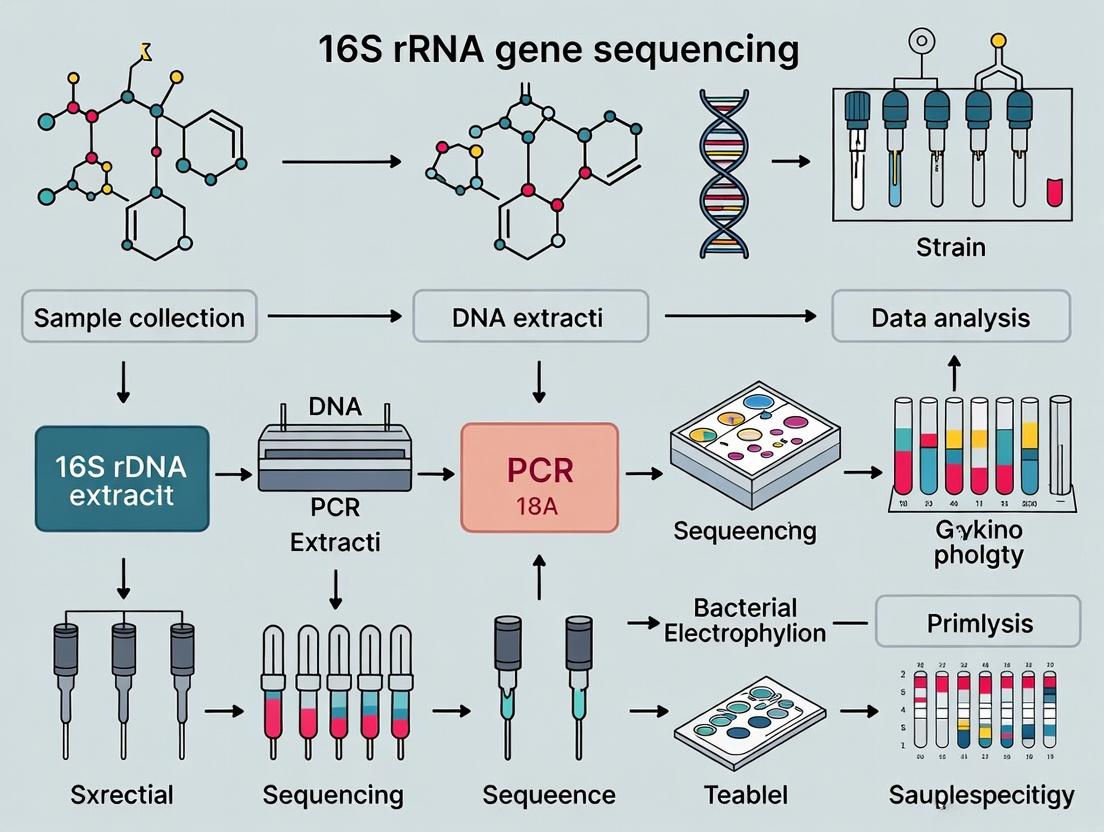
This article provides a detailed, step-by-step guide to 16S rRNA gene sequencing methodology for bacterial strain identification and characterization, tailored for researchers, scientists, and drug development professionals.
16S rRNA Gene Sequencing for Bacterial Identification: A Comprehensive Protocol Guide for Researchers
Abstract
This article provides a detailed, step-by-step guide to 16S rRNA gene sequencing methodology for bacterial strain identification and characterization, tailored for researchers, scientists, and drug development professionals. Covering foundational principles, wet-lab protocols, bioinformatic pipelines, and data interpretation, the guide addresses critical aspects from primer selection and PCR optimization to sequence analysis and database comparison. It includes troubleshooting strategies for common experimental challenges and discusses validation practices and comparative analyses with other genomic techniques. The content synthesizes current best practices to ensure accurate, reproducible results for applications in microbial taxonomy, phylogenetics, and clinical diagnostics.
The 16S rRNA Gene: Why It's the Gold Standard for Bacterial Taxonomy and Phylogeny
Article Content
Structure of the 16S rRNA Gene
The 16S ribosomal RNA (rRNA) gene is a component of the 30S small subunit of the prokaryotic ribosome. It is approximately 1,550 base pairs (bp) in length and contains several distinct regions of sequence conservation and variability, which are critical for its use in phylogenetic analysis.
Table 1: Structural Regions of the 16S rRNA Gene
| Region | Approximate Position (bp) | Characteristics | Functional/Role |
|---|---|---|---|
| V1-V2 | 69-224 | Highly variable | Initial target for hypervariable region sequencing. |
| V3 | 326-492 | Variable | Often used for microbial community profiling. |
| V4 | 576-682 | Variable | Most commonly amplified region for Illumina-based studies. |
| V5-V6 | 822-879 | Variable | Used in specific long-read sequencing protocols. |
| V7-V9 | 1117-1188 | Variable | Target for later cycles in sequencing. |
| Conserved Regions | Throughout | Universal across bacteria | Primer binding sites for PCR amplification. |
Function
The primary function of the 16S rRNA molecule, encoded by the gene, is to ensure the proper alignment of the mRNA and ribosomes during protein synthesis. It interacts with initiation factors and contains the anti-Shine-Dalgarno sequence, which is essential for translation initiation in prokaryotes.
Evolutionary Significance
The 16S rRNA gene is universally present in all prokaryotes, evolves relatively slowly, and contains a mix of conserved and hypervariable regions. This makes it an ideal "molecular clock" for studying bacterial phylogeny and taxonomy. Comparative analysis of 16S rRNA sequences allows for the construction of phylogenetic trees, defining relationships from the species to the domain level.
Application Notes & Protocols
Protocol: 16S rRNA Gene Amplification and Sequencing for Bacterial Identification
Objective: To amplify and sequence the 16S rRNA gene from a bacterial isolate for identification and phylogenetic analysis.
Materials: See The Scientist's Toolkit below.
Procedure:
- Genomic DNA Extraction: Use a commercial bacterial genomic DNA extraction kit. Follow manufacturer's protocol. Elute DNA in 50-100 µL of elution buffer. Quantify using a spectrophotometer (e.g., Nanodrop). Ensure A260/A280 ratio is ~1.8.
- PCR Amplification of 16S rRNA Gene:
- Prepare a 50 µL reaction mixture:
- 10-100 ng of genomic DNA template.
- 1X PCR Buffer (with MgCl2).
- 0.2 mM each dNTP.
- 0.5 µM each universal primer (e.g., 27F: 5'-AGAGTTTGATCMTGGCTCAG-3' and 1492R: 5'-GGTTACCTTGTTACGACTT-3').
- 1.25 U of high-fidelity DNA polymerase.
- Thermocycling conditions:
- Initial Denaturation: 95°C for 3 min.
- 30 Cycles: [Denaturation: 95°C for 30 sec, Annealing: 55°C for 30 sec, Extension: 72°C for 90 sec].
- Final Extension: 72°C for 5 min.
- Hold at 4°C.
- Prepare a 50 µL reaction mixture:
- PCR Purification: Purify the amplicon using a PCR clean-up kit. Quantify the purified product.
- Sequencing Preparation: For Sanger sequencing, set up separate reactions with the forward and reverse primers. For next-generation sequencing (NGS), construct Illumina libraries using a dual-indexing strategy targeting the V4 region (e.g., primers 515F/806R). Pool libraries equimolarly.
- Sequencing: Run on appropriate platform (e.g., Sanger sequencer or Illumina MiSeq).
- Bioinformatic Analysis:
- For Sanger Data: Assemble forward and reverse reads. Perform a BLAST search against the NCBI 16S rRNA database (nr/nt).
- For NGS Data: Process using a pipeline like QIIME 2 or Mothur:
- Demultiplex and quality filter (q-score >20).
- Denoise and cluster sequences into Amplicon Sequence Variants (ASVs) or Operational Taxonomic Units (OTUs).
- Assign taxonomy using a reference database (e.g., SILVA, Greengenes).
- Perform phylogenetic and diversity analyses.
Table 2: Key Quantitative Metrics for 16S rRNA Sequencing (Illumina MiSeq V4)
| Metric | Typical Value or Range | Significance |
|---|---|---|
| Read Length | 250 bp (paired-end) | Determines region length that can be sequenced. |
| Reads per Sample | 50,000 - 100,000 | Ensures sufficient depth for diversity capture. |
| Q30 Score | > 80% | Indicator of high base-call accuracy. |
| Alpha Diversity (Shannon Index) | Sample-specific | Measures within-sample microbial diversity. |
| Reference Database Size (SILVA v138.1) | ~2.7 million sequences | Larger databases improve taxonomic resolution. |
Protocol: Bacterial Community Profiling from an Environmental Sample
Objective: To characterize the taxonomic composition of a bacterial community (e.g., from soil, gut, water).
Procedure:
- Sample Collection & Preservation: Collect sample (e.g., 0.25g soil) in sterile tube. Immediately freeze in liquid nitrogen and store at -80°C.
- Total Community DNA Extraction: Use a bead-beating based kit (e.g., DNeasy PowerSoil Pro Kit) to lyse cells and extract DNA. This is critical for breaking tough cell walls (e.g., Gram-positive).
- Amplification of Hypervariable Region: Follow steps 2-5 from Protocol 2.1, but use primers specific to a hypervariable region (e.g., V4: 515F/806R).
- Sequencing & Analysis: Follow step 6 for NGS data from Protocol 2.1. Generate visual outputs like bar plots of relative abundance, Principal Coordinate Analysis (PCoA) plots for beta-diversity, and heatmaps.
Diagrams
The Scientist's Toolkit
Table 3: Essential Research Reagents & Materials for 16S rRNA Gene Analysis
| Item | Function/Application | Example/Notes |
|---|---|---|
| DNA Extraction Kit (Bead-beating) | Mechanical and chemical lysis for robust cell wall disruption in mixed communities. | DNeasy PowerSoil Pro Kit (Qiagen), MP Biomedicals FastDNA SPIN Kit. |
| High-Fidelity DNA Polymerase | PCR amplification of 16S gene with low error rate to minimize sequencing artifacts. | Q5 Hot Start (NEB), Phusion (Thermo Scientific). |
| Universal 16S rRNA Primers | Amplify target region from a broad range of bacterial taxa. | 27F/1492R (full gene), 515F/806R (V4 region for Illumina). |
| PCR Purification Kit | Removal of primers, dNTPs, and enzymes post-amplification. | AMPure XP beads, QIAquick PCR Purification Kit. |
| Dual-Indexed Adapter Kit (NGS) | Attaches unique barcodes to each sample for multiplexed sequencing. | Nextera XT Index Kit (Illumina), 16S Metagenomic Library Prep. |
| Quantification Fluorometer | Accurate measurement of DNA/amplicon concentration for library pooling. | Qubit with dsDNA HS Assay Kit. |
| Sequencing Platform | Determines read length, depth, and throughput. | Illumina MiSeq (for V3-V4), PacBio Sequel (for full-length). |
| Bioinformatics Software | Processing, analyzing, and visualizing sequence data. | QIIME 2, Mothur, DADA2, R (phyloseq package). |
| Curated Reference Database | Essential for accurate taxonomic classification of sequences. | SILVA, Greengenes, RDP. |
Within the broader thesis on 16S rRNA gene sequencing methodology for bacterial research, understanding the gene's architecture is foundational. The 16S ribosomal RNA gene, approximately 1,500 bp in length, contains a mosaic of evolutionarily conserved and hypervariable regions. This structure makes it an unparalleled tool for bacterial identification and phylogenetic analysis, bridging the gap between universal PCR amplification and strain-level differentiation.
Architectural Principles of the 16S rRNA Gene
The utility of the 16S rRNA gene stems from its unique pattern of sequence variation.
Conserved Regions: These sequences are under strong functional constraint due to their critical role in the ribosome's machinery. They are nearly identical across vast phylogenetic distances, providing universal binding sites for PCR primers.
Variable Regions (V1-V9): Interspersed between conserved stretches, these nine hypervariable regions (V1-V9) accumulate mutations at a higher rate. The degree of variation differs among them, providing a hierarchical source of taxonomic information.
Table 1: Characteristics of 16S rRNA Variable Regions
| Variable Region | Approximate Position (E. coli) | Degree of Variation | Primary Taxonomic Utility |
|---|---|---|---|
| V1-V2 | 69-224 | High | Genus/Species |
| V3-V4 | 326-533 | Very High | Genus/Species |
| V5-V6 | 667-872 | Moderate | Family/Genus |
| V7-V9 | 1117-1406 | Low-Moderate | Phylum/Class |
Table 2: Quantitative Comparison of 16S Regions for Identification
| Metric | Conserved Regions | Variable Regions |
|---|---|---|
| Sequence Identity | >90% across domains | 30-90% within bacteria |
| Primer Binding Success | >99% for broad-range primers | N/A |
| Informative Sites | Low | High (V3-V4 highest) |
| Discriminatory Power | Low (for ID) | High (species-level) |
Application Notes: Strategic Selection of Target Regions
- Full-Length (∼1,500 bp): Gold standard for novel species description and high-resolution phylogeny. Requires Sanger sequencing or long-read NGS.
- V3-V4 (∼460 bp): The current most common target for Illumina-based microbial community profiling (microbiome studies). Offers an optimal balance of length, discrimination power, and sequencing read coverage.
- V4 (∼250 bp): Shorter, highly robust region minimizing length heterogeneity issues. Excellent for diverse environmental samples.
- V1-V2 or V1-V3: Often preferred for profiling complex human microbiomes (e.g., skin, oral) where these regions offer higher discrimination for certain taxa.
Detailed Experimental Protocols
Protocol 4.1: PCR Amplification of the 16S V3-V4 Region for Illumina Sequencing
Objective: To generate amplicon libraries from genomic DNA for next-generation sequencing.
Research Reagent Solutions:
| Item | Function |
|---|---|
| Broad-Range PCR Primers | Contain conserved region sequences to ensure universal bacterial amplification. |
| High-Fidelity DNA Polymerase | Ensures accurate amplification with low error rates for downstream sequencing. |
| Dual-Indexed Adapter Sequences | Attached via PCR; provide unique sample identifiers (barcodes) for multiplexing. |
| Magnetic Bead Cleanup Kit | For PCR purification and size selection to remove primers and primer dimers. |
| Qubit dsDNA HS Assay Kit | Accurate quantification of final library concentration. |
| Agilent Bioanalyzer/TapeStation | Assess library fragment size distribution and quality. |
Procedure:
- Primer Design: Use primers 341F (5'-CCTACGGGNGGCWGCAG-3') and 805R (5'-GACTACHVGGGTATCTAATCC-3'). These anneal to conserved regions flanking the V3-V4 variable regions.
- PCR Setup (25 µL):
- 12.5 µL 2x High-Fidelity PCR Master Mix
- 1.0 µL Forward Primer (10 µM)
- 1.0 µL Reverse Primer (10 µM)
- 1-10 ng Genomic DNA Template
- Nuclease-free water to 25 µL.
- Thermocycling Conditions:
- Initial Denaturation: 95°C for 3 min.
- 25-35 Cycles: 95°C for 30 sec, 55°C for 30 sec, 72°C for 60 sec.
- Final Extension: 72°C for 5 min. Hold at 4°C.
- Purification: Clean amplified product using a magnetic bead-based cleanup system (0.8x bead-to-sample ratio) to remove primers and non-specific products.
- Quantification & Pooling: Quantify each sample using a fluorometric method. Pool libraries in equimolar ratios.
- Sequencing: Load pooled library onto an Illumina MiSeq or NovaSeq system with a minimum of 2x250 bp paired-end reads for V3-V4 region overlap.
Protocol 4.2: Sanger Sequencing for Full-Length 16S from a Bacterial Colony
Objective: To obtain a full-length 16S sequence for isolate identification.
Procedure:
- Colony PCR: Pick a single colony into PCR mix containing universal primers 27F (5'-AGAGTTTGATCMTGGCTCAG-3') and 1492R (5'-GGTTACCTTGTTACGACTT-3').
- Gel Electrophoresis: Run PCR product on a 1% agarose gel. A clean band at ∼1,500 bp confirms amplification.
- PCR Purification: Use an enzymatic cleanup kit to remove unused primers and dNTPs.
- Sequencing Reaction: Set up separate reactions for forward and reverse primers using a BigDye Terminator cycle sequencing kit.
- Cleanup: Remove unincorporated dye terminators via column or ethanol precipitation.
- Capillary Electrophoresis: Run samples on a Sanger sequencer. Assemble forward and reverse reads to generate a consensus sequence.
- Analysis: BLAST the consensus sequence against the NCBI 16S rRNA database for identification.
Visualization of Core Concepts
Title: 16S rRNA Gene Structure and Function
Title: Bacterial ID via 16S Sequencing Workflow
In 16S rRNA gene sequencing for bacterial strain research, the analysis of complex microbial communities hinges on precise bioinformatic clustering and taxonomic assignment. The evolution from Operational Taxonomic Units (OTUs) to Amplicon Sequence Variants (ASVs) represents a paradigm shift towards higher resolution. This framework is critical for researchers and drug development professionals aiming to link microbial composition to phenotype, where species-level identification can inform therapeutic targets and diagnostic markers.
Key Definitions and Comparative Analysis
| Term | Acronym | Definition | Primary Method of Derivation | Key Advantage | Key Limitation |
|---|---|---|---|---|---|
| Operational Taxonomic Unit | OTU | A cluster of similar 16S rRNA sequences, typically grouped based on a percent sequence identity threshold (e.g., 97%), used as a proxy for a taxonomic group (e.g., genus). | Heuristic clustering (e.g., VSEARCH, UCLUST). | Computationally efficient; reduces sequencing noise. | Clusters are arbitrary and not reproducible; masks true biological variation. |
| Amplicon Sequence Variant | ASV | A unique, exact sequence read inferred to represent a true biological sequence, distinguishing single-nucleotide differences. | Denoising algorithms (e.g., DADA2, UNOISE3, Deblur). | High-resolution, reproducible, and biologically meaningful; allows precise tracking across studies. | More sensitive to sequencing errors requiring sophisticated error modeling. |
| Operational Taxonomy | N/A | The practical, algorithm-driven classification of sequences into taxonomic bins (OTUs or ASVs) for ecological analysis, without necessarily implying phylogenetic species. | Bioinformatics pipelines (QIIME2, mothur). | Enables standardized community analysis and diversity metrics. | Disconnected from formal, cultured-based taxonomic nomenclature. |
| Species-Level Resolution | N/A | The ability to distinguish and identify organisms at the species rank. In 16S contexts, often defined as >99% 16S rRNA sequence similarity. | Using curated reference databases (e.g., SILVA, Greengenes) with ASVs or high-identity OTUs. | Critical for linking microbiome findings to known pathogen or probiotic species. | The 16S gene often lacks sufficient variation to reliably resolve all species; requires full-length or multi-locus approaches. |
Quantitative Data Summary: OTU vs. ASV Performance Table based on recent benchmark studies (2023-2024).
| Metric | OTU-based Approach (97% cluster) | ASV-based Approach (DADA2) | Implication |
|---|---|---|---|
| Apparent Richness | Typically 20-40% lower | Higher, captures rare variants | ASVs prevent coalescence of distinct taxa. |
| Technical Replicability | Moderate (varies with clustering parameters) | High (exact sequence matches) | ASVs enable meta-analysis across projects. |
| Computational Time | Lower | Higher (due to error modeling) | OTUs may be preferred for initial, large-scale screening. |
| Correlation with Metagenomics | Weaker (R² ~0.6-0.7) | Stronger (R² ~0.8-0.9) | ASVs more accurately reflect true genomic composition. |
Detailed Experimental Protocols
Protocol 1: Generating ASVs using DADA2 for 16S Data
Application: High-resolution profiling of bacterial strains from mixed communities.
Reagents & Software:
- Paired-end FASTQ files from Illumina MiSeq (or similar).
- R environment (v4.0+) with DADA2 package installed.
- SILVA or NCBI 16S reference database (formatted for DADA2).
Method:
- Filter and Trim: Use
filterAndTrim()with parameters:maxN=0, maxEE=c(2,2), truncQ=2, trimLeft=10(for primers). - Learn Error Rates: Estimate sequencing error profiles with
learnErrors(). - Dereplication: Combine identical reads into unique sequences with
derepFastq(). - Sample Inference: Apply core denoising algorithm
dada()to infer ASVs. - Merge Paired Reads: Use
mergePairs()to combine forward and reverse reads. - Construct Sequence Table: Create an ASV abundance table with
makeSequenceTable(). - Remove Chimeras: Identify and remove chimeric sequences with
removeBimeraDenovo(). - Taxonomic Assignment: Assign taxonomy using
assignTaxonomy()against the SILVA database (minBoot=80). - Species-Level Resolution: For putative species assignment, use
addSpecies()with a species-level training dataset.
Protocol 2: Traditional 97% OTU Clustering using VSEARCH
Application: Broader, genus-level community analysis compatible with legacy data.
Reagents & Software:
- Quality-controlled FASTA files of 16S sequences.
- VSEARCH software installed.
- Closed-reference OTU database (e.g., Greengenes 13_8 at 97%).
Method:
- Dereplication and Sorting: Use
vsearch --derep_fulllengthto dereplicate and sort by abundance. - Chimera Filtering: Remove chimeras with
vsearch --uchime_denovo. - OTU Clustering: Cluster sequences at 97% identity using
vsearch --cluster_size. - OTU Table Construction: Map original reads to OTU centroids with
vsearch --usearch_globalto build abundance matrix. - Taxonomic Assignment: Assign taxonomy to centroid sequences using a classifier like RDP or BLAST against a reference database.
Visualizations: Workflows and Relationships
Title: ASV vs OTU Analysis Workflow from 16S Reads
Title: How Noise and Variation are Handled in ASV vs OTU Methods
The Scientist's Toolkit: Research Reagent Solutions
| Item | Function & Application in 16S Research |
|---|---|
| DNeasy PowerSoil Pro Kit (Qiagen) | Gold-standard for microbial DNA extraction from complex samples; minimizes inhibitors for robust PCR. |
| KAPA HiFi HotStart ReadyMix (Roche) | High-fidelity polymerase for accurate amplification of the 16S V3-V4 region, reducing PCR bias. |
| Illumina MiSeq Reagent Kit v3 (600-cycle) | Standardized chemistry for 2x300 bp paired-end sequencing, optimal for full-length coverage of key 16S hypervariable regions. |
| ZymoBIOMICS Microbial Community Standard | Defined mock community of bacteria and fungi; essential for validating sequencing accuracy, bioinformatic pipeline performance, and detecting contamination. |
| PNA PCR Blockers (PNA Bio) | Peptide Nucleic Acid clamps to block host (e.g., human) mitochondrial and chloroplast 16S amplification, enriching for bacterial signals in host-associated samples. |
| QIIME 2 Core Distribution (2024.2) | Integrated bioinformatics platform encompassing all steps from raw data to visualization, supporting both ASV and OTU workflows. |
| SILVA SSU rRNA database (v138.1) | Curated, comprehensive reference database for taxonomic classification of bacteria and archaea, regularly updated. |
| DADA2 R Package (v1.28) | State-of-the-art denoising algorithm for inferring exact ASVs from amplicon data. |
| FastQC | Quality control tool for high-throughput sequence data to assess read quality before analysis. |
| NucleoSpin Gel and PCR Clean-up Kit (Macherey-Nagel) | For post-PCR purification of 16S amplicons prior to library preparation, removing primers and dimers. |
Application Notes
Within the broader thesis on 16S rRNA gene sequencing methodology, the 16S rRNA gene serves as a universal phylogenetic marker due to its presence in all bacteria, containing nine hypervariable regions (V1-V9) flanked by conserved sequences. The selection of target hypervariable region significantly impacts resolution.
Table 1: Performance Comparison of Commonly Sequenced Hypervariable Regions
| Hypervariable Region(s) | Approx. Length (bp) | Recommended Application | Limitations |
|---|---|---|---|
| V1-V3 | 500 | Genus-level ID, broad profiling | May miss some Enterobacteriaceae |
| V3-V4 | 465 | Community profiling (Gold Standard) | Lower strain resolution |
| V4 | 292 | High-throughput, robust taxonomy | Limited species resolution |
| V4-V5 | 392 | Balanced taxonomy & diversity | Variable resolution across phyla |
| Full-length (V1-V9) | ~1500 | High-resolution strain/phylogeny | Lower throughput, higher cost |
Table 2: Quantitative Output from a Typical 16S rRNA Gene Amplicon Sequencing Run (MiSeq, 2x300 bp, V3-V4)
| Metric | Typical Yield | Notes |
|---|---|---|
| Raw Reads per Sample | 50,000 - 100,000 | Depends on multiplexing |
| Post-QC Reads | 45,000 - 95,000 | ~10-15% loss typical |
| Observed ASVs/OTUs | 200 - 1,000 per sample | Highly sample-dependent |
| Alpha Diversity (Shannon) | 3.0 - 7.0 | Ecosystem-specific |
| Classification Rate | >97% to genus level | Using curated DB (e.g., SILVA) |
Experimental Protocols
Protocol 1: 16S rRNA Gene Amplicon Library Preparation (V3-V4 Region) Objective: Generate multiplexed amplicon libraries for Illumina sequencing for community profiling.
- Genomic DNA Isolation: Use a validated kit (e.g., DNeasy PowerSoil Pro) for microbial cell lysis and DNA purification. Quantify using fluorometry (e.g., Qubit dsDNA HS Assay).
- First-Stage PCR (Amplification):
- Primers: 341F (5'-CCTACGGGNGGCWGCAG-3') and 806R (5'-GGACTACHVGGGTWTCTAAT-3') with overhang adapters.
- Reaction: 25 µL containing 2-10 ng gDNA, 0.2 µM each primer, 2X KAPA HiFi HotStart ReadyMix.
- Cycling: 95°C 3 min; 25 cycles of [95°C 30s, 55°C 30s, 72°C 30s]; 72°C 5 min.
- Amplicon Purification: Clean PCR products using solid-phase reversible immobilization (SPRI) beads (0.8X ratio).
- Second-Stage PCR (Indexing):
- Primers: Nextera XT Index Kit primers.
- Reaction: As above, using 2-5 µL of purified amplicon as template for 8 cycles.
- Library Purification & Normalization: Purify with SPRI beads (0.9X ratio). Normalize libraries using bead-based method (e.g., Invitrogen SequalPrep). Pool equimolarly.
- QC & Sequencing: Validate pool with Bioanalyzer (expect ~550 bp peak). Sequence on Illumina MiSeq with ≥10% PhiX spike-in, using 2x300 bp v3 chemistry.
Protocol 2: Full-Length 16S rRNA Gene Sequencing for Strain Identification Objective: Generate accurate, long-read sequences for high-resolution phylogenetic analysis.
- DNA Extraction: As per Protocol 1, but prioritize high molecular weight DNA (check on pulse-field gel).
- PCR Amplification:
- Primers: 27F (5'-AGRGTTTGATYMTGGCTCAG-3') and 1492R (5'-RGYTACCTTGTTACGACTT-3').
- Polymerase: Use a high-fidelity polymerase optimized for long amplicons (e.g., KAPA HiFi or Platinum SuperFi II).
- Cycling: 98°C 30s; 30 cycles of [98°C 10s, 55°C 20s, 72°C 90s]; 72°C 5 min.
- Library Preparation: Shear amplicons to ~700 bp (e.g., using Covaris g-TUBE). Prepare SMRTbell library per manufacturer’s protocol (PacBio) or ligation-based library for Oxford Nanopore.
- Sequencing: For PacBio: Load on Sequel IIe system with CCS mode (HiFi reads). For Nanopore: Load on MinION with R10.4.1 flow cell.
Diagrams
The Scientist's Toolkit: Key Research Reagent Solutions
| Item | Function & Application |
|---|---|
| DNeasy PowerSoil Pro Kit | Gold-standard for microbial genomic DNA extraction from complex, difficult-to-lyse samples. Inhibitor removal is critical for PCR success. |
| KAPA HiFi HotStart ReadyMix | High-fidelity polymerase mix for robust and accurate amplification of 16S rRNA gene amplicons, minimizing PCR bias. |
| Illumina Nextera XT Index Kit | Provides unique dual indices for multiplexing hundreds of samples in a single sequencing run, enabling cost-effective community profiling. |
| AMPure XP / SPRIselect Beads | Magnetic beads for size-selective purification and cleanup of PCR products and sequencing libraries. Ratios are critical for size selection. |
| PhiX Control v3 | Sequencing run control for Illumina platforms; essential for error rate calibration and improving low-diversity 16S library data. |
| ZymoBIOMICS Microbial Community Standard | Defined mock community of bacteria and fungi with known abundances, used as a positive control to assess bias and accuracy in library prep and analysis. |
| PacBio SMRTbell Prep Kit 3.0 | Library preparation kit for generating circularized templates essential for producing highly accurate HiFi reads for full-length 16S sequencing. |
| QIIME 2/DADA2 Pipeline | Bioinformatic software packages (not a physical reagent) for processing raw 16S sequences into Amplicon Sequence Variants (ASVs) and taxonomic assignments. |
Application Notes
16S rRNA gene sequencing is a cornerstone technique for microbial identification and community profiling. Its application is defined by specific capabilities and inherent limitations, which must be understood for accurate interpretation in bacterial strain research and drug development.
What 16S Sequencing CAN Reveal:
- Taxonomic Profiling: Provides genus-level and, in some cases, species-level identification of bacteria within a complex sample.
- Relative Microbial Abundance: Estimates the proportional composition of different taxa within a community.
- Alpha and Beta Diversity: Quantifies within-sample diversity (alpha) and differences in community composition between samples (beta).
- Phylogenetic Relationships: Allows for the reconstruction of evolutionary relationships between different bacterial taxa based on conserved and variable regions.
What 16S Sequencing CANNOT Reveal:
- Strain-Level Discrimination: The ~1500 bp 16S gene is too conserved to reliably distinguish between closely related bacterial strains, which is critical for tracking pathogenic outbreaks or functional probiotics.
- Functional Genomics: Does not directly inform about the metabolic capabilities, virulence factors, or antibiotic resistance genes present in the community. Presence of a gene does not equal its expression or activity.
- Absolute Abundance: Standard amplicon sequencing yields relative proportions, not absolute cell counts, without the use of spike-in controls.
- Viral or Eukaryotic Community Members: The primers are specific to bacterial (and often archaeal) 16S genes.
- Complete Community Representation: Primer bias, copy number variation (bacteria can have 1-15 copies of the 16S gene), and DNA extraction efficiency can skew community profiles.
Key Quantitative Limitations
Table 1: Technical Limitations and Their Impact on Data Interpretation
| Limitation Factor | Typical Range/Effect | Impact on Research |
|---|---|---|
| Amplicon Length | Commonly sequenced regions: V1-V2 (~340 bp), V3-V4 (~460 bp), V4 (~250 bp) | Shorter reads limit phylogenetic resolution; different regions have different taxonomic discrimination power. |
| Primer Bias | Can cause >1000-fold variation in amplification efficiency between taxa. | Skews observed community structure; may omit certain taxa. |
| 16S Copy Number | Varies from 1 to 15 copies per genome. | Inflates relative abundance estimates for high-copy-number organisms. |
| Species-Level Resolution | Varies by genus; often < 50% of reads can be resolved to species. | Limits applicability for studies requiring precise pathogen or strain tracking. |
| Chimera Formation Rate | Typically 1-5% of raw reads in mixed-template PCR. | Creates artificial sequences, leading to spurious OTUs/ASVs. |
Table 2: Comparison of Common 16S Sequencing Regions
| Hypervariable Region(s) | Approx. Length | Taxonomic Coverage | Resolution | Common Platform |
|---|---|---|---|---|
| V1-V2 | ~340 bp | Good for Bacteroidetes; poorer for some Firmicutes. | High for some taxa, low for others. | 454, MiSeq |
| V3-V4 | ~460 bp | Broad, commonly used. | Good genus-level, moderate species-level. | MiSeq, NextSeq |
| V4 | ~250 bp | Very broad, minimal primer bias. | Good genus-level, lower species-level. | MiSeq, iSeq |
| V4-V5 | ~390 bp | Broad. | Good genus-level. | MiSeq |
Experimental Protocols
Protocol 1: Standard 16S rRNA Gene Amplicon Library Preparation (Illumina MiSeq)
Objective: To generate paired-end sequencing libraries from the V3-V4 hypervariable region of the 16S rRNA gene.
Materials: See "The Scientist's Toolkit" below.
Methodology:
- Genomic DNA Extraction: Use a bead-beating mechanical lysis kit (e.g., DNeasy PowerSoil Pro Kit) to ensure broad cell wall disruption. Quantify DNA using a fluorometric method (e.g., Qubit).
- Primary PCR (Amplification):
- Reaction Setup (25 µL):
- 12.5 µL 2x KAPA HiFi HotStart ReadyMix
- 5 µL Template DNA (1-10 ng)
- 1.25 µL Forward Primer (10 µM, e.g., 341F: CCTACGGGNGGCWGCAG)
- 1.25 µL Reverse Primer (10 µM, e.g., 805R: GACTACHVGGGTATCTAATCC)
- Nuclease-free water to 25 µL.
- Cycling Conditions:
- 95°C for 3 min.
- 25 cycles of: 95°C for 30s, 55°C for 30s, 72°C for 30s.
- 72°C for 5 min.
- Hold at 4°C.
- Reaction Setup (25 µL):
- PCR Product Clean-up: Use an SPRI bead-based clean-up system (e.g., AMPure XP beads) at a 0.8x ratio to purify amplicons from primers and primer dimers.
- Index PCR (Barcoding):
- Reaction Setup (50 µL):
- 25 µL 2x KAPA HiFi HotStart ReadyMix
- 5 µL Purified Primary PCR Product
- 5 µL Nextera XT Index Primer 1 (N7xx)
- 5 µL Nextera XT Index Primer 2 (S5xx)
- 10 µL Nuclease-free water.
- Cycling Conditions:
- 95°C for 3 min.
- 8 cycles of: 95°C for 30s, 55°C for 30s, 72°C for 30s.
- 72°C for 5 min.
- Hold at 4°C.
- Reaction Setup (50 µL):
- Final Library Clean-up: Perform a second SPRI bead clean-up (0.9x ratio). Elute in 25 µL of 10 mM Tris-HCl, pH 8.5.
- Library QC: Quantify using Qubit. Assess fragment size (~550-600bp) via capillary electrophoresis (e.g., Bioanalyzer/TapeStation).
- Pooling & Sequencing: Normalize libraries based on concentration, then pool equimolarly. Denature and dilute the pool per Illumina guidelines. Sequence on a MiSeq using a 2x300 bp v3 kit.
Protocol 2: Bioinformatic Processing Pipeline (QIIME 2/DADA2)
Objective: To process raw 16S sequencing data into Amplicon Sequence Variants (ASVs) and taxonomic assignments.
Methodology:
- Demultiplexing: Assign reads to samples based on unique barcode pairs.
- Quality Control & Denoising: Use DADA2 algorithm to model and correct Illumina amplicon errors, producing exact ASVs.
- Trim primers using
cutadapt. - Filter & Trim: Truncate reads at quality score
- Learn error rates, dereplicate, infer ASVs, merge paired ends, remove chimeras.
- Trim primers using
- Taxonomic Assignment: Classify ASVs using a pre-trained classifier (e.g., SILVA 138 or Greengenes 13_8) against the 99% OTU reference database.
- Phylogenetic Tree Building: Align ASVs (MAFFT), mask hypervariable regions, and build a phylogenetic tree (FastTree) for diversity metrics.
- Generate Feature Table: Final output is an ASV table (frequency of each sequence variant per sample) with taxonomy.
Protocol 3: Supplementary qPCR for 16S Copy Number Normalization
Objective: To estimate absolute bacterial abundance for relative abundance data correction.
Methodology:
- Standard Curve Creation: Use a plasmid containing a cloned 16S gene fragment. Perform serial 10-fold dilutions (10^7 to 10^1 copies/µL).
- qPCR Reaction (20 µL):
- 10 µL 2x SYBR Green Master Mix
- 0.8 µL Forward Primer (10 µM, universal 16S)
- 0.8 µL Reverse Primer (10 µM, universal 16S)
- 2 µL Template DNA (sample or standard)
- 6.4 µL Nuclease-free water.
- Run qPCR: Use standard cycling conditions (95°C for 10 min, then 40 cycles of 95°C for 15s and 60°C for 1 min with plate read).
- Data Analysis: Determine copy number/µL for each sample from the standard curve. Use this value to weight or normalize relative abundance data from sequencing.
Visualizations
16S rRNA Gene Amplicon Sequencing Workflow
Decision Tree: When to Use 16S Sequencing
The Scientist's Toolkit
Table 3: Essential Research Reagent Solutions for 16S rRNA Gene Sequencing
| Item | Function & Rationale | Example Products/Brands |
|---|---|---|
| Bead-Beating DNA Extraction Kit | Mechanical lysis via bead beating is essential for robust and unbiased disruption of diverse bacterial cell walls (Gram-positive, spores, etc.) in complex samples. | DNeasy PowerSoil Pro Kit (Qiagen), MagMAX Microbiome Ultra Kit (Thermo) |
| High-Fidelity DNA Polymerase | Reduces PCR amplification errors, crucial for accurate sequence variant calling. Essential for ASV-based pipelines. | KAPA HiFi HotStart ReadyMix, Q5 High-Fidelity DNA Polymerase (NEB) |
| Validated 16S Primer Pairs | Primers targeting specific hypervariable regions (e.g., V4, V3-V4) with broad bacterial coverage and minimal bias. | 515F/806R (Earth Microbiome Project), 341F/805R (Klindworth et al.) |
| SPRI Magnetic Beads | For size-selective purification of PCR amplicons and library cleanup. More consistent and automatable than column-based methods. | AMPure XP Beads (Beckman Coulter), Sera-Mag SpeedBeads |
| Fluorometric DNA Quantification Assay | Accurate quantification of dsDNA, unaffected by RNA or contaminants, critical for normalization prior to PCR and pooling. | Qubit dsDNA HS Assay (Thermo), Quant-iT PicoGreen (Thermo) |
| Library Quantification Kit | Accurate quantification of final, indexed libraries for precise pooling to ensure balanced sequencing depth across samples. | KAPA Library Quantification Kit (Roche), NEBNext Library Quant Kit (NEB) |
| PhiX Control v3 | Sequencing run control for Illumina platforms. Provides balanced nucleotide diversity, acts as a quality control, and aids in demultiplexing. | Illumina PhiX Control Kit |
| Bioinformatic Pipeline Software | Integrated suite for processing, analyzing, and visualizing amplicon sequence data. Provides reproducible workflows. | QIIME 2, mothur, DADA2 (R package) |
| Reference Taxonomy Database | Curated databases of high-quality 16S sequences used for taxonomic assignment of query sequences. | SILVA, Greengenes, RDP, GTDB |
Step-by-Step 16S rRNA Sequencing Protocol: From DNA Extraction to Sequence Data
Within the framework of a thesis on 16S rRNA gene sequencing for bacterial strain research, the initial step of sample preparation and genomic DNA (gDNA) extraction is the foundational determinant of success. The integrity, purity, and yield of the extracted DNA directly influence the accuracy of downstream processes, including PCR amplification and sequencing, by preventing biases and artifacts that can distort microbial community profiles or strain identification.
The quality of gDNA extraction is measured by several key parameters, which vary based on the bacterial sample type (e.g., Gram-positive vs. Gram-negative, pure culture vs. complex microbiome) and the extraction method.
Table 1: Key Quantitative Metrics for High-Quality Bacterial gDNA
| Parameter | Optimal Range/Target | Significance for 16S rRNA Sequencing |
|---|---|---|
| DNA Yield | >20 ng/µL (varies by sample biomass) | Sufficient template for library prep; low yield can cause PCR dropout. |
| A260/A280 Ratio | 1.8 - 2.0 | Ratios ~1.8 indicate pure DNA; <1.8 suggests protein/phenol contamination inhibiting PCR. |
| A260/A230 Ratio | >2.0 | Ratios <2.0 indicate polysaccharide, salt, or chaotropic agent carryover, affecting Taq polymerase. |
| DNA Integrity Number (DIN) | >7.0 (on Agilent Bioanalyzer/TapeStation) | High molecular weight, intact DNA ensures unbiased amplification of the full 16S gene (~1.5 kb). |
| Fragment Size | >20 kb (for long-read sequencing) | Critical for full-length 16S sequencing (e.g., PacBio, Nanopore). |
Table 2: Comparison of Common gDNA Extraction Methodologies
| Method | Typical Yield (Pure Culture) | Key Advantages | Key Limitations | Best For |
|---|---|---|---|---|
| Phenol-Chloroform | High (varies) | High purity, cost-effective, customizable. | Toxic reagents, lengthy, technical skill required. | Gram-negative, high-biomass. |
| Silica Column-Based | Moderate-High | Rapid, consistent, good purity, scalable. | Bias against large fragments, cost per sample. | High-throughput, routine pure cultures. |
| Magnetic Bead-Based | Moderate-High | Amenable to automation, rapid, consistent. | Equipment cost, potential bead carryover. | Automated workflows, many samples. |
| Enzymatic Lysis + SPRI | Moderate | Gentle, excellent for tough cells, high integrity. | Can be lower yield if lysis incomplete. | Gram-positive, spore-formers, long-read prep. |
Detailed Protocols
Protocol A: High-Integrity gDNA Extraction from Pure Bacterial Cultures (Gram-Negative and Gram-Positive)
This protocol is optimized for maximum DNA integrity, suitable for full-length 16S rRNA sequencing.
I. Materials & Reagents
- Bacterial culture in late-log phase.
- Lysis Buffer: 20 mM Tris-Cl pH 8.0, 2 mM EDTA, 1.2% Triton X-100, 20 mg/mL Lysozyme (add fresh).
- Proteinase K (20 mg/mL).
- RNase A (10 mg/mL).
- SDS Solution: 10% (w/v) Sodium Dodecyl Sulfate.
- Binding Buffer: High-salt, chaotropic agent-based (e.g., guanidine HCl).
- Wash Buffers: 70% ethanol, optional proprietary wash buffer from kit.
- Elution Buffer: 10 mM Tris-Cl, pH 8.5 or nuclease-free water.
- Silica membrane spin columns or SPRI (Solid-Phase Reversible Immobilization) beads.
- Thermonixer or water bath.
- Microcentrifuge.
II. Procedure
- Harvesting: Pellet 1-5 mL of bacterial culture at 5,000 x g for 10 min at 4°C. Discard supernatant completely.
- Resuspension: Resuspend pellet in 200 µL of Lysis Buffer. Incubate at 37°C for 30-60 min (longer for Gram-positives).
- Proteinase K/SDS Lysis: Add 20 µL of Proteinase K and 20 µL of 10% SDS. Mix thoroughly by inversion. Incubate at 55°C for 1-2 hours until solution clears.
- RNase Treatment: Add 5 µL of RNase A. Incubate at 37°C for 15 min.
- Binding: Add 2 volumes of Binding Buffer to the lysate. Mix thoroughly. For columns: Transfer to a silica column, incubate 5 min, centrifuge at 12,000 x g for 1 min. For SPRI: Add beads per manufacturer's ratio, incubate, separate on magnet.
- Washing: Wash column/beads twice with 700 µL of Wash Buffer (or 70% ethanol). Centrifuge or use magnet to discard flow-through. Dry column/beads thoroughly (5-10 min air dry for beads).
- Elution: Elute DNA in 50-100 µL of pre-warmed (55°C) Elution Buffer. Centrifuge or incubate on magnet. For high integrity, elute by incubating buffer on membrane/beads for 2 min before centrifugation/separation.
- Quality Control: Quantify using fluorometry (Qubit). Assess purity via spectrophotometry (A260/A280, A260/A230). Check integrity via agarose gel electrophoresis (0.6% gel) or fragment analyzer.
Protocol B: gDNA Extraction from Complex Microbial Samples (e.g., Stool, Soil) for 16S Profiling
This protocol emphasizes bias minimization and inhibitor removal for community analysis.
I. Materials & Reagents
- Sample (e.g., 100-200 mg stool, 0.25 g soil).
- Inhibitor Removal Technology (IRT) buffer or PowerBead Tubes.
- Bead-beating instrument (e.g., FastPrep, vortex adapter).
- Phenol:Chloroform:Isoamyl Alcohol (25:24:1).
- Commercial microbiome DNA isolation kit (e.g., DNeasy PowerSoil Pro Kit, MagAttract PowerMicrobiome Kit).
II. Procedure (Kit-Based with Mechanical Lysis)
- Homogenization & Lysis: Transfer sample to a bead-beating tube containing lysis buffer. Securely cap and homogenize in a bead beater at maximum speed for 2-5 min.
- Incubation: Heat the lysate at 70°C for 10-15 min. Briefly centrifuge to pellet beads and debris.
- Inhibitor Removal: Transfer supernatant to a fresh tube. Add proprietary inhibitor removal solution, vortex, incubate on ice for 5 min, and centrifuge at 13,000 x g for 5 min.
- DNA Binding & Wash: Transfer clean supernatant to a column or mix with magnetic beads. Perform wash steps as per kit instructions.
- Elution: Elute in 50-100 µL of elution buffer.
- QC: As per Protocol A. Additional PCR amplification with 16S V4 primers and check on agarose gel is recommended to confirm amplifiability.
Workflow Visualization
Title: Genomic DNA Extraction and QC Workflow for 16S Sequencing
Title: Five Key Stages of Bacterial Genomic DNA Extraction
The Scientist's Toolkit: Key Research Reagent Solutions
Table 3: Essential Materials for High-Quality gDNA Extraction
| Item / Reagent Solution | Function & Importance |
|---|---|
| Lysozyme | Enzymatically degrades peptidoglycan layer in bacterial cell walls, critical for Gram-positive lysis. |
| Proteinase K | Broad-spectrum serine protease; digests nucleases and other proteins, releasing DNA and preventing degradation. |
| Chaotropic Salts (e.g., Guanidine HCl) | Disrupt hydrogen bonding; denature proteins and facilitate DNA binding to silica surfaces in columns/beads. |
| Inhibitor Removal Technology (IRT) Buffers | Specifically formulated to chelate humic acids, polysaccharides, and bile salts from complex samples (soil, stool). |
| Silica Membrane Columns / SPRI Beads | Provide a solid-phase matrix for selective DNA binding and washing, removing contaminants. |
| RNase A | Degrades RNA contaminants that can inflate DNA quantification readings and interfere with downstream assays. |
| Ethanol (70-80%) | Wash solution that removes salts and other small molecules while keeping DNA bound to the silica matrix. |
| Low-EDTA TE Buffer (pH 8.0-8.5) | Ideal elution buffer; Tris stabilizes pH, low EDTA minimizes inhibition of downstream Taq polymerase. |
| Magnetic Bead Separator | Enables high-throughput, automatable separation of bead-bound DNA during wash and elution steps. |
| Fluorometric DNA Quantification Kit (e.g., Qubit dsDNA HS) | Provides accurate DNA concentration measurement specific to double-stranded DNA, unaffected by RNA or contaminants. |
Within the broader thesis on 16S rRNA gene sequencing methodology for bacterial strain research, the design and selection of primers targeting the nine hypervariable regions (V1-V9) represent a critical foundational step. The choice of region(s) and corresponding primer pairs directly influences resolution, bias, and downstream analytical outcomes. This application note provides a current, detailed protocol and resource guide for researchers and drug development professionals.
Primer Selection Criteria and Comparative Analysis
Effective primer design for 16S rRNA gene sequencing must balance several factors: taxonomic coverage (breadth), specificity for bacterial domains, amplification efficiency, and region-specific discriminatory power. The following table summarizes key quantitative data on commonly used primer pairs for each hypervariable region, compiled from recent literature and databases.
Table 1: Comparative Analysis of Primer Pairs for 16S rRNA Hypervariable Regions
| Target Region | Common Primer Pairs (Forward / Reverse) | Approx. Amplicon Length (bp) | Key Taxonomic Coverage | Primary Strengths | Primary Limitations |
|---|---|---|---|---|---|
| V1-V2 | 27F (AGAGTTTGATCMTGGCTCAG) / 338R (TGCTGCCTCCCGTAGGAGT) | ~350 | Broad, but some bias against Bacillota | High discrimination for some Staphylococci. | Prone to chimera formation; shorter read lengths may limit resolution. |
| V3-V4 | 341F (CCTACGGGNGGCWGCAG) / 806R (GGACTACHVGGGTWTCTAAT) | ~460 | Very broad, commonly used for MiSeq. | Excellent balance of length and discrimination; well-standardized. | May underrepresent Bifidobacterium and some Clostridia. |
| V4 | 515F (GTGCCAGCMGCCGCGGTAA) / 806R (GGACTACHVGGGTWTCTAAT) | ~290 | Extremely broad, Earth Microbiome Project standard. | Minimizes amplification artifacts; highly robust. | Shorter length offers lower phylogenetic resolution. |
| V4-V5 | 515F (GTGCCAGCMGCCGCGGTAA) / 926R (CCGYCAATTYMTTTRAGTTT) | ~410 | Broad. | Good resolution for environmental samples. | Slightly less common than V3-V4. |
| V6-V8 | 926F (AAACTYAAAKGAATTGACGG) / 1392R (ACGGGCGGTGTGTRC) | ~450 | Broad. | Captures longer, more informative fragment. | Lower PCR efficiency for some high-GC content bacteria. |
| V7-V9 | 1099F (GCAACGAGCGCAACCC) / 1492R (GGTTACCTTGTTACGACTT) | ~400 | Broad. | Useful for distinguishing closely related species. | Lower sequence quality near 3' end of 16S gene. |
Detailed Experimental Protocol: 16S rRNA Library Preparation with Dual-Indexing
Protocol: Two-Step PCR Amplification for Illumina Platforms
I. Research Reagent Solutions Toolkit
Table 2: Essential Materials and Reagents
| Item | Function/Explanation |
|---|---|
| High-Fidelity DNA Polymerase (e.g., Q5, KAPA HiFi) | Ensures accurate amplification with low error rates, critical for sequence fidelity. |
| Template Genomic DNA | Purified from bacterial cultures or complex microbial communities. |
| Region-Specific Primer Stocks (10 µM) | First-stage primers targeting selected hypervariable region (e.g., V3-V4 341F/806R). |
| Illumina Indexed Adapter Primers (i5 & i7) | Second-stage primers adding platform-compatible adapters and unique dual indices for sample multiplexing. |
| dNTP Mix | Provides nucleotides for DNA synthesis. |
| MgCl₂ Solution | Cofactor for polymerase activity; concentration is optimized. |
| PCR-Grade Water | Nuclease-free water for reaction setup. |
| Magnetic Bead-Based Cleanup System | For post-PCR purification and size selection (e.g., AMPure XP beads). |
| Fluorometric Quantification Kit | For accurate DNA concentration measurement (e.g., Qubit dsDNA HS Assay). |
| Agilent Bioanalyzer or TapeStation | For quality control of amplicon library size distribution. |
II. Step-by-Step Methodology
Step 1: First-Stage PCR – Target Amplification
- Prepare the PCR mix on ice:
- 12.5 µL 2X High-Fidelity Master Mix
- 1.0 µL Forward Primer (10 µM)
- 1.0 µL Reverse Primer (10 µM)
- 1-10 ng Template Genomic DNA
- PCR-grade water to a final volume of 25 µL.
- Run the thermocycler program:
- 98°C for 30 sec (initial denaturation)
- 25-35 cycles of:
- 98°C for 10 sec (denaturation)
- 50-65°C (primer-specific) for 30 sec (annealing)
- 72°C for 20-30 sec/kb (extension)
- 72°C for 2 min (final extension)
- Hold at 4°C.
Step 2: Purification of First-Stage Amplicons
- Pool replicates if applicable.
- Add magnetic beads at a 0.8-1.0X bead-to-sample volume ratio.
- Follow manufacturer's protocol for binding, washing, and eluting in 20-30 µL of Tris buffer (10 mM, pH 8.5).
- Quantify purified PCR product using a fluorometric assay.
Step 3: Second-Stage PCR – Indexing and Adapter Addition
- Prepare the PCR mix on ice:
- 12.5 µL 2X High-Fidelity Master Mix
- 2.5 µL i5 Index Primer (10 µM)
- 2.5 µL i7 Index Primer (10 µM)
- 5-50 ng Purified First-Stage Amplicon
- PCR-grade water to a final volume of 25 µL.
- Run the thermocycler program:
- 98°C for 30 sec
- 8-10 cycles of: 98°C for 10 sec, 55°C for 30 sec, 72°C for 30 sec.
- 72°C for 2 min
- Hold at 4°C.
Step 4: Final Library Purification, Quantification, and Pooling
- Purify the final indexed library using magnetic beads (0.8-1.0X ratio) as in Step 2.
- Quantify the final library concentration (ng/µL) fluorometrically.
- Assess library fragment size distribution using a Bioanalyzer.
- Pool libraries equimolarly based on calculated nM concentrations for sequencing.
Visualization of Workflow and Primer Binding
16S rRNA Amplicon Library Prep Workflow
Primer Binding Sites on 16S rRNA Gene
Within a comprehensive thesis on 16S rRNA gene sequencing methodology for bacterial strain research, Step 3, PCR amplification, is a critical juncture where methodological biases are introduced. The goal of this amplification is not merely to generate sufficient product for sequencing but to do so with the highest possible fidelity to the original microbial community structure. This protocol details optimized conditions specifically designed to minimize primer bias, non-specific amplification, and the formation of chimeric sequences, which are hybrid amplicons from different parent templates that confound accurate taxonomic assignment.
1. Primer and Template Annealing Bias: "Universal" primers do not bind with equal efficiency to all 16S rRNA gene variants. This can lead to the under-representation of certain taxa. Mitigation: Use recently validated, degenerate primer sets that cover a broader phylogenetic range (e.g., 341F/805R for the V3-V4 hypervariable region). Employ a low, controlled primer concentration to reduce spurious annealing.
2. Chimera Formation: Chimeras form during later PCR cycles when an incomplete amplicon from one template anneals to a different, related template and is extended. This is a major source of erroneous Operational Taxonomic Units (OTUs). Mitigation: Limit cycle number, use high-fidelity polymerase, and optimize template concentration to reduce the probability of incomplete extension products acting as primers in subsequent cycles.
3. PCR Cycle Number and Efficiency: Excessive cycle numbers amplify stochastic differences in early-cycle amplification efficiency and increase chimera formation. Mitigation: Determine the minimum number of cycles required to yield sufficient product for library construction, typically between 25-35 cycles.
4. Polymerase Fidelity and Processivity: Standard Taq polymerase lacks proofreading ability and can introduce errors. Mitigation: Use a high-fidelity, proofreading polymerase blend (e.g., containing Pfu or similar) for greater accuracy, albeit with potentially lower yield.
Optimized Quantitative Parameters
Table 1: Comparison of Standard vs. Optimized PCR Conditions for 16S rRNA Gene Amplicon Sequencing
| Parameter | Standard Protocol | Optimized Protocol (This Work) | Rationale |
|---|---|---|---|
| Polymerase | Standard Taq DNA Pol | High-Fidelity Proofreading Blend (e.g., Q5, KAPA HiFi) | Reduces nucleotide misincorporation and chimera formation. |
| Cycle Number | 35-40 cycles | 25-30 cycles | Minimizes late-cycle recombination & bias amplification. |
| Primer Concentration | 0.5 µM each | 0.2-0.3 µM each | Reduces off-target priming and primer-dimer artifacts. |
| Template Amount | Variable, often high | 1-10 ng purified gDNA | Prevents PCR inhibition and reduces chimera templates. |
| Extension Time | 1 min/kb | 15-30 sec/kb (for modern polymerases) | Sufficient for high-processivity enzymes; shorter cycles reduce error rate. |
| Replication | 1-2 reactions | ≥3 Technical Replicate Reactions | Enables post-PCR pooling to average out early stochastic bias. |
Detailed Experimental Protocol
Title: Optimized 16S rRNA Gene Amplicon PCR for Microbial Community Analysis
I. Reagents and Equipment
- High-fidelity DNA polymerase master mix (e.g., 2X concentrate)
- Validated degenerate primer pair (e.g., 16S V4: 515F/806R)
- Nuclease-free PCR-grade water
- Quantified genomic DNA extract (1-10 ng/µL) from microbial community
- Thermal cycler with heated lid
- Microcentrifuge and vortexer
- Sterile, low-binding PCR tubes/strips
II. Procedure
- Reaction Setup (on ice): For each sample and negative control (no-template), prepare a 25 µL reaction in triplicate.
- Nuclease-free water: to 25 µL
- 2X High-Fidelity Master Mix: 12.5 µL
- Forward Primer (10 µM): 0.5 µL (0.2 µM final)
- Reverse Primer (10 µM): 0.5 µL (0.2 µM final)
- Template gDNA (1-10 ng/µL): 2 µL (~2-20 ng total)
- Thermal Cycling:
- Initial Denaturation: 98°C for 30 seconds.
- 25-30 Cycles of:
- Denature: 98°C for 10 seconds.
- Anneal: 50-55°C (primer-specific) for 15 seconds.
- Extend: 72°C for 15-30 seconds/kb.
- Final Extension: 72°C for 2 minutes.
- Hold: 4°C.
- Post-Amplification:
- Pool the triplicate PCR reactions for each sample.
- Verify amplification success and size specificity via agarose gel electrophoresis (e.g., 1.5% gel).
- Purity the pooled amplicons using a magnetic bead-based cleanup system (e.g., SPRI beads) to remove primers, dNTPs, and non-specific products. Elute in nuclease-free water or TE buffer.
- Quantify purified amplicons using a fluorometric method (e.g., Qubit).
The Scientist's Toolkit: Key Research Reagent Solutions
Table 2: Essential Materials for Bias-Minimized 16S Amplicon PCR
| Item | Function & Importance |
|---|---|
| High-Fidelity PCR Master Mix | Pre-mixed optimized buffer, dNTPs, and proofreading polymerase. Ensures low error rates and consistent performance. |
| Degenerate Primer Cocktails | Primer stocks containing inosine or mixed bases at variable positions to ensure broad coverage of bacterial/archaeal taxa. |
| Magnetic Bead Cleanup Kit | For size-selective purification of amplicons, removing primer dimers and large non-specific products critical for library prep. |
| Fluorometric DNA Quantification Kit | Accurate, dsDNA-specific quantification of input gDNA and final amplicons, superior to absorbance (A260) for low-concentration samples. |
| PCR Plate Seals | Optically clear, adhesive seals to prevent cross-contamination and evaporation during cycling, which can affect yield. |
| Nuclease-Free Water & Tubes | Essential to prevent degradation of primers, templates, and enzymes by environmental RNases/DNases. |
Visualization of Workflows
Title: Optimized 16S rRNA Amplicon PCR Workflow
Title: Chimera Formation Pathways and Mitigation Strategies
Within the context of 16S rRNA gene sequencing for bacterial strains research, library preparation and NGS platform selection are critical for determining data output, cost, and applicability to downstream analyses such as phylogenetic classification and microbial community profiling. This section details current protocols and compares major sequencing platforms.
16S rRNA Gene Amplicon Library Preparation Protocol
Key Reagents & Materials
Research Reagent Solutions Table:
| Item | Function |
|---|---|
| Primers targeting V3-V4 hypervariable regions (e.g., 341F/806R) | Amplify specific, informative regions of the 16S rRNA gene for taxonomic discrimination. |
| High-Fidelity DNA Polymerase (e.g., KAPA HiFi HotStart) | Ensures accurate PCR amplification with minimal bias and errors. |
| Magnetic Bead-based Cleanup Kit (e.g., AMPure XP) | Purifies PCR products and size-selects for desired amplicons, removing primers and dimers. |
| Dual-Indexed Adapter Sequences (Illumina Nextera XT Index Kit) | Attaches platform-specific adapters and unique sample barcodes for multiplexing. |
| Library Quantification Kit (e.g., Qubit dsDNA HS Assay) | Accurately measures library concentration for pooling normalization. |
| Quality Analyzer (e.g., Agilent Bioanalyzer or TapeStation) | Assesses library fragment size distribution and integrity. |
Detailed Protocol
Step 1: Primary PCR Amplification
- Reaction Mix: Combine ~10-50 ng genomic DNA, high-fidelity polymerase buffer, dNTPs, forward/reverse primers with overhang adapters, and polymerase.
- Cycling Conditions: Initial denaturation (95°C, 3 min); 25-30 cycles of: denaturation (95°C, 30 sec), annealing (55°C, 30 sec), extension (72°C, 30 sec); final extension (72°C, 5 min).
- Cleanup: Purify PCR product using magnetic beads (0.8x ratio). Elute in buffer.
Step 2: Index PCR & Library Finalization
- Reaction Mix: Use purified primary PCR product as template. Add polymerase and unique dual-index primers (Nextera XT indices).
- Cycling Conditions: Use 8 cycles of PCR with similar temperature profile as above.
- Cleanup: Perform double-sided size selection with magnetic beads (e.g., 0.6x and 0.8x ratios) to exclude primer dimers and non-specific products.
Step 3: Quantification, Pooling, and Sequencing
- Quantify each library using fluorometry (Qubit).
- Check size profile on Bioanalyzer (expect single peak ~550-600 bp for V3-V4).
- Normalize and pool libraries equimolarly.
- Denature and dilute pool per platform specifications for loading onto sequencer.
NGS Platform Comparison for 16S rRNA Sequencing
Quantitative Platform Comparison
Table 1: Comparison of Major NGS Platforms for 16S rRNA Gene Sequencing
| Feature | Illumina MiSeq | Ion Torrent PGM/Ion GeneStudio S5 | PacBio Sequel IIe (for full-length 16S) |
|---|---|---|---|
| Core Technology | Reversible dye-terminator sequencing-by-synthesis | Semiconductor detection of pH change from H+ ion release | Real-time sequencing (SMRT) of single molecules |
| Typical Read Length | 2x300 bp (paired-end) | Up to 400 bp (single-end) | >10,000 bp (HiFi reads ~1.3-1.5 kb) |
| Output per Run | 15-25 million reads | 3-80 million reads (varies by chip) | 1-4 million HiFi reads |
| Run Time | 24-56 hours | 2.5-7 hours | 0.5-30 hours |
| Key Advantages for 16S | High accuracy (>99.9%), high throughput, standardized 16S protocols | Fast run time, lower instrument cost | Full-length 16S gene sequencing, highest taxonomic resolution |
| Key Limitations for 16S | Short reads require analysis of sub-regions | Higher error rates in homopolymer regions | Lower throughput, higher cost per sample, complex data analysis |
| Optimal 16S Application | High-throughput microbial community profiling (multiple samples) | Rapid, lower-plex profiling of communities or strain identification | Resolution to species/strain level when full-length gene is needed |
Experimental Protocol: Library Loading for Each Platform
- Illumina MiSeq: Denature pooled library with NaOH, dilute to 4-6 pM in hybridization buffer, combine with 5-10% PhiX control, load into cartridge.
- Ion Torrent: Prepare template-positive Ion Sphere Particles via emulsion PCR (Ion OneTouch 2 system). Enrich particles and load onto a pre-primed sequencing chip.
- PacBio: Create a SMRTbell library from amplicons. Bind polymerase to the library, load into zero-mode waveguide (ZMW) cells on a SMRT Cell for sequencing.
Diagrams
16S rRNA Amplicon Library Prep Workflow
Title: 16S Library Preparation Workflow
NGS Platform Decision Logic for 16S Studies
Title: NGS Platform Selection Logic Tree
Application Notes
Within the framework of a thesis on 16S rRNA gene sequencing methodology for bacterial strains research, selecting an appropriate bioinformatic pipeline is a critical determinant of downstream analytical outcomes. These pipelines transform raw sequencing data into interpretable biological insights, with each tool offering distinct philosophical and algorithmic approaches. QIIME 2 is a comprehensive, extensible platform that supports multiple denoising algorithms, including DADA2 and Deblur, within a reproducible, standardized framework. mothur represents a single, consolidated software package adhering to the SOP established for the Human Microbiome Project, emphasizing depth and control over each processing step. DADA2 and Deblur are specifically designed for error correction and amplicon sequence variant (ASV) inference, moving beyond traditional Operational Taxonomic Unit (OTU) clustering. The choice among these directly impacts strain-level resolution, artefact removal, and statistical power in comparative studies relevant to drug development and microbial ecology.
Quantitative Comparison of Pipeline Outputs
The following table summarizes key performance metrics and characteristics of each pipeline, based on recent benchmarking studies.
Table 1: Comparative Analysis of 16S rRNA Bioinformatic Pipelines
| Feature | QIIME 2 (with DADA2) | QIIME 2 (with Deblur) | mothur | DADA2 (Standalone) |
|---|---|---|---|---|
| Core Approach | Plugin-based, reproducible workflow | Plugin-based, reproducible workflow | All-in-one, SOP-driven workflow | R package, ASV inference |
| Sequence Variant | Amplicon Sequence Variant (ASV) | Amplicon Sequence Variant (ASV) | Operational Taxonomic Unit (OTU) | Amplicon Sequence Variant (ASV) |
| Error Model | Parametric, sample-wise learning | Non-parametric, fixed error profile | Heuristic, distance-based clustering | Parametric, sample-wise learning |
| Typical Run Time (for 10M reads) | ~2-4 hours | ~1-2 hours | ~4-8 hours | ~2-3 hours |
| Memory Usage | High | Moderate | High | Moderate-High |
| Key Strength | Flexibility, reproducibility, extensive plugins | Speed, strict ASV definition | Depth of control, well-established SOP | High sensitivity for single-nucleotide variants |
| Best Suited For | Studies requiring customization and reproducibility | Large cohorts where speed is critical | Studies aiming to follow the classic HMP SOP | Researchers deeply integrated into the R ecosystem |
Experimental Protocols
Protocol 1: Core 16S rRNA Analysis Workflow Using QIIME 2 with DADA2
Objective: To process paired-end 16S rRNA sequence data from demultiplexed FASTQ files to a feature table of ASVs and phylogenetic tree.
Materials: Demultiplexed FASTQ files, QIIME 2 environment (2024.5 or later), metadata TSV file.
Procedure:
- Import Data: Create a QIIME 2 artifact.
Denoise with DADA2: Perform quality control, denoising, chimera removal, and merge paired reads.
Generate Phylogeny: Align sequences and create a phylogenetic tree for diversity metrics.
Diversity Analysis: Calculate core metrics (Observed Features, Shannon, Faith PD, PCoA).
Protocol 2: Standard Operating Procedure (SOP) Using mothur
Objective: To process sequences from raw FASTQ files to OTU-based analysis following the mothur SOP.
Materials: Raw FASTQ files and a stability file (metadata).
Procedure:
- Make Contigs: Merge paired-end reads into contiguous sequences.
Screen Sequences: Apply quality criteria (length, ambiguous bases, homopolymers).
Alignment: Align sequences to a reference alignment (e.g., SILVA database).
Filter and Pre-cluster: Remove poorly aligned regions and reduce sequencing noise.
Chimera Removal and Classification:
OTU Clustering: Cluster sequences into OTUs at 97% similarity.
Visualized Workflows
Title: QIIME 2 Analysis Workflow Overview
Title: mothur Standard Operating Procedure (SOP)
Title: Decision Logic for Pipeline Selection
The Scientist's Toolkit: Research Reagent Solutions
Table 2: Essential Materials & Resources for 16S rRNA Pipeline Analysis
| Item | Function / Purpose | Example / Notes |
|---|---|---|
| Reference Databases | Provides taxonomic classification and alignment templates for sequence identification and phylogeny. | SILVA, Greengenes, RDP. Version must be matched to pipeline tutorials for consistency. |
| Primer Sequences | Required for trimming adapter and primer sequences from raw reads during initial processing. | V4 region: 515F/806R. Must be specified in denoising/trimming steps. |
| Metadata File (TSV) | Contains sample-associated variables (e.g., treatment, patient ID, pH) essential for statistical comparison and visualization. | Must be formatted as a tab-separated text file with a required '#q2:types' header line for QIIME 2. |
| Sample Manifest File (CSV) | Maps sample IDs to the filepaths of their corresponding FASTQ files for data import into QIIME 2. | Required for qiime tools import. Format varies (PairedEndFastqManifestPhred33V2). |
| Bioinformatics Environment | Ensures software dependencies are managed and analyses are reproducible. | QIIME 2 Conda distribution, R environment with DADA2/bioconductor, standalone mothur executable. |
| Computational Resources | Adequate CPU, RAM, and storage to handle large sequence files and intensive algorithms. | Minimum 8-16 cores, 16-32 GB RAM, and significant SSD storage for temporary files. |
Solving Common 16S Sequencing Problems: A Troubleshooting and Optimization Handbook
Accurate 16S rRNA gene sequencing is foundational for bacterial strain identification, phylogenetic analysis, and microbiota studies in drug development research. A critical prerequisite is the successful amplification of the target gene via Polymerase Chain Reaction (PCR). PCR failure or low-yield amplification directly compromises downstream sequencing depth and data quality, leading to incomplete or biased microbial community profiles. The two most prevalent culprits are the presence of PCR inhibitors and suboptimal template DNA quality/quantity. This Application Note details protocols for diagnosing and resolving these issues to ensure robust, reproducible amplification for high-fidelity 16S rRNA sequencing.
Table 1: Common PCR Inhibitors in Bacterial DNA Preparations
| Inhibitor Category | Specific Examples | Common Sources | Proposed Mechanism of Inhibition | Reduction in Yield* |
|---|---|---|---|---|
| Cellular Components | Heparin, Hemoglobin, Myoglobin, Lactoferrin | Blood, tissue samples | Binds to DNA polymerase, interferes with Mg²⁺ cofactor. | Up to 95% |
| Ionic Detergents | Sodium Dodecyl Sulfate (SDS) | Lysis buffer carryover | Denatures polymerase, disrupts primer annealing. | Complete inhibition (>0.01%) |
| Salts & Cations | High concentrations of NaCl, KCl, Ca²⁺ | Incomplete washing/elution | Alters DNA melting temperature, disrupts enzyme activity. | 50-90% (at high conc.) |
| Phenolic Compounds | Humic & Fulvic acids | Soil, plant, environmental samples | Intercalates with nucleic acids, binds polymerase. | Up to 99% |
| Polysaccharides | Heparin, Agarose, Glycogen | Muccoid bacterial colonies, plant tissues | Competes for water molecules, increases viscosity. | 60-95% |
| Proteinase K | Active enzyme | Incomplete inactivation post-lysis | Degrades DNA polymerase. | Complete inhibition |
*Reported yield reduction is dependent on concentration. Data compiled from current literature and product manuals.
Table 2: Template Quality Assessment Metrics
| Metric | Optimal Range for 16S PCR | Indicative Value of Problem | Recommended Analysis Method |
|---|---|---|---|
| A260/A280 Ratio | 1.8 - 2.0 | <1.8: Protein/phenol contamination. >2.0: Possible RNA residue. | Spectrophotometry (NanoDrop) |
| A260/A230 Ratio | 2.0 - 2.2 | <2.0: Salts, chaotropic agents, carbohydrate carryover. | Spectrophotometry (NanoDrop) |
| DNA Concentration | > 0.5 ng/μL for pure culture; > 1 ng/μL for complex samples | Too low: Stochastic failure. Too high: Inhibitor co-concentration. | Fluorometry (Qubit, PicoGreen) |
| Fragment Size | > 10 kb (genomic); ~1.5 kb (16S amplicon) | Excessive shearing (< 5 kb) suggests degraded template. | Gel electrophoresis (0.8% Agarose) |
Diagnostic & Remedial Protocols
Protocol 3.1: Rapid Inhibitor Detection via Dilution/Spike Test
Objective: Determine if PCR failure is due to inhibitors. Materials: Failed template DNA, known clean template (e.g., from E. coli control), PCR master mix, 16S primers (e.g., 27F/1492R). Procedure:
- Set up four 25 μL PCR reactions:
- Tube A: 1 μL of failed template + standard master mix.
- Tube B: 1 μL of 1:10 diluted failed template + master mix.
- Tube C: 1 μL of failed template + 1 μL of clean control template + master mix.
- Tube D (Positive Control): 1 μL of clean control template + master mix.
- Run standard 16S PCR cycling conditions.
- Analyze products on a 1.5% agarose gel. Interpretation: If only Tube B amplifies, inhibitors are present (dilution reduced them). If only Tube C amplifies, the original template is inhibited but viable (control DNA rescued reaction). If neither amplifies, consider template degradation or primer issues.
Protocol 3.2: High-Yield, Inhibitor-Resistant 16S rRNA PCR
Objective: Amplify 16S gene from challenging samples (e.g., soil, stool, blood). Materials: Hot-start, high-fidelity DNA polymerase (e.g., Q5, KAPA HiFi), PCR enhancers (see Toolkit), filter-plate for purification. Procedure:
- Template Prep: Use a bead-beating and column-based kit designed for inhibitor removal (e.g., with PTFE filters). Elute in 10 mM Tris-HCl, pH 8.5.
- Master Mix (50 μL reaction):
- 25 μL of 2X inhibitor-resistant polymerase mix.
- 2.5 μL each of 10 μM primers (e.g., 338F/806R for V3-V4 hypervariable region).
- 1-5 μL of template DNA (optimize volume).
- Additives (if needed): Include 1-2 μL of one of the following:
- 5% (w/v) Acetylated Bovine Serum Albumin (BSA).
- 0.5 M Betaine.
- 1 M Trehalose.
- Nuclease-free water to 50 μL.
- Cycling Conditions:
- Initial Denaturation: 98°C for 30 sec.
- 30 Cycles: Denature 98°C for 10 sec, Anneal 55°C for 30 sec, Extend 72°C for 30 sec/kb.
- Final Extension: 72°C for 2 min.
- Purification: Clean amplicons using a magnetic bead-based purification system (e.g., AMPure XP beads) to remove primer dimers and salts before sequencing.
Visualizations
Diagram Title: PCR Failure Troubleshooting Workflow
Diagram Title: Mechanisms of Common PCR Inhibitors
The Scientist's Toolkit: Research Reagent Solutions
Table 3: Essential Reagents for Reliable 16S rRNA PCR
| Reagent/Material | Function & Rationale | Example Product Types |
|---|---|---|
| Inhibitor-Resistant DNA Polymerase | Engineered to remain active in the presence of common inhibitors (humic acid, blood, heparin). Essential for complex samples. | Hot-start, high-fidelity polymerases (e.g., Q5, KAPA HiFi, Platinum Taq). |
| PCR Enhancers/Additives | Stabilize polymerase, lower DNA melting temperature, or bind contaminants to improve specificity and yield from poor templates. | Bovine Serum Albumin (BSA, 0.1-0.5 mg/mL), Betaine (0.5-1 M), DMSO (1-3%), Trehalose. |
| Magnetic Bead Cleanup Kits | For post-PCR purification. Remove primers, dNTPs, salts, and inhibitors more consistently than older methods (e.g., spin columns). | AMPure XP, SPRIselect beads. |
| Fluorometric DNA Quantitation Kits | Accurately measure double-stranded DNA concentration without interference from common contaminants (unlike A260). Critical for normalizing input. | Qubit dsDNA HS/BR Assay, PicoGreen. |
| Inhibitor Removal Columns | Specialized silica membranes or chelating resins designed to bind and remove specific inhibitors during DNA extraction. | PowerSoil Pro Kit, OneStep PCR Inhibitor Removal Kit. |
| Broad-Range 16S rRNA Primers | Optimized, well-validated primer sets targeting conserved regions for amplification from diverse bacterial phyla. | 27F/1492R (full-length), 338F/806R (V3-V4), 515F/926R (V4-V5). |
Within the critical framework of 16S rRNA gene sequencing methodology for bacterial strains research, achieving high-fidelity data is paramount. The utility of this technique in characterizing microbial communities for drug development and fundamental research is compromised by several technical artifacts. This application note details the sources, impacts, and mitigation protocols for three predominant error types: chimeric sequence formation, PCR amplification bias, and index misassignment (also known as index hopping or bleed-through). These protocols are designed for researchers and scientists requiring robust, reproducible data.
Table 1: Prevalence and Impact of Major 16S rRNA Sequencing Artifacts
| Error Type | Typical Reported Frequency | Primary Cause | Major Impact on Data |
|---|---|---|---|
| Chimeras | 1-20% of reads (platform/method dependent) | Incomplete extension during PCR, using mixed template. | False novel OTUs/ASVs, inflated diversity estimates, taxonomic misassignment. |
| PCR Bias | Variable; can cause >100-fold differential amplification. | Primer mismatch, GC content, amplicon length, polymerase choice. | Skewed relative abundance, under/over representation of specific taxa. |
| Index Misassignment | ~0.1-2% on Illumina patterned flow cells (e.g., NovaSeq). | Proximity of indexed libraries on flow cell, free index primers. | Sample cross-talk, contamination between samples, compromised sample integrity. |
Detailed Experimental Protocols
Protocol 3.1: In Silico Chimera Detection and Filtering Using DADA2 and UCHIME2
Objective: To identify and remove chimeric sequences from 16S rRNA amplicon data.
Materials:
- Demultiplexed FASTQ files (R1 and R2).
- High-performance computing cluster or workstation.
- DADA2 (R package, version 1.28+) or VSEARCH (with UCHIME2 algorithm).
- Reference database (e.g., SILVA, Greengenes).
Procedure (DADA2 Workflow):
- Quality Filter & Trim: Use
filterAndTrim()to remove low-quality bases (Q-score <30) and trim to uniform length. - Learn Error Rates: Model sequencing error profiles with
learnErrors(). - Dereplication & Sample Inference: Dereplicate sequences with
derepFastq(). Apply the core sample inference algorithm withdada()to resolve true biological sequences. - Merge Paired Reads: Merge forward and reverse reads with
mergePairs(). - Construct Sequence Table: Build an amplicon sequence variant (ASV) table with
makeSequenceTable(). - Remove Chimeras: Identify and remove chimeras de novo using
removeBimeraDenovo(method="consensus"). For reference-based checking, useremoveBimeraDenovo(method="per-sample")against a trusted database. - Taxonomy Assignment: Assign taxonomy to remaining non-chimeric ASVs using
assignTaxonomy().
Protocol 3.2: Minimizing PCR Bias with Optimized Polymerase and Cycle Number
Objective: To generate a more quantitatively accurate representation of template 16S rRNA genes.
Materials:
- Genomic DNA from mock community (e.g., ZymoBIOMICS Microbial Community Standard).
- 16S rRNA gene V4 region primers (515F/806R) with overhang adapters.
- 2X KAPA HiFi HotStart ReadyMix (or equivalent high-fidelity polymerase).
- 2X Taq Polymerase Master Mix (for comparison).
- Thermocycler.
- Qubit Fluorometer and dsDNA HS Assay Kit.
Procedure:
- Reaction Setup: For each polymerase type (KAPA HiFi and standard Taq), set up 25 µL reactions in triplicate. Use 1 ng of mock community DNA and 10 PCR cycles.
- PCR Amplification:
- 95°C for 3 min.
- Cycle (10x): 95°C for 30 sec, 55°C for 30 sec, 72°C for 30 sec.
- 72°C for 5 min.
- Quantification: Quantify PCR product yield with Qubit.
- Sequencing & Analysis: Dilute products, attach dual indices in a second, limited-cycle (8 cycles) PCR. Pool and sequence on a MiSeq (2x250 bp). Analyze results by comparing observed vs. expected composition of the mock community. Repeat experiment with 20 and 30 cycles to assess cycle-dependent bias.
- Key Metric: Calculate the "Bias Ratio" for each taxon in the mock community: (Observed % Abundance / Expected % Abundance). A ratio of 1 indicates no bias.
Protocol 3.3: Mitigating Index Misassignment via Unique Dual Indexing (UDI) and Optimal Pooling
Objective: To minimize cross-contamination between samples in a multiplexed sequencing run.
Materials:
- Indexed libraries (preferably with UDIs, e.g., Nextera XT Index Kit v2).
- Qubit Fluorometer.
- Agilent Bioanalyzer or TapeStation.
- PhiX Control v3.
- Illumina sequencing platform (e.g., MiSeq, NovaSeq).
Procedure:
- Library Quantification & Normalization: Precisely quantify each final library using Qubit. Check fragment size profile on Bioanalyzer. Normalize all libraries to the same concentration (e.g., 4 nM) based on molarity.
- Library Pooling: Combine normalized libraries in equimolar ratios to create the final sequencing pool. Critical: Avoid overloading the flow cell. For platforms prone to index hopping (e.g., NovaSeq), keep the total number of unique libraries per lane below manufacturer recommendations.
- PhiX Spiking: Spike in 1-5% of the PhiX control library to the final pool. This provides a balanced nucleotide diversity for cluster recognition and allows direct measurement of index misassignment rate.
- Sequencing: Load pool onto the sequencer using the appropriate kit.
- Post-Sequencing QC: Demultiplex using stringent mismatch settings (e.g., 0 mismatches to index). Analyze the PhiX reads: any PhiX read assigned to a sample index indicates index misassignment. Calculate the misassignment rate as: (Misassigned PhiX Reads / Total PhiX Reads) * 100.
Mandatory Visualizations
Title: Chimera Formation and Detection Workflow
Title: PCR Bias Skews Observed Community Structure
Title: Unique Dual Indexing and Misassignment Mechanism
The Scientist's Toolkit: Research Reagent Solutions
Table 2: Essential Reagents and Kits for Error Mitigation in 16S Sequencing
| Item | Function/Application | Key Benefit for Error Reduction |
|---|---|---|
| KAPA HiFi HotStart ReadyMix | High-fidelity PCR amplification of 16S libraries. | Minimizes PCR errors and chimera formation due to superior processivity and proofreading. |
| Nextera XT DNA Library Prep Kit (v2) | Library preparation with unique dual indices (UDIs). | Dramatically reduces index misassignment compared to single or combinatorial indexing. |
| ZymoBIOMICS Microbial Community Standard | Defined mock community of bacterial genomes. | Gold standard for quantifying protocol-specific bias (PCR, sequencing) and chimera rate. |
| PhiX Control v3 | Sequencing control library. | Quantifies index misassignment rate and improves base calling on low-diversity 16S runs. |
| DADA2 (R package) | Bioinformatic pipeline for ASV inference. | Models and removes sequencing errors, performs sensitive de novo chimera detection. |
| Qubit dsDNA HS Assay Kit | Fluorometric quantitation of DNA. | Accurate library quantification prevents pooling bias and over-clustering, which can exacerbate index hopping. |
Application Notes and Protocols
Within the broader thesis of 16S rRNA gene sequencing methodology for bacterial strain research, the primary challenge is obtaining a true microbial signal from samples confounded by high host DNA, limited bacterial biomass, and high species diversity. This document outlines targeted protocols to address these interlinked issues.
1. Mitigation of Host DNA Contamination
Host DNA can constitute >99% of total DNA, severely diluting the microbial signal and increasing sequencing costs for sufficient microbial coverage. Selective depletion or enrichment strategies are critical.
Table 1: Comparative Performance of Host DNA Depletion Methods
| Method | Principle | Typical Host Reduction | Key Considerations |
|---|---|---|---|
| Propidium Monoazide (PMAxx) Treatment | Binds DNA in compromised (host) cells; photo-activation inhibits PCR. | 2-4 log reduction of host cells | Effective for samples with intact microbial cells (e.g., mucosal). Less effective on extracted DNA. |
| S1 Nuclease Digestion | Digests single-stranded DNA; exploits differential DNA conformation. | ~90% host reduction | Optimized for human blood; requires precise optimization for sample type. |
| Methylation-Based Depletion (NEBNext Microbiome) | Cleaves CpG-methylated (mammalian) DNA, leaving bacterial DNA. | 90-99% host depletion | High efficiency on DNA; cost and input DNA requirements are higher. |
| Oligonucleotide Probe Hybridization | Probes hybridize to host DNA for capture/ degradation. | Up to 99.9% depletion | Customizable; requires prior host genome knowledge. Best for well-characterized hosts. |
Protocol 1.1: PMAxx Treatment for Selective Host Cell DNA Inhibition
- Suspend your sample (e.g., tissue homogenate, saliva) in 1 mL of PBS.
- Add PMAxx dye to a final concentration of 50 µM. Mix thoroughly.
- Incubate in the dark for 5 minutes at room temperature.
- Place the tube on ice and expose to high-intensity blue LED light (e.g., PMA-Lite LED device) for 15 minutes.
- Proceed with DNA extraction using a bead-beating mechanical lysis protocol to ensure microbial lysis.
2. Protocols for Low-Biomass Samples
Low biomass increases the relative impact of kitome and laboratory contaminants. The focus shifts to contamination control, sensitive detection, and rigorous blanks.
Protocol 2.1: Rigorous Low-Biomass Workflow for 16S Library Prep
- Pre-cleaning: Wipe all surfaces, pipettes, and equipment with 10% bleach, followed by 70% ethanol and DNA Away. Use UV-irradiated PCR cabinets.
- Reagents: Use dedicated, aliquoted high-purity reagents (see Toolkit). Include multiple negative controls (extraction blank, PCR water blank, mock community).
- DNA Extraction: Use a kit with high microbial lysis efficiency (e.g., QIAGEN DNeasy PowerSoil Pro Kit). Elute in a minimal volume (e.g., 25 µL). Quantify with a dsDNA HS Assay on a fluorometer; expect low yields (<0.5 ng/µL).
- PCR Amplification: Target the V4 region with dual-indexed primers (e.g., 515F/806R). Use a high-fidelity, low-bias polymerase (e.g., KAPA HiFi HotStart). Increase cycle count to 35-40 cycles. Perform triplicate PCR reactions per sample to mitigate stochastic bias.
- Library Validation: Clean amplicons with bead-based purification. Assess library size on a Bioanalyzer. Pool libraries equimolarly based on qPCR quantification (not fluorometry).
Table 2: Critical Controls for Low-Biomass Studies
| Control Type | Composition | Purpose | Acceptable Outcome |
|---|---|---|---|
| Extraction Blank | Sterile water or buffer processed through extraction. | Identifies contamination from extraction kits and reagents. | Must generate no or negligible sequencing reads. |
| PCR Blank | Sterile water used as PCR template. | Identifies contamination from PCR master mix and environment. | Must generate no or negligible sequencing reads. |
| Mock Community | Defined genomic DNA from known bacterial strains. | Assesses bias, fidelity, and sensitivity of the entire workflow. | Should recover all expected taxa with minimal off-target signals. |
3. Managing Complex Communities
High diversity strains competition for primers and over-representation of dominant taxa can obscure rare community members. Library preparation must minimize bias.
Protocol 3.1: Reducing PCR Bias for Complex Communities
- Primer Selection: Use well-validated, degenerate primer sets with broad phylogenetic coverage (e.g., 27F/1492R for full-length; 341F/785R for V3-V4).
- Polymerase Choice: Select enzymes with high processivity and low GC bias (e.g., KAPA HiFi, Q5 Hot Start). Avoid standard Taq.
- PCR Conditions: Use a low number of cycles (25-30) to reduce chimera formation and bias amplification. Implement a touch-down protocol (e.g., start at 65°C annealing, decrease by 0.5°C/cycle for 10 cycles, then 25 cycles at 60°C).
- Technical Replication: Perform at least triplicate PCRs per sample, pool them post-amplification before purification, to average out early-cycle stochasticity.
The Scientist's Toolkit: Research Reagent Solutions
Table 3: Essential Materials for Difficult Sample 16S Sequencing
| Item | Function & Rationale |
|---|---|
| PMAxx Dye (Biotium) | Selective inhibition of DNA from membrane-compromised (host) cells prior to extraction. |
| DNase/RNase-Free Molecular Grade Water | Ultra-pure water to prevent introduction of contaminating DNA in PCR and library prep. |
| KAPA HiFi HotStart ReadyMix (Roche) | High-fidelity polymerase for low-bias amplification of complex 16S templates. |
| QIAseq 16S/ITS Screening Panel (QIAGEN) | A targeted panel for hypervariable region selection and ultra-sensitive detection in low biomass. |
| ZymoBIOMICS Microbial Community Standard | Defined mock community of bacteria and fungi for validating entire workflow performance and identifying bias. |
| DNeasy PowerSoil Pro Kit (QIAGEN) | Optimized for mechanical lysis of diverse, difficult-to-lyse bacteria and removal of PCR inhibitors. |
| Agencourt AMPure XP Beads (Beckman Coulter) | Size-selective magnetic beads for consistent PCR clean-up and library size selection. |
| NEBNext Microbiome DNA Enrichment Kit | Enzymatic depletion of CpG-methylated host DNA post-extraction to enrich for bacterial DNA. |
Visualizations
Figure 1: Integrated Workflow for Difficult Samples
Figure 2: Strategy Selection Decision Tree
Context: This document serves as an application note for a thesis on 16S rRNA gene sequencing methodology for bacterial strains research, detailing critical bioinformatics steps and their associated pitfalls.
Quality Filtering: Principles and Parameters
Quality filtering is the first critical step to remove low-quality sequences and bases, which can introduce errors in downstream analyses. The selection of truncation and filtering parameters directly impacts the number of retained reads and the resolution of Amplicon Sequence Variants (ASVs) or Operational Taxonomic Units (OTUs).
Table 1: Common Quality Filtering Parameters and Their Impact (DADA2/Pipeline)
| Parameter | Typical Setting | Function | Pitfall if Mis-set |
|---|---|---|---|
truncLen (Forward/Reverse) |
e.g., F240, R160 | Truncates reads at specified position where median quality drops. | Too long: retains low-quality bases. Too short: loses phylogenetic information. |
maxN |
0 | Reads with ambiguous bases (N) are discarded. | Setting >0 can propagate sequencing errors. |
maxEE (Expected Errors) |
2.0 | Maximum sum of expected errors allowed in a read. | Too high (e.g., 5): retains poor reads. Too low (e.g., 1): discards excessive data. |
truncQ |
2 | Truncates reads at the first base with quality ≤ this value. | High values can cause premature truncation. |
minLen |
50 | Removes reads shorter than this post-truncation. | Must be > amplicon length after truncation. |
Protocol 1.1: DADA2-Based Quality Filtering in R
Denoising and ASV Inference: Parameter Sensitivity
Denoising algorithms (e.g., DADA2, UNOISE3, Deblur) distinguish biological sequences from sequencing errors. Their parameters are highly sensitive and can drastically alter the final feature table.
Table 2: Denoising Algorithm Comparison and Key Parameters
| Algorithm | Core Action | Critical Parameter | Typical Value | Impact of Variation |
|---|---|---|---|---|
| DADA2 | Error-model learning, sample inference, pooling. | pool = FALSE/TRUE/pseudo |
pseudo |
FALSE: per-sample; TRUE: more ASVs, computationally heavy. |
| UNOISE3 (USEARCH) | Denoising by abundance & error profiles. | -unoise_alpha |
2.0 | Higher value: fewer, more conservative ASVs. |
| Deblur | Error-correction using positive filters. | trim_length |
e.g., 250 | Must be consistent; changes affect comparability. |
Protocol 2.1: DADA2 Denoising with Pseudo-Pooling
Contaminant Removal withDecontam
Decontam is a prevalence- or frequency-based statistical method to identify and remove contaminant sequences introduced during extraction or sequencing, crucial for low-biomass studies.
Table 3: Decontam Method Selection and Input Requirements
| Method | Best Use Case | Required Input | Key Parameter (threshold) |
|---|---|---|---|
Prevalence (isContaminant) |
Studies with negative controls. | ASV table, Negative Control sample IDs. | 0.1-0.5 (stringency). Lower = more aggressive. |
Frequency (isContaminant) |
Studies with DNA concentration data. | ASV table, Quantification vector (e.g., ng/μl). | 0.1 (default). Adjust based on spike-ins. |
| Combined | Maximizing confidence. | Both control IDs and quantification. | Separate thresholds for each method. |
Protocol 3.1: Prevalence-Based Contaminant Identification
Visualizations
Title: 16S rRNA Bioinformatics Pipeline with Key Pitfalls
Title: Decontam's Two Statistical Approaches for Contaminant ID
The Scientist's Toolkit: Key Research Reagent Solutions
Table 4: Essential Reagents and Materials for Reliable 16S rRNA Gene Sequencing
| Item | Function / Rationale | Example Product / Note |
|---|---|---|
| Mock Community (Standard) | Positive control for benchmarking pipeline performance (e.g., ZymoBIOMICS). | Validates ASV calling accuracy and detects reagent batch effects. |
| UltraPure Water | Negative control for contaminant identification. | Must be from dedicated, PCR-free source. Used with Decontam. |
| DNA Extraction Kit (Bead-Beating) | Standardized cell lysis and DNA purification. | Key for reproducibility. Include extraction blanks. |
| PCR Inhibitor Removal Beads | Enhances amplification from complex/low-biofilm samples. | Critical for fecal or soil samples. |
| Barcoded Primers (V4 region) | Amplifies target region and adds sample-specific indexes. | Must be HPLC-purified to reduce primer dimer formation. |
| High-Fidelity PCR Polymerase | Minimizes amplification errors during library prep. | Reduces noise prior to sequencing. |
| Magnetic Bead Cleanup Kit | Post-PCR purification and size selection. | Removes primer dimers and nonspecific products. |
| Quantification Kit (Fluorometric) | Accurate DNA concentration measurement for input normalization. | Essential for frequency-based Decontam. |
Within 16S rRNA gene sequencing for bacterial strain research, reproducibility remains a critical challenge. Variability arising from wet-lab procedures, bioinformatic pipelines, and sample heterogeneity can confound results. This application note details the systematic implementation of positive controls, mock microbial communities, and standardized protocols to establish a robust framework for reproducible microbiome research, directly supporting drug development and translational science.
The Role of Positive Controls & Mock Communities
Positive controls verify that each step of the experimental workflow functions correctly. Mock communities, which are synthetic mixtures of known bacterial strains with defined genomic composition, serve as the gold standard for benchmarking.
Quantitative Performance Metrics from Recent Studies
A summary of key performance indicators when using mock communities in 16S sequencing is presented below.
Table 1: Common Mock Communities & Typical Performance Metrics (V3-V4 Region, Illumina MiSeq)
| Mock Community (Supplier) | # of Strains | Expected Evenness | Typical Alpha Diversity Recovery* | Common Bias Observed |
|---|---|---|---|---|
| ZymoBIOMICS Microbial Community Standard (D6300) | 8 (Bacteria + 2 Yeast) | Uneven (Log distribution) | 85-95% | Under-representation of Gram-positives (Lactobacillus), over-representation of Pseudomonas |
| BEI Resources HM-276D (Even) | 20 | Even | 70-85% | GC-content bias; under-representation of high-GC taxa |
| ATCC MSA-1003 | 10 | Even | 80-90% | Primer-specific amplification bias |
| In-house defined community | Variable | User-defined | Varies by design | Dependent on strain selection and DNA extraction efficiency |
Percentage of expected ASVs/OTUs recovered after full bioinformatic processing.
Experimental Protocol: Integrating Mock Communities
Title: Protocol for Routine Sequencing Run with Mock Community Controls
Objective: To monitor and control for technical variability across DNA extraction, PCR amplification, and sequencing.
Materials:
- Sample set (e.g., bacterial isolates, clinical specimens).
- Mock Community: Commercially available (e.g., ZymoBIOMICS D6300) or custom-defined.
- Extraction Negative Control: Sterile lysis buffer or water taken through extraction.
- PCR Negative Control: Molecular grade water used as template in PCR.
- DNA extraction kit (bead-beating preferred for diverse cell lysis).
- PCR reagents, primers targeting the 16S rRNA gene region (e.g., 341F/805R for V3-V4).
- Indexing primers and sequencing kit.
Procedure:
- Sample Preparation: Include the mock community and both negative controls in every extraction batch. Process them identically to biological samples.
- DNA Extraction: Use a standardized, bead-beating protocol (e.g., 2x 1 min at 6 m/s on a homogenizer) to ensure uniform cell lysis across Gram-positive and Gram-negative bacteria.
- PCR Amplification:
- Perform amplification in triplicate for each sample and control.
- Use a high-fidelity, low-bias polymerase master mix.
- Cycle conditions: Initial denaturation (95°C, 3 min); 25-30 cycles of [95°C, 30s; 55°C, 30s; 72°C, 45s]; final extension (72°C, 5 min).
- Pool triplicate PCR reactions.
- Library Pooling & Sequencing:
- Quantify pooled PCR products fluorometrically.
- Normalize and pool all libraries, including those from the mock community.
- Sequence on the designated platform (e.g., Illumina MiSeq with 2x300 bp v3 chemistry).
Validation: Post-sequencing, analyze the mock community data separately. Calculate:
- Compositional Accuracy: Correlation (e.g., Spearman's rho) between expected and observed relative abundances.
- Limit of Detection: Are all expected members present?
- Contamination Check: Negligible reads in negative controls (<0.1% of total run reads).
Standardized Protocols for Critical Steps
Standardization is non-negotiable for cross-study comparisons.
Detailed Protocol: Standardized 16S rRNA Gene Amplicon Library Prep
Title: Standardized Wet-Lab Protocol for 16S V3-V4 Amplicon Sequencing
Reagents & Equipment:
- MO BIO PowerSoil Pro Kit or QIAGEN DNeasy PowerLyzer Kit (for consistent extraction with mechanical lysis).
- KAPA HiFi HotStart ReadyMix (for high-fidelity, low-bias amplification).
- Well-defined primer set (e.g., 341F/805R, Illumina overhang adapter-equipped).
- Agarose gel electrophoresis system or Fragment Analyzer.
- Magnetic bead-based cleanup system (e.g., AMPure XP beads).
Procedure:
- Extraction: Follow kit protocol precisely. Record batch numbers. Include controls.
- PCR Setup:
- Master Mix (per rxn): 12.5 µL KAPA HiFi Mix, 5.5 µL PCR-grade H₂O, 1.0 µL forward primer (10 µM), 1.0 µL reverse primer (10 µM).
- Template: Add 5 µL of normalized genomic DNA (1-10 ng/µL). For mock community, use 5 µL of provided stock (usually 1-5 ng/µL).
- Cycling: Use the exact cycling parameters from Section 2.2, Step 3.
- PCR Cleanup: Purify pooled triplicates using a 0.8x ratio of AMPure XP beads. Elute in 25 µL 10 mM Tris-HCl, pH 8.5.
- Indexing PCR & Final Cleanup: Perform a second, limited-cycle (8 cycles) PCR to attach dual indices. Clean up with a 0.9x ratio of AMPure XP beads. Quantify final library by qPCR.
Visualizing the Reproducibility Framework
Diagram 1: The Reproducibility Control Cycle
The Scientist's Toolkit: Research Reagent Solutions
Table 2: Essential Research Reagents for Reproducible 16S Sequencing
| Item | Function | Example Product |
|---|---|---|
| Defined Mock Community | Benchmarks extraction, amplification, and bioinformatics; quantifies bias. | ZymoBIOMICS D6300, BEI HM-276D |
| High-Fidelity PCR Master Mix | Minimizes amplification bias and erroneous nucleotide incorporation. | KAPA HiFi HotStart, Platinum SuperFi II |
| Mechanical Lysis Beads | Ensures uniform cell wall disruption across diverse bacterial lineages. | 0.1mm & 0.5mm Zirconia/Silica beads |
| Magnetic Bead Cleanup Reagents | Provides consistent, automatable PCR product purification. | AMPure XP, SPRIselect |
| Quantification Standards | Enables accurate library quantification for balanced pooling. | KAPA Library Quant Kit, dsDNA HS Qubit Assay |
| Process Control Spikes | Moners extraction efficiency. | External spike-in cells (e.g., Salmonella bongori) or DNA (e.g., pBIOS) |
| Standardized Primer Aliquots | Reduces batch-to-batch variation in amplification. | TruSeq DNA PCR-Free Kit, Custom 16S primers from reputable vendor |
Validating 16S Results: Comparative Analysis with WGS and Other Molecular Methods
Within the broader thesis on 16S rRNA gene sequencing for bacterial identification and phylogeny, the validation of newly isolated strains is a critical step. This involves confirming the identity of an isolate through high-fidelity Sanger sequencing of its 16S rRNA gene and systematically comparing the resulting sequence to those of established type strains in curated databases. This application note details the protocols and strategies for this essential validation process.
Key Experimental Protocols
Protocol A: 16S rRNA Gene Amplification and Purification for Sanger Sequencing
Objective: To generate a pure, high-yield PCR amplicon of the near-full-length 16S rRNA gene suitable for Sanger sequencing.
Materials:
- Bacterial genomic DNA (isolate and type strain controls).
- Universal bacterial 16S rRNA gene primers: 27F (5'-AGAGTTTGATCMTGGCTCAG-3') and 1492R (5'-GGTTACCTTGTTACGACTT-3').
- High-fidelity DNA polymerase (e.g., Q5, Phusion).
- PCR purification kit (spin-column based).
- Agarose gel electrophoresis system.
- Spectrophotometer (Nanodrop or equivalent).
Detailed Methodology:
- PCR Setup: Prepare a 50 µL reaction containing: 1X high-fidelity buffer, 200 µM dNTPs, 0.5 µM each primer, 1 U high-fidelity polymerase, and 10-100 ng genomic DNA template.
- Thermal Cycling:
- Initial Denaturation: 98°C for 30 seconds.
- 30 cycles of: 98°C for 10 sec, 55°C for 30 sec, 72°C for 90 sec.
- Final Extension: 72°C for 2 minutes.
- Verification: Run 5 µL of PCR product on a 1% agarose gel. A single, bright band at ~1500 bp should be visible.
- Purification: Purify the remaining PCR product using a spin-column PCR purification kit, following the manufacturer's protocol.
- Quantification: Measure the DNA concentration of the purified amplicon using a spectrophotometer. Aim for a concentration > 20 ng/µL with an A260/A280 ratio of ~1.8.
Protocol B: Sanger Sequencing and Sequence Assembly
Objective: To generate high-quality, bidirectional sequence data and assemble a consensus sequence.
Materials:
- Purified 16S rRNA amplicon.
- Sequencing primers (27F and 1492R).
- Sanger sequencing service or in-house sequencer.
- Sequence assembly software (e.g., Geneious, CLC Workbench, BioEdit).
Detailed Methodology:
- Sequencing Submission: Submit purified amplicon (typically 10-30 ng/µL in 10 µL) for bidirectional sequencing with the 27F and 1492R primers. Internal primers (e.g., 518F, 800R) may be added for longer reads or difficult sequences.
- Quality Control: Receive chromatogram (.ab1) files. Visually inspect chromatograms for clear, sharp peaks with low background noise past 800 bases.
- Assembly: Import forward and reverse chromatograms into assembly software.
- Trim low-quality base calls from the ends (typically Q-score < 20).
- Perform a pairwise alignment to generate a consensus sequence.
- Manually resolve any discrepancies (e.g., mixed bases) by referring to the original chromatograms.
Protocol C: Comparative Analysis with Type Strain Sequences
Objective: To validate the isolate by determining its similarity to the most closely related type strain(s).
Materials:
- Assembled consensus 16S rRNA sequence from the isolate.
- Public sequence databases: NCBI Nucleotide, EZBioCloud, SILVA.
- Sequence analysis tools: BLAST, MUSCLE/CLUSTALW for alignment, MEGA for phylogeny.
Detailed Methodology:
- Database Search: Perform a BLASTn search against the "16S ribosomal RNA sequences (Bacteria and Archaea)" database or the dedicated "Type strains" database on EZBioCloud.
- Sequence Retrieval: Download the top 10-15 matching type strain sequences (full-length, high-quality).
- Multiple Sequence Alignment: Align the isolate sequence with the retrieved type strain sequences using a dedicated aligner (e.g., MUSCLE). Ensure the alignment covers the same gene region.
- Similarity Calculation: Calculate pairwise sequence similarity percentages from the alignment.
- Phylogenetic Analysis: Construct a neighbor-joining or maximum-likelihood phylogenetic tree (with appropriate bootstrap values, e.g., 1000 replicates) to visualize the evolutionary relationship of the isolate within its genus.
Data Presentation
Table 1: Example Validation Data for a Bacterial Isolate (Hypothetical Strain Bacillus sp. ING-1)
| Comparative Metric | Isolate vs. Bacillus subtilis subsp. subtilis DSM 10T | Isolate vs. Bacillus licheniformis DSM 13T | Isolate vs. Bacillus velezensis FZB42T |
|---|---|---|---|
| 16S rRNA Gene Sequence Similarity (%) | 99.7 | 98.2 | 99.9 |
| Number of Nucleotide Differences (bp) | 4 | 27 | 1 |
| Alignment Length (bp) | 1490 | 1488 | 1491 |
| Recommended Taxonomic Threshold for Genus | ≥ 94.5% | ≥ 94.5% | ≥ 94.5% |
| Recommended Taxonomic Threshold for Species | ≥ 98.7% | ≥ 98.7% | ≥ 98.7% |
| Preliminary Identification | Likely B. velezensis | Excluded | Probable B. velezensis |
Table 2: Summary of Key Public Databases for Type Strain Comparison
| Database Name | Primary Focus | Key Feature for Validation | Typical Update Cycle |
|---|---|---|---|
| EzBioCloud | Prokaryotic taxonomy | Curated 16S rRNA database of type strains with automated identification service. | Quarterly |
| NCBI RefSeq | Comprehensive genomics | Contains "Type Material" designation in records; linked to BLAST. | Daily |
| LPSN (List of Prokaryotic Names) | Nomenclature | Authoritative list of all published names and links to type strain info. | Continuously |
| SILVA | Ribosomal RNA data | High-quality, aligned rRNA sequences with taxonomic classification. | 1-2 years |
Workflow and Relationship Diagrams
Diagram Title: 16S rRNA Isolate Validation Workflow
Diagram Title: From Reads to Phylogenetic Placement
The Scientist's Toolkit: Research Reagent Solutions
Table 3: Essential Materials for 16S rRNA Validation Sequencing
| Item Category & Name | Function in Protocol | Key Considerations |
|---|---|---|
| High-Fidelity DNA Polymerase (e.g., Q5, Phusion) | Amplifies the 16S rRNA gene with minimal error rates, crucial for accurate sequence data. | Lower error rate than Taq; essential for reliable downstream comparison. |
| Universal 16S Primers (27F/1492R) | Provides broad-specificity binding to conserved regions in bacterial 16S genes. | Primer degeneracy (e.g., 'M' in 27F) is critical for coverage across phyla. |
| PCR Purification Kit (Spin-column) | Removes primers, dNTPs, enzymes, and salts from amplicons prior to sequencing. | Pure template is vital for clean sequencing chromatograms. |
| Cycle Sequencing Kit (BigDye Terminator) | Generates fluorescently labeled DNA fragments for capillary electrophoresis. | Standard for Sanger sequencing; provided by most sequencing facilities. |
| Sequence Assembly Software (e.g., Geneious, CLC) | Aligns forward/reverse reads, generates a consensus sequence, and facilitates editing. | User-friendly interfaces with chromatogram visualization are key. |
| Curated Reference Database (EzBioCloud) | Provides a reliable collection of high-quality type strain sequences for comparison. | Curation reduces misidentification from poor-quality public entries. |
| Phylogenetic Analysis Software (e.g., MEGA) | Constructs and visualizes trees to contextualize isolate relationship to type strains. | Supports bootstrapping for statistical support of tree nodes. |
Within the broader thesis on 16S rRNA gene sequencing methodology for bacterial strains research, the selection of a reference database is a foundational and critical decision. It directly impacts taxonomic assignment accuracy, diversity metrics, and the biological interpretation of data. This protocol details the application, curation, and inherent pitfalls of four major databases: NCBI RefSeq (NIH), SILVA (SILVA rRNA database project), RDP (Ribosomal Database Project), and Greengenes (curated by the University of Colorado). Each database varies in curation philosophy, update frequency, taxonomy hierarchy, and sequence quality, leading to significant differences in downstream results.
The following tables consolidate key quantitative and qualitative metrics for the four primary 16S rRNA databases. Data is compiled from the most recent releases and official documentation.
Table 1: Core Database Specifications (as of 2024-2025)
| Database | Current Version / Release | Primary Source | Total 16S Sequences | Curated / Aligned Subset | Update Frequency | Taxonomic Framework | Primary File Formats |
|---|---|---|---|---|---|---|---|
| NCBI RefSeq | 223 (2024) | International Nucleotide Sequence Database Collaboration (INSDC) | ~3.2 million (RefSeq Targeted Loci) | RefSeq rRNA (manually curated) | Daily | NCBI Taxonomy (dynamic) | .fasta, .gbff, ASN.1 |
| SILVA | SSU 138.1 / 144 (2024) | INSDC (EMBL-Bank/ENA) | ~2.8 million (parc) | SSU Ref NR 99 (~1.2M, aligned) | ~1-2 years | SILVA taxonomy (manually curated) | .fasta, .arb, .txt |
| RDP | 11.5 Update 11 (2023) | INSDC, isolates, type strains | ~3.5 million | Bacterial & Archaeal subsets (aligned) | Quarterly (incremental) | Bergey's Manual-based | .fasta, .tax, .align |
| Greengenes | gg138 / 2022.10 | Public repositories, clone libraries | ~1.3 million | 99% OTU rep set (~130k) | Frozen (last major: 2013) | De novo taxonomy (PHMM) | .fasta, .txt, .tgz |
Table 2: Accuracy and Performance Metrics (Based on Benchmark Studies)
| Database | Reported Genus-Level Accuracy* (%) (Mock Community) | Reported Species-Level Accuracy* (%) (Mock Community) | Chimera Content Flagging | Sequence Length Range (bp) | Alignment Method | Key Curation Strength | Known Pitfall |
|---|---|---|---|---|---|---|---|
| NCBI RefSeq | 92-96 | 75-82 | Yes (via BLAST validation) | Full-length & partial | NA (unaligned reference) | High-quality type material, daily updates | Inconsistent annotation; includes environmental "unclassified" |
| SILVA | 94-98 | 78-85 | Yes (manual & automatic) | ~450 - >2,300 | SINA aligner | Manually curated alignment & taxonomy | Long update cycles; complex hierarchical taxonomy |
| RDP | 90-94 | 70-78 | Yes (ChimeraSlayer) | Full-length & partial | Infernal (cmalign) | Classifier training set; stable taxonomy | Lower species-level resolution; contains older sequences |
| Greengenes | 85-90 | 60-70 | Partial (in original release) | ~1,400 (V4 region) | NA (unaligned) | 16S copy number normalization; OTU clustering | Outdated (frozen); no longer actively curated; alignment issues |
*Accuracy varies based on the hypervariable region sequenced and the bioinformatics pipeline used.
Experimental Protocols for Database Validation
Protocol 1: Benchmarking Database Performance Using a Defined Mock Community
Objective: To empirically assess the taxonomic assignment accuracy of each database using a sequenced mock community of known bacterial composition.
Research Reagent Solutions:
- ZymoBIOMICS Microbial Community Standard (D6300): Defined mock community with known genomic DNA ratios from 8 bacterial and 2 fungal species.
- QIAseq 16S/ITS Region Panels (Qiagen): For targeted amplification of specific hypervariable regions (e.g., V3-V4).
- Illumina MiSeq Reagent Kit v3 (600-cycle): For generating paired-end 2x300bp sequencing reads.
- Bioinformatics Pipeline Software: QIIME 2 (2024.5), DADA2, or mothur.
- Reference Databases: Locally installed versions of NCBI RefSeq (16S rRNA), SILVA SSU Ref NR 99, RDP 16S rRNA training set v18, and Greengenes 13_8 99% OTUs.
Procedure:
- DNA Extraction & Sequencing: Extract genomic DNA from the ZymoBIOMICS standard following the manufacturer's protocol. Amplify the V3-V4 region using appropriate primers. Purify the amplicons and sequence on an Illumina MiSeq platform using the 600-cycle kit.
- Bioinformatics Processing (QIIME 2 Workflow):
- Import demultiplexed reads into QIIME 2.
- Perform quality control, denoising, and chimera removal using DADA2 to generate Amplicon Sequence Variants (ASVs).
- Create four separate analysis branches from the same ASV feature table.
- Taxonomic Assignment (Parallel Analysis):
- Branch 1 (NCBI): Assign taxonomy using a
qiime feature-classifier classify-consensus-blastagainst a locally formatted NCBI 16S RefSeq database. - Branch 2 (SILVA): Use
qiime feature-classifier classify-sklearnwith a pre-trained Naïve Bayes classifier on the SILVA SSU Ref NR 99 dataset (trimmed to the V3-V4 region). - Branch 3 (RDP): Use
qiime feature-classifier classify-consensus-blastagainst the RDP 16S rRNA reference files. - Branch 4 (Greengenes): Use
qiime feature-classifier classify-sklearnwith the Greengenes 13_8 99% OTU classifier.
- Branch 1 (NCBI): Assign taxonomy using a
- Accuracy Calculation:
- For each ASV, compare the database-assigned taxonomy to the known taxonomy of the mock community strains at each taxonomic rank (Phylum to Species).
- Calculate accuracy as:
(Correctly Assigned ASVs / Total ASVs) * 100. An ASV is "correct" if its assignment matches the known genus or species of the input strain. - Aggregate results across all expected community members.
- Analysis: Compare accuracy metrics, prevalence of misassignments, and rates of "unclassified" labels across the four databases. Generate a confusion matrix for major misassignment patterns.
Protocol 2: Cross-Database Taxonomic Consistency Assessment
Objective: To evaluate the consistency of taxonomic nomenclature and hierarchy across databases for a common set of query sequences.
Procedure:
- Query Sequence Selection: Compile a set of 100-200 full-length 16S rRNA sequences from well-characterized type strains (obtained from NCBI GenBank).
- Independent BLAST Search: Perform a local BLASTn search for each query sequence against each of the four formatted databases (NCBI, SILVA, RDP, Greengenes). Use a high-identity threshold (e.g., >99%).
- Taxonomy Retrieval: Record the top-hit's full taxonomic lineage (Kingdom to Species) from each database.
- Nomenclature Mapping: Create a mapping table to compare taxonomic names at each rank. Note discrepancies (e.g., Lactobacillus vs. split genera like Limosilactobacillus in SILVA/NCBI vs. older Greengenes/RDP; different spelling or synonym usage).
- Hierarchy Analysis: Diagram the divergent taxonomic paths for specific example taxa (e.g., a member of the Bacillaceae) to visualize database-specific classification logic.
Visualization of Database Selection and Curation Workflows
Title: Workflow and Database Decision Impact on 16S Analysis
Title: Taxonomic Assignment Logic Across Major 16S Databases
The Scientist's Toolkit: Essential Materials and Reagents
Table 3: Research Reagent Solutions for Database-Centric 16S rRNA Analysis
| Item | Function in Protocol | Example Product / Source | Critical Specification |
|---|---|---|---|
| Certified Mock Community | Gold-standard control for validating database assignment accuracy and pipeline performance. | ZymoBIOMICS Microbial Community Standard (D6300); ATCC MSA-1003 | Defined, even/ staggered composition of bacterial/fungal genomes. |
| High-Fidelity PCR Mix | Amplifies target hypervariable region with minimal bias and errors for accurate ASV generation. | KAPA HiFi HotStart ReadyMix (Roche); Q5 High-Fidelity DNA Polymerase (NEB) | Low error rate, high processivity, suitable for GC-rich templates. |
| Indexed Sequencing Adapters | Allows multiplexing of samples during NGS library preparation. | Illumina Nextera XT Index Kit v2; 16S V3-V4 Illumina Linker Primers | Dual-indexed to reduce index hopping cross-talk. |
| Bioinformatics Pipeline | Provides reproducible environment for sequence processing, denoising, and taxonomy assignment. | QIIME 2 Core Distribution (2024.5); mothur (v.1.48); DADA2 (R package) | Containerized (e.g., Docker) for reproducibility. |
| Pre-formatted Reference Databases | Local installs of databases for fast, offline taxonomic classification. | SILVA SSU Ref NR 99 (QIIME2 compatible); RDP Classifier .jar & files; NCBI 16S BLAST DB | Must be trimmed to match primer sequences. |
| High-Performance Computing (HPC) Resources | Essential for processing large sequencing datasets and running alignment/classification tools. | Local server cluster; Cloud computing (AWS, GCP, Azure) | Minimum 16-32 GB RAM, multi-core processors for parallelization. |
Within the thesis on 16S rRNA gene sequencing methodology for bacterial strain research, it is critical to delineate its capabilities and limitations against the gold standard of Whole-Genome Sequencing (WGS) for strain typing. This application note provides a comparative analysis, detailing protocols and applications to guide researchers and drug development professionals in method selection for epidemiological studies, outbreak investigations, and microbial characterization.
Table 1: Core Technical and Performance Comparison
| Parameter | 16S rRNA Gene Sequencing | Whole-Genome Sequencing (WGS) |
|---|---|---|
| Genetic Target | ~1,500 bp, hypervariable regions (V1-V9) | Entire genome (2-10+ Mbp for bacteria) |
| Resolution | Species to genus level; poor strain-level | High-resolution to strain and SNP level |
| Cost per Sample (Approx.) | $10 - $50 | $100 - $500+ |
| Turnaround Time | 1-2 days (post-library prep) | 3-7 days (post-library prep) |
| Primary Analytical Output | Operational Taxonomic Unit (OTU), Amplicon Sequence Variant (ASV) | Single Nucleotide Polymorphisms (SNPs), Core Genome MLST (cgMLST), Gene Presence/Absence |
| Key Advantage | Cost-effective, high-throughput, standardized databases | Unparalleled resolution, comprehensive functional insights |
| Major Limitation | Cannot reliably distinguish closely related strains | Higher cost, complex data analysis and storage |
Table 2: Application Suitability in Research & Development
| Application Context | Recommended Method | Rationale |
|---|---|---|
| Initial Microbial Community Profiling (e.g., gut microbiome) | 16S rRNA Sequencing | Cost-effective for broad taxonomic census of complex samples. |
| Hospital Outbreak Source Tracking | WGS | Required for SNP-level discrimination to confirm transmission chains. |
| Bacterial Species Identification from pure culture | Either; WGS definitive | 16S is often sufficient; WGS resolves ambiguous cases. |
| Antibiotic Resistance Gene (ARG) Profiling | WGS | 16S cannot predict resistance; WGS identifies specific ARG sequences. |
| Virulence Factor Characterization | WGS | 16S cannot assess virulence; WGS identifies pathogenicity islands and genes. |
| Vaccine or Diagnostic Target Discovery | WGS | Provides full antigenic and genomic landscape for target identification. |
Detailed Experimental Protocols
Protocol 1: 16S rRNA Gene Amplicon Sequencing for Strain Differentiation Objective: To amplify and sequence the hypervariable regions of the 16S rRNA gene for phylogenetic analysis.
- DNA Extraction: Use a mechanical lysis bead-beating method (e.g., with a kit from MP Biomedicals) for robust cell wall disruption. Include positive and negative controls.
- PCR Amplification: Amplify target V3-V4 regions using universal primers (e.g., 341F:
CCTACGGGNGGCWGCAG, 805R:GACTACHVGGGTATCTAATCC). Use a high-fidelity polymerase to minimize errors. - Library Preparation & Sequencing: Attach dual-index barcodes and sequencing adapters via a second limited-cycle PCR. Pool purified libraries at equimolar concentrations. Sequence on an Illumina MiSeq platform (2x300 bp paired-end).
- Bioinformatic Analysis:
- Processing: Use QIIME2 or DADA2 for demultiplexing, quality filtering, denoising (to generate ASVs), and chimera removal.
- Taxonomy Assignment: Classify ASVs against the SILVA or Greengenes reference database.
- Phylogeny: Generate a multiple sequence alignment (e.g., with MAFFT) and a phylogenetic tree (FastTree) for comparative analysis.
Protocol 2: Whole-Genome Sequencing for High-Resolution Strain Typing Objective: To sequence the complete genome of a bacterial isolate for maximum discriminatory power.
- High-Quality DNA Extraction: Use a kit optimized for long fragments (e.g., Qiagen Genomic-tip). Assess DNA purity (A260/A280 ~1.8) and integrity (Fragment Analyzer or gel electrophoresis; target >50 kb).
- Library Preparation: For Illumina short-read platforms, use a tagmentation-based kit (e.g., Illumina Nextera XT). For long-read platforms (PacBio/Oxford Nanopore), use ligation-based kits without fragmentation.
- Sequencing: For hybrid assembly, sequence on both Illumina (for accuracy) and Oxford Nanopore (for continuity). Typical coverage: >100x for Illumina, >50x for Nanopore.
- Bioinformatic Analysis Pipeline:
- Assembly: Use SPAdes (short-read) or Unicycler (hybrid) for de novo assembly. Assess quality with QUAST.
- Typing: Submit the assembled genome to MLST 2.0 for core genome MLST (cgMLST) sequence type assignment.
- Variant Calling: Map reads from multiple isolates to a high-quality reference genome using BWA-MEM. Call SNPs with Snippy or the GATK pipeline. Filter for high-quality, core-genome SNPs.
- Phylogenetics: Construct a phylogenetic tree from the core-genome SNP alignment using RAxML or IQ-TREE.
Visualizations
Diagram 1: Decision Workflow for Strain Typing Method Selection
Diagram 2: Comparative Analysis Pathways from Sample to Answer
The Scientist's Toolkit: Research Reagent Solutions
| Item/Category | Example Product/Brand | Function in Strain Typing Context |
|---|---|---|
| Universal 16S PCR Primers | 27F/1492R, 341F/805R | Amplify conserved regions flanking hypervariable zones for taxonomic classification. |
| High-Fidelity DNA Polymerase | Q5 (NEB), KAPA HiFi | Ensures accurate amplification of 16S or WGS library fragments with minimal PCR errors. |
| Magnetic Bead Clean-up Kits | AMPure XP (Beckman) | Size selection and purification of DNA fragments post-PCR or post-library prep for both methods. |
| Metagenomic DNA Extraction Kit | DNeasy PowerSoil (Qiagen) | Standardized, inhibitor-removing extraction for 16S studies of complex samples (e.g., stool, soil). |
| High-Molecular-Weight DNA Kit | Nanobind CBB (Circulomics) | Extracts long, intact genomic DNA critical for long-read WGS and hybrid assembly. |
| Tagmentation Library Prep Kit | Nextera XT DNA Library Kit (Illumina) | Rapid, integrated fragmentation and adapter tagging for short-read WGS libraries. |
| Long-Read Sequencing Kit | Ligation Sequencing Kit (ONT) | Prepares libraries for Oxford Nanopore sequencing to generate long reads for complete assemblies. |
| Bioinformatics Pipeline | 16S: QIIME2, DADA2WGS: SPAdes, Snippy, MLST 2.0 | Essential software suites for data processing, analysis, and interpretation specific to each method. |
Within the established framework of 16S rRNA gene sequencing for bacterial community profiling, researchers often encounter complex samples requiring analysis of non-bacterial life. This document provides application notes and protocols for extending microbial community studies beyond bacteria, detailing when and how to employ Internal Transcribed Spacer (ITS) sequencing for fungi, 18S rRNA gene sequencing for eukaryotes, and shotgun metagenomics for a comprehensive taxonomic and functional profile.
Comparative Analysis of Targeted Loci and Shotgun Metagenomics
The choice of method depends on the research question, target organisms, and desired output. The table below summarizes key quantitative and qualitative differences.
Table 1: Comparison of 16S, ITS, 18S, and Shotgun Metagenomics
| Feature | 16S rRNA (Bacteria/Archaea) | ITS (Fungi) | 18S rRNA (Eukaryotes) | Shotgun Metagenomics |
|---|---|---|---|---|
| Primary Target | Prokaryotes | Fungi (yeasts, molds) | Broad eukaryotes (protists, algae, helminths) | All genomic DNA (prokaryotes, eukaryotes, viruses) |
| Typical Read Depth | 10,000 - 50,000 reads/sample | 20,000 - 100,000 reads/sample | 20,000 - 100,000 reads/sample | 10 - 50 million reads/sample |
| Amplicon Length | ~250-500 bp (V3-V4) | 300-700 bp (ITS1 or ITS2) | ~400-600 bp (V4 or V9) | Variable (50-500 bp fragments) |
| Taxonomic Resolution | Genus to species level | Often species/strain level | Phylum to genus level | Species to strain level |
| Functional Data | No (inferred from taxonomy) | No | No | Yes (direct gene catalog) |
| Relative Cost per Sample | $ | $ | $ | $$$$ |
| Bioinformatic Complexity | Low to Moderate | Moderate (due to database issues) | Moderate | High |
| Key Databases | SILVA, Greengenes, RDP | UNITE, ITSoneDB, ITS2 | SILVA, PR2 | NCBI nr, MGnify, KEGG |
Application Notes: When to Choose Which Method
Internal Transcribed Spacer (ITS) Sequencing for Fungi
Use Case: When the research focuses explicitly on fungal communities (e.g., mycobiome studies, fungal pathogenesis, soil mycology). ITS regions (ITS1 or ITS2) offer high variability, providing excellent discrimination between fungal species and even strains. Limitations: High length heterogeneity can cause PCR bias; databases (like UNITE) are robust but less curated than 16S databases.
18S rRNA Gene Sequencing for Eukaryotes
Use Case: For profiling broad eukaryotic communities, particularly protists, microeukaryotes, and non-fungal parasites in environmental, gut, or water samples. The 18S gene is more conserved, offering good phylogenetic resolution at higher taxonomic levels. Limitations: Lower resolution at the species level compared to ITS; can miss metazoan (animal) diversity due to primer bias.
Shotgun Metagenomic Sequencing
Use Case: When a holistic, hypothesis-free view of the entire microbial community (bacteria, archaea, viruses, fungi, eukaryotes) and their functional potential (enzymes, pathways, antibiotic resistance genes) is required. Essential for strain-level analysis and discovering novel genes. Limitations: High cost, substantial computational requirements, and sensitive to host DNA contamination in host-associated studies.
Detailed Experimental Protocols
Protocol 1: ITS2 Amplicon Sequencing for Fungal Profiling (Illumina MiSeq)
Objective: To amplify and sequence the ITS2 region from fungal genomic DNA for community analysis.
Research Reagent Solutions:
- KAPA HiFi HotStart ReadyMix: High-fidelity PCR enzyme mix for accurate amplification of heterogeneous ITS fragments.
- ITS3/ITS4 Primer Mix: (ITS3: 5'-GCATCGATGAAGAACGCAGC-3', ITS4: 5'-TCCTCCGCTTATTGATATGC-3'). Universal fungal primers targeting the ITS2 region.
- Agencourt AMPure XP Beads: For PCR purification and size selection to remove primer dimers.
- Qubit dsDNA HS Assay Kit: For precise quantification of library DNA concentration.
- PhiX Control v3: Added to sequencing runs (~1-5%) for library diversity and calibration.
- DNeasy PowerSoil Pro Kit: Effective for lysis of tough fungal cell walls and DNA extraction from complex samples.
Procedure:
- DNA Extraction: Use the DNeasy PowerSoil Pro Kit following manufacturer's instructions. Include negative extraction controls.
- PCR Amplification:
- Set up 25 µL reactions: 12.5 µL KAPA HiFi Mix, 2.5 µL each primer (1 µM), 2-10 ng genomic DNA.
- Thermocycler conditions: 95°C for 3 min; 25-30 cycles of 95°C for 30s, 55°C for 30s, 72°C for 30s; final extension at 72°C for 5 min.
- PCR Clean-up: Purify amplicons using 0.8x volume of AMPure XP Beads. Elute in 30 µL 10 mM Tris-HCl (pH 8.5).
- Indexing PCR & Library Pooling: Perform a second, limited-cycle PCR to attach dual indices and Illumina sequencing adapters. Purify and quantify each library. Pool equimolar amounts of all libraries.
- Sequencing: Denature and dilute the pool according to Illumina guidelines. Load on a MiSeq reagent cartridge (typically 2x250 bp or 2x300 bp chemistry to accommodate ITS2 length).
Protocol 2: Shotgun Metagenomic Library Preparation (Nextera XT)
Objective: To prepare a fragment library from total genomic DNA for untargeted sequencing.
Research Reagent Solutions:
- Nextera XT DNA Library Prep Kit: Provides tagmentation enzyme and indexing reagents for rapid, simultaneous fragmentation and adapter tagging.
- Nextera XT Index Kit v2: Contains unique dual indexes for multiplexing.
- AMPure XP Beads: For post-tagmentation clean-up and size selection.
- Agilent High Sensitivity D1000 ScreenTape: For accurate library fragment size distribution analysis.
- Qubit dsDNA HS Assay Kit: For library quantification.
Procedure:
- Input DNA Normalization: Dilute high-quality genomic DNA to 0.2 ng/µL in 10 mM Tris-HCl (pH 8.5).
- Tagmentation: Combine 5 µL (1 ng) DNA with 10 µL Amplicon Tagment Mix (ATM) and 5 µL Tagment DNA Buffer (TD). Incubate at 55°C for 5-10 minutes. Immediately add 5 µL Neutralize Tagment Buffer (NT) and mix.
- PCR Amplification & Indexing: Add 15 µL of the tagmented DNA to a PCR mix containing Nextera PCR Master Mix (NPM) and unique index primers from the Index Kit. Amplify (12 cycles).
- Library Clean-up & Size Selection: Clean reactions with 0.6x volume of AMPure XP Beads to remove large fragments, then add 0.15x volume of beads to the supernatant to remove small fragments (double-sided selection). Elute.
- Library QC & Pooling: Assess library concentration (Qubit) and size profile (Agilent Bioanalyzer/TapeStation). Pool libraries equimolarly.
- Sequencing: Sequence on Illumina HiSeq, NovaSeq, or NextSeq platforms to achieve desired depth (e.g., 10-20 Gb per sample).
Visualizations
Decision Workflow for Method Selection
Workflow Comparison: Targeted vs. Shotgun
Assessing Analytical Sensitivity and Specificity for Clinical and Diagnostic Applications
The integration of high-throughput sequencing, particularly of the 16S rRNA gene, has revolutionized bacterial strain research for clinical and diagnostic applications. Within the broader thesis on 16S rRNA methodology, this document focuses on the critical validation parameters of analytical sensitivity (the ability to detect low-abundance taxa or strains) and analytical specificity (the ability to distinguish between non-target and target sequences). Accurate assessment of these parameters determines the clinical utility of microbiome-based diagnostics, pathogen detection, and therapeutic monitoring.
Key Concepts and Definitions
- Analytical Sensitivity (Limit of Detection - LoD): The lowest concentration of a target bacterial strain (or its genomic material) in a sample that can be reliably detected with a stated probability (typically ≥95%). In 16S sequencing, this is influenced by sequencing depth, primer bias, and background microbiota.
- Analytical Specificity: The ability of the assay to correctly identify a target bacterial strain without cross-reactivity from non-target strains or host DNA. This encompasses:
- Inclusivity: Detection of all sequence variants within the target taxon.
- Exclusivity: No detection from non-target, but closely related, taxa.
Summarized Quantitative Data from Recent Studies
Table 1: Reported LoD for Various 16S Sequencing Platforms in Synthetic Microbial Communities
| Platform / Kit | Region Sequenced | Reported LoD (CFU/ml or Genomic Copies) | Key Determining Factor | Reference (Year) |
|---|---|---|---|---|
| Illumina MiSeq, v3 kit | V3-V4 | 10^2 CFU/ml in background of 10^6 CFU/ml | Sequencing depth (50k reads/sample) | Smith et al. (2023) |
| Ion Torrent PGM, 400bp kit | V2-V4 | 10^3 genomic copies | Primer mismatch tolerance | Chen & Zhao (2024) |
| PacBio HiFi (Circular Consensus Sequencing) | Full-length 16S | 10^1 CFU/ml | Read accuracy (>Q30) | Arroyo et al. (2023) |
| Oxford Nanopore MinION | V1-V9 | 10^4 CFU/ml | Basecalling algorithm version | Peterson et al. (2024) |
Table 2: Analytical Specificity (Inclusivity/Exclusivity) of Common 16S Primer Sets
| Primer Pair (Region) | Inclusivity (% of Target Taxa Detected) | Exclusivity (% False Positive Rate vs. Near Neighbors) | Notes |
|---|---|---|---|
| 27F/338R (V1-V2) | 92% for Gram-negatives | 88% (misidentifies some Enterobacteriaceae) | Poor for some Bifidobacterium |
| 341F/805R (V3-V4) | >99% for Bacteria domain | 95% | Current gold-standard for Illumina |
| 515F/926R (V4-V5) | 94% for diverse microbiomes | 97% | Recommended for Earth Microbiome Project |
| 8F/1392R (Near-full length) | ~100% for phylogenetic assignment | 99%+ | Best for specificity, but PCR bias persists |
Experimental Protocols
Protocol 4.1: Determining Limit of Detection (LoD) for 16S Sequencing
Objective: To establish the lowest concentration of a target bacterial strain detectable within a complex microbial background.
Materials: See "The Scientist's Toolkit" below. Procedure:
- Spike-in Matrix Preparation: Create a synthetic microbial community (e.g., ZymoBIOMICS Microbial Community Standard) at a fixed total concentration (e.g., 10^8 CFU/ml) to simulate a patient sample background.
- Spike-in Dilution Series: Serially dilute the pure culture of the target bacterial strain of interest (e.g., Clostridioides difficile) in sterile buffer. Create dilutions from 10^6 down to 10^0 CFU/ml.
- Sample Spiking: Spike each dilution of the target strain into aliquots of the constant background matrix at a 1:10 ratio. Include a no-spike control (background only).
- DNA Extraction: Extract total genomic DNA from all spiked samples and controls using a standardized, bead-beating protocol (e.g., Qiagen PowerSoil Pro Kit). Include extraction blanks.
- Library Preparation & Sequencing: Amplify the V3-V4 hypervariable region using primers 341F/805R with sample-specific barcodes. Perform PCR with a minimum of 30 cycles. Purify amplicons, quantify, pool equimolarly, and sequence on an Illumina MiSeq platform with 2x300 bp chemistry, targeting 100,000 reads per sample.
- Bioinformatic Analysis: Process reads through a pipeline (QIIME 2, DADA2). Denoise, trim, and generate amplicon sequence variants (ASVs).
- Data Analysis & LoD Calculation: For each dilution, calculate the proportion of reads assigned to the target strain. The LoD is defined as the lowest spike-in concentration where the target is detected with ≥95% probability (using probit analysis) and with read counts significantly above the no-spike control (p<0.01, Mann-Whitney U test).
Protocol 4.2: Assessing Analytical Specificity (Wet-Lab Validation)
Objective: To validate cross-reactivity and inclusivity of the 16S assay.
Materials: Genomic DNA from a panel of target and non-target bacterial strains. Procedure:
- Specificity Panel Design: Assemble DNA from: (a) Inclusivity Panel: 20 strains spanning the genetic diversity of the target taxon (e.g., different Staphylococcus aureus sequence types). (b) Exclusivity Panel: 20 closely related non-target strains (e.g., S. epidermidis, S. haemolyticus) and common flora.
- PCR Amplification: Perform the standard 16S library prep protocol on each DNA sample individually. Include no-template controls (NTC).
- Gel Electrophoresis: Run PCR products on a 1.5% agarose gel. Successful amplification from inclusivity samples and no amplification from exclusivity/NTC samples confirms primer-level specificity.
- Sequencing & Analysis: Sequence the amplicons individually (to avoid index hopping confounders). Process reads and map to a curated 16S database (e.g., SILVA, Greengenes). Specificity is calculated as:
- Inclusivity Rate: (Number of target strains correctly identified / Total target strains tested) x 100%.
- Exclusivity Rate: (Number of non-target strains not detected / Total non-target strains tested) x 100%.
Visualization: Workflows and Relationships
Title: 16S rRNA Sequencing Workflow for Sensitivity/Specificity Assessment
Title: Experimental Determination of Limit of Detection (LoD)
The Scientist's Toolkit: Key Research Reagent Solutions
Table 3: Essential Materials for 16S-Based Sensitivity/Specificity Experiments
| Item / Reagent | Function / Role in Assessment | Example Product(s) |
|---|---|---|
| Mock Microbial Communities | Provides a standardized, known background matrix for spike-in LoD experiments and controls for batch effects. | ZymoBIOMICS Microbial Community Standard; ATCC MSA-1003. |
| Barcoded 16S rRNA Primers | Amplify target hypervariable regions while introducing sample-specific indices for multiplexing. | Illumina 16S Metagenomic Library Prep primers; 341F/805R with Golay barcodes. |
| High-Fidelity DNA Polymerase | Reduces PCR errors that can be misidentified as novel sequence variants, improving specificity. | Q5 Hot Start (NEB); KAPA HiFi HotStart ReadyMix. |
| Magnetic Bead Cleanup Kits | For consistent post-PCR purification and library normalization, critical for reproducible sensitivity. | AMPure XP Beads (Beckman Coulter); SPRISelect (Beckman Coulter). |
| Positive Control gDNA | Validates the entire workflow; used for inclusivity panel. Should be from a well-characterized strain. | Escherichia coli (ATCC 25922) gDNA; Pseudomonas aeruginosa (ATCC 27853) gDNA. |
| Negative Control (NTC) | Detects reagent contamination, a major confounder for sensitivity. Must be included in every run. | Molecular-grade water (e.g., Invitrogen UltraPure). |
| Bioinformatic Standard Database | Curated reference for taxonomic assignment; quality directly impacts specificity calls. | SILVA SSU rRNA database; Greengenes. |
| Quantitative DNA Standards | For accurate library quantification prior to pooling, ensuring even sequencing depth. | KAPA Library Quantification Kit; dsDNA HS Assay Kit (Thermo Fisher). |
Conclusion
16S rRNA gene sequencing remains an indispensable, cost-effective tool for bacterial identification and phylogenetic studies, providing a robust framework for exploring microbial diversity. This guide has detailed the foundational principles, methodological execution, troubleshooting essentials, and validation practices necessary for reliable results. While 16S sequencing offers excellent genus-level classification and community insights, researchers must be mindful of its limitations in species-level resolution and functional prediction. The future of microbial analysis lies in integrating 16S data with complementary techniques like whole-genome sequencing and metatranscriptomics for a more comprehensive understanding. For biomedical and clinical research, this integration is crucial for advancing pathogen discovery, tracking antimicrobial resistance, and developing targeted therapies, ultimately bridging the gap between microbial taxonomy and functional clinical outcomes.