16S rRNA vs. Metagenomics: A Beginner's Guide for Biomedical Researchers Choosing Microbial Profiling Methods
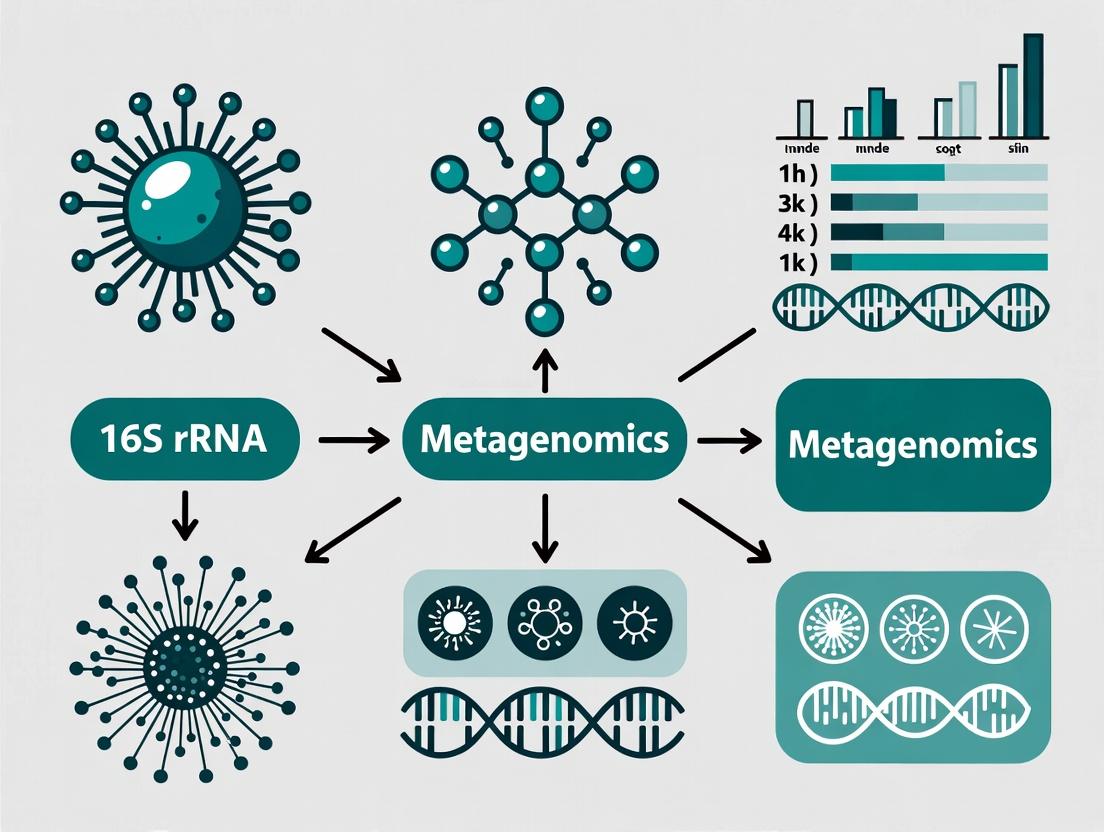
This article provides a foundational and applied comparison of 16S rRNA gene sequencing and shotgun metagenomics for researchers entering the field of microbiome analysis.
16S rRNA vs. Metagenomics: A Beginner's Guide for Biomedical Researchers Choosing Microbial Profiling Methods
Abstract
This article provides a foundational and applied comparison of 16S rRNA gene sequencing and shotgun metagenomics for researchers entering the field of microbiome analysis. It covers core principles, workflows, and cost-benefit analyses to guide method selection. For those implementing these techniques, we detail common pitfalls, optimization strategies for data quality, and best practices for experimental validation. Finally, we present a comparative framework to help scientists align their choice of method—from 16S for rapid, cost-effective community profiling to metagenomics for comprehensive functional insights—with specific research goals in drug development and clinical research.
Microbiome Analysis 101: Understanding the Core Principles of 16S rRNA and Metagenomic Sequencing
This whitepaper serves as a technical guide within a broader thesis for beginners on microbial community analysis. It contrasts two foundational approaches: 16S rRNA gene sequencing and shotgun metagenomic sequencing. The choice between these methods defines the biological target, directly shaping the scope, resolution, and applicability of research findings in microbiology, ecology, and drug development.
Core Principles and Comparative Framework
16S rRNA Gene Sequencing
This method targets the highly conserved 16S ribosomal RNA gene, present in all bacteria and archaea. It utilizes polymerase chain reaction (PCR) with universal primers to amplify hypervariable regions (V1-V9), which provide taxonomic signatures for identifying and profiling microbial community members.
Shotgun Metagenomic Sequencing
This approach involves random fragmentation and sequencing of all DNA in a sample. It captures genetic material from all organisms present—bacteria, archaea, viruses, fungi, and microbial eukaryotes—enabling functional and taxonomic analysis of the entire microbial community without PCR bias.
Quantitative Comparison
Table 1: High-Level Comparison of Core Methodologies
| Feature | 16S rRNA Gene Sequencing | Shotgun Metagenomic Sequencing |
|---|---|---|
| Primary Target | Single, conserved gene (16S rRNA) | Entire genomic DNA (all genes) |
| Taxonomic Scope | Bacteria & Archaea only | All domains of life (prokaryotes, eukaryotes, viruses) |
| Taxonomic Resolution | Genus to species level (rarely strain) | Species to strain level |
| Functional Insight | Inferred from taxonomy | Directly profiled via gene annotation |
| PCR Bias | Yes (primer-dependent) | No (library prep uses PCR, but not for specific gene) |
| Approx. Cost per Sample (2024) | $20 - $100 | $150 - $500+ |
| Typical Sequencing Depth | 10,000 - 50,000 reads/sample | 10 - 50 million reads/sample |
| Bioinformatic Complexity | Moderate (established pipelines) | High (demanding computational resources) |
| Primary Databases | SILVA, Greengenes, RDP | NCBI nr, GenBank, KEGG, eggNOG, COG |
Table 2: Data Output and Application Context
| Output Type | 16S rRNA Sequencing | Shotgun Metagenomics |
|---|---|---|
| Key Deliverable | Taxonomic abundance table (OTUs/ASVs) | Gene/pathway abundance table; assembled genomes |
| Drug Development Application | Biomarker discovery (dysbiosis signatures), patient stratification | Target identification (novel enzymes, resistance genes), mechanistic studies |
| Limitations | Cannot detect viruses/fungi; limited functional data | Host DNA contamination; higher cost & complexity |
Detailed Methodological Protocols
Standard 16S rRNA Gene Amplicon Sequencing Workflow
Protocol: Library Preparation via Dual-Indexing
- DNA Extraction: Use a bead-beating kit (e.g., Qiagen DNeasy PowerSoil) for mechanical lysis of diverse cell walls.
- PCR Amplification: Amplify the target hypervariable region (e.g., V3-V4) using universal primer pairs (e.g., 341F/806R) with overhang adapters.
- Reaction: 25 µL containing 12.5 ng template DNA, 0.2 µM primers, 2X PCR master mix.
- Cycling: 95°C for 3 min; 25-35 cycles of (95°C for 30s, 55°C for 30s, 72°C for 30s); 72°C for 5 min.
- Indexing PCR: A second, limited-cycle PCR attaches dual indices and sequencing adapters.
- Pooling & Purification: Normalize amplicon concentrations, pool, and clean.
- Sequencing: Perform paired-end sequencing (e.g., 2x300 bp) on an Illumina MiSeq.
Diagram Title: 16S rRNA Amplicon Sequencing Workflow
Standard Shotgun Metagenomic Sequencing Workflow
Protocol: Illumina Library Preparation
- DNA Extraction & QC: Extract high-quality, high-molecular-weight DNA. Quantity via fluorometry (e.g., Qubit).
- Fragmentation: Fragment DNA via acoustic shearing (e.g., Covaris) to a target size of ~350 bp.
- Library Preparation: Use a kit (e.g., Illumina DNA Prep) for end-repair, A-tailing, and ligation of indexed adapters.
- Size Selection & Cleanup: Perform bead-based cleanup to select desired fragment sizes.
- Library Amplification: Perform limited-cycle PCR to enrich adapter-ligated fragments.
- Sequencing: Pool libraries and sequence on a high-throughput platform (e.g., NovaSeq, HiSeq) to achieve sufficient depth.
Diagram Title: Shotgun Metagenomic Sequencing Workflow
The Scientist's Toolkit: Research Reagent Solutions
Table 3: Essential Kits and Reagents for Microbial Profiling
| Item Name (Example) | Category | Primary Function |
|---|---|---|
| DNeasy PowerSoil Pro Kit (Qiagen) | DNA Extraction | Inhibitor removal and efficient lysis for tough environmental/ fecal samples. |
| KAPA HiFi HotStart ReadyMix (Roche) | PCR Enzyme (16S) | High-fidelity polymerase for accurate amplification of 16S amplicons. |
| Illumina 16S Metagenomic Library Prep | Library Prep (16S) | Integrated kit for amplifying V3-V4 regions and attaching indexes. |
| Nextera DNA Flex Library Prep (Illumina) | Library Prep (Shotgun) | Enzymatic fragmentation and adapter ligation for shotgun libraries. |
| Covaris S220 Focused-ultrasonicator | Equipment | Reproducible, tunable DNA shearing for shotgun library construction. |
| AMPure XP Beads (Beckman Coulter) | Purification | Size-selective magnetic bead cleanup for PCR products and libraries. |
| Qubit dsDNA HS Assay Kit (Thermo Fisher) | Quantification | Fluorometric, selective quantification of double-stranded DNA. |
| ZymoBIOMICS Microbial Community Standard | Quality Control | Defined mock community for validating both 16S and shotgun workflows. |
Decision Pathway for Method Selection
Diagram Title: Decision Tree: 16S rRNA vs. Shotgun Metagenomics
The choice between the conserved 16S rRNA gene and the entire genomic shotgun is fundamental. 16S sequencing remains a powerful, cost-effective tool for taxonomic censusing of prokaryotic communities. Shotgun metagenomics provides a comprehensive, hypothesis-agnostic view of the entire microbiome's functional potential. For beginners, a tiered strategy—using 16S for broad, initial surveys followed by targeted shotgun sequencing on critical samples—often provides an optimal balance of insight and resource allocation, paving the way for robust discoveries in microbial ecology and therapeutic development.
This whitepaper situates the evolution of sequencing technology within the context of selecting an appropriate method for microbial community analysis, specifically contrasting targeted 16S rRNA gene sequencing with shotgun metagenomics. For researchers and drug development professionals entering this field, understanding the technical lineage from Sanger to Next-Generation Sequencing (NGS) is crucial for informed experimental design and data interpretation.
The Sequencing Revolution: A Technical Chronology
The Sanger Era: Sequencing Clones
The foundation of modern genomics was laid by Frederick Sanger's chain-termination method (1977). In microbial ecology, this involved cloning 16S rRNA gene fragments from environmental samples into bacterial vectors, followed by sequencing individual clones.
Core Protocol: Sanger Sequencing of Cloned 16S rRNA Amplicons
- DNA Extraction: Isolate total genomic DNA from a complex sample (e.g., soil, gut contents).
- PCR Amplification: Use universal primers targeting conserved regions of the 16S rRNA gene (e.g., 27F/1492R).
- Cloning: Ligate amplicons into a plasmid vector (e.g., pCR2.1-TOPO) and transform into E. coli.
- Colony Screening: Pick individual bacterial colonies, each representing a single cloned 16S rRNA fragment.
- Cycle Sequencing: Perform a sequencing PCR using vector-specific primers, fluorescently-labeled dideoxynucleotide terminators (ddNTPs), and Taq polymerase.
- Capillary Electrophoresis: Inject products into a capillary array. Laser excitation detects the fluorescent dye of the terminating ddNTP at each base position.
- Base Calling: Software (e.g., Phred) translates fluorescence traces into nucleotide sequences (~500-900 bp reads).
Quantitative Data: Sanger Sequencing
| Metric | Typical Performance |
|---|---|
| Read Length | 500 - 900 base pairs |
| Throughput/Run | 96 - 384 clones |
| Accuracy | >99.9% (Phred Q30+) |
| Cost per Mb (approx.) | $2,400 |
| Key Application | Gold-standard for full-length 16S rRNA gene sequences; reference database creation. |
The NGS Paradigm: High-Throughput Parallelism
NGS displaced Sanger by parallelizing millions of sequencing reactions. This enabled two approaches: high-depth sequencing of 16S rRNA hypervariable regions (amplicon sequencing) and untargeted shotgun metagenomics.
Core Protocol: Illumina-Based 16S rRNA Amplicon Sequencing
- Library Preparation (Two-Step PCR):
- Amplification 1: PCR with primers containing gene-specific sequences and partial adapter overhangs.
- Amplification 2 (Indexing PCR): Add full Illumina adapter sequences and unique dual indices (barcodes) to each sample.
- Library Quantification & Pooling: Normalize libraries via fluorometry and pool multiplexed samples.
- Cluster Generation: Denatured library fragments are bridge-amplified on a flow cell to generate clonal clusters.
- Sequencing-by-Synthesis: Fluorescently-labeled, reversible-terminator nucleotides are incorporated. Imaging after each cycle identifies the base.
- Demultiplexing: Bioinformatics splits the read data by sample-specific barcodes.
Core Protocol: Shotgun Metagenomic Sequencing
- Library Preparation: Fragment total genomic DNA (sonication/enzymatic). End-repair, A-tail, and ligate to Y-shaped adapters. Minimal PCR amplification.
- Sequencing: As above, but sequences all genomic fragments, not just a specific target.
- Bioinformatics: Reads are assembled de novo or mapped to reference databases for functional and taxonomic profiling.
Quantitative Data: NGS Platforms (Current Landscape)
| Platform | Technology | Max Output/Run | Typical Read Length | Key Application in Microbiome |
|---|---|---|---|---|
| Illumina NovaSeq X | Synthesis (Reversible Terminators) | 16 Tb | 2x150 bp | High-depth metagenomics, large cohort studies |
| Illumina MiSeq | Synthesis (Reversible Terminators) | 15 Gb | 2x300 bp | 16S rRNA amplicon sequencing (long reads) |
| Pacific Biosciences Revio | Single-Molecule, Real-Time (SMRT) | 360 Gb | 10-25 kb | Full-length 16S rRNA sequencing, metagenome assembly |
| Oxford Nanopore PromethION | Nanopore Sensing | > 200 Gb | 10 kb - >100 kb | Real-time sequencing, full-length 16S, large fragment analysis |
Comparative Workflow: 16S rRNA vs. Shotgun Metagenomics
Diagram 1: Workflow comparison between 16S and metagenomic sequencing.
The Scientist's Toolkit: Key Reagent Solutions
| Reagent/Material | Function | Example (Representative) |
|---|---|---|
| Magnetic Bead Cleanup Kits | PCR purification & size selection; removes primers, dNTPs, salts. | SPRIselect (Beckman Coulter) |
| PCR Enzymes for Amplicons | High-fidelity polymerase for accurate amplification of target region. | Q5 Hot Start (NEB), Phusion (Thermo) |
| Library Prep Kits | Streamlined, optimized reagents for end-prep, adapter ligation, and indexing. | Nextera XT (Illumina), KAPA HyperPrep (Roche) |
| Quantification Kits | Fluorometric assay for precise dsDNA library concentration. | Qubit dsDNA HS Assay (Thermo) |
| Positive Control DNA | Validates entire workflow (extraction to analysis). | ZymoBIOMICS Microbial Community Standard (Zymo Research) |
| 16S rRNA PCR Primers | Target specific hypervariable regions. | 515F/806R (V4), 27F/338R (V1-V2) |
| Indexing Primers (Barcodes) | Unique dual indices for sample multiplexing on sequencer. | Nextera XT Index Kit v2 (Illumina) |
| Sequencing Flow Cells | Glass slide with patterned nanowells for cluster generation. | MiSeq Reagent Kit v3 (600-cycle) |
Pathway to Data: From Sequencer to Biological Insight
Diagram 2: Bioinformatics pipeline from raw data to interpretable results.
The evolution from clone-based Sanger sequencing to modern NGS platforms has fundamentally expanded our capacity to interrogate microbial communities. For beginner research, 16S rRNA amplicon sequencing remains a cost-effective, high-depth method for robust taxonomic profiling, rooted in decades of curated reference databases. In contrast, shotgun metagenomics, empowered by the massive throughput of NGS, provides a comprehensive, hypothesis-agnostic view of both taxonomic composition and functional potential. The choice hinges on the research question: 16S for efficient, taxonomy-focused surveys of many samples, and metagenomics for in-depth functional insights, albeit at greater cost and computational complexity.
The analysis of complex microbial communities hinges on two fundamental questions: "Who's there?" (taxonomic profiling) and "What can they do?" (functional potential). The choice between 16S rRNA gene sequencing and shotgun metagenomics defines the scope of answers a researcher can obtain. This guide frames these techniques within a foundational thesis for beginners: 16S rRNA sequencing provides a cost-effective, high-depth taxonomic census, while shotgun metagenomics delivers a comprehensive, albeit more complex and costly, view of both taxonomy and inferred functional capacity.
Core Technical Comparison: 16S vs. Shotgun Metagenomics
The table below summarizes the fundamental differences between the two approaches, highlighting their distinct key outputs.
Table 1: Core Comparison of 16S rRNA Sequencing and Shotgun Metagenomics
| Aspect | 16S rRNA Gene Sequencing | Shotgun Metagenomics |
|---|---|---|
| Target | Hypervariable regions of the 16S ribosomal RNA gene. | All genomic DNA in a sample (fragmented randomly). |
| Primary Output | Taxonomic profile (Genus, sometimes species). | Gene catalog & taxonomic profile (strain-level possible). |
| Functional Insight | Indirect, inferred from known taxonomy. | Direct, via identification of protein-coding genes. |
| Key Advantage | Cost-effective, high sensitivity for low-abundance taxa, standardized pipelines. | Comprehensive functional profiling, strain-level discrimination, discovery of novel genes. |
| Key Limitation | Limited resolution (rarely to species), no direct functional data, PCR bias. | Higher cost, computationally intensive, requires high sequencing depth, host DNA contamination. |
| Typical Sequencing Depth | 50,000 - 100,000 reads/sample (for diversity). | 10 - 50 million reads/sample (varies with complexity). |
| Best For | Large cohort studies focusing on taxonomy/diversity, budget-conscious projects. | Hypothesis-driven functional analysis, pathway discovery, biomarker identification. |
Detailed Methodologies & Experimental Protocols
Protocol for 16S rRNA Gene Amplicon Sequencing (Illumina MiSeq)
Objective: To generate taxonomic profiles from microbial communities. Workflow:
- DNA Extraction: Use bead-beating mechanical lysis kits (e.g., Mo Bio PowerSoil) for robust cell wall disruption.
- PCR Amplification: Amplify hypervariable regions (e.g., V3-V4) using barcoded primers (e.g., 341F/806R).
- Reaction: 25 µL containing ~10 ng DNA, high-fidelity polymerase, buffer, primers.
- Cycling: Initial denaturation (95°C, 3 min); 25-30 cycles of (95°C/30s, 55°C/30s, 72°C/30s); final extension (72°C, 5 min).
- Amplicon Purification: Clean PCR products using magnetic bead-based clean-up.
- Library Pooling & Quantification: Pool equimolar amounts of barcoded amplicons. Quantify using fluorometry (e.g., Qubit).
- Sequencing: Load pooled library onto Illumina MiSeq with 2x300 bp chemistry.
Protocol for Shotgun Metagenomic Sequencing
Objective: To assess both taxonomic composition and functional gene content. Workflow:
- High-Quality DNA Extraction: Use kits that yield high-molecular-weight DNA (e.g., MagAttract PowerSoil DNA Kit).
- Library Preparation: Fragment DNA via sonication or enzymatic shearing to ~350 bp. Perform end-repair, adapter ligation, and PCR amplification using indexed adapters.
- Library QC: Assess fragment size distribution (Bioanalyzer) and quantify precisely (qPCR).
- Sequencing: Sequence on high-output platforms (Illumina NovaSeq) to achieve 5-10 Gb of data per human gut sample, for example.
Visualization of Workflows and Relationships
Microbiome Analysis Method Decision Workflow
Decision Logic for 16S vs. Shotgun Sequencing
The Scientist's Toolkit: Essential Research Reagents & Materials
Table 2: Key Reagent Solutions for Microbiome Sequencing
| Item | Typical Product/Kit | Function in Workflow |
|---|---|---|
| Metagenomic DNA Isolation Kit | Qiagen DNeasy PowerSoil Pro Kit; MP Biomedicals FastDNA Spin Kit | Standardized, bead-beating-based extraction of high-quality, inhibitor-free DNA from complex samples (soil, stool). |
| High-Fidelity DNA Polymerase | KAPA HiFi HotStart ReadyMix; Q5 High-Fidelity DNA Polymerase | Critical for accurate, low-bias amplification of 16S target regions during library preparation. |
| 16S rRNA Gene Primers | 27F/1492R (full-length); 341F/806R (V3-V4 for Illumina) | Target-specific primers for amplifying hypervariable regions of the bacterial/archaeal 16S gene. |
| Shotgun Library Prep Kit | Illumina DNA Prep; Nextera XT DNA Library Preparation Kit | Facilitates fragmentation, indexing, and adapter ligation of genomic DNA for shotgun sequencing. |
| Magnetic Bead Clean-up Kits | AMPure XP Beads; Sera-Mag Select Beads | Size-selective purification and clean-up of PCR amplicons or sequencing libraries. |
| Fluorometric DNA Quant Kit | Qubit dsDNA HS Assay Kit; Picogreen Assay | Highly specific quantification of double-stranded DNA, essential for accurate library pooling. |
| Bioanalyzer/Picrofluidic Kit | Agilent High Sensitivity DNA Kit (for Bioanalyzer) | Assesses library fragment size distribution and quality before sequencing. |
| Positive Control (Mock Community) | ZymoBIOMICS Microbial Community Standard | Defined mix of microbial genomes; validates entire wet-lab and bioinformatics pipeline. |
For researchers entering microbial ecology, pharmacomicrobiomics, or drug development, the choice between 16S rRNA gene sequencing and shotgun metagenomics represents a foundational decision. This choice is governed by a central trade-off: 16S sequencing offers high taxonomic resolution at a lower cost and complexity, while shotgun metagenomics provides direct functional insight at greater expense and analytical burden. This guide explores this trade-off through current data, protocols, and practical considerations.
Quantitative Comparison: 16S rRNA vs. Shotgun Metagenomics
Table 1: Core Methodological Comparison
| Parameter | 16S rRNA Gene Sequencing | Shotgun Metagenomic Sequencing |
|---|---|---|
| Target Region | Hypervariable regions (e.g., V4, V3-V4) of the 16S rRNA gene | All genomic DNA in sample |
| Primary Output | Amplicon sequence variants (ASVs) or OTUs | Short reads from all genomes |
| Taxonomic Resolution | Genus to species level (rarely strain-level) | Species to strain-level, with high confidence |
| Functional Insight | Inferred from reference databases (e.g., PICRUSt2, Tax4Fun2) | Directly predicted from sequenced genes |
| Cost per Sample (2024) | ~$20 - $80 | ~$150 - $500+ |
| Bioinformatics Complexity | Moderate (standardized pipelines like QIIME2, MOTHUR) | High (requires extensive computing, assembly, annotation) |
| Host DNA Contamination Sensitivity | Low (specific amplification) | High (sequences all DNA) |
Table 2: Application-Specific Suitability
| Research Goal | Recommended Approach | Rationale |
|---|---|---|
| Microbiome Profiling in Cohort Studies | 16S rRNA sequencing | Cost-effective for large n, sufficient for community structure analysis. |
| Identifying Novel Biosynthetic Gene Clusters (Drug Discovery) | Shotgun Metagenomics | Direct detection of secondary metabolite pathways. |
| Tracking Specific Strains in Therapeutics | Shotgun Metagenomics | Required for strain-level discrimination and functional potential. |
| Routine QC of Microbial Fermentation | 16S rRNA sequencing | Fast, affordable for contamination and composition checks. |
Experimental Protocols
Protocol 1: Standard 16S rRNA (V4 Region) Amplicon Sequencing Workflow
- Sample Preparation: Extract genomic DNA using a bead-beating protocol (e.g., Qiagen DNeasy PowerSoil Pro Kit) to ensure lysis of tough Gram-positive bacteria.
- PCR Amplification: Amplify the V4 region using primers 515F (5'-GTGYCAGCMGCCGCGGTAA-3') and 806R (5'-GGACTACNVGGGTWTCTAAT-3'). Use a high-fidelity polymerase and include unique dual-index barcodes for multiplexing.
- Library QC & Pooling: Clean amplicons with magnetic beads, quantify by fluorometry, and pool equimolarly.
- Sequencing: Run on an Illumina MiSeq with 2x250 bp chemistry, targeting 50,000-100,000 reads per sample.
- Bioinformatics: Process with QIIME2 (2024.2). Key steps: denoising with DADA2 to generate ASVs, taxonomy assignment with a pre-trained classifier (e.g., Silva 138 or Greengenes2 2022.10), and phylogenetic tree generation.
Protocol 2: Shotgun Metagenomic Sequencing for Functional Analysis
- Sample Preparation: Extract high-molecular-weight DNA (e.g., using the MagAttract HMW DNA Kit). Assess integrity via pulsed-field gel electrophoresis or Fragment Analyzer.
- Library Preparation: Fragment DNA via sonication (Covaris) to ~350 bp. Perform end-repair, adapter ligation, and PCR-free amplification if input is sufficient to minimize bias.
- Sequencing: Sequence on an Illumina NovaSeq X Plus platform for high depth (10-20 million 2x150 bp reads per gut microbiome sample).
- Bioinformatics: A typical pipeline involves: 1) Quality trimming with Trimmomatic or fastp, 2) Host read subtraction (using BMTagger or KneadData against human genome), 3) De novo assembly with MEGAHIT or metaSPAdes, 4) Binning for Metagenome-Assembled Genomes (MAGs) using MetaBAT2, 5) Functional annotation via tools like HUMAnN3 (against UniRef90/ChocoPhlAn) or direct pathway analysis with MetaCyc.
Visualizing the Decision Workflow and Analysis Pathways
Diagram 1: Method Selection Decision Tree
Diagram 2: Bioinformatics Pipeline Comparison
The Scientist's Toolkit: Key Research Reagent Solutions
Table 3: Essential Reagents and Kits for Microbiome Studies
| Item | Supplier Examples | Function & Application |
|---|---|---|
| PowerSoil Pro DNA Isolation Kit | Qiagen | Gold-standard for microbial lysis and inhibitor removal from complex samples (soil, stool). |
| KAPA HiFi HotStart ReadyMix | Roche | High-fidelity polymerase for unbiased 16S rRNA amplicon generation. |
| Nextera XT DNA Library Prep Kit | Illumina | Standardized library preparation for shotgun metagenomics (low-input compatible). |
| ZymoBIOMICS Microbial Community Standard | Zymo Research | Defined mock community for validating 16S and shotgun workflow accuracy. |
| MagAttract HMW DNA Kit | Qiagen | For high-molecular-weight DNA extraction critical for quality metagenomic assembly. |
| PhiX Control v3 | Illumina | Sequencing run quality control for low-diversity libraries (like 16S amplicons). |
| DNase/RNase-Free Water | ThermoFisher, MilliporeSigma | Critical for all molecular steps to prevent contamination. |
| AMPure XP Beads | Beckman Coulter | Magnetic beads for size selection and cleanup in NGS library prep. |
For researchers entering microbial community analysis, the choice between 16S rRNA gene sequencing and shotgun metagenomics defines the experimental framework and the resultant terminology. 16S rRNA sequencing targets a specific, conserved genomic region to profile taxonomic composition, leading to concepts like OTUs and ASVs. In contrast, shotgun metagenomics sequences all genomic material from a sample, enabling functional analysis and the reconstruction of genomes, introducing terms like contigs and MAGs. This guide details these core terminologies, contrasting their application in each approach to inform study design for drug development and clinical research.
Core Terminology & Quantitative Comparison
Operational Taxonomic Units (OTUs) vs. Amplicon Sequence Variants (ASVs)
Both terms originate from marker-gene analysis (e.g., 16S rRNA).
- OTU (Operational Taxonomic Unit): A cluster of sequencing reads grouped based on a fixed similarity threshold (commonly 97%), representing a hypothesized taxonomic unit (e.g., a species). It is a heuristic, bioinformatics-driven concept.
- ASV (Amplicon Sequence Variant): A unique, exact sequence read derived from high-resolution denoising algorithms. It represents a biologically real, single DNA sequence present in the sample, offering finer taxonomic resolution.
Table 1: OTUs vs. ASVs in 16S rRNA Analysis
| Feature | OTU (97% clustering) | ASV (Denoising) |
|---|---|---|
| Basis | Clustering by % similarity | Exact, error-corrected sequence |
| Resolution | Lower (group level) | Higher (strain level) |
| Reproducibility | Variable (depends on pipeline/parameters) | High (consistent across studies) |
| Computational Method | Heuristic clustering (e.g., VSEARCH, CD-HIT) | Denoising (e.g., DADA2, UNOISE3, Deblur) |
| Interpretation | Ecological "bin" | Biological entity |
Read Depth
Also called sequencing depth, this is the number of sequencing reads assigned to a given sample or genomic region. It is a critical metric in both 16S and metagenomics.
- In 16S rRNA: Read depth per sample determines if sequencing is sufficient to capture rare community members. Saturation (rarefaction) curves are used for assessment.
- In Metagenomics: Read depth across a genome determines the confidence in variant calls, gene presence, and genome assembly.
Table 2: Recommended Minimum Read Depth Guidelines
| Method | Typical Minimum Depth | Purpose of Minimum Depth |
|---|---|---|
| 16S rRNA Sequencing | 20,000 - 50,000 reads/sample | To achieve asymptotic richness curves for complex microbiomes (e.g., gut). |
| Shotgun Metagenomics | 10 - 40 million reads/sample | For adequate genomic coverage, functional profiling, and MAG reconstruction. |
Contigs and Metagenome-Assembled Genomes (MAGs)
These terms are fundamental to shotgun metagenomic analysis.
- Contig: A contiguous DNA sequence assembled from overlapping sequencing reads. The first output of metagenomic assembly.
- MAG (Metagenome-Assembled Genome): A collection of contigs, binned together using genomic features (coverage, k-mer frequency, taxonomy), that represents the draft genome of a single microorganism from the complex community.
Table 3: Metrics for Evaluating Contigs and MAGs
| Metric | Typical Target for Quality | Description |
|---|---|---|
| Contig N50/L50 | Higher N50 is better | N50: Length of the shortest contig in the set that contains the longest contigs covering 50% of the assembly. |
| MAG Completeness | >90% (High Quality) | Estimated percentage of single-copy core genes present. |
| MAG Contamination | <5% (High Quality) | Estimated percentage of single-copy core genes present more than once. |
| MAG Strain Heterogeneity | Lower is better | Measures multiple sequence variants within single-copy genes. |
Detailed Methodological Protocols
Protocol: Generating ASVs from 16S rRNA Data (DADA2 Pipeline)
Application: Precise taxonomic profiling for clinical cohort studies.
- Demultiplex & Quality Filter: Remove primers/adapters. Filter and trim reads based on quality scores (e.g., maxEE=2, truncQ=2).
- Learn Error Rates: Estimate the sequencing error model from the data itself.
- Dereplication: Combine identical reads to reduce computational load.
- Sample Inference (Core): Apply the DADA2 algorithm to correct errors and infer exact biological sequences (ASVs).
- Merge Paired Reads: Align forward and reverse reads to construct the full ASV sequence.
- Remove Chimeras: Identify and discard chimeric sequences formed during PCR.
- Taxonomy Assignment: Assign taxonomy to each ASV using a reference database (e.g., SILVA, GTDB).
Protocol: Reconstructing MAGs from Shotgun Metagenomes
Application: Discovering novel microbial genomes for drug target identification.
- Quality Control & Filtering: Use Trimmomatic or Fastp to remove low-quality reads and adapters.
- Metagenomic Assembly: Assemble all reads from a sample or co-assemble from multiple samples using a meta-assembler (e.g., MEGAHIT, metaSPAdes). Output: Contigs.
- Contig Binning: Group contigs into putative genomes (bins) using:
- Coverage/Abundance: Contigs from the same genome should have similar abundance profiles across multiple samples.
- Sequence Composition: Contigs from the same genome share k-mer frequencies (tetranucleotide signatures).
- Tools: MetaBAT2, MaxBin2, CONCOCT.
- Bin Refinement & Dereplication: Use tools like DAS Tool to produce a refined set of non-redundant bins. Check for contamination and completeness with CheckM.
- Taxonomy Assignment: Assign taxonomy to the high-quality MAGs using GTDB-Tk.
Visualizations
(Diagram Title: 16S rRNA vs. Metagenomics Analytical Pathways)
(Diagram Title: MAG Reconstruction Workflow)
The Scientist's Toolkit: Research Reagent & Material Solutions
Table 4: Essential Materials for Microbial Community Analysis
| Item | Function & Application |
|---|---|
| DNA Extraction Kit (e.g., DNeasy PowerSoil Pro) | Standardized, high-yield DNA extraction from complex, difficult samples (stool, soil). Inhibitor removal is critical for downstream PCR/NGS. |
| 16S rRNA PCR Primers (e.g., 515F/806R targeting V4) | Selective amplification of the target hypervariable region for 16S sequencing. Choice defines taxonomic resolution and bias. |
| Library Prep Kit (e.g., Illumina Nextera XT) | Prepares fragmented and adapter-ligated DNA libraries compatible with Illumina sequencers for metagenomics. |
| Mock Microbial Community (e.g., ZymoBIOMICS) | Defined mix of known bacterial genomes. Serves as a positive control for both 16S and metagenomic pipelines to assess accuracy and bias. |
| Benchmarking Software (e.g., CAMI2 Challenge Data) | In-silico simulated metagenomes with known genomes/abundances. Used to objectively test and validate MAG reconstruction pipelines. |
| Reference Database (e.g., GTDB, SILVA) | Curated collection of classified microbial sequences. Essential for assigning taxonomy to ASVs or MAGs. GTDB offers a modern, genome-based taxonomy. |
From Sample to Data: Step-by-Step Workflows and Best-Fit Applications for Each Method
For researchers entering the field of microbial community analysis, the choice between targeted 16S rRNA gene sequencing and shotgun metagenomics is fundamental. This technical guide dives into the core experimental workflows that differentiate these approaches, framed within a broader thesis for beginners: Targeted 16S sequencing provides cost-efficient taxonomic profiling, while shotgun metagenomics enables functional and strain-level analysis at a higher cost and complexity. The divergence begins at the very first wet-lab step: library preparation.
Core Principle: Targeted Amplification vs. Random Fragmentation
The 16S rRNA approach selectively amplifies a specific, evolutionarily conserved genomic region using Polymerase Chain Reaction (PCR). In contrast, shotgun metagenomics aims to sequence all genomic material in a sample, requiring non-specific fragmentation of total DNA into appropriately sized pieces for library construction.
16S rRNA Gene Sequencing: PCR Amplification & Library Prep
This workflow focuses on the hypervariable regions (V1-V9) of the conserved 16S rRNA gene.
Detailed Experimental Protocol: Dual-Indexed Amplicon Library Preparation
Step 1: Primer Design & Selection. Select primer pairs targeting specific hypervariable regions (e.g., V3-V4). Primers include:
- Adapter Sequences: Illumina sequencing adapters (P5/P7).
- Indices (Barcodes): Unique 8-base indices for sample multiplexing.
- Linker Sequences: Optimized spacers.
- Gene-Specific Sequences: e.g., 341F (5'-CCTACGGGNGGCWGCAG-3') and 805R (5'-GACTACHVGGGTATCTAATCC-3').
Step 2: First-Stage PCR (Amplification).
- Reaction Mix: 2-12.5 ng genomic DNA, Q5 High-Fidelity DNA Polymerase, dNTPs, forward/reverse primers.
- Thermocycling:
- Initial Denaturation: 98°C for 30 sec.
- 25-35 cycles of: Denaturation (98°C, 10 sec), Annealing (~55°C, 30 sec), Extension (72°C, 30 sec).
- Final Extension: 72°C for 2 min.
Step 3: PCR Product Clean-up. Use magnetic bead-based purification (e.g., AMPure XP beads) to remove primers, dNTPs, and enzyme.
Step 4: Indexing PCR (Second-Stage). A second, limited-cycle PCR attaches full Illumina adapters and dual indices to the amplicon from Step 2.
- Thermocycling: 8 cycles using a similar profile.
Step 5: Final Library Clean-up & Normalization. Bead-based clean-up followed by quantification (fluorometry) and pooling at equimolar ratios.
Diagram 1: 16S Amplicon Library Preparation Workflow.
Shotgun Metagenomics: DNA Fragmentation & Library Prep
This workflow fragments all DNA indiscriminately to build a library representing the entire metagenome.
Detailed Experimental Protocol: Illumina Nextera-style Tagmentation
Step 1: DNA Input QC & Normalization. Requires high-quality, high-molecular-weight input DNA (>0.1-1 ng in microvolume to ~1 µg). Quantify via Qubit fluorometer.
Step 2: Tagmentation. Simultaneous fragmentation and adapter tagging using a Tn5 transposase complex.
- Reaction Mix: DNA sample, Tagmentase Enzyme, Buffer.
- Incubation: 55-60°C for 5-15 minutes. This randomly cleaves DNA and ligates adapter sequences to both ends.
Step 3: PCR Amplification & Indexing.
- A single PCR simultaneously amplifies the tagmented fragments and adds full-length adapters, indices, and sequencing primers via limited-cycle PCR (typically 12 cycles).
- Uses a polymerase capable of amplifying fragments with adapter overhangs.
Step 4: Size Selection. Critical for removing very small fragments and primer dimers. Performed via double-sided magnetic bead clean-up (e.g., varying bead-to-sample ratio) or gel electrophoresis to select a tight size range (e.g., 350-550 bp).
Step 5: Library QC & Normalization. Quantification via qPCR (for cluster density prediction) and fragment analyzer (for size distribution). Equimolar pooling.
Diagram 2: Shotgun Metagenomics Library Prep via Tagmentation.
Quantitative Data Comparison
Table 1: Core Workflow Parameter Comparison
| Parameter | 16S rRNA Amplicon Sequencing | Shotgun Metagenomics |
|---|---|---|
| Starting Material | 1-50 ng total DNA | 1-1000 ng high-quality DNA |
| PCR Cycles | 25-35 (1st PCR) + ~8 (Indexing) | ~12 (single PCR post-tagmentation) |
| Key Enzymes | High-Fidelity DNA Polymerase | Tn5 Transposase, Polymerase |
| Primary Selection | Target-Specific (Primer binding) | Size-Based (Fragment length) |
| Typical Insert Size | Fixed by primer pair (~460 bp for V3-V4) | Variable, selected by user (e.g., 350 bp) |
| Library Complexity | Low (single locus) | Extremely High (entire genome(s)) |
| Host DNA Depletion | Not required (primers specific to bacteria/archaea) | Often critical (e.g., probes for human/mouse rRNA) |
| Estimated Hands-on Time | 4-6 hours | 6-8 hours |
Table 2: Typical Sequencing & Bioinformatics Output Metrics
| Metric | 16S rRNA Amplicon Sequencing | Shotgun Metagenomics |
|---|---|---|
| Recommended Reads/Sample | 50,000 - 100,000 | 20 - 40 million (HiSeq/NovaSeq) |
| Key Output | OTU/ASV Table & Taxonomy | Species/Strain Table & Gene Catalog |
| Analysis Resolution | Genus to Species (limited) | Species to Strain, with functional potential |
| PCR Artifacts | Chimeras, Amplification Bias | Minimal (post-fragmentation PCR is short) |
| Major Databases | SILVA, Greengenes, RDP | NCBI nr, UniProt, KEGG, eggNOG |
The Scientist's Toolkit: Key Research Reagent Solutions
Table 3: Essential Materials for Library Preparation
| Item | Function in 16S Workflow | Function in Shotgun Workflow |
|---|---|---|
| High-Fidelity Polymerase (e.g., Q5, KAPA HiFi) | Critical for accurate amplification of target gene with minimal errors. | Used in limited cycles post-tagmentation for robust amplification of diverse fragments. |
| Tn5 Transposase Complex | Not used. | The core enzyme for simultaneous fragmentation and adapter tagging ("tagmentation"). |
| Dual-Indexed Primer Sets | Contains gene-specific sequences and unique barcodes for sample multiplexing. | Contains only index sequences and flow cell binding sites; no gene-specific sequence. |
| Magnetic Beads (e.g., AMPure XP) | For PCR clean-up and size selection of amplicons (primarily removes small primers/dimers). | For post-tagmentation clean-up and, crucially, for double-sided size selection of fragments. |
| Fluorometric Quantifier (e.g., Qubit) | Quantifying DNA concentration after clean-ups and before pooling. | Essential for accurate input DNA quantification and final library quantification. |
| Fragment Analyzer/Bioanalyzer | Optional QC to confirm amplicon size and lack of primer dimers. | Critical QC to verify fragment size distribution after size selection. |
| qPCR Library Quant Kit | Optional for Illumina platforms. | Highly Recommended for accurate molar quantification and cluster density prediction on Illumina. |
In microbial ecology and drug discovery, the choice between targeted 16S rRNA gene sequencing and whole-genome shotgun (WGS) metagenomics defines the experimental and analytical strategy. For the beginner researcher, this decision hinges on the research question: 16S surveys provide cost-efficient, high-depth taxonomic profiling of bacteria and archaea, while WGS metagenomics enables comprehensive functional analysis and profiling of all microbial domains (bacteria, archaea, viruses, fungi) and host DNA. This guide contrasts the definitive pipelines for each approach: QIIME 2 and mothur for 16S rRNA analysis, versus the KneadData, MetaPhlAn, and HUMAnN pipeline for WGS metagenomics.
Core Pipeline Architectures and Comparisons
16S rRNA Gene Analysis Pipelines
These pipelines process amplicon sequence data (e.g., V4 region of 16S rRNA) to produce operational taxonomic unit (OTU) or amplicon sequence variant (ASV) tables, taxonomy assignments, and alpha/beta diversity metrics.
- QIIME 2 (Quantitative Insights Into Microbial Ecology 2): A plugin-based, extensible framework that emphasizes data provenance and reproducibility. It uses a centralized artifact system where all data objects are tracked.
- mothur: A single, comprehensive package following the SOP originally developed for Sanger-derived sequences, later adapted for next-generation sequencing. It is a monolithic tool with a wide array of commands.
Table 1: Comparison of 16S rRNA Analysis Pipelines: QIIME 2 vs. mothur
| Feature | QIIME 2 | mothur |
|---|---|---|
| Core Philosophy | Framework with plugins for modular analysis. | Single, all-in-one software package. |
| Data Provenance | Central, automatic tracking via artifacts. | User-managed through script and file naming. |
| Primary Output | Feature table (OTUs or ASVs). | Shared file (OTU table). |
| Denoising/ASV | DADA2, Deblur plugins. | Implemented via cluster.split or pre.cluster. |
| Taxonomy Assignment | Naive Bayes classifiers (e.g., Silva, Greengenes). | RDP, Wang, or Bayesian classifiers. |
| User Interface | Command-line (qiime) and graphical interface (QIIME 2 View). |
Command-line only. |
| Learning Curve | Steeper initial setup, structured workflow. | Steep, due to vast number of commands. |
| Current Citation Rate (approx.) | ~14,000+ | ~22,000+ |
Shotgun Metagenomics Pipelines
This multi-step pipeline starts with raw WGS reads to assess community composition and function.
- KneadData: A pre-processing tool that performs quality trimming and removes contaminant reads (e.g., host DNA like human).
- MetaPhlAn (Metagenomic Phylogenetic Analysis): A profiler that uses a database of marker genes to produce accurate taxonomic abundances at the species level.
- HUMAnN (HMP Unified Metabolic Analysis Network): Builds on MetaPhlAn's community profile to quantify metabolic pathways and gene families (e.g., UniRef90).
Table 2: Comparison of Shotgun Metagenomics Pipeline Components
| Component | Primary Function | Key Input | Key Output |
|---|---|---|---|
| KneadData | Read QC & decontamination. | Paired-end FASTQ files. | Clean FASTQ files. |
| MetaPhlAn 4 | Taxonomic profiling. | Clean FASTQ or assembly. | Species-abundance table. |
| HUMAnN 3 | Functional profiling. | Clean FASTQ & MetaPhlAn profile. | Pathway/gene family abundance tables. |
Detailed Experimental Protocols
Protocol 1: Core 16S rRNA Analysis with QIIME 2
Objective: Generate an ASV table and perform basic diversity analysis from demultiplexed paired-end reads.
Methodology:
- Import Data: Import demultiplexed sequences into a QIIME 2 artifact.
- Denoise with DADA2: Perform quality control, denoising, chimera removal, and merging.
- Taxonomy Assignment: Classify sequences using a pre-trained classifier.
- Generate Tree for Diversity: Create a phylogenetic tree.
- Core Metrics: Calculate alpha and beta diversity measures.
Protocol 2: Standard Shotgun Metagenomics with KneadData, MetaPhlAn, HUMAnN
Objective: From raw WGS reads, obtain species-level taxonomic and strain-level functional profiles.
Methodology:
- Preprocess with KneadData: Trim reads and remove host contamination.
- Taxonomic Profiling with MetaPhlAn: Merge paired-end reads and profile.
- Functional Profiling with HUMAnN: Use the cleaned reads and MetaPhlAn profile for accelerated analysis.
- Normalize and Regroup Output: Generate normalized gene family and pathway abundance tables.
Visualized Workflows
Title: 16S vs. Metagenomics Pipeline Comparison
Title: HUMAnN 3 Functional Profiling Logic
The Scientist's Toolkit: Key Research Reagent Solutions
| Item | Function in Analysis | Example/Note |
|---|---|---|
| 16S rRNA Gene Primers | Amplify hypervariable regions for sequencing. | 515F/806R for V4 region (Earth Microbiome Project). |
| Silva or Greengenes Database | Reference database for taxonomy assignment in 16S analysis. | SILVA 138 (curated) vs. Greengenes 13_8 (legacy). |
| Metagenomic DNA Extraction Kit | Isolate total genomic DNA from complex samples (stool, soil). | Must effectively lyse diverse cell types (e.g., MO BIO PowerSoil). |
| Host Reference Genome | Used for read decontamination in KneadData. | Human (hg38), mouse (mm10) genome indices for Bowtie2. |
| MetaPhlAn Marker Database | Clade-specific marker genes for taxonomic profiling. | mpa_vJan21_CHOCOPhlAnSGB_202103 (SGB-based). |
| HUMAnN Reference Databases | For functional mapping of reads (genes & pathways). | ChocoPhlAn (pangenomes), UniRef90, MetaCyc. |
| Positive Control Mock Community | Validate entire wet-lab and computational pipeline. | Defined genomic material from known species (e.g., ZymoBIOMICS). |
Within the broader thesis of selecting between 16S ribosomal RNA (rRNA) gene sequencing and shotgun metagenomics for microbiome research, understanding the specific niche for 16S rRNA is critical for beginners. This guide outlines the technical rationale for choosing 16S rRNA sequencing in scenarios prioritizing large sample cohorts, ecological diversity metrics, and budgetary constraints. While metagenomics offers functional and taxonomic resolution, 16S rRNA remains a powerful, targeted tool for specific research questions.
Core Comparative Metrics: 16S rRNA vs. Shotgun Metagenomics
The decision matrix is best understood through quantifiable parameters.
Table 1: Key Quantitative Comparison for Method Selection
| Parameter | 16S rRNA Gene Sequencing | Shotgun Metagenomics |
|---|---|---|
| Typical Cost per Sample | $20 - $100 | $100 - $500+ |
| Optimal Cohort Size | >500 samples | < 200 samples |
| Sequencing Depth | 10,000 - 100,000 reads/sample | 5 - 20 million reads/sample |
| Wet-lab Hands-on Time | Low to Moderate | High |
| Bioinformatics Complexity | Moderate (targeted pipeline) | High (complex assembly & annotation) |
| Taxonomic Resolution | Genus-level, limited species | Species to strain-level |
| Functional Insight | Inferred from taxonomy | Direct (gene & pathway annotation) |
| Primary Output Metrics | Alpha/Beta Diversity, Taxonomic Profiles | Taxonomic Profiles, Gene Catalog, Pathway Abundance |
Technical Rationale for Choosing 16S rRNA Sequencing
Large Cohort Studies
The primary strength of 16S sequencing is its scalability. Amplifying a single, conserved gene region requires far fewer sequencing reads per sample than shotgun sequencing, drastically reducing costs. This enables robust statistical power in population-scale studies, epidemiological surveys, and longitudinal monitoring where sample number (n) is the key determinant.
Alpha and Beta Diversity Analysis
16S rRNA is the established gold standard for community ecology measures. Alpha diversity (within-sample richness/diversity) and beta diversity (between-sample dissimilarity) rely on accurate profiling of taxonomic units (Operational Taxonomic Units - OTUs, or Amplicon Sequence Variants - ASVs). The high, cost-effective sequencing depth achievable with 16S allows for sensitive detection of low-abundance taxa crucial for these metrics.
Cost-Limited Projects
For pilot studies, grant-limited academics, or projects where the central question is "Who is there and how do communities differ?", 16S rRNA provides the most information per dollar. The savings can be allocated to increased biological replication or downstream validation.
Experimental Protocol: Standard 16S rRNA Amplicon Sequencing Workflow
Protocol Title: Illumina MiSeq 16S rRNA V3-V4 Amplicon Library Preparation and Sequencing.
Key Steps:
- Genomic DNA Extraction: Use a bead-beating mechanical lysis kit (e.g., Qiagen DNeasy PowerSoil Pro) to ensure robust lysis of Gram-positive bacteria.
- PCR Amplification: Amplify the hypervariable V3-V4 region using primers 341F (5′-CCTACGGGNGGCWGCAG-3′) and 805R (5′-GACTACHVGGGTATCTAATCC-3′) with attached Illumina adapter overhangs.
- PCR Clean-up: Use magnetic bead-based purification (e.g., AMPure XP beads) to remove primer dimers and non-specific products.
- Index PCR & Library Pooling: Attach dual indices and Illumina sequencing adapters via a second, limited-cycle PCR. Quantify individual libraries fluorometrically, normalize, and pool equimolarly.
- Sequencing: Load pooled library onto an Illumina MiSeq system using a 600-cycle V3 reagent kit (2x300bp paired-end reads).
- Bioinformatics: Process demultiplexed reads through a pipeline like QIIME 2 or DADA2 for quality filtering, denoising (ASV calling), chimera removal, and taxonomy assignment against a curated database (e.g., SILVA or Greengenes).
Diagram Title: 16S rRNA Amplicon Sequencing Wet-Lab Workflow
Diagram Title: 16S rRNA Bioinformatics Core Pipeline
The Scientist's Toolkit: Essential Research Reagents & Materials
Table 2: Key Reagent Solutions for 16S rRNA Studies
| Item | Function & Rationale |
|---|---|
| PowerSoil Pro Kit (Qiagen) | Industry-standard for microbial DNA extraction; includes inhibitors removal for complex samples. |
| Phusion HF DNA Polymerase (Thermo) | High-fidelity polymerase for accurate amplification of the 16S target with minimal bias. |
| KAPA HiFi HotStart ReadyMix (Roche) | Alternative optimized polymerase for amplicon sequencing, known for robust performance. |
| AMPure XP Beads (Beckman Coulter) | Magnetic beads for size-selective purification of PCR products, removing primers and dimers. |
| Nextera XT Index Kit (Illumina) | Provides unique dual indices for multiplexing hundreds of samples on one sequencing run. |
| Qubit dsDNA HS Assay Kit (Thermo) | Fluorometric quantification critical for accurate library pooling and sequencing load. |
| MiSeq Reagent Kit v3 (600-cycle) | Standard Illumina chemistry for 2x300bp paired-end reads, ideal for V3-V4 region. |
| ZymoBIOMICS Microbial Community Standard | Mock community with known composition for validating entire workflow from extraction to bioinformatics. |
For research questions centered on comparative microbial ecology across large sample sets, where the primary endpoints are differences in community structure (alpha/beta diversity) and relative taxonomic abundance, 16S rRNA gene sequencing is the most efficient and cost-effective choice. It provides the statistical power and analytical focus required for robust conclusions in these domains, forming a solid foundation upon which targeted metagenomic investigations can later be built.
In the foundational research on microbial communities, a critical initial decision is the choice between targeted 16S rRNA gene sequencing and shotgun metagenomics. While 16S sequencing offers a cost-effective profile of taxonomic composition at the genus level, its limitations in functional analysis, species/strain resolution, and detection of non-bacterial life forms are well-documented. This guide details the specific scenarios where shotgun metagenomics is the unequivocal methodological choice, focusing on three advanced applications: metabolic pathway reconstruction, antimicrobial resistance (AMR) gene detection, and strain-level tracking. These applications are central to modern microbiome research in human health, environmental science, and drug development.
Core Technical Applications of Shotgun Metagenomics
Metabolic Pathway Analysis
Shotgun metagenomics enables the reconstruction of complete metabolic pathways by sequencing all genomic material in a sample. This allows researchers to move beyond "who is there" to "what are they capable of doing." Key steps involve aligning sequenced reads to reference databases of protein families (e.g., KEGG Orthology, MetaCyc) and subsequently mapping these functions to biochemical pathways.
Experimental Protocol for Pathway-Centric Analysis:
- DNA Extraction: Use a bead-beating mechanical lysis kit (e.g., Qiagen DNeasy PowerSoil Pro) to ensure unbiased lysis of diverse cell walls.
- Library Prep & Sequencing: Fragment DNA, attach adapters, and perform deep sequencing on an Illumina NovaSeq or PacBio HiFi platform to generate 10-20 million paired-end reads per sample.
- Quality Control & Host Removal: Trim adapters and low-quality bases with Trimmomatic or Fastp. Filter out host-derived reads using Bowtie2 against the host genome (e.g., human GRCh38).
- Functional Profiling: Directly align quality-filtered reads to a functional database using tools like HUMAnN 3.0 or translate reads to proteins using DIAMOND for alignment against the UniRef90 database.
- Pathway Reconstruction: Use the MinPath algorithm within the HUMAnN pipeline for parsimonious pathway inference, reporting pathway abundance in copies per million (CPM) or reads per kilobase per million (RPKM).
Antimicrobial Resistance Gene Detection
Shotgun metagenomics provides a comprehensive, culture-independent survey of the resistome—the full repertoire of ARGs present. It detects novel ARG variants and those carried on mobile genetic elements, which is critical for surveillance and understanding resistance transmission.
Experimental Protocol for Resistome Profiling:
- Sample & Sequence: Follow steps 1-3 from the pathway analysis protocol.
- ARG Identification: Align reads to a curated ARG database such as the Comprehensive Antibiotic Resistance Database (CARD) or ResFinder using tools like DeepARG or ABRicate. Alignment-based methods (BLASTx) offer high specificity.
- Quantification & Normalization: Calculate ARG abundance as reads per kilobase per million mapped reads (RPKM) or fragments per kilobase per million (FPKM) to allow cross-sample comparison.
- Contextual Analysis: Co-assemble reads into contigs using metaSPAdes. Annotate contigs to identify ARGs located on plasmids or near mobile genetic elements (insertion sequences, integrons) to assess horizontal transfer potential.
Strain-Level Tracking and Phylogenomics
Unlike 16S sequencing, shotgun data can distinguish between strains of the same species by detecting single-nucleotide variants (SNVs), gene presence/absence patterns, and CRISPR arrays. This is vital for outbreak tracing, probiotic characterization, and understanding microdiversity.
Experimental Protocol for Strain-Level Analysis:
- Deep Sequencing & Assembly: Sequence to high depth (>50x coverage for target species). Perform de novo co-assembly of all reads from a sample or map reads to a high-quality reference genome for the species of interest.
- Variant Calling: For reference-based approach, use BWA-MEM for alignment and tools like MetaPhlAn 3 (which uses clade-specific marker genes) or StrainPhlAn for SNV calling. For de novo approaches, use metaSPAdes for assembly and dRep for strain de-replication.
- Strain Profiling: Construct phylogenetic trees from core genome SNVs using RAxML or IQ-TREE. Analyze accessory genome content (e.g., with Panaroo) to identify strain-specific genes.
- Tracking: Use unique SNV patterns or accessory gene signatures as fingerprints to track strains across longitudinal samples or between hosts.
Table 1: Quantitative Comparison of 16S rRNA Sequencing vs. Shotgun Metagenomics for Key Applications
| Application | 16S rRNA Sequencing | Shotgun Metagenomics | Supporting Data |
|---|---|---|---|
| Taxonomic Resolution | Typically genus-level; some species. | Species to strain-level. | StrainPhlAn can differentiate strains with >95% accuracy using ≥10 SNVs. |
| Functional Insight | Indirect prediction via PICRUSt2. Low accuracy for novel pathways. | Direct detection of genes & pathways. | HUMAnN3 directly quantifies >10,000 metabolic pathways from KO groups. |
| ARG Detection | Not possible. | Quantitative detection of known & novel ARGs. | DeepARG identifies ARGs with >90% precision against CARD. |
| Coverage of Domains | Bacteria & Archaea only. | All domains (Bacteria, Archaea, Eukaryota, Viruses). | Viral reads constitute 0.1-5% of human gut metagenomes. |
| Cost per Sample | ~$50 - $100 (V4 region). | ~$200 - $1000+ (depth-dependent). | Cost for 20M reads on Illumina ~$300; 50M reads needed for strain tracking. |
| Bioinformatic Complexity | Moderate (QIIME 2, MOTHUR). | High (requiring extensive compute, multi-step pipelines). | Full HUMAnN3+CARD+StrainPhlAn pipeline requires ~24 CPU-hours/sample. |
Table 2: Essential Research Reagent Solutions & Tools
| Item | Function & Rationale |
|---|---|
| Bead-Beating DNA Extraction Kit (e.g., DNeasy PowerSoil Pro) | Ensures mechanical lysis of Gram-positive bacteria and fungi for unbiased representation. |
| Illumina DNA Prep Kit | Robust library preparation for shotgun sequencing with low input DNA compatibility. |
| Internal Standard Spikes (e.g., Even, Uneven Microbial Mix from ZymoBIOMICS) | Quantifies absolute abundance and assesses technical variability/limits of detection. |
| Curation of Antibiotic Resistance Database (CARD) | Gold-standard, manually curated reference for precise ARG annotation and ontology. |
| HUMAnN 3.0 Software Pipeline | From raw reads to stratified pathway abundances, integrating MetaPhlAn for taxonomy. |
| StrainPhlAn & PanPhlAn Tools | For strain-level profiling and pangenome analysis from metagenomic data. |
| MetaSPAdes Assembler | De novo assembler optimized for the uneven coverage and diversity of metagenomes. |
Visualized Workflows and Relationships
Shotgun Metagenomics Core Decision Workflow
Comprehensive ARG Detection from Metagenomic Reads
Strain-Level Tracking via SNV and Pangenome Analysis
The decision to employ shotgun metagenomics over 16S rRNA sequencing is dictated by the research question's demand for functional, strain-resolved, and comprehensive genetic analysis. For pathway elucidation in metabolic studies, unbiased ARG surveillance in public health, and high-resolution strain tracking in epidemiology or probiotics development, shotgun metagenomics is the indispensable tool. While it requires greater investment in sequencing depth, computational resources, and bioinformatic expertise, the return is a quantitative, gene-centric view of the microbiome that moves beyond correlation toward mechanistic understanding—a critical step for translational research and therapeutic development.
For researchers entering microbiome studies, the initial dilemma often centers on selecting an appropriate sequencing strategy. The choice between targeted 16S rRNA gene sequencing and shotgun metagenomics is foundational. 16S sequencing, focusing on the hypervariable regions of the prokaryotic 16S ribosomal RNA gene, offers a cost-effective, high-throughput method for profiling microbial community composition and diversity. In contrast, shotgun metagenomics sequences all genomic DNA in a sample, enabling not only taxonomic profiling at higher resolution (often to the species or strain level) but also functional potential analysis via gene and pathway annotation.
The emerging paradigm moves beyond this binary choice, advocating for a hybrid, tiered approach. This strategy leverages the scalability of 16S for initial screening of large sample cohorts to identify outliers or key groups of interest, followed by targeted deep-dive metagenomic sequencing on a strategically selected subset. This integration optimizes both budgetary resources and analytical depth, providing a powerful framework for hypothesis generation and validation in drug development and translational research.
Quantitative Comparison: 16S rRNA Sequencing vs. Shotgun Metagenomics
The following table summarizes the core technical and practical differences between the two methodologies, crucial for experimental design.
Table 1: Core Comparison of 16S rRNA Sequencing and Shotgun Metagenomics
| Parameter | 16S rRNA Gene Sequencing | Shotgun Metagenomics |
|---|---|---|
| Target | Specific hypervariable regions (e.g., V1-V9) of the 16S rRNA gene. | All genomic DNA (shotgun fragmentation). |
| Primary Output | Sequence reads from targeted amplicons. | Random genomic sequence reads. |
| Taxonomic Resolution | Genus to sometimes species level. Limited by short read length and database completeness. | Species to strain level. Enables construction of Metagenome-Assembled Genomes (MAGs). |
| Functional Insight | Indirect, via phylogenetic inference. No direct functional gene data. | Direct, via annotation of protein-coding genes to functional databases (e.g., KEGG, COG, Pfam). |
| Host DNA Burden | Minimal; primers are specific to prokaryotes. | High, especially in host-dense environments (e.g., tissue, blood). Requires deeper sequencing. |
| Cost per Sample (Relative) | Low (1x) | High (5-20x) |
| Bioinformatics Complexity | Moderate (OTU/ASV clustering, taxonomy assignment). | High (quality control, host subtraction, assembly, binning, annotation). |
| Typical Sequencing Depth | 10,000 - 50,000 reads/sample. | 10 - 50 million reads/sample for complex communities. |
| Key Databases | SILVA, Greengenes, RDP. | NCBI nr, RefSeq, specialized functional databases. |
| Best For | Large cohort screening, alpha/beta diversity studies, taxonomic composition at community level. | Functional pathway analysis, strain-level tracking, discovery of novel genes, and metabolic reconstruction. |
The Hybrid Workflow: From Screening to Deep Dive
The integrated approach is a sequential, decision-based pipeline.
Diagram 1: The Hybrid 16S-Metagenomics Tiered Workflow
Detailed Experimental Protocols
Protocol A: 16S rRNA Gene Amplicon Sequencing for Large-Scale Screening
- DNA Extraction: Use a standardized, bead-beating-based kit (e.g., Qiagen DNeasy PowerSoil Pro) to ensure efficient lysis of diverse bacterial cell walls across all samples.
- PCR Amplification: Amplify the target hypervariable region(s) (e.g., V3-V4 using primers 341F/806R) using a high-fidelity polymerase. Include a unique dual-index barcode sequence for each sample in a two-step PCR approach to enable multiplexing.
- Library Pooling & Quantification: Precisely quantify amplicon libraries using fluorometry (e.g., Qubit). Normalize and pool libraries equimolarly.
- Sequencing: Sequence on an Illumina MiSeq or iSeq platform using 2x250bp or 2x300bp chemistry, targeting 20,000-50,000 reads per sample after quality filtering.
- Bioinformatics (Standard Pipeline):
- Demultiplexing & Primer Trimming: Use
cutadaptorbcl2fastq. - Quality Control & Denoising: Process with DADA2 or QIIME 2 to correct errors, remove chimeras, and infer exact Amplicon Sequence Variants (ASVs).
- Taxonomy Assignment: Classify ASVs against a curated database (e.g., SILVA v138) using a naive Bayes classifier.
- Analysis: Calculate alpha/beta diversity metrics, perform differential abundance testing (e.g., DESeq2, ANCOM-BC), and identify clusters via PCoA/UMAP.
- Demultiplexing & Primer Trimming: Use
Protocol B: Shotgun Metagenomic Deep Dive on Selected Samples
- Input: Genomic DNA from the strategically selected subset (e.g., high vs. low diversity clusters, treatment responders vs. non-responders).
- Library Preparation: Fragment DNA via sonication (e.g., Covaris) or enzymatic digestion. Perform end-repair, A-tailing, and ligation of Illumina adapters. Include unique dual indices. Use minimal PCR cycles to reduce bias.
- Sequencing: Sequence on a high-output Illumina platform (NovaSeq 6000) to achieve a minimum of 20 million high-quality paired-end (2x150bp) reads per sample. Depth depends on community complexity and desired outcome (e.g., MAG generation requires >50M reads for mid-high complexity samples).
- Bioinformatics (Comprehensive Pipeline):
- Quality Control & Host Removal: Use Trimmomatic or Fastp for adapter/quality trimming. Align reads to the host genome (e.g., human GRCh38) using BWA or Bowtie2 and remove matching reads.
- Taxonomic Profiling: Use a k-mer-based tool like Kraken2/Bracken with a comprehensive database for accurate species-level profiling.
- Functional Profiling: Align reads to protein databases (e.g., UniRef90) using DIAMOND or run through HUMAnN3 pipeline to quantify gene families (KEGG Orthologs, MetaCyc pathways).
- De novo Assembly & Binning: Assemble quality-filtered reads per sample or co-assembly using MEGAHIT or metaSPAdes. Bin contigs into MAGs using composition and coverage information with tools like MetaBAT2. Check MAG quality with CheckM.
The Scientist's Toolkit: Essential Research Reagent Solutions
Table 2: Key Reagents & Kits for Hybrid Microbiome Studies
| Item | Function & Role in Workflow | Example Product |
|---|---|---|
| Magnetic Bead-based DNA Extraction Kit | Standardized, high-throughput isolation of total genomic DNA from complex samples (stool, soil, swabs). Critical for reproducibility in screening. | Qiagen DNeasy PowerSoil Pro Kit, ZymoBIOMICS DNA Miniprep Kit |
| High-Fidelity DNA Polymerase | Accurate amplification of 16S target regions with low error rates, essential for reliable ASV inference. | Q5 Hot Start High-Fidelity DNA Polymerase (NEB), KAPA HiFi HotStart ReadyMix |
| Dual-Indexed Barcoded Adapters | Unique sample identification during multiplexed, high-throughput sequencing on Illumina platforms. | Illumina Nextera XT Index Kit v2, IDT for Illumina UD Indexes |
| Library Quantification Kit (Fluorometric) | Accurate quantification of DNA libraries prior to pooling and sequencing to ensure balanced representation. | Qubit dsDNA HS Assay Kit (Thermo Fisher) |
| Shotgun Library Preparation Kit | Efficient fragmentation, end-prep, adapter ligation, and PCR amplification for constructing metagenomic libraries. | Illumina DNA Prep, KAPA HyperPrep Kit |
| Positive Control Microbial Community | Validates entire workflow from extraction to sequencing, assessing bias and technical performance. | ZymoBIOMICS Microbial Community Standard |
| Bioinformatics Pipeline Container | Pre-configured, reproducible software environment for analysis. | QIIME 2 Core distribution, Bioconda packages in Docker/Singularity |
Data Integration & Analytical Pathways
The true power of the hybrid approach lies in correlating 16S-derived community structures with metagenomic functional signatures. The analytical pathway involves multi-modal data fusion.
Diagram 2: Data Integration & Analysis Pathway
Key Integration Methods:
- Correlation Networks: Statistically associate the abundance of specific 16S-derived taxa (genera) with the abundance of metagenomic pathways (e.g., via SparCC or SPIEC-EASI).
- Multi-Omic Dimensionality Reduction: Use methods like Multi-Omics Factor Analysis (MOFA) or DIABLO to identify latent factors driving variation across both taxonomic and functional data types simultaneously.
- Validation of 16S Biomarkers: Confirm that taxonomic signatures identified in the broad 16S screen are reflected in the deep-dive data and are linked to concrete functional shifts (e.g., a depleted genus associated with loss of butyrate synthesis pathways).
The "16S vs. Metagenomics" debate is best resolved through strategic integration, not exclusive selection. For beginner researchers and drug development professionals, adopting this tiered hybrid approach provides a rational, cost-effective framework. It leverages the statistical power of 16S for hypothesis generation across cohorts and the resolution of metagenomics for mechanistic insight, ultimately accelerating the translation of microbiome observations into actionable biological understanding and therapeutic targets.
Optimizing Your Microbiome Study: Overcoming Common Pitfalls in Experimental Design and Data Analysis
For researchers beginning in microbial ecology, the choice between targeted 16S rRNA gene sequencing and shotgun metagenomics is foundational. 16S sequencing offers a cost-effective, high-depth profile of microbial community structure but is constrained by primer bias and limited taxonomic/functional resolution. Shotgun metagenomics provides a comprehensive, unbiased view of the entire genetic repertoire but is complicated by high levels of host DNA in samples from tissues or blood, which drastically reduces microbial sequencing efficiency and increases cost. This guide focuses on two critical, bias-determining technical aspects: selecting primers for 16S rRNA gene amplification and choosing host DNA depletion strategies for shotgun metagenomics.
Primer Selection for 16S rRNA Gene Sequencing: Minimizing Amplification Bias
Primer selection is the primary source of bias in 16S studies. "Universal" primers exhibit variable binding affinity across the phylogenetic spectrum, leading to the under-representation or dropout of specific taxa.
Key Considerations for Primer Choice:
- Target Region: The hypervariable region (V1-V9) of the 16S gene influences resolution and bias. Multi-region or full-length sequencing (via long-read platforms) mitigates this but at higher cost and complexity.
- Degeneracy: Incorporating degenerate bases (e.g., W, R) at variable positions improves coverage of diverse taxa.
- In Silico Evaluation: Potential primers must be evaluated in silico against curated databases (e.g., SILVA, Greengenes) for coverage and mismatch analysis.
Quantitative Comparison of Common Primer Pairs
Table 1: In silico evaluation of common primer pairs targeting the V3-V4 region against the SILVA SSU NR 99 database (release 138.1).
| Primer Pair Name | Forward Primer (5'->3') | Reverse Primer (5'->3') | Theoretical Coverage (Bacteria + Archaea) | Notable Taxonomic Biases |
|---|---|---|---|---|
| 341F-805R (Klindworth et al., 2013) | CCTACGGGNGGCWGCAG | GACTACHVGGGTATCTAATCC | ~90.1% | Improved coverage of Chloroflexi and Planctomycetes compared to earlier designs. |
| 515F-806R (Caporaso et al., 2011) | GTGYCAGCMGCCGCGGTAA | GGACTACNVGGGTWTCTAAT | ~91.5% | Known under-amplification of Bifidobacterium and some Clostridia. |
| Pro341F-Pro805R (Takahashi et al., 2014) | CCTACGGGNBGCASCAG | GACTACNVGGGTATCTAATCC | ~92.7% | Optimized for human gut microbiota; improved for Bifidobacterium. |
Experimental Protocol: In Silico Primer Evaluation
- Acquire Reference Database: Download the aligned 16S rRNA gene reference dataset (e.g., SILVA SSU NR 99) from a reputable repository.
- Define Primer Sequences: Input your candidate primer sequences, accounting for degeneracy using IUPAC codes.
- Set Analysis Parameters: Using a tool like
TestPrimewithin the mothur suite orecoPCR(OBITools), define:- Maximum number of allowed mismatches (typically 0-2).
- Target region (e.g., position 300-500 for E. coli numbering).
- Execute Analysis: Run the program to scan the database for perfect or near-perfect matches.
- Analyze Output: Calculate the percentage of sequences matched. Use taxonomy files to identify which phyla or classes are missed or perfectly matched.
Host DNA Depletion Strategies for Shotgun Metagenomics
Depleting host nucleic acids is essential for increasing the yield of microbial sequences in host-associated metagenomes.
Core Strategies Compared:
- Biochemical Enrichment: Selective lysis of mammalian cells followed by differential centrifugation or filtration to isolate intact microbial cells.
- Nuclease-Based Depletion: Using nucleases (e.g., Benzonase) that degrade exposed DNA (typically host-derived) while protecting DNA within intact microbial cells.
- Probe-Based Hybridization: Using oligonucleotide probes complementary to host DNA (e.g., human rRNA sequences or whole-genome probes) to bind and remove host sequences, either enzymatically or magnetically.
Quantitative Comparison of Host Depletion Methods
Table 2: Performance comparison of major host DNA depletion strategies.
| Strategy | Core Principle | Typical Host Depletion Efficiency | Key Advantages | Key Limitations |
|---|---|---|---|---|
| Selective Lysis & Filtration | Physical separation based on cell size/density. | 40-70% | Low cost; maintains microbial viability. | Inefficient for intracellular microbes; bias against fragile or small microbes. |
| Nuclease Treatment | Degradation of free DNA post-selective host cell lysis. | 60-85% | Simple protocol; effective on free DNA. | Risk to microbes with damaged cell walls; incomplete if host cells are not fully lysed. |
| Probe Hybridization (e.g., rRNA depletion) | Probes target abundant host rRNA transcripts. | 70-90% | High efficiency for rRNA; commercially available kits. | Less effective on host genomic DNA; requires high-quality RNA input. |
| Probe Hybridization (e.g., whole-genome) | Probes target the entire host genome. | 95-99.9% | Extremely high depletion efficiency. | Very high cost; requires significant input DNA; risk of microbial sequence off-target binding. |
Experimental Protocol: Probe-Based Host DNA Depletion (Magnetic Bead Capture)
- DNA Shearing: Fragment host and microbial gDNA to an average size of 200-300 bp using a focused-ultrasonicator or enzymatic fragmentation kit.
- Probe Hybridization: Incubate the fragmented DNA with a pool of biotinylated oligonucleotide probes designed against the host genome (e.g., human Hg38) in a hybridization buffer (e.g., 4X SSC, 0.1% SDS) at 65°C for 16-24 hours.
- Capture of Host DNA: Add streptavidin-coated magnetic beads to the hybridization mix and incubate at room temperature. Host DNA-probe complexes bind to the beads.
- Magnetic Separation: Place the tube on a magnetic rack. The supernatant, now enriched for microbial DNA, is carefully transferred to a new tube.
- Clean-up and QC: Purify the supernatant using a standard PCR clean-up kit. Quantify the DNA and assess host depletion via qPCR with host-specific (e.g., β-actin) and universal bacterial (e.g., 16S V4) primers.
The Scientist's Toolkit: Research Reagent Solutions
Table 3: Essential reagents and kits for unbiased primer evaluation and host depletion.
| Item Name | Supplier Examples | Function/Application |
|---|---|---|
| SILVA SSU NR Database | SILVA, Ribocon | Gold-standard aligned 16S/18S rRNA sequence database for in silico primer evaluation and taxonomy assignment. |
| DNeasy PowerSoil Pro Kit | Qiagen | Gold-standard for microbial DNA isolation from complex, difficult samples, minimizing co-purification of inhibitors. |
| NEBNext Microbiome DNA Enrichment Kit | New England Biolabs | A commercially available probe-based kit for depletion of human and mouse DNA from microbiome samples. |
| MICROBEnrich Kit | Thermo Fisher Scientific | A magnetic bead-based kit that uses proprietary probes to capture and remove human DNA. |
| Mycoplasma Removal Agent (MRA) | Minerva Biolabs | A nuclease-based reagent designed to degrade free DNA and DNA from lysed mammalian cells without harming intact bacteria. |
| Biotinylated Oligo Pool | IDT, Twist Bioscience | Custom-designed panels of biotin-labeled oligonucleotide probes targeting the host genome for bespoke depletion workflows. |
| Q5 High-Fidelity DNA Polymerase | New England Biolabs | High-fidelity polymerase for accurate amplification of 16S rRNA genes during library preparation, minimizing PCR errors. |
| KAPA HiFi HotStart ReadyMix | Roche | Another high-performance polymerase mix optimized for complex amplicon and metagenomic library construction. |
Methodological and Strategic Visualizations
Diagram Title: 16S Primer Selection and Bias Evaluation Workflow
Diagram Title: Host DNA Depletion Strategy Decision Tree
Within the foundational thesis comparing 16S rRNA gene sequencing versus shotgun metagenomics for beginners' research, a critical and often underappreciated pillar is experimental design. The choice of marker gene versus whole-genome approach is moot if the study is underpowered to detect true biological effects. This guide details the principles of statistical power and sample size calculation specific to microbial community analysis, enabling robust conclusions in drug development and biomedical research.
Core Statistical Concepts in Microbial Profiling
Statistical power is the probability that a test will correctly reject a false null hypothesis (e.g., "there is no difference in microbial diversity between treatment and control groups"). For microbiome studies, power is influenced by:
- Effect Size: The magnitude of the difference or association you expect (e.g., fold-change in a taxon's abundance).
- Variability: Biological variation between subjects and technical variation from sequencing.
- Significance Threshold (α): Typically set at 0.05.
- Sample Size (n): The number of biological replicates per group.
- Sequencing Depth: The number of reads per sample.
Inadequate attention to these factors leads to underpowered studies, yielding false negatives and irreproducible results.
Calculating Replicates: The Sample Size Imperative
The required number of biological replicates is calculated a priori based on the primary outcome metric. Common metrics include:
- Alpha Diversity: e.g., Shannon Index. Requires standard deviation from pilot data.
- Beta Diversity: e.g., PERMANOVA on UniFrac distances. Power depends on effect size (distance between groups) and within-group dispersion.
- Differential Abundance: e.g., for a specific pathogen or beneficial taxon.
Example Protocol for Sample Size Calculation (Using Shannon Index):
- Obtain Pilot Data: Sequence 5-10 samples per group from a preliminary study or public dataset with a similar phenotype.
- Calculate Metrics: Compute the Shannon Index for each sample.
- Estimate Parameters: Calculate the mean and standard deviation (SD) of the index for each group.
- Apply Formula: For a two-group t-test comparison, the approximate sample size per group (n) is estimated as:
n = 2 * (SD^2) * (Z(1-α/2) + Z(1-β))^2 / (Mean1 - Mean2)^2Where Z(1-α/2) is ~1.96 for α=0.05, and Z(1-β) is 0.84 for 80% power. - Use Software: Input these parameters into tools like G*Power, GpowerR, or the
pwrpackage in R.
Quantitative Data for Common Metrics:
Table 1: Estimated Sample Sizes per Group for 80% Power (α=0.05)
| Primary Metric | Effect Size (Small) | Effect Size (Medium) | Effect Size (Large) | Key Influencing Factor |
|---|---|---|---|---|
| Shannon Diversity (t-test) | n > 100 | n = 25-30 | n = 10-15 | Within-group variability (SD) |
| PERMANOVA on Beta Diversity | n > 50 | n = 20-25 | n = 10-15 | Effect size (R²) & group dispersion |
| Differential Abundance (Genus) | n > 30 | n = 15-20 | n = 8-12 | Baseline abundance & fold-change |
Calculating Depth: The Saturation Curve
Sequencing depth must be sufficient to capture the microbial diversity present. Insufficient depth leads to missing rare taxa, while excessive depth wastes resources.
Experimental Protocol for Rarefaction/Saturation Analysis:
- Sequence a Subset of Samples Deeply: Select 3-5 representative samples and sequence at very high depth (e.g., 100,000 reads/sample for 16S).
- Bioinformatic Sub-sampling: Use a tool like
veganin R orqiime diversity alpha-rarefactionto randomly sub-sample reads from each sample at incremental depths (e.g., 1k, 5k, 10k, 20k, 50k reads). - Compute Diversity: Calculate observed ASVs/OTUs or Shannon Index at each depth increment.
- Plot Saturation Curves: Plot depth vs. diversity metric.
- Determine Optimal Depth: Identify the depth beyond which increasing reads yields negligible new diversity (the curve plateau). Choose a conservative depth just beyond this inflection point for your full study.
Quantitative Depth Guidelines:
Table 2: Recommended Minimum Sequencing Depth
| Technique | Target Region | Minimum Recommended Depth | Ideal Depth for Complex Samples | Rationale |
|---|---|---|---|---|
| 16S rRNA Gene Sequencing | V4 | 10,000 reads/sample | 30,000-50,000 reads/sample | Captures majority of common taxa; saturation often reached. |
| 16S rRNA Gene Sequencing | V3-V4 | 15,000 reads/sample | 50,000-70,000 reads/sample | Longer region captures more diversity. |
| Shotgun Metagenomics | Whole Genome | 5 Million reads/sample | 10-20 Million reads/sample | Required for sufficient genome coverage of diverse species for functional analysis. |
The Interplay: Replicates vs. Depth
A key trade-off exists: given a fixed budget, should you sequence more samples at lower depth or fewer samples more deeply? The consensus favors more biological replicates, as this increases statistical power and generalizability. Depth should be increased only to the point of saturation.
Flowchart: Strategic trade-off between replicates and sequencing depth under a fixed budget.
A Practical Workflow for Robust Design
Workflow: Step-by-step workflow for power-based experimental design in microbiome studies.
The Scientist's Toolkit: Research Reagent Solutions
Table 3: Essential Reagents & Materials for 16S and Metagenomic Studies
| Item | Function | Example/Note |
|---|---|---|
| Preservation Buffer | Stabilizes microbial community DNA at point of collection, preventing shifts. | DNA/RNA Shield, RNAlater, Ethanol. Critical for longitudinal studies. |
| DNA Extraction Kit | Lyse cells and purify genomic DNA from complex samples (stool, soil, swabs). | QIAamp PowerFecal Pro, DNeasy PowerSoil Pro Kits. Must handle inhibitors. |
| PCR Enzymes (16S only) | Amplify the hypervariable region of the bacterial 16S rRNA gene with high fidelity. | Q5 Hot Start High-Fidelity DNA Polymerase. Reduces PCR bias and errors. |
| Indexed Adapters | Attach unique barcode sequences to each sample's DNA for multiplexed sequencing. | Illumina Nextera XT indices, IDT for Illumina. |
| Library Quantification | Accurately measure DNA library concentration before sequencing for proper pooling. | Qubit Fluorometer, Agilent TapeStation, qPCR-based KAPA Library Quantification. |
| Positive Control | Standardized microbial community used to assess technical variation from extraction through sequencing. | ZymoBIOMICS Microbial Community Standard. |
| Negative Control | Reagent-only control to detect contamination introduced during wet-lab steps. | Nuclease-free water carried through all steps. |
Robust conclusions in beginner 16S vs. metagenomics research are contingent on a rigorously powered experimental design. By quantitatively determining the required biological replicates through power analysis and the necessary sequencing depth through saturation analysis, researchers can optimize resource allocation. This ensures that observed differences in microbial composition or function are statistically credible, forming a solid foundation for downstream drug development and translational science.
When embarking on microbial community analysis, researchers must choose between targeted 16S rRNA gene sequencing and shotgun metagenomics. For beginners, this choice often hinges on cost, resolution, and biological question. However, irrespective of the chosen method, rigorous experimental controls are paramount for validating data integrity. This guide details three critical controls—extraction blanks, PCR negatives, and mock communities—essential for both 16S and metagenomic workflows, framing them within the beginner's journey from targeted to untargeted profiling.
The Role of Critical Controls in Microbial Profiling
Controls are the cornerstone of credible microbiome science. They differentiate true signal from background contamination and quantify technical error, enabling accurate biological interpretation.
- Extraction Blanks: Control for contamination from reagents and laboratory environment during DNA isolation.
- PCR Negatives: Control for contamination from PCR reagents and cross-contamination during amplification.
- Mock Communities: Defined mixtures of microbial genomes used to assess accuracy, precision, and bias across the entire wet-lab and bioinformatic pipeline.
The necessity of these controls is amplified when comparing 16S and metagenomics. 16S workflows, involving PCR, are susceptible to amplification bias. Shotgun metagenomics, while PCR-free in theory, often involves an amplification step for low-biomass samples and is sensitive to contamination from high-quality extraction kits. Controls allow direct comparison of the biases inherent to each method.
Detailed Methodologies & Protocols
Preparation and Processing of Extraction Blanks
Objective: To identify contaminating DNA introduced during the DNA extraction process. Protocol:
- Alongside biological samples, include a tube containing only the lysis buffer or a sterile, DNA-free water sample.
- Process this blank through the identical DNA extraction protocol (e.g., Qiagen DNeasy PowerSoil Pro Kit, MagAttract PowerSoil DNA KF Kit).
- Elute in the same volume of buffer as experimental samples.
- Subject the extracted DNA from the blank to downstream library preparation and sequencing. Interpretation: Taxa appearing in the blank, especially at high abundance, are potential kit/ lab contaminants. Their sequences should be treated with caution or removed from experimental samples in silico.
Preparation and Processing of PCR Negative Controls
Objective: To detect contamination within the amplification (PCR) and library preparation steps. Protocol (16S rRNA):
- After setting up PCR reactions for samples with target-specific primers (e.g., 515F/806R targeting the V4 region), prepare an additional reaction where template DNA is replaced with nuclease-free water.
- Use the same master mix, primers, and cycling conditions.
- Proceed with post-PCR cleanup, indexing (if used), and sequencing. Protocol (Shotgun Metagenomics):
- During library preparation (e.g., using Illumina DNA Prep kits), include a control where the fragmentation and adapter ligation steps are performed on nuclease-free water instead of genomic DNA.
- This control should undergo the same amplification (if applicable), cleanup, and pooling steps. Interpretation: Any amplification in the PCR-negative or library-negative control indicates reagent contamination or amplicon carryover, compromising run validity.
Utilization of Mock Microbial Communities
Objective: To benchmark performance, quantify bias, and validate bioinformatic pipelines. Protocol:
- Selection: Obtain a commercially available, defined mock community (e.g., ZymoBIOMICS Microbial Community Standard, ATCC Mock Microbial Communities). These contain precise genomic DNA from known bacterial and fungal strains.
- Spike-In (Optional): For absolute quantification, a known amount of an exotic spike-in (e.g., Salmonella enterica ser. Typhimurium not expected in the sample) can be added to samples prior to extraction.
- Processing: Process the mock community DNA (and spiked samples) in parallel with experimental samples through the entire workflow—from extraction to sequencing.
- Bioinformatic Analysis: Process mock community data with the same pipeline used for experimental data. Analysis: Compare observed composition and abundance to the known truth. Calculate metrics like Recall (% of expected taxa detected) and Bias (log-ratio of observed vs. expected abundance).
Table 1: Expected Outcomes and Acceptable Thresholds for Critical Controls
| Control Type | Purpose | Ideal Outcome (16S) | Ideal Outcome (Metagenomics) | Action Threshold |
|---|---|---|---|---|
| Extraction Blank | Detect kit/lab contamination | No amplification or minimal sequencing reads. | Total reads < 0.1% of the average sample read depth. | If blank reads > 1% of sample reads, investigate and perform contaminant removal. |
| PCR/Library Negative | Detect amplification contamination | No detectable band on gel or qPCR amplification. | Final library concentration below detection limit (e.g., < 0.1 nM). | Any distinct band or significant library yield invalidates the run batch. |
| Mock Community | Assess accuracy & bias | >95% recall of expected taxa; Bias within ±1 log2 fold-change for dominant members. | >98% recall; Bias within ±0.5 log2 fold-change. | Recall < 90% or systematic bias > 2-fold indicates protocol or pipeline failure. |
Table 2: Common Contaminants Identified by Controls in Low-Biomass Studies
| Taxonomic Rank (Common Genera) | Likely Source | More Prevalent in |
|---|---|---|
| Pseudomonas, Acinetobacter, Sphingomonas | Molecular biology grade water, reagents | Both, but critical for Metagenomics |
| Burkholderia, Propionibacterium | Commercial DNA extraction kits | Both |
| Ralstonia, Bradyrhizobium | Laboratory environment (water, air) | 16S (due to PCR amplification) |
Visualizing Control Workflows and Relationships
Title: Integration of Critical Controls in the NGS Workflow
Title: The Problem-Solving Role of Each Control Type
The Scientist's Toolkit: Essential Research Reagent Solutions
Table 3: Key Reagents and Materials for Implementing Critical Controls
| Item | Function & Importance | Example Product/Brand |
|---|---|---|
| Certified Nuclease-Free Water | Serves as the matrix for extraction and PCR negatives. Must be free of microbial DNA. | Invitrogen UltraPure DNase/RNase-Free Water, Qiagen Water, Buffer AE. |
| Defined Mock Community (DNA) | Provides a ground-truth standard for validating entire workflow from extraction to bioinformatics. | ZymoBIOMICS Microbial Community DNA Standard, ATCC MSA-1000. |
| Defined Mock Community (Cells) | More rigorous standard that includes the DNA extraction step. | ZymoBIOMICS Microbial Community Standard (lyophilized cells). |
| High-Quality DNA Extraction Kit | Consistent, efficient lysis with minimal contaminating DNA. Critical for low-biomass studies. | Qiagen DNeasy PowerSoil Pro Kit, MoBio PowerSoil-htp 96 Well Kit. |
| Ultra-Clean PCR Reagents | Polymerase, dNTPs, and buffers formulated to minimize contaminating bacterial DNA. | Takara Ex Taq HS, ThermoFisher AccuPrime Taq High Fidelity. |
| External Spike-in DNA | Synthetic or non-native DNA added for absolute quantification and detection limit assessment. | Spike-in of known quantity (e.g., phage lambda DNA, synthetic oligos). |
For researchers navigating the choice between 16S rRNA and metagenomics, implementing these three critical controls is non-negotiable. They provide the empirical data needed to understand the limitations of each method: Extraction Blanks reveal the contaminant baseline, more impactful in metagenomics of low-biomass samples. PCR Negatives are especially crucial for 16S workflows to monitor amplification artifacts. Mock Communities quantitatively expose the taxonomic bias in 16S primer sets and the quantitative fidelity (or lack thereof) in metagenomic profiling. By rigorously applying these controls, beginners can build a foundation of technical rigor, ensuring their conclusions about microbial ecology or dysbiosis are driven by biology, not technical artifact.
For researchers embarking on microbial community analysis, the choice between targeted 16S rRNA gene sequencing and shotgun metagenomics is foundational. 16S sequencing offers a cost-effective, highly sensitive method for profiling bacterial and archaeal composition, while metagenomics provides a comprehensive, untargeted view of all genomic material, enabling functional and strain-level analysis. Regardless of the chosen path, the integrity of downstream biological insights is wholly dependent on rigorous upstream data quality control (QC). This guide details the essential, non-negotiable checkpoints for evaluating raw sequencing read quality, detecting artificial chimeric sequences, and filtering potential contamination—processes that are critical for both approaches but with methodology-specific nuances.
Evaluating Read Quality
The first checkpoint involves assessing the raw sequencing data from the instrument (FASTQ files). Quality scores (Q-scores) are logarithmically related to the probability of a base call error.
Table 1: Interpretation of Phred-scale Quality Scores (Q-score)
| Q-score | Probability of Incorrect Base Call | Base Call Accuracy |
|---|---|---|
| 10 | 1 in 10 (10%) | 90% |
| 20 | 1 in 100 (1%) | 99% |
| 30 | 1 in 1000 (0.1%) | 99.9% |
| 40 | 1 in 10,000 (0.01%) | 99.99% |
Experimental Protocol: FastQC for Initial Quality Assessment
- Input: Unprocessed FASTQ file(s).
- Tool: FastQC (https://www.bioinformatics.babraham.ac.uk/projects/fastqc/).
- Execution: Run
fastqc sample.fastq -o ./qc_output/. - Key Metrics to Inspect:
- Per Base Sequence Quality: Ensure median Q-scores remain above 30 across all cycles.
- Per Sequence Quality Scores: Identify batches of reads with universally low quality.
- Overrepresented Sequences: Flag adapter contamination or PCR artifacts.
- Sequence Duplication Levels: High duplication in metagenomics may indicate low complexity or over-amplification.
- Output: HTML report with graphical summaries.
Diagram: Read Quality Control & Trimming Workflow
Title: Sequence Read QC and Trimming Process
Chimera Detection
Chimeras are PCR artifacts where two or more biological sequences fuse, generating false, novel sequences. This is a paramount concern in 16S rRNA amplicon sequencing but less so in metagenomics.
Table 2: Common Chimera Detection Algorithms
| Tool | Core Algorithm | Primary Use Case | Key Consideration |
|---|---|---|---|
| UCHIME2 (VSEARCH) | De novo & reference-based | 16S rRNA amplicons | Gold standard; requires careful parameter tuning. |
| DADA2 | De novo (consensus) | 16S rRNA amplicons | Built into the DADA2 pipeline; models error rates. |
| DECIPHER | De novo (ID taxonomy) | 16S rRNA amplicons | Uses hierarchical taxonomy to identify chimeric regions. |
| metaR (for WGS) | Reference-based | Shotgun metagenomics | Uses k-mer frequency to detect reads from multiple origins. |
Experimental Protocol: Chimera Removal with VSEARCH for 16S Data
- Input: High-quality, trimmed, and dereplicated FASTA sequences (e.g., from DADA2 or USEARCH).
- Reference Database: Download a curated 16S database (e.g., SILVA, GTDB).
- VSEARCH Command:
- Output: A FASTA file with chimeric sequences removed, ready for OTU clustering or ASV analysis.
Contamination Filters
Contamination can arise from laboratory reagents (kitome), host DNA (in host-associated studies), or cross-sample carryover. Filtering is critical for both 16S and metagenomic studies.
Table 3: Sources and Filtration Targets of Common Contamination
| Source | Potential Contaminant | 16S Solution | Metagenomic Solution |
|---|---|---|---|
| Reagent 'Kitome' | Pseudomonas, Delftia | Use negative control subtraction (e.g., decontam R package). |
Bioinformatic subtraction using control sample profiles. |
| Host DNA | Human, Mouse, Plant gDNA | Less relevant (targeted). | Align to host reference genome (e.g., BWA, Bowtie2) and remove matching reads. |
| Cross-Contamination | Index hopping / bleed | Use dual-unique indices & bioinformatic filters. | Tools like sourcetracker2 or prevalence-based filtering. |
| Ambient/Environmental | Ubiquitous taxa | Background subtraction based on controls. | Context-specific reference database filtering. |
Experimental Protocol: Host Read Removal in Metagenomics
- Input: High-quality metagenomic paired-end reads (FASTQ).
- Reference Genome: Download host genome (e.g., GRCh38 for human).
- Tool: Bowtie2.
- Execution:
- Output:
cleaned_reads_1.fq.gzandcleaned_reads_2.fq.gzcontaining non-host reads.
Diagram: Integrated Quality Control Pipeline
Title: 16S vs. Metagenomics QC Pipeline Divergence
The Scientist's Toolkit: Research Reagent Solutions
Table 4: Essential Materials for Reliable Microbial NGS
| Item | Function | Example Product/Kit |
|---|---|---|
| Low-Biomass DNA Extraction Kit | Minimizes reagent-derived bacterial DNA contamination, crucial for sterile site samples. | Qiagen DNeasy PowerSoil Pro Kit, MoBio PowerLyzer. |
| PCR/Sequencing Negative Control | Identifies contaminants from reagents, kits, and environment. | Nuclease-free water taken through entire library prep. |
| Mock Microbial Community | Validates entire workflow (extraction to bioinformatics) for accuracy and sensitivity. | ZymoBIOMICS Microbial Community Standard. |
| Dual-Unique Indexed Adapters | Reduces index-hopping cross-contamination between samples on high-throughput sequencers. | Illumina Nextera XT Index Kit, IDT for Illumina. |
| High-Fidelity DNA Polymerase | Reduces PCR errors that can be mistaken for biological variation, crucial for ASV calling. | Q5 High-Fidelity, Phusion Plus. |
| Quantification Standard | Accurate library quantification ensures balanced sequencing depth across samples. | Kapa Biosystems Library Quantification Kit. |
Selecting the appropriate microbial community profiling approach—16S rRNA amplicon sequencing or shotgun metagenomics—is a foundational decision for beginners, with profound implications for resource planning. This guide provides a detailed technical and budgetary framework for these two pathways, enabling researchers and drug development professionals to allocate resources effectively. The choice dictates the required sequencing depth, computational infrastructure, and analytical expertise, impacting the entire project's feasibility and cost.
Core Comparison: 16S rRNA vs. Shotgun Metagenomics
The fundamental differences between the two techniques drive divergent resource needs.
Table 1: Foundational Comparison of 16S rRNA and Metagenomic Sequencing
| Aspect | 16S rRNA Amplicon Sequencing | Shotgun Metagenomics |
|---|---|---|
| Target Region | Hypervariable regions (e.g., V4, V3-V4) of the 16S rRNA gene. | All genomic DNA in the sample. |
| Primary Output | Sequence variants (ASVs/OTUs) for taxonomic profiling. | Short reads for functional & taxonomic analysis. |
| Information Gained | Taxonomic composition (usually genus-level, sometimes species). | Taxonomy (strain-level possible), functional potential (genes/pathways). |
| Typical Sequencing Depth | 10,000 - 50,000 reads per sample (saturation often reached). | 10 - 50 million reads per sample (depth scales with complexity). |
| Key Cost Driver | Number of samples (multiplexing many samples per lane). | Sequencing depth per sample. |
| Analysis Complexity | Lower. Standardized pipelines (QIIME 2, MOTHUR). | Higher. Requires large-scale compute, assembly, binning, annotation. |
| Database Dependency | Curated 16S databases (Greengenes, SILVA, RDP). | Comprehensive genomic databases (NCBI, KEGG, eggNOG, UniRef). |
Budgeting for Sequencing Depth
Sequencing is typically the largest variable cost. Required depth is determined by the technique and the experimental goal (e.g., detecting rare taxa).
Table 2: Sequencing Cost Estimation (Illumina Platform, Example)
| Parameter | 16S rRNA Sequencing | Shotgun Metagenomics |
|---|---|---|
| Recommended Depth per Sample | 50,000 reads | 20 million reads (gut microbiome) |
| Cost per Sample (Approx.) | $20 - $100 | $200 - $1,000+ |
| Basis of Cost | Based on share of a MiSeq lane (~$1,500/lane; 200+ samples). | Based on share of a NovaSeq S4 lane (~$15,000/lane; 10-15 samples). |
| Key Consideration | Oversequencing yields minimal new data. Balance sample number vs. depth. | Deeper sequencing enables assembly, rare gene detection. Scales with diversity. |
Experimental Protocol: 16S rRNA Library Preparation (Illumina MiSeq)
- DNA Extraction: Use a bead-beating kit (e.g., Qiagen DNeasy PowerSoil) to lyse Gram-positive bacteria.
- PCR Amplification: Amplify the target hypervariable region (e.g., V4) using barcoded primers (e.g., 515F/806R).
- PCR Clean-up: Use magnetic beads (e.g., AMPure XP) to remove primers and dimers.
- Index PCR & Clean-up: Add Illumina adapters and dual indices via a second, limited-cycle PCR. Perform a second bead clean-up.
- Library Quantification & Pooling: Quantify libraries via fluorometry (Qubit) and qPCR (KAPA Library Quant Kit). Pool equimolarly.
- Sequencing: Denature and dilute pooled library to 4-6 pM and load on a MiSeq with 2x250 bp v2 chemistry.
Experimental Protocol: Shotgun Metagenomic Library Prep (Illumina)
- DNA Extraction & QC: Use a high-yield, high-integrity extraction method. Assess quality via Qubit (quantity) and TapeStation (size).
- Fragmentation & Size Selection: Fragment 100 ng-1 µg of DNA via acoustic shearing (Covaris) to ~550 bp. Select size via beads.
- End Repair, A-tailing & Adapter Ligation: Use enzyme master mixes to prepare fragments for adapter ligation. Ligate forked Illumina adapters.
- PCR Enrichment & Clean-up: Amplify adapter-ligated fragments with index primers for 4-8 cycles. Clean up with magnetic beads.
- Final QC & Pooling: Validate library size distribution (TapeStation) and quantify by qPCR. Pool libraries based on molarity.
- Sequencing: Sequence on a HiSeq 4000 or NovaSeq S4 flow cell (2x150 bp) to achieve target depth.
Budgeting for Computational Storage & Processing
Data volume and analysis complexity differ dramatically between techniques.
Table 3: Computational Resource Requirements
| Resource | 16S rRNA Analysis | Shotgun Metagenomics Analysis |
|---|---|---|
| Raw Data per Sample | 10-25 MB (FASTQ) | 3-6 GB (FASTQ) |
| Intermediate Storage | 50-100 MB per sample. | 20-50 GB per sample (includes assembled contigs). |
| Recommended RAM | 8-16 GB sufficient. | 64-512 GB for assembly/complex steps. |
| Recommended Cores | 4-8 cores. | 16-32+ cores for parallel processing. |
| Analysis Time | Hours to a day per batch. | Days to weeks per sample for full pipeline. |
| Annual Storage Cost (Cloud) | ~$25 per 1 TB (archival). | ~$250+ per 10 TB (active processing). |
The Scientist's Toolkit: Essential Research Reagents & Materials
Table 4: Key Research Reagent Solutions
| Item | Function & Application | Example Product |
|---|---|---|
| DNA Extraction Kit (Soil/Microbiome) | Lyses tough microbial cell walls; removes PCR inhibitors. | Qiagen DNeasy PowerSoil Pro Kit |
| PCR Enzyme for Amplicons | High-fidelity polymerase for accurate amplification of 16S target. | Takara Bio PrimeSTAR Max |
| Library Prep Kit (Shotgun) | Integrated reagents for fragmentation, adapter ligation, and PCR. | Illumina DNA Prep |
| Magnetic Beads (SPRI) | Size selection and purification of DNA fragments during library prep. | Beckman Coulter AMPure XP |
| Library Quantification Kit | qPCR-based accurate quantification for optimal cluster density. | KAPA Biosystems Library Quant Kit |
| Sequencing Control | Phix control library to balance diversity on Illumina flow cells. | Illumina PhiX Control v3 |
| Bioinformatics Pipeline | Containerized software for reproducible analysis. | QIIME 2 (16S), nf-core/mag (shotgun) |
Visualizing Experimental Workflows & Decision Logic
Decision Workflow for Selecting Sequencing Method
Comparison of 16S and Metagenomic Analysis Pipelines
Head-to-Head Comparison: Validating Findings and Selecting the Right Tool for Your Research Question
The choice between 16S rRNA gene sequencing and shotgun metagenomics is foundational in microbial ecology and microbiome research. For the beginner researcher, this represents a critical methodological crossroad. This whitepaper provides an in-depth technical comparison of the taxonomic profiles generated by these two approaches, framing it within the broader thesis that 16S sequencing offers a cost-effective, targeted view of community structure, while metagenomics provides a comprehensive, functional, and more taxonomically resolved picture at a higher cost and computational burden. The core question is the degree of concordance between them.
Core Principles and Technological Comparison
16S rRNA Gene Sequencing: Targets the hypervariable regions (e.g., V1-V9) of the conserved 16S ribosomal RNA gene. Classification relies on comparing amplified sequences to reference databases (e.g., SILVA, Greengenes, RDP). Resolution is typically limited to the genus level, with some species-level identification possible.
Shotgun Metagenomic Sequencing: Fragments and sequences all genomic DNA from a sample. Taxonomic profiling uses either marker gene-based methods (e.g., MetaPhlAn, which uses clade-specific marker genes) or alignment to comprehensive genomic databases. It achieves higher taxonomic resolution (species and strain level) and simultaneously captures functional potential.
Quantitative Comparison of Taxonomic Predictions
Empirical studies consistently show a correlation between methods at broad taxonomic levels, with divergence increasing at finer resolutions. The following table summarizes key metrics from recent comparative studies.
Table 1: Concordance Metrics Between 16S and Metagenomic Taxonomy
| Taxonomic Level | Typical Concordance (R²/Correlation) | Key Discrepancy Notes |
|---|---|---|
| Phylum | High (0.8 - 0.95) | Strong agreement. Discrepancies often due to database biases or primer mismatches for specific phyla (e.g., Verrucomicrobiota). |
| Class/Order | Moderate to High (0.7 - 0.9) | Generally reliable trends. Differences arise from variable 16S copy number and genomic G+C content affecting both methods. |
| Family | Moderate (0.6 - 0.8) | Agreement is common but not universal. 16S databases may lack representatives for novel families detected metagenomically. |
| Genus | Variable (0.4 - 0.75) | Major point of divergence. 16S often under-represents or misses genera due to primer bias, short read length, and database limitations. |
| Species/Strain | Low (<0.5) | Metagenomics is decisively superior. 16S amplicon sequencing is generally unreliable for species/strain-level identification. |
| Alpha Diversity | Moderate Correlation | Metagenomics typically recovers higher richness. 16S diversity indices (Shannon, Chao1) are often correlated but not directly comparable in magnitude. |
| Beta Diversity | High Correlation | Sample-to-sample differences (PCoA, NMDS plots) are generally conserved, making both valid for community comparisons. |
Table 2: Methodological and Performance Summary
| Parameter | 16S rRNA Gene Sequencing | Shotgun Metagenomics |
|---|---|---|
| Target | Single gene (16S rRNA) | All genomic DNA |
| Taxonomic Resolution | Genus-level (limited species) | Species and strain-level |
| Functional Insight | Inferred only | Directly profiled (genes/pathways) |
| PCR Bias | Yes (primers, amplification) | No (but has other extraction biases) |
| Database Dependence | High, on curated 16S DBs | High, on whole-genome DBs |
| Relative Abundance | Semi-quantitative (affected by 16S copy number) | More quantitative (but affected by genome size) |
| Cost per Sample | Lower | 5x to 10x higher |
| Computational Demand | Moderate | High |
| Host DNA Contamination | Minimal (targeted) | Problematic in low-microbial biomass samples |
Experimental Protocols for Direct Comparison
To conduct a valid direct comparison study, meticulous parallel processing is required.
Protocol 1: Parallel Sample Processing for 16S and Metagenomic Sequencing
A. Sample Preparation & DNA Extraction
- Homogenize Sample: Aliquot the same raw sample (e.g., stool, soil, swab) into two identical, pre-labeled tubes. Perform homogenization simultaneously.
- Extract DNA: Use the same high-quality, bead-beating based genomic DNA extraction kit for both aliquots to minimize bias. Kits should be optimized for cell lysis of diverse taxa.
- Quality Control: Quantify DNA from both extracts using a fluorometric method (e.g., Qubit). Assess integrity via gel electrophoresis or Fragment Analyzer. Both extracts should have similar yield and quality.
B. 16S rRNA Gene Library Preparation
- PCR Amplification: Amplify the target hypervariable region (e.g., V4) using validated primers (e.g., 515F/806R) with overhang adapters.
- PCR Clean-up: Purify amplicons using magnetic beads.
- Indexing PCR: Attach dual indices and sequencing adapters via a second, limited-cycle PCR.
- Pooling & Normalization: Clean final libraries, quantify, and pool in equimolar ratios based on qPCR or accurate fluorometry.
C. Shotgun Metagenomic Library Preparation
- Shearing: Fragment genomic DNA (typically to ~350 bp) via acoustic shearing (e.g., Covaris).
- Library Construction: Use a standard Illumina-compatible library prep kit (end-repair, A-tailing, adapter ligation).
- PCR Enrichment & Clean-up: Perform limited-cycle PCR to enrich for adapter-ligated fragments and clean.
- Pooling & Normalization: Quantify, normalize, and pool as above.
D. Sequencing
- 16S: Sequence on an Illumina MiSeq (2x300 bp) to achieve sufficient overlap for paired-end merging.
- Metagenomics: Sequence on an Illumina HiSeq or NovaSeq platform for greater depth (e.g., 10-20 million paired-end 150 bp reads per sample).
Protocol 2: Bioinformatic Analysis Workflow
A. 16S Data Processing (using QIIME 2/DADA2)
- Demultiplex & Import.
- Denoising: Use DADA2 to correct errors, merge paired ends, and infer exact amplicon sequence variants (ASVs).
- Taxonomy Assignment: Classify ASVs against a reference database (e.g., SILVA v138) using a classifier like
q2-feature-classifier. - Generate Abundance Table: Create a feature table of ASV counts per sample.
B. Shotgun Data Processing (for Taxonomy)
- Quality Control & Host Removal: Trim adapters and low-quality bases with Trimmomatic or fastp. Filter reads mapping to host genome (if applicable).
- Taxonomic Profiling: Run Kraken2/Bracken for comprehensive k-mer based profiling. In parallel, run MetaPhlAn4 for clade-specific marker gene analysis.
- Generate Abundance Table: Output taxonomic profiles at each rank (phylum to species) with estimated read counts or relative abundances.
C. Comparative Analysis
- Normalize Data: Rarefy 16S ASV table to even depth. Convert metagenomic counts to relative abundance (or use a compositional method like ANCOM-BC).
- Aggregate to Common Taxonomic Ranks: Use a tool like
taxain R to align naming conventions (e.g., GTDB vs. SILVA). - Calculate Concordance: For paired samples, compute correlation (Spearman’s ρ) of relative abundances for each taxon at each rank. Generate Bland-Altman plots for major taxa. Compare alpha and beta diversity metrics.
Visualized Workflows and Relationships
Figure 1: Direct Comparison Experimental Workflow
Figure 2: Factors Influencing Taxonomic Concordance
The Scientist's Toolkit: Research Reagent Solutions
Table 3: Essential Reagents and Materials for Comparative Studies
| Item | Function & Rationale | Example Product/Kit |
|---|---|---|
| Bead-Beating DNA Extraction Kit | Mechanical lysis of diverse cell walls (Gram+, Gram-, spores) is critical for unbiased representation in both extracts. | DNeasy PowerSoil Pro Kit (QIAGEN), MagAttract PowerMicrobiome Kit |
| High-Fidelity DNA Polymerase | For 16S amplification; minimizes PCR errors that create spurious ASVs. | KAPA HiFi HotStart ReadyMix, Q5 High-Fidelity DNA Polymerase |
| Validated 16S Primer Set | Specific primer pair targeting a single hypervariable region; defines taxonomic breadth and bias. | Earth Microbiome Project 515F/806R (V4), 27F/338R (V1-V2) |
| Illumina-Compatible Library Prep Kit | For shotgun metagenomic library construction from fragmented DNA. | Illumina DNA Prep, KAPA HyperPrep Kit |
| Fluorometric DNA/RNA Assay | Accurate quantification of low-concentration DNA for library normalization; superior to absorbance (A260). | Qubit dsDNA HS Assay (Thermo Fisher) |
| Size Selection Beads | For cleaning PCR amplicons and selecting desired fragment sizes in metagenomic lib prep. | SPRIselect/AMPure XP Beads |
| PhiX Control v3 | Added during Illumina sequencing (1-5%) for low-diversity 16S libraries to improve base calling. | Illumina PhiX Control Kit |
| Bioinformatic Standard Reference | Control material for benchmarking pipeline performance. | mock community DNA (e.g., ZymoBIOMICS Microbial Community Standard) |
| Host DNA Depletion Kit (Optional) | For metagenomics of host-associated samples (e.g., tissue, blood) to increase microbial sequencing depth. | NEBNext Microbiome DNA Enrichment Kit |
The choice between 16S rRNA gene sequencing and shotgun metagenomics represents a fundamental methodological crossroad for researchers entering the field of microbial community analysis. This guide examines the core trade-off: the high-throughput, cost-effective taxonomic profiling at the genus/phylum level offered by 16S sequencing versus the high-resolution species/strain-level identification and direct functional gene characterization enabled by metagenomics. The decision is not merely technical but strategic, impacting downstream biological interpretation and translational potential in drug development and microbiome research.
Technical Foundations & Comparative Resolution
16S rRNA Gene Sequencing targets the hypervariable regions of the conserved 16S ribosomal RNA gene, using PCR amplification followed by sequencing. Differences in these variable regions allow for taxonomic assignment against reference databases (e.g., SILVA, Greengenes). Its resolution is inherently limited by the degree of sequence variation within the 16S gene among different organisms.
Shotgun Metagenomics involves the random fragmentation and sequencing of all DNA in a sample. Sequences are then assembled and mapped to comprehensive genomic databases (e.g., RefSeq, MGnify) for taxonomic and functional annotation. This allows discrimination of closely related species and strains and direct prediction of metabolic pathways.
Table 1: Core Technical Comparison
| Feature | 16S rRNA Gene Sequencing | Shotgun Metagenomics |
|---|---|---|
| Primary Output | Taxonomic profile (relative abundance) | Taxonomic profile + functional gene catalog |
| Typical Taxonomic Resolution | Genus/Phylum level (sometimes species) | Species/Strain level |
| Functional Insight | Indirect, via inference (PICRUSt2, Tax4Fun2) | Direct, from sequenced genes |
| PCR Bias | Yes (amplification step required) | No (but extraction bias remains) |
| Reference Database Dependency | High (for V region analysis) | Very High (for assembly & annotation) |
| Host DNA Contamination Sensitivity | Low (targeted) | High (nontargeted) |
| Approx. Cost per Sample (2024) | $20 - $100 | $100 - $500+ |
| Recommended Sequencing Depth | 10,000 - 50,000 reads/sample | 10 - 50 million reads/sample |
Experimental Protocols
Protocol 3.1: Standard 16S rRNA Gene Amplicon Sequencing (V3-V4 Region)
Objective: To profile microbial community composition from complex samples (e.g., stool, soil). Key Steps:
- DNA Extraction: Use a bead-beating mechanical lysis kit (e.g., QIAamp PowerFecal Pro) to ensure Gram-positive cell breakage.
- PCR Amplification: Amplify the V3-V4 hypervariable region using primers 341F (5′-CCTAYGGGRBGCASCAG-3′) and 806R (5′-GGACTACNNGGGTATCTAAT-3′) with attached Illumina adapters.
- Library Purification: Clean amplicons using magnetic bead-based cleanup (e.g., AMPure XP beads).
- Index PCR & Pooling: Add dual indices and sequencing adapters via a second, limited-cycle PCR. Quantify and pool libraries equimolarly.
- Sequencing: Run on Illumina MiSeq or NovaSeq platform (2x250bp or 2x300bp recommended).
- Bioinformatics: Process with QIIME 2 or DADA2 pipeline for denoising, chimera removal, and OTU/ASV generation. Assign taxonomy via a classifier trained on the SILVA v138 database.
Protocol 3.2: Shotgun Metagenomic Sequencing for Functional Profiling
Objective: To assess taxonomic composition at species resolution and profile functional gene content. Key Steps:
- High-Quality DNA Extraction: Use a method yielding high-molecular-weight DNA (e.g., MoBio PowerSoil Max kit). Validate integrity via gel electrophoresis or Fragment Analyzer.
- Library Preparation: Fragment DNA via acoustic shearing (Covaris) to ~350bp. Use a kit with low bias (e.g., Illumina DNA Prep) for end-repair, A-tailing, and adapter ligation. Include PCR-free steps if input DNA is sufficient.
- Sequencing: Sequence on Illumina NovaSeq 6000 to achieve a minimum of 10 million paired-end (2x150bp) reads per sample for complex communities.
- Bioinformatics (Taxonomic): Perform quality trimming (Fastp). Use a k-mer-based classifier like Kraken2 with the Standard Plus database for rapid taxonomic assignment. For higher accuracy, consider MetaPhlAn4, which uses marker genes.
- Bioinformatics (Functional): Assemble reads into contigs per sample (MEGAHIT) or co-assemble (metaSPAdes). Predict genes (Prodigal). Annotate against functional databases (e.g., KEGG, COG, CAZy) using DIAMOND or via integrated platforms like HUMAnN 3.0.
Visualizing Methodological Pathways & Decision Flows
Diagram 1: Method Selection Based on Research Question
Diagram 2: Contrasting Bioinformatics Workflows
The Scientist's Toolkit: Key Research Reagent Solutions
Table 2: Essential Materials for Microbial Profiling Studies
| Item (Example Product) | Category | Primary Function in Context |
|---|---|---|
| Bead-Beating DNA Extraction Kit (QIAamp PowerFecal Pro, MoBio PowerSoil) | Sample Prep | Mechanical and chemical lysis of diverse cell walls (esp. Gram-positive) for unbiased DNA recovery. |
| PCR Enzymes for 16S (KAPA HiFi HotStart, Q5 High-Fidelity) | Amplification | High-fidelity polymerase to minimize amplification errors in hypervariable regions. |
| Size-Selective Magnetic Beads (AMPure XP, SPRIselect) | Library Prep | Precise cleanup and size selection of DNA fragments post-amplification or shearing. |
| Low-Bias Library Prep Kit (Illumina DNA Prep, Nextera XT) | Library Prep | For shotgun metagenomics: prepares sequencing libraries from fragmented DNA with minimal GC bias. |
| Internal Standard (Spike-in) (ZymoBIOMICS Spike-in Control) | Quality Control | Quantifiable mix of microbial cells/DNA to assess extraction efficiency, bias, and limit of detection. |
| Positive Control Mock Community (ZymoBIOMICS Microbial Community Standard) | Quality Control | Defined mix of known genomes to validate 16S and metagenomic pipeline accuracy and resolution. |
| Host Depletion Kit (NEBNext Microbiome DNA Enrichment) | Sample Prep | For host-rich samples (e.g., blood, tissue): reduces host DNA via methylation-dependent binding. |
| Metagenomic Sequencing Standard (MGnify Genomes Atlas) | Bioinformatics | Curated, non-redundant database of prokaryotic genomes for improved taxonomic/functional assignment. |
For researchers and drug development professionals entering microbial ecology, the choice between 16S rRNA gene sequencing and shotgun metagenomics is foundational. This guide explores their core distinction: 16S provides a relative profile of microbial community structure, while metagenomics advances toward absolute quantification, critical for clinical diagnostics and therapeutic development.
Core Concepts and Quantitative Data
Fundamental Methodological Differences
Table 1: Comparison of 16S rRNA Sequencing and Shotgun Metagenomics
| Feature | 16S rRNA Gene Sequencing | Shotgun Metagenomics |
|---|---|---|
| Target | Hypervariable regions of the 16S rRNA gene | All genomic DNA in sample |
| Output | Operational Taxonomic Unit (OTU) or Amplicon Sequence Variant (ASV) counts | Microbial and functional gene counts |
| Abundance Type | Relative (%): Proportion of each taxon within community | Relative (%) & Towards Absolute: Can be normalized to copies per unit volume/mass |
| Quantitative Limitation | Gene copy number variation (GCNV) between species biases abundance | Requires spike-in controls or host reads for absolute scaling |
| Key Quantitative Metric | Relative abundance (e.g., Taxon A = 20% of total sequences) | Reads Per Kilobase per Million (RPKM), Cells per gram, or Copies per microliter |
| Typical Cost per Sample | $20 - $100 | $100 - $500+ |
Table 2: Sources of Quantitative Error in Microbiome Profiling
| Source of Bias | Impact on 16S | Impact on Metagenomics | Typical Magnitude of Error |
|---|---|---|---|
| DNA Extraction Efficiency | High: Varies by cell wall type (Gram+ vs. Gram-) | High: Same as 16S | Can vary 2- to 100-fold for different taxa |
| PCR Amplification (16S only) | Very High: Primer mismatches, GC bias, chimera formation | Not Applicable | Can skew abundance >10-fold |
| Gene Copy Number Variation | High: 16S copies range from 1-15 per genome | Low: Targets single-copy marker genes or normalizes | Major cause of 16S relative abundance error |
| Genome Size Variation | Not Applicable | High: Larger genomes contribute more reads | Addressed via normalization (e.g., RPKM) |
| Sequencing Depth | Moderate: Rare taxa undersampled | Moderate: Limits detection of low-abundance genes | Minimum 10k reads/sample (16S), 10M reads/sample (metaG) |
Experimental Protocols for Absolute Quantification
Protocol: Using Synthetic Spike-Ins for Absolute Metagenomics
This method adds known quantities of exogenous DNA to convert relative read counts to absolute cell counts.
Spike-in Selection & Preparation:
- Obtain synthetic DNA sequences (e.g., from companies like Spike-in) that are phylogenetically distant from the sample community.
- Quantify spike-in DNA using fluorometry (Qubit). Serially dilute to create a standard curve of known copy numbers (e.g., 10^2 to 10^8 copies/µL).
Sample Processing:
- Add a fixed volume (e.g., 5 µL) of spike-in mixture to a precisely measured amount of sample (e.g., 200 mg stool, 1 mL blood) before DNA extraction.
- Proceed with standardized DNA extraction (e.g., using QIAamp PowerFecal Pro Kit).
Library Prep & Sequencing:
- Prepare sequencing libraries using a kit compatible with both microbial and spike-in DNA (e.g., Illumina DNA Prep).
- Sequence on an appropriate platform (Illumina NovaSeq, NextSeq).
Bioinformatic & Absolute Calculation:
- Process reads through a standard metagenomic pipeline (KneadData for QC, MetaPhlAn for taxonomy, HUMAnN for function).
- Separate and count reads aligning uniquely to spike-in genomes.
- Calculate Absolute Abundance:
Absolute Abundance (cells/gram) = (Taxon Read Count / Spike-in Read Count) * (Spike-in Copies Added / Sample Weight)
Protocol: 16S qPCR for Total Bacterial Load (Bridge to Absolute)
While 16S data is relative, coupling it with qPCR for total 16S gene copies provides an absolute anchor.
DNA Extraction & Quantification:
- Extract DNA from sample. Aliquot a portion for 16S sequencing library prep.
- Use the remaining DNA for qPCR in triplicate.
qPCR Standard Curve:
- Clone a representative 16S gene fragment into a plasmid.
- Quantify plasmid copy number and create a 10-fold dilution series (10^1 to 10^8 copies/µL).
qPCR Reaction:
- Use universal 16S primers (e.g., 341F/805R targeting the V3-V4 region).
- Perform reactions in 20 µL volumes with SYBR Green master mix.
- Run on a real-time cycler: 95°C for 3 min, then 40 cycles of (95°C for 15s, 60°C for 30s, 72°C for 30s).
Data Integration:
- From the standard curve, calculate total 16S gene copies/gram in the original sample.
- Multiply the relative abundance of a taxon from 16S sequencing by the total 16S gene copies/gram.
- Note: This yields "16S gene copies per gram," not direct cell counts, due to GCNV.
Visualizing Workflows and Relationships
Diagram 1: 16S vs. Metagenomics Quantitative Workflow
Diagram 2: Pathways from Metagenomic Reads to Absolute Abundance
The Scientist's Toolkit: Research Reagent Solutions
Table 3: Essential Reagents and Kits for Quantitative Microbiome Studies
| Item Name | Supplier/Example | Primary Function in Quantification |
|---|---|---|
| Mock Microbial Communities | BEI Resources, ZymoBIOMICS | Validates entire workflow (extraction to analysis); assesses bias and recovery efficiency. |
| Synthetic Spike-in DNA | Spike-in, SIRV suite | Known quantities added pre-extraction for absolute scaling in metagenomics. |
| Universal 16S qPCR Primers & Kits | PrimeTime (IDT), PowerUp SYBR Green (Thermo) | Quantifies total bacterial 16S gene copies to bridge 16S relative data to load. |
| High-Efficiency, Bias-Reduced DNA Extraction Kits | QIAamp PowerFecal Pro (Qiagen), DNeasy PowerSoil Pro (Qiagen) | Standardizes cell lysis across diverse taxa, critical for both methods. |
| PCR Inhibition Removal Beads | OneStep PCR Inhibitor Removal (Zymo) | Cleans DNA extracts for accurate qPCR and library amplification. |
| Metagenomic Sequencing Library Prep Kits | Illumina DNA Prep, Nextera XT | Prepares fragmented, adapter-ligated libraries from low-input microbial DNA. |
| Internal Control Plasmids for qPCR | Custom cloned 16S gene (GenScript) | Provides absolute standard curve for converting qPCR Cq to gene copy number. |
| Fluorometric DNA Quantification Kits | Qubit dsDNA HS Assay (Thermo) | Accurately quantifies low-concentration, impurity-containing microbial DNA. |
For researchers entering microbial community analysis, the fundamental choice lies between targeted 16S rRNA gene sequencing and whole-genome shotgun (WGS) metagenomics. This guide provides a structured framework for this selection, grounded in the core thesis that 16S sequencing is optimal for taxonomy-focused, cost-sensitive studies of bacteria and archaea, while WGS metagenomics is necessary for functional insight, viral/fungal inclusion, or strain-level resolution. The decision is not one of superiority but of appropriate application based on explicit project parameters.
Core Comparative Data: 16S rRNA vs. Shotgun Metagenomics
Table 1: Method Comparison at a Glance
| Parameter | 16S rRNA Gene Sequencing | Shotgun Metagenomics |
|---|---|---|
| Primary Target | Hypervariable regions of the 16S rRNA gene (prokaryotes). | All genomic DNA in sample (all domains, including viruses). |
| Taxonomic Resolution | Genus to species level (rarely strain-level). | Species to strain-level, with functional profiling. |
| Functional Insight | Indirect, via inferred pathways (PICRUSt2, etc.). | Direct, via gene annotation and pathway reconstruction. |
| Approximate Cost per Sample (USD) | $50 - $150 | $150 - $500+ |
| Typical Sequencing Depth | 10,000 - 100,000 reads/sample. | 10 - 50+ million reads/sample. |
| Bioinformatics Complexity | Moderate (established pipelines: QIIME 2, mothur). | High (complex assembly, binning, annotation). |
| Reference Dependency | High (requires curated 16S databases: SILVA, Greengenes). | High (requires comprehensive genomic databases: NCBI, KEGG). |
| Best for Primary Questions | "Who is there?" (Community composition, alpha/beta diversity). | "Who is there and what can they do?" (Functional potential, AMR genes, virulence factors). |
Table 2: Budget and Infrastructure Considerations
| Consideration | 16S rRNA | Shotgun Metagenomics |
|---|---|---|
| Minimum Recommended Project Budget | $3,000 - $5,000 | $15,000 - $25,000+ |
| Computational Storage Needed | 1 - 10 GB | 100 GB - 1 TB+ |
| Typical Turnaround Time (Wet-lab + Bioinfo) | 3 - 5 weeks | 6 - 12+ weeks |
| Best Suited Sample Types | High microbial biomass (gut, soil, biofilm). | Any, but low biomass requires extreme caution and controls. |
The Decision Flowchart: A Logical Framework for Selection
Title: Method Selection Flowchart: 16S vs Metagenomics
Detailed Experimental Protocols
Protocol 1: Standard 16S rRNA Gene Amplicon Sequencing (V3-V4 Region)
Objective: To amplify and sequence the hypervariable V3-V4 region of the 16S rRNA gene for bacterial/archaeal community profiling. Key Steps:
- DNA Extraction: Use a bead-beating kit (e.g., Qiagen DNeasy PowerSoil Pro) to ensure lysis of Gram-positive bacteria. Include extraction controls.
- PCR Amplification: Amplify the ~460 bp V3-V4 region using primers 341F (5'-CCTAYGGGRBGCASCAG-3') and 806R (5'-GGACTACNNGGGTATCTAAT-3').
- Reaction: 25 μL containing 12.5 μL 2x KAPA HiFi HotStart ReadyMix, 5-50 ng template DNA, and 0.2 μM each primer.
- Cycling: 95°C 3 min; 25-30 cycles of (95°C 30s, 55°C 30s, 72°C 30s); 72°C 5 min.
- Amplicon Purification: Clean PCR products with magnetic beads (e.g., AMPure XP) to remove primers and dimers.
- Index PCR & Library Pooling: Attach dual indices and Illumina sequencing adapters in a second, limited-cycle PCR. Purify and pool libraries equimolarly.
- Sequencing: Sequence on Illumina MiSeq (2x300 bp) or NovaSeq (2x250 bp) platforms to achieve at least 50,000 reads per sample after quality control.
Protocol 2: Shotgun Metagenomic Library Preparation
Objective: To prepare a sequencing library from randomly fragmented total genomic DNA from a sample. Key Steps:
- High-Quality DNA Extraction: Use a protocol that yields high-molecular-weight DNA (e.g., modified phenol-chloroform with mechanical lysis). Quantify via Qubit fluorometer.
- Fragmentation & Size Selection: Fragment 100-500 ng DNA via acoustic shearing (Covaris) to a target size of 350-550 bp. Size-select using magnetic beads.
- Library Construction: Perform end-repair, A-tailing, and adapter ligation using a commercial kit (e.g., Illumina DNA Prep). Include unique dual indices for sample multiplexing.
- PCR Enrichment & QC: Amplify the library for 4-8 cycles. Validate library size distribution on a Bioanalyzer and quantify via qPCR.
- Deep Sequencing: Pool libraries and sequence on an Illumina NovaSeq (2x150 bp) to a minimum depth of 10 million reads per sample (microbiome) or 50+ million for complex environments like soil.
Bioinformatics Workflow Diagrams
Title: Core Bioinformatics Pipelines for 16S and WGS Data
The Scientist's Toolkit: Essential Research Reagent Solutions
Table 3: Key Reagents and Materials for Microbial Community Analysis
| Item | Function | Example Product/Kit |
|---|---|---|
| Inhibitor-Removal DNA Extraction Kit | Lyses diverse cell types and removes PCR inhibitors common in complex samples (soil, stool). Critical for yield and reproducibility. | Qiagen DNeasy PowerSoil Pro Kit, ZymoBIOMICS DNA Miniprep Kit. |
| High-Fidelity PCR Polymerase | For accurate, low-bias amplification of 16S target regions. Reduces chimera formation during amplicon PCR. | KAPA HiFi HotStart ReadyMix, Q5 High-Fidelity DNA Polymerase. |
| Dual-Indexed Adapter Kit | Allows multiplexing of hundreds of samples in a single sequencing run. Unique dual indices minimize index hopping errors. | Illumina Nextera XT Index Kit v2, IDT for Illumina UD Indexes. |
| Magnetic Bead Clean-up Reagents | For size selection and purification of DNA fragments post-amplification or post-fragmentation. Scalable and automatable. | Beckman Coulter AMPure XP Beads. |
| Quantitation Reagents (dsDNA-specific) | Accurate quantification of DNA libraries is essential for balanced sequencing pool preparation. | Thermo Fisher Qubit dsDNA HS Assay, KAPA Library Quantification Kit. |
| Positive Control Mock Community | Validates entire workflow (extraction to bioinformatics). Composed of genomic DNA from known, diverse strains. | ZymoBIOMICS Microbial Community Standard, ATCC Mock Microbial Communities. |
| Negative Control Reagents | Reagents processed alongside samples to detect contamination from kits or environment. Essential for low-biomass studies. | Nuclease-free water, "blank" extraction kits. |
Within the ongoing debate regarding 16S rRNA gene sequencing versus shotgun metagenomics for beginners, a critical, often underemphasized factor is data longevity and utility. The choice of method inherently dictates the type, volume, and complexity of data generated. Future-proofing this data—ensuring it remains accessible, interpretable, and reusable for years to come—is not an administrative afterthought but a core scientific responsibility. This guide details the technical considerations for achieving reproducibility and effective public database deposition, framing them within the context of initiating a microbiome research project.
Core Data Outputs: 16S rRNA vs. Metagenomics
The fundamental data characteristics differ significantly between the two primary methods, influencing deposition strategies.
Table 1: Comparative Data Outputs and Deposition Requirements
| Feature | 16S rRNA Gene Sequencing | Shotgun Metagenomics |
|---|---|---|
| Primary Data | FASTQ files (raw sequence reads). | FASTQ files (raw sequence reads). |
| Typical Volume per Sample | 50-200 MB (V4 region) to ~1 GB (full-length). | 3-20+ GB, depending on depth. |
| Key Processed Data | Amplicon Sequence Variant (ASV) or Operational Taxonomic Unit (OTU) table, taxonomy assignment table. | Contigs, assembled genomes (MAGs), gene abundance tables (e.g., from Kraken2, HUMAnN3). |
| Essential Metadata | PCR primers, sequencing platform, region targeted, bioinformatic pipeline (incl. version). | Library prep kit, sequencing platform & depth, assembly & binning tools (incl. version). |
| Primary Repository | NCBI SRA (Sequence Read Archive) + NCBI BioProject. | NCBI SRA + NCBI BioProject. |
| Specialist Repositories | Qiita, MG-RAST (also handles metagenomics). | ENA, JGI IMG/M, MG-RAST. |
| Minimal Information Standard | MIMARKS (Minimum Information about a MARKer gene Sequence). | MIMS (Minimum Information about a Metagenome Sequence). |
Experimental Protocols for Reproducibility
Detailed Protocol: 16S rRNA V4 Region Amplification & Sequencing (Illumina MiSeq)
Objective: Generate paired-end sequencing reads from the hypervariable V4 region of the 16S rRNA gene from extracted genomic DNA.
Reagents & Equipment:
- Genomic DNA (10-30 ng/µL)
- V4-specific primers (515F:
GTGYCAGCMGCCGCGGTAA, 806R:GGACTACNVGGGTWTCTAAT) - High-fidelity DNA polymerase (e.g., Q5 Hot Start, 2X Master Mix)
- PCR-grade water
- Magnetic bead-based purification kit (e.g., AMPure XP)
- Fluorometer (Qubit) & Bioanalyzer/TapeStation
- Illumina MiSeq Reagent Kit v3 (600-cycle)
Procedure:
- PCR Amplification: Set up 25 µL reactions in triplicate per sample: 12.5 µL 2X Master Mix, 2.5 µL forward primer (1 µM), 2.5 µL reverse primer (1 µM), 2.5 µL gDNA, 5 µL water. Cycle: 98°C/30s; [98°C/10s, 50°C/30s, 72°C/30s] x 25 cycles; 72°C/2 min.
- PCR Product Pooling & Purification: Combine triplicate reactions. Purify using 0.8X bead:sample ratio. Elute in 30 µL buffer.
- Index PCR & Library Prep: Perform a second, limited-cycle PCR (8 cycles) to attach dual indices and Illumina sequencing adapters using the Nextera XT Index Kit. Purify with 0.9X beads.
- Library QC: Quantify with Qubit dsDNA HS Assay. Assess fragment size (~390 bp) via Bioanalyzer High Sensitivity DNA chip.
- Pooling & Sequencing: Normalize libraries to 4 nM, pool equimolarity. Denature with NaOH, dilute to 8 pM in Illumina HT1 buffer, spike-in 5% PhiX control. Load onto MiSeq cartridge. Run with 2x250 bp paired-end chemistry.
Detailed Protocol: Shotgun Metagenomic Library Prep (Illumina)
Objective: Generate a sequencing library representing fragmented, adapter-ligated genomic DNA from a complex microbial community.
Reagents & Equipment:
- Genomic DNA (>100 ng, minimal degradation)
- Enzymatic Fragmentation & Library Prep Kit (e.g., Illumina DNA Prep)
- Magnetic bead-based purification kit (SPRIselect)
- Thermal cycler with heated lid
- Fluorometer & Bioanalyzer
- Illumina NovaSeq or HiSeq flow cell
Procedure:
- DNA Fragmentation & End Repair: Use enzymatic fragmentation (e.g., Tagment DNA Enzyme) to shear DNA. Incubate at 55°C for 15 min. Stop reaction and perform end repair/A-tailing in a single step.
- Adapter Ligation: Add uniquely indexed, staggered adapters to A-tailed fragments. Incubate at 20°C for 15 min.
- Post-Ligation Cleanup: Purify ligated DNA using 0.6X bead:sample ratio. Elute.
- PCR Enrichment: Amplify adapter-ligated DNA (8 cycles) with primers that add full-length Illumina adapters. Use a high-fidelity polymerase.
- Final Library Cleanup: Purify with 0.8X beads. Elute in 30 µL buffer.
- Library QC: Quantify via Qubit. Assess size distribution (expected peak ~450-550 bp) via Bioanalyzer.
- Sequencing: Pool libraries. Perform cluster generation on Illumina flow cell. Sequence using 2x150 bp chemistry on a NovaSeq 6000 to achieve target depth (e.g., 10 million read pairs per sample).
The Scientist's Toolkit: Research Reagent Solutions
Table 2: Essential Materials for Microbiome Data Generation
| Item | Function | Example Product |
|---|---|---|
| Preservation Buffer | Stabilizes microbial community at point of collection, preventing shifts. | RNAlater, Zymo DNA/RNA Shield |
| High-Yield DNA Extraction Kit | Lyses diverse cell walls (Gram+, Gram-, spores) for unbiased community representation. | DNeasy PowerSoil Pro Kit, MagAttract PowerSoil DNA Kit |
| PCR Inhibitor Removal Beads | Removes humic acids, polyphenols common in environmental/faecal samples. | OneStep PCR Inhibitor Removal Kit |
| High-Fidelity Polymerase | Reduces PCR errors during amplification of marker genes or library enrichment. | Q5 Hot Start, KAPA HiFi |
| Dual-Indexed Adapter Kit | Enables multiplexing of hundreds of samples in one sequencing run. | Illumina Nextera XT, IDT for Illumina UD Indexes |
| Size Selection Beads | Performs accurate fragment size selection for library construction. | SPRIselect, AMPure XP |
| Library Quantification Kit | Accurate, dsDNA-specific quantification for precise pooling. | Qubit dsDNA HS Assay |
| Bioanalyzer/TapeStation | Assesses library fragment size distribution and detects adapter dimer. | Agilent 2100 Bioanalyzer, Agilent 4200 TapeStation |
Data Management and Deposition Workflows
Diagram 1: Data Lifecycle from Sample to Repository
Diagram 2: Bioinformatic Pipeline Decision Tree
Metadata: The Bedrock of Reproducibility
Comprehensive metadata must be collected using standardized checklists. For 16S studies, use the MIMARKS checklist. For metagenomics, use the MIMS checklist (part of the broader MIxS standards). Essential fields include:
- Sample details: Geographic location, collection date, host species (if applicable), body site, environmental material.
- Experimental details: DNA extraction kit & protocol, sequencing instrument, library strategy, PCR primer sequences (for 16S).
- Computational details: Software names, versions, and critical parameters (e.g., DADA2 truncation length, assembly tool and k-mer settings).
Step-by-Step Database Deposition
- Prepare Files: Organize raw FASTQ files following SRA naming conventions. Prepare processed data (e.g., ASV table, MAGs) in standard formats (BIOM, FASTA).
- Create a BioProject: Log into the NCBI Submission Portal. Create a new BioProject, providing a descriptive title and overview of the study.
- Create a BioSample: For each unique biological sample, create a BioSample record, populating all relevant MIMARKS/MIMS attributes. Link all technical replicates to one BioSample.
- Submit to SRA: Within the BioProject, create an SRA submission. Upload FASTQ files, link each to its BioSample, and specify library layout (paired-end) and selection method (PCR/random).
- Submit Processed Data: Deposit processed data to appropriate repositories: ASV tables to Qiita or as supplementary files; MAGs to NCBI's GenBank or the European Nucleotide Archive (ENA) using the Genome/Metagenome submission pathway.
- Obtain Accessions: Once processed, NCBI provides stable accession numbers (PRJNAxxxxxx for BioProject, SAMNxxxxxx for BioSample, SRRxxxxxx for sequence runs). These must be cited in the resulting publication.
Future-proofing data from microbiome studies, whether 16S or metagenomics, demands a structured approach from experimental design through publication. By implementing rigorous, documented protocols, utilizing standardized metadata, and depositing data in public repositories with persistent identifiers, researchers ensure their work contributes to a cumulative, reproducible, and advancing scientific field. This diligence transforms data from a transient project output into a lasting resource for the community.
Conclusion
Choosing between 16S rRNA gene sequencing and shotgun metagenomics is not a matter of identifying a superior technology, but of strategically aligning method with research objective. For foundational exploratory studies and large-scale epidemiological screens where broad taxonomic trends are key, 16S remains a powerful, accessible, and cost-effective tool. When the research demands functional insight, strain-level discrimination, or discovery of novel genes and pathways—particularly in translational drug development and mechanistic clinical research—shotgun metagenomics is indispensable despite its greater cost and complexity. The future of microbiome research lies in leveraging the strengths of both, potentially using 16S for initial cohort stratification followed by targeted metagenomic deep-dives. As databases and computational tools mature, and as long-read sequencing reduces metagenomic gaps, the field is moving toward more integrated, quantitative, and causative models of host-microbiome interaction, promising novel diagnostics and therapeutics.