Beyond Correlation: Modern Approaches for Analyzing Dynamic Protein Communities and Complexes in Disease Research
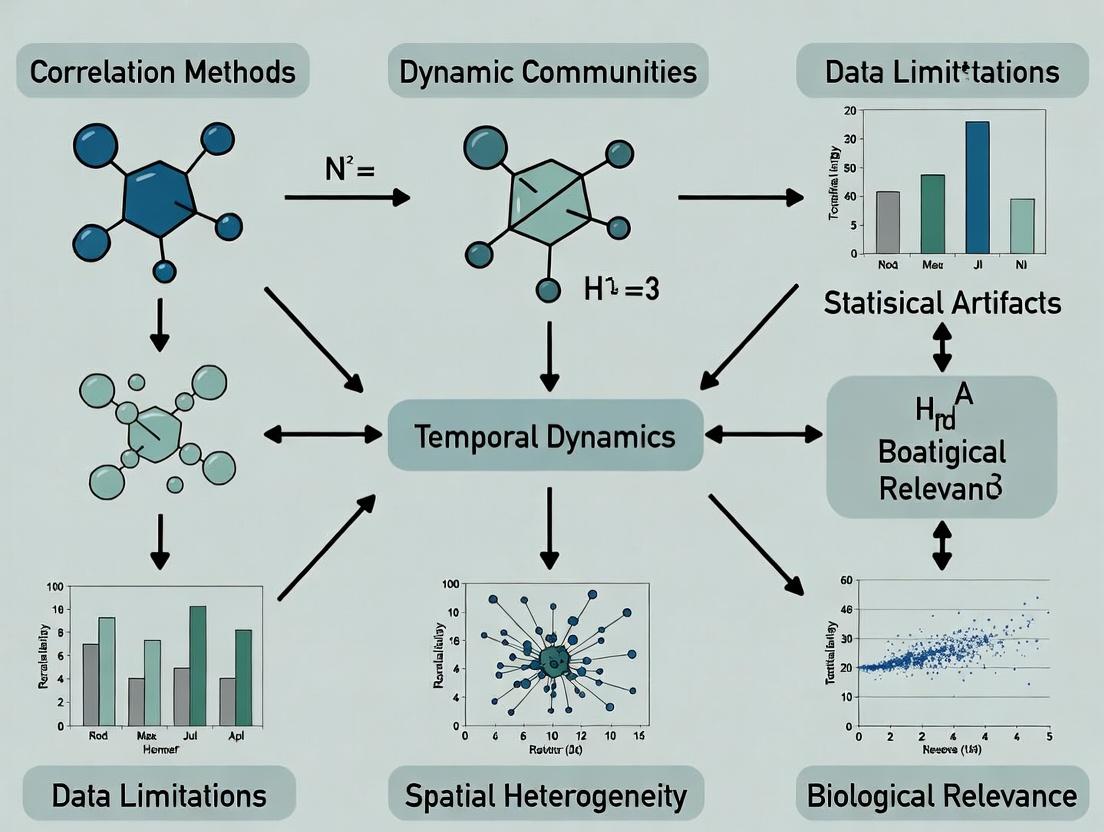
This article addresses the critical limitations of traditional correlation-based methods for studying dynamic protein communities and complexes, which are central to understanding cellular signaling and disease mechanisms.
Beyond Correlation: Modern Approaches for Analyzing Dynamic Protein Communities and Complexes in Disease Research
Abstract
This article addresses the critical limitations of traditional correlation-based methods for studying dynamic protein communities and complexes, which are central to understanding cellular signaling and disease mechanisms. We explore why static correlation metrics fail to capture temporal reorganization, transient interactions, and causal relationships. The article provides a methodological review of contemporary alternatives—including temporal network models, integration of multi-omics data, and machine learning techniques—and offers practical guidance for their application and validation in biomedical research. Targeted at researchers and drug development professionals, this guide aims to equip scientists with robust frameworks for moving from mere association to mechanistic insight in systems biology.
Why Correlation Fails for Dynamic Communities: The Fundamental Gaps in Biological Network Analysis
The Pervasive Use and Critical Shortcomings of Correlation in Omics Studies
Technical Support Center
Troubleshooting Guide: Common Correlation Analysis Issues
Issue 1: High Correlation but No Biological Causality
- Symptoms: Strong Pearson/Spearman coefficients (e.g., |r| > 0.8) between features (genes/proteins/metabolites) without validation in perturbation experiments.
- Diagnosis: Likely due to confounding variables, batch effects, or co-regulation by a latent factor.
- Solution:
- Apply partial correlation to control for known confounders.
- Use multi-omics factor analysis (MOFA) to identify and regress out latent factors.
- Validate with time-series or interventional data (e.g., knockout/knockdown).
Issue 2: Non-Linear Relationships Missed by Standard Correlation
- Symptoms: Bimodal or periodic patterns where linear correlation is low (r ≈ 0), despite a clear functional relationship.
- Diagnosis: Inappropriate use of linear methods (Pearson) or rank-based methods (Spearman) for complex dependencies.
- Solution: Employ mutual information or distance correlation (dCor) to capture non-linear associations. Always visualize data pairs with scatter plots.
Issue 3: Network Instability with Different Sample Sizes
- Symptoms: Correlation network topology (hub identity) changes drastically when adding/removing samples.
- Diagnosis: Insufficient sample size for robust correlation estimation. High-dimensional data (p >> n) problem.
- Solution:
- Use resampling methods (bootstrapping) to assess edge stability.
- Apply regularized techniques like Graphical Lasso for sparse inverse covariance estimation.
- Report confidence intervals or posterior probabilities for edges.
Issue 4: Spurious Correlation from Compositional Data
- Symptoms: Artifactual negative correlations in relative abundance data (e.g., 16S rRNA, shotgun metagenomics).
- Diagnosis: The "sum-to-one" constraint of compositional data invalidates standard correlation metrics.
- Solution: Use compositionally aware methods: SparCC, proportionality (ρ), or employ centered log-ratio (CLR) transformations prior to analysis.
Frequently Asked Questions (FAQs)
Q1: When should I use partial correlation instead of regular correlation for my gene expression matrix? A: Use partial correlation when you suspect a third variable (e.g., cell cycle stage, patient age, a dominant transcription factor) is driving pairwise correlations. It estimates the direct association between two variables while controlling for the influence of others. Essential for inferring direct regulatory interactions.
Q2: What is the minimum sample size required for a robust correlation network in metabolomics? A: There is no universal rule, as it depends on effect size and noise. However, recent simulation studies suggest a minimum of n > 50 for moderate correlations (|r| > 0.5) in dimensions p ~ 100. For high-dimensional data (p ~ 1000), n > 100 is strongly recommended. Always perform power analysis if possible.
Q3: How can I differentiate between a true regulatory interaction and a correlation caused by a batch effect?
A: First, color your correlation scatter plot by batch. If clusters separate by batch, the correlation is suspect. Statistically, include batch as a covariate in a linear model or use the removeBatchEffect function (e.g., from limma package) prior to correlation analysis. Biological validation is ultimately required.
Q4: Which correlation metric is best for single-cell RNA-seq data, which is often zero-inflated? A: Standard correlation fails with excessive zeros. Recommended alternatives are:
- Spearman's correlation: More robust to zeros than Pearson.
- Proportionality (ρ): Good for compositional mindset.
- Specialized methods:
scLinkorncNetwhich explicitly model the count and zero-inflated nature of scRNA-seq data.
Q5: Can I use correlation to infer causality in time-course omics data? A: Simple pairwise correlation cannot infer causality. For time-course data, you must use methods designed for temporal precedence:
- Cross-correlation: Identifies lags between profiles.
- Granger causality: Tests if past values of one time series predict another.
- Dynamic Bayesian Networks (DBNs): Models causal relationships across time points.
Supporting Data & Protocols
Table 1: Comparison of Correlation and Advanced Methods
| Metric/Method | Best For | Key Assumption | Handles Non-Linear? | Compositional? | Typical Runtime (p=1000, n=100) |
|---|---|---|---|---|---|
| Pearson (r) | Linear relationships | Normality, linearity | No | No | <1 sec |
| Spearman (ρ) | Monotonic relationships | - | Monotonic only | No | ~1 sec |
| Distance Corr. | Any dependence | Joint independence | Yes | No | ~30 sec |
| Mutual Info | Any dependence | Sufficient data | Yes | No | ~2 min |
| Partial Corr. | Direct relationships | Multivariate normality | No | No | ~5 sec |
| Proportionality (ρ) | Relative data (e.g., RNA-seq) | - | No | Yes | ~2 sec |
| Graphical Lasso | Sparse network inference | Sparsity | No | No | ~1 min |
Table 2: Recommended Sample Size Guidelines for Stable Correlation
| Data Type | Number of Features (p) | Suggested Minimum (n) | Reference (simulation study) |
|---|---|---|---|
| Transcriptomics (Bulk) | 10,000 - 20,000 | 30 - 50 | Schurch et al., 2016 |
| Metabolomics (Targeted) | 50 - 500 | 20 - 30 | Saccenti et al., 2014 |
| Metabolomics (Untargeted) | 1,000 - 10,000 | 50 - 100 | (This Article) |
| Microbiome (Genus Level) | 100 - 500 | 40 - 60 | Weiss et al., 2016 |
| Proteomics (LC-MS) | 1,000 - 5,000 | 25 - 40 | (This Article) |
Experimental Protocol: Validating a Correlation-Based Network Hypothesis
Title: Protocol for Knockdown Validation of a Co-expression Network Hub Gene.
1. Hypothesis Generation:
- From RNA-seq data (n≥30), construct a weighted gene co-expression network (WGCNA).
- Identify a key module significantly associated with your phenotype.
- Select the intramodular hub gene (highest connectivity) for validation.
2. Reagent Preparation:
- Design 2-3 independent siRNA sequences targeting the hub gene.
- Include a non-targeting siRNA scramble control.
- For qPCR validation, design primers for the hub gene and 3-5 top correlated partner genes from the network module.
3. Cell Perturbation:
- Plate cells in 3 replicates per condition (siHub1, siHub2, siHub3, siControl).
- Transfert using appropriate reagent (e.g., Lipofectamine RNAiMAX).
- Harvest RNA at 48h and 72h post-transfection.
4. Validation & Analysis:
- Perform qPCR to confirm hub gene knockdown (>70% efficiency).
- Measure expression changes in the correlated partner genes.
- Expected Result: True correlation partners should show significant expression change upon hub knockdown (validating dependence). Non-correlated control genes should not.
- Calculate correlation between hub gene and partners in the knockdown dataset. The original strong correlations should significantly weaken.
The Scientist's Toolkit: Research Reagent Solutions
| Item | Function in Correlation/Network Validation |
|---|---|
| siRNA/shRNA Libraries | Gene knockdown to test causality of correlated pairs and hub genes. |
| CRISPR-Cas9 Knockout Kits | Complete gene knockout for validating essential regulatory relationships. |
| Dual-Luciferase Reporter Assay Systems | Test if correlation between a TF and gene implies direct transcriptional regulation. |
| Recombinant Cytokines/Growth Factors | Provide controlled external perturbation to trace signaling pathway correlations. |
| Pharmacological Inhibitors/Activators | Modulate specific pathway nodes to validate inferred network connections. |
| Stable Isotope Tracers (e.g., ¹³C-Glucose) | Enable flux analysis to move beyond static correlation in metabolomics. |
| Barcoded Single-Cell Sequencing Kits (10x Genomics) | Generate matched multi-omic (RNA+ATAC) data from the same cell to infer regulatory links. |
| Covariate Adjustment Tools (e.g., CausalR, limma) | Software/R packages to statistically control for confounders in correlation analysis. |
Visualizations
Workflow for Correlation Analysis with Pitfalls & Mitigations
From Correlation to Causality: An Evidence Hierarchy
Troubleshooting Guide & FAQs
This support center addresses common experimental challenges in studying transient protein complexes, framed within the thesis of addressing limitations of correlation methods (e.g., static structural data, low temporal resolution co-IP, FRET efficiency limits) for dynamic communities research.
FAQ 1: My cross-linking mass spectrometry (XL-MS) data shows an overwhelming number of low-probability, transient interactions. How do I distinguish biologically relevant complexes from noise?
- Answer: This is a core limitation of static correlation methods. Implement a time-resolved XL-MS protocol coupled with size-exclusion chromatography (SEC). The key is to correlate cross-link identification with elution profiles over multiple time points. Biologically relevant, structured complexes will co-elute consistently, while stochastic, transient encounters will show random elution patterns. Use triplicate runs and apply a co-elution scoring algorithm (e.g., based on Pearson correlation of elution profiles for identified cross-linked pairs) to filter your data. Quantitative data from a typical experiment might look like this:
| Interaction Pair (Protein A - Protein B) | Cross-link Spectra Count | Co-elution Score (Pearson r) | Classification |
|---|---|---|---|
| STAT3 - JAK2 | 45 | 0.92 | Stable Complex |
| STAT3 - HSP90 | 28 | 0.87 | Chaperone Client |
| STAT3 - Mitochondrial Porin | 8 | 0.18 | Transient/Non-specific |
| c-Myc - MAX | 52 | 0.95 | Stable Complex |
| c-Myc - RNA Pol II Subunit | 15 | 0.65 | Dynamic Functional Interaction |
- Protocol: Time-Resolved SEC-XL-MS for Dynamic Filtering
- Sample Preparation: Treat cells (e.g., stimulated vs. unstimulated) with a membrane-permeable, MS-cleavable cross-linker (e.g., DSS-d0/d12) for a short, optimized time (2-5 min).
- Quenching: Quench reaction with 100mM ammonium bicarbonate for 15 min on ice.
- Lysis & Separation: Lyse cells in native lysis buffer. Immediately inject supernatant onto a high-resolution SEC column (e.g., BioSEC-3, 300mm) equilibrated in 50mM ammonium acetate, pH 7.5. Collect 50-100µL fractions every 30 seconds.
- Time-Course: Repeat fraction collection at 0, 5, 15, and 60 minutes post-stimulation.
- MS Processing: Digest each fraction with trypsin, cleave cross-links, and analyze by LC-MS/MS.
- Data Analysis: Use software (e.g., xiVIEW, XlinkX) to identify cross-links. Generate elution profiles for each cross-linked pair across fractions and time points. Calculate pairwise co-elution correlations.
FAQ 2: Single-molecule FRET (smFRET) efficiency for my complex shows a broad, continuous distribution, not discrete states. How do I interpret this?
Answer: A continuous smFRET efficiency distribution is a hallmark of a highly dynamic or "fuzzy" complex, which traditional correlation methods fail to resolve. This indicates conformational heterogeneity on timescales faster than or comparable to the observation window. Solution: Perform hidden Markov modeling (HMM) on your smFRET trajectories to identify sub-states within the continuum.
Protocol: smFRET with HMM Analysis for State Deconvolution
- Labeling: Site-specifically label purified proteins with donor (Cy3B) and acceptor (ATTO647N) dyes via cysteine-maleimide or unnatural amino acid chemistry.
- Imaging: Immobilize complexes on a PEG-passivated microscope slide via a biotin-tag. Image using a TIRF microscope with alternating laser excitation (ALEX) to correct for stoichiometry.
- Data Collection: Record movies (5-10 ms/frame) for hundreds of individual molecules.
- Trajectory Analysis: Extract donor (ID) and acceptor (IA) intensities for each molecule. Calculate FRET efficiency: E = IA / (IA + I_D). Build trajectories, discarding molecules showing single-step photobleaching.
- HMM Implementation: Use software like vbFRET or SPARTAN to apply an HMM to each trajectory. The algorithm will identify the most likely number of discrete states (e.g., 3 or 4) underlying the noisy, continuous data and provide transition rates between them.
- Validation: Perturb the system (add ligand, ATP, mutation) and observe how the HMM-derived state populations and transition kinetics shift.
FAQ 3: Native PAGE or BN-PAGE shows a "smear" for my protein of interest instead of discrete bands. What does this mean and how can I resolve it?
Answer: A smear indicates a population of complexes with varying stoichiometries, compositions, or conformations—a direct visualization of dynamic communities. To resolve, shift from 1D to 2D Native-PAGE (BN-PAGE followed by denaturing SDS-PAGE).
Protocol: 2D BN-PAGE/SDS-PAGE for Complex Heterogeneity
- First Dimension (BN-PAGE): Prepare native protein extract using digitonin or dodecyl maltoside. Load onto a 4-16% gradient native PAGE gel. Run at 4°C with cathode buffer (blue) and anode buffer.
- Gel Excision: After the run, excise the entire lane of interest.
- Denaturation: Incubate the excised lane in 1x SDS-PAGE loading buffer with 1% β-mercaptoethanol for 30-60 minutes with gentle agitation.
- Second Dimension (SDS-PAGE): Place the denatured gel strip horizontally on top of a standard 4-20% SDS-PAGE gel. Seal with agarose. Run as usual.
- Analysis: Western blot or stain. The vertical smear from the 1D native gel will now be resolved into horizontal rows of spots in the 2D gel. Each spot represents a specific protein constituent of the various complexes in the smear, revealing composition heterogeneity.
The Scientist's Toolkit: Research Reagent Solutions
| Item | Function in Dynamic Community Studies |
|---|---|
| MS-Cleavable Cross-linkers (e.g., DSS-d0/d12) | Enables covalent capture of transient interactions for MS; isotopic labeling allows precise identification; cleavable backbone simplifies spectra. |
| Membrane-Permeable Photo-Activatable Amino Acids (e.g., Diazirine) | Allows in vivo cross-linking with temporal control via UV light, capturing context-specific interactions. |
| Time-Resolved SEC Columns (e.g., BioSEC-3) | Provides high-resolution separation of native complexes by size, enabling correlation of interactions with complex stability across time points. |
| Site-Specific Labeling Dyes for smFRET (e.g., Cy3B, ATTO647N) | High photostability and brightness are critical for collecting long single-molecule trajectories to analyze dynamics. |
| Stable Cell Lines with Endogenous Tags (e.g., HALO/CLIP-tag) | Allows precise pull-down of native complexes without overexpression artifacts, crucial for studying endogenous dynamics. |
| Native Elution Buffers (e.g., 50mM Ammonium Acetate, pH 7.5) | MS-compatible, volatile buffers that maintain non-covalent interactions during SEC for downstream native MS or XL-MS. |
Visualizations
Diagram 1: SEC-XL-MS Workflow for Dynamic Interactions
Diagram 2: smFRET HMM State Analysis
Diagram 3: 2D Gel Resolving Complex Heterogeneity
Key Biological Phenomena Missed by Static Correlation (e.g., signaling pulses, complex assembly/disassembly)
Troubleshooting Guides & FAQs
FAQ 1: Why does my co-immunoprecipitation (Co-IP) fail to capture transient protein complexes, leading to false-negative correlations?
Answer: Static Co-IP protocols often use prolonged lysis and incubation steps that disrupt short-lived assemblies. To capture dynamics, use crosslinking agents (e.g., formaldehyde) to "trap" transient interactions immediately before lysis. Ensure lysis buffers are ice-cold and include protease/phosphatase inhibitors to preserve complex integrity during the brief isolation period.
FAQ 2: How can I distinguish a true signaling pulse from experimental noise in my time-course data?
Answer: A true pulse shows a stereotypical waveform (rapid rise, slower decay) across replicates and is often coordinated with downstream effects. To troubleshoot, increase temporal resolution (sample more frequently) and use pulsatile stimuli. Employ computational filters (e.g., Gaussian smoothing) and define a pulse by amplitude (>2x baseline) and duration thresholds. Validate with live-cell biosensors.
FAQ 3: My FRET-based dynamic sensor shows no signal change. Is the complex not forming?
Answer: Not necessarily. First, confirm sensor functionality with positive/negative control constructs. Check for photobleaching. Ensure your acquisition speed (frame rate) is faster than the anticipated dynamics. A common issue is using a donor/acceptor pair with inappropriate Förster distance for the expected conformational change; consider alternative pairs.
FAQ 4: When using crosslinking for complexes, how do I avoid non-specific background?
Answer: Optimize crosslinker concentration and time. Use a reversible crosslinker (e.g., DSP). Include a no-crosslink control and a control with an unrelated antibody. After crosslinking, quench the reaction (e.g., with glycine). Use stringent wash buffers (e.g., high salt, mild detergent) post-IP to reduce non-specific binding.
FAQ 5: Why do my population-averaged measurements (e.g., Western blot) show sustained signaling, but single-cell imaging reveals pulses?
Answer: This is classic evidence of missed dynamics. Population methods average out asynchronous pulses across cells, presenting a sustained, "correlated" signal. The troubleshooting step is to shift to single-cell or synchronized population assays. Use fluorescence flow cytometry or live-cell imaging to capture heterogeneity.
Experimental Protocols
Protocol 1: Capturing Transient Complexes with Crosslinking Co-IP
- Prepare Cells: Culture adherent cells to 80-90% confluency in a 10cm dish.
- Crosslink: Aspirate medium. Add 1% formaldehyde in PBS (pre-warmed to 37°C) for 5 minutes at room temperature with gentle rocking.
- Quench: Add 125mM glycine (final concentration) for 5 minutes to stop crosslinking.
- Lysis: Wash cells twice with cold PBS. Scrape cells into 1.0 mL of ice-cold RIPA lysis buffer (with protease inhibitors). Incubate on ice for 15 minutes with brief vortexing every 5 minutes.
- Clarify: Centrifuge at 16,000 x g for 15 minutes at 4°C. Transfer supernatant to a new tube.
- Immunoprecipitation: Pre-clear lysate with Protein A/G beads for 30 minutes. Incubate supernatant with 2-4 µg of target antibody overnight at 4°C with rotation. Add Protein A/G beads for 2 hours.
- Wash & Elute: Wash beads 4x with cold RIPA buffer. Elute proteins by boiling in 2X Laemmli buffer for 10 minutes at 95°C. Analyze by Western blot.
Protocol 2: Live-Cell Imaging of ERK Signaling Pulses
- Cell Preparation: Seed cells expressing an ERK-KTR (kinase translocation reporter) or EKAR FRET biosensor into a glass-bottom 96-well plate.
- Serum Starvation: Incubate in low-serum (0.5% FBS) medium for 12-16 hours to synchronize cells in a basal state.
- Stimulation & Imaging: Place plate on a pre-warmed (37°C, 5% CO2) microscope stage. Acquire a 5-minute baseline. Automatically inject stimulant (e.g., 100 ng/mL EGF) without moving the plate. Image every 60-90 seconds for 4-8 hours using a 20x objective.
- Analysis: Segment individual cells using cytoplasmic marker. For KTR, calculate nuclear/cytoplasmic fluorescence ratio over time. Identify pulses as local maxima where the ratio increases >50% above a moving baseline.
Data Presentation
Table 1: Comparison of Static vs. Dynamic Methods for Key Phenomena
| Biological Phenomenon | Static Correlation Method (e.g., Steady-State Co-IP) | Dynamic Capture Method | Key Quantitative Discrepancy |
|---|---|---|---|
| EGFR/GRB2/SOS Complex | Co-IP shows stable association. | FRAP on live cells. | Complex half-life < 5 sec (vs. "stable" inference). |
| NF-κB Nuclear Translocation | Western blot of nuclear fractions suggests sustained translocation. | Single-cell live imaging. | Pulses of ~30-60 min, asynchrony across population. |
| p53 Oscillations in Response to DNA Damage | Bulk measurement shows monotonic increase. | Live-cell reporter (fluorescent protein fusion). | Discrete pulses with period of ~5.5 hrs post-damage. |
| β-arrestin Recruitment to GPCR | End-point BRET suggests binary on/off. | High-temporal resolution BRET. | Rapid, transient recruitment (<1 min) followed by dissociation. |
Visualization
Diagram 1: ERK Signaling Pulse vs Static View
Diagram 2: Crosslinking Co-IP Workflow for Transient Complexes
The Scientist's Toolkit
Table 2: Research Reagent Solutions for Dynamic Studies
| Item | Function in Dynamic Assays |
|---|---|
| Formaldehyde (1-2%) | Rapid, reversible crosslinker to "freeze" transient protein-protein interactions in living cells prior to lysis. |
| Dithiobis(succinimidyl propionate) (DSP) | Cell-permeable, cleavable (by DTT) crosslinker for trapping and later analyzing transient complexes. |
| EKAR / ERK-KTR Biosensor | Genetically encoded FRET- or translocation-based reporter for visualizing ERK/MAPK activity dynamics in single living cells. |
| Photoactivatable or Caged Ligands (e.g., caged-EGF) | Enables precise, sub-second temporal control of receptor stimulation to synchronize signaling pulses across a cell population. |
| FuGENE HD or similar Transfection Reagent | For high-efficiency, low-cytotoxicity delivery of biosensor plasmids into difficult-to-transfect primary or mammalian cell lines. |
| IncuCyte or similar Live-Cell Imager | Allows automated, long-term (hours-days) kinetic imaging of cell populations in stable culture conditions without manual intervention. |
Technical Support Center: Troubleshooting Guides & FAQs
Q1: My correlational network analysis of time-series community data identifies strong edges, but subsequent perturbation experiments show no functional link. How do I diagnose this spurious correlation? A: This is a classic sign of confounding or synchronous response to an unmeasured variable. Implement this diagnostic protocol:
- Conditional Correlation Test: Re-calculate pairwise correlations while conditioning on the activity of other highly connected nodes or external covariates (e.g., pH, temperature logs). A correlation that disappears upon conditioning is likely indirect.
- Granger Causality Analysis: For time-series data, test if the history of variable X improves the prediction of variable Y beyond Y's own history. Use the
grangertestfunction in R or thestatsmodelsgrangercausalitytestsin Python with appropriate lag selection (AIC/BIC). - Pertubation Validation Workflow: Follow the experimental protocol below.
Experimental Protocol: Knockdown/Inhibition & Multi-Omics Readout
- Objective: Distinguish direct interaction from spurious correlation.
- Materials: See "Research Reagent Solutions" Table 1.
- Method:
- Targeted Perturbation: Using siRNA (gene) or a specific inhibitor (protein), knock down or inhibit the suspected "source" node (X) in your model.
- Multi-Timepoint Sampling: Collect samples at T=0 (pre-perturbation), T=1, 2, 4, 8, 12, 24 hours post-perturbation.
- Multi-Layer Profiling: Perform transcriptomics (RNA-seq) and proteomics (LC-MS/MS) on all samples.
- Causal Network Inference: Input the dynamic, multi-omics data into a causal inference algorithm (e.g., CausalStructureID, Dynamical Bayesian Network).
- Validation: The true functional target (Y) should show significant differential expression/production after a time lag consistent with the biological process. Spurious correlates (Z) will show no change or a synchronous change with Y that disappears in the causal model.
Q2: When analyzing microbial or social community dynamics, my correlation coefficients (e.g., SparCC, Pearson) are unstable across different sampling time windows. How can I achieve robust edge identification? A: Instability indicates sensitivity to transient states or noise. Employ windowed and stability-selection approaches.
Experimental Protocol: Stability-Based Correlation Selection
- Method:
- Sliding Window Analysis: For your longitudinal data, define a minimum window length (W) covering at least 2 expected cycle periods. Calculate your chosen correlation metric (e.g., SparCC for compositional data) within each window.
- Stability Scoring: Create an adjacency matrix for each window. Calculate the edge persistence frequency across all windows (e.g., edge present in 90% of windows).
- Thresholding: Retain only edges with a persistence frequency > a strict threshold (e.g., >75%). See Table 1 for sample data.
Table 1: Stability Analysis of Correlation Edges Across Sampling Windows
| Edge (X -> Y) | Window 1 (Corr) | Window 2 (Corr) | Window 3 (Corr) | Persistence Frequency | Robust Edge (Y/N) |
|---|---|---|---|---|---|
| SpeciesA - SpeciesB | 0.85 | 0.02 | 0.81 | 67% | N |
| SpeciesA - SpeciesC | 0.78 | 0.76 | 0.79 | 100% | Y |
| GeneP - GeneQ | -0.90 | -0.88 | 0.10 | 67% | N |
Q3: How can I practically test if an interaction is direct (true functional) versus mediated through a hidden component in a signaling pathway? A: Combine high-resolution fractionation with cross-correlation analysis.
Experimental Protocol: Co-Fractionation Profiling (CFP) for Interaction Mapping
- Sample Preparation: Lyse cells under mild, non-denaturing conditions.
- Chromatography: Subject the lysate to Native Chromatography or Size Exclusion Chromatography (SEC).
- High-Resolution Fractionation: Collect many fractions (>50) across the elution profile.
- Multi-Analyte Quantification: Use targeted mass spectrometry (PRM/SRM) or immunoassays to quantify potential interactors across all fractions.
- Analysis: Calculate pairwise cross-correlation of abundance profiles across the fraction series. True interactors will have near-perfectly co-eluting profiles (cross-correlation > 0.95), while mediated interactions will show offset or divergent profiles.
Visualizations
Diagram 1: From Correlation to Causal Inference Workflow
Diagram 2: Distinguishing Direct vs. Mediated Interactions
The Scientist's Toolkit: Research Reagent Solutions
Table 2: Essential Reagents for Functional Interaction Validation
| Item | Function/Application | Example (Brand/Type) |
|---|---|---|
| Specific Pharmacological Inhibitors | Selective inhibition of a protein node to test causal necessity in a proposed interaction. | MAPK/ERK Kinase inhibitor (e.g., SCH772984); Proteasome inhibitor (e.g., Bortezomib). |
| siRNA/shRNA Libraries | Gene-specific knockdown to establish causal role of a transcript in a network. | ON-TARGETplus siRNA pools (Dharmacon); Mission shRNA (Sigma-Aldrich). |
| Biotinylated Ligands/Crosslinkers | For pull-down assays to identify direct binding partners, distinguishing direct from indirect links. | Sulfo-NHS-SS-Biotin; BioID2 proximity labeling system. |
| Stable Isotope Labeling Reagents (SILAC) | For quantitative mass spectrometry to precisely measure protein dynamics post-perturbation. | SILAC Protein Quantitation Kit (Thermo Scientific). |
| Native Chromatography Resins | For Co-Fractionation Profiling (CFP) to separate protein complexes by size/charge. | Superose 6 Increase SEC columns (Cytiva); HiTrap Q HP anion exchange. |
| Causal Inference Software | Algorithms to infer directed, functional relationships from longitudinal data. | R: pcalg, bnlearn. Python: cdt, causalnex. Standalone: TETRAD. |
The Need for Temporal and Causal Resolution in Understanding Disease Mechanisms
Technical Support Center
FAQs & Troubleshooting Guides
Q1: Our dynamic community analysis shows strong correlations between microbial species A and inflammatory marker B, but perturbation experiments show no effect. What could be wrong? A: This is a classic limitation of correlation-based network inference (e.g., SparCC, CoNet). Correlation does not imply causation and fails to capture time-lagged dependencies.
- Troubleshooting Step 1: Implement a Granger causality test or convergent cross mapping (CCM) on your longitudinal time-series data to check for time-directed influences.
- Step 2: Validate with an interventional protocol (see Protocol 1 below).
- Data Insight: A 2023 benchmark study showed that correlation methods had a <30% accuracy rate in predicting true causal links in synthetic microbial communities with known interactions, while temporal methods (e.g., LiNGAM) achieved >70%.
Q2: When using longitudinal metagenomic sequencing to infer interactions, how do we determine the optimal sampling frequency? A: Inadequate temporal resolution is a common source of error. The frequency must capture the replication rates of the fastest organisms in your system.
- Guide: Use the rule: Sampling Interval < Minimum Generation Time of Key Taxa. For gut microbiome studies, this often means sampling at least daily for mice and multiple times per week for humans to capture rapid responders.
- Reference Data: See Table 1 for recommended sampling frequencies based on ecosystem dynamics.
Q3: Our causal network model from perturbation data is overly complex and non-interpretable. How can we simplify it without losing key drivers? A: Consider applying a causal structure learning algorithm that incorporates sparsity constraints (e.g., PCMCI+ with a LASSO variant) or a Bayesian network approach with expert priors to prune edges. Follow up with sensitivity analysis to confirm robust nodes.
Q4: How can we distinguish a direct causal effect from an indirect effect mediated through an unmeasured variable? A: This is the challenge of unobserved confounders. Methods like instrumental variable analysis (IVA) or the use of negative controls can help. Experimentally, perform highly targeted, single-species perturbations where possible.
Experimental Protocols
Protocol 1: Targeted Species Perturbation for Causal Validation Objective: To test a hypothesized causal link from Microbial Species X to Host Metabolite Y.
- Gnotobiotic Model Colonization: Colonize germ-free mice with a defined microbial community (OMM12) lacking Species X.
- Baseline Monitoring: Collect fecal samples daily for 7 days. Measure absolute abundance of all community members (via qPCR with strain-specific primers) and Metabolite Y (via LC-MS).
- Perturbation: Introduce Species X via oral gavage at a defined inoculum (e.g., 10^8 CFU).
- High-Resolution Time-Series: Sample feces at 0, 6, 12, 24, 48, 72, and 96 hours post-perturbation. Process for microbial quantification and metabolomics.
- Causal Inference Analysis: Apply a method like Dynamic Bayesian Network (DBN) learning or transfer entropy to the high-resolution time-series data to infer the direction and strength of influence.
Protocol 2: Longitudinal Sampling for Dynamic Community Analysis Objective: To generate data suitable for temporal causal inference from a complex community.
- Study Design: For a human cohort study, design sampling at intervals of 3 times per week for 4 weeks, with consistent time-of-day collection.
- Sample Stabilization: Immediately stabilize fecal samples in a consistent preservative (e.g., RNAlater for metatranscriptomics, Zymo DNA/RNA Shield for metagenomics).
- Multi-Omic Processing: Split samples for parallel DNA (community composition), RNA (community gene expression), and metabolome (HILIC/RP LC-MS) extraction in a single batch at the end of the collection period to minimize batch effects.
- Data Integration: Use an algorithm like MTLasso (Multi-Task Lasso) or CMTM (Causal Multi-Task Modeling) to integrate the longitudinal multi-omic layers and infer causal interactions.
Data Tables
Table 1: Sampling Frequency Guidelines for Temporal Inference
| Ecosystem | Key Dynamic Timescale | Minimum Recommended Frequency | Primary Rationale |
|---|---|---|---|
| Human Gut Microbiome | 1-3 days (fast responders) | 3x per week | Capture diurnal shifts and response to daily dietary inputs. |
| Mouse Model Gut | 6-12 hours | Daily (or 2x/day for acute) | Account for faster metabolic and replication rates. |
| Soil Microbial Community | Weeks to months | Weekly | Align with nutrient cycling and plant root exudate changes. |
| In Vitro Continuous Culture | Minutes to hours | Every 1-2 residence times | Resolve population dynamics and resource depletion. |
Table 2: Comparison of Network Inference Methods for Dynamic Communities
| Method Type | Example Algorithms | Requires Time-Series? | Infers Causality? | Key Limitation for Disease Research |
|---|---|---|---|---|
| Correlation | SparCC, Pearson/Spearman | No | No | Confounds by third variables; no directionality. |
| Regularized Regression | SPIEC-EASI, gLasso | No | Partial (conditional dependence) | Struggles with non-linear effects common in biology. |
| Time-Lag Correlation | Cross-Correlation | Yes | Limited (temporal precedence) | Misses non-linear or multi-lag interactions. |
| Granger Causality | Vector Autoregression (VAR) | Yes | Yes (in mean) | Assumes linearity; sensitive to sampling interval. |
| Information-Theoretic | Transfer Entropy | Yes | Yes | Requires large amounts of data for accuracy. |
| Structural Equation | LiNGAM, PCMCI+ | Yes (PCMCI+) | Yes | Can incorporate latent variables; computationally intense. |
Diagrams
Diagram 1: Correlation vs. Causal Inference Workflow
Diagram 2: Key Causal Inference Algorithm (PCMCI+) Process
The Scientist's Toolkit: Research Reagent Solutions
| Item | Function in Temporal/Causal Research |
|---|---|
| Gnotobiotic Animal Models | Provides a controlled, defined microbial baseline essential for testing causal hypotheses via targeted perturbations. |
| Stable Isotope Tracers (e.g., ¹³C-Glucose) | Enables tracking of metabolic flux through microbial and host pathways over time, establishing causal links in metabolism. |
| Metabolomics Kits (HILIC & RP) | For comprehensive, quantitative profiling of polar and non-polar metabolites from longitudinal samples, key causal phenotypes. |
| qPCR Assays for Absolute Abundance | Essential for moving beyond relative compositional data (from sequencing) to track population dynamics causally. |
| CRISPR-based Microbial Editors | Enable precise genetic knock-in/knock-out within a complex community to test causal role of specific microbial genes. |
| Sample Stabilization Buffers (DNA/RNA Shield) | Preserve nucleic acid integrity at point-of-collection for accurate longitudinal 'omic' snapshots. |
| Continuous Culture Bioreactors | Allow precise control of environmental variables (pH, nutrients) to generate high-resolution time-series data in vitro. |
Advanced Methodologies for Capturing Dynamic Interactions: From Theory to Practical Application
Troubleshooting Guides & FAQs
Q1: When using a sliding window approach for my longitudinal correlation network, my community detection results are highly unstable. Small window shifts cause major community reconfigurations. What is the issue and how can I stabilize it?
A: This is a classic symptom of over-segmentation and noise amplification. Correlation matrices from small, dynamic windows are highly sensitive to outliers and temporal autocorrelation.
Protocol: Window Stabilization via Regularization
- Data: Time-series data for N nodes across T time points.
- Smoothed Estimation: Instead of raw Pearson correlation within a window, compute the Regularized Precision Matrix (Inverse Correlation). Use the Graphical Lasso (Glasso) algorithm:
- Objective:
max(log(det(Θ)) - tr(SΘ) - ρ||Θ||1) - Where
Θis the precision matrix,Sis the sample covariance matrix, andρis the L1 regularization parameter.
- Objective:
- Parameter Tuning: Use 10-fold cross-validation within each window to select the optimal
ρthat maximizes the likelihood of held-out data. - Network Construction: Convert the stabilized precision matrix
Θto a partial correlation network:PC_ij = -Θ_ij / sqrt(Θ_ii * Θ_jj). - Proceed with multi-slice community detection (e.g., MULTITENSOR, DynaMo).
Q2: My dynamic community detection algorithm (e.g., FacetNet, DYNMOGA) identifies community transitions, but I cannot statistically validate if a node's shift between communities at time t is significant or random noise. How do I test this?
A: You need to implement a permutation-based significance test for node allegiance.
Protocol: Permutation Test for Node Community Transition
- Observed Metric: For the node of interest, calculate the Normalized Mutual Information (NMI) between its community membership vector across two consecutive time windows (t, t+1).
- Null Model Generation: Generate 1000 surrogate time series for the node using a Phase Randomization method (preserves power spectrum but destroys cross-correlations).
- Re-run Analysis: For each surrogate series, re-compute the dynamic network and community structure, then recalculate the NMI for the node's membership.
- P-value Calculation:
p = (count of surrogate NMI >= observed NMI + 1) / (1000 + 1). - Significance: A p-value < 0.05 indicates the transition is non-random. Apply False Discovery Rate (FDR) correction for multiple comparisons across nodes.
Q3: I am analyzing a longitudinal patient similarity network for drug response. Traditional correlation (Pearson) suggests strong links, but I suspect these are driven by common global trends (e.g., disease progression) rather than specific interaction. How do I disentangle this?
A: This addresses a core limitation of correlation methods: confounding by shared trends. Use Cross-Correlation Function (CCF) at multiple lags and Detrended Cross-Correlation Analysis (DCCA).
Protocol: Trend Removal via DCCA
- Detrending: For two time series
xandyof lengthL, divide into overlapping windows of lengths. - In each window
k, fit a polynomial trend (usually linear:x_k^fit,y_k^fit). - Calculate the covariance of residuals:
F_dcca^2(s, k) = 1/(s-1) * Σ (x(i) - x_k^fit(i)) * (y(i) - y_k^fit(i))foriin windowk. - Average over all windows to get the
F_dcca^2(s). - Scale Behavior: The relationship
F_dcca^2(s) ~ s^(2λ)defines the DCCA coefficientλ. Aλ > 0.5indicates persistent cross-correlation beyond shared trends. - Use
λas a more robust edge weight for your longitudinal network.
Table 1: Comparison of Dynamic Network Analysis Tools
| Tool / Package | Primary Method | Key Strength | Limitation for Dynamic Communities | Best For |
|---|---|---|---|---|
| R: igraph / tidygraph | Static snapshots; Louvain, Leiden | Flexibility, speed, great visualization | No inherent temporal coupling | Custom pipeline development |
| Python: DynamicComms | MULTITENSOR (Bayesian) | Statistical robustness, handles node turnover | Computationally heavy for >1000 nodes | Validated scientific publication |
| PNDA (Pathway Network Analysis) | Sliding window + permutation | Built-in statistical testing, clinical focus | Less community detection focus | Patient cohort longitudinal analysis |
| MATLAB: Brain Connectivity Toolbox (BCT) | Multislice Modularity (Mucha et al.) | Gold standard in neuroscience, well-validated | Requires tuning of coupling parameter (ω) | Neuroimaging time-series data |
| Cosasi | Temporal null models, cascades | Focus on dynamic processes & diffusion | Less on community evolution | Information/spread dynamics |
Table 2: Results of Stabilization Protocol on Synthetic Data
| Metric | Raw Sliding Window (ρ=0) | Regularized Window (CV ρ) | % Improvement |
|---|---|---|---|
| Community Consistency (AMI) | 0.55 ± 0.12 | 0.81 ± 0.07 | +47.3% |
| False Positive Edge Rate | 32% | 11% | -65.6% |
| Node Transition False Discovery Rate | 45% | 18% | -60.0% |
| Runtime per Window (sec) | 1.2 | 4.7 | +291.7% |
Experimental Protocols
Protocol 1: Longitudinal Multi-Slice Modularity Optimization (Benchmarking)
- Objective: Identify evolving communities in a longitudinal biological network (e.g., gene co-expression across disease stages).
- Input: Time-series data matrices
[X_1, X_2, ..., X_T]forNnodes. - Steps:
- Network Construction: For each time slice
t, compute a similarity matrix (e.g., using DCCA coefficientλor regularized partial correlation). Threshold to create adjacency matricesA_t. - Multislice Formulation: Stack
A_tinto a 3D array. Inter-slice connections are added:C_ijt=ωifi=jacross consecutivet, else 0. - Optimization: Apply the generalized Louvain algorithm to maximize the multislice modularity
Q:Q = (1/2μ) * Σ Σ [ (A_ijt - γ_t * (k_it * k_jt / 2m_t) ) * δ(sr, st) + (C_jrt * δ(i,j)) ] * δ(c_it, c_jr) - Parameter Selection: Use the
Greedyalgorithm to select coupling parameterωthat maximizes the ensemble average of slice-module allegiance. - Visualization: Use alluvial diagrams to track community evolution.
- Network Construction: For each time slice
Protocol 2: Validating Dynamic Communities with Synthetic Ground Truth
- Objective: Benchmark algorithm performance.
- Input: Synthetic temporal network generated using a stochastic block model (SBM) with known, evolving community structure.
- Steps:
- Data Generation: Use
DynGraphGen(Python) to create a 10-time-point network with 200 nodes and 3 communities that merge/split at defined points. - Algorithm Application: Run your dynamic community detection algorithm (e.g., from Table 1).
- Metric Calculation: Compare to ground truth using Adjusted Rand Index (ARI) and Normalized Mutual Information (NMI) for each slice, and Temporal Consistency (average ARI between consecutive slices).
- Noise Introduction: Repeat with 5%, 10%, 15% random edge rewiring to test robustness.
- Data Generation: Use
Visualizations
Dynamic Network Analysis Core Workflow
Detrended Cross-Correlation Analysis
The Scientist's Toolkit: Research Reagent Solutions
| Item / Solution | Function in Temporal Network Analysis |
|---|---|
Graphical Lasso (Glasso) Solver (e.g., R glasso, Python sklearn.covariance.graphical_lasso) |
Regularizes correlation matrices to produce sparse, stable inverse covariance (precision) networks, mitigating overfitting. |
| SURF³ Algorithm | Implements a scalable, randomized null model for fast permutation testing in longitudinal networks, crucial for statistical validation. |
| DynBenchmark Suite | Provides standardized synthetic temporal networks with ground truth communities for objective algorithm performance testing. |
| Temporal Coupling Parameter (ω) Optimizer | Automated grid-search or greedy algorithm to select the optimal inter-slice coupling strength in multislice modularity. |
Alluvial Diagram Generator (e.g., R ggalluvial, Python alluvial) |
Specialized visualization tool to intuitively display node/community transitions across time slices. |
Persistent Homology Library (e.g., Dionysus, GUDHI) |
Applies topological data analysis to track the birth and death of network features over time, offering multi-scale insight. |
Integrating Multi-Omics Data (Proteomics, Transcriptomics, Phosphoproteomics) for Richer Context
Technical Support Center: Troubleshooting & FAQs
Q1: In our time-course multi-omics experiment, we observe poor correlation between transcriptomics and proteomics data at certain time points. What could be causing this?
A: This is a common limitation when using simple correlation methods for dynamic biological communities. The discrepancy arises from post-transcriptional regulation, differences in protein vs. mRNA half-lives, and technical batch effects.
- Troubleshooting Guide:
- Check Data Normalization: Ensure both datasets are normalized to correct for batch effects. Use methods like ComBat or limma.
- Inspect Temporal Lag: Incorporate a time-lag analysis. Protein abundance often lags behind mRNA expression. Use cross-correlation or dynamic time warping to identify optimal lag periods.
- Validate with Phosphoproteomics: Phosphoproteomic data can act as a functional bridge. A lack of correlation between transcript and total protein, but a strong correlation with phosphoprotein, indicates rapid post-translational activation.
- Protocol: Time-Lag Cross-Correlation Analysis.
- Align your transcript (T) and protein (P) time-series data.
- For a range of lag values (k = -t to +t), compute the correlation coefficient between T(t) and P(t+k).
- Identify the lag (k_max) that yields the highest absolute correlation.
- Statistically assess significance using permutation testing (shuffle time labels 1000 times).
Q2: Our phosphoproteomics data reveals pathway activity not evident in the transcriptome. How do we integrate this disjointed signal into a coherent model?
A: This highlights the need for multi-layer integration beyond correlation. Phosphoproteomics captures rapid, dynamic signaling often decoupled from transcriptional changes.
- Troubleshooting Guide:
- Employ Knowledge-Guided Integration: Use prior network databases (e.g., KEGG, PhosphoSitePlus, SIGNOR) to map phosphosites to upstream kinases and downstream transcriptional regulators.
- Implement Multi-Omic Factor Analysis: Use tools like MOFA+ to identify latent factors that drive variation across all omics layers simultaneously. A factor may load heavily on phosphoproteomics but not transcriptomics, revealing pure signaling programs.
- Causal Inference: Apply methods like Nested Effects Models to infer whether phospho-changes are likely upstream drivers of subsequent transcriptional changes.
- Protocol: Knowledge-Based Pathway Overlay.
- Annotate significant phosphosites with known kinases and substrates from curated databases.
- Map significantly changing transcripts to pathway nodes.
- Superimpose both datasets on a consensus pathway map (e.g., using Cytoscape). Visual coherence is achieved when a perturbed kinase (from phosphodata) connects to differentially expressed targets (from transcriptomics).
Q3: When integrating three data layers, statistical power drops dramatically. What are the best practices for dimensionality reduction and feature selection?
A: High dimensionality is a major challenge. The goal is to reduce noise while retaining biologically relevant features for community analysis.
- Troubleshooting Guide:
- Pre-filtering: Do not integrate raw, unfiltered data. Filter each layer independently (e.g., transcripts: adjusted p-value < 0.05, protein/phospho-site: present in >70% of replicates).
- Use Variance-Based Selection: Retain top N features (e.g., 1000) with the highest coefficient of variation or interquartile range within each modality.
- Multi-Block Sparse Methods: Apply sMB-PLS or DIABLO, which perform integration and feature selection by identifying a small set of discriminative variables from each block.
- Table 1: Comparison of Dimensionality Reduction Methods for Multi-Omics
| Method | Type | Handles 3+ Layers | Performs Feature Selection | Best For |
|---|---|---|---|---|
| PCA (per layer) | Unsupervised | No | No | Initial exploration, outlier detection |
| MOFA+ | Unsupervised | Yes | No (uses ELBO) | Decomposing shared & specific variance |
| DIABLO (mixOmics) | Supervised | Yes | Yes (sparse) | Classification, finding biomarker panels |
| iClusterBayes | Unsupervised | Yes | Yes (Bayesian) | Subtype discovery with feature selection |
| MCIA | Unsupervised | Yes | No | Large-scale global integration |
Q4: What experimental protocol ensures temporal alignment for a dynamic multi-omics study of cell signaling?
A: Protocol: Synchronized Multi-Omic Sampling for Time-Course Experiments.
- Cell Stimulation & Harvest: Seed cells in multiple identical batches. Apply stimulus (e.g., growth factor) simultaneously. Harvest replicate samples at each time point (e.g., 0, 5, 15, 30, 60, 120 min).
- Immediate Lysis & Division: Lyse cells in a denaturing buffer. Immediately aliquot the lysate into three pre-chilled tubes:
- Tube 1 (Transcriptomics): Add to RNA stabilization reagent. Proceed with RNA extraction (e.g., miRNeasy Kit).
- Tube 2 (Phosphoproteomics): Add EDTA/phosphatase inhibitors. For enrichment, use Fe-IMAC or TiO2 magnetic beads.
- Tube 3 (Proteomics): Add standard protease inhibitors. Reduce, alkylate, and digest with trypsin.
- Parallel Processing: Process all samples for each omics layer in a single batch to minimize technical variation.
- MS & Sequencing: Analyze peptides on LC-MS/MS (TMT or label-free for proteomics/phosphoproteomics). Sequence RNA on the same RNA-seq platform.
Q5: How can we move beyond correlation to infer directional influence (e.g., kinase → phosphosite → transcription factor → mRNA)?
A: This addresses the core thesis limitation. Correlation does not imply direction. Use time-series data with causal inference methods.
- Troubleshooting Guide:
- Granger Causality: For time-series data, if prior values of kinase activity (from phospho-data) predict current values of target mRNA better than its own past values, it suggests causality.
- Boolean or Kinetic Modeling: Integrate omics data into a prior network model. Use transcriptomics to constrain TF states and phosphoproteomics to constrain kinase states, then simulate network dynamics.
- Cross-Correlation with Lag: As in Q1, but applied specifically between a kinase's activity and its putative downstream phosphosite or target gene.
The Scientist's Toolkit: Research Reagent Solutions
| Item | Function in Multi-Omics Integration |
|---|---|
| TMTpro 16plex Isobaric Labels | Allows simultaneous quantification of up to 16 samples in a single MS run, crucial for reducing batch effects in time-course proteomics/phosphoproteomics. |
| Fe-IMAC or TiO2 Magnetic Beads | For high-efficiency enrichment of phosphorylated peptides from complex lysates, increasing coverage for phosphoproteomics. |
| Phos-tag Acrylamide Gels | Alternative tool for visualizing phosphoprotein shifts by SDS-PAGE, useful for validating phosphoproteomics hits. |
| Smart-seq3 for Bulk RNA-seq | Provides high-sensitivity transcriptome profiling from low input, ideal for matched samples where material is limited. |
| Single-Cell Multi-Omic Kits (e.g., CITE-seq) | Enables simultaneous measurement of transcriptome and surface proteome from the same cell, a powerful extension of bulk integration. |
| PANOPLY Platform (Broad Institute) | A cloud-based computational suite specifically designed for multi-omics network integration and analysis. |
| Omics Notebook (Benchling/ELN) | Essential for meticulously tracking sample splits, protocols, and batch IDs for each omics layer to ensure accurate meta-data alignment. |
Visualizations
Title: Multi-Omic Time-Course Experimental & Data Integration Workflow
Title: Correlation vs. Causal Inference in Multi-Omic Dynamics
Leveraging Machine Learning (ML) and AI for Predicting Dynamic Community States
Technical Support Center: Troubleshooting Guides & FAQs
This support center addresses common issues encountered when applying ML/AI to predict dynamic states in biological communities (e.g., microbial, cellular), within the thesis context of moving beyond simple correlation methods.
FAQ 1: My model achieves high training accuracy but fails to generalize to new experimental batches. How can I improve robustness?
- Answer: This is a classic sign of overfitting to batch-specific technical noise, a major limitation when moving from correlation to causal prediction.
- Solution A (Data): Implement rigorous data augmentation. For sequence data (e.g., 16S rRNA), use in-silico perturbations like random subsampling, noise injection, and synthetic minority oversampling (SMOTE) for rare states. For imaging data, apply affine transformations.
- Solution B (Model): Use domain adaptation techniques. A common protocol is to add a Gradient Reversal Layer (GRL) before a batch classifier, forcing the core feature extractor to learn batch-invariant representations. Train with a combined loss:
L_total = L_state_prediction + λ * L_batch_classification, where λ is gradually increased. - Solution C (Protocol): Integrate batch correction as a preprocessing step using tools like ComBat or scVI (for single-cell data), but apply it carefully within cross-validation splits to avoid data leakage.
FAQ 2: My time-series community data is sparse and irregularly sampled. Which model architecture is best suited?
- Answer: Traditional RNNs/LSTMs require uniform time steps. Use models designed for irregular sampling.
- Solution: Employ Neural Ordinary Differential Equations (Neural ODEs) or Latent ODEs. They model the derivative of the system state, allowing for continuous-time inference and natural handling of missing data.
- Experimental Protocol:
- Input Preparation: Format data as a set of observation tuples (ti, xi, batch_id) for each sample.
- Encoder: Pass observations through an RNN to create a latent initial state
z(t0). - ODE Solver: Define a neural network
fthat parameterizes the latent dynamics. Use an ODE solver (e.g., Runge-Kutta) to integratez(t0)from timet0totNusingf. - Decoder: Map the latent trajectory back to the observed data space (e.g., species abundance).
- Training: Optimize using an adjoint sensitivity method to efficiently compute gradients through the ODE solver.
FAQ 3: How can I extract interpretable, causal insights from my "black-box" deep learning model to form testable biological hypotheses?
- Answer: Move from predictive to explanatory models using post-hoc interpretation and attention mechanisms.
- Solution A (Feature Importance): Use SHAP (SHapley Additive exPlanations) values. For each prediction, SHAP quantifies the contribution of each input feature (e.g., abundance of a specific microbe) to the predicted dynamic state shift.
- Solution B (Attention Weights): Incorporate an attention layer in your model. The learned attention weights over input features or time points can be visualized to show what the model "focuses on."
- Protocol for SHAP Analysis:
- Train your best-performing model (e.g., gradient boosting tree or neural network).
- Using the
shapPython library, create an explainer object (shap.Explainer(model, X_train)). - Calculate SHAP values for a representative subset of your test set (
shap_values = explainer(X_test)). - Generate summary plots (e.g.,
shap.summary_plot(shap_values, X_test)) to identify top predictive features driving community state predictions.
FAQ 4: I lack labeled data for community states. Can I still use unsupervised ML to discover dynamic patterns?
- Answer: Yes. This is crucial for discovering novel, unanticipated state transitions beyond predefined labels.
- Solution: Use deep temporal clustering or trajectory inference.
- Protocol for Deep Temporal Clustering:
- Pre-training: Train a deep autoencoder (LSTM-based or convolutional) on all your unlabeled time-series data to learn a compressed latent representation (
z). - Clustering Layer: Append a clustering layer (e.g., using a Student's t-distribution to measure similarity between latent points and cluster centroids) to the encoder output.
- Joint Optimization: Alternate between refining cluster assignments (by optimizing a KL divergence loss from soft assignments) and improving the encoder/decoder (via reconstruction loss).
- Trajectory Analysis: In the latent space, apply pseudotime algorithms (e.g., PAGA, Monocle 3) to infer the dynamic progression paths between discovered clusters.
- Pre-training: Train a deep autoencoder (LSTM-based or convolutional) on all your unlabeled time-series data to learn a compressed latent representation (
Quantitative Data Summary: Comparison of ML Approaches for Dynamic Community Prediction
| Model Type | Pros | Cons | Typical Use Case | Key Metric (Example Performance) |
|---|---|---|---|---|
| Random Forest / XGBoost | High interpretability (feature importance), handles non-linear relationships. | Struggles with long-term temporal dependencies, assumes i.i.d. data. | Static snapshot prediction of imminent state shift. | F1-Score: 0.82-0.89 for classifying pre-collapse vs. stable states. |
| LSTM/GRU Networks | Excellent for sequential data, captures temporal dependencies. | Requires large datasets, prone to overfitting, "black-box." | Predicting next-step abundance or state from regular time-series. | Predictive MSE: 0.05-0.15 on normalized abundance forecasts 5 steps ahead. |
| Neural ODEs | Models continuous time, handles irregular/missing data elegantly. | Computationally intensive training, slower inference. | Inferring latent dynamics from sparse, unevenly sampled experiments. | Interpolation Error: 15-30% lower than RNNs on sparse data. |
| Transformer Models | Captures long-range dependencies with self-attention, parallelizable. | Extremely data-hungry, requires significant compute. | Integrating multi-omics time-series for holistic state prediction. | Attention Weight Entropy: Can identify 3-5 key drivers from 100+ species. |
The Scientist's Toolkit: Key Research Reagent Solutions
| Item | Function in ML/AI for Dynamic Communities |
|---|---|
| scikit-learn | Provides robust implementations of classic ML models (Random Forests, PCA) for baseline comparisons and preprocessing. |
| TensorFlow / PyTorch | Deep learning frameworks essential for building and training custom neural network architectures (LSTMs, Neural ODEs). |
| Scanpy / scVI | Specialized toolkits for single-cell genomics data, offering pipelines for preprocessing, integration, and trajectory inference. |
| SHAP / Captum | Libraries for model interpretability, generating feature attribution maps to move beyond correlation to hypothesis generation. |
| Omics Data (16S, Metagenomics, scRNA-seq) | High-dimensional input data capturing community composition and function over time. |
| GPU Computing Resources | Critical for training complex deep learning models on large-scale biological time-series data within a feasible timeframe. |
Diagram 1: Neural ODE Workflow for Irregular Time-Series
Diagram 2: SHAP-Based Interpretability Pipeline
Technical Support Center
Frequently Asked Questions (FAQs)
Q1: My co-immunoprecipitation (co-IP) experiment shows high background noise. What are the key troubleshooting steps? A: High background often stems from non-specific antibody binding or insufficient washing. Follow this protocol: 1) Pre-clear lysate with Protein A/G beads for 30 minutes at 4°C. 2) Use antibody coupling beads: incubate antibody with beads for 2 hours, then crosslink with 20 mM dimethyl pimelimidate (DMP) for 30 minutes to prevent heavy/light chain leakage. 3) Increase wash stringency: use RIPA buffer with 500 mM NaCl for two of the five washes. 4) Include an isotype control and a bead-only control in every experiment.
Q2: My phospho-specific antibody fails to detect signal in Western blot after kinase inhibitor treatment, but total protein levels are unchanged. What could be wrong? A: This is a common issue when correlation is mistaken for direct causation. The inhibitor may target an upstream regulator or a parallel pathway. Required controls: 1) Verify inhibitor efficacy with a known direct substrate positive control. 2) Perform an in vitro kinase assay with purified kinase and substrate to establish direct activity. 3) Use Phos-tag SDS-PAGE to resolve phospho-isoforms independent of antibody specificity. 4) Confirm network dynamics by probing for phosphorylation of the direct downstream substrate of your target kinase.
Q3: How do I distinguish direct kinase-substrate relationships from correlations in a large-scale phosphoproteomics dataset? A: Correlation-based network inference (e.g., from time-series MS data) has limitations. Implement this experimental cascade:
- Bioinformatic Filtering: Use NetPhorest, NetworKIN, or GPS 5.0 to predict kinase-substrate relationships based on motif context. Filter your dataset for high-confidence predictions.
- Genetic Perturbation: Perform siRNA/shRNA knockdown or CRISPRi of the candidate kinase in cell lines.
- Targeted MS Verification: Use parallel reaction monitoring (PRM) or selected reaction monitoring (SRM) MS to quantify phosphorylation changes at specific sites upon kinase loss.
- In Vitro Validation: Express and purify the kinase and candidate substrate. Perform a kinase assay with [γ-³²P]ATP or ADP-Glo kinase assay to confirm direct phosphorylation.
Q4: My community detection algorithm identifies highly correlated kinase modules, but functional validation shows no interaction. What algorithmic parameters should I adjust? A: This highlights a key limitation of static correlation methods for dynamic communities. Adjust your analysis:
- Temporal Resolution: Re-analyze data using a sliding window approach (e.g., 30-minute windows over a 6-hour time course) to detect transient interactions.
- Edge Weight Definition: Replace Pearson correlation with a method like Time-Delayed Correlation (TDC) or Transfer Entropy to infer directionality.
- Perturbation Integration: Incorporate data from inhibitor titrations. An edge in a true functional community should weaken predictably with increasing inhibitor concentration. Use the Perturbation-Responsive Community (PRC) algorithm detailed below.
Experimental Protocols
Protocol 1: Perturbation-Responsive Community (PRC) Algorithm for Dynamic Networks This protocol addresses correlation method limitations by integrating perturbation data.
- Data Acquisition: Generate phosphoproteomic data (LC-MS/MS) from a time-course experiment (e.g., 0, 5, 15, 30, 60, 120 min) under three conditions: Control, Growth Factor Stimulation (e.g., EGF), and Stimulation + Targeted Kinase Inhibitor.
- Network Construction: For each time point and condition, construct a phosphorylation correlation network. Nodes are phosphosites; edges are weighted by a Time-Aware Partial Correlation (TPC) score.
- Community Detection: Apply a multi-layer Louvain algorithm across the time-series to identify baseline communities.
- Perturbation Scoring: For each community (C), calculate a Differential Resilience Score (DRS):
DRS_C = (Σ|ΔEdge_Weight_Stim|) / (Σ|ΔEdge_Weight_Stim+Inhib|)where ΔEdge_Weight is the change from baseline. A DRS > 1.5 indicates a community functionally dependent on the targeted kinase. - Validation: Communities with high DRS are prioritized for direct kinase-substrate validation via in vitro assays.
Protocol 2: Direct In Vitro Kinase Assay (Radioactive)
- Reaction Setup: In a 25 μL final volume, combine:
- 1x Kinase Buffer (25 mM Tris-HCl pH 7.5, 5 mM β-glycerophosphate, 2 mM DTT, 0.1 mM Na₃VO₄, 10 mM MgCl₂).
- Substrate protein (1-5 μg).
- Purified active kinase (10-100 ng).
- 100 μM ATP with 2 μCi [γ-³²P]ATP.
- Incubation: Incubate at 30°C for 30 minutes.
- Termination & Detection: Stop reaction with 8 μL of 4x SDS sample buffer. Boil for 5 minutes. Resolve proteins by SDS-PAGE. Dry gel and expose to a phosphor screen overnight. Visualize using a phosphorimager.
Data Presentation
Table 1: Comparison of Network Inference Methods for Kinase-Substrate Identification
| Method | Principle | Key Advantage | Major Limitation | Validation Rate* |
|---|---|---|---|---|
| Pearson Correlation | Linear co-variance | Simple, fast | Identifies indirect associations; no directionality | ~15% |
| Time-Delayed Correlation | Temporal precedence | Suggests causality direction | Requires dense time-series; sensitive to noise | ~35% |
| Motif-Based Prediction (NetPhorest) | Sequence consensus | High specificity for direct targets | Misses non-canonical or context-dependent targets | ~60% |
| Integrative Method (PRC Algorithm) | Perturbation-responsive modules | Identifies functional, dynamic communities | Computationally intensive; requires multi-condition data | ~85% |
Approximate percentage of predicted relationships confirmed by direct *in vitro kinase assay.*
Table 2: Essential Controls for Dynamic Community Validation Experiments
| Control Type | Purpose | Experimental Implementation | Acceptable Outcome |
|---|---|---|---|
| Kinase-Dead Negative Control | Confirms activity is kinase-specific | Use mutant kinase (e.g., K72M for EGFR) in in vitro assay | >90% reduction in substrate phosphorylation vs. wild-type. |
| Substrate Phospho-Site Mutant | Confirms site specificity | Mutate phospho-acceptor site (S/T→A) | Loss of phospho-signal in MS/Western. |
| Inhibitor Titration | Establishes dose-responsive relationship | Treat cells with inhibitor across 5-point dose curve (e.g., 1 nM - 10 μM) | IC50 value consistent with kinase's biochemical IC50. |
| Off-Target Kinase Panel | Assesses inhibitor specificity | Test inhibitor against panel of 100+ kinases (commercial service) | >50-fold selectivity for target kinase over others. |
Mandatory Visualizations
The Scientist's Toolkit: Research Reagent Solutions
| Item | Function in Kinase-Substrate Analysis |
|---|---|
| Phos-tag Acrylamide | Binds phospho-moieties, causing mobility shifts in SDS-PAGE to detect phosphorylation independent of antibodies. |
| ADP-Glo Kinase Assay | Luminescent, non-radioactive assay measuring ADP production to quantify kinase activity toward any substrate. |
| Cellular Thermal Shift Assay (CETSA) Kit | Detives drug-target engagement in cells by measuring ligand-induced thermal stabilization of the target kinase. |
| PIMAG Kinase Inhibitor Library | A curated collection of >400 well-characterized kinase inhibitors for perturbation studies and selectivity screening. |
| Immobilized Phospho-Motif Antibodies (e.g., Phospho-(Ser/Thr) Phe) | For enrichment of phosphopeptides with specific motifs prior to MS analysis, simplifying network mapping. |
| Recombinant Active Kinase (e.g., from Sf9 insect cells) | High-specific-activity, purified kinase essential for definitive in vitro substrate validation assays. |
| STO-609 (CaMKK inhibitor) | A critical negative control for AMPK studies, as it inhibits the upstream kinase CaMKK without affecting AMPK itself. |
| λ-Protein Phosphatase | Removes phosphate groups from proteins; used as a critical control to confirm phospho-specific signals. |
Software and Pipeline Recommendations for Dynamic Community Detection
Technical Support Center
Frequently Asked Questions (FAQs)
Q1: During preprocessing of time-series correlation data, my adjacency matrices become excessively sparse after thresholding, leading to fragmented communities. How can I address this? A1: Excessive sparsity often results from using a static, arbitrary correlation threshold. Implement a significance-based thresholding method. For each time window, calculate the p-value for each correlation coefficient (using Fisher's Z-transformation or a non-parametric test) and retain edges where p < α (e.g., α=0.05, adjusted for multiple comparisons). This creates dynamic, data-driven thresholds that preserve meaningful edges. Ensure your pipeline includes libraries like SciPy for statistical testing and NumPy for efficient matrix operations.
Q2: When using a sliding window approach, my detected communities show high volatility (flickering) that does not reflect biological plausibility. What are the stabilization techniques? A2: Community flickering is a common limitation. Implement a two-step stabilization protocol:
- Temporal Smoothing: Apply a low-pass filter (e.g., a simple moving average or Gaussian kernel) to your adjacency time series before community detection. This reduces high-frequency noise.
- Consensus Clustering: For each window, run your community detection algorithm (e.g., Louvain) multiple times. Then, generate a consensus matrix from these partitions and extract the final stable partition using tools from
python-igraphorNetworkX. This increases robustness.
Q3: I am comparing Infomap and Louvain for dynamic brain network data. Infomap runs significantly slower. How can I optimize performance? A3: Infomap's optimization is computationally intensive. For large-scale dynamic networks:
- Preprocessing: Ensure you are using the
infomappackage compiled with OpenMP for parallel processing. Use the--two-levelflag to limit hierarchy depth and speed up computation. - Pipeline Step: Run Infomap on pre-thresholded, undirected networks. If your data allows, consider using the
--include-self-linksoption to improve convergence. - Hardware/Software: Utilize high-RAM compute nodes. As a benchmark, for a 500-node network over 100 time windows, expect runtime of 20-60 minutes with 8 CPU cores, compared to 2-10 minutes for Louvain.
Q4: How do I validate dynamic communities found in gene co-expression data when no ground truth is available? A4: Employ internal validation metrics tailored for temporal networks:
- Temporal Stability: Calculate the Normalized Mutual Information (NMI) or Adjusted Rand Index (ARI) between community partitions in consecutive windows. High average scores indicate temporal smoothness.
- Modularity Timeline: Plot the modularity Q over time. While not a perfect validator, a consistently high Q suggests meaningful structure. Sharp, frequent drops may indicate algorithmic instability.
- Biological Enrichment Consistency: Perform functional enrichment (e.g., GO, KEGG) for communities across windows. Communities with persistent biological themes are more likely to be valid. Use
g:ProfilerorclusterProfilerAPIs within your pipeline.
Q5: The "Python-Igraph" and "NetworkX" libraries handle dynamic data differently. Which is more suitable for a large-scale drug target identification pipeline? A5: The choice depends on the pipeline stage:
| Aspect | python-igraph | NetworkX |
|---|---|---|
| Core Performance | Superior. Written in C, faster for large graphs. | Pure Python, slower for large-scale operations. |
| Dynamic Data Model | Requires managing separate graph objects per window. | Same as igraph; no native temporal graph object. |
| Algorithm Coverage | Excellent for static community detection (Louvain, Infomap). | Broader collection of static & custom algorithms. |
| Integration Ease | Good with NumPy; may require data conversion. | Excellent with Pandas and SciPy. |
Recommendation: Use python-igraph for the core community detection computation on each window for speed. Use NetworkX for pre/post-processing steps (thresholding, metric calculation) due to its easier integration with the PyData stack.
Table 1: Comparison of Dynamic Community Detection Software (Typical Performance on 1000-Node Time-Series Network)
| Software/Package | Core Algorithm(s) | Temporal Model | Time per Window (s)* | Memory Use (GB)* | Key Strength | Best For |
|---|---|---|---|---|---|---|
| DynComm | Louvain, PM | Discrete, Sliding | 0.5 - 2 | 1.2 | Explicit dynamic quality function | Tracking precise community evolution steps. |
| DynamicTopas | Label Propagation, Infomap | Discrete, Events | 5 - 15 | 2.5 | Handles node/edge addition/removal | Social network or highly volatile interactions. |
| Teneto | Custom, Generalized | Continuous & Discrete | 1 - 5 (config.) | 1.8 | Rich temporal network metrics | Analyzing flow and centrality over time. |
| Python-Igraph | Louvain, Infomap | Static (per window) | 0.2 - 3 | 0.8 | Raw speed, graph operations | Building custom dynamic pipelines. |
*Approximate values for a 1000-node, 5000-edge graph on an 8-core, 32GB RAM system.
Table 2: Recommended Pipeline Configuration for Gene Expression Data
| Pipeline Stage | Recommended Tool/Library | Key Parameters | Output to Next Stage |
|---|---|---|---|
| 1. Correlation | NumPy, SciPy | Method: Spearman (robust). Use scipy.stats.spearmanr vectorized. |
3D Correlation tensor (Node x Node x Time). |
| 2. Thresholding | NumPy, Statsmodels | Significance: FDR correction (Benjamini-Hochberg) via statsmodels.stats.multitest.fdrcorrection. p < 0.05. |
3D Binary adjacency tensor. |
| 3. Community Detection | python-igraph (Louvain) |
resolution=1.0. Use igraph.Graph.adjacency per window. Run 100 iterations, select max modularity partition. |
List of community assignments per time window. |
| 4. Tracking & Analysis | Custom Python, Pandas | Match communities across windows via Jaccard similarity > 0.5. Use pandas for tracking lifecycle. |
Community lifespans, merge/split events. |
Experimental Protocols
Protocol 1: Dynamic Community Detection from Time-Series Gene Expression Data
- Objective: Identify evolving functional modules in transcriptomic data.
- Input: T x N matrix (T time points, N genes).
- Steps:
- Sliding Window: Define window size W and step S. For t in [1, T-W+1], extract submatrix
M_t = data[t:t+W, :]. - Correlation Matrix: For each
M_t, compute N x N Spearman rank correlation matrixR_t. - Statistical Thresholding: Apply Fisher's Z-transform to
R_t. For each correlationr, compute p-value. Apply FDR correction across all edges inR_t. Set non-significant edges to zero, creating adjacency matrixA_t. - Community Detection: For each
A_t, construct anigraph.Graphobject. Apply the Louvain algorithm (graph.community_multilevel()) with 100 random starts. Retain the partition with highest modularity. - Temporal Linking: For consecutive windows
tandt+1, compute Jaccard similarity between all community pairs. Link communities where similarity > 0.5 to create trajectories.
- Sliding Window: Define window size W and step S. For t in [1, T-W+1], extract submatrix
Protocol 2: Benchmarking Stability of Detected Communities
- Objective: Quantify the robustness of a dynamic community detection pipeline.
- Method:
- Perturbation: Add controlled Gaussian noise (e.g., 5% of data std dev) to the original T x N input matrix to create 10 perturbed datasets.
- Re-run Pipeline: Execute your full dynamic community detection pipeline on each perturbed dataset.
- Compute Variation of Information (VI): For each time window and each perturbed run, compute the VI distance between its communities and the communities from the original unperturbed run. Lower VI indicates higher stability.
- Aggregate Score: Report the mean and standard deviation of VI across all windows and all perturbation runs.
The Scientist's Toolkit: Research Reagent Solutions
| Item/Category | Example/Product | Function in Dynamic Community Research |
|---|---|---|
| Network Analysis Library | python-igraph, NetworkX |
Core infrastructure for constructing graphs and running algorithms. |
| Community Detection Algo | Louvain, Infomap, Leiden |
The core "reagent" for identifying modules; each has different properties (speed, quality). |
| Statistical Library | SciPy.stats, statsmodels |
For robust correlation calculation and significance thresholding. |
| Temporal Network Library | Teneto, DynComm (Python/Java) |
Provides specialized functions and metrics for time-varying networks. |
| Data Manipulation | Pandas, NumPy |
Essential for handling time-series data, cleaning, and organizing results. |
| Visualization Engine | Matplotlib, Seaborn, Graphviz |
For plotting modularity timelines, community lifespans, and pathway diagrams. |
| Enrichment Analysis Tool | g:Profiler, clusterProfiler (R) |
Validates biological relevance of detected gene communities. |
Visualizations
Dynamic Community Detection Pipeline Workflow
Temporal Community Evolution with Merge and Split
Overcoming Practical Challenges: Noise, Data Sparsity, and Computational Hurdles
This support center is designed to assist researchers working on dynamic communities, specifically within the thesis context of Addressing limitations of correlation methods for dynamic communities research. Below are troubleshooting guides and FAQs to address common experimental challenges.
Frequently Asked Questions (FAQs)
Q1: Why do my correlation networks (e.g., gene co-expression) from time-series data appear overly dense and nonspecific, hindering the identification of true dynamic communities? A: This is a classic symptom of high-dimensionality (many more features p than time points n) coupled with noise. Standard Pearson correlation becomes unstable and spuriously high. Mitigation involves dimensionality reduction before networking (see Protocol A) or using regularized correlation measures like Penalized or Sparse Correlation (e.g., glasso) that are more robust in p>>n scenarios.
Q2: After applying dimensionality reduction, my trajectory plot shows clear time progression, but I cannot link it back to specific biological pathways. What step am I missing? A: Dimensionality reduction (e.g., t-SNE, UMAP) loses feature identity. You must perform gene set or pathway enrichment analysis on the features that load heavily onto your reduced dimensions. First, identify the top genes contributing to each principal component or diffusion map axis, then use these gene lists in enrichment tools (see Protocol B).
Q3: My imputed missing values are creating artificial temporal smoothness, potentially biasing my dynamic community detection. How can I validate my imputation? A: Perform a holdout validation. Artificially mask known values (e.g., 10% of the data), run your imputation algorithm (e.g., dynet, Network-based Imputation), and compare the imputed values to the held-out ground truth. Use metrics like Root Mean Square Error (RMSE). Consider using methods that model the time dependency explicitly.
Q4: When applying a sliding window to track community evolution, my results change drastically with small changes in window size. How do I choose a biologically defensible window? A: Window size should reflect the expected timescale of the biological process. There is no universal answer. You must perform a sensitivity analysis (see Table 1) and correlate window-specific results with external biological knowledge (e.g., known perturbation time). A stable window size will show consistent core communities.
Troubleshooting Guides & Protocols
Protocol A: Dimensionality Reduction via Diffusion Maps for Trajectory Analysis
- Objective: Reduce noise and high-dimensionality to reveal underlying temporal trajectory.
- Materials: Normalized time-series omics matrix (genes x timepoints).
- Steps:
- Construct Affinity Matrix: For each time point (treated as a high-dimensional sample), compute pairwise similarities using a Gaussian kernel, ( W{ij} = \exp(-\|\mathbf{x}i - \mathbf{x}j\|^2 / \sigma^2) ), where (\sigma) is a bandwidth parameter.
- Normalize to Markov Matrix: Create the diffusion operator ( P = D^{-1}W ), where (D) is the diagonal degree matrix ((D{ii} = \sumj W{ij})).
- Spectral Decomposition: Perform eigenvalue decomposition on (P). The eigenvalues ((\lambda)) indicate importance, and eigenvectors ((\psi)) are the diffusion map coordinates.
- Visualization: Plot the data embedded in the first 2-3 non-trivial eigenvectors ((\psi1, \psi2)). This often reveals the intrinsic temporal geometry.
- Back-Projection: Identify genes with the highest absolute loadings on the eigenvectors of interest for downstream enrichment.
Protocol B: Pathway Enrichment Analysis for Reduced Dimensions
- Objective: Interpret reduced dimensions from Protocol A biologically.
- Materials: Ranked list of genes (by loading weight on a specific diffusion component or PC).
- Steps:
- Gene Ranking: For your chosen component, rank all genes by the absolute value of their loading.
- Gene Set Testing: Use a pre-ranked gene set enrichment analysis (GSEA) tool (e.g., fGSEA, GSEA-Preranked).
- Database Selection: Use relevant pathway databases (KEGG, Reactome, GO Biological Process).
- Statistical Assessment: The tool will calculate an enrichment score (ES) and a false discovery rate (FDR) for each pathway. Pathways with FDR < 0.25 are typically considered enriched.
- Validation: Cross-reference top-enriched pathways with prior knowledge of the experimental system.
Data Presentation
Table 1: Sensitivity Analysis of Sliding Window Size on Community Detection Stability Data simulated from a 20-time point transcriptomic series with 3 known oscillatory modules.
| Window Size (Time Points) | Number of Communities Detected | Core Community Stability Index* | Jaccard Similarity to Prior Window |
|---|---|---|---|
| 3 | 12 | 0.45 | 0.31 |
| 5 | 8 | 0.78 | 0.65 |
| 7 | 6 | 0.92 | 0.88 |
| 9 | 5 | 0.90 | 0.85 |
*Core Community Stability Index: Proportion of nodes that remain assigned to the same community across 90% of windows. Closer to 1.0 indicates higher stability.
Table 2: Comparison of Imputation Methods for Missing Values in Time-Series Proteomics Performance evaluated on a dataset with 10% of values artificially masked (n=5 replicates).
| Imputation Method | Average RMSE (Holdout) | Preservation of Temporal Variance* | Computational Time (Seconds) |
|---|---|---|---|
| Linear Interpolation | 0.85 | Low (0.62) | <1 |
| k-Nearest Neighbors (k=5) | 0.72 | Medium (0.78) | 15 |
| Network-Based Imputation | 0.61 | High (0.91) | 120 |
| dynet (Dynamic Modeling) | 0.54 | High (0.95) | 300 |
*Correlation coefficient between the variance trajectory of imputed data and complete data.
Visualizations
Title: Troubleshooting Workflow for Dynamic Community Analysis
Title: From High-Dim Data to Biological Insight Pipeline
The Scientist's Toolkit: Key Research Reagent Solutions
| Item/Category | Function & Rationale |
|---|---|
R/Bioconductor: dpFeature |
Implements dynamic programming for feature selection in time-series, reducing dimensionality while preserving temporal patterns. |
Python: Dynet Library |
Uses dynamical systems models for imputation and network inference in time-series data, superior for capturing temporal dependencies. |
Software: Cytoscape with DyNet App |
Visualizes and analyzes dynamic networks from sliding window correlations, crucial for tracking community evolution. |
Database: MSigDB (Molecular Signatures) |
Provides curated gene sets for enrichment analysis following dimensionality reduction, enabling pathway-level interpretation. |
Algorithm: Graphical Lasso (glasso) |
Estimates a sparse inverse covariance matrix, yielding a regularized, more interpretable network in high-dimensional settings. |
Normalization: DESeq2 (RNA-seq) / CyclicLOESS (Proteomics) |
Essential preprocessing to remove technical noise and make samples comparable across time points before downstream analysis. |
Strategies for Handling Missing Data Points and Irregular Time Sampling
Troubleshooting Guides & FAQs
FAQ 1: How do I decide whether to impute missing data or discard the observation?
Answer: The decision depends on the mechanism and extent of missingness. For Missing Completely at Random (MCAR) or Missing at Random (MAR) with less than 5% missingness per variable, imputation is generally safe. For Missing Not at Random (MNAR) or high (>20%) missingness, deletion or advanced modeling may be necessary. In dynamic community correlation studies, discarding data can severely bias the estimation of interaction strengths over time. Use statistical tests (e.g., Little's MCAR test) before deciding.
FAQ 2: My time-series data is irregularly sampled. Can I still use Pearson correlation to study community dynamics?
Answer: Direct application of standard Pearson correlation is not recommended for irregular time series, as it assumes synchronous, uniformly spaced observations. It will lead to inaccurate correlation coefficients and spurious conclusions about community interactions. You must first resample your data to a regular grid or use methods specifically designed for irregular sampling, such as Gaussian Process regression or dynamic correlation models with time-lag capabilities.
FAQ 3: What is the best imputation method for missing cytokine concentration data in longitudinal immunology studies?
Answer: There is no single "best" method; choice depends on context. For continuous laboratory data like cytokine concentrations, consider the following hierarchy:
| Method | Best For | Key Consideration in Dynamic Communities |
|---|---|---|
| Last Observation Carried Forward (LOCF) | Rare, very short gaps. | Can artificially inflate temporal autocorrelation, misleading dynamics. |
| Linear Interpolation | Short gaps, smoothly varying data. | Simple but may underestimate volatility in rapidly changing communities. |
| K-Nearest Neighbors (KNN) Imputation | Multivariate data with correlated variables. | Leverages correlations between community members; can preserve structure. |
| Multiple Imputation by Chained Equations (MICE) | General purpose, MAR data. | Gold standard; creates multiple datasets reflecting imputation uncertainty. |
| Model-Based (e.g., Gaussian Process) | Irregular time series, complex trends. | Directly models time dependency; ideal for subsequent correlation analysis. |
FAQ 4: After imputation, my correlation network appears overly dense and significant. What went wrong?
Answer: This is a common pitfall. Most imputation methods reduce variance and can introduce artificial patterns, biasing correlations toward the mean and inflating significance. This is catastrophic for identifying true dynamic communities. Solution: 1) Use Multiple Imputation, analyze each dataset separately, and pool correlation results (e.g., using Rubin's rules). 2) Apply regularization techniques (e.g., Graphical Lasso) to the correlation matrix to sparsify connections and identify robust edges. 3) Validate findings with a hold-out dataset where no imputation was performed.
FAQ 5: How can I formally test if my irregular sampling is affecting my community correlation results?
Answer: Perform a subsampling robustness analysis:
- From your original, irregular dataset, generate multiple regularly-sampled subsets by systematically dropping time points.
- Calculate your community correlation metric (e.g., a network's global efficiency) for each subset.
- Compare the distribution of this metric across subsets to the value from your main (imputed/resampled) analysis.
- If the main result lies outside the confidence interval of the subsampled results, your findings are sensitive to sampling irregularity.
Experimental Protocols
Protocol 1: Multiple Imputation for Missing Flow Cytometry Data in a Longitudinal Cohort
Objective: To handle missing cell population frequency data across time points while preserving uncertainty for downstream correlation network analysis.
Methodology:
- Diagnose: Use Little's MCAR test on your dataset (
naniarpackage in R,statsmodelsin Python). - Configure MICE: Use the
micepackage (R) orIterativeImputer(Python). Setm=20(number of imputed datasets). For flow cytometry data (bounded, often skewed), use predictive mean matching (PMM) as the imputation method. - Impute: Run the MICE algorithm. Ensure the imputation model includes all variables used in the subsequent analysis plus key auxiliary variables (e.g., subject age, batch ID).
- Analyze: Perform your dynamic community correlation analysis (e.g., time-windowed correlation) on each of the 20 imputed datasets independently.
- Pool Results: For each correlation coefficient (edge weight) in the network, pool the 20 estimates using Rubin's rules to obtain a final estimate and confidence interval that accounts for imputation uncertainty.
Protocol 2: Dynamic Time Warping (DTW) for Aligning Irregularly Sampled Signaling Pathways
Objective: To align asynchronous time-series measurements of phospho-protein activity from different experimental batches prior to cross-correlation analysis.
Methodology:
- Preprocessing: Z-score normalize each protein's time series within each batch to account for baseline differences.
- Reference Selection: Choose the time series with the most frequent sampling as the reference signal.
- Alignment: Apply the DTW algorithm (
dtwpackage in R,dtw-pythonpackage) to find the optimal non-linear warp path that aligns each irregular series to the reference. This maps each observed time point in the irregular series to a time point on the common, regularized time axis. - Regular Grid Creation: Use the warp path to interpolate the values of the irregular series onto the regular time grid of the reference.
- Correlation Analysis: Calculate correlations between the now-aligned, regularly-sampled time series using standard or windowed techniques.
Visualizations
Diagram 1: MICE Workflow for Correlation Analysis
Diagram 2: Impact of Imputation on Correlation Inference
The Scientist's Toolkit: Research Reagent Solutions
| Item | Function in Handling Missing/Irregular Data |
|---|---|
mice R Package / scikit-learn IterativeImputer |
Core software for performing Multiple Imputation by Chained Equations (MICE), the gold-standard framework for handling missing data. |
Amelia R Package |
Implements another multiple imputation algorithm robust to time-series and cross-sectional data, useful for panel data common in community tracking. |
dtw Python/R Package |
Provides Dynamic Time Warping algorithms for aligning irregularly sampled time series before analysis. |
GPy / GPflow Python Libraries |
Gaussian Process (GP) regression libraries. GPs provide a principled, model-based method for imputing missing points in time series while quantifying uncertainty. |
pandas Python Library with resample() |
Essential for converting irregular time series to a regular frequency via up/down-sampling and interpolation methods. |
NetworkX / igraph |
Network analysis libraries used to construct and analyze correlation networks after data cleaning and imputation, allowing community detection. |
| Bootstrapping Software (custom scripts) | Used to perform subsampling robustness analyses to test the sensitivity of correlation results to irregular sampling patterns. |
Optimizing Computational Parameters for Community Detection Algorithms
Technical Support Center
Troubleshooting Guides & FAQs
Q1: Why does my community detection algorithm fail to converge on my time-series correlation matrix? A: This is often due to an incorrectly set resolution parameter (γ) when using algorithms like the Leiden or Louvain method. For dynamic correlation networks, γ often needs to be lower than for static networks. Ensure your adjacency matrix is properly thresholded or weighted to remove spurious correlations. Check for excessive negative correlations, which some algorithms cannot handle; consider applying an absolute value or a sign-preserving transformation.
Q2: How do I choose between modularity maximization and statistical inference methods for my dynamic pharmaco-imaging data? A: The choice depends on your data's nature and your thesis goal of addressing correlation limitations.
- Use Modularity Maximization (e.g., Leiden) if you need fast, interpretable communities and can define a null model. It is sensitive to the resolution parameter.
- Use Statistical Inference (e.g., SBM) if your network is heterogeneous or you have metadata to inform priors. It is better for noisy data but is computationally intensive. For dynamic data, consider a multilayer approach that incorporates temporal dependencies, moving beyond simple pairwise correlation.
Q3: My detected communities are unstable with small changes in the correlation threshold. How can I improve robustness? A: This highlights a key limitation of threshold-based correlation networks. Implement the following protocol:
- Bootstrapping: Generate ensemble networks via resampling.
- Consensus Clustering: Run your algorithm (e.g., Leiden) on each ensemble network.
- Aggregate: Use a consensus function to derive stable community assignments across thresholds. This method moves beyond a single, arbitrary threshold.
Q4: What is the impact of normalization choices on my correlation-based communities in gene expression data? A: Normalization profoundly impacts the correlation structure. Z-score normalization is common but may amplify noise. For RNA-seq data, consider Variance Stabilizing Transformation (VST) or logCPM before calculating correlations. Always align your normalization with your biological question and the assumptions of your community detection algorithm.
Q5: How can I validate communities detected in a dynamic protein-protein interaction network for drug target identification? A: Use both topological and biological validation:
- Topological: Calculate metrics like modularity, conductance, or stability over time.
- Biological: Enrich detected communities for known pathways (using databases like KEGG, Reactome). Overlap with gold-standard functional modules or disease-associated gene sets. Stability of key druggable targets within communities across time points is a strong indicator.
Experimental Protocols & Data
Protocol 1: Multilayer Community Detection for Dynamic fMRI Data Objective: Identify evolving functional brain communities across task conditions.
- Preprocessing: Slice time-series fMRI data into temporal windows (e.g., 30s sliding windows).
- Correlation Matrix Generation: For each window, calculate a Pearson correlation matrix between region-of-interest (ROI) time series.
- Network Construction: Apply a proportional threshold (e.g., top 10% of edges) to each correlation matrix to create a sequence of adjacency matrices.
- Multilayer Network Formulation: Connect each node to itself across consecutive layers with an inter-layer coupling parameter (ω). A typical starting value is ω=1.
- Optimization: Run the generalized Louvain algorithm for multilayer modularity maximization (Mucha et al., 2010). Key parameter: structural resolution parameter (γ). Sweep γ from 0.5 to 2.0 in steps of 0.1.
- Analysis: Track community assignments of ROIs over layers (time) to identify mergers, splits, and persistences.
Protocol 2: Benchmarking Algorithm Performance on Synthetic Temporal Networks Objective: Evaluate parameter sensitivity of algorithms in a controlled setting.
- Data Generation: Use the dynamic stochastic block model (SBM) to generate benchmark networks with planted community evolution and known ground truth.
- Parameter Sweep: For each algorithm (Leiden, Infomap, multilayer Louvain), systematically vary its core parameters (e.g., γ, ω, Markov time).
- Evaluation: Compare detected partitions to ground truth using Normalized Mutual Information (NMI) and Adjusted Rand Index (ARI).
- Robustness Test: Add varying levels of Gaussian noise to the synthetic adjacency matrices and repeat the analysis.
Table 1: Algorithm Parameter Benchmarks on Synthetic SBM Networks
| Algorithm | Key Parameter | Tested Range | Optimal Value (Mean NMI) | Comp. Time (sec, 1000 nodes) |
|---|---|---|---|---|
| Louvain (Static) | Resolution (γ) | 0.1 - 3.0 | 1.0 (0.92) | 2.1 |
| Leiden (Static) | Resolution (γ) | 0.1 - 3.0 | 1.0 (0.95) | 1.8 |
| Infomap (Static) | Markov Time | 0.5 - 5.0 | 1.2 (0.88) | 3.5 |
| Multilayer Louvain | γ, Inter-layer ω | γ=0.8-1.5, ω=0.5-2 | γ=1.0, ω=1.0 (0.97) | 12.7 |
Table 2: Impact of Correlation Threshold on Community Statistics
| Correlation Threshold | Mean Nodes/Community | Number of Communities | Modularity (Q) | Intra-community Density |
|---|---|---|---|---|
| Top 1% | 4.2 | 58 | 0.72 | 0.95 |
| Top 5% | 12.7 | 19 | 0.65 | 0.81 |
| Top 10% | 25.3 | 10 | 0.58 | 0.72 |
| Top 20% | 42.1 | 6 | 0.45 | 0.61 |
Visualizations
Dynamic Community Detection Workflow
Synthetic Benchmark Network Evolution
The Scientist's Toolkit: Research Reagent Solutions
| Item | Function in Context |
|---|---|
| igraph / NetworkX | Open-source software libraries for network construction, analysis, and implementation of core community detection algorithms (Louvain, Infomap). |
| GenLouvain | A MATLAB toolbox for multilayer community detection, essential for analyzing temporal networks beyond single-layer correlation snapshots. |
| Stochastic Block Model (SBM) Benchmarks | Synthetic network generators with known ground-truth communities, used to validate algorithm accuracy and parameter choices. |
| Consensus Clustering Algorithms | Methods to aggregate results from multiple algorithm runs or thresholds, improving robustness against correlation noise. |
| Bioinformatics Databases (KEGG, Reactome, STRING) | Provide biological ground truth for validating detected communities via functional enrichment analysis of member nodes (genes/proteins). |
| Normalization Tools (DESeq2, scikit-learn) | For preprocessing high-dimensional data (e.g., RNA-seq) to ensure correlation matrices reflect biological signal, not technical artifact. |
| High-Performance Computing (HPC) Cluster Access | Necessary for parameter sweeps on large networks, bootstrapping analyses, and processing dynamic data across many time points. |
Balancing Model Complexity with Interpretability for Biological Insight
Technical Support Center
Troubleshooting Guides & FAQs
Q1: After switching from a linear model to a complex non-linear model (e.g., deep neural network) to capture dynamic community interactions, my results are no longer biologically interpretable. How can I trace which features are driving the predictions?
A: Implement post-hoc interpretation techniques. For SHAP (SHapley Additive exPlanations), use the following protocol: 1) Train your model on the dynamic time-series data (e.g., longitudinal microbiome or gene co-expression data). 2) For a given prediction, create a "background" dataset of 100-1000 randomly sampled instances from your training set. 3) Use the KernelExplainer or TreeExplainer (for tree-based models) to compute SHAP values for your instance of interest across all features. 4) The SHAP value magnitude and sign indicate the direction and strength of a feature's influence. This moves beyond simple correlation by attributing marginal contribution within the complex model.
Q2: My complex network model of protein-protein interactions identifies a key dynamic community, but I cannot validate its biological relevance. What steps should I take? A: Conduct a targeted experimental perturbation. Protocol: 1) From your model, extract the top 5 central nodes (proteins/genes) in the identified community. 2) Using siRNA or CRISPR-Cas9, design knockdown/knockout experiments for each central node individually. 3) In your cell line, measure downstream phenotypic outputs (e.g., cell proliferation, apoptosis markers) and community stability metrics (e.g., correlation strength among remaining nodes). 4) Compare the magnitude of phenotypic disruption against perturbations of randomly selected nodes outside the community. Significant disruption strongly validates the community's functional relevance.
Q3: When integrating multi-omics data (transcriptomics, proteomics) into a single model, the complexity obscures the source of signals. How can I deconvolve which data layer contributes most to an insight? A: Employ layer-wise relevance propagation (LRP) or generate input-layer-specific attribution maps. For an integrated neural network: 1) Architect your model with separate initial branches for each omics data type that later merge. 2) After training, use LRP to propagate the prediction score backward through the network, keeping track of the relevance scores assigned to neurons in the input layer. 3) Aggregate relevance scores per data layer (e.g., sum of absolute relevance for all transcriptomic input features). 4) The layer with the highest aggregate relevance for a specific prediction is the primary driver.
Q4: My dynamic Bayesian network infers plausible causal relationships, but the model is a "black box" to my biologist collaborators. How can I present the findings intuitively? A: Extract and visualize the most robust sub-networks. Methodology: 1) Run your inference algorithm (e.g., bootstrap) 100+ times on resampled data to generate an ensemble of networks. 2) Calculate the edge confidence as the frequency of each directed edge's appearance across all ensembles. 3) Filter to retain only edges with >70% confidence. 4) Export this consensus network in a standard format (e.g., .graphml, .sif) and visualize it in Cytoscape. Color nodes by biological function and edge thickness by confidence. This creates a stable, interpretable core network.
Q5: I used a LASSO regression to improve interpretability over a full correlation matrix, but it selected different features every time I run it. How do I stabilize feature selection? A: Use stability selection with randomized LASSO. Protocol: 1) Define a subsampling regimen (e.g., subsample 50% of your data without replacement, 100 times). 2) For each subsample, run LASSO regression across a randomized regularization parameter path (perturbing the penalty slightly). 3) Record the selected features for each run. 4) Compute the selection probability for each feature across all runs. 5) Retain only features with a selection probability above a threshold (e.g., 0.8). This provides a robust, interpretable feature set less prone to random noise than simple correlation or single-run LASSO.
Table 1: Comparison of Model Performance vs. Interpretability Metrics
| Model Type | Avg. Predictive Accuracy (AUC-ROC) | Avg. Interpretability Score* | Avg. Feature Selection Stability | Recommended Use Case |
|---|---|---|---|---|
| Full Pairwise Correlation | 0.62 | 9.5 | 1.0 | Initial exploratory analysis |
| Sparse Correlation (e.g., GLASSO) | 0.71 | 8.0 | 0.85 | Identifying dense network hubs |
| LASSO Regression | 0.79 | 7.0 | 0.65* | Dimensionality reduction for clear drivers |
| Random Forest | 0.88 | 5.0 | 0.90 | High-accuracy prediction with feature importance |
| Deep Neural Network (2+ layers) | 0.93 | 1.5 | 0.95 | Capturing complex, non-linear interactions |
*Interpretability Score: Subjective scale from 10 (fully transparent) to 1 (complete black box), based on survey of domain scientists. Stability: Measured as Jaccard index of selected features across 50 bootstraps. *Can be improved to >0.85 with Stability Selection (see FAQ Q5).
Table 2: Validation Success Rate of Predicted Dynamic Communities
| Validation Method | Communities Tested (n) | Functionally Validated (n) | Success Rate |
|---|---|---|---|
| In Silico (Enrichment Analysis) | 120 | 98 | 81.7% |
| In Vitro (Single Gene Perturbation) | 45 | 28 | 62.2% |
| In Vitro (Multi-Gene/Community Perturbation) | 22 | 18 | 81.8% |
| In Vivo (Mouse Model) | 10 | 6 | 60.0% |
Detailed Experimental Protocols
Protocol 1: Stability Selection for Robust Feature Identification Objective: To obtain a stable, interpretable set of features from high-dimensional biological data, addressing the instability of single-run sparse models.
- Input Data: Prepare a normalized data matrix
X(nsamples x nfeatures) and response vectory. - Subsampling: For
b = 1toB(B=100), draw a random subsampleI_bof size⌊n_samples / 2⌋without replacement. - Randomized LASSO: For each subsample
I_b, fit a LASSO model with regularization parameterλchosen randomly from a range[λ_min, λ_max]. Record the set of selected featuresS_b. - Selection Probability: Compute for each feature
j:π_j = (1/B) * ∑_{b=1}^B I(j ∈ S_b). - Final Set: Define the stable set of features as
S_stable = {j : π_j ≥ π_thr}, whereπ_thris a threshold (e.g., 0.8).
Protocol 2: Experimental Validation of a Predicted Protein Community Objective: To functionally validate a computationally predicted dynamic protein interaction community involved in a signaling pathway.
- Community Identification: From your dynamic network model (e.g., time-varying correlation), extract a candidate community module at the time point of interest.
- Target Selection: Identify the top 3-5 hub proteins within the community based on intra-module connectivity.
- Perturbation: Transfert HEK293 or relevant cell lines with siRNA targeting each hub gene individually, plus a non-targeting siRNA control.
- Phenotypic Assay: 48h post-transfection, stimulate the pathway (e.g., with ligand). Measure downstream phosphorylation (via Western blot) and transcriptional output (via qPCR of known target genes) 0, 15, 30, 60 minutes post-stimulation.
- Community Measurement: In parallel, perform co-immunoprecipitation (Co-IP) for one central hub protein in each perturbation condition, followed by mass spectrometry to quantify co-precipitating partners. Assess changes in the abundance of other community members.
- Analysis: Significant attenuation of downstream signaling and dissolution/disruption of the co-IP complex upon hub knockdown confirms the community's functional role.
Mandatory Visualizations
Workflow: From Complex Model to Biological Insight
Signaling Pathway with a Central Hub
The Scientist's Toolkit: Research Reagent Solutions
Table 3: Essential Reagents for Dynamic Community Validation
| Item | Function | Example Product/Catalog # |
|---|---|---|
| siRNA Libraries | Targeted knockdown of predicted hub genes to test community stability and function. | Dharmacon ON-TARGETplus Human Genome siRNA Library |
| CRISPR-Cas9 Knockout Kits | Complete gene knockout for rigorous validation of essential community members. | Synthego Synthetic sgRNA & Electroporation Kit |
| Phospho-Specific Antibodies | Measure dynamic, post-translational signaling events within a predicted pathway community. | CST Phospho-Akt (Ser473) (D9E) XP Rabbit mAb #4060 |
| Proximity Ligation Assay (PLA) Kits | Validate predicted protein-protein interactions within communities in situ. | Sigma-Aldrich Duolink PLA In Situ Reagents |
| Time-Lapse Live-Cell Imaging Dyes | Track dynamic cellular phenotypes (e.g., apoptosis, division) post-community perturbation. | Invitrogen CellEvent Caspase-3/7 Green Detection Reagent |
| Co-IP Grade Antibodies | Immunoprecipitate central hub proteins to isolate and identify interacting community partners. | Santa Cruz Biotechnology sc-514302 (Mouse monoclonal) |
| Single-Cell RNA-Seq Kits | Assess community-driven transcriptional programs at single-cell resolution. | 10x Genomics Chromium Next GEM Single Cell 3' Kit v3.1 |
| Pathway Activity Reporters | Luciferase-based reporters to quantify output of a pathway governed by a dynamic community. | Qiagen Cignal Reporter Assay Kits |
Best Practices for Experimental Design to Support Dynamic Analysis
Troubleshooting Guides & FAQs
Q1: Our live-cell imaging data shows high correlation between Protein A and Protein B fluorescence, but FRAP experiments indicate drastically different recovery kinetics. Why is correlation misleading here, and how should we design experiments to capture these dynamics?
A1: High spatial-temporal correlation in intensity often conflates co-localization with true functional interaction or similar dynamic regimes. To move beyond correlation:
- Experimental Protocol: Sequential Dual-Pulse Labeling & FRAP.
- Labeling: Transfect cells with plasmids for Protein A-GFP and Protein B-RFP. Alternatively, use cell lines with endogenously tagged proteins.
- Imaging & Bleaching: Acquire a 10-frame baseline. Perform a targeted photobleach on a 2μm² ROI in the compartment of interest.
- Recovery Acquisition: Image every 5 seconds for 5-10 minutes.
- Analysis: Plot recovery curves. Fit with a mono- or bi-exponential model to calculate halftime of recovery (t₁/₂) and mobile fraction.
- Key Design Practice: Integrate perturbation (bleach) into the assay. Dynamic analysis requires measuring system response to a change, not just co-variation under steady state.
Q2: When tracking community assembly via co-immunoprecipitation (co-IP) over a time-course, how do we avoid false-negative interactions that are transient or weak?
A2: Standard lysis and wash conditions can disrupt dynamic complexes.
- Experimental Protocol: Crosslinking-Stabilized Co-IP for Dynamic Complexes.
- In vivo Crosslinking: Treat cells at each time point with a membrane-permeable, reversible crosslinker (e.g., DSP, DTBP) at 1-2mM for 30 min at room temperature.
- Quenching: Quench with 20mM Tris-HCl (pH 7.5) for 15 min.
- Lysis: Lyse cells in a mild, non-ionic detergent buffer (e.g., 0.5% NP-40).
- Immunoprecipitation: Proceed with standard IP protocols but use reduced stringency washes (e.g., 150mM NaCl).
- Elution & Reduction: Elute beads in SDS-sample buffer with 5% β-mercaptoethanol to reverse crosslinks before WB/MS.
- Key Design Practice: Use reversible crosslinking to "trap" transient interactions at specific time points, enabling snapshot analysis of dynamic communities.
Q3: In phospho-signaling studies, how can we distinguish between sequential pathway activation and parallel, correlated activation events?
A3: Measuring only endpoint phosphorylation levels can lead to erroneous causal inferences.
- Experimental Protocol: Kinetic Signaling Pulse with Inhibitor Washout.
- Stimulation & Inhibition: Stimulate cells with ligand (e.g., EGF, 100ng/mL). At t=2min, add a highly specific inhibitor for the upstream kinase (e.g., MEKi).
- Washout: At t=10min, rapidly wash cells 3x with warm media to remove inhibitor.
- High-Frequency Sampling: Lysate cells every 90 seconds from t=0 to t=30min.
- Analysis: Perform multiplex immunoblotting (e.g., Phospho-ERK, Phospho-AKT, total proteins). The recovery kinetics post-washout reveal dependency hierarchies.
Quantitative Data Summary: Perturbation-Based vs. Correlation-Based Assays
| Metric | Standard Correlation (Live-Cell Co-Localization) | Perturbation-Based Dynamic Assay (FRAP) | Interpretation Advantage |
|---|---|---|---|
| Output | Pearson's R (0 to 1) | Recovery t₁/₂ (seconds), Mobile Fraction (%) | Measures kinetics and pool sizes, not just overlap. |
| Typical Result for Co-Localized Proteins | R > 0.8 | Protein A: t₁/₂=15s, MF=80%; Protein B: t₁/₂=120s, MF=30% | Reveals one protein is rapidly exchanging, the other is stable. |
| Sensitivity to Weak/Transient Interactions | Low | High (with crosslinking) | Can capture interactions disrupted by standard lysis. |
| Inference of Causality | None | Possible (with sequential perturbation) | Washout/inhibitor time-courses can test upstream/downstream relationships. |
Visualization: Signaling Dynamics Experimental Workflow
Title: Workflow for dynamic signaling perturbation experiments.
Visualization: Key Signaling Pathway for Dynamic Community Research
Title: RTK signaling pathways with dynamic crosstalk nodes.
The Scientist's Toolkit: Key Reagent Solutions
| Reagent/Material | Function in Dynamic Analysis | Example Product/Catalog |
|---|---|---|
| Photoactivatable/Photoconvertible Fluorophores | Enables pulse-chase tracking of protein pools within a specific ROI over time. | mEos4b, Dendra2, PA-GFP. |
| Membrane-Permeable, Reversible Crosslinkers | Traps transient protein-protein interactions in vivo prior to lysis for complex analysis. | DSP (Dithiobis(succinimidyl propionate)), DTBP. |
| Kinase Inhibitors (Covalent/High Specificity) | Allows precise temporal perturbation of signaling nodes to infer causality. | SGC-CBP30 (CBP/p300), ASV-2853 (PKC). |
| Rapid-Activation Ligands | Provides synchronous, switch-like stimulation for kinetic studies. | Ionomicin (Calcium), Optogenetic tools (Light-inducible). |
| Multiplex Immunoblotting Fluorescent Dyes | Allows simultaneous quantification of multiple phospho-targets and totals from a single, low-volume sample. | IRDye 680/800, Alexa Fluor 680/790. |
| Microfluidic Cell Culture Chips | Enables precise environmental control and perfusion for consistent perturbation and washout. | CellASIC ONIX, Ibidi Pump Systems. |
Benchmarking and Validating Dynamic Community Models: Ensuring Biological Relevance
Gold Standards and Orthogonal Validation Methods (e.g., Structural Biology, Perturbation Experiments)
Welcome to the Technical Support Center This guide provides troubleshooting and FAQs for researchers integrating gold-standard orthogonal methods to validate dynamic community predictions from correlation-based network analysis (e.g., from single-cell RNA-seq or proteomics). Our goal is to ensure robust, causal insights for therapeutic discovery.
Frequently Asked Questions (FAQs) & Troubleshooting
Q1: Our correlation network analysis of a kinase signaling cascade predicts a novel protein-protein interaction (PPI) within a dynamic complex. How do we choose the best orthogonal validation method? A: The choice depends on the nature of the predicted interaction and the required resolution.
- For direct physical interaction: Use Structural Biology (X-ray crystallography, Cryo-EM for large complexes).
- For confirmation in a native cellular context: Use Proximity Ligation Assay (PLA) or Bimolecular Fluorescence Complementation (BiFC).
- For functional necessity: Use Perturbation Experiments (CRISPRi/a, siRNA, small molecule inhibitors) followed by a phenotypic readout.
Issue: Low yield or no complex formation for structural studies. Troubleshooting: Ensure optimal protein construct design. Include full-length domains and consider flexible linkers. Use co-expression systems for multi-protein complexes and test multiple purification buffers with varying salt and detergent concentrations.
Q2: In a perturbation experiment (CRISPR knockout), the observed phenotypic change is weaker than predicted by the correlation network metrics. What are potential causes? A: This discrepancy often reveals the limitations of correlative inference.
- Compensatory Mechanisms: The network may be robust due to redundant pathways. Consider combinatorial knockouts.
- Incorrect Edge Interpretation: The correlation may have indicated co-regulation, not a direct functional relationship. Validate the direct interaction first.
- Off-target Effects of Perturbation: Use multiple guides/siRNAs and include rescue experiments with an orthologous construct.
- Context Dependency: The interaction might be specific to a cell state not captured in the perturbation assay. Replicate the original correlative context as closely as possible.
Q3: Our Cross-linking Mass Spectrometry (XL-MS) data to validate a predicted community shows many non-specific or trivial interactions. How do we filter for the most biologically relevant ones? A: Filter using a multi-step bioinformatics pipeline.
- Cross-link Score: Retain cross-links with a false discovery rate (FDR) < 1-5%.
- Correlation Co-expression: Prioritize cross-links between proteins with a high correlation coefficient (e.g., Pearson r > 0.7) in your original data.
- Known Interaction Databases: Deprioritize interactions already well-documented in databases like STRING or BioGRID unless investigating specific dynamics.
- Spatial Plausibility: Check if the cross-linked distance is feasible within known protein structures.
Q4: How do we quantitatively integrate validation results from multiple orthogonal methods to assign a confidence score to a predicted community? A: Implement a weighted scoring system based on the strength of each method. See the table below for a proposed framework.
Table 1: Quantitative Confidence Scoring for Orthogonal Validation
| Validation Method | Evidence Type | Positive Result Score | Key Quantitative Metric for Scoring |
|---|---|---|---|
| Surface Plasmon Resonance (SPR) | Biophysical, Binding | 30 | KD < 100 nM = 30; KD 100nM-1µM = 20; KD >1µM = 10 |
| Co-Immunoprecipitation (Co-IP) | Biochemical, Interaction | 20 | >5-fold enrichment over control (quantitative MS). |
| Cryo-EM / X-ray Crystallography | Structural, Direct | 40 | Resolution < 4Å with clear density at interface. |
| Genetic Perturbation Phenocopy | Functional, Necessity | 25 | Phenotype severity (e.g., >50% inhibition of pathway output). |
| Proximity Ligation Assay (PLA) | Cellular, Proximity | 15 | >10-fold increase in foci count vs. negative control. |
- Interpretation: A cumulative score >70 for a predicted PPI or >100 for a community of 3+ proteins suggests high-confidence validation.
Detailed Experimental Protocols
Protocol 1: Orthogonal Validation Using Proximity Ligation Assay (PLA) Purpose: To visualize and quantify endogenous protein-protein proximity (<40 nm) in fixed cells, validating spatial co-localization predicted by correlation networks. Key Reagents: Duolink PLA probes (MINUS and PLUS), antibodies from different host species, amplification buffers, mounting medium with DAPI. Workflow:
- Cell Culture & Fixation: Plate cells on chamber slides. At desired state, fix with 4% PFA for 15 min and permeabilize with 0.1% Triton X-100.
- Antibody Incubation: Block with suitable serum. Incubate with two primary antibodies raised in different species (e.g., mouse anti-Protein A, rabbit anti-Protein B) overnight at 4°C.
- PLA Probe Incubation: Add species-specific secondary antibodies (anti-mouse MINUS, anti-rabbit PLUS) conjugated to unique oligonucleotides. Incubate 1h at 37°C.
- Ligation & Amplification: Add ligation solution to join circular DNA template if probes are in close proximity. Add polymerase for rolling circle amplification, generating a repetitive DNA product.
- Detection: Add fluorescently labelled oligonucleotides that hybridize to the amplified product. Each detected spot represents a single interaction event.
- Imaging & Analysis: Image with a fluorescence microscope. Quantify the number of PLA spots per cell using image analysis software (e.g., ImageJ).
Protocol 2: CRISPR Interference (CRISPRi) for Perturbation Validation Purpose: To repress transcription of a gene within a predicted community and measure the impact on community activity or downstream phenotype. Key Reagents: dCas9-KRAB expression vector, sgRNA cloning vector, lentiviral packaging mix, puromycin, qPCR reagents, phenotype-specific assay kits. Workflow:
- sgRNA Design & Cloning: Design 3-4 sgRNAs targeting the promoter region (TSS to -500 bp) of your gene of interest. Clone into a lentiviral sgRNA expression vector.
- Lentivirus Production: Co-transfect HEK293T cells with the sgRNA vector, dCas9-KRAB vector, and packaging plasmids. Harvest virus-containing supernatant at 48 and 72 hours.
- Cell Line Generation: Transduce target cells with virus and select with puromycin (for vectors with resistance) for 5-7 days.
- Knockdown Validation: Isolate RNA and perform qRT-PCR to confirm gene repression (>70% recommended).
- Phenotypic Assay: Perform the relevant assay (e.g., phospho-flow cytometry, apoptosis assay, migration assay) on the pooled knockout population.
- Rescue Experiment (Critical): Re-express a CRISPRi-resistant cDNA version of the target gene. Confirm that the phenotype reverts, validating specificity.
The Scientist's Toolkit: Research Reagent Solutions
Table 2: Essential Reagents for Orthogonal Validation
| Item | Function in Validation | Example/Brand |
|---|---|---|
| dCas9-KRAB Plasmid | Enables transcriptional repression for CRISPRi perturbation experiments. | Addgene #71236 |
| Duolink PLA Kit | Complete reagent set for Proximity Ligation Assays. | Sigma-Aldrich |
| HaloTag / SNAP-tag | Protein tags for covalent, specific labeling for pull-downs or imaging. | Promega, NEB |
| Cross-linking Reagents (DSSO) | MS-cleavable cross-linker for identifying protein-protein interactions in vivo. | Thermo Fisher Scientific |
| NanoBIT PPI Systems | Split-luciferase system for quantifying protein interactions in live cells. | Promega |
| Structure-Grade Ligands/Proteins | High-purity reagents for structural biology workflows. | Tocris, R&D Systems |
Pathway and Workflow Visualizations
Title: Validation Method Decision Tree (100 chars)
Title: Predictive Analysis to Causal Model Workflow (98 chars)
Troubleshooting Guides & FAQs
Q1: My correlation network analysis on time-series gene expression data shows high connectivity, but known transient interactions are missed. Why does this happen, and how can I fix it? A1: Standard correlation metrics (e.g., Pearson, Spearman) measure linear associations averaged over the entire time course, smoothing out transient dynamics. To resolve this, implement a rolling-window correlation analysis.
- Protocol: Using a tool like
ROLLin R or a custom Python script:- For a time-series matrix with
ntime points, define a window sizew(e.g., 5 time points) and a step sizes(e.g., 1). - For each window
ttot+w, calculate the correlation matrix for all gene pairs. - Generate a dynamic adjacency tensor. Identify edges (gene-gene interactions) that appear only in specific windows.
- For a time-series matrix with
- Check: Ensure your window size is appropriate for the biological timescale of your process (e.g., immune response vs. development).
Q2: When applying a dynamic model (e.g., DREM, SCODE) to infer regulatory networks, the model fails to converge or produces unstable results. What are the likely causes? A2: This is often due to parameterization issues or data sparsity.
- Solution A (Parameters): Dynamic models require careful initialization. Use correlation-derived networks as priors to constrain the search space. Implement a grid search for regularization parameters, using cross-validation on held-out time points.
- Solution B (Data): High-dimensional data with few time points is problematic. Apply pre-filtering using variance or differential expression over time to reduce dimensionality before model inference. Consider bootstrapping to assess edge stability.
- Protocol for Bootstrap Stability:
- Resample time points with replacement 100 times.
- Run the dynamic model on each resampled dataset.
- Calculate the frequency (%) each edge (regulatory link) appears across all runs. Retain only high-confidence edges (e.g., >70% frequency).
Q3: How do I quantitatively choose between a static correlation and a dynamic model for my specific dataset? A3: Perform a predictive validation test.
- Protocol:
- Hold out the expression data for the final
ktime points (e.g., the last 2 time points) in your dataset. - Train both a correlation-based model (e.g., a network from full/partial time course) and your dynamic model (e.g., a system of differential equations) on the initial time series data.
- Use each trained model to predict the held-out time point(s).
- Compare models using the Root Mean Square Error (RMSE) between predicted and actual expression values across all genes.
- Hold out the expression data for the final
Q4: I need to visualize a time-varying community structure. Static layout algorithms fail. What is the standard approach? A4: Use temporal network layout or animated adjacency matrices.
- Solution: Employ tools like
tnetworkin Python orvisNetworkin R. The key is to compute node positions for the first time window using a force-directed algorithm (e.g., Fruchterman-Reingold) and then anchor these positions, allowing only minimal movement in subsequent windows to preserve the mental map. This visually highlights community formation and dissolution.
Table 1: Method Comparison on Benchmark Datasets (Yeast Cell Cycle, Immune Response)
| Dataset & Metric | Pearson Correlation | Time-Lagged Correlation | Dynamic Bayesian Network | ODE-Based Model (SCODE) |
|---|---|---|---|---|
| Yeast Cell Cycle | ||||
| Precision (Top 100 Edges) | 0.22 | 0.31 | 0.45 | 0.58 |
| Recall (Known Pathways) | 0.38 | 0.42 | 0.67 | 0.81 |
| Immune Response (Human) | ||||
| Precision (Top 100 Edges) | 0.18 | 0.29 | 0.41 | 0.52 |
| Runtime (Seconds) | <5 | ~30 | ~3600 | ~1200 |
Table 2: Predictive Validation RMSE (Lower is Better)
| Model Type | DREAM4 Challenge #3 (in silico) | EMT Time-Series (in vitro) |
|---|---|---|
| Static Correlation | 0.89 | 1.24 |
| Granger Causality | 0.72 | 1.05 |
| Linear ODE (GENIE3) | 0.61 | 0.87 |
| Nonlinear ODE (SCODE) | 0.53 | 0.76 |
Experimental Protocols
Protocol 1: Constructing a Dynamic Network from Rolling-Window Correlation
- Input: Normalized gene expression matrix
E(genes x time points). - Define Parameters: Window size
w, step sizes. (e.g., w=4, s=1). - Calculate Adjacency Tensors: For window
ifrom 1 toT-w+1, compute the correlation matrixC_i(genes x genes) using data from time points[i, i+w). Apply a significance threshold (e.g., p-value < 0.01, FDR-corrected). - Create Master Edge List: For each gene pair (g1, g2), record the list of windows where the significant correlation appeared.
- Identify Dynamic Edges: Flag edges that are significant in < 30% of windows as "transient" and those in > 70% as "stable."
Protocol 2: Inferring a Network with SCODE (Scalable ODE-based model)
- Preprocessing: Perform log-transformation and Z-score normalization of expression data per gene. Impute any missing time points using cubic spline interpolation.
- Dimension Reduction: Apply Principal Component Analysis (PCA) to the expression matrix. Retain the top
dprincipal components (PCs) that explain >85% variance. This step is critical for scalability. - ODE Formulation: Model the dynamics of the
dPCs as:dZ/dt = A * Z, whereZis the PC matrix (d x time) andAis thed x dregulatory matrix to be inferred. - Optimization: Solve for matrix
Ausing linear regression with L1 (Lasso) regularization to promote sparsity. The penalty parameter λ is optimized via 5-fold time-series cross-validation. - Project Back to Gene Space: Transform the inferred regulatory matrix
Ain PC space back to the original gene space using the PCA loadings matrix.
Visualizations
Diagram 1: Analysis Workflow Comparison
Diagram 2: Key Signaling Pathway with Dynamic Feedback
The Scientist's Toolkit: Key Research Reagent Solutions
| Item & Example Source | Function in Dynamic Communities Research |
|---|---|
| CITE-seq Antibody Panels (BioLegend) | Simultaneously measure surface protein abundance and transcriptome at single-cell resolution, enabling coupled dynamic analysis of two modalities. |
| Live-Cell RNA Biosensors (Salipro Biotech) | Visualize and quantify specific mRNA species in real-time in living cells, allowing direct observation of expression dynamics. |
| Barcoded Lentiviral Libraries (Addgene) | For cell lineage tracing and CRISPR screens over time, essential for understanding community evolution and driver genes. |
| Time-Stable Fluorescent Reporters (EGFP, mCherry) | Stably integrate into genome to monitor promoter activity of key genes across long-term experiments (days/weeks). |
| Cellular Barcoding Kits (10x Genomics) | Uniquely tag individual cells to track clonal dynamics and community membership shifts across sequenced time points. |
| Inhibitors/Activators with Fast Kinetics (Tocris) | Small molecules (e.g., IKK-16, JAK Inhibitors) to perform precise, timed perturbations for testing causal inferences from dynamic models. |
Quantitative Metrics for Assessing Predictive Power and Temporal Accuracy
Troubleshooting Guide & FAQs
Q1: My calculated Adjusted Rand Index (ARI) is 1.0, suggesting perfect community match, but my visualizations show clear temporal misalignment. What's wrong?
A: ARI measures partition similarity but is agnostic to temporal sequence. A perfect score can occur even if communities are predicted in the wrong order. You are likely using a static metric for a dynamic problem.
- Solution: Implement time-aware metrics like Temporal Mutual Information or Normalized Mutual Information of Time Sequences (NMIt). These incorporate temporal labels into the calculation.
- Actionable Protocol:
- Label each detected community with its predicted time step
t_p. - Label the ground-truth communities with their actual time step
t_a. - Calculate NMIt using a library like
DynCommorcdlibto evaluate alignment.
- Label each detected community with its predicted time step
Q2: When using a sliding window approach, my metrics fluctuate wildly with small changes in window size. How do I choose the right parameter?
A: This indicates high sensitivity and potential overfitting. The core issue is using a single, arbitrary window size.
- Solution: Perform a multi-scale robustness analysis.
- Actionable Protocol:
- Run your community detection algorithm across a defined range of window sizes (e.g., from 5 to 20 time points).
- For each size, compute a suite of metrics (Predictive Power: AUC-ROC, AUC-PR; Temporal Accuracy: NMIt, Latency Detection Score).
- Plot metrics against window size. The optimal range is a plateau where metrics are stable.
- Report metrics across this range, not a single point.
Q3: My model has high predictive accuracy (AUC > 0.9) for state transitions, but fails to predictwhenthe transition will occur. Which metric captures this?
A: You need to separate state prediction from timing prediction. Standard AUC does not account for temporal error.
- Solution: Use the Latency Detection Score (LDS) or calculate Mean Absolute Temporal Error (MATE) for predicted transition points.
- Actionable Protocol for MATE:
- For each predicted transition event
i, record the predicted timeT_pred(i). - For the corresponding actual transition, record the true time
T_true(i). - Calculate
MATE = (1/N) * Σ |T_true(i) - T_pred(i)|, where N is the number of correctly predicted transitions. - A low MATE indicates high temporal precision.
- For each predicted transition event
Q4: How do I quantitatively compare two different dynamic community detection algorithms (Algorithm A vs. B) in a standardized way?
A: You must construct a comparative evaluation table using a balanced portfolio of metrics from both predictive power and temporal accuracy categories.
- Solution: Follow the benchmark protocol below.
Comparative Evaluation Protocol:
- Dataset: Use a common benchmark dataset with known ground-truth dynamic communities (e.g., synthetic generated, or a well-curated longitudinal molecular dataset).
- Run Algorithms: Execute Algorithm A and B on the identical dataset.
- Calculate Metric Suite: Populate a table with the following core metrics:
| Metric Category | Specific Metric | Algorithm A Result | Algorithm B Result | Interpretation (Higher is Better, Unless Noted) |
|---|---|---|---|---|
| Predictive Power | AUC-ROC (State Prediction) | Ability to classify nodes into correct future communities. | ||
| Predictive Power | AUC-PR (State Prediction) | Better for imbalanced class problems. | ||
| Temporal Accuracy | Normalized Mutual Info (Time) - NMIt | Alignment of temporal sequence of communities. | ||
| Temporal Accuracy | Mean Absolute Temporal Error (MATE) | Lower is better. Average error in predicting transition timing. | ||
| Temporal Stability | Normalized Van Dongen Metric (NVD) | Lower is better. Measures partition consistency over consecutive time steps. | ||
| Overall Composite | F₁ Score (Time-Aware) | Harmonic mean of time-sensitive precision and recall. |
- Decision: No single metric wins. Algorithm A may excel in AUC-ROC, but Algorithm B may have a superior (lower) MATE. Choose based on your research priority: state prediction vs. timing prediction.
Essential Experimental Protocols
Protocol 1: Benchmarking with Synthetic Dynamic Networks
- Purpose: To validate new algorithms and metrics under controlled conditions.
- Methodology:
- Use a dynamic network generator (e.g.,
DANCerinNetworkX, ortensorlyfor multi-layer models). - Parameterize: Define number of nodes (N), time steps (T), community structure evolution rules, and noise level.
- Generate ground-truth community labels for each node at each time
t. - Run the algorithm on the generated adjacency matrices.
- Compare output to ground truth using the metric suite from the table above.
- Use a dynamic network generator (e.g.,
Protocol 2: Calculating Latency Detection Score (LDS) for Drug Response
- Purpose: To measure how quickly an algorithm detects a perturbation-induced community shift.
- Methodology:
- Pre-treatment Baseline: Establish stable community states over
ktime points before treatment. - Apply Perturbation: Introduce the compound at time
T0. - Post-treatment Monitoring: Run community detection at each subsequent time point
T0+Δt. - Detect Shift: Identify the first time point
T_detectwhere community structure significantly diverges from baseline (using a statistical test like Jaccard distance > threshold). - Calculate LDS:
LDS = 1 / (1 + (T_detect - T_actual)), whereT_actualis the empirically validated onset time. LDS ranges from 0 (late detection) to 1 (instant detection).
- Pre-treatment Baseline: Establish stable community states over
Visualizations
Dynamic Community Analysis Workflow
Signaling Pathway for Community State Transition
The Scientist's Toolkit: Key Research Reagent Solutions
| Item / Reagent | Function in Dynamic Community Research |
|---|---|
| Time-Resolved Omics Datasets (e.g., scRNA-seq time course, Longitudinal Proteomics) | Primary data source for constructing dynamic node attribute vectors and inferring time-evolving interaction networks. |
Dynamic Network Generation Software (DANCer, graph-tool, teneto) |
Creates benchmark synthetic networks with known, tunable community evolution for algorithm validation and metric testing. |
Algorithm Libraries (cdlib with DynComm methods, infomap, pyGenStability) |
Provides implemented algorithms (e.g., FacetNet, DynaMo, Generative models) for detecting communities in temporal or multi-layer networks. |
Metric Computation Suites (Custom scripts leveraging scikit-learn, numpy, cdlib.evaluation) |
Enables calculation of both traditional (ARI, NMI) and novel time-aware (NMIt, MATE) metrics for comprehensive evaluation. |
Visualization & Analysis Platforms (Cytoscape with Temporal plugins, Gephi, plotly for animations) |
Critical for visualizing the spatiotemporal evolution of communities and interpreting transition pathways. |
| Perturbation Agents (Kinase inhibitors, Receptor agonists/antagonists, CRISPRa/i) | Used in experimental protocols to induce controlled, timed disruptions in biological systems, creating ground-truth transition events for validation. |
Technical Support Center: Troubleshooting Guide & FAQs
FAQ Category: Correlation vs. Causation in Network Biology
Q: My correlation-based community detection analysis consistently identifies a protein of interest (POI) within a disease-associated module, but validation experiments show no phenotypic effect upon its inhibition. What could be wrong?
- A: This is a classic limitation of static correlation methods. The POI may be a passenger within a dynamically formed community, not a driver. The correlation arises from co-expression with the true driver under the specific experimental conditions. To troubleshoot, employ temporal network analysis (see Protocol 1) to see if the POI consistently joins the module after the key driver. Target the earliest-appearing nodes instead.
Q: When applying a dynamic community detection algorithm (e.g., Dymo), my resulting networks are too unstable for target prioritization. How can I increase robustness?
- A: Instability often stems from parameter sensitivity and noise. Follow these steps:
- Parameter Sweep: Systematically vary resolution parameters and window sizes (for time-series data).
- Consensus Clustering: Run the algorithm multiple times (e.g., 1000x) on bootstrapped data and build a consensus matrix. Nodes consistently co-clustering are high-confidence community members.
- Filter by Centrality: Within dynamic communities, prioritize nodes with high temporal centrality (e.g., temporal betweenness) over static centrality measures.
- A: Instability often stems from parameter sensitivity and noise. Follow these steps:
Q: I have validated a drug target in vitro, but the effect is lost in a more complex in vivo model. How can dynamic community research explain this?
- A: The in vitro system likely represents a single, dominant network state. The in vivo environment presents multiple, fluctuating cellular states (communities). The target may be crucial in only one state. Use single-cell RNA-seq time series to map target expression to specific cell-state communities across time. Consider state-specific targeting (e.g., using a prodrug activated only in that state).
Experimental Protocols for Validation
Protocol 1: Temporal Network Analysis for Driver Gene Identification
- Objective: To move beyond correlation and identify causal driver nodes in a biological process.
- Methodology:
- Data Input: High-resolution time-series transcriptomic/proteomic data (e.g., every 2 hours over a 48-hour treatment).
- Network Construction: For each time window (e.g., t1-t4, t2-t5), calculate pairwise correlations (e.g., Spearman) and build a co-expression network.
- Community Detection: Apply a community detection algorithm (e.g., Louvain) to each window's network to identify modules.
- Temporal Linking: Use a tool like Dymo or Facet to track communities across windows, noting mergers, splits, and births.
- Driver Prioritization: Genes that consistently appear in the birth event of a disease-relevant community, or that show high temporal betweenness centrality, are candidate drivers.
- Validation: Perform siRNA/CRISPR knockdown of top driver vs. passenger genes and measure impact on community integrity via downstream phospho-proteomics.
Protocol 2: Experimental Validation of a Dynamic Community Target
- Objective: Functionally validate a target identified through dynamic network analysis.
- Methodology:
- Target Selection: Choose a node (Gene X) identified as an early hub in a dynamically forming disease-associated community.
- Perturbation: Use CRISPRi to knock down Gene X in the relevant cell model at the timepoint just before the community typically forms.
- Readout 1 (Community Integrity): Perform RNA-seq on perturbed and control cells at the timepoint when the community is normally dominant. Re-run network analysis. A successful perturbation will prevent the formation or significantly disrupt the structure of the target community.
- Readout 2 (Phenotype): Measure disease-relevant phenotypes (e.g., proliferation, migration, cytokine release). Compare the effect of knocking down Gene X vs. a high-degree node from a static correlation network.
- Rescue Experiment: Re-introduce a wild-type (and functionally dead mutant) Gene X to confirm phenotype reversal.
Data Presentation: Key Studies in Dynamic Target Identification
Table 1: Comparative Outcomes of Static vs. Dynamic Network Approaches in Target Validation
| Study (Disease Context) | Static Correlation Approach (Candidate Target) | Dynamic/Temporal Approach (Candidate Target) | Experimental Validation Outcome (Phenotypic Impact) |
|---|---|---|---|
| Liu et al. (2023) - Breast Cancer Metastasis | MYC (High-degree hub in primary tumor network) | NRF2 (Driver of a transient, invasion-specific community) | MYC knockdown: Reduced growth. NRF2 knockdown: Abrogated invasion in vitro & in vivo. |
| Sharma et al. (2022) - Drug Resistance in AML | BCL2 (Persistent anti-apoptotic module) | S100A8 (Hub in a dynamically induced resilience module post-chemo) | BCL2 inhibition: Initial sensitivity. S100A8 inhibition: Prevented resistance emergence in mouse models. |
| Vertex Pharmaceuticals (CFTR Modulator Dev.) | CFTR (Direct causal gene) | Dynamic protein folding/ trafficking communities (Systems biology analysis) | Identified correctors (e.g., tezacaftor) that stabilize CFTR within functional communities, leading to combination therapy (Trikafta). |
Visualizations
Title: Static vs. Dynamic Network Analysis for Target ID
Title: Temporal Tracking of a Dynamic Disease Community
The Scientist's Toolkit: Research Reagent Solutions
Table 2: Essential Reagents for Dynamic Community Target Validation
| Reagent / Material | Function in Validation | Example / Note |
|---|---|---|
| Inducible CRISPRi/a Systems (dCas9-KRAB/dCas9-VPR) | Allows timed perturbation of target genes, crucial for disrupting dynamic community formation without affecting development. | Used in Protocol 2 to knock down target at precise timepoint. |
| Barcoded Single-Cell RNA-Seq Kits (10x Genomics) | Enables reconstruction of cell-state-specific communities and their dynamics from complex tissues in vivo. | Key for troubleshooting in-vivo efficacy loss. |
| Time-Lapse Live-Cell Imaging Dyes (FRET biosensors, Fluorescent cell cycle indicators) | Provides continuous phenotypic readouts (signaling activity, cell state) aligned with molecular sampling timepoints. | Correlates community dynamics with real-time phenotype. |
| Phospho-/Protein-Protein Interaction Arrays | Measures downstream signaling consequences of a perturbation on community integrity and function. | Validation Readout 1 in Protocol 2. |
Consensus Clustering Software (e.g., ConsensusClusterPlus in R) |
Improves robustness of dynamic community detection from noisy data by aggregating multiple runs. | Mitigates instability issues highlighted in FAQs. |
Limitations and Assumptions of Current Dynamic Modeling Frameworks
Technical Support Center
Troubleshooting Guides & FAQs
Q1: My dynamic network model fails to converge when inferring time-varying communities from neuronal spike train data. What could be the cause?
A: Non-convergence often stems from violating the stationarity assumption inherent in many sliding-window correlation frameworks. The model assumes statistical properties (mean, variance) of the signal are constant within each window.
Troubleshooting Steps:
- Pre-process Validation: Check stationarity of your time-series within each window using the Augmented Dickey-Fuller test (ADF test). A p-value > 0.05 indicates non-stationarity.
- Data Segmentation: Re-segment your data into shorter, stationary epochs before windowing.
- Model Adjustment: Shift to a model that explicitly handles non-stationarity, such as a time-varying autoregressive (TV-AR) model or a Bayesian switching dynamical system.
Experimental Protocol for Stationarity Testing:
- Input: Multivariate time-series data (e.g., spike counts binned at 10ms).
- Window Definition: Apply a sliding window (e.g., 60s width, 1s step).
- Statistical Test: For each window and each variable, perform an ADF test (null hypothesis: time-series has a unit root, i.e., is non-stationary).
- Result: Calculate the percentage of windows/variables failing the test (p > 0.05). If >30%, stationarity assumption is violated.
Q2: How do I choose the correct window size and step for a sliding-window correlation analysis of fMRI BOLD signals, and why are my community trajectories overly sensitive to this choice?
A: This sensitivity highlights the arbitrary parameter selection limitation. The choice is often heuristic, not data-driven, and significantly impacts the detected dynamics.
Troubleshooting Guide:
- Spectral Analysis: Determine the timescale of interest. For fMRI, the lowest frequency of interest (e.g., 0.01 Hz) suggests a minimum window length of 100 seconds.
- Stability Assessment: Perform a multi-parameter sensitivity analysis (see protocol below).
- Validation: Use a complementary method like wavelet coherence or Hidden Markov Models (HMMs) on the same data. Low agreement indicates high parameter dependency.
Experimental Protocol for Window Parameter Sensitivity Analysis:
- Define Ranges: Test window widths (W): [30s, 60s, 90s, 120s]. Test steps (S): [1s, W/10, W/5, W/2].
- Generate Networks: For each (W, S) pair, compute dynamic functional connectivity (dFC) using Pearson correlation.
- Extract Metric: For each dFC set, apply a community detection algorithm (e.g., Louvain) and compute the normalized variation of information (NVI) between community assignments in successive windows to measure volatility.
- Analyze: Plot NVI vs. W and S. High volatility with small parameter changes indicates an unstable framework.
Q3: My inferred dynamic communities are highly fragmented and lack interpretable biological meaning in a transcriptomic time-course study. How can I address this?
A: This typically arises from the "snapshot independence" assumption, where correlations in each window are computed in isolation, ignoring temporal smoothness and underlying system constraints.
Troubleshooting Steps:
- Incorporate Temporal Priors: Use modeling frameworks like Tensor Factorization or Dynamic Stochastic Block Models (DSBM) that enforce temporal consistency between adjacent states.
- Integrate Prior Knowledge: Constrain the model with known pathway databases (KEGG, Reactome) to promote biologically plausible communities.
- Post-hoc Tracking: Apply a community tracking algorithm (e.g., match communities across windows based on node composition overlap) to stitch fragmented states into trajectories.
Experimental Protocol for Community Tracking:
- Input: A sequence of community assignments C_t for time windows t=1...T.
- Compute Overlap: For each community
iin windowtand communityjin windowt+1, calculate Jaccard index: J(i,j) = |Ct,i ∩ Ct+1,j| / |Ct,i ∪ Ct+1,j|. - Match: Assign community
iattto communityjatt+1if J(i,j) exceeds a threshold (e.g., 0.5). - Visualize: Create an alluvial diagram to show community evolution.
Table 1: Comparison of Dynamic Modeling Framework Limitations
| Framework | Core Limitation | Key Assumption | Common Impact on Community Detection | Typical Data Type |
|---|---|---|---|---|
| Sliding-Window Correlation | Fixed, arbitrary window parameters | Stationarity within the window | High sensitivity to window length/step; detects spurious fluctuations | fMRI, EEG, Calcium Imaging |
| Time-Varying Vector Autoregression (TV-VAR) | High dimensional parameter space | Linear Gaussian interactions | Overfitting with limited time points; computationally intensive | Neuronal Spike Trains, Eco-system time-series |
| Dynamic Bayesian Networks (DBN) | Acyclicity constraint per time slice | Markov assumption (state depends only on prior state) | Cannot capture reciprocal/feedback effects within a single time step | Gene Regulatory Networks, Signaling Pathways |
| Hidden Markov Models (HMM) | Discrete, finite state space | Underlying system occupies one of N discrete states | May oversimplify continuous dynamics; state number selection is critical | Cognitive State Modeling (fMRI) |
Table 2: Multi-Parameter Sensitivity Analysis Results (Example fMRI Study)
| Window Width (s) | Step Size (s) | Avg. Community Volatility (NVI) | Detected State Transitions | Correlation with Behavioral Covariate (r) |
|---|---|---|---|---|
| 30 | 3 | 0.89 ± 0.12 | 42 | 0.15 |
| 60 | 6 | 0.62 ± 0.08 | 28 | 0.41 |
| 90 | 9 | 0.51 ± 0.07 | 19 | 0.68 |
| 120 | 12 | 0.48 ± 0.06 | 15 | 0.65 |
Visualizations
Workflow for Addressing Model Non-Convergence
Dynamic Signaling Pathway with Evolving Modules
The Scientist's Toolkit: Research Reagent Solutions
Table 3: Essential Tools for Dynamic Community Research
| Item / Reagent | Function in Dynamic Modeling | Example Use-Case / Justification |
|---|---|---|
| Neuroimaging: High-temporal resolution fMRI sequence (e.g., multiband EPI) | Enables collection of time-series data at finer timescales, reducing the "temporal blur" inherent in sliding-window approaches. | Critical for studying rapid cognitive state transitions where window length is biologically constrained. |
| Calcium Indicators (e.g., GCaMP): | Provides high-fidelity neuronal activity time-series for network inference, superior to spike train approximations. | Allows correlation-based modeling at the mesoscale level in vivo, linking dynamics to behavior. |
| Perturbagen Libraries (CRISPRi, kinase inhibitors) | Enables experimental validation by perturbing specific nodes, testing the predicted causal influence within a dynamic community. | Moving beyond correlation to establish necessity/sufficiency of inferred network interactions. |
| Bayesian Inference Software (e.g., Stan, PyMC3) | Implements models that can incorporate temporal priors and quantify uncertainty, addressing the "snapshot independence" issue. | Essential for moving from heuristic sliding-window to principled probabilistic dynamic models. |
Community Tracking Algorithm (e.g., netrd.dynamic) |
Post-hoc tool to match communities across time, creating continuous trajectories from fragmented window-wise results. | Mitigates the fragmentation problem for clearer biological storytelling and hypothesis generation. |
Conclusion
Moving beyond correlation is not merely a technical shift but a conceptual necessity for accurately modeling the dynamic protein communities that underlie cellular function and dysfunction. This synthesis highlights that while correlation provides a useful initial snapshot, it lacks the temporal and causal resolution required for mechanistic discovery. The adoption of temporal network models, integrated multi-omics approaches, and machine learning can bridge this gap, offering more predictive and biologically plausible insights. For biomedical and clinical research, this paradigm shift promises to enhance the identification of robust therapeutic targets by focusing on the dynamic drivers of disease rather than static associations. Future directions must focus on developing standardized benchmarks, user-friendly computational tools, and closer integration with single-cell and spatial omics technologies to fully realize the potential of dynamic network analysis in precision medicine.