From Genes to Function: Integrating Metagenomics and Metatranscriptomics for Advanced Microbial Ecology and Precision Medicine
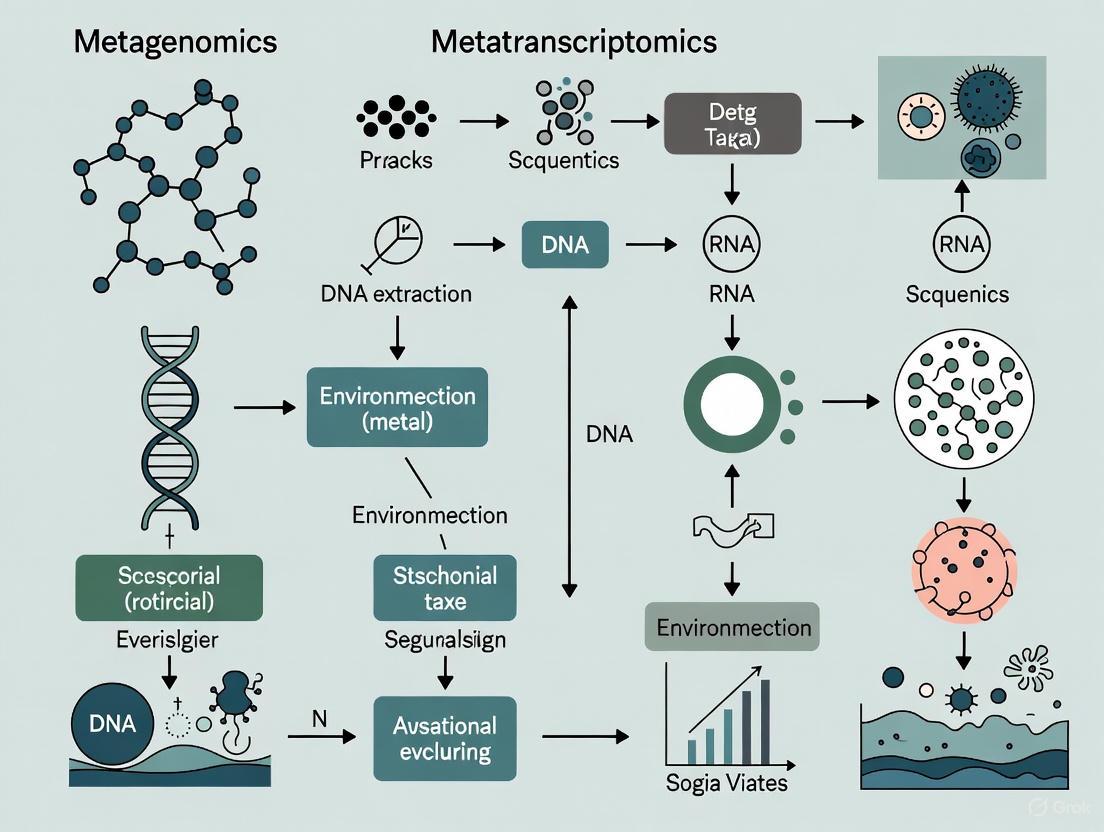
This article provides a comprehensive exploration of metagenomics and metatranscriptomics and their transformative role in microbial ecology and clinical applications.
From Genes to Function: Integrating Metagenomics and Metatranscriptomics for Advanced Microbial Ecology and Precision Medicine
Abstract
This article provides a comprehensive exploration of metagenomics and metatranscriptomics and their transformative role in microbial ecology and clinical applications. Tailored for researchers, scientists, and drug development professionals, it covers the foundational principles distinguishing DNA-based community profiling from RNA-driven functional activity analysis. The scope extends to detailed methodological workflows, from sample preparation and sequencing platforms to data analysis pipelines for taxonomic and functional profiling. It addresses key challenges such as standardization, host contamination, and data integration, while also presenting troubleshooting and optimization strategies. Finally, the article examines validation through multi-omic integration and comparative analysis, highlighting real-world applications in human health, disease diagnostics, and therapeutic development, thereby offering a roadmap for leveraging these technologies in precision medicine.
Decoding the Microbial Blueprint: Core Concepts and Divergent Roles of Metagenomics and Metatranscriptomics
In the field of microbial ecology, metagenomics and metatranscriptomics represent complementary yet distinct methodological paradigms for investigating complex microbial communities. Metagenomics functions as a functional blueprint mapper, analyzing the collective DNA of microbial communities to reveal their taxonomic composition and genetic potential [1] [2]. This approach provides a comprehensive inventory of "what microorganisms can do" by cataloging the inherited functional capabilities encoded in their genomes [3]. In contrast, metatranscriptomics serves as a real-time activity monitor, capturing the entire RNA transcript pool to reveal which genes are actively expressed at a specific point in time and under particular environmental conditions [1] [4]. This dynamic perspective reveals "what microorganisms are actually doing" in response to their environment, host interactions, or ecological perturbations [5].
The distinction between these paradigms is not merely technical but fundamentally conceptual—where metagenomics reveals potential, metatranscriptomics reveals action. This article provides a comprehensive framework for understanding their technical requirements, application landscapes, and implementation protocols to guide researchers in selecting and deploying these powerful technologies effectively.
Technical Foundations: Methodological Comparisons
Sample Preparation and Handling
The initial sample handling phase reveals fundamental differences between these approaches, dictated by the distinct biochemical properties of their target molecules.
Metagenomics Sample Preparation: This approach focuses on environmental samples (soil, water, digestive contents) and utilizes methods optimized for comprehensive DNA recovery. The bead-beating method is commonly employed, which mixes samples with beads under high-speed agitation to break cell walls via mechanical force and release DNA [1]. This method is simple, effective for diverse cell types, and easily scalable for processing large sample volumes. The relative stability of DNA allows for more flexible sample handling and storage conditions compared to RNA-based methods.
Metatranscriptomics Sample Preparation: This method requires rapid stabilization of RNA due to its inherent instability and susceptibility to degradation. Immediate flash-freezing in liquid nitrogen is essential post-collection [4] [5]. For processing, enzymatic digestion is preferred, where specific enzymes disrupt cell-cell junctions to disperse cells while minimizing RNA damage [1]. The requirement for RNA integrity preservation often necessitates specialized preservation solutions such as DNA/RNA Shield and stringent cold-chain management throughout processing [4].
Sequencing Platforms and Technical Specifications
The choice of sequencing platform significantly impacts the resolution, accuracy, and cost of both metagenomic and metatranscriptomic analyses.
Table 1: Sequencing Platform Comparison for Metagenomics and Metatranscriptomics
| Technology | Read Type | Key Applications | Accuracy/Features | Cost per Sample |
|---|---|---|---|---|
| Metagenomics Platforms | ||||
| Illumina NovaSeq | Short reads (2×250 bp) | Species identification, community composition | High accuracy, minimal errors | ~¥735 [1] |
| Oxford Nanopore | Long reads (>100 kb) | Full-length 16S rRNA analysis, novel pathogen discovery | Enables complete genome reconstruction | ~¥2,940 [1] |
| Metatranscriptomics Platforms | ||||
| RNA-Seq (Illumina) | Short reads | Differential expression analysis, microbial activity profiling | High throughput, unmatched accuracy | ~¥1,050 [1] |
| SMART-Seq (PacBio) | Full-length transcripts | Alternative splicing, gene fusions, complex transcriptomes | Captures complete transcript structures | ~¥1,400 [1] |
Platform selection must align with research objectives: short-read platforms offer cost-efficiency for large-scale comparative studies, while long-read technologies provide superior resolution for discovering novel organisms or characterizing complex transcriptional events [1] [6].
Bioinformatic Processing Pipelines
The computational workflows for analyzing metagenomic and metatranscriptomic data differ significantly in their objectives and implementation.
Metagenomic Analysis typically involves quality control (FastQC), assembly (metaSPAdes, MEGAHIT), binning into metagenome-assembled genomes (MAGs), and functional annotation against databases such as KEGG and SEED [3] [7]. The creation of MAGs represents a particular advancement, enabling researchers to reconstruct genomes of uncultured microorganisms directly from environmental samples [7].
Metatranscriptomic Analysis requires specialized processing including rRNA depletion using custom oligonucleotides, quality control, transcript assembly (Trinity, MEGAHIT), quantification (Salmon), and functional annotation (eggNOGmapper, KEGG) [4] [5]. For challenging samples like human skin, rigorous contamination control and unique minimizer thresholds are essential to filter false-positive taxa [4].
Diagram 1: Comparative Workflows for Metagenomics and Metatranscriptomics. This diagram illustrates the divergent technical pathways from sample collection to data interpretation, highlighting the DNA-centric approach of metagenomics (blue) versus the RNA-centric approach of metatranscriptomics (red).
Application Scenarios: Comparative Case Studies
Municipal Wastewater Monitoring (Metagenomics Case Study)
Research Objective: Gauthier et al. implemented a metagenomic approach to establish a "tracking-assembly" workflow for real-time, strain-level monitoring of low-abundance intestinal pathogens in municipal wastewater inflows in Quebec City, Canada [1].
Experimental Protocol:
- Sample Collection: Wastewater samples collected from municipal inflows from September 2023 to January 2024
- DNA Extraction: Bead-beating method for comprehensive cell lysis
- Sequencing: Oxford Nanopore long-read sequencing technology
- Bioinformatic Analysis:
- Species binning of reads using Kraken2
- Reference-guided assembly using reference genomes as templates
- Reconstruction of metagenome-assembled genomes (MAGs)
Key Findings: The researchers successfully reconstructed genomes with 95-99% completeness from low-abundance intestinal pathogens representing just 0.1-1% of total reads. Results demonstrated that abundances of Shiga toxin-producing Escherichia coli (STEC) and non-typhoidal Salmonella (ENTS) were significantly elevated approximately one month earlier than subsequent public food recalls [1]. This demonstrates metagenomics' power as a "functional blueprint mapper" by identifying pathogen-specific genetic elements and enabling early warning detection without culturing.
Inflammatory Bowel Disease Mechanisms (Metatranscriptomics Case Study)
Research Objective: Investigate the relationship between human gut microbiota and inflammatory bowel disease (IBD) by analyzing real-time gene expression of gut microbiota to reveal their functional roles in inflammation [5].
Experimental Protocol:
- Sample Collection: Stool samples from 535 IBD patients and healthy controls, immediately flash-frozen in liquid nitrogen
- RNA Extraction: Combined thermal lysis and silica bead method, followed by DNase I treatment
- rRNA Depletion: Removal of ribosomal RNA to enrich mRNA
- Sequencing: NovaSeq PE150 sequencing producing >20 million reads per sample
- Bioinformatic Analysis:
- Quality control with Trimomatic
- Quantification with Salmon
- Functional annotation with eggNOG/KEGG databases
Key Findings: Metatranscriptomics revealed significantly decreased transcriptional activity of butyrate-producing bacteria (Faecalibacterium prausnitzii and Roseburia intestinalis) in patients' intestines, while Ruminococcus gnavus and E. coli were upregulated [5]. The integration of transcriptomic data with metabolomic profiles (LC-MS/MS) showed that aromatic amino acid metabolic pathway activity correlated with indole-3-acetic acid and secondary bile acid levels. These metabolites inhibited Th17 inflammation via AHR/FXR pathways, providing a mechanistic link between microbial metabolic activities and host inflammatory responses [5].
Skin Microbiome Activity (Integrated Metagenomics-Metatranscriptomics Study)
Research Objective: Develop a robust skin metatranscriptomics workflow to identify active species and microbial functions in situ across five skin sites in 27 healthy adults, comparing metatranscriptomic findings with metagenomic data [4].
Experimental Protocol:
- Sample Collection: Swabs from five skin sites (scalp, cheek, volar forearm, antecubital fossae, toe web)
- Sample Preservation: Immediate preservation in DNA/RNA Shield
- RNA Processing: Bead beating, rRNA depletion using custom oligonucleotides, direct-to-column TRIzol purification
- Sequencing: High-throughput sequencing targeting 1 million microbial reads per sample
- Bioinformatic Analysis:
- Customized workflow using skin-specific microbial gene catalog (iHSMGC)
- Rigorous control of 'kitome' and taxonomic misclassification artifacts
- Application of unique minimizer thresholds to identify false positives
Key Findings: The study revealed a notable divergence between transcriptomic and genomic abundances. Staphylococcus species and the fungi Malassezia had an outsized contribution to metatranscriptomes at most sites, despite their modest representation in metagenomes [4]. Gene-level analysis identified diverse antimicrobial genes transcribed by skin commensals in situ, including several uncharacterized bacteriocins. Correlation of microbial gene expression with organismal abundances uncovered more than 20 genes that putatively mediate interactions between microbes [4].
Table 2: Quantitative Comparison of Microbial Features Across Case Studies
| Study Focus | Methodology | Key Microbial Findings | Functional Insights | Technical Advancements |
|---|---|---|---|---|
| Wastewater Pathogen Monitoring [1] | Long-read metagenomics | Reconstructed MAGs with 95-99% completeness from 0.1-1% abundance pathogens | Identified STEC & ENTS peaks 1 month before food recalls | Tracking-assembly workflow for strain-level monitoring |
| IBD Gut Microbiome [5] | Metatranscriptomics | ↓ Butyrate producers; ↑ R. gnavus & E. coli | Linked aromatic amino acid metabolism to inflammation via AHR/FXR | Random forest model (AUC=0.87) for IBD activity prediction |
| Skin Microbiome [4] | Paired metagenomics & metatranscriptomics | Staphylococcus & Malassezia activity > abundance | Discovered 20+ putative microbe-microbe interaction genes | Clinical skin metatranscriptomics workflow with high reproducibility |
The Scientist's Toolkit: Essential Research Reagents and Materials
Successful implementation of metagenomic and metatranscriptomic studies requires specialized reagents and materials optimized for different sample types and research objectives.
Table 3: Essential Research Reagent Solutions for Metagenomics and Metatranscriptomics
| Reagent/Material | Application | Function | Technical Considerations |
|---|---|---|---|
| DNA/RNA Shield [4] | Metatranscriptomics | Immediate stabilization of RNA at collection | Prevents degradation; essential for low-biomass samples |
| Bead Beating Matrix [1] | Metagenomics | Mechanical cell lysis for DNA release | Effective for diverse cell types; scalable for large volumes |
| Custom rRNA Depletion Oligos [4] | Metatranscriptomics | Enrichment of mRNA by removing ribosomal RNA | Increases mRNA sequencing depth 2.5-40× [4] |
| TRIzol Purification Reagents [4] | Metatranscriptomics | Direct-to-column RNA purification | Preserves RNA integrity; minimizes handling losses |
| Internal RNA Standards [8] | Quantitative Metatranscriptomics | Enables absolute transcript quantification | Saccharolobus solfataricus RNA used for cross-validation |
| Mock Community Standards [4] | Quality Control | Protocol validation and reproducibility | Assesses technical variability (median correlation >0.98) |
Strategic Technology Selection Framework
Research Objective Alignment
Choosing between metagenomics and metatranscriptomics requires careful consideration of research questions, sample types, and resource constraints.
Select Metagenomics When:
- The objective is comprehensive taxonomic cataloging of microbial communities
- Characterization of functional potential (inherited capabilities) is desired
- Studying genetic elements (antibiotic resistance genes, virulence factors) in environments
- Working with samples where RNA preservation was not possible
- Budget constraints prioritize lower-cost approaches (~¥735/sample for Illumina) [1]
Select Metatranscriptomics When:
- Research aims to understand real-time microbial responses to environmental stimuli
- Investigating host-microbe interactions at the functional level
- Differentiating active from dormant community members
- Studying rapid ecological changes or temporal dynamics
- Research requires insights into actual gene expression rather than potential [2]
Integrated Multi-Omics Approaches
For complex research questions, integrating metagenomics with metatranscriptomics provides complementary insights that surpass either method alone. In beef cattle rumen studies, integrated approaches revealed that metagenomes were more conserved among individuals than metatranscriptomes, suggesting higher inter-individual functional variations at the RNA level [9]. This integration identified breed-specific differential rumen microbial features between cattle with high and low feed efficiency, demonstrating how host genetics interacts with microbial functions [9].
Diagram 2: Technology Selection Framework Based on Research Objectives. This decision pathway illustrates how specific research questions determine the choice between metagenomics (blue) and metatranscriptomics (red), with integration (green) providing the most comprehensive insights.
Metagenomics and metatranscriptomics offer powerful, complementary lenses for investigating microbial communities. As "functional blueprint mapper," metagenomics provides comprehensive inventories of microbial membership and inherited capabilities, while as "real-time activity monitor," metatranscriptomics captures dynamic functional responses to environmental and host factors [1] [2].
Strategic implementation requires matching technological strengths to research objectives: metagenomics for cataloging potential and metatranscriptomics for capturing activity. For maximal insight, integrated multi-omics approaches can connect genetic capacity with actual function, as demonstrated in studies of wastewater monitoring [1], IBD mechanisms [5], and skin microbiome dynamics [4]. As these technologies continue evolving with improvements in long-read sequencing, single-cell resolution, and computational analytics, their synergistic application will further illuminate the functional dynamics of microbial ecosystems across human health, environmental science, and biotechnology.
In microbial ecology, understanding the structure and function of complex microbial communities is fundamental. Two complementary approaches have emerged as cornerstones of this research: metagenomics, which sequences total community DNA to profile the genetic potential of a community, and metatranscriptomics, which sequences expressed community RNA to reveal actively transcribed functions [10] [11]. Metagenomics answers the question "Who is present and what could they do?" by cataloging all genomic DNA, including that from dormant cells, spores, and extracellular DNA. In contrast, metatranscriptomics addresses "What is the community actively doing?" by capturing the messenger RNA (mRNA) fraction, providing a snapshot of real-time gene expression and metabolic activity [3]. This Application Note delineates the theoretical and practical distinctions between these approaches, providing a framework for their application in microbial ecology and drug discovery. We present quantitative comparisons, detailed experimental protocols, and decision-making tools to guide researchers in selecting and implementing the appropriate method for their scientific inquiries.
Comparative Analysis: Metagenomics vs. Metatranscriptomics
The choice between DNA and RNA sequencing profoundly impacts the biological interpretation of a microbiome. The core distinction lies in the target molecule: DNA represents the total community membership and its functional potential, while RNA represents the active community members and their expressed functions [12].
RNA molecules degrade more quickly than DNA, meaning RNA-based analysis primarily captures signals from living, active cells, excluding DNA from dead cells, lysed cells, or extracellular sources that can constitute 40–90% of the total DNA pool in an environmental sample [13]. Consequently, community composition derived from DNA (metagenomics) often differs significantly from that derived from RNA (metatranscriptomics), with the latter providing a picture of which members are functionally engaged at the time of sampling [14] [12].
Table 1: Core Conceptual and Practical Differences Between Metagenomics and Metatranscriptomics
| Feature | Metagenomics (Total Community DNA) | Metatranscriptomics (Expressed Community RNA) |
|---|---|---|
| Target Molecule | Genomic DNA (from all cells) | Total RNA, primarily mRNA (from active cells) |
| Biological Question | "Who is present and what is the functional potential?" | "What functions are being actively expressed?" |
| Information Provided | Taxonomic census, presence of functional genes | Gene expression levels, active metabolic pathways |
| Influenced By | DNA from dead, dormant, and active cells; extracellular DNA | Transcriptionally active cells only |
| Functional Insight | Predicted function based on gene presence | Actual function based on gene expression |
| Detection of RNA Viruses | No | Yes |
Empirical studies consistently highlight the divergence in insights gained from these two approaches. For instance, in a study of urban bioswale soils, DNA and RNA analyses both confirmed that engineered soils had distinct bacterial communities compared to non-engineered soils. However, the RNA-based analysis provided a sharper picture of the active community, revealing that total bacterial communities were poor predictors of expressed community diversity, a critical consideration when evaluating ecological functioning [14]. Similarly, in the plant rhizosphere, DNA-based community analysis disproportionately emphasized certain phyla, while RNA-based analysis (representing protein synthesis potential) highlighted the importance of known root associates that were actively transcribing in that environment [12].
From a technical performance standpoint, total RNA sequencing (total RNA-Seq) has been shown to be more accurate than metagenomics for taxonomic identification at equal sequencing depths, and can maintain this accuracy even at sequencing depths almost an order of magnitude lower [13]. Another benchmarking study, meta-total RNA sequencing (MeTRS), demonstrated superior sensitivity and linearity for detecting both bacteria and fungi compared to shotgun metagenomics and amplicon-based sequencing, while requiring a ~20-fold lower sequencing depth than shotgun metagenomics [15].
Table 2: Empirical Findings from Comparative Studies in Different Environments
| Environment | Insights from DNA (Metagenomics) | Insights from RNA (Metatranscriptomics) | Key Study |
|---|---|---|---|
| Urban Bioswale Soils | Revealed distinct phylogenetic diversity and presence of taxa linked to pollutant degradation. | Showed enriched expression of functional genes for carbon fixation, nitrogen cycling, and contaminant degradation. | [14] |
| Human Cervix | Detected a wider number of bacterial genera. | Fewer genera contributed to most transcripts; detected twice as many virus genera, including RNA viruses. | [16] |
| Plant Rhizosphere | Provided a census of total microbial membership, including dormant cells. | Uncovered fine-scale differences in active genera and elevated activity of carbohydrate and amino acid metabolism pathways. | [12] |
| Human Gut (Mock Community) | Suffered from a lack of sensitivity, especially for fungi. | Detected all expected species with a linear response over a wider dynamic range; more accurately reported fungal abundances. | [15] |
Experimental Protocols
Protocol 1: Metagenomic Sequencing for Community Profiling
This protocol details the steps for shotgun metagenomic sequencing to assess the taxonomic composition and functional potential of a microbial community.
Sample Collection and DNA Extraction:
- Sample Collection: Collect samples (e.g., soil, water, human swabs) in sterile containers. Immediately flash-freeze in liquid nitrogen or place on dry ice for transport to preserve integrity [14] [12].
- Nucleic Acid Extraction: Use a commercial kit designed for total nucleic acid extraction (e.g., Roche MagNA Pure LC, MoBio PowerSoil kit) to lyse cells and isolate total DNA. For soils, a combined thermal lysis and silica bead beating method is effective [14] [5]. Quantify DNA yield using a fluorometric assay (e.g., QuantiFluor, Promega).
Library Preparation and Sequencing:
- Library Prep: For shotgun metagenomics, use a library preparation kit such as the Illumina Nextera XT DNA Library Prep Kit, starting with 1 ng of input DNA as per manufacturer's instructions [16]. This step fragments the DNA and adds indexed adapters for multiplexing.
- Sequencing: Normalize libraries to 1 nM, pool, and sequence on an Illumina NextSeq500 or similar platform using a 2 x 150 bp paired-end sequencing run [16].
Bioinformatic Analysis:
- Preprocessing: Use Trimmomatic to remove adapters and quality-trim reads [16]. Optionally, remove host-derived reads by mapping to a host reference genome (e.g., human GRCh38) using a tool like NextGenMap [16].
- Taxonomic Profiling: Classify high-quality, non-host reads using a taxonomic classifier such as Kraken2 against a RefSeq database of bacterial and viral genomes [16]. Alternatively, for functional potential analysis, assemble reads into contigs and annotate genes against functional databases like KEGG or eggNOG.
Protocol 2: Metatranscriptomic Sequencing for Active Community Analysis
This protocol outlines the procedure for total RNA sequencing to profile the actively expressed genes in a microbial community.
Sample Collection and RNA Extraction:
- Rapid Collection and Stabilization: The rapid degradation of RNA necessitates immediate stabilization. Flash-freeze samples in liquid nitrogen within minutes of collection [5] [12]. Use RNA-specific preservatives (e.g., RNA later) if immediate freezing is not possible.
- Total RNA Extraction: Employ a commercial total RNA extraction kit. For challenging samples like stool or soil, the classical hot-phenol method provides high yields with minimal bias [15]. Treat extracts with DNase I to remove contaminating genomic DNA [14] [5]. Assess RNA integrity using an RNA Integrity Number (RIN); a RIN ≥5 is often acceptable for microbiome studies [11].
Library Preparation and Sequencing:
- rRNA Depletion: Since 80-98% of cellular RNA is ribosomal RNA (rRNA), a depletion step is crucial to enrich for mRNA. Use a ribosomal depletion kit such as the Illumina Ribo-Zero Plus Microbiome kit [11].
- Stranded cDNA Library Prep: Use a stranded total RNA-Seq library kit (e.g., Takara Bio Smarter stranded total RNA-seq kit) [16]. This protocol includes cDNA synthesis, adapter ligation, and PCR amplification. To control for DNA contamination, a parallel library can be prepared from a DNase-treated aliquot of the RNA sample [16].
- Sequencing: Normalize cDNA libraries and sequence on an Illumina platform (e.g., NovaSeq PE150) to a depth of >20 million reads per sample to ensure adequate coverage of the transcriptome [5].
Bioinformatic Analysis:
- Preprocessing: Quality control and adapter trimming with tools like Trimomatic or Cutadapt [5] [16].
- Taxonomic/Functional Assignment: For taxonomic profiling of the active community, tools like Kraken2/Bracken can be used [3]. For functional analysis, quality-controlled reads can be mapped to reference genomes or assembled de novo (using MEGAHIT or Trinity) [5]. Quantify transcript abundance with Salmon and perform functional annotation using KEGG, SEED, or eggNOG-mapper to identify active metabolic pathways [14] [5].
The following workflow diagram illustrates the parallel paths for metagenomic and metatranscriptomic analysis, highlighting the key experimental and computational steps.
The Scientist's Toolkit: Research Reagent Solutions
Selecting the appropriate reagents and kits is critical for the success of microbiome studies. The table below lists essential solutions for nucleic acid extraction and library preparation from complex microbial samples.
Table 3: Key Research Reagents and Kits for Metagenomics and Metatranscriptomics
| Reagent / Kit Name | Function / Application | Brief Description |
|---|---|---|
| PowerSoil DNA/RNA Kit (MoBio/QIAGEN) | Concurrent extraction of DNA and RNA from environmental samples. | Effective for challenging, inhibitor-rich samples like soil and stool, ensuring high yield and purity. |
| MagNA Pure LC Instrument (Roche) | Automated extraction of total nucleic acids. | Provides standardized, high-throughput isolation of total nucleic acid from swab and liquid samples. |
| Nextera XT DNA Library Prep Kit (Illumina) | Shotgun metagenomic library preparation. | Enables rapid preparation of multiplexed, adapter-ligated sequencing libraries from low-input (1 ng) DNA. |
| Ribo-Zero Plus Microbiome Kit (Illumina) | Depletion of ribosomal RNA from total RNA samples. | Critical for metatranscriptomics, enriches for mRNA by removing bacterial and eukaryotic rRNA. |
| SMARTer Stranded Total RNA-Seq Kit (Takara Bio) | Preparation of stranded RNA-seq libraries. | Facilitates construction of sequencing libraries from total RNA, including degraded and low-input samples. |
| Turbo DNA-free Kit (ThermoFisher) | Removal of contaminating genomic DNA from RNA samples. | Ensures pure RNA template for cDNA synthesis, preventing false positives in metatranscriptomics. |
The interrogation of total community DNA and expressed community RNA provides distinct, yet powerfully complementary, vistas of microbial ecosystems. Metagenomics offers a comprehensive census of membership and functional capacity, forming a foundational understanding of "what could happen." Metatranscriptomics, by contrast, captures the dynamic expression of this potential, revealing "what is happening" at a specific moment in time. The decision to use one or both approaches must be driven by the specific biological question. For profiling a community's stable taxonomic structure and gene content, metagenomics is the tool of choice. For investigating active responses to environmental stimuli, host-disease interactions, or the functional roles of specific microbial consortia, metatranscriptomics is indispensable. As demonstrated in diverse environments—from urban soils to the human gut—integrating both DNA and RNA perspectives yields a more holistic and mechanistically insightful understanding of microbial communities, ultimately accelerating discovery in ecology, medicine, and biotechnology.
In microbial ecology, understanding the complex functions of microbial communities requires moving beyond a simple census of inhabitants. The fields of metagenomics and metatranscriptomics provide complementary lenses to answer progressively deeper biological questions. Metagenomics reveals the taxonomic composition and genetic potential of a community—addressing "Who is there and what can they do?" In contrast, metatranscriptomics captures the pool of expressed mRNA transcripts, illuminating the genes that are actively being transcribed under specific conditions—answering "What are they actually doing now?" [17] [4]. This functional activity is a more direct indicator of the microbiome's physiological state, as it sits at the nexus of an organism’s genetic blueprint and its environmental stimuli [17]. The integration of these approaches is revolutionizing our understanding of host-microbe interactions, biogeochemical cycling, and the functional dynamics of ecosystems ranging from the human gut to aquatic environments.
The distinction between potential and activity is not merely academic; it is biologically profound. Metagenomic signals originate from both living and dead cells, and genes can remain silent in living microbes. Metatranscriptomics, by assaying mRNAs, provides a snapshot of the metabolic processes actively being utilized in response to immediate environmental cues [4]. For instance, a microbe might possess the genetic potential to break down a complex carbohydrate, but it will only express the requisite enzymes if that carbohydrate is present. This conceptual shift is accompanied by the recognition that to achieve a more comprehensive picture, metagenomics must be combined with metatranscriptomics and other omics technologies [17].
Comparative Analysis of Metagenomics and Metatranscriptomics
The following table summarizes the core differences between these two approaches in addressing ecological questions.
Table 1: Core differences between metagenomics and metatranscriptomics
| Feature | Metagenomics | Metatranscriptomics |
|---|---|---|
| Molecule Targeted | Total DNA (genetic blueprint) | Total mRNA (expressed transcripts) |
| Primary Question | "Who is there and what can they do?" [4] | "What are they actually doing now?" [4] |
| Output | Taxonomic profile, functional gene potential | Gene expression profile, active functional pathways |
| Temporal Resolution | Stable potential; reflects genetic capacity | Dynamic activity; snapshot of real-time response |
| Key Limitation | Infers function but cannot confirm activity [4] | Technically challenging (e.g., low RNA stability, host contamination) [4] |
A compelling example of their divergence comes from skin microbiome studies. Research has identified a notable disconnect between transcriptomic and genomic abundances. Specifically, Staphylococcus species and the fungi Malassezia had an outsized contribution to metatranscriptomes at most skin sites, despite their modest representation in metagenomes [4]. This indicates these taxa are metabolically highly active and are likely disproportionately influencing the skin microenvironment compared to their genomic abundance.
Application Notes: Translating Methodology into Biological Insight
Elucidating Host-Microbe Interactions in Health and Disease
Integrated meta-omics approaches are pivotal for linking microbial communities to host physiology. In the human gut, for example, metagenomics can identify a depletion of Faecalibacterium prausnitzii in patients with inflammatory bowel disease (IBD). Metatranscriptomics can further reveal that this is accompanied by a downregulation of anti-inflammatory metabolite production, such as butyrate synthesis, providing a more mechanistic understanding of disease causation beyond correlation [6]. Similarly, the "Secrebiome"—the repertoire of secreted proteins identified via metatranscriptomics—has been used to study childhood obesity, revealing striking differences in the secretory gene expression of gut bacteria in children with obesity and metabolic syndrome [18].
The role of gut dysbiosis extends to extraintestinal sites via specialized axes, and metatranscriptomics helps delineate the active molecular players:
- Gut-Liver Axis: Transcriptomic activity of microbial enzymes involved in secondary bile acid synthesis (e.g., by Clostridium scindens) can disrupt host farnesoid X receptor (FXR) signaling in the liver, promoting steatosis and inflammation [6].
- Gut-Brain Axis: Active microbial expression of genes involved in neurotransmitter precursor synthesis (e.g., serotonin and GABA) can be quantified, with dysbiosis leading to reduced availability of these metabolites, contributing to neuropsychiatric conditions [6].
Tracking Antimicrobial Resistance in Viral Infections
A powerful application of metatranscriptomics is in surveilling the "resistome"—the collection of antimicrobial resistance genes (ARGs)—within active microbial communities. A 2025 study employed a non-canonical metatranscriptomics approach on samples from COVID-19 and dengue patients. This method repurposes host total RNA-seq data by computationally removing host-aligned reads to analyze the leftover microbial expression, providing an unbiased profile of transcriptionally active microbes (TAMs) and the ARGs they carry [19].
The study revealed a higher burden and diversity of ARGs in COVID-19 patients, particularly in fatal cases. Dominant ARG hosts included Escherichia coli, Klebsiella pneumoniae, and in mortality cases, Acinetobacter baumannii. Multidrug resistance genes, especially those conferring resistance to β-lactam antibiotics (e.g., NDM, OXA, VIM carbapenemases in COVID-19), were prevalent [19]. This highlights the unintended consequence of antibiotic use in viral infections and underscores the need for active resistome surveillance to guide clinical management.
Investigating Microbial Adaptation in Extreme Environments
Metagenomics and metatranscriptomics are indispensable for studying unculturable microbes in extreme environments. A study on the hypersaline Lake Barkol used metagenomics to reconstruct 309 metagenome-assembled genomes (MAGs), approximately 97% of which were novel at the species level, revealing extensive taxonomic novelty [20].
Metabolic reconstruction from metagenomic data identified key pathways for carbon fixation (e.g., the Calvin cycle) and sulfur cycling. Furthermore, the study pinpointed active microbial osmoadaptation strategies:
- "Salt-in" strategy: Relies on ion transport systems (Trk/Ktr potassium uptake, Na+/H+ antiporters) for intracellular homeostasis.
- "Salt-out" strategy: Involves biosynthesis of compatible solutes (ectoine, trehalose, glycine betaine) [20].
A follow-up metatranscriptomic analysis would directly show which of these strategies are being actively transcribed in response to the extreme salinity gradients between the water and sediment habitats.
Experimental Protocols
A Robust Workflow for Skin Metatranscriptomics
Studying low-biomass environments like the skin requires a optimized protocol to overcome challenges of host contamination and low RNA stability. The following workflow, developed to ensure high technical reproducibility and microbial mRNA enrichment, is detailed below [4].
Diagram 1: Skin metatranscriptomics workflow
Protocol Steps:
- Sample Collection: Use skin swabs for non-invasive sampling across body sites (e.g., scalp, cheek, forearm) [4].
- Immediate Preservation: Preserve swabs immediately in DNA/RNA Shield or similar reagent to stabilize nucleic acids and prevent degradation [4].
- Cell Lysis: Perform bead beating to ensure efficient lysis of robust microbial cell walls [4].
- RNA Purification: Use a direct-to-column TRIzol purification method for high-quality RNA extraction [4].
- rRNA Depletion: Employ custom oligonucleotides to deplete ribosomal RNA (rRNA), enriching for messenger RNA (mRNA). This step is critical and achieved a 2.5–40x enrichment of non-rRNA reads in the cited study [4].
- cDNA Library Construction & Sequencing: Prepare sequencing libraries from the enriched mRNA and sequence on an Illumina NextSeq 2000 or similar platform [4].
- Bioinformatic Analysis:
- Quality Control: Assess RNA quality (e.g., DV200 ≥ 76 is a good indicator) [4].
- Host Read Removal: Filter out reads that align to the host transcriptome (e.g., human genome).
- Contaminant Filtering: Use data from negative handling controls to identify and filter potential contaminant taxa from reagents or processing (the "kitome") [4].
- Taxonomic & Functional Annotation: Annotate reads using a specialized skin microbial gene catalog (e.g., the integrated Human Skin Microbial Gene Catalog, iHSMGC) for higher sensitivity than general-purpose tools [4].
Protocol for 16S rRNA Metatranscriptomics
This approach integrates taxonomic profiling with functional activity analysis from the same sample.
Diagram 2: 16S rRNA metatranscriptomics workflow
Protocol Steps:
- Sample Lysis and Co-extraction: Begin with simultaneous co-extraction of DNA and RNA using specialized kits and RNase-free consumables to minimize cross-contamination. Validate nucleic acid quality and integrity using a NanoDrop One and an Agilent Bioanalyzer [18].
- Dual-Data Generation:
- 16S rRNA Phase: Use the DNA fraction. Perform PCR amplification of the 16S rRNA V3-V4 variable region and sequence on an Illumina NovaSeq platform. Process data using QIIME2 and the DADA2 pipeline for denoising, which generates high-resolution Amplicon Sequence Variants (ASVs). Annotate ASVs taxonomically using databases like SILVA or Greengenes [18].
- Metatranscriptomics Phase: Use the RNA fraction. Construct cDNA libraries and sequence on an Illumina HiSeq platform. Process raw reads with FastQC and Trimmomatic for quality control. Quantify transcript abundance with Salmon and identify differentially expressed genes (DEGs) using DESeq2. Annotate DEGs to functional pathways (e.g., KEGG) using eggNOG-mapper [18].
- Data Integration: Use tools like MetaWRAP 2.0 to integrate the taxonomic and functional datasets. Perform correlation analysis (e.g., with SparCC) to construct "microbe-gene-pathway" networks, linking specific microbes to the active functions they are performing [18].
Table 2: Key research reagents and computational tools for metatranscriptomics
| Category | Item | Function and Application Notes |
|---|---|---|
| Wet-Lab Reagents | DNA/RNA Shield | Preserves nucleic acid integrity immediately after sample collection, critical for unstable mRNA [4]. |
| RNase-free consumables | Prevents degradation of RNA during extraction and library preparation; reduces contamination rates to <0.5% [18]. | |
| Custom rRNA Depletion Oligos | Species-specific oligonucleotides for removing host and bacterial rRNA, dramatically enriching for mRNA [4]. | |
| Sequencing & Analysis | Long-Read Sequencers (ONT/PacBio) | Generate reads spanning thousands of base pairs, resolving complex genomic regions and improving metagenomic assembly [21]. |
| Skin/Gut Microbial Gene Catalogs | Specialized reference databases (e.g., iHSMGC) significantly improve annotation sensitivity for specific body sites [4]. | |
| MetaWRAP 2.0 | Bioinformatics tool for integrating multi-type microbiome data (e.g., 16S, metagenomics, metatranscriptomics) [18]. | |
| EasyNanoMeta | An integrated bioinformatics pipeline designed to address challenges in analyzing nanopore-based metagenomic data [21]. |
The journey from cataloging microbial inhabitants to understanding their real-time metabolic activity has fundamentally transformed microbial ecology. Metagenomics provides the essential blueprint of "what can they do," while metatranscriptomics dynamically reveals "what they are actually doing" in response to their environment [17] [4]. As the protocols and applications in this note demonstrate, the integration of these approaches is no longer optional for a mechanistic understanding of microbiome function. It is a necessity for advancing research in human health, from personalized therapies and AMR surveillance [19] to understanding chronic disease [6], as well as in environmental science, for uncovering novel taxa and their roles in extreme ecosystems [20]. Future progress will be driven by technological refinements in long-read sequencing [21], standardized protocols for low-biomass sites [4], and sophisticated bioinformatic tools that seamlessly merge taxonomic and functional data into a coherent biological narrative [18].
In microbial ecology, relying on a single omics technology presents a fragmented picture. Metagenomics reveals the potential functional capabilities encoded in the collective DNA of a microbiome, detailing "who is there" and "what they could potentially do" [22]. Conversely, metatranscriptomics captures the community-wide gene expression, illuminating "what functions are actively being undertaken" at the time of sampling [22] [23]. While powerful, these approaches in isolation provide an incomplete narrative. Metagenomics infers activity from genetic potential, while metatranscriptomics records expression without the genomic context for its regulation or origin. An integrated multi-omics paradigm is crucial to overcome these limitations, transforming static genetic inventories into dynamic models of microbial community behavior, function, and interaction with their hosts and environments [24]. This Application Note details the quantitative evidence, standardized protocols, and practical tools required to implement this synergistic approach, enabling researchers to fully leverage the power of integrated meta-omics.
Quantitative Evidence: The Added Value of Integration
The theoretical benefits of multi-omics integration are supported by empirical data. Studies demonstrate that integrating data from metagenomics and metatranscriptomics provides a more complex and actionable understanding of microbiome function than either method alone.
Case Study: Enhanced Metaproteomic Identification
A pivotal pilot study reanalyzed paired multi-omics datasets from human gut and marine hatchery samples to quantify the benefit of integrated data for metaproteomics. The study found that using customized protein search databases built from matched metagenomic and metatranscriptomic data significantly improved the analytical depth.
Table 1: Impact of Integrated Search Databases on Metaproteomic Analysis [24]
| Search Database Type | Method of Construction | Resulting Peptide Identifications |
|---|---|---|
| Same-Sample Multi-Omics DB | Built from assembled metagenomic & metatranscriptomic sequences from the same sample | Highest number of peptide identifications |
| Independent Sample DB | Built from genomic sequences derived from independent samples | Lower number of peptide identifications |
This study also led to the development of a dedicated workflow (MetaPUF) and the extension of the MGnify resource to visualize integrated results, establishing a robust pipeline for future integrative studies [24].
Case Study: Unraveling Host-Microbiome Immune Interactions
Metatranscriptomics has been critical in moving beyond taxonomic composition to understand functional mechanisms in host-microbiome interactions. A key example is the study of Toll-like receptor 5 (TLR5) knockout mice. While metagenomics could identify the taxa present, metatranscriptomic analysis revealed a crucial functional shift: the up-regulation of flagellar motor-related gene expression in the gut microbiome of TLR5KO mice compared to wild-type mice [23]. This finding illustrated that the host immune system (via TLR5) regulates microbial behavior not merely by changing community structure, but by directly influencing the expression of key bacterial virulence genes, a insight only accessible through transcript-level analysis [23].
Experimental Protocols: A Framework for Multi-Omics Integration
Implementing a successful integrated study requires meticulous planning from sample collection through computational analysis. The following protocols provide a scaffold for such investigations.
Protocol: Concurrent Sample Collection for Metagenomics and Metatranscriptomics
Principle: To generate truly comparable datasets, samples for DNA and RNA extraction must be collected in a way that minimizes technical variation and accurately captures the same microbial community state [25].
Procedure:
- Sample Splitting: From a single, homogenized environmental or host sample (e.g., soil, water, gut content), immediately split the material into two aliquots.
- Simultaneous Preservation:
- For DNA (Metagenomics): Preserve one aliquot using a DNA stabilization solution (e.g., RNAlater) or by flash-freecing in liquid nitrogen, followed by storage at -80°C.
- For RNA (Metatranscriptomics): Preserve the second aliquot in a dedicated RNA stabilization reagent (e.g., TRIzol) and flash-freeze. Store at -80°C. Handle samples with RNase-free techniques to prevent degradation.
- Documentation: Record the sampling time, condition, and any relevant metadata (e.g., pH, temperature) for both aliquots identically.
Protocol: A Computational Workflow for Metatranscriptomic Analysis
This protocol, adapted for studying host-pathogen or host-microbiome interactions, outlines a dual-path analysis after total RNA extraction [26] [23].
Diagram 1: Metatranscriptomic analysis computational workflow.
Procedure:
- Library Preparation and Sequencing: Following rRNA depletion (a critical step to enrich for mRNA) [23] and cDNA library construction, sequence on an Illumina or equivalent platform.
- Bioinformatic Pre-processing: Perform quality control on raw reads using tools like
FastQC. Trim adapters and filter low-quality sequences [26] [27]. - Dual-Path Assembly:
- Reference-Guided Assembly: Map reads to a reference genome (if available for the host and expected microbes). This approach is precise but limited by the completeness of the reference database [26].
- De Novo Assembly: Assemble reads into transcripts without a reference using tools like
Trinity. This method is valuable for discovering novel genes or working with non-model systems [26].
- Gene Annotation and Quantification: Predict open reading frames (ORFs) and annotate genes against functional databases (e.g., KEGG, COG). Quantify gene and transcript abundance [27].
- Differential Expression and Integration: Identify statistically significant differences in gene expression between conditions. Integrate results with metagenomic data from the same sample to link active functions to their genomic hosts [24] [26].
Protocol: Building a Customized Database for Integrated Metaproteomics
This advanced protocol uses metagenomic and metatranscriptomic data to significantly improve protein identification in metaproteomic studies [24].
Procedure:
- Sequence Data Processing: Assemble metagenomic and metatranscriptomic reads from the same sample into contigs.
- Gene Calling: Perform de novo gene prediction on the assembled contigs to generate a sample-specific protein sequence database.
- Database Curation: Combine and curate the predicted protein sequences to create a comprehensive search database (search DB).
- Metaproteomic Search: Use this customized search DB to analyze mass spectrometry-based metaproteomic data, leading to a higher yield of peptide and protein identifications compared to using generic public databases [24].
The Scientist's Toolkit: Essential Reagents and Computational Tools
Successful multi-omics research relies on a suite of wet-lab and computational resources.
Table 2: Key Research Reagent Solutions and Bioinformatics Tools
| Item Name | Type | Function / Application |
|---|---|---|
| rRNA Depletion Kits | Wet-lab Reagent | Enriches messenger RNA (mRNA) from total RNA by removing abundant ribosomal RNA, critical for metatranscriptomics [23]. |
| DNA/RNA Stabilization Reagents (e.g., RNAlater, TRIzol) | Wet-lab Reagent | Preserves nucleic acid integrity immediately upon sampling, preventing degradation and preserving the in-situ molecular profile. |
| Unison Ultralow Library Kit (Micronbrane) | Wet-lab Reagent | Streamlines library preparation for low-input DNA extracts, minimizing contamination for sensitive metagenomic studies [28]. |
| Devin Fractionation Filter (Micronbrane) | Wet-lab Tool | Reduces host-derived nucleic acids in samples from bodily fluids, increasing the sequencing depth of the microbial community [28]. |
| QIMME 2 | Bioinformatics Pipeline | A powerful, user-friendly platform for the analysis of marker-gene (e.g., 16S rRNA) metagenomic data [22]. |
| Kraken2/Bracken | Bioinformatics Tool | A suite for fast taxonomic classification of sequencing reads from metagenomic or metatranscriptomic data, providing abundance estimates [22]. |
| MGnify & PRIDE Database | Bioinformatics Resource | Public repositories for metagenomic/metatranscriptomic (MGnify) and metaproteomic (PRIDE) data, enabling data sharing, re-analysis, and integration [24]. |
| iCAMP (Phylogenetic-bin-based null model) | Bioinformatics Framework | Quantifies the relative importance of ecological processes (selection, dispersal, drift) in microbial community assembly [29]. |
Data Visualization and Interpretation Guidelines
Effectively communicating the results of complex multi-omics studies requires careful consideration of data visualization.
- For Alpha and Beta Diversity: Use box plots to compare diversity indices between groups, adding jitters to show individual data points. For beta diversity, apply ordination plots like PCoA, colored by experimental groups, to visualize overall variation [30].
- For Taxonomic and Functional Composition: Stacked bar charts are effective for showing relative abundance across groups at higher taxonomic levels. For a more detailed, sample-wise view of abundance data, heatmaps coupled with clustering are superior [30].
- For Core Microbiome Analysis: When comparing three or more groups, UpSet plots are recommended over complex Venn diagrams, as they clearly display intersections in a matrix layout [30].
- Color Selection: Adopt color palettes that are color-blind friendly (e.g.,
viridis). Maintain consistent color schemes for the same categories (e.g., phyla, treatment groups) across all figures in a publication [31] [30].
The path to a genuinely complete picture of microbial ecology no longer lies in perfecting single omics methods, but in strategically integrating them. As the quantitative data and protocols herein demonstrate, the synergistic power of metagenomics and metatranscriptomics bridges the critical gap between genetic potential and expressed function. This integrated approach is indispensable for transforming observational catalogues into mechanistic models, ultimately accelerating discovery in fields ranging from drug development [23] to environmental monitoring [29] [25]. By adopting the standardized workflows, tools, and visualization practices outlined in this Application Note, researchers can systematically unlock the full, contextualized narrative hidden within complex microbial communities.
From Sample to Insight: Technical Workflows and Translational Applications in Biomedicine
In the field of microbial ecology research, metagenomics and metatranscriptomics have revolutionized our ability to decipher the composition and function of complex microbial communities without the need for cultivation. The reliability of these advanced molecular techniques, however, is fundamentally dependent on the integrity of the technical pipeline employed—from initial sample preparation to final sequencing output. Variations in methodological choices at any stage can introduce significant biases, affecting downstream data interpretation and compromising the comparability of results across studies [32].
The selection between physical lysis methods like bead-beating and enzymatic digestion directly influences DNA yield and community representation, particularly for challenging-to-lyse microorganisms. Similarly, the choice of sequencing platform—whether short-read Illumina or long-read Nanopore technologies—carries distinct implications for genomic assembly completeness, functional annotation accuracy, and strain-level resolution. This Application Note provides a standardized framework for navigating these critical technical decisions, offering detailed protocols and comparative analyses to support researchers in generating robust, reproducible data for drug development and ecological research.
Sample Preparation: The Foundation of Reliable Metagenomics
Cell Lysis Methods: Bead-Beating vs. Enzymatic Digestion
The initial step of nucleic acid extraction is arguably the most critical in the metagenomic workflow. Efficient cell lysis is essential for obtaining a representative snapshot of the microbial community, but different bacterial cell wall structures require different lysis approaches.
Bead-Beating Protocol: This mechanical disruption method is highly effective for breaking tough cell walls. In a standardized protocol for intestinal microbiota analysis, researchers used repeated bead beating with a mini-bead beater (Biospec Products) on approximately 200 mg of sample [33]. The protocol involves:
- Homogenizing samples in sterile potassium phosphate buffer containing 15% glycerol.
- Using a bead beater with appropriate bead sizes (typically a mixture of 0.1mm and 0.5mm diameter beads) to ensure comprehensive disruption of both Gram-positive and Gram-negative bacteria.
- Critical parameter optimization: Homogenization time significantly impacts sample diversity, with research recommending shorter homogenization times (10 minutes) for better reflection of the gram-positive/gram-negative ratio and reduced beta-diversity heterogeneity [32].
Enzymatic Lysis Protocol: This alternative method utilizes enzyme cocktails to degrade specific cell wall components:
- Lysozyme targets peptidoglycan layers in Gram-positive bacteria.
- Mutanolysin provides additional activity against complex peptidoglycan structures.
- Proteinase K digests proteins and aids in breaking down cellular matrices.
- Typical incubation: 1-2 hours at 37°C with occasional mixing.
Table 1: Comparative Analysis of Cell Lysis Methods for Metagenomic DNA Extraction
| Parameter | Bead-Beating | Enzymatic Digestion |
|---|---|---|
| Efficiency for Gram-positive bacteria | High | Moderate to Low |
| Efficiency for Gram-negative bacteria | High | High |
| DNA fragment size | Shorter fragments (requires optimization) | Longer fragments |
| Risk of contamination | Low (closed systems available) | Moderate (multiple reagent additions) |
| Processing time | Fast (minutes) | Slow (hours) |
| Cost per sample | Moderate | Low to Moderate |
| Reproducibility | High with standardized timing | High with standardized enzyme lots |
Impact of Homogenization on Community Representation
The duration of homogenization significantly affects the observed microbial community composition. Studies have demonstrated that shorter homogenization times (10 minutes) provide more accurate representations of the gram-positive/gram-negative ratio in complex samples like stool, while longer homogenization introduces bias and increases heterogeneity in beta-diversity measurements [32]. This highlights the necessity of standardizing this parameter within and across studies to ensure comparability.
Sequencing Platform Selection: Illumina vs. Nanopore
The choice of sequencing platform dictates the scope and resolution of metagenomic analysis, with short-read and long-read technologies offering complementary advantages.
Illumina Sequencing (Short-Read Technology):
- Technology basis: Sequencing by synthesis with reversible dye-terminators
- Read length: Typically 2×150 bp to 2×300 bp paired-end reads [34]
- Error profile: Low error rate (<0.1%), predominantly substitution errors
- Ideal applications: 16S rRNA gene sequencing, shotgun metagenomics for high-resolution community profiling, and projects requiring high accuracy for single-nucleotide variant calling
Nanopore Sequencing (Long-Read Technology):
- Technology basis: Measurement of changes in electrical current as DNA strands pass through protein nanopores
- Read length: Averages 10 kb, with reads potentially exceeding 100 kb [35]
- Error profile: Higher error rate (1-5%), predominantly indels, but improving with chemistry advances
- Ideal applications: Metagenome-assembled genome (MAG) reconstruction, strain-level resolution, structural variant detection, and real-time analysis in field settings
Performance Comparison for Metagenomic Applications
Table 2: Sequencing Platform Specifications for Metagenomic Applications
| Specification | Illumina MiSeq | Illumina NextSeq 1000/2000 | Oxford Nanopore |
|---|---|---|---|
| Max Output | 15 Gb | 540 Gb | Dependent on flow cell (up to hundreds of Gb) |
| Run Time | 4-55 hours | ~8-44 hours | Variable (hours to days) |
| Read Length | 2 × 300 bp | 2 × 300 bp | Average 10 kb+ |
| Key Metagenomic Strengths | 16S rRNA sequencing, targeted gene sequencing | High-throughput shotgun metagenomics | Superior MAG recovery, strain-level resolution |
| Error Rate | <0.1% | <0.1% | 1-5% (improving with new chemistries) |
| Cost Considerations | ~$10/sample for 16S (96-plex) [36] | Higher throughput, lower cost per Gb | Lower initial instrument investment |
Nanopore sequencing demonstrates particular advantages for complex microbiome analysis, serving as a standalone platform that provides superior metagenome-assembled genome (MAG) recovery and strain-level resolution from complex microbiomes [37]. The long reads generated by Nanopore technology enable more complete genome reconstruction by spanning repetitive regions that challenge short-read technologies.
Integrated Workflow: From Sample to Analysis
Complete Experimental Pipeline
The following workflow diagram illustrates the integrated technical pipeline from sample preparation through data analysis, highlighting critical decision points and their implications for result interpretation:
Diagram Title: Integrated Metagenomic Analysis Workflow
Library Preparation Considerations
Library preparation methodology represents another potential source of bias in metagenomic studies:
- Tagmentation-based methods (e.g., Illumina Nextera) offer rapid processing and reduced hands-on time but may introduce sequence preference biases [32].
- PCR-free protocols (e.g., KAPA Hyper Prep, TruSeq DNA PCR-free) minimize amplification biases but require higher input DNA, which can be challenging for low-biomass samples [38].
- Platform-specific kits are optimized for their respective technologies, with Nanopore offering rapid sequencing library preparation (often under 30 minutes) compared to more lengthy Illumina protocols.
Studies have demonstrated that the choice of library preparation kit significantly influences the reproducibility of results, with tagmentation-based methods generally providing the most consistent results across replicates [32].
Essential Research Reagent Solutions
Table 3: Key Research Reagents and Their Applications in Metagenomic Workflows
| Reagent/Kit | Manufacturer | Primary Function | Application Notes |
|---|---|---|---|
| DNeasy PowerSoil Pro Kit | Qiagen | DNA extraction from complex samples | Recommended in Human Microbiome Project; effective for soil and stool [32] |
| KAPA Hyper Prep Kit | Kapa Biosystems | PCR-free library preparation | Maintains representation of original community; requires sufficient DNA input [32] |
| Nextera XT DNA Library Prep Kit | Illumina | Tagmentation-based library prep | Fast protocol; potential for sequence preference bias [32] |
| TruSeq DNA PCR-Free Library Prep Kit | Illumina | High-quality library preparation | For projects requiring maximum sequence accuracy [33] |
| Ligation Sequencing Kit | Oxford Nanopore | Library prep for Nanopore | Maintains long read lengths; rapid preparation [37] |
Navigating the technical pipeline from sample preparation to sequencing platform selection requires careful consideration of research objectives, sample types, and analytical priorities. Based on current methodological evaluations, the following recommendations emerge:
- Standardize homogenization protocols using shorter durations (∼10 minutes) for more accurate community representation [32].
- Implement bead-beating for comprehensive lysis of diverse community members, particularly when Gram-positive bacteria are of interest.
- Select sequencing platforms based on study goals: Illumina for high-accuracy community profiling, Nanopore for superior genome reconstruction and strain-level resolution [37] [39].
- Maintain consistency in library preparation methods within studies to enhance reproducibility and comparability.
The rapid evolution of both sequencing technologies and computational tools necessitates ongoing reassessment of these protocols. However, the fundamental principle of methodological standardization remains critical for advancing our understanding of microbial ecology through metagenomic and metatranscriptomic approaches.
Metagenomics and metatranscriptomics have revolutionized microbial ecology by enabling culture-independent analysis of complex microbial communities. These approaches provide unprecedented insights into the genomic potential and transcriptional activities of microorganisms directly from their natural environments, from human guts to global ecosystems like oceans and soil [40]. The bioinformatic processing of data generated by these high-throughput technologies is a critical pillar supporting this research. This guide details the essential computational steps—quality control, taxonomic profiling, assembly, and binning—framed within the context of robust, reproducible microbial ecology research. The standardization of these workflows is paramount for generating biologically meaningful and comparable data, ultimately driving discoveries in ecosystem dynamics, host-microbe interactions, and biotechnology [41] [40].
The analysis of metagenomic data follows a structured pipeline designed to transform raw sequencing reads into biological insights regarding community composition and function. The workflow can be broadly divided into two computational strategies: read-based profiling and assembly-based methods [42]. The following diagram illustrates the standard stages of a metagenomic analysis, highlighting the points where these two strategies diverge and converge.
Experimental Protocols & Methodologies
Quality Control and Read Preprocessing
The initial and crucial step in any metagenomic analysis is ensuring data quality. This process removes technical artifacts and prepares reads for downstream analysis.
Detailed Protocol: Quality Control with Trimmomatic and FastQC
This protocol is adapted from established metagenomic pipelines like Metabiome and metaTP [43] [44].
- Input: Raw paired-end or single-end sequencing reads in FASTQ format.
- Quality Assessment:
- Run FastQC on all raw FASTQ files to assess base quality scores, sequence length distribution, adapter contamination, and GC content.
- Use MultiQC to aggregate and visualize FastQC reports from multiple samples into a single summary [43].
- Quality Trimming and Adapter Removal:
- Execute Trimmomatic in paired-end mode with the following parameters [40] [43]:
ILLUMINACLIP:Path to adapter sequences (e.g.,TruSeq3-PE-2.fa), with a mismatch threshold of 2 and a palindrome clip threshold of 30.SLIDINGWINDOW:4:20to perform a sliding window trimming, cutting when the average quality per base drops below 20 within a 4-base window.LEADING:20to remove low-quality bases from the start of the read.TRAILING:20to remove low-quality bases from the end of the read.MINLEN:50to discard reads shorter than 50 base pairs after trimming.
- Execute Trimmomatic in paired-end mode with the following parameters [40] [43]:
- Host DNA Depletion:
- Output: High-quality, decontaminated paired-end and single-end reads for taxonomic profiling or assembly.
Taxonomic Profiling
This step identifies the microorganisms present in a sample and estimates their relative abundance. The two primary approaches are read-based (marker-gene or k-mer based) and assembly-based.
Detailed Protocol: Read-based Profiling with MetaPhlAn3 and Kraken2/Bracken
This protocol leverages the Metabiome pipeline for marker-gene and k-mer-based classification [43].
- Input: High-quality, decontaminated reads from the previous step.
- Marker-Gene Based Profiling with MetaPhlAn3:
- Run MetaPhlAn3 with a custom or default database (e.g.,
mpa_v30_CHOCOPhlAn_201901). - Use flags like
--ignore_eukaryotesand--ignore_archaeato focus on bacterial and viral communities if desired. - The output is a table of taxon relative abundances across samples (
merged_abundance_table.txt).
- Run MetaPhlAn3 with a custom or default database (e.g.,
- K-mer Based Profiling with Kraken2/Bracken:
- Database Preparation: Download a pre-formatted Kraken2 database (e.g., Standard, MiniKraken, or a specialized database like the Viral genome database).
- Classification: Run Kraken2 against the database. Kraken2 breaks reads into k-mers and matches them to a reference library for rapid taxonomy assignment [42].
- Abundance Estimation: Use Bracken (Bayesian Reestimation of Abundance with KrakEN) to re-estimate species- or genus-level abundances from the Kraken2 output, correcting for ambiguous mappings [42].
- Visualization:
- Generate Krona pie charts for interactive visualization of the taxonomic composition from Kraken2 output using the
kronatool [43].
- Generate Krona pie charts for interactive visualization of the taxonomic composition from Kraken2 output using the
- Output: Tables of taxonomic identity and relative abundance for each sample, along with visualizations.
Metagenomic Assembly and Binning
For studies aiming to reconstruct genomes or genes, de novo assembly and binning are essential. This is often referred to as the Assembly-Binning-Method and is critical for achieving high taxonomic resolution and accurate quantitative abundance estimation [42].
Detailed Protocol: MAG Reconstruction with metaSPAdes/MEGAHIT and MetaBAT2
This protocol is synthesized from multiple sources detailing MAG reconstruction workflows [41] [40] [45].
- Input: High-quality, decontaminated reads.
- De Novo Assembly:
- Option 1 (Short-reads): Use MEGAHIT, which employs succinct de Bruijn graphs and is memory-efficient. A dynamic k-mer range (e.g., 21-127) is recommended to resolve high-coverage regions [40].
- Option 2 (Short-reads): Use metaSPAdes for high-quality metagenomic assemblies, especially with complex communities.
- Option 3 (Long-reads/Hybrid): For PacBio HiFi or Oxford Nanopore reads, use assemblers like hifiasm-meta or Flye. Hybrid assembly (combining short and long reads) using tools like OPERA-MS can significantly improve contiguity, boosting N50 contig length by 40% or more [40] [45].
- Binning:
- Contig Coverage Profiling: Map the quality-filtered reads back to the assembled contigs using Bowtie2 or BWA. Calculate coverage depth (average number of reads mapping to a contig) for each sample in a multi-sample dataset.
- Binning Execution: Run MetaBAT2, which integrates sequence composition (tetranucleotide frequency), coverage abundance across samples, and probabilistic models to cluster contigs into putative genomes (bins) [40] [45]. SemiBin2 is another modern binner that can be used.
- Binning Refinement: Use DASTool to consolidate bins from multiple binning runs (e.g., from MetaBAT2 and SemiBin2), creating a non-redundant set of high-quality bins [45].
- Quality Assessment of MAGs:
- Assess the completeness and contamination of the refined bins using CheckM or CheckM2, which rely on the presence of single-copy marker genes [45].
- Classify MAGs according to the MIMAG standards [41]:
- High-quality draft (HQ): ≥90% completeness, ≤5% contamination, presence of rRNA genes and tRNAs.
- Medium-quality draft (MQ): ≥50% completeness, ≤10% contamination.
- Output: A collection of metagenome-assembled genomes (MAGs) with quality estimates, ready for taxonomic annotation and functional analysis.
The Scientist's Toolkit: Essential Research Reagents & Databases
Successful bioinformatic analysis relies on a suite of software tools and reference databases. The table below summarizes key resources for each stage of the workflow.
Table 1: Essential Bioinformatics Tools for Metagenomic Analysis
| Analysis Stage | Tool Name | Primary Function | Key Feature |
|---|---|---|---|
| Quality Control | FastQC [44] [43] | Quality assessment of raw reads | Generates a comprehensive HTML report |
| Trimmomatic [44] [40] | Read trimming & adapter removal | Flexible parameters for sliding window, leading, and trailing | |
| Host Depletion | Bowtie2 [40] [43] | Alignment of reads to a host genome | Efficiently separates host and non-host reads |
| Taxonomic Profiling | MetaPhlAn3 [43] | Marker-gene based profiling | Uses unique clade-specific markers for high taxonomic resolution |
| Kraken2/Bracken [42] [43] | k-mer based classification & abundance estimation | Extremely fast classification; Bracken refines abundance estimates | |
| Assembly | MEGAHIT [44] [40] | De novo short-read assembly | Memory-efficient, designed for metagenomics |
| metaSPAdes [40] [43] | De novo short-read assembly | Creates high-quality assemblies from complex metagenomes | |
| hifiasm-meta [45] | De novo long-read (HiFi) assembly | Specialized for accurate long reads to generate contiguous MAGs | |
| Binning | MetaBAT2 [40] [45] | Binning of contigs into MAGs | Uses sequence composition and coverage |
| DASTool [40] [45] | Binning refinement and dereplication | Consolidates bins from multiple tools to yield a superior set | |
| MAG Quality | CheckM2 [45] | Assesses MAG quality (completeness/contamination) | Fast and accurate estimation using machine learning |
| Taxonomy | GTDB [41] [40] | Genome Taxonomy Database | Standardized bacterial and archaeal taxonomy based on genomics |
| Functional Annotation | eggNOG-mapper [44] [40] | Functional annotation of genes | Assigns KEGG, COG, and Gene Ontology terms |
The performance of different methodological choices can be quantitatively evaluated. The following table compares two main taxonomic profiling approaches based on a mock community study.
Table 2: Comparative Performance of Shotgun Sequencing Analysis Methods on a 19-Species Mock Community [42]
| Analysis Method | Sensitivity | Precision | Taxonomic Resolution | Quantitative Correlation with Expected Abundance |
|---|---|---|---|---|
| Assembly-Binning-Method | Comparable to rpoB metabarcoding | Comparable to rpoB metabarcoding | High (species-level identification achieved) | High (consistently higher correlation and lower dissimilarity) |
| k-mer Approach (Kraken2) | Lower (high false negatives) | Lower | Variable | Not reported as superior to Assembly-Binning |
Furthermore, the choice of sequencing technology directly impacts assembly quality. Long-read sequencing can produce dramatically more complete metagenome-assembled genomes, as demonstrated by a service provider's results.
Table 3: Performance of Long-Read Metagenomic Sequencing on a Fecal Sample [45]
| Metric | Result |
|---|---|
| Sequencing Platform | PacBio Sequel IIe |
| Number of HiFi Reads | 1,792,146 reads |
| Mean Read Length | 10,318 bp |
| Mean Read Quality (Q-score) | > Q20 ( >99% accuracy) |
| Number of High-quality MAGs Recovered | 100 MAGs |
The bioinformatic processing of metagenomic and metatranscriptomic data is a foundational activity in modern microbial ecology. This guide has detailed the core protocols for quality control, taxonomic profiling, assembly, and binning, providing a roadmap for generating robust and reproducible results. As the field evolves, the integration of long-read sequencing, hybrid assembly strategies, and automated, workflow-managed pipelines like those built on Snakemake and Nextflow will further enhance our ability to decipher the complex interplay within microbial communities [41] [44]. Adherence to these standardized methodologies ensures that researchers can reliably translate vast amounts of sequencing data into meaningful ecological insights, ultimately advancing our understanding of the microbial world.
Application Notes: Clinical Signatures in Patient Care
Metagenomic next-generation sequencing (mNGS) and metatranscriptomics are revolutionizing clinical microbiology by providing unbiased, culture-independent tools for comprehensive pathogen detection. These approaches allow for the simultaneous identification of bacteria, viruses, fungi, and parasites, along with their functional characteristics, directly from clinical specimens [46] [47]. By sequencing all nucleic acids in a sample, these methods uncover clinical signatures—distinct patterns of microbial presence, gene expression, and functional activity—that provide critical diagnostic, therapeutic, and prognostic insights.
The clinical utility of these signatures is particularly evident in complex diagnostic scenarios. The tables below summarize key performance data and clinical applications of mNGS and metatranscriptomics across various medical conditions.
Table 1: Diagnostic Performance of mNGS and Metatranscriptomics in Clinical Studies
| Condition | Sample Type | Technology | Key Performance Metrics | Reference |
|---|---|---|---|---|
| Severe Pneumonia | Bronchoalveolar Lavage Fluid (BALF) | mNGS | Sensitivity: 94.74%; Positivity Rate: 93.5% (vs. 55.7% with CMT) | [48] |
| Central Nervous System (CNS) Infection | Cerebrospinal Fluid (CSF) | mNGS | Increased diagnostic yield by 6.4%; identified rare pathogens (e.g., Leptospira santarosai) | [49] [50] |
| Pediatric Acute Sinusitis | Nasopharyngeal Swab | Metatranscriptomics | Sensitivity: 87% (bacteria), 86% (viruses); Specificity: 81% (bacteria), 92% (viruses) | [51] |
| Bone and Joint Infections | Tissue/Aspirate | 16S rRNA Sequencing | Improved diagnostic yield by ~18% over culture alone | [49] |
| Sepsis | Blood | Shotgun Metagenomics | Enabled pathogen identification up to 30 hours earlier than culture | [49] |
Table 2: Key Clinical Applications of Metagenomic and Metatranscriptomic Analyses
| Application Area | Clinical Utility | Representative Findings |
|---|---|---|
| Infectious Disease Diagnosis | Unbiased pathogen detection in culture-negative cases. | Identification of mixed infections in 62.8% of severe pneumonia cases vs. 18.3% with CMT [48]. |
| Antimicrobial Resistance (AMR) Profiling | Detection of resistance genes directly from clinical samples. | Identification of β-lactamase genes in 49.5% of COVID-19 and 56.5% of dengue patients; higher carbapenemase genes (NDM, OXA) in COVID-19 mortality [19]. |
| Microbiome Dysbiosis Mapping | Characterization of microbial community shifts in disease. | In peri-implantitis, a shift from health-associated Streptococcus and Rothia to anaerobic Gram-negatives like Prevotella and Porphyromonas [52]. |
| Host-Pathogen Interaction Analysis | Simultaneous assessment of pathogen and host immune response. | Identification of host gene expression signatures that differentiate bacterial from viral respiratory infections [51]. |
| Outbreak Investigation & Surveillance | Strain-level tracking and phylogenetic analysis. | Genomic reconstruction of 196 viruses, including novel strains, from pediatric sinusitis samples [51]. |
Key Insights from Clinical Data
- Transforming ICU Diagnostics: In a study of 323 ICU patients with severe pneumonia, mNGS demonstrated significantly higher sensitivity (94.74%) compared to conventional microbial testing (57.24%), enabling more accurate and comprehensive pathogen detection in critically ill populations [48].
- Unveiling Resistome Dynamics: Non-canonical metatranscriptomic analysis of COVID-19 and dengue patients revealed a substantial burden of antimicrobial resistance genes (ARGs), with multidrug resistance genes being particularly prevalent. This highlights the collateral damage of extensive antibiotic use during viral pandemics and the utility of sequencing for AMR surveillance [19].
- Advancing Functional Diagnostics: Integrated microbiome and metatranscriptome analyses of peri-implantitis biofilms identified not only taxonomic shifts but also disease-associated enzymatic activities. This combination of taxonomic and functional data achieved high predictive accuracy (AUC=0.85) for disease diagnosis, moving beyond mere microbial census to functional pathway analysis [52].
Experimental Protocols
This section provides detailed methodologies for implementing mNGS and metatranscriptomic analyses in a clinical research setting.
Protocol 1: Metagenomic Next-Generation Sequencing (mNGS) for Pathogen Detection in Severe Pneumonia
Application: Comprehensive pathogen identification from bronchoalveolar lavage fluid (BALF) in critically ill patients [48].
Table 3: Research Reagent Solutions for mNGS
| Reagent/Material | Function | Example Product/Note |
|---|---|---|
| QIAGEN QIAamp Pathogen Kit | Nucleic acid extraction from clinical samples. | Extracts both DNA and RNA from diverse pathogens. |
| NextSeq 550DX Platform | High-throughput sequencing. | Alternatively, other Illumina platforms (MiSeq, NovaSeq) or Oxford Nanopore devices may be used. |
| Human Genomic DNA | Host depletion. | Optional step to improve microbial signal by removing human background. |
| NCBI Genomic Database | Bioinformatic pathogen identification. | Used for alignment and taxonomic classification of non-host reads. |
| Negative Template Control (NTC) | Contamination monitoring. | Critical for distinguishing true pathogens from background contamination. |
Step-by-Step Workflow:
Sample Collection and Preparation:
- Collect BALF via fiberoptic bronchoscopy from the most severely affected lung segment.
- Lavage with multiple aliquots of sterile saline (20-50 mL at 37°C) and aspirate at least 40% of the instilled fluid.
- Divide the sample equally for mNGS and conventional testing.
Nucleic Acid Extraction:
- Extract total nucleic acid (DNA and RNA) using the QIAGEN QIAamp Pathogen Kit or equivalent, following manufacturer's protocol.
Library Preparation and Sequencing:
- Fragment extracted nucleic acids.
- Ligate adapter sequences for amplification and flow cell binding.
- Perform sequencing on the Illumina NextSeq 550DX platform.
Bioinformatic Analysis:
- Quality Control: Remove low-quality reads, adapter sequences, duplicates, and short reads (<36 bp).
- Host Depletion: Align reads to the human reference genome (e.g., hg38) and remove matching sequences.
- Pathogen Detection: Align remaining reads to a comprehensive microbial database (e.g., NCBI).
- Interpretation: Apply validated criteria for positivity:
- For most bacteria, fungi, and viruses: ≥3 non-overlapping reads mapping to a specific species.
- For fastidious organisms (Mycobacterium, Nocardia, Legionella): ≥1 species-specific read.
- Compare detected read ratios to Negative Template Control (NTC); a ratio <10 is classified as negative.
Protocol 2: Metatranscriptomic Analysis for Pathogen and Host Response Profiling
Application: Simultaneous detection of active infections and host immune responses in pediatric respiratory infections [51].
Step-by-Step Workflow:
Sample Collection and Preservation:
- Collect nasopharyngeal (NP) swabs using sterile flocked swabs.
- Immediately place the swab tip in a cryovial containing DNA/RNA shield preservation buffer.
- Transport on ice or at room temperature if preserved in appropriate buffer.
RNA Extraction:
- Extract total RNA from the NP sample using a commercial kit designed for complex samples.
- Assess RNA quality and quantity using appropriate methods (e.g., Bioanalyzer, Qubit).
Library Preparation and Sequencing:
- Deplete ribosomal RNA (rRNA) to enrich for messenger RNA (mRNA) from both host and microbes.
- Construct sequencing libraries using reverse transcription and adapter ligation.
- Perform high-throughput sequencing on an appropriate platform (e.g., Illumina).
Bioinformatic Processing:
- Pre-processing: Trim adapters and filter low-quality reads.
- Host-Pathogen Separation:
- Align reads to the human host genome to separate host transcripts.
- The remaining non-host reads are classified as microbial.
- Microbial Analysis:
- Align non-host reads to curated databases of bacterial, viral, and fungal genomes.
- Perform taxonomic profiling and, if applicable, assembly of viral genomes.
- Host Response Analysis:
- Quantify expression levels of host genes from the host-derived reads.
- Perform differential expression analysis to identify genes upregulated or downregulated in specific infection types (e.g., bacterial vs. viral).
- Integration: Correlate pathogen abundance with host gene expression signatures to identify biomarkers of infection type and severity.
Workflow Visualizations
Clinical mNGS Wet-Lab Workflow
Metatranscriptomic Data Analysis
Fecal microbiota transplantation (FMT) has evolved from a broad-spectrum intervention to a precision therapeutic strategy guided by metagenomic insights. While conventional FMT demonstrates remarkable efficacy in recurrent Clostridioides difficile infection (rCDI), with cure rates of 80-90%, its application beyond this indication requires sophisticated profiling to account of extensive inter-individual variability in microbial engraftment and treatment response [53] [54]. Metagenomic and metatranscriptomic analyses now enable researchers to decode the complex ecosystems transferred during FMT, moving beyond correlation to establish causal mechanisms underlying therapeutic efficacy. This paradigm shift allows for donor selection based on functional microbial signatures rather than mere disease status, paving the way for truly personalized microbiome-based interventions [49] [55].
The integration of multi-omics data represents a fundamental advancement in microbial ecology research, transforming FMT from an unstandardized procedure to a targeted therapeutic platform. By analyzing microbial community structure, functional capacity, and transcriptional activity, researchers can now identify key consortiums of bacteria responsible for clinical outcomes, map their metabolic networks, and predict engraftment success based on recipient microbiomes [49]. This application note details the protocols and analytical frameworks necessary to implement this precision approach, providing researchers with methodologies to advance FMT from a niche intervention to a mainstream personalized therapeutic strategy.
Current Landscape and Efficacy of FMT
Established Applications and Emerging Indications
FMT has gained widespread recognition for its efficacy in managing recurrent CDI, but recent research has expanded its potential applications across various gastrointestinal and extraintestinal conditions. The table below summarizes the current evidence base for FMT across different indications:
Table 1: Current Evidence for FMT Applications
| Indication | Level of Evidence | Key Efficacy Metrics | References |
|---|---|---|---|
| Recurrent CDI | FDA-approved; Standard of care | 70-90% cure rate; Superior to vancomycin alone (94% vs. 31%) | [56] [53] [54] |
| Severe/Fulminant CDI | Guideline-recommended (AGA) | Adjunctive therapy after antibiotics; Last resort for non-responders | [56] [53] |
| Metabolic Health (Obesity) | Phase 2 RCT with 4-year follow-up | Improved waist circumference (-10.0 cm), total body fat (-4.8%), metabolic syndrome severity (-0.58) at 4 years | [57] |
| Stem Cell Transplantation (GVHD Prevention) | Phase 2 trial | Safe in immunocompromised; 67% engraftment with optimal donor; Association with beneficial microbial species | [58] |
| Inflammatory Bowel Disease | Investigational | Variable response; Under research for subtype stratification | [56] [55] |
| Primary CDI | Early-phase trials | Non-inferior to vancomycin (66% vs 61% cure); Potential first-line alternative | [59] |
Standardized FMT Products
The field has progressed from donor-derived preparations to FDA-approved standardized products:
Table 2: FDA-Approved Microbiota-Based Therapeutics
| Product | Composition | Administration | Efficacy | Special Considerations | |
|---|---|---|---|---|---|
| Rebyota (fecal microbiota, live-jslm) | Donor stool-derived microbiota suspension; Contains ≥1×10⁵ CFU/cc of Bacteroides | Single-dose rectal enema | 70.6% success rate vs. 57.5% placebo in phase 3 trial | Shipped frozen; Must be thawed before administration | [56] |
| Vowst (fecal microbiota spores, live-brpk) | Donor-derived spores of Firmicutes bacteria | Oral capsules | 12.4% recurrence rate vs. 39.8% with placebo | Enables at-home administration; Game-changer for accessibility | [56] [54] |
Metagenomic Frameworks for FMT Personalization
Donor-Recipient Matching Algorithm
Metagenomic profiling enables data-driven donor selection to maximize engraftment potential and therapeutic outcomes. The following workflow illustrates the personalized matching process:
Key Analytical Protocols for Donor-Recipient Matching
Protocol 3.2.1: Metagenomic Donor Profiling
Purpose: Comprehensive characterization of donor microbial communities for therapeutic suitability.
Methodology:
- Sample Collection: Collect fresh stool samples in anaerobic conditions with cryopreservative solution
- DNA Extraction: Use mechanical lysis with bead-beating followed by column-based purification
- Library Preparation: Shotgun metagenomic sequencing with 10-20 million 150bp paired-end reads per sample
- Bioinformatic Analysis:
- Taxonomic profiling using reference databases (GTDB, RefSeq)
- Functional annotation via HUMAnN3 and KEGG pathways
- Strain-level tracking with StrainPhlAn3
- Antimicrobial resistance gene screening using CARD database
Quality Control: Include extraction blanks and positive controls (ZymoBIOMICS Microbial Community Standard) to monitor contamination and technical variability [49] [55].
Protocol 3.2.2: Recipient Pre-FMT Assessment
Purpose: Evaluate recipient microbiome landscape to predict engraftment potential and identify contraindicators.
Methodology:
- Clinical Metadata Collection:
- Medication history (especially antibiotic exposure)
- Dietary patterns using validated food frequency questionnaires
- Gastrointestinal transit time (using blue dye method) [55]
- Immune status and comorbidities
- Baseline Microbiome Analysis:
- Diversity metrics (Shannon, Faith's PD)
- Community type determination (enterotyping)
- Functional capacity assessment
- Pathogen screening
Application: Patients with lower pre-FMT microbiota diversity show better donor microbiota engraftment, making diversity metrics crucial for predicting success [58].
Experimental Protocols for FMT Personalization
Strain Engraftment Tracking
Protocol 4.1.1: Longitudinal Strain Monitoring
Purpose: Quantify donor strain persistence and ecological dynamics post-FMT.
Methodology:
- Sample Collection: Time-series stool sampling pre-FMT, then at days 1, 3, 7, 14, 28, 56, and 90 post-FMT
- Metagenomic Sequencing: High-depth sequencing (≥20 million reads) to enable strain-level resolution
- Strain Tracking:
- Identify single-nucleotide variants (SNVs) distinguishing donor and recipient strains
- Calculate donor strain fraction as percentage of total microbiota
- Track specific bacterial taxa known to influence clinical outcomes (e.g., Bifidobacterium adolescentis for GVHD prevention [58])
Data Analysis:
Validation: In pediatric FMT studies, successful outcomes correlate with stable donor strain engraftment and restoration of key metabolites including short-chain fatty acids, bile acid derivatives, and tryptophan metabolites [49].
Functional Metabolomic Integration
Protocol 4.2.1: Multi-omics Pathway Analysis
Purpose: Link microbial engraftment to functional metabolic outcomes.
Methodology:
- Sample Preparation:
- Stool: For metagenomics and metabolomics
- Serum: For systemic metabolome profiling
- Metabolomic Profiling:
- LC-MS for polar metabolites
- GC-MS for volatile fatty acids
- Targeted bile acid quantification
- Data Integration:
- Correlate donor strain abundance with metabolite shifts
- Map metabolic pathways using KEGG and MetaCyc
- Construct microbiome-metabolome networks
Application: In obesity trials, FMT-induced changes in metabolic pathway abundance persist four years post-treatment, correlating with improved clinical parameters including waist circumference and metabolic syndrome severity [57].
Computational Approaches for Predictive Modeling
Engraftment Success Prediction
Machine learning models can predict FMT outcomes using pre-treatment microbial features. The following framework enables treatment personalization:
Model Training and Validation Protocol
Purpose: Develop accurate predictors for FMT clinical response.
Methodology:
- Feature Selection:
- Pre-FMT microbial diversity indices
- Abundance of specific keystone taxa (e.g., Bacteroides, Faecalibacterium)
- Clinical parameters (age, antibiotic history, BMI)
- Donor-recipient similarity metrics
Model Training:
- Ensemble methods (Random Forest, XGBoost) for handling microbiome data complexity
- 5-fold cross-validation to prevent overfitting
- Feature importance analysis using SHAP values
Validation:
- External validation cohorts
- Prospective validation in clinical trials
Performance: In IBD studies, models integrating multi-omics signatures achieve AUROC of 0.92-0.98 for predicting disease status, demonstrating the potential for similar approaches in FMT outcome prediction [49].
The Scientist's Toolkit: Essential Research Reagents
Table 3: Key Research Reagents for FMT Personalization Studies
| Reagent/Category | Specific Examples | Research Application | Considerations | |
|---|---|---|---|---|
| DNA Extraction Kits | DNeasy PowerSoil Pro Kit, MagAttract PowerMicrobiome Kit | Metagenomic DNA extraction with mechanical lysis | Standardized across samples; Include inhibition controls | [49] [55] |
| Sequencing Platforms | Illumina NovaSeq, Oxford Nanopore Technologies | Shotgun metagenomic sequencing; Long-read for assembly | 10-20M reads/sample for strain-level resolution | [49] |
| Reference Materials | NIST Stool Reference Material, ZymoBIOMICS Standards | Quality control and protocol standardization | Essential for cross-study comparisons | [49] [55] |
| Metabolomics Platforms | LC-MS, GC-MS systems | Quantification of SCFAs, bile acids, tryptophan metabolites | Requires sample normalization to biomass | [49] [57] |
| Bioinformatics Tools | HUMAnN3, MetaPhlAn4, StrainPhlAn3 | Taxonomic and functional profiling | Use standardized versions for reproducibility | [49] [55] |
| Cell Media for Culturomics | YCFA, Gifu Anaerobic Medium | Expansion of live biotherapeutic candidates | Anaerobic conditions critical for strict anaerobes | [56] [54] |
The integration of metagenomics and metatranscriptomics into FMT research has transformed it from an empirical procedure to a precision therapeutic approach. By implementing the protocols and frameworks outlined in this application note, researchers can advance the development of personalized microbiota-based treatments tailored to individual patient microbiomes and clinical contexts. The future of FMT lies in rationally designed microbial consortia guided by multi-omics profiling, moving beyond whole-stool transplantation to defined therapeutic ecosystems with predictable engraftment dynamics and clinical effects.
Future research priorities should include the development of standardized donor-recipient matching algorithms, validation of predictive biomarkers across diverse populations, and integration of machine learning approaches for treatment personalization. As these methodologies mature, FMT will transition from a niche intervention to a mainstream precision therapeutic strategy across a spectrum of microbiome-associated diseases.
Application Note 1: Model-Guided Framework for Live Biotherapeutic Product Development Against UTIs
Urinary Tract Infections (UTIs), particularly recurrent UTIs (rUTIs), represent a significant clinical challenge often addressed through conventional antibiotic treatments. However, the rising concern of antimicrobial resistance has accelerated research into alternative therapeutics, including Live Biotherapeutic Products (LBPs). LBPs are defined as biological products that contain live organisms, such as bacteria, and are applicable for the prevention, treatment, or cure of a disease or condition in humans [60]. This application note details a genome-scale metabolic model (GEM)-guided framework for the systematic development of multi-strain LBPs, which can be designed to target dysbiosis associated with rUTIs by restoring a protective microbiota.
Systematic Framework for LBP Development
The proposed framework involves a structured, multi-stage process for candidate selection and evaluation [60].
- Top-Down Screening: This approach begins with isolating microbial strains from healthy donor microbiomes. Their GEMs, often retrievable from databases like the Assembly of Gut Organisms through Reconstruction and Analysis (AGORA2), are subsequently analyzed in silico to identify strains with desired therapeutic functions, such as the production of beneficial metabolites or antagonistic activity against uropathogens [60].
- Bottom-Up Screening: This strategy is initiated by pre-defining therapeutic objectives based on omics data and experimental evidence. For rUTIs, this could involve selecting strains that can outcompete Escherichia coli for resources or that reinforce the gut-bladder axis. GEMs from databases are then screened for metabolic capabilities that align with these objectives [60].
Following screening, a shortlist of candidate strains undergoes a rigorous qualitative evaluation focusing on three pillars [60]:
- Quality: Assessment of metabolic activity, growth potential, and resilience to gastrointestinal conditions (e.g., pH tolerance).
- Safety: Evaluation of the potential to produce detrimental metabolites.
- Efficacy: Analysis of the production potential for therapeutic postbiotics (e.g., short-chain fatty acids) and positive interaction profiles with host cells and resident microbes.
Key Reagents and Computational Tools
Table 1: Essential Research Reagents and Tools for GEM-Based LBP Development
| Category | Item/Software | Function/Description |
|---|---|---|
| Data Resources | AGORA2 Database [60] | A collection of curated, strain-level genome-scale metabolic models for 7,302 human gut microbes. |
| Strain-specific GEMs [60] | Metabolic models for conventional and next-generation probiotics (e.g., Lactobacillus, Akkermansia muciniphila). | |
| Software & Algorithms | Flux Balance Analysis (FBA) [60] [61] | A constraint-based modeling technique to predict metabolic flux distributions in a network at steady state. |
| Parsimonious FBA [62] | A variant of FBA used to determine flux for each reaction given mass balance constraints and metabolomics data. | |
| Experimental Models | Patient-Derived Tumor Organoids (PDTOs) [62] | A physiologically relevant 3D cell culture model system that recapitulates the properties of the original tissue. |
Experimental Protocol: GEM-Based Evaluation of LBP Candidates
Objective: To qualitatively and quantitatively evaluate shortlisted LBP candidate strains for their therapeutic potential against uropathogenic E. coli.
Methodology:
- GEM Retrieval and Curation: Obtain GEMs for candidate strains (e.g., from AGORA2) and uropathogenic E. coli. Ensure models are consistent and can be simulated under the same conditions [60].
- Metabolic Capability Profiling:
- Simulate growth and metabolic secretion profiles using FBA under disease-relevant conditions (e.g., nutrient availability in the gut or urogenital tract).
- Specifically, maximize the secretion rates of therapeutic metabolites (e.g., short-chain fatty acids like butyrate) while constraining biomass production to determine their maximum production potential [60].
- Interaction Prediction:
- Perform pairwise growth simulations between the LBP candidate GEM and the uropathogen GEM.
- Introduce the fermentative by-products of the candidate strain as nutritional inputs for the pathogen's growth simulation.
- Compare the pathogen's growth rates with and without the candidate-derived metabolites to infer antagonistic or synergistic interactions [60].
- Strain Ranking and Selection: Rank candidates based on a combined score derived from quantitative metrics such as growth rate, therapeutic metabolite secretion levels, and pathogen inhibition score [60].
Diagram 1: Systematic GEM-guided framework for LBP development.
Application Note 2: Tracking Low-Abundance Pathogens in Wastewater with ChronoStrain
Wastewater-Based Epidemiology (WBE) is a powerful public health tool for monitoring pathogen prevalence, including antimicrobial resistance (AMR) genes, within a population [63]. Effective WBE, particularly for outbreak preparedness, relies on the sensitive detection and accurate tracking of low-abundance pathogens. This application note focuses on ChronoStrain, a computational tool designed to profile microbial strains in longitudinal metagenomic samples with high sensitivity, making it particularly suited for detecting low-abundance pathogens in complex wastewater samples [64].
ChronoStrain Workflow and Performance
ChronoStrain is a Bayesian model that leverages temporal information and base-call quality scores from sequencing data to produce probabilistic abundance trajectories and presence/absence probabilities for each profiled strain [64]. Its operational definition of a "strain" is a user-defined cluster of marker sequences, allowing for flexible resolution depending on the application [64].
Key Performance Advantages:
- Superior Low-Abundance Detection: In semi-synthetic benchmarking, ChronoStrain significantly outperformed other methods (StrainGST, StrainEst, mGEMS) in both abundance estimation accuracy (RMSE-log) and presence/absence prediction (AUROC), especially at low read depths [64].
- Temporal Awareness: The model explicitly uses timepoint information from longitudinal studies, which improves the interpretability and accuracy of strain tracking over time compared to timeseries-agnostic tools [64].
- Uncertainty Quantification: As a Bayesian method, it outputs full probability distributions for abundance estimates, allowing researchers to directly assess model confidence [64].
Table 2: Benchmarking Performance of ChronoStrain Against Other Tools on Semi-Synthetic Data
| Tool | Key Principle | Low-Abundance Sensitivity | Temporal Awareness | Reported Output |
|---|---|---|---|---|
| ChronoStrain | Time-aware Bayesian model with quality scores [64] | High (Detects down to 0.00001%) [65] | Yes | Probabilistic abundance trajectory, Presence/Absence probability [64] |
| StrainGST | Gene-specific typing and SNP-based [64] | Medium | No | Pile-up statistics, requires further processing [64] |
| mGEMS | Metagenomic assembly-based pipeline [64] | Medium | No | Strain abundance [64] |
| LSA (Latent Strain Analysis) | de novo pre-assembly using k-mer covariance [65] | Very High (Detects 0.00001%) [65] | No | Read partitions for assembly [65] |
| Kraken2/Bracken | k-mer based taxonomic classification [66] | High (Detects 0.01%) [66] | No | Taxonomic abundance profile [66] |
Key Reagents and Computational Tools for Wastewater Pathogen Tracking
Table 3: Essential Research Reagents and Tools for Metagenomic Pathogen Tracking
| Category | Item/Software | Function/Description |
|---|---|---|
| Sample & Sequencing | Water Filtration Equipment [63] | For concentrating microbial biomass from large water volumes. |
| DNA Extraction Kits [63] | For isolating high-quality microbial DNA from complex filter material. | |
| NovaSeq 6000 System [63] | Next-generation sequencing platform for generating shotgun metagenomic data. | |
| Software & Algorithms | ChronoStrain [64] | Bayesian tool for longitudinal, strain-level abundance estimation. |
| LSA (Latent Strain Analysis) [65] | De novo method for partitioning reads from closely related strains. | |
| Kraken2/Bracken [66] | k-mer based classifier for taxonomic profiling, effective for pathogen detection. | |
| Data Resources | Reference Genome Databases [64] | Custom database of genome assemblies for target pathogens. |
| Marker Sequence Seeds [64] | User-specified sequences (e.g., virulence factors, core genes) for strain identification. |
Experimental Protocol: Longitudinal Tracking of Pathogens with ChronoStrain
Objective: To detect and track the abundance of a low-abundance pathogen, such as Escherichia coli, across longitudinal wastewater samples.
Methodology:
- Sample Collection and Metagenomic Sequencing:
- Collect longitudinal wastewater samples from inlet and outlet points of a treatment plant [63].
- Concentrate microbial cells via filtration and extract total DNA using a commercial kit [63].
- Prepare sequencing libraries and perform shotgun metagenomic sequencing on a platform such as Illumina NovaSeq [63].
Bioinformatic Preprocessing with ChronoStrain:
- Database Construction: Provide a database of reference genome assemblies and a set of marker sequence seeds (e.g., virulence genes, core marker genes). ChronoStrain will align seeds to references to build a custom database of marker sequences for each strain. The user defines the strain clustering threshold (e.g., 99.8% similarity) [64].
- Read Filtering: ChronoStrain filters the raw FASTQ reads from all samples against this custom database to retain only reads of interest for downstream modeling [64].
Bayesian Model Inference:
- Input the filtered reads (with quality scores), sample metadata (including collection timepoints), and the custom strain database into the ChronoStrain model [64].
- Run the inference algorithm. The model jointly infers the presence/absence indicator (Zs) and the stochastic abundance process (X_tk,s) for each strain s over timepoints tk, given the observed read sequences and their quality scores [64].
Output and Interpretation:
- The primary outputs are:
- A probability of presence for each strain in the time series.
- A probabilistic abundance trajectory for each strain, represented as a distribution over time [64].
- These outputs can be used to identify strain "blooms" and assess the impact of wastewater treatment on pathogen load with associated confidence intervals [64].
- The primary outputs are:
Diagram 2: ChronoStrain workflow for longitudinal pathogen tracking.
Overcoming Technical Hurdles: Strategies for Enhanced Precision, Standardization, and Data Integration
In metagenomics and metatranscriptomics research, the analysis of microbial communities in low-biomass environments or host-derived samples presents a formidable challenge. These samples are characterized by a high ratio of host to microbial nucleic acids and an increased susceptibility to contamination from laboratory reagents and environments [67] [68]. Such contaminants can severely distort microbial community profiles, leading to inflated diversity metrics, incorrect taxonomic assignments, and ultimately, spurious biological conclusions [69] [70]. These issues are particularly critical in clinical diagnostics and microbial ecology, where accurately characterizing minimal microbial populations is essential. This document outlines integrated strategies—spanning experimental design, wet-lab techniques, and computational analysis—to mitigate these challenges, with a focus on host nucleic acid depletion and contamination control to enhance the sensitivity and reliability of microbiome studies.
Understanding the Challenges in Low-Biomass Studies
The Impact of Host Nucleic Acids and Contamination
In host-associated microbiome studies (e.g., respiratory tract, blood, tissue), host DNA can constitute over 99% of the total sequenced material, drastically reducing the sequencing depth available for microbial reads and threatening the detection of true, low-abundance microorganisms [67] [71]. Concurrently, the low microbial biomass in these samples means that even trace amounts of contaminating DNA from reagents, kits, or the laboratory environment can constitute a significant proportion of the final sequencing library, potentially obscuring the true signal [68] [72]. The table below summarizes the high host DNA content found in various sample types and the resulting limitation on microbial sequencing.
Table 1: Host DNA Content and Effective Sequencing Depth in Untreated Respiratory Samples
| Sample Type | Median Host DNA Content (%) | Median Microbial Reads after Host Read Removal | Key Challenges |
|---|---|---|---|
| Bronchoalveolar Lavage (BAL) | 99.7% | 0.33 million | Extremely shallow effective sequencing depth for microbes [67] |
| Nasal Swabs | 94.1% | 4.82 million | High host background requires deep sequencing [67] |
| Sputum | 99.2% | 0.60 million | Effective depth is minimal without host depletion [67] |
Contamination can be introduced at every stage of the experimental workflow, from sample collection to data analysis [68]. Key sources include:
- Sampling Equipment and Reagents: DNA extraction kits are a ubiquitous source of microbial contaminants, often referred to as the "kitome" [72] [73] [70].
- Laboratory Environment and Personnel: Human-associated microbiota can be introduced via aerosols, skin, or hair [68].
- Cross-Contamination: Transfer of DNA between samples during processing, for instance, through well-to-well leakage in plates [68].
Pre-Sequencing Strategies for Host DNA Depletion
Several physical, chemical, and enzymatic methods have been developed to deplete host DNA prior to sequencing, thereby enriching the microbial signal. The efficacy of these methods varies by sample type.
The table below provides a comparative summary of commonly used host DNA depletion methods, highlighting their core principles and sample applicability.
Table 2: Comparison of Host DNA Depletion Methods for Metagenomic Sequencing
| Method Category | Examples | Core Principle | Considerations and Sample Applicability |
|---|---|---|---|
| Physical Separation | Microfiltration, Centrifugation [71] | Separates larger host cells from smaller microbial cells based on size. | Simplicity; may not efficiently separate host cells from similar-sized microbes. |
| Enzymatic & Chemical Lysis | Selective Lysis + DNase, lyPMA, Benzonase [67] [71] | Selectively lyses host cells followed by degradation of released DNA (DNase) or cross-linking (PMA). | Efficiency depends on differential lysis susceptibility; may impact some Gram-negative bacteria [67]. |
| Methylation-Based Capture | MBD-Fc Magnetic Beads [71] | Binds and removes CpG-methylated host DNA, leaving non-methylated microbial DNA. | Targets a specific feature of eukaryotic DNA. |
| Commercial Kits | HostZERO, MolYsis, QIAamp [67] | Integrated protocols often combining lysis and enzymatic degradation. | Kit-specific performance; efficiency varies across sample types (see Table 3). |
Efficacy Across Sample Types
A head-to-head evaluation of five depletion methods on frozen respiratory samples revealed that performance is highly dependent on the sample matrix [67].
Table 3: Performance of Host Depletion Methods on Different Respiratory Sample Types
| Depletion Method | Bronchoalveolar Lavage (BAL) | Nasal Swabs | Sputum (from pwCF) | |||
|---|---|---|---|---|---|---|
| % Host DNA Decrease | Fold Increase in Microbial Reads | % Host DNA Decrease | Fold Increase in Microbial Reads | % Host DNA Decrease | Fold Increase in Microbial Reads | |
| HostZERO | 18.3% | ~10x | 73.6% | ~8x | 45.5% | ~50x |
| MolYsis | 17.7% | ~10x | Significant decrease reported [67] | Increase reported [67] | 69.6% | ~100x |
| QIAamp | Not the most effective [67] | ~10x | 75.4% | ~13x | Not the most effective [67] | ~25x |
| Benzonase | Not the most effective [67] | Increase reported [67] | Not Significant | Not Significant | Not the most effective [67] | Increase reported [67] |
| lyPMA | Not the most effective [67] | Not Significant | Significant decrease reported [67] | Increase reported [67] | Not the most effective [67] | Increase reported [67] |
Detailed Protocol: Selective Lysis and DNase Treatment
This protocol is adapted from methods used in Novogene's services and research evaluations [67] [71]. It is suitable for a variety of sample types, including respiratory fluids and tissues.
Workflow Diagram: Selective Host DNA Depletion
Materials:
- Lysis Buffer: Typically containing detergents like saponin for gentle osmotic lysis of host cells.
- DNase I: Enzyme that degrades double- and single-stranded DNA.
- EDTA or Heat: For DNase inactivation.
- Microbial Lysis Buffer: A robust lysis solution (e.g., with proteinase K and SDS) for disrupting microbial cell walls.
- DNA Purification Kit: For cleaning up the final microbial DNA.
Procedure:
- Sample Preparation: Homogenize the sample (e.g., tissue, sputum) in an appropriate buffer. Centrifuge if necessary to pellet cells.
- Selective Host Cell Lysis: Resuspend the pellet in a selective lysis buffer. Incubate for 15-30 minutes at room temperature to lyse host cells while leaving microbial cells intact.
- DNase Treatment: Add DNase I to the lysate to digest the released host DNA. Include Mg²⁺ or Ca²⁺ as required for enzyme activity. Incubate for 30-60 minutes at 37°C.
- DNase Inactivation: Add EDTA to a final concentration of 5-10 mM and incubate at 65-70°C for 10-15 minutes to inactivate the DNase.
- Microbial Cell Lysis: Add a strong lysis buffer and proteinase K to the mixture. Vortex thoroughly and incubate at 56°C for 30-60 minutes to lyse the microbial cells.
- DNA Purification: Purify the total DNA using a commercial kit (e.g., silica-column based). The resulting DNA is enriched for microbial sequences and ready for library preparation.
Comprehensive Contamination Control
A multi-faceted approach is required to control contamination, extending from experimental design to data analysis.
Best Practices During Sampling and Processing
- Decontaminate Equipment: Use single-use, DNA-free consumables. Decontaminate reusable tools with 80% ethanol followed by a nucleic acid–degrading solution (e.g., bleach, UV-C light) [68].
- Use Personal Protective Equipment (PPE): Wear gloves, masks, and clean lab coats to minimize contamination from operators [68].
- Include Negative Controls: Process negative controls (e.g., blank extraction kits, sampling reagents, sterile water) alongside experimental samples through all stages. These are essential for identifying contaminant sequences [68] [69].
Computational Contaminant Identification
When negative controls are available, tools like Decontam can identify and remove contaminant sequences. Decontam uses prevalence (frequency of a sequence in negative controls) or frequency (inverse correlation with DNA concentration) to classify contaminants [69]. For datasets without controls, Squeegee offers a de novo approach by identifying taxa that are unexpectedly shared across samples from distinct ecological niches or body sites, which are likely contaminants from a common source like a DNA extraction kit [70].
Table 4: Computational Tools for Contaminant Identification
| Tool | Method | Requirements | Key Performance Insight |
|---|---|---|---|
| Decontam | Prevalence-based or frequency-based statistical identification [69]. | Negative control samples or DNA quantitation data [69]. | Effectively removes contaminants but requires careful controls; can misclassify rare true taxa [69]. |
| Squeegee | De novo detection of shared taxa across disparate sample types [70]. | No negative controls needed; requires multiple samples from different environments [70]. | High precision in identifying abundant contaminants; useful for re-analyzing public data lacking controls [70]. |
The Scientist's Toolkit: Essential Reagents and Materials
Table 5: Key Research Reagent Solutions for Host Depletion and Contamination Control
| Item | Function/Application | Example Specifics |
|---|---|---|
| Selective Lysis Buffers | Gentle lysis of host cells (e.g., using saponin) without disrupting microbial cells [71]. | Component of enzymatic/chemical depletion methods (e.g., Novogene's protocol) [71]. |
| DNase I | Degrades free host DNA after selective lysis to prevent co-purification [71]. | Used in multiple methods including Benzonase-based and commercial kit protocols [67] [71]. |
| Propidium Monoazide (PMA) | Photo-reactive dye that cross-links free DNA (from lysed host cells), preventing its amplification [67] [71]. | Used in the lyPMA method; requires light exposure for activation [67]. |
| MBD-Fc Magnetic Beads | Binds CpG-methylated host DNA for magnetic separation and removal [71]. | Core component of methylation-based enrichment strategies [71]. |
| Ultra-Clean DNA/RNA Extraction Kits | Minimize the introduction of contaminating nucleic acids from the kit itself [73]. | e.g., miRNeasy Serum/Plasma Advanced Kit, which shows reduced RNA contaminant levels [73]. |
| DNA-Decontamination Solutions | For surface and equipment decontamination to remove exogenous DNA [68]. | Sodium hypochlorite (bleach), UV-C light, hydrogen peroxide, or commercial DNA removal solutions [68]. |
Integrated Experimental Workflow
A robust microbiome study in low-biomass contexts requires integrating the strategies outlined above into a coherent workflow.
Accurately characterizing microbial communities in low-biomass and host-associated environments demands a vigilant, multi-layered strategy. As evidenced, relying on metagenomic sequencing without host DNA depletion severely underestimates microbial diversity due to insufficient effective sequencing depth [67]. The choice of host depletion method must be tailored to the specific sample type, as efficacy varies significantly [67]. Furthermore, a successful study integrates rigorous wet-lab contamination controls with robust computational cleaning methods. By systematically applying the host depletion protocols, contamination mitigation practices, and bioinformatic tools detailed in this document, researchers can significantly improve the sensitivity and reliability of their metagenomic and metatranscriptomic analyses, thereby generating more meaningful and impactful data in microbial ecology and clinical research.
In the analysis of complex microbial communities through metagenomics and metatranscriptomics, researchers consistently encounter three critical bottlenecks that compromise data integrity and hinder biological discovery. The principle of "garbage in, garbage out" (GIGO) is particularly pertinent to bioinformatics, where the quality of input data directly determines the reliability of research outcomes [74]. Bioinformatics pipelines are structured sequences of computational processes designed to transform raw biological data into meaningful insights, yet their effectiveness is often constrained by technical artifacts rather than biological limitations [75].
This application note addresses the most pervasive technical challenges—incomplete reference databases, persistent batch effects, and prohibitive computational demands—within the context of microbial ecology research. We provide structured solutions, standardized protocols, and practical workflows to enhance the reproducibility and reliability of multi-omic studies of microbial communities, enabling researchers to distinguish true biological signals from technical artifacts across diverse sampling environments.
Bottleneck I: Incomplete and Biased Reference Databases
Metagenomic and metatranscriptomic analyses suffer from substantial database-dependent biases, where reliance on incomplete reference databases introduces systematic errors in taxonomic classification and functional annotation [76]. This bottleneck is particularly acute in microbial ecology research exploring non-human or extreme environments, where microbial diversity is poorly represented in existing catalogs. The problem stems from the fact that many computational approaches for taxonomic profiling depend on reference-based methods, making their accuracy directly proportional to the comprehensiveness of these underlying databases [76].
Database incompleteness manifests in two primary forms: limited taxonomic representation, where only a fraction of environmental microbes have sequenced genomes, and functional annotation gaps, where a substantial portion of metagenome-assembled genomes (MAGs) contain genes with unknown functions. These limitations directly impact research outcomes by inflating estimates of microbial "dark matter," misassigning taxonomic classifications, and providing incomplete functional profiles of microbial communities.
Application Notes: Strategies for Enhanced Database Utilization
Multi-Database Integration Approaches: Combining complementary databases significantly improves taxonomic resolution and functional annotation coverage. The following structured approach is recommended:
- Iterative Database Searching: Implement a sequential search strategy beginning with comprehensive databases (e.g., NCBI NR) followed by specialized collections (e.g., MGnDB) to maximize annotation yield while maintaining accuracy.
- Custom Database Construction: For focused ecological studies, develop study-specific reference databases by assembling metagenomic sequences from similar environments and integrating them with public resources.
- Taxon-Specific Database Selection: Utilize specialized databases for particular microbial groups (e.g., GVSB for viruses, ITS databases for fungi) when analyzing communities with known compositional biases.
Table 1: Reference Databases for Metagenomic and Metatranscriptomic Analysis
| Database Name | Primary Application | Strengths | Limitations |
|---|---|---|---|
| MG-RAST | Functional profiling | Integrated analysis pipeline; handles diverse data types | Limited customization of reference databases |
| GTDB | Taxonomic classification | Standardized bacterial and archaeal taxonomy based on genome phylogeny | Primarily focused on prokaryotes |
| KEGG | Pathway analysis | Curated metabolic pathways with hierarchical organization | Limited representation of non-model organism functions |
| eggNOG | Functional annotation | Phylogenetic classification of orthologs; broad functional categories | Coarse-grained resolution for specific enzymatic functions |
| UniProt | Protein functional data | Comprehensive protein sequence and functional information | Redundancy requires filtering for efficient computation |
Protocol: Custom Database Construction for Enhanced Microbial Profiling
Purpose: To create a study-specific reference database that improves taxonomic classification and functional annotation for under-represented microbial taxa in target environments.
Materials and Reagents:
- High-quality metagenome-assembled genomes (MAGs) from similar environments
- Public database resources (NCBI RefSeq, GenBank, GTDB)
- Computational resources (minimum 16 cores, 64GB RAM, 1TB storage)
- Software: DIAMOND, BLAST+, CheckM, Prokka, MetaGeneMark
Procedure:
Data Collection and Quality Assessment
- Download relevant MAGs from public repositories (JGI IMG, NCBI) and study-specific assemblies
- Assess genome completeness and contamination using CheckM (quality threshold: >90% complete, <5% contaminated)
- Retain only medium and high-quality MAGs based on MIMAG standards
Database Compilation and Integration
- Extract protein-coding sequences from quality-filtered MAGs using Prokka or MetaGeneMark
- Combine with sequences from standard reference databases (UniRef90, NCBI NR)
- Remove redundant sequences using CD-HIT at 95% identity threshold
- Construct taxonomy mapping file linking sequences to standardized taxonomic identifiers
Database Formatting and Validation
- Format database for use with alignment tools (DIAMOND format:
diamond makedb --in custom_db.faa -d custom_db) - Validate database performance using mock community data with known composition
- Compare against standard databases to quantify improvement in classification rates
- Format database for use with alignment tools (DIAMOND format:
Troubleshooting Notes:
- If database size becomes prohibitive, implement a two-stage approach with rapid pre-filtering followed by comprehensive search
- For computational efficiency, consider creating reduced databases targeting specific gene families (e.g., single-copy marker genes) for taxonomic profiling
- Maintain version control for custom databases to ensure reproducibility across analyses
Bottleneck II: Batch Effects in Multi-Omic Data
Batch effects represent systematic technical variations introduced during sample processing, sequencing, or data analysis that are unrelated to biological factors of interest [77]. These artifacts are notoriously common in omics data and can severely compromise data interpretation if uncorrected. In longitudinal microbial studies, batch effects are particularly problematic as technical variations may be confounded with time-varying exposures, making it difficult to distinguish true biological changes from technical artifacts [77].
The profound negative impact of batch effects includes incorrect conclusions, reduced statistical power, and irreproducible findings. In severe cases, batch effects have led to retracted articles and invalidated research findings [77]. For example, in clinical trials, batch effects from changes in RNA-extraction solutions have resulted in incorrect patient classifications and inappropriate treatment recommendations [77]. In cross-species comparisons, apparent differences between human and mouse gene expression were later attributed to batch effects from different experimental timelines rather than true biological variation [77].
Application Notes: Batch Effect Assessment and Correction Strategies
ComBat and Incremental Extensions: The ComBat algorithm, based on a location/scale adjustment model with empirical Bayes estimation, has become a widely adopted approach for batch effect correction due to its robustness with small sample sizes [78]. Recent extensions like iComBat address the challenge of longitudinal studies where new batches are continuously added, enabling correction of newly included data without modifying previously corrected datasets [78].
Pipeline Standardization for Batch Effect Reduction: Consistent bioinformatics processing from raw data can substantially reduce batch effects. A recent large-scale analysis reprocessing over 30,000 RNA-seq samples from TCGA and GTEx demonstrated that realigning diverse datasets through a standardized pipeline (nf-core/rnaseq) significantly reduced batch effects as measured by decreased distance between centroids in PCA space [79].
Experimental Design Considerations: Strategic study design represents the most effective approach for minimizing batch effects:
- Randomization: Process samples from different experimental groups randomly across sequencing batches
- Balancing: Ensure each batch contains samples from all biological conditions in approximately equal proportions
- Control Samples: Include technical replicates and control samples across batches to monitor technical variation
- Metadata Collection: Document extensive technical metadata (extraction kits, reagent lots, personnel, sequencing dates) to facilitate batch effect modeling
Table 2: Batch Effect Correction Methods and Their Applications
| Method | Underlying Approach | Best Suited Data Types | Key Considerations |
|---|---|---|---|
| ComBat | Empirical Bayes, location/scale adjustment | Microarray, RNA-seq, DNA methylation | Effective with small batch sizes; may over-correct biological signal |
| iComBat | Incremental extension of ComBat | Longitudinal studies with sequential batches | Enables correction of new batches without reprocessing existing data |
| SVA/RUV | Surrogate variable analysis/removal of unwanted variation | RNA-seq, metatranscriptomics | Identifies unmodeled sources of variation; requires careful parameter tuning |
| Quantile Normalization | Distribution alignment | Microarray, DNA methylation | Assumes similar expression distribution across samples |
| Pipeline Standardization | Consistent bioinformatic processing | Multi-study integrations | Addresses bioinformatics contribution to batch effects; computationally intensive |
Protocol: Comprehensive Batch Effect Assessment and Correction
Purpose: To identify, quantify, and correct for batch effects in metagenomic and metatranscriptomic datasets while preserving biological signal.
Materials and Reagents:
- Raw count tables from metagenomic or metatranscriptomic sequencing
- Comprehensive sample metadata including technical and biological variables
- R or Python computational environment
- Software: R packages (sva, limma, ComBat), Python (scikit-learn, scanpy)
Procedure:
Batch Effect Detection and Visualization
- Perform Principal Component Analysis (PCA) and color samples by batch versus biological conditions
- Calculate between-group analysis (BGA) statistics to quantify batch versus biological variance
- Apply hierarchical clustering to assess whether samples group primarily by batch
- Use metrics like Principal Component Analysis (PCA)-based distance between batch centroids
Batch Effect Correction Using ComBat
- Prepare data matrix (features × samples) and batch information vector
- Optional: Include biological covariates of interest to preserve during correction
- Run ComBat adjustment:
- For longitudinal studies with incremental batches, implement iComBat to correct new data without altering previously processed batches [78]
Validation of Correction Efficacy
- Re-run PCA on corrected data to confirm reduced batch clustering
- Compare Silhouette scores (batch versus biological groups) before and after correction
- Validate preservation of known biological signals post-correction
- Assess positive control features expected to be batch-independent
Troubleshooting Notes:
- If biological signal is diminished after correction, review covariate inclusion in the model and adjust parameters
- For small batch sizes (<5 samples), consider using the ComBat parametric empirical Bayes option for stability
- When integrating data from highly disparate sources, apply harmonization methods prior to batch correction
Figure 1: Batch Effect Assessment and Correction Workflow. This workflow outlines the key steps for identifying and mitigating batch effects in omics data, from initial processing through validation.
Bottleneck III: Computational Demands and Workflow Reproducibility
The computational intensity of metagenomic and metatranscriptomic analyses presents a significant barrier, particularly for research groups without access to high-performance computing infrastructure. Processing large datasets (e.g., 30,000 samples requiring 200TB of storage) demands substantial computational resources, with alignment and assembly steps being particularly resource-intensive [79]. Furthermore, reproducibility remains elusive in bioinformatics, with studies showing that over half of high-profile cancer research findings could not be reproduced, due in part to computational workflow inconsistencies [77].
The FAIR (Findable, Accessible, Interoperable, and Reusable) principles provide a framework for addressing these challenges, yet technical and social barriers impede implementation [80]. Technical hurdles include diverse data formats, inconsistent metadata, and substantial storage requirements, while social challenges encompass researcher attitudes toward data sharing and recognition for data publication [80].
Application Notes: Computational Optimization Strategies
Workflow Management Systems: Implementing robust workflow management systems such as Nextflow or Snakemake enables scalable, reproducible analyses [75]. These systems provide:
- Automated parallelization of computationally intensive tasks
- Version tracking for all tools and parameters
- Portable execution across computing environments (local, cloud, HPC)
- Built-in support for containerization (Docker, Singularity)
Cloud Computing and Resource Optimization: Cloud platforms (AWS, Google Cloud, Azure) provide scalable alternatives to local infrastructure, particularly for projects with variable computational demands [75]. Strategic resource optimization includes:
- Selective alignment approaches that use reference-based methods when appropriate
- Multi-threading CPU-intensive steps (assembly, alignment)
- Memory-efficient data structures for large count matrices
- Tiered storage strategies with fast access for active analysis and cheaper storage for archiving
Reproducibility Frameworks: Implementing comprehensive reproducibility practices ensures research continuity and validation:
- Version control for all custom scripts and workflows (Git)
- Containerization of complete software environments (Docker, Singularity)
- Standardized project organization (e.g., Common Workflow Language)
- Detailed documentation of parameters and software versions
Protocol: Reproducible Bioinformatics Pipeline Implementation
Purpose: To establish a reproducible and computationally efficient bioinformatics workflow for metagenomic and metatranscriptomic data analysis.
Materials and Reagents:
- Workflow management system (Nextflow or Snakemake)
- Containerization platform (Docker or Singularity)
- Version control system (Git)
- Computing infrastructure (local HPC, cloud environment, or hybrid)
- Raw sequencing data in FASTQ format
Procedure:
Workflow Design and Configuration
- Define pipeline stages: quality control, adapter trimming, host sequence removal, metagenomic assembly, gene prediction, taxonomic and functional annotation
- Select appropriate tools for each stage and document versions
- Create configuration files for computing resource allocation per process
- Establish parameter validation to ensure appropriate tool settings
Containerization and Environment Management
- Create Dockerfiles or Singularity definition files for each tool
- Build container images and store in accessible repository
- Test tool compatibility within containers
- Implement continuous integration testing for workflow updates
Execution and Resource Management
- Launch workflow with sample manifest and parameters file
- Monitor resource utilization and adjust allocation as needed
- Implement checkpointing to resume failed processes without recomputation
- Generate comprehensive execution reports with timing and resource metrics
Reproducibility and Documentation
- Archive exact workflow versions used for each analysis
- Record all parameters and software versions in machine-readable format
- Generate interactive reports with key quality metrics
- Prepare data and code for public deposition following FAIR principles
Troubleshooting Notes:
- If workflow execution fails, use dedicated resume functionality to continue from last successful step
- For memory-intensive processes, implement process-specific memory allocation in configuration
- When sharing workflows, use container registries with persistent identifiers for tool versions
- For large-scale projects, implement data provenance tracking to document data transformations
Integrated Solution: The Multi-Omic Microbial Analysis Framework
Synergistic Approaches to Bottleneck Resolution
Addressing bioinformatics bottlenecks requires an integrated framework that combines technical solutions with standardized practices. The convergence of computational methodologies, quality control procedures, and reproducibility frameworks creates a robust foundation for microbial community analysis. This integrated approach is particularly critical for multi-omic studies that combine metagenomics, metatranscriptomics, and other data types to understand microbial ecosystem function [81].
Emerging technologies including artificial intelligence and machine learning are showing promise for enhancing bioinformatics pipelines, particularly for pattern recognition in complex datasets and prediction of functional annotations for uncharacterized genes [76]. However, these advanced methods still depend on the fundamental data quality and reproducibility practices outlined in this document.
Research Reagent and Computational Solutions
Table 3: Essential Research Reagents and Computational Tools for Microbial Omics
| Category | Specific Tools/Reagents | Function | Application Notes |
|---|---|---|---|
| Sequencing Technologies | Illumina SRS, PacBio LRS, Oxford Nanopore | DNA/RNA sequencing | Selection depends on required resolution: SRS for cost-effectiveness, LRS for superior assembly [76] |
| Bioinformatics Workflows | nf-core/rnaseq, anvi'o, QIIME 2 | End-to-end data analysis | Standardized pipelines reduce batch effects and enhance reproducibility [79] [80] |
| Workflow Management | Nextflow, Snakemake | Pipeline orchestration | Automated workflow execution across computing environments [75] |
| Containerization | Docker, Singularity | Environment reproducibility | Encapsulates complete software environment for consistent execution |
| Quality Control | FastQC, MultiQC, CheckM | Data quality assessment | Identifies technical artifacts and quality issues early in analysis [74] |
| Metadata Standards | MIxS standards, INSDC requirements | Contextual data reporting | Critical for data reuse and reproducibility; required by public repositories [80] |
Figure 2: Integrated Multi-Omic Analysis Framework. This comprehensive workflow illustrates the interconnected stages of microbial community analysis, emphasizing standardization and quality control throughout the process.
The bottlenecks of incomplete databases, batch effects, and computational demands represent significant but surmountable challenges in microbial bioinformatics. Through the implementation of standardized protocols, computational best practices, and reproducibility frameworks, researchers can enhance the reliability and interpretability of metagenomic and metatranscriptomic datasets.
Future advancements in several key areas promise to further alleviate these constraints. Machine learning approaches for functional prediction may help address database incompleteness, while incremental batch correction methods like iComBat will better support longitudinal study designs [78]. Cloud-native bioinformatics platforms and workflow languages will continue to democratize access to computational resources, making large-scale analyses feasible for more research groups.
Ultimately, overcoming these bottlenecks requires both technical solutions and cultural shifts toward open science, data sharing, and reproducibility. Consortium efforts such as the International Microbiome and Multi'Omics Standards Alliance (IMMSA) and the Genomic Standards Consortium (GSC) provide critical community-driven frameworks for addressing these challenges collectively [80]. By adopting the solutions outlined in this application note, microbial ecologists can focus more on biological discovery and less on technical obstacles, advancing our understanding of complex microbial systems across diverse environments.
Metagenomics and metatranscriptomics have revolutionized our understanding of microbial ecosystems by enabling culture-free analysis of microbial communities directly from environmental samples. These approaches have uncovered incredible microbial diversity and functional potential that was previously inaccessible through traditional cultivation methods [82]. However, the field faces significant computational and methodological challenges in reconstructing complete genomes from complex environmental DNA mixtures and accurately profiling gene expression in microbial communities.
The emergence of two key technological advancements is transforming microbial ecology research: long-read sequencing technologies that generate more complete genomic fragments, and artificial intelligence-driven binning methods that dramatically improve genome reconstruction from complex metagenomic data. These innovations are enabling researchers to overcome traditional limitations in microbial ecology, including fragmented genome assemblies, challenges in resolving closely related strains, and difficulties in connecting genetic potential to actual functional activity in environmental samples [83] [84].
This application note explores the integration of these technologies within microbial ecology research, providing detailed protocols and analytical frameworks that leverage recent advances in computational methods and sequencing platforms to advance our understanding of microbial communities in diverse environments.
Emerging Technologies in Microbial Ecology
Long-Read Metatranscriptomics with Fungen
The recently developed Fungen software addresses critical challenges in long-read metatranscriptomic analysis by providing a reference-free approach for gene-level clustering and error correction of long-read sequencing data [83]. This innovative tool specifically targets the limitations of studying eukaryotic microorganisms in complex environments, where the lack of high-quality reference genomes and higher sequencing error rates have historically impeded progress.
Fungen incorporates efficient algorithmic designs that combine minimizer 3-mer rapid matching with network data structures to enable rapid processing of metatranscriptomic data. Benchmarking studies demonstrate that Fungen achieves remarkable 22-56× speed improvements over existing methods while simultaneously reducing computational resource requirements [83]. The method's unique algorithm effectively distinguishes between highly similar genes from closely related species, resulting in high-precision transcript sequences that enable accurate reconstruction of gene expression dynamics in environmental samples.
Table 1: Performance Metrics of Fungen in Environmental Sample Analysis
| Sample Type | Clustering Accuracy | Speed Improvement | Key Application |
|---|---|---|---|
| Simulated Metatranscriptomic Data | >95% recall | 48× faster | Method validation under controlled conditions |
| Fungal Synthetic Metatranscriptome | 92% precision | 35× faster | Evaluation of eukaryotic microbe detection |
| Direct RNA from Ocean Water | 89% accuracy | 22× faster | Marine microbial community activity profiling |
| Soil cDNA Sequencing Data | 94% clustering reliability | 56× faster | In situ gene expression reconstruction in fungi |
AI-Driven Binning Approaches
Artificial intelligence has dramatically advanced metagenomic binning through several innovative approaches that outperform traditional methods:
Variational Autoencoders for Metagenomic Binning (VAMB) utilizes deep variational autoencoders to integrate sequence co-abundance and k-mer distribution information before clustering [84]. This approach demonstrates substantial improvements in genome reconstruction, recovering 29-98% more near-complete genomes on simulated data and 45% more on real datasets compared to previous state-of-the-art methods. VAMB successfully separates closely related strains up to 99.5% average nucleotide identity (ANI), a significant advancement for strain-level resolution in complex communities [84].
COMEBin employs contrastive multi-view representation learning to generate high-quality embeddings of heterogeneous features, including sequence coverage and k-mer distribution [85]. This method uses data augmentation to create multiple fragments (views) of each contig, then applies contrastive learning to extract robust features. COMEBin outperforms other binning methods across multiple simulated and real datasets, particularly excelling in recovering near-complete genomes from real environmental samples [85].
Table 2: Performance Comparison of AI-Based Binning Tools
| Method | Core Technology | Near-Complete Genomes Recovered | Key Advantage |
|---|---|---|---|
| VAMB | Variational Autoencoders | 29-98% more (simulated), 45% more (real) | Effective integration of co-abundance and k-mer features |
| COMEBin | Contrastive Multi-view Learning | 9.3% improvement (simulated), 22.4% improvement (real) | Robust performance across diverse datasets |
| SemiBin2 | Semi-supervised Deep Learning | Comparable to VAMB on some datasets | Utilizes taxonomic constraints from reference databases |
| MetaDecoder | Two-layer Model with Gaussian Mixture | Moderate performance | Combines k-mer frequency and coverage probabilistic models |
Application Notes
Environmental Microbial Ecology
The integration of long-read metatranscriptomics and AI-driven binning has enabled groundbreaking discoveries in environmental microbial ecology. When applied to agricultural and wetland soil systems, Fungen successfully reconstructed in situ gene expression dynamics at the fungal species level, revealing specialized survival strategies of plant pathogenic fungi in soil environments [83]. This application demonstrates how these technologies can elucidate the functional adaptations of specific microbial taxa in their natural habitats.
In marine ecosystems, COMEBin has significantly enhanced the recovery of microbial genomes from complex assemblages, enabling researchers to resolve previously inaccessible microbial lineages. The method's robust performance across diverse marine samples has accelerated the discovery of novel metabolic pathways and ecological interactions in oceanic microbial communities [85].
Biomedical and Biotechnological Applications
AI-driven binning approaches have demonstrated exceptional utility in biomedical contexts, particularly in characterizing the human gut microbiome. VAMB has been used to reconstruct 255 and 91 sample-specific near-complete genomes of Bacteroides vulgatus and Bacteroides dorei, respectively, from a dataset of 1,000 human gut microbiome samples, effectively separating these closely related species into distinct clusters [84]. This high-resolution profiling enables researchers to investigate the geographical distribution patterns of gut microbial species and their associations with health and disease.
In pharmaceutical applications, the combination of these technologies with cost-effective transcriptomic screening protocols enables comprehensive evaluation of microbial responses to therapeutic compounds [86]. This approach provides insights into drug mechanisms of action, potential toxicity, and optimization of treatment regimens by capturing the complete transcriptional profile of microbial communities exposed to pharmaceutical agents.
Experimental Protocols
Protocol 1: Long-Read Metatranscriptomics Analysis with Fungen
Principle: This protocol details the analysis of long-read metatranscriptomic data using Fungen for gene-level clustering and error correction without reference genomes, enabling comprehensive profiling of eukaryotic microbial communities in environmental samples.
Materials:
- Long-read metatranscriptomic sequencing data (PacBio or Oxford Nanopore)
- High-performance computing resources (minimum 16 GB RAM, 8 cores)
- Fungen software (available from original publication)
- Python 3.7 or higher with required dependencies
Procedure:
Data Preprocessing
- Convert raw sequencing data to FASTQ format
- Perform initial quality assessment using Nanoplot or similar tools
- Remove adapter sequences and low-quality reads using Cutadapt
Fungen Analysis
- Execute Fungen with default parameters for initial clustering:
- For complex environmental samples, adjust clustering sensitivity:
- Validate clustering quality using internal metrics
Downstream Analysis
- Annotate clustered transcripts using alignment to protein databases (e.g., UniRef)
- Perform functional enrichment analysis of expressed genes
- Reconstruct species-specific gene expression profiles
Troubleshooting Tips:
- For large datasets (>10 Gb), increase memory allocation to 32 GB
- If clustering too many unrelated transcripts, adjust the minimizer size parameter
- For samples with high eukaryotic content, consider using domain-specific annotation databases
Protocol 2: AI-Driven Binning with COMEBin
Principle: This protocol employs contrastive multi-view representation learning to bin metagenomic contigs based on sequence coverage and k-mer distribution features, outperforming traditional binning methods, particularly for complex environmental samples.
Materials:
- Metagenomic assembly contigs (FASTA format)
- Sequencing reads in BAM format for coverage calculation
- COMEBin software (available from GitHub repository)
- Python 3.8 with PyTorch and scientific computing libraries
Procedure:
Data Preparation
- Calculate contig coverage profiles across multiple samples:
- Generate k-mer frequency profiles for all contigs
- Preprocess data into COMEBin-compatible format
COMEBin Execution
- Run COMEBin with default parameters:
- For datasets with closely related strains, enable high-resolution mode:
Bin Refinement and Validation
- Assess bin quality using CheckM or similar tools
- Refine bins based on single-copy gene completeness and contamination estimates
- Annotate bins taxonomically using GTDB-Tk or phylogenetic placement
Validation Methods:
- Compare bin quality metrics (completeness, contamination) with other binning tools
- Validate strain separation using single-copy gene phylogenies
- Assess functional coherence of bins through metabolic pathway analysis
The Scientist's Toolkit
Table 3: Essential Research Reagent Solutions for Advanced Metagenomics
| Item | Function | Application Notes |
|---|---|---|
| Fungen Software | Long-read metatranscriptome clustering and error correction | Optimized for eukaryotic microbial communities; 22-56× faster than existing tools [83] |
| COMEBin Platform | Contig binning using contrastive multi-view learning | Outperforms other methods by 9.3-33.2% in near-complete genome recovery [85] |
| VAMB Toolset | Variational autoencoder-based metagenomic binning | Recovers 29-98% more near-complete genomes; effective for strain separation [84] |
| Cost-Effective Transcriptomic Screening System | Small-scale drug screening with transcriptomic readout | Reduces cost to 1/6 of commercial solutions; processes up to 384 samples [86] |
| QIIME 1 Pipeline | Microbial community analysis and diversity assessment | Despite being superseded by QIIME 2, remains valuable for specific analyses [87] |
Integration and Workflow Optimization
The true power of these emerging technologies emerges when they are integrated into cohesive analytical workflows. Combining long-read metatranscriptomics with AI-driven binning creates a powerful framework for connecting microbial identity with function in complex environments.
Recommended Integrated Workflow:
Simultaneous DNA and RNA Extraction from environmental samples to enable both metagenomic and metatranscriptomic analysis from the same biological material
Long-read Sequencing of both DNA (for metagenome assembly) and RNA (for metatranscriptome analysis) to maximize continuity and minimize assembly artifacts
AI-Driven Binning of metagenomic contigs using COMEBin or VAMB to reconstruct high-quality metagenome-assembled genomes (MAGs)
Metatranscriptomic Analysis using Fungen to cluster and error-correct long RNA reads, followed by mapping to MAGs to attribute gene expression to specific microbial taxa
Integrated Functional Analysis connecting taxonomic identity, genetic potential, and expressed functions to elucidate ecosystem-level processes
This integrated approach has demonstrated particular success in studying microbial communities in agricultural soils, marine environments, and the human gut, where it has revealed previously inaccessible relationships between microbial identity, genetic capacity, and expressed functions [83] [84] [85].
Future Perspectives
The rapid advancement of both sequencing technologies and AI methodologies promises continued transformation of microbial ecology research. Several emerging trends are particularly noteworthy:
Hybrid Sequencing Approaches combining long-read and short-read technologies are addressing the higher error rates historically associated with long-read platforms while maintaining the advantages of longer contiguous sequences for improved genome reconstruction and transcript assembly.
Foundation Models for Microbial Genomics, inspired by large language models, are showing remarkable potential for learning generalizable representations of microbial sequences that can be fine-tuned for specific tasks such as gene function prediction, protein structure inference, and metabolic pathway reconstruction [82].
Single-Cell Metagenomics is emerging as a powerful complement to bulk sequencing approaches, enabling the resolution of microbial community structure and function at the level of individual cells, thus overcoming challenges related to differential abundance and activity states in mixed communities.
As these technologies mature and become more accessible, they will undoubtedly unlock new dimensions of understanding in microbial ecology, enabling researchers to address fundamental questions about microbial diversity, ecosystem functioning, and host-microbe interactions with unprecedented resolution and accuracy.
The integration of metagenomics, metatranscriptomics, metaproteomics, and metabolomics provides a powerful, holistic framework for understanding the structure and function of microbial communities. Where metagenomics reveals taxonomic composition and functional potential, metatranscriptomics and metaproteomics illuminate active gene expression and functional execution, respectively, while metabolomics identifies the resulting metabolic byproducts that influence the environment [10]. This multi-omic approach is essential for capturing the complete picture of microbial interactions and regulatory processes. However, the integration of these diverse data types presents significant computational challenges due to differences in data scale, noise, and structure [88]. This application note details standardized protocols and bioinformatics frameworks designed to overcome these hurdles, enabling robust integration and interpretation of multi-omic datasets for advanced microbial ecology research.
In microbial ecology, each omic layer provides a distinct yet interconnected perspective on a community:
- Metagenomics involves the study of the total DNA extracted from a sample, providing insights into the taxonomic composition and the functional potential of a microbial community [2].
- Metatranscriptomics focuses on the total RNA, capturing the pool of actively transcribed genes and offering a view of the community's functional activity at the point of sampling [2].
- Metaproteomics identifies and quantifies the proteins present in a sample, representing the functional output and the molecules that execute cellular processes [89].
- Metabolomics profiles the complete set of small-molecule metabolites, which are the end products of cellular regulatory processes and strongly influence the microbial environment [10].
The true power of these approaches is realized through integration, moving beyond a simple snapshot to a dynamic, mechanistic understanding of microbiome behavior [10]. This is critical for applications ranging from elucidating host-microbiome interactions in disease [10] to optimizing microbial consortia for biotechnological applications [2].
Computational Frameworks and Integration Strategies
The complexity of multi-omic data necessitates sophisticated computational tools. The choice of integration strategy is often dictated by whether the data is matched (different omics measured from the same cell/sample) or unmatched (omics data from different cells/samples) [88].
Table 1: Selected Multi-Omic Integration Tools and Frameworks
| Tool/Framework | Year | Primary Methodology | Supported Omic Types | Integration Capacity | Reference |
|---|---|---|---|---|---|
| MOSCA 2.0 | 2024 | Integrated bioinformatics pipeline | Metagenomics (MG), Metatranscriptomics (MT), Metaproteomics (MP) | End-to-end analysis & visualization of MG, MT, and MP data from raw files. | [90] |
| MetaPUF | 2025 | Reproducible workflow | MG, MT, MP | Integration of public datasets from PRIDE and MGnify; search database creation. | [89] |
| MOFA+ | 2020 | Factor analysis | mRNA, DNA methylation, Chromatin accessibility | Matched integration; identifies principal sources of variation across omics. | [88] |
| Seurat v4+ | 2020 | Weighted nearest-neighbour | mRNA, Protein, Chromatin accessibility | Matched integration of data from the same single cell. | [88] |
| GLUE | 2022 | Graph-linked unified embedding (Variational Autoencoder) | Chromatin accessibility, DNA methylation, mRNA | Unmatched integration using prior biological knowledge. | [88] |
| StabMap | 2022 | Mosaic data integration | mRNA, Chromatin accessibility | Unmatched/Mosaic integration of datasets with varying omic combinations. | [88] |
Types of Data Integration
Integration methods can be categorized into three main types [88]:
- Vertical Integration (Matched): This approach integrates different omic data types (e.g., metagenomics and metaproteomics) collected from the same sample or cell. The sample itself serves as the anchor for integration. This is often considered the most straightforward approach where feasible.
- Diagonal Integration (Unmatched): This strategy is used when different omics data are collected from different cells or samples. Since there is no common biological anchor, computational methods must project cells from different modalities into a shared latent space to find commonalities.
- Mosaic Integration: This is a flexible approach for integrating data from multiple experiments where each experiment may have profiled a different, overlapping combination of omics. Tools like StabMap and Cobolt are designed for this specific challenge [88].
Detailed Experimental and Bioinformatics Protocols
Protocol 1: An Integrated Metagenomics, Metatranscriptomics, and Metaproteomics Workflow
This protocol, adapted from the MOSCA 2.0 framework and related studies [89] [90], outlines a comprehensive pipeline for analyzing three core meta-omics from the same set of samples.
I. Sample Collection and Preservation
- Metagenomics & Metatranscriptomics: Collect biomass via filtration or centrifugation. Immediately preserve material for DNA/RNA co-extraction using commercial kits designed to prevent degradation, especially for RNA. Flash-freeze in liquid nitrogen and store at -80°C.
- Metaproteomics: Collect parallel samples. Preserve protein material by flash-freezing or using specific protein stabilization buffers to prevent hydrolysis and modification.
II. Wet-Lab Processing and Sequencing/Spectrometry
- Metagenomic DNA Sequencing: Extract DNA, construct libraries, and perform Whole-Metagenome Shotgun (WMS) sequencing on an Illumina or similar platform [10].
- Metatranscriptomic RNA Sequencing: Extract total RNA, remove ribosomal RNA (rRNA) to enrich for mRNA, construct libraries, and perform sequencing. Note the critical need to address RNA instability and bias [2].
- Metaproteomic Mass Spectrometry: Perform protein extraction, digestion (e.g., with trypsin), and desalting. Analyze the resulting peptides using liquid chromatography coupled with tandem mass spectrometry (LC-MS/MS) on a Thermo Fisher Scientific or similar instrument [89].
III. Bioinformatic Processing and Integration with MOSCA 2.0 MOSCA provides a unified command-line and web interface (MOSGUITO) for this integrated analysis [90].
Step 1: Metagenomic and Metatranscriptomic Analysis
- Pre-processing: Use FastQC for quality control and Trimmomatic or similar tools for adapter removal and quality filtering of raw sequencing reads.
- Assembly: Perform de novo co-assembly of quality-filtered metagenomic (and metatranscriptomic, if available) reads using a tool like metaSPAdes. Filter contigs by length (>500 bp for metagenomics, >200 bp for metatranscriptomics) [89].
- Gene Prediction & Annotation: Predict open reading frames (CDS) from assembled contigs using a gene caller (e.g., Prodigal). Functionally annotate predicted genes against databases like KEGG, COG, and Pfam.
- Metagenome-Assembled Genomes (MAGs): Perform binning of contigs to reconstruct MAGs, and taxonomically classify them.
Step 2: Metaproteomic Database Search and Analysis
- Search Database (DB) Construction: The ideal search database for metaproteomics is built from the metagenomically- and metatranscriptomically-predicted protein sequences from the same samples. This ensures the DB closely reflects the sample's microbial community and maximizes peptide identifications [89].
- Peptide/Protein Identification: Use a search engine (e.g., MS-GF+ via SearchGUI) to match experimental MS/MS spectra against the custom protein DB, followed by FDR validation (e.g., with PeptideShaker) [90].
- Quantification: Perform label-free quantification based on precursor ion intensities or spectral counts.
Step 3: Data Integration and Visualization in MOSCA MOSCA integrates the outputs from the above steps [90]:
- Taxonomic and Functional Profiling: Generates combined tables and Krona plots for interactive visualization of community composition.
- Pathway Mapping: Maps identified genes and proteins to metabolic pathways (e.g., KEGG) to highlight active pathways.
- Differential Analysis: Performs differential gene and protein expression analysis across sample conditions, visualized via heatmaps.
The logical workflow of this integrated protocol is summarized in the following diagram:
Protocol 2: Integrating Metabolomics with Other Omics
Integrating metabolomic data provides a final, functional layer to multi-omic studies [10].
I. Metabolite Profiling
- Sample Extraction: Use appropriate solvent systems (e.g., methanol:acetonitrile:water) to quench metabolism and extract a broad range of polar and non-polar metabolites from a parallel sample aliquot.
- Analysis by Mass Spectrometry: Analyze extracts using high-resolution LC-MS platforms, acquiring data in both positive and negative ionization modes to maximize metabolite coverage.
II. Data Integration via Network-Based Approaches Network analysis is a powerful method for integrating metabolomic data with other omics [10].
- Data Matrix Creation: Create data matrices for each omic type (e.g., species abundance from metagenomics, gene expression from metatranscriptomics, protein abundance from metaproteomics, and metabolite intensity from metabolomics).
- Correlation Network Construction: Calculate pairwise correlation coefficients (e.g., Spearman) between features across all omic layers. Construct a multi-layered network where nodes represent features (e.g., a microbial taxon, a gene, a metabolite) and edges represent significant correlations between them.
- Network Analysis and Interpretation: Analyze the network to identify hub nodes (highly connected features) that may be functionally critical. Examine connections between, for example, a specific bacterium, its highly expressed genes, and the metabolites it produces or consumes. This can reveal novel metabolic interactions and regulatory mechanisms within the community.
The Scientist's Toolkit: Essential Research Reagents and Materials
Table 2: Key Research Reagents and Materials for Multi-Omic Studies
| Item | Function / Application |
|---|---|
| DNA/RNA Co-extraction Kit (e.g., AllPrep PowerViral) | Simultaneous isolation of high-quality genomic DNA and total RNA from a single sample, minimizing sample variation. |
| Ribonucleases (RNase) Inhibitors | Critical for metatranscriptomics to preserve RNA integrity during extraction and library preparation due to RNA's inherent instability [2]. |
| Ribo-zero/Depletion Kit | Removal of abundant ribosomal RNA (rRNA) from total RNA samples to enrich for messenger RNA (mRNA) and improve sequencing depth for metatranscriptomics [2]. |
| Trypsin, Sequencing Grade | Protease used in metaproteomics to digest proteins into peptides for mass spectrometric analysis. |
| Mass Spectrometry Database Search Engine (e.g., MS-GF+, MaxQuant) | Software to identify peptides from MS/MS spectra by matching them against a protein sequence database [89] [90]. |
| Custom Protein Sequence Database | A sample-specific database of protein sequences, built from metagenomic and metatranscriptomic assemblies, which is crucial for sensitive and accurate metaproteomic analysis [89]. |
| Multi-Omic Integration Software (e.g., MOSCA 2.0, MOFA+, Seurat) | Computational frameworks that perform the statistical and modeling work of integrating diverse omics datasets into a unified analysis [88] [90]. |
Visualization of Integrated Data
Effective visualization is key to interpreting complex multi-omic data. Adhering to accessibility guidelines ensures that information is communicated to all readers [91].
- Color Contrast: Use colors with a minimum 3:1 contrast ratio for graphical elements like bars in a bar graph or pie chart segments. The provided color palette (
#4285F4,#EA4335,#FBBC05,#34A853,#FFFFFF,#202124) is designed with this in mind [91]. - Beyond Color: Do not rely on color alone to convey meaning. Use additional visual indicators such as patterns, shapes, or direct text labels to distinguish data points [91].
- Supplemental Formats: Provide data in multiple formats, such as including a data table alongside a complex chart, to cater to different analytical preferences and ensure accessibility [91].
The following diagram illustrates the conceptual relationships between the different omic layers and the network-based approach for integration, particularly with metabolomics:
Benchmarking and Contextualizing Insights: Validation Frameworks and Comparative Efficacy
In microbial ecology, a fundamental paradigm shift is underway, moving beyond cataloging microbial membership to understanding functional activities within complex communities. Traditional metagenomic approaches, which sequence the collective DNA from an environment, have proven highly effective for determining "who is there" by assessing the relative abundance of different microorganisms [92]. However, a critical limitation has emerged: genetic potential does not always correlate with metabolic activity [93]. This discrepancy has led to the growing adoption of genome-resolved metatranscriptomics, which combines metagenomic assembly of genomes with sequencing of RNA transcripts to directly link microbial identity to expressed functions [94] [95].
This Application Note addresses the documented phenomenon of weak correlation between microbial abundance and activity across various ecosystems. We present detailed protocols and analytical frameworks to properly validate these findings, enabling researchers to distinguish between dormant community members and actively contributing microorganisms, with significant implications for understanding microbial community function in environmental and human health contexts.
Quantitative Evidence of Abundance-Activity Disconnects
Empirical studies across diverse ecosystems consistently reveal a weak correlation between microbial abundance and metabolic activity. The table below summarizes key findings from multiple research applications.
Table 1: Documented Cases of Weak Abundance-Activity Correlation in Microbial Systems
| Ecosystem | Abundance Metric | Activity Metric | Key Finding | Reference |
|---|---|---|---|---|
| Aerobic Granular Sludge Wastewater Treatment | Relative abundance of Metagenome-Assembled Genomes (MAGs) | Transcriptomic activity of MAGs | Weak correlation between MAG abundance and transcriptomic activity; distinct functional roles by aggregate size | [93] |
| Plant Root Colonization | Microbial relative abundance from DNA sequencing | RNA-Seq read mapping to reference genomes | Microbial processes activated during root colonization not predictable from abundance data alone | [94] |
| Anaerobic Digestion Wastewater Treatment | 16S rRNA gene amplicon sequencing (ASVs) | Metatranscriptomic mapping to MAGs | Transcriptionally active methanogens and syntrophic bacteria identified despite moderate abundance | [95] |
Experimental Protocol for Genome-Resolved Metatranscriptomics
Sample Collection and Nucleic Acid Extraction
Principle: Simultaneous preservation of DNA and RNA is critical for accurate comparison between genetic potential and expressed functions.
Materials Required:
- RNA stabilization reagent (e.g., RNAlater)
- Sterile sampling tools
- DNase/RNase-free consumables
- Mechanical disruption equipment (e.g., bead beater)
- Commercial DNA/RNA co-extraction kit
Procedure:
- Sample Collection: Aseptically collect environmental sample (soil, water, biofilm, etc.) and immediately subdivide.
- Stabilization: For RNA analysis, preserve approximately 0.5 g of sample in 1.5 mL of RNA stabilization reagent. For DNA, preserve a separate aliquot at -80°C.
- Cell Lysis: Use mechanical disruption with 0.1 mm glass/zirconium beads for 3-5 minutes at high speed.
- Nucleic Acid Co-extraction: Follow manufacturer protocols for simultaneous DNA/RNA extraction, including on-column DNase digestion for RNA samples and RNase digestion for DNA samples.
- Quality Assessment: Verify nucleic acid integrity using bioanalyzer (RNA Integrity Number >7.0 for RNA; distinct high-molecular-weight band for DNA).
rRNA Depletion and Library Preparation
Principle: Effective removal of ribosomal RNA is essential for enriching messenger RNA and achieving sufficient coverage of protein-coding transcripts.
Materials Required:
- Multi-kingdom rRNA depletion kit (e.g., specific for bacterial, archaeal, and eukaryotic rRNA)
- cDNA synthesis kit
- Library preparation kit for Illumina sequencing
Procedure:
- rRNA Depletion: Treat 1-5 µg of total RNA with a multi-kingdom rRNA probe mixture. This step can improve non-rRNA enrichment from <5% to >75% of sequence reads [94].
- Fragmentation and cDNA Synthesis: Fragment purified mRNA and synthesize double-stranded cDNA.
- Library Preparation and Sequencing: Prepare sequencing libraries with dual indexing to enable multiplexing. Sequence on an Illumina platform (recommended depth: 50-100 million reads per sample for metatranscriptomes; 20-30 million reads for metagenomes).
Bioinformatics and Data Integration Workflow
Principle: Reference-based mapping provides superior detection of low-abundance transcripts compared to metatranscriptome assembly.
Materials Required:
- High-performance computing cluster
- Genome-resolved metatranscriptomics workflow
Procedure:
- Metagenome Assembly: Assemble quality-filtered DNA sequencing reads into contigs using metaSPAdes.
- Binning and Genome Resolution: Bin contigs into Metagenome-Assembled Genomes (MAGs) using metabat2. Refine bins and check for contamination.
- Read Mapping: Pseudo-map quality-filtered RNA-Seq reads against the host genome (if applicable) and the custom database of MAGs and reference genomes using tools like Salmon or Bowtie2.
- Differential Expression Analysis: Process mapped reads to generate gene count tables. Perform differential gene expression analysis using DESeq2 to identify significantly upregulated microbial functions under different conditions.
Figure 1: Genome-resolved metatranscriptomics workflow for validating abundance-activity correlations.
The Scientist's Toolkit: Essential Research Reagents
Table 2: Key Research Reagent Solutions for Genome-Resolved Metatranscriptomics
| Item | Function | Application Notes |
|---|---|---|
| Multi-kingdom rRNA depletion kit | Simultaneously removes bacterial, archaeal, and eukaryotic rRNA | Critical for host-associated samples; increases mRNA sequencing depth 25-fold [94] |
| Metagenome-Assembled Genomes (MAGs) | Population-genomic units serving as reference for transcript mapping | Enables strain-resolved activity profiling; requires >50% completeness and <10% contamination |
| Synthetic Communities (SynComs) | Defined microbial consortia with sequenced genomes | Provides controlled reference for method validation; enables unambiguous read mapping [94] |
| Reference genome databases | Curated collections of microbial genomes | Enables reference-based read mapping; improves detection of low-abundance transcripts |
| Differential expression tools (e.g., DESeq2) | Statistical analysis of significantly regulated genes | Identifies microbial functions activated under specific conditions despite abundance patterns |
Data Interpretation and Validation Framework
Statistical Analysis of Abundance-Activity Correlations
Principle: Proper statistical evaluation is required to distinguish true functional decoupling from technical artifacts.
Materials Required:
- Normalized count tables from DNA and RNA sequencing
- Statistical computing environment (R/Python)
Procedure:
- Data Normalization: Normalize DNA-derived counts (abundance) and RNA-derived counts (activity) using appropriate methods (e.g., CSS for abundance, TPM for activity).
- Correlation Analysis: Calculate Spearman correlation coefficients between abundance and activity measurements for each microbial population across samples.
- Threshold Determination: Establish significance thresholds based on permutation testing or false discovery rate correction.
- Visualization: Generate scatter plots of abundance versus activity with regression lines to visualize correlation strength.
Functional Validation of Transcriptomic Findings
Principle: Transcriptional evidence requires experimental validation to confirm phenotypic outcomes.
Materials Required:
- Targeted mutagenesis system
- Culturable representative strains
- Functional assays (e.g., substrate utilization, metabolite detection)
Procedure:
- Candidate Gene Identification: Select highly expressed genes from metatranscriptomic data that show discordance with organismal abundance.
- Genetic Manipulation: Use targeted mutagenesis to knock out candidate genes in a genetically tractable representative strain, as demonstrated in Rhodanobacter for root colonization genes [94].
- Phenotypic Validation: Compare mutant versus wild-type performance in functional assays relevant to the expressed pathway (e.g., colonization efficiency, substrate utilization).
- Complementary Analysis: Confirm the presence and abundance of predicted metabolites using analytical chemistry methods (e.g., LC-MS).
Figure 2: Conceptual diagram of weak correlation between microbial abundance and metabolic activity.
Application to Microbial Ecology Research
The validation of weak abundance-activity relationships has profound implications for interpreting microbial community function. In aerobic granular sludge systems, genome-resolved metatranscriptomics revealed that flocculent sludge hosted active nitrifiers and fermentative polyphosphate-accumulating organisms (PAOs) from Candidatus Phosphoribacter, while granular sludge featured more active PAOs affiliated with Ca. Accumulibacter, despite different abundance patterns [93]. This functional stratification by aggregate size would not be detectable through abundance-based metrics alone.
Similarly, in plant root microbiota studies, microbial processes activated during colonization were not predictable from abundance data, with numerous bacterial strains showing disproportionately high transcriptional activity relative to their population size [94]. These findings highlight that microbial influence on ecosystem processes must be evaluated through activity measurements rather than mere presence.
For drug development professionals, these principles extend to understanding microbiome-associated diseases and biotherapeutic responses, where metabolically active community members may represent more relevant therapeutic targets than abundant but dormant taxa.
Within the broader field of microbial ecology research, clinical diagnostics is undergoing a paradigm shift with the integration of advanced, culture-independent sequencing technologies. Metagenomics and metatranscriptomics have emerged as powerful tools for unraveling the composition and function of microbial communities in clinical settings. Metagenomics focuses on analyzing the collective DNA of microbial communities, offering a comprehensive view of community composition and functional potential, including unculturable microorganisms. In contrast, metatranscriptomics delves into the RNA expression profiles, accurately reflecting real-time gene activity states at specific times and locations [1]. This application note provides a comparative analysis of their performance metrics, detailed experimental protocols, and practical guidance for implementation in clinical diagnostics, framed within the context of their distinct yet complementary roles in microbial ecology.
Core Technology Comparison and Performance Metrics
Technical Foundations and Application Scenarios
The fundamental difference between these technologies dictates their clinical application. Metagenomics acts as a "microbial functional blueprint mapper," revealing what microbial communities are capable of, while metatranscriptomics functions as a "real-time gene activity monitor," revealing what microorganisms are actively doing [1]. This distinction is critical for diagnostic strategy.
Metagenomics excels in pathogen discovery and community composition analysis, providing a snapshot of all present microorganisms regardless of their metabolic activity. Its DNA-based approach offers greater stability for sample handling and is ideal for identifying pathogens with low transcriptional activity or those that are difficult to culture.
Metatranscriptomics captures the actively expressed genes and pathways, providing functional insights into host-pathogen interactions, antimicrobial resistance expression, and disease mechanisms. This makes it particularly valuable for understanding disease pathogenesis, monitoring treatment response, and identifying virulence factors that may not be evident from genomic potential alone [1] [4].
Diagnostic Performance Metrics
Recent comprehensive studies across various clinical specimens have quantitatively evaluated the diagnostic performance of both approaches. The table below summarizes key performance metrics from recent clinical studies:
Table 1: Comparative Diagnostic Performance of Metagenomics and Metatranscriptomics
| Clinical Application | Technology | Sensitivity | Specificity | Key Advantages | Sample Types |
|---|---|---|---|---|---|
| Infectious Intestinal Disease [96] | Metatranscriptomics | Strong correlation with traditional diagnostics (6/15 pathogens) and Luminex (8/14 pathogens) | Maintained high specificity | Superior for identifying a wide range of pathogens; detects active infections via RNA/DNA ratios | Stool |
| Infectious Intestinal Disease [96] | Metagenomics | Strong correlation for fewer pathogens (3/15) | Maintained high specificity | Effective for detecting specific DNA-based pathogens | Stool |
| Lower Respiratory Tract Infection [97] | Metagenomics (mNGS) | 86.7% positive detection rate | High specificity; not quantified | Superior detection of polymicrobial and rare infections; unaffected by prior antibiotics | BALF, blood, tissue, pleural fluid |
| Infected Pancreatic Necrosis [98] | Metagenomics (mNGS) | 87% (95% CI: 0.72–0.95) | 83% (95% CI: 0.69–0.91) | Significantly outperforms culture (sensitivity: 36%); faster turnaround | Pancreatic necrotic tissue |
| Acute Undifferentiated Fever [99] | Metagenomics (mNGS) | 79.5% overall (Bacteria: 88.6%; DNA viruses: 66.7%; RNA viruses: 73.8%) | High specificity; reduced false positives with ClinSeq score | Unified workflow for cell-free and intracellular pathogens | Blood (whole blood and plasma) |
| Skin Microbiome [4] | Metatranscriptomics | Identifies active species and expressed functions despite low biomass | High technical reproducibility (Pearson’s r > 0.95) | Reveals divergence between genomic potential and actual activity; identifies microbial adaptation to niches | Skin swabs |
Analysis of Performance Discrepancies
The varying performance metrics between metagenomics and metatranscriptomics across different clinical applications highlight their complementary strengths. Metatranscriptomics demonstrates particular value in gastrointestinal diagnostics, where it more effectively identifies actively infectious pathogens, as evidenced by higher RNA/DNA ratios in pathogen-positive samples [96]. Metagenomics shows robust performance in sterile site infections and scenarios where comprehensive pathogen identification is prioritized over activity assessment [97] [98].
The superior sensitivity of both methods compared to traditional culture is consistent across studies, particularly for fastidious, intracellular, or antibiotic-pretreated pathogens where culture frequently fails [99] [98]. This enhanced detection capability directly addresses a critical limitation in conventional microbiology and enables more comprehensive pathogen detection.
Experimental Protocols
Sample Preparation and Nucleic Acid Extraction
Proper sample preparation is critical for obtaining high-quality data from both metagenomic and metatranscriptomic analyses.
Metagenomics Protocol (for environmental/microbial community samples):
- Sample Collection: Collect environmental samples (soil, water, clinical specimens) in sterile containers.
- Cell Lysis: Use mechanical disruption methods such as bead-beating. Mix samples with beads and agitate at high speed to break cell walls via mechanical force to release DNA. This method is simple, effective for diverse cell types, and scalable for large sample volumes [1].
- DNA Extraction: Purify DNA using commercial kits (e.g., QIAamp DNA Microbiome Kit) with modifications for efficient microbial lysis. Include steps to remove contaminants and inhibitors.
- DNA Quantification: Assess DNA quantity and quality using fluorometric methods (e.g., Qubit dsDNA HS Assay) and fragment analysis.
Metatranscriptomics Protocol (for tissue/cell samples):
- Sample Stabilization: Preserve RNA integrity immediately upon collection by rapid freezing in liquid nitrogen or preservation in specialized reagents (e.g., DNA/RNA Shield). RNA's instability demands rapid processing to prevent degradation [1].
- Cell Lysis: Use enzymatic digestion with specific enzymes (e.g., proteinase K) to disrupt cell-cell junctions, dispersing cells while minimizing RNA damage to preserve integrity [1].
- RNA Extraction: Employ direct-to-column TRIzol purification or commercial kits. For skin and low-biomass samples, incorporate bead beating for efficient lysis [4].
- Host RNA Depletion: Use custom oligonucleotides or commercial kits (e.g., QIAseq FastSelect -rRNA/Globin kit) to remove host ribosomal and messenger RNA, significantly enriching microbial mRNA (2.5–40× enrichment achieved in skin studies) [4].
- DNase Treatment: Treat RNA extracts with DNase to eliminate genomic DNA contamination.
Library Preparation and Sequencing
Table 2: Sequencing Platform Comparison for Metagenomics and Metatranscriptomics
| Technology | Sequencing Platform | Read Type | Key Features | Cost per Sample | Optimal Applications |
|---|---|---|---|---|---|
| Metagenomics [1] | Illumina NovaSeq | Short-read (2×250 bp) | High accuracy, ideal for species identification | ~¥735 | Large-scale studies requiring high precision |
| Metagenomics [1] | Oxford Nanopore | Long-read (>100 kb) | Full-length 16S rRNA analysis, real-time sequencing | ~¥2,940 | Novel pathogen discovery, complete genome reconstruction |
| Metatranscriptomics [1] | RNA-Seq (Illumina) | Short-read | Benchmark for differential expression analysis, high throughput | ~¥1,050 | Drug discovery, biomarker validation |
| Metatranscriptomics [1] | SMART-Seq (PacBio) | Long-read | Full-length transcripts, identifies splice variants | ~¥1,400 | Oncology research, alternative splicing analysis |
Metagenomic Library Preparation:
- DNA Fragmentation: Fragment DNA to appropriate size (300-800 bp) using mechanical shearing or enzymatic fragmentation.
- Library Construction: Use library prep kits (e.g., NEBNext Ultra DNA Library Prep Kits) with dual indexing to enable sample multiplexing.
- Quality Control: Assess library quality and quantity using fragment analyzers or bioanalyzers before sequencing.
Metatranscriptomic Library Preparation:
- rRNA Depletion: Remove bacterial and host ribosomal RNA using targeted depletion kits (e.g., NEBNext rRNA Depletion Kit) [96].
- cDNA Synthesis: Synthesize cDNA using reverse transcriptase with random hexamers or specific primers. For strand-specific libraries, use dUTP incorporation methods.
- Amplification: Perform limited-cycle PCR to amplify libraries while maintaining representation.
- Sequence-Independent Single Primer Amplification (SISPA): For low-input samples or viral detection, use SISPA to amplify nucleic acids without bias [99].
Bioinformatic Analysis Workflows
Metagenomic Analysis Pipeline:
- Quality Control: Remove adapter sequences, low-quality reads, and host-derived reads using tools like Trimmomatic, FastQC, and BMTagger.
- Taxonomic Profiling: Assign reads to taxonomic classifications using Kraken2 or similar k-mer-based classifiers with custom databases [99] [96].
- Assembly and Binning: Assemble reads into contigs using metaSPAdes and bin contigs into Metagenome-Assembled Genomes (MAGs) [1].
- Functional Annotation: Predict genes using Prodigal and annotate against databases like KEGG, COG, and eggNOG.
Metatranscriptomic Analysis Pipeline:
- Preprocessing: Remove adapter sequences, quality trim, and filter rRNA remnants.
- Host Subtraction: Map reads to host reference genome and remove aligning reads.
- Taxonomic Assignment: Classify reads using Kraken2 with a custom database or align to a skin microbial gene catalog (e.g., iHSMGC for skin studies) [4].
- Gene Expression Quantification: Map reads to a reference gene catalog and calculate counts using Salmon or similar tools.
- Differential Expression: Identify differentially expressed genes and pathways using DESeq2 or edgeR.
Diagram 1: Technology Selection Framework for Clinical Diagnostics. This decision pathway guides the selection of appropriate omics technologies based on specific clinical diagnostic questions and applications.
The Scientist's Toolkit: Essential Research Reagent Solutions
Table 3: Essential Research Reagents for Metagenomics and Metatranscriptomics Workflows
| Reagent Category | Specific Product Examples | Function in Workflow | Application Notes |
|---|---|---|---|
| Nucleic Acid Preservation | DNA/RNA Shield | Stabilizes nucleic acids immediately upon collection, prevents degradation | Critical for metatranscriptomics due to RNA instability; enables room temperature storage [4] |
| Nucleic Acid Extraction | TANBead OptiPure Viral Auto Plate Kit | Automated nucleic acid extraction from whole blood and plasma | Enables separate processing of intracellular and cell-free pathogens in unified workflow [99] |
| Host Nucleic Acid Depletion | QIAseq FastSelect -rRNA/Globin Kit | Removes host ribosomal and messenger RNA | 2.5–40× enrichment of microbial mRNAs achieved in skin metatranscriptomics [99] [4] |
| DNase Treatment | TURBO DNA-free Kit | Eliminates genomic DNA contamination from RNA preparations | Essential step for metatranscriptomics to prevent false positives from genomic DNA [99] |
| Library Preparation | NEBNext Ultra DNA Library Prep Kits | Fragment end-repair, adapter ligation, and library amplification | Standardized library prep for metagenomics; compatible with Illumina platforms [96] |
| rRNA Depletion | NEBNext rRNA Depletion Kit (Bacteria) | Removes bacterial ribosomal RNA from total RNA | Significantly improves non-rRNA read percentage in metatranscriptomics [96] |
| cDNA Synthesis | NEBNext Ultra Directional RNA Library Prep Kit | Converts RNA to cDNA with strand specificity | Maintains strand orientation information in metatranscriptomic libraries [96] |
| Amplification | Sequence-Independent Single Primer Amplification (SISPA) | Isothermal amplification without sequence bias | Enhances detection of low-abundance pathogens, particularly RNA viruses [99] |
Clinical Application Case Studies
Municipal Wastewater Pathogen Surveillance (Metagenomics)
Gauthier et al. established a "tracking-assembly" workflow for municipal wastewater surveillance using Oxford Nanopore long-read metagenomics. The methodology involved:
- Sample Collection: Wastewater inflows collected from Quebec City, Canada, over a 5-month period.
- Ultra-long-read Sequencing: Performed using Nanopore technology for comprehensive coverage.
- Species Binning: Used Kraken2 for taxonomic classification of reads.
- Reference-guided Assembly: Employed reference genomes as templates for assembly.
- Genome Reconstruction: Successfully reconstructed Metagenome-Assembled Genomes (MAGs) with 95–99% completeness from low-abundance intestinal pathogens accounting for just 0.1–1% of total reads.
This approach demonstrated that the abundance of Shiga toxin-producing Escherichia coli (STEC) and non-typhoidal Salmonella (ENTS) peaked approximately one month earlier than subsequent public food recalls, enabling real-time, strain-level monitoring and complete genome reconstruction of low-abundance pathogens without culturing [1].
Food Fermentation and Gut Microbiome Dynamics (Metatranscriptomics)
Bae et al. applied macrometatranscriptomics (RNA-seq) to capture real-time gene expression in active microorganisms across food matrices and the human gut. The experimental approach included:
- mRNA Extraction: Isolated messenger RNA from complex microbial communities.
- cDNA Synthesis and Sequencing: Converted mRNA to cDNA and performed high-throughput sequencing.
- Expression Analysis: Tracked Lactobacillus succession and pyruvate oxidase activity during natural bamboo shoot fermentation.
- Functional Correlation: Coupled transcriptomic data with metabolomic profiles to link gene expression with functional outcomes.
Key findings included upregulated carbohydrate enzymes in Bacteroides and Bifidobacteria under dietary fiber interventions, shifts in archaeal hydrogen metabolism genes, and adjustments in adhesion and transport protein genes in Lacticaseibacillus rhamnosus during intestinal transit. This approach proved powerful for decoding food fermentation mechanisms and diet-microbe-health interactions in real time [1].
Skin Microbiome Activity Profiling (Paired Metagenomics and Metatranscriptomics)
A comprehensive study of healthy human skin across five sites (scalp, cheek, volar forearm, antecubital fossae, and toe web) employed paired metagenomic and metatranscriptomic analyses:
- Non-invasive Sampling: Used skin swabs preserved in DNA/RNA Shield.
- Parallel Extraction: Isolated both DNA and RNA from the same samples.
- rRNA Depletion: Applied custom oligonucleotides for efficient microbial mRNA enrichment.
- Multi-omic Integration: Correlated genomic presence with transcriptional activity.
This revealed a marked divergence between transcriptomic and genomic abundances, with Staphylococcus species and fungi Malassezia having an outsized contribution to metatranscriptomes at most sites despite their modest representation in metagenomes. The study identified diverse antimicrobial genes transcribed by skin commensals in situ, including several uncharacterized bacteriocins, and uncovered more than 20 genes that putatively mediate interactions between microbes [4].
Diagram 2: Integrated Metagenomics and Metatranscriptomics Clinical Workflow. This comprehensive pipeline illustrates the parallel processing of clinical samples for combined genomic and transcriptomic analysis, enabling both community characterization and functional activity assessment.
Strategic Technology Selection Framework
Choosing between metagenomics and metatranscriptomics requires careful consideration of research objectives, clinical questions, and practical constraints. A decision matrix should align study goals with technological capabilities:
Select Metagenomics when:
- Primary goal is comprehensive pathogen identification and community composition analysis
- Studying functional potential of microbial communities rather than immediate activity
- Working with samples where RNA preservation is challenging
- Budget constraints prioritize DNA-based approaches
Select Metatranscriptomics when:
- Assessing active infection status and functional gene expression
- Studying host-pathogen interactions and immune responses
- Investigating microbial responses to treatments or environmental changes
- Differentiating active pathogens from colonization
Integrated Multi-omics Approach: In complex clinical scenarios, combining both methods provides the most comprehensive view. For example:
- Metagenomics maps microbial community structure and resistance genes, while metatranscriptomics reveals which resistance mechanisms are actively expressed [1].
- In host-microbe interaction studies, metagenomics identifies microbial constituents while metatranscriptomics captures host gene expression responses to infection.
- A 2023 survey found that 74% of biopharma teams using multi-omics approaches reduced preclinical trial timelines by 22% [1].
Addressing Technical Limitations and Emerging Solutions
Both technologies face specific challenges that require consideration:
Metagenomics Limitations:
- Rare species detection hampered by incomplete reference databases (only 15% of marine microbial diversity is currently cataloged) [1]
- Inability to distinguish between living and dead microorganisms
- Limited functional insights without expression data
Metatranscriptomics Limitations:
- RNA instability requiring rapid sample processing
- Batch effects that can skew gene expression data (altering 30% of differentially expressed genes in some studies) [1]
- Higher computational demands for data analysis
Emerging Solutions:
- AI-driven binning classifies and assembles metagenomic reads with 90% accuracy, even for low-abundance species [1]
- Single-cell RNA-seq minimizes batch effects and captures cellular heterogeneity, revealing 18% more cell subtypes in oncology trials [1]
- Improved reference databases and standardized protocols enhance reproducibility
Metagenomics and metatranscriptomics, as vital components of microbial ecology research, each possess unique technical characteristics and application values in clinical diagnostics. Metagenomics specializes in revealing the composition and functional potential of microbial communities, while metatranscriptomics focuses on studying real-time gene expression regulation. The choice between them depends on specific diagnostic needs, with metagenomics excelling in comprehensive pathogen detection and metatranscriptomics providing insights into active microbial functions and host responses.
Looking forward, the integration of both approaches within multi-omics frameworks will likely become standard for complex diagnostic challenges. Emerging technologies including portable sequencers, improved bioinformatic tools, and AI-assisted analysis will further enhance their clinical utility. As standardization improves and costs decrease, these technologies are poised to transform routine clinical microbiology, enabling faster, more accurate diagnosis of infectious diseases and ultimately improving patient outcomes through targeted, personalized treatment strategies.
The human gut microbiome represents a complex ecosystem with considerable inter-individual variation. Enterotypes are stable, prevalent microbial community structures that serve as a framework for stratifying human populations based on their dominant gut microbiota. Initially described by Arumugam et al. in 2011, enterotypes categorize gut microbiomes into distinct constellations dominated by specific bacterial genera, primarily Bacteroides (ET-B), Prevotella (ET-P), or Ruminococcus (ET-F) [100]. These enterotypes demonstrate remarkable stability across geographic regions and show minimal association with demographic factors, BMI, or short-term dietary variations [101]. The clinical relevance of enterotyping has gained significant traction in recent years, with evidence mounting that these microbial signatures can predict host responses to dietary interventions, drug efficacy, and disease progression [102].
The integration of enterotyping with metagenomics and metatranscriptomics provides a powerful toolkit for moving beyond microbial census to understanding functional dynamics in disease states. While metagenomics reveals "who is there" and their genetic potential, metatranscriptomics captures "what they are actively doing" by profiling gene expression in microbial communities [4]. This multi-omics approach is particularly valuable for identifying functional microbial signatures that correlate with clinical outcomes, offering unprecedented opportunities for developing personalized microbiome-targeted interventions [101] [5]. Within this framework, predictive modeling approaches are emerging to translate microbial signatures into clinically actionable tools for patient stratification.
Enterotype-Specific Microbial Signatures in Disease
Hepatic Disease Stratification
Recent research has demonstrated striking enterotype-specific associations with metabolic dysfunction-associated steatotic liver disease (MASLD) and cirrhosis progression. A 2025 study analyzing integrated microbiome data found that the Prevotella-dominated (ET-P) group exhibited a 33% higher cirrhosis rate compared to the Bacteroides-dominated (ET-B) group [101]. The study identified unique microbial signatures at the species level that were differentially associated with disease progression depending on enterotype:
Table 1: Enterotype-Specific Microbial Signatures in MASLD and Cirrhosis
| Enterotype | Condition | Associated Microbes | Clinical Relevance |
|---|---|---|---|
| ET-B (Bacteroides-dominated) | Cirrhosis | Escherichia albertii, Veillonella nakazawae | Potential pathogens driving cirrhosis progression |
| ET-B (Bacteroides-dominated) | MASLD | Prevotella copri | Associated with MASLD development |
| ET-P (Prevotella-dominated) | Cirrhosis | Prevotella hominis, Clostridium saudiense | Linked to advanced disease progression |
| ET-P (Prevotella-dominated) | General | N/A | 33% higher cirrhosis rate vs. ET-B |
Functional analysis revealed consistent metabolic alterations in MASLD and cirrhosis patients across enterotypes, including reduced biosynthesis of fatty acids, proteins, and short-chain fatty acids (SCFAs), coupled with increased lipopolysaccharide (LPS) production and altered secondary bile acid metabolism [101]. These functional changes provide mechanistic insights into how distinct microbial communities may contribute to disease pathophysiology through the gut-liver axis.
Neurological and Autoimmune Disease Applications
Enterotype stratification has also shown promise in predicting disease progression in neurological conditions such as multiple sclerosis (MS). A 2024 longitudinal study tracked disability status and associated clinical features in 58 MS patients over approximately four years and correlated these with baseline gut microbiome characteristics [103]. The research identified 41 bacterial species associated with worsening disease, marked by:
- Depletion in Akkermansia, Lachnospiraceae, and Oscillospiraceae
- Expansion of Alloprevotella, Prevotella-9, and Rhodospirillales
Analysis of the inferred metagenome from taxa associated with progression revealed enrichment in oxidative stress-inducing aerobic respiration at the expense of microbial vitamin K2 production (linked to Akkermansia), and a depletion in SCFA metabolism (linked to Oscillospiraceae) [103]. Statistical modeling demonstrated that microbiota composition combined with clinical features could successfully predict disease progression, offering a proof-of-concept for microbiome-based prognostic tools in autoimmune neurology.
Experimental Protocols for Enterotype Analysis
Sample Collection and Preservation
Proper sample collection and preservation are critical for reliable metagenomic and metatranscriptomic analysis. The following protocols are recommended based on current methodologies:
Fecal Sample Collection for Gut Microbiome Studies:
- Collect fresh fecal samples using standardized collection kits with DNA/RNA stabilizing buffers
- For metatranscriptomics, immediately flash-freeze samples in liquid nitrogen and store at -80°C to preserve RNA integrity [5]
- Document time from collection to preservation (should be <30 minutes for RNA studies)
- For multi-omics approaches, aliquot samples for DNA and RNA extraction separately
Clinical Metadata Collection:
- Record detailed patient demographics, medical history, medication use, and dietary information
- For longitudinal studies, standardize sampling times and conditions
- Document clinical parameters relevant to the specific disease (e.g., EDSS scores for MS, liver function tests for MASLD)
DNA/RNA Extraction and Sequencing
Integrated Nucleic Acid Extraction:
- For DNA extraction: Use bead-beating mechanical lysis with chemical lysis (e.g., ALFA-SEQ kits) to ensure comprehensive cell disruption of diverse bacterial species [20]
- For RNA extraction: Employ combined thermal lysis and silica bead methods followed by DNase I treatment to remove DNA contamination [5]
- Assess nucleic acid quality and quantity using spectrophotometry (NanoDrop) and fluorometry (Qubit)
- For RNA, determine integrity numbers (RIN >7 recommended) using bioanalyzer systems
Library Preparation and Sequencing:
- For 16S rRNA gene amplicon sequencing: Target the V4 region using dual-indexed primers on Illumina MiSeq or HiSeq platforms [101]
- For metagenomics: Prepare libraries with insert sizes of 350-500 bp and sequence on Illumina NovaSeq for sufficient depth (minimum 10 million reads per sample)
- For metatranscriptomics: Deplete ribosomal RNA using custom oligonucleotides targeting bacterial and archaeal rRNA [4]
- Sequence metatranscriptomic libraries on Illumina platforms (PE150) to generate >20 million reads per sample [5]
Bioinformatics Processing Pipeline
Table 2: Bioinformatics Tools for Enterotype Analysis
| Analysis Step | Tool/Approach | Key Parameters | Output |
|---|---|---|---|
| Quality Control | Trimomatic, FastQC | Phred score >30, read length filtering | High-quality reads |
| 16S Analysis | QIIME2 with DADA2 | Trunc: 240bp fwd/200bp rev, chimera removal | Amplicon Sequence Variants (ASVs) |
| Taxonomic Classification | Greengenes 13_8 database | 99% similarity threshold | Taxonomic abundance table |
| Metagenomic Assembly | MEGAHIT, Trinity | Multi-kmer approaches, minimum contig length | Assembled contigs, metagenome-assembled genomes (MAGs) |
| Metatranscriptomic Quantification | Salmon | Sequence alignment to reference catalog | Gene expression counts |
| Functional Annotation | eggNOG-mapper, KEGG | e-value <1e-5, identity >60% | Functional pathway abundances |
| Enterotype Classification | Principal Component Analysis | Jensen-Shannon divergence, partitioning around medoids | Enterotype assignments (ET-B, ET-P, ET-F) |
Enterotype Classification Methodology:
- Perform principal component analysis on genus-level abundance profiles
- Calculate Jensen-Shannon divergence between samples
- Apply partitioning around medoids (PAM) clustering to identify enterotypes
- Validate cluster strength using silhouette width analysis
- Use Dirichlet multinomial mixture (DMM) models as an alternative approach [100]
Predictive Modeling for Patient Stratification
Machine Learning Approaches
ENIGMA Model Framework: The ENIGMA (Enterotype-like uNIGram mixture model for Microbial Association analysis) probabilistic model represents a specialized approach for detecting associations between microbial communities and disease while accounting for enterotype structure [104]. The model uses OTU abundances as input and models each sample by the underlying unigram mixture whose parameters are represented by unknown group effects (enterotype) and known effects of interest (disease status). This enables separation of interindividual variability and fixed effects of the host properties related to disease risk.
The generative process of ENIGMA is defined as:
- yₙ|zₙ,xₙ,β ~ Multinomial(pₙ)
- pₙ = softmax(γzₙ + xₙB)
- zₙ|π ~ Categorical(π)
- π|α ~ Dirichlet(α)
Where γl is the baseline parameter that changes with the latent class (enterotype), B is the effect of environmental factors common to all enterotypes, and π is the mixing ratio of components [104].
XGBoost for Microbial Signature Identification: Extreme Gradient Boosting (XGBoost) has been successfully applied to identify differentially abundant microbes and potential pathogens in enterotype-stratified analyses [101]. The algorithm handles well the high-dimensional, sparse nature of microbiome data and can capture complex nonlinear relationships between microbial features and clinical outcomes.
Validation and Clinical Translation
For robust predictive model development:
- Implement cross-validation strategies (nested CV) to avoid overfitting
- Validate models in independent cohorts when possible
- Calculate performance metrics (AUC, accuracy, precision, recall) with confidence intervals
- For clinical translation, establish clear probability thresholds for stratification
- Develop standardized reporting frameworks for microbiome-based predictions
In the IBD metatranscriptomics study, a random forest model built from microbial functional data achieved an AUC of 0.87 in predicting disease activity in the validation cohort, demonstrating the potential clinical utility of these approaches [5].
The Scientist's Toolkit: Research Reagent Solutions
Table 3: Essential Research Reagents for Enterotyping Studies
| Reagent/Kit | Application | Key Features | Example Use Cases |
|---|---|---|---|
| DNA/RNA Shield | Nucleic acid preservation | Stabilizes DNA and RNA at room temperature, prevents degradation | Fecal sample preservation for metatranscriptomics [4] |
| ALFA-SEQ DNA Extraction Kits | Metagenomic DNA extraction | Bead-beating mechanical lysis, optimized for diverse bacterial species | DNA extraction from water and sediment samples [20] |
| RiboZero rRNA Depletion Kit | Metatranscriptomics | Custom oligonucleotides for bacterial/archaeal rRNA removal | mRNA enrichment from low-biomass skin samples [4] |
| QIIME2 Platform | 16S rRNA analysis | Integrated pipeline from raw sequences to diversity analysis | Processing 16S data for enterotype classification [101] |
| SRA Toolkit | Data access | Conversion of SRA files to FASTQ format | Accessing public metagenomic datasets [101] |
| Greengenes Database | Taxonomic classification | Curated 16S rRNA database with phylogenetic tree | Taxonomic assignment in enterotyping studies [101] |
| iHSMGC Catalog | Skin metatranscriptomics | Skin-specific microbial gene catalog | Functional annotation of skin metatranscriptomes [4] |
Workflow Integration and Quality Control
Quality Control Considerations:
- For metatranscriptomics: Include external RNA controls to estimate absolute transcript copy numbers [5]
- Implement strict contamination filtering using negative controls
- For low-biomass samples, apply unique minimizer thresholds to discriminate false-positive taxa [4]
- Assess batch effects across different sequencing runs and apply correction methods when needed
- For longitudinal studies, monitor temporal stability of microbial profiles
Enterotyping and predictive modeling represent a paradigm shift in how we approach patient stratification for complex diseases. The integration of metagenomic and metatranscriptomic data provides a comprehensive framework for understanding not only microbial community structure but also functional dynamics relevant to disease pathogenesis and progression. The protocols and methodologies outlined in this application note provide researchers with standardized approaches for implementing these analyses in both research and clinical contexts.
As the field advances, key areas for development include standardization of analytical protocols across laboratories, establishment of reference databases for different population groups, and validation of predictive models in large prospective cohorts. The emerging field of synthetic microbial ecology [105] may further enhance these efforts by enabling functional validation of microbial signatures through controlled manipulation of microbial communities. With continued refinement, enterotype-based stratification holds significant promise for personalizing nutritional interventions, drug therapies, and disease management strategies across a spectrum of conditions influenced by the gut microbiome.
The integration of metatranscriptomic data with Genome-Scale Metabolic Models (GEMs) represents a transformative approach for understanding microbial community functions in their natural environments [106]. While metagenomics reveals "who is there" by profiling microbial community composition, metatranscriptomics answers the critical question of "what they are actively doing" by capturing genome-wide gene expression patterns [10] [5]. This functional insight is particularly valuable in microbial ecology, where community dynamics and host-microbe interactions depend on actively expressed metabolic pathways rather than mere genomic potential.
Context-specific GEMs are computational reconstructions of metabolic networks tailored to particular biological conditions, cell types, or environments [106]. The validation of these models ensures they accurately represent in vivo metabolic states, enabling reliable predictions for biomedical and biotechnological applications [107]. This protocol details the methodology for constructing and validating context-specific GEMs using metatranscriptomic data, framed within the broader context of microbial ecology research.
Theoretical Foundation: From GEMs to Context-Specific Models
Genome-Scale Metabolic Models (GEMs)
GEMs are mathematical representations of the metabolic network of an organism, systematically encoding biochemical reactions, metabolic pathways, and gene-protein-reaction (GPR) associations [106]. These models are constructed using genomic annotation data, biochemical databases, and extensive manual curation [108]. Popular GEM reconstruction and analysis frameworks include COBRA, COBRApy, RAVEN, and PSAMM [106].
Constraint-based reconstruction and analysis (COBRA) methods, particularly Flux Balance Analysis (FBA), form the computational foundation for simulating metabolic states using GEMs [106] [109]. FBA finds optimal metabolic flux distributions that satisfy mass-balance constraints and bring the system to a steady state under specific environmental conditions [106].
Metatranscriptomics in Microbial Ecology
Metatranscriptomics examines the transcriptional products (primarily mRNA) of entire biological communities in specific environments [10] [5]. This approach provides several advantages for microbial ecology research:
- Functional activity assessment: Reveals real-time gene expression patterns in microbial communities [5]
- Microbial response monitoring: Captures community transcriptional responses to environmental changes [5]
- Host-microbe interactions: Identifies actively expressed genes involved in host colonization and modulation [110] [4]
The integration of metatranscriptomics with metabolic modeling has revealed significant disparities between genomic potential and actual metabolic activities, highlighting the importance of context-specific modeling [110] [4].
Algorithmic Approaches for Constructing Context-Specific GEMs
Multiple algorithms have been developed to integrate omics data with GEMs, each with distinct approaches and optimization objectives [106] [107]. These methods can be broadly classified into four main families:
Table 1: Major Families of Model Extraction Algorithms for Constructing Context-Specific GEMs
| Algorithm Family | Core Principle | Key Features | Representative Algorithms |
|---|---|---|---|
| GIMME-like | Maximizes compliance with experimental evidence while maintaining required metabolic functions (RMF) | Uses binary expression thresholds; minimizes fluxes through reactions associated with lowly expressed genes | GIMME [106], GIMMEp [106], GIM3E [106], RIPTiDe [106] |
| iMAT-like | Matches reaction states (active/inactive) with expression profiles (present/absent) without specifying RMF | Employs Mixed-Integer Linear Programming (MILP); maximizes the number of highly expressed reactions included | iMAT [106], INIT [106], tINIT [106] |
| MBA-like | Defines core reactions and removes other reactions while maintaining model consistency | Uses pruning-based approach; supports integration of different data types | MBA [106], FASTCORE [106], mCADRE [106] |
| MADE-like | Utilizes differential gene expression data to identify flux differences between conditions | Focuses on comparative analysis between two or more biological states | MADE [106] |
Gene-Protein-Reaction (GPR) Rules and Expression Mapping
A critical step in constructing context-specific GEMs involves mapping gene expression data to metabolic reactions using GPR rules [106]. These Boolean associations define how genes encode enzymes that catalyze metabolic reactions:
- AND rules: Different genes encode subunits of the same enzyme; all genes must be expressed for reaction activity
- OR rules: Different genes express isoforms of the same enzyme; at least one gene must be expressed for reaction activity
Since gene expression data are continuous values rather than binary, GPR rules require specific interpretation methods [106]:
- Min/Max mapping: Logical OR interpreted as maximum, AND as minimum between values
- Probabilistic mapping: AND interpreted as geometric mean, OR as sum of values
Application Notes: Case Studies in Microbial Ecology
Urinary Tract Infection Microbiome Modeling
A recent study demonstrated the application of metatranscriptomics-based GEMs to patient-specific urinary microbiomes during infection [110]. The research analyzed 19 female patients with confirmed uropathogenic E. coli (UPEC) infections, reconstructing personalized community models constrained by gene expression data.
Key Findings:
- Substantial inter-patient variability in microbial composition, transcriptional activity, and metabolic behavior [110]
- Distinct virulence strategies and metabolic cross-feeding interactions among community members [110]
- Transcript-constrained models showed reduced flux variability and enhanced biological relevance compared to unconstrained models [110]
- Lactobacillus species played a modulatory role in the infectious community [110]
Validation Approach: The study compared context-specific models (constrained by metatranscriptomic data) with non-context-specific models, demonstrating that integration of gene expression data narrows flux variability and enhances biological relevance [110].
Inflammatory Bowel Disease (IBD) Gut Microbiome
Metatranscriptomics has been applied to study functional alterations in gut microbiota associated with Inflammatory Bowel Disease (IBD) [5]. A study of 535 IBD patients and healthy controls revealed:
- Significant decrease in transcriptional activity of butyrate-producing bacteria (Faecalibacterium prausnitzii, Roseburia intestinalis) [5]
- Upregulation of Ruminococcus gnavus and E. coli in patients' intestines [5]
- Altered activity in aromatic amino acid metabolic pathways correlated with metabolite levels detected by LC-MS/MS [5]
Model Validation: The random forest model built from these data achieved an AUC of 0.87 in predicting IBD activity in the validation cohort, establishing indole pathway genes as early biomarkers for treatment response [5].
Skin Microbiome Metabolic Activity
A robust metatranscriptomic workflow for low-biomass skin environments revealed divergence between metagenomic and metatranscriptomic abundances [4]. Staphylococcus species and Malassezia fungi had disproportionate contributions to metatranscriptomes despite modest metagenomic representation [4].
Technical Validation: The protocol demonstrated high technical reproducibility (Pearson's r > 0.95) and effective enrichment of microbial mRNAs (2.5-40×) relative to total RNA [4].
Experimental Protocol: Metatranscriptomics-Based GEM Validation
Sample Collection and RNA Extraction
Materials and Reagents:
- DNA/RNA Shield or RNAlater for sample preservation
- Bead-beating compatible lysis tubes
- Commercial RNA extraction kit (e.g., Direct-to-column TRIzol purification)
- DNase I treatment reagents
- Custom oligonucleotides for rRNA depletion
Protocol:
- Sample Collection: Collect samples using appropriate methods (swabs for skin [4], filtration for marine environments [5], or centrifugation for liquid samples)
- Preservation: Immediately preserve samples in DNA/RNA Shield or flash-freeze in liquid nitrogen within 30 minutes of collection [5] [4]
- Cell Lysis: Perform mechanical lysis using bead beating to ensure complete disruption of microbial cells [4]
- RNA Extraction: Use combined thermal lysis and silica bead methods for total RNA extraction [5]
- DNA Removal: Treat with DNase I to remove genomic DNA contamination [5]
- rRNA Depletion: Use custom oligonucleotides for specific depletion of ribosomal RNA [4]
- Quality Control: Assess RNA quality using appropriate metrics (e.g., DV200 ≥ 76) [4]
Library Preparation and Sequencing
Protocol:
- Library Construction: Prepare sequencing libraries using commercial kits compatible with the sequencing platform
- Sequencing: Perform high-throughput sequencing (e.g., NovaSeq PE150) to generate sufficient reads (>2×10⁷ reads per sample recommended) [5]
- Spike-in Controls: Include synthetic mRNA internal standards to estimate absolute transcript copy numbers [5]
Bioinformatics Processing
Computational Tools:
- Quality Control: Trimomatic for read trimming and quality filtering [5]
- Read Assembly: Trinity, MEGAHIT, or TransABySS for transcriptome assembly [5]
- Quantification: Salmon for transcript abundance estimation [5]
- Functional Annotation: eggNOGmapper, KEGG, or SEED for functional annotation [5]
Special Considerations for Skin Microbiome:
- Use skin-specific microbial gene catalogs (e.g., integrated Human Skin Microbial Gene Catalog) for improved annotation [4]
- Implement rigorous contamination filtering using negative controls [4]
- Apply unique minimizer thresholds to reduce false positives in taxonomic classification [4]
Context-Specific Model Reconstruction
Protocol:
- Select Appropriate Reference GEM: Choose a comprehensive metabolic model relevant to the studied microbiome (e.g., AGORA2 for gut microbes [109])
- Map Expression to Reactions: Convert transcript abundance data to reaction confidence scores using GPR rules [106]
- Choose Extraction Algorithm: Select model extraction method based on organism and data characteristics (see Table 1)
- Define Core Reactions: Identify metabolic functions essential for the specific context [106]
- Extract Context-Specific Model: Apply chosen algorithm to generate condition-specific metabolic network
- Gap-Filling: Restore flux consistency using gap-filling algorithms if necessary [107]
Model Validation Framework
Quantitative Metrics for Validation:
- Growth Rate Predictions: Compare simulated growth rates with experimental measurements [107]
- Gene Essentiality: Assess accuracy in predicting essential genes [108]
- Flux Predictions: Validate against experimental fluxomics data when available [107]
- Metabolite Secretion/Uptake: Compare predicted secretion/uptake rates with experimental measurements [107]
Table 2: Key Metrics for Context-Specific GEM Validation
| Validation Metric | Description | Acceptance Criteria |
|---|---|---|
| Growth Prediction Accuracy | Comparison of simulated vs. experimental growth rates | >90% agreement with experimental data [107] |
| Gene Essentiality Prediction | Sensitivity and specificity in predicting essential genes | >93% sensitivity and specificity [108] |
| Flux Variability Reduction | Reduction in flux variability in context-specific vs. generic models | Significant reduction in flux solution space [110] |
| Model Reproducibility | Consistency of model content across multiple extractions | mCADRE: High reproducibility; MBA: Higher variance [107] |
| Pathway Activity Correlation | Correlation between predicted pathway fluxes and expression data | Strong concordance in core pathways [110] |
Addressing Alternate Optimal Solutions: The presence of alternate optimal solutions during model extraction significantly impacts reproducibility [107]. To address this:
- Generate Ensemble Models: Extract multiple context-specific models for each condition [107]
- Identify Conserved Reactions: Determine reactions present across all alternate solutions [107]
- Screen Using ROC Plots: Use receiver-operating-characteristic plots to select best-performing models [107]
- Apply Euclidean Distance Metric: Quantify proximity to ideal model performance [107]
Table 3: Essential Research Reagents and Computational Resources for Metatranscriptomics-GEM Integration
| Category | Item | Function/Application |
|---|---|---|
| Sample Collection | DNA/RNA Shield | Preserves RNA integrity during sample storage and transport [4] |
| Sterile swabs | Non-invasive sampling of surface microbiomes (skin, mucosa) [4] | |
| RNA Processing | Bead beating tubes | Mechanical disruption of microbial cell walls for RNA extraction [4] |
| Custom rRNA depletion oligonucleotides | Enriches mRNA by removing ribosomal RNA [4] | |
| DNase I | Removes genomic DNA contamination from RNA samples [5] | |
| Sequencing & Analysis | NovaSeq PE150 platform | High-throughput sequencing for metatranscriptomic libraries [5] |
| Synthetic mRNA standards | Enables absolute quantification of transcript copy numbers [5] | |
| Computational Resources | COBRApy [106] | Python package for constraint-based modeling of metabolic networks |
| AGORA2 [109] | Resource of 7,203 curated GEMs for gut microorganisms | |
| iHSMGC [4] | Integrated Human Skin Microbial Gene Catalog for skin microbiome studies | |
| RAVEN Toolbox [106] | MATLAB-based software for GEM reconstruction and analysis |
Workflow Diagram: Integrated Protocol for Context-Specific GEM Validation
Workflow for Context-Specific GEM Construction and Validation. This integrated protocol outlines the key stages from sample collection to model validation, highlighting critical decision points and methodological considerations.
The integration of metatranscriptomic data with GEMs provides a powerful framework for understanding microbial community metabolism in specific environmental contexts. By following the detailed protocols and validation metrics outlined in this application note, researchers can construct biologically relevant models that accurately reflect in vivo metabolic states.
Future developments in this field will likely focus on:
- Multi-omics integration: Combining metatranscriptomics with metaproteomics and metabolomics for more comprehensive constraint sets [111]
- Automated reconstruction: Development of pipelines for efficient ME-model reconstruction to enable larger-scale studies [111]
- Dynamic modeling: Incorporating temporal changes in gene expression to model metabolic adaptation over time
- Host-microbe integration: Developing coupled models that capture metabolic interactions between host and microbiome [109] [110]
As these methodologies continue to mature, context-specific GEMs will play an increasingly important role in microbial ecology research, biomedical applications, and biotechnological innovation.
The field of microbial ecology has undergone a profound conceptual shift, moving beyond the mere cataloging of microbial taxa to understanding the dynamic functional interactions between microbial communities and their host environments [17]. This understanding is critical, as these interactions have significant implications for both health and disease risk [17]. Achieving this requires a multi-omic integration strategy, where metagenomics and metatranscriptomics are combined with other molecular data layers to construct a comprehensive and clinically relevant understanding of disease biology [112] [17]. Metabolomics, which sits at the nexus of an organism's genetic blueprint and environmental stimuli, is considered the most direct indicator of health, making its integration with metagenomics and metatranscriptomics essential for uncovering the biological pathways governing host-microbial interaction [17]. This application note details the protocols and analytical frameworks for correlating these complex omics datasets with clinical outcomes, thereby turning multidimensional data into actionable biological insights and mechanistic understanding.
Multi-Omic Data Integration Strategy
The core challenge in multi-omics is moving from fragmented, independently generated datasets to a unified analytical model. Sponsors often face difficulties integrating diverse and complex data sets managed by different vendors, leading to slower progress and missed opportunities [112]. The strategic integration of interconnected biological layers—including metagenomics, metatranscriptomics, metabolomics, proteomics, and pathomics—enables a systems-level investigation of patient-specific cases [112].
Key Omics Layers and Their Clinical Correlations
The table below summarizes the primary omics datasets, their biological significance, and their role in correlating with clinical outcomes in microbial ecology research.
Table 1: Key Omics Data Types in Microbial Ecology and Clinical Correlation
| Omics Data Type | Biological Measurement | Role in Clinical Correlation | Common Analytical Platforms |
|---|---|---|---|
| Metagenomics | Taxonomic composition and functional potential of the entire microbial community [17] | Serves as the baseline for understanding the community structure and its genetic capacity linked to clinical phenotypes. | Next-Generation Sequencing (NGS) [112] |
| Metatranscriptomics | Gene expression profile and active functional pathways of the microbial community [17] | Reveals the biologically active functions responding to environmental or host factors, providing a dynamic view of community activity related to disease states. | Next-Generation Sequencing (NGS) [112] |
| Metabolomics | Comprehensive profile of all small molecules (metabolites) [17] | Considered the most direct indicator of health; closes the loop between genetic potential and phenotypic manifestation, identifying direct biomarkers for disease [17]. | Mass Spectrometry, NMR Spectroscopy |
| Proteomics | Protein expression and post-translational modifications | Quantifies the functional effector molecules, providing a direct link to host and microbial physiological responses. | Multiplex Immunoassays, Spectral Flow Cytometry [112] |
| Spatialomics | Spatial distribution of molecular expressions within a tissue microenvironment [112] | Provides detailed visualization of cellular architecture and molecular interactions within tissue, crucial for understanding localized host-microbe interactions in diseases like inflammatory bowel disease [112]. | Spatial Profiling, Digital Pathology [112] |
Experimental Protocols
Protocol 1: Integrated Sample Processing for Multi-Omic Analysis from a Single Biospecimen
Objective: To maximize the extraction of genomic, transcriptomic, proteomic, and metabolomic data from a single, often limited, microbial ecology sample (e.g., stool, mucosal biopsy, saliva).
Materials:
- ApoStream or similar platform: For isolation and preservation of viable whole cells from liquid biopsies, enabling downstream multi-omic analysis when traditional biopsies are not feasible [112].
- Stabilization Reagents: (e.g., RNAlater for nucleic acids, protease inhibitors for proteins, specific anticoagulants for metabolomics).
- Automated Nucleic Acid Extractor: For high-throughput, consistent extraction of DNA and RNA.
- Bead Beating Homogenizer: For mechanical lysis of robust microbial cell walls.
- Mass Spectrometry-Grade Solvents: For metabolomic and proteomic sample preparation.
Procedure:
- Sample Collection and Stabilization: Aseptically collect the sample and immediately aliquot into pre-labeled tubes containing the appropriate stabilization reagents for each omics modality. Flash-freeze aliquots in liquid nitrogen and store at -80°C.
- Homogenization and Division: Thaw the sample aliquot for DNA/RNA extraction on ice. Homogenize using a bead beater. Split the homogenate into two parts: one for DNA extraction (metagenomics) and one for RNA extraction (metatranscriptomics).
- Nucleic Acid Extraction:
- DNA Extraction (Metagenomics): Use a commercial kit designed for stool or soil to extract microbial DNA. Include steps for inhibitor removal. Quantify DNA using fluorometry and check quality via agarose gel electrophoresis or Bioanalyzer.
- RNA Extraction (Metatranscriptomics): Extract total RNA using a kit with DNase treatment. Assess RNA Integrity Number (RIN) using a Bioanalyzer. RIN >7 is generally recommended.
- Metabolite Extraction: From a separate stabilized aliquot, extract metabolites using a methanol:water:chloroform extraction protocol. Centrifuge to separate phases and collect the aqueous and organic layers for analysis.
- Protein Extraction: From another aliquot, lyse cells in a denaturing buffer. Centrifuge to remove debris and quantify protein concentration using a BCA assay.
Protocol 2: Computational Integration of Multi-Omic Datasets
Objective: To create a unified analysis pipeline that identifies correlative networks between microbial community features (metagenomics), their activity (metatranscriptomics), their molecular outputs (metabolomics), and host clinical metadata.
Materials:
- Bioinformatic Suites: (e.g., QIIME 2, mothur for metagenomics; HUMAnN2 for metatranscriptomics; XCMS for metabolomics).
- Statistical Software: R or Python with relevant packages (e.g.,
vegan,mixOmics,ggplot2). - AI/ML Platforms: Access to machine learning tools for pattern recognition, as AI-enabled analysis helps distill patterns that may not be detected using traditional manual analysis [112].
Procedure:
- Data Pre-processing and Quality Control:
- Metagenomics: Process raw sequencing reads to remove adapters and low-quality bases. Perform taxonomic assignment using a reference database (e.g., Greengenes, SILVA) and generate abundance tables.
- Metatranscriptomics: Similar pre-processing. After quality control, map reads to a genomic database to quantify gene family expression (e.g., KEGG, MetaCyc).
- Metabolomics: Perform peak picking, alignment, and annotation on raw mass spectrometry data to generate a peak intensity table.
- Data Normalization and Transformation: Normalize each dataset to account for technical variation (e.g., CSS for metagenomics, TPM for metatranscriptomics, probabilistic quotient normalization for metabolomics).
- Univariate and Multivariate Analysis:
- Conduct PERMANOVA on Bray-Curtis distances to test for overall community differences between clinical groups.
- Use Spearman correlation to build correlation networks between significant microbial taxa, expressed pathways, and metabolite abundances.
- Multi-Omic Data Integration:
- Utilize DIABLO (Data Integration Analysis for Biomarker discovery using Latent cOmponents) or similar multi-block sPLS-DA methods to identify correlated components across the different omics datasets that best discriminate clinical outcomes (e.g., healthy vs. diseased).
- Input the normalized abundance tables from metagenomics, metatranscriptomics, and metabolomics along with the clinical metadata.
- AI-Driven Insight Generation: Apply machine learning models (e.g., Random Forest, XGBoost) on the integrated dataset to identify key multi-omic features that are most predictive of the clinical outcome, accelerating biomarker discovery [112].
Visualizing Workflows and Pathways
Integrated Multi-Omic Analysis Workflow
Host-Microbe Metabolite Interaction Pathway
The Scientist's Toolkit: Research Reagent Solutions
The following table details essential materials and platforms for executing integrated multi-omics studies in microbial ecology.
Table 2: Essential Research Reagents and Platforms for Multi-Omic Studies
| Item Name | Function/Application | Key Features |
|---|---|---|
| ApoStream Platform | Isolation and viable preservation of whole cells from liquid biopsies for downstream multi-omic analysis [112]. | Enables cellular profiling and biomarker analysis from blood, crucial for oncology and systemic disease studies when tissue is limited [112]. |
| Next-Generation Sequencing (NGS) | High-throughput sequencing for metagenomic and metatranscriptomic profiling [112]. | Provides comprehensive data on community structure and function; can be tailored with custom panels. |
| Spectral Flow Cytometry | Deep immunophenotyping of host immune cell populations in response to microbial changes [112]. | Allows analysis of 60+ markers, theoretically enabling 3,600+ cellular phenotype combinations, critical for understanding immune context [112]. |
| Spatial Profiling Platforms | Detailed visualization of molecular interactions and cellular architecture within intact tissue [112]. | Reveals the spatial context of host-microbe interactions, impossible to discern from dissociated assays. |
| AI-Powered Bioinformatic Pipelines | Data-driven inference for detecting subtle patterns across variants and expression profiles [112]. | Uncovers insights traditional bioinformatics miss; accelerates variant interpretation and diagnostic accuracy [112]. |
| Stabilization Kits (DNA/RNA/Protein) | Preservation of molecular integrity in biospecimens from collection to analysis. | Prevents degradation and preserves the in vivo state of analytes, ensuring data quality and reproducibility. |
The gold standard for advancing microbial ecology research lies in the rigorous correlation of multi-omic data with clinical outcomes. By adopting the integrated sample processing, computational, and visualization protocols outlined herein, researchers can move from observing correlation to understanding causation. This approach, which strategically combines metagenomics, metatranscriptomics, and metabolomics within a unified analytical framework, transforms fragmented data into a coherent narrative of disease biology [112] [17]. The resulting mechanistic insights are indispensable for stratifying patients, identifying novel therapeutic targets, and ultimately developing personalized treatment strategies based on the intricate dialogue between host and microbiome.
Conclusion
The integration of metagenomics and metatranscriptomics is fundamentally advancing our understanding of microbial ecosystems, moving beyond static catalogs of species to dynamic, functional insights into community activity. While challenges in standardization, bioinformatics, and data interpretation persist, the strategic convergence of these technologies is paving the way for a new era in precision medicine. Future directions will be shaped by globally harmonized protocols, advanced multi-omic integration, and the development of inclusive frameworks that ensure equitable benefits. For researchers and drug development professionals, this progression promises to unlock novel diagnostic biomarkers, illuminate complex host-microbe interactions, and ultimately foster the development of targeted, microbiome-informed therapeutics for a wide spectrum of human diseases.
References
- 1. Metagenomics vs Metatranscriptomics: Unveiling Microbial ... [https://www.cd-genomics.com/blog/metagenomics-metatranscriptomics-comparative-application/]
- 2. Metatranscriptomics vs Metagenomics: Exploring the ... [https://www.cosmosid.com/blog/metatranscriptomics-vs-metagenomics-exploring-the-difference/]
- 3. Comparison of Metagenomics and Metatranscriptomics Tools [https://pmc.ncbi.nlm.nih.gov/articles/PMC9777648/]
- 4. Skin metatranscriptomics reveals a landscape of variation ... [https://www.nature.com/articles/s41587-025-02797-4]
- 5. Metatranscriptomics: Case Studies on Microbial Gene ... [https://www.cd-genomics.com/blog/metatranscriptomics-case-study-environments/]
- 6. Enhanced metagenomic strategies for elucidating the ... [https://www.frontiersin.org/journals/microbiology/articles/10.3389/fmicb.2025.1626002/full]
- 7. Genome-resolved metagenomics: a game changer for ... [https://www.nature.com/articles/s12276-024-01262-7]
- 8. Quantifying Soil Microbiome Abundance by ... [https://pubmed.ncbi.nlm.nih.gov/40459094/]
- 9. Comparative metagenomic and metatranscriptomic analyses ... [https://microbiomejournal.biomedcentral.com/articles/10.1186/s40168-019-0618-5]
- 10. Metagenomics, Metatranscriptomics, and Metabolomics ... [https://pmc.ncbi.nlm.nih.gov/articles/PMC4869604/]
- 11. Metatranscriptome Sequencing [https://www.illumina.com/areas-of-interest/microbiology/microbial-sequencing-methods/metatranscriptome-sequencing.html]
- 12. A comparison of 16S rRNA-gene and 16S rRNA-transcript ... [https://www.frontiersin.org/journals/microbiology/articles/10.3389/fmicb.2025.1608399/full]
- 13. Metagenomics versus total RNA sequencing - PubMed Central [https://pmc.ncbi.nlm.nih.gov/articles/PMC9458450/]
- 14. Phylogenetic and Functional Diversity of Total (DNA) and ... [https://pmc.ncbi.nlm.nih.gov/articles/PMC5541207/]
- 15. Advantages of meta-total RNA sequencing (MeTRS) over ... [https://www.nature.com/articles/s41522-017-0046-x]
- 16. Comparison of DNA and RNA sequencing of total nucleic ... [https://www.nature.com/articles/s41598-021-98452-4]
- 17. Metabolomics in microbial ecology: sample preservation, ... [https://www.sciencedirect.com/science/article/abs/pii/B9780443223761000131]
- 18. 16S rRNA Metatranscriptomics: Workflow, Applications ... [https://www.cd-genomics.com/resource-16s-rrna-metatranscriptomics-workflow-strategies-applications.html]
- 19. Non-canonical Metatranscriptomic analysis of COVID-19 ... [https://pmc.ncbi.nlm.nih.gov/articles/PMC12629440/]
- 20. Metagenomics-assembled genomes reveal microbial ... [https://pmc.ncbi.nlm.nih.gov/articles/PMC12174138/]
- 21. Computational Tools and Resources for Long-read ... [https://pmc.ncbi.nlm.nih.gov/articles/PMC12631790/]
- 22. Comparison of Metagenomics and Metatranscriptomics Tools: A Guide to Making the Right Choice - PMC [https://www.ncbi.nlm.nih.gov/pmc/articles/PMC9777648/]
- 23. Overview of Metatranscriptomic Sequencing: Principles, ... [https://www.cd-genomics.com/the-principles-workflow-and-applications-of-metatranscriptomic-sequencing.html]
- 24. An Approach to Integrate Metagenomics, Metatranscriptomics and Metaproteomics Data in Public Data Resources - PubMed [https://pubmed.ncbi.nlm.nih.gov/40296452/]
- 25. Intercomparison of metatranscriptomic methods for characterizing microbial eukaryote contributions to the biological carbon pump :: Ocean Carbon & Biogeochemistry [https://www.us-ocb.org/metat-intercomparison/]
- 26. A Computational Protocol to Analyze Metatranscriptomic ... [https://pubmed.ncbi.nlm.nih.gov/30182238/]
- 27. Integrative workflows for metagenomic analysis - PMC [https://pmc.ncbi.nlm.nih.gov/articles/PMC4237130/]
- 28. Metagenomic Workflow & Its Applications [https://micronbrane.com/applications/]
- 29. A quantitative framework reveals ecological drivers of ... [https://www.nature.com/articles/s41467-020-18560-z]
- 30. Choosing the Perfect Way to Visualize Your Microbiome Data [https://bitesizebio.com/78637/visualize-microbiome-data/]
- 31. Ten simple rules to colorize biological data visualization - PMC [https://pmc.ncbi.nlm.nih.gov/articles/PMC7561171/]
- 32. from sample collection to microbiome profiling [https://www.nature.com/articles/s41598-022-12037-3]
- 33. Metagenomic analysis reveals the community composition of ... [https://pmc.ncbi.nlm.nih.gov/articles/PMC11656932/]
- 34. Sequencing Platforms | Illumina NGS platforms [https://www.illumina.com/systems/sequencing-platforms.html]
- 35. Tackling the Challenges of Metagenomics with Nanopore Sequencing [https://www.the-scientist.com/tackling-the-challenges-of-metagenomics-with-nanopore-sequencing-72086]
- 36. MiSeq Sequencing System applications and methods [https://www.illumina.com/systems/sequencing-platforms/miseq/applications.html]
- 37. note: Oxford Application provides superior... Nanopore sequencing [https://nanoporetech.com/resource-centre/oxford-nanopore-sequencing-provides-superior-metagenome-assembled-genome-recovery-and-strain-level-resolution-from-a-complex-microbiome]
- 38. 全基因组测序与生物信息学分析在细菌耐药性研究中的应用 [http://journals.im.ac.cn/html/cjbcn/2019/4/gc19040541.htm]
- 39. Computational Tools and Resources for Long-read Metagenomic ... [https://pubmed.ncbi.nlm.nih.gov/40845163/]
- 40. Introduction to Metagenomics: Tools, Workflows & Insights [https://www.rna-seqblog.com/introduction-to-metagenomics-tools-workflows-insights/]
- 41. 2Pipe: It Starts with a Question. Matching You with the... | Preprints.org [https://www.preprints.org/manuscript/202506.0703/v1]
- 42. The evaluation of shotgun sequencing and rpoB metabarcoding for... [https://bmcmicrobiol.biomedcentral.com/articles/10.1186/s12866-025-04149-3]
- 43. Tutorial — Metabiome 01 documentation [https://metabiome.readthedocs.io/en/latest/tutorial.html]
- 44. metaTP: a meta-transcriptome data analysis pipeline with ... [https://bmcbioinformatics.biomedcentral.com/articles/10.1186/s12859-025-06137-w]
- 45. Long-Read Metagenomic Sequencing & Assembly | ZYMO RESEARCH [https://www.zymoresearch.com/pages/long-read-metagenomic-sequencing-assembly]
- 46. Clinical Metagenomic Next-Generation Sequencing for Pathogen Detection - PMC [https://pmc.ncbi.nlm.nih.gov/articles/PMC6345613/]
- 47. Metagenomic Next-Generation Sequencing in Infectious Diseases: Clinical Applications, Translational Challenges, and Future Directions [https://www.mdpi.com/2075-4418/15/16/1991]
- 48. Clinical application of metagenomic next-generation ... [https://www.frontiersin.org/journals/cellular-and-infection-microbiology/articles/10.3389/fcimb.2025.1661213/full]
- 49. Gut microbiome metagenomics in clinical practice [https://pmc.ncbi.nlm.nih.gov/articles/PMC12562794/]
- 50. Metagenomic Sequencing in the ICU for Precision Diagnosis of Critical Infectious Illnesses - PMC [https://pmc.ncbi.nlm.nih.gov/articles/PMC10027598/]
- 51. Metatranscriptomic profiling reveals pathogen and host ... [https://genomemedicine.biomedcentral.com/articles/10.1186/s13073-025-01447-3]
- 52. Integrative microbiome- and metatranscriptome-based ... [https://www.nature.com/articles/s41522-025-00807-6]
- 53. Fecal microbiota transplantation: Current evidence and ... [https://www.ccjm.org/content/92/7/421]
- 54. Fecal Microbiota Transplants (FMT): Past, Present and Future [https://asm.org/articles/2024/february/fecal-microbiota-transplants-past-present-future]
- 55. International consensus statement on microbiome testing ... [https://www.sciencedirect.com/science/article/abs/pii/S246812532400311X]
- 56. What's New and What's Next in Fecal Microbiota ... [https://pmc.ncbi.nlm.nih.gov/articles/PMC12377394/]
- 57. Long-term health outcomes in adolescents with obesity ... [https://www.nature.com/articles/s41467-025-62752-4]
- 58. Could fecal microbiota transplantation help patients heal ... [https://www.fredhutch.org/en/news/releases/2025/01/fecal-microbiota-transplantation-after-stem-cell-transplantation.html]
- 59. Can you use FMT as first-line treatment for C. difficile ... [https://www.idsociety.org/science-speaks-blog/2025/can-you-use-fmt-as-first-line-treatment-for-c.-difficile-infection]
- 60. Genome-scale metabolic model-guided systematic framework ... [https://pmc.ncbi.nlm.nih.gov/articles/PMC12234829/]
- 61. A Guide to Metabolic Network Modeling for Plant Biology [https://www.mdpi.com/2223-7747/14/3/484]
- 62. Merging metabolic modeling and imaging for screening ... [https://www.nature.com/articles/s41540-025-00494-1]
- 63. Comparative microbial metagenomic analysis of drinking ... [https://www.frontiersin.org/journals/microbiology/articles/10.3389/fmicb.2025.1488268/full]
- 64. Longitudinal profiling of low-abundance strains in ... [https://www.nature.com/articles/s41564-025-01983-z]
- 65. Detection of low-abundance bacterial strains in ... [https://pmc.ncbi.nlm.nih.gov/articles/PMC4720164/]
- 66. Benchmarking Metagenomic Pipelines for the Detection of ... [https://www.sciencedirect.com/science/article/pii/S0362028X25001358]
- 67. Host DNA depletion on frozen human respiratory samples enables successful metagenomic sequencing for microbiome studies | Communications Biology [https://www.nature.com/articles/s42003-024-07290-3]
- 68. Guidelines for preventing and reporting contamination in ... [https://www.nature.com/articles/s41564-025-02035-2]
- 69. Controlling for Contaminants in Low-Biomass 16S rRNA ... [https://pmc.ncbi.nlm.nih.gov/articles/PMC6550369/]
- 70. De novo identification of microbial contaminants in low ... [https://www.nature.com/articles/s41467-022-34409-z]
- 71. Metagenomics: Host DNA Removal or Not? [https://www.novogene.com/us-en/resources/blog/metagenomics-host-dna-removal-or-not/]
- 72. Analysis of Microbiomes from Ultra-Low Biomass Surfaces ... [https://pmc.ncbi.nlm.nih.gov/articles/PMC10644977/]
- 73. Small RNA profiling of low biomass samples - BMC Biology [https://bmcbiol.biomedcentral.com/articles/10.1186/s12915-018-0522-7]
- 74. Garbage In, Garbage Out: Dealing with Data Errors ... [https://blog.omni-inc.com/blog/garbage-in-garbage-out-dealing-with-data-errors-bioinformatics]
- 75. Bioinformatics Pipeline For Innovation [https://www.meegle.com/en_us/topics/bioinformatics-pipeline/bioinformatics-pipeline-for-innovation]
- 76. Computational Metagenomics: State of the Art - PMC [https://pmc.ncbi.nlm.nih.gov/articles/PMC12470432/]
- 77. Assessing and mitigating batch effects in large-scale omics ... [https://genomebiology.biomedcentral.com/articles/10.1186/s13059-024-03401-9]
- 78. An incremental framework for batch effect correction in DNA ... [https://pmc.ncbi.nlm.nih.gov/articles/PMC12495439/]
- 79. Reducing RNA-seq batch effects by re-aligning TCGA and ... [https://www.bsiranosian.com/bioinformatics/reducing-rna-seq-batch-effects-by-re-aligning-tcga-and-gtex/]
- 80. A standards perspective on genomic data reusability and ... [https://www.frontiersin.org/journals/bioinformatics/articles/10.3389/fbinf.2025.1572937/full]
- 81. A Focus on Metagenomics, Metatranscriptomics, and ... - PMC [https://pmc.ncbi.nlm.nih.gov/articles/PMC12388303/]
- 82. 一文掌握深度学习与语言模型在微生物组研究中的应用 [https://cloud.tencent.com/developer/article/2493557]
- 83. 国家生物信息中心开发针对长读长宏转录组数据的分析工具 ... [http://www.big.cas.cn/xwdt/kyjz/202506/t20250620_7872705.html]
- 84. Improved metagenome binning and assembly using deep variational autoencoders | Nature Biotechnology [https://www.nature.com/articles/s41587-020-00777-4]
- 85. Effective binning of metagenomic contigs using contrastive multi-view representation learning | Nature Communications [https://www.nature.com/articles/s41467-023-44290-z]
- 86. 基于转录组学的经济高效的药物筛选 [https://www.jove.com/cn/t/65930/cost-efficient-transcriptomic-based-drug-screening]
- 87. QIIME 1 开源项目教程 [https://blog.csdn.net/gitblog_00559/article/details/142608384]
- 88. A Guide to Multi-omics Integration Strategies [https://frontlinegenomics.com/a-guide-to-multi-omics-integration-strategies/]
- 89. An Approach to Integrate Metagenomics ... [https://pmc.ncbi.nlm.nih.gov/articles/PMC12456259/]
- 90. MOSCA 2.0: A bioinformatics framework for metagenomics, ... [https://pubmed.ncbi.nlm.nih.gov/39099161/]
- 91. Data Visualizations, Charts, and Graphs - Digital Accessibility [https://accessibility.huit.harvard.edu/data-viz-charts-graphs]
- 92. 微生物分子生态学研究方法的新进展The New Development ... [http://sciencechina.cn/scichina2/gw.jsp?action=detail.jsp&internal_id=4647859&detailType=1]
- 93. Genome-resolved metatranscriptomics unveils distinct ... [https://pubmed.ncbi.nlm.nih.gov/40235649/]
- 94. Genome-resolved metatranscriptomics reveals conserved ... [https://pmc.ncbi.nlm.nih.gov/articles/PMC10719396/]
- 95. Genome-resolved correlation mapping links microbial ... [https://www.nature.com/articles/s41467-023-40907-5]
- 96. Enhancing infectious intestinal disease diagnosis through... [https://pmc.ncbi.nlm.nih.gov/articles/PMC12090668/]
- 97. Diagnostic value of metagenomic next-generation ... [https://www.nature.com/articles/s41598-025-23695-4]
- 98. A Systematic Review and Meta-Analysis [https://link.springer.com/article/10.1007/s10620-025-09474-1]
- 99. Development and performance evaluation of a clinical ... [https://pmc.ncbi.nlm.nih.gov/articles/PMC12477237/]
- 100. Enterotypes in the landscape of gut microbial community ... [https://pmc.ncbi.nlm.nih.gov/articles/PMC5832044/]
- 101. Enterotype-stratified gut microbial signatures in MASLD ... [https://www.frontiersin.org/journals/microbiology/articles/10.3389/fmicb.2025.1568672/full]
- 102. Microbial enterotypes in personalized nutrition and obesity ... [https://www.sciencedirect.com/science/article/pii/S0002916522029951]
- 103. Identification of commensal gut microbiota signatures as ... [https://www.nature.com/articles/s41598-024-64369-x]
- 104. ENIGMA: an enterotype-like unigram mixture model for ... [https://bmcgenomics.biomedcentral.com/articles/10.1186/s12864-019-5476-9]
- 105. MICA's new webinar series: “Building Better Ecosystems [https://www.inrae.fr/en/news/micas-new-webinar-series-building-better-ecosystems-rise-synthetic-microbial-ecology]
- 106. Context-Specific Genome-Scale Metabolic Modelling and Its ... [https://pmc.ncbi.nlm.nih.gov/articles/PMC9866716/]
- 107. Guidelines for extracting biologically relevant context-specific ... [https://pmc.ncbi.nlm.nih.gov/articles/PMC10258867/]
- 108. Reconstruction and validation of a genome-scale metabolic ... [https://pubmed.ncbi.nlm.nih.gov/23935467/]
- 109. Genome-scale metabolic model-guided systematic ... [https://www.nature.com/articles/s41540-025-00555-5]
- 110. Metatranscriptomics-based metabolic modeling of patient ... [https://www.nature.com/articles/s41522-025-00823-6]
- 111. Metabolism and gene expression models for the ... [https://www.sciencedirect.com/science/article/pii/S2405471225002844]
- 112. Lost in Translation: Turning Multi-omic Chaos into Clinical ... [https://www.precisionformedicine.com/blog/lost-in-translation-turning-multi-omics-chaos-into-clinical-clarity]