From Microcosms to Models: Analyzing Microbial Ecosystems for Drug Discovery and Biomedical Innovation
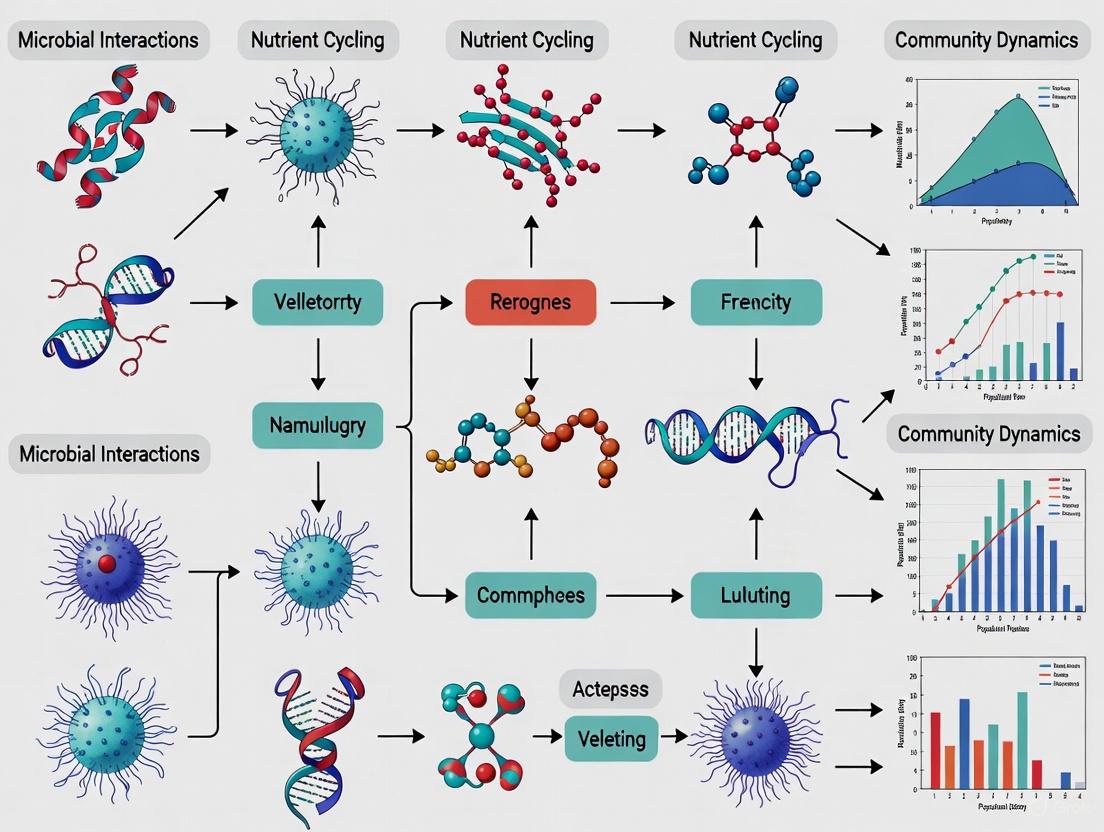
This article provides a comprehensive framework for analyzing microbial ecosystems, bridging foundational concepts with advanced applications in biomedical and clinical research.
From Microcosms to Models: Analyzing Microbial Ecosystems for Drug Discovery and Biomedical Innovation
Abstract
This article provides a comprehensive framework for analyzing microbial ecosystems, bridging foundational concepts with advanced applications in biomedical and clinical research. It explores the critical role of microbial communities in ecosystem functioning and human health, detailing the integration of modern molecular techniques like metagenomics with mechanistic modeling approaches such as Genome-Scale Metabolic Models (GEMs). The content covers standardized methodologies using fabricated ecosystems (EcoFABs) and microcosms for reproducible, mechanistic studies. It addresses key challenges in model uncertainty, cross-laboratory reproducibility, and data standardization while presenting validation frameworks and comparative analyses of reconstruction tools. Aimed at researchers, scientists, and drug development professionals, this resource highlights how microbial ecosystem analysis informs therapeutic development, antimicrobial stewardship, and precision medicine through a One Health lens.
The Invisible Drivers: Uncovering Microbial Community Structure and Function
Understanding the genetic basis of microbial ecosystem functions is critical for predicting and managing biogeochemical cycles, agricultural productivity, and environmental responses to climate change [1]. The Genomes-to-Ecosystems (G2E) framework represents a transformative approach that integrates microbial genetic information, traits, and community interactions into predictive ecosystem models [1]. This framework addresses the fundamental challenge in microbial ecology: mapping the complex relationships between genetic potential and emergent ecosystem processes.
Traditional ecosystem models often overlook microbial functional traits, creating significant prediction gaps, particularly under changing environmental conditions. The G2E framework bridges this gap by establishing direct linkages between genomic information, microbial functional traits, and ecosystem-level processes [1]. This protocol details the implementation of this framework through integrated computational and experimental approaches, enabling researchers to connect genetic composition to ecosystem functioning across diverse environments from peatlands to agricultural systems.
Computational Framework: From Genes to Ecosystem Prediction
G2E Framework Architecture
The G2E computational framework integrates multi-omics data into ecosystem models through a structured workflow (Figure 1). The process begins with genomic data extraction from environmental samples, progresses through functional annotation and trait inference, and culminates in ecosystem-level prediction.
Figure 1. G2E computational workflow for predicting ecosystem functions from microbial genomic data.
Protein Function Prediction for Uncharacterized Genes
A critical challenge in implementing the G2E framework is the substantial proportion of microbial proteins that remain uncharacterized. The FUGAsseM (Function predictor of Uncharacterized Gene products by Assessing high-dimensional community data in Microbiomes) method addresses this limitation through a multi-evidence integration approach [2].
Table 1: Evidence Types Integrated by FUGAsseM for Protein Function Prediction
| Evidence Type | Description | Application in Prediction |
|---|---|---|
| Sequence Similarity | Homology to characterized proteins | Identification of evolutionarily related functions |
| Genomic Proximity | Physical gene clustering | Inference of functional linkages via gene neighborhoods |
| Domain-Domain Interactions | Protein structural interactions | Prediction of molecular complex formation |
| Metatranscriptomic Coexpression | Coordinated gene expression patterns | Functional association via "guilt-by-association" |
Protocol 1: Community-Wide Protein Function Prediction Using FUGAsseM
Input Data Preparation: Compile metagenomic assemblies and metatranscriptomic sequencing data from environmental samples. For the human gut microbiome example, this included 1,595 metagenomes and 800 metatranscriptomes [2].
Protein Family Construction: Cluster predicted protein-coding sequences into families using tools such as MetaWIBELE, resulting in ~582,744 protein families in the referenced study [2].
Evidence Matrix Generation:
- Compute sequence similarity using BLAST or HMMER
- Identify genomic proximity from assembly scaffolds
- Extract coexpression patterns from metatranscriptomic counts
- Predict domain-domain interactions from protein sequences
Two-Layer Random Forest Classification:
- First Layer: Train individual random forest classifiers for each evidence type to assign putative functions
- Second Layer: Integrate per-evidence predictions using an ensemble random forest classifier to generate consensus functional annotations with confidence scores
Validation and Application: Assign Gene Ontology terms to uncharacterized protein families, enabling functional diversity analysis across microbial taxa. This approach successfully characterized >443,000 previously uncharacterized protein families, including >33,000 novel families lacking sequence homology to known proteins [2].
Experimental Validation: Microcosm Systems for Trait-Function Relationships
Microcosm Design Considerations
Microcosms provide controlled experimental systems for validating predictions generated by the G2E framework [3]. These model ecosystems simulate natural environments while allowing manipulation and monitoring of microbial communities and ecosystem processes.
Table 2: Microcosm Types for Experimental Validation of G2E Predictions
| Microcosm Type | Components | Applications in G2E Validation | References |
|---|---|---|---|
| Aquatic Microcosm | Algae, protozoa, crustaceans, natural microbial communities | Pollutant impact studies, nutrient cycling, community dynamics | [3] |
| Terrestrial Microcosm | Soil, plants, soil microorganisms | Soil microbial community responses, plant-microbe interactions | [3] |
| Wetland Microcosm | Aquatic and terrestrial interface components | Pollutant persistence, migration transformation studies | [3] |
| Synthetic Microbial Ecosystems | Defined microbial communities | Investigation of specific ecological interactions | [4] |
Protocol for Aquatic Microcosm Establishment
Protocol 2: Standardized Aquatic Microcosm for Community-Level Ecological Assessment
System Design and Fabrication:
- Select appropriate chamber size based on experimental objectives
- For imaging applications, utilize transparent materials (e.g., glass, PDMS) to allow microscopic observation
- Incorporate ports for sampling and liquid exchange using needle injection systems [5]
Biological Community Assembly:
- Collect water and sediment from natural aquatic environments
- Standardize inoculum to ensure reproducibility across replicates
- Introduce representative organisms: algae, protozoa, crustaceans, and natural microbial communities [3]
Environmental Parameter Control:
- Maintain temperature, light cycles, and nutrient concentrations relevant to the simulated ecosystem
- Monitor pH, dissolved oxygen, and conductivity regularly
- Establish nutrient gradients for perturbation experiments
Experimental Monitoring and Sampling:
- Conduct non-destructive monitoring of community structure via microscopy and water chemistry
- Perform destructive sampling at predetermined intervals for molecular analyses (DNA/RNA extraction)
- Track ecosystem functions such as nutrient cycling rates, decomposition, and gas exchange
Data Integration with G2E Predictions:
- Compare observed functional rates with model predictions
- Validate trait-function relationships inferred from genomic data
- Refine model parameters based on experimental outcomes
Integrated Case Study: Peatland Ecosystem Carbon Cycling
Implementation of the G2E Framework
A comprehensive implementation of the G2E framework was demonstrated in a study of the Stordalen Mire, a peatland ecosystem in Northern Sweden [1]. The research integrated field measurements, genomic analyses, and ecosystem modeling to understand microbial drivers of carbon cycling.
Protocol 3: Field to Model Integration for Ecosystem Prediction
Field Sampling and Characterization:
- Collect soil cores across environmental gradients
- Measure in situ process rates (e.g., methane flux, decomposition rates)
- Preserve samples for molecular analyses at multiple depths
Microbial Community Analysis:
- Extract and sequence microbial DNA from soil samples
- Analyze microbial functional traits and genetic potential
- Group microbes into functional groups based on genetic capabilities
Model Integration and Validation:
- Incorporate microbial functional groups into the ecosys model
- Parameterize trait-based relationships using genomic data
- Validate model predictions against measured gas exchange and nutrient cycling rates
- The integrated model demonstrated improved prediction of gas and water exchange between soil, vegetation, and atmosphere [1]
Reagent Solutions for G2E Implementation
Table 3: Essential Research Reagents for G2E Workflow Implementation
| Reagent/Category | Specific Examples | Function in G2E Workflow |
|---|---|---|
| DNA/RNA Extraction Kits | DNeasy PowerSoil Pro Kit, RNeasy PowerMicrobiome Kit | High-quality nucleic acid extraction from complex environmental samples |
| Sequencing Reagents | Illumina NovaSeq kits, Oxford Nanopore ligation sequencing kits | Metagenomic and metatranscriptomic library preparation and sequencing |
| Microcosm Components | Transparent soil substitutes, PDMS spacers, glass chambers | Fabrication of reproducible experimental ecosystems for hypothesis testing |
| PCR Reagents | 16S/ITS primer sets, high-fidelity polymerase, dNTP mixes | Target gene amplification for community profiling and functional gene quantification |
| Bioinformatics Tools | MetaWIBELE, FUGAsseM, mc-prediction workflow | Computational analysis of multi-omics data and ecosystem model integration |
Advanced Applications and Future Directions
Predictive Modeling of Community Dynamics
The G2E framework can be extended to predict temporal dynamics of microbial communities using graph neural network approaches. The "mc-prediction" workflow enables forecasting of species-level abundance dynamics up to 2-4 months into the future using historical relative abundance data [6].
Figure 2. Graph neural network workflow for predicting microbial community dynamics.
Agricultural and Environmental Management Applications
The G2E framework provides powerful applications for ecosystem management:
- Agricultural Optimization: Predicting crop responses to environmental stress by modeling microbial mediation of nutrient availability [1]
- Climate Resilience: Forecasting ecosystem responses to extreme events (wildfires, drought, flooding) through microbial functional traits [1]
- Bioremediation Strategies: Identifying microbial taxa and genes critical for pollutant degradation using synthetic microbial ecosystems [4] [3]
- Human Health: Translating ecosystem approaches to human gut microbiome analysis and therapeutic development [2] [6]
The Genomes-to-Ecosystems framework represents a paradigm shift in microbial ecology, enabling direct connections between genetic information and ecosystem functioning. By integrating computational approaches like FUGAsseM for protein function prediction with experimental validation through microcosm systems, researchers can now more accurately model and predict how microbial communities drive essential ecosystem processes. The protocols and applications outlined here provide a roadmap for implementing this framework across diverse ecosystems, from natural environments to engineered systems, ultimately enhancing our ability to manage ecosystem functions in a changing world.
Microorganisms are the primary engineers of Earth's biogeochemical cycles, acting as key drivers in the transformation and mobility of carbon (C), nitrogen (N), and sulfur (S) across various ecosystems [7]. These cycles form the bedrock of ecosystem functionality, influencing processes from primary production to climate regulation. Understanding the microbial metabolism underlying these cycles is not only fundamental to ecology but also critical for applied fields such as environmental biotechnology and climate change mitigation [8]. The intricate interplay of microbial communities in these processes can be effectively studied through controlled microcosm experiments and molecular techniques, allowing researchers to decouple complex interactions and predict ecosystem responses under changing environmental conditions [8] [9]. This document outlines the core metabolic pathways and presents standardized protocols for investigating these processes in laboratory settings, providing a framework for advancing research in microbial ecosystem analysis.
Core Microbial Metabolic Pathways
Microorganisms mediate biogeochemical cycles through a series of redox reactions, often interconverting oxidized and reduced forms of elements [10] [11]. The key collective metabolic processes of microbes—including nitrogen fixation, carbon fixation, and sulfur metabolism—effectively control global biogeochemistry [7].
Table 1: Key Microbial Processes in Biogeochemical Cycling
| Element | Process | Key Microorganisms | Metabolic Function | Input | Output |
|---|---|---|---|---|---|
| Carbon | Photosynthesis | Cyanobacteria, Photoautotrophs | Carbon fixation | CO₂, Sunlight | Organic C, O₂ |
| Methanogenesis | Methanogenic Archaea | Anaerobic respiration | CO₂, Acetate | CH₄ | |
| Methanotrophy | Methanotrophs | Aerobic/Anaerobic oxidation | CH₄ | CO₂, Biomass | |
| Nitrogen | Nitrogen Fixation | Rhizobium, Azotobacter, Cyanobacteria | N₂ reduction | N₂ | NH₃ |
| Nitrification | Nitrosomonas, Nitrobacter | NH₃ oxidation | NH₃ | NO₂⁻, NO₃⁻ | |
| Denitrification | Pseudomonas, Clostridium | NO₃⁻ reduction | NO₃⁻ | N₂ | |
| Anammox | Planctomycetes | Anaerobic NH₄⁺ oxidation | NH₄⁺, NO₂⁻ | N₂ | |
| Sulfur | Sulfate Reduction | Desulfovibrio, Desulfotomaculum | Anaerobic respiration | SO₄²⁻, Organic C | H₂S |
| Sulfur Oxidation | Acidithiobacillus, Beggiatoa | H₂S/S⁰ oxidation | H₂S, S⁰ | SO₄²⁻ | |
| Sulfur Disproportionation | Desulfobulbus | S⁰ conversion | S⁰ | SO₄²⁻, H₂S |
Carbon Cycle
Carbon is the fundamental building block of all organic compounds. The transformative process by which carbon dioxide is taken up from the atmosphere and converted into organic substances is called carbon fixation [7]. Photoautotrophs, such as cyanobacteria, harness sunlight for this process, while chemoautotrophs utilize energy from inorganic chemical compounds [10] [11]. In anaerobic environments, archaeal methanogens perform methanogenesis, using CO₂ as a terminal electron acceptor to produce methane (CH₄), a potent greenhouse gas [10] [11]. Conversely, methanotrophs consume methane as their carbon source, helping to regulate atmospheric methane levels [10] [11]. Beyond climate impacts, microbial carbon cycling is crucial for soil health, with microbial necrotic mass contributing an estimated 50-80% of soil organic carbon (SOC) [12].
Nitrogen Cycle
Although nitrogen gas (N₂) constitutes 78% of the atmosphere, it is largely inaccessible to most life forms. Nitrogen fixation, performed mainly by bacteria possessing the nitrogenase enzyme (e.g., Rhizobium, Azotobacter, and cyanobacteria), converts N₂ into ammonia (NH₃), making it biologically available [7] [10]. The nitrogen that enters living systems is eventually converted back to N₂ gas through a series of microbial processes: ammonification (conversion of organic nitrogen to NH₃), nitrification (oxidation of NH₃ to nitrite [NO₂⁻] and then to nitrate [NO₃⁻] by bacteria like Nitrosomonas), and denitrification (reduction of NO₃⁻ to N₂ by bacteria like Pseudomonas and Clostridium) [10] [11]. These processes are crucial for ecosystem productivity and are significantly influenced by human activities, such as fertilizer application, which can lead to eutrophication [11].
Sulfur Cycle
Sulfur is an essential component of amino acids (cysteine and methionine) and enzyme cofactors [11] [13]. Microbial sulfur metabolism involves both assimilatory (for biomass synthesis) and dissimilatory (for energy generation) pathways [13]. Sulfur-oxidizing microorganisms (SOMs), such as Acidithiobacillus, oxidize hydrogen sulfide (H₂S) or elemental sulfur (S⁰) to sulfate (SO₄²⁻), often in aerobic conditions [11] [13]. In contrast, sulfur-reducing microorganisms (SRMs), including Desulfovibrio, perform dissimilatory sulfate reduction, using SO₄²⁻ as a terminal electron acceptor in anaerobic respiration, producing H₂S [13]. This metabolism is critically important in environmental issues like acid mine drainage (AMD), where the oxidation of sulfide minerals generates sulfuric acid, and in the "blackening" of urban rivers due to metal sulfide precipitation [13]. The sulfur cycle is intricately linked with the cycles of carbon, nitrogen, and iron [14] [13].
Diagram 1: Microbial pathways in C, N, and S cycling.
Quantitative Analysis of Microbial Functional Genes
Molecular techniques, particularly functional gene analysis, provide powerful tools for quantifying the potential and activity of microbial communities in biogeochemical cycling. GeoChip analysis, a comprehensive functional gene array, has been employed to study the abundance and distribution of key genes involved in C, N, and S metabolism across diverse environments, such as mangroves [15].
Table 2: Key Functional Genes for Monitoring Biogeochemical Cycles
| Target Cycle | Functional Gene | Encoded Enzyme | Process | Relative Abundance* | Key Genera |
|---|---|---|---|---|---|
| Carbon Cycle | amyA | α-Amylase | Carbon Degradation | High (69%) | Pseudomonas, Rhodococcus |
| mcrA | Methyl-CoM Reductase | Methanogenesis | Variable | Methanogenic Archaea | |
| pmoA | Particulate Methane Monooxygenase | Methanotrophy | Variable | Methanotrophs | |
| Nitrogen Cycle | nifH | Nitrogenase | Nitrogen Fixation | Medium | Rhizobium, Azotobacter |
| narG | Nitrate Reductase | Denitrification | High | Pseudomonas, Clostridium | |
| amoA | Ammonia Monooxygenase | Nitrification | Medium | Nitrosomonas | |
| Sulfur Cycle | dsrA | Dissimilatory Sulfite Reductase | Sulfate Reduction | Medium | Desulfovibrio, Desulfotomaculum |
| soxB | Sulfur Oxidation | Sulfur Oxidation | Low | Acidithiobacillus | |
| aprA | Adenosine-5'-phosphosulfate Reductase | Sulfate Reduction/Sulfur Oxidation | Low | Desulfobulbus, Beggiatoa | |
| Phosphorus Cycle | ppx | Exopolyphosphatase | Polyphosphate Degradation | High | Various |
Note: Relative Abundance is based on GeoChip data from mangrove sediments [15], provided for comparative purposes only. Actual abundances are environment-dependent.
The abundance of functional genes can reveal the predominant processes within an ecosystem. For instance, the high abundance of amyA (involved in carbon degradation) and narG (involved in denitrification) in mangroves suggests that carbon degradation and denitrification are particularly crucial processes in these environments [15]. Furthermore, certain bacterial genera, such as Neisseria, Pseudomonas, and Desulfotomaculum, have been found to synergistically participate in multiple biogeochemical cycles, highlighting the interconnectedness of these elemental pathways [15].
Application Notes & Experimental Protocols
Protocol 1: Establishing a Synthetic Model Ecosystem (Microcosm)
Application: This protocol details the creation of a highly replicable, cryopreservable synthetic microbial ecosystem for studying population and ecosystem dynamics, including biogeochemical processes [16].
Background: Experimental ecosystems, or microcosms, are powerful tools for microbial ecology. A synthetic system of 12 phylogenetically and functionally diverse, cryopreservable species allows for high-throughput experimentation under controlled conditions, enabling the study of interspecific interactions, higher-order effects, and ecosystem stability [16].
Table 3: Research Reagent Solutions for Synthetic Microcosm
| Item Name | Function/Description | Specifications/Notes |
|---|---|---|
| Defined Microbial Consortium | 12 functionally diverse, axenic, cryopreservable species | Includes prokaryotic and eukaryotic producers, consumers, and decomposers to ensure functional redundancy. |
| Cryopreservation Medium | Long-term storage of synthetic community stocks | Typically contains a cryoprotectant like glycerol (15-20% v/v). |
| Minimal Salt Medium | Base medium for microcosm operation | Provides essential inorganic nutrients (N, P, S, trace metals) without complex organics. |
| Carbon Source (e.g., Cellulose) | Primary carbon and energy source for heterotrophs | Concentration can be manipulated to test resource limitation effects. |
| Sulfur Source (e.g., CaSO₄) | Sulfur source for assimilatory and dissimilatory metabolism. | For studying sulfur cycling; can be omitted or replaced. |
| Sterile Sediment/Matrix | Provides a solid surface for biofilm formation and spatial structure. | Can be sterilized by autoclaving (121°C for 15 min) [9]. |
Procedure:
- Community Design: Select a synthetic community comprising 12 (or another defined number) microbial species. The community should include producers (e.g., cyanobacteria for photosynthesis, chemoautotrophs), consumers (e.g., protists, bacterivorous bacteria), and decomposers (e.g., heterotrophic bacteria and fungi) to establish a functional nutrient-cycling ecosystem [16].
- Inoculum Preparation: Thaw cryopreserved stock cultures of each species. Grow each strain axenically to mid-log phase in their appropriate growth media. Harvest cells by gentle centrifugation, wash, and resuspend in a sterile, non-nutritive buffer (e.g., phosphate-buffered saline) to remove residual media.
- Microcosm Assembly: Combine the washed cell suspensions to create a defined, synchronized synthetic community inoculum. In a microbiological cabinet, add this mixed inoculum to sterile microcosm vessels containing the pre-prepared sterile sediment matrix and liquid medium supplemented with nutrients (e.g., 0.25 g CaCO₃, 2.5 g cellulose, 5 g CaSO₄ per 100 g sediment) [9]. Homogenize thoroughly.
- Incubation: Incubate the microcosms under constant, controlled conditions (e.g., 25°C, with a Northlight illumination cycle if phototrophs are present) for an extended period (e.g., 16 weeks), until visible changes and system parameters (e.g., redox potential) stabilize [9].
- Monitoring and Sampling: Monitor ecosystem development non-invasively (e.g., via microscopy and image analysis aided by machine learning) [16]. Destructively sample replicate microcosms at predetermined time points for molecular analysis (e.g., DNA extraction for 16S rRNA amplicon sequencing or metatranscriptomics) and geochemical measurements (e.g., pH, redox potential, ion chromatography for S and N species).
Diagram 2: Microcosm establishment workflow.
Protocol 2: Analyzing Functional Genes via GeoChip
Application: To quantify the abundance and diversity of microbial functional genes involved in biogeochemical cycling in environmental samples or microcosms [15].
Background: GeoChip is a functional gene array containing probes for thousands of genes involved in various metabolic processes. It allows for a high-throughput, parallel analysis of the functional potential of a microbial community.
Table 4: Research Reagent Solutions for GeoChip Analysis
| Item Name | Function/Description | Specifications/Notes |
|---|---|---|
| DNA Extraction Kit | Isolation of high-quality, high-molecular-weight community DNA | e.g., MoBio UltraClean Soil DNA Isolation Kit [15]. |
| PCR Master Mix | Amplification of community DNA with fluorescently labeled primers | For ribosomal RNA genes for community structure analysis. |
| Hybridization Buffer | Facilitates binding of labeled DNA targets to array probes | Specific to the GeoChip platform. |
| GeoChip Microarray | Contains oligonucleotide probes for functional genes | e.g., GeoChip 5.0 for genes related to C, N, S, P cycles [15]. |
| Scanner | Detection of fluorescent signals on the hybridized array | e.g., A confocal laser scanner. |
Procedure:
- Community DNA Extraction: Extract total genomic DNA from homogenized environmental samples (e.g., 1 g of sediment or soil) using a commercial DNA isolation kit, following the manufacturer's instructions [15]. Assess DNA quality and quantity using spectrophotometry and gel electrophoresis.
- DNA Amplification and Labeling: Amplify the community DNA via whole-community genome amplification (WGGA) using random primers. Incorporate a fluorescent dye (e.g., Cy5) into the amplified DNA products during the amplification or via a post-amplification labeling reaction.
- Hybridization: Purify the labeled DNA and resuspend it in the appropriate hybridization buffer. Apply the solution to the GeoChip microarray. Incubate the array at a stringent temperature (e.g., 45-50°C) for a specific duration (e.g., 16 hours) in a hybridization oven to allow the labeled DNA fragments to bind to their complementary probes on the array.
- Washing and Scanning: After hybridization, wash the array with specific buffers to remove non-specifically bound DNA. Scan the array immediately with a confocal laser scanner set to the appropriate wavelength for the fluorescent dye used.
- Data Analysis: Extract the signal intensity data for each probe on the array. Quality control steps include removing spots with low signal-to-noise ratios. Normalize the data across different arrays. The normalized signal intensity for a specific functional gene (e.g.,
dsrAfor sulfate reduction) is considered a proxy for the relative abundance and potential activity of that microbial process in the sample [15].
Discussion & Research Implications
The study of microbial roles in biogeochemical cycles using controlled microcosms and molecular tools like GeoChip provides critical insights for both basic and applied science. Research has shown that the predictability of microbial community development is influenced by its history and the strength of environmental selection [9]. When a source community colonizes a novel environment, the final composition and function can be unpredictable, though a historical signature remains. However, pre-conditioning the community to the new habitat increases the reproducibility of community development [9]. This finding is crucial for biotechnology applications where predictable outcomes are desired, such as in bioremediation and wastewater treatment.
Furthermore, microbial interactions (competition, cooperation, syntrophy) significantly influence biogeochemical cycling, often leading to emergent properties not predictable from individual species alone [8] [16]. For instance, in mangrove ecosystems, genera like Neisseria, Ruegeria, and Desulfotomaculum were found to synergistically participate in multiple element cycles [15]. This functional redundancy and interaction network contribute to ecosystem resilience. Understanding these dynamics through synthetic ecosystems and modeling, as conducted by the Department of Microbial Ecosystem Analysis at UFZ, allows for better prediction of ecosystem responses to disturbances and informs the design of management strategies to enhance ecosystem services [8].
Metagenomic sequencing represents a paradigm shift in microbial ecology, enabling the comprehensive analysis of genetic material recovered directly from environmental samples, without the need for laboratory cultivation [17]. This approach has revolutionized our ability to study the vast majority of microorganisms that previously resisted traditional culturing techniques. Genome-resolved metagenomics extends this capability by reconstructing whole genomes from complex metagenomic datasets, linking functional potential to specific microbial taxa within their environmental context [18]. These techniques are particularly valuable for studying microbial communities in diverse habitats, from terrestrial ecosystems [1] and wastewater treatment plants [6] to host-associated microbiomes.
The integration of these molecular techniques with ecosystem modeling and microcosm research provides a powerful framework for understanding and predicting microbial community dynamics. By coupling high-resolution genomic data with advanced computational models, researchers can now explore the relationships between microbial genes, traits, and ecosystem functions at unprecedented scales [1]. This integration is essential for addressing fundamental questions in microbial ecology and for applying this knowledge to challenges in agriculture, environmental management, and human health.
Key Applications in Microbial Ecosystem Analysis
Applications Across Sectors
Table 1: Key Application Areas of Metagenomic Sequencing and Genome-Resolved Analysis
| Application Area | Specific Use Cases | Relevance to Ecosystem Modeling |
|---|---|---|
| Environmental Monitoring | Soil health assessment, biogeochemical cycling analysis, pollutant degradation monitoring | Provides trait-based data for predicting ecosystem responses to environmental change [1] |
| Agricultural Management | Soil nutrient availability prediction, crop productivity assessment, microbial inoculant development | Informs models of plant-microbe interactions and nutrient cycling in agroecosystems [1] |
| Wastewater Treatment | Process-critical bacteria monitoring, system performance optimization, disturbance prediction | Enables forecasting of microbial community dynamics to prevent system failures [6] |
| Clinical Diagnostics | Infectious disease detection, microbiome dysbiosis identification, outbreak tracking | Supports models of host-microbe interactions and disease progression |
| Drug Discovery | Natural product screening, biosynthetic gene cluster identification, antibiotic discovery | Facilitates exploration of microbial chemical diversity for therapeutic applications |
Quantitative Market Growth and Adoption
The growing adoption of metagenomic technologies is reflected in market projections. The global metagenomic sequencing market size is calculated at $3.66 billion in 2025 and is predicted to reach approximately $16.81 billion by 2034, representing a compound annual growth rate (CAGR) of 18.53% [19]. Similarly, the United States next-generation sequencing market specifically is expected to grow from $3.88 billion in 2024 to $16.57 billion by 2033, with a CAGR of 17.5% [20]. This growth is driven by technological advancements, decreasing costs, and expanding applications across multiple sectors.
Experimental Protocols and Methodologies
Protocol 1: Deep Long-Read Metagenomic Sequencing for Genome-Resolved Analysis
This protocol outlines the methodology for comprehensive microbial genome recovery from complex terrestrial samples, based on the Microflora Danica project that successfully identified 15,314 previously undescribed microbial species [18].
Sample Collection and DNA Extraction
- Sample Collection: Collect soil or sediment samples using sterile corers. For the Microflora Danica project, 154 samples (125 soil, 28 sediment, 1 water) from 15 distinct habitats were collected [18].
- DNA Extraction: Perform high-molecular-weight DNA extraction using commercially available kits optimized for complex environmental matrices. Critical steps include:
- Mechanical and chemical lysis to maximize DNA yield from diverse microbial taxa
- Inhibitor removal to eliminate humic acids and other contaminants
- DNA quality assessment via spectrophotometry and fluorometry
- DNA quantification using fluorometric methods
Library Preparation and Sequencing
- Library Preparation: Prepare sequencing libraries using ligation-based kits compatible with Nanopore technology. Standard protocols include:
- DNA repair and end-prep
- Native barcode ligation for sample multiplexing
- Adapter ligation for flow cell binding
- Sequencing: Perform deep long-read sequencing on Oxford Nanopore platforms:
- Target sequencing depth: ~100 Gbp per sample
- Utilize flow cells compatible with high-output sequencing (e.g., PromethION)
- Expected read N50: 6.1 kbp (IQR: 4.6-7.3 kbp)
Bioinformatic Processing with mmlong2 Workflow
The custom mmlong2 workflow enables high-throughput MAG recovery from complex samples through multiple optimizations [18]:
Figure 1: Genome-resolved metagenomics workflow for complex samples
Key Computational Steps:
- Metagenome Assembly: Assemble reads into contigs using Flye or similar assemblers
- Contig Polishing: Polish assemblies using Medaka to reduce sequencing errors
- Eukaryotic Contig Removal: Filter out eukaryotic sequences to focus on prokaryotic diversity
- Circular MAG Extraction: Identify and extract circular elements as separate genome bins
- Differential Coverage Binning: Incorporate read mapping information from multisample datasets
- Ensemble Binning: Apply multiple binners (e.g., MetaBAT2, MaxBin2) to the same metagenome
- Iterative Binning: Perform multiple rounds of binning to maximize recovery
- Quality Assessment: Evaluate MAG completeness and contamination using CheckM
Protocol 2: Predictive Modeling of Microbial Community Dynamics
This protocol describes the implementation of graph neural network models for predicting temporal dynamics in microbial communities, validated on datasets from 24 Danish wastewater treatment plants (4,709 samples collected over 3-8 years) [6].
Sample Collection and Amplicon Sequencing
- Longitudinal Sampling: Collect samples consistently over extended periods (2-5 times per month for 3-8 years)
- DNA Extraction and 16S rRNA Sequencing:
- Extract DNA using standardized protocols
- Amplify variable regions of the 16S rRNA gene
- Sequence amplicons using Illumina platforms
- Sequence Processing:
- Process raw sequences through DADA2 or similar pipeline to resolve amplicon sequence variants (ASVs)
- Classify ASVs using ecosystem-specific databases (e.g., MiDAS 4 for wastewater systems)
Data Preprocessing for Temporal Modeling
- ASV Selection: Select the top 200 most abundant ASVs per dataset, representing 52-65% of all sequence reads
- Data Splitting: Chronologically split each dataset into training (60%), validation (20%), and test (20%) sets
- Pre-clustering: Group ASVs into clusters of 5 using one of four methods:
- Biological function (e.g., PAOs, GAOs, filamentous bacteria)
- Graph network interaction strengths
- Improved Deep Embedded Clustering (IDEC)
- Ranked abundances
Graph Neural Network Model Implementation
Figure 2: Graph neural network architecture for predicting microbial dynamics
Model Training and Prediction:
- Input Structure: Use moving windows of 10 consecutive samples from each multivariate cluster
- Graph Convolution Layer: Learn interaction strengths and extract relational features among ASVs
- Temporal Convolution Layer: Extract temporal features across timepoints
- Output Layer: Use fully connected neural networks to predict future relative abundances
- Prediction Horizon: Forecast 10 consecutive timepoints into the future (2-4 months depending on sampling frequency)
Integration with Ecosystem Modeling and Microcosm Research
Genomes-to-Ecosystems (G2E) Modeling Framework
The Genomes-to-Ecosystems (G2E) framework represents a novel approach that integrates microbial genetic information and traits into ecosystem models [1]. This framework enables researchers to:
- Incorporate Microbial Traits: Use genetic information to infer microbial traits such as growth rates, substrate preferences, and stress tolerance
- Predict Ecosystem Functions: Estimate soil carbon dynamics, nutrient availability, and greenhouse gas emissions
- Forecast Ecosystem Responses: Model how ecosystems respond to disturbances like drought, flooding, or temperature changes
The G2E framework has been successfully integrated into the ecosys model, which has been tested in high-latitude regions including the Stordalen Mire in Northern Sweden [1]. This integration has demonstrated improved predictions of gas and water exchanges between soil, vegetation, and the atmosphere.
Microcosm Fabrication for Controlled Experimentation
Advanced microcosm fabrication platforms enable real-time, in situ imaging of plant-soil-microbe interactions [5]. These systems provide:
- Controlled Environments: Precisely manipulate environmental conditions while maintaining observational access
- Live Microscopy: Monitor microbial dynamics and root-microbe interactions in real-time
- High-Throughput Screening: Rapidly test the effects of crop varieties, agrochemicals, and microbial inoculants
Microcosm chambers are typically assembled from glass parts with poly(dimethyl siloxane) (PDMS) spacers, allowing injection and aspiration of solutions while maintaining optical clarity for imaging [5]. These systems bridge the gap between simplified laboratory conditions and complex natural environments, providing validation platforms for models derived from metagenomic data.
The Scientist's Toolkit: Essential Research Reagents and Materials
Table 2: Essential Research Reagents and Materials for Metagenomic Sequencing and Genome-Resolved Analysis
| Category | Specific Products/Platforms | Function and Application |
|---|---|---|
| Sequencing Platforms | Oxford Nanopore PromethION, PacBio Sequel II, Illumina NovaSeq X | High-throughput DNA sequencing; long-read technologies enable more complete genome reconstruction [18] |
| DNA Extraction Kits | DNeasy PowerSoil Pro Kit, MagAttract HMW DNA Kit | High-molecular-weight DNA extraction from complex matrices; critical for long-read sequencing |
| Library Prep Kits | Nanopore Ligation Sequencing Kits, PacBio SMRTbell Prep Kits | Preparation of DNA libraries optimized for specific sequencing technologies |
| Bioinformatics Tools | mmlong2 workflow, metaSPAdes, CheckM, GTDB-Tk | Genome assembly, binning, quality assessment, and taxonomic classification [18] |
| Microcosm Materials | PDMS spacers, transparent soil analogs, microfluidics chambers | Create controlled environments for visualizing plant-microbe interactions [5] |
| Computational Resources | DRAGEN Bio-IT Platform, Illumina Connected Analytics | Secondary analysis of sequencing data; management of large genomic datasets |
Analytical Frameworks and Data Interpretation
Genome Quality Assessment Standards
Metagenome-assembled genomes (MAGs) must be evaluated using standardized quality metrics:
- High-Quality MAGs: >90% completeness, <5% contamination
- Medium-Quality MAGs: ≥50% completeness, <10% contamination
- Quality Control: Assess coding density, check for conserved single-copy genes, evaluate polymorphism rates
The Microflora Danica project recovered 6,076 high-quality and 17,767 medium-quality MAGs from 154 samples, dramatically expanding known microbial diversity [18].
Predictive Model Validation
For temporal dynamics models, prediction accuracy should be evaluated using multiple metrics:
- Bray-Curtis Similarity: Measures dissimilarity between predicted and observed community compositions
- Mean Absolute Error (MAE): Average magnitude of errors in abundance predictions
- Mean Squared Error (MSE): Gives higher weight to large errors
The graph neural network approach demonstrated accurate predictions of species dynamics up to 10 time points ahead (2-4 months), and in some cases up to 20 time points (8 months) [6].
Metagenomic sequencing and genome-resolved analysis have transformed our ability to study microbial communities in their natural contexts. The integration of these molecular techniques with ecosystem modeling and microcosm research creates a powerful framework for understanding and predicting microbial dynamics across diverse habitats.
Future advancements in this field will likely focus on:
- Portable Sequencing Technologies: Enabling real-time, in situ metagenomic analysis
- AI-Driven Analytics: Improving genome recovery and predictive modeling through machine learning
- Multi-Omics Integration: Combining metagenomics with metatranscriptomics and metaproteomics
- Standardized Data Sharing: Developing common frameworks for data exchange and reproducibility
As these technologies continue to evolve and become more accessible, they will play an increasingly critical role in addressing challenges in environmental management, agricultural productivity, and human health.
Spatial and Temporal Dynamics in Microbial Communities
Understanding the spatial and temporal dynamics of microbial communities is fundamental to managing ecosystems, optimizing engineered biological systems, and combating human infections. These dynamics are governed by a complex web of interactions, including metabolic cross-feeding, quorum sensing, and competition, which collectively shape the community's structure and function over time and across different physical niches [21] [22]. In both natural and engineered environments, microbial communities exhibit distinct spatial stratification and temporal succession patterns that are critical to their ecological roles. For instance, in slow sand filters (SSFs) used for water purification, prokaryotic communities show significant vertical stratification, with the top layer (Schmutzdecke) hosting higher biomass and diversity compared to deeper layers [23]. Temporally, these communities demonstrate resilience, gradually adapting and maturing after disturbances such as scraping [23]. The rise of antimicrobial resistance (AMR) underscores the clinical importance of this research, as interspecies interactions within polymicrobial infections can dramatically alter pathogen responses to antibacterial treatments, often leading to poor patient outcomes [21]. Advanced modeling techniques, including genome-scale metabolic models and graph neural networks, are now enabling researchers to predict these complex dynamics, offering new avenues for controlling microbial ecosystems for human and environmental health [24] [6].
Computational Analysis and Modeling Protocols
Graph Neural Network for Temporal Dynamics Prediction
Principle: This protocol uses a Graph Neural Network (GNN) to predict the future relative abundance of individual microbial taxa in a community based on historical time-series data. The model captures complex, non-linear interactions between taxa to forecast dynamics without requiring detailed environmental parameters [6].
Experimental Workflow:
Figure 1: Workflow for predicting microbial community dynamics using a Graph Neural Network (GNN).
Procedure:
- Data Input and Preprocessing:
- Collect time-series data of microbial relative abundances, ideally with 2-5 samples per month over several years [6].
- Use 16S rRNA amplicon sequencing and classify Amplicon Sequence Variants (ASVs) using an ecosystem-specific taxonomic database like MiDAS 4 for high resolution [6].
- Select the top 200 most abundant ASVs for analysis, which typically represent over half of the community biomass [6].
- Chronologically split the dataset into training, validation, and test sets (e.g., 70%/15%/15%) [6].
Pre-clustering of ASVs:
- Cluster ASVs into groups (e.g., 5 ASVs per cluster) to improve model accuracy. The following methods can be compared [6]:
- Graph-based clustering: Cluster ASVs based on interaction strengths inferred from the graph network itself (often yields the best accuracy).
- Ranked abundance: Cluster ASVs simply by grouping them based on their ranked abundance.
- Biological function: Cluster ASVs into known functional groups (e.g., nitrifying bacteria, phosphate accumulators). This method generally yields lower prediction accuracy [6].
- Cluster ASVs into groups (e.g., 5 ASVs per cluster) to improve model accuracy. The following methods can be compared [6]:
Model Training and Prediction:
- Input: Use moving windows of 10 consecutive historical time points for each cluster of ASVs [6].
- Graph Convolution Layer: This layer processes the input to learn and extract the strength and features of interactions between the different ASVs in the cluster [6].
- Temporal Convolution Layer: This layer then analyzes the output from the graph layer across the time series to extract temporal patterns and features [6].
- Output Layer: Finally, a fully connected neural network uses all the extracted interaction and temporal features to predict the relative abundances of each ASV for the next 10 time points (corresponding to 2-4 months into the future) [6].
Validation:
- Evaluate prediction accuracy by comparing forecasts against the held-out test set using metrics like Bray-Curtis dissimilarity, Mean Absolute Error (MAE), and Mean Squared Error (MSE) [6].
Protocol for COMETS (Computation of Microbial Ecosystems in Time and Space)
Principle: COMETS extends Dynamic Flux Balance Analysis (dFBA) to simulate the metabolism and growth of multiple microbial species in complex, spatially structured environments. It models how species interact through the exchange of metabolites and how these interactions shape community spatial and temporal dynamics [24].
Procedure:
- Model Preparation:
Platform and Toolbox Installation:
- COMETS is an open-source tool available at www.runcomets.org [24].
- Install the COMETS software and the preferred Python (
cometspy) or MATLAB (comets-toolbox) toolbox, which are compatible with COBRA models and methods [24].
Simulation Setup:
- Define the Environment: Specify the molecular composition of the environment, including nutrient types and initial concentrations [24].
- Configure Spatial Parameters: Set up the spatial layout (e.g., 2D grid) and diffusion coefficients for metabolites [24].
- Load Species and Parameters: Load the metabolic models into the simulation landscape and set physiological parameters (e.g., biomass diffusion, death rate) [24].
- Set Evolution Dynamics: Optional: configure parameters to simulate evolutionary dynamics, such as mutation rates [24].
Run and Analyze Simulations:
Experimental Microcosm Protocols
In Situ Microcosm for Studying Microbial Survival
Principle: This protocol details the construction of microcosms to study the survival and dynamics of specific microorganisms (e.g., E. coli) in a natural-like setting (e.g., beach sand) under different nutrient and competition regimes. The microcosms allow for the controlled manipulation of environmental factors while exposing the community to natural field conditions [25].
Experimental Workflow:
Figure 2: Workflow for conducting in-situ microcosm experiments to study microbial survival.
Procedure:
- Microcosm Construction:
Environmental Matrix Preparation: Prepare the sand (or other matrix) with different treatments to test specific hypotheses [25]:
- Native Treatment: Use sand with its native microbial community and nutrient content intact.
- Autoclaved Treatment: Autoclave moist sand to sterilize it, which inactivates the native microbial community and releases organic nutrients.
- Baked Treatment: Bake sand at 550°C to create a nutrient-limited environment, then wash and autoclave to sterilize.
Inoculation and Experimental Setup:
- Grow the target microbial isolates (e.g., E. coli) for 18 hours in an appropriate medium [25].
- Wash the cells and dilute to the desired concentration (e.g., 10^6 cells/ml) [25].
- Fill the microcosms with the prepared sand treatments and seed with the microbial inoculum [25].
- Seal the microcosms securely with silicone sealant and bury them in the native environment (e.g., 0.5 m deep in beach sand) to simulate in-situ conditions [25].
Sampling and Analysis:
- Retrieve microcosms in replicates over a time series (e.g., after 45, 96, or 360 days) [25].
- Recover isolates to assess survivability and perform downstream analysis, such as phylotyping [25].
- To test the effect of nutrients, include treatments where a portion (e.g., 10% by weight) of autoclaved, nutrient-rich sand is added to native or baked sand microcosms [25].
Analyzing Spatial Stratification in Slow Sand Filters
Principle: This protocol investigates the spatial heterogeneity of prokaryotic communities at different depths of a slow sand filter (SSF), highlighting the distinct ecological niches and functions from the top Schmutzdecke layer to the deeper sand layers [23].
Procedure:
- Sample Collection:
- Collect sand core samples from a full-scale operating slow sand filter.
- Aseptically sub-section the core into distinct depth layers (e.g., 0-1 cm for the Schmutzdecke, 1-5 cm, 5-10 cm, etc.).
Biomass and Community Analysis:
- Extract total DNA from each sand layer subsection.
- Perform 16S ribosomal RNA gene-targeted amplicon sequencing (e.g., Illumina MiSeq) to profile the prokaryotic community [23].
- Use quantitative PCR (qPCR) to quantify the biomass (a proxy for the amount of bacterial and archaeal DNA) in each layer [23].
Bioinformatic and Statistical Analysis:
- Process sequencing reads to identify Amplicon Sequence Variants (ASVs) [22].
- Calculate alpha-diversity indices (e.g., Shannon, Chao1) for each depth layer to assess diversity.
- Perform statistical tests (e.g., PERMANOVA) to confirm significant differences in community composition (beta-diversity) between depths.
- Identify a "core" prokaryotic community that is persistent across different filters and depths (e.g., families like Nitrospiraceae, Pirellulaceae) [23].
Data Integration and Key Findings
Quantitative Findings on Microbial Dynamics
Table 1: Key quantitative findings on spatial and temporal microbial dynamics from recent studies.
| Study System | Key Quantitative Finding | Implication | Source |
|---|---|---|---|
| Slow Sand Filters (SSFs) | Biomass and diversity are significantly higher in the top Schmutzdecke layer compared to deeper layers. The relative abundance of archaea increases with depth. | Suggests vertical functional stratification, with different compounds removed in distinct layers. Archaea may be adapted to lower-nutrient conditions in deeper sand. | [23] |
| SSF Temporal Dynamics | After scraping (disturbance), the prokaryotic community shows minimal biomass increase for the first 3.6 years, eventually maturing into a diverse and even community. | Biology in SSFs is resilient. Suggests potential for earlier operational restart after cleaning, with continuous monitoring. | [23] |
| Graph Neural Network Prediction | Accurately predicts species dynamics up to 10 time points ahead (2–4 months), and sometimes up to 20 points (8 months), using only historical abundance data. | Provides a powerful tool for forecasting community changes, allowing for proactive management of ecosystems like wastewater treatment plants. | [6] |
| Microbial Interaction Impact | Co-culture of P. aeruginosa and S. aureus changes the essentiality of over 200 genes in S. aureus and can increase its tolerance to vancomycin. | Interspecies interactions can drastically alter antimicrobial susceptibility, explaining why single-species AST can fail to predict treatment outcomes. | [21] |
Core Microbial Community in Slow Sand Filters
Table 2: Core prokaryotic families identified in slow sand filters and their putative ecological functions.
| Prokaryotic Family | Putative Ecological Role in SSFs | Persistence |
|---|---|---|
| Nitrospiraceae | Complete ammonia oxidation (comammox) and nitrite oxidation; critical for nitrification. | Consistent across various depths, filters, and Schmutzdecke ages. |
| Pirellulaceae | Planctomycetes bacteria; involved in degradation of complex organic carbon compounds. | Consistent across various depths, filters, and Schmutzdecke ages. |
| Nitrosomonadaceae | Ammonia-oxidizing bacteria; key for the first step of nitrification. | Consistent across various depths, filters, and Schmutzdecke ages. |
| Gemmataceae | Another group of Planctomycetes; likely involved in organic matter degradation. | Consistent across various depths, filters, and Schmutzdecke ages. |
| Vicinamibacteraceae | Members of the phylum Acidobacteria; their specific function is less known but may involve oligotrophic metabolism. | Consistent across various depths, filters, and Schmutzdecke ages. |
The Scientist's Toolkit: Research Reagent Solutions
Table 3: Essential reagents, materials, and tools for researching microbial community dynamics.
| Item | Function / Application | Protocol / Context |
|---|---|---|
| Polyvinyl Chloride (PVC) Microcosms | In-situ chamber for studying microbial survival under natural conditions while controlling the matrix. | In-situ microcosm protocol [25]. |
| 0.22 µm Filters | Allows for gas and moisture exchange while preventing microbial contamination in microcosms. | In-situ microcosm protocol [25]. |
| Autoclaved & Baked Sand | Creates defined nutrient and competition conditions (nutrient-rich vs. nutrient-limited) in microcosms. | In-situ microcosm protocol [25]. |
| 16S rRNA Gene Primers | Amplification of hypervariable regions for prokaryotic community profiling via amplicon sequencing. | Standard for community analysis [22]. |
| MiDAS 4 Database | Ecosystem-specific taxonomic database for high-resolution classification of ASVs in wastewater communities. | GNN prediction protocol [6]. |
| COMETS Software | Open-source platform for simulating microbial community metabolism in time and space. | COMETS modeling protocol [24]. |
| Graph Neural Network (GNN) Model | Machine learning architecture for predicting future microbial abundances from historical data. | GNN prediction protocol [6]. |
| Synthetic Cystic Fibrosis Medium (SCFM2) | Disease-mimicking growth medium that reflects the nutritional composition of the infection site. | Improves clinical relevance of antimicrobial susceptibility testing [21]. |
Application Note: Integrating Eco-Evolutionary Dynamics into Microbial Ecosystem Models
Theoretical Framework and Significance
Eco-evolutionary dynamics represent a paradigm shift in microbial ecology, recognizing that evolutionary and ecological processes can operate on concurrent timescales [26]. Rather than treating evolution as a slow, background process, contemporary research demonstrates that rapid evolutionary change can directly influence ecological dynamics, which in turn feed back to alter evolutionary trajectories [27] [26]. This reciprocal relationship forms feedback loops that are central to understanding microbial community stability, resilience, and function.
In microbial systems, these feedback mechanisms are particularly significant due to the rapid generation times and immense population sizes of microorganisms. Evidence from natural systems, including a documented stabilizing feedback loop in a plant-arthropod system, shows that local adaptation mediates predation pressure, which subsequently affects population abundance and ultimately feeds back to either strengthen or weaken selection pressures [26]. In microbial contexts, such feedback loops may govern phenomena ranging from antibiotic resistance development to biogeochemical cycling.
Key Eco-Evolutionary Feedback Mechanisms
Table 1: Types of Eco-Evolutionary Feedback in Microbial Systems
| Feedback Type | Mechanism | Ecological Consequence | Experimental Evidence |
|---|---|---|---|
| Density-Dependent Selection | Selective pressures change with population density | Alters traits affecting competition and carrying capacity | Genetic polymorphisms maintained through opposing selection at different densities [27] |
| Trait-Mediated Interaction | Evolution of traits alters species interactions | Changes predation, competition, or mutualism dynamics | Cryptic coloration adaptation affects bird predation rates [26] |
| Frequency-Dependent Selection | Fitness depends on trait frequency in population | Maintains diversity through negative frequency dependence | Relative frequency of conspecific vs. heterospecific interactions drives selection [27] |
| Cross-Feeding Cooperation | Metabolic dependencies evolve between species | Stabilizes microbial consortia through mutualism | Costless metabolic secretions drive interspecies interactions [24] |
Protocol: Computational Modeling of Microbial Eco-Evolutionary Dynamics Using COMETS
Principle and Scope
The Computation of Microbial Ecosystems in Time and Space (COMETS) platform extends dynamic flux balance analysis to simulate multiple microbial species in molecularly complex and spatially structured environments [24]. This protocol describes how to use COMETS to model eco-evolutionary feedback by incorporating a biophysical model of microbial biomass expansion, evolutionary dynamics, and extracellular enzyme activity modules.
Equipment and Software Requirements
Table 2: Essential Computational Tools for Ecosystem Modeling
| Tool Category | Specific Tool/Platform | Function/Purpose | Access |
|---|---|---|---|
| Ecosystem Modeling Platform | COMETS (Computation of Microbial Ecosystems in Time and Space) | Dynamic flux balance analysis for multi-species communities in structured environments | https://www.runcomets.org [24] |
| Model Standardization | MEMOTE | Standardized genome-scale metabolic model testing | https://memote.io [24] |
| Model Repository | BiGG Models | Platform for integrating, standardizing and sharing genome-scale models | https://bigg.ucsd.edu [24] |
| Programming Interfaces | COMETS Python & MATLAB toolboxes | User-friendly interfaces compatible with COBRA models | GitHub: segrelab/cometspy & segrelab/comets-toolbox [24] |
Procedure
Step 1: Model Preparation and Integration
- Obtain genome-scale metabolic models for target microorganisms from BiGG Models or KBase databases [24]
- Validate model quality using MEMOTE to ensure biochemical accuracy [24]
- Format models using the COMETS toolbox to ensure compatibility with the simulation environment
Step 2: Parameter Configuration
- Set initial population densities for each species (typical range: 0.001-0.1 mmol/gDW)
- Define spatial parameters including grid dimensions and diffusion coefficients
- Configure environmental conditions: nutrient concentrations, temperature, pH
Step 3: Simulation Execution
- Run COMETS simulations through command-line, Python, or MATLAB interfaces
- Monitor simulation progress and adjust temporal resolution as needed
- Implement checkpoints for long-running simulations to enable restart capability
Step 4: Evolutionary Dynamics Implementation
- Configure mutation rates and trait variation parameters based on experimental data
- Define fitness functions linked to metabolic performance and ecological interactions
- Set sampling intervals for tracking evolutionary changes across generations
Step 5: Data Analysis and Validation
- Extract population dynamics, metabolic exchange rates, and evolutionary trajectories
- Compare simulation predictions with experimental microcosm data
- Perform sensitivity analysis to identify key parameters driving system behavior
Expected Results and Interpretation
Successful implementation yields quantitative predictions of population dynamics, metabolite concentrations, and evolutionary changes over time. Simulations typically reveal how metabolic interactions (e.g., cross-feeding) create selective environments that feed back to influence evolutionary trajectories [24]. Validation against experimental microcosm data is essential to confirm model predictions and refine parameter estimates.
Protocol: Experimental Microcosms for Studying Microbial Eco-Evolutionary Feedback
Principle
Experimental microcosms serve as simplified, controllable ecosystems that replicate key aspects of natural environments while enabling rigorous manipulation and monitoring [28] [29]. This protocol describes the implementation of soil and aquatic microcosms to investigate how changes in microbial population density trigger evolutionary feedback through altered ecological interactions.
Research Reagent Solutions
Table 3: Essential Materials for Microcosm Experiments
| Material Category | Specific Items | Function/Application | Considerations |
|---|---|---|---|
| Experimental Vessels | Test tubes, microtiter plates, flask systems, customized chambers | Containment of microbial community while allowing environmental control | Size affects root density and edge effects; choose to minimize container artifacts [28] |
| Environmental Probes | pH, ammonia, oxygen, temperature sensors | Quantify micro-scale environmental parameters experienced by individual microbes | Critical for collecting contextual metadata; requires calibration before use [30] |
| Molecular Analysis Kits | DNA extraction kits, metagenomic sequencing reagents, PCR reagents | Taxonomic and functional diversity assessment | Choice affects detection of low-abundance taxa crucial to functional diversity [30] |
| Metabolomic Tools | Near- and mid-infrared diffuse reflectance spectroscopy, NMR, GC-MS | Measure metabolites in small environmental samples | Captures only a fraction of thousands of potential metabolites present [30] |
Procedure
Step 1: Microcosm Establishment
- Prepare sterile experimental vessels appropriate to the ecosystem being modeled (e.g., test tubes for aquatic systems, soil containers for terrestrial systems)
- Inoculate with defined microbial communities, recording initial population densities
- Standardize environmental conditions (temperature, light, mixing) across replicates
Step 2: Perturbation Implementation
- Manipulate population densities through dilution, resource addition, or removal of specific taxa
- Apply selective pressures (e.g., antibiotic gradients, nutrient limitations) to induce evolutionary responses
- Include unmanipulated control microcosms to assess background changes
Step 3: Temporal Monitoring
- Sample microcosms at predetermined intervals to track population dynamics
- Extract DNA/RNA for metagenomic and metatranscriptomic analysis
- Measure metabolic activities and environmental parameters
- Preserve samples for potential resurrection experiments
Step 4: Community and Functional Analysis
- Sequence microbial communities to track taxonomic and functional changes
- Quantify metabolite production and resource utilization rates
- Identify correlations between population densities, trait distributions, and ecosystem functions
Step 5: Data Integration
- Statistical analysis of relationships between population dynamics, trait evolution, and ecosystem properties
- Comparison with computational model predictions
- Assessment of feedback strength and direction
Expected Outcomes
Properly executed microcosm experiments reveal how density-dependent selection operates in microbial communities [27]. Expected results include:
- Trait evolution in response to density manipulation (e.g., shifts in resource use efficiency)
- Altered species interactions mediated by evolutionary changes
- Ecosystem-level consequences of evolutionary dynamics (e.g., changes in decomposition rates)
- Evidence for feedback loops where ecological changes subsequently alter selective pressures
Data Analysis and Visualization Framework
Quantitative Data Management
Table 4: Key Parameters for Tracking Eco-Evolutionary Dynamics
| Parameter Category | Specific Metrics | Measurement Frequency | Analysis Methods |
|---|---|---|---|
| Population Metrics | Density, growth rates, carrying capacity | Daily to weekly depending on generation time | Time-series analysis, density-dependence modeling |
| Genetic Diversity | Allele frequencies, SNP patterns, genome-wide diversity | Pre-post perturbation or at generational intervals | Population genetics statistics, FST analysis |
| Community Structure | Species richness, evenness, composition | Synchronized with population sampling | Diversity indices, multivariate statistics |
| Ecosystem Function | Resource depletion, metabolite production, respiration | Continuous or high-frequency sampling | Process rates, flux measurements |
Visualizing Eco-Evolutionary Feedback Loops
Figure 1: Eco-evolutionary feedback loop showing reciprocal interactions between ecological and evolutionary processes.
Workflow for Integrated Experimental-Computational Analysis
Figure 2: Integrated workflow combining computational modeling and microcosm experiments.
Troubleshooting and Optimization
Common Challenges and Solutions
- Model-Experiment Mismatch: When computational predictions diverge from experimental results, refine parameter estimates and verify model assumptions against empirical data [24]
- Container Effects: Microcosm dimensions can artificially influence results; optimize vessel size to minimize edge effects while maintaining experimental control [28]
- Detection of Rare Taxa: Low-abundance microbial populations may drive key functions; increase sequencing depth and implement targeted enrichment to capture these taxa [30]
- Timescale Disconnect: Ensure evolutionary and ecological monitoring occurs at appropriate temporal resolutions to capture feedback dynamics [27] [26]
Validation Criteria
- Model Predictions: COMETS simulations should qualitatively match experimental microcosm dynamics, though quantitative differences may require parameter adjustment [24]
- Feedback Strength: Statistical tests should confirm significant correlations between evolutionary changes and subsequent ecological effects [26]
- Replication: Both computational and experimental approaches should demonstrate consistent patterns across replicates with appropriate statistical power
Tools and Techniques: From Microcosms to Predictive Computational Models
The study of microbial communities in their natural habitats is often complicated by uncontrollable environmental variables and immense complexity. Fabricated ecosystems (EcoFABs) and standardized microbial communities (SynComs) represent a paradigm shift in microbiome research, enabling a transition from observational studies to reproducible, mechanistic investigations [31]. These tools are indispensable within the broader thesis of microbial ecosystem analysis, as they provide the controlled, simplified systems necessary for testing ecological theories and validating model predictions [8]. By using gnotobiotic (known-organism) systems and precisely fabricated physical habitats, researchers can dissect the contributions of individual microbial strains, their interactions, and environmental parameters on community assembly and function. This approach is revolutionizing our understanding across ecosystems—from soil and plant roots to the human gut—and is accelerating the development of microbiome-based therapeutics [32] [33].
Core Concepts and Definitions
Fabricated Ecosystems (EcoFABs)
EcoFABs are reproducible laboratory habitats designed to simulate a specific natural environment while allowing for high-throughput experimentation and manipulation. They are physical devices or containers that provide a controlled spatial and chemical context for studying microbial communities [31] [1].
Standardized Microbial Communities (SynComs)
SynComs are defined consortia of microbial strains constructed in the laboratory. Unlike conventional multistrain probiotics, which are often simple mixtures of generally recognized as safe (GRAS) strains, SynComs are rationally designed to model the cooperative and competitive interactions of a natural microbiome, enabling precise functional studies and therapeutic applications [32].
Quantitative Landscape of SynCom Applications in Therapeutics
The therapeutic application of defined microbial consortia is a rapidly advancing field, moving beyond traditional fecal microbiota transplantation (FMT). The table below summarizes the market context and a selection of prominent SynCom-based therapeutics in development.
Table 1: Market Context for Microbiome Therapeutics (Including SynComs)
| Product Category | 2024 Market Size (USD) | Projected 2030 Market Size (USD) | Compound Annual Growth Rate (CAGR) | Primary Drivers |
|---|---|---|---|---|
| Live Biotherapeutic Products (LBPs) | 425 million | 2.39 billion | ~31% | Regulatory milestones, controlled composition, expansion into oncology & metabolic diseases [34] |
| Fecal Microbiota Transplantation (FMT) | 175 million | 815 million | (Part of overall growth) | Gold standard for rCDI; challenged by donor variability [34] |
| Microbiome Diagnostics | 140 million | 764 million | ~31% | Sequencing cost decline, AI integration for personalized recommendations [34] |
Table 2: Selected SynComs and Defined Consortia in Therapeutic Development
| Product / Community Name | Composition | Target Indication | Mechanism of Action | Development Stage |
|---|---|---|---|---|
| VE303 | Defined 8-strain bacterial consortium (Clostridia) | Recurrent C. difficile Infection (rCDI) | Promotes colonization resistance and bile acid metabolism | Phase III [34] [33] |
| VE202 | Defined 8-strain consortium | Ulcerative Colitis (IBD) | Designed to induce regulatory T-cell responses and anti-inflammatory metabolites | Phase II [34] |
| GUT-103 / GUT-108 | 17-strain and 11-strain consortia | Inflammatory Bowel Disease (IBD) | Rationally designed to provide complementary functions; aims to restore a healthy community structure | Preclinical / Phase I [32] |
| RePOOPulate (MET-1) | 33-strain consortium | C. difficile Infection (CDI) | Fecal derivation; intended to restore a healthy gut microbial community | Experimental / Early Development [32] |
| SIHUMI / SIHUMIx | 7-strain and 8-strain consortia | Immune Modulation / Basic Research | Fecal derivation; model community for studying microbial ecology and host interactions | Experimental Model [32] |
| hCom2 | 119-strain human gut community | Enterohemorrhagic E. coli (EHEC) Infection | Feature-guided design; comprehensive model community for pathogenesis research | Experimental Model [32] |
Experimental Protocols for SynCom Assembly and EcoFAB Utilization
This section provides detailed methodologies for key procedures in fabricated ecosystem research.
Protocol: A Bottom-Up Workflow for Rational SynCom Design and Validation
Objective: To construct a synthetic microbial community from individual strains to test a specific hypothesis about community function or host interaction.
Materials:
- Bacterial Strains: Isolated and purified from culture collections or patient samples.
- Growth Media: Appropriate anaerobic media for cultivation (e.g., YCFA, BHI, Gifu Anaerobic Medium).
- Gnotobiotic Mice: Germ-free (axenic) mice for in vivo colonization studies.
- Anaerobic Chamber: For handling oxygen-sensitive microbes.
- DNA/RNA Extraction Kits.
- Sequencing Reagents for 16S rRNA gene or whole-metagenome sequencing.
Procedure:
Community Design (Strain Selection):
- Feature-Guided Approach: Identify candidate strains from omics data (metagenomics, metabolomics) that are differentially abundant in a health or disease state [32].
- Model-Based Approach: Use computational models of microbial metabolism to predict a minimal consortium that performs a desired function [32].
- Fecal Derivation: Isolate a large number of strains from a single, healthy donor stool sample to create a defined version of FMT [32].
In Vitro Assembly and Testing:
- Cultivate each selected strain individually to mid-log phase under anaerobic conditions.
- Combine strains in a single culture vessel (e.g., a bioreactor or multi-well plate) at defined starting ratios, informed by their relative abundance in situ or a specific hypothesis.
- Monitor community dynamics over time by measuring:
- Population Abundances: Via plating and colony counting or by qPCR.
- Metabolic Output: Via metabolomics (e.g., SCFA quantification by GC-MS).
- Community Structure: Via 16S rRNA gene sequencing.
In Vivo Validation in Gnotobiotic Models:
- Pre-treat germ-free mice with a single dose of an appropriate antibiotic if a specific niche needs to be cleared.
- Orally inoculate mice with the assembled SynCom. Include control groups receiving a vehicle or a complex, undefined fecal community.
- House mice in flexible-film isolators to maintain gnotobiotic status.
- Monitor host phenotype (e.g., weight, disease score) and collect fecal samples over time to track SynCom colonization stability.
Functional and Mechanistic Analysis:
- At endpoint, collect host tissues (e.g., colon, serum, lymph nodes) for histology and cytokine profiling.
- Analyze the final cecal and colonic microbial composition to assess engraftment and community structure.
- Use 'knock-out' communities (SynComs missing one or more key strains) to pinpoint essential members for a observed function [32].
Protocol: Conducting a Microcosm Experiment in an EcoFAB
Objective: To investigate the impact of an environmental disturbance on a defined SynCom within a fabricated soil ecosystem.
Materials:
- EcoFAB Device: A sterile, transparent chamber containing a defined growth medium or soil substitute [31] [1].
- SynCom: A standardized microbial community, e.g., a 10-strain consortium representing key soil taxa.
- Plant Seedling (optional, for plant-microbe studies).
- Disturbance Agent: e.g., Antibiotic, pollutant, or nutrient pulse.
- Sampling Equipment: Sterile syringes, forceps.
- DNA Extraction Kits and Sequencing Reagents.
Procedure:
EcoFAB Setup:
- Aseptically fill the EcoFAB chamber with a standardized, sterile soil matrix or sand.
- Inoculate the matrix uniformly with the pre-grown SynCom suspension.
- If studying plant-microbe interactions, plant a sterilized seed in the inoculated matrix.
Application of Experimental Treatment:
- After an initial establishment period, randomly assign EcoFABs to treatment or control groups.
- Apply the disturbance agent (e.g., a specific concentration of antibiotic in solution) to the treatment group. Apply an equal volume of solvent control to the control group.
Monitoring and Sampling:
- Maintain EcoFABs in controlled environmental chambers (set light, temperature, humidity).
- Periodically destructively sample entire EcoFABs or collect small, non-destructive core samples over time.
- For each sample, measure:
- Microbial Biomass: Via total DNA yield.
- Community Composition: Via 16S rRNA gene sequencing.
- Ecosystem Function: Via soil respiration (CO₂ measurement), enzyme assays, or nutrient analysis.
Data Integration and Modeling:
The Scientist's Toolkit: Essential Research Reagent Solutions
Table 3: Key Reagents and Materials for EcoFAB and SynCom Research
| Item | Function / Application | Examples / Specifications |
|---|---|---|
| Gnotobiotic Mice | In vivo model for studying host-SynCom interactions without interference from an existing microbiota. | Germ-free C57BL/6, Swiss Webster strains; maintained in flexible-film isolators [32]. |
| Altered Schaedler Flora (ASF) | A defined 8-member murine gut bacterial community; a standard model SynCom for gnotobiotic research. | Used as a reference minimal microbiome to normalize host physiology in mouse studies [32]. |
| Anaerobic Chamber | Provides an oxygen-free atmosphere for the cultivation, manipulation, and mixing of oxygen-sensitive gut anaerobes. | Typical atmosphere: ~5% H₂, 10% CO₂, 85% N₂; with palladium catalyst to remove O₂. |
| Genomes-to-Ecosystems (G2E) Framework | A modeling framework that integrates microbial genetic information and traits into ecosystem models for prediction. | Used to predict soil carbon dynamics, nutrient availability, and gas exchange [1]. |
| Knowledge Graph Embedding Models | A machine learning framework to predict pairwise microbial interactions from limited experimental data. | Predicts interactions in new environments or for strains with missing data; guides community engineering [35]. |
| Defined Microbial Media | Provides a reproducible and controllable nutritional environment for in vitro SynCom cultivation. | YCFA (Yeast Casitone Fatty Acid), M9 minimal medium supplemented with specific carbon sources. |
Genome-scale metabolic models (GEMs) are computational representations of the metabolic network of an organism, enabling the prediction of physiological traits and metabolic capabilities from genomic information [36] [37]. The reconstruction and simulation of GEMs have become standard systems biology tools for investigating microbial physiology, guiding metabolic engineering, and understanding community interactions [38] [24]. In the context of microbial ecosystem analysis and microcosm research, GEMs provide a mechanistic framework to decipher the complex metabolic interactions that shape microbial communities and their responses to environmental perturbations.
Several automated software platforms have been developed to accelerate the reconstruction of GEMs, with CarveMe, gapseq, and KBase emerging as widely used tools. These platforms employ distinct reconstruction philosophies and rely on different biochemical databases, which significantly influences the structure and predictive capacity of the resulting models [36] [37]. A critical challenge in the field is that models reconstructed from the same genome using different tools can vary substantially in gene content, reaction network, and metabolic functionality [36] [39]. This protocol outlines detailed application notes for these three platforms, providing a comparative framework to guide researchers in selecting and implementing the appropriate tool for studies of microbial ecosystems.
Philosophical and Architectural Differences
The three platforms employ different fundamental approaches to model reconstruction:
CarveMe utilizes a top-down approach. It starts with a universal, curated metabolic network encompassing known bacterial metabolism and then "carves out" reactions that lack genomic evidence in the target organism. This method prioritizes the creation of a functional, context-specific model that is immediately ready for flux balance analysis (FBA) [36] [39].
gapseq and KBase both employ a bottom-up strategy. They begin with the genome annotation of the target organism and map annotated genes to biochemical reactions, building the network from its fundamental components [36] [37].
gapseq distinguishes itself with a biochemistry database curated to eliminate energy-generating thermodynamically infeasible reaction cycles and a gap-filling algorithm that incorporates network topology and sequence homology to reference proteins [37].
KBase leverages the ModelSEED biochemistry database and integrates its reconstruction pipeline tightly with the RAST annotation service and the broader KBase bioinformatics environment [40].
Quantitative Comparison of Model Properties
Comparative analysis of GEMs reconstructed from the same metagenome-assembled genomes (MAGs) reveals significant structural differences attributable to the underlying tools and databases.
Table 1: Structural Characteristics of Community-Scale Metabolic Models Reconstructed from Marine Bacterial MAGs [36]
| Reconstruction Approach | Number of Genes | Number of Reactions | Number of Metabolites | Number of Dead-End Metabolites |
|---|---|---|---|---|
| CarveMe | Highest | Intermediate | Intermediate | Intermediate |
| gapseq | Lowest | Highest | Highest | Highest |
| KBase | Intermediate | Intermediate | Intermediate | Intermediate |
| Consensus | High (similar to CarveMe) | Highest | Highest | Lowest |
Table 2: Functional Performance Benchmarking of Automated Reconstruction Tools [37]
| Performance Metric | gapseq | CarveMe | ModelSEED/KBase |
|---|---|---|---|
| True Positive Rate (Enzyme Activity) | 53% | 27% | 30% |
| False Negative Rate (Enzyme Activity) | 6% | 32% | 28% |
| Carbon Source Utilization | Informed prediction from pathway checks | Based on universal model | Based on ModelSEED database |
| Gap-filling Algorithm | LP-based, uses homology & topology | Mixed Integer Linear Programming (MILP) | Minimum set to enable biomass production |
These differences have practical implications. The higher number of dead-end metabolites in gapseq models may indicate potential gaps affecting network functionality, though these may be resolved in a community context [36]. The superior enzyme activity prediction of gapseq suggests its database and algorithm may more accurately capture an organism's true metabolic potential [37].
The Consensus Approach for Robust Community Modeling
Given the variability between tools, employing a consensus approach is a powerful strategy to generate more robust and accurate metabolic models for microbial communities [36] [39]. Consensus models integrate reconstructions from multiple tools, creating a unified model that harnesses the strengths of each.
Benefits of Consensus Modeling
- Enhanced Network Coverage: Consensus models encompass a larger number of reactions and metabolites than any single tool alone [36].
- Reduced Uncertainty: They mitigate the tool-specific biases and reduce the presence of dead-end metabolites, leading to a more complete and connected network [36].
- Improved Predictive Performance: Studies demonstrate that curated consensus models can outperform even gold-standard, manually curated models in predicting auxotrophies and gene essentiality [39].
Workflow for Consensus Model Construction
The following workflow can be implemented using tools like GEMsembler, a Python package designed specifically for comparing and combining GEMs from different reconstruction tools [39].
Figure 1: A workflow for constructing a consensus metabolic model from multiple automated reconstruction tools.
Experimental Protocols
Protocol 1: Reconstructing a Single-Species GEM with CarveMe
This protocol details the reconstruction of a draft model using the top-down CarveMe approach.
Application Notes: CarveMe is optimized for speed and generates functional models ready for FBA. It is particularly useful for high-throughput reconstruction of large sets of genomes, such as those derived from metagenomic studies [36].
Procedure:
- Input Preparation: Provide the genome sequence of the target organism in FASTA format.
- Model Reconstruction: Run the CarveMe command with the universal model template. The tool will solve a mixed integer linear program (MILP) to extract a species-specific model.
- Gap-Filling (Optional): By default, CarveMe may perform gap-filling to ensure the model can produce biomass in a defined minimal medium. This step can be customized.
- Output: The output is a model in SBML format that can be used directly for constraint-based analysis, including FBA.
Protocol 2: Building a Community Metabolic Model in KBase
KBase provides an integrated, user-friendly platform for building and analyzing metabolic models without requiring local installation.
Application Notes: KBase is ideal for users who prefer a graphical interface and seamless integration with other 'omics data and analysis tools. Its tight coupling with RAST annotation and the ModelSEED database streamlines the workflow from genome to model [40] [41].
Procedure:
- Genome Annotation: Upload your genome assembly or use one from KBase. Annotate it using the "Annotate Microbial Assembly" or "Annotate Microbial Genome" App, which utilizes the RAST functional ontology.
- Model Reconstruction: Use the "Build Metabolic Model" App (or its successor, "MS2 - Build Prokaryotic Metabolic Models"). This App translates RAST annotations into a draft metabolic model complete with gene-protein-reaction (GPR) associations and a biomass reaction.
- Gap-Filling: This is an optional but recommended step. The "Gapfill Metabolic Model" App identifies the minimal set of reactions from the ModelSEED database to add to the draft model to enable biomass production in a user-specified medium.
- Community Model Integration: Use the "Merge Metabolic Models into Community Model" App to combine individual species models for the study of metabolic interactions.
Protocol 3: Informed Reconstruction and Pathway Prediction with gapseq
gapseq employs a bottom-up approach with a strong emphasis on pathway prediction and an advanced gap-filling algorithm.
Application Notes: gapseq excels in accurate prediction of metabolic phenotypes, such as carbon source utilization and fermentation products, making it highly valuable for interpreting an organism's ecological role [37].
Procedure:
- Input: Provide the genomic DNA sequence in FASTA format. No separate annotation file is required.
- Pathway Prediction: gapseq first performs an informed prediction of metabolic pathways based on a curated database and reference protein sequences.
- Draft Model Construction: A draft model is built by mapping genomic evidence to biochemical reactions.
- Gap-Filling: gapseq uses a novel Linear Programming (LP)-based algorithm. It fills gaps not only to enable biomass formation but also for metabolic functions supported by sequence homology, reducing medium-specific bias and increasing model versatility.
Protocol 4: Simulating Community Dynamics with COMETS
The Computation of Microbial Ecosystems in Time and Space (COMETS) extends FBA to simulate multi-species community dynamics in complex environments [24].
Application Notes: COMETS is the tool of choice for moving beyond static community modeling to simulate how microbial ecosystems change over time and in spatially structured environments, such as microcosms or biofilms.
Procedure:
- Model Preparation: Obtain GEMs for all member species of the community, reconstructed using any of the above tools (CarveMe, gapseq, KBase).
- Environment Setup: Define the initial spatial layout and the chemical composition of the environment, including nutrients, salts, and potential toxins.
- Parameter Configuration: Set biophysical parameters, including diffusion rates for metabolites and parameters for biomass expansion.
- Simulation Execution: Run the COMETS simulation, which dynamically performs FBA for each species while updating the shared environment based on metabolite consumption, production, and diffusion.
- Output Analysis: Analyze the output for temporal and spatial changes in species biomass and metabolite concentrations to infer interaction dynamics.
Figure 2: A workflow for simulating microbial community dynamics using COMETS.
Table 3: Key Research Reagents and Computational Solutions for GEM Reconstruction
| Item Name | Function/Application | Relevant Platform(s) |
|---|---|---|
| Genomic DNA (FASTA) | Input data for all reconstruction tools; the starting point of the workflow. | CarveMe, gapseq, KBase |
| RAST Annotation Service | Provides standardized gene functional roles that are directly mapped to reactions in the ModelSEED biochemistry. | KBase |
| ModelSEED Biochemistry DB | A curated database of mass-and-charge balanced biochemical reactions used for model building and gap-filling. | KBase, gapseq |
| BiGG Models Database | A repository of high-quality, curated metabolic models used as a universal template and a namespace standard. | CarveMe, GEMsembler |
| MEMOTE Test Suite | A community-standard tool for standardized quality assessment and testing of genome-scale metabolic models. | All platforms |
| MetaNetX | A platform that maps metabolites and reactions between different biochemical database namespaces, enabling model comparison. | Consensus Modeling |
| GEMsembler | A Python package for comparing GEMs from different tools, tracking feature origins, and building consensus models. | Consensus Modeling |
Constraint-Based Modeling for Predicting Metabolic Interactions and Exchange
Constraint-Based Reconstruction and Analysis (COBRA) provides a powerful mathematical framework for simulating the metabolism of microorganisms by leveraging genome-scale metabolic models (GEMs). These models encompass the entire set of metabolic reactions an organism can perform, as derived from its genome annotation [42] [37]. In microbial ecology, GEMs are instrumental in predicting metabolic interactions, such as cross-feeding and competition, which are fundamental to understanding community dynamics and ecosystem functioning [43] [44]. The core principle of COBRA methods is the imposition of physicochemical constraints—such as mass-balance, reaction stoichiometry, and enzyme capacity—to define a space of possible metabolic behaviors. This allows researchers to predict metabolic flux distributions, representing the flow of metabolites through the network, under steady-state conditions [42].
The application of this framework to microbial ecosystems enables the deconvolution of complex community interactions. By representing the metabolism of each member species with a GEM, it becomes possible to simulate how these organisms coexist, compete for resources, or engage in synergistic metabolite exchange [43]. This is particularly valuable for microcosm research, where controlled experimental environments are used to test ecological theories. Constraint-based modeling allows for the generation of mechanism-derived hypotheses about microbial community behavior, which can be validated against experimental microcosm data [8] [44].
Theoretical Foundation and Key Concepts
Fundamental Principles
The constraint-based approach rests on several key principles. The steady-state assumption posits that the concentration of internal metabolites remains constant over time, meaning that the rate of production equals the rate of consumption for each metabolite. This is formalized mathematically as S ⋅ v = 0, where S is the stoichiometric matrix and v is the vector of reaction fluxes [42]. The system is further constrained by lower and upper bounds on reaction fluxes, representing biochemical irreversibility or enzyme capacity limits. As these constraints typically define an underdetermined solution space, an objective function is optimized—often the maximization of biomass growth, simulating evolutionary pressure for growth efficiency—to identify a unique flux solution using linear programming [42].
Advanced Concepts: From Complexes to Interactions
Recent theoretical advances have expanded the scope of constraint-based analysis. The concept of forcedly balanced complexes explores multireaction dependencies that arise from network stoichiometry. A complex, defined as a set of metabolites consumed or produced together by a reaction, can be "forcedly balanced" to investigate how imposing such a constraint affects network functionality. This approach can identify critical points in metabolic networks whose manipulation may selectively inhibit specific phenotypes, such as cancer growth, and has implications for targeting pathogenic bacteria within a community [45].
For predicting interactions between organisms, the metabolic network structure is highly informative. Cross-feeding describes an interaction where one microorganism consumes a metabolite secreted by another, while competition occurs when multiple organisms strive for the same limited resource [43]. The topological and stoichiometric properties of each organism's GEM can be used to predict these interaction types. Furthermore, metabolite-protein interactions (MPIs) extend the framework to include regulatory dynamics, where metabolites act as effectors that modulate enzyme activity, adding a layer of regulation to the metabolic network [46].
Protocol: Predicting Cross-Feeding and Competition in Bacterial Consortia
This protocol details a computational workflow for predicting pairwise metabolic interactions between bacteria using genome-scale metabolic models.
Experimental Workflow and Design
The following diagram outlines the logical sequence of steps from genomic data to the prediction and validation of bacterial metabolic interactions.
Step-by-Step Procedures
Step 1: Metabolic Network Reconstruction
- Input: Bacterial genome sequences in FASTA format.
Procedure: Use automated reconstruction tools like gapseq [37] or CarveMe [43]. These tools translate genomic annotations into a draft metabolic network.
gapseq Command:
Curate the model by verifying key pathways and ensuring mass and charge balance. The gapseq tool has been shown to achieve a 53% true positive rate in predicting enzyme activities, outperforming other automated tools [37].
- Output: A genome-scale metabolic model (GEM) in Systems Biology Markup Language (SBML) format.
Step 2: Feature Vector Generation for Interaction Prediction
- Objective: Encode the metabolic capabilities of a bacterial pair into a feature vector for machine learning.
- Procedure:
- Reconstruct the metabolic network for each bacterium in the pair.
- Define a universal reaction pool (e.g., 3,141 different reactions as used in one study [43]).
- For each bacterium in the pair, create a binary vector indicating the presence (1) or absence (0) of each reaction from the universal pool in its network.
- Concatenate the two vectors to form a single feature vector representing the pair. To avoid positional bias, include each pair twice (A-B and B-A) as a form of data augmentation [43].
- Output: A dataset of feature vectors for all bacterial pairs of interest.
Step 3: Machine Learning-Based Interaction Prediction
- Objective: Train a classifier to distinguish between cross-feeding and competition.
- Procedure:
- Use a labeled dataset of known interactions for training. One study compiled 1,053 cross-feeding and 273 competitor pairs from literature [43].
- Preprocess the data by clustering the feature vectors to minimize overlap between cross-validation folds [43].
- Train and validate classifiers such as K-Nearest Neighbors (KNN), Random Forest, Support Vector Machine, or XGBoost. One benchmark achieved an accuracy of over 0.9 using this approach [43].
- Apply the trained model to predict interactions in novel bacterial pairs.
- Output: A predicted label (cross-feeding or competition) for each bacterial pair.
Data Interpretation and Validation
- Validation: Confirm predictions experimentally in microcosms. This can involve co-culturing the predicted pairs and using metabolomics to track metabolite consumption/secretion (for cross-feeding) or measuring growth inhibition in shared vs. separate niches (for competition) [43] [44].
- Visualization: Tools like Fluxer can be used to visualize the metabolic pathways involved in the predicted interactions. Fluxer generates spanning trees and flux graphs from SBML models, helping to identify key metabolic routes [47].
- Context: The MicroMap resource provides a broad visual context of human microbiome metabolism, containing over 5,000 unique reactions. It can be used to visualize the metabolic capabilities of your bacteria of interest and see how they fit into the larger ecosystem [48].
Protocol: Analyzing Community-Level Metabolic Shifts in Microcosms
This protocol uses the TIDE algorithm to investigate how environmental perturbations, such as drug treatments, rewire metabolism in a microbial community.
Experimental Workflow and Design
The diagram below illustrates the integrated computational and experimental workflow for analyzing community-level metabolic shifts.
Step-by-Step Procedures
Step 1: Transcriptomic Profiling of Perturbed Communities
- Procedure:
- Establish microbial microcosms under controlled conditions (e.g., in bioreactors or multi-well plates).
- Apply the perturbation of interest (e.g., a kinase inhibitor drug, a change in carbon source, or a biotic stressor) to the experimental group while maintaining a control group.
- Harvest samples at relevant time points and extract total RNA.
- Perform RNA-Seq library preparation and sequencing. A study on gastric cancer cells used this approach to profile cells treated with kinase inhibitors [49].
Step 2: Differential Expression Analysis
- Input: Raw RNA-Seq read counts.
Procedure: Use the DESeq2 package in R to identify differentially expressed genes (DEGs) between perturbed and control conditions [49].
- Key R Command:
- Key R Command:
Output: A list of DEGs with their log2 fold-changes and adjusted p-values.
Step 3: Application of the TIDE Framework
- Objective: Infer changes in metabolic pathway activity from the DEGs without building a full context-specific model.
- Procedure: Use the MTEApy Python package, which implements the TIDE algorithm [49].
- Input the list of DEGs and a reference GEM (e.g., from the AGORA2 resource for microbes [48]).
- TIDE maps expression changes onto metabolic tasks (e.g., the production of a specific biomass precursor).
- The algorithm evaluates whether the observed expression changes are consistent with the fulfillment ("on") or failure ("off") of each metabolic task.
- A variant, TIDE-essential, focuses only on task-essential genes, providing a complementary perspective [49].
- Output: A list of metabolic tasks and pathways with inferred activity changes (up-regulated or down-regulated).
Step 4: Quantification of Synergistic Effects
- Objective: Identify metabolic shifts that are specific to combinatorial perturbations.
- Procedure:
- Perform the above analysis for single perturbations (e.g., Drug A, Drug B) and their combination (Drug A+B).
- Introduce a synergy score that compares the metabolic effect of the combination to the effects of the individual drugs. This can reveal condition-specific alterations, such as the strong synergistic effect on ornithine and polyamine biosynthesis observed in a PI3Ki–MEKi drug combination study [49].
- Output: A set of metabolic pathways significantly altered only in the combinatorial condition, indicating potential synergistic interactions.
Essential Research Reagent Solutions
Table 1: Key computational tools and resources for constraint-based modeling of metabolic interactions.
| Tool Name | Function | Application Note | Reference |
|---|---|---|---|
| gapseq | Automated metabolic model reconstruction & pathway prediction | Outperforms tools with 53% true positive rate for enzyme activity; uses curated database. | [37] |
| CarveMe | Automated, top-down metabolic model reconstruction | Used to build models for predicting cross-feeding/competition via machine learning. | [43] |
| MTEApy | Python package implementing TIDE and TIDE-essential algorithms | Infers pathway activity from transcriptomic data without full model reconstruction. | [49] |
| Fluxer | Web application for FBA and flux network visualization | Generates spanning trees and k-shortest paths from SBML models for intuitive analysis. | [47] |
| MicroMap | Manually curated network visualization of microbiome metabolism | Covers ~5000 reactions; allows exploration and visualization of modeling results. | [48] |
| COBRA Toolbox | MATLAB toolbox for constraint-based modeling | Standard platform for simulating GEMs; integrates with tools like MicroMap. | [48] |
| AGORA2 & APOLLO | Resources of curated microbial metabolic reconstructions | AGORA2 has 7,302 strain models; APOLLO has 247,092 MAG-based models. | [48] |
Constraint-based modeling provides a powerful, mechanism-driven framework for predicting metabolic interactions and exchange in microbial ecosystems. The protocols outlined here—leveraging machine learning on metabolic networks and inferring pathway activity from transcriptomic data—enable researchers to generate testable hypotheses about community dynamics directly from genomic and molecular profiling data. The integration of these computational approaches with controlled microcosm experiments creates a feedback loop that continually refines models and deepens our understanding of microbial ecosystem functioning. The availability of user-friendly tools and extensive databases like AGORA2 and MicroMap makes this approach increasingly accessible for applications ranging from fundamental ecology to drug development and microbiome engineering.
Experimental microcosms are small, controlled environments that serve as simplified representations of larger ecological systems, allowing researchers to investigate complex population and ecosystem processes [28]. These systems provide a critical bridge between theoretical ecology and the immense complexity of natural environments, enabling the testing of ecological theories under manageable and reproducible conditions [50]. In the context of microbial ecosystem analysis, microcosms offer an indispensable tool for exploring the emergent properties that arise from microbial interactions—patterns or functions that cannot be deduced linearly from the properties of individual constituent parts [51]. The utility of microcosms extends to addressing globally urgent ecological problems, including ecosystem responses to climate change and biodiversity management, by providing an experimental approach to apparently intractable large-scale issues [50].
The value of microcosm experiments lies in their capacity to isolate specific variables and interactions while maintaining biological relevance. Facilities like the Ecotron provide controlled environmental conditions for investigating population and ecosystem processes, representing sophisticated "big bottle" experiments that enable precise manipulation and measurement [28]. For microbial ecology specifically, microcosms allow researchers to establish the quantitative link between community structure and function, which is essential for predicting ecosystem behavior and leveraging microbial communities for applied purposes such as drug development and biofuel synthesis [51].
Key Applications in Microbial Ecosystem Research
Investigating Emergent Properties and Interactions
Microcosms enable the study of emergent properties in microbial communities, which underlie critical ecological characteristics such as resilience, niche expansion, and spatial self-organization [51]. These properties include:
- Metabolic Cooperation: Cross-feeding interactions that lead to emergent cooperation in microbial metabolism, where waste products from one species become nutrients for another [51].
- Community Dynamics: The emergence of complex lifecycles in bacterial growth within multicellular aggregates, which can be studied through controlled microcosm experiments [51].
- Antibiotic Action: The antibiotic action of compounds like methylarsenite has been identified as an emergent property of microbial communities, demonstrable in microcosm studies [51].
- Biofilm Properties: Microbial interactions in oral communities that mediate emergent biofilm properties can be effectively analyzed using microcosm systems [51].
Addressing Global Ecological Problems
Microcosm experiments provide insights into large-scale ecological challenges [50]:
- Climate Change Impacts: Microcosms allow researchers to simulate and study ecosystem responses to climate change under controlled conditions.
- Biogeochemical Cycling: These systems help connect biogeochemical processes to specific microbial metabolic pathways, revealing how microbial activity contributes to global nutrient cycles [30].
- Biodiversity Management: Microcosms inform the design of nature reserves by testing theories about how spatial arrangement affects species persistence.
Experimental Design and Methodological Considerations
Establishing Representative Microcosms
Designing ecologically relevant microcosms requires careful consideration of several factors:
- Spatial and Temporal Scaling: Microcosms must operate at appropriate scales relative to the organisms and processes studied, from microns to kilometers spatially and from hours to eons temporally [30].
- Environmental Complexity: Even simplified systems should contain sufficient complexity to generate meaningful ecological interactions, potentially including multiple trophic levels or environmental gradients.
- Physical Parameters: Key factors like temperature, pH, nutrient concentrations, and oxygen levels must be monitored and controlled at scales relevant to individual microbes [30].
- Community Inoculation: Initial community composition should represent relevant natural communities, often including both abundant taxa and the "long tail" of low abundance taxa that contribute to functional diversity [30].
Data Collection and Metadata Integration
Effective microcosm studies integrate multiple data types:
- Metagenomic Sequencing: Direct sequencing of DNA from microcosm samples reveals dynamic taxonomic and functional diversity across experimental treatments [30].
- Contextual Metadata: Concurrent collection of chemical and physical environmental characteristics is essential for interpreting observed patterns in diversity and richness [30].
- Metabolomic Profiling: Techniques like nuclear magnetic resonance or gas chromatography-mass spectrometry provide measurements of metabolites present in small volumes of environmental samples [30].
- Temporal Sampling: Monitoring community dynamics over time captures successional patterns and response trajectories.
Quantitative Data Presentation from Microcosm Studies
The following tables present structured quantitative data from representative microcosm experiments, highlighting key parameters and outcomes relevant to microbial ecology research.
Table 1: Experimental Parameters in Microbial Microcosm Studies
| Parameter Category | Specific Variables | Measurement Techniques | Typical Range/Values |
|---|---|---|---|
| Physical Conditions | Temperature, pH, oxygen concentration | Microsensors, probes | Scale experienced by individual microbes [30] |
| Chemical Parameters | Ammonia, silicate, specific metabolites | NMR, GC-MS, infrared spectroscopy | Varies by study system [30] |
| Biological Factors | Cell density, diversity metrics | Sequencing, microscopy | ~10⁹ microbial units/gram soil [30] |
| Temporal Parameters | Sampling frequency, experiment duration | Time-series sampling | Hours to months depending on system [30] |
| Spatial Considerations | Volume, surface-area-to-volume ratio | Vessel geometry | Microns to liters [30] |
Table 2: Modeling Approaches for Microbial Community Analysis
| Model Type | Spatial Scale | Temporal Scale | Key Applications | Limitations |
|---|---|---|---|---|
| Metabolic Models | Single cell | Hours to days | Predicting biochemical reactions within cells [30] | Oversimplifies community interactions |
| Individual-Based Models | Microns to millimeters | Minutes to days | Exploring spatial self-organization [51] | Computationally intensive |
| Consumer-Resource Models | Population to community | Days to weeks | Predicting competitive outcomes [51] | May miss emergent properties |
| Lotka-Volterra Models | Population | Generations | Modeling predator-prey oscillations [28] [51] | Simplified interaction terms |
| Genome-Scale Metabolic Models | Single genotype to simple communities | Hours to days | Predicting metabolic capabilities [51] | Requires detailed genomic information |
Table 3: Validation Metrics for Microcosm Experiments
| Validation Type | Specific Metrics | Target Values | Application in Microcosms |
|---|---|---|---|
| Technical Replication | Coefficient of variation among replicates | <15% | Ensuring experimental reproducibility |
| Community Representation | Taxonomic diversity compared to source | >70% of source diversity | Verifying ecological relevance [30] |
| Functional Representation | Metabolic potential coverage | Match natural systems | Confirming maintained functional capacity [30] |
| Temporal Stability | Coefficient of variation over time | System-dependent | Assessing appropriate experiment duration |
| Predictive Validation | Comparison to natural systems | Quantitative agreement | Testing model predictions [50] |
Essential Research Reagent Solutions
Table 4: Key Research Reagents for Microbial Microcosm Experiments
| Reagent Category | Specific Examples | Function/Application | Considerations |
|---|---|---|---|
| Growth Media | Defined mineral media, complex organic media | Providing nutrient base for microbial growth | Influences selection of specific microbial taxa |
| Metabolic Tracers | ¹³C-labeled substrates, stable isotopes | Tracking nutrient flows through communities | Enables quantification of metabolic pathways [30] |
| DNA/RNA Extraction Kits | Commercial soil DNA extraction kits | Nucleic acid isolation for sequencing | Efficiency varies across community types [30] |
| Inhibitor Standards | Methylarsenite, specific antibiotics | Testing community responses to stressors | Reveals emergent resistance properties [51] |
| Fixation/Preservation | RNA later, formaldehyde, cryoprotectants | Stabilizing communities for analysis | Affects downstream molecular applications |
| Fluorescent Probes | FISH probes, viability stains | Visualization and quantification of specific taxa | Enables spatial organization studies [51] |
Experimental Protocols
Protocol 1: Establishing Microbial Microcosms for Community Assembly Studies
Purpose: To create reproducible microcosm systems for investigating microbial community assembly dynamics and emergent properties.
Materials:
- Sterile microcosm vessels (appropriate for study system)
- Defined growth medium or natural matrix (soil, water)
- Inoculum source (environmental sample or defined community)
- Environmental control system (temperature, light)
- Sampling equipment (sterile pipettes, filters)
Procedure:
- Vessel Preparation: Select appropriate vessels based on spatial scale requirements. Sterilize thoroughly to eliminate contaminants.
- Matrix Introduction: Aseptically add growth medium or natural matrix to vessels. For soil systems, standardize bulk density.
- Environmental Parameter Adjustment: Calibrate and set temperature, light, and mixing conditions to match target environment.
- Community Inoculation: Introduce standardized inoculum. For defined communities, use equal optical density measurements; for environmental inocula, use consistent biomass.
- Equilibration Period: Allow systems to stabilize for 24-48 hours before initiating experimental treatments.
- Baseline Sampling: Collect initial timepoint samples for metagenomic and metabolomic analysis.
- Experimental Manipulation: Apply treatment conditions (e.g., resource pulses, disturbance events).
- Time-Series Sampling: Collect samples at predetermined intervals using aseptic technique.
Validation Measures:
- Confirm maintenance of environmental parameters throughout experiment
- Verify community composition stability during equilibration period
- Assess technical reproducibility across replicate microcosms
Protocol 2: Metagenomic Analysis of Microcosm Communities
Purpose: To characterize taxonomic and functional diversity in microbial microcosms through DNA sequencing.
Materials:
- DNA extraction kits appropriate for sample type
- PCR reagents and barcoded primers
- Library preparation kits
- Sequencing platform (Illumina, Oxford Nanopore)
- Bioinformatics pipelines
Procedure:
- Sample Collection: Harvest biomass from microcosms using appropriate method (filtration, centrifugation).
- DNA Extraction: Perform cell lysis and nucleic acid purification using standardized protocols.
- Quality Assessment: Quantify DNA yield and assess quality via spectrophotometry and gel electrophoresis.
- Library Preparation: Amplify target genes (e.g., 16S rRNA for bacteria/archaea, ITS for fungi) or prepare metagenomic libraries.
- Sequencing: Process libraries on appropriate sequencing platform to achieve sufficient depth.
- Bioinformatic Analysis:
- Process raw sequences (quality filtering, denoising)
- Cluster sequences into operational taxonomic units (OTUs) or amplicon sequence variants (ASVs)
- Assign taxonomy using reference databases
- For metagenomics, perform functional annotation
- Statistical Analysis: Calculate diversity metrics, perform differential abundance testing, and visualize community patterns.
Validation Measures:
- Include extraction controls to detect contamination
- Use standard mock communities to assess sequencing and analysis accuracy
- Maintain consistent bioinformatic parameters across all samples
Visualizing Experimental Workflows and Conceptual Relationships
Microcosm Experimental Workflow
Microbial Community Modeling Approaches
The integration of metagenomics, metatranscriptomics, and metabolomics provides a powerful, holistic framework for deciphering the structure, function, and dynamic activity of microbial ecosystems. This multi-omics approach enables researchers to move beyond cataloging microbial membership to understanding the functional processes that govern ecosystem stability and function [52]. When applied within controlled model systems such as microcosms, it offers an unparalleled ability to link community-level perturbations to molecular-level responses, advancing both fundamental ecological knowledge and biotechnological applications [3] [53].
Core Utility and Rationale: Individual omics layers provide valuable but incomplete insights. Metagenomics reveals the taxonomic composition and functional potential of a community [52] [54]. Metatranscriptomics identifies which genes are actively being expressed, providing a functional profile of the community under specific conditions [52]. Metabolomics completes the picture by identifying the small-molecule byproducts of microbial activity, which directly influence the health of the environmental niche [52] [55]. The integration of these datasets paints a more comprehensive picture, enabling the construction of causal models from genetic potential to biochemical impact [52].
Key Applications:
- Biomarker Discovery: Identifying microbial species and functional pathways linked to health or disease states, such as in inflammatory bowel disease [55].
- Ecological Risk Assessment: Evaluating the impact of pollutants on community structure and function in aquatic microcosms [3].
- Biotechnological Optimization: Understanding and engineering microbial communities for improved functions in wastewater treatment, bioremediation, and biosynthesis [6] [53].
- Host-Microbe Interactions: Elucidating the mechanisms by which microbiomes influence host physiology in health and disease [55].
Experimental Protocols
The following protocols outline a standardized pipeline for generating and integrating multi-omics data from a microbial microcosm, such as an aquatic or soil ecosystem.
Sample Collection and Processing for Multi-Omics
Objective: To collect and process microbial community samples in a manner that preserves the integrity of DNA, RNA, and metabolites for subsequent multi-omics analysis.
Materials:
- Microcosm Setup: According to experimental design (e.g., Aquatic Microcosm as in [3]).
- Sample Collection Tubes: Sterile, nuclease-free cryovials.
- Preservation Reagents: RNAlater for RNA/DNA stabilization, or immediate flash-freezing in liquid nitrogen.
- Homogenizer: Bead-beater or similar mechanical disruption system (e.g., FastPrep apparatus) [55].
- Centrifuge: Capable of 20,000 x g.
- Pipettes and sterile tips.
Procedure:
- Sample Harvesting: At each designated time point, homogenize the microcosm gently and aseptically collect a representative sample volume (e.g., 200-500 mg of solid biomass or 1-2 mL of liquid).
- Immediate Preservation: Split the sample into three aliquots for downstream processing:
- For Metagenomics & Metatranscriptomics: Place one aliquot into a tube containing RNAlater or flash-freeze in liquid nitrogen. Store at -80°C.
- For Metabolomics: Immediately flash-freeze a second aliquot in liquid nitrogen without any preservative. Store at -80°C.
- Cell Lysis and Extraction:
- Nucleic Acids: Thaw the preserved sample (if frozen) and subject it to mechanical disruption using a bead-beater with zirconia/silica beads in the presence of lysis buffer [55]. This simultaneously disrupts cells for both DNA and RNA extraction.
- Metabolites: For the metabolomics aliquot, homogenize the frozen sample in an appropriate solvent (e.g., phosphate buffer for NMR or methanol/water for MS). Vortex and perform mechanical disruption. Centrifuge to pellet debris and collect the supernatant for analysis [55].
Metagenomic Sequencing and Analysis
Objective: To characterize the taxonomic composition and functional potential of the microbial community.
Materials:
- DNA extraction kit (e.g., DNeasy PowerSoil Kit)
- DNA quantification kit (e.g., Qubit dsDNA HS Assay)
- Library preparation kit for Illumina sequencing
- Illumina sequencing platform (e.g., HiSeq/NovaSeq)
- High-performance computing cluster
Procedure:
- DNA Extraction: Extract high-molecular-weight DNA from the lysate using a commercial kit, following the manufacturer's protocol.
- Library Preparation and Sequencing: Prepare a shotgun metagenomic sequencing library from the extracted DNA. Sequence on an Illumina platform to a minimum depth of 4-5 Gb per sample [55].
- Bioinformatic Analysis:
- Preprocessing: Use tools like KneadData (v0.7.4) to perform quality control (QC) and remove adapter sequences and host-derived reads [55].
- Taxonomic Profiling: Use MetaPhlAn (v4.0.3) to generate a taxonomic profile from the QC'd reads based on unique clade-specific marker genes [55].
- Functional Profiling: Use HUMAnN (v3.6) with the UniRef90 database to profile the abundance of gene families and metabolic pathways in the community [55].
Table 1: Key Tools for Metagenomic Data Analysis
| Tool | Primary Function | Application Note |
|---|---|---|
| KneadData | Read QC and decontamination | Removes low-quality sequences and host DNA [55]. |
| MetaPhlAn | Taxonomic profiling | Uses marker genes for efficient and accurate classification [55]. |
| HUMAnN | Functional profiling | Reconstructs the abundance of microbial pathways [55]. |
| QIIME | Pipeline for amplicon data | Flexible environment for building taxonomic profiles from marker genes [52]. |
| Pathoscope | Strain-level identification | Useful for identifying specific bacterial strains in a mixture [52]. |
Metatranscriptomic Sequencing and Analysis
Objective: To profile the collectively expressed genes of the microbial community, revealing active functional pathways.
Materials:
- RNA extraction kit (e.g., RNeasy Mini Kit)
- rRNA depletion kit (e.g., Ribo-zero Magnetic Kit)
- cDNA synthesis kit
- Library preparation kit for Illumina sequencing
- Illumina sequencing platform
Procedure:
- RNA Extraction: Extract total RNA from the lysate using a kit designed for complex samples, including a DNase digestion step to remove genomic DNA contamination [55].
- rRNA Depletion: Remove ribosomal RNA (rRNA) from the total RNA using a commercial depletion kit to enrich for messenger RNA [55].
- Library Preparation and Sequencing: Prepare a sequencing library from the rRNA-depleted RNA. Sequence on an Illumina platform to a depth similar to metagenomics.
- Bioinformatic Analysis:
- Preprocessing: Perform QC and decontamination as for metagenomic data.
- Functional Profiling: Use HUMAnN (v3.6) on the metatranscriptomic reads to quantify the expression levels of gene families and pathways [55]. This reveals which functions are transcriptionally active.
- Specialized Analysis: Map reads to databases like the Virulence Factor Database (VFDB) to identify and quantify the expression of specific functional genes, such as virulence factors [55].
Metabolomic Profiling via NMR
Objective: To identify and quantify small-molecule metabolites in the sample.
Materials:
- NMR spectrometer (e.g., 400 MHz Bruker Spectrometer)
- NMR tubes
- Deuterium oxide (D₂O)
- Internal standard (e.g., TSP - 3-trimethylsilyl-2,2,3,3-tetradeuterosodium propionate)
- Phosphate buffer (pH 7.4)
Procedure:
- Sample Preparation: Mix the processed metabolite supernatant with an internal standard (TSP in D₂O) and transfer to an NMR tube [55].
- Data Acquisition: Analyze the sample using a NoesyPr1d pre-saturation sequence on a 400 MHz NMR spectrometer to suppress the water signal and acquire the spectrum [55].
- Data Processing: Manually phase and baseline-correct the spectra using software such as the Chenomx NMR Suite. Identify and quantify metabolites by fitting spectral profiles to a reference library of known compounds [55].
Data Integration and Computational Modeling
The true power of a multi-omics approach lies in the integration of these disparate data types to reveal system-level mechanisms.
Integration Approaches
Network-Based Integration: This approach treats each data type (species, genes, metabolites) as nodes in a network and infers connections (edges) based on statistical associations (e.g., correlation, co-abundance). This can reveal how changes in taxonomy influence metabolite levels and help identify key, hub-like elements that drive community function [52].
Mechanistic Integration for Hypothesis Generation: This involves overlaying data to construct a causal narrative. For example, in a study of Crohn's disease:
- Metagenomics identified a signature of E. coli.
- Metatranscriptomics confirmed the active expression of its virulence genes (e.g., ompA).
- Metabolomics revealed the depletion of aspartate and the presence of propionate.
- Integration proposed a novel mechanism where E. coli utilizes propionate, which in turn drives the expression of virulence genes, leading to host inflammation [55].
Predictive Modeling of Community Dynamics
Graph neural network (GNN) models can predict future microbial community structure using historical abundance data. These models learn the complex interaction strengths between species and temporal patterns to forecast dynamics several months into the future, a tool valuable for managing ecosystems like wastewater treatment plants [6].
Diagram 1: Integrated multi-omics workflow for microbial ecosystem analysis, showing parallel processing of DNA, RNA, and metabolites leading to data integration.
Diagram 2: The logical relationship between core biological questions and multi-omics data types, leading to system-level insights.
The Scientist's Toolkit: Research Reagent Solutions
Table 2: Essential Reagents and Kits for Multi-Omics Workflows
| Item | Function | Application Note |
|---|---|---|
| RNAlater / Liquid N₂ | Nucleic acid stabilizer | Preserves the in vivo RNA and DNA profile instantly upon sampling, critical for accurate 'omics [55]. |
| RNeasy Mini Kit | Total RNA purification | Provides high-quality, DNA-free RNA for metatranscriptomics; includes DNase digest step [55]. |
| Ribo-zero Magnetic Kit | rRNA depletion | Enriches for mRNA by removing abundant ribosomal RNA, increasing resolution in transcriptome sequencing [55]. |
| DNeasy PowerSoil Kit | DNA from complex samples | Optimized for efficient lysis of diverse microbial cells and inhibitor removal for high-yield metagenomic DNA. |
| Zirconia/Silica Beads | Mechanical cell lysis | Essential for disrupting tough microbial cell walls in a bead-beater for efficient nucleic acid and metabolite extraction [55]. |
| TSP in D₂O | NMR internal standard | Provides a chemical shift reference (0 ppm) and enables quantitative metabolite profiling in NMR-based metabolomics [55]. |
Navigating Complexity: Addressing Challenges in Microbial Ecosystem Analysis
Genome-scale metabolic models (GEMs) are pivotal for understanding microbial ecosystems, as they provide computational representations of microbial metabolism that can predict community interactions and functions. However, the reconstruction of these models from metagenome-assembled genomes (MAGs) is susceptible to significant biases introduced by the choice of automated reconstruction tools, their underlying biochemical databases, and the inherent incompleteness of MAGs [56] [57]. These biases can lead to divergent predictions of metabolic capabilities and metabolite exchanges, ultimately skewing our understanding of microbial community dynamics.
Consensus reconstruction approaches have emerged as a powerful strategy to mitigate these biases. By integrating models generated from multiple tools, consensus methods produce more robust and comprehensive metabolic networks. This Application Note details protocols for constructing and applying consensus metabolic models, providing researchers with a standardized framework to enhance the reliability of their microbial ecosystem and microcosm research [56].
Quantitative Comparison of Reconstruction Tools
The structural and functional characteristics of GEMs vary considerably depending on the reconstruction tool used. Understanding these differences is a critical first step in appreciating the value of a consensus approach.
Table 1: Structural Characteristics of Community Metabolic Models Reconstructed by Different Tools [56]
| Reconstruction Tool | Approach | Number of Reactions | Number of Metabolites | Number of Genes | Number of Dead-End Metabolites |
|---|---|---|---|---|---|
| CarveMe | Top-down | Lower | Lower | Highest | Lower |
| gapseq | Bottom-up | Highest | Highest | Lower | Highest |
| KBase | Bottom-up | Intermediate | Intermediate | Intermediate | Intermediate |
| Consensus | Hybrid | High | High | High | Lowest |
Analysis of models from marine bacterial communities reveals that while gapseq models contain the largest number of reactions and metabolites, they also exhibit a high number of dead-end metabolites, which can impede metabolic functionality. CarveMe models incorporate the most genes but fewer reactions. Critically, consensus models successfully encompass a large number of reactions and metabolites while minimizing dead-end metabolites, indicating a more complete and functional network [56].
Table 2: Similarity (Jaccard Index) Between Models from the Same MAGs [56]
| Compared Tool Sets | Similarity for Reactions | Similarity for Metabolites | Similarity for Genes |
|---|---|---|---|
| gapseq vs. KBase | ~0.24 | ~0.37 | Lower |
| CarveMe vs. gapseq/KBase | Lower | Lower | - |
| CarveMe vs. Consensus | - | - | ~0.76 |
The low Jaccard similarity indices confirm that different tools produce markedly different models from the same genetic material. The higher similarity between gapseq and KBase may be attributed to their shared use of the ModelSEED database. The high gene set similarity between CarveMe and consensus models indicates that the consensus approach effectively integrates foundational genetic evidence [56].
Protocols for Consensus Metabolic Model Reconstruction
Protocol 1: Draft Model Reconstruction and Merging
This protocol generates draft models from multiple tools and merges them into an initial consensus model.
Experimental Procedure:
- Input Preparation: Collect high-quality MAGs. Ensure MAGs are clustered at the species level (e.g., using a 95% Average Nucleotide Identity threshold) for pan-genome analysis [57].
- Draft Model Generation: Run at least two different reconstruction tools in parallel. Essential tools include:
- CarveMe: Use the
carvecommand with a universal template (e.g.,universe.xml) to perform a top-down reconstruction.
- CarveMe: Use the
- Model Standardization: Convert all draft models into a consistent format (e.g., SBML) and a common metabolite/reaction namespace to enable comparison [56].
- Model Merging: Use a dedicated pipeline to merge the standardized models. A reaction is included in the draft consensus model if it is present in at least one of the individual reconstructions [56] [57].
- Quality Control: Validate the merged model for syntax and basic stoichiometric consistency.
Troubleshooting Tips:
- Namespace Inconsistency: Use tools like
MetaNetXto map metabolites and reactions to a unified namespace. - Model Incompatibility: If merging fails, create a community model using a compartmentalized approach (e.g.,
COMETS) where individual models are simulated together and can exchange metabolites.
Protocol 2: Network Gap-Filling with COMMIT
This protocol uses the COMMIT tool to fill gaps in the draft consensus model, ensuring functional capability.
Experimental Procedure:
- Input: The draft consensus model from Protocol 1.
- Medium Definition: Define a minimal growth medium reflecting the experimental conditions of your microcosm or ecosystem.
- Iterative Gap-Filling: Use COMMIT to perform an iterative, abundance-based gap-filling.
- Sort the MAGs based on their relative abundance in the community (ascending or descending order).
- The gap-filling process starts with the minimal medium. After each model is gap-filled, the metabolites it is predicted to secrete are added to a shared medium, which then becomes available for subsequent models [56].
- Validation: Test the gap-filled model's ability to produce biomass precursors and known key metabolites under the defined medium conditions.
Troubleshooting Tips:
- Order Dependence: The number of added reactions during gap-filling is generally not significantly influenced by the iterative order of MAGs [56]. However, test both ascending and descending abundance orders for critical validation.
- Excessive Gap-Filling: If an unrealistic number of reactions are added, review and constrain the available nutrients in the medium to more accurately reflect the biological environment.
Workflow Diagram: Consensus Model Reconstruction
The following diagram illustrates the integrated workflow for creating a gap-filled consensus metabolic model.
The Scientist's Toolkit: Research Reagent Solutions
Table 3: Essential Reagents and Tools for Consensus Metabolic Modeling
| Item Name | Function/Application | Specifications |
|---|---|---|
| CarveMe Software | Top-down reconstruction of GEMs from a universal template. | Requires Python 3.7+. Used for fast, consistent model generation. |
| gapseq Software | Bottom-up, de novo reconstruction of GEMs from genomic sequences. | Implemented in R. Known for comprehensive biochemical coverage. |
| KBase Platform | Web-based, reproducible reconstruction and analysis of GEMs. | Integrated platform that includes ModelSEED reconstruction pipeline. |
| COMMIT | Community-based model gap-filling using an iterative, medium-updating approach. | MATLAB-based tool. Essential for creating functional community models. |
| pan-Draft Module | Reconstruction of species-representative models from multiple MAGs to mitigate incompleteness. | Integrated within the gapseq pipeline. Uses a pan-reactome approach. |
| MetaNetX | Platform for accessing, analyzing and reconciling metabolic models and networks. | Critical for mapping metabolites and reactions to a unified namespace. |
| SBML Format | Standard format for representing computational models of biological processes. | Ensures interoperability between different software tools. |
Advanced Application: The pan-Draft Protocol for Species-Level GEMs
For highly fragmented or incomplete MAGs, the pan-Draft protocol generates a higher-quality, species-representative model.
Experimental Procedure:
- Genome Clustering: Cluster multiple MAGs from the same species-level genome bin (SGB) using a 95% ANI threshold [57].
- Pan-reactome Analysis: Use the
pan-Draftmodule within thegapseqpipeline to compute the frequency of non-redundant metabolic reactions across all genomes in the SGB. - Core Model Reconstruction: Apply a Minimum Reaction Frequency (MRF) threshold to include only reactions that are prevalent within the species, forming a solid core model [57].
- Accessory Reaction Catalog: Generate a catalog of accessory reactions (those below the MRF threshold) to support the subsequent gap-filling step (Protocol 2).
- Integration: Use this species-level pan-GEM as a more accurate and complete input for the consensus reconstruction workflow described in Protocols 1 and 2.
Workflow Diagram: pan-Draft Enhanced Reconstruction
The pan-Draft method provides a robust way to handle incomplete MAGs before they enter the consensus reconstruction pipeline.
Managing Functional Redundancy and Plasticity in Diverse Communities
In microbial ecosystems, functional redundancy (where multiple taxa perform overlapping metabolic roles) and phenotypic plasticity (the ability of a single genotype to alter its function in response to the environment) are fundamental to community stability and ecosystem function. For researchers investigating microbial communities in model systems like microcosms, understanding and managing these properties is essential for predicting community dynamics and engineering consortia with desired functions. This Application Note provides established protocols for quantifying these traits through a combination of experimental and computational approaches, framed within the context of microbial ecosystem analysis and modeling.
The core challenge in analyzing diverse communities lies in distinguishing between these two phenomena. As illustrated in the diagram below, an external perturbation can trigger two distinct response pathways within a community, leading to different functional outcomes.
Theoretical Framework: Ecological Interactions in Microbial Communities
Microbial communities are characterized by complex networks of interactions, which define their functional capacities and resilience. The table below summarizes the primary types of ecological relationships that govern community dynamics, creating the foundation for functional redundancy and plasticity [22].
Table 1: Microbial Ecological Interaction Types and Their Functional Implications
| Interaction Type | Symbol | Description | Role in Redundancy/Plasticity |
|---|---|---|---|
| Mutualism | (+, +) | Both species benefit from the interaction, e.g., syntrophic cross-feeding [58]. | Creates interconnected functional guilds, enhancing redundancy. |
| Competition | (-, -) | Species vie for limited resources, following competitive exclusion principles [22]. | Selects for niche differentiation, reducing redundancy. |
| Commensalism | (+, 0) | One species benefits without affecting the other, e.g., by consuming waste products. | Allows for functional dependencies without strong selection. |
| Amensalism | (-, 0) | One species harms another without cost or benefit to itself. | Can eliminate specific functions, testing systemic redundancy. |
| Predation/Parasitism | (+, -) | One organism (e.g., Bdellovibrio) benefits at the expense of another [22]. | Introduces top-down control, influencing population dynamics. |
| Neutralism | (0, 0) | No significant interaction occurs between species. | Represents potential, unrealized functional overlap. |
Protocol 1: Quantifying Functional Redundancy via Metabolite Perturbation
This protocol assesses a community's capacity to maintain specific metabolic functions despite compositional shifts, a hallmark of functional redundancy.
Materials and Reagents
Table 2: Research Reagent Solutions for Metabolite Perturbation
| Item | Function/Description | Example/Specification |
|---|---|---|
| Defined Minimal Medium | Base environment to control available nutrients and metabolites. | M9 or similar, with a single primary carbon source (e.g., Glucose). |
| Perturbation Metabolites | Pulse compounds to test functional response and redundancy. | Sodium Acetate, Succinate, or other relevant intermediate metabolites. |
| DNA/RNA Shield | Preservative for immediate stabilization of nucleic acids post-sampling. | Commercial product (e.g., Zymo Research DNA/RNA Shield). |
| RNA Extraction Kit | For high-quality RNA isolation for subsequent metatranscriptomics. | Kit with rigorous DNase treatment step. |
| 16S rRNA Sequencing Primers | To track taxonomic composition changes over time. | e.g., 515F/806R targeting the V4 hypervariable region [22]. |
Experimental Procedure
Community Stabilization: Inoculate the synthetic or natural microbial community into a defined minimal medium within a controlled bioreactor or microcosm. Allow the community to stabilize for at least 10 generations, monitoring optical density (OD600) to ensure steady-state growth.
Baseline Sampling: At steady-state, collect triplicate samples for:
- Metabolite Analysis: Centrifuge 1 mL culture at high speed, filter the supernatant (0.22 µm), and analyze via LC-MS or GC-MS to establish baseline metabolite concentrations.
- Taxonomic Profile: Filter 10-50 mL of culture for DNA extraction. Perform 16S rRNA gene sequencing (e.g., using Illumina MiSeq platform with primers targeting the V4 region) to establish the baseline taxonomic composition [22].
- Functional Profile: For RNA, immediately preserve a cell pellet in RNA Shield for metatranscriptomic analysis.
Perturbation Pulse: Introduce a bolus of a defined metabolite (e.g., 5-10 mM acetate). The choice of metabolite should be informed by genome-scale metabolic models, if available, to target specific pathways [58].
Time-Course Monitoring: Sample the community intensively for 24-48 hours post-perturbation (e.g., at 0, 1, 2, 4, 8, 12, 24 hours) repeating the sampling and analysis described in Step 2.
Data Analysis and Interpretation
Calculate Functional Redundancy Index (FRI):
- From metatranscriptomic data, identify all genes involved in the consumption of the pulsed metabolite.
- Calculate the FRI for that function as the number of distinct microbial taxa expressing these genes at a level above a defined threshold (e.g., FPKM > 1).
- A high FRI indicates high functional redundancy for that metabolic pathway.
Correlate Taxonomy and Function:
- Compare 16S rRNA data (taxonomy) with metatranscriptomic data (function) across time points.
- High functional redundancy is indicated when the overall transcriptional profile of a specific pathway (e.g., acetate metabolism) remains stable even while the relative abundances of the taxa possessing that pathway shift dramatically [58].
Protocol 2: Measuring Phenotypic Plasticity via Genome-Scale Metabolic Modeling
This protocol uses computational modeling to predict and validate the capacity of individual taxa to alter their metabolic flux in response to environmental changes, a measure of phenotypic plasticity.
Materials and Reagents
Table 3: Research Reagent Solutions for Metabolic Modeling Validation
| Item | Function/Description | Example/Specification |
|---|---|---|
| Genome-Annotated Microbial Strain | Subject for plasticity analysis. Requires a sequenced and well-annotated genome. | e.g., Escherichia coli K-12 MG1655. |
| Constraint-Based Modeling Software | Platform for building and simulating genome-scale metabolic models. | COBRApy or the Microbial Community Modeler (MCM) framework [58]. |
| Alternate Carbon Source Media | To experimentally test model predictions of metabolic plasticity. | Media identical to base medium but with a different primary carbon source (e.g., switch from Glucose to Glycerol). |
| RNA Extraction and Sequencing Kit | To validate model predictions by comparing actual gene expression under different conditions. | As in Protocol 1, Table 2. |
Experimental and Computational Workflow
The integrated process for measuring phenotypic plasticity, combining both in silico modeling and in vitro validation, is outlined below.
Computational Procedure
Model Reconstruction: If not already available, reconstruct a genome-scale metabolic model (GEM) for the target organism from its genome annotation using a platform like the ModelSEED or CarveMe.
Simulate Environmental Shifts: Using constraint-based modeling, simulate growth in different environmental conditions. For example, use Flux Balance Analysis (FBA) to predict growth rates and metabolic flux distributions with either glucose or acetate as the sole carbon source [58]. The MCM framework, which employs dynamic FBA (dFBA), is particularly useful for simulating community contexts [58].
Identify Alternative Pathways: In the new condition (e.g., acetate), the model will predict the utilization of different metabolic pathways to achieve growth. Analyze the flux through these alternate pathways. The range of viable metabolic solutions and the predicted shift in internal fluxes are a quantitative measure of the organism's in silico phenotypic plasticity.
Experimental Validation Protocol
Growth Assays: Grow the target organism in the two different conditions (e.g., Glucose vs. Acetate medium) in biological triplicate. Monitor growth curves (OD600) to compare experimental growth rates with model predictions.
Transcriptomic Validation: Harvest cells from mid-log phase in both conditions for RNA-seq. Compare the gene expression profiles to the flux predictions from the metabolic model. A high correlation between predicted high-flux pathways and upregulated genes in the alternate condition provides strong evidence for phenotypic plasticity [58].
Integrated Data Analysis for Community Management
Synthesizing data from both protocols allows for a comprehensive assessment of how redundancy and plasticity jointly govern community responses.
Network Inference: Use abundance data (from 16S sequencing) and/or gene expression data to infer a microbial interaction network. Methods like SparCC or SPIEC-EASI can infer correlation networks from compositional data, highlighting potential positive (cooperative) and negative (competitive) associations [22].
Identify Keystone Taxa: Within the inferred network, identify nodes (taxa) with high connectivity (hubs) or high betweenness centrality. These "keystone species" are often critical for community stability, and their functional roles (e.g., high plasticity) can be investigated further using Protocol 2.
Perturbation Modeling: Use the calibrated MCM model to simulate larger perturbations (e.g., species removal) and predict community outcomes. A community that maintains function after the in silico removal of a taxus likely has high functional redundancy for that taxon's primary roles [58] [4].
Standardizing Protocols for Cross-Laboratory Reproducibility
Reproducibility is a fundamental pillar of the scientific method, yet achieving consistent results across different laboratories remains a significant challenge in microbial ecology and related fields. Inter-laboratory replicability is crucial yet particularly challenging in microbiome research, where complex biological systems interact with variable experimental conditions [59]. The ability to leverage microbiomes to promote soil health, plant growth, or understand human health dependencies requires a robust understanding of underlying molecular mechanisms using reproducible experimental systems [59].
This application note addresses the critical need for standardized methodologies in microbial ecosystem analysis, framing the discussion within the context of microbial ecology modeling and microcosm research. We present a comprehensive framework for developing and validating protocols that can overcome the reproducibility barrier, drawing from recent multi-laboratory studies and conceptual modeling approaches. By providing detailed protocols, benchmarking datasets, and best practices, this work aims to help advance replicable science and inform future reproducibility studies across scientific domains [60].
The Reproducibility Challenge in Microbial Research
Microbial communities exhibit incredible complexity across diverse environments, from soils to the human body. Large-scale surveys such as the Earth Microbiome Project (EMP) and Human Microbiome Project (HMP) have revealed robust ecological patterns, but interpreting these findings requires connecting processes that occur at vastly different scales of spatial, temporal, and taxonomical organization [61]. The problem of reproducibility is compounded by numerous factors:
- Technical variation: Differences in labware, reagents, and equipment across laboratories
- Methodological ambiguity: Insufficiently detailed protocols leading to interpretation differences
- Biological complexity: High diversity of microbial communities with extensive cross-feeding interactions
- Environmental heterogeneity: Uncontrolled variations in temperature, light, and other growth conditions
The Framework for Integrated, Conceptual, and Systematic Microbial Ecology (FICSME) has been proposed to address these challenges by incorporating biological, chemical, and physical drivers of microbial systems into conceptual models that connect measurements across scales from genomic potential to ecosystem function [62].
Experimental Design for Reproducibility
Multi-Laboratory Study Design
A recent landmark study involving five laboratories demonstrated an effective approach to achieving reproducibility in plant-microbiome research [59] [60]. The study employed a ring trial design—a powerful tool in proficiency testing that remains underutilized in microbiome research. The experimental framework incorporated several key elements for success:
- Standardized materials: All participating laboratories received nearly identical supplies including EcoFAB 2.0 devices, seeds, synthetic community inocula, and filters from a central organizing laboratory
- Detailed protocols: Step-by-step protocols with embedded annotated videos ensured consistent execution across sites
- Synchronized timing: While complete synchronization was challenging across time zones, all laboratories performed the experiment within a 1.5-month window
- Uniform data collection: All participants followed standardized data collection templates and image examples
The study compared fabricated ecosystems constructed using two different synthetic bacterial communities (SynComs), the model grass Brachypodium distachyon, and sterile EcoFAB 2.0 devices—closed laboratory ecological systems where all biotic and abiotic factors are initially specified and controlled [59].
Conceptual Modeling Framework
The FICSME approach provides a holistic modeling framework that integrates laboratory and field studies for microbial ecology [62]. This conceptual model tracks the abundance of microbial strains over time at given locations based on:
- Intrinsic growth and metabolic capabilities
- Chemical environment and nutrient availability
- Interactions with other microorganisms
- Physical parameters and ecological forces
This framework incorporates several modeling approaches common in microbial ecology (Box 1), including genome-scale metabolic models, species interaction models, and reactive transport models, while emphasizing iterative cycles between modeling and experimentation to advance understanding of cross-scale coupling [62].
Figure 1: Iterative framework for achieving cross-laboratory reproducibility in microbial ecology research, emphasizing the cyclical relationship between conceptual modeling and experimental validation.
Standardized Protocols and Methodologies
Core Experimental Protocol
The following detailed protocol was successfully implemented across five laboratories to achieve reproducible plant-microbiome studies [59] [60]. The complete protocol with embedded annotated videos is available via protocols.io (https://dx.doi.org/10.17504/protocols.io.kxygxyzdkl8j/v1) [59].
EcoFAB 2.0 Device Assembly and Plant Growth Protocol
Device Assembly
- Assemble sterile EcoFAB 2.0 devices according to specifications
- Ensure proper orientation and sealing to maintain sterility
Seed Preparation
- Dehusk Brachypodium distachyon seeds
- Perform surface sterilization using established protocols
- Stratify at 4°C for 3 days to synchronize germination
Germination
- Transfer stratified seeds to agar plates
- Incubate for 3 days under controlled conditions
- Select uniformly germinated seedlings for transfer
Seedling Transfer
- Aseptically transfer 3-day-old seedlings to EcoFAB 2.0 devices
- Allow 4 additional days of growth before inoculation
Sterility Testing
- Test sterility of EcoFAB 2.0 devices by incubating spent medium on LB agar plates
- Confirm absence of microbial contamination before proceeding
SynCom Inoculation
- Prepare synthetic community inoculum based on OD600 to CFU conversions
- Resuspend 100× concentrated glycerol stocks
- Inoculate 10-day-old seedlings with 1 × 10^5 bacterial cells per plant
Growth Monitoring
- Maintain devices under controlled environmental conditions
- Refill water reservoirs as needed to maintain humidity
- Perform root imaging at three predetermined timepoints
Sampling and Harvest
- Collect samples 22 days after inoculation (DAI)
- Gather root and unfiltered media samples for 16S rRNA amplicon sequencing
- Filter media for metabolomic analysis
- Measure plant biomass and perform root scans
Protocol Standardization Elements
The successful implementation of this protocol across multiple laboratories relied on several critical standardization elements:
- Detailed specifications: The protocol specified exact part numbers for all labware to minimize variation
- Centralized components: Critical components including growth chamber data loggers were provided in initial supply packages
- Timed shipments: Synthetic communities and freshly collected seeds were shipped just before study commencement
- Documentation standards: All participants followed standardized data collection templates with image examples
Quantitative Results and Data Analysis
Reproducibility Assessment Across Laboratories
The multi-laboratory study demonstrated high consistency in key experimental outcomes, confirming the effectiveness of the standardized protocols [59] [60].
Table 1: Reproducibility of plant phenotype and microbiome assembly across five laboratories using standardized EcoFAB 2.0 protocols
| Parameter Measured | Result Across Laboratories | Statistical Consistency | Key Findings |
|---|---|---|---|
| Sterility Maintenance | >99% success rate (2/210 tests showed contamination) | High consistency | Effective sterilization protocols across sites |
| Plant Biomass | Significant decrease in shoot fresh weight (10-15%) and dry weight (8-12%) with SynCom17 | Consistent directional change | Plant phenotype response maintained across labs |
| Root Development | Consistent decrease in root development with SynCom17 after 14 DAI | Reproducible inhibition pattern | Image analysis revealed uniform responses |
| Microbiome Assembly | SynCom17 dominated by Paraburkholderia sp. OAS925 (98 ± 0.03% relative abundance) | High consistency | Inoculum-dependent community structure |
| Metabolite Profiles | Consistent exometabolite changes across laboratories | Reproducible metabolic signatures | LC-MS/MS analysis showed minimal variation |
Microbial Community Assembly Patterns
The study revealed consistent patterns in synthetic community assembly that were maintained across all participating laboratories [59]:
- SynCom17 communities were overwhelmingly dominated by Paraburkholderia sp. OAS925 regardless of laboratory
- SynCom16 communities (lacking Paraburkholderia) showed higher variability across laboratories with different dominant taxa emerging
- Community composition at 22 days after inoculation consistently differed from the original inoculum in predictable ways
- Ordination plots showed clear separations between SynCom16 and SynCom17 microbiomes for both root and media samples
These findings demonstrate that with proper standardization, complex microbial community assembly processes can be reproducibly studied across different laboratory environments.
Table 2: Microbial community composition analysis across five laboratories using standardized synthetic communities
| Community Type | Dominant Taxa | Relative Abundance (%) | Variability Between Labs | Environmental Association |
|---|---|---|---|---|
| SynCom17 Inoculum | 17 defined species | Mixed even composition | N/A | Initial standardized inoculum |
| SynCom17 Final (22 DAI) | Paraburkholderia sp. OAS925 | 98 ± 0.03 | Very low | Root-dominated community |
| SynCom16 Inoculum | 16 defined species | Mixed even composition | N/A | Initial standardized inoculum |
| SynCom16 Final (22 DAI) | Rhodococcus sp. OAS809 | 68 ± 33 | High | Variable community structure |
| SynCom16 Final (22 DAI) | Mycobacterium sp. OAE908 | 14 ± 27 | High | Variable between laboratories |
| SynCom16 Final (22 DAI) | Methylobacterium sp. OAE515 | 15 ± 20 | High | Context-dependent abundance |
The Scientist's Toolkit: Research Reagent Solutions
Successful implementation of reproducible cross-laboratory studies requires careful selection and standardization of research reagents and materials. The following toolkit outlines essential components validated in the multi-laboratory study [59] [60].
Table 3: Essential research reagents and materials for reproducible microbial ecology studies
| Reagent/Material | Specifications | Function in Experimental System | Validation Data |
|---|---|---|---|
| EcoFAB 2.0 Devices | Sterile, fabricated ecosystems | Provides controlled habitat for plant-microbe systems | Enabled >99% sterility rate across labs |
| Brachypodium distachyon Seeds | Model grass species, uniform genetic background | Standardized plant host for microbiome studies | Consistent phenotype responses across studies |
| Synthetic Microbial Communities | 17-18 defined bacterial isolates from grass rhizosphere | Reduces complexity while maintaining functional diversity | Reproducible community assembly patterns |
| Growth Media | Defined composition, standardized across labs | Provides consistent nutritional baseline | Minimizes environmental variation |
| DNA Extraction Kits | Standardized protocols and reagents | Ensures comparable molecular analysis | Reduces technical variation in sequencing |
| 16S rRNA Primers | Consistent lots and amplification conditions | Enables comparable community profiling | Standardized taxonomic assessment |
Implementation Workflow
The successful implementation of standardized protocols requires careful attention to workflow logistics and coordination mechanisms. The diagram below illustrates the critical path for multi-laboratory studies.
Figure 2: Implementation workflow for multi-laboratory studies showing centralized coordination with parallel execution across participating laboratories, followed by standardized data collection and centralized analysis.
Best Practices and Recommendations
Based on the successful implementation of cross-laboratory reproducible research, we recommend the following best practices:
Protocol Development and Documentation
- Create exhaustive protocols: Include step-by-step instructions with annotated videos and detailed troubleshooting guides
- Specify exact materials: Provide manufacturer names, catalog numbers, and lot numbers for all critical reagents
- Establish quality checkpoints: Incorporate sterility testing and other validation steps throughout the protocol
- Document exceptions: Maintain detailed records of any protocol deviations and their potential impacts
Material Standardization and Distribution
- Centralize material preparation: Distribute critical components from a single source when possible
- Validate material performance: Test reagents and materials for consistency before distribution
- Coordinate timing: Synchronize shipments to ensure all laboratories receive perishable materials simultaneously
- Establish storage standards: Define uniform storage conditions across participating laboratories
Data Collection and Analysis
- Standardize data templates: Provide uniform formats for all data types including metadata
- Implement quality metrics: Establish minimum quality thresholds for experimental outcomes
- Centralize analytical workflows: Perform sequencing, metabolomics, and other complex analyses at a single facility when possible
- Document analytical parameters: Record all software versions, algorithms, and processing parameters
Standardizing protocols for cross-laboratory reproducibility requires meticulous attention to experimental design, material standardization, and data collection frameworks. The approaches outlined in this application note, validated through successful multi-laboratory implementation, provide a roadmap for achieving reproducible research in microbial ecology and related fields. By adopting these standardized protocols, best practices, and conceptual modeling frameworks, researchers can enhance the reliability and translational potential of their findings, ultimately accelerating scientific discovery and application.
The integration of detailed protocols, standardized materials, and centralized coordination mechanisms creates a foundation for robust, reproducible science that can bridge the gap between basic research and real-world applications in areas ranging from environmental microbiology to drug development.
Addressing Dead-End Metabolites and Gaps in Metabolic Networks
In the realm of microbial ecosystem analysis, particularly in controlled microcosm experiments, the predictive power of computational models hinges on the biochemical completeness of the metabolic networks they represent. Dead-end metabolites (DEMs)—chemical species that are either produced without being consumed or consumed without being produced within a metabolic network—represent critical gaps in our understanding of microbial physiology [63]. These biochemical "known unknowns" signify deficiencies in network connectivity that can severely constrain the predictive accuracy of genome-scale metabolic models (GEMs) in simulating microbial community dynamics in microcosm studies [63] [64].
The identification and resolution of these network gaps is not merely a computational exercise but an essential step in creating biologically realistic models of microbial ecosystems. For researchers investigating microbial interactions in terrestrial microcosms or engineered bioreactors, incomplete metabolic networks can lead to erroneous predictions of nutrient cycling, metabolite exchange, and community stability [65]. This protocol details comprehensive methodologies for detecting dead-end metabolites and implementing advanced gap-filling strategies to construct more accurate metabolic networks for microbial systems research.
Dead-End Metabolite Detection and Analysis
Defining Dead-End Metabolites
Dead-end metabolites (DEMs) are formally defined as metabolites that lack the requisite reactions—either metabolic transformations or transport processes—that would account for their production or consumption within a metabolic network [63]. In practical terms, these compounds become isolated within the network architecture, creating discontinuities that disrupt flux balance analysis and other constraint-based modeling approaches. The table below categorizes examples of dead-end metabolites identified in the EcoCyc database for Escherichia coli K-12:
Table 1: Example Dead-End Metabolites from E. coli K-12 Metabolic Network
| Metabolite Name | Type | Pathway Context | Potential Resolution |
|---|---|---|---|
| (2R,4S)-2-methyl-2,3,3,4-tetrahydroxytetrahydrofuran (AI-2) | Pathway DEM | Autoinducer-2 signaling | Missing transport or utilization reaction |
| Curcumin | Pathway DEM | Secondary metabolism | Absence of production or transport reactions |
| Tetrahydrocurcumin | Pathway DEM | Secondary metabolism | Unknown fate in metabolic network |
| 3α,12α-dihydroxy-7-oxo-5β-cholan-24-oate | Pathway DEM | Bile acid metabolism | Lack of consuming reactions |
| Allantoin | Pathway DEM | Purine metabolism | Potential missing degradation steps |
| Methanol | Pathway DEM | C1 metabolism | Possible missing transport or oxidation |
Experimental Detection Protocols
Protocol 2.2.1: Computational Identification of Dead-End Metabolites
Purpose: To systematically identify dead-end metabolites in genome-scale metabolic models using the EcoCyc database framework.
Materials:
- EcoCyc database access (https://ecocyc.org/)
- Metabolic network model in SBML or similar format
- Dead-end metabolite finder tool [66]
Procedure:
- Access the DEM Finder Tool: Navigate to the EcoCyc Dead-End Metabolite Finder at https://ecocyc.org/dead-end-form.shtml [66].
- Set Search Parameters:
- Select "Limit DEM search to small molecules" to focus on metabolic intermediates
- Choose whether to include non-pathway reactions based on research objectives
- Specify cellular compartments relevant to your microbial system
- Determine handling of reactions with unknown directionality
- Execute Search: Initiate the DEM identification algorithm
- Interpret Results: Classify identified DEMs as either:
- Pathway DEMs: Originating from defined metabolic pathways (often higher priority for resolution)
- Non-pathway DEMs: Derived from isolated reactions outside defined pathways
- Manual Curation: Review each DEM in its biochemical context to distinguish true knowledge gaps from biologically accurate dead-ends
Troubleshooting:
- If DEM list is excessively long, focus initially on metabolites within known metabolic pathways
- For models with multiple compartments, verify that transport reactions are properly annotated
- Confirm that reaction directionality assignments reflect physiological conditions
Gap-Filling Methodologies
Algorithmic Gap-Filling Approaches
Multiple computational strategies have been developed to address metabolic network gaps, each with distinct theoretical foundations and application domains.
Table 2: Comparison of Gap-Filling Algorithms for Metabolic Networks
| Algorithm | Underlying Methodology | Data Requirements | Strengths | Limitations |
|---|---|---|---|---|
| fastGapFill [67] | Optimization-based (L1-norm regularized linear programming) | Stoichiometric model, universal reaction database | High efficiency and scalability for compartmentalized models | May propose thermodynamically infeasible solutions |
| CHESHIRE [68] | Deep learning (Chebyshev spectral graph convolutional networks) | Network topology only | No requirement for experimental data; captures complex network patterns | Training data dependent; black-box predictions |
| GlobalFit [64] | Bi-level linear optimization | Growth and non-growth phenotypic data | Simultaneously matches multiple data types | Requires substantial experimental input |
| Meneco [64] | Topology-based combinatorial optimization | Metabolic network, seed metabolites | Logic-based approach; compatible with degraded networks | Limited consideration of reaction stoichiometry |
Protocol for fastGapFill Implementation
Purpose: To efficiently fill metabolic gaps in compartmentalized genome-scale models using the fastGapFill algorithm.
Materials:
- MATLAB environment with COBRA Toolbox and fastGapFill extension
- Metabolic reconstruction in SBML format
- Universal biochemical reaction database (e.g., KEGG)
- Computational resources appropriate for model size (see Table 3)
Table 3: fastGapFill Computational Requirements for Various Models
| Model Organism | Model Dimensions (Metabolites × Reactions) | Compartments | Blocked Reactions (B) | Solvable Blocked Reactions (Bs) | Preprocessing Time (s) | fastGapFill Execution Time (s) |
|---|---|---|---|---|---|---|
| E. coli K-12 [67] | 1501 × 2232 | 3 | 196 | 159 | 237 | 238 |
| Thermotoga maritima [67] | 418 × 535 | 2 | 116 | 84 | 52 | 21 |
| Synechocystis sp. [67] | 632 × 731 | 4 | 132 | 100 | 344 | 435 |
| Recon 2 (human) [67] | 3187 × 5837 | 8 | 1603 | 490 | 5552 | 1826 |
Procedure:
- Preprocessing:
- Load metabolic model (S) and identify blocked reactions (B) using flux variability analysis
- Generate global model by combining cellularly compartmentalized model with universal reaction database
- Add transport reactions for each metabolite across cellular compartments
- Include exchange reactions for extracellular metabolites
Algorithm Execution:
- Define core reaction set consisting of original metabolic model (S) and solvable blocked reactions (Bs)
- Assign weighting factors to prioritize metabolic reactions over transport reactions
- Execute fastGapFill to identify minimal set of reactions from universal database that restore flux connectivity
- Verify stoichiometric consistency of proposed gap-filling solutions
Solution Validation:
- Compute flux vectors that maximize flux through previously blocked reactions
- Check thermodynamic feasibility of proposed network modifications
- Manually curate automated suggestions based on organism-specific biochemical knowledge
Troubleshooting:
- If solutions propose biologically irrelevant reactions, adjust weighting factors to favor reactions with genomic evidence
- For computationally intensive models, decompartmentalize as preliminary step to identify major gaps
- When multiple solutions exist, select those with greatest phylogenetic support in related organisms
Protocol for CHESHIRE-Based Gap Prediction
Purpose: To predict missing reactions in metabolic networks using topological features alone via the CHESHIRE deep learning framework.
Materials:
- Python implementation of CHESHIRE algorithm
- Metabolic network hypergraph representation
- Universal metabolite and reaction databases
Procedure:
- Data Preparation:
- Represent metabolic network as hypergraph where reactions are hyperlinks connecting metabolite nodes
- Construct incidence matrix capturing metabolite participation in reactions
- Decompose hypergraph into fully connected subgraphs for each reaction
Model Training:
- Initialize metabolite feature vectors using encoder-based neural network
- Refine features using Chebyshev spectral graph convolutional network (CSGCN) to capture metabolite interactions
- Implement pooling functions to integrate metabolite features into reaction representations
- Train model to distinguish existing reactions from artificially generated negative examples
Gap-Filling Prediction:
- Generate confidence scores for candidate reactions from universal database
- Select reactions exceeding probability threshold for network inclusion
- Validate proposed additions through flux consistency analysis
Experimental Validation of Gap-Filling Predictions
Phenotypic Validation Protocol
Purpose: To experimentally verify computational gap-filling predictions using microbial growth phenotyping.
Materials:
- Microbial strains (wild-type and engineered)
- Chemical complementation compounds (specific to predicted missing metabolites)
- Minimal growth media with controlled carbon sources
- High-throughput growth phenotyping system (microplate readers, BioLector)
- Anaerobic chambers for obligate anaerobes (when relevant)
Procedure:
- Strain Preparation:
- Cultivate wild-type and mutant strains in complete media
- Harvest cells during mid-exponential growth phase
- Wash cells to remove residual metabolites
Growth Assay Setup:
- Prepare minimal media lacking the metabolite targeted for gap-filling validation
- Establish experimental conditions:
- Negative control: Minimal media without supplementation
- Positive control: Minimal media with complete metabolite complementation
- Experimental condition: Minimal media supplemented with precursor metabolites
- Inoculate triplicate cultures with standardized cell density
- Monitor growth kinetics using optical density (OD600) or impedance measurements
Data Analysis:
- Calculate maximum growth rates for each condition
- Determine biomass yield at stationary phase
- Compare growth profiles statistically to validate rescue of phenotypic defects
Advanced Validation Through Isotopic Tracers
Purpose: To confirm metabolic activity of proposed gap-filling reactions using stable isotope tracing.
Materials:
- (^{13})C-labeled substrate (specific to predicted metabolic pathway)
- Gas chromatography-mass spectrometry (GC-MS) or liquid chromatography-mass spectrometry (LC-MS)
- Sampling apparatus for rapid metabolic quenching (cold methanol methods)
- Computational tools for isotopic label distribution analysis
Procedure:
- Tracer Experiment Design:
- Select (^{13})C-labeled precursor that feeds into the gap-filled pathway
- Determine appropriate labeling time course to capture metabolic dynamics
Sample Collection and Processing:
- Cultivate microbial strains in defined media with (^{13})C-labeled substrates
- Collect samples at multiple time points using rapid quenching techniques
- Extract intracellular metabolites
- Derivatize samples for GC-MS analysis when necessary
Mass Spectrometry Analysis:
- Measure mass isotopomer distributions of pathway intermediates
- Compare experimental labeling patterns to computational predictions
- Verify carbon transition through proposed gap-filled reactions
Table 4: Key Research Reagents and Computational Resources for Metabolic Gap Analysis
| Resource Category | Specific Tools/Databases | Primary Function | Access Information |
|---|---|---|---|
| Metabolic Databases | EcoCyc [63], KEGG [67], BiGG [68] | Reference metabolic pathways and reactions | https://ecocyc.org/ |
| Gap-Filling Software | fastGapFill [67], CHESHIRE [68], Meneco [64] | Computational identification of missing reactions | http://thielelab.eu (fastGapFill) |
| DEM Detection Tools | Dead-End Metabolite Finder [66] | Identification of dead-end metabolites in metabolic networks | https://ecocyc.org/dead-end-form.shtml |
| Model Simulation Platforms | COBRA Toolbox [67] | Constraint-based flux balance analysis | https://opencobra.github.io/ |
| Experimental Validation Kits | BioLector microfermentation system, GC-MS with derivatization kits | High-throughput growth phenotyping and metabolomics | Commercial suppliers |
Workflow Integration and Best Practices
The following diagram illustrates the comprehensive workflow for addressing dead-end metabolites in microbial metabolic networks, integrating both computational and experimental approaches:
Workflow for Addressing Dead-End Metabolites in Metabolic Networks
For researchers implementing these protocols in microbial ecosystem studies, the following best practices are recommended:
- Iterative Approach: Conduct gap-filling through multiple cycles of prediction and validation, beginning with topology-based methods before incorporating experimental data
- Phylogenetic Context: Prioritize gap-filling solutions with support in closely related organisms when available
- Multi-Method Validation: Employ both computational and experimental verification to minimize false positives
- Community Standards: Adhere to MIRIAM compliance for model annotation to facilitate cross-study comparisons
- Documentation: Maintain detailed records of all manual curation decisions and experimental validation results
The systematic identification and resolution of dead-end metabolites represents a critical step in developing predictive metabolic models for microbial ecosystem research. By integrating robust computational gap-filling algorithms with carefully designed experimental validation protocols, researchers can construct increasingly accurate representations of microbial metabolism that enhance the predictive power of in silico models in microcosm studies. The continuous refinement of these methodologies promises to reveal previously unrecognized metabolic capabilities and exchange networks within microbial communities, ultimately advancing our fundamental understanding of ecosystem functioning and enabling more effective manipulation of microbial systems for biomedical and biotechnological applications.
Optimizing Computational Frameworks for Large-Scale Community Data
The integration of advanced computational frameworks with experimental microbial ecology is revolutionizing our ability to predict and manipulate complex ecosystems. As research moves toward synthetic ecology, the need to handle vast, multivariate datasets from microcosm studies and high-throughput sequencing has become paramount [53]. This protocol outlines strategies for optimizing computational frameworks to manage, process, and model large-scale microbial community data, with a specific focus on supporting research in ecosystem analysis, modeling, and microcosm-based experimentation.
The core challenge lies in reconciling the inherent unpredictability of microbial community assembly with the need for robust, predictive models [9]. Frameworks that leverage graph neural networks (GNNs) and unified data processing architectures are now demonstrating the capacity to forecast species-level abundance dynamics over extended periods, thereby enabling more rational design and optimization of microbial communities for biotechnological and therapeutic applications [6].
Quantitative Comparison of Computational Frameworks
Selecting an appropriate computational framework is critical and depends on the specific data processing requirements of the research project. The table below summarizes the key characteristics of major frameworks relevant to processing microbial community data.
Table 1: Key Computational Frameworks for Large-Scale Ecological Data Analysis
| Framework | Primary Processing Model | Key Strengths | Ideal Use Cases in Microbial Ecology |
|---|---|---|---|
| Apache Spark [69] [70] | Batch & Real-time | High-speed in-memory processing; Unified engine for SQL, streaming, & MLlib [71] | Large-scale batch analysis of metagenomic sequencing data; Interactive exploration of community composition. |
| Apache Flink [69] [70] | Real-time Stream Processing | Low-latency processing with exact-once guarantees; Robust state management [71] | Real-time analysis of sensor data from bioreactors or continuous microcosms; Modeling dynamic ecological interactions. |
| Apache Kafka [69] [70] | Real-time Data Streaming | High-throughput, fault-tolerant message queuing; Acts as a central data backbone [71] | Building real-time data pipelines that ingest sequencing, sensor, and environmental data from multiple sources. |
| Dask [69] | Batch & Parallel Computing | Native integration with Python data science stack (Pandas, NumPy); Scales from laptop to cluster [69] | Parallelizing data preprocessing and feature engineering for ecological datasets; Prototyping models before cluster deployment. |
| Presto/Trino [69] [70] | Interactive SQL Querying | Fast, distributed SQL queries across diverse data sources (HDFS, S3, DBs) [69] | Federated querying of separated data (e.g., sequence data in cloud storage with sample metadata in a lab database). |
For predictive modeling, specialized libraries and workflows are essential. The mc-prediction workflow, which utilizes a graph neural network (GNN) model, has demonstrated remarkable accuracy in forecasting the temporal dynamics of individual microbial taxa in wastewater treatment plants, predicting species abundances up to 2-4 months into the future using only historical relative abundance data [6].
Table 2: Machine Learning Libraries for Predictive Modeling
| Library/Framework | Primary Function | Application in Microbial Ecology |
|---|---|---|
| PyTorch [72] | Deep Learning | Building and training custom neural network models, including GNNs, for dynamics prediction. |
| Hugging Face (Transformers) [72] | Natural Language Processing (NLP) | Leveraging pre-trained models for tasks like analyzing scientific literature or encoding biological sequences. |
| Langchain [72] | LLM Orchestration | Developing AI assistants to help researchers query complex protocols or synthesized knowledge bases. |
Experimental Protocols for Data Generation and Model Training
Protocol: Establishing a Reproducible Synthetic Microbial Microcosm
This protocol is adapted from studies that created complex, yet highly replicable, synthetic ecosystems for testing ecological theories [16].
Objective: To generate high-quality, consistent longitudinal data on microbial community composition and function for downstream computational modeling.
Materials:
- Research Reagent Solutions: See Section 5 for a detailed list.
- Equipment: Anaerobic chamber, constant temperature incubator with Northlight illumination, centrifuges, DNA extraction kits, PCR machine, sequencing platform.
Procedure:
- Community Design: Select a diverse set of microbial species (e.g., 12 taxa) encompassing key functional groups: prokaryotic and eukaryotic producers, consumers, and decomposers to ensure functional redundancy [16].
- Medium Preparation: Prepare a sterile, defined growth medium. For sediment-water microcosms, sieve and homogenize pristine sediment, then add standardized nutrients (e.g., 0.25% CaCO3, 2.5% cellulose, 5% CaSO4 per 100g sediment) as carbon and sulfur sources [9].
- Inoculation and Pre-conditioning: Inoculate sterile microcosms with a defined mix of the selected species. To enhance predictability, a pre-conditioning step is recommended, where the source community is first adapted to the new habitat for a set period (e.g., 16 weeks) [9].
- Incubation and Sampling: Incubate replicate microcosms under constant, controlled conditions (e.g., 25°C, continuous illumination). Sample the community non-invasively where possible (e.g., via microscopy) or destructively at regular intervals (e.g., weekly) over an extended period (e.g., 6 months) [16].
- DNA Sequencing and Bioinformatic Processing: Extract community DNA from each sample. Perform 16S/18S rRNA gene amplicon sequencing or shotgun metagenomics. Process raw sequences through a standardized bioinformatics pipeline (e.g., QIIME 2, DADA2) to generate an Amplicon Sequence Variant (ASV) table and taxonomic assignments.
Protocol: Training a Graph Neural Network for Community Dynamics Prediction
This protocol is based on the mc-prediction workflow described by Skytte et al. (2025) [6].
Objective: To train a model that predicts the future relative abundance of individual microbial taxa based on historical data.
Input Data: A time-series of microbial relative abundance data (e.g., an ASV table with samples collected over 3-8 years, 2-5 times per month) [6].
Procedure:
- Data Preprocessing:
- Filtering: Retain the top N most abundant ASVs (e.g., top 200) that represent a significant portion of the total biomass.
- Chronological Splitting: Split the time-series data chronologically into training, validation, and test sets (e.g., 60/20/20).
- Pre-clustering of ASVs: To improve model accuracy, pre-cluster ASVs into small groups (e.g., 5 ASVs per cluster). The most effective method is graph pre-clustering, which groups ASVs based on inferred interaction strengths from the GNN model itself. Alternatively, clustering by ranked abundance is also effective [6].
- Model Training:
- Architecture: Implement a GNN with the following layers:
- Graph Convolution Layer: Learns and extracts interaction features between ASVs within a cluster.
- Temporal Convolution Layer: Extracts temporal features across the time series.
- Output Layer: A fully connected neural network that predicts future abundances for each ASV.
- Input/Output: Use moving windows of 10 consecutive historical samples as input to predict the subsequent 10 consecutive future samples.
- Architecture: Implement a GNN with the following layers:
- Validation and Testing: Evaluate prediction accuracy on the held-out test set using metrics such as Bray-Curtis dissimilarity, Mean Absolute Error (MAE), and Mean Squared Error (MSE) [6].
Workflow and Signaling Pathway Visualizations
Microbial Community Prediction Workflow
Integrated Data Analysis Pipeline
The Scientist's Toolkit: Research Reagent Solutions
Table 3: Essential Research Reagents and Materials for Synthetic Microcosm Studies
| Item | Function/Application | Example/Notes |
|---|---|---|
| Defined Nutrient Mix | Provides standardized carbon, sulfur, and buffer sources for reproducible microcosm environments. | A mix of Cellulose (C-source), CaSO4 (S-source), and CaCO3 (buffer) in sterile sediment [9]. |
| Cryopreservable Microbial Strains | Enables long-term storage and replication of the synthetic community across experiments. | A curated collection of 12 phylogenetically and functionally diverse, axenically culturable species [16]. |
| DNA Extraction Kit | High-quality community DNA extraction from complex matrices like soil or sediment. | UltraClean Soil DNA Isolation Kit or equivalent [9]. |
| 16S/18S rRNA Primers | Amplification of taxonomic marker genes for community profiling via sequencing. | Primers targeting V3-V4 regions for Bacteria and Archaea [9]. |
| MiDAS Database | Ecosystem-specific taxonomic database for high-resolution classification of sequence variants. | Essential for accurate identification of wastewater treatment plant microbiota at species level [6]. |
Benchmarks and Best Practices: Validating Models and Comparing Approaches
Understanding the complex interplay between structural and functional connectivity is a cornerstone of modern scientific research, extending from neuroscience to microbial ecology. Within the context of microbial ecosystem analysis, reconstruction tools are computational and experimental methodologies that enable researchers to infer the structure of a microbial community and link it to its emergent functions. These tools are vital for predicting ecosystem behavior, such as the cycling of carbon and nitrogen, and for engineering communities for desired outcomes in biotechnology and medicine. Microcosms, which are controlled, simplified laboratory environments that mimic natural conditions, serve as the essential experimental platforms for applying these tools. This Application Note provides a comparative analysis of prominent reconstruction methodologies, supported by detailed protocols and data visualization, to guide researchers in selecting and implementing the appropriate tools for modeling microbial ecosystems.
Comparative Analysis of Reconstruction Tools and Frameworks
The choice of a reconstruction tool or framework depends heavily on the research question, the type of data available, and the desired level of mechanistic detail. The following table summarizes key quantitative and qualitative features of various approaches.
Table 1: Comparative Analysis of Reconstruction Tools and Frameworks
| Tool / Framework Name | Primary Application Domain | Core Function | Input Data | Output | Key Metrics/Performance |
|---|---|---|---|---|---|
| CATO (Connectivity Analysis TOolbox) [73] | Brain Network Imaging | Multimodal reconstruction of structural and functional connectomes from MRI data. | Diffusion Weighted Imaging (DWI), resting-state fMRI (rs-fMRI). | Structural and functional connectivity matrices. | Calibrated with simulated data (ITC2015 challenge) and test-retest data from the Human Connectome Project. |
| Genomes-to-Ecosystems (G2E) Framework [1] | Soil & Plant Ecosystem Modeling | Integrates microbial genetic information and traits into ecosystem models to predict functioning. | Microbial genomic DNA, environmental trait data. | Predictions of soil carbon, nutrient availability, gas/water exchange. | Improved predictions of gas and water exchange between soil, vegetation, and atmosphere. |
| Graph Signal Processing (GSP) [74] | Brain Network Analysis | Quantifies structure-function coupling by analyzing functional signals on structural connectivity graphs. | Structural Connectivity (SC) matrices, Functional Connectivity (FC) from EEG/fNIRS/fMRI. | Structural-decoupling index (SDI), graph-spectral representations. | Revealed heterogeneous local coupling (e.g., stronger in sensory cortex, weaker in association cortex). |
| 16S rRNA Amplicon Sequencing [75] [76] | Microbial Ecology | Profiling microbial community composition and relative abundance. | Environmental DNA (e.g., from soil, water). | Relative abundance of phylotypes (OTUs/ASVs). | Systematic underestimation of community richness compared to other methods; high-throughput. |
| CLASI-FISH [75] | Microbial Ecology | High-resolution spatial mapping of microbial community composition. | Fixed environmental samples, fluorescent probes. | Spatial co-localization of multiple (e.g., 15) phylotypes. | Allows visualization of interacting populations at microscale; phylogeny-independent. |
| Microcosm-Based Trajectory Analysis [76] | Microbial Ecology | Tracks how initial community composition shapes final compositional and functional outcomes. | Cryopreserved natural communities, metagenomic data, functional assays. | Community trajectory maps, functional outcomes (e.g., degradation rates). | Replicate communities showed reproducible trajectories (ANOSIM R = 0.716, p < 10⁻³). |
Detailed Experimental Protocols
Protocol 1: Microcosm Setup for Assessing Community Dynamics
This protocol, adapted from recent research, is designed to track the reproducible and divergent dynamics of complex bacterial communities in a standardized environment [76].
Key Research Reagent Solutions:
- Beech Leaf Medium: A sterile, standardized resource environment mimicking natural leaf litter, crucial for selecting adapted taxa.
- Cryopreservation Solution: A 25% glycerol–75% MUG medium solution [25] or equivalent, for creating a frozen, revivable archive of natural communities.
Procedure:
- Sample Collection: Collect hundreds of naturally-occurring bacterial communities from your environment of interest (e.g., 275 rainwater pools from beech trees).
- Community Separation and Archiving: Separate the bacterial cells from co-occurring biota and the environmental matrix. Resuspend the bacterial community in a cryopreservation solution and store at -80°C to create a frozen archive.
- Microcosm Inoculation: Independently revive the frozen communities by inoculating them into a standardised, complex resource environment, such as a sterile beech leaf-based growth medium. Perform this in multiple replicates (e.g., n=4).
- Growth and Tracking: Grow the communities to a stationary phase. This step may be repeated to allow for community selection and stabilization.
- Endpoint Analysis:
- Compositional Analysis: Extract total DNA from the final communities. Perform 16S rRNA amplicon sequencing (e.g., targeting the V4 region) and analyze the data using Amplicon Sequence Variants (ASVs) to determine taxonomic composition.
- Functional Analysis: Measure ecosystem functioning relevant to your system (e.g., leaf litter degradation rates, substrate consumption, or respiration rates).
- Data Analysis: Use multivariate statistics like Analysis of Similarities (ANOSIM) to test for non-random grouping of replicates. Perform unsupervised clustering (e.g., on Jensen-Shannon distance matrices) to identify community classes ("attractors") in the compositional landscape.
Protocol 2: Microcosm Fertilization to Probe Functional Responses
This protocol tests the specific functional response of soil bacterial communities, particularly mineral weathering bacteria, to changes in base cation availability (e.g., K or Mg) [77].
Key Research Reagent Solutions:
- Cation Fertilization Solutions: Aqueous solutions of potassium (K) or magnesium (Mg) salts, adjusted to the native pH of the soil being studied to isolate the effect of cation availability from pH.
- Biolog EcoPlates: Microplates containing 31 different carbon sources to profile the metabolic potential of the community.
- Mineral Weathering Bioassay Media: A defined, nutrient-poor agar medium containing a specific silicate mineral (e.g., biotite) as the sole source of K or Mg.
Procedure:
- Soil Microcosm Setup: Place a nutrient-poor forest soil (e.g., Hyperdystric Cambisol) into multiple microcosms.
- Fertilization Treatment: Apply treatments to the microcosms: (i) control (water only), (ii) water with Mg, and (iii) water with K. Ensure the solutions match the soil pH.
- Incubation and Monitoring: Incubate the microcosms for a defined period (e.g., 2 months). At regular intervals (e.g., every 15 days):
- Soil Chemistry: Analyze exchangeable K and Mg content, cationic exchange capacity (CEC), and pH.
- Community Metabolism: Measure basal respiration using MicroResp and carbon substrate utilization patterns using Biolog EcoPlates.
- Endpoint Functional Screening:
- Culture-Dependent Weathering Assay: Serially dilute soil samples and spread them onto the mineral weathering bioassay agar. Incubate and count the total culturable bacteria and the number of bacteria that form weathering colonies (identified by a clearing halo or mineral dissolution).
- Genetic Quantification: Extract total DNA from soil samples. Perform quantitative PCR (qPCR) targeting the 16S rRNA gene to quantify total bacterial abundance, and specific primers for known mineral-weathering genera (e.g., Burkholderia, Collimonas).
- Taxonomic Profiling: For a comprehensive view, perform 16S rRNA amplicon pyrosequencing on the final soil samples to assess changes in the taxonomic structure of the bacterial communities.
Visualization of Workflows and Relationships
Microbial Community Reconstruction Workflow
The following diagram illustrates the integrated experimental and computational pipeline for reconstructing and modeling microbial community dynamics, from sample collection to model prediction.
Structure-Function-Outcome Relationship
This diagram outlines the conceptual decision tree linking initial community structure, through its interaction with the environment, to divergent functional outcomes, a key concept in community assembly.
The Scientist's Toolkit: Essential Research Reagents and Materials
Table 2: Key Research Reagent Solutions for Microcosm and Reconstruction Studies
| Item | Function/Application |
|---|---|
| Cryopreservation Solution (e.g., 25% Glycerol) [25] | Creates a frozen, revivable archive of microbial communities, enabling repeated experimentation with the same starting material. |
| Standardized Growth Media (e.g., Beech Leaf Medium) [76] | Provides a uniform and environmentally relevant resource environment to study community assembly under controlled selection pressures. |
| Cation Fertilization Solutions [77] | Aqueous solutions of specific base cations (K, Mg) used to manipulate nutrient availability in soil microcosms without altering pH. |
| Biolog EcoPlates [77] | A phenotypic microarray used to profile the metabolic potential and functional diversity of a microbial community across 31 carbon sources. |
| Mineral Weathering Bioassay Media [77] | A defined, nutrient-poor agar containing a specific mineral; used to isolate and quantify the abundance of effective mineral-weathering bacteria. |
| Universal 16S rRNA Primers [75] | Allow for the amplification and subsequent high-throughput sequencing of phylogenetic marker genes to determine community composition. |
| Fluorescent Probes & Tags (for FISH/CLASI) [75] | Enable the visualization and spatial mapping of specific microbial taxa within a structured community or environmental sample. |
| DNA/RNA Extraction Kits (for Metagenomics/Transcriptomics) [75] | Essential for extracting nucleic acids from complex environmental samples for subsequent omics-based analysis of potential and expressed functions. |
The human microbiome, a complex ecosystem of microorganisms, plays a crucial role in human health and disease. Recent advances in sequencing technologies and computational biology have enabled the identification of specific microbial signatures associated with various pathological states, transforming our approach to disease diagnosis and management. These microbial signatures—characteristic patterns in the composition and function of microbial communities—offer promising avenues for non-invasive, early detection of cancers, metabolic disorders, and neurodegenerative diseases. This application note outlines standardized frameworks and protocols for the clinical validation of these microbial signatures, positioning them as next-generation diagnostic tools within the broader context of microbial ecosystem analysis and modeling.
The integration of microbial biomarkers into clinical practice requires rigorous validation frameworks that account for the dynamic nature of microbial communities and the influence of host and environmental factors. By applying principles from microbial ecology and leveraging advanced computational approaches, researchers can now develop robust diagnostic models that translate microbial signatures into clinically actionable insights. This document provides detailed methodologies for identifying, validating, and implementing microbial signatures in diagnostic applications, with specific protocols designed for researchers, scientists, and drug development professionals.
Foundational Concepts in Microbial Signature Analysis
Defining Microbial Signatures in Disease Contexts
Microbial signatures represent characteristic patterns in microbial community composition, function, or structure that are consistently associated with specific health states or disease conditions. Unlike single biomarkers, these signatures capture the complexity of microbial ecosystems and their interactions with host physiology. The diagnostic potential of microbial signatures has been demonstrated across diverse disease areas:
Oncology: Specific gut microbial signatures can distinguish patients with pancreatic ductal adenocarcinoma (PDAC) from healthy individuals, with combined models integrating microbial features and traditional biomarkers like CA19-9 showing improved diagnostic accuracy compared to either approach alone [78]. In colorectal cancer (CRC), cross-cohort analyses have identified conserved microbial signatures that enable risk stratification across diverse populations [79].
Metabolic Disorders: Distinct gut microbiota patterns are associated with hyperglycemia and type 2 diabetes, including reduced microbial alpha diversity and altered abundances of specific taxa such Prevotella copri and Fusobacterium [80]. Similar approaches have identified enterotype-stratified signatures in metabolic dysfunction-associated steatotic liver disease (MASLD) and cirrhosis [81].
Neurology: Growing evidence links specific microbial patterns to neurodegenerative diseases through the gut-brain axis, though these relationships require further validation for diagnostic application [82].
Analytical Frameworks for Signature Validation
The clinical validation of microbial signatures requires specialized analytical frameworks that address the unique properties of microbiome data:
Cross-Cohort Validation: Essential for establishing generalizable signatures, this approach tests microbial biomarkers across diverse populations, geographical regions, and study designs to distinguish robust signals from cohort-specific findings [79] [83]. The MMUPHin tool enables meta-analysis of microbiome data while accounting for heterogeneity across studies [79].
Strain-Level Resolution: Moving beyond species-level analysis to strain-level characterization significantly improves predictive performance for clinical outcomes, as demonstrated in immunotherapy response prediction [84] [83].
Functional Profiling: Complementing taxonomic composition with functional capacity analysis through tools like PICRUSt2 provides insights into mechanistic relationships between microbial communities and host health [81].
Table 1: Key Microbial Signatures Across Disease States
| Disease Area | Key Microbial Signatures | Diagnostic Performance | Reference |
|---|---|---|---|
| Pancreatic Cancer | Enrichment of Proteobacteria, Akkermansia, Veillonella; Depletion of Lachnospiraceae, Ruminococcaceae | AUC 0.825 (microbiota alone); Improved accuracy when combined with CA19-9 | [78] |
| Colorectal Cancer | Parvimonas micra, Clostridium symbiosum, Peptostreptococcus stomatis, Bacteroides fragilis, Gemella morbillorum, Fusobacterium nucleatum | AUC 0.619-0.824 across cohorts (MRSα) | [79] |
| Type 2 Diabetes | Reduced alpha diversity; Increased Prevotella copri; Decreased Fusobacterium | 10-fold increase in P. copri in high glucose group | [80] |
| Immunotherapy Response | Strain-specific signatures of response to combination immune checkpoint blockade | Improved prediction over clinical factors alone | [84] |
| MASLD/Cirrhosis | Enterotype-specific signatures; Escherichia albertii, Veillonella nakazawae (ET-B); Prevotella hominis, Clostridium saudiense (ET-P) | 33% higher cirrhosis rate in ET-P vs ET-B | [81] |
Experimental Protocols for Microbial Signature Discovery and Validation
Protocol 1: Cross-Cohort Microbial Signature Validation
Objective: To identify and validate robust microbial signatures across diverse populations and study cohorts.
Materials and Reagents:
- Fecal sample collection kits (e.g., Fecotainer with glycerol solution)
- DNA extraction kits optimized for microbial communities
- Illumina NovaSeq or comparable sequencing platform
- Bioinformatics tools: MMUPHin, QIIME2, MetaPhlAn, GTDB reference database
Procedure:
- Cohort Selection and Sample Collection:
- Select multiple independent cohorts with standardized clinical phenotyping
- Collect fecal samples in sterile containers with preservation buffer (e.g., 2% glycerol)
- Store at -80°C within 1 hour of collection [78]
- Record comprehensive metadata: demographics, diet, medications, clinical parameters
DNA Extraction and Sequencing:
- Perform standardized DNA extraction using mechanical lysis and column-based purification
- Conduct shotgun metagenomic sequencing on Illumina platforms (minimum 10 million reads/sample)
- Include appropriate controls: extraction blanks, positive controls, and mock communities
Bioinformatic Processing:
- Quality control: Remove adapters and low-quality reads using fastp (quality value <20, length <50bp)
- Remove host DNA by alignment to human reference genome (BWA)
- Perform taxonomic profiling using MetaPhlAn (v4.0) against standardized databases [79]
- Generate a non-redundant gene catalog with CD-HIT (90% identity, 90% coverage)
Cross-Cohort Meta-Analysis:
- Apply MMUPHin for batch correction and meta-analysis
- Identify differentially abundant taxa using random effects models with FDR <0.05
- Perform functional annotation against KEGG, COG databases
- Validate findings in hold-out cohorts using predefined significance thresholds
Validation Metrics:
- Area under ROC curve (AUC) for diagnostic performance
- Consistency of effect direction across cohorts
- False discovery rate (FDR) for multiple testing correction
- Cross-validated accuracy in independent populations
Protocol 2: Strain-Resolved Analysis for Precision Diagnostics
Objective: To characterize microbial communities at strain resolution for improved diagnostic prediction.
Materials and Reagents:
- High-quality DNA samples (minimum concentration 10 ng/μL)
- Illumina NovaSeq X Plus platform for deep sequencing (recommended >20 million reads/sample)
- Computational resources for metagenome assembly: ≥128GB RAM, high-performance computing cluster
- Reference databases: GTDB, custom strain databases
Procedure:
- Deep Shotgun Metagenomic Sequencing:
- Perform deep sequencing (median 20 million paired-end reads per sample)
- Use Illumina NovaSeq X Plus in paired-end mode (2×150 bp)
- Fragment DNA to 400 bp and prepare libraries with NEXTFLEX Rapid DNA-Seq kit [78]
Strain-Level Profiling:
- Create a study-specific strain reference database using metagenome-assembled genomes (MAGs)
- Supplement with reference genomes from GTDB
- Map reads using Bowtie 2 with stringent parameters
- Determine strain abundance based on uniquely mapped reads
Machine Learning Model Development:
- Partition data using stratified random sampling (60:40 training:validation)
- Apply LASSO regression for feature selection (glmnet package in R)
- Train random forest classifiers (500 trees, 10-fold cross-validation)
- Optimize hyperparameters through grid search
- Validate strain-level versus species-level prediction performance [84]
Clinical Validation:
- Assess model performance using ROC analysis
- Generate calibration curves to evaluate prediction reliability
- Perform decision curve analysis to quantify clinical utility
- Compare with established clinical predictors
Figure 1: Strain-Resolved Analysis Workflow for Precision Diagnostics
Protocol 3: Microbial Risk Score (MRS) Development
Objective: To develop and validate a quantitative microbial risk score for disease stratification.
Materials and Reagents:
- Processed metagenomic data (species-level relative abundances)
- Statistical computing environment (R 4.0+ with vegan, MMUPHin packages)
- Clinical outcome data with standardized definitions
Procedure:
- Signature Identification:
- Perform cross-cohort differential abundance analysis using MMUPHin
- Apply Benjamini-Hochberg FDR correction (FDR <0.05)
- Rank species by consistency across cohorts and effect sizes
MRS Construction Methods:
- MRSα (Alpha-diversity based): Calculate α-diversity (Shannon index) on the sub-community of signature species [79]
- Weighted Summation: Sum relative abundances weighted by effect sizes from meta-analysis
- Machine Learning Approach: Use random forest or XGBoost with cross-validation
Validation Framework:
- Assess discrimination using AUC with 95% confidence intervals
- Evaluate calibration using calibration curves
- Test performance across subgroups (age, sex, ethnicity)
- Compare with established clinical predictors
Clinical Implementation:
- Establish risk categories based on predefined thresholds
- Develop standardized reporting templates
- Define QC metrics for ongoing performance monitoring
Table 2: Comparison of Microbial Risk Score Methodologies
| Method | Description | Advantages | Limitations | Best Applications |
|---|---|---|---|---|
| MRSα | α-diversity of signature sub-community | Ecological interpretation; Good cross-cohort validation | May miss specific pathogen effects | Population screening; Early detection |
| Weighted Summation | Effect-size weighted sum of abundances | Simple implementation; Analogous to PRS | Assumes linear effects; Sensitive to compositionality | Risk stratification in defined populations |
| Machine Learning | Random forest, XGBoost on strain profiles | Captures complex interactions; Highest prediction accuracy | Prone to overfitting; Limited interpretability | Precision medicine applications; Combination with clinical factors |
The Scientist's Toolkit: Essential Research Reagents and Solutions
Table 3: Essential Research Reagents for Microbial Signature Studies
| Reagent/Category | Specific Examples | Function/Application | Technical Considerations |
|---|---|---|---|
| Sample Collection & Preservation | Fecotainer with glycerol; OMNIgene Gut kit | Standardized sample collection and stabilization | Maintain microbial composition; Enable DNA stability for transport |
| DNA Extraction Kits | QIAamp PowerFecal Pro DNA Kit; DNeasy PowerSoil Kit | Efficient lysis of diverse microbial taxa; Inhibitor removal | Critical for Gram-positive bacteria; Impact on downstream applications |
| Sequencing Platforms | Illumina NovaSeq X Plus; PacBio Sequel IIe | High-throughput sequencing; Long-read for assembly | Read depth (>10M reads/sample); Read length requirements |
| Reference Databases | GTDB; Greengenes; NCBI NR | Taxonomic classification; Functional annotation | Database version consistency; Customization for specific populations |
| Bioinformatics Tools | QIIME2; MetaPhlAn; HUMAnN; MMUPHin | Data processing; Taxonomic profiling; Functional analysis | Pipeline standardization; Reproducibility across studies |
| Statistical Packages | R vegan; phyloseq; MMUPHin; LEfSe | Differential abundance; Diversity analysis; Multivariate statistics | Multiple testing correction; Compositional data analysis |
Analytical Frameworks and Data Integration Strategies
Multi-Omics Integration for Mechanistic Insights
The integration of multiple data layers provides a more comprehensive understanding of the functional mechanisms linking microbial signatures to clinical outcomes:
- Metagenomic-Metabolomic Integration: Correlate microbial abundances with metabolite profiles to identify functional pathways (e.g., SCFA production, bile acid transformations) [81]
- Host-Microbe Interaction Mapping: Combine microbial data with host transcriptomic, proteomic, or epigenetic profiles to elucidate interaction mechanisms
- Temporal Dynamics Analysis: Implement longitudinal sampling to capture microbial community stability and response to interventions
Quality Control and Standardization Frameworks
Robust quality control is essential for reproducible microbial signature research:
- Pre-analytical Controls: Standardize sample collection, storage, and DNA extraction procedures across sites
- Sequencing Controls: Include mock communities with known composition to assess technical variability
- Bioinformatic QC: Monitor sequencing depth, read quality, and contamination in each sample
- Batch Effect Management: Implement experimental design strategies and statistical correction for technical variability
Figure 2: Clinical Validation Framework for Microbial Signatures
The translation of microbial signatures into clinically validated diagnostic tools requires rigorous frameworks that address the unique challenges of microbiome data. The protocols outlined in this document provide a roadmap for researchers and drug development professionals to navigate the path from initial discovery to clinical implementation. Key considerations for success include strain-level resolution, cross-cohort validation, integration of multi-omics data, and development of standardized analytical workflows.
As the field advances, the integration of microbial ecosystem principles with clinical diagnostic frameworks will enable more precise, personalized approaches to disease detection and monitoring. The promising results across multiple disease areas—from oncology to metabolic disorders—suggest that microbial signature-based diagnostics will play an increasingly important role in clinical practice, potentially enabling earlier detection and more targeted interventions for complex diseases.
Evaluating Predictive Power for Ecosystem Processes and Host-Microbe Interactions
This application note provides a structured framework for evaluating the predictive power of computational and laboratory models in microbial ecology. We detail specific protocols for constructing genome-scale metabolic models (GEMs) and validated laboratory microcosms, emphasizing their application in predicting community dynamics and host-microbe metabolic interactions. Designed for researchers and drug development professionals, these methodologies support the advancement of therapeutic interventions and personalized microbiome-based therapies by bridging in silico predictions with experimental validation.
Within microbial ecosystem research, a central challenge lies in developing model systems that accurately predict the complex behaviors of natural communities, from soil ecosystems to the human microbiome. Predictive models are crucial for translating basic research into applications, such as novel drug discovery and microbiome-based therapeutics [85] [86].
Two complementary approaches have emerged: computational models, which use metabolic networks to simulate interactions at a systems level, and experimental microcosms, which provide controlled, reproducible laboratory systems for hypothesis testing [87] [88]. This document provides detailed protocols for both, focusing on their utility in predicting ecosystem processes and host-microbe interactions.
Computational Predictive Modeling with Metabolic Networks
Genome-scale metabolic models (GEMs) leverage genomic data to build mechanistic, predictive maps of microbial metabolism. Using Constrained-Based Reconstruction and Analysis (COBRA), researchers can simulate metabolic fluxes under different conditions to predict microbial community behaviors and host-microbe interactions [87] [89].
Protocol: Multi-Species GEM Reconstruction and Simulation
This protocol outlines the steps for building and simulating metabolic models to predict metabolic interactions between microbial species or between a microbe and its host.
Key Research Reagent Solutions for GEM Construction
| Reagent/Resource | Function in Protocol | Key Source/Database |
|---|---|---|
| Genome Annotation | Identifies metabolic genes and pathways in target organisms. | RAST, KEGG, ModelSEED |
| Stoichiometric Matrix (S) | A mathematical representation of all metabolic reactions in the system. | Built during reconstruction |
| Objective Function (Z) | Defines the biological goal of the simulation (e.g., biomass maximization). | Defined by the researcher |
| Flux Constraints | Upper and lower bounds limiting metabolite flow through each reaction. | Derived from experimental data |
| Solvers (e.g., COBRA Toolbox) | Software packages that perform linear programming to solve for flux distributions. | COBRA Toolbox, CVX |
Procedure:
Model Reconstruction
- Curate Genome Annotation: Start with a high-quality genome annotation for each species in the community to identify all metabolic genes [86].
- Draft a Stoichiometric Matrix (S): Compile a list of all biochemical reactions occurring within the organism. Represent this network as a stoichiometric matrix, S, where rows correspond to metabolites and columns to reactions [89].
- Define System Boundaries: Clearly delineate exchange reactions that allow metabolites to be transported between the organism and its environment, between species, or between a microbe and a host compartment [89] [86].
Define Constraints and Objective
- Set Flux Constraints (
Vi,min < Vi < Vi,max): Apply bounds for each reaction flux (Vi). These constraints can reflect known nutrient uptake rates, enzyme capacities, or secretion rates derived from experimental data [89]. - Formulate the Objective Function (
Z = cT * v): Define the biological objective of the simulation. A common objective is the maximization of biomass production, which simulates cellular growth. Other objectives can include the production or minimization of a specific metabolite [89].
- Set Flux Constraints (
Simulation and Analysis with Flux Balance Analysis (FBA)
- At steady-state, the system is defined by the equation: S ∗ v = 0. FBA uses linear programming to find a flux distribution (v) that optimizes the objective function (Z) while satisfying this mass-balance constraint and all defined flux bounds [89].
- To simulate perturbations, adjust the relevant flux constraints. For example:
Validation
The following workflow diagram illustrates the key steps in this protocol for building and using a community metabolic model.
Application Note: Predicting Host-Microbe Metabolic Interactions
GEMs can be extended to predict host-microbe interactions by combining a microbial GEM with a host metabolic model (e.g., Recon3D for human metabolism) within a shared metabolic environment [89] [86].
- Procedure: Create a shared "luminal" compartment that exchanges metabolites with both the host and microbial model compartments. The objective function can be set to simultaneously optimize the growth of both the host and the microbe [89].
- Output & Analysis: This approach can predict metabolic dependencies, such as the microbial production of essential amino acids for the host. It can also simulate how a microbe might rescue a lethal metabolic knockout in the host by supplying a missing metabolite, providing a powerful platform for in silico drug target discovery [89] [86].
Experimental Predictive Modeling with Laboratory Microcosms
Laboratory microcosms provide a controlled, reproducible system to validate computational predictions and study microbial community dynamics in vitro [91] [88]. The following protocol details the setup of a perfused biofilm microcosm.
Protocol: Establishing a Perfused Oral Biofilm Microcosm
This protocol is adapted from a validated method for maintaining complex, stable salivary microcosms, useful for studying community stability and response to perturbations [91].
Key Research Reagent Solutions for Microcosms
| Reagent/Resource | Function in Protocol | Key Source/Example |
|---|---|---|
| Sorbarod Filter | Serves as a physical substrate for 3D biofilm formation. | Sigma-Aldrich, [91] |
| Artificial Saliva | Perfusion medium that provides nutrients and mimics the natural environment. | Recipe in [91] |
| Anaerobic Chamber | Maintains an oxygen-free atmosphere for cultivating anaerobic oral species. | Coy Laboratory Products |
| Checkerboard DNA-DNA \nHybridization (CKB) | Analyzes microbial community composition using 40+ species-specific probes. | [91] |
| Differential Culture | Quantifies viable counts of different microbial groups (e.g., facultative anaerobes). | Standard bacteriological methods |
Procedure:
- Inoculum Preparation: Collect fresh saliva from human volunteers. Filter and process the saliva as needed to create a standardized inoculum containing a diverse oral microbial community [91].
- Microcosm Assembly:
- Place multiple sterile Sorbarod filters (or similar inline filter devices) into the perfusion units.
- Inoculate each filter with the prepared saliva inoculum.
- Place the entire assembly within an anaerobic chamber at 37°C to support the growth of anaerobic species.
- Perfusion and Incubation:
- Connect the system to a reservoir containing sterile artificial saliva.
- Perfuse the filters continuously at a controlled rate (e.g., 7 mL h⁻¹) to supply fresh nutrients and remove waste products. This mimics the flow of fluids in the oral cavity.
- Incubate the system for several days to allow stable biofilms to establish.
- Sampling and Analysis:
- Biofilm (BF) Sampling: At designated time points (e.g., every 24 hours), aseptically remove Sorbarod filters. Dissociate the biofilm by homogenizing the filter in a suitable buffer.
- Perfusate (PA) Sampling: Collect the eluted medium (perfusate), which contains planktonic cells.
- Analysis:
- Culture-Based Analysis: Plate serial dilutions of BF and PA samples on differential media to enumerate total viable counts and specific functional groups [91].
- Molecular Analysis: Use techniques like Checkerboard DNA-DNA Hybridization (CKB) with a panel of species-specific probes to track the relative abundance of ~40 key species within the community over time [91].
- Physicochemical Analysis: Monitor the pH of the perfusate as an indicator of community metabolic activity.
The workflow for establishing and analyzing a microcosm is summarized in the following diagram.
Application Note: Quantifying Interaction Variability in Synthetic Ecosystems
Synthetic microbial ecosystems offer a reduced-complexity approach to dissect the rules governing community assembly. A key finding is that the variability of interactions (e.g., cooperation and competition), shaped by environmental factors and population ratios, is a critical regulator of community succession [90].
- Procedure: Engineered consortia of Lactococcus lactis strains can be constructed to exhibit obligate cross-feeding (cooperation) via the production of two subunits of a bacteriocin. The strength of cooperation can be tuned by varying the initial ratio of the two strains [90].
- Output & Analysis: Measure the productivity of the cooperative trait (e.g., bacteriocin level via inhibition zone assays) across different initial population partitions. This quantifies the variability of the interaction strength. Incorporating this measured variability into mathematical models, such as generalized Lotka-Volterra models, significantly improves the accuracy of predicting community dynamics and final structure from the bottom up [90].
The table below summarizes key quantitative findings from the studies and protocols cited in this document, highlighting the measurable outcomes of different modeling approaches.
Table 1: Quantitative Outcomes from Predictive Modeling Approaches
| Model System | Key Measured Parameters | Quantitative Outcome / Predictive Power | Source |
|---|---|---|---|
| Perfused Biofilm Microcosm | Total viable counts in biofilm (BF) and perfusate (PA); Species abundance via CKB. | BF: 10-11 log₁₀ CFU/filter; PA: 9-10 log₁₀ CFU/ml. Dynamic stability achieved after 2-3 days, highly reproducible. | [91] |
| Riverine Biofilm Microcosm | Surfactant biodegradation rate; Viable surfactant-degrading bacteria. | Biodegradation kinetics matched in-situ river biofilms. Specific activity and community structure were comparable. | [88] |
| Synthetic Microbial Consortium | Bacteriocin production (via inhibition zone); Population dynamics. | Cooperation strength varied with initial strain ratio (low-high-low pattern). Models incorporating variability accurately predicted succession. | [90] |
| Flux Balance Analysis (FBA) | Metabolic flux distribution; Biomass growth prediction; Metabolite exchange. | Predicted rescue of lethal host knockouts by microbes. Quantified trade-offs in metabolite production (e.g., acetate vs. lactate). | [89] |
| Soil Succession Study | Functional gene diversity (C-, N-, P-cycling); Taxonomic diversity. | Functional diversity increased while taxonomic diversity decreased during succession, highlighting a trade-off. | [92] |
Integrating Microbiome Data into Antimicrobial Stewardship and Public Health
The global antimicrobial resistance (AMR) crisis demands innovative strategies that extend beyond traditional approaches. The integration of microbiome science into antimicrobial stewardship and public health represents a paradigm shift, moving from a pathogen-centric view to an ecosystem-level understanding of resistance dynamics. Microbiomes—complex communities of microorganisms inhabiting humans, animals, and environments—play a crucial role in regulating AMR emergence and spread through multiple mechanisms, including colonization resistance, horizontal gene transfer, and modulation of host immune responses [93]. The One Health Joint Plan of Action (2022–2026) provides a comprehensive framework for addressing health risks at the human-animal-plant-environment interface, yet it has largely overlooked the critical role of microbiomes in its action tracks [93]. This application note details experimental protocols and analytical frameworks for incorporating microbiome data into AMR surveillance and intervention strategies, positioning microbial ecosystem analysis as foundational to next-generation stewardship programs.
Quantitative Evidence: Microbiome Dynamics in AMR
Experimental Evidence from Clinical Strain Invasion Studies
Recent investigations into the ecological determinants of antibiotic-resistant bacterial success within human microbiomes have yielded critical quantitative insights. The table below summarizes key findings from a microcosm study examining the growth of clinical antibiotic-resistant Escherichia coli strains within human gut microbiome samples:
Table 1: Growth Success of Clinical Antibiotic-Resistant E. coli Strains in Human Gut Microcosms
| Strain (Sequence Type) | Resistance Plasmid | Growth Without Antibiotics (Donor Variability) | Growth With Ampicillin | Intrinsic Growth Capacity in Sterilized Microcosms |
|---|---|---|---|---|
| Ec040 (ST40) | ESBL (blaCTX-M-1) | Consistent net positive growth across all donors | Positive growth | High (>10⁸ CFU/mL) |
| Ec069 (ST69) | ESBL (blaCTX-M-14) | Variable: failed in Donor1, successful in others | Positive growth | High (>10⁸ CFU/mL) |
| Ec131 (ST131) | Carbapenemase (blaKPC2) | Variable: failed in Donor1, successful in others | Positive growth | High (>10⁸ CFU/mL) |
| Ec744 (ST744) | Carbapenemase (blaOXA-48) | No net positive growth in any donor | Positive growth | High (>10⁸ CFU/mL) |
This study demonstrated that resistant strain success depends on a combination of intrinsic growth capacities, competition with resident conspecifics, and strain-specific shifts in resident community composition [94]. Notably, some strains (e.g., Ec040) exhibited success even without antibiotic selection pressure, helping to explain the persistence and spread of resistance in human populations beyond direct antibiotic exposure.
Microbiome-Based Predictive Markers in Hospital Settings
Clinical studies profiling the oral microbiome after exposure to COVID-19 and antibiotics have identified specific microbial signatures associated with disease severity and antibiotic response:
Table 2: Salivary Microbiome Biomarkers Associated with COVID-19 Severity and Antibiotic Exposure
| Microbiome Component | Association with Disease Severity | Association with Broad-Spectrum Antibiotics (BSA) | Potential Clinical Utility |
|---|---|---|---|
| Candida albicans | Most frequently detected in critical patients | Significant composition changes post-BSA | Risk stratification indicator |
| Staphylococcus aureus | Potential risk factor for sepsis in non-BSA patients | Not determined | Early sepsis biomarker |
| Overall bacterial diversity | Reduced in severe disease | Significantly altered by BSA regimens | Treatment response monitoring |
| Non-bacterial microbiome | Significant association with disease severity | Not reported | Comprehensive risk assessment |
This research established a compelling link between microbiome profiles and specific antibiotic types and timing, suggesting potential utility for emergency room triage and inpatient management [95]. All patients who received broad-spectrum sepsis antibiotics (BSA) and died exhibited significant alterations in their salivary microbiome composition.
Methodological Framework: Experimental Protocols for Microbiome-AMR Research
Protocol: Microbial Invasion Resistance Assessment in Gut Microcosms
Principle: This protocol assesses the ability of human gut microbiomes to resist colonization by clinical antibiotic-resistant strains under controlled conditions, modeling the initial phase of microbial invasion [94].
Materials:
- Anaerobic chamber (Whitley A95 Workstation or equivalent)
- Anaerobic gut microcosm media (e.g., supplemented Brain Heart Infusion broth)
- Pre-reduced phosphate-buffered saline (PBS)
- Clinical antibiotic-resistant strains (e.g., ESBL-producing E. coli)
- Fresh fecal samples from human donors
- Antibiotic stock solutions (e.g., ampicillin, meropenem)
Procedure:
- Donor Sample Processing:
- Collect fresh fecal samples in anaerobic transport containers.
- Homogenize samples in pre-reduced PBS (10% w/v) under anaerobic conditions.
- Centrifuge at low speed (500 × g, 2 min) to remove large particulate matter.
Microcosm Setup:
- Aliquot 900 µL of gut microcosm media into anaerobic culture tubes.
- Inoculate with 100 µL of processed fecal slurry.
- Pre-incubate for 24 hours at 37°C under anaerobic conditions to stabilize communities.
Strain Introduction:
- Grow clinical resistant strains to mid-log phase in appropriate media.
- Wash cells twice with pre-reduced PBS.
- Inoculate microcosms to a final concentration of approximately 10⁴ CFU/mL.
- Include controls with autoclaved fecal slurries to assess intrinsic growth capacity.
Experimental Conditions:
- Set up replicates for each strain-microbiome combination.
- Include conditions with and without sub-inhibitory antibiotic concentrations.
- Incubate at 37°C anaerobically for 48 hours.
Monitoring and Analysis:
- Sample at 0, 24, and 48 hours for quantitative culture on selective media.
- Preserve samples for DNA extraction and metagenomic analysis.
- Calculate net population growth for each strain.
Applications: This protocol enables assessment of how resident microbiomes influence invasion success of resistant pathogens, identification of microbial taxa associated with invasion resistance, and evaluation of how antibiotic perturbations alter microbiome protective functions [94].
Protocol: Computational Modeling of Microbial Community Dynamics (COMETS)
Principle: The Computation of Microbial Ecosystems in Time and Space (COMETS) platform extends dynamic flux balance analysis to simulate multi-species microbial communities in molecularly complex and spatially structured environments [24].
Materials:
- COMETS software (available at runcomets.org)
- Genome-scale metabolic models for target microorganisms (from databases such as BiGG Models)
- Environmental parameter data (nutrient concentrations, spatial dimensions)
- Python or MATLAB environment with COMETS toolboxes
Procedure:
- Model Preparation:
- Obtain genome-scale metabolic models for community members from metabolic databases.
- Ensure models share a common nomenclature for metabolites.
- Define biomass composition equations for each species.
Environment Configuration:
- Specify initial nutrient concentrations in the environment.
- Set diffusion parameters for metabolites.
- Define spatial dimensions and structure if modeling biogeography.
Simulation Parameters:
- Set time step and total simulation time.
- Configure numerical integration methods.
- Define metabolite exchange thresholds.
Simulation Execution:
- Load models and parameters into COMETS.
- Run simulation with appropriate computational resources.
- Monitor for convergence and numerical stability.
Output Analysis:
- Extract population dynamics over time.
- Analyze metabolite exchange networks.
- Visualize spatial patterns if applicable.
Applications: COMETS modeling predicts how microbial communities respond to antibiotic exposure, simulates the spread of resistance genes through horizontal transfer, and identifies metabolic interactions that influence community stability and resistance development [24].
Figure 1: COMETS Modeling Workflow for Microbial Community Dynamics
Integration Framework: From Microbiome Analysis to Stewardship
Microbial Network Analysis for AMR Surveillance
Principle: Network inference approaches reconstruct interaction patterns among microbial species from abundance data, identifying keystone species and stability determinants that influence AMR dissemination [22].
Table 3: Microbial Interaction Types in Community Networks
| Interaction Type | Effect on Partners | AMR Relevance | Detection Methods |
|---|---|---|---|
| Mutualism | (+, +) | Enhanced colonization resistance | Co-abundance analysis, Metabolic modeling |
| Competition | (-, -) | Resource competition affecting resistant strain establishment | Negative correlation networks |
| Predation | (+, -) | Population control of resistant pathogens | Time-series analysis |
| Commensalism | (+, 0) | Metabolic support for resistant species | Directional correlation testing |
| Amensalism | (-, 0) | Antibiotic production affecting susceptible species | Functional metagenomics |
Protocol: Microbial Interaction Network Reconstruction
Data Acquisition:
- Obtain microbial abundance data (16S rRNA amplicon or shotgun metagenomic sequencing)
- Ensure adequate sample size (typically >20 samples per condition)
- Perform appropriate normalization and filtering
Network Inference:
- Select inference method (e.g., SparCC, SPIEC-EASI, MENAP)
- Compute correlation or conditional dependence measures
- Apply significance thresholds with multiple testing correction
Network Analysis:
- Calculate topological properties (degree centrality, betweenness)
- Identify network modules and keystone species
- Compare network properties across conditions (e.g., pre-/post-antibiotic)
Validation:
- Test predicted interactions in gnotobiotic models
- Validate with targeted experiments (co-culture, metabolic profiling)
Applications: Microbial network analysis identifies species that stabilize communities against pathogen invasion, predicts collateral damage from antibiotics, and reveals microbial consortia that suppress resistance gene transfer [22].
Diagnostic Implementation Pathway
The transition from microbiome research to clinical AMR stewardship applications requires standardized frameworks:
Figure 2: Microbiome-Informed Antimicrobial Stewardship Implementation Pathway
Essential Research Toolkit
Table 4: Research Reagent Solutions for Microbiome-AMR Studies
| Reagent/Category | Specific Examples | Function/Application | Implementation Considerations |
|---|---|---|---|
| Sample Preservation | Zymo DNA/RNA Shield Saliva Collection Kit | Stabilizes microbiome composition at room temperature | Enables cohort studies and clinical trial integration |
| DNA Extraction Kits | ZymoBIOMICS DNA/RNA Miniprep Kit | Simultaneous extraction of DNA and RNA from complex samples | Maintains integrity of labile RNA transcripts |
| Sequencing Standards | ZymoBIOMICS Microbial Community DNA Standard | Quality control and batch effect correction | Essential for multi-center study comparability |
| Selective Media | Chromogenic ESBL/carbapenemase screening media | Culture-based detection of resistant pathogens | Correlative validation of molecular findings |
| Anaerobic Culture Systems | Anaerobic chambers with gas generation systems | Maintain strict anaerobic conditions for gut microbiome studies | Critical for physiologically relevant experiments |
| Metabolic Modeling Platforms | COMETS, OptCom, MICOM | Predict community metabolic interactions and dynamics | Requires curated genome-scale metabolic models |
| Network Inference Tools | SparCC, SPIEC-EASI, FlashWeave | Reconstruct microbial interaction networks from abundance data | Dependent on appropriate statistical power |
The integration of microbiome data into antimicrobial stewardship programs represents a transformative approach to combating AMR. Experimental microcosm systems, computational modeling platforms, and clinical observational studies collectively demonstrate that microbiome composition and function significantly influence resistance emergence and spread. The protocols and frameworks detailed in this application note provide actionable pathways for researchers and clinicians to implement microbiome-based AMR surveillance and interventions. As standardization improves and clinical evidence accumulates, microbiome-informed stewardship promises to enhance personalized antibiotic therapy, protect beneficial microbiota, and mitigate the global AMR crisis through ecosystem-based management approaches. Future directions should focus on validating microbiome-based diagnostic algorithms in randomized controlled trials, developing microbiome-sparing antibiotic regimens, and establishing regulatory pathways for microbiome-based AMR risk assessment tools.
Consensus Models for Enhanced Functional Prediction and Reduced Uncertainty
In the complex field of microbial ecosystem analysis, achieving reliable predictions from computational models is a significant challenge. Individual models, whether predicting species dynamics in activated sludge or binding affinity in drug development, are often inherently biased and struggle with generalizability across diverse datasets. Consensus modeling emerges as a powerful strategy to overcome these limitations by combining predictions from multiple individual models. This approach mitigates individual model bias, expands the applicability domain, and enhances overall prediction quality [96]. The core value of consensus modeling lies in its ability to harmonize divergent predictive perspectives, resulting in more robust and accurate outcomes essential for both environmental science and pharmaceutical development.
Within microbial ecology, the accurate forecasting of microbial community dynamics is crucial for managing engineered ecosystems such as wastewater treatment plants (WWTPs). However, the immense diversity of chemical space in cheminformatics and the intricate interplay of stochastic and deterministic factors in microbial systems make it difficult for any single algorithm to generalize effectively [6] [96]. By leveraging a consensus of models, researchers can achieve more reliable functional predictions, reduce predictive uncertainty, and drive scientific discovery forward.
Theoretical Framework and Key Concepts
The Consensus Principle in Machine Learning
The theoretical foundation for consensus modeling is supported by the "No Free Lunch" theorem, which posits that no single algorithm is optimal for every problem or application [96]. This is particularly true in fields like cheminformatics and microbial ecology, where the vast diversity of chemical and biological space exists. Consensus modeling operates on the principle that by averaging or combining predictions from multiple models, each with its own strengths and biases, the collective prediction will be more accurate and robust than any individual contribution.
Quantifying Uncertainty in Predictions
A critical advantage of consensus approaches is their inherent capacity for uncertainty quantification. The standard deviation of predictions from multiple models (Consensus-STD) serves as an effective Distance-to-Model (DM) metric to assess model uncertainty [96]. High Consensus-STD values often correlate with low-quality predictions and typically occur for compounds or biological entities outside the chemical/biological space of the training dataset. Furthermore, the combination of low Consensus-STDs with high prediction errors may indicate the presence of outliers—compounds or entities that deviate significantly from expected trends despite being within the training space [96].
Case Study 1: Predicting Microbial Community Dynamics
Table 1: Performance Metrics for Microbial Community Prediction Model
| Prediction Time Frame | Number of Time Points | Equivalent Duration | Bray-Curtis Similarity | Key Application |
|---|---|---|---|---|
| Short-term | 10 | 2–4 months | High (>0.8) | Operational adjustment |
| Medium-term | 20 | ~8 months | Moderate (0.6-0.8) | Seasonal planning |
| Long-term | 30+ | >1 year | Lower (<0.6) | Strategic infrastructure |
In a comprehensive study of microbial communities across 24 Danish wastewater treatment plants, researchers developed a graph neural network-based model to predict species-level abundance dynamics using only historical relative abundance data [6]. The model was trained and tested on individual time-series from 4,709 samples collected over 3–8 years, with sampling occurring 2–5 times per month. This approach accurately predicted species dynamics up to 10 time points ahead (equivalent to 2–4 months), with some cases maintaining accuracy up to 20 time points (~8 months) [6].
The experimental protocol involved several key steps:
- Data Collection and Processing: Microbial community structure was obtained using 16S rRNA amplicon sequencing, and amplicon sequence variants (ASVs) were classified using the MiDAS 4 ecosystem-specific taxonomic database to provide high-resolution classification at the species level.
- Feature Selection: The top 200 most abundant ASVs in each dataset were selected (representing approximately 52–65% of all DNA sequence reads per dataset).
- Pre-clustering Methods: Four different pre-clustering methods were tested before model training: biological function clustering, Improved Deep Embedded Clustering (IDEC) algorithm, graphical clustering based on network interaction strengths, and clustering by ranked abundances.
- Model Architecture: The graph neural network design consisted of: (1) a graph convolution layer that learns interaction strengths and extracts interaction features among ASVs; (2) a temporal convolution layer that extracts temporal features across time; and (3) an output layer with fully connected neural networks that uses all features to predict relative abundances.
- Training Protocol: Moving windows of 10 historical consecutive samples from each multivariate cluster of 5 ASVs served as inputs, with the 10 future consecutive samples after each window as the outputs. This was iterated throughout training, validation, and test datasets.
The study found that clustering by graph network interaction strengths or ranked abundances generally yielded the best prediction accuracy across datasets [6]. This approach has been implemented as the publicly available "mc-prediction" workflow, demonstrating suitability for any longitudinal microbial dataset, including human gut microbiome studies [6].
Case Study 2: Uncertainty-Aware Medical Diagnostics
Table 2: Performance Comparison of Diagnostic Models for CNS Cancer Detection
| Model Type | Average AUROC | 95% Confidence Interval | Generalizability | Out-of-Distribution Detection |
|---|---|---|---|---|
| PICTURE | 0.989 | 0.924-0.996 | High across 5 cohorts | Yes (67 rare cancer types) |
| Baseline Models (e.g., Phikon) | 0.833 | Varies | Variable performance | Limited or none |
| Virchow2/UNI | ~0.989 | Varies | Moderate | Limited or none |
The Pathology Image Characterization Tool with Uncertainty-aware Rapid Evaluations (PICTURE) system exemplifies advanced consensus modeling in medical diagnostics. Developed using 2,141 pathology slides collected worldwide, PICTURE employs Bayesian inference, deep ensemble methods, and normalizing flow to account for prediction uncertainties and training set label inaccuracies [97]. The system was specifically designed to differentiate glioblastoma from primary central nervous system lymphoma (PCNSL)—a challenging diagnostic distinction with significant clinical implications.
The experimental protocol incorporated:
- Multi-Cohort Validation: Slides were collected from five independent international medical centers (Mayo Clinic, Hospital of the University of Pennsylvania, Brigham and Women's Hospital, Medical University of Vienna, Taipei Veterans General Hospital) and The Cancer Genome Atlas.
- Foundation Model Ensemble: PICTURE integrated nine state-of-the-art pathology foundation models (CTransPath, Phikon, Lunit, UNI, Virchow2, CONCH, GPFM, mSTAR, and CHIEF) trained using different backbone architectures and training sets [97].
- Uncertainty Quantification: Three uncertainty quantification methods were implemented: (1) Bayesian-based method on prototypical pathology images; (2) uncertainty-based deep ensemble during inference; and (3) an out-of-distribution detection module using normalizing flow to identify atypical pathology manifestations.
- Performance Validation: The system was validated on both formalin-fixed paraffin-embedded permanent slides and frozen section whole-slide images across multiple independent patient cohorts.
PICTURE achieved an area under the receiver operating characteristic curve (AUROC) of 0.989, maintaining high performance across five independent cohorts (AUROCs of 0.924-0.996) [97]. The model correctly identified samples belonging to 67 types of rare central nervous system cancers that were neither gliomas nor lymphomas, demonstrating robust out-of-distribution detection capability.
Case Study 3: Chemical Binding Affinity Prediction
In the Tox24 Challenge focused on predicting chemical binding to transthyretin (TTR), researchers developed consensus models by combining individual models from nine top-performing teams [96]. The study used a dataset of 1,512 compounds tested for TTR binding affinity, with the consensus model achieving a root-mean-square error (RMSE) of 19.8% on the test set compared to an average RMSE of 20.9% for the nine individual models [96].
The methodology included:
- Data Preparation: Compounds were screened using a fluorescence-based in vitro assay measuring displacement of 8-anilino-1-naphthalenesulfonic acid from human TTR.
- Model Development: Individual models were developed using the training set of 1,012 compounds, with a leaderboard set of 200 compounds for validation and a blind test set of 300 compounds.
- Consensus Strategies: Consensus models were created by averaging predictions across the nine models, with and without consideration of their applicability domains.
- Substructure Analysis: Functional groups overrepresented in active compounds were identified, including phenols, aryl halides, and diarylethers.
While applying applicability domain constraints in individual models generally improved external prediction accuracy, this approach provided limited additional benefit for consensus models [96]. The study demonstrated that consensus modeling harmonized divergent perspectives from different models, as substructure importance analysis revealed that individual models prioritized different chemical features.
Experimental Protocols
Protocol 1: Implementing Graph Neural Networks for Microbial Community Prediction
Purpose: To predict future microbial community structure using historical relative abundance data. Reagents and Materials:
- 16S rRNA amplicon sequencing data
- MiDAS 4 ecosystem-specific taxonomic database
- Computational resources capable of running graph neural networks
- "mc-prediction" workflow (publicly available at https://github.com/kasperskytte/mc-prediction)
Procedure:
- Data Preparation: Process raw sequencing data to obtain Amplicon Sequence Variants (ASVs) and classify them using the MiDAS 4 database.
- Feature Selection: Select the top 200 most abundant ASVs in your dataset, representing the majority of sequence reads.
- Data Splitting: Chronologically split the dataset into training (70%), validation (15%), and test (15%) sets.
- Pre-clustering: Apply graph pre-clustering based on network interaction strengths to group ASVs into clusters of five.
- Model Training: For each cluster, train a graph neural network using moving windows of 10 historical consecutive samples as input to predict the next 10 consecutive samples.
- Model Validation: Evaluate prediction accuracy using Bray-Curtis similarity, mean absolute error, and mean squared error metrics.
- Prediction: Use the trained model to forecast future microbial community structure.
Notes: This protocol assumes consistent sampling intervals. For datasets with irregular sampling, consider interpolation or other data imputation methods. The optimal number of prediction steps may vary depending on sampling frequency and ecosystem dynamics.
Protocol 2: Developing Uncertainty-Aware Consensus Models
Purpose: To create a robust consensus model with uncertainty quantification for enhanced predictive reliability. Reagents and Materials:
- Multiple trained base models
- Validation dataset with known outcomes
- Computational resources for model integration
- Bayesian inference libraries (e.g., PyMC3, TensorFlow Probability)
Procedure:
- Base Model Selection: Identify multiple high-performing models with diverse architectures or training approaches.
- Uncertainty Quantification Setup: Implement three uncertainty quantification methods: a. Bayesian inference on representative samples b. Deep ensemble combining predictions from different models c. Normalizing flow for out-of-distribution detection
- Consensus Mechanism: Develop a weighting system that assigns higher weights to predictions with higher certainty across models.
- Validation: Test the consensus model on independent validation cohorts to assess generalizability.
- Out-of-Distribution Detection: Implement an outlier detection system to flag samples that differ significantly from training data.
Notes: The effectiveness of consensus modeling depends on the diversity and individual performance of base models. Ensure base models are trained on sufficiently diverse datasets to maximize consensus benefits.
The Scientist's Toolkit
Table 3: Essential Research Reagent Solutions for Consensus Modeling Studies
| Reagent/Resource | Function | Example Application | Source/Reference |
|---|---|---|---|
| MiDAS 4 Database | Ecosystem-specific taxonomic classification | Provides high-resolution species-level classification for microbial communities | [6] |
| "mc-prediction" Workflow | Graph neural network implementation | Predicts microbial community dynamics from longitudinal data | https://github.com/kasperskytte/mc-prediction [6] |
| Pathology Foundation Models (CTransPath, UNI, etc.) | Feature extraction from pathology images | Provides diverse feature representations for medical image analysis | [97] |
| OCHEM (Online Chemical Modeling Environment) | Platform for chemical model development and validation | Hosts challenges and provides tools for chemical binding affinity prediction | https://ochem.eu [96] |
| Morgan Fingerprints | Chemical structure representation | Enables similarity analysis and applicability domain assessment | [96] |
| Normalizing Flow Algorithms | Out-of-distribution detection | Identifies atypical samples not represented in training data | [97] |
Visualizing Consensus Modeling Workflows
Workflow for Microbial Community Prediction
Figure 1: Microbial community prediction workflow using graph neural networks.
Uncertainty-Aware Consensus Framework
Figure 2: Uncertainty-aware consensus modeling framework with multiple quantification methods.
Consensus modeling represents a paradigm shift in predictive analytics for microbial ecology and pharmaceutical development. By integrating multiple models and incorporating sophisticated uncertainty quantification techniques, researchers can achieve more reliable, robust, and generalizable predictions. The case studies presented demonstrate that consensus strategies consistently outperform individual models across diverse applications—from forecasting microbial community dynamics in wastewater treatment plants to improving diagnostic accuracy in medical applications and predicting chemical binding affinity.
The implementation of uncertainty-aware methods, such as Bayesian inference, deep ensembles, and normalizing flow for out-of-distribution detection, further enhances the value of consensus approaches by providing crucial confidence estimates for predictions. As these methodologies continue to evolve and become more accessible through standardized workflows and tools, they hold tremendous promise for advancing scientific discovery and application in microbial ecosystem analysis and beyond.
Conclusion
The integration of microbial ecosystem analysis with sophisticated modeling and microcosm experiments represents a paradigm shift in biomedical research. Foundational studies reveal intricate links between microbial genes and ecosystem functions, while advanced methodologies like GEMs and fabricated ecosystems enable unprecedented mechanistic insights. Addressing challenges through consensus modeling and standardized protocols enhances predictive accuracy and reproducibility. Validated through comparative frameworks, these approaches demonstrate significant potential for clinical translation, particularly in antimicrobial drug development, personalized medicine, and microbiome-based diagnostics. Future directions should focus on incorporating artificial intelligence for data interpretation, expanding One Health surveillance systems, and developing clinical guidelines for microbiome-informed therapies. This integrated understanding of microbial ecosystems will ultimately enable more precise interventions for human health and disease management, transforming microbial ecology from an observational science to a predictive, therapeutic discipline.
References
- 1. Microbes Matter: A New Framework to Represent Microbial ... [https://climatesciences.lbl.gov/2025/03/07/microbes-matter-a-new-framework-to-represent-microbial-function-in-ecosystem-models/]
- 2. Predicting functions of uncharacterized gene products from ... [https://www.nature.com/articles/s41587-025-02813-7]
- 3. Aquatic Microcosms in Ecotoxicology [https://www.mdpi.com/2305-6304/13/8/694]
- 4. Advances in synthetic microbial ecosystems approach for ... [https://www.sciencedirect.com/science/article/pii/S2667370325000190]
- 5. Microcosm fabrication platform for live microscopy of plant- ... [https://www.sciencedirect.com/science/article/abs/pii/S1537511025000327]
- 6. Predicting microbial community structure and temporal ... [https://www.nature.com/articles/s41467-025-64175-7]
- 7. 16.1C: Role of Microbes in Biogeochemical Cycling [https://bio.libretexts.org/Bookshelves/Microbiology/Microbiology_(Boundless)/16%3A_Microbial_Ecology/16.01%3A_Microbial_Ecology/16.1C%3A_Role_of_Microbes_in_Biogeochemical_Cycling]
- 8. Microbial Ecosystem Analysis [https://www.ufz.de/index.php?en=36380]
- 9. Community history affects the predictability of microbial ... [https://pmc.ncbi.nlm.nih.gov/articles/PMC3869022/]
- 10. 8.7: Biogeochemical Cycles [https://bio.libretexts.org/Bookshelves/Microbiology/Microbiology_(OpenStax)/08%3A_Microbial_Metabolism/8.07%3A_Biogeochemical_Cycles]
- 11. Biogeochemical Cycles | Microbiology [https://courses.lumenlearning.com/suny-microbiology/chapter/biogeochemical-cycles/]
- 12. Unveiling the crucial role of soil microorganisms in carbon ... [https://www.sciencedirect.com/science/article/abs/pii/S0048969723072558]
- 13. Microbial sulfur metabolism and environmental implications [https://www.sciencedirect.com/science/article/abs/pii/S0048969721011529]
- 14. Diversity and ecology of microbial sulfur metabolism [https://pubmed.ncbi.nlm.nih.gov/39420098/]
- 15. Ecological Role of Bacteria Involved in the Biogeochemical ... [https://pmc.ncbi.nlm.nih.gov/articles/PMC8754168/]
- 16. Synthetic model ecosystem of 12 cryopreservable ... [https://www.sciencedirect.com/science/article/pii/S0303264723002629]
- 17. How Metagenomic Sequencing Works — In One Simple ... [https://www.linkedin.com/pulse/how-metagenomic-sequencing-works-one-simple-flow-2025-xexbc/]
- 18. Genome-resolved long-read sequencing expands known ... [https://www.nature.com/articles/s41564-025-02062-z]
- 19. Metagenomic Sequencing Market Size 2025 to 2034 [https://www.precedenceresearch.com/metagenomic-sequencing-market]
- 20. United States Next Generation Sequencing (NGS) Market ... [https://crisprmedicinenews.com/press-release-service/card/united-states-next-generation-sequencing-ngs-market-research-2025-2033-personalized-medicine-res/]
- 21. Building microbial communities to improve antimicrobial ... [https://www.nature.com/articles/s44259-025-00115-1]
- 22. Modeling Microbial Community Networks: Methods and Tools [https://pmc.ncbi.nlm.nih.gov/articles/PMC8822226/]
- 23. Investigating spatial and temporal dynamics in microbial ... [https://www.sciencedirect.com/science/article/pii/S0043135425006608]
- 24. A metabolic modeling platform for the computation of ... [https://www.nature.com/articles/s41596-021-00593-3]
- 25. Microcosm experiments. [https://bio-protocol.org/exchange/minidetail?id=9923892&type=30]
- 26. A stabilizing eco-evolutionary feedback loop in the wild [https://www.sciencedirect.com/science/article/pii/S0960982223008412]
- 27. evolutionary feedbacks through changes in population density ... [https://pmc.ncbi.nlm.nih.gov/articles/PMC3352561/]
- 28. The role of experimental microcosms in ecological research [https://www.sciencedirect.com/science/article/pii/S0169534797012202]
- 29. A latest review on the application of microcosm model in ... [https://pubmed.ncbi.nlm.nih.gov/34537949/]
- 30. Modeling Microbial Community Structure and Functional ... [https://pmc.ncbi.nlm.nih.gov/articles/PMC3396557/]
- 31. EcoFAB 2025 Meeting [https://eco-fab.org/ecofab-2025-meeting/]
- 32. Design and application of synthetic human gut microbial ... [https://pmc.ncbi.nlm.nih.gov/articles/PMC12622336/]
- 33. The Future of Microbiome Therapeutics | Drugs [https://link.springer.com/article/10.1007/s40265-024-02107-3]
- 34. Human Microbiome Market & Therapeutic Pipeline 2025 [https://www.strategicmarketresearch.com/blogs/human-microbiome-market-clinical-trials-pipeline]
- 35. Knowledge graph embedding for predicting and analyzing ... [https://www.nature.com/articles/s41598-025-27591-9]
- 36. Comparative analysis of metabolic models of microbial ... [https://www.nature.com/articles/s41540-024-00384-y]
- 37. gapseq: informed prediction of bacterial metabolic pathways ... [https://genomebiology.biomedcentral.com/articles/10.1186/s13059-021-02295-1]
- 38. A workflow for generating multi-strain genome-scale metabolic ... [https://pmc.ncbi.nlm.nih.gov/articles/PMC7017905/]
- 39. GEMsembler: consensus model assembly and structural ... [https://pmc.ncbi.nlm.nih.gov/articles/PMC12542698/]
- 40. Build Metabolic Model | KBase App [https://kbase.us/applist/apps/fba_tools/build_metabolic_model/release]
- 41. Metabolic Modeling [https://docs.kbase.us/apps/analysis/metabolic-modeling]
- 42. Flux balance analysis [https://en.wikipedia.org/wiki/Flux_balance_analysis]
- 43. Using metabolic networks to predict cross-feeding and ... [https://pmc.ncbi.nlm.nih.gov/articles/PMC11064492/]
- 44. Revisiting the classical biodiversity–ecosystem functioning ... [https://pmc.ncbi.nlm.nih.gov/articles/PMC12038814/]
- 45. A constraint-based framework for exploring the impact of ... [https://pmc.ncbi.nlm.nih.gov/articles/PMC12549881/]
- 46. Prediction and integration of metabolite-protein interactions ... [https://www.sciencedirect.com/science/article/abs/pii/S1096717624000247]
- 47. Fluxer: a web application to compute, analyze and ... [https://pmc.ncbi.nlm.nih.gov/articles/PMC7319574/]
- 48. MicroMap: a network visualisation resource for human ... [https://www.nature.com/articles/s41522-025-00853-0]
- 49. Constraint based modeling of drug induced metabolic ... [https://www.nature.com/articles/s41540-025-00586-y]
- 50. Microcosm experiments can inform global ecological ... [https://pubmed.ncbi.nlm.nih.gov/17822805/]
- 51. Ecological modelling approaches for predicting emergent ... [https://www.nature.com/articles/s41559-022-01746-7]
- 52. Metagenomics, Metatranscriptomics, and Metabolomics ... [https://pmc.ncbi.nlm.nih.gov/articles/PMC4869604/]
- 53. Towards synthetic ecology: strategies for the optimization ... [https://www.frontiersin.org/journals/synthetic-biology/articles/10.3389/fsybi.2025.1532846/full]
- 54. Integrated multi-omics analyses of microbial ... - RSC Publishing [https://pubs.rsc.org/en/content/articlehtml/2023/mo/d3mo00089c]
- 55. Microbiome multi-omics analysis reveals novel biomarkers ... [https://biomarkerres.biomedcentral.com/articles/10.1186/s40364-025-00802-1]
- 56. Comparative analysis of metabolic models of microbial ... [https://pmc.ncbi.nlm.nih.gov/articles/PMC11116368/]
- 57. pan-Draft: automated reconstruction of species-representative ... [https://genomebiology.biomedcentral.com/articles/10.1186/s13059-024-03425-1]
- 58. Calibration and analysis of genome-based models for ... [https://elifesciences.org/articles/08208]
- 59. Breaking the reproducibility barrier with standardized ... [https://pmc.ncbi.nlm.nih.gov/articles/PMC12416739/]
- 60. Breaking the reproducibility barrier with standardized ... [https://journals.plos.org/plosbiology/article?id=10.1371/journal.pbio.3003358]
- 61. A minimal model for microbial biodiversity can reproduce ... [https://www.nature.com/articles/s41598-020-60130-2]
- 62. Mechanism Across Scales: A Holistic Modeling Framework ... [https://www.frontiersin.org/journals/microbiology/articles/10.3389/fmicb.2021.642422/full]
- 63. Dead End Metabolites - Defining the Known Unknowns of the E. coli Metabolic Network - PMC [https://pmc.ncbi.nlm.nih.gov/articles/PMC3781023/]
- 64. Advances in gap-filling genome-scale metabolic models ... [https://www.sciencedirect.com/science/article/abs/pii/S0958166917302045]
- 65. The use of microcosms as an experimental approach ... [https://www.sciencedirect.com/science/article/pii/S0273117799003178]
- 66. Dead-End Metabolite Finder [https://ecocyc.org/dead-end-form.shtml]
- 67. fastGapFill: efficient gap filling in metabolic networks - PMC [https://pmc.ncbi.nlm.nih.gov/articles/PMC4147887/]
- 68. Teasing out missing reactions in genome-scale metabolic ... [https://www.nature.com/articles/s41467-023-38110-7]
- 69. Top 10 Big Data Frameworks to Watch in 2025 - Code B [https://code-b.dev/blog/big-data-framework]
- 70. Top 7 Big Data Frameworks in 2025 [https://www.geeksforgeeks.org/blogs/big-data-frameworks/]
- 71. Top Big Data Frameworks 2025: Leading Tools & ... [https://procoders.tech/blog/top-big-data-frameworks/]
- 72. Top AI Frameworks and LLM Libraries in 2025 [https://www.upsilonit.com/blog/top-ai-frameworks-and-llm-libraries]
- 73. Structural and functional connectivity reconstruction with ... [https://www.sciencedirect.com/science/article/pii/S1053811923002549]
- 74. Comparing structure–function relationships in brain ... [https://www.nature.com/articles/s41598-024-79817-x]
- 75. Experimental and computational approaches to unravel ... [https://pmc.ncbi.nlm.nih.gov/articles/PMC7736701/]
- 76. Replicating community dynamics reveals how initial ... [https://www.nature.com/articles/s41467-025-57591-2]
- 77. A microcosm approach highlights the response of soil ... [https://www.nature.com/articles/s41598-019-50730-y]
- 78. Metagenomic Microbial Signatures for Noninvasive ... [https://pmc.ncbi.nlm.nih.gov/articles/PMC12025148/]
- 79. Cross-cohort analysis identifies shared gut microbial ... [https://translational-medicine.biomedcentral.com/articles/10.1186/s12967-025-06676-z]
- 80. Microbial Signatures Mapping of High and Normal Blood ... [https://www.mdpi.com/2076-2607/13/11/2582]
- 81. Enterotype-stratified gut microbial signatures in MASLD ... [https://www.frontiersin.org/journals/microbiology/articles/10.3389/fmicb.2025.1568672/full]
- 82. Microbial signatures and therapeutic strategies in ... [https://www.sciencedirect.com/science/article/pii/S075333222500099X]
- 83. Unlocking the healthy human microbiome: Redefining core ... [https://pmc.ncbi.nlm.nih.gov/articles/PMC11959916/]
- 84. A gut microbial signature for combination immune ... [https://www.nature.com/articles/s41591-024-02823-z]
- 85. Consensus Drug Design Using IT Microcosm [https://link.springer.com/content/pdf/10.1007/978-94-017-9257-8_12.pdf]
- 86. Towards a Predictive Systems-Level Model of the Human ... [https://pmc.ncbi.nlm.nih.gov/articles/PMC3732493/]
- 87. Metabolic modeling of host-microbe interactions [https://www.sciencedirect.com/science/article/pii/S2001037025004076]
- 88. Development and validation of laboratory microcosms for ... [https://www.sciencedirect.com/science/article/abs/pii/S0043135497004752]
- 89. Understanding the host-microbe interactions using ... [https://pmc.ncbi.nlm.nih.gov/articles/PMC7819158/]
- 90. Interaction variability shapes succession of synthetic ... [https://www.nature.com/articles/s41467-019-13986-6]
- 91. Development and characterization of a simple perfused ... [https://pubmed.ncbi.nlm.nih.gov/15715865/]
- 92. Functional diversity of soil microbial communities increases ... [https://www.nature.com/articles/s41467-025-66544-8]
- 93. Incorporating microbiomes into the One Health Joint Plan of ... [https://pmc.ncbi.nlm.nih.gov/articles/PMC12505883/]
- 94. Multi-layered ecological interactions determine growth of ... [https://www.nature.com/articles/s41467-025-64714-2]
- 95. profiling the oral microbiome after exposure to COVID-19 ... [https://www.frontiersin.org/journals/microbiology/articles/10.3389/fmicb.2024.1346762/full]
- 96. Consensus Modeling Strategies for Predicting Transthyretin ... [https://pmc.ncbi.nlm.nih.gov/articles/PMC12175157/]
- 97. Uncertainty-aware ensemble of foundation models ... [https://www.nature.com/articles/s41467-025-64249-6]