High-Throughput 16S Amplicon Sequencing: A Comprehensive Guide to Optimized Protocols for Researchers
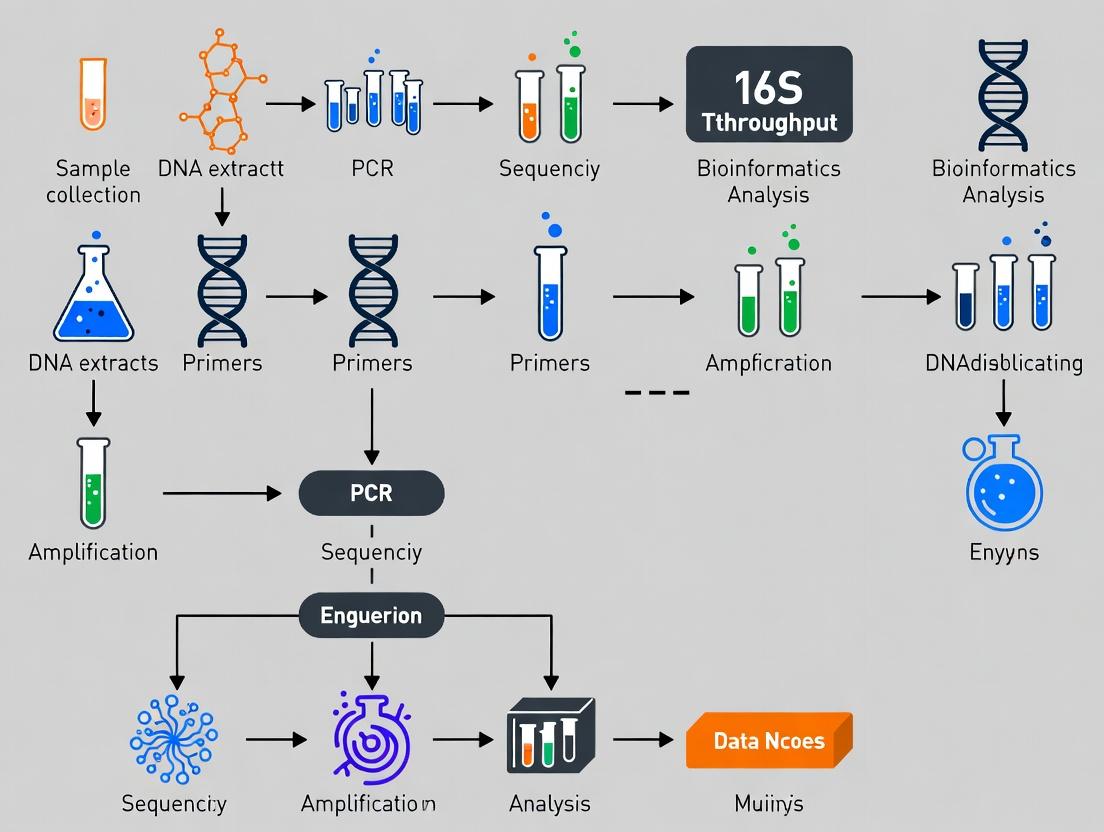
This article provides a detailed guide to high-throughput 16S rRNA gene amplicon sequencing for microbiome analysis.
High-Throughput 16S Amplicon Sequencing: A Comprehensive Guide to Optimized Protocols for Researchers
Abstract
This article provides a detailed guide to high-throughput 16S rRNA gene amplicon sequencing for microbiome analysis. Tailored for researchers, scientists, and drug development professionals, it covers foundational principles, step-by-step modern methodologies (including wet-lab and bioinformatics pipelines), critical troubleshooting and optimization strategies, and essential validation and comparative analysis frameworks. The goal is to deliver a current, practical resource that enables robust, reproducible microbial community profiling to advance biomedical discovery and clinical applications.
Decoding the Microbiome: Foundational Principles of 16S Amplicon Sequencing
What is 16S rRNA Gene Sequencing and Why is it the Gold Standard?
Within the broader research on high-throughput 16S amplicon sequencing protocols, understanding the foundational technology is paramount. 16S ribosomal RNA (rRNA) gene sequencing is a culture-independent method used to identify, classify, and quantify prokaryotic microorganisms (Bacteria and Archaea) within complex biological samples. Its establishment as the gold standard for microbial community profiling stems from its optimal balance of taxonomic resolution, universality, cost-effectiveness, and the robustness of its reference databases. This application note details the principles, protocols, and reagents central to modern high-throughput implementations.
Core Principles and Quantitative Comparison
The 16S rRNA gene is approximately 1,550 base pairs long and contains nine hypervariable regions (V1-V9) flanked by conserved regions. Sequencing of these variable regions provides the taxonomic signature.
Table 1: Comparison of Commonly Targeted 16S Hypervariable Regions
| Region | Length (approx.) | Taxonomic Resolution | Key Considerations |
|---|---|---|---|
| V1-V3 | ~500 bp | Good for genus-level, some species | Longer amplicon, may bias against some Gram-positives. |
| V3-V4 | ~460 bp | Excellent genus-level | Most common, best balance for Illumina MiSeq. |
| V4 | ~290 bp | Good genus-level | Shorter, high accuracy, minimizes sequencing errors. |
| V4-V5 | ~390 bp | Good genus-level | Alternative balance for diverse communities. |
| Full-length | ~1,550 bp | Species to strain-level | Requires long-read tech (PacBio, Nanopore). |
Table 2: Comparison of High-Throughput Sequencing Platforms for 16S
| Platform | Read Length | Throughput | Primary Use for 16S | Error Rate |
|---|---|---|---|---|
| Illumina MiSeq | Up to 2x300 bp | 25 M reads | V3-V4 or V4 amplicon standard | ~0.1% (low) |
| Illumina NovaSeq | 2x150 bp | 2-20B reads | Multiplexing 1000s of samples | ~0.1% (low) |
| Pacific Biosciences (Sequel II) | 10-25 kb | 4 M reads | Full-length 16S sequencing | ~10% (raw, corrected) |
| Oxford Nanopore (MinION) | >10 kb | 10-50 Gb | Full-length, real-time analysis | ~5-15% (raw) |
Detailed Experimental Protocol: Illumina MiSeq V3-V4 Workflow
Protocol Title: High-Throughput 16S rRNA Gene Amplicon Sequencing of Microbial Communities Using Dual-Index Barcoding on the Illumina MiSeq Platform.
I. Sample Preparation and Genomic DNA Extraction
- Principle: Lyse all cell types, purify inhibitor-free DNA.
- Reagent Solutions: Use bead-beating lysis kits (e.g., DNeasy PowerSoil Pro Kit) for mechanical disruption of tough cell walls.
- Method:
- Aliquot 250 mg of sample (soil, stool) into a PowerBead Tube.
- Add lysis solution and bead-beat for 10 minutes at high speed.
- Centrifuge. Bind DNA to a silica membrane column.
- Wash with ethanol-based buffers. Elute DNA in 50-100 µL of TE buffer.
- Quantify DNA using a fluorometric assay (e.g., Qubit).
II. PCR Amplification of the 16S V3-V4 Region
- Principle: Amplify target region while attaching platform-specific adapters and sample-specific barcodes (dual-indexing).
- Reagent Solutions: Use high-fidelity DNA polymerase (e.g., KAPA HiFi HotStart ReadyMix) to minimize PCR chimeras.
- Primers: 341F (5'-CCTAYGGGRBGCASCAG-3') and 806R (5'-GGACTACNNGGGTATCTAAT-3').
- Method:
- Prepare 25 µL reactions: 12.5 µL master mix, 0.5 µM each primer, 10-50 ng genomic DNA.
- Thermocycling: 95°C for 3 min; 25-35 cycles of: 95°C for 30s, 55°C for 30s, 72°C for 30s; final extension at 72°C for 5 min.
- Clean up amplicons using magnetic bead-based purification (e.g., AMPure XP beads).
III. Library Quantification, Normalization, and Pooling
- Principle: Create an equimolar pool of all sample libraries for even sequencing coverage.
- Method:
- Quantify each library via fluorometry.
- Normalize all libraries to the same concentration (e.g., 4 nM).
- Combine equal volumes of each normalized library into a single pool.
- Denature and dilute the pool per Illumina guidelines for loading.
IV. Sequencing
- Method: Load diluted library onto a MiSeq flow cell for 2x300 paired-end sequencing using a v3 (600-cycle) reagent kit.
V. Bioinformatic Analysis Workflow (QIIME 2/DADA2)
- Principle: Demultiplex samples, quality filter, denoise (infer exact Amplicon Sequence Variants - ASVs), and assign taxonomy.
- Standard Pipeline (DADA2):
- Demultiplex reads by unique barcodes.
- Quality filtering and trimming (e.g., truncate at 280F/220R).
- Learn error rates, dereplicate, infer ASVs (denoising).
- Merge paired-end reads, remove chimeras.
- Assign taxonomy using a trained classifier (e.g., Silva 138 or Greengenes2 database) against the 16S reference.
- Generate frequency tables and diversity metrics.
Visualization of Workflows
High-Throughput 16S Amplicon Sequencing Workflow
Principle of 16S rRNA Gene Amplicon Sequencing
The Scientist's Toolkit: Key Research Reagent Solutions
Table 3: Essential Materials for 16S rRNA Gene Sequencing
| Item | Function | Example Product(s) |
|---|---|---|
| Bead-Beating DNA Extraction Kit | Mechanical and chemical lysis of diverse microbial cells; removal of PCR inhibitors. | DNeasy PowerSoil Pro Kit, MagMAX Microbiome Kit |
| High-Fidelity PCR Master Mix | Accurate amplification with low error rates, critical for distinguishing true sequence variants. | KAPA HiFi HotStart ReadyMix, Q5 Hot Start High-Fidelity Master Mix |
| Barcoded Fusion Primers | Contain sequencing adapters, indices, and gene-specific sequence for multiplexing. | Illumina 16S V3-V4 primers, Nextera XT Index Kit v2 |
| Magnetic Bead Clean-up Kit | Size selection and purification of PCR amplicons, removal of primers and dimers. | AMPure XP Beads, MagBio HighPrep PCR |
| Fluorometric DNA Quant Kit | Accurate quantification of dsDNA, essential for library normalization. | Qubit dsDNA HS Assay, PicoGreen |
| Sequencing Reagent Kit | Contains flow cell, buffers, and enzymes for cluster generation and sequencing. | Illumina MiSeq Reagent Kit v3 (600-cycle) |
| Bioinformatics Pipeline | Open-source software for processing raw sequence data into biological insights. | QIIME 2, DADA2, mothur |
| Reference Database | Curated collection of 16S sequences for taxonomic classification. | SILVA, Greengenes2, RDP |
Within the broader thesis on advancing high-throughput 16S rRNA gene amplicon sequencing protocols, the shift from Operational Taxonomic Units (OTUs) to Amplicon Sequence Variants (ASVs) represents a fundamental methodological and conceptual evolution. This transition moves the field from a heuristic, clustering-based approach to a more precise, sequence-resolved framework, enhancing reproducibility, resolution, and biological fidelity in microbial community analysis.
Core Conceptual Comparison
Definition and Methodology
- Operational Taxonomic Units (OTUs): Heuristic clusters of sequencing reads grouped based on a predefined similarity threshold (typically 97%). Reads are clustered de novo or against a reference database, and the cluster centroid is used as the representative sequence. This approach assumes the threshold approximates species-level differentiation but inherently aggregates biological and technical variation.
- Amplicon Sequence Variants (ASVs): Exact, biologically relevant sequences derived directly from the data through error correction and denoising algorithms (e.g., DADA2, Deblur, UNOISE3). ASVs are unique sequences distinguished by single-nucleotide differences without arbitrary clustering, providing higher resolution.
Quantitative Comparison Table
Table 1: Methodological and Outcome Comparison of OTU vs. ASV Approaches
| Feature | OTU (97% Clustering) | ASV (Exact Variant) |
|---|---|---|
| Basis of Definition | Percent sequence similarity (97%) | Exact biological sequence |
| Primary Algorithm | Clustering (e.g., VSEARCH, UPARSE) | Denoising/Error-correction (e.g., DADA2) |
| Resolution | Species/Genus level (approximate) | Single-nucleotide (strain-level) |
| Handling of Sequencing Errors | Aggregates errors into clusters; requires post-hoc chimera removal | Models and removes errors algorithmically |
| Reproducibility Across Runs | Low to Moderate (cluster composition can vary) | High (sequence identity is stable) |
| Dependence on Reference DB | Optional (de novo) or Required (closed-reference) | Not required (can be reference-free) |
| Interpretation | Ecological "species" bin | Exact sequence, often analogous to a strain |
| Downstream Analysis Impact | Can inflate diversity metrics; obscures subtle variation | Reveals fine-scale diversity and dynamics |
Paradigm Shift Implications
The ASV paradigm shifts the focus from approximate ecological bins to definitive biological sequences. This enables:
- Cross-study comparability: ASVs can be directly compared between independently conducted studies.
- Temporal tracking: Exact variants can be tracked reliably across time-series experiments.
- Enhanced hypothesis testing: Finer resolution allows detection of subtle community changes driven by environmental gradients or therapeutic interventions.
Detailed Protocols
Protocol A: Traditional OTU Picking Pipeline (QIIME1/MOTHUR-like)
Title: Workflow for 16S Analysis Using 97% OTU Clustering
Principle: Group sequences based on pairwise similarity to reduce noise and computational complexity.
Steps:
- Preprocessing: Demultiplex paired-end reads. Quality filter (Q-score >20, no ambiguous bases). Merge reads (e.g., FLASH).
- Chimera Removal: Identify and remove chimeric sequences using UCHIME (reference-based or de novo).
- OTU Clustering:
- De Novo: Pick representative sequences at 97% identity using a greedy clustering algorithm (e.g., UPARSE, CD-HIT).
- Closed-Reference: Map all reads to a reference database (e.g., Greengenes, SILVA) at 97% identity; discard unmatched reads.
- Taxonomy Assignment: Assign taxonomy to OTU representative sequences using a classifier (e.g., RDP, BLAST) against a reference database.
- Table Generation: Create an OTU table (counts per sample) for downstream analysis.
Protocol B: ASV-Based Analysis Pipeline (DADA2 in R)
Title: Workflow for 16S Analysis Using ASV Inference via DADA2
Principle: Model and correct Illumina amplicon errors to infer true biological sequences.
Steps:
- Quality Profile Inspection: Visualize read quality plots (
plotQualityProfile) to determine truncation parameters. - Filter and Trim: Trim reads where quality drops (
filterAndTrim). Typical truncation: Fwd: 240bp, Rev: 200bp. - Learn Error Rates: Learn a parametric error model from the data (
learnErrors). - Dereplication: Combine identical reads (
derepFastq) to reduce computation. - Core Sample Inference: Infer ASVs for each sample (
dada), applying the error model to distinguish true sequences from errors. - Merge Paired Reads: Merge forward and reverse reads (
mergePairs), requiring a minimum overlap (e.g., 12bp). - Construct Sequence Table: Build an ASV-by-sample count matrix (
makeSequenceTable). - Remove Chimeras: Identify bimera sequences (
removeBimeraDenovo) based on abundance. - Taxonomy Assignment: Assign taxonomy (
assignTaxonomy) using a training set (e.g., SILVA). Species-level assignment can be attempted (addSpecies). - Output: Final outputs are a feature table (ASV counts), a taxonomy table, and the representative ASV sequences (FASTA).
Visualizations
Conceptual Workflow Comparison
Title: OTU vs ASV Analysis Workflow Comparison
Impact on Ecological Interpretation
Title: Impact of OTU vs ASV on Data Interpretation
The Scientist's Toolkit
Table 2: Key Research Reagent Solutions & Computational Tools
| Item | Function in 16S Analysis | Example Product/Software |
|---|---|---|
| High-Fidelity PCR Mix | Minimizes polymerase errors during amplicon generation, critical for ASV accuracy. | KAPA HiFi HotStart ReadyMix, Q5 High-Fidelity DNA Polymerase. |
| 16S V-region Primers | Target hypervariable regions for taxonomic discrimination. Must be well-validated. | 515F/806R (V4), 27F/338R (V1-V2), Illumina-tailed versions. |
| Negative Extraction Control | Identifies kit or laboratory-borne contaminant sequences. | Molecular-grade water processed alongside samples. |
| Mock Community DNA | Validates entire workflow accuracy, error rate, and sensitivity. | ZymoBIOMICS Microbial Community Standard. |
| DADA2 (R Package) | Core denoising algorithm for ASV inference from Illumina data. | open-source R package. |
| Deblur (QIIME2 Plugin) | A subsequence-based denoising algorithm for ASV inference. | Part of QIIME 2 distribution. |
| SILVA Reference Database | Curated rRNA database for taxonomy assignment and alignment. | SILVA SSU Ref NR 99. |
| GTDB (Genome DB) | Genome-based taxonomy for improved phylogenetic placement. | GTDB release (e.g., R214). |
| QIIME 2 Platform | Reproducible, extensible microbiome analysis pipeline. | QIIME 2 core distribution. |
| Phylogenetic Tree Builders | Construct trees for diversity metrics (UniFrac). | MAFFT (align), FastTree (build). |
Choosing the Right Hypervariable Regions (V1-V9) for Your Research Question
The selection of hypervariable regions (V1-V9) for 16S rRNA gene amplicon sequencing is a critical methodological decision that directly impacts taxonomic resolution, community profiling accuracy, and the ability to answer specific ecological or biomedical research questions. This application note, framed within a thesis on high-throughput protocols, provides a comparative analysis and detailed experimental workflows to guide researchers in making an evidence-based choice.
Comparative Analysis of Hypervariable Regions
Table 1: Key Characteristics and Performance Metrics of 16S rRNA Hypervariable Regions
| Region(s) | Amplicon Length (bp) | Taxonomic Resolution | Primary Strengths | Primary Limitations | Best Suited For |
|---|---|---|---|---|---|
| V1-V3 | ~500-600 | Genus to Species (for some phyla) | High discrimination for Firmicutes, Bacteroidetes; good for skin microbiota. | Poor coverage of Bifidobacterium; length can limit sequencing depth on some platforms. | Clinical studies (skin, respiratory); studies focusing on Gram-positive bacteria. |
| V3-V4 | ~460-470 | Genus-level | Widely used; robust primer sets; optimal for Illumina MiSeq 2x300 bp. | May miss discrimination within Proteobacteria. | General microbial community profiling (gut, soil, water); large-scale biogeography studies. |
| V4 | ~250-290 | Genus to Family | Short, highly conserved; minimizes amplification bias; excellent for low biomass. | Lower phylogenetic resolution compared to longer regions. | Large-scale multi-study comparisons (e.g., Earth Microbiome Project); meta-analyses. |
| V4-V5 | ~400-420 | Genus-level | Good balance of length and information; covers diverse taxa. | Primer bias against certain Actinobacteria. | Environmental samples with high microbial diversity. |
| V6-V8 / V7-V9 | ~400-500 | Family to Genus | Good for Archaea; useful for longer-read technologies (PacBio, Nanopore). | Lower resolution for Firmicutes; less commonly used, fewer reference data. | Archaeal diversity; studies utilizing third-generation sequencing. |
Table 2: Recommended Primer Pairs for Common Research Applications
| Research Focus | Recommended Region | Example Primer Pair (337F-805R) | Protocol Compatibility |
|---|---|---|---|
| Human Gut Microbiome | V3-V4 | 341F (CCTACGGGNGGCWGCAG), 805R (GACTACHVGGGTATCTAATCC) | Illumina MiSeq, iSeq; Earth Microbiome Project protocol. |
| Soil & High-Complexity Environmental | V4-V5 | 515F (GTGYCAGCMGCCGCGGTAA), 926R (CCGYCAATTYMTTTRAGTTT) | Illumina platforms; effective for diverse communities. |
| Low-Biomass or Formalin-Fixed Samples | V4 | 515F (Parada), 806R (Apprill) | High-sensitivity protocols; reduced host DNA contamination bias. |
| Respiratory & Skin Microbiota | V1-V3 | 27F (AGAGTTTGATCMTGGCTCAG), 534R (ATTACCGCGGCTGCTGG) | Provides higher resolution for key taxa in these niches. |
Detailed Experimental Protocol: Library Preparation for V3-V4 Region (Illumina Platform)
This protocol is optimized for the widely adopted V3-V4 region using a dual-indexing approach to minimize index hopping and allow high-throughput multiplexing.
Protocol 1: 16S V3-V4 Amplicon Generation and Library Construction
Objective: To generate ready-to-sequence Illumina libraries from genomic DNA extracts.
Part A: Primary PCR Amplification
Reaction Setup: Prepare reactions in a PCR hood to prevent contamination.
- Template gDNA: 1-10 ng (2 µL of a dilute stock).
- 2X KAPA HiFi HotStart ReadyMix: 12.5 µL.
- Forward Primer (341F, 1 µM): 5 µL.
- Reverse Primer (805R, 1 µM): 5 µL.
- PCR-grade H₂O: 0.5 µL.
- Total Volume: 25 µL.
Cycling Conditions:
- 95°C for 3 min (initial denaturation)
- 25-30 cycles of:
- 95°C for 30 sec (denaturation)
- 55°C for 30 sec (annealing)
- 72°C for 30 sec (extension)
- 72°C for 5 min (final extension)
- Hold at 4°C.
Clean-up: Purify amplicons using a magnetic bead-based clean-up system (e.g., AMPure XP beads) at a 0.8x bead-to-sample ratio to remove primers and primer dimers. Elute in 20 µL of 10 mM Tris-HCl (pH 8.5).
Part B: Indexing PCR (Dual-Indexing)
Reaction Setup:
- Purified Primary Amplicon: 2 µL.
- 2X KAPA HiFi HotStart ReadyMix: 12.5 µL.
- Unique i5 Index Primer (Nextera XT, 1 µM): 5 µL.
- Unique i7 Index Primer (Nextera XT, 1 µM): 5 µL.
- PCR-grade H₂O: 0.5 µL.
- Total Volume: 25 µL.
Cycling Conditions:
- 95°C for 3 min
- 8 cycles of: 95°C for 30 sec, 55°C for 30 sec, 72°C for 30 sec.
- 72°C for 5 min.
- Hold at 4°C.
Part C: Final Library Pooling and Quality Control
- Clean-up: Perform a second magnetic bead clean-up (0.9x ratio) on each indexed library. Elute in 25 µL.
- Quantification: Quantify each library using a fluorescence-based dsDNA assay (e.g., Qubit).
- Fragment Analysis: Assess library size distribution and purity using a capillary electrophoresis system (e.g., Agilent Bioanalyzer/TapeStation). Expect a single peak at ~630 bp (amplicon + adapters).
- Normalization & Pooling: Normalize libraries based on concentration and pool equimolarly.
- Sequencing: Dilute the final pool to the optimal loading concentration for the Illumina MiSeq or iSeq system using a 2x300 or 2x250 v3 kit.
Visualization of Experimental Workflows
16S Library Prep & Sequencing Workflow
Factors Influencing Region Selection
The Scientist's Toolkit: Essential Reagents & Materials
Table 3: Key Research Reagent Solutions for 16S Amplicon Sequencing
| Item | Function | Example Product/Brand |
|---|---|---|
| High-Fidelity DNA Polymerase | Ensures accurate amplification with low error rates during PCR, critical for reducing sequencing artifacts. | KAPA HiFi HotStart ReadyMix, Q5 High-Fidelity DNA Polymerase. |
| Validated 16S Primers | Specific forward and reverse oligonucleotides targeting the chosen hypervariable region(s). | Illumina 16S Metagenomic Library Prep primers, Earth Microbiome Project primer sets. |
| Magnetic Bead Clean-up Kit | For size-selective purification of PCR amplicons and removal of enzymes, primers, and salts. | AMPure XP Beads, SPRISelect magnetic beads. |
| Fluorometric dsDNA Quantitation Kit | Accurate quantification of DNA libraries prior to pooling and sequencing. | Qubit dsDNA HS Assay Kit. |
| Library Quality Control System | Capillary electrophoresis for assessing library fragment size distribution and purity. | Agilent Bioanalyzer (HS DNA kit), Fragment Analyzer, LabChip GX. |
| Indexing Adapters | Unique dual-index oligonucleotides for sample multiplexing on Illumina platforms. | Nextera XT Index Kit v2, IDT for Illumina UD Indexes. |
| PhiX Control Library | A well-characterized control library for monitoring sequencing quality, cluster density, and error rates. | Illumina PhiX Control v3. |
Key Applications in Biomedical and Pharmaceutical Research
Application Notes
High-throughput 16S ribosomal RNA (rRNA) gene amplicon sequencing is a cornerstone of modern microbiome research, with profound implications for biomedical discovery and pharmaceutical development. Within the context of a thesis focused on optimizing these protocols, the applications extend beyond ecological surveys to direct therapeutic intervention and diagnostic innovation.
1. Dysbiosis Mapping in Disease Pathogenesis: A primary application is the systematic characterization of microbial dysbiosis associated with chronic diseases. In inflammatory bowel disease (IBD), for instance, consistent reductions in Firmicutes diversity and increases in certain Proteobacteria are quantified. This mapping directly informs the search for microbial biomarkers of disease activity and novel drug targets.
2. Pharmacomicrobiomics: The human microbiome significantly modulates drug efficacy and toxicity. High-throughput 16S sequencing is employed to profile the gut microbiomes of patient cohorts to identify microbial signatures predictive of drug response (e.g., to immunotherapy checkpoint inhibitors in oncology or to methotrexate in rheumatology). This enables patient stratification for improved clinical trial design and personalized therapy.
3. Preclinical Safety and Efficacy Testing: During drug development, 16S sequencing is applied in animal models to assess if a novel compound causes off-target disruption of the microbiome, which could lead to adverse effects like colitis. Conversely, it is used to validate the mechanism of action for microbiome-targeted therapeutics, such as live biotherapeutic products (LBPs) or prebiotics.
4. Biomarker Discovery for Diagnostics: By comparing 16S profiles from large case-control cohorts, researchers identify specific bacterial taxa whose relative abundance robustly correlates with disease state. These microbial biomarkers are being developed into non-invasive diagnostic tools, particularly for cancers and metabolic diseases where tissue biopsies are challenging.
Table 1: Key Quantitative Findings from 16S Applications in Disease Research
| Disease Area | Commonly Altered Taxa (Example) | Typical Fold-Change vs. Healthy | Primary Application |
|---|---|---|---|
| Inflammatory Bowel Disease | Faecalibacterium prausnitzii (Firmicutes) | Decrease: 5- to 10-fold | Pathogenesis insight, biomarker |
| Colorectal Cancer | Fusobacterium nucleatum | Increase: 100- to 500-fold | Diagnostic biomarker |
| Type 2 Diabetes | Roseburia spp., Akkermansia muciniphila | Decrease: 2- to 5-fold | Monitoring therapeutic intervention |
| Immunotherapy Response | Bifidobacterium longum | Enriched in Responders: 3- to 8-fold | Predictive pharmacomicrobiomics |
| Clostridioides difficile Infection | Overall Diversity (Shannon Index) | Decrease: 50-70% | Recurrence risk assessment |
Detailed Experimental Protocols
Protocol 1: High-throughput 16S Sequencing for Pharmacomicrobiomic Cohort Analysis
Objective: To identify gut microbiome signatures predictive of drug response in a clinical cohort.
Materials: See "The Scientist's Toolkit" below.
Methodology:
Sample Collection & Stabilization:
- Collect patient stool samples using standardized kits (e.g., OMNIgene•GUT) at baseline (pre-treatment).
- Immediately mix with stabilization solution to halt microbial activity. Store at room temperature if using chemical stabilizers, or at -80°C if flash-freezing.
DNA Extraction (Critical for Bias Minimization):
- Use a mechanical lysis bead-beating step (e.g., with 0.1mm glass beads) for 10 minutes to ensure robust breakage of Gram-positive bacteria.
- Employ a kit-based purification method validated for microbiome studies (e.g., DNeasy PowerSoil Pro Kit).
- Quantify DNA using a fluorescence-based assay (e.g., Qubit dsDNA HS Assay). Assess quality via A260/A280 ratio (~1.8-2.0) and fragment analyzer.
PCR Amplification of 16S rRNA Gene Regions:
- Target the hypervariable V3-V4 regions using dual-indexed, barcoded primers (e.g., 341F/806R).
- Reaction Setup (25µL):
- 2.5µL Microbial Genomic DNA (5ng/µL)
- 5µL 5X High-Fidelity Buffer
- 0.5µL dNTPs (10mM each)
- 1µL Forward Primer (10µM, with Illumina adapter)
- 1µL Reverse Primer (10µM, with Illumina adapter)
- 0.25µL High-Fidelity DNA Polymerase
- 14.75µL Nuclease-free Water
- Thermocycler Conditions: Initial denaturation: 95°C for 3 min; 25 cycles of: 95°C for 30s, 55°C for 30s, 72°C for 30s; Final extension: 72°C for 5 min. Keep cycles low to reduce chimera formation.
Library Purification & Normalization:
- Clean amplicons using a magnetic bead-based clean-up system (e.g., AMPure XP beads) at a 0.8:1 bead-to-sample ratio.
- Measure library concentration, then pool equimolar amounts of all barcoded samples into a single sequencing library.
Sequencing:
- Load the pooled library onto an Illumina MiSeq or NovaSeq system using a 2x300 or 2x250 cycle kit to achieve a minimum of 50,000 reads per sample.
Bioinformatic Analysis (QIIME 2 workflow):
- Demultiplexing & Quality Control: Use
q2-demuxand denoise with DADA2 (q2-dada2) to correct errors and infer exact Amplicon Sequence Variants (ASVs). - Taxonomy Assignment: Classify ASVs against a curated database (e.g., SILVA v138 or Greengenes2) using a naive Bayes classifier (
q2-feature-classifier). - Statistical Analysis: Calculate alpha (within-sample) and beta (between-sample) diversity metrics. Perform differential abundance testing (e.g., DESeq2, ANCOM-BC) to link specific taxa to clinical metadata (e.g., drug response vs. non-response).
- Demultiplexing & Quality Control: Use
Protocol 2: In Vivo Microbiome Safety Assessment for a Novel Compound
Objective: To evaluate the impact of a novel small molecule drug candidate on gut microbiome composition in a murine model.
Methodology:
Animal Dosing & Sample Collection:
- Administer the compound (at therapeutic and high dose) or vehicle control to groups of mice (n=10/group) orally for 28 days.
- Collect fresh fecal pellets from each animal at days 0 (baseline), 14, and 28. Snap-freeze immediately in liquid nitrogen and store at -80°C.
DNA Extraction & Sequencing:
- Follow steps 2-5 from Protocol 1, processing all samples in a single, randomized batch to avoid technical batch effects.
Analysis Focused on Differential Abundance & Ecological Impact:
- Process data through the QIIME 2 pipeline as in Protocol 1.
- Core Analysis: Compare beta diversity (e.g., Weighted UniFrac distance) between treatment and control groups using PERMANOVA. Identify ASVs significantly increased or decreased in abundance due to treatment.
- Functional Inference: Use tools like PICRUSt2 to predict changes in microbial metabolic pathways (e.g., antibiotic resistance genes, short-chain fatty acid biosynthesis) from the 16S data.
Visualizations
High-throughput 16S amplicon sequencing workflow.
Pharmacomicrobiomics: Drug-microbiome-host interactions.
The Scientist's Toolkit: Essential Research Reagents & Materials
| Item | Function & Rationale |
|---|---|
| Stabilization Kits (e.g., OMNIgene•GUT, RNAlater) | Preserves microbial community structure at room temperature by inactivating nucleases and halting growth, critical for longitudinal or multi-site studies. |
| Bead-Beating Lysis Kit (e.g., DNeasy PowerSoil Pro) | Combines chemical and mechanical lysis with homogeneous spin-column purification, ensuring high yield and bias-minimized DNA from diverse cell wall types. |
| High-Fidelity DNA Polymerase (e.g., Q5, KAPA HiFi) | Provides accurate amplification with low error rates during PCR, essential for generating high-quality sequencing libraries and reducing artificial diversity. |
| Indexed Primers for 16S V3-V4 (e.g., 341F/806R) | Contains Illumina adapter sequences and unique dual barcodes to allow multiplexing of hundreds of samples in a single sequencing run. |
| AMPure XP Beads | Magnetic beads for size-selective purification of PCR amplicons, removing primers, dimers, and contaminants for clean library preparation. |
| Illumina MiSeq Reagent Kit v3 (600-cycle) | Provides the chemistry and flow cell for generating paired-end 300bp reads, ideal for covering the ~460bp 16S V3-V4 amplicon with overlap. |
| Bioinformatic Pipeline (QIIME 2 Platform) | Integrated, reproducible framework for demultiplexing, quality filtering, denoising, taxonomy assignment, and diversity analysis of raw sequence data. |
| Reference Database (e.g., SILVA, Greengenes2) | Curated, aligned 16S rRNA sequence databases with taxonomic hierarchies, required for classifying unknown sequences from the experiment. |
From Bench to Bioinformatics: A Step-by-Step High-Throughput 16S Protocol
Within high-throughput 16S amplicon sequencing research, the initial pre-analytical steps are critical determinants of data integrity. Bias introduced during sample collection, preservation, or DNA extraction propagates through sequencing and can confound ecological or taxonomic conclusions. This application note details standardized protocols to minimize bias and ensure reproducible microbial community profiling.
Sample Collection & Preservation Protocols
The chosen method must inhibit microbial community shifts post-collection until nucleic acid stabilization.
Table 1: Comparison of Sample Preservation Methods
| Method | Temperature | Max Hold Time (for 16S) | Key Advantages | Key Limitations |
|---|---|---|---|---|
| Immediate Snap-Freezing | -80°C | Long-term | Gold standard; halts metabolism instantly. | Requires on-site -80°C or dry shipper. |
| Commercial Stabilization Buffers | Room Temp | 7-30 days | Maintains community profile; no cold chain. | Adds cost; may inhibit downstream reactions. |
| Ethanol (70-95%) | -20°C to 4°C | 24-72 hours | Readily available, low cost. | Can lyse Gram-negatives; not for long term. |
| RNA/DNA Shield | Room Temp | 30 days | Effective for nucleic acids; inhibits nucleases. | Specific buffer required. |
Protocol 1.1: Fecal Sample Collection for Gut Microbiome Studies Materials: Sterile collection container, anaerobic atmosphere bags (optional), aliquot tubes, immediate freezing capability or DNA/RNA stabilization buffer. Procedure:
- Collect specimen in a sterile, RNase/DNase-free container.
- For optimal consistency, homogenize the entire sample (if possible) before aliquoting.
- Subsample into multiple cryovials (100-200 mg recommended).
- Option A (Preferred): Immediately snap-freeze aliquots in liquid nitrogen or dry ice, then transfer to -80°C for long-term storage.
- Option B (No Cold Chain): Submerge aliquot in ≥5 volumes of commercial stabilization buffer (e.g., Zymo RNA/DNA Shield, Norgen Stool Preservative), vortex thoroughly, and store at room temperature per manufacturer’s guidelines.
- Avoid multiple freeze-thaw cycles.
DNA Extraction Best Practices
Extraction must efficiently lyse diverse cell wall types (Gram-positive, Gram-negative, spores) while removing PCR inhibitors (humic acids, bilirubin, proteins).
Table 2: Performance Metrics of Common DNA Extraction Methods
| Method Type | Lysis Principle | Estimated Yield (Varies by sample) | Inhibitor Removal | Protocol Time | Community Bias Risk |
|---|---|---|---|---|---|
| Mechanical Bead Beating | Physical disruption | High | Moderate-High | 60-90 min | Low (if optimized) |
| Enzymatic + Chemical | Enzymatic & detergent | Medium | Low-Moderate | 45-60 min | High (under-lyses tough cells) |
| Spin Column (Kit-based) | Combined (often includes beads) | Medium-High | High | 60-120 min | Medium-Low |
| Magnetic Bead (Kit-based) | Combined | Medium-High | High | 45-90 min | Medium-Low |
Protocol 2.1: Standardized Bead-Beating Extraction for Complex Samples (e.g., stool, soil) Materials: PowerLyzer or FastPrep homogenizer, 0.1mm & 0.5mm zirconia/silica beads, lysis buffer (e.g., with SDS or GuHCl), phenol-chloroform-isoamyl alcohol (25:24:1), isopropanol, 70% ethanol, spin columns or magnetic bead purification kit. Procedure:
- Weigh & Aliquot: Transfer 180-220 mg of wet-weight sample (or preserved sample in buffer) to a sterile, reinforced bead-beating tube.
- Add Lysis Components: Add 0.3g of a mixed bead suite (0.1mm and 0.5mm), 750 µL of pre-heated (70°C) lysis buffer, and 60 µL of proteinase K (20 mg/mL). Vortex briefly.
- Homogenize: Secure tubes in bead beater. Process at 6.0 m/s for 45-60 seconds. Place on ice for 2 minutes. Repeat for a total of 3 cycles.
- Centrifuge: Centrifuge at 13,000 x g for 5 minutes at 4°C to pellet debris.
- Nucleic Acid Isolation: Transfer supernatant to a new tube. Perform a phenol-chloroform extraction or proceed directly to a validated inhibitor-removal spin column or magnetic bead purification kit (follow manufacturer's protocol from this step).
- Elution: Elute purified DNA in 50-100 µL of Tris-EDTA (TE) buffer or nuclease-free water. Store at -20°C or -80°C.
High-Throughput 16S Workflow from Sample to Library
The Scientist's Toolkit: Research Reagent Solutions
Table 3: Essential Materials for Reliable 16S Amplicon Sample Prep
| Item | Function & Rationale |
|---|---|
| Zymo RNA/DNA Shield | A commercial preservation buffer that immediately inactivates nucleases and microbes at room temperature, stabilizing community structure without a cold chain. |
| Zirconia/Silica Beads (0.1 & 0.5mm mix) | Provides heterogeneous physical shearing force for comprehensive lysis of diverse bacterial cell wall types during bead-beating. |
| PowerLyzer Homogenizer | Enables consistent, high-speed mechanical lysis across multiple samples, critical for reproducible extraction yields. |
| QIAGEN DNeasy PowerSoil Pro Kit | A widely cited, spin-column-based kit optimized for difficult samples (soil, stool), featuring robust inhibitor removal. |
| MagMAX Microbiome Ultra Kit | Magnetic bead-based purification allowing for automation, effective for high-throughput processing with good inhibitor removal. |
| Proteinase K | Broad-spectrum serine protease that digests proteins and helps inactivate nucleases, improving yield and DNA integrity. |
| PicoGreen dsDNA Assay | Fluorometric quantification method vastly superior to A260 for assessing low-concentration, potentially contaminated DNA extracts. |
| PCR Inhibitor Spin Columns (e.g., OneStep PCR Inhibitor Removal) | Additional clean-up step for stubborn inhibitors (e.g., humic acid) that can cause PCR failure. |
Sources of Bias in 16S Sample Preparation
Within high-throughput 16S rRNA gene amplicon sequencing protocols, the PCR amplification step is a critical source of bias and error. Inaccurate representation of microbial community structure and the generation of chimeric sequences—artifacts formed from incomplete extension of two or more parent sequences—can compromise downstream analysis. This application note details protocols and considerations for primer design and PCR amplification specifically engineered to minimize these artifacts, ensuring data fidelity for research and drug development applications.
Primer Design Considerations to Minimize Bias
The selection of hypervariable regions and primer sequences profoundly influences taxonomic coverage and bias. Recent evaluations highlight trade-offs between region length, discriminative power, and amplification efficiency.
Table 1: Comparison of Commonly Targeted 16S rRNA Gene Hypervariable Regions
| Region | Avg. Length (bp) | Taxonomic Resolution | Reported Amplification Bias | Common Primer Pairs (Examples) |
|---|---|---|---|---|
| V1-V2 | ~350 | High for some Gram+ | High | 27F-338R |
| V3-V4 | ~460 | Moderate to High | Moderate (most balanced) | 341F-805R |
| V4 | ~290 | Moderate | Low (high fidelity) | 515F-806R |
| V4-V5 | ~390 | Moderate | Low to Moderate | 515F-926R |
| V6-V8 | ~420 | High for some Gram- | Moderate to High | 926F-1392R |
Key Design Principles:
- Degeneracy & Mismatch Tolerance: Incorporate degenerate bases to account for phylogenetic diversity but limit to critical positions to reduce spurious binding.
- 3'-End Specificity: Ensure the last 3-5 nucleotides at the 3' end are perfectly matched to the target groups to prevent non-specific amplification.
- Add Universal Adapters: Sequencing platform adapters and barcodes should be added in a secondary PCR or via longer-tailed primers to keep the primary amplicon product pure and minimize primer-dimer formation.
Optimized PCR Protocol for Chimera Suppression
This protocol uses a modified polymerase and cycling conditions to promote complete extension.
Research Reagent Solutions:
| Reagent/Material | Function & Rationale |
|---|---|
| High-Fidelity DNA Polymerase (e.g., Q5, Phusion) | Possesses 3'→5' exonuclease proofreading activity, drastically reducing nucleotide misincorporation rates that can lead to sequence artifacts. |
| Template DNA (10-20 ng/µL) | Optimized concentration to minimize co-amplification of low-abundance templates and reduce chimera formation risk. |
| Reduced Cycle Number | Limiting to 25-30 cycles minimizes the amplification of early-cycle artifacts and template re-annealing. |
| Betaine (5M stock) | Additive that equalizes DNA melting temperatures, improving amplification efficiency across diverse GC-content templates and reducing bias. |
| DMSO (1-3%) | Additive that reduces secondary structure formation in template DNA, improving polymerase processivity and yield for complex communities. |
Detailed Protocol:
- Reaction Setup (50 µL total volume):
- 25 µL 2X High-Fidelity PCR Master Mix
- 1.0 µL Forward Primer (10 µM)
- 1.0 µL Reverse Primer (10 µM)
- 1.0 µL Template Genomic DNA (10-20 ng/µL)
- 5.0 µL 5M Betaine (Final: 0.5M)
- 1.0 µL DMSO (Final: 2%)
- Nuclease-Free Water to 50 µL
Thermocycling Conditions:
- Initial Denaturation: 98°C for 30 seconds.
- Amplification (25-30 cycles):
- Denature: 98°C for 10 seconds.
- Anneal: 55°C for 30 seconds (Optimize ± 5°C based on primer Tm).
- Extend: 72°C for 30 seconds/kb. (Critical: Ensure extension time is ≥ 1 minute for a 500bp amplicon to promote complete strand synthesis).
- Final Extension: 72°C for 2 minutes.
- Hold: 4°C.
Post-PCR Purification: Purify amplicons using magnetic bead-based clean-up (e.g., SPRI beads) with a 0.8-1.0x ratio to remove primers, dimers, and non-specific products. Quantify using fluorometry.
Chimera Formation Mechanism and Inhibition Strategy
Chimeras form primarily during PCR when an incomplete extension product from one cycle anneals to a heterologous template in a subsequent cycle and is extended to completion.
Diagram Title: PCR Chimera Formation Pathway
Strategic Interventions to Block Chimera Formation:
- Long Extension Times: The primary intervention, as specified in the protocol, ensures polymerase has sufficient time to fully synthesize each strand.
- Limited Cycling: Reducing cycle number limits the opportunity for incomplete products to accumulate and mis-prime.
- High-Processivity Enzyme: A robust polymerase is less likely to dissociate before extension is complete.
Diagram Title: Key Strategies for Optimal 16S Amplicon PCR
Validation and QC Steps
Post-amplification, assess amplicon quality via:
- Gel Electrophoresis: Confirm a single, sharp band of expected size.
- Bioanalyzer/Tapestation: Precisely quantify fragment size distribution and detect primer-dimer contamination.
- qPCR Melt Curve Analysis: If performed during optimization, a single peak indicates a specific product.
Implementing bias-aware primer design alongside a PCR protocol optimized for chimera suppression is non-negotiable for generating representative 16S rRNA gene amplicon libraries. The integrated strategies detailed herein—covering reagent selection, cycling parameters, and mechanistic understanding—form a robust foundation for any high-throughput sequencing pipeline aimed at delivering reliable microbial community data for downstream research and diagnostic applications.
Within the broader thesis on optimizing high-throughput 16S amplicon sequencing protocols, library preparation and indexing represent a critical juncture. This step converts amplified target regions (e.g., V3-V4 hypervariable regions of the 16S rRNA gene) into platform-compatible sequencing libraries, directly impacting data quality, multiplexing capacity, and cost-efficiency. This note details standardized and platform-specific protocols.
Platform-Specific Library Preparation Protocols
Illumina Nextera XT/Overhang Protocol
This two-step PCR protocol is the current standard for Illumina platforms (MiSeq, HiSeq, NovaSeq).
Detailed Methodology:
- First-Stage PCR (Amplicon Generation):
- Set up a 25 µL reaction using primers containing gene-specific sequences and overhang adapters.
- Typical Thermocycler Conditions:
- Initial Denaturation: 95°C for 3 min.
- 25-35 cycles of: 95°C for 30 sec, 55°C for 30 sec, 72°C for 30 sec.
- Final Extension: 72°C for 5 min.
- Clean up PCR products using magnetic beads (e.g., AMPure XP) at a 0.8x ratio.
- Second-Stage PCR (Indexing and Full Adapter Addition):
- Set up a 50 µL reaction using the cleaned first PCR product and unique dual-index primer pairs (Nextera XT Index Kit v2).
- Use a limited cycle PCR (typically 8 cycles).
- Clean up the final library using magnetic beads at a 0.9x ratio to remove primer dimers and artifacts.
- Quantify using fluorometry (e.g., Qubit) and assess size distribution via capillary electrophoresis (e.g., Bioanalyzer).
Ion Torrent (Ion AmpliSeq) Protocol
This protocol is designed for the semiconductor-based sequencing chemistry of Ion Torrent (Ion GeneStudio S5, Ion PGM).
Detailed Methodology:
- Single PCR with Barcoded Primers:
- A single, multiplex PCR is performed using primers that contain the 16S-specific sequence, the Ion-specific A or P1 adapter sequence, and a sample-specific barcode (IonCode Barcode Adapters).
- Typical Thermocycler Conditions:
- Initial Denaturation: 99°C for 2 min.
- 25-30 cycles of: 99°C for 15 sec, 60°C for 4 min.
- Hold at 10°C.
- Purification and Size Selection:
- Digest primer sequences with FuPa Reagent to cleave off non-essential primer regions.
- Purify and partially size-select using magnetic beads at a 1.0x ratio.
- Ligation and Final Clean-up:
- Ligate the sequencing adapters (Ion P1 or Ion A) if not already fully incorporated via the primer.
- Perform a final bead-based clean-up (1.0x ratio).
- Quantify via qPCR (Ion Library TaqMan Quantitation Kit) to measure only adapter-ligated fragments.
Universal Protocol for Other Platforms (e.g., PacBio)
For platforms requiring SMRTbell libraries (PacBio) or other formats, preparation typically involves blunt-end ligation of barcoded adapters.
Detailed Methodology:
- Amplicon Generation and Clean-up:
- Generate amplicons using standard high-fidelity polymerase.
- Perform a blunt-end repair reaction (if necessary) using a mix of T4 DNA Polymerase and Polynucleotide Kinase.
- Adapter Ligation:
- Ligate barcoded, hairpin-loop adapters (for PacBio) or Y-shaped adapters to the blunt-ended amplicons using T4 DNA Ligase.
- Incubate at 25°C for 30-60 minutes.
- Exonuclease Treatment:
- Treat with Exonuclease III and/or VII to remove incomplete ligation products and linear DNA molecules, enriching for circularized SMRTbell templates.
- Size Selection and Quantification:
- Perform a two-sided magnetic bead size selection (e.g., 0.45x followed by 0.15x) to isolate the target insert size.
- Quantify using fluorometry and the platform-specific binding kit (e.g., PacBio SMRTbell Binding Kit).
Table 1: Quantitative Comparison of Key Library Preparation Parameters Across Platforms
| Parameter | Illumina (Nextera XT) | Ion Torrent (AmpliSeq) | PacBio (SMRTbell) |
|---|---|---|---|
| Typical Input DNA (per rxn) | 1-10 ng (from 1st PCR) | 10-100 ng (genomic) | 100-500 ng (amplicon) |
| Total Preparation Time | ~6-8 hours | ~6 hours | ~8-10 hours |
| Indexing Strategy | Dual-Index (i5 & i7) | Single Barcode (IonCode) | Single or Dual Barcode |
| Max Samples/Run (Multiplex) | 384+ (NovaSeq) | 384 (Ion 550 Chip) | 96+ (Sequel II) |
| Primary Quantitation Method | Fluorometry (Qubit) | qPCR (TaqMan) | Fluorometry (Qubit) |
| Typical Library Size Range | 550-650 bp (V3-V4) | 400-500 bp | >1.5 kb (full-length 16S) |
Table 2: Common Index/Barcode Kits and Specifications
| Platform | Kit Name | Barcode Type | Barcode Length | Sample Capacity |
|---|---|---|---|---|
| Illumina | Nextera XT Index Kit v2 | Dual, Combinatorial | i5: 8 bp, i7: 8 bp | 384 unique combos |
| Ion Torrent | IonCode Barcode Adapters | Single, Fixed | 10-16 bp | 384 unique barcodes |
| PacBio | SMRTbell Barcoded Adapters | Single or Dual | 16 bp | 96+ unique barcodes |
The Scientist's Toolkit: Research Reagent Solutions
Table 3: Essential Materials for 16S Library Preparation
| Item | Function | Example Product(s) |
|---|---|---|
| High-Fidelity DNA Polymerase | Amplifies target 16S region with minimal error. | KAPA HiFi HotStart, Q5 Hot Start (NEB) |
| Magnetic Beads (SPRI) | Size-selective purification and clean-up of PCR products and libraries. | AMPure XP, Sera-Mag Select |
| Fluorometric DNA Quant Kit | Accurate double-stranded DNA concentration measurement. | Qubit dsDNA HS Assay (Thermo) |
| Library Quantitation Kit | Platform-specific quantitation of adapter-ligated fragments (essential for loading). | Ion Library TaqMan Quant Kit, KAPA Library Quant (Illumina) |
| Dual-Index Primer Kit | Attaches unique sample indices and full adapter sequences in a single PCR. | Illumina Nextera XT Index Kit v2 |
| Capillary Electrophoresis Kit | Assesses library size distribution and quality. | Agilent High Sensitivity DNA Kit (Bioanalyzer) |
| Blunt-End Repair Mix | Creates blunt-ended DNA for adapter ligation (PacBio/Oxford Nanopore). | NEB Next Ultra II End Repair/dA-Tailing Module |
| DNA Ligase | Catalyzes the ligation of adapters to prepared DNA inserts. | T4 DNA Ligase (NEB, Thermo) |
Visualized Workflows
Illumina Dual-Index Library Prep Workflow
Ion Torrent Barcoded Library Prep Workflow
PacBio SMRTbell Library Prep Workflow
1. Introduction and Context Within a thesis focused on optimizing High-throughput 16S rRNA gene amplicon sequencing protocols for robust microbial community analysis, the initial bioinformatic processing of raw sequencing data is a critical determinant of downstream results. This step transforms raw sequence reads into a table of amplicon sequence variants (ASVs), which provide higher resolution than traditional OTU clustering. This protocol details the demultiplexing, quality filtering, and denoising steps using two predominant algorithms: DADA2 and Deblur.
2. Research Reagent Solutions (The Scientist's Toolkit)
| Item | Function in Protocol |
|---|---|
| Raw Paired-end FASTQ Files | Primary input data containing sequence reads and quality scores. |
| Sample Metadata File (CSV) | Maps barcode sequences to sample identifiers for demultiplexing. |
| DADA2 (R Package) | A modeling-based pipeline for inferring exact ASVs, accounting for sequencing errors. |
| Deblur (Qiime 2 Plugin) | A error-profile-based algorithm that uses positive filtering to obtain error-free reads. |
| Cutadapt (Python Tool) | Removes primer and adapter sequences from reads. |
| FastQC | Generates initial quality reports for raw and processed reads. |
| Qiime 2 Framework | A powerful, extensible platform for microbiome analysis that can incorporate both DADA2 and Deblur. |
| Reference Databases (e.g., SILVA, Greengenes) | Used post-denoisin g for taxonomic assignment of ASVs (not covered in this step). |
3. Quantitative Data Comparison: DADA2 vs. Deblur
Table 1: Key Algorithmic and Output Characteristics
| Feature | DADA2 | Deblur |
|---|---|---|
| Core Approach | Probabilistic error model correcting substitutions & indels. | Positive filtering using an empirical error profile. |
| Input Requirement | Requires primer-trimmed sequences. | Requires reads trimmed to a fixed length. |
| Chimera Removal | Integrated within pipeline (consensus method). | Separate step, often using UCHIME2 or VSEARCH. |
| Output | Amplicon Sequence Variants (ASVs). | Error-corrected reads (ERSEEs)/ASVs. |
| Typical Run Time | Moderate to High (depends on sample count). | Generally Faster. |
| Key Parameter | maxEE (max expected errors), truncLen. |
trim_length, min_reads. |
Table 2: Typical Impact of Quality Filtering Parameters on Read Retention
| Filtering Parameter | Typical Setting | Approximate Read Loss* | Rationale |
|---|---|---|---|
| Truncation Length (Forward) | 240-250 bp (250MiSeq) | 10-25% | Removes low-quality 3' ends. |
| Truncation Length (Reverse) | 200-220 bp (250MiSeq) | 15-30% | Reverse reads often degrade faster. |
Maximum Expected Errors (maxEE) |
(2,5) for Fwd,Rev | 5-20% | Removes reads with excessive errors. |
| Minimum Overlap for Merging | 12-20 bp | 5-15% | Insufficient overlap prevents read merging. |
| Note: Read loss is highly dependent on initial sequencing run quality. |
4. Detailed Experimental Protocols
Protocol 4.1: Demultiplexing and Primer Removal with Cutadapt
- Input: Undemultiplexed FASTQ files (
sequencing_run.fastq.gz) and a barcode-to-sample mapping file. - If barcodes are in a separate file, use the sequencing facility's demultiplexing tool (e.g.,
bcl2fastq). - For in-line barcodes or primer removal, use Cutadapt:
- Output: Demultiplexed, primer-trimmed paired-end FASTQ files per sample.
Protocol 4.2: Denoising with DADA2 (R Environment)
- Load Library:
library(dada2) - Quality Inspection:
plotQualityProfile("sample_R1.fastq.gz")to decide truncation points. - Filter and Trim:
- Learn Error Rates:
errF <- learnErrors(filtFs, multithread=TRUE) - Dereplication & Sample Inference:
dadaFs <- dada(filtFs, err=errF, multithread=TRUE) - Merge Paired Reads:
mergers <- mergePairs(dadaFs, filtFs, dadaRs, filtRs, verbose=TRUE) - Construct Sequence Table:
seqtab <- makeSequenceTable(mergers) - Remove Chimeras:
seqtab.nochim <- removeBimeraDenovo(seqtab, method="consensus", multithread=TRUE) - Output: ASV table (
seqtab.nochim), ASV sequences, and tracking table through steps.
Protocol 4.3: Denoising with Deblur (via QIIME 2)
- Import Data into QIIME 2: Ensure data is in Casava 1.8 format (single-end or joined paired-end).
- Quality Control Summary:
qiime demux summarize --i-data demux.qza --o-visualization demux.qzv - Run Deblur:
- Generate Feature Table Summary:
qiime feature-table summarize --i-table table.qza --o-visualization table.qzv - Output: ASV table (
table.qza), representative sequences (rep-seqs.qza), and denoising statistics.
5. Visualization of Workflows
Title: DADA2 Denoising and ASV Inference Workflow
Title: Deblur Positive Filtering Workflow
Title: Algorithm Selection Logic for Thesis Research
Within the broader thesis on high-throughput 16S rRNA gene amplicon sequencing protocols, this step is critical for transforming quality-filtered sequence data into biologically interpretable information. Taxonomic assignment links amplicon sequence variants (ASVs) or Operational Taxonomic Units (OTUs) to known microbial lineages, while the feature table quantifies their abundance across samples, forming the basis for downstream ecological and statistical analysis.
Core Reference Databases for Taxonomic Assignment
A curated comparison of the three primary ribosomal RNA gene databases is provided below.
Table 1: Comparison of Primary 16S rRNA Reference Databases
| Feature | SILVA | Greengenes | RDP |
|---|---|---|---|
| Full Name | SILVA rRNA database project | Greengenes Database | Ribosomal Database Project |
| Current Version | v138.1 (SSU Ref NR) | 13_8 (May 2013) | RDP Release 11, Update 11 (Sep 2023) |
| Taxonomy Coverage | Comprehensive; Bacteria, Archaea, Eukarya | Bacteria, Archaea | Bacteria, Archaea, Fungi |
| Alignment | Manually curated, aligned | Profile-aligned | Inferred alignment |
| Update Frequency | Regularly updated | No longer updated (archival) | Regularly updated |
| Primary Use Case | High-resolution, full-length analysis | Legacy/comparison to older studies | Consistent classification with training set |
| Classifier | QIIME 2, mothur, DADA2 | QIIME 1, mothur | RDP Classifier, QIIME 2, mothur |
| Citation | Quast et al., 2013 | McDonald et al., 2012 | Cole et al., 2014 |
Detailed Protocol for Taxonomic Assignment and Feature Table Generation
Protocol A: DADA2 Pipeline (R Environment)
This protocol continues from the denoising step in the previous pipeline stage.
Prepare Reference Data:
- Download the SILVA reference files (e.g.,
silva_nr99_v138.1_train_set.fa.gzandsilva_species_assignment_v138.1.fa.gz). - Place them in a dedicated reference directory.
- Download the SILVA reference files (e.g.,
Assign Taxonomy:
Inspect Taxonomic Assignments:
Generate Feature Table:
- The
seqtab.nochimobject from DADA2 is the final feature table (ASV abundance matrix). - Export for further analysis:
- The
Protocol B: QIIME 2 Pipeline (Command Line)
This protocol assumes input is a demux.qza file and representative sequences have been generated (e.g., via DADA2 or deblur within QIIME 2).
Import Reference Database:
Extract Region-Specific Reads:
Train Classifier:
Perform Taxonomic Classification:
Generate Visual Report and Feature Table:
Visualization of Workflows
Taxonomic Assignment and Feature Table Generation Workflow
The Scientist's Toolkit: Research Reagent Solutions
Table 2: Essential Materials for Taxonomic Assignment and Feature Table Generation
| Item | Function/Description | Example/Format |
|---|---|---|
| Curated Reference Database | Provides the known taxonomic sequences and hierarchy against which unknown ASVs are classified. | SILVA SSU Ref NR, Greengenes 13_8, RDP training set v18. |
| Classification Algorithm Software | Executes the statistical model that assigns taxonomy to sequences. | QIIME2 classify-sklearn, RDP Classifier, mothur classify.seqs, DADA2 assignTaxonomy. |
| Feature Table File | A matrix file containing counts/frequencies of each ASV/OTU in every sample. | BIOM 2.1 format (.biom), tab-separated values (.tsv). |
| Taxonomy Table File | A file mapping each unique feature identifier (ASV/OTU ID) to its taxonomic lineage. | TSV with columns: FeatureID, Kingdom, Phylum, ..., Species. |
| High-Performance Computing (HPC) Resources | Taxonomic classification is computationally intensive; clusters or cloud computing are often required. | Linux-based cluster with SLURM scheduler, Google Cloud Platform, AWS EC2. |
| Bioinformatics Container | Ensures reproducibility by packaging software, dependencies, and the operating system. | Docker image (e.g., qiime2/core:2024.5), Singularity/Apptainer image. |
| Post-classification Curation Scripts | For filtering out contaminants (e.g., mitochondria, chloroplasts) or low-confidence assignments. | Custom R/Python scripts, QIIME2 filter-table action. |
Optimizing Your Microbiome Data: Troubleshooting Common Pitfalls in 16S Workflows
Within the context of high-throughput 16S rRNA gene amplicon sequencing research, contamination control is not merely a precaution—it is a foundational requirement. The exquisite sensitivity of next-generation sequencing (NGS) can amplify trace contaminants from reagents, laboratory environments, and personnel, leading to false-positive results and erroneous biological conclusions. This document provides detailed application notes and protocols for systematically identifying, quantifying, and mitigating contamination throughout the 16S amplicon sequencing workflow.
Quantitative data on common contamination sources are summarized below.
Table 1: Common Contaminant Sources and Their Typical Abundance in Negative Controls
| Source Category | Specific Source | Typical 16S Sequence Abundance (in Negative Controls) | Notes |
|---|---|---|---|
| Molecular Biology Reagents | PCR Polymerase (e.g., Taq) | 10 - 100 copies/µL | Often includes bacterial DNA from production. |
| DNA Extraction Kits | 10^2 - 10^4 total reads per sample | Contaminants are kit-lot specific (e.g., Pseudomonas, Comamonadaceae). | |
| Nuclease-free Water | Variable, can be >50 copies/mL | Quality varies significantly between suppliers and batches. | |
| Laboratory Environment | Ambient Air (in non-HEPA labs) | Can contribute 1-5% of total reads in open-tube steps. | Skin and soil-associated taxa (Staphylococcus, Streptophyta). |
| Benchtop Surfaces | Highly variable | Direct contact is a major risk during sample handling. | |
| Laboratory Personnel (Skin) | Dominant source of human-associated bacteria (Cutibacterium, Staphylococcus). | Mitigated by gloves, masks, and clean lab coats. | |
| Cross-Contamination | Sample-to-sample (carryover) | Can be >10% if protocols are not rigorous. | Occurs via aerosols, contaminated pipettes, or reagent cross-use. |
| PCR Amplicon Carryover | Single molecule can cause false positives. | Physical separation of pre- and post-PCR areas is critical. |
Experimental Protocols for Contamination Tracking
Protocol 3.1: Systematic Negative Control Placement
Objective: To pinpoint the step in the workflow where contamination is introduced. Materials: Sterile water, DNA extraction kits, PCR master mix reagents, sterile swabs. Procedure:
- Process Blank Controls: Include at least three types of negative controls in every sequencing run:
- Extraction Blank: Sterile water or buffer processed through the entire DNA extraction protocol.
- PCR Blank: Molecular-grade water used as template in the PCR amplification step.
- Library Preparation Blank: A blank carried through the post-PCR indexing and cleanup steps.
- Replicate: Process each type of blank in triplicate.
- Sequencing: Sequence controls alongside experimental samples on the same flow cell.
- Analysis: Bioinformatically filter sequences found in negative controls from experimental samples using tools like
decontam(frequency- or prevalence-based methods).
Protocol 3.2: Environmental Monitoring via Surface and Air Sampling
Objective: To audit the laboratory environment for contaminating microbial DNA. Materials: Sterile flocked swabs, 0.5 mL of sterile PBS, air sampling pump with gelatin membrane filter, DNA extraction kit. Procedure for Surface Sampling:
- Moisten a sterile swab with sterile PBS.
- Swab a standardized area (e.g., 10x10 cm) of critical surfaces: pre-PCR bench, pipette handles, centrifuge lids, and DNA workstation.
- Place the swab tip in a tube with 200 µL PBS and vortex vigorously. Use this liquid as the "sample" for DNA extraction. Procedure for Air Sampling:
- Use a portable air sampler with a gelatin filter (to capture microbes without desiccation).
- Sample air in the pre-PCR area for 10 minutes at a calibrated flow rate (e.g., 25 L/min).
- Dissolve the filter in a warm, sterile buffer and proceed with DNA extraction.
- Analyze all environmental DNA extracts using the same 16S PCR/sequencing protocol as experimental samples to identify resident contaminant taxa.
Mitigation Strategies and Workflow Design
A contamination-aware workflow is essential. The following diagram illustrates the core principle of a uni-directional workflow.
Title: Uni-directional Workflow for Contamination Control
The Scientist's Toolkit: Key Reagent Solutions
Table 2: Essential Materials for Contamination Mitigation in 16S Sequencing
| Item | Function & Rationale |
|---|---|
| UltraPure DNase/RNase-Free Distilled Water | High-purity water for preparing all PCR and molecular biology reagents. Low and consistent microbial DNA background is critical. |
| Molecular Biology Grade Reagents (e.g., PCR Master Mix) | Select reagents certified for low bacterial DNA content. Lot testing with sensitive qPCR for 16S rRNA genes is recommended. |
| UV-treated Plasticware (Tubes, Tips) | Pre-sterilized tubes and tips that have been exposed to UV-C light to crosslink any contaminating DNA on surfaces, rendering it non-amplifiable. |
| UNG (Uracil-N-glycosylase) System | Incorporation of dUTP in PCRs allows subsequent treatment with UNG to degrade PCR products from previous reactions, preventing amplicon carryover. |
| Carrier RNA (e.g., MS2 RNA) | Added to lysis buffers during DNA extraction from low-biomass samples to improve nucleic acid recovery and consistency, without introducing microbial DNA. |
| Synthetic Mock Community (e.g., ZymoBIOMICS) | Defined mixture of microbial genomic DNA used as a positive process control to monitor efficiency, bias, and to distinguish true signal from contamination. |
| DNA Decontamination Solution (e.g., DNA-ExitusPlus) | Chemical used to treat surfaces and equipment to hydrolyze contaminating DNA. Essential for cleaning pre-PCR areas. |
Data Analysis & Bioinformatics Decontamination
The final critical step is computational removal of contaminant sequences. The decision process is shown below.
Title: Bioinformatics Decontamination Decision Workflow
Protocol 6.1: Using the decontam R Package
- Input: Generate an ASV (Amplicon Sequence Variant) table, taxonomy table, and a sample metadata table indicating which samples are 'TRUE' negatives.
- Prevalence Method: Use
isContaminant(seqtab, method="prevalence", neg=is.neg)to flag ASVs significantly more prevalent in negative controls. - Frequency Method (if quant. data available): Use
isContaminant(seqtab, method="frequency", conc=quant_reading)to flag ASVs whose frequency depends on input DNA concentration. - Combine & Filter: Remove all ASVs identified by either method from the primary dataset before downstream ecological analysis.
Solving Low Biomass Challenges and PCR Inhibition Issues
Within high-throughput 16S rRNA gene amplicon sequencing research, low microbial biomass and co-extracted PCR inhibitors present critical bottlenecks. These challenges are particularly acute in clinical drug development (e.g., studying the microbiome's role in therapeutic response), environmental monitoring (air, water), and niche host-associated environments. Low biomass increases susceptibility to contamination and reduces sequencing library complexity, while inhibitors cause assay failure or significant bias. This document details application notes and protocols to address these issues within a robust, reproducible sequencing workflow.
Table 1: Comparison of Microbial Biomass Enrichment and Inhibition Removal Methods
| Method | Primary Function | Typical Biomass Recovery/Inhibition Reduction | Key Limitation | Best Suited For Sample Type |
|---|---|---|---|---|
| Density Gradient Centrifugation (e.g., Percoll) | Separates microbial cells from inhibitors & host debris. | Cell recovery: 60-85%; Inhibition reduction: High. | Can be labor-intensive; may select for certain morphologies. | Stool, soil, biofluids with particulate matter. |
| Membrane Filtration (0.22 µm) | Concentrates cells; removes soluble inhibitors. | Concentration factor: 10-100x; Inhibition reduction: Moderate (for soluble inhibitors). | Filters can clog; loses cells that are smaller or adhere to debris. | Water, bronchoalveolar lavage, liquid cultures. |
| Chemical Flocculation | Flocculates and pellets microbial cells. | Recovery: 70-90%; Inhibition reduction: High (removes humic acids). | Requires optimization of flocculant concentration. | Environmental water high in humics. |
| Immunomagnetic Separation (IMS) | Highly specific capture of target taxa. | Recovery for target: >90%; Specificity: Very High. | Requires prior knowledge; not for total community. | Pathogen detection in complex backgrounds. |
| Inhibitor-Removal Kits (e.g., PVPP, BSA) | Bind or sequester common PCR inhibitors. | Inhibition reduction: 50-95% (kit/sample dependent). | Can also bind DNA if overused. | Universal add-on for difficult samples (soil, plant). |
| Alternative Polymerase Use (e.g., inhibitor-resistant) | Polymerase inherently resistant to inhibitors. | Enables amplification where others fail. | Can be expensive; may have different fidelity/bias. | All sample types, as a last-line defense. |
Table 2: Impact of Reagent and Laboratory Controls on Contamination Detection
| Control Type | Purpose | Recommended Frequency | Interpretation of Positive Result |
|---|---|---|---|
| Negative Extraction Control | Detects kit/lab-borne contaminant DNA. | Every extraction batch (≥1 per 10 samples). | Identifies contaminant OTUs/ASVs to filter from all samples in batch. |
| Negative PCR Control (Water) | Detects PCR reagent contamination. | Every PCR plate/batch. | Identifies amplicon contaminants; sample data may be unreliable if strong. |
| Positive Control (Mock Community) | Verifies entire workflow sensitivity and accuracy. | Every batch. | Low biomass recovery or skewed ratios indicates protocol failure. |
| External RNA Controls Consortium (ERCC) Spikes | Quantifies extraction efficiency & inhibition. | Optional per sample. | Low spike recovery indicates inhibition or poor lysis. |
Detailed Protocols
Protocol 3.1: Integrated Workflow for Low-Biomass Fecal Swab Samples with Potential Inhibition
Objective: To extract high-quality microbial DNA from low-biomass swab samples (e.g., from drug trial participants) suitable for 16S amplicon sequencing.
Materials:
- Sample: Fecal swab in transport medium.
- Inhibitor Removal Solution: e.g., PowerSoil PowerBead Solution or equivalent.
- Proteinase K.
- Lysozyme (for Gram-positive lysis enhancement).
- Commercial DNA extraction kit with silica-column purification (e.g., DNeasy PowerLyzer).
- PCR reagents, including inhibitor-resistant polymerase (e.g., AccuPrime Taq High Fidelity or similar).
- Magnetic stand and beads (optional, for clean-up).
Procedure:
- Cell Elution & Concentration:
- Vortex the swab tube vigorously for 5 minutes.
- Centrifuge the tube at 800 x g for 2 min to pellet large debris. Transfer supernatant to a new 2 mL tube.
- Centrifuge the supernatant at 14,000 x g for 10 min to pellet microbial cells. Discard supernatant.
Inhibitor Removal Pre-Wash:
- Resuspend the cell pellet in 500 µL of Inhibitor Removal Solution. Vortex thoroughly.
- Centrifuge at 14,000 x g for 5 min. Carefully aspirate and discard supernatant.
- Repeat wash step once.
Enhanced Lysis:
- Resuspend pellet in standard kit lysis buffer.
- Add 20 µL of Proteinase K (20 mg/mL) and 30 µL of Lysozyme (50 mg/mL). Mix by inversion.
- Incubate at 56°C for 30 min, then 95°C for 10 min.
DNA Extraction & Purification:
- Proceed with the mechanical lysis (bead-beating) step of the chosen commercial kit.
- Complete the remaining steps per manufacturer's instructions, including final elution in low-EDTA TE buffer or nuclease-free water.
Post-Extraction Inhibition Check (qPCR):
- Perform a universal 16S qPCR assay on extracted DNA.
- Compare Ct values to a standard curve of a known mock community. A significantly higher Ct than expected indicates residual inhibition.
Protocol 3.2: Post-Extraction PCR Inhibition Mitigation via Dilution and Polymerase Selection
Objective: To overcome residual PCR inhibition not removed during extraction.
Materials:
- Extracted DNA sample.
- Multiple DNA polymerases: Standard Taq, inhibitor-resistant Taq, and high-fidelity polymerase.
- Universal 16S rRNA gene primer set (e.g., 515F/806R for V4 region).
- qPCR or standard PCR reagents.
Procedure:
- Template Dilution Series:
- Prepare a 1:5 and a 1:25 dilution of each extracted DNA sample in nuclease-free water.
Parallel PCR Setup:
- Set up three separate PCR master mixes, each with a different polymerase.
- For each DNA sample (neat, 1:5, 1:25), aliquot equal volumes into each polymerase-specific master mix.
- Include a positive control (mock community DNA) and negative control (water) for each polymerase.
Amplification:
- Run PCR with cycling conditions optimized for each polymerase.
- Analyze results via gel electrophoresis or qPCR melt curve analysis.
Selection Criterion:
- The optimal condition is the polymerase/dilution combination that yields a strong, specific amplicon for the sample while the negative control remains clean. Often, a 1:5 dilution with an inhibitor-resistant polymerase is effective.
Visualizations
Diagram 1: Integrated workflow for low biomass & inhibition challenges.
Diagram 2: Common PCR inhibitors and their mitigation.
The Scientist's Toolkit: Key Reagent Solutions
Table 3: Essential Research Reagents for Addressing Biomass and Inhibition
| Reagent / Material | Function in Workflow | Key Consideration for Selection |
|---|---|---|
| Inhibitor Removal Beads/Tubes (e.g., Zymo Inhibitor Removal Technology) | Binds to humic/fulvic acids and other organics during lysis. | Choose based on sample type; effective for soil, plant, fecal samples. |
| Polyvinylpolypyrrolidone (PVPP) | Binds polyphenolic inhibitors (humics). | Inexpensive; can be added directly to lysis buffer. Must be removed by centrifugation. |
| Bovine Serum Albumin (BSA) | Competes for binding sites on polymerase, neutralizes inhibitors. | Universal additive (0.1-1 µg/µL) to PCR; cheap and effective for many inhibitors. |
| AccuPrime or Phusion Hot Start Flex (inhibitor-resistant) | Engineered polymerases tolerant to common inhibitors. | Use when inhibition is suspected after extraction; higher cost but can save reactions. |
| Mock Microbial Community (e.g., ZymoBIOMICS) | Quantitative positive control for extraction and PCR efficiency. | Essential for validating the entire workflow and detecting bias. |
| Carrier RNA (e.g., Poly-A, MS2 RNA) | Improves DNA recovery during silica-column binding from dilute samples. | Critical for very low biomass (<10⁴ cells); added to lysis or binding buffer. |
| DNase/RNase-free Sepharose Beads | Simulates sample matrix for negative controls. | Used in "kitome" studies to profile contaminating DNA in extraction kits. |
Within the broader thesis on high-throughput 16S amplicon sequencing protocol research, a critical methodological question persists: determining the optimal sequencing depth. Sufficient depth is required to capture rare taxa and ensure robust ecological metrics, while excessive depth wastes resources. This application note provides a framework for depth optimization tailored for researchers, scientists, and drug development professionals investigating microbiome communities.
Core Concepts and Current Data
Sequencing depth, or the number of reads per sample, directly influences the detection of microbial diversity. Current consensus, supported by recent studies, indicates that required depth is highly project-dependent, varying with community complexity, sample type, and analytical goals.
Table 1: Recommended Sequencing Depth Based on Sample Type and Research Goal
| Sample Type / Habitat | Primary Research Goal | Recommended Minimum Depth (Reads/Sample) | Saturation Target (for Rarefaction) | Key Supporting Reference (2023-2024) |
|---|---|---|---|---|
| Human Gut Microbiome | Alpha/Beta Diversity, Differential Abundance | 30,000 - 50,000 | 40,000 - 70,000 | Illumina, "16S Metagenomic Sequencing Library Prep" Guide |
| Soil / High-Complexity Environmental | Rare Biosphere Detection, Full Diversity | 70,000 - 100,000+ | 100,000 - 150,000 | Earth Microbiome Project Standards v.5 |
| Low-Biomass (Skin, Air) | Presence/Absence, Major Taxa | 20,000 - 40,000 | 30,000 - 50,000 | Integrative HMP (iHMP) resources |
| Drug Intervention (Longitudinal) | Tracking Shifts in Community Structure | 50,000 - 80,000 | 60,000 - 90,000 | Recent clinical trial analyses (e.g., NCT04361370 follow-up) |
Table 2: Impact of Sequencing Depth on Common Diversity Metrics
| Metric | Behavior at Low Depth (<10k reads) | Behavior at Optimal Depth | Point of Diminishing Returns (Typical) |
|---|---|---|---|
| Observed ASVs/OTUs | Severely Underestimated | Approaches True Value | Curve plateaus on rarefaction plot |
| Shannon Diversity Index | Unstable, Often Underestimated | Stabilizes, Reproducible | After rarefaction curve asymptotes |
| Beta Diversity (e.g., UniFrac Distance) | High Variance, False Dissimilarities | Accurate and Reproducible | When adding samples improves power more than depth |
| Rare Taxa Detection (<0.01% abundance) | Highly Sporadic or Missed | Detected with Consistency | Extremely high depth (>200k) needed for very rare biosphere |
Experimental Protocol for Determining Optimal Depth
Protocol 3.1: Pilot Study and Rarefaction Analysis
Objective: To empirically determine the depth required for your specific sample set to capture diversity. Materials: See "The Scientist's Toolkit" below. Procedure:
- Pilot Sequencing: Select a representative subset of samples (n=8-12). Process them through your standard 16S library prep protocol (e.g., targeting V3-V4 with primers 341F/806R).
- High-Depth Sequencing: Pool and sequence these pilot samples on a high-output flow cell (e.g., Illumina MiSeq v3, 600-cycle) to obtain maximum possible depth (>100,000 reads per sample after demultiplexing).
- Bioinformatic Processing: Process raw reads through a standard pipeline (QIIME 2, DADA2, or mothur). Denoise, cluster into ASVs/OTUs, and assign taxonomy using a current database (e.g., SILVA 138.1 or Greengenes2 2022).
- Subsampling (Rarefaction): Using the QIIME 2
q2-diversityplugin or the R packagevegan, perform rarefaction without replacement at multiple depths (e.g., 1k, 5k, 10k, 20k, 30k, 40k, 50k, 75k, 100k). - Generate Curves: Plot rarefaction curves for alpha diversity metrics (Observed Features, Shannon Index) for each sample.
- Determine Saturation Point: Visually identify the depth at which the curve for the most diverse sample reaches an asymptote (slope approaches zero). This depth is the minimum recommended for your study.
- Assess Beta Diversity Stability: Calculate principal coordinate analysis (PCoA) based on weighted UniFrac distances at each subsampled depth. Note the depth at which ordination patterns stabilize and become congruent with the pattern at full depth.
Protocol 3.2: Power Analysis for Comparative Studies
Objective: To determine the depth needed to statistically detect a meaningful effect size between groups. Procedure:
- Use pilot study data (from Protocol 3.1) as input for power analysis tools.
- Employ tools like
GUniFracin R orKorpusto perform power simulations. - Set parameters: Define the effect size (e.g., expected microbiome dissimilarity between control/treatment), desired statistical power (e.g., 80%), and significance level (e.g., 0.05).
- Run simulation: The tool will model the relationship between sequencing depth, sample size, and statistical power. Iteratively adjust the depth parameter until the target power is achieved.
- Output: The depth required to detect the specified effect with your planned sample size. This depth often supersedes the saturation point from rarefaction.
Visualizing the Decision Workflow
Title: Workflow for Determining Optimal 16S Sequencing Depth
The Scientist's Toolkit: Research Reagent Solutions
Table 3: Essential Materials for Depth Optimization Experiments
| Item | Function in Optimization Protocol | Example Product/Catalog |
|---|---|---|
| High-Fidelity PCR Master Mix | Ensures accurate amplification of 16S templates with minimal bias during pilot library prep. | KAPA HiFi HotStart ReadyMix (Roche), Q5 Hot Start (NEB). |
| Dual-Indexed Primers (i7 & i5) | Allows for multiplexing of many pilot samples on a single high-output run. | Nextera XT Index Kit v2 (Illumina), 16S-specific indexed primer sets. |
| Library Quantification Kit (qPCR-based) | Accurate quantification of library concentration for balanced pooling, critical for achieving even depth. | KAPA Library Quantification Kit (Roche), NEBNext Library Quant Kit (NEB). |
| PhiX Control v3 | Spiked into the sequencing run (1-5%) for error rate monitoring and calibration, ensuring data quality for depth analysis. | Illumina PhiX Control Kit v3. |
| Bioinformatics Pipeline Software | For processing raw reads, generating ASVs/OTUs, and creating rarefaction curves. | QIIME 2 (2024.2), DADA2 (R package), mothur (v.1.48). |
| Reference Taxonomy Database | For accurate taxonomic assignment of sequences to interpret diversity. | SILVA 138.1, Greengenes2 2022.7. |
Optimizing sequencing depth is not a one-size-fits-all calculation but an empirical process integral to robust 16S amplicon research. By conducting a pilot study with rarefaction and power analyses, researchers can justify their chosen depth, ensuring their data is neither underpowered nor wastefully deep, thereby strengthening the conclusions of their microbiome investigations.
Addressing Primer Bias and Improving Taxonomic Resolution
High-throughput 16S ribosomal RNA (rRNA) gene amplicon sequencing remains a cornerstone of microbial ecology and microbiome research. Within the broader thesis investigating optimized protocols, two persistent and interconnected challenges are primer bias and limited taxonomic resolution. Primer bias arises from the mismatches between primer sequences and target regions across diverse taxa, leading to unequal and inaccurate representation of community composition. Limited taxonomic resolution, often to the genus or family level, stems from the use of short, single hypervariable regions (e.g., V4). This application note details integrated experimental and bioinformatic strategies to address these issues, enabling more accurate and precise microbial profiling for research and drug development.
Table 1: Comparative Performance of Common 16S rRNA Gene Primer Pairs
| Primer Pair (Region) | Target Specificity (Bacterial %)* | Amplification Bias Index (Lower=Better)* | Avg. Taxonomic Resolution (with full-length reference) | Key Known Biases |
|---|---|---|---|---|
| 27F/338R (V1-V2) | ~90% | 0.45 | Genus-Family | Under-represents Bifidobacterium, some Firmicutes |
| 341F/805R (V3-V4) | ~95% | 0.28 | Genus | Bias against Candidatus Saccharibacteria (TM7) |
| 515F/926R (V4-V5) | ~94% | 0.31 | Genus | Under-represents Lactobacillus, Bifidobacterium |
| 515F/806R (V4) | ~92% | 0.25 | Family-Genus | Common Earth Microbiome Project choice; moderate bias |
| 799F/1193R (V5-V7) | ~98% (Avoids Plastid DNA) | 0.35 | Genus-Species (with better databases) | Reduces plant/chloroplast co-amplification |
*Representative values from recent meta-analyses. Actual performance varies with sample type and sequencing platform.
Table 2: Impact of Read Length and Region on Taxonomic Resolution
| Sequencing Approach | Approx. Read Length | Typical Region(s) | Max Achievable Resolution (Ideal Conditions) | Key Limitation |
|---|---|---|---|---|
| Short-Read Illumina (2x300) | 550-600 bp | V3-V4 or V4-V5 | Genus (some species) | Cannot resolve full-length 16S |
| Long-Read PacBio HiFi | ~1,500 bp | Near-full-length 16S | Species, sometimes strain-level | Higher cost per sample, lower throughput |
| Oxford Nanopore (V14) | Full-length 16S | V1-V9 | Species-level | Higher raw error rate requires robust correction |
Experimental Protocols
Protocol 3.1: In Silico Primer Evaluation and Selection
Purpose: To computationally assess primer binding efficiency and predict bias across a broad taxonomic range before wet-lab experimentation.
- Gather Reference Databases: Download high-quality, full-length 16S rRNA gene sequences from databases like SILVA, GTDB, or RDP.
- Define Target Taxa: Create a list of microbial taxa expected or of interest in your sample type (e.g., human gut, soil).
- Run in silico PCR: Use tools like
DECIPHER(R package) orTestPrime(integrated in SILVA) to simulate PCR amplification.- Input: Primer sequences (FASTA) and reference database.
- Parameters: Set maximum number of mismatches (e.g., 2-3), allow degeneracies.
- Analyze Coverage and Bias: Calculate the percentage of target sequences amplified. Generate a heatmap of mismatches per taxonomic group to visualize potential bias.
Protocol 3.2: Wet-Lab Validation of Primer Bias Using Mock Microbial Communities
Purpose: To empirically quantify primer bias using a known standard.
- Acquire Mock Community: Purchase a genomic DNA mock community (e.g., ZymoBIOMICS, ATCC MSC) with known, balanced abundances of diverse bacterial species.
- Parallel Amplification: Amplify the mock community DNA in triplicate with at least three different primer pairs under investigation (e.g., V4, V3-V4, V1-V3). Use a high-fidelity, low-bias polymerase (e.g., Q5 Hot Start).
- Library Preparation & Sequencing: Index libraries following standard Illumina MiSeq protocols (2x300 bp). Pool equimolar amounts.
- Bioinformatic Analysis: Process raw reads through a standardized pipeline (DADA2, QIIME 2).
- Assign taxonomy using a species-level database trained on full-length sequences.
- Quantification: Compare observed proportions from each primer set to the known proportions. Calculate a Bias Factor for each taxon:
log10(Observed Abundance / Known Abundance).
Protocol 3.3: Implementing a Dual-Priming Approach for Improved Coverage
Purpose: To mitigate bias by using multiple, complementary primer sets.
- Design/Select Complementary Sets: Choose two primer pairs that cover different hypervariable regions and have complementary bias profiles (e.g., 341F/805R (V3-V4) and 799F/1193R (V5-V7)).
- Separate Amplifications: Perform PCR reactions for each primer pair on the same sample DNA extract, in separate reactions.
- Pool Amplicons Post-PCR: Quantify amplicon yield (e.g., with PicoGreen), then pool equimolar amounts of the products from each reaction before library indexing.
- Sequencing and Analysis: Sequence the pooled library. Process reads, keeping the primer set identity embedded in the sample metadata. Analyze community results separately and combined (using feature tables merged at the taxonomic level).
Protocol 3.4: Bioinformatics Pipeline for Enhanced Resolution from Short Reads
Purpose: To maximize taxonomic information from standard short-read data.
- Curate a Specialized Database: Build a custom reference database using tools like
RESCRIPt(QIIME 2) that includes:- Full-length 16S sequences.
- Region-specific extracts matching your primer set.
- Consistent, updated taxonomy (e.g., GTDB taxonomy).
- Apply Denoising with DADA2: Use DADA2 to infer exact amplicon sequence variants (ASVs), which provide higher resolution than OTU clustering.
- Taxonomic Assignment with q2-feature-classifier: Train a classifier (e.g., Naive Bayes) on your region-extracted, curated database. Classify ASVs against this database.
- Post-hoc Resolution Boost: Use tools like
DEBIAS(algorithm to correct compositional bias) orwAIM(weighted Average Identity Method) to refine genus- or species-level calls based on sequence similarity weighted by phylogenetic distance.
Visualizations
Title: Integrated Workflow to Tackle Primer Bias and Boost Resolution
Title: Molecular Mechanism of Primer Bias Generation
The Scientist's Toolkit: Research Reagent Solutions
Table 3: Essential Materials for Bias-Aware 16S rRNA Sequencing
| Item/Category | Specific Example(s) | Function & Rationale |
|---|---|---|
| Standardized Mock Communities | ZymoBIOMICS Microbial Community Standard (D6300); ATCC MSA-1003 | Provides ground-truth DNA mixture of known composition for empirical bias quantification and pipeline validation. |
| High-Fidelity PCR Polymerase | Q5 Hot Start High-Fidelity DNA Polymerase (NEB); KAPA HiFi HotStart ReadyMix | Minimizes PCR errors and reduces amplification bias compared to Taq polymerase, improving sequence fidelity. |
| Degenerate & Modified Primers | Custom primers with inosine/hypoxanthine at wobble positions; peptide nucleic acid (PNA) clamps. | Degeneracies increase primer universality. PNAs block amplification of host (e.g., mammalian) or organellar (e.g., chloroplast) DNA. |
| Long-read Sequencing Kit | PacBio SMRTbell Express Template Prep Kit 3.0; Oxford Nanopore 16S Barcoding Kit | Enables near-full-length 16S sequencing, dramatically improving taxonomic resolution to species level. |
| Curated Reference Database | SILVA SSU NR (v138.1+); Genome Taxonomy Database (GTDB r214); Custom-curated with RESCRIPt. |
Accurate taxonomic assignment depends on a comprehensive, well-classified, and primer-region-matched reference database. |
| Bias-Correction Software | DEBIAS (pipelines); MMSeqs2 for LCA assignment; DADA2 for ASV inference. |
Computational tools to identify and statistically correct for compositional and primer bias in the resulting data. |
Batch Effect Correction and Normalization Strategies for Robust Analysis
Within high-throughput 16S rRNA amplicon sequencing research, batch effects introduced by differences in sequencing runs, DNA extraction kits, laboratory personnel, or reagent lots pose a major threat to the validity of cross-study comparisons and meta-analyses. This Application Notes document, framed within a broader thesis on standardizing 16S protocols, details current strategies to identify, correct, and normalize these technical artifacts to ensure robust biological conclusions.
Table 1: Comparison of Batch Effect Correction & Normalization Methods
| Method Category | Specific Tool/Algorithm | Key Principle | Primary Use Case | Pros | Cons |
|---|---|---|---|---|---|
| Compositional Normalization | Cumulative Sum Scaling (CSS) [metagenomeSeq] | Scales counts to a percentile of the cumulative distribution of counts. | Normalizing for uneven sequencing depth before differential abundance. | Robust to outliers, performs well with zero-inflated data. | Less effective for strong batch effects across runs. |
| Total Sum Scaling (TSS) | Divides counts by total reads per sample. | Basic library size normalization. | Simple, intuitive. | Highly sensitive to dominant taxa; amplifies noise. | |
| Center Log-Ratio (CLR) Transformation | Log-ratio of counts to geometric mean of all features. | Preparing data for multivariate or correlation analysis. | Aitchison geometry, handles compositionality. | Requires imputation of zeros, distorting covariance. | |
| Batch Correction Models | Remove Unwanted Variation (RUV) [RUVSeq] | Uses control features or replicates to estimate and subtract unwanted variation. | Correcting known batch effects with negative controls. | Flexible, uses empirical controls. | Requires negative controls or assumption of invariant features. |
| ComBat [sva] | Empirical Bayes framework to adjust for known batch. | Harmonizing data from multiple known batches. | Powerful for strong batch effects, preserves biological signal. | Assumes parametric distribution; requires batch covariate. | |
| Mixed Models / DAA | DESeq2 (with ~batch + condition) | Negative binomial GLM that includes batch as a covariate. | Differential abundance testing in the presence of batch effects. | Directly models counts, robust for hypothesis testing. | Does not "remove" effect for visualization/ordination. |
| ANCOM-BC | Linear model with bias correction for compositionality. | Differential abundance with bias correction. | Addresses both compositionality and sampling fraction differences. | Computationally intensive for very large feature sets. |
Experimental Protocols
Protocol 2.1: Pre-processing and Initial Diagnostic Workflow
Objective: To generate an Amplicon Sequence Variant (ASV) table and perform initial diagnostic checks for batch effects.
- Sequence Processing: Process raw FASTQ files through DADA2 (via QIIME2 or R) for quality filtering, denoising, chimera removal, and ASV inference. Merge paired-end reads.
- Taxonomy Assignment: Assign taxonomy to ASVs using a reference database (e.g., SILVA, Greengenes). Create a feature table (ASVs x Samples).
- Initial Filtering: Remove ASVs classified as mitochondria, chloroplast, or present in fewer than 5% of samples.
- Batch Effect Diagnostic (PCA/PCoA): Perform a Principal Coordinates Analysis (PCoA) on Aitchison (CLR) or Bray-Curtis distances. Color samples by suspected batch variables (e.g., sequencing run, extraction date). Visual clustering by batch indicates a strong technical effect requiring correction.
Protocol 2.2: Integrated Normalization & Correction using RUV and CSS
Objective: To apply a combined strategy for robust differential abundance analysis.
- Input: Filtered ASV count table from Protocol 2.1.
- Negative Control Identification: Identify a set of "negative control" ASVs expected to be invariant across biological conditions (e.g., using spike-ins or empirically determined least variable ASVs).
- RUVg Correction (R):
- CSS Normalization (R):
- Validation: Re-run PCoA on the corrected/normalized data (e.g., Bray-Curtis on CSS counts). Improved clustering by biological condition over batch confirms efficacy.
The Scientist's Toolkit
Table 2: Key Research Reagent Solutions for Batch-Aware 16S Studies
| Item | Function in Batch Management |
|---|---|
| Mock Microbial Community (e.g., ZymoBIOMICS) | Provides known composition and abundance. Used as a positive control across batches to assess fidelity, calculate PCoA distance between expected/observed. |
| Extraction Blank / Negative Control | Water processed through DNA extraction. Identifies contaminant taxa introduced by kits/reagents, which can be tracked and subtracted. |
| Uniform Sample Lysis Buffer (e.g., PowerBead Solution) | Standardizes the mechanical lysis step across all samples and operators, reducing variability in DNA yield from tough-to-lyse cells. |
| Indexed PCR Primers with Unique Dual Indexes | Enables pooling of multiple libraries without crosstalk, allowing sequencing across multiple runs while retaining sample identity. Critical for separating batch from sample. |
| Standardized Quantitation Kit (e.g., Qubit dsDNA HS Assay) | Ensures accurate, reproducible library pooling for balanced sequencing depth, minimizing depth-driven batch effects. |
Visualizations
Title: 16S Batch Correction Decision Workflow
Title: Conceptual Model of Batch Effect Correction
Ensuring Rigor: Validation, Comparative Analysis, and Beyond 16S
Establishing Experimental and Technical Replicates for Statistical Power
Within the context of high-throughput 16S rRNA gene amplicon sequencing research, careful experimental design is paramount to distinguish true biological variation from technical noise. The distinction and strategic implementation of experimental (biological) and technical replicates are fundamental for achieving robust statistical power, enabling accurate assessment of microbial community differences across conditions.
Replicate Definitions and Purpose
- Experimental Replicate: Represents independent biological units (e.g., different animals, separate culture flasks, distinct soil samples from the same treatment) processed independently through the entire workflow. These account for biological variability and allow inference to the broader population.
- Technical Replicate: Involves subsampling the same biological material through parts (e.g., DNA extraction, PCR, library prep) or the entirety of the experimental workflow. These account for variability introduced by laboratory procedures and sequencing.
Quantitative Guidelines for Replicate Numbers
Recent literature and power analysis simulations provide the following consensus guidelines for 16S amplicon sequencing studies.
Table 1: Recommended Replicate Numbers for Common Experimental Designs
| Experimental Design Goal | Minimum Experimental Replicates (per group) | Recommended Technical Replicates | Key Rationale |
|---|---|---|---|
| Pilot Study / Exploratory Research | 4-5 | 2-3 (extraction/PCR) per a subset of samples | Estimate effect size and variance for formal power analysis. |
| Detecting Large Effect Sizes (>2-fold abundance change) | 5-7 | Optional; 1-2 if extraction bias is a concern | Moderate biological variance requires moderate N for robust non-parametric tests. |
| Detecting Moderate Effect Sizes (e.g., 1.5-fold change) | 10-12 | 1 (if using robust, standardized kits) | Higher N required to achieve ~80% power given compositional nature of data. |
| Complex Longitudinal or Multi-factorial Designs | 8-12 (per group/timepoint) | 1 | Needed to model interactions and account for increased multiple testing burden. |
| Metagenomic-assembled genomes (MAGs) or rare variant detection | 15-20+ | 1 | Very high biological replication needed to capture low-abundance population diversity. |
Source: Synthesis from recent power analysis studies (Kelly et al., 2019; La Rosa et al., 2022) and benchmarking papers on variability in 16S sequencing workflows.
Table 2: Source of Variance in Typical 16S Amplicon Workflow
| Workflow Stage | Primary Source of Variance | Mitigated by |
|---|---|---|
| Sample Collection & Homogenization | Biological heterogeneity within source; preservation method | Consistent protocol; pooling; experimental replicates. |
| Nucleic Acid Extraction | Lysis efficiency; inhibitor carryover; kit batch effects | Technical replicates at extraction; kit standardization. |
| PCR Amplification | Primer bias; polymerase fidelity; cycle number; inhibition | Technical replicates; optimized master mixes; template dilution checks. |
| Library Pooling & Quantification | Pipetting error; quantification inaccuracy | Precise robotic pipetting; fluorometric quantification. |
| Sequencing | Cluster generation; flow cell lane effects; phasing/pre-phasing | Interleaving samples across lanes; sequencing controls. |
Detailed Protocols
Protocol 4.1: Designing an Experiment with Replicates for Power
Objective: To determine the optimal number of experimental and technical replicates to achieve a statistical power of ≥0.8 for a defined effect size.
- Pilot Study: Perform a small-scale experiment with at least 4-5 experimental replicates per condition and 2-3 technical replicates (at extraction or PCR stage) for a subset.
- Variance Partitioning: Using pilot data, apply linear mixed models (e.g.,
lmerin R) to estimate variance components attributed to: a) Biological Source, b) Extraction, c) PCR, and d) Sequencing. - Power Simulation: Utilize tools like
HMP(R package) orphyloseq/DESeq2simulation functions. Input the variance estimates and hypothesized effect size (e.g., differential abundance). - Iterate Design: Adjust the number of experimental replicates in the simulation until the false discovery rate (FDR) adjusted p-value achieves the desired power. Prioritize increasing experimental over technical replicates if variance is predominantly biological.
Protocol 4.2: Implementing Technical Replicates for DNA Extraction
Objective: To quantify and control for variability introduced during microbial cell lysis and DNA purification. Materials: DNeasy PowerSoil Pro Kit (Qiagen), homogenizer, thermal shaker.
- For a randomly selected 20% of biological samples, create three aliquots of the homogenized starting material.
- Perform DNA extraction on each aliquot independently, using the same lot of extraction kits but separate spin columns and collection tubes.
- Quantify DNA yield and quality (260/280, 260/230) for each extract. Note any significant outliers (>2 SD from mean yield of the three).
- Downstream Processing: Option A (Variance Assessment): Process all three extracts through PCR and sequencing. Option B (Consensus): Pool equal masses of DNA from the three technical replicates to create a single, representative template for PCR.
Protocol 4.3: Implementing PCR Technical Replicates
Objective: To control for stochastic PCR bias and jackpot effects, especially critical for low-biomass samples. Materials: High-fidelity polymerase (e.g., Q5 Hot Start, NEB), barcoded primers targeting V4 region (515F/806R), PCR-grade water.
- For each biological sample (or pooled extract), set up triplicate 25µL PCR reactions on the same plate, using an identical master mix but separate tubes/strips.
- Use a stringent, optimized thermal cycling protocol with minimal cycles (e.g., 25-30 cycles).
- Post-PCR, quantify amplicon yield (e.g., with PicoGreen). Check for consistency across triplicates.
- Pooling: Combine equal volumes (not masses) from each of the triplicate reactions to form the final amplicon library for that sample. This averages out PCR-specific artifacts.
Visualizations
Title: Replicate Strategy in 16S Sequencing Workflow
Title: Factors Influencing Statistical Power
The Scientist's Toolkit
Table 3: Essential Research Reagent Solutions for Replicate Studies
| Item / Reagent | Function in Replicate Design | Example Product / Specification |
|---|---|---|
| Standardized DNA Extraction Kit | Minimizes batch-to-batch technical variance across replicates; ensures consistent lysis of diverse cell walls. | DNeasy PowerSoil Pro Kit (Qiagen), MagAttract PowerSoil Kit (Qiagen) |
| High-Fidelity, Hot-Start DNA Polymerase | Reduces PCR-induced errors and bias between technical replicates; improves reproducibility of amplicon profiles. | Q5 Hot Start (NEB), KAPA HiFi HotStart ReadyMix (Roche) |
| Duplexed, Barcoded PCR Primers | Allows unique sample identification post-multiplexing; essential for pooling experimental and technical replicates. | Golay-error-corrected 12-bp barcodes on reverse primer. |
| Fluorometric DNA/RNA Quantification Kit | Provides accurate, reproducible nucleic acid quantification critical for equimolar pooling of libraries. | Quant-iT PicoGreen dsDNA Assay (Thermo), Qubit dsDNA HS Assay (Thermo) |
| Robotic Liquid Handling System | Minimizes pipetting error during master mix preparation and library pooling, a key source of technical noise. | Echo 525 Acoustic Liquid Handler (Beckman), epMotion 5075 (Eppendorf) |
| Mock Microbial Community (Standard) | Serves as a positive control across all batches to quantify technical variance and validate pipeline performance. | ZymoBIOMICS Microbial Community Standard (Zymo Research) |
| Negative Extraction & PCR Controls | Identifies contamination sources, distinguishing it from true biological signal in low-biomass replicates. | Molecular-grade water processed identically to samples. |
1. Introduction & Thesis Context This application note supports a thesis investigating optimized High-throughput 16S rRNA gene amplicon sequencing protocols for robust microbiome analysis in drug discovery and clinical research. The choice of bioinformatic processing pipeline directly impacts alpha/beta diversity metrics, taxonomic assignment, and differential abundance results—critical endpoints for biomarker identification and therapeutic development. This document benchmarks three predominant approaches: the integrated platform QIIME 2, the community-driven toolkit MOTHUR, and a modular Custom Pipeline (e.g., DADA2/deblur + phyloseq).
2. Quantitative Benchmarking Data Summary Table 1: Core Feature Comparison (Current as of 2024)
| Feature/Criterion | QIIME 2 (2024.5) | MOTHUR (v.1.48) | Custom Pipeline (e.g., DADA2/DEBLUR + Phyloseq) |
|---|---|---|---|
| Primary Analysis Paradigm | End-to-end, artifact-based | Procedural, script-based | Modular, R/Python-based |
| ASV/OTU Generation | DADA2, Deblur, VSEARCH | OptiClust, DGC, VSEARCH | DADA2, Deblur, UNOISE3 |
| Default Database (16S) | Silva 138, Greengenes 13_8 | Silva, RDP, Greengenes | User-defined (SILVA, GTDB common) |
| Learning Curve | Moderate (QIIME 2 Studio) | Steep (command-line) | Steep (requires coding) |
| Reproducibility Framework | Strong (via QIIME 2 artifacts & provenance) | Good (via script sharing) | Dependent on user practice (RMarkdown/Jupyter) |
| Computational Resource Demand | High (integrated environment) | Moderate | Flexible, depends on modules |
| Primary Output Formats | QIIME 2 artifacts, visualizations | shared, list, taxonomy files | Phyloseq object, TSV, BIOM |
| Active Community Support | Very High | High (established) | Very High (but fragmented) |
Table 2: Performance Benchmark on Mock Community Data (V3-V4, 2x250bp, 100k reads)
| Metric | QIIME 2 (DADA2) | MOTHUR (OptiClust) | Custom (DADA2+Phyloseq) |
|---|---|---|---|
| Error Rate (Post-Denoising) | ~0.1% | ~0.5-1% (pre-clustered) | ~0.1% (DADA2) |
| Runtime (Minutes) | 45 | 75 | 35 (DADA2 only) |
| Memory Peak (GB) | 8.2 | 6.5 | 7.5 |
| Species Recall (Known 20) | 19 | 18 | 19 |
| False Positive ASVs/OTUs | <10 | ~50 | <10 |
3. Experimental Protocols
Protocol 3.1: Standardized Pre-processing for Benchmarking Objective: To uniformly process raw 16S FASTQ files across pipelines for a fair comparison. Materials: Raw paired-end FASTQ files, metadata (TSV), mock community reference. Steps:
- Demultiplexing & Primer Removal: Use
cutadapt(uniform for all) to remove primers and barcodes. Command:cutadapt -g ^FWD_PRIMER... -o trimmed.1.fastq.gz input.1.fastq.gz - Quality Filtering (Trimming): Apply a uniform median quality threshold of Q25.
- Generate Non-pipeline-specific Input: Create a merged, quality-filtered FASTQ for MOTHUR and a manifest file for QIIME 2 import.
- Parallel Processing: Initiate each pipeline's analysis (detailed in 3.2-3.4) simultaneously on the same compute node.
- Output Harmonization: Export OTU/ASV tables, taxonomy, and phylogeny from each to a BIOM file for downstream comparison.
Protocol 3.2: QIIME 2 Core Analysis Workflow
- Import Data:
qiime tools import --type 'SampleData[PairedEndSequencesWithQuality]' --input-path manifest.tsv --output-path demux.qza - Denoising with DADA2:
qiime dada2 denoise-paired --i-demultiplexed-seqs demux.qza --p-trunc-len-f 220 --p-trunc-len-r 200 --o-table table.qza --o-representative-sequences rep-seqs.qza --o-denoising-stats stats.qza - Taxonomic Assignment:
qiime feature-classifier classify-sklearn --i-classifier silva-138-99-515-806-nb-classifier.qza --i-reads rep-seqs.qza --o-classification taxonomy.qza - Phylogeny:
qiime phylogeny align-to-tree-mafft-fasttree... - Diversity Analysis:
qiime diversity core-metrics-phylogenetic...
Protocol 3.3: MOTHUR Standard Operating Procedure (SOP)
- Make Contigs:
make.contigs(file=stability.files) - Screen Sequences:
screen.seqs(minlength=400, maxlength=500, maxhomop=8) - Alignment:
align.seqs(reference=silva.v4.align) - Filter & Pre-cluster:
filter.seqs();pre.cluster(fasta=current, diffs=2) - Chimera Removal:
chimera.vsearch(vsearch=current) - OTU Clustering:
cluster.split(phylip=current, tax=current, taxlevel=4, cutoff=0.03) - Taxonomy:
classify.seqs(fasta=current, reference=trainset, taxonomy=trainset)
Protocol 3.4: Custom Pipeline (DADA2 + Phyloseq in R)
4. Visualizations
Diagram Title: QIIME 2 End-to-End Analysis Workflow
Diagram Title: Benchmarking Experimental Design Flow
5. The Scientist's Toolkit: Research Reagent Solutions
Table 3: Essential Materials for 16S Amplicon Pipeline Benchmarking
| Item/Reagent | Function & Relevance |
|---|---|
| Mock Microbial Community (e.g., ZymoBIOMICS) | Provides known composition of genomic DNA for validating pipeline accuracy and false positive rates. |
| Curated Reference Database (e.g., SILVA v138, GTDB r214) | Essential for consistent taxonomic classification across pipelines. Must use same version for comparison. |
| Benchmarking Compute Environment (e.g., Ubuntu 20.04 LTS, 16+ CPU cores, 32GB RAM) | Standardized hardware/OS ensures runtime and memory usage comparisons are fair. |
| Containerization Software (Docker/Singularity) | Ensures version-controlled, reproducible environments for each pipeline, eliminating dependency conflicts. |
| Standardized Metadata File (TSV format) | Contains sample information critical for statistical group comparisons and reproducibility. |
| Post-Harmonization Analysis Toolkit (R: phyloseq, ggplot2) | Enables unified downstream analysis and visualization of outputs from all three pipelines. |
| High-Quality Sequencing Control (PhiX) | Used during sequencing to assess run quality; poor runs can invalidate pipeline benchmarking. |
Integrating Positive and Negative Controls for Quality Assurance
1. Introduction In high-throughput 16S rRNA amplicon sequencing, systematic biases and contamination can critically skew microbial community analyses. Integrating a rigorous regimen of positive and negative controls is therefore non-negotiable for quality assurance. This protocol, framed within a broader thesis on optimizing 16S sequencing pipelines, provides detailed application notes for control integration to ensure data fidelity, enable error correction, and support robust cross-study comparisons.
2. Research Reagent Solutions Toolkit
| Item | Function |
|---|---|
| ZymoBIOMICS Microbial Community Standard (D6300) | Defined mock community of 8 bacterial and 2 fungal strains. Serves as a positive control for library preparation and sequencing accuracy, allowing quantification of bias and bioinformatic pipeline validation. |
| Gibson Assembly Master Mix (NEB #E2611) | Used for creating custom synthetic positive controls (e.g., gBlocks) containing known 16S sequences spiked into experimental samples at defined abundances. |
| DNase/RNase-Free Water (e.g., Invitrogen #10977015) | Used for preparing template-free negative controls (Extraction Blanks and PCR Blanks) to identify contamination introduced during wet-lab procedures. |
| MagBind TotalPure NGS Kit (Omega Bio-tek) | Magnetic bead-based clean-up system used for consistent post-PCR purification, critical for minimizing cross-contamination between samples and controls. |
| Qubit 1X dsDNA HS Assay Kit (Thermo Fisher #Q33231) | Fluorometric quantification essential for accurately normalizing libraries post-indexing, ensuring balanced sequencing of control and experimental samples. |
3. Key Control Experiments & Quantitative Data Summary
Table 1: Summary of Control Types and Their Data Outputs
| Control Type | Purpose | Expected Outcome (Ideal) | Typical Metric & Acceptable Threshold |
|---|---|---|---|
| Extraction Blank | Detect contamination from reagents & environment. | Minimal to no sequences. | Total Reads < 0.1% of average experimental sample reads. |
| PCR Blank (No-Template Control) | Detect contamination from PCR reagents & amplicon carryover. | Minimal to no sequences. | Total Reads < 0.01% of average experimental sample reads. |
| Mock Community Positive Control | Assess sequencing accuracy, bias, and bioinformatic recovery. | High-fidelity recovery of all known strains. | Recall: > 95%; Precision (at species level): > 90%; Bias (log10 ratio observed/expected): within ± 1.0. |
| Sample-Specific Spike-In (e.g., gBlock) | Normalize for technical variation & enable quantitative cross-sample comparison. | Consistent recovery across all samples. | Coefficient of Variation (CV) of spike-in reads: < 20%. |
| Internal Negative Control (INNC) | In silico filter for contaminants identified in blanks. | Provides a feature table for background subtraction. | Identified contaminant ASVs removed from experimental samples. |
Table 2: Example Mock Community Analysis (ZymoBIOMICS D6300, V4 region, MiSeq 2x250)
| Expected Species | Theoretical Abundance (%) | Mean Observed Abundance (%) (n=6) | Log10 Bias | Recall |
|---|---|---|---|---|
| Pseudomonas aeruginosa | 12.0 | 18.5 ± 2.1 | +0.19 | 100% |
| Escherichia coli | 12.0 | 10.2 ± 1.8 | -0.07 | 100% |
| Salmonella enterica | 12.0 | 8.1 ± 1.5 | -0.17 | 100% |
| Lactobacillus fermentum | 12.0 | 15.3 ± 2.0 | +0.11 | 100% |
| Bacillus subtilis | 12.0 | 9.8 ± 1.7 | -0.09 | 100% |
| Enterococcus faecalis | 12.0 | 11.5 ± 1.9 | -0.02 | 100% |
| Staphylococcus aureus | 12.0 | 14.2 ± 2.0 | +0.07 | 100% |
| Listeria monocytogenes | 4.0 | 2.1 ± 0.8 | -0.28 | 100% |
4. Detailed Experimental Protocols
Protocol 4.1: Integrated Control Workflow for 16S Library Preparation
- Materials: DNA extraction kit, PCR reagents, indexed primers, ZymoBIOMICS Mock Community, DNase-free water, purification beads, Qubit assay.
- Procedure:
- Sample Setup: Arrange samples in a 96-well plate. Include Extraction Blanks (lysis buffer + water) and PCR Blanks (water) at a frequency of 1 per 16 experimental samples.
- Spike-In Addition: To each experimental sample, add 0.5% (by mass) of a synthetic gBlock (unique 16S sequence not found in nature) prior to PCR.
- Positive Control Preparation: In separate wells, prepare the Mock Community Positive Control (1 ng/µl) and a dilution series (1:10, 1:100) to assess sensitivity.
- Amplification: Perform PCR targeting the 16S V4 region (primers 515F/806R) with 25-30 cycles. Use a polymerase with high fidelity and low bias.
- Purification & Quantification: Clean amplified products with magnetic beads. Quantify with Qubit HS assay.
- Pooling: Normalize all libraries, including controls, to 4 nM. Pool ensuring the mock community and spike-in controls constitute ~5% of the total pool volume.
- Sequencing: Sequence on an Illumina MiSeq or NovaSeq platform with ≥10% PhiX spike-in for internal sequencing quality control.
Protocol 4.2: Bioinformatic Processing & Contamination Subtraction
- Tools: DADA2, QIIME 2, decontam (R package).
- Procedure:
- Standard Processing: Process raw FASTQ files through denoising (DADA2), chimera removal, and ASV clustering.
- Identify Contaminants: Use the decontam package's prevalence method. Input the ASV table and the control classification (TRUE for blanks, FALSE for samples). ASVs significantly more prevalent in negative controls are identified as contaminants.
- Subtract Contaminants: Remove all contaminant-flagged ASVs from the experimental sample ASV table.
- Validate with Mock: Process the mock community control separately. Calculate recall, precision, and bias metrics (as in Table 2) to validate the entire pipeline's accuracy.
- Spike-In Normalization: Use the read count of the sample-specific gBlock spike-in to calculate a normalization factor for each sample (e.g., to the median spike-in count). Apply this factor to correct for technical variation in sampling depth.
5. Visualization of Workflows
Title: Integrated Control Workflow for 16S QA
Title: Bioinformatic QA & Contaminant Removal
Correlating 16S Data with Metagenomic or Metatranscriptomic Findings
Within the broader thesis on high-throughput 16S amplicon sequencing protocols, this application note details methodologies for integrating 16S rRNA amplicon data with metagenomic and metatranscriptomic findings. Correlation of these multi-omic datasets is critical for moving beyond taxonomic census to understanding functional potential and expressed activity within microbial communities, a priority for researchers in drug development and microbial ecology.
Key Considerations and Data Types
16S sequencing provides cost-effective, high-depth taxonomic profiles but is limited to genus-level resolution and lacks direct functional information. Metagenomics reveals the community's functional gene repertoire, while metatranscriptomics captures actively transcribed genes, reflecting real-time microbial activity. Correlating these datasets bridges taxonomy with function.
Table 1: Comparison of Microbial Community Analysis Techniques
| Feature | 16S rRNA Amplicon Sequencing | Shotgun Metagenomics | Metatranscriptomics |
|---|---|---|---|
| Primary Output | Taxonomic profile (Genus-level) | Gene catalog & taxonomy | Expressed gene profile |
| Resolution | ~Genus (with V4 region) | Species/Strain & Functional | Functional & Regulatory |
| Functional Insight | Inferred only | Potential function (genes present) | Active function (genes expressed) |
| Typical Read Depth | 50,000 - 100,000 reads/sample | 20-60 million reads/sample | 30-80 million reads/sample |
| Cost per Sample | $ | $$ | $$ |
| Key Challenge for Correlation | Phylogenetic vs. functional linkage; PCR bias | Assembly complexity; gene abundance normalization | RNA stability; high host/rRNA background |
Protocols
Protocol 1: Experimental Design for Multi-Omic Correlation
Objective: To collect samples for parallel 16S, metagenomic, and metatranscriptomic sequencing from the same source material.
Materials:
- Sample (e.g., stool, soil, biofilm)
- RNAlater or similar RNA/DNA stabilization reagent
- PowerSoil Pro Kit (QIAGEN) or equivalent for co-extraction
- DNase I, RNase-free
- Magnetic bead-based nucleic acid clean-up systems
- Qubit Fluorometer and Agilent Bioanalyzer/TapeStation
Procedure:
- Sample Partitioning: Homogenize sample thoroughly. Precisely aliquot into three sterile tubes:
- Tube 1 (for 16S/DNA): ≥ 200 mg for DNA isolation.
- Tube 2 (for Metagenomics/DNA): ≥ 500 mg for high-yield DNA.
- Tube 3 (for Metatranscriptomics/RNA): ≥ 500 mg, immediately mixed with 2ml RNAlater.
- Co-extraction Option: For higher fidelity, use a co-extraction kit (e.g., ZymoBIOMICS DN/RNA Miniprep) on a single, large homogenate. After extraction, physically separate DNA and RNA fractions.
- DNA Processing for 16S & MG: Quantify total DNA. For 16S: Amplify V4 region with 515F/806R primers and dual-index barcodes. For Metagenomics: Fragment 100ng-1µg of DNA to ~350bp for library prep.
- RNA Processing for MT: Quantify total RNA. Deplete ribosomal RNA using microbial rRNA depletion kits. Perform reverse transcription to cDNA for library construction.
- Sequencing: Sequence 16S amplicons on MiSeq (2x250bp); sequence metagenomic and metatranscriptomic libraries on NovaSeq or HiSeq (2x150bp) to appropriate depth (see Table 1).
Protocol 2: Bioinformatic Correlation Workflow
Objective: To process and statistically integrate data from the three sequencing modalities.
Materials: High-performance computing cluster, Bioinformatic software (detailed below).
Procedure:
- Individual Dataset Processing:
- 16S Data: Process using DADA2 or QIIME 2 for ASV/OTU table generation. Assign taxonomy via SILVA database.
- Metagenomic Data: Process using KneadData for quality control. Perform assembly with MEGAHIT or metaSPAdes. Predict genes with Prodigal. Annotate against KEGG/eggNOG databases using DIAMOND.
- Metatranscriptomic Data: Process similar to MG but after rRNA depletion. Map reads to metagenomic assembly (Bowtie2/Salmon) to quantify transcript abundance.
- Data Integration & Normalization:
- Generate three matrices: 16S (ASV relative abundance), MG (gene/pathway abundance), MT (transcript/pathway abundance).
- Normalize MG and MT data as Counts Per Million (CPM) or Transcripts Per Million (TPM). Use centered log-ratio (CLR) transformation for compositional data.
- Correlation Analysis:
- Taxon-Function Pairing: Use tools like
HUMAnN3to generate stratified pathway abundances, linking functions to contributing taxa. - Cross-Omic Correlation: Perform pairwise Spearman or Pearson correlation between abundant taxa (from 16S) and functional pathways (from MG/MT). Apply false discovery rate (FDR) correction.
- Multi-Omic Integration: Use multivariate methods (e.g.,
mixOmicsR package, Procrustes analysis, MOFA) to identify latent variables explaining variation across all datasets.
- Taxon-Function Pairing: Use tools like
Experimental Workflow for Multi-Omic Sample Processing
Bioinformatic Integration and Correlation Workflow
The Scientist's Toolkit
Table 2: Essential Research Reagent Solutions
| Item | Function & Application |
|---|---|
| ZymoBIOMICS DN/RNA Miniprep Kit | Co-extraction of high-quality DNA and RNA from complex samples, minimizing batch effects for correlation studies. |
| NEBNext Microbiome DNA Enrichment Kit | Depletes host/mammalian DNA from samples, increasing microbial sequencing depth for metagenomics from host-associated samples. |
| Illumina 16S Metagenomic Sequencing Library Prep | Standardized protocol for amplifying and preparing the V3-V4 regions for sequencing on Illumina platforms. |
| Qiagen QIAseq FastSelect –rRNA Plant/Kit | Efficiently removes both prokaryotic and eukaryotic rRNA from metatranscriptomic samples, enriching for mRNA. |
| HUMAnN 3.0 Software | Quantifies microbial pathways from metagenomic/transcriptomic data and stratifies output by contributing taxa, directly linking function and taxonomy. |
| IDT Unique Dual Indexes | Provides PCR barcodes for multiplexing many samples in a single sequencing run with minimal index hopping. |
| Bio-Rad ddPCR Absolute Quantification Kits | Enables absolute quantification of specific bacterial taxa or functional genes prior to sequencing for normalization validation. |
Application Notes
- Normalization is Critical: 16S data is compositional; avoid correlating raw relative abundances. Use CLR or employ reference-based methods like
qPCRfor absolute cell count estimates. - Temporal Dynamics: For activity correlations, metatranscriptomic samples are snapshots. Time-series sampling is recommended to capture state-dependent relationships.
- Causation vs. Correlation: Identified relationships are associative. Validation requires targeted experiments (e.g., qPCR, culture-based assays).
- Database Choice: Functional annotation (KEGG vs. COG vs. SEED) significantly impacts correlative outcomes. Use consistent, curated databases.
Integrating 16S data with metagenomics and metatranscriptomics provides a powerful, multi-layered view of microbial communities. The protocols outlined here, framed within advanced high-throughput sequencing research, enable researchers to test hypotheses linking specific taxa to ecosystem functions and activities, directly informing drug discovery and microbiome therapeutic development.
Application Notes
Within the ongoing research on high-throughput 16S amplicon sequencing protocols, the decision to transition to shotgun metagenomics is pivotal. This move expands analytical scope from taxonomic profiling to a comprehensive functional and genomic characterization of microbial communities. The transition is driven by specific experimental questions that 16S data cannot resolve.
Key Decision Factors:
- Research Question: Move to metagenomics when requiring insights into microbial function (e.g., pathway analysis, virulence factors, antibiotic resistance genes), strain-level resolution, or characterization of non-bacterial community members (viruses, fungi, archaea, plasmids).
- Sample Complexity: Shotgun is superior for communities with low phylogenetic diversity or high functional redundancy, where 16S resolution is limited.
- Budget & Depth: While 16S remains cost-effective for broad taxonomic surveys, shotgun sequencing costs have decreased. It provides greater genomic depth but requires higher sequencing depth per sample for equivalent taxonomic coverage.
Quantitative Comparison of Methods:
Table 1: Comparative Analysis of 16S Amplicon vs. Shotgun Metagenomic Sequencing
| Parameter | Targeted 16S rRNA Sequencing | Shotgun Metagenomic Sequencing |
|---|---|---|
| Target Region | Hypervariable regions (e.g., V1-V9) of 16S rRNA gene | All genomic DNA in sample |
| Primary Output | Taxonomic profile (often genus-level) | Microbial genomes + functional gene catalog |
| Taxonomic Resolution | Typically genus, sometimes species | Species to strain-level |
| Functional Insight | Inferred only from taxonomy | Direct, via gene annotation |
| Organisms Detected | Primarily Bacteria and Archaea | All domains (Bacteria, Archaea, Eukarya, Viruses) |
| Approx. Cost per Sample (Low Depth) | $25 - $100 | $80 - $200+ |
| Recommended Sequencing Depth | 10,000 - 50,000 reads/sample | 5 - 20 million reads/sample (varies widely) |
| Bioinformatics Complexity | Moderate (ASV/OTU clustering, taxonomy assignment) | High (quality control, assembly, binning, annotation) |
| Host DNA Contamination | Minimal (targeted amplification) | Major concern; can overwhelm signal in host-associated samples |
Experimental Protocols
Protocol 1: High-Throughput 16S rRNA Amplicon Library Preparation (Illumina MiSeq)
Principle: Amplify hypervariable regions (e.g., V3-V4) with barcoded primers for multiplexed sequencing. Reagents: KAPA HiFi HotStart ReadyMix, region-specific primers (e.g., 341F/805R), AMPure XP beads, Qubit dsDNA HS Assay Kit. Procedure:
- DNA Normalization: Normalize genomic DNA extracts to 1 ng/µL in 10 µL.
- First-Stage PCR (Amplification):
- Prepare 25 µL reaction: 12.5 µL KAPA HiFi Mix, 5 µL each forward/reverse primer (1 µM), 2.5 µL DNA template.
- Cycle: 95°C for 3 min; 25 cycles of 95°C for 30s, 55°C for 30s, 72°C for 30s; final 72°C for 5 min.
- Purification: Clean amplicons with 0.8x volume AMPure XP beads. Elute in 25 µL nuclease-free water.
- Index PCR (Barcoding):
- Prepare 50 µL reaction: 25 µL KAPA HiFi Mix, 5 µL each Nextera XT index primer, 5 µL purified amplicon.
- Cycle: 95°C for 3 min; 8 cycles of 95°C for 30s, 55°C for 30s, 72°C for 30s; final 72°C for 5 min.
- Final Purification & Pooling: Clean indexed libraries with 0.8x AMPure beads. Quantify by Qubit, normalize, and pool equimolarly.
- Sequencing: Denature and dilute pool per Illumina guidelines. Load on MiSeq with ≥10% PhiX control, using 2x300 bp v3 chemistry.
Protocol 2: Shotgun Metagenomic Library Preparation (Illumina NovaSeq)
Principle: Fragment total genomic DNA, ligate universal adapters, and amplify to create sequencing-ready libraries of whole-community DNA. Reagents: Illumina DNA Prep Kit, IDT for Illumina Unique Dual Indexes, SPRIselect beads, Qubit dsDNA HS Assay Kit, Agilent TapeStation D1000 reagents. Procedure:
- DNA QC & Fragmentation: Verify input DNA integrity (≥100 ng, fragment size >1 kb). Use enzymatic or acoustic shearing to target ~350 bp inserts.
- Clean-up & End Repair/A-tailing: Use SPRIselect beads (0.6x ratio) to clean sheared DNA. Perform end repair and A-tailing per kit instructions.
- Adapter Ligation: Ligate Illumina-compatible, uniquely indexed adapters to fragments. Use a 1:25 adapter-to-insert molar ratio.
- Post-Ligation Cleanup: Clean with SPRIselect beads (0.8x ratio) to remove free adapters.
- PCR Amplification (Optional): Amplify library for 4-6 cycles if input DNA was low. Clean final product with SPRIselect beads (0.8x ratio).
- Library QC & Normalization: Quantify with Qubit. Assess size distribution via TapeStation (peak ~450-550 bp). Pool libraries equimolarly.
- Sequencing: Sequence on NovaSeq 6000 using S4 flow cell (2x150 bp) to target 10-20 million paired-end reads per sample for complex communities.
Visualizations
Title: Decision Workflow: 16S vs. Shotgun Metagenomics
Title: Comparative Experimental Workflows
The Scientist's Toolkit: Research Reagent Solutions
Table 2: Essential Reagents and Kits for Microbial Community Sequencing
| Item Name | Category | Primary Function |
|---|---|---|
| DNeasy PowerSoil Pro Kit (QIAGEN) | DNA Extraction | Inhibitor-removal technology for optimal yield from complex samples (soil, stool). |
| KAPA HiFi HotStart ReadyMix (Roche) | PCR Master Mix | High-fidelity amplification for 16S amplicon and shotgun library construction, minimizing errors. |
| Illumina DNA Prep Kit | Library Preparation | Streamlined, robust workflow for shotgun metagenomic library prep from fragmented DNA. |
| Nextera XT Index Kit v2 (Illumina) | Indexing (16S) | Provides unique dual indices for multiplexing up to 384 samples in 16S amplicon studies. |
| IDT for Illumina Unique Dual Indexes | Indexing (Shotgun) | Offers a vast set of unique dual indexes for complex, large-scale shotgun metagenomic pools. |
| AMPure XP & SPRIselect Beads (Beckman Coulter) | Size Selection & Cleanup | Magnetic bead-based purification and size selection for DNA fragments during library prep. |
| PhiX Control v3 (Illumina) | Sequencing Control | Provides a balanced cluster generator and internal control for run quality monitoring. |
| Qubit dsDNA HS Assay Kit (Thermo Fisher) | Quantification | Fluorometric, specific quantification of double-stranded DNA in libraries and extracts. |
| Agilent D1000 ScreenTape System | Quality Control | Assesses library fragment size distribution and detects adapter dimers prior to sequencing. |
Conclusion
High-throughput 16S amplicon sequencing remains a powerful, accessible gateway to profiling complex microbial communities. By mastering the foundational principles (Intent 1), implementing a rigorous step-by-step protocol (Intent 2), proactively troubleshooting experimental and computational steps (Intent 3), and employing robust validation and comparative frameworks (Intent 4), researchers can generate reliable, reproducible data. Future directions point toward deeper integration with multi-omics approaches (metagenomics, metabolomics) and the development of standardized, curated databases to translate microbiome signatures into actionable insights for personalized medicine, drug discovery, and clinical diagnostics. Adherence to these optimized protocols is crucial for advancing the field from correlation to causation in microbiome research.