Managing the Sulfur Cycle to Boost Carbon Sequestration: A Novel Biocrust Strategy for Climate Mitigation
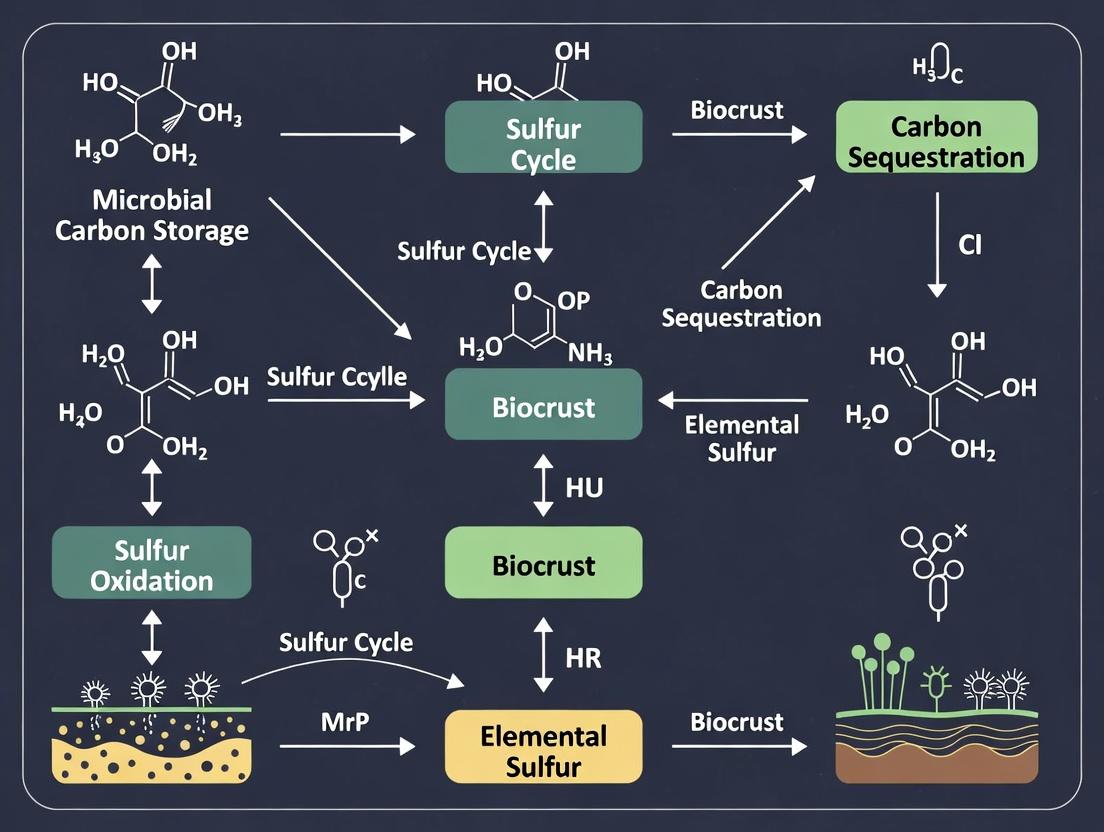
This article explores the critical, yet understudied, link between the biogeochemical sulfur cycle and microbial carbon storage in biocrusts.
Managing the Sulfur Cycle to Boost Carbon Sequestration: A Novel Biocrust Strategy for Climate Mitigation
Abstract
This article explores the critical, yet understudied, link between the biogeochemical sulfur cycle and microbial carbon storage in biocrusts. Targeting researchers and environmental scientists, it provides a comprehensive framework from foundational microbial ecology to applied management. We detail the mechanisms by which sulfur metabolism influences microbial exopolymeric substance (EPS) production and carbon stabilization. The content progresses to practical methodologies for sulfur amendment, troubleshooting common pitfalls in field applications, and validating outcomes against established carbon capture techniques. The synthesis presents biocrusts, through targeted sulfur cycle management, as a viable nature-based solution for enhancing terrestrial carbon sinks, with significant implications for climate change mitigation strategies.
The Hidden Link: How Sulfur Metabolism Drives Carbon Fixation in Biocrust Microbiomes
Biocrusts (biological soil crusts) are complex communities of cyanobacteria, algae, lichens, mosses, and microorganisms that form a cohesive layer on the soil surface, primarily in arid and semi-arid ecosystems. Within the thesis context of Enhancing microbial carbon storage in biocrusts through sulfur cycle management, understanding their composition and function is critical. Biocrusts are key players in carbon (C) sequestration, fixing CO₂ and stabilizing organic matter. Emerging research indicates that the sulfur (S) cycle is intrinsically linked to C storage, as sulfate reduction can influence microbial metabolism and the production of stabilizing exopolysaccharides.
Technical Support Center: Troubleshooting Biocrust Research for S-Cycle Management
FAQ & Troubleshooting Guides
Q1: During incubation experiments to measure net C sequestration, my biocrust cores show highly variable CO₂ flux readings, including unexpected respiration spikes. What could be causing this? A: Inconsistent moisture is a primary culprit. For S-cycle studies, ensure a standardized wetting protocol (e.g., using sterile deionized water to 70% of field capacity via gravimetric method). Respiration spikes may indicate a pulse of microbial activity from osmotic shock or contamination. Pre-incubate cores for 24-48 hours after wetting to establish a stable baseline. Shield cores from ambient light fluctuations if measuring dark respiration. Check sealing of chamber gaskets.
Q2: When applying low-dose sulfate amendments to stimulate sulfate-reducing bacteria (SRB), how do I distinguish their contribution to C stabilization from general microbial activity? A: Implement a tracer approach. Use stable isotope probing (SIP) with ¹³C-bicarbonate to track de novo C fixation into exopolysaccharides, coupled with a ³⁵S-sulfate tracer to concurrently track sulfate reduction rates (SRR). A control with molybdate (a specific SRB inhibitor) is essential. Correlation between ³⁵S incorporation and ¹³C-enriched EPS in the molybdate-inhibited vs. amended treatments quantifies the SRB-specific C contribution.
Q3: My molecular analysis (16S rRNA gene sequencing) of biocrusts post-S amendment shows an increase in SRB taxa, but my geochemical data does not show a corresponding increase in reduced S species or C storage. Why the discrepancy? A: Genetic potential does not equate to activity. The anoxic microsites necessary for SRB activity may not have been sufficiently induced. Ensure your experimental setup allows for the development of hypoxia. Measure dsrB gene expression (via mRNA) rather than just presence. Also, analyze for specific S metabolites (e.g., thiols, sulfonates) that may be intermediates. The C may be allocated to transient, non-stabilized metabolites.
Q4: What is the best method to quantitatively extract and analyze exopolysaccharides (EPS) from biocrusts for assessing C stabilization? A: A sequential extraction is recommended to separate loosely bound (LB-EPS) and tightly bound (TB-EPS) fractions.
- LB-EPS: Gently shake 5g of biocrust in 15 mL of 0.05% NaCl solution for 1 hour at 4°C. Centrifuge (8000 × g, 20 min). Filter supernatant (0.22 µm).
- TB-EPS: Resuspend pellet from Step 1 in 15 mL of 0.1M EDTA (pH 8.0) for 3 hours at 4°C. Repeat centrifugation and filtration. Analyze filtrates for total carbohydrate content via the phenol-sulfuric acid method, and for specific sugar monomers using GC-MS after acid hydrolysis and derivatization.
Key Experimental Protocol: Linking Sulfate Reduction to Carbon Stabilization
Title: Integrated Protocol for Measuring SRB-Mediated Carbon Stabilization in Biocrusts.
Objective: To quantify the fraction of newly photosynthesized carbon stabilized in biocrusts as a direct result of microbial sulfate reduction activity.
Materials: Intact biocrust cores, sterile artificial rainwater, Na₂³⁵SO₄, H¹³CO₃⁻, sodium molybdate dihydrate, gas-tight incubation chambers with LED light array, ion chromatography system, scintillation counter, IRMS.
Methodology:
- Core Preparation: Collect intact biocrust cores (10 cm diameter x 5 cm depth). Acclimate under lab conditions (12h light/12h dark, 20°C) for 1 week.
- Treatment Setup: Establish triplicate cores for each: (i) Control (water only), (ii) Sulfate-Amended (0.5 mM Na₂SO₄), (iii) Sulfate-Amended + Molybdate (10 mM, SRB inhibitor).
- Tracer Incubation: Gently apply treatment solutions containing ¹³C-bicarbonate (5 atom% excess) and ³⁵S-sulfate (100 kBq/core). Incubate under light for 14 days, maintaining constant moisture.
- Gas & Geochemical Sampling: Periodically measure headspace CO₂ for ¹³C-CO₂ (IRMS) and concentration (GC). At terminal point, destructively sample core in layers (0-1 cm, 1-3 cm).
- Analysis: For each layer:
- SRR: Measure ³⁵S incorporation into acid-volatile sulfide (AVS) and chromium-reducible sulfur (CRS) fractions via scintillation counting.
- Carbon Analysis: Sequentially extract EPS (see Protocol above). Determine ¹³C enrichment in EPS fractions and residual bulk soil via elemental analyzer-IRMS.
- Microbial Community: Extract DNA/RNA for dsrB gene and transcript quantification (qPCR).
Calculations:
- SRR (nmol S cm⁻³ day⁻¹) = (³⁵S in AVS+CRS / Total ³⁵S added) * [SO₄²⁻] / (time * volume)
- SRB-derived C = (¹³C-EPS in Sulfate treatment) - (¹³C-EPS in Molybdate treatment)
Table 1: Reported Carbon Fluxes and Stocks in Global Biocrusts
| Biocrust Type | Net C Fixation Rate (g C m⁻² yr⁻¹) | Soil Organic C Stock (g C m⁻², top 5cm) | Estimated Global C Sequestration Potential (Pg C yr⁻¹) | Key Reference Context |
|---|---|---|---|---|
| Cyanobacteria-Dominant | 0.5 - 5.0 | 50 - 150 | 0.3 - 0.7 | Rodriguez-Caballero et al., 2018 |
| Moss-Dominant | 5.0 - 25.0 | 200 - 600 | 1.0 - 1.5 | Elbert et al., 2012 |
| Lichen-Dominant | 2.0 - 15.0 | 100 - 400 | 0.5 - 1.0 | Maestre et al., 2013 |
| With S-Amendment (Lab) | +15% to +40% | +10% to +25% | N/A | Thesis-relevant experimental range |
Table 2: Sulfate Reduction Rate (SRR) Impact on Carbon Metrics
| Experimental Condition | SRR (nmol S cm⁻³ day⁻¹) | EPS-C Production (µg C g⁻¹ soil day⁻¹) | C Stabilization Factor (% increase vs control) | Notes |
|---|---|---|---|---|
| Biocrust Control (Low S) | 0.05 - 0.2 | 5 - 15 | Baseline | Natural, background activity. |
| +0.5 mM Sulfate | 1.5 - 4.0 | 20 - 45 | 25 - 40% | Optimal lab amendment level. |
| +10 mM Molybdate | ≤ 0.01 | 4 - 12 | -5 - +5% | Confirms SRB role in C processing. |
| Hypoxic Incubation (>70% WFPS) | 5.0 - 15.0 | 30 - 60 | 50 - 80% | Creates anoxic microniches for SRB. |
Diagram: S-Cycle & Carbon Stabilization Pathway in Biocrusts
Diagram Title: Sulfate Reduction Drives Biocrust Carbon Stabilization
Diagram: Experimental Workflow for S-C Management Research
Diagram Title: Integrated S-Cycle Biocrust Experiment Workflow
The Scientist's Toolkit: Research Reagent Solutions
Table 3: Essential Reagents for Biocrust S-Cycle/Carbon Research
| Reagent/Material | Function & Rationale |
|---|---|
| Sodium Molybdate Dihydrate (Na₂MoO₄·2H₂O) | Specific, non-competitive inhibitor of sulfate reductase enzyme in SRBs. Critical for creating control treatments to isolate SRB activity in carbon processing experiments. |
| ¹³C-Labeled Bicarbonate (H¹³CO₃⁻) | Stable isotope tracer for de novo carbon fixation. Allows tracking of photosynthetic carbon flow into EPS, microbial biomass, and respired CO₂ pools via IRMS. |
| ³⁵S-Labeled Sulfate (Na₂³⁵SO₄) | Radioisotope tracer for quantifying sulfate reduction rates (SRR). Measured via incorporation into solid-phase sulfide pools (AVS, CRS), providing direct activity data. |
| Zinc Acetate Solution (2% w/v) | Used in the "cold chromium distillation" trap to fix hydrogen sulfide (²⁵S or ³⁵S) evolved during SRR measurement as solid zinc sulfide for scintillation counting. |
| EDTA (Ethylenediaminetetraacetic acid) | Chelating agent used in the sequential extraction of tightly-bound exopolysaccharides (EPS). Binds divalent cations that crosslink EPS to soil minerals. |
| Phenol-Sulfuric Acid Reagents | Components of the colorimetric assay for total carbohydrate content in EPS extracts. Provides a rapid, quantitative measure of total soluble sugar polymers. |
| DNA/RNA Shield & Preservation Buffer | Critical for field sampling. Immediately stabilizes nucleic acids upon collection, preserving the in situ transcriptional profile (e.g., dsrB mRNA) for later molecular analysis. |
| Sterile Artificial Rainwater | Simulates natural wetting events without introducing confounding nutrients or microbes. Formula typically includes dilute CaCl₂, MgSO₄, and NH₄NO₃ at micromolar concentrations. |
Technical Support Center: Troubleshooting for Sulfur Cycle & Microbial Carbon Storage Experiments
Frequently Asked Questions (FAQs)
Q1: In our qPCR assays targeting key sulfur-cycling genes (e.g., dsrB, soxB), we are getting inconsistent Ct values and poor amplification curves. What could be the cause? A1: This is commonly due to PCR inhibition from polysaccharides and humic acids co-extracted with DNA from biocrusts. First, quantify your DNA purity using A260/A230 (target: 2.0-2.2) and A260/A280 (target: 1.8-2.0) ratios. If purity is low, we recommend a post-extraction clean-up using a commercial kit (e.g., OneStep PCR Inhibitor Removal Kit). Always include a dilution series (1:10, 1:100) of your template in the assay to identify the optimal concentration that minimizes inhibition. Include an internal control (e.g., a synthetic DNA spike) to confirm the removal of inhibitors.
Q2: Our stable isotope probing (SIP) experiments with 13C-acetate or 34S-sulfate show poor isotopic enrichment in target microbial populations. How can we optimize labeling? A2: Poor enrichment often stems from incorrect incubation length or substrate concentration. Biocrust microbes, especially in dry states, have low metabolic rates.
- Incubation Time: For biocrusts under hydrated conditions, extend labeling periods to 7-14 days, not the typical 24-48h used for aquatic systems.
- Substrate Concentration: Perform a calibration experiment first. We recommend a gradient of 13C-acetate from 10 µM to 1 mM final concentration in microcosms. Measure incorporation via bulk isotope ratio mass spectrometry (IRMS) on subsamples over time to find the plateau.
- Hydration Cycle: Mimic natural dew events. A 12-hour wet/12-hour dry cycle can enhance substrate diffusion and uptake compared to constant wetness.
Q3: When attempting to isolate sulfur-oxidizing bacteria (SOB) from biocrust slurries on specific media (e.g., thiosulfate agar), we get overgrowth of non-target heterotrophs. How do we selectively enrich SOB? A3: Use a liquid enrichment strategy with iterative sub-culturing under increasingly selective conditions.
- Initial Enrichment: Use a defined, minimal liquid medium with thiosulfate (5 mM) or elemental sulfur (0.1% w/v) as the sole energy source and bicarbonate as the sole carbon source. Omit organic carbon.
- pH Monitoring: SOB activity acidifies the medium. Monitor pH daily. Transfer 10% of the culture to fresh medium once the pH drops significantly (e.g., from 7.5 to below 6.0).
- Oxygen Control: Many lithotrophic SOB are microaerophilic. Use loose caps or reduced shaking (80 rpm) to provide lower oxygen tension.
- Antibiotics: After 2-3 cycles, introduce low-dose antibiotics targeting active protein synthesis (e.g., ampicillin at 50 µg/mL) during the transfer to inhibit fast-growing heterotrophs without affecting slow-growing SOB.
Q4: Our metagenomic analysis of dsrB genes reveals high diversity but we struggle to link phylogeny to potential activity in carbon fixation pathways. What's the best bioinformatic approach? A4: The key is to perform phylogenetic placement alongside metabolic pathway reconstruction from metagenome-assembled genomes (MAGs).
- Gene-Centric Analysis: Extract dsrB reads, translate, and align to a curated reference database (e.g., FunGene). Build a phylogenetic tree to identify major clades (e.g., sulfate-reducing vs. sulfur-oxidizing).
- MAG-Centric Analysis: Assemble contigs and bin MAGs. Check these MAGs for the presence of dsrAB genes AND key carbon fixation pathway markers (cbbL/cbbM for Calvin cycle, aclB for rTCA cycle).
- Cross-Reference: Map your dsrB sequences back to the MAGs. A MAG containing both dsrAB and a carbon fixation pathway represents a direct link—a putative "sulfur-cycling carbon sink." Tools like Anvi'o or METABOLIC are highly recommended for this integrated workflow.
Experimental Protocols & Data
Protocol 1: Quantifying Sulfate Reduction Rates (SRR) in Intact Biocrust Cores Using 35S-Sulfate Radiotracer
Objective: To measure in situ rates of microbial sulfate reduction under controlled hydration conditions.
Materials:
- Intact biocrust cores (5 cm diameter, 2 cm depth) in sealed, sterile tubes.
- Carrier-free Na2
35SO4 solution (specific activity ~150 kBq/µmol). - Anoxic N2:CO2 (90:10) gas mix.
- Zinc Acetate solution (20% w/v).
- Chromium(II) solution in HCl.
- Scintillation cocktail and vials.
- Radioactivity detector (Liquid Scintillation Counter).
Methodology:
- Preparation: In an anaerobic chamber, inject 100 µL of
35SO42-solution (≈ 150 kBq) into the center of the biocrust core at 1 cm depth. Seal tube. - Incubation: Incubate cores in the dark at field-relevant temperature (e.g., 25°C) for 6-24 hours. Run killed controls (cores autoclaved twice) in parallel.
- Termination & Fixation: Transfer cores to glass jars containing 10 mL of 20% zinc acetate to trap all sulfide as Zn
35S. - Distillation: Use the single-step chromium reduction method (Fossing & Jørgensen, 1989). Acidify sample with 8M HCl and reduce with Cr(II) solution under N2 flow, liberating H2
35S. - Trapping & Counting: Trap the evolved H2
35S in 5 mL of 5% Zinc Acetate. Mix 1 mL of trap solution with scintillation cocktail and count radioactivity (CPM). - Calculation: Calculate SRR (nmol SO4
2-cm-3day-1) using the total radioactivity added and the fraction reduced to sulfide.
Table 1: Representative Sulfate Reduction Rate (SRR) Data from Biocrust Microcosms
| Biocrust Type | Hydration Status | Incubation Temp (°C) | Mean SRR (nmol cm⁻³ day⁻¹) | ± SD | Key Microbial Taxa Enriched (16S rRNA) |
|---|---|---|---|---|---|
| Early Successional (Cyanobacteria-dominated) | Constant Wetness | 25 | 0.15 | 0.04 | Pontibacter, Geobacter |
| Early Successional (Cyanobacteria-dominated) | Wet/Dry Cycles | 25 | 1.87 | 0.31 | Pontibacter, Desulfovibrionaceae |
| Late Successional (Moss-dominated) | Constant Wetness | 15 | 0.08 | 0.02 | Desulfosporosinus, Anaeromyxobacter |
| Late Successional (Moss-dominated) | Constant Wetness | 25 | 0.95 | 0.18 | Desulfosporosinus, Anaeromyxobacter |
Protocol 2: Fluorescence In Situ Hybridization (FISH) Combined with NanoSIMS for Single-Cell Activity
Objective: To visualize and quantify 13C and 34S incorporation into specific microbial taxa within the biocrust matrix.
Materials:
- Biocrust samples incubated with 13C-acetate/34S-sulfate.
- PBS buffer (pH 7.4), 4% paraformaldehyde.
- Ethanol series (50%, 80%, 96%).
- Lysozyme solution (10 mg/mL).
- FITC or Cy3-labeled oligonucleotide probes (e.g., EUK516, ARCH915, DSB658 for Desulfobulbaceae).
- DAPI stain.
- Hybridization buffer and oven.
- Confocal microscope, NanoSIMS.
Methodology:
- Fixation & Embedding: Fix small biocrust pieces in 4% PFA for 3h. Dehydrate in ethanol series and embed in LR White resin.
- Sectioning: Cut thin sections (500 nm - 1 µm) and place on gold-coated slides for NanoSIMS or silicon wafers for FISH-NanoSIMS correlation.
- FISH: Perform standard FISH protocol with probe-specific hybridization conditions (formamide concentration, temperature). Counterstain with DAPI.
- Imaging & Correlation: Image sections with confocal microscopy to locate hybridized cells of interest. Map coordinates.
- NanoSIMS Analysis: Transfer sections to NanoSIMS. Analyze the same regions with a Cs+ primary ion beam, collecting secondary ions for 12C-, 13C-, 32S-, and 34S-. Calculate 13C/12C and 34S/32S ratios per cell.
- Data Analysis: Isotopic enrichment (atom percent excess) is calculated relative to natural abundance controls. This directly links phylogenetic identity to sulfur and carbon assimilation activity.
The Scientist's Toolkit: Key Research Reagent Solutions
| Reagent / Material | Supplier Examples | Function in Biocrust Sulfur Cycle Research |
|---|---|---|
Carrier-free Na235SO4 |
American Radiolabeled Chemicals, PerkinElmer | Radiotracer for sensitive quantification of sulfate reduction rates (SRR) in microcosms. |
| 13C-labeled Sodium Acetate | Cambridge Isotope Laboratories, Sigma-Aldrich | Stable isotope probe for tracing carbon flow from sulfur cyclers (e.g., SOB using rTCA cycle) into biomass and EPS. |
| Nycodenz or OptiPrep Density Gradient Medium | Axis-Shield, Sigma-Aldrich | Essential for density gradient centrifugation in Stable Isotope Probing (SIP) to separate 13C or 34S-labeled "heavy" DNA/RNA from unlabeled. |
| DNeasy PowerMax Soil Kit / ZymoBIOMICS DNA Kit | Qiagen, Zymo Research | Robust, high-yield genomic DNA extraction from biocrusts, critical for metagenomic and qPCR assays. |
| Thiosulfate Agar, Wolfe's Mineral Base | ATCC, DSMZ | Selective culture media for the isolation and enrichment of chemolithotrophic sulfur-oxidizing bacteria (SOB). |
| Sulfide Ion-Selective Electrode (ISE) | Thermo Scientific, Vernier | For direct, real-time measurement of dissolved sulfide production in liquid enrichments or slurry experiments. |
| ANME-1 and DSB658 FISH Probes | Biomers, custom synthesis | Oligonucleotide probes for fluorescence in situ hybridization to target specific archaeal methanotrophs and sulfate-reducing bacteria in biocrust communities. |
Visualizations
Diagram: Sulfur Cycle Pathways and Carbon Linkages
Diagram: Stable Isotope Probing (SIP) and qPCR Workflow
Technical Support Center
Troubleshooting Guides & FAQs
Q1: Our anoxic serum bottle incubations for sulfate-reducing bacteria (SRB) in biocrust slurries show no sulfide production after 4 weeks. What could be the issue? A: The most common causes are oxygen contamination or insufficient carbon substrates.
- Actionable Protocol: 1) Verify anoxic conditions by adding a resazurin indicator (0.0001% w/v) to the medium—a pink color indicates oxygen. 2) Check your reducing agent. We recommend sodium thioglycolate (0.02% w/v) + ascorbic acid (0.02% w/v). 3) Supplement with a defined mix of carbon sources: 2 mM sodium lactate, 1 mM sodium acetate, and 0.5 mM yeast extract. Monitor weekly via HPLC.
Q2: EPS extraction from biocrusts using the classical EDTA method yields low quantities and is contaminated with humic acids. How can we improve purity? A: The cationic exchange resin (CER) method followed by size-exclusion chromatography is superior for biocrusts.
- Detailed Protocol: 1) Homogenize 10g biocrust in 50 mL of 0.1M phosphate buffer (pH 7.0). 2) Centrifuge at 10,000 x g for 20 min. 3) Pass supernatant through a column packed with Dowex Marathon C resin (Na+ form). 4) Elute bound EPS with 0.5M NaCl. 5) Desalt and fractionate using a Sepharose CL-6B column. Purity is confirmed by a low 260/280 nm absorbance ratio (<1.8).
Q3: When quantifying carbon stabilization via 13C-labeling, we observe high variability in the mineral-associated organic carbon (MAOC) fraction. How can we standardize this? A: Variability often stems from inconsistent particle-size separation. A sonication-energy calibration is critical.
- Standardized Method: 1) Disperse 2g of 13C-incubated biocrust in 35 mL of 5% sodium hexametaphosphate. 2) Sonicate using a calibrated tip sonicator (e.g., Branson Digital Sonifier). Apply a specific energy of 500 J mL⁻¹ of soil suspension. 3) Separate the <63 μm fraction by wet sieving. 4. Wash, dry, and analyze the MAOC fraction for 13C via isotope ratio mass spectrometry (IRMS).
Q4: Our qPCR assays for dsrB (dissimilatory sulfite reductase) gene abundance in DNA extracts from biocrusts show poor amplification efficiency and high Ct values. A: This is typically due to co-extracted polysaccharides and humics inhibiting Taq polymerase.
- Optimization Steps: 1) Use a soil DNA purification kit with a post-elution polyvinylpolypyrrolidone (PVPP) clean-up step. 2) Perform a 1:5 and 1:10 dilution of your template DNA to dilute inhibitors—compare Ct values. 3) Include a internal amplification control (IAC) in each reaction to confirm lack of inhibition. 4) Optimize primer set: We recommend using dsrB primers DSRp2060F/DSR4R and a 65°C annealing temperature.
Q5: In microcosm experiments, how do we differentiate between carbon stabilization directly from SRB-EPS versus induced polysaccharide production from other biocrust microbes? A: A dual-isotope probing approach is required.
- Definitive Experiment: 1) Set up triplicate microcosms with sterilized crust material. 2) Inoculate with a pure culture of a model SRB (e.g., Desulfovibrio vulgaris). 3) Amend medium with 13C-acetate and 34S-sulfate. 4) After 8 weeks, sequentially extract EPS (CER method) and MAOC (density separation with sodium polytungstate, ρ = 1.8 g cm⁻³). 5) Analyze 13C/12C and 34S/32S ratios in both pools via IRMS and isotope ratio microscopy. Co-localization of 13C and 34S signals confirms SRB-derived carbon stabilization.
Research Reagent Solutions
| Reagent / Material | Function & Rationale |
|---|---|
| Sodium [13C2]Acetate | Stable isotope tracer to track carbon flow from SRB metabolism into EPS and MAOC pools. |
| Sodium [34S]Sulfate | Stable isotope tracer to quantify sulfate reduction rates and link sulfur cycling to carbon processes. |
| Dowex Marathon C Resin (Na+ form) | Cationic exchange resin for high-purity, non-destructive EPS extraction from complex matrices like biocrust. |
| Sodium Polytungstate (SPT) | Heavy liquid for density separation of mineral-associated organic carbon (MAOC, ρ > 1.8 g cm⁻³) from particulate organic matter. |
| dsrB qPCR Assay Kit | Targeted quantification of functional gene for sulfate reduction; essential for monitoring SRB population dynamics. |
| Resazurin Sodium Salt | Redox-sensitive dye used as an irreversible visual indicator (pink = oxic, colorless = anoxic) for anaerobic culturing. |
| Zirconium/Silica Beads (0.1 mm) | Beating media for efficient mechanical lysis of robust biocrust microbial cells during DNA/RNA co-extraction. |
| Polyvinylpolypyrrolidone (PVPP) | Insoluble polymer that binds polyphenolic compounds (humics) during nucleic acid clean-up, removing PCR inhibitors. |
Table 1: Impact of Sulfate Amendment on Carbon Pools in Biocrust Microcosms
| Treatment (n=5) | Sulfate Reduction Rate (nmol S cm⁻³ day⁻¹) | EPS-C Yield (μg C g⁻¹ crust) | MAOC 13C Retention (% of initial spike) |
|---|---|---|---|
| Control (No S) | 0.5 ± 0.2 | 45.2 ± 8.1 | 12.3 ± 2.1 |
| + 2 mM SO₄²⁻ | 18.7 ± 3.5 | 128.6 ± 15.4 | 31.8 ± 4.7 |
| + 5 mM SO₄²⁻ | 42.3 ± 6.9 | 211.5 ± 22.8 | 49.5 ± 5.9 |
| + 5 mM SO₄²⁻ + Molybdate (inhibitor) | 1.1 ± 0.5 | 52.1 ± 9.3 | 14.1 ± 2.5 |
Table 2: EPS Composition from SRB-Dominated vs. General Biocrust Community
| EPS Component | SRB-Isolate EPS (mol%) | Whole Biocrust EPS (mol%) | Primary Analytical Method |
|---|---|---|---|
| Galactose | 12.4 | 8.1 | GC-MS (Alditol acetates) |
| Glucose | 28.7 | 35.2 | GC-MS (Alditol acetates) |
| Mannose | 5.1 | 10.8 | GC-MS (Alditol acetates) |
| Rhamnose | 8.9 | 7.5 | GC-MS (Alditol acetates) |
| Glucuronic Acid | 18.2 | 9.3 | Colorimetric (m-hydroxydiphenyl) |
| Pyruvate | 6.5 | 4.2 | HPLC (DNPH derivatization) |
| Protein (μg mg⁻¹ EPS) | 142.0 ± 25 | 85.0 ± 18 | Bradford Assay |
Visualizations
Pathway: Sulfate Reduction to Carbon Stabilization
Workflow: Dual-Isotope Probing Experiment
Troubleshooting Guide & FAQs for S-C Link Experiments in Biocrust Research
Thesis Context: This support center provides technical guidance for experiments within the broader research aim of Enhancing microbial carbon storage in biocrusts through sulfur cycle management.
FAQ Section
Q1: During SIP-SIMS (Stable Isotope Probing coupled with Secondary Ion Mass Spectrometry) analysis of sulfur-oxidizing bacteria in biocrusts, our 13C enrichment signal is inconsistent or lower than expected. What could be the issue?
A: This is a common challenge when tracing C fixation via S oxidation. Key troubleshooting steps:
- Check Sulfur Substrate Availability: Ensure your targeted sulfur species (e.g., S2O3^2-, S^0) is bioavailable and not limiting. Abiotic oxidation can outcompete microbial processes. Measure concentration over time.
- Verify Anoxia/Microaerophylic Conditions: Many key chemolithoautotrophs (e.g., some Thiobacillus) require precise O2 gradients. Use an oxygen microsensor to validate conditions in your microcosm.
- Incubation Time: Carbon incorporation into biomass from S oxidation is slower than from photoautotrophy. Run a time-series experiment to capture the peak incorporation signal.
Q2: When attempting to quantify EPS (Extracellular Polymeric Substances) production in response to sulfide stress, our colorimetric assays (e.g., using Alcian Blue) show high variability between biocrust replicates. How can we improve consistency?
A: Variability often stems from the EPS extraction step from the biocrust matrix.
- Standardize Biomass: Use a consistent surface area or chlorophyll a content for normalization, not just wet weight.
- Extraction Protocol: Adopt a stepped extraction: 1) Mild (shaking in 0.1M NaCl for 2h) for loosely bound EPS, then 2) Strong (sonication at low power in 2mM EDTA for 5min) for tightly bound. Analyze separately.
- Interference: Biocrust minerals can interfere. Include a sediment-free microbial culture control and a biocrust-only blank (no stain).
Q3: Our metatranscriptomic data shows high expression of dsrA (dissimilatory sulfite reductase) genes, but sulfate reduction rates measured via 35S-radiotracer are low. Why this discrepancy?
A: This points to a critical research gap: activity versus potential.
- Post-Transcriptional Regulation: mRNA may be present but not translated due to nutrient (e.g., iron) limitation or microbial dormancy.
- Incorrect Electron Donor: The sulfate-reducing community may be utilizing organic acids (lactate, acetate) not provided in your rate assay. Test multiple electron donors.
- Sulfide Re-oxidation: Your measured net rate may be masked by immediate re-oxidation of sulfide by coexisting chemotrophs. Consider using a specific inhibitor like molybdate in parallel setups.
Experimental Protocols
Protocol 1: Quantifying Sulfur-Driven Carbon Fixation Rates in Biocrust Microcosms
- Objective: Measure inorganic carbon fixation rate linked to specific sulfur oxidation processes.
- Materials: Intact biocrust cores, sterile anoxic basal medium, Na2S2O3·5H2O or elemental S^0, 13C-NaHCO3 (99% atom), gas-tight serum bottles, oxygen microsensor.
- Method:
- Place one biocrust core (∼1 cm²) per bottle in an anaerobic chamber.
- Add anoxic medium containing 5mM of the target S substrate.
- Inject 13C-NaHCO3 to a final concentration of 10 mM.
- Incubate in the dark at field temperature. Maintain microaerophilic conditions (<5% O2).
- Sacrifice replicates at 0, 24, 48, 120h.
- Homogenize cores, acidify fumes to remove inorganic 13C, and analyze 13C incorporation into total biomass via Isotope Ratio Mass Spectrometry (IRMS).
- Calculation: Calculate fixation rate from the linear increase in atom% 13C over time in the treatment versus a no-S-substrate control.
Protocol 2: Linking Sulfate Reduction to Specific Microbial Taxa via FISH-SIMS
- Objective: Visually identify active sulfate-reducing bacteria within the biocrust matrix.
- Materials: Cryo-embedded biocrust sections, 34S-SO4^2- tracer, oligonucleotide probes (e.g., DSS658 for Desulfosarcina/Desulfococcus), Cy3-labeled tyramides, SIMS instrument.
- Method:
- Incubate live biocrusts with 34S-SO4^2- (50 µM) for 72h under anoxic conditions.
- Cryo-fix, section (5-10 µm), and fix on gold-coated slides.
- Perform Catalyzed Reporter Deposition Fluorescence In Situ Hybridization (CARD-FISH) with group-specific 16S rRNA probes.
- Analyze the same sections via NanoSIMS to map 34S/32S ratios at the single-cell level.
- Overlay FISH and SIMS images to correlate phylogenetic identity with isotopic enrichment.
Data Presentation
Table 1: Comparative Carbon Fixation Rates via Different Sulfur Pathways in Model Biocrust Isolates
| Microbial Strain | S Substrate | Pathway | C Fixation Rate (fmol C cell⁻¹ day⁻¹) | EPS Yield (µg mg⁻¹ protein) | Key Gene Marker |
|---|---|---|---|---|---|
| Thiocapsa sp. strain B1 | S2O3^2- | Thiosulfate oxidation | 2.5 ± 0.3 | 45 ± 12 | soxB |
| Desulfovibrio sp. strain C3 | SO4^2- (with lactate) | Sulfate Reduction | 0.08 ± 0.02 | 120 ± 25 | dsrA |
| Rhodovulum sp. strain S5 | S^0 | Anoxygenic Photosynthesis | 8.1 ± 1.2 | 15 ± 5 | psbA |
Table 2: Troubleshooting Common Analytical Methods in S-C Link Research
| Method | Common Pitfall | Symptom | Recommended Solution |
|---|---|---|---|
| SIP-SIMS | Incomplete diffusion of isotope into biocrust matrix | Patchy or surface-only signal | Pre-incubate under hydration conditions; use thinner sections. |
| 35S-SO4 Radiotracer | Sulfide re-oxidation | Low net sulfate reduction rates | Use a cold chromium distillation trap; add specific inhibitors (e.g., molybdate for abiotic check). |
| Metatranscriptomics | High eukaryotic rRNA in biocrusts | Low bacterial mRNA sequencing depth | Use prokaryote-specific rRNA depletion probes during library prep. |
Visualizations
Diagram Title: Conceptual S-C Coupling Leading to Carbon Storage
Diagram Title: SIP-SIMS Workflow for S-Linked Carbon Fixation
The Scientist's Toolkit: Key Research Reagent Solutions
| Item | Function in S-C Link Research | Example/Note |
|---|---|---|
| 13C-Sodium Bicarbonate | Stable isotope tracer for quantifying autotrophic carbon fixation pathways. | 99 atom% 13C; use in dark incubations to rule out photosynthesis. |
| 34S- or 35S-Sulfate/Sulfide | Radio/stable isotope tracer for measuring sulfate reduction or sulfide oxidation rates. | 35S for high-sensitivity rate assays; 34S for SIMS imaging. |
| Alcian Blue 8GX | Polysaccharide-binding dye for quantifying acidic EPS (e.g., uronic acids) in biocrusts. | Specific for carboxylated and sulfated mucopolysaccharides. |
| CARD-FISH Probe Mixes | For phylogenetic identification of active S-cyclers (e.g., DSS658, ARC915). | Use with tyramide signal amplification for enhanced detection in biocrusts. |
| Anoxic Basal Medium | Provides background nutrients without interfering electron donors/acceptors for S process studies. | Typically a bicarbonate-buffered medium with vitamins, N, P, no C. |
| Molybdate (Na2MoO4) | Specific inhibitor of sulfate reduction; used in control treatments to confirm biological activity. | 20-30 mM final concentration. |
| Oxygen/Temperature/H2S Microsensors | For fine-scale monitoring of microgradients in biocrust mats, critical for S process regulation. | Unisense or PyroScience systems are commonly used. |
From Theory to Field: Protocols for Sulfur-Amendment in Biocrust Management
Technical Support Center: Troubleshooting & FAQs
This support center provides targeted guidance for common issues encountered in sulfur amendment experiments aimed at enhancing microbial carbon storage in biocrusts.
FAQ 1: Lab-Scale Biocrust Cultivation & Inoculation
- Q: My cultivated biocrusts in the lab show poor microbial diversity or fail to form a coherent crust. What are the critical parameters to control?
- A: Successful lab cultivation requires precise mimicry of native conditions. Key parameters are:
- Inoculum Source: Use fresh, field-collected biocrust material (<48 hours old, kept cool and moist). Homogenize gently in sterile water or nutrient-poor medium (e.g., BG-11 modified for cyanobacteria) to create a slurry.
- Substrate: Use autoclaved, sieved (e.g., 2mm mesh) native soil or a standard mineral mixture (e.g., 70% sand, 20% clay, 10% silt) to ensure reproducibility.
- Growth Conditions:
- Light: 12-16 hour photoperiod at 100-300 µmol photons m⁻² s⁻¹ (simulating desert light).
- Temperature: Diurnal cycles (e.g., 15°C dark / 25°C light).
- Hydration: Cyclic wetting (simulated dew or light misting with sterile distilled water) and drying periods are crucial. Avoid constant moisture.
- Protocol: Spread the inoculum slurry evenly over the prepared substrate. Place trays in a controlled environment chamber with the above settings. Allow 4-8 weeks for visible crust formation before initiating amendments.
- A: Successful lab cultivation requires precise mimicry of native conditions. Key parameters are:
FAQ 2: Sulfur Amendment Preparation & Application
Q: How do I prepare and apply different sulfur compounds (elemental, sulfate, organic) at controlled rates to avoid toxicity and achieve reproducible results?
- A: The form and concentration are critical. Below is a standard preparation and application table.
Table 1: Sulfur Amendment Preparation Guide
Sulfur Form Example Compound Stock Solution Prep Typical Application Rate (Lab) Field/Mesocosm Equivalent Key Consideration Elemental S Powdered S⁰ Suspend in sterile water, sonicate briefly to disperse. 10 - 100 mg S⁰ kg⁻¹ soil 10 - 50 kg S⁰ ha⁻¹ Oxidizes slowly; requires microbial activity (e.g., Thiobacillus). Sulfate (SO₄²⁻) K₂SO₄ or MgSO₄ Dissolve directly in sterile water. Filter sterilize (0.22µm) if axenic conditions needed. 5 - 50 mg SO₄²⁻ kg⁻¹ soil 20 - 100 kg SO₄²⁻ ha⁻¹ Highly soluble and immediately bioavailable. Risk of salt stress at high doses. Organic S Methionine or CH₃SO₃⁻ Dissolve in sterile water. Filter sterilize. 1 - 10 mg organic S kg⁻¹ soil Not standard for field scale Direct source for assimilatory sulfate reduction. Can stimulate heterotrophs. - Application Protocol: For lab pots/mesocosms, amendments are best applied in a water carrier. Calculate the volume needed to bring the soil/substrate to 60-70% of its water-holding capacity. Dissolve or suspend the sulfur compound in this volume and apply it evenly across the surface using a spray bottle or pipette. For field plots, incorporate powdered S⁰ lightly into the top 5mm; sulfate solutions can be sprayed.
FAQ 3: Monitoring Sulfur Oxidation & Microbial Response
Q: What are the key indicators of successful sulfur oxidation and linkage to the carbon cycle in my experiment, and how do I measure them?
- A: Track both geochemical and biological markers. Establish a time-series sampling (e.g., Days 0, 7, 14, 30, 60).
Table 2: Key Response Variables & Measurement Protocols
Variable What it Indicates Standard Measurement Method Soil pH Sulfur oxidation produces H⁺, lowering pH. 1:2.5 soil:water slurry, pH electrode. Sulfate (SO₄²⁻) Concentration Direct product of S⁰ oxidation or added sulfate. Ion Chromatography (IC) or turbidimetric method (BaSO₄ precipitation) on soil extracts. Thiosulfate (S₂O₃²⁻) Intermediate in oxidation pathways. IC or colorimetric cyanolysis. Microbial Biomass Carbon (MBC) Total active microbial pool. Chloroform fumigation-extraction method. Extracellular Polymeric Substances (EPS) Microbial carbon storage & crust stability. Extraction in NaCl or EDTA, quantification as total carbohydrates (phenol-sulfuric acid method). Functional Gene Abundance Sulfur cycle & carbon fixation potential. qPCR of genes: dsrB (dissimilatory sulfite reductase), soxB (sulfur oxidation), cbbL (RubisCO, carbon fixation). Community Composition Shift in microbial structure. 16S rRNA (bacteria/archaea) and ITS (fungi) amplicon sequencing.
FAQ 4: Mesocosm-to-Field Transition
- Q: When scaling from lab mesocosms to field plots, what factors most often cause divergence in expected results?
- A: The primary factors are uncontrolled environmental variables and spatial heterogeneity.
- Problem: Inconsistent crust hydration (rain, dew) versus controlled lab cycles.
- Solution: Deploy microclimate sensors (soil moisture, temperature, PAR) in each plot. Consider installing automated dew simulators for dry periods.
- Problem: High spatial variability in native biocrust health and soil chemistry.
- Solution: Implement a rigorous blocked experimental design. Conduct intensive pre-treatment characterization (e.g., crust chlorophyll, soil pH, baseline sulfate) across the site and group plots into blocks with similar properties. Apply treatments randomly within each block.
- Problem: Amendment loss (leaching, wind dispersal).
- Solution: Apply amendments before a forecasted light rain or dew event to facilitate incorporation without runoff. Use soil berms around plot edges.
- Problem: Inconsistent crust hydration (rain, dew) versus controlled lab cycles.
- A: The primary factors are uncontrolled environmental variables and spatial heterogeneity.
The Scientist's Toolkit: Key Research Reagent Solutions
Table 3: Essential Materials for Sulfur-Biocrust Carbon Research
| Item / Reagent | Function / Role in Experiment |
|---|---|
| BG-11 Medium (Modified, N-Free) | Low-nutrient medium for cultivating and maintaining cyanobacteria-dominated biocrust inocula without promoting excessive heterotrophs. |
| Sterile Sieved Native Soil | Provides a standardized, reproducible mineral substrate that maintains the geochemical context of the field site. |
| Elemental Sulfur (S⁰) Powder (<100 µm) | The slow-release sulfur amendment. Particle size controls oxidation rate. Key for stimulating chemolithotrophic sulfur-oxidizing bacteria. |
| Potassium Sulfate (K₂SO₄) | A readily soluble sulfate source for creating immediate sulfate-replete conditions, contrasting with slow S⁰ oxidation. |
| Chloroform (CHCl₃) | Used in the fumigation step of the Microbial Biomass Carbon (MBC) quantification protocol to lyse microbial cells. |
| DNA/RNA Shield or RNAlater | Preservation solution for immediate stabilization of nucleic acids in field samples, crucial for accurate downstream molecular analysis (qPCR, sequencing). |
| dsrB & soxB qPCR Primers/Assays | Specific oligonucleotide sets for quantifying the abundance of key genes involved in microbial sulfur cycling via quantitative PCR. |
| Polysaccharide Standard (e.g., Glucose) | Used to create a calibration curve for the colorimetric quantification of EPS carbohydrates via the phenol-sulfuric acid method. |
Experimental Workflow & Conceptual Diagram
Diagram Title: Scaling Experiment Workflow from Lab to Field
Diagram Title: S Amendment Link to Microbial C Storage Pathway
Troubleshooting Guides & FAQs
FAQ 1: Why is my biocrust exhibiting poor growth despite sulfur amendment?
- Answer: The issue likely involves sulfur source bioavailability or pH mismatch. Elemental S (S⁰) requires oxidation by specific microbes (e.g., Thiobacillus) to become plant-available sulfate (SO₄²⁻). This process acidifies the environment. If your native soil pH is already low (<6.0) or microbial consortia lack oxidizers, S⁰ will be ineffective. Troubleshooting Steps: 1) Measure soil pH. 2) For low pH soils, switch to a sulfate source (e.g., gypsum - CaSO₄·2H₂O). 3) For high pH soils (>8.0) where S⁰ is recommended, inoculate with a known sulfur-oxidizing bacterial consortium to initiate the cycle.
FAQ 2: My experiment shows inconsistent microbial carbon sequestration results when using organic amendments. How can I standardize this?
- Answer: Organic amendments (e.g., manure, plant residues) introduce variable amounts of carbon, nitrogen, and sulfur in complex forms. The C:S ratio of the amendment is critical. A narrow C:S ratio (<400:1) promotes rapid mineralization and sulfate release, while a wide C:S ratio (>600:1) leads to microbial immobilization of sulfur, temporarily locking it away. Troubleshooting Steps: 1) Perform elemental analysis (CHNS) on your organic amendment before application. 2) Calculate and document the C:S ratio. 3) For consistent sulfate release, target amendments with a C:S ratio between 200:1 and 400:1, or supplement with a controlled amount of sulfate to achieve this balance.
FAQ 3: How do I differentiate between direct sulfur fertilization effects and indirect pH-mediated effects on microbial carbon storage?
- Answer: This is a common confounding factor. The choice of sulfur source directly alters pH, which in turn influences microbial community structure and function. Troubleshooting Protocol: Implement a controlled pH-buffered experiment. Set up treatments with:
- Treatment A: Elemental S (acidifying).
- Treatment B: Gypsum (pH-neutral sulfate).
- Treatment C: Potassium sulfate (pH-neutral to slightly basic sulfate).
- Treatment D: Control (no S).
- Critical: Include parallel treatments where the pH change induced by Treatment A is artificially replicated (using a dilute acid) in the control and sulfate treatments without adding sulfur. Monitor pH daily and adjust. Compare carbon storage metrics between the real sulfur treatments and their pH-only counterparts to isolate the sulfur-specific effect.
FAQ 4: What is the optimal application rate for sulfur in biocrust research to avoid toxicity?
- Answer: Toxicity thresholds depend heavily on the source material and soil texture. The following table summarizes current application rate guidelines based on recent studies:
Table 1: Sulfur Source Application Rates & Key Properties
| Sulfur Source | Typical Chemical Formula | Solubility | Approx. S Content (%) | Recommended Experimental Application Range (kg S ha⁻¹) | Primary Risk / Note |
|---|---|---|---|---|---|
| Elemental S | S⁰ | Insoluble | 90-100 | 20 - 100 | Acidification, slow initial response. Requires oxidation. |
| Gypsum | CaSO₄·2H₂O | Low | 18-22 | 50 - 200 | Minimal pH impact. Source of calcium. |
| Ammonium Sulfate | (NH₄)₂SO₄ | High | 24 | 10 - 50 | Rapid acidification, introduces N. Risk of ammonia toxicity at high rates. |
| Potassium Sulfate | K₂SO₄ | High | 18 | 25 - 100 | Minimal pH impact. Source of potassium. |
| Organic Amendment | Variable | Variable | 0.1-1.5 | 10 - 30 (from source) | Unpredictable release. Calculate based on C:S ratio. CHNS analysis is essential. |
Detailed Experimental Protocols
Protocol 1: Quantifying Sulfur Oxidation Rate in Biocrusts Objective: To measure the conversion rate of elemental S (S⁰) to sulfate (SO₄²⁻) by native biocrust microbes. Methodology:
- Preparation: Homogenize biocrust samples. Set up triplicate microcosms with 10g of crust.
- Amendment: Add finely powdered elemental S at a rate of 100 mg S⁰ per kg of crust.
- Incubation: Maintain microcosms at 25°C and 60% water-holding capacity for 8 weeks.
- Sampling: Destructively sample one microcosm per treatment weekly.
- Extraction & Analysis: Extract sulfate with 0.01M CaCl₂ (1:5 soil:solution ratio). Quantify sulfate-S via ion chromatography or turbidimetric method (BaCl₂ precipitation at 540 nm).
- Calculation: Plot cumulative sulfate-S against time. The slope of the linear phase represents the oxidation rate (mg SO₄²⁻-S kg⁻¹ day⁻¹).
Protocol 2: Assessing Microbial Carbon Use Efficiency (CUE) with Different S Sources Objective: To determine how sulfur sources influence the fraction of assimilated carbon directed to microbial growth versus respiration. Methodology:
- Treatment Setup: Prepare biocrust samples with five treatments: Control (no S), S⁰, Gypsum, (NH₄)₂SO₄, Organic Amendment (characterized C:S ratio). Use rates from Table 1.
- ¹³C Labeling: Add a pulse of ¹³C-labeled glucose substrate (e.g., 100 µg C g⁻¹ crust) to all microcosms.
- Monitoring: Immediately place microcosms in a gas-tight incubation system.
- Measurements:
- Respiration: Track the δ¹³C of evolved CO₂ over 72 hours using cavity ring-down spectroscopy (CRDS).
- Biomass Incorporation: At 72h, extract microbial biomass via chloroform fumigation-extraction. Analyze δ¹³C in the extracted carbon.
- Calculation: CUE = (¹³C in biomass) / (¹³C in biomass + ¹³C respired as CO₂). Compare CUE across sulfur treatments.
Visualizations
Diagram Title: Sulfur Source Pathways & Carbon Storage in Biocrusts
Diagram Title: Core Workflow for S Source & Carbon Storage Experiments
The Scientist's Toolkit: Research Reagent Solutions
| Item / Reagent | Primary Function in S & Biocrust Research |
|---|---|
| Finely Powdered Elemental S (S⁰) | The standard insoluble, slow-release source to study microbial oxidation rates and acidification effects. Particle size <100 µm recommended. |
| Gypsum (CaSO₄·2H₂O), Reagent Grade | A pH-neutral sulfate source. Used to deliver SO₄²⁻ without confounding pH effects, and as a calcium control. |
| ¹³C-labeled Glucose (e.g., U-¹³C₆) | Isotopic tracer for quantifying microbial Carbon Use Efficiency (CUE) and partitioning carbon flux between growth and respiration. |
| Ion Chromatography (IC) System | For accurate quantification and separation of anions, specifically sulfate (SO₄²⁻), in soil/bio-crust extracts. |
| Cavity Ring-Down Spectrometer (CRDS) | For continuous, high-precision measurement of the δ¹³C signature of CO₂ evolved from microcosms, enabling real-time respiration tracking. |
| CHNS Elemental Analyzer | Essential for characterizing the total carbon, hydrogen, nitrogen, and sulfur content of organic amendments and biocrust samples. |
| pH Buffers & Automated Titrator | To monitor and control pH in microcosms, critical for disentangling pH effects from sulfur nutritional effects. |
| Chloroform for Fumigation | Used in the chloroform fumigation-extraction method to lyse microbial cells and determine microbial biomass carbon and sulfur. |
Technical Support Center
Troubleshooting Guide & FAQs
Q1: We applied the sulfur compound at the recommended dosage, but our biocrusts show inhibited growth or bleaching. What went wrong?
A: This is often a pH-driven issue. Elemental sulfur (S⁰) or sulfates can lower soil pH upon oxidation, creating an overly acidic microenvironment detrimental to many cyanobacteria. First, measure the pH of the crust and substrate. If pH < 6.0, cease applications. Flush the area with a mild, buffered solution (e.g., 1mM potassium phosphate buffer, pH 7.2) to neutralize acidity. For future applications, recalibrate dosage using the following table, factoring in your substrate's initial buffering capacity:
| Initial Substrate pH | Recommended S⁰ Dosage (g/m²) | Recommended Sulfate Dosage (mmol/m²) |
|---|---|---|
| 8.0 - 8.5 | 5 - 10 | 15 - 20 |
| 7.5 - 8.0 | 3 - 5 | 10 - 15 |
| 7.0 - 7.5 | 1 - 3 | 5 - 10 |
| < 7.0 | DO NOT APPLY | DO NOT APPLY |
Protocol: Soil pH Buffering Capacity Test.
- Collect 5g of dry substrate.
- Add 25mL of distilled water (1:5 ratio) and shake for 1 hour.
- Measure pH (this is your baseline).
- Add 0.1 mL of 0.1M HCl, vortex, let sit for 10 mins, measure pH.
- Repeat step 4 until pH drops by 1 full unit. The volume of HCl required is proportional to buffering capacity. High buffer volume = higher safe sulfur dosage.
Q2: What is the optimal timing for sulfur application to maximize carbon storage, and how does it interact with wet/dry cycles?
A: Timing is critical for microbial integration. Apply immediately after a natural light precipitation event or a controlled misting, when the crust is damp but not saturated. This facilitates dissolution and integration without causing abrasive physical disruption. Never apply to completely dry or waterlogged crusts.
| Target Metabolic Process | Ideal Application Timing | Rationale |
|---|---|---|
| Stimulate Cyanobacterial EPS Production | Early in humid season / pre-dawn damp period | Enhances carbon fixation and exopolysaccharide (EPS) secretion, which provides scaffold for carbon stabilization. |
| Boost Sulfate-Reducer Activity | Post-application of S⁰, before a significant wetting event | Allows sulfur oxidizers to generate sulfate, which then becomes available for reducers under subsequent anoxic conditions in wet soil, producing sulfides that can stabilize organic carbon. |
| Minimize Photochemical Loss | Late afternoon / early evening | Avoids concurrent high UV stress, allowing for microbial processing of compounds overnight. |
Q3: Our isotopic tracing (δ¹³C, δ³⁴S) shows inconsistent carbon flow into stabilized pools. How can we better integrate environmental variables?
A: Inconsistent data often stems from unaccounted for microenvironmental heterogeneity. You must stratify your sampling and monitoring protocol. Implement the following before your next tracer experiment:
Protocol: Microenvironment-Integrated Tracer Application.
- Pre-Mapping: Use a handheld NDVI meter and soil moisture probes to map micro-variations in biocrust vitality and hydration across your plot. Mark zones (High/Med/Low vitality).
- Stratified Application: Prepare your ¹³C-bicarbonate and ³⁴S-sulfate tracer solution. Apply differentially based on zone:
- High Vitality Zones: Standard tracer dose.
- Medium/Low Zones: Reduce dose by 50% to avoid swamping native metabolism.
- Environmental Syncing: Initiate application at the "optimal timing" (see Q2). Continuously log light intensity (PAR), surface temperature, and humidity for 48 hours post-application using a micro-weather station.
- Stratified Sampling: At each harvest time point (e.g., 6h, 24h, 168h), collect 3 replicate cores per zone. Process and analyze separately.
Q4: Which specific sulfur compounds are most effective for enhancing microbial carbon storage, and what are their trade-offs?
A: The choice dictates the microbial pathway stimulated. See the table below.
| Sulfur Compound | Target Microbial Guild | Proposed Mechanism for C Storage | Risk / Consideration |
|---|---|---|---|
| Elemental Sulfur (S⁰) | Sulfur-Oxidizing Bacteria (SOB) | SOB activity produces sulfuric acid, lowering pH to mobilize Ca²⁺/Mg²⁺, potentially leading to mineral-associated organic carbon (MAOC). | Sharp pH drop can harm biocrust pioneers. Requires careful buffering. |
| Gypsum (CaSO₄·2H₂O) | Generalist Sulfate-Reducers | Provides sulfate without drastic pH change. Sulfide production can protect organic matter from decomposition or form organo-sulfur compounds. | Slow release. High doses can lead to soil crusting. |
| Cysteine or other Organosulfurs | Specific Heterotrophs & Sulfur-Reducers | Direct integration into microbial biomass and formation of carbon-sulfur bonds in organic matter, a highly stabilized pool. | Costly. May preferentially stimulate rare populations. |
The Scientist's Toolkit: Research Reagent Solutions
| Item & Supplier (Example) | Function in Biocrust S/C Research |
|---|---|
| ¹³C-Labeled Sodium Bicarbonate (Cambridge Isotopes) | Stable isotopic tracer for quantifying de novo carbon fixation rates and flow of photosynthate into EPS and biomass. |
| ³⁴S-Labeled Sodium Sulfate (Sigma-Aldrich) | Stable isotopic tracer for tracing sulfur assimilation into biomass, EPS, and organo-sulfur compounds. |
| Biotinylated EPS-Specific Lectins (Vector Labs) | Probes for binding and visualizing specific polysaccharide components (e.g., from Microcoleus) in crust matrices via fluorescence. |
| ANME-2d & dsrB Gene qPCR Primers (Premier Biosoft) | Quantify gene copies of key anaerobic methanotrophs (linked to sulfur cycling) and dissimilatory sulfite reductase genes for sulfate-reducer abundance. |
| Polyvinylpyrrolidone (PVP)-coated Soil Sampling Kits (AMS) | For stable isotope soil sampling; coating minimizes adhesion and cross-contamination between core samples. |
| Portable Soil Redox/Potential (Eh) Meter (Hanna Instruments) | Critical for in situ measurement of anoxic conditions that favor sulfate-reducing bacterial activity. |
Experimental Pathways & Workflows
Technical Support Center: Troubleshooting & FAQs
Troubleshooting Guides & FAQs
Q1: During phospholipid fatty acid (PLFA) analysis to measure microbial biomass, I am detecting very low concentrations of signature fatty acids (e.g., 16:1ω5 for arbuscular mycorrhizal fungi). What could be the cause? A: Low PLFA concentrations can stem from suboptimal extraction or incorrect normalization. Follow this protocol meticulously:
- Sample Handling: Freeze-dry (lyophilize) crust samples immediately after collection. Do not use oven drying, as it degrades lipids.
- Extraction: Use a modified Bligh-Dyer extraction (Bligh & Dyer, 1959) with a phosphate buffer (pH 7.4). Ensure the chloroform:methanol:buffer ratio is precisely 1:2:0.8 (v/v/v) in the initial single-phase extraction.
- Separation & Purification: After adding additional chloroform and water to achieve phase separation (final ratio 1:1:0.9), collect the lower chloroform layer. Purify lipids using solid-phase extraction (Silica gel columns).
- Normalization: Express results per gram of crust dry weight, not per gram of soil beneath the crust. Re-check your sample mass calculations. Common Fix: Increase sample mass for extraction (use 3-4g dry weight equivalent) and verify the pH and composition of your extraction buffer.
Q2: My chlorophyll a measurements for crust health/biomass are inconsistent across replicates from the same plot. A: Inconsistency often arises from non-uniform sampling of the crust layer.
- Protocol for Homogenization: Use a sterile scalpel to carefully scrape the top 0-5 mm of the crust into a sterile weigh boat. Gently homogenize the pooled scrapings with a spatula before sub-sampling for analysis.
- Extraction Method: Use 90% acetone (buffered with magnesium carbonate) for a 24-hour extraction in the dark at 4°C. Centrifuge at 3000 x g for 10 minutes before measuring absorbance.
- Calculation: Use the Jeffrey & Humphrey (1975) equation:
Chl a (µg/mL) = 11.85*(A664) - 1.54*(A647) - 0.08*(A630). Ensure your spectrophotometer is calibrated. Common Fix: Implement a standardized scraping template (e.g., a 1cm x 1cm grid) and pool at least 5 sub-samples per plot before homogenization.
Q3: When quantifying the soil organic carbon (SOC) pool via elemental analysis, how do I account for inorganic carbonates that inflate the reading? A: You must perform an acid pretreatment to remove carbonates.
- Protocol – Acid Fumigation: Weigh 20-30 mg of finely ground, homogenized crust sample into a silver capsule.
- Place capsules in a desiccator with a beaker containing 50 mL of concentrated HCl (37%) or 100 mL of 3M HCl. Seal the desiccator.
- Fumigate samples for 8-12 hours at room temperature.
- Remove capsules, dry them in a clean oven at 60°C for 24 hours to remove residual acid and moisture.
- Seal capsules and analyze via elemental analyzer (ECS 4010). The resulting C measurement is the organic carbon pool.
Q4: My qPCR assays for functional genes related to the sulfur cycle (e.g., dsrB, soxB) show poor amplification efficiency or non-specific peaks in melt curves. A: This indicates primer-dimers or contamination of crust samples with inhibitors (e.g., polysaccharides, humic acids).
- DNA Extraction: Use a kit specifically validated for soil/humic substances (e.g., DNeasy PowerSoil Pro Kit). Include a known inhibitor removal step.
- PCR Optimization: Perform a gradient PCR to determine the optimal annealing temperature for your primer set in the crust matrix. Use a master mix with an inhibitor-resistant polymerase.
- Controls: Always run a no-template control (NTC) and a positive control (cloned gene fragment) to diagnose contamination or efficiency issues. Common Fix: Dilute your DNA template (1:10, 1:100) to dilute inhibitors. Re-design primers to span shorter amplicons (100-150 bp) for degraded environmental DNA.
Table 1: Target Ranges for Key Biocrust Metrics in Sulfur-Amendment Studies
| Metric | Analytical Method | Target Range (Healthy Crust) | Threshold Indicating Stress |
|---|---|---|---|
| Microbial Biomass C (µg C/g) | Chloroform fumigation-extraction | 50 - 200 | < 30 |
| Chlorophyll a (mg/m²) | Acetone extraction, spectrophotometry | 20 - 100 | < 15 |
| Exopolysaccharides (EPS) (mg/g) | Phenol-sulfuric acid method, glucose eq. | 5 - 15 | < 3 |
| dsrB Gene Abundance (copies/g soil) | qPCR with standard curve | 10^6 - 10^8 | Drop >1 log unit |
| Soil Respiration (µg CO₂-C/g/day) | Microrespirometry (24h) | 0.5 - 2.5 | < 0.2 |
| Organic Carbon Pool (mg C/g) | Elemental analysis, acid-fumigated | 2.0 - 10.0 | < 1.5 |
Table 2: Common Sulfur Amendment Compounds & Experimental Concentrations
| Compound | Formula | Typical Application Rate | Primary Microbial Process Targeted |
|---|---|---|---|
| Sodium Thiosulfate | Na₂S₂O₃·5H₂O | 0.1 - 1.0 mM in solution | Sulfur oxidation, electron donation |
| Elemental Sulfur | S⁰ | 0.01 - 0.1% (w/w of crust) | Slow oxidation by Thiobacillus spp. |
| Potassium Sulfate | K₂SO₄ | 0.5 - 2.0 mM in solution | Sulfate reduction (in anoxic microsites) |
| Dimethylsulfoniopropionate (DMSP) | C₅H₁₀O₂S | 10 - 100 µM in solution | Precursor for microbial methylation pathways |
Experimental Protocols
Protocol 1: Microcosm Assay for Sulfur-Driven Microbial Carbon Sequestration Objective: To measure the effect of controlled sulfur amendments on microbial respiration and carbon pool dynamics in biocrusts. Materials: Intact biocrust cores (5 cm diameter), sterile Petri dishes, microrespirometry system (e.g., PreSision µRespirometer), sulfur amendment solutions (see Table 2), deionized water. Methodology:
- Core Setup: Place one intact crust core per sterile dish. Pre-incubate under growth light conditions (12h/12h light/dark) at 18°C for 48h to acclimate.
- Amendment: Apply 5 mL of the designated sulfur amendment solution (or deionized water for control) evenly across the crust surface using a mist sprayer.
- Respirometry: Seal cores in respiration chambers. Measure headspace CO₂ concentration every 2 hours for 72 hours using infrared gas analysis.
- Destructive Sampling: After 72h, destructively sample cores for PLFA (microbial biomass), EPS, and elemental analysis (C pools).
- Calculation: Integrate the CO₂ flux curve over time to calculate total C mineralized. Compare against the change in the solid-phase organic carbon pool.
Protocol 2: High-Throughput dsrB Gene Quantification via Droplet Digital PCR (ddPCR) Objective: To absolutely quantify the abundance of sulfate-reducing bacteria in crust samples with high precision. Materials: Extracted crust DNA, ddPCR Supermix for Probes (no dUTP), dsrB-specific primers & FAM-labeled probe, QX200 Droplet Digital PCR system (Bio-Rad). Methodology:
- Reaction Setup: Prepare 20µL reactions: 10µL Supermix, 1µL each primer (900nM final), 0.5µL probe (250nM final), 2µL DNA template, 5.5µL water.
- Droplet Generation: Use the QX200 Droplet Generator to partition each sample into ~20,000 nanoliter-sized droplets.
- PCR Amplification: Run on a thermal cycler: 95°C for 10 min; 40 cycles of 94°C for 30s and 60°C for 60s (ramp rate 2°C/s); 98°C for 10 min; 4°C hold.
- Droplet Reading: Read droplets in the QX200 Droplet Reader. Analyze using QuantaSoft software.
- Quantification: Software applies Poisson statistics to count positive/negative droplets, giving an absolute concentration (copies/µL) without a standard curve. Convert to copies/g dry crust.
Visualization: Diagrams & Workflows
Sulfur Amendment Microcosm Workflow
Microbial Sulfate Reduction & C Sequestration Link
The Scientist's Toolkit: Research Reagent Solutions
Table 3: Essential Reagents for Biocrust Sulfur-Carbon Research
| Item | Function & Application |
|---|---|
| Chloroform-Methanol Phosphate Buffer (2:1:0.8) | Solvent system for Bligh-Dyer lipid extraction, critical for PLFA analysis of microbial biomass. |
| Chlorophyll a Extraction Solvent (90% Acetone, buffered) | Effectively extracts chlorophyll from cyanobacteria in crusts without degradation. Magnesium carbonate buffer prevents pheophytinization. |
| DNeasy PowerSoil Pro Kit (Qiagen) | Gold-standard for high-yield, inhibitor-free DNA extraction from biocrusts for downstream molecular work (qPCR, sequencing). |
| QX200 ddPCR EvaGreen Supermix | Enables absolute quantification of functional genes (e.g., dsrB, cbbL) without standard curves, superior for environmental samples. |
| Sodium Thiosulfate Pentahydrate (ACS Grade) | A stable, soluble sulfur source for oxidation pathway experiments. Used in microcosm amendment solutions. |
| Lysozyme & Proteinase K | Enzymatic lysis agents used in tandem during DNA extraction to break open tough Gram-positive bacterial and fungal cell walls in crusts. |
| Polyvinylpolypyrrolidone (PVPP) | Added during DNA/compound extraction to bind and remove polyphenolic compounds (humic acids) that inhibit PCR. |
| SOC Standard (Acetanilide) | Certified reference material for calibrating elemental analyzers to ensure accurate soil organic carbon measurement. |
Navigating Challenges: Optimizing Sulfur Treatments for Maximum Carbon Gain
Troubleshooting Guide & FAQs
Q1: During sulfur amendment experiments to enhance microbial carbon storage in biocrusts, we observe a sharp pH drop (<5.0), inhibiting cyanobacterial growth. What is the cause and solution? A1: This acidification is likely due to the microbial oxidation of elemental sulfur (S⁰) or reduced sulfur compounds (e.g., thiosulfate) to sulfuric acid (H₂SO₄) by sulfur-oxidizing bacteria (SOB) like Acidithiobacillus. This can overwhelm the system's buffering capacity.
- Immediate Mitigation: Incorporate a sterile calcium carbonate (CaCO₃) or magnesium carbonate (MgCO₃) buffer layer beneath the biocrust inoculum during plate or mesocosm setup. Monitor pH daily.
- Protocol Adjustment: Titrate sulfur source concentration. Begin with lower concentrations (see Table 1) and increase gradually over successive experiments to allow for microbial community adaptation.
- Preventive Design: Include a treatment with a slow-release alkali source mixed with the substrate.
Q2: Addition of dimethylsulfoniopropionate (DMSP) or hydrogen sulfide (H₂S) leads to complete die-off of key biocrust cyanobacteria (e.g., Microcoleus spp.). How do we manage sulfur toxicity? A2: H₂S is highly toxic to cytochrome c oxidase. DMSP cleavage produces acrylate, which can be toxic at high levels. Toxicity indicates an imbalance between sulfur compound production/input and consumption/volatilization.
- Solution: Control the rate of sulfur compound delivery. Use a slow-diffusion method (e.g., agar-plug diffusion or slow-release pellets) instead of bulk addition.
- Critical Protocol: Establish a toxicity threshold assay first.
- Prepare a gradient of the sulfur compound (e.g., 0, 10, 50, 100, 500 µM NaHS as an H₂S precursor) in triplicate biocrust culture plates.
- Inoculate uniformly with a standard biocrust slurry.
- Assess chlorophyll-a content and PSII efficiency (Fv/Fm) via PAM fluorometry at 24, 48, and 72 hours.
- Identify the maximum concentration not causing significant inhibition (EC10). Use this as your maximum experimental dose.
Q3: Our sulfur treatments intended to stimulate carbon sequestration cause a dominant bloom of proteobacteria, collapsing cyanobacterial networks. How can we prevent this unbalanced microbial shift? A3: This is a common pitfall where rapid sulfur oxidation creates a high-niche opportunity for r-strategist heterotrophs (e.g., some Pseudomonas), outcompeting slower-growing cyanobacteria.
- Mitigation Strategy: Pre-condition the biocrust community with a sub-inhibitory priming dose of sulfur 1-2 weeks before the main experimental sulfur amendment. This allows for a more gradual succession.
- Monitoring Protocol: Implement weekly 16S rRNA amplicon sequencing for key time points. Track the Cyanobacteria/Proteobacteria ratio. A balanced shift should show a stable or slowly increasing ratio after an initial dip.
- Solution: Combine sulfur amendment with a organic carbon source (e.g., low concentration of sucrose or cyanobacterial exopolysaccharide extract) to decouple the sulfur energy niche from the carbon metabolism niche, reducing the competitive pressure on cyanobacteria.
Table 1: Outcomes of Different Sulfur Amendment Strategies in Biocrust Microcosms
| Sulfur Source | Typical Concentration Range | Common Pitfall Observed | Recommended Mitigation | Avg. Carbon Storage Change* (%) |
|---|---|---|---|---|
| Elemental S (S⁰) Powder | 0.1 - 1.0% (w/w) | Severe acidification (pH <4.0) | Co-amendment with 0.5% CaCO₃ buffer | -5 to +15 |
| Sodium Thiosulfate (Na₂S₂O₃) | 1 - 10 mM | Rapid oxidation, heterotroph bloom | Slow, pulsed addition (1 mM/week) | -10 to +8 |
| DMSP | 10 - 500 µM | Acute toxicity at >100 µM | Dose at 50 µM with precursor glycine | +5 to +20 |
| Gypsum (CaSO₄·2H₂O) | 0.5 - 2.0% (w/w) | Minimal perturbation, slow effect | Use as baseline/control amendment | +2 to +10 |
*Reported as % change in soil organic carbon (SOC) relative to untreated control over a 90-day experiment. Outcomes are highly context-dependent on initial biocrust health and environmental conditions.
Table 2: Key Microbial Taxa Shifts Associated with Pitfalls
| Pitfall | Taxa That Increase (Bloom) | Taxa That Decrease (Inhibition) | Implication for Carbon Storage |
|---|---|---|---|
| Acidification | Acidithiobacillus spp., Acidophilic Archaea | Microcoleus spp., Scytonema spp. | Net loss due to phototroph die-off |
| H₂S Toxicity | Sulfide-resistant heterotrophs (e.g., Rhodanobacter) | Most Cyanobacteria, Nitrifiers | Severe short-term loss of primary production |
| Unbalanced Shift (Heterotroph Bloom) | Pseudomonas, Burkholderia (r-strategists) | Cyanobacteria, slow-growing oligotrophs | Potential for increased respiration & C loss |
Experimental Protocol: Determining Sulfur Amendment Toxicity Thresholds
Objective: To establish the non-inhibitory concentration range for a sulfur compound prior to long-term carbon storage experiments.
Materials:
- Healthy, homogenized biocrust inoculum (from reference site or culture)
- Sterile defined mineral medium agar plates (or sterile sand/soil microcosms)
- Stock solutions of target sulfur compound (e.g., 1M Na₂S₂O₃, 100mM DMSP)
- Chlorophyll-a extraction solvent (e.g., 90% acetone)
- PAM fluorometer
Method:
- Preparation: Prepare the sterile substrate (agar or soil) in a 12-well plate or small petri dishes.
- Amendment Gradient: Add the sulfur compound from a filter-sterilized stock to achieve your desired final concentration gradient (e.g., 0, 10, 50, 100, 250, 500 µM). Mix thoroughly before solidifying (agar) or after adding to soil.
- Inoculation: Apply a uniform volume (e.g., 100 µL) of standardized biocrust slurry (optical density calibrated) to each well/plate.
- Incubation: Place under appropriate light cycle (e.g., 12h:12h light:dark) and humidity (>70% RH).
- Monitoring (Days 1, 3, 7):
- Chlorophyll-a: Extract chlorophyll from a known area/volume using acetone. Measure absorbance at 663nm and 750nm.
- PSII Efficiency (Fv/Fm): Dark-adapt samples for 15 minutes. Measure minimum (Fo) and maximum (Fm) fluorescence with PAM. Calculate Fv/Fm = (Fm-Fo)/Fm.
- Analysis: Plot chlorophyll-a content and Fv/Fm against sulfur concentration. Use non-linear regression to fit a dose-response model and calculate EC10 and EC50 values.
Visualizations
The Scientist's Toolkit: Research Reagent Solutions
| Item | Function in Biocrust Sulfur-Carbon Research | Key Consideration |
|---|---|---|
| Elemental Sulfur (S⁰) Micropowder | Slow-release sulfur source to stimulate sulfur-oxidizing bacteria (SOB). | Particle size influences oxidation rate. Sterilize by autoclaving dry powder. |
| Dimethylsulfoniopropionate (DMSP) | Precursor to volatile organosulfur compounds; links sulfur, carbon, and microbial signaling. | Highly hygroscopic. Prepare fresh stock solutions in sterile water; filter sterilize. |
| Sodium Thiosulfate (Na₂S₂O₃) | Soluble, readily oxidized sulfur source for rapid SOB stimulation. | Can be autoclaved in solution but may partially decompose. Consider filter sterilization. |
| Calcium Carbonate (CaCO₃) Buffer | Inert matrix to counteract acidification from sulfur oxidation. | Use fine powder for even mixing. Pre-sterilize by dry-heat (160°C, 2 hrs). |
| Zinc Acetate Traps | For quantifying H₂S production/volatilization. H₂S reacts to form ZnS. | Place in sealed microcosm headspace. Critical for toxicity assessment. |
| Chlorophyll-a Solvent (90% Acetone) | Standardized solvent for pigment extraction to quantify phototrophic biomass. | Use HPLC-grade acetone. Perform extractions in dark, cold conditions. |
| PAM Fluorometry Buffers | Specific media for maintaining biocrust hydration during fluorescence measurement. | Iso-osmotic buffers prevent osmotic shock during dark-adaptation. |
Technical Support Center: Troubleshooting & FAQs
FAQ 1: In our microcosm experiments, we observe no significant change in alkaline phosphatase activity (APA) despite sulfur amendment under dry conditions. What could be the issue?
- Answer: This is likely due to moisture-limited microbial activity. Sulfur-oxidizing bacteria (SOB) and phosphatase-producing microbes are hydrologically constrained. Ensure your moisture regime protocol is precise.
- Troubleshooting Guide:
- Calibrate Moisture Delivery: Use a micro-sprayer or pre-hydrated air for pulsed moisture events. Verify soil water potential (Ψ) with a decagon hygrometer. Target Ψ > -0.5 MPa for activity periods.
- Check Sulfur Form: Elemental sulfur (S⁰) requires oxidation. Under low moisture, oxidation is slow. Consider a treatment with soluble sulfate (SO₄²⁻) as a positive control to isolate moisture from S-availability effects.
- Measure Respiration: Confirm general microbial activity is occurring via CO₂ flux measurement. If respiration is low, the issue is primarily hydrological.
- Troubleshooting Guide:
FAQ 2: When adding thiosulfate, we detect an unexpected, sharp spike in nitrous oxide (N₂O) emissions. Is this interference, and how do we mitigate it?
- Answer: This is a known interaction. Thiosulfate can stimulate denitrification by providing an electron donor and creating localized anoxic zones via oxygen consumption. It is not instrument interference.
- Troubleshooting Guide:
- Quantify the Process: Set up treatments with acetylene inhibition to distinguish between denitrification and nitrifier-denitrification pathways.
- Adjust Application Rate: Reduce thiosulfate concentration by 50%. The table below summarizes findings from recent studies on S-addition rates:
- Troubleshooting Guide:
Table 1: Impact of Sulfur Amendment Rate on N-Cycle Fluxes in Biocrust Microcosms
| Sulfur Form | Application Rate (mg S kg⁻¹ soil) | Moisture Regime | Effect on N₂O Flux (% change vs control) | Effect on APA (% change) |
|---|---|---|---|---|
| Sodium Thiosulfate | 50 | Pulsed (Wet/Dry) | +320% | +15% |
| Sodium Thiosulfate | 25 | Pulsed (Wet/Dry) | +110% | +12% |
| Elemental S (S⁰) | 50 | Pulsed (Wet/Dry) | +40% | +8% |
| Sodium Sulfate | 50 | Pulsed (Wet/Dry) | No significant change | +5% |
| Sodium Thiosulfate | 50 | Constant Low | No significant change | No significant change |
FAQ 3: Our qPCR results for the soxB gene (marker for sulfur oxidation) are inconsistent across replicates. What are the best practices for nucleic acid extraction from biocrusts?
- Answer: Biocrusts contain polysaccharides and humic acids that inhibit downstream molecular work. Consistency requires optimized homogenization and purification.
- Troubleshooting Guide - Protocol:
- Homogenization: Use a bead-beating system with a mix of 0.1mm silica and 0.5mm glass beads. Process for 45 seconds at 4°C.
- Extraction: Use a commercial kit designed for soil (e.g., DNeasy PowerSoil Pro Kit) but include an additional pre-wash step with 120 µL of sterile 0.1 M sodium phosphate buffer (pH 8.0) to remove exopolysaccharides.
- Inhibition Check: Perform 1:10 dilutions of your DNA template in qPCR reactions. If the diluted sample yields more soxB copies than the neat sample, inhibition is present. Report data from the non-inhibited dilution.
- Troubleshooting Guide - Protocol:
The Scientist's Toolkit: Research Reagent Solutions
| Item | Function in S/N/P/Moisture Experiments |
|---|---|
| Sodium Thiosulfate (Na₂S₂O₃) | A soluble, reduced sulfur source that rapidly stimulates chemolithotrophic sulfur-oxidizing bacteria, linking S and N cycles via oxygen consumption. |
| ³³P-radiolabeled phosphate | Used in tracer assays to measure specifically microbial phosphorus uptake and mineralization rates (via alkaline phosphatase activity), distinguishing it from abiotic sorption. |
| Oxygen Microsensor (Unisense) | Measures O₂ gradients at micrometer scale in biocrusts to confirm anoxic microsite formation post-S amendment, critical for interpreting denitrification spikes. |
| Water Potential Meter (WP4C) | Precisely determines soil water potential (Ψ) to define and replicate "wet" and "dry" moisture regimes objectively across experiments. |
| Acetylene (C₂H₂) Gas, 10% v/v | Used in inhibition assays to block the reduction of N₂O to N₂, allowing for the quantification of total denitrification flux versus net N₂O flux. |
| MUB-phosphate (4-Methylumbelliferyl phosphate) | Fluorogenic substrate for alkaline phosphatase enzyme activity assays. Cleavage yields a fluorescent product, allowing sensitive, real-time measurement of P-cycle activity. |
Experimental Protocol: Linking S Oxidation to P Solubilization
Title: Integrated Sulfur Amendment and Phosphatase Activity Assay under Pulsed Moisture.
Objective: To quantify the synergistic effect of sulfur oxidation and wet-dry cycling on microbial phosphorus mobilization in biocrusts.
Methodology:
- Microcosm Setup: Collect intact biocrust cores (∅ 5 cm). Assign to 4 treatments (n=6): Control (C), Sulfur-only (S, 25 mg kg⁻¹ thiosulfate), Moisture-pulse-only (M), Sulfur+Moisture-pulse (S+M).
- Conditioning: All cores equilibrate at constant low moisture (Ψ = -2.0 MPa) for 7 days.
- Moisture Pulsing: For M and S+M groups, apply sterile deionized water via fine mist to raise Ψ to -0.3 MPa for 48-hour "wet" periods, followed by 5-day "dry" periods (Ψ = -1.5 MPa). Repeat for 3 cycles.
- Gas & Enzyme Sampling:
- At 24h of each wet period, place cores in sealed jars.
- Headspace gas sampled (0, 2, 4, 6h) for N₂O/CO₂ via GC.
- Post-gas sampling, destructively harvest one core per treatment.
- Homogenize sub-sample in modified universal buffer (pH 11.0) with MUB-phosphate. Incubate 1h at 20°C in dark.
- Measure fluorescence (excitation 365 nm, emission 455 nm). Calculate APA (nmol MUB g⁻¹ h⁻¹).
- Analysis: Perform 2-way ANOVA with factors 'Sulfur' and 'Moisture Pulse'.
Visualizations
Title: S-N-P-C Coupling in Biocrusts
Title: Integrated S-P Experiment Workflow
Adapting Strategies for Different Biocrust Types (Cyanobacteria vs. Moss-dominated)
Technical Support Center: Troubleshooting & FAQs
FAQs & Troubleshooting Guides
Q1: During sulfur amendment experiments, cyanobacteria-dominated crusts show poor retention of applied sulfates compared to moss-dominated crusts. What could be the cause and solution?
A: This is a common issue due to differences in exopolysaccharide (EPS) matrix composition and hydrological properties.
- Cause: Cyanobacterial crusts, especially early-successional types, have a smoother, less porous surface with hygroscopic EPS that can form a seal upon wetting, leading to higher runoff. Moss-dominated crusts have greater surface roughness and biomass, physically intercepting and retaining more aqueous amendments.
- Solution: For cyanobacteria-dominated crusts:
- Apply amendments in multiple, low-concentration doses coinciding with dew formation or light rainfall.
- Utilize a carrier: Mix potassium or ammonium sulfate into a dilute (0.1% w/v) guar gum or xanthan gum solution to increase viscosity and adhesion.
- Time application for crust activation: Apply when crusts are slightly damp but not saturated to maximize absorption.
Q2: We observe inhibited photosynthesis in Microcoleus vaginatus-dominated crusts after ammonium sulfate application, but not in moss-crusts. How should we adjust our protocol?
A: This indicates ammonia toxicity, a known risk for cyanobacteria at high pH.
- Cause: In arid soils (pH >8), applied ammonium (NH₄⁺) can rapidly convert to volatile ammonia (NH₃), which is highly toxic to cyanobacteria. Mosses, with thicker cell walls and different nitrogen metabolism, are more tolerant.
- Solution: Switch your sulfur source for cyanobacterial crusts. Use potassium sulfate (K₂SO₄) or gypsum (CaSO₄·2H₂O). These provide the sulfate anion (SO₄²⁻) for microbial respiration without the ammonia risk. For moss-dominated crusts, ammonium sulfate can often still be used effectively.
Q3: Our qPCR analysis of sulfur-cycle genes (e.g., dsrB, soxB) shows high variability in cyanobacterial crust replicates but consistent results in moss crusts. Is this a sampling or experimental artifact?
A: This likely reflects biological heterogeneity, not pure artifact.
- Cause: Cyanobacterial crusts, particularly immature ones, have a more patchy distribution of heterotrophic microbial communities responsible for sulfur cycling. Moss crusts offer a more stable, homogeneous microenvironment, leading to less variable genetic signals.
- Solution:
- Increase core sample size: For cyanobacterial crusts, use a minimum of 10-15 small-diameter (e.g., 1 cm) cores per composite sample, compared to 5-8 for moss crusts.
- Perform in-situ pre-screening: Use a chlorophyll a fluorometer to identify and sample areas of similar photosynthetic biomass before coring.
- Normalize genetic data to a robust housekeeping gene AND to soil protein content or total DNA yield.
Q4: What is the optimal method for measuring CO₂ flux responses to sulfur treatments that works for both crust types?
A: A closed-chamber IRGA system is standard, but setup must be adapted.
- Universal Protocol:
- Chamber Base Installation: Permanently install PVC or polycarbonate chamber bases (20-30 cm diameter) into the soil, encirculating intact crust, at least 48 hours before initial measurement.
- Crust Hydration: Simulate a uniform, light precipitation event (e.g., 2-3 mm of misted deionized water).
- Measurement: After 30 minutes (for surface water absorption), seal the chamber with its transparent, temperature-controlled lid.
- Recording: Measure CO₂ concentration every 10 seconds for 3-5 minutes. Perform measurements at dawn (respiration) and midday (net flux).
- Cyanobacteria-specific: Conduct measurements immediately after hydration and again at 2-hour intervals to capture rapid metabolic pulses.
- Moss-specific: Extend measurement duration to 10-15 minutes, as fluxes are slower. Include a PAR sensor inside the chamber to record light levels simultaneously.
Data Presentation
Table 1: Comparative Response of Biocrust Types to Sulfur Amendments
| Parameter | Cyanobacteria-Dominated Crust | Moss-Dominated Crust | Recommended Measurement Method |
|---|---|---|---|
| Optimal S Form | Sulfate (K₂SO₄, CaSO₄) | Sulfate or Ammonium Sulfate | Ion Chromatography of soil leachate |
| Application Concentration | 0.5 - 1.0 mg S cm⁻² | 1.0 - 2.0 mg S cm⁻² | Gravimetric application in solution |
| Carbon Flux Response Time | Rapid (Peak 1-3 hrs post-wetting) | Gradual (Peak 6-24 hrs post-wetting) | Closed-chamber IRGA |
| Primary S-Cycle Process | Sulfate Reduction Dominant | Sulfur Oxidation Enhanced | qPCR of dsrB (reduction) vs. soxB (oxidation) |
| Key Risk | Ammonia Toxicity, Runoff | Cation Leaching (K⁺, Ca²⁺) | Soil conductivity & NH₄⁺ assay |
Table 2: Essential Molecular Markers for S-Cycle Management Research
| Target Gene | Function | Relevance to Carbon Storage | Preferred Biocrust Type for Study |
|---|---|---|---|
| cbbL (Form I) | CO₂ fixation (RuBisCO) | Direct measurement of phototrophic C input. | Cyanobacteria-dominated |
| aprA | Adenosine-5'-phosphosulfate reduction | Key step in microbial sulfate reduction, linked to anaerobic respiration. | Both (esp. subsurface) |
| soxB | Sulfite oxidation | Thiosulfate oxidation, links S and C cycles in chemolithotrophs. | Moss-dominated (higher O₂) |
| dsrB | Dissimilatory sulfite reduction | Terminal step in sulfate reduction, indicates potential for S-linked respiration. | Both (quantify ratio with soxB) |
| nifH | Nitrogen fixation | Provides N for microbial growth; inhibited by high S in some strains. | Cyanobacteria-dominated |
Experimental Protocols
Protocol 1: Sulfur Amendment Field Application for Differential Crust Types Objective: To apply sulfate amendments in a controlled manner to enhance microbial respiration and carbon stabilization. Materials: K₂SO₄ (for cyanobacteria crust) or (NH₄)₂SO₄ (for moss crust), backpack sprayer with fine mist nozzle, digital scale, guar gum, DI water, PAR and soil moisture sensors. Steps:
- Delineate replicate plots (50x50 cm) for each crust type and treatment (control, low S, high S).
- For Cyanobacteria Crust: Dissolve K₂SO₄ in DI water with 0.1% guar gum to achieve a concentration of 0.75 mg S mL⁻¹. Apply as a fine mist at dusk (1.3 L m⁻²) to deliver ~1.0 mg S cm⁻².
- For Moss Crust: Dissolve (NH₄)₂SO₄ in DI water to achieve 1.5 mg S mL⁻¹. Apply as a fine mist prior to a predicted dewfall event (1.3 L m⁻²) to deliver ~2.0 mg S cm⁻².
- Monitor surface moisture and PAR for 72 hours post-application. Sample at predetermined intervals (e.g., 1, 7, 30 days).
Protocol 2: Quantifying Sulfur-Cycle Gene Abundance via qPCR Objective: To quantify gene copies of key sulfur-cycling genes from biocrust DNA extracts. Materials: Extracted DNA, primers for dsrB, soxB, and 16S rRNA gene, SYBR Green master mix, qPCR instrument, standard curves of cloned target genes. Steps:
- Standard Curve Preparation: Serial dilute (10²–10⁸ copies/µL) purified plasmid containing the target gene insert.
- qPCR Reaction Setup: In triplicate, mix 10 µL master mix, 0.5 µL each primer (10 µM), 2 µL DNA template (diluted 1:10), and 7 µL nuclease-free water.
- Cycling Conditions: 95°C for 3 min; 40 cycles of 95°C for 15 sec, primer-specific annealing temp (e.g., 55°C for dsrB) for 30 sec, 72°C for 30 sec; followed by melt curve analysis.
- Analysis: Calculate gene copy number per gram of dry soil using the standard curve. Normalize to 16S rRNA gene copies or soil protein content.
Mandatory Visualization
Diagram 1: Sulfur Cycle Pathways in Different Biocrust Types (76 chars)
Diagram 2: Adaptive Experimental Workflow for Biocrust S Management (97 chars)
The Scientist's Toolkit: Research Reagent Solutions
| Item | Function | Application Note |
|---|---|---|
| Potassium Sulfate (K₂SO₄) | Inert sulfate source for cyanobacteria crusts. | Avoids ammonia toxicity. Use with gum carrier to reduce runoff. |
| Ammonium Sulfate ((NH₄)₂SO₄) | Combined N & S source for moss crusts. | Can acidify microenvironment, stimulating moss-associated microbes. |
| Guar Gum (Food Grade) | Non-toxic polysaccharide viscosity agent. | Increases amendment adherence to smooth cyanobacterial crusts (0.1% w/v). |
| Chlorophyll a Fluorescence Imager | Maps photosynthetic activity & crust heterogeneity. | Critical for pre-sampling site selection and non-destructive monitoring. |
| Closed-Chamber IRGA System | Measures real-time CO₂, H₂O, and CH₄ fluxes. | Must be adapted with different chamber base heights for crust types. |
| dsrB & soxB qPCR Primers | Quantifies sulfate-reducing vs. sulfur-oxidizing bacteria. | Normalize per dry soil weight AND a housekeeping gene for robust comparison. |
| Gypsum (CaSO₄·2H₂O) | Slow-release sulfate & calcium source. | Useful for long-term field studies, improves soil structure. |
| Portable Soil Moisture & PAR Sensor | Logs microclimate conditions at crust surface. | Essential for correlating biological responses with in-situ conditions post-treatment. |
Technical Support Center
Troubleshooting Guides
Issue 1: Declining Carbon Sequestration Rates in Established Biocrust Microcosms
- Q: After 8-12 weeks, our lab-scale biocrusts show a plateau in microbial biomass carbon and reduced EPS production, despite consistent nutrient and moisture cycling. What could be causing this saturation?
- A: This is a classic sign of long-term stewardship challenge. The issue likely involves sulfur redox cycle dysregulation and nutrient co-limitation.
- Diagnostic Test: Measure porewater sulfate (SO₄²⁻) and sulfide (H₂S) concentrations. A low SO₄²⁻:H₂S ratio indicates a shift toward highly reducing conditions, which can inhibit key cyanobacteria (e.g., Microcoleus spp.) and promote sulfate-reducing bacteria (SRBs), altering community structure.
- Solution: Implement a pulsed oxidant amendment protocol. Introduce low-dose potassium peroxymonosulfate (e.g., 0.5 mM) or controlled hydrogen peroxide to re-oxidize sulfides back to sulfate, reactivating the sulfur cycle for cyanobacterial use. Monitor pH closely to avoid acidification.
Issue 2: Loss of Biocrust Cohesion and Physical Integrity
- Q: Mature biocrust samples in long-term experiments are becoming brittle and prone to detachment. How can we maintain physical stability?
- A: This indicates a decline in extracellular polymeric substances (EPS), the "glue" of biocrusts. EPS production is often limited by sulfur availability for key amino acids (cysteine, methionine).
- Diagnostic Test: Perform an EPS extraction (using the cation exchange resin method) and assay for sulfated polysaccharides.
- Solution: Amend with controlled-release sulfur sources. Use carriers like gellan gum or alginate beads loaded with methionine or sulfated organic compounds. This provides a slow-release S-source to stimulate EPS production without causing rapid, unsustainable growth bursts.
Issue 3: Unintended Shift in Microbial Community Composition
- Q: Our sequencing data shows a significant decrease in cyanobacterial relative abundance and an increase in heterotrophic fungi over time. How do we steer the community back?
- A: This shift often results from carbon saturation and oxygen depletion in the maturing crust, favoring heterotrophs. The sulfur cycle is key to correction.
- Diagnostic Test: Quantify the dsrB (dissimilatory sulfite reductase) gene abundance (for SRBs) versus cysH (phosphoadenosine phosphosulfate reductase) gene abundance (for oxidative sulfate assimilation).
- Solution: Introduce a differential watering regimen. Apply a "light misting" cycle to activate cyanobacteria without creating anoxic zones, combined with a "deep pulse" event less frequently to flush out metabolic byproducts. This cycling helps maintain a balanced redox potential favorable for sulfur cycling and photoautotrophs.
Frequently Asked Questions (FAQs)
Q: What is the optimal sulfate-to-carbon ratio to avoid carbon saturation in biocrusts? A: Recent mesocosm studies indicate a molar C:S ratio between 400:1 and 600:1 in amendments prevents saturation. Ratios below 400:1 can lead to excessive heterotrophic respiration, while ratios above 800:1 limit microbial biomass and EPS formation. See Table 1.
Q: How frequently should we monitor sulfide levels to prevent toxicity? A: In closed-system microcosms, monitor porewater H₂S weekly using a microsensor or colorimetric test strips. In field trials, monitor immediately before and 48 hours after simulated rainfall events. Maintain levels below 5 µM to prevent inhibition of nitrification and cyanobacterial photosynthesis.
Q: Are there specific bioindicators for a healthy, non-saturated sulfur cycle in biocrusts? A: Yes. A robust, high-throughput qPCR panel for the following functional genes serves as an effective bioindicator suite:
- Healthy/Active: High soxB (sulfur oxidation), cysH (assimilatory sulfate reduction).
- Warning/Saturating: High dsrB (dissimilatory sulfate reduction), mcrA (methanogenesis).
Q: What is the recommended protocol for reviving a saturated, low-efficacy biocrust sample? A: Follow the S-Cycle Reactivation Protocol:
- Gently aerate the crust core.
- Apply an amendment of 2 mM sodium thiosulfate (a transitional oxyanion) and 0.1% (w/v) κ-carrageenan (a sulfated polysaccharide stimulant).
- Expose to a diurnal light cycle (12h/12h) at moderate intensity (200 µmol photons m⁻² s⁻¹).
- Recovery of PSII efficiency (Fv/Fm > 0.4) in cyanobacteria should be seen within 7-10 days.
Data Presentation
Table 1: Impact of C:S Ratio on Biocrust Stewardship Metrics (12-Week Experiment)
| C:S Molar Ratio | Microbial Biomass Carbon (µg C/g soil) | EPS Yield (mg/g soil) | Cyanobacterial Fv/Fm | Net CO₂ Sequestration (µmol/h/m²) | Dominant S-Cycle Process |
|---|---|---|---|---|---|
| 200:1 | 350 ± 25 | 5.1 ± 0.3 | 0.32 ± 0.05 | +2.5 ± 1.0 | Dissimilatory S Reduction |
| 400:1 | 580 ± 45 | 12.8 ± 1.1 | 0.51 ± 0.03 | +8.7 ± 1.5 | Assimilatory S Reduction |
| 600:1 | 540 ± 30 | 11.2 ± 0.9 | 0.49 ± 0.04 | +7.9 ± 1.2 | Assimilatory S Reduction |
| 800:1 | 410 ± 35 | 8.5 ± 0.7 | 0.41 ± 0.04 | +4.1 ± 1.1 | S Oxidation (Limited) |
Table 2: Efficacy of Sulfur Amendments in Reversing Saturation Symptoms
| Amendment Type (0.5 mM S equivalent) | Time to Recovery (Fv/Fm > 0.45) (days) | % Increase in EPS (from baseline) | Reduction in H₂S (µM) | Key Mechanism |
|---|---|---|---|---|
| Sodium Sulfate (Na₂SO₄) | 14 - 21 | +45% | -2.1 | Direct Assimilation |
| Sodium Thiosulfate (Na₂S₂O₃) | 7 - 10 | +85% | -3.8 | Redox Buffering |
| L-Methionine | 10 - 14 | +120% | -1.5 | Direct Precursor |
| Control (Water only) | No recovery by 28 days | +5% | +0.5 | N/A |
Experimental Protocols
Protocol 1: Pulsed Oxidant Amendment for Sulfide Mitigation
- Objective: To re-oxidize accumulated sulfide and restore a favorable redox potential for cyanobacteria.
- Materials: Potassium peroxymonosulfate (PMS) stock solution (10 mM), micro-oxygen sensor, pH meter, fine mist sprayer.
- Method:
- Measure baseline H₂S and O₂ at 1mm depth using microsensors.
- Prepare a 0.5 mM PMS solution in sterile, deionized water.
- Using a mist sprayer, apply the solution to the biocrust surface at a rate of 5 mL per 100 cm².
- Immediately monitor O₂ levels for a transient increase.
- Measure H₂S at 24h and 48h post-application.
- Repeat pulse only if H₂S rebounds above 10 µM, with a minimum 7-day interval between pulses.
Protocol 2: Quantifying Sulfated EPS via Colorimetric Assay
- Objective: To determine the concentration of sulfated polysaccharides in extracted EPS as a marker for functional S-cycle integration.
- Materials: Cation exchange resin (Dowex Marathon C), barium chloride-gelatin reagent, spectrophotometer.
- Method:
- Extract EPS from 10g of biocrust using resin extraction in 50mM NaCl for 4h.
- Centrifuge at 10,000 x g for 20 min, filter supernatant (0.22 µm).
- Mix 1 mL of filtrate with 4 mL of cold barium chloride-gelatin reagent.
- Incubate on ice for 15 min, then measure absorbance at 360 nm.
- Compare to a standard curve created with potassium carrageenan.
Visualizations
Title: Troubleshooting Workflow for Biocrust Saturation
Title: Microbial Sulfur Transformation Pathways
The Scientist's Toolkit: Research Reagent Solutions
| Item Name | Function in Stewardship Research | Key Benefit |
|---|---|---|
| Potassium Peroxymonosulfate (PMS/Oxone) | Chemical oxidant for pulsed amendment to mitigate sulfide toxicity. | Provides controlled redox potential shift without persistent toxic residues. |
| κ-Carrageenan (Sulfated Polysaccharide) | Standard for colorimetric EPS-sulfate assays and as a slow-release S stimulant. | Mimics natural sulfated EPS, providing both a measurement standard and a functional amendment. |
| L-Methionine (13C, 15N labeled) | Stable isotope-labeled tracer to track S assimilation into microbial biomass and EPS. | Enables precise SIP (Stable Isotope Probing) studies to link S metabolism to carbon flow. |
| Barium Chloride-Gelatin Reagent | Critical component for turbidimetric quantification of sulfated polysaccharides. | Allows rapid, low-cost screening of EPS sulfurization status in multiple samples. |
| dsrB & cysH qPCR Primer Panels | High-specificity primers for quantifying dissimilatory vs. assimilatory S-cycle genes. | Provides molecular diagnostic of S-cycle imbalance preceding phenotypic saturation. |
| Alginate Bead Encapsulation Kit | For creating slow-release amendment carriers (e.g., for methionine, sulfate). | Enables sustained nutrient release mimicking natural fluxes, preventing shock responses. |
Proof of Concept: Validating Sulfur-Driven C Storage Against Established Methods
Technical Support Center: Troubleshooting & FAQs
Q1: During SIP-NanoSIMS analysis of biocrust samples, our isotopic enrichment (13C or 15N) signal is lower than expected, resulting in poor separation from the natural abundance background. What could be the cause and how can we resolve it?
A: This is a common issue in soil microbial ecology SIP studies. Potential causes and solutions are in the table below.
| Potential Cause | Diagnostic Check | Solution |
|---|---|---|
| Substrate Concentration Too Low | Calculate the amount of enriched substrate needed to achieve theoretical atom% excess in the sample matrix. | Increase the concentration of the 13C-labeled substrate (e.g., acetate, bicarbonate) in the incubation. For biocrusts, a common range is 1-10 mM, but optimization is required. |
| Incubation Time Too Short | Perform a time-series pilot experiment. Fix samples at 6h, 24h, 48h, 72h. | Extend incubation time to allow for sufficient microbial uptake and incorporation. Biocrust microbial communities may have slower turnover times. |
| Substrate Not Bioavailable | Use microscopy (FISH) to check for general microbial activity. | Switch to a more universal substrate (e.g., 13C-glucose, pyruvate) or use a proxy for cyanobacterial activity (e.g., 13C-bicarbonate for photosynthesis). |
| Improvious Biocrust Matrix | Visually inspect sample homogenization. | Optimize sample preparation: gentle crushing of biocrust to increase substrate penetration while preserving cell integrity. |
| NanoSIMS Instrument Tuning | Analyze a standard with known isotopic ratio (e.g., 13C-enriched amino acid film). | Re-tune the NanoSIMS for highest sensitivity (Cs+ current, beam alignment) and mass resolution to minimize peak interferences. |
Q2: When using Diffuse Reflectance Infrared Fourier Transform Spectroscopy (DRIFTS) to quantify mineral-associated organic carbon (MAOC) in biocrusts, how do we correct for strong interference from silica and carbonate bands?
A: Spectral subtraction and pre-treatment are critical.
| Step | Protocol Details |
|---|---|
| 1. Sample Pre-Treatment | Gently remove visible roots. Split sample. One sub-sample is treated with 10% vaporous HCl for 48h in a desiccator to remove carbonates without dissolving organic matter. The other is left untreated. |
| 2. Background Collection | For each sample, analyze the acid-treated and untreated material. Use the spectrum of pure quartz sand or acid-washed mineral fraction from your site as an additional background. |
| 3. Spectral Subtraction | Subtract the quartz/mineral spectrum from the sample spectrum. Then, use the acid-treated sample spectrum to identify and subtract carbonate peaks (~1450 cm⁻¹ and ~875 cm⁻¹) from the untreated sample spectrum. |
| 4. MAOC Quantification | Integrate the area of the aliphatic C-H stretch band (2800-3000 cm⁻¹) and/or the carbonyl C=O band (~1650 cm⁻¹). Use a calibration curve built from standards of known organic carbon content on a similar mineral matrix. |
Q3: In our CLSM imaging of biocrusts stained with FISH probes and 13C-PLA, we experience high background fluorescence and poor probe penetration. How can we improve image clarity?
A: This is due to autofluorescence and the dense EPS matrix.
| Issue | Troubleshooting Action |
|---|---|
| High Autofluorescence | Use far-red dyes (e.g., Cy5) for FISH. Implement spectral unmixing if your CLSM has the capability. Perform a control (no probe) to identify autofluorescent signals. |
| Poor Probe Penetration | Optimize the permeabilization step: Increase lysozyme incubation time (1-3 hrs) or add proteinase K (short incubation, e.g., 5 min) for Gram-positive bacteria. For PLA, use a mild detergent (e.g., 0.1% Triton X-100) in the blocking buffer. |
| Nonspecific Binding | Increase the stringency of the FISH wash by raising the formamide concentration in the wash buffer by 5-10%. For PLA, include an excess of unlabeled primary antibody in a control to check for specificity. |
Experimental Protocol: Quantifying 13C Incorporation into Biocrust Microbial Biomarkers via GC-IRMS
Objective: To trace 13C-labeled carbon flow from primary producers (cyanobacteria) into specific microbial lipid biomarkers in a biocrust under different sulfur amendment regimes.
Protocol:
- Incubation: Inoculate intact biocrust cores (n=5 per treatment) with NaH13CO3 (99 atom% 13C) in sealed, light-transparent chambers under controlled humidity and light cycle.
- Sulfur Amendment: Apply treatments: a) Control (water), b) Low-dose K2SO4 (10 µmol/g soil), c) High-dose K2SO4 (50 µmol/g soil).
- Harvest: Sacrifice cores at T0, T24h, T72h, T1week. Subsection into 0-2mm depth.
- Lipid Extraction: Freeze-dry and extract total lipids using a modified Bligh-Dyer method (chlorform:methanol:phosphate buffer, 1:2:0.8 v/v/v).
- Fractionation: Separate lipid classes via solid-phase extraction (silica column). Elute neutral lipids (e.g., PLFAs) with chloroform, glycolipids with acetone, and polar lipids with methanol.
- Derivatization & Analysis: Convert fatty acids in the polar fraction to Fatty Acid Methyl Esters (FAMEs) via mild alkaline methanolysis. Analyze FAMEs via GC-IRMS.
- Data Calculation: Determine δ13C values and calculate 13C atom% excess for each biomarker (e.g., cy17:0 for bacteria, 16:1ω5 for arbuscular mycorrhizal fungi, 18:2ω6,9 for saprotrophs).
Visualizations
Title: Stable Isotope Probing with NanoSIMS Workflow
Title: Proposed Sulfur-Carbon Interaction Pathways in Biocrusts
The Scientist's Toolkit: Research Reagent Solutions
| Item | Function in Context |
|---|---|
| NaH13CO3 (99 atom% 13C) | Aqueous labeling substrate for photoautotrophic carbon fixation by biocrust cyanobacteria. Allows tracing of newly fixed C into the microbial network. |
| D2O (Deuterium Oxide) | Used in DRIFTS as a background solvent or for H/D exchange studies to resolve O-H and N-H stretching bands that overlap with C-H regions. |
| Cyanine Dye (Cy5)-labeled oligonucleotide FISH probes | For phylogenetic identification of microorganisms in situ within the biocrust matrix. Far-red emission reduces interference from autofluorescence. |
| 13C-PLA (Proximity Ligation Assay) Kit | Enables visualization of specific 13C-labeled biomolecules (e.g., proteins) and their cellular origin via antibody tagging and rolling circle amplification. |
| Nycodenz or Percoll | Density gradient medium for the gentle extraction of intact microbial cells from the biocrust matrix for downstream 'omics' or flow cytometry. |
| Internal Standard Mix for GC-IRMS (e.g., 13C-labeled n-alkanes) | A cocktail of compounds with known δ13C values, added pre-extraction to correct for instrumental drift and quantify analytical precision during lipid analysis. |
Technical Support Center
Troubleshooting Guides & FAQs
FAQ Category: Sulfur Amendment Experiments
Q1: In our sulfur-amended biocrust microcosms, we observe inhibited microbial growth instead of enhanced carbon storage. What are the primary troubleshooting steps? A1: This is often due to rapid acidification or toxic levels of hydrogen sulfide. Follow this protocol:
- Immediate Measurement: Check pH (target 6.0-7.5 for most biocrust communities) and sulfide concentration (should be < 50 µM). Use a sulfide-specific electrode.
- Amendment Adjustment: If pH is low, replace elemental sulfur (S⁰) with sulfate (SO₄²⁻, e.g., gypsum) as a slower-release alternative. Refer to the amendment table below.
- Dose Verification: Ensure sulfur dose is within the experimental range. Re-calibrate your stock solutions.
Q2: How do we differentiate between carbon storage driven by the sulfur cycle versus nitrogen/phosphorus nutrient effects? A2: Implement a controlled tracer experiment.
- Set up triplicate treatments: Control, +S (Sulfur), +NP (Nutrients), +S+NP.
- Pulse-label microcosms with ¹³C-bicarbonate.
- After 72 hours, measure ¹³C incorporation into:
- Biomass (FAME): Using lipid extraction and GC-IRMS.
- Exopolysaccharides (EPS): Using alkaline extraction and spectrophotometric/IRMS analysis.
- Compare isotopic enrichment across treatments. A significant increase in ¹³C-EPS in +S over +NP points to a sulfur-cycle-specific storage pathway.
FAQ Category: Hydration Dynamics
Q3: Our hydration cycles are causing consistent crust detachment in the growth chambers. How can we mitigate this? A3: Detachment is typically due to rapid rewetting causing air entrapment and mechanical shearing.
- Protocol Adjustment: Replace simulated "rainfall" with a controlled capillary rise method. Place the biocrust sample on a porous ceramic plate connected to a water reservoir. Adjust the water potential (Ψ) to -0.1 MPa for 12 hours to simulate a dew event, then slowly decrease to -0.5 MPa over 36 hours for drying.
- Monitoring: Use a miniaturized soil moisture sensor (e.g., Decagon MPS-2) embedded at the crust-subsoil interface to log water potential every 15 minutes.
Q4: What is the optimal hydration frequency to maximize carbon fixation without promoting respirational loss? A4: Optimal frequency is crust-type dependent but can be benchmarked. Use the following protocol:
- Instrument microcosms with a CO₂ flux chamber (e.g., Li-Cor 8100A).
- Apply hydration events (to 100% water-holding capacity) at varying frequencies: 1, 3, and 7 events per week.
- Measure Net Carbon Gain = (Cumulative Net Photosynthesis) - (Cumulative Dark Respiration) over 4 weeks.
- Typical data pattern for a cyanobacteria-dominated crust: Highest net gain is often at 3 events/week. See table below.
Data Presentation
Table 1: Benchmarking Carbon Storage Under Different Amendments Data from a 28-day mesocosm experiment with cyanobacterial biocrust. Carbon storage measured as total organic carbon (TOC) increase (mg C m⁻² day⁻¹).
| Treatment (Dose) | Avg. TOC Increase | EPS-C Increase | Key Microbial Shift (16S rRNA) | pH Final |
|---|---|---|---|---|
| Control | 12.5 ± 2.1 | 3.2 ± 0.8 | -- | 7.1 ± 0.2 |
| Sulfur (S⁰, 0.5 mg/g) | 28.7 ± 4.3 | 15.6 ± 3.1 | ↑Rhodobacter, Beggiatoa | 6.3 ± 0.3 |
| Sulfate (SO₄²⁻, 2 mM) | 24.1 ± 3.5 | 11.2 ± 2.4 | ↑Chromatiaceae | 6.8 ± 0.2 |
| N/P (0.5 mM NH₄NO₃, 0.1 mM KH₂PO₄) | 18.9 ± 3.0 | 5.1 ± 1.2 | ↑Cyanobacteria (Oscillatoriales) | 7.2 ± 0.1 |
| Combined (S⁰ + N/P) | 35.2 ± 5.6 | 18.9 ± 4.0 | ↑Rhodobacter & Cyanobacteria | 6.5 ± 0.3 |
Table 2: Net Carbon Gain vs. Hydration Frequency Cumulative data over 4 weeks for a moss-cyanobacteria biocrust.
| Hydration Events/Week | Avg. Net C Gain (g C m⁻²) | Peak Photosynthesis (µmol CO₂ m⁻² s⁻¹) | Total Respiration Loss (g C m⁻²) |
|---|---|---|---|
| 1 | 1.05 ± 0.30 | 2.1 ± 0.5 | 0.95 ± 0.20 |
| 3 | 2.80 ± 0.45 | 4.8 ± 0.7 | 2.10 ± 0.35 |
| 7 | 1.20 ± 0.35 | 3.5 ± 0.6 | 3.85 ± 0.60 |
Experimental Protocols
Protocol 1: Quantifying Sulfur-Driven EPS Production Objective: To isolate and quantify exopolysaccharides (EPS) produced in response to sulfur amendments. Materials: See Scientist's Toolkit. Steps:
- Sample Extraction: Homogenize 5g of biocrust in 20 mL of 0.1M EDTA (pH 8.0). Shake at 150 rpm for 3 hours at 4°C.
- Precipitation: Centrifuge at 10,000 x g for 20 min. Collect supernatant. Add 3 volumes of cold 100% ethanol and incubate at -20°C for 24 hours.
- Pellet & Analysis: Centrifuge at 12,000 x g for 30 min at 4°C. Wash pellet with 70% ethanol, air-dry. Redissolve in known volume of DI water.
- Quantification: Use the phenol-sulfuric acid method. Measure absorbance at 490 nm. Calculate carbohydrate concentration from a glucose standard curve. Express as mg EPS-C per g dry crust.
Protocol 2: Respirometry for Hydration Optimization Objective: To measure real-time carbon flux in response to controlled wetting. Setup: Li-Cor 8100A closed chamber fitted to custom microcosm. Steps:
- Calibration: Perform a zero and span calibration of the IRGA before each run.
- Dry Phase Measurement: Place dry crust sample in chamber. Record baseline CO₂ flux (respiration) for 10 minutes.
- Controlled Wetting: Use a fine mist sprayer to apply a precise volume of sterile water to achieve target water content (e.g., 100% WHC).
- Post-Hydration Monitoring: Immediately reseal chamber and record CO₂ flux continuously. Capture the initial respiratory burst (minutes 0-30) and the subsequent photosynthetic activity (minutes 30-120+ under light).
- Data Integration: Calculate net ecosystem exchange (NEE) by integrating the area under the flux curve, separating net C loss (positive flux) from net C uptake (negative flux).
Mandatory Visualizations
Title: Sulfur Cycle-Driven Carbon Sequestration Pathway
Title: Benchmarking Experiment Workflow
The Scientist's Toolkit
Research Reagent Solutions & Essential Materials
| Item | Function in Experiment | Key Specification/Note |
|---|---|---|
| Elemental Sulfur (S⁰) Powder | Slow-release sulfur source for oxidation experiments. | Sigma-Aldrich 84683; sterilize by gamma irradiation. |
| Gypsum (CaSO₄·2H₂O) | Soluble sulfate source, buffers pH. | Reagent grade; use for sulfate treatment controls. |
| ¹³C-Sodium Bicarbonate | Stable isotope tracer for carbon fixation pathways. | Cambridge Isotope CLM-441-PK; >99% ¹³C. |
| EDTA (0.1M, pH 8.0) | Chelating agent for efficient EPS extraction from biocrust. | Prevents divalent cation cross-linking of EPS. |
| Phenol-Sulfuric Acid Reagent | Colorimetric quantification of total carbohydrates (EPS). | Prepare fresh; Highly corrosive. |
| Li-Cor 8100A/8150 | Portable CO₂ flux system for respiration & photosynthesis. | Must be used with custom soil collar for microcosms. |
| Decagon MPS-2 Sensor | Measures soil water potential & temperature. | Essential for standardizing hydration stress levels. |
| Ceramic Porous Plates | For applying controlled hydration via capillary rise. | 1-bar high-flow plates recommended (e.g., Soilmoisture Corp.). |
| DNA/RNA Shield | Preserves microbial community nucleic acids for -omics. | Zymo Research R1100; critical for field sampling. |
| GC-IRMS System | Analyzes ¹³C enrichment in specific biomarkers (e.g., FAMES). | Required for high-precision metabolic pathway tracing. |
Technical Support Center
Troubleshooting Guides & FAQs
Q1: During field sampling, our biocrusts disintegrate upon collection, compromising microbial community analysis. What is the proper technique? A1: Use a sterile metal corer (at least 5 cm diameter) and insert it at a 45-degree angle to a depth of 2-3 cm. Slide a sterile, thin metal spatula underneath the core before lifting. Immediately place the intact core into a sterile, pre-labeled Whirl-Pak bag. Keep samples cool (4°C) and process within 6 hours. For sandy substrates, lightly mist the surface with sterile distilled water 30 minutes prior to sampling to temporarily bind particles.
Q2: Our qPCR assays for sulfur-oxidizing bacterial genes (soxB, dsrA) show high Ct values and inconsistent replicates from biocrust DNA extracts. How can we improve yield and quality? A2: This indicates either inhibitor co-purification or low biomass. Use a kit optimized for soil/humic substances (e.g., DNeasy PowerSoil Pro Kit). Include a post-elution inhibitor removal step: add 1/10 volume of 3M sodium acetate (pH 5.2) and 2 volumes of ice-cold 100% ethanol to the eluted DNA, incubate at -20°C for 30 min, centrifuge at 14,000 rpm for 15 min, wash pellet with 70% ethanol, and resuspend in nuclease-free water. For low biomass, extract from a larger soil mass (up to 10g) and elute in a smaller volume (50 µL).
Q3: When measuring water retention in manipulated biocrust mesocosms, we observe no significant difference between treated and control groups, contrary to hypotheses. What are potential confounding variables? A3: Key variables to control and measure:
- Crust Physical Structure: Quantify crust thickness, roughness, and cracking index pre-experiment.
- Microbial Activity: Measure exopolysaccharide (EPS) concentration colorimetrically (Alcian Blue binding assay) as it directly affects hydrogel formation.
- Evaporation Rate: Standardize airflow and humidity in growth chambers. Use a lysimeter system to measure evaporation separately.
- Soil Texture: Ensure homogeneous substrate. Analyze particle size distribution (sand, silt, clay %) for all mesocosms.
Q4: Our incubation experiment for measuring microbial carbon sequestration under different sulfur amendments shows highly variable CO₂ flux data. How should we normalize it? A4: Normalize CO₂ flux data to three key parameters:
- Microbial Biomass Carbon (MBC): Determine via chloroform fumigation-extraction.
- Total Extracellular Polymeric Substance (EPS) Content: Measure as a proxy for microbial investment in stability.
- Initial Soil Organic Carbon (SOC): Use a baseline elemental analyzer measurement. Present data as µg CO₂-C evolved per hour per unit of each normalization factor.
Q5: We are struggling to quantify the biodiversity co-benefit. Which metabarcoding and index metrics are most relevant for regulatory microbial functions in biocrusts? A5: For bacteria/archaea, sequence the 16S rRNA gene V4 region. For fungi, use ITS2. Key analytical metrics are:
| Metric | Target | Relevance to Function |
|---|---|---|
| Shannon Diversity (H') | All Communities | Overall genetic diversity resilience |
| Faith's Phylogenetic Diversity | All Communities | Evolutionary functional potential |
| Pielou's Evenness (J) | All Communities | Community dominance structure |
| Sulfur Cycle Guild Abundance | soxB, dsrB, aprA | Direct link to S-cycle management thesis |
| Cyanobacteria Relative Abundance | 16S: Oxyphotobacteria | Primary production, C fixation, N fixation |
| EPS Synthesis Gene Abundance | epsB, epsD | Soil aggregation & water retention |
Q6: What is the standard protocol for a laboratory mesocosm experiment testing sulfur amendment effects on biocrust development and function? A6: Detailed Protocol: Sulfur Amendment Biocrust Development Assay
Objective: To assess the effect of controlled sulfur supplementation on the development, microbial carbon storage, and ecosystem functions of inoculated biocrusts.
Materials:
- Sterile, defined mineral soil (e.g., 90% sand, 10% clay).
- Pioneer cyanobacterial inoculum (Microcoleus vaginatus).
- Secondary inoculum containing Sphingomonas, Streptomyces, and Cyclobacteriaceae.
- Sterile petri dishes or trays (mesocosms).
- Sulfur solutions: Sterile 1mM Sodium thiosulfate (Na₂S₂O₃), Elemental sulfur (S⁰) micropowder, Control (water).
- Climate-controlled growth chamber.
Method:
- Substrate Preparation: Fill mesocosms with 2 cm depth of sterile mineral soil. Smooth surface.
- Primary Inoculation: Apply Microcoleus inoculum evenly to the surface at a density of 5 mg chlorophyll a per m². Lightly mist with sterile water.
- Incubation (Week 1-4): Maintain at 25°C during 12h light periods (50 µmol photons m⁻² s⁻¹) and 18°C during dark. Humidity at 60%. Water every 3 days via sterile bottom-wicking to avoid disturbance.
- Secondary Inoculation & Treatment (Week 4): Apply secondary bacterial consortium. Initiate treatment groups: i) Weekly surface application of 5 mL 1mM Na₂S₂O₃, ii) Weekly incorporation of 0.1 mg S⁰ g⁻¹ soil, iii) Control (water).
- Monitoring (Week 5-12): Weekly measures: Chlorophyll a content (acetone extraction), surface hardness (penetrometer), and water droplet penetration time.
- Terminal Analysis (Week 12): Destructively sample for: 16S/ITS metabarcoding, MicroBIOM Carbon (via chloroform fumigation), Exopolysaccharide content, and Aggregate Stability (wet sieving).
Research Reagent Solutions
| Item | Function | Example/Supplier |
|---|---|---|
| Sodium Thiosulfate (Na₂S₂O₃) | Labile sulfur source to stimulate sulfur-oxidizing bacteria. | Sigma-Aldrich, 72049 |
| Elemental Sulfur (S⁰) Micropowder | Slow-release sulfur source, simulating mineral weathering. | Alfa Aesar, 44687 |
| Alcian Blue 8GX | Stains acidic exopolysaccharides (EPS) for quantification. | Sigma-Aldrich, A5268 |
| Polycarbonate Membrane Filters (0.22 µm) | Sterile filtration of sulfur amendment solutions. | Millipore, GTTP04700 |
| PowerSoil Pro DNA Extraction Kit | High-yield, inhibitor-free DNA from biocrust/soil. | Qiagen, 47014 |
| Chloroform, Methanol, Citrate Buffer | Reagents for Chloroform Fumigation-Extraction (CFE) to measure microbial biomass carbon. | Standard laboratory suppliers |
| Penetrometer (Digital Micro-penetrometer) | Quantifies biocrust surface strength and stability in kPa. | Eijkelkamp, 08.07 |
| LI-COR LI-8100A System | Measures CO₂ flux from mesocosms to assess microbial respiration. | LI-COR Biosciences |
Data Presentation
Table 1: Comparative Effects of Sulfur Amendments on Biocrust Functions (Hypothetical 12-Week Results)
| Parameter | Control (Water Only) | Treatment A: 1mM Thiosulfate | Treatment B: Elemental S⁰ |
|---|---|---|---|
| Chlorophyll a (mg m⁻²) | 45.2 ± 3.1 | 78.5 ± 5.6 | 52.1 ± 4.3 |
| Crust Hardness (kPa) | 12.3 ± 1.5 | 25.7 ± 2.8 | 18.9 ± 1.9 |
| Water Droplet Penetration Time (s) | 3.2 ± 0.5 | 15.8 ± 2.1 | 9.4 ± 1.2 |
| Microbial Biomass C (µg C g⁻¹ soil) | 85 ± 10 | 210 ± 25 | 145 ± 18 |
| EPS Content (mg glucose eq. g⁻¹ soil) | 0.45 ± 0.05 | 1.22 ± 0.15 | 0.78 ± 0.08 |
| Bacterial Shannon Diversity (H') | 8.5 ± 0.2 | 9.1 ± 0.1 | 9.3 ± 0.2 |
| soxB Gene Abundance (copies g⁻¹ soil) | 1.2e6 ± 2e5 | 5.8e7 ± 5e6 | 8.4e7 ± 7e6 |
Diagrams
Diagram: Microbial Sulfur Cycle Drives Biocrust Benefits
Diagram: Biocrust Biodiversity Assessment Workflow
Scalability and Cost-Effectiveness Analysis for Large-Scale Deployment
Troubleshooting Guides & FAQs
Q1: Our scaled-up biocrust mesocosms show inconsistent sulfur oxidation rates, leading to variable carbon storage outcomes. What are the primary factors to check? A1: Inconsistent sulfur oxidation is often due to physicochemical heterogeneity. Follow this checklist:
- Inoculum Uniformity: Ensure the microbial inoculum (e.g., Thiobacillus, Sulfolobus) is thoroughly homogenized before application to large-scale trays or plots.
- Substrate Porosity & Moisture: Verify that the crushed basaltic or silicate sand substrate has consistent particle size distribution. Use moisture sensors (e.g., Decagon GS3) to map and correct for "dry spots."
- Sulfur Source Dispersion: When using powdered elemental sulfur or sulfate granules, employ a mechanical mixer for even incorporation. Pilot tests show a coefficient of variation (CV) in S-distribution below 15% is critical for reproducible oxidation.
Q2: During field deployment, we observe rapid die-off of introduced sulfur-cycling bacteria. How can we improve resilience? A2: This indicates a failure in acclimatization or protozoan grazing. Implement a stepwise stress-hardening protocol:
- Pre-conditioning: Cultivate the starter culture in gradually increasing concentrations of field-collected soil leachate over 5-7 generations.
- Carrier-Based Delivery: Immobilize cells in a cost-effective, protective matrix before deployment. Alginate-bentonite-clay beads (2-3mm diameter) have shown a 300% increase in week-4 cell viability compared to liquid application.
- Grazing Inhibition: Co-apply low-dose, biocompatible inhibitors like quinine hydrochloride (10 µM) to suppress protozoan populations during the initial 14-day establishment phase.
Q3: The cost of laboratory-grade sulfur isotopes (e.g., ³⁴S) for tracing fluxes in large plots is prohibitive. Are there scalable, cost-effective alternatives? A3: Yes, consider a hybrid analytical approach:
- Replace Bulk Tracer Use: Instead of uniformly labeling entire plots, use strategic "micro-island" injections. Apply ³⁴S only to small, representative sub-plots (e.g., 1m² per 100m²) and extrapolate using correlated physical measurements (pH, O₂, conductivity).
- Shift to Natural Abundance Monitoring: Invest in a robust, high-throughput qPCR system targeting functional genes (soxB, aprA, dsrA). Shifts in the abundance and expression of these genes provide a reliable proxy for S-cycling activity at 5% of the cost of isotopic labeling for a 1-hectare plot.
Q4: What is the most common error in calculating carbon sequestration ROI for large-scale biocrust projects? A4: The most common error is omitting the replacement cost of failed plots. A simple ROI calculation must account for the probability of establishment failure (typically 20-30% in year one). Always run a scenario analysis including a 25% failure rate in your cost-per-ton-of-carbon-stored model.
Table 1: Cost-Benefit Analysis of Sulfur Amendment Strategies for 1-Hectare Deployment
| Strategy | Initial Setup Cost (USD) | Annual Maintenance Cost (USD) | Year 3 Avg. C Sequestration (kg C/ha/yr) | Cost per kg C Sequestered (USD, Year 3) |
|---|---|---|---|---|
| Powdered Elemental S (broadcast) | 1,200 | 150 | 450 | 3.00 |
| Slow-Release Sulfate Prills | 2,800 | 50 | 520 | 5.48 |
| Inoculated Biochar-S Carrier | 4,500 | 300 | 980 | 4.90 |
| Control (No S Amendment) | 0 | 0 | 110 | 0.00 |
Table 2: Scalability Impact on Microbial Process Metrics
| Scale | Total Sulfur Oxidation Rate (mg S/day) | Variability (CV) | Monitoring Cost (% of total budget) | Recommended Sensor Density (per m²) |
|---|---|---|---|---|
| Lab (Petri Dish) | 10 | 5% | 35% | N/A |
| Benchtop Mesocosm (1m²) | 850 | 18% | 20% | 4 |
| Pilot Field Plot (100m²) | 65,000 | 40% | 10% | 1 |
| Full Deployment (1ha) | 5,000,000 | 55-70%* | 3-5% | 0.1 |
*Variability can be reduced to 25% with optimized mixing/delivery protocols.
Detailed Experimental Protocols
Protocol 1: High-Throughput Scalability Screen for S-Oxidizing Consortia Objective: Identify microbial consortia with robust activity across heterogeneous conditions.
- Prepare Gradient Plates: Use an automated liquid handler to create 96-well plates with gradients of pH (4.0-8.0), sulfide concentration (0.1-5.0 mM), and moisture potential (-0.1 to -2.0 MPa).
- Inoculation: Dispense 100 µL of candidate consortia into each well (n=8 per condition).
- Incubation & Reading: Incubate at 25°C with shaking. Measure optical density (600nm) and sulfate production (turbidometric barium chloride method) at 0, 24, 48, and 96 hours.
- Analysis: Calculate specific growth rate (µ) and sulfate yield. Select consortia with the lowest CV across pH and moisture gradients for scale-up.
Protocol 2: Field-Deployable Carbon Assimilation Measurement Objective: Quantify C storage in biocrusts without destructive sampling.
- Install Collars: Insert 10cm diameter PVC collars 5cm deep into the biocrust plot.
- Pulse-Labeling: Deploy a portable, transparent chamber over the collar. Inject ¹³CO₂ (99 atom%) to a concentration of 450 ppm. Seal the chamber for 4 hours during peak daylight.
- Tracking: Remove the chamber. At 1, 7, and 30 days post-labeling, use a hand-held FTIR spectrometer with a soil probe to take non-destructive readings of surface C chemistry.
- Calibration: At day 30, destructively sample the core within the collar for elemental analysis (EA-IRMS) to calibrate the FTIR spectral data to absolute ¹³C incorporation values.
Diagrams
Title: S-Cycle Management for Carbon Storage Pathway
Title: Scalability Workflow for Biocrust Deployment
The Scientist's Toolkit: Research Reagent Solutions
| Item | Function & Rationale | Key Consideration for Scale-Up |
|---|---|---|
| Elemental Sulfur (Powder, 99.9%) | Primary, slow-release substrate for sulfur-oxidizing microbes. | For large plots, source agricultural-grade S (95-98% pure) to reduce cost by >80%. |
| Alginate-Bentonite Beads | Protective, porous carrier for microbial inoculants, enhancing survival. | Produce on-site using droplet generator; sterilize with UV instead of autoclaving for volume. |
| Polymer-coated Sulfate Prills | Controlled-release sulfur source to prevent acid shock to biocrust community. | Coating thickness dictates release curve; match to local precipitation patterns. |
| ¹³C-Labeled Cellulose Micro-Powder | Tracer for quantifying heterotrophic C assimilation by biocrust microbiota. | Apply in a sparse grid pattern (not uniformly) to cut tracer costs by 90% for field studies. |
| Functional Gene qPCR Kit (soxB, dsrB) | Quantify abundance and expression of S-cycling genes as a proxy for process rates. | Opt for multiplex assays and bulk reagent purchases to lower per-sample cost. |
| Portable FTIR Soil Probe | Non-destructive, in-situ measurement of crust maturity and C chemistry. | Essential for longitudinal monitoring without plot destruction; calibrate with core samples. |
Conclusion
The deliberate management of the sulfur cycle presents a transformative, mechanism-based approach to enhance the carbon sequestration function of biocrusts. By moving from foundational understanding through methodological application, troubleshooting, and rigorous validation, this framework establishes sulfur as a key lever in biocrust engineering. Compared to broader nutrient amendments, sulfur management offers a targeted pathway to boost the production and stabilization of microbial-derived carbon. Future research must focus on field-scale trials across diverse climates, the integration of multi-omics to predict microbial community responses, and the development of commercial inoculation blends with optimized sulfur metabolizers. For biomedical and environmental researchers, biocrusts exemplify a complex microbial ecosystem where targeted metabolic manipulation—a core concept in drug development—can be applied to engineer ecosystems for planetary health, offering a promising nature-based technology for climate stabilization.