Mastering DNA-SIP Centrifugation: Essential Guide to Density Gradient Challenges, Troubleshooting & Applications
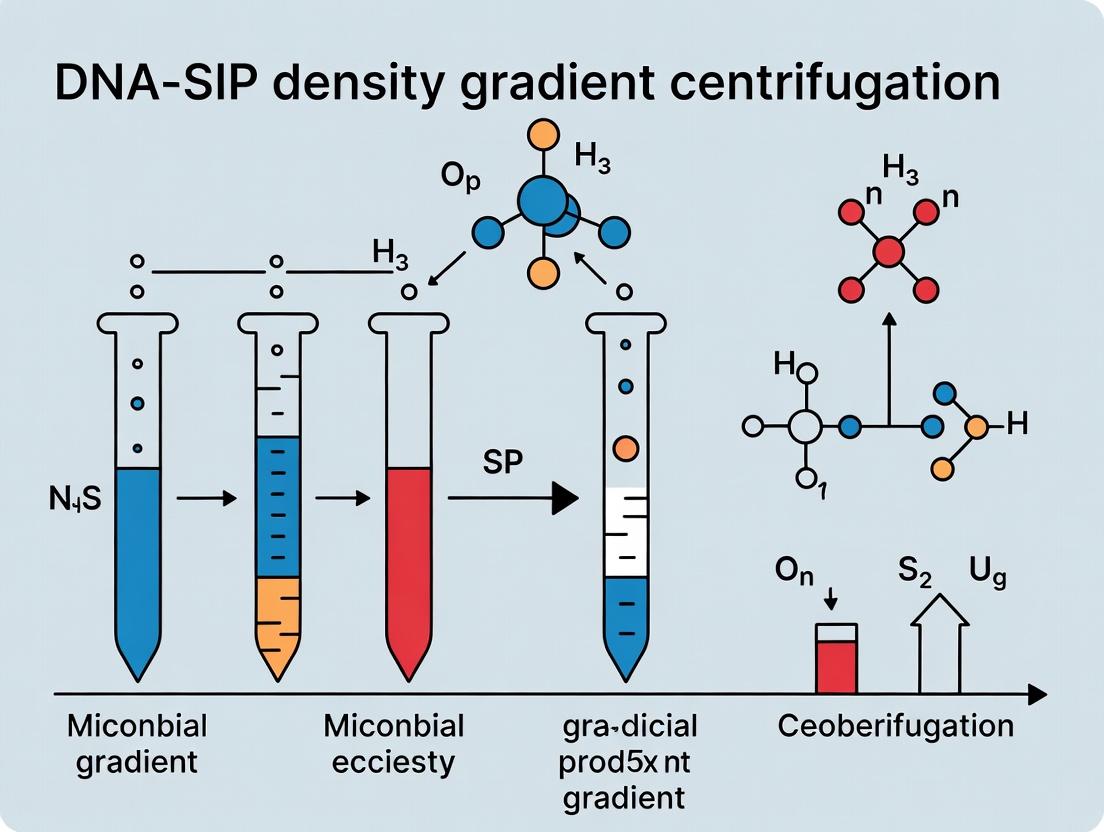
This comprehensive guide addresses the critical challenges and solutions in DNA-Stable Isotope Probing (DNA-SIP) density gradient centrifugation, a key technique for linking microbial identity to function.
Mastering DNA-SIP Centrifugation: Essential Guide to Density Gradient Challenges, Troubleshooting & Applications
Abstract
This comprehensive guide addresses the critical challenges and solutions in DNA-Stable Isotope Probing (DNA-SIP) density gradient centrifugation, a key technique for linking microbial identity to function. Tailored for researchers, scientists, and drug development professionals, it provides a foundational understanding of the SIP principle, detailed methodological protocols for ultracentrifugation and fractionation, systematic troubleshooting for common issues like gradient instability and low label incorporation, and guidance on validation through rigorous controls and comparative analysis with alternative methods. The article synthesizes current best practices to enhance experimental success and data reliability in microbiome and environmental research.
What is DNA-SIP Centrifugation? Core Principles and Critical Importance
Technical Support Center: Troubleshooting DNA-SIP Density Gradient Centrifugation
Frequently Asked Questions (FAQs)
Q1: Why is my cesium chloride (CsCl) gradient failing to form or appearing inconsistent? A: This is often due to improper solution preparation or centrifugation parameters. Ensure the CsCl is fully dissolved in the TE buffer or suitable medium and that the refractive index (RI) is precisely adjusted. The target starting RI for a typical DNA-SIP experiment is 1.4040-1.4050 at 20°C, corresponding to a buoyant density of ~1.725 g/mL. Inconsistent salt dissolution or inaccurate RI measurement will prevent proper isopycnic gradient formation.
Q2: I am not observing separation between my 'heavy' (13C) and 'light' (12C) DNA bands. What could be wrong? A: Insufficient isotopic enrichment in the biomass is the most common cause. The 13C-substrate must be assimilated sufficiently to shift the DNA density. Ensure:
- Your microbial community is actively metabolizing the labeled substrate.
- The incubation time is adequate for substantial incorporation.
- The labeling percentage of your substrate is high (e.g., >99% atom 13C).
- The centrifugation time at maximum g-force was long enough (typically 36-48 hours).
Q3: How do I prevent DNA shearing during the extraction process prior to ultracentrifugation? A: Use gentle lysis methods (e.g., enzymatic lysis with lysozyme and proteinase K) instead of harsh bead-beating. Avoid vigorous pipetting or vortexing of DNA solutions. Always check DNA fragment size post-extraction via gel electrophoresis; ideal fragments should be >20 kb.
Q4: My fractionated DNA yield is very low after gradient fractionation and purification. How can I improve recovery? A: Low recovery is common in the desalting and concentration steps post-fractionation. Use glycogen or linear acrylamide as an inert carrier during ethanol precipitation. Ensure you are using binding buffers optimized for low-DNA concentrations if using spin-column purification. Precipitating at -20°C for several hours or overnight can also improve recovery of low-abundance DNA.
Q5: How can I confirm successful 13C-DNA separation and identify labeled populations? A: Successful separation must be verified by quantitative PCR (qPCR) or sequencing analysis of gradient fractions. The peak of target gene abundance (e.g., 16S rRNA gene) for active, substrate-consuming populations will shift to higher buoyant density fractions (e.g., 1.735 g/mL) compared to the background 'light' DNA peak (~1.715 g/mL). See Table 1 for expected density shifts.
Data Presentation
Table 1: Expected Buoyant Density Ranges for DNA in CsCl Gradients
| DNA Type | Isotopic Composition | Approximate Buoyant Density (g/mL) | Refractive Index (20°C) |
|---|---|---|---|
| Background Community DNA | Natural abundance (≈1.1% 13C) | 1.715 - 1.720 | 1.3990 - 1.3995 |
| 'Heavy' DNA from 13C-Labeling | High 13C enrichment (>30% atom 13C) | 1.730 - 1.735 | 1.4035 - 1.4045 |
| Pure 12C-DNA (Theoretical) | 0% 13C | ~1.710 | ~1.3980 |
| Pure 13C-DNA (Theoretical) | 100% 13C | ~1.755 | ~1.4105 |
Table 2: Common Ultracentrifugation Parameters for DNA-SIP
| Parameter | Typical Value | Notes & Troubleshooting |
|---|---|---|
| Rotor Type | Fixed-angle or Vertical | Vertical rotors reduce run time but require careful handling. |
| Speed (RPM) | 45,000 - 55,000 rpm | Corresponds to ~177,000 - 200,000 avg g-force. |
| Temperature | 20°C | Critical for CsCl solubility and density. |
| Run Time | 36 - 48 hours | Longer runs improve gradient resolution. |
| Braking | Off | Never use braking; it will disrupt the formed gradient. |
Experimental Protocols
Protocol 1: Setting Up a CsCl Density Gradient for DNA-SIP
- Extract DNA: Gently extract high-molecular-weight DNA from your 13C-labeled and 12C-control samples.
- Prepare CsCl Solution: Dissolve approximately 4.8 g of solid molecular biology-grade CsCl in 4.2 mL of TE buffer containing the DNA sample (final volume ~5 mL). Adjust precisely to a refractive index of 1.4045 at 20°C using TE buffer or solid CsCl.
- Load Tubes: Transfer the solution to a sterile, compatible ultracentrifuge tube (e.g., Quick-Seal). Avoid bubbles. Seal the tube according to the manufacturer's instructions.
- Ultracentrifugation: Place tubes in a pre-cooled rotor. Centrifuge at 20°C, 55,000 rpm (e.g., in a Beckman Coulter Optima MAX-XP with a MLA-130 rotor) for 40 hours with braking OFF.
- Fractionation: Puncture the tube bottom with a needle or use a fraction recovery system. Collect 12-15 equal fractions (e.g., ~300 µL each) from the bottom of the tube.
- Process Fractions: Measure the RI of every fraction. Precipitate DNA from each fraction using glycogen carrier and ethanol. Wash pellets with 70% ethanol, resuspend in TE buffer, and analyze.
Protocol 2: Verifying 13C-Incorporation via qPCR Fraction Analysis
- Dilute Template: Dilute resuspended DNA from each gradient fraction (typically 1:10).
- Prepare qPCR Mix: Use a SYBR Green master mix and primers targeting the 16S rRNA gene or a functional gene of interest.
- Run qPCR: Perform qPCR on all fractions from both 'heavy' and 'light' gradients.
- Analyze Data: Plot the gene copy number (or ΔRn) against the fraction number or buoyant density. A successful SIP shows a clear shift of the amplicon peak to higher-density fractions in the 13C-treated sample compared to the 12C-control.
Mandatory Visualization
DNA-SIP Experimental Workflow
Separation of Light and Heavy DNA Bands in CsCl Gradient
The Scientist's Toolkit: Research Reagent Solutions
Table 3: Essential Materials for DNA-SIP Experiments
| Item | Function & Specification |
|---|---|
| 13C-Labeled Substrate | Carbon source for labeling active microbes. Purity should be >99% atom 13C. |
| Molecular Biology-Grade Cesium Chloride (CsCl) | Forms the isopycnic density gradient. Must be nuclease-free. |
| Refractometer | For precise measurement of CsCl solution refractive index to calculate buoyant density. |
| Ultracentrifuge & Rotor | High-speed centrifuge (e.g., Beckman Coulter Optima series) with fixed-angle or vertical rotor (e.g., MLA-130, VTi 65.2). |
| Sealed Centrifuge Tubes | Compatible with ultracentrifuge forces (e.g., Beckman Coulter Quick-Seal tubes). |
| Gentle DNA Extraction Kit | For obtaining high-molecular-weight, unsheared DNA (e.g., kit using enzymatic lysis). |
| Glycogen (Molecular Grade) | Acts as a carrier to improve DNA precipitation efficiency from dilute gradient fractions. |
| SYBR Green qPCR Master Mix | For quantitative analysis of target gene distribution across gradient fractions. |
| Phase Lock Gel Tubes | Useful for clean separation during phenol-chloroform DNA extraction prior to SIP. |
Why Density Gradient Centrifugation is Non-Negotiable for SIP Success
Technical Support Center: Troubleshooting Stable Isotope Probing (SIP) Density Gradient Centrifugation
Frequently Asked Questions (FAQs)
Q1: Why is my gradient fraction density profile inconsistent or non-linear? A: Inconsistent gradients are commonly caused by improper preparation of the cesium chloride (CsCl) or cesium trifluoroacetate (CsTFA) solution, or by incorrect ultracentrifugation parameters.
- Solution: Ensure the density of the starting homogenate-CsCl mixture is precisely measured using a refractometer. Calibrate the refractometer before use. Follow a strict protocol for loading tubes into the rotor to ensure balance. Verify centrifuge temperature stability (typically 20°C) and ensure run time and speed (e.g., 44,000 rpm for 36-72 hours in a VT-90 rotor) are exactly as protocoled.
Q2: My fractionated DNA yield is too low for downstream analysis. What went wrong? A: Low yield often stems from incomplete cell lysis prior to gradient centrifugation, over-fractionation, or DNA loss during the post-fractionation dialysis/clean-up step.
- Solution:
- Lysis Optimization: Implement a harsher, validated lysis method (e.g., bead-beating with SDS) for your specific environmental sample.
- Fraction Collection: Collect fewer, larger-volume fractions (e.g., 500 µL) targeting the expected buoyant density shift for your label (e.g., ~1.72-1.74 g/mL for 13C-DNA). Use a fraction recovery system for consistent collection.
- Precipitation: Use high-quality glycogen or glycogen blue as a co-precipitant and ensure precipitation occurs at -20°C for a minimum of 2 hours.
Q3: How do I distinguish between true 13C-incorporated DNA and cross-feeding or background signals? A: This is a core challenge in SIP. Reliable separation hinges on achieving ultra-high resolution in the density gradient.
- Solution: Perform an isopycnic centrifugation with a longer run time (e.g., 72 hours) to achieve equilibrium, creating a steeper, more resolved gradient. Always run parallel 13C-labeled and 12C-control gradients. Quantitative data (qSIP) must be derived from comparing the buoyant density distribution shift across all fractions between heavy and light treatments, not just a single "heavy" fraction.
Q4: My gradient appears to have failed after centrifugation (e.g., visible particles, cloudiness). A: Particulate matter indicates either incomplete removal of cellular debris or precipitation of CsCl.
- Solution: Increase the speed and duration of the initial clarification spin after cell lysis (e.g., 12,000 x g for 20 min). Ensure the sample is properly filtered (0.22 µm) after lysis if necessary. If CsCl precipitates, the gradient was likely overloaded with too much sample volume or mass; reduce the sample load.
Table 1: Critical Parameters for Successful DNA-SIP Gradients
| Parameter | Optimal Range / Target | Impact of Deviation |
|---|---|---|
| Initial Homogenate Density | 1.725 ± 0.005 g/mL (CsCl) | Incorrect density prevents formation of proper gradient, leading to poor separation. |
| Refractometer Calibration | Using deionized water (RI=1.3330) & 1 M NaCl (RI=1.3414) at 20°C | Uncalibrated tools yield inaccurate density measurements, dooming the experiment. |
| Ultracentrifugation Speed/Time | e.g., 44,000 rpm for 36-72h (Beckman VT-90) | Insufficient time prevents equilibrium; excessive time can cause rotor heating and gradient distortion. |
| Centrifugation Temperature | 20°C (Stable, ± 1°C) | Temperature fluctuations cause convection currents, destroying gradient resolution. |
| Target Buoyant Density Shift | ΔBD = 0.016 – 0.045 g/mL for 13C-DNA | A smaller shift may indicate cross-feeding or insufficient label incorporation. |
| Fraction Volume | 200 - 500 µL | Smaller volumes increase resolution but risk lower DNA yield per fraction. |
Table 2: Common Centrifuge Rotors for DNA-SIP
| Rotor Type | Model Example | Max RCF (g) | Typical Run Time | Best For |
|---|---|---|---|---|
| Vertical Tube | Beckman VT-90 | 436,000 | 24-36h | Fastest run-to-run time, shorter pathlength. |
| Fixed-Angle | Beckman 70.1 Ti | 501,000 | 48-72h | Higher capacity, longer pathlength, potentially better resolution. |
| Near-Vertical | Beckman NVT-90 | 436,000 | 36-48h | Compromise between speed and sample pelleting risk. |
Detailed Experimental Protocol: High-Resolution DNA-SIP Gradient
Protocol: Isopycnic Ultracentrifugation for 13C-DNA Separation
I. Sample Preparation & Gradient Formation
- Lysate Clarification: After thorough cell lysis of your environmental sample (e.g., soil, water), centrifuge at 12,000 x g for 20 minutes at 4°C to pellet debris.
- Density Adjustment: Transfer the supernatant to a clean tube. Add solid and/or stock solution of CsCl to achieve a final density of 1.725 g/mL. Verify density using a calibrated refractometer.
- Loading: Precisely measure the volume (e.g., 5.1 mL) of the density-adjusted lysate. Carefully transfer it to a sterile, compatible ultracentrifuge tube (e.g., Beckman Quick-Seal). Avoid introducing bubbles.
- Sealing: Balance tubes to within 0.01 g using the final CsCl solution. Heat-seal the tubes according to the manufacturer's instructions.
II. Ultracentrifugation
- Load balanced tubes into a pre-chilled vertical or near-vertical rotor (e.g., VT-90).
- Run centrifuge at 20°C at 44,000 rpm for 72 hours. Use the "slowest" acceleration and deceleration profiles to prevent gradient disturbance.
III. Fractionation & Analysis
- Fraction Collection: Using a fraction recovery system (e.g., Beckman Fraction Recovery System), pierce the tube bottom and collect 15-20 fractions of ~300 µL each in a sterile 96-well plate.
- Density Measurement: Measure the refractive index of every 2nd or 3rd fraction and calculate buoyant density using a standard equation.
- DNA Recovery: Purify DNA from each fraction using isopropanol/glycogen precipitation or a silica-membrane micro-column. Elute in a small volume (e.g., 30 µL TE buffer).
- Quantification & Analysis: Quantify DNA in each fraction (e.g., with PicoGreen). Perform qPCR or 16S rRNA gene sequencing on all fractions from both 13C and 12C treatments to construct density distribution plots.
Visualizations
Title: DNA-SIP Experimental Workflow
Title: Buoyant Density Shift of 13C-DNA in Gradient
The Scientist's Toolkit: Key Research Reagent Solutions
| Item | Function in SIP | Critical Consideration |
|---|---|---|
| Cesium Chloride (CsCl), Molecular Biology Grade | Forms the density gradient for separation of nucleic acids by buoyant density. | Must be nuclease-free. Purity affects gradient formation and can inhibit downstream enzymatic steps. |
| Cesium Trifluoroacetate (CsTFA) | Alternative to CsCl; more soluble, denaturing, and inhibits RNases for RNA-SIP. | More expensive but provides better recovery for some samples and is essential for RNA work. |
| Refractometer | Precisely measures the refractive index of CsCl solutions to calculate and adjust buoyant density. | Must be calibrated daily at the run temperature (20°C). Non-negotiable for accuracy. |
| Glycogen (Molecular Grade) | Acts as an inert carrier to co-precipitate minute amounts of DNA from gradient fractions. | Ensure it is nuclease-free and does not contain contaminants that inhibit PCR. |
| Disposable Syringe & Needle / Fraction Recovery System | For puncturing ultracentrifuge tube and collecting precise fractions from the gradient. | Manual collection requires steady hand; automated systems improve reproducibility. |
| Phase Lock Gel Tubes | Used during initial DNA extraction prior to gradient setup to efficiently separate organic and aqueous phases, maximizing yield. | Critical for complex, inhibitor-rich samples like soil. |
| Nuclease-Free Water & Buffers | For resuspending DNA pellets from fractions and all downstream molecular biology. | Prevents degradation of low-yield, fractionated DNA. |
| Fluorometric DNA Quantification Kit (e.g., PicoGreen) | Quantifies double-stranded DNA in each fraction with high sensitivity, required for qSIP analysis. | More sensitive than UV absorbance for low-concentration samples. |
Technical Support Center: DNA-SIP Density Gradient Centrifugation
Troubleshooting Guides & FAQs
Q1: After ultracentrifugation, my gradient fractions show no detectable isotopic enrichment in target gene amplicons. What are the primary causes? A: This indicates a failed SIP incubation or gradient separation. Primary causes include:
- Insufficient substrate incorporation: The labeled substrate (e.g., ^13^C-glucose) may not have been used by the target microbes. Verify substrate relevance, concentration (typical range: 1-10 atom% ^13^C excess), and incubation time (days to weeks).
- Gradient matrix issues: Check CsCl density (typical range: 1.70–1.75 g/mL) and pH (7.0-8.0). Use a refractometer to confirm gradient formation (expected RI range: 1.4040–1.4010 from bottom to top).
- Inadequate centrifugation: Ensure correct g-force (typically >180,000 × g) and time (>36 hours) for proper separation of ^12^C- and ^13^C-DNA.
Q2: I observe excessive shearing of DNA recovered from CsCl gradients. How can I mitigate this? A: Excessive shearing compromises downstream analysis. Mitigation strategies:
- Gentle handling: Avoid vortexing or vigorous pipetting post-centrifugation. Use wide-bore tips for all gradient fractionation steps.
- Optimized precipitation: Use glycogen or linear polyacrylamide as a co-precipitant instead of repetitive ethanol precipitation. Resuspend DNA in low-EDTA TE buffer (pH 8.0).
- Fraction collection method: Consider bottom puncture or syringe collection to minimize hydrodynamic shearing versus top-down displacement.
Q3: My isopycnic centrifugation yields inconsistent density profiles between replicates. What parameters should I standardize? A: Inconsistent profiles stem from variable run conditions. Standardize these parameters:
| Parameter | Target Specification | Tolerance |
|---|---|---|
| Centrifuge Temperature | 20°C | ± 1°C |
| Rotor Acceleration | Slow (9) | Maximum setting |
| Rotor Deceleration | No brake (0) | Maximum setting |
| Initial CsCl Density | As calculated for target buoyant density | ± 0.005 g/mL |
| Sample Volume to Vial Capacity | ≤ 80% | Strict |
Q4: I am getting high background noise from non-target ^13^C-DNA in my heavy fractions. How do I improve specificity? A: High background suggests cross-feeding or incomplete separation.
- Shorten incubation time: Reduce the incubation period to limit label transfer via trophic interactions.
- Adjust density cut-off: Use conservative fractionation; discard "light-heavy" interface fractions. Quantify DNA density via qPCR across the entire gradient to define precise cut-offs.
- Include a ^12^C-control: This is essential to identify the baseline position of unlabeled DNA.
Experimental Protocol: DNA-SIP Incubation & Gradient Separation
Title: Protocol for ^13^C-DNA Recovery from Soil Microcosms via Isopycnic Centrifugation
Materials:
- Soil microcosms
- ^13^C-labeled substrate (e.g., ^13^C6-glucose, 99 atom%)
- Lysis buffer (CTAB, proteinase K)
- Phenol:Chloroform:Isoamyl Alcohol (25:24:1)
- CsCl (molecular biology grade)
- Gradient Buffer (0.1 M Tris, 0.1 M EDTA, pH 8.0)
- Ultracentrifuge, fixed-angle or vertical rotor (e.g., Beckman Coulter VT165.1)
- Fractionator, syringe, or needle
- Glycogen
- 3M Sodium Acetate (pH 5.2)
- 100% Ethanol
Methodology:
- Incubation: Amend soil samples with ^13^C-substrate. Incubate under optimal conditions. Sacrifice replicates at time points.
- DNA Extraction: Extract total community DNA using a modified CTAB-phenol-chloroform protocol. Purify and quantify.
- Gradient Preparation: Mix ~1-5 µg DNA with Gradient Buffer and CsCl to a final volume of 4.8 mL and a target density of 1.725 g/mL. Measure refractive index (RI) to confirm. Transfer to a 5.1 mL ultracentrifuge tube.
- Ultracentrifugation: Balance tubes. Centrifuge at 180,000 × g, 20°C, for 40-44 hours with slow acceleration and no brake.
- Fractionation: Collect 12-14 fractions (≈300 µL each) from the bottom of the tube using a fractionation system or syringe.
- Density Determination: Measure the RI of every second fraction. Convert RI to buoyant density using a standard equation.
- DNA Recovery: Purify DNA from each fraction by precipitation with glycogen, sodium acetate, and ethanol. Wash with 70% ethanol, air-dry, and resuspend.
- Analysis: Screen fractions via qPCR for target genes or perform metagenomic sequencing on heavy vs. light fractions.
Research Reagent Solutions
| Reagent / Material | Function in DNA-SIP | Key Consideration |
|---|---|---|
| ^13^C-labeled Substrates | Provides stable isotope label for active microorganisms. | Choose substrate relevant to microbial guild of interest (e.g., ^13^C-methane for methanotrophs). |
| Cesium Chloride (CsCl) | Forms the density gradient for separation of ^12^C- and ^13^C-DNA. | Must be ultra-pure, nuclease-free. Density must be calculated precisely. |
| Gradient Buffer (Tris-EDTA) | Maintains pH and chelates divalent cations to protect DNA during long centrifugation. | pH 8.0 critical for DNA stability; EDTA inhibits nucleases. |
| Glycogen (Molecular Grade) | Acts as an inert carrier to improve DNA precipitation efficiency from high-salt CsCl fractions. | Use molecular biology grade to avoid contamination with nucleic acids. |
| Proteinase K & CTAB | Lyse robust microbial cells (e.g., Gram-positives) and degrade proteins during initial DNA extraction. | Essential for complete lysis of diverse soil communities. |
| SYBR Gold Nucleic Acid Stain | For visualizing DNA bands in gradients under blue light (post-run check). | More sensitive than ethidium bromide; use with caution as it affects DNA purity. |
Visualization: DNA-SIP Experimental Workflow
Title: DNA-SIP Workflow from Incubation to Analysis
Visualization: Decision Tree for SIP Failure
Title: Troubleshooting DNA-SIP Failure Decision Tree
Troubleshooting Guides & FAQs
Q1: Why is my CsCl gradient failing to form distinct bands for DNA-SIP, and what are the signs of an alternative salt being more suitable?
A: Failed band formation in CsCl gradients often stems from improper density range or viscosity issues. Key signs alternative salts (e.g., iodixanol, sodium bromide) may be better include:
- Sample Purity: CsCl is highly sensitive to sample contaminants (proteins, lipids) which can smear bands. If your environmental DNA extract is complex, alternative, less viscous media like iodixanol provide better resolution.
- Target Molecule Integrity: CsCl generates high osmotic stress and centrifugal force, potentially shearing large DNA. For preserving high-molecular-weight DNA, iodixanol or Histodenz gradients are gentler.
- Band Visualization: CsCl requires ethidium bromide (EtBr) and UV light for band visualization, which can cause DNA damage. Alternative salts like iodixanol are UV-transparent and non-toxic, allowing for direct recovery without mutagenic dyes.
Protocol for Assessing Gradient Performance:
- Prepare test gradients with your target DNA (e.g., 13C-labeled DNA from a SIP experiment) using standard protocols for CsCl and an alternative (e.g., sodium bromide).
- Centrifuge under identical conditions (e.g., 44,000 rpm, 72 h, 20°C in a Beckman NVT 65.2 rotor).
- Fractionate the gradient and measure density (refractometry) and DNA concentration (fluorometry) for each fraction.
- Plot density vs. DNA concentration. Sharper, more symmetrical peaks indicate superior banding and resolution.
Q2: How do I calculate and adjust the starting density for a CsCl gradient when switching to a different type of nucleic acid or sample buffer?
A: The correct starting density is critical. Use the following formula and reference table:
Formula: ρ = ρ₀ + (K * C) Where ρ is the solution density (g/mL), ρ₀ is the solvent density, K is the empirical constant for the salt, and C is the salt concentration (g/mL). For precise work, use refractive index (RI) measurements with salt-specific conversion tables.
Table 1: Density Gradient Media Properties
| Media | Typical Working Density Range (g/mL) | Max. Relative Centrifugal Force (RCF) | Viscosity | Compatible Visualization Method | Primary Use Case in DNA-SIP |
|---|---|---|---|---|---|
| Cesium Chloride (CsCl) | 1.60 - 1.80 | Very High (~350,000 g) | High | Ethidium Bromide/UV Light | Traditional high-resolution DNA separation |
| Sodium Bromide (NaBr) | 1.40 - 1.55 | High (~200,000 g) | Moderate | Ethidium Bromide/UV Light | RNA-SIP, lower cost alternative |
| Iodixanol (OptiPrep) | 1.10 - 1.35 | Low to Moderate (~150,000 g) | Low | Direct Recovery, UV-transparent | Sensitive cells, organelles, HMW DNA |
| Cesium Trifluoroacetate (CsTFA) | 1.50 - 1.65 | High (~250,000 g) | Moderate | Ethidium Bromide/UV Light | Simultaneous RNA/DNA isolation, inhibits RNases |
Protocol for Density Adjustment:
- Determine the buoyant density of your target molecule (e.g., 1.72 g/mL for GC-rich DNA, ~1.66 g/mL for 13C-labeled DNA in CsCl).
- Using Table 1, choose a medium with an encompassing range.
- Prepare a solution with the salt dissolved in an appropriate buffer (e.g., TE for DNA).
- Measure the refractive index (RI) with a refractometer.
- Adjust density by adding more salt/medium (to increase) or buffer (to decrease). Use the media-specific RI-to-density conversion formula (e.g., for CsCl: ρ (25°C) = (10.8601 * RI) - 13.4974).
- Filter-sterilize (0.22 µm) the final solution before ultracentrifugation.
Q3: What are the specific steps to safely transition from CsCl to an iodixanol gradient for my DNA-SIP protocol to minimize DNA loss?
A: Transitioning requires modifications to both gradient formation and fractionation.
Detailed Transition Protocol:
- Gradient Formation (Step Gradient Method):
- Prepare iodixanol working solution (e.g., 60% w/v in TE buffer) as per manufacturer instructions.
- In an ultracentrifuge tube, create a discontinuous step gradient by carefully layering decreasing concentrations of iodixanol (e.g., 40%, 30%, 20%, 10% from bottom to top) using a syringe or pipette.
- Layer the DNA sample (in a low-density buffer, <1.1 g/mL) on top of the gradient.
- Centrifugation:
- Use a swinging-bucket rotor (e.g., Beckman SW 41 Ti).
- Centrifuge at lower speed and time (e.g., 40,000 rpm for 18 h at 20°C) compared to CsCl protocols. Iodixanol gradients form isopycnically more quickly.
- Fractionation & Recovery:
- Crucial Step: Puncture the tube bottom and collect fractions drop-wise. Iodixanol is less dense, so the gradient is more easily disturbed.
- Alternatively, use an upward displacement collection system.
- Desalt fractions immediately using centrifugal filter columns (e.g., Amicon Ultra) to remove iodixanol, which can inhibit downstream enzymatic steps (PCR, digestion).
Q4: My recovered DNA from a CsTFA gradient consistently yields low PCR amplification. What is the most likely cause and how can I remedy it?
A: CsTFA, while excellent for nucleic acid stability, is a potent inhibitor of polymerases. Residual salt in the recovered sample is the most likely cause.
Remediation Protocol:
- Post-Recovery Purification: After gradient fractionation and DNA precipitation, add an additional purification step using a silica-membrane column (e.g., Qiagen DNeasy) designed for PCR cleanup. Wash buffers with ethanol effectively remove residual salts.
- Ethanol Precipitation Optimization:
- To the DNA fraction, add 2 volumes of nuclease-free water to dilute the CsTFA.
- Add 0.1 volumes of 3M sodium acetate (pH 5.2) and 2.5 volumes of 100% ice-cold ethanol.
- Precipitate at -80°C for 1 hour or overnight at -20°C.
- Centrifuge at >13,000 g for 30 minutes at 4°C.
- Wash the pellet twice with 70% ethanol (room temperature), not just once. Centrifuge for 10 minutes per wash.
- Air-dry the pellet thoroughly (5-10 minutes) and resuspend in TE buffer (pH 8.0), not water, to stabilize the DNA.
- PCR Setup: Include a "no template" control and a "gradient-recovered positive" control. Increase polymerase units by 25% and use a polymerase known for inhibitor tolerance (e.g., Tth polymerase).
The Scientist's Toolkit: Research Reagent Solutions
Table 2: Essential Materials for Density Gradient Centrifugation in DNA-SIP
| Item | Function in Experiment |
|---|---|
| Cesium Chloride (Ultra Pure Grade) | Forms the classic high-density, self-forming gradient for high-resolution separation of nucleic acids by buoyant density. |
| Iodixanol (OptiPrep) | Ready-made, sterile, non-ionic density medium. Used for creating isosmotic, low-viscosity gradients that are gentle on sensitive samples. |
| Refractometer | Essential instrument for precisely measuring the refractive index of gradient solutions to calculate and adjust density before centrifugation. |
| Beckman Coulter Ultracentrifuge & Rotors | Provides the very high centrifugal forces required to form equilibrium density gradients. Rotor choice (fixed-angle vs. swinging bucket) impacts run time and gradient shape. |
| Ethidium Bromide or SYBR Gold | Fluorescent dyes used to intercalate nucleic acids for visual band identification under UV light in salt-based gradients like CsCl. (Note: EtBr is mutagenic; handle with care.) |
| Gradient Fractionation System | Apparatus (e.g., tube piercer, displacement pump, or capillary siphon) for precisely collecting sequential fractions from the centrifuged gradient without mixing layers. |
| Centrifugal Filter Units (e.g., Amicon Ultra) | Used for rapid buffer exchange, desalting, and concentration of nucleic acids recovered from gradient fractions, especially critical when using inhibitory salts. |
| Nuclease-Free Water & TE Buffer | Essential reagents for preparing solutions and resuspending purified DNA to maintain stability and prevent degradation during and after the procedure. |
Visualizations
Decision Guide for Gradient Media Selection
General Workflow for Density Gradient Centrifugation
Step-by-Step DNA-SIP Protocol: From Sample Prep to Fraction Collection
Optimal Sample Preparation and 13C-Substrate Incubation Strategies
Technical Support Center
Troubleshooting Guides & FAQs
Q1: My gradient fractionation yields poor separation of 13C-labeled (“heavy”) and 12C-labeled (“light”) DNA. What are the primary causes? A: Inadequate separation typically stems from:
- Gradient Preparation Issues: Inconsistent density gradient formation due to improper handling of gradient medium (e.g., cesium chloride, iodixanol).
- Insufficient DNA Labeling: The 13C-substrate was not fully incorporated due to incorrect incubation conditions or substrate concentration.
- Sample Contamination: Presence of inhibitory substances (e.g., humic acids, salts) from incomplete sample purification that affect buoyant density.
Q2: How do I determine the optimal concentration and incubation time for my 13C-substrate? A: This requires a substrate utilization test. Start with a microcosm study using a range of concentrations (e.g., 0.1 mM to 10 mM) and sample at multiple time points (e.g., 24h, 48h, 72h, 1 week). Measure substrate depletion and microbial growth (via OD600 or ATP). The optimal point is just before substrate exhaustion to prevent cross-feeding.
Q3: I observe high background DNA in my “heavy” fractions, complicating my SIP analysis. How can I minimize this? A: High background is often due to:
- Carrier DNA Effect: Too much unlabeled “light” DNA can cause co-bandting. Reduce the total DNA loaded onto the gradient (aim for 1-5 µg).
- Gradient Centrifugation Parameters: Insufficient centrifugation time or speed. Extend ultracentrifugation (e.g., 40-44 hours at 178,000 rcf for CsCl) for better equilibrium.
- Incomplete Lysis: For complex samples, optimize the cell lysis protocol (e.g., bead-beating duration) to ensure representative DNA extraction without shearing.
Q4: My experimental controls (12C-only) show a density shift. What does this indicate? A: A density shift in the 12C control suggests contamination of your substrate or growth medium with 13C, or the presence of naturally occurring 13C-enriched compounds in your inoculum. Always run parallel controls with verified 12C-substrates and use inert substrates (e.g., 12C-sodium bicarbonate) for baseline calibration.
Table 1: Common Gradient Media for DNA-SIP
| Medium | Typical Working Density (g/mL) | Max Centrifugation Speed (rcf) | Typical Run Time | Key Advantage | Key Disadvantage |
|---|---|---|---|---|---|
| Cesium Chloride (CsCl) | 1.60 - 1.80 | ~200,000 | 36-48 hours | High resolution, standard method | Corrosive, inhibits downstream PCR |
| Iodixanol (OptiPrep) | 1.06 - 1.32 | ~180,000 | 36-48 hours | Non-toxic, PCR-friendly | Lower maximum density, less resolution for high GC DNA |
Table 2: Recommended 13C-Substrate Incubation Parameters for Common Targets
| Target Microbial Process | Typical 13C-Substrate | Recommended Concentration | Incubation Duration | Critical Parameter |
|---|---|---|---|---|
| Methane Oxidation | 13CH4 or 13CO2 | 10-30% (headspace) | 7-28 days | Use methane:oxygen ratios (≈1:1) for safety |
| Plant Litter Decomposition | 13C-Cellulose or 13C-Glucose | 1-5 mg/g soil | 3-21 days | Homogenize substrate thoroughly into matrix |
| Phenol Degradation | 13C-Phenol | 50-200 mg/L | 3-7 days | Monitor toxicity; use pulsed addition if needed |
Experimental Protocols
Protocol 1: Standard DNA-SIP Density Gradient Centrifugation using CsCl
- Extract & Quantify: Extract total community DNA from your 13C-incubated and control samples. Precipitate, wash, and resuspend in TE buffer. Accurately quantify using a fluorometric assay (e.g., Qubit).
- Prepare Gradient Mix: For each sample, combine ~1-3 µg DNA with a filtered CsCl stock solution (7.163 M CsCl in TE, ρ ≈ 1.88 g/mL) and gradient buffer (e.g., 1x TE with 0.1% Sarkosyl) in an ultracentrifuge tube. Final volume should be precisely 4.9 mL, with a target buoyant density of ~1.725 g/mL. Measure refractive index (RI) with a refractometer. Target RI = 1.4040-1.4050. Adjust with CsCl solution or TE.
- Ultracentrifugation: Balance tubes to within 0.01 g. Centrifuge in a vertical or near-vertical rotor (e.g., Beckman Coulter VT165.1) at 178,000 rcf (e.g., 45,000 rpm) at 20°C for 40-44 hours.
- Fractionation: Using a fractionation system (e.g., syringe pump), collect 12-14 equal fractions (~300-400 µL) from the bottom of the tube.
- Density Determination & Processing: Measure the RI of every second fraction. Calculate buoyant density (ρ = 10.9276*RI - 13.5933). Precipitate DNA from each fraction, wash, resuspend, and use as template for qPCR or sequencing.
Protocol 2: Microcosm Setup for 13C-Substrate Incubation
- Setup: Prepare experimental microcosms (in triplicate) containing your environmental matrix (soil, water, sediment). Include controls: 12C-substrate and no-substrate.
- Substrate Addition: Add your 13C-labeled substrate at the predetermined concentration. For volatile substrates (e.g., CH4), use gastight vials with appropriate headspace ratios.
- Incubation: Incubate under conditions mimicking the natural environment (temperature, light/dark cycle). For aerobic processes, ensure adequate oxygen supply.
- Monitoring & Harvest: Periodically sacrifice replicate microcosms to monitor substrate consumption (via GC-MS, HPLC) and microbial response (e.g., DNA yield). Terminate incubation at the optimal time point (typically at mid-log substrate depletion) and immediately freeze at -80°C for DNA extraction.
Visualizations
DNA-SIP Experimental Workflow from Incubation to Analysis
Troubleshooting Poor SIP Gradient Separation
The Scientist's Toolkit: Research Reagent Solutions
| Item | Function in SIP Experiments |
|---|---|
| Ultra-pure 13C-Labeled Substrates (>99 atom% 13C) | Ensures high isotopic enrichment to generate a detectable density shift in consuming organisms' DNA. |
| Cesium Chloride (CsCl), Molecular Biology Grade | Forms the density gradient for ultracentrifugation. High purity minimizes DNA damage. |
| Iodixanol (OptiPrep) | Non-ionic, sterile density gradient medium. Less corrosive and more compatible with downstream enzymatic reactions than CsCl. |
| Gradient Buffer (e.g., TE with Sarkosyl) | Maintains pH and stability of DNA during ultracentrifugation; Sarkosyl prevents DNA adhesion to tubes. |
| Refractometer | Critical for precisely measuring the refractive index of gradient fractions to calculate buoyant density (g/mL). |
| Syringe Pump Fractionation System | Allows consistent, fine-scale collection of gradient fractions from the bottom of the ultracentrifuge tube. |
| Fluorometric DNA Quantitation Kit (e.g., Qubit) | Accurately quantifies low concentrations of DNA in gradient fractions, essential for plotting density distributions. |
| Inhibitor-Removal DNA Extraction Kit | For complex samples (soil, sediment), removes humic acids and other contaminants that inhibit centrifugation or PCR. |
DNA Extraction Protocols Compatible with Ultracentrifugation
This technical support center is dedicated to resolving issues encountered during nucleic acid extraction for Stable Isotope Probing (SIP) followed by density gradient ultracentrifugation. The protocols and FAQs are framed within a thesis researching contamination, gradient resolution, and bias in DNA-SIP experiments.
Troubleshooting Guides & FAQs
Q1: My cesium chloride (CsCl) gradient becomes discolored or forms a precipitate after adding my DNA extract. What caused this and how can I fix it? A: This is typically caused by carryover of organic solvents (phenol, chloroform) or high concentrations of EDTA, salts, or cellular debris from the extraction. These components can react with CsCl. To fix:
- Re-purify the DNA by an additional ethanol precipitation with 70% wash.
- Ensure all ethanol is completely evaporated before resuspension in TE buffer (10 mM Tris-HCl, 1 mM EDTA, pH 8.0). Avoid using EDTA concentrations >1 mM.
- Pass the DNA solution through a size-exclusion chromatography column (e.g., Sephadex G-50) to remove salts and small molecules.
- As a preventive measure, use a modified DNA extraction protocol with minimal organic phase transfers and final resuspension in low-EDTA TE buffer.
Q2: I observe poor separation of ¹³C-labeled ("heavy") and ¹²C-labeled ("light") DNA in the gradient. What are the potential reasons? A: Inadequate separation can stem from protocol or gradient issues.
- Insufficient Labeling: Ensure the incubation time with the ¹³C substrate is long enough for substantial incorporation (>5 cell doublings).
- Gradient Parameters: Verify the initial density of the CsCl solution is correct (typically ~1.725 g/ml for GC-rich DNA). Use a refractometer for precise measurement.
- DNA Fragment Size: Excessive shearing during extraction creates very small fragments that separate poorly. Optimize lysis to produce large fragments (>10 kb). Avoid vigorous vortexing.
- Ultracentrifugation Runtime: Ensure centrifugation is long enough to reach equilibrium (typically 36-48 hours at high rpm). See Table 1 for parameters.
Q3: My DNA yield after ultracentrifugation and fractionation is extremely low. Where is the loss occurring? A: Losses are common at the fractionation and DNA recovery stages.
- Fraction Collection: Manually collecting fractions is a major source of loss. Consider using a density gradient fractionation system.
- DNA Precipitation: The DNA concentration in each fraction is very low. Use an efficient coprecipitant like glycogen or linear polyacrylamide (20-50 µg/mL final concentration). Extend precipitation time to overnight at -20°C.
- Inhibition in Downstream PCR: Residual CsCl in fractions can inhibit PCR. Perform a second ethanol wash with 70% ethanol or dialyze the fractions against TE buffer before precipitation.
Q4: I get bacterial 16S rRNA gene amplification from my "sterile" CsCl and blank extraction controls. What is the source of this contamination? A: This indicates reagent or procedural contamination, a critical issue for SIP sensitivity.
- Reagent Contamination: Filter-sterilize all gradient solutions (CsCl, gradient buffer) through a 0.22 µm membrane. Aliquot and UV-irradiate (254 nm for 30 min) buffers.
- Labware & Environment: Use dedicated, DNA-free plastics (tubes, tips) for SIP work. Perform extractions in a PCR hood or dedicated clean bench. Include exhaustive negative controls (extraction, PCR, ultracentrifuge run).
Q5: How do I choose between phenol-chloroform and kit-based extraction for SIP? A: The choice involves a trade-off between yield, purity, and bias. See Table 2 for a comparison.
Table 1: Standard Ultracentrifugation Parameters for DNA-SIP
| Parameter | Typical Value | Notes |
|---|---|---|
| Centrifugation Speed | 176,000 - 210,000 x g (avg) | Speed is critical for gradient formation. |
| Run Time | 36 - 48 hours | Must reach isopycnic equilibrium. |
| Temperature | 20 °C | Prevents CsCl precipitation. |
| Rotor Type | Vertical or Near-Vertical | Maximizes resolution along tube length. |
| Initial CsCl Density | 1.715 - 1.735 g/mL | Adjust based on sample GC content. |
| Target Gradient Range | 1.66 - 1.76 g/mL | Covers expected DNA buoyant densities. |
Table 2: DNA Extraction Method Comparison for SIP
| Method | Pros | Cons | Recommended for SIP? |
|---|---|---|---|
| Phenol-Chloroform | High yield, low cost, effective inhibitor removal. | Hazardous chemicals, high salt/contaminant carryover risk, labor-intensive. | Yes, with caution. Requires extensive purification/dialysis post-extraction. |
| Commercial Silica-Kit | Clean DNA (low salt/organics), fast, safe, reproducible. | Potential bias against large or sheared DNA, lower yield for some soils. | Yes, preferred. Choose kits designed for hard-to-lyse samples or metagenomics. |
| CTAB-Based | Excellent for polysaccharide-rich samples (e.g., plants, soils). | Multiple steps, similar purity issues as phenol-chloroform. | Yes. Often combined with phenol-chloroform cleanup. |
Detailed Experimental Protocols
Protocol 1: Modified Phenol-Chloroform-Isoamyl Alcohol (PCI) Extraction for SIP
- Lysis: Suspend cell pellet or environmental sample in TE buffer with Lysozyme (10 mg/mL, 37°C, 30 min). Add Proteinase K (100 µg/mL) and SDS (1% w/v), incubate at 55°C for 2 hours.
- Organic Extraction: Add an equal volume of PCI (25:24:1, pH 8.0). Mix gently by inversion for 10 min. Centrifuge at 12,000 x g for 10 min.
- Aqueous Phase Recovery: Transfer the upper aqueous phase to a new tube. Repeat the PCI extraction once.
- Chloroform Wash: Add an equal volume of chloroform-isoamyl alcohol (24:1), mix, centrifuge, and recover the aqueous phase.
- Dialysis & Precipitation: Dialyze the recovered aqueous phase against 4 L of low-EDTA TE buffer (1 mM EDTA) overnight at 4°C to remove salts. Precipitate DNA with isopropanol, wash with 70% ethanol.
- Final Resuspension: Air-dry pellet and resuspend thoroughly in 100 µL of low-EDTE TE buffer (0.1 mM EDTA). Verify purity (A260/A280 > 1.8, A260/A230 > 2.0).
Protocol 2: Gradient Setup and Fractionation
- Gradient Preparation: Mix purified DNA with filtered CsCl solution and gradient buffer (e.g., 0.1 M Tris, 0.1 M EDTA, pH 8.0) to a final volume of 5.1 mL and a target initial density (e.g., 1.725 g/mL). Verify density with a refractometer.
- Ultracentrifugation: Load into a 5.1 mL quick-seal ultracentrifuge tube, balance tubes precisely, and seal. Centrifuge in a vertical rotor at 20°C, 176,000 x g avg for 40 hours.
- Fraction Collection: Puncture the tube bottom. Collect 12-15 fractions (~300-400 µL each) by gravity drip or using a fractionator. Measure the density of every other fraction using a refractometer.
- DNA Recovery: Dilute each fraction with 2 volumes of sterile PCR-grade water. Add glycogen (50 µg/mL final) and 3 volumes of 100% ethanol. Precipitate overnight at -20°C. Pellet, wash with 70% ethanol, and resuspend in 20 µL TE buffer.
Diagrams
Diagram 1: SIP Workflow from Sample to Analysis
Diagram 2: Common SIP Issues & Resolution Pathways
The Scientist's Toolkit: Research Reagent Solutions
| Item | Function in DNA-SIP Protocol |
|---|---|
| Cesium Chloride (CsCl), Molecular Biology Grade | Forms the density gradient for isopycnic separation of nucleic acids based on buoyant density. |
| Gradient Buffer (0.1M Tris, 0.1M EDTA, pH 8.0) | Maintains pH and chelates metals during ultracentrifugation, protecting DNA. Must be filter-sterilized. |
| Glycogen, Molecular Biology Grade | An inert carrier that co-precipitates with nucleic acids to dramatically improve recovery from dilute gradient fractions. |
| Refractometer | Essential for precisely measuring the density of CsCl solutions before centrifugation and of collected fractions. |
| Quick-Seal Ultracentrifuge Tubes & Sealer | Tubes designed for high vacuum; sealing prevents collapse and contamination during ultracentrifugation. |
| Size-Exclusion Spin Columns (e.g., Sephadex G-50) | Used to desalt and remove trace organics from DNA extracts before gradient setup, preventing CsCl issues. |
| Proteinase K | Broad-spectrum protease used in lysis to degrade proteins and nucleases, improving DNA yield and integrity. |
| Phase-Lock Gel Tubes | Can replace traditional phenol-chloroform extraction by creating a barrier, simplifying aqueous phase recovery and reducing contamination. |
Troubleshooting Guides & FAQs
Q1: Why do I observe a diffuse or poorly resolved band of target DNA in my SIP gradient fraction, rather than a sharp, discrete band? A: This typically indicates improper gradient formation or instability. Ensure your centrifuge tube is ultra-clean to prevent wall defects. Use a gradient forming device (piston or pump) at a slow, constant speed (≤ 1 mL/min). A common quantitative fix is to increase the number of gradient steps: instead of a 2-step gradient, use a 9-step discontinuous gradient with 0.5 g mL⁻¹ increments of cesium chloride (CsCl). Homogenize each layer gently before adding the next. The table below summarizes the standard protocol adjustment.
Q2: My gradient fails to form a consistent linear density profile after centrifugation. What are the critical run parameters? A: Inconsistent profiles often stem from incorrect run time or temperature control. For DNA-SIP with CsCl, the isopycnic centrifugation must reach equilibrium. The required time in hours is approximated by t = (k / (r_max² - r_min²)), where k is the clearing factor for DNA (~1.5 x 10⁹ for a vertical rotor) and r is radius in cm. Always use a vacuum to reduce friction and maintain a constant temperature of 20°C ± 0.5°C. Fluctuations cause convection currents that disrupt the gradient.
Q3: How can I troubleshoot low recovery of nucleic acids from dense gradient fractions? A: Low recovery is frequently due to inefficient precipitation from the high-density salt solution. After fractionation, do not dilute the fraction. Instead, add 2 volumes of PEG precipitation solution (e.g., 30% PEG 6000 in 1.6M NaCl) directly to the CsCl fraction, incubate for >2 hours at room temperature, and pellet by centrifugation at 12,000 g for 30 min. This method outperforms ethanol precipitation for CsCl solutions. See the reagent table in the Toolkit.
Q4: What causes cross-contamination between adjacent density fractions during collection? A: This is usually a collection technique issue. If using a needle to puncture the tube bottom, ensure the flow rate is controlled at ~0.5 mL/min. A superior method is fractionation from the top using a positive displacement pump with a capillary tube lowered to 1 mm above the desired band. Collect smaller volumes (e.g., 150 µL per fraction) to increase resolution.
Q5: My gradient shows visible salt crystals after the run. How do I prevent this? A: Crystallization indicates the final density was set too high, exceeding the solubility limit of CsCl at the run temperature. For DNA-SIP, the target median density should be 1.725 g mL⁻¹ for total community DNA. Re-calculate the amount of CsCl and buffer using the formula in the table below and verify with a refractometer.
Table 1: Optimized Parameters for DNA-SIP CsCl Gradient Centrifugation
| Parameter | Suboptimal Value | Optimized Value | Notes |
|---|---|---|---|
| Gradient Formation Speed | >2 mL/min | 0.5 - 1.0 mL/min | Minimizes mixing between layers. |
| Number of Discontinuous Steps | 2 or 3 steps | 8 - 10 steps | Creates smoother quasi-linear gradient. |
| Centrifugation Temperature | 15°C or 25°C | 20.0°C ± 0.5°C | Critical for CsCl solubility & density. |
| Run Time to Equilibrium (VTi 65.2 rotor) | 36 hours | 48 - 55 hours | Time (h) = 1.5x10⁹ / (rmax² - rmin²). |
| Target Refractive Index (RI) | RI < 1.4000 | RI = 1.4030 - 1.4035 | Corresponds to ~1.725 g mL⁻¹ density. |
| Fraction Collection Volume | 500 µL/fraction | 150 µL/fraction | Increases resolution for 13C-DNA detection. |
Table 2: Common Gradient Issues and Diagnostic Measurements
| Issue | Possible Cause | Diagnostic Check | Corrective Action |
|---|---|---|---|
| Diffuse Target Band | Gradient not at equilibrium | Measure DNA in fractions 5 above/below target. If >10%, run longer. | Increase centrifugation time by 20%. |
| Skewed Gradient Profile | Temperature fluctuation during run | Check centrifuge log for ±2°C deviations. | Calibrate centrifuge temperature sensor. |
| Poor DNA Recovery | Inefficient precipitation from CsCl | Measure A260 of supernatant post-precipitation. | Switch to PEG/NaCl precipitation method. |
| Band Invisible | Insufficient DNA mass | Load >1.5 µg of total community DNA. | Concentrate sample prior to gradient loading. |
Experimental Protocols
Protocol 1: Forming a 9-Step Discontinuous CsCl Gradient for DNA-SIP
- Prepare CsCl Stock Solution: Dissolve 1.55 g of molecular biology-grade CsCl per mL of TE buffer (10 mM Tris, 1 mM EDTA, pH 8.0). Filter sterilize (0.22 µm).
- Determine Required Density: Using a refractometer, adjust the stock solution to a refractive index (RI) of 1.4035. This is your highest density layer (e.g., ~1.80 g mL⁻¹).
- Prepare Dilutions: Prepare 8 additional solutions by diluting the stock with TE buffer to create a series with RIs decreasing by approximately 0.0010 increments (e.g., 1.4025, 1.4015,...).
- Layer Gradient: In a 5.1 mL ultracentrifuge tube (e.g., Beckman Quick-Seal), carefully layer 0.55 mL of each solution, starting with the densest (bottom) to the lightest (top), using a slow-flow piston gradient maker or a syringe pump.
- Load Sample: Gently mix your DNA sample (in 0.1 mL TE) with the lightest density layer, then add it as the top layer.
- Seal and Centrifuge: Heat-seal the tube. Centrifuge in a vertical rotor (e.g., VTi 65.2) at 177,000 g (avg) at 20°C for 48-55 hours.
Protocol 2: High-Recovery PEG Precipitation from CsCl Fractions
- Collect Fraction: After centrifugation, collect the target 150 µL fraction via needle puncture or top displacement.
- Add Precipitation Mix: Directly to the fraction, add 300 µL of PEG/NaCl solution (30% w/v Polyethylene Glycol 6000, 1.6 M NaCl).
- Incubate: Mix thoroughly and incubate at room temperature for 2 hours (or overnight at 4°C for maximum recovery).
- Pellet DNA: Centrifuge at 12,000 g for 30 minutes at 4°C. A visible white pellet should form.
- Wash and Resuspend: Carefully decant supernatant. Wash pellet with 500 µL of cold 70% ethanol. Centrifuge at 12,000 g for 5 min. Air-dry pellet for 5 min and resuspend in 20 µL TE buffer.
Visualizations
Title: DNA-SIP Density Gradient Workflow
Title: Root Causes of Poor Gradient Resolution
The Scientist's Toolkit: Research Reagent Solutions
Table 3: Essential Materials for DNA-SIP Gradient Experiments
| Item | Function | Key Consideration |
|---|---|---|
| Molecular Biology Grade Cesium Chloride (CsCl) | Forms the density gradient medium. | Must be nuclease-free and high-purity (>99.9%) to prevent DNA degradation and ensure consistent density. |
| Ultra-Clear or Quick-Seal Centrifuge Tubes | Holds sample during ultracentrifugation. | Must be compatible with vertical rotors and capable of being heat-sealed to prevent collapse under vacuum. |
| Bench-top Refractometer | Accurately measures the density of CsCl solutions via refractive index (RI). | Requires temperature compensation. Calibrate with deionized water (RI = 1.3330 at 20°C). |
| PEG 6000 in 1.6 M NaCl | Precipitates DNA directly from high-salt CsCl fractions. | More efficient than ethanol for recovering small amounts of DNA from dense brine solutions. |
| Positive Displacement Fractionator | Collects gradient fractions from the top with minimal mixing. | Prevents cross-contamination compared to bottom puncture methods. |
| Gradient Forming Pump | Creates smooth discontinuous or continuous gradients by controlled layering. | Enables reproducible, slow flow rates (0.5-1 mL/min) critical for sharp interfaces. |
Technical Support Center
Troubleshooting Guides & FAQs
Q1: My DNA-SIP gradient fails to form properly, resulting in poor separation of ¹³C-labeled and ¹²C-DNA. What ultracentrifugation parameter is most critical? A: Gradient formation in density centrifugation is most sensitive to speed (RPM/RCF) and time. An incomplete gradient often results from insufficient centrifugal force or duration. For CsCl gradients in DNA-SIP, a minimum of 36-48 hours at approximately 177,000 x g (e.g., 44,000 rpm in a Beckman Type 70.1 Ti rotor) is typically required at 20°C. Ensure the run uses a slow acceleration and deceleration profile (e.g., program 7 on an Optima XE/XPN) to prevent gradient disruption.
Q2: How does temperature fluctuation during the run affect my SIP results? A: Temperature is critical for gradient stability and DNA buoyant density. CsCl density is highly temperature-dependent. A variance of ±2°C can shift the position of DNA bands, leading to erroneous fractionation. Maintain a constant temperature at 20°C. Avoid using the "MAX" speed setting on refrigerated ultracentrifuges, as it compromises temperature control. Pre-cool the rotor to the set temperature before starting.
Q3: Which rotor should I choose for my DNA-SIP experiment, and how does it impact protocol parameters? A: Rotor selection dictates the required speed and time. Fixed-angle rotors (e.g., Type 70.1 Ti) are standard for DNA-SIP. They require less time (36-48 hrs) than vertical rotors but provide slightly lower resolution. Vertical rotors (e.g., VTi 65.2) form gradients faster (20-24 hrs) but are more sensitive to acceleration/deceleration profiles. Swinging-bucket rotors are not recommended for CsCl gradients due to long equilibrium times and seal integrity issues. Always use the rotor's maximum allowed k-factor to calculate the exact time needed for equilibrium.
Q4: I observe DNA degradation or low yield after ultracentrifugation. What could be the cause? A: This often stems from chemical degradation due to improper solution preparation (pH, EDTA concentration) rather than centrifugation itself. However, overheating (>25°C) during the run can accelerate degradation. Ensure the centrifuge's refrigeration system is functioning. Also, verify that the rotor is properly balanced to minimize vibration, which can generate excess heat.
Q5: How do I adapt a published SIP protocol for a different ultracentrifuge model or rotor? A: The key is to match the average RCF (g-force) and the k-factor (clearing factor) to achieve equivalent separation. Use the formula: Time₂ = Time₁ × (k₂ / k₁), where k is the rotor's k-factor. The speed may need adjustment to achieve the same target RCF if rotor dimensions differ. Never exceed the maximum rated speed of the rotor.
Table 1: Standard Ultracentrifugation Parameters for DNA-SIP with CsCl
| Parameter | Fixed-Angle Rotor (70.1 Ti) | Vertical Rotor (VTi 65.2) | Notes |
|---|---|---|---|
| Target Speed (rpm) | 44,000 | 55,000 | Do not exceed rotor max. |
| Average RCF (x g) | 177,000 | 200,000 | Calculated at ravg |
| Minimum Time (hrs) | 36 | 20 | For gradient equilibrium |
| Temperature (°C) | 20 | 20 | Constant, ±1°C tolerance |
| Accel/Decel Profile | Slow (9 / 9) | Slowest (1 / 1) | Beckman program numbers |
| Typical Gradient Volume | 5.1 mL (Quick-Seal) | 5.1 mL (Quick-Seal) | Polyallomer tubes |
Table 2: Troubleshooting Common Ultracentrifugation Issues in DNA-SIP
| Symptom | Likely Cause | Primary Parameter to Adjust | Solution |
|---|---|---|---|
| Diffuse DNA bands | Insufficient centrifugation time | Time | Increase time by 20%, recalculate via k-factor. |
| No visible bands | Gradient not formed; Speed too low | Speed (RCF) | Verify correct rpm/RCF conversion for rotor. |
| Bands in wrong fraction | Temperature drift; Incorrect density | Temperature | Calibrate thermostat; verify CsCl refractive index. |
| Tube collapse/leak | Excessive RCF; Rotor mismatch | Speed | Confirm tube/rotor combo is rated for max speed. |
| Vibration/Noise | Improper rotor balancing | N/A | Balance pairs to within 0.1 g; check tube symmetry. |
Experimental Protocol: DNA-SIP Density Gradient Centrifugation
Title: Protocol for Isopycnic Separation of ¹³C-Labeled DNA via CsCl Ultracentrifugation
Methodology:
- Gradient Preparation: Mix extracted environmental DNA with gradient-grade CsCl in TE buffer (pH 8.0) to a final buoyant density of ~1.725 g/mL (refractive index ~1.4030). Use 5.1 mL for Quick-Seal tubes.
- Tube Sealing: Balance tube pairs to within 0.1 g using CsCl solution. Heat-seal tubes according to manufacturer instructions.
- Rotor & Centrifuge Setup: Pre-cool rotor and chamber to 20°C. Load balanced tubes into a Beckman Type 70.1 Ti fixed-angle rotor. Ensure rotor is clean and dry.
- Run Parameters: Set ultracentrifuge (e.g., Beckman Optima XE) to: Speed = 44,000 rpm, Time = 40 hrs, Temperature = 20.0°C. Use slow acceleration and deceleration (Program 7 or equivalent).
- Fractionation: After run, carefully extract tubes. Fractionate gradient from bottom using a fraction recovery system or syringe. Collect 12-14 equal fractions (≈400 µL each).
- DNA Recovery: Measure density of each fraction via refractometry. Precipitate DNA from each fraction with PEG/glycogen, wash, and resuspend for downstream analysis (qPCR, sequencing).
Visualizations
Title: DNA-SIP Ultracentrifugation & Fractionation Workflow
Title: Core Parameter Interdependence in SIP Ultracentrifugation
The Scientist's Toolkit: Research Reagent Solutions
Table 3: Essential Materials for DNA-SIP Density Gradient Centrifugation
| Item | Function | Critical Specification |
|---|---|---|
| Gradient-Grade Cesium Chloride (CsCl) | Forms the density gradient for isopycnic separation. | High purity, DNase/RNase-free. Optical grade for precise density measurement. |
| Quick-Seal Polyallomer Tubes | Hold sample during ultracentrifugation. | Rated for maximum rotor speed (e.g., 70,000 rpm for 70.1 Ti). Compatible with heat sealer. |
| Tube Heat Sealer | Creates a vacuum-tight seal on centrifuge tubes. | Model-specific to tube brand (e.g., Beckman). |
| Refractometer | Measures the refractive index of gradient fractions to determine buoyant density. | Digital, high accuracy (±0.0001 RI units). |
| Fraction Recovery System | Allows precise collection of gradient fractions from the tube bottom post-run. | Needle or puncture system compatible with tube type. |
| Polyethylene Glycol 6000 (PEG) & Glycogen | Co-precipitants for efficient recovery of low-concentration DNA from high-salt CsCl fractions. | Molecular biology grade, sterile. |
| TE Buffer (pH 8.0) | Suspension and dialysis buffer for DNA; maintains stability in CsCl. | Contains EDTA to chelate metal ions and inhibit nucleases. |
| Fixed-Angle Titanium Rotor (e.g., 70.1 Ti) | Holds tubes at a fixed angle during run; standard for SIP. | Properly maintained, with no corrosion or cracks. Maximum k-factor for shorter run times. |
Technical Support Center
Troubleshooting Guides & FAQs
Q1: After ethanol precipitation of my gradient fractions, my DNA yield is consistently low or undetectable. What are the primary causes? A: Low yield post-ethanol precipitation is commonly due to:
- Carrier RNA/Iglycine Inefficiency: The carrier may be degraded. Aliquot and store at -80°C, avoid freeze-thaw cycles.
- Salt Concentration: Incorrect salt (e.g., sodium acetate) concentration or pH can impair DNA co-precipitation. Ensure use of the correct salt (often 0.3M sodium acetate, pH 5.2) and high-purity ethanol.
- Pellet Handling: The pellet is often invisible. Over-washing with 70% ethanol or careless supernatant removal can dislodge it. Use centrifugation with consistent tube orientation and remove supernatant carefully with a fine-tip pipette.
- Incomplete Resuspension: DNA from heavy fractions is prone to adherence to tube walls. Resuspend by pipetting in a small volume (e.g., 10-50 µL) of low-TE buffer or nuclease-free water and incubate at 55°C for 10-20 minutes.
Q2: My purified DNA shows poor purity (260/230 < 1.8, 260/280 abnormal) affecting downstream qPCR/sequencing. How can I improve this? A: Abnormal ratios indicate contaminants:
- Low 260/230 (<1.8): Suggests carryover of guanidinium salts (from kits), ethanol, or carbohydrates from the gradient medium. Solution: Perform an additional 70-80% ethanol wash step post-precipitation, and ensure the pellet is thoroughly air-dried (5-10 min) before resuspension. Using silica-column based purification (post-precipitation) can also resolve this.
- Low 260/280 (<1.7): Suggests protein contamination. Solution: Incorporate a phenol:chloroform:isoamyl alcohol (25:24:1) extraction step before ethanol precipitation, especially for "heavy" fractions rich in humic substances. Ensure proper phase separation.
Q3: When quantifying SIP DNA with fluorescent assays (e.g., Qubit, PicoGreen), the values are inconsistent or do not correlate with NanoDrop readings. Which method is reliable? A: Fluorometric assays (Qubit) are essential. NanoDrop is unreliable for SIP DNA due to:
- Low DNA concentrations (<5 ng/µL).
- High contamination from gradient salts and co-extracted compounds that absorb at 260 nm.
- Best Practice Protocol: Always use a fluorescence-based, double-stranded DNA (dsDNA) specific assay. For highest accuracy with trace DNA, use the Qubit HS assay according to the table below.
Q4: My qPCR amplification of 16S rRNA genes from 'heavy' fractions fails or has highly elevated Cq values. Is this a purification or quantification issue? A: This is likely due to co-purification of PCR inhibitors (humic acids, polyphenols) from the original environmental sample concentrated in heavy DNA. Solutions:
- Dilution: Dilute the template DNA 1:5 or 1:10. Inhibitors dilute out faster than target DNA.
- Enhanced Purification: Use inhibitor-removal spin columns (e.g., OneStep PCR Inhibitor Removal Kit, Zymo).
- PCR Additives: Include bovine serum albumin (BSA, 0.1-0.4 µg/µL) or skim milk in the PCR mix to bind inhibitors.
- Control: Perform a spike-in experiment with a known amount of control DNA to assess inhibition.
Data Presentation
Table 1: Comparison of DNA Quantification Methods for SIP Fractions
| Method | Principle | Sample Volume | Detection Range | Sensitivity | Suitability for SIP DNA | Key Limitation |
|---|---|---|---|---|---|---|
| NanoDrop UV-Vis | Absorbance at 260 nm | 1-2 µL | 2-15,000 ng/µL | Low (∼5 ng/µL) | Poor | Highly inflated by contaminants |
| Qubit Fluorometry | DNA-binding dye fluorescence | 1-20 µL | 0.005-1000 ng/µL (HS assay) | High (∼0.005 ng/µL) | Excellent | Specific to dsDNA/ssDNA; dye-dependent |
| PicoGreen Fluorometry | dsDNA-binding dye fluorescence | 50-200 µL (plate) | 0.001-1000 ng/mL | Very High (∼0.001 ng/µL) | Excellent | Requires plate reader; sensitive to particulates |
| qPCR (SYBR Green) | Amplification detection | 1-5 µL (template) | Varies (e.g., 10^1-10^8 copies) | Extreme (single copy) | Excellent for amplifiable DNA | Measures only amplifiable targets; inhibited by contaminants |
Table 2: Troubleshooting Low DNA Yield in Post-Fractionation Purification
| Symptom | Possible Cause | Diagnostic Test | Recommended Solution |
|---|---|---|---|
| No pellet visible after precipitation | DNA amount < 1 µg; Carrier RNA degraded | Run a positive control with known DNA | Add fresh glycogen (20-50 µg) as carrier; extend precipitation time to >2 hrs at -20°C |
| High variability between replicates | Inconsistent salt/ethanol mixing or pellet washing | Standardize mixing (vortex vs inversion) | Use consistent, gentle inversion for mixing; do not vortex after ethanol addition |
| DNA recovery low from "heavy" fractions only | DNA adherence to tube; Dense CsCl residue | Inspect tube walls after resuspension | Resuspend pellet in low-EDTA TE buffer; perform a second, brief ethanol wash to remove CsCl |
Experimental Protocols
Protocol 1: Purification of DNA from Gradient Fractions via Ethanol Precipitation Purpose: To recover and desalt DNA from individual density gradient fractions. Reagents: Sodium acetate (3M, pH 5.2), Glycogen (20 mg/mL), Absolute ethanol (100%), Ethanol (70%), Nuclease-free water or TE buffer (pH 8.0). Procedure:
- Transfer up to 400 µL of each gradient fraction to a 1.5 mL microcentrifuge tube.
- Add 1 µL of glycogen (20 µg) and mix gently.
- Add 1/10 volume of 3M sodium acetate (pH 5.2) (e.g., 40 µL for 400 µL fraction). Mix by inversion.
- Add 2.5 volumes of ice-cold 100% ethanol (e.g., 1,100 µL for 440 µL total). Mix thoroughly by inversion.
- Precipitate at -20°C for a minimum of 2 hours (overnight is optimal for low-concentration fractions).
- Centrifuge at >16,000 x g for 45 minutes at 4°C. Mark tube orientation.
- Carefully decant or pipette off the supernatant without disturbing the pellet (often invisible).
- Wash the pellet with 500 µL of ice-cold 70% ethanol. Centrifuge at 16,000 x g for 15 minutes at 4°C.
- Carefully remove all ethanol. Air-dry the pellet for 5-10 minutes until no liquid is visible.
- Resuspend the pellet in 20-50 µL of nuclease-free water or TE buffer. Incubate at 55°C for 15-20 minutes to aid dissolution. Store at -20°C.
Protocol 2: Inhibitor Removal from "Heavy" Fraction DNA using Silica Columns Purpose: To remove humic acids and other PCR inhibitors prior to downstream applications. Reagents: Commercially available inhibitor removal kit (e.g., Zymo OneStep), Isopropanol, Ethanol (96-100%), Elution buffer. Procedure:
- Combine up to 400 µL of resuspended DNA (from Protocol 1) with an equal volume of isopropanol in a provided collection tube. Mix by pipetting.
- Transfer the mixture to a spin column assembled in the collection tube.
- Centrifuge at 10,000 x g for 30 seconds. Discard the flow-through.
- Add 400 µL of inhibitor removal wash buffer to the column. Centrifuge at 10,000 x g for 30 seconds. Discard flow-through.
- Add 700 µL of ethanol-based wash buffer to the column. Centrifuge at 10,000 x g for 30 seconds. Discard flow-through.
- Perform an additional empty spin at 16,000 x g for 2 minutes to dry the column matrix.
- Transfer the column to a clean 1.5 mL microcentrifuge tube.
- Add 15-30 µL of pre-warmed (55°C) elution buffer directly to the column matrix. Incubate for 2 minutes.
- Centrifuge at 16,000 x g for 1 minute to elute the purified DNA.
Mandatory Visualization
DNA Purification & Quantification Workflow for SIP
Troubleshooting Poor qPCR of Heavy SIP DNA
The Scientist's Toolkit
Table 3: Research Reagent Solutions for Post-Fractionation Processing
| Item | Function & Relevance to SIP | Key Consideration |
|---|---|---|
| Glycogen (Molecular Grade) | Acts as an inert carrier to precipitate nanogram quantities of DNA; critical for recovering DNA from "light" and "heavy" tail fractions. | Preferred over tRNA as it is PCR-inert. Aliquot to avoid degradation. |
| Sodium Acetate (3M, pH 5.2) | Provides monovalent cations (Na+) to neutralize DNA phosphate backbone, enabling ethanol to precipitate nucleic acids efficiently. | pH is critical. Use acetate over chloride salts for better solubility of precipitates. |
| UltraPure Phenol:Chloroform:IAA (25:24:1) | Organic extraction removes proteins, lipids, and humic acid contaminants that co-precipitate with DNA, crucial for heavy fraction purity. | Use in a fume hood; discard organic waste appropriately. |
| Inhibitor Removal Spin Columns (e.g., Zymo OneStep) | Silica-based membrane selectively binds DNA while allowing inhibitors from complex matrices (e.g., soil, sludge) to pass through. | Essential step after precipitation for challenging environmental "heavy" DNA. |
| Fluorometric dsDNA Assay Kits (e.g., Qubit HS, PicoGreen) | Dye fluoresces only when bound to dsDNA, providing accurate concentration readings unaffected by common contaminants. | Mandatory for SIP quantification. Do not use UV absorbance alone. |
| PCR Additives: BSA (Bovine Serum Albumin) | Binds to and neutralizes common PCR inhibitors (polyphenols, humics) present in environmental DNA extracts. | Use at 0.1-0.4 µg/µL final concentration in the PCR master mix. |
Solving DNA-SIP Centrifugation Problems: A Troubleshooting Manual
Diagnosing and Fixing Gradient Instability and Band Diffusion
Troubleshooting Guides & FAQs
Q1: What are the primary signs of gradient instability during a DNA-SIP ultracentrifugation run?
A: The primary signs are:
- Visual distortion or "smiling" of the gradient in the centrifuge tube when viewed against a light source.
- Poor resolution or merging of distinct nucleic acid bands (e.g., [¹²C]-DNA vs. [¹³C]-DNA).
- Unreproducible banding positions between replicate tubes.
- Increased band width (diffusion) over time, especially during long centrifugation runs.
Q2: How can I prevent pre-centrifugation diffusion of my density gradient?
A: Follow this protocol for gradient formation:
- Prepare heavy (e.g., 1.90 g mL⁻¹ CsCl) and light (e.g., 1.60 g mL⁻¹ CsCl) stock solutions in appropriate buffer. Filter sterilize (0.2 µm).
- Use a gradient-forming apparatus (two-chamber or peristaltic pump). Ensure tubing is clean and free of bubbles.
- For a two-chamber device, place the heavy solution in the outflow chamber. Gently open the connecting valve and allow the gradient to form by slow mixing or pumping into the ultracentrifuge tube. Always form gradients from the bottom (heavy) to the top (light).
- Layer the DNA sample carefully on top of the pre-formed gradient, or mix it homogeneously with the CsCl solution before gradient formation, depending on your protocol.
- Load balanced tubes into the rotor immediately after preparation to minimize pre-run diffusion.
Q3: What are the most common causes of post-centrifugation band instability and diffusion during fractionation?
A: The key causes are:
- Temperature Fluctuation: Bands are highly sensitive to temperature changes after the run.
- Rough Handling: Jostling or shaking the tube disturbs the gradient.
- Slow or Inconsistent Fractionation: Using a method with poor spatial resolution (e.g., manual pipetting from the top) leads to cross-contamination between fractions.
- Vibration: External vibration during the fractionation process.
Q4: What is the recommended protocol for high-resolution fractionation of a stable DNA-SIP gradient?
A: Use a precision fractionation system.
Protocol: Bottom-Puncture Fractionation
- Equipment: Tube piercer, fraction collector, UV spectrophotometer with flow cell (for 254 nm detection).
- After centrifugation, carefully unload the rotor and keep tubes at a constant temperature (e.g., 20°C).
- Secure the tube in the piercer. Puncture the bottom with a hollow needle.
- Initiate flow with a dense displacement solution (e.g., Fluorinert FC-40) pumped into the top of the tube or via gravity.
- Collect fractions (typically 100-500 µL) directly into a microplate or tubes via the bottom needle.
- Monitor UV absorbance in real-time to identify DNA band positions.
- Process fractions immediately for DNA recovery (precipitation, desalting).
Q5: What quantitative parameters indicate a successful, stable density gradient?
A: The following table summarizes key metrics from successful SIP experiments in recent literature:
Table 1: Quantitative Metrics for Stable DNA-SIP Gradients
| Parameter | Target Range | Measurement Method | Implication of Deviation |
|---|---|---|---|
| Gradient Slope (CsCl) | ~0.016 g mL⁻¹ mm⁻¹ | Refractometry of fractions | Shallow slope: poor separation. Steep slope: potential instability. |
| ¹³C-DNA Band Width (FWHM) | < 3 mm | UV trace during fractionation | Increased width: diffusion or overloading. |
| Inter-band Distance (¹²C vs ¹³C) | ≥ 5 mm | UV trace / refractometry | Reduced distance: insufficient centrifugation time/speed. |
| Recovery Efficiency | > 80% of loaded DNA | Fluorometric quantification post-fraction | Low recovery: DNA adsorption or precipitation in gradient. |
| ¹³C-Enrichment Threshold | > 1.767 g mL⁻¹ (Buoyant Density) | Refractometry / qSIP calculation | Lower density indicates insufficient labeling or cross-contamination. |
The Scientist's Toolkit: Key Research Reagent Solutions
Table 2: Essential Materials for DNA-SIP Density Gradient Centrifugation
| Item | Function & Critical Consideration |
|---|---|
| Ultra-Pure Cesium Chloride (CsCl) | Forms the density gradient. Must be molecular biology grade to minimize nuclease contamination and UV-absorbing impurities. |
| Gradient Buffer (e.g., TE, EDTA) | Maintains DNA integrity and pH. EDTA chelates Mg²⁺, inhibiting nucleases. |
| Density Marker Beads | Pre-calibrated beads used to measure gradient slope and precision in test runs without sample. |
| Fluorinert FC-40 | Inert, dense fluorocarbon liquid. Used as a displacement fluid for bottom puncture fractionation without disrupting the gradient. |
| Broad-Range DNA Ladder (e.g., 1-50 kb) | Added to a control gradient to visually assess gradient performance and band sharpness under UV light. |
| SYBR Gold Nucleic Acid Stain | High-sensitivity fluorescent stain for post-fractionation visualization of DNA in collected fractions via gel electrophoresis. |
| Passive Reference Dye (for qSIP) | Used in quantitative SIP (qSIP) via qPCR to normalize for inhibition across dense fractions (e.g., ROX dye). |
Experimental Workflow & Problem Diagnosis
Title: DNA-SIP Gradient Instability Troubleshooting Flowchart
Title: Optimal Workflow for Stable DNA-SIP Gradients
Technical Support Center: Troubleshooting Low 13C-Labeling in DNA-SIP Experiments
FAQ 1: Why am I observing insufficient 13C incorporation into biomarker DNA, leading to poor separation in density gradients?
- Answer: Low 13C incorporation typically stems from suboptimal microbial activity or incorrect experimental design. Key factors include:
- Substrate Issues: The concentration, bioavailability, or chemical form of the labeled substrate may be unsuitable for the target microbial community.
- Incubation Conditions: Environmental parameters (e.g., temperature, pH, oxygen levels) may not support active growth of the organisms you intend to label.
- Incubation Duration: The incubation may be too short for measurable isotopic enrichment of biomarker DNA, or too long, leading to cross-feeding and label dilution.
- Microbial Factors: The target microbial population may be slow-growing, dormant, or not the primary assimilator of the provided substrate.
FAQ 2: How can I optimize the concentration and form of the 13C-labeled substrate?
- Answer: Perform a substrate calibration experiment prior to the main SIP incubation. The goal is to find the balance between sufficient labeling and minimal substrate-induced toxicity or community shift.
Table 1: Substrate Optimization Variables and Recommendations
| Variable | Typical Range | Recommendation for Optimization |
|---|---|---|
| Substrate Concentration | 0.01 - 10 mM (for common intermediates) | Test a log series (e.g., 0.01, 0.1, 1.0 mM) and measure microbial respiration (CO₂ production) to find the saturating-but-non-inhibitory level. |
| Labeling Purity | 98-99 atom% 13C | Always use the highest atom% 13C available (≥98%) to maximize density shift. |
| Substrate Form | Gaseous (13CO₂), Liquid (13C-acetate), Solid (13C-cellulose) | Ensure bioavailability. For complex polymers, consider soluble derivatives or precursor compounds. Use carrier compounds (e.g., unlabeled co-substrates) sparingly to avoid dilution. |
| Addition Method | Single pulse, repeated pulses, continuous infusion | For active populations: single pulse. For slow-growers: repeated pulses or continuous infusion to maintain label availability. |
Experimental Protocol: Substrate Utilization Test
- Set up microcosms with representative environmental sample.
- Amend with a range of 13C-substrate concentrations (see Table 1).
- Monitor total CO₂ and 13CO₂ production over 24-72 hours using gas chromatography or isotope ratio mass spectrometry (IRMS).
- Select the lowest concentration that yields a plateau in 13CO₂ evolution, indicating complete utilization without inhibition.
FAQ 3: What are the critical incubation parameters to adjust for maximizing label incorporation?
- Answer: Incubation conditions must mirror the in situ physiology of the target microorganisms as closely as possible to stimulate activity.
Table 2: Key Incubation Parameters for Optimal 13C-Labeling
| Parameter | Optimization Strategy | Monitoring Method |
|---|---|---|
| Temperature | Match in situ temperature or known optimum for target guild. Use gradient thermocyclers for tests. | Continuous logging with calibrated probes. |
| pH | Buffer the medium to the native environmental pH. | pH meter or strips at start and end. |
| Oxygen Status | Precisely control for aerobic, microaerophilic, or anaerobic conditions using sealed tubes with gassing ports. | Anaerobic indicators, oxygen microsensors. |
| Incubation Duration | Conduct a time-series experiment (e.g., 3, 7, 14, 28 days). | Sacrifice replicate microcosms at each time point for DNA extraction and gradient analysis. |
| Sample Perturbation | Minimize disruption. For soil/sediment, maintain structure; for water, gentle shaking may be needed. | Visual inspection, measure for homogeneity. |
Experimental Protocol: Time-Series Incubation for Determining Optimal Duration
- Prepare a large batch of homogenized sample amended with optimized 13C-substrate.
- Dispense into multiple identical replicate incubation vessels.
- Incubate under optimal conditions.
- Sacrifice replicates at predetermined time points.
- Extract total DNA and perform isopycnic centrifugation.
- Analyze fraction densities and target gene abundance (via qPCR) across the gradient. The optimal time is when the difference in buoyant density of the target gene between 12C and 13C treatments is maximal.
Mandatory Visualizations
Low 13C Fix: Troubleshooting Workflow
Barriers to Successful 13C-DNA Labeling
The Scientist's Toolkit: Research Reagent Solutions
Table 3: Essential Materials for 13C-Incorporation Optimization Experiments
| Item | Function & Specification |
|---|---|
| High-Purity 13C-Substrates (e.g., 13C-acetate, 13C-glucose, 13C-bicarbonate) | Provides the isotopic label. Use ≥98 atom% 13C purity. Select chemical form relevant to your research question (e.g., methane, phenol). |
| Sealed Serum Bottles or Anaerobic Tubes (with butyl rubber septa) | Allows for precise control of headspace (e.g., for 13CO₂ or 13C-methane studies) and anaerobic incubations. |
| Gas-Tight Syringes (Hamilton-type) | For accurate delivery and sampling of gaseous or liquid substrates without contamination or leakage. |
| Environmental Chamber or Gradient Thermocycler | Provides stable, controlled temperature and, optionally, shaking for reproducible incubations over days/weeks. |
| Microbial Respiration Monitor (e.g., GC-IRMS, µGC, O₂ Microsensor) | Critical for monitoring substrate utilization (total and 13C-labeled CO₂ production) to gauge microbial activity and labeling progress. |
| pH Buffer Solutions (e.g., MOPS, HEPES, phosphate) | Maintains physiological pH throughout incubation to prevent inhibition of microbial activity. Choose buffer appropriate for your system. |
| DNA Extraction Kit for Environmental Samples (e.g., MP Biomedicals FastDNA SPIN Kit) | Robust lysis is required for diverse microbial cells post-incubation prior to density gradient centrifugation. |
| Ultracentrifuge Tubes for CsCl Gradients (e.g., Polyallomer, 5.1 mL) | Tubes capable of withstanding the high gravitational forces during isopycnic centrifugation (e.g., ~180,000 x g). |
Technical Support Center
Troubleshooting Guides & FAQs
FAQ 1: After my ultracentrifugation run, I observe a diffuse, smeared band instead of a tight, distinct band for my target DNA. What centrifugation parameters should I adjust first?
Answer: A diffuse band typically indicates insufficient separation due to inadequate gradient formation or insufficient centrifugal force/time. The primary parameters to adjust are rotor speed (RPM/RCF), run time, and acceleration/deceleration rates.
- Increased g-force & time: Higher RCF and/or longer run times allow for better resolution of density differences.
- Slower acceleration/deceleration: Use the "slowest" settings on your ultracentrifuge (e.g., Acc=9, Dec=9 on Beckman Coulter models) to prevent gradient disturbance during rotor start-up and braking.
Protocol for Parameter Optimization:
- Baseline: Start with standard conditions (e.g., 44,000 rpm in a near-vertical rotor for 36-48 hrs).
- Iteration 1: Increase run time by 20% (e.g., to 44-58 hrs) while keeping speed constant. Use slow acc/dec.
- Iteration 2: If smearing persists, increase RCF by 5-10% for the original run duration, ensuring you do not exceed the rotor's maximum rated speed.
- Fractionate and Analyze: After each run, fractionate the gradient (e.g., into 12-20 fractions) and analyze DNA density distribution via qPCR or sequencing.
FAQ 2: My gradient fractionation shows target DNA spread across too many fractions, preventing clear identification of "heavy" vs. "light" nucleic acids. How can I sharpen the separation?
Answer: This problem is central to thesis research on SIP resolution limits. Beyond adjusting gross parameters (see FAQ 1), you must optimize the density gradient medium and its preparation.
- Increase Gradient Slope: Use a narrower range of buoyant densities. For CsCl gradients targeting DNA (~1.7 g/mL), a range of 1.65-1.75 g/mL is often sharper than 1.60-1.80 g/mL.
- Pre-form Gradients: Consider using pre-formed, discontinuous gradients (layered different densities) instead of single-density starting solutions, which can improve consistency.
Protocol for Gradient Slope Optimization:
- Prepare CsCl solutions in TE buffer at two densities: Light (e.g., 1.65 g/mL) and Heavy (e.g., 1.75 g/mL). Verify density with a refractometer.
- In an ultracentrifuge tube, layer the heavy solution at the bottom and the light solution on top, or use a gradient-forming apparatus.
- Load your DNA sample on top.
- Centrifuge at high RCF (e.g., 200,000 x g) for 24 hours using slow acceleration/deceleration.
- Fractionate and analyze as before.
FAQ 3: I am not recovering enough DNA from my gradient for downstream sequencing. Which step is most likely causing low yield?
Answer: Low yield is often related to DNA loss during post-centrifugation handling rather than the centrifugation itself. The critical points are:
- Fraction Collection: Use a capillary tube to puncture the tube bottom and collect drops slowly to avoid cross-contamination and ensure complete collection.
- Desalting/Cleaning: CsCl or iodixanol inhibits downstream enzymes. Use ethanol precipitation with glycogen carrier or dedicated spin-column clean-up kits, but ensure high-binding columns are used for low-concentration SIP DNA.
- Inhibition from Gradient Medium: Residual cesium salts can carry over.
Protocol for High-Yield DNA Recovery from Fractions:
- Collect 200-500 µL fractions into low-binding microcentrifuge tubes.
- Add 1 µL of molecular-grade glycogen (20 µg/µL) as a carrier.
- Add 2-3 volumes of ice-cold 100% ethanol.
- Precipitate at -20°C for at least 2 hours (overnight is better for low-concentration DNA).
- Centrifuge at maximum speed (>12,000 x g) in a microcentrifuge for 30 minutes at 4°C.
- Wash pellet twice with 70% ethanol.
- Air-dry briefly and resuspend in a low-EDTA TE buffer or nuclease-free water.
Data Presentation: Centrifugation Parameter Effects on Band Resolution
| Parameter | Standard Value | Optimized Value | Effect on Band Sharpness | Risk/Consideration |
|---|---|---|---|---|
| RCF (x g) | 180,000 | 200,000 - 220,000 | Increases separation force, sharpens band. | Do not exceed rotor max. Increased heat generation. |
| Run Time (hrs) | 36 | 44 - 58 | Allows more time for molecules to reach equilibrium. | Increased rotor wear. Potential DNA degradation over very long times. |
| Acceleration | Max (10) | Min (9/Slow) | Prevents disturbance of initial density gradient. | Significantly increases total protocol time. |
| Deceleration | Max (10) | Min (9/Slow) | Prevents remixing of formed bands during stop. | Significantly increases total protocol time. |
| Gradient Range (g/mL) | 1.60 - 1.80 | 1.65 - 1.75 | Steeper slope increases separation between close densities. | Must know approximate target buoyant density. |
Experimental Workflow for Parameter Adjustment
Title: SIP Centrifugation Optimization Workflow
The Scientist's Toolkit: Key Research Reagent Solutions
| Item | Function in DNA-SIP |
|---|---|
| Cesium Chloride (CsCl) | High-density salt for forming equilibrium density gradients in traditional DNA-SIP. |
| Iodixanol (OptiPrep) | Non-ionic, iso-osmotic density gradient medium; less damaging to DNA than CsCl. |
| Gradient Buffer (e.g., TE) | Provides pH stability and chelates divalent cations to protect DNA during long spins. |
| Fluorometric DNA Dye (e.g., SYBR Green I) | For visualizing DNA bands directly in centrifuge tubes under blue light. |
| Glycogen (Molecular Grade) | Acts as an inert carrier to improve ethanol precipitation yield of low-concentration SIP DNA. |
| Refractometer | Essential for precisely measuring the density of gradient solutions before centrifugation. |
| Fraction Recovery System | Apparatus to puncture ultracentrifuge tube and collect precise density fractions. |
| Spin-Column Clean-up Kit (Hi-Binding) | For removing gradient medium salts and concentrating DNA post-fractionation. |
Mitigating Cross-Contamination Between Gradient Fractions
Troubleshooting Guides & FAQs
FAQ: General Principles & Causes
Q1: What are the primary sources of cross-contamination in DNA-SIP density gradient centrifugation? A1: The primary sources are:
- Mechanical Disturbance: Improper fraction collection (e.g., syringe vibration, jostling) and tube handling.
- Diffusion: Post-centrifugation, especially if fractions are not collected immediately or kept at stable temperatures.
- Droplet Carryover: Adherence of fluid from one fraction to the collection probe or syringe during retrieval.
- Density Layer Mixing: Over-pressurization during dense medium injection or uneven tube piercing.
- Labeling Heterogeneity: Inherent variability in substrate assimilation, leading to a range of nucleic acid buoyant densities.
Q2: How does cross-contamination impact downstream SIP analysis? A2: Contamination skews molecular data, leading to:
- False-positive identification of label-utilizing taxa.
- Dilution of true signal, reducing statistical power.
- Inaccurate quantification of isotopic enrichment.
- Compromised conclusions about microbial function and metabolic pathways.
Q3: What are the critical control experiments to assess contamination levels? A3: Essential controls include:
- "Light" Control: Process an unlabeled (
12Cor14N) sample identically to detect background. - "Hybrid" Control: Mix labeled and unlabeled extracts after centrifugation to test for PCR/sequencing bias.
- Process Blank: Run a gradient with no sample to detect kit or environmental contaminants.
Troubleshooting Guide: Specific Issues & Solutions
Issue: High Background in "Light" Control Fractions.
- Potential Cause: Non-specific binding of DNA to tube walls or gradient matrix.
- Solution: Pre-treat ultracentrifuge tubes with a siliconizing agent. Include a minimal, non-ionic detergent (e.g., 0.01% PLURONIC F-68) in the gradient buffer.
- Protocol: Tube Siliconization. 1. Rinse tubes with 2% dichlorodimethylsilane in heptane. 2. Air dry completely. 3. Rinse with distilled water and autoclave.
Issue: Irreproducible Fraction Density Profiles.
- Potential Cause: Inconsistent gradient formation or fraction collection speed/volume.
- Solution: Use a gradient fractionator with a peristaltic pump and fraction collector for automated, consistent retrieval. Calibrate the system with density marker beads before critical runs.
- Protocol: Density Calibration with Beads.
- Create a standard CsCl gradient.
- Spike with precise density marker beads (e.g., 1.71, 1.73, 1.75 g/mL).
- Centrifuge as per SIP protocol.
- Collect fractions and observe bead bands under a microscope to map exact density per fraction.
Issue: Smearing of Target DNA Across Too Many Fractions.
- Potential Cause: DNA shearing during extraction or over-centrifugation causing strand separation.
- Solution: Optimize DNA extraction to produce high-molecular-weight DNA (>20 kb). Determine the optimal centrifugal force and time (g × hours) empirically for your system; do not exceed.
- Data: Typical optimal ranges for 13C-DNA in CsCl gradients:
| Parameter | Typical Optimal Range | Notes |
|---|---|---|
| Centrifugation Force (g) | 176,000 - 265,000 | Ultracentrifuge, fixed-angle rotor |
| Centrifugation Time (hours) | 36 - 48 | For ~5 mL gradient volume |
| Target DNA Size (kb) | >20 | Minimizes diffusion |
| Gradient Collection Fractions | 12 - 20 | For a 5 mL tube |
Experimental Protocols for Mitigation
Protocol 1: High-Precision, Low-Disturbance Fraction Collection
Objective: To collect gradient fractions with minimal mechanical mixing.
- Set Up: Place centrifuged tube securely in a stand. Position a positive-displacement syringe pump above the tube.
- Puncture: Gently pierce tube bottom with a 22G needle connected to sterile tubing.
- Collection: Start pump at a constant, slow flow rate (e.g., 0.5 mL/min). Collect equal-volume fractions (e.g., 250 µL) into a pre-labeled microtray.
- Key Step: Place a dense chase solution (e.g., Fluorinert FC-40) in the pump syringe ahead of the gradient to create a clean interface and prevent droplet formation.
Protocol 2: Quantitative Contamination Assessment via qPCR
Objective: To quantify cross-contamination between adjacent "heavy" and "light" fractions.
- Spike & Run: Create a model SIP gradient spiked with a known quantity of a foreign, quantifiable DNA (e.g., lambda phage DNA) at a specific density layer.
- Fractionate: Collect fractions as in Protocol 1.
- qPCR Analysis: Perform qPCR targeting the spike DNA across all fractions.
- Calculation: Use the Cq values to model the Gaussian distribution of DNA. Calculate the % carryover into adjacent fractions. Aim for <5% signal overlap.
Signaling & Workflow Diagrams
The Scientist's Toolkit: Key Research Reagent Solutions
| Item / Reagent | Primary Function in Mitigating Cross-Contamination |
|---|---|
| Positive-Displacement Syringe Pump | Provides pulseless, consistent flow for fraction collection, eliminating peristaltic pump surge. |
| Fluorinert FC-40 | Dense, inert, immiscible fluid used as a chase solution to create a sharp interface and prevent aerosol/droplet formation during collection. |
| Precision Density Marker Beads | Colored beads of known density for exact gradient calibration and fraction density validation prior to sample runs. |
| Siliconizing Agent (e.g., Sigmacote) | Creates a hydrophobic, non-stick coating on centrifuge tubes to minimize DNA adhesion. |
| OptiSeal Tubes or Quick-Seal Caps | Ensure a perfect vacuum seal without leaks, preventing tube collapse or gradient disturbance during ultracentrifugation. |
| Non-Ionic Detergent (PLURONIC F-68) | Reduces nonspecific binding of biomolecules to plastic surfaces in the gradient. |
| High-Purity Cesium Salts (CsCl/CsTFA) | Batch-tested for low fluorescence and nuclease activity, ensuring clean gradient baseline. |
| Automated Fraction Collector | Paired with a density monitor (UV/refractometer) for hands-off, highly reproducible fractionation. |
Optimizing DNA Recovery Yield from Gradient Fractions
Technical Support Center
Troubleshooting Guides & FAQs
Q1: My DNA recovery yield from CsCl gradient fractions is consistently low (< 30%). What are the primary factors I should investigate? A: Low yield is often a multi-factorial issue. Systematically check the following, ordered by probability:
- Incomplete Lysis: Ensure cell lysis is thorough, especially for environmental samples with tough cell walls (e.g., Gram-positive bacteria, spores). Increase lysozyme incubation time or add mechanical disruption (bead-beating).
- DNA Shearing: Excessive vortexing or pipetting of high-molecular-weight DNA from dense CsCl solutions causes shear. Always mix gently by inversion.
- Inefficient Precipitation: DNA precipitation from high-salt gradient fractions is challenging.
- Use glycogen or linear acrylamide as a co-precipitant (see Reagent Table).
- Increase precipitation time to overnight at -20°C.
- Use 2-2.5 volumes of precipitation agent (e.g., PEG 6000 solution or ethanol) instead of 1 volume.
- Pellet Loss during Washing: The DNA pellet after precipitation is often invisible. Always mark the tube orientation and use great caution during ethanol wash steps. Do not over-dry the pellet.
Q2: I observe high variability in yield between replicate density gradient fractions. How can I improve reproducibility? A: This typically points to technical inconsistencies during fractionation or recovery.
- Fraction Collection: Manual fractionation via syringe needle puncture is a major source of error. If possible, use a purpose-built fractionation system (e.g., Brandel or Beckman). If manual, standardize the needle insertion depth, angle, and drip collection rate.
- Salt & Density Inconsistency: Ensure the initial CsCl density is precisely measured by refractometry. Minute variations drastically affect gradient formation and fraction densities.
- Precipitation Consistency: Ensure all fractions are processed identically. Use a master mix for precipitation agents to ensure equal volumes across all tubes.
Q3: My recovered DNA appears degraded on gels, compromising downstream applications (PCR, cloning). What caused this and how can I prevent it? A: Degradation during SIP recovery is often due to nuclease activity or chemical hydrolysis.
- Nuclease Contamination: Although CsCl is inhibitory, nucleases can act during lysis and post-precipitation. Always use EDTA-containing buffers to chelate Mg2+, a nuclease cofactor. Include a nuclease inhibition step (e.g., addition of proteinase K, heat inactivation).
- Prolonged Exposure to Acidic Conditions: DNA is labile in acid. If using CsCl, avoid introducing acidic contaminants. If using iodixanol gradients, note that solutions can become acidic upon storage; always check and adjust the pH to 7.5-8.0 before use.
- Improper Storage: Post-precipitation, DNA should be resuspended in TE buffer (pH 8.0), not nuclease-free water, to stabilize against acid hydrolysis. Store at -80°C for long term.
Experimental Protocols
Protocol 1: High-Yield DNA Precipitation from High-Salt Density Gradients
- Principle: Enhances nucleic acid co-precipitation using glycogen and extended incubation in PEG/ethanol.
- Method:
- Combine your DNA-containing gradient fraction (e.g., 400 µL) with 1 µL of glycogen (20 mg/mL stock) and 10 µL of 3M sodium acetate (pH 5.2). Mix gently by inversion.
- Add 1 mL of ice-cold 100% ethanol (or 2.5 volumes). Invert 10 times slowly.
- Incubate at -20°C for a minimum of 2 hours, preferably overnight.
- Centrifuge at >16,000 × g for 45 minutes at 4°C.
- Carefully decant supernatant. Wash pellet with 500 µL of ice-cold 70% ethanol.
- Centrifuge at >16,000 × g for 15 minutes at 4°C. Carefully aspirate ethanol.
- Air-dry pellet for 5-10 minutes (do not over-dry). Resuspend in 20-30 µL of TE buffer (pH 8.0).
Protocol 2: Purification of Precipitated DNA via Mini-Elute Column
- Principle: Removes residual salts and inhibitors that co-precipitate, improving downstream application success.
- Method:
- After the final ethanol wash (Protocol 1, Step 6), resuspend the pellet in 100 µL of a low-salt binding buffer (e.g., PB buffer from Qiagen kits).
- Apply the entire volume to a silica membrane-based mini-elute column (designed for small volumes).
- Centrifuge per manufacturer's instructions.
- Perform one wash step with 700 µL of PE/ethanol wash buffer.
- Centrifuge with an empty column for 1 minute to dry the membrane.
- Elute DNA in 10-15 µL of pre-warmed (65°C) TE buffer or nuclease-free water directly onto the membrane center. Incubate 1 minute, then centrifuge.
Data Presentation
Table 1: Comparison of DNA Recovery Yields Using Different Precipitation Methods from a CsCl SIP Gradient Fraction (Starting DNA: 1 µg in 400 µL fraction).
| Precipitation Method | Co-precipitant | Incubation Time | Avg. Yield (%) | DNA Integrity (Bioanalyzer) |
|---|---|---|---|---|
| Ethanol (2.5 vol) | None | 1 hour, -20°C | 28 ± 12 | Partially degraded |
| Ethanol (2.5 vol) | Glycogen (20 µg) | Overnight, -20°C | 65 ± 8 | High molecular weight |
| PEG 6000 (10% w/v) | Linear Acrylamide | 1 hour, RT | 72 ± 5 | High molecular weight |
| Isopropanol (0.7 vol) | Glycogen (20 µg) | 1 hour, -20°C | 45 ± 10 | Highly sheared |
The Scientist's Toolkit: Research Reagent Solutions
| Reagent / Material | Function / Rationale |
|---|---|
| Molecular Biology Grade Glycogen | Inert carrier that improves pelleting efficiency of nanogram DNA quantities. |
| Linear Polyacrylamide (LPA) | Alternative co-precipitant to glycogen; does not inhibit enzymes in downstream steps. |
| PEG 6000 (10% in 1.6M NaCl) | Selective precipitation of large DNA fragments, reducing co-precipitation of salts/RNA. |
| Phase Lock Gel (Heavy) Tubes | Improves recovery during phenol:chloroform extractions by separating phases. |
| Mini-Elute Silica Columns | Designed for small elution volumes (10 µL), concentrating dilute DNA for high yield. |
| TE Buffer (pH 8.0) | Resuspension buffer; EDTA chelates nucleases, pH 8.0 prevents acid hydrolysis of DNA. |
| Precision Refractometer | Critical for measuring and adjusting the initial density of gradient solutions (CsCl/Iodixanol). |
Mandatory Visualizations
DNA Recovery Optimization Workflow
Root Causes of Low DNA Recovery Yield
Handling Viscous or Complex Environmental Samples
Troubleshooting Guides & FAQs
FAQ 1: Why does my viscous soil extract fail to form a stable cesium chloride (CsCl) gradient during ultracentrifugation? Answer: Highly viscous samples can prevent proper diffusion and isopycnic banding of nucleic acids. The viscosity creates density heterogeneity, leading to gradient collapse, smeared bands, or failure of the heavy isotope-labeled DNA ([¹³C]DNA) to separate from [¹²C]DNA.
Troubleshooting Protocol:
- Pre-digestion & Dilution: Treat the sample with polyvinylpolypyrrolidone (PVPP) to remove humic acids. Follow with a 1:3 dilution using gradient buffer (e.g., 0.1 M Tris-EDTA, pH 8.0) to reduce viscosity.
- Increased Centrifugation Time: Extend ultracentrifugation time by 20-30% (e.g., from 40 to 52 hours at 177,000 × g) to allow for equilibrium in a higher-viscosity medium.
- Verification: Check gradient stability by including a dense tracer dye in a test tube.
FAQ 2: How do I recover sufficient DNA from complex, mucoid microbial biofilm samples for SIP? Answer: The extracellular polymeric substance (EPS) matrix in biofilms co-precipitates with DNA, drastically reducing yield.
Troubleshooting Protocol (EPS Removal):
- Chemical Dissociation: Resuspend the pellet in 8 mM NaOH and incubate at 4°C for 30 minutes with gentle vortexing every 10 minutes. This helps dissociate DNA from polysaccharides.
- Physical Separation: Pass the treated sample through a 5 µm filter syringe. The DNA passes through while much of the EPS is retained.
- Precipitation: Precipitate the filtrate with 0.7 volumes of isopropanol in the presence of 0.3 M sodium acetate. Centrifuge at 16,000 × g for 30 minutes at 4°C.
- Wash: Wash the pellet twice with cold 70% ethanol.
FAQ 3: My density-resolved fractions show PCR inhibition from co-extracted contaminants. How can I purify the gradient fractions? Answer: Residual humics, salts, or cellular debris from the original sample can carry over into fractions, inhibiting downstream enzymatic analysis.
Troubleshooting Protocol (Post-Gradient Clean-up):
- Micro-Spin Column Method: Use silica-membrane columns designed for low-elution-volume DNA binding (e.g., 10-30 µL). Adjust binding conditions by adding 5x the fraction volume of binding buffer (e.g., PB from commercial kits) to account for high salt from the CsCl gradient.
- Ethanol Precipitation Re-Optimization: Add glycogen (1 µL of 20 mg/mL) as a co-precipitant. Use 2.5 volumes of 100% ethanol (not 70%) to precipitate DNA from the high-salt fraction. Incubate at -80°C for 1 hour.
Quantitative Data Summary: Impact of Sample Viscosity on SIP Gradient Resolution
Table 1: Comparison of DNA Yield and Isotope Separation Efficiency Under Different Viscosity Conditions
| Sample Type | Initial Viscosity (cP) | Post-Treatment Viscosity (cP) | [¹³C]DNA Recovery (ng) | Buoyant Density Shift (g/mL) | qPCR Inhibition in Fractions (%) |
|---|---|---|---|---|---|
| Peat Soil (Untreated) | 450 | 420 | 15 ± 5 | 0.005 ± 0.003 | 85-95 |
| Peat Soil (PVPP+Diluted) | 450 | 120 | 210 ± 30 | 0.028 ± 0.005 | 10-20 |
| Activated Sludge (Untreated) | 280 | 260 | 45 ± 10 | 0.012 ± 0.004 | 70-80 |
| Activated Sludge (NaOH+Filtered) | 280 | 95 | 180 ± 25 | 0.031 ± 0.004 | 5-15 |
| Pure Culture (Control) | ~1 | ~1 | 350 ± 50 | 0.038 ± 0.002 | <5 |
The Scientist's Toolkit: Research Reagent Solutions
Table 2: Essential Materials for Handling Complex Samples in DNA-SIP
| Item | Function in SIP Workflow |
|---|---|
| Polyvinylpolypyrrolidone (PVPP) | Insoluble polymer that binds and removes phenolic compounds (e.g., humic acids) from soil/sludge extracts, reducing inhibition and viscosity. |
| Gradient Buffer (0.1M Tris-HCl, 0.1M EDTA, pH 8.0) | Dilution buffer for viscous samples; maintains pH and chelates divalent cations to protect nucleic acids during ultracentrifugation. |
| Cesium Chloride (CsCl), Molecular Biology Grade | Forms the isopycnic density gradient for separating [¹²C] and [¹³C] labeled DNA based on buoyant density. |
| Syringe Filters (5 µm & 0.22 µm Pore Size) | For physical removal of particulate matter (5 µm) and sterile filtration of gradient solutions or buffers (0.22 µm). |
| Glycogen (20 mg/mL) | An inert carrier to improve ethanol precipitation efficiency of low-concentration DNA from density gradient fractions. |
| Low-Binding DNA Micro-Spin Columns | For post-gradient clean-up of fractionated DNA, removing CsCl and contaminants, eluting in small volumes (10-30 µL). |
| Gradient Fractionator System | Precision device to collect density-resolved fractions from the bottom of the ultracentrifuge tube with minimal cross-contamination. |
| Refractometer | Essential for measuring the density (g/mL) of every fraction collected by correlating it with the refractive index. |
Experimental Workflow Diagram
Title: Workflow for Complex Sample DNA-SIP with Viscosity Checkpoint
Density Gradient Disruption & Resolution Diagram
Title: Problem-Solution Path for Complex Sample SIP Gradients
Validating Your SIP Results: Controls, QC, and Method Comparisons
In DNA-Stable Isotope Probing (SIP) density gradient centrifugation experiments, the accuracy of identifying active microbial populations hinges on rigorous experimental controls. Contamination, cross-feed, and procedural artifacts can lead to misinterpretation of isotope incorporation. This technical support center addresses common issues related to three essential control types: 12C Controls (light controls), Sterile Controls, and Process Blanks. Proper implementation is critical for validating DNA-SIP results within broader research on gradient resolution and nucleic acid recovery.
Troubleshooting Guides & FAQs
Q1: My 12C control shows significant DNA in heavy gradient fractions, suggesting contamination or poor separation. What are the likely causes and solutions?
- A: This indicates either physical cross-contamination during fractionation or biological cross-feeding. First, verify your fractionation system. For manual systems, replace tubing and syringes between samples. For automated systems, run a water blank and a dye test to check for carryover. Biologically, consider amending with unlabeled (12C) substrate at a concentration higher than the residual 13C-substrate to fully repress activity on the heavy isotope. Increase replication of 12C controls to distinguish background noise from true cross-feeding.
Q2: In my sterile control, I am detecting bacterial DNA via qPCR. Does this invalidate my entire SIP experiment?
- A: Not necessarily, but it requires careful interpretation. First, quantify the level. Use the following table to assess the impact:
| Sterile Control 16S rRNA Gene Copies (per µL extract) | Recommended Action |
|---|---|
| < 10^2 copies | Likely reagent/labware contamination. Proceed, but subtract background signal from treatment fractions if consistent. |
| 10^2 - 10^4 copies | Investigate source. Re-test autoclave efficacy. Use DNA-free reagents. Consider recleaning ultracentrifuge tubes. Data are questionable. |
| > 10^4 copies | Significant failure. The experiment is compromised and should be repeated with stricter sterile technique. |
Q3: My process blank shows a high baseline of DNA across all fractions. What is the most common source?
- A: This typically points to contamination of ultracentrifuge tubes or cesium trifluoroacetate (CsTFA) solution. Commercially available "molecular biology grade" CsTFA can contain microbial DNA. Always include the process blank, where CsTFA is the only material centrifuged, to catch this.
- Protocol: Purification of CsTFA Solution
- Filter the CsTFA stock solution through a 0.22 µm pore-size, DNA-binding filter (e.g., PVDF or cellulose acetate).
- Treat the filtered solution with a DNA degradation agent (e.g., DNase I, followed by heat inactivation, or use of a dedicated nucleic acid destruction solution like DNA-ExitusPlus).
- Re-filter through a 0.22 µm filter to remove enzymes/denatured proteins.
- Aliquot and store treated CsTFA separately from untreated stock.
Q4: How do I distinguish between DNA from a living, cross-feeding organism and dead-cell DNA in my heavy fractions?
- A: This requires an additional control: an Inhibited Control. Amend your SIP microcosm with both the 13C-substrate and a broad-spectrum microbial inhibitor (e.g., sodium azide at a non-lytic concentration). Process this in parallel. DNA in heavy fractions of the inhibited control represents dead-cell or extracellular DNA. Subtract this value from your experimental treatment.
Key Experimental Protocols
Protocol 1: Comprehensive Process Blank Setup
Objective: To control for background DNA introduced from all reagents and labware during the density gradient centrifugation workflow.
- Prepare a mock extraction using the same volumes of all buffers and solutions as used for real samples, but with no soil/biomass.
- Add this mock lysate to ultracentrifuge tubes containing pre-treated CsTFA.
- Centrifuge under identical conditions as experimental gradients (e.g., 48 hrs, 20°C, 145,000 x g in a vertical rotor).
- Fractionate the gradient identically to samples.
- Process all fractions through DNA precipitation, purification, and quantification (qPCR/sequencing).
Protocol 2: Differentiating 12C-Control DNA in Heavy Fractions
Objective: To determine if DNA in heavy fractions of a 12C-control is due to physical carryover or biological activity.
- Physical Carryover Test: After running a sample, run a blank dye gradient (water with a colored, dense dye). Visually inspect fractionation for dye in tubes where it should not be.
- Biological Activity Test: Set up a parallel 12C-control amended with Bromoethanesulfonate (BES) for methanogens or Streptomycin/Bacteriostatic agents for bacteria. If DNA in heavy fractions decreases compared to the standard 12C-control, it suggests biological activity was occurring.
Visualizations
Diagram 1: DNA-SIP Experimental Workflow with Control Points
Diagram 2: Decision Tree for High DNA in Control Gradients
The Scientist's Toolkit: Research Reagent Solutions
| Item | Function in DNA-SIP Controls | Key Consideration |
|---|---|---|
| Molecular Biology Grade CsTFA | Forms the density gradient for nucleic acid separation. | Prone to DNA contamination. Must be filtered and/or DNase-treated, validated with a Process Blank. |
| DNA-Binding Filters (0.22 µm) | Sterile filtration of buffers and CsTFA to remove particulate and microbial contaminants. | Use cellulose acetate or PVDF; avoid self-sterilizing filters that release DNA. |
| DNase I, RNase-Free | Enzymatic degradation of contaminating nucleic acids in reagent solutions. | Requires subsequent heat inactivation or removal to prevent degradation of sample DNA. |
| Sodium Azide (NaN3) | Metabolic inhibitor for creating "Inhibited Controls" to account for dead-cell DNA. | Use at low concentrations (e.g., 0.01-0.1%) to inhibit metabolism without causing cell lysis. |
| Bromoethanesulfonate (BES) | Specific inhibitor of methanogenesis for archaeal SIP controls. | Critical for 12C-controls in methane-SIP to prevent cross-feeding on labeled CO2/acetate. |
| Gradient Fractionation System | Precise collection of density gradient fractions. | Automated systems reduce cross-contamination risk vs. manual piercing. Must be cleaned with 10% bleach and DNA-ExitusPlus between runs. |
| DNA-ExitusPlus / DNA Away | Chemical solution for surface decontamination of labware and instrumentation. | Effective for destroying contaminating DNA on centrifuge rotors, tube racks, and work surfaces. |
Technical Support Center: Troubleshooting Low SIP Enrichment
This support center addresses common quantitative PCR (qPCR and ddPCR) issues encountered when validating stable isotope probing (SIP) fraction enrichment, a critical QC step in DNA-SIP density gradient centrifugation research.
FAQ & Troubleshooting Guides
Q1: My qPCR amplification curves for heavy fractions are inconsistent or show very low signal. What could be wrong? A: This typically indicates poor nucleic acid recovery or inhibition from the gradient medium.
- Primary Cause: Carryover of cesium salts or other gradient materials inhibiting polymerase activity.
- Solution:
- Increase Dilution: Perform a 1:10 or greater dilution of your template DNA prior to setting up the qPCR reaction. This dilutes potential inhibitors.
- Purification Check: Use a cleanup kit designed for high-salt solutions. Perform an extra wash step with 80% ethanol.
- Internal Control: Spike reactions with a known, unaffected control template to distinguish between true low abundance and inhibition.
- Protocol (Inhibition Test): Set up a standard curve of a control DNA fragment in both nuclease-free water and in your diluted heavy-fraction sample. A significant shift (higher Cq) in the sample matrix indicates inhibition.
Q2: My ddPCR data shows high variability in copy number between technical replicates of the same fraction. How can I improve precision? A: High variability often stems from poor droplet generation or template input issues.
- Primary Cause: Suboptimal DNA quality or contamination affecting droplet formation.
- Solution:
- Filter DNA: Use a 0.2 µm spin filter to remove particulate matter before droplet generation.
- Optimize Input: Titrate DNA input (e.g., 0.1-10 ng/µL) to find the concentration yielding 800-1200 positive droplets per 20 µL reaction for optimal Poisson statistics.
- Vortex Time: Ensure the droplet generator cartridge is vortexed for exactly 1 minute as per manufacturer guidelines.
- Protocol (Optimal Input Titration): For each fraction, prepare a dilution series (1, 3, 10 ng/µL). Process through ddPCR. Select the concentration where the coefficient of variation (CV) for copy number/µL is minimized, typically below 10%.
Q3: How do I decide whether to use qPCR or ddPCR for my SIP QC? A: The choice depends on required precision, template availability, and the need for absolute quantification.
Table 1: qPCR vs. ddPCR for SIP Fraction Validation
| Feature | qPCR | ddPCR |
|---|---|---|
| Quantification Type | Relative (requires standard curve) | Absolute (no standard curve needed) |
| Precision for Low-Abundance Targets | Moderate; sensitive to inhibition | High; resistant to PCR inhibitors |
| Sample Throughput | High | Moderate |
| Optimal Use Case | Screening many fractions rapidly, relative enrichment ratios | Precise, absolute quantification of rare targets in heavy fractions, crucial for low-enrichment experiments |
| Data Output | Cycle threshold (Cq) | Copies per microliter (cp/µL) |
Q4: What is a validated experimental workflow for this QC step? A: Follow this integrated protocol post-density gradient fractionation.
Protocol: Quantitative PCR Validation of SIP Fraction Enrichment
- Fraction Collection: Collect buoyant density gradient fractions (e.g., 12-15 fractions) from the ultracentrifuge tube.
- DNA Recovery: Purify DNA from each fraction using a salt-tolerant cleanup kit. Elute in low-EDTA TE buffer or nuclease-free water.
- Inhibition Check (qPCR): Dilute DNA 1:5 and 1:25. Amplify a ubiquitous 16S rRNA gene region. If Cq decreases with dilution, inhibition is present. Proceed with the most dilute, uninhibited concentration.
- Target Amplification:
- For qPCR: Run reactions with SYBR Green or probe-based master mix. Include a standard curve of known copy number (10^1-10^8 copies/µL) for the target gene. Run all fractions in duplicate.
- For ddPCR: Set up probe-based reactions according to manufacturer specs. Include no-template controls (NTC) for each fraction set. Run on droplet generator and reader.
- Data Analysis:
- qPCR: Convert Cq values to copy number using the standard curve. Plot copy number vs. fraction buoyant density.
- ddPCR: Use manufacturer software to determine cp/µL for each fraction. Plot cp/µL vs. fraction buoyant density.
- Validation: Successful isotopic enrichment is indicated by a clear shift in the peak of target gene abundance from the "light" (12C) to the "heavy" (13C) density fractions.
Diagram 1: SIP qPCR/ddPCR QC workflow.
Q5: How do I interpret the quantitative data to confirm enrichment? A: Compare the distribution of target gene copies across the density gradient.
Table 2: Expected Quantitative Results for Successful vs. Failed Enrichment
| Scenario | qPCR Result (Peak Copy Number) | ddPCR Result (Peak cp/µL) | Graphical Profile |
|---|---|---|---|
| Successful 13C-Enrichment | Peak shifts to higher density (e.g., fraction 9-11) vs. 12C control (fraction 4-6). | Clear peak in "heavy" fractions; low/no signal in same fractions for 12C control. | Bimodal or right-shifted curve. |
| No Enrichment (Unlabeled) | Peak remains in "light" density fractions for both labeled and unlabeled treatments. | Peak in "light" fractions only; background in "heavy" fractions. | Overlapping peaks for both treatments. |
| Cross-Feeding/Contamination | Signal detected in "heavy" fractions, but a significant peak remains in "light" fractions. | Measurable cp/µL across both light and heavy fractions. | Broad or dual peaks for labeled sample. |
Diagram 2: Interpreting qPCR/ddPCR enrichment data.
The Scientist's Toolkit: Research Reagent Solutions
Table 3: Essential Materials for SIP-qPCR/ddPCR Validation
| Item | Function & Importance |
|---|---|
| CsCl or CsTFA | Ultra-pure grade for forming stable, reproducible density gradients. |
| Gradient-Recovery Kit | Low-pressure syringe or needle system to collect fine fractions without mixing. |
| Salt-Tolerant DNA Purification Kit | Critical for removing gradient salts that inhibit PCR (e.g., silica-membrane kits with wash buffers containing ethanol). |
| Inhibitor-Resistant Polymerase Mix | For qPCR/ddPCR; essential for robust amplification from problematic fractions. |
| Nuclease-Free Water (Low-EDTA TE Buffer) | Optimal DNA elution/storage buffer; high EDTA can interfere with PCR. |
| Target-Specific Primers/Probes | Validated for efficiency and specificity; probe-based (TaqMan) is preferred for ddPCR and complex samples. |
| Droplet Generation Oil & Cartridges | Consumables specific to your ddPCR system; essential for consistent droplet formation. |
| qPCR Standard Curve Template | Known copy number gBlock or plasmid for absolute quantification in qPCR. |
Troubleshooting Guides & FAQs
Q1: Our CsCl gradient fails to form a stable density gradient during ultracentrifugation. What are the potential causes and solutions? A: This is often due to improper handling or preparation of the cesium chloride solution.
- Cause 1: Incomplete dissolution or inaccurate concentration of CsCl. This prevents formation of a linear density gradient.
- Solution: Ensure CsCl is completely dissolved in the buffer by gentle heating (< 50°C) and vortexing. Verify concentration using a refractometer. Target refractive indices (RI) for typical DNA-SIP are shown in Table 1.
- Cause 2: Excessive run time or incorrect rotor temperature leading to CsCl precipitation.
- Solution: Follow recommended run times (typically 36-48 hrs for a vertical rotor) and maintain a stable run temperature of 20°C. Avoid temperatures below 15°C.
- Cause 3: Improper sealing of ultracentrifuge tubes, leading to leakage.
- Solution: Use compatible tubes and seals. Visually inspect seals for cracks and ensure they are properly tightened.
Q2: We observe poor recovery of nucleic acids after fractionation and purification from the CsCl gradient. How can we improve yield? A: Poor recovery impacts downstream analysis like isotopic ratio measurement.
- Cause 1: Inefficient precipitation of low-concentration DNA from high-salt CsCl fractions.
- Solution: Use a co-precipitant like glycogen or linear polyacrylamide (1 µL of a 20 mg/mL stock). Increase precipitation time to overnight at -20°C with 2-2.5 volumes of 100% ethanol.
- Cause 2: Carryover of CsCl salt inhibiting enzymatic reactions (e.g., PCR, sequencing).
- Solution: Perform an additional 70% ethanol wash step after the initial pellet wash. Consider using silica-column based clean-up kits designed for high-salt solutions, but verify they do not cause bias against certain fragment sizes.
- Cause 3: DNA shearing during fraction collection.
- Solution: Collect fractions gently by bottom puncture or positive displacement pipetting from the top. Avoid high-speed centrifugation steps during post-fractionation clean-up.
Q3: The measured buoyant density shift in our ¹³C-DNA is lower than expected based on the level of ¹³C-substrate addition. What could explain this discrepancy? A: This core issue questions label incorporation efficacy.
- Cause 1: Biological dilution of the label (e.g., cross-feeding, unlabeled carbon sources).
- Solution: Include a kill-control (autoclaved sample) to account for abiotic binding. Monitor microbial community dynamics to identify cross-feeders. Optimize incubation time and substrate concentration.
- Cause 2: Insensitive density measurement of fractions.
- Solution: Use a high-precision refractometer calibrated with standards. Measure the RI of every fraction. The relationship between RI, density, and GC content is critical (see Table 1).
- Cause 3: Contamination with RNA or proteins, which have different buoyant densities.
- Solution: Treat samples rigorously with RNase A and proteinase K prior to gradient centrifugation. Verify nucleic acid purity via spectrophotometry (A260/A280 and A260/A230 ratios).
Q4: How do we accurately interpret isotopic ratio data (e.g., from IRMS) in conjunction with buoyant density data to confirm incorporation? A: Correlating these two lines of evidence is the definitive confirmation step.
- Issue: Peaks in isotope ratio (δ¹³C) sometimes do not perfectly align with peaks in DNA quantity across gradient fractions.
- Interpretation: The highest δ¹³C value indicates the most enriched "heavy" DNA, but its quantity may be low if the active population is small. The primary density shift (e.g., from ~1.715 to ~1.723 g/mL for ¹³C-DNA) should correspond to a significant rise in δ¹³C. Always compare to a ¹²C-control gradient (see Table 2).
Data Presentation
Table 1: Refractive Index (RI) Correlations for CsCl Gradients in DNA-SIP
| Target Buoyant Density (g/mL) | Approx. Refractive Index (RI) at 20°C | Typical DNA Type |
|---|---|---|
| 1.680 | 1.3990 | RNA |
| 1.710 | 1.4030 | ¹²C-DNA (Light) |
| 1.715 - 1.717 | 1.4040 - 1.4045 | AT-rich DNA |
| 1.730 - 1.735 | 1.4065 - 1.4075 | GC-rich DNA |
| 1.723 - 1.729 | 1.4055 - 1.4065 | ¹³C-DNA (Heavy) |
| 1.750 | 1.4100 | Protein |
Note: Exact values depend on buffer composition. Calibrate for your specific system.
Table 2: Expected vs. Problematic Results for ¹³C-DNA-SIP
| Parameter | Expected Result for Successful ¹³C-Incorporation | Problematic Result & Potential Meaning |
|---|---|---|
| Buoyant Density Shift | Clear shift of a DNA quantity peak to a higher density (e.g., +0.016 g/mL) compared to the ¹²C-control. | Minimal shift (<0.005 g/mL) suggests poor incorporation or label dilution. |
| Isotopic Ratio (δ¹³C) | A pronounced peak in δ¹³C value (e.g., > +100‰ to +1000‰) coinciding with the "heavy" DNA quantity peak. | Elevated δ¹³C in "light" fractions indicates contamination or cross-feeders. Flat δ¹³C profile confirms no incorporation. |
| Gradient Resolution | Two distinct peaks (light vs. heavy) or a broadened/shifted single peak in the treated sample vs. control. | A single, unresolved peak at the control density indicates failed SIP or complete community assimilation preventing separation. |
Experimental Protocols
Protocol 1: Constructing and Running a CsCl Density Gradient for DNA-SIP
- Extract & Purify DNA: Extract total community DNA using a gentle, bias-minimized method (e.g., enzymatic lysis followed by phenol-chloroform). Treat with RNase A.
- Prepare CsCl Solution: Add 4.8 g of molecular biology-grade CsCl to 4.0 mL of TE buffer (10 mM Tris, 1 mM EDTA, pH 8.0) containing ~1-5 µg of purified DNA. Dissolve completely.
- Measure & Adjust Density: Measure the RI of an aliquot. Adjust to a target RI of 1.4040 (for a starting density of ~1.715 g/mL) by adding small amounts of CsCl (to increase RI) or TE buffer (to decrease RI).
- Load & Centrifuge: Transfer solution to a heat-sealable ultracentrifuge tube. Balance tubes to within 0.01 g. Seal tubes. Centrifuge in a vertical rotor (e.g., Beckman NVT-100) at ~45,000 rpm (avg. 200,000 g) at 20°C for 40-48 hours.
- Fractionate Gradient: Using a fractionation system (e.g., syringe pump), collect ~500 µL fractions from the bottom of the tube. Collect 12-15 fractions per gradient.
Protocol 2: Purifying DNA from CsCl Fractions and Measuring Isotopic Ratios
- Precipitate DNA: To each 500 µL fraction, add 1 µL glycogen (20 mg/mL), 1 mL molecular grade water, and 1.5 mL ice-cold 100% ethanol. Mix and precipitate overnight at -20°C.
- Wash Pellet: Centrifuge at 14,000 g for 45 minutes at 4°C. Carefully discard supernatant. Wash pellet with 500 µL ice-cold 70% ethanol. Centrifuge again for 15 minutes. Air-dry pellet for 10-15 minutes.
- Resuspend DNA: Resuspend each pellet in 30-50 µL of nuclease-free water or TE buffer.
- Quantify DNA: Measure DNA concentration in each fraction using a fluorescence assay (e.g., Qubit dsDNA HS Assay).
- Submit for IRMS: Pool fractions corresponding to "light" and "heavy" DNA peaks based on density/quantity. Desalt thoroughly using dialysis or spin columns. Submit purified DNA samples to an Isotope Ratio Mass Spectrometry (IRMS) facility for δ¹³C measurement.
Mandatory Visualization
Title: DNA-SIP Experimental Confirmation Workflow
Title: Troubleshooting Lack of Density Shift in SIP
The Scientist's Toolkit: Research Reagent Solutions
| Item | Function in DNA-SIP |
|---|---|
| Molecular Biology-Grade Cesium Chloride (CsCl) | Forms the stable density gradient for separating nucleic acids based on buoyant density. Purity is critical to avoid inhibition of downstream analyses. |
| Gradient Buffer (e.g., TE, Tris-EDTA) | Provides a stable pH environment for DNA during prolonged ultracentrifugation. EDTA chelates Mg²⁺, inhibiting nucleases. |
| Refractometer | Essential tool for precisely measuring the refractive index of CsCl solutions before centrifugation and of collected fractions afterward to determine buoyant density. |
| Fluorometric DNA Quantitation Kit (e.g., Qubit) | Accurately quantifies low concentrations of DNA in high-salt CsCl fractions, where absorbance-based methods are unreliable. |
| Glycogen or Linear Polyacrylamide | Acts as an inert co-precipitant to visualize the pellet and dramatically improve recovery yields of low-concentration DNA during ethanol precipitation from CsCl fractions. |
| RNase A & Proteinase K | Enzymatic treatments to remove RNA and protein contaminants that could otherwise co-band in the gradient and skew density/isotopic measurements. |
| Nuclease-Free Water | Used for final resuspension of DNA pellets to avoid interference with sensitive downstream applications like PCR, sequencing, or IRMS. |
| Isotope Ratio Mass Spectrometer (IRMS) | The gold-standard instrument for providing precise measurements of ¹³C/¹²C isotope ratios (reported as δ¹³C) in purified DNA, offering definitive proof of label incorporation. |
Technical Support Center: Troubleshooting SIP Gradient Centrifugation
Context: This support content is framed within a thesis investigating common issues and optimization strategies in DNA-based Stable Isotope Probing (SIP) density gradient centrifugation.
Frequently Asked Questions (FAQs) & Troubleshooting
Q1: Why is my gradient failing to form distinct bands for DNA-SIP, even with correct CsCl density? A: This is often due to inadequate separation time or rotor choice. For DNA-SIP, ultracentrifugation typically requires >20 hours at high g-force (e.g., ~180,000 x g in a vertical rotor). Insufficient time prevents equilibrium density gradient formation. Verify rotor calibration and ensure run time exceeds the minimum calculated for your target DNA fragment size. Contaminating humic acids can also obscure bands; consider adding purification steps (e.g., gel electrophoresis) before loading.
Q2: During RNA-SIP, my RNA appears degraded, and no bands are visible. What happened? A: RNA is highly susceptible to RNases. The issue likely occurred during extraction prior to centrifugation. Always use an RNase-inhibiting agent (e.g., β-mercaptoethanol) in the extraction buffer and perform the procedure in an RNase-free workspace (decontaminated with RNaseZap solutions). Work quickly on ice. For SIP, use guanidine thiocyanate-based lysis buffers for simultaneous inhibition of RNases and homogenization.
Q3: For Protein-SIP, how do I handle the lower density shift difference compared to nucleic acid SIP? A: Protein-SIP is challenging due to the smaller incorporation of 13C/15N and the resulting minimal density shift. Use CsTFA (Cesium Trifluoroacetate) instead of CsCl, as it provides a steeper gradient and better resolution for proteins. Centrifugation often requires >36 hours at ~180,000 x g. Precise fractionation (e.g., collecting >20 fractions) is critical to resolve labeled from unlabeled proteins. Confirm labeling with MS/MS.
Q4: What is the most common cause of cross-contamination between fractions during fractionation? A: Improper fractionation technique. Using a syringe with a blunt-ended needle, always collect from the top of the gradient to avoid disturbing the gradient. For high precision, use a fractionation system with a density gradient fractionator. If manually collecting, discard the needle after each fraction to prevent carryover. Practice with a colored dye marker before your actual SIP sample.
Q5: How do I determine the correct initial density for my SIP medium (CsCl/CsTFA)? A: Use a refractometer. Prepare your sample with the SIP medium and measure the refractive index (RI). Adjust by adding more medium (to increase density/RI) or TE buffer (to decrease). Target RIs:
- DNA-SIP (CsCl): RI ~1.4030 (density ~1.725 g/mL)
- RNA-SIP (CsTFA): RI ~1.3790 (density ~1.8 g/mL)
- Protein-SIP (CsTFA): RI ~1.3650 (density ~1.5 g/mL) These are starting points; optimize for your system.
Comparative Data Tables
Table 1: Key Operational Parameters for SIP Techniques
| Parameter | DNA-SIP | RNA-SIP | Protein-SIP |
|---|---|---|---|
| Typical Gradient Medium | Cesium Chloride (CsCl) | Cesium Trifluoroacetate (CsTFA) | Cesium Trifluoroacetate (CsTFA) |
| Avg. Centrifugation Time | 24-48 hours | 48-72 hours | 48-72 hours |
| Typical g-force | 180,000 - 250,000 x g | 180,000 - 250,000 x g | 180,000 - 250,000 x g |
| Optimal Rotor Type | Vertical or Fixed-Angle | Vertical or Fixed-Angle | Vertical |
| Typical Fraction Number | 10-15 | 15-20 | 20+ |
| Critical Precaution | Inhibit DNases | Inhibit RNases, rapid processing | Prevent protein aggregation |
Table 2: Strengths and Limitations Summary
| Aspect | DNA-SIP | RNA-SIP | Protein-SIP |
|---|---|---|---|
| Strength | Links function to genetic identity; stable molecule. | Identifies active members; faster turnover. | Direct link to catalytic function; post-translational data. |
| Limitation | Long incubation needed; DNA from dead cells. | Technically challenging; RNA instability. | Very small density shift; complex downstream MS. |
| Labeling Time | Long (weeks) | Short (hours-days) | Medium (days) |
| Downstream Analysis | PCR, 16S rRNA gene sequencing, metagenomics. | RT-PCR, metatranscriptomics. | SDS-PAGE, Mass Spectrometry. |
| Sensitivity | High (due to PCR amplification) | Moderate | Lower (requires high label incorporation) |
Detailed Experimental Protocols
Protocol 1: Standard DNA-SIP Gradient Centrifugation (CsCl)
- Extract environmental DNA using a kit (e.g., PowerSoil DNA Kit). Include a humic acid removal step if necessary.
- Prepare Gradient: Mix ~1 µg DNA with gradient buffer and CsCl solution to a final volume of 5.8 mL and a target refractive index of 1.4030 (adjust with CsCl or TE buffer).
- Load & Seal: Transfer solution to a 5.1 mL ultracentrifuge tube (e.g., Beckman Quick-Seal). Balance tubes to within 0.01 g. Heat-seal.
- Centrifuge: Use a vertical rotor (e.g., Beckman NVT-100). Run at 180,000 x g (avg), 20°C, for 40 hours.
- Fractionate: Collect 12-15 equal fractions (~400 µL) from the top using a syringe pump or manual fractionator.
- Process: Measure RI of every fraction. Precipitate DNA from each fraction with PEG-glycogen, wash, and resuspend for PCR.
Protocol 2: RNA-SIP Protocol (CsTFA Gradient - for Active Community Identification)
- Extract Total RNA: Use a bead-beating method with guanidine thiocyanate buffer (e.g., from TRIzol). Perform all steps RNase-free.
- rRNA Removal & Cleanup: Use a commercial kit to remove rRNA (e.g., MICROBExpress). Purity is critical.
- Prepare Gradient: Dissolve up to 1 µg RNA in 4.2 mL of CsTFA solution (final density ~1.8 g/mL, RI ~1.3790). Use 5.1 mL sealable tubes.
- Centrifuge: Use a vertical rotor. Run at 180,000 x g (avg), 20°C, for 65 hours.
- Fractionate: Collect >18 fractions from the top. Measure RI.
- Precipitate RNA: Add glycogen, isopropanol, incubate at -80°C, and centrifuge at high speed. Wash pellet with 80% ethanol.
- Downstream Analysis: Perform RT-PCR or synthesize cDNA for metatranscriptomic sequencing.
Diagrams
SIP Core Workflow and Technique Divergence
SIP Technique Selection Decision Flow
The Scientist's Toolkit: Essential Research Reagent Solutions
| Item / Reagent | Function in SIP | Key Consideration |
|---|---|---|
| Cesium Chloride (CsCl), Optima Grade | Forms density gradient for DNA-SIP. | High purity prevents UV-absorbing contaminants that interfere with downstream PCR. |
| Cesium Trifluoroacetate (CsTFA) | Gradient medium for RNA & Protein-SIP. | More soluble and creates steeper gradients than CsCl; RNase inhibition properties. |
| PEG 6000 with Glycogen | Co-precipitant for recovering nucleic acids from high-salt gradient fractions. | Glycogen acts as a visible carrier; essential for microgram or less amounts. |
| RNase Inhibitor (e.g., RNasin) | Protects RNA integrity during extraction for RNA-SIP. | Must be added fresh to lysis buffers; critical for success. |
| Guanidine Thiocyanate Buffer | Chaotropic agent for cell lysis and RNase inhibition in RNA/Protein-SIP. | Maintains integrity of labile RNA and proteins during initial extraction. |
| Quick-Seal Polypropylene Tubes (Beckman) | Tubes for ultracentrifugation. | Compatible with vertical rotors; must be heat-sealed for safety at high g-force. |
| Refractometer | Precisely measures solution density via refractive index. | Must be calibrated and used at a controlled temperature for accurate gradient preparation. |
| Blunt-Ended Needle & Syringe | For manual fractionation of the gradient from the top. | Needle gauge should be small (e.g., 18G) to allow controlled collection. |
Troubleshooting Guides & FAQs
FAQ 1: Why is my DNA-SIP gradient showing poor separation of ¹³C-labeled from ¹²C-DNA, resulting in unclear results?
- Answer: Poor separation is often due to gradient preparation issues or incorrect run parameters. Ensure the CsCl solution density is precisely calibrated (typically 1.725 g/mL for DNA) using a refractometer. Verify ultracentrifuge conditions: rotor type (fixed-angle vs. vertical), run time (>36 hours), speed (≥45,000 rpm), and temperature (20°C). Contaminants like humic acids can also cause smearing; purify environmental DNA extracts more rigorously.
FAQ 2: I suspect my gradient fractions are cross-contaminated during fractionation. How can I prevent this?
- Answer: Cross-contamination frequently occurs during manual fraction collection. Use a programmable fractionation system that pierces the tube bottom. If collecting manually via top displacement, use a slow, steady pump speed (<500 µL/min) and discard the first 3-5 drops from the collection needle. Always include a radioactive or dense visual tracer in a control gradient to precisely define fraction boundaries.
FAQ 3: My sequence-based analysis of SIP fractions shows high background in the "light" fractions, masking the ¹³C-incorporating populations. What should I do?
- Answer: High background indicates insufficient isotopic enrichment in the incubations or over-amplification during PCR for sequencing. Extend the incubation time with the ¹³C-substrate and confirm its purity. For PCR, use a low cycle number (≤25) and replicate reactions. Consider using isopycnic separation controls with ¹³C-DNA and ¹²C-DNA standards to define the expected buoyant density shift for your organism.
Key Experimental Protocols
Protocol 1: Standard DNA-SIP Density Gradient Centrifugation & Fractionation
- Extract & Quantify: Extract total community DNA from your ¹³C-labeled and ¹²C-control samples. Quantify using a fluorescent assay (e.g., Qubit).
- Prepare Gradient: Mix ~1-5 µg of DNA with filtered, molecular biology-grade CsCl solution to a final volume of 5.1 mL and a target density of 1.725 g/mL. Verify density by measuring refractive index (RI). RI should be 1.4030-1.4035.
- Ultracentrifugation: Load into a 5.1 mL quick-seal tube, balance, and seal. Centrifuge in a vertical or near-vertical rotor (e.g., Beckman VT165.1) at 45,000 rpm (avg. 184,000 x g) for 48 hours at 20°C.
- Fractionation: Collect ~14-16 fractions (300-400 µL each) from the bottom of the tube using a peristaltic pump or automated fractionator.
- DNA Recovery: Measure the RI of every other fraction. Precipitate DNA from each fraction using PEG/glycogen, wash with 70% ethanol, and resuspend.
- Analysis: Quantify DNA in each fraction via qPCR to create buoyant density distribution curves. Pool "heavy" and "light" fractions for downstream sequencing.
Protocol 2: Validating Gradient Separation with Isotopic Standards
- Prepare Standards: Grow a reference organism (e.g., E. coli) on ¹³C-glucose and ¹²C-glucose. Extract genomic DNA separately.
- Create Mixed Gradient: Combine 500 ng each of ¹³C-DNA and ¹²C-DNA in a CsCl gradient as in Protocol 1.
- Run Control Gradient: Process in parallel with experimental samples.
- Analysis: Quantify DNA in all fractions using a universal 16S rRNA gene qPCR assay. The ¹³C-DNA peak should be shifted by 0.036-0.040 g/mL relative to the ¹²C-DNA peak. This validates the entire gradient workflow.
Data Presentation
Table 1: Comparison of Chip-SIP, NanoSIMS, and Sequence-Based Methods for SIP Analysis
| Feature | Chip-SIP (High-Throughput SIP) | NanoSIMS (Nano-Scale Secondary Ion Mass Spectrometry) | Sequence-Based SIP (e.g., 16S rRNA amplicon sequencing) |
|---|---|---|---|
| Primary Output | Taxon-specific ¹³C-incorporation (as atom percent excess) for hundreds of operational taxonomic units (OTUs). | Subcellular visualization and quantification of ¹³C/¹²C at the single-cell level. | Taxonomic identification of ¹³C-labeled community members via sequencing of gradient fractions. |
| Spatial Resolution | Bulk community (no spatial info). | ~100 nm; single-cell to subcellular. | Bulk community (no spatial info). |
| Taxonomic Resolution | High (genus to species-level via 16S rRNA genes). | Low (requires FISH hybridization or intrinsic morphology for identification). | High (genus to species-level). |
| Isotopic Sensitivity | Moderate (~5-10% atom fraction ¹³C). | Very High (<1% atom fraction ¹³C). | Low (requires substantial labeling for density shift). |
| Throughput | High (hundreds of samples/OTUs per run). | Very Low (dozens of cells/regions of interest per day). | Moderate (tens of samples, but deep sequencing per sample). |
| Key Requirement | High-quality 16S rRNA gene amplification from gradient fractions. | Specialized sample preparation (embedding, sectioning) and access to instrument. | Clear separation of "heavy" DNA from "light" DNA in gradients. |
| Best For | Linking function to identity in complex communities with moderate labeling. | Quantifying metabolic heterogeneity in situ or in biofilms; tracing elements. | Discovery of active microbes in environments without prior knowledge. |
Diagrams
Title: Decision Workflow for SIP Method Selection
Title: Troubleshooting SIP Gradient Separation Issues
The Scientist's Toolkit: Research Reagent Solutions
Table 2: Essential Materials for DNA-SIP Experiments
| Item | Function | Key Consideration |
|---|---|---|
| Molecular Biology-Grade Cesium Chloride (CsCl) | Forms the density gradient for isopycnic separation. | Must be nuclease-free and highly pure. Prepare stock at 7.163 M and verify density/RI. |
| Ultra-Clean DNA Extraction Kit (e.g., for Soil/Stool) | Isolates high-molecular-weight, inhibitor-free DNA from complex samples. | Critical for preventing gradient smear. Include bead-beating and inhibitor removal steps. |
| PEG 6000 with Glycogen | Precipitates DNA from high-salt CsCl fractions efficiently. | Glycogen acts as a visible carrier without interfering with downstream PCR. |
| Refractometer | Precisely measures the refractive index (RI) of gradient solutions to determine buoyant density. | Calibrate with water. Target RI for DNA-SIP is 1.4030-1.4035 at 20°C. |
| Quick-Seal Centrifuge Tubes & Tube Sealer | For sealing tubes prior to ultracentrifugation in vacuum-sealed rotors. | Prevents collapse and leakage during ultra-high-speed runs. |
| Density Gradient Fractionation System | Collects consistent, discrete fractions from the bottom of the centrifuge tube. | Automated systems minimize cross-contamination between heavy and light fractions. |
| Universal 16S rRNA Gene Primers & qPCR Mix | Quantifies bacterial/archaeal DNA distribution across gradient fractions. | Use a sensitive, SYBR-based assay to generate buoyant density distribution curves. |
| ¹³C-Labeled Substrate (e.g., 99% ¹³C-Glucose, Acetate) | The tracer used to label active, substrate-assimilating microorganisms. | Ensure chemical and isotopic purity. Perform a kill-control with ¹²C-substrate. |
Assessing Data Quality and Statistical Significance in SIP Experiments
Troubleshooting Guides & FAQs
Q1: My density gradient fractions show poor separation of "light" and "heavy" nucleic acids, leading to inconclusive results. What could be the cause? A: Poor separation often stems from gradient medium issues or centrifugation parameters.
- Cause: Inconsistent gradient preparation, improper choice of medium density, or insufficient centrifugation time/force.
- Solution: Precisely prepare cesium chloride or iodixanol gradients using a gradient mixer. Verify the buoyant density of your medium matches your target (e.g., ~1.725 g/mL for CsCl in DNA-SIP). Ensure ultracentrifugation is performed at the correct g-force (e.g., ~265,000 x g) and duration (typically 36-48 hrs) at a fixed temperature (20°C). Use a calibrated refractometer to check fraction densities.
Q2: How do I determine if the "heavy" DNA in my gradient is truly enriched with the labeled substrate and not background noise? A: This requires establishing baseline "light" DNA levels and calculating enrichment ratios.
- Protocol: Always run a parallel control with an unlabeled substrate. Quantify target gene abundance (via qPCR) or total DNA in each fraction. Significant enrichment is indicated by a shift of target DNA to heavier fractions in the labeled treatment compared to the control.
- Statistical Test: Perform a t-test or ANOVA comparing the distribution (e.g., peak fraction) of target sequences between labeled and unlabeled treatments across replicates (n≥3).
Q3: My qPCR data from gradient fractions is highly variable. How can I improve data quality for significance testing? A: Variability often arises from fraction handling, nucleic acid extraction, or PCR inhibition.
- Troubleshooting Steps:
- Fraction Collection: Use a consistent, precise method (e.g., displacement pumping from the bottom). Collect uniform fraction volumes.
- Inhibition: Perform a serial dilution of template DNA for qPCR. If Cq values do not shift as expected, inhibitors from the gradient medium may be present. Clean DNA using appropriate spin columns with inhibition-removal buffers.
- Replication: Process multiple experimental replicates (biological, not technical) independently through the entire SIP workflow.
Q4: What are the key metrics to assess data quality before performing statistical analysis on SIP datasets? A: Key metrics should be compiled into a Quality Control (QC) table.
Table 1: Essential Data Quality Metrics for SIP Experiments
| Metric | Target/Threshold | Purpose |
|---|---|---|
| Gradient Density Range | 1.65 - 1.80 g/mL for CsCl-DNA | Verifies proper gradient formation. |
| Refractive Index SD | < 0.001 across replicate gradients | Indicates gradient preparation consistency. |
| DNA Recovery Yield | >70% of loaded DNA | Ensures no major loss during fractionation. |
| Control "Heavy" Fraction Signal | <10% of labeled treatment signal | Confirms minimal cross-contamination & background. |
| qPCR Amplification Efficiency | 90-110% | Validates quantification accuracy. |
| qPCR Melt Curve | Single peak | Confirms assay specificity. |
Q5: Which statistical tests are most appropriate for comparing nucleic acid distribution across density gradients? A: The choice depends on your experimental design and data distribution.
Table 2: Statistical Tests for SIP Data Analysis
| Test | Use Case | Example Application |
|---|---|---|
| Two-sample t-test | Comparing the buoyant density (BD) of peak fraction between two conditions. | Is the peak BD of amoA genes heavier in 13C-CO2 vs 12C-CO2 treatment? |
| ANOVA with post-hoc | Comparing BD peak across three or more substrate conditions. | Comparing assimilation of 13C-acetate, 13C-propionate, and unlabeled control. |
| Permutation/Mann-Whitney U test | Non-parametric data; comparing distribution shapes. | When target gene abundance across fractions is not normally distributed. |
Experimental Protocols
Protocol 1: High-Resolution Density Gradient Fractionation for DNA-SIP
Objective: To physically separate nucleic acids based on isotopic incorporation. Materials: Ultracentrifuge, fixed-angle rotor (e.g., Beckman 70.1 Ti), centrifuge tubes, gradient fractionator, refractometer. Procedure:
- Prepare 6 mL gradients of cesium chloride with a target buoyant density of 1.725 g/mL in gradient buffer (e.g., with gradient-purified polypropylene powder).
- Layer up to 1 µg of purified DNA on top of the gradient.
- Ultracentrifuge at 265,000 x g, 20°C for 44 hours.
- Fractionate gradient from bottom into 14-16 equal fractions (e.g., ~400 µL each).
- Measure density of every other fraction using a refractometer.
- Precipitate DNA from each fraction, wash, and resuspend for downstream analysis.
Protocol 2: Quantitative PCR (qPCR) Analysis of Gradient Fractions
Objective: To quantify target gene abundance across density gradient fractions. Materials: qPCR instrument, SYBR Green or TaqMan master mix, primer sets, purified DNA from fractions. Procedure:
- Dilute DNA from each fraction 10-fold to reduce PCR inhibition from residual salts.
- Prepare qPCR reactions in triplicate for each fraction. Include a standard curve from a serially diluted plasmid containing the target gene.
- Run qPCR with optimized cycling conditions.
- Calculate gene copy numbers in each fraction based on the standard curve.
- Plot gene copies vs. fraction buoyant density to visualize distribution shifts.
Visualizations
Title: DNA-SIP Experimental & Data Analysis Workflow
Title: Statistical Significance Decision Pathway for SIP Data
The Scientist's Toolkit: Research Reagent Solutions
Table 3: Essential Materials for DNA-SIP Experiments
| Item | Function | Key Consideration |
|---|---|---|
| Ultra-Pure Cesium Chloride (CsCl) | Forms the density gradient for nucleic acid separation. | Must be molecular biology grade to avoid nuclease contamination. |
| Gradient Buffer (e.g., Tris-EDTA) | Maintains pH and stability of nucleic acids during centrifugation. | Include EDTA to chelate Mg2+ and inhibit nucleases. |
| OptiSeal Polypropylene Tubes | Seals securely under ultracentrifugal force. | Must be compatible with your specific rotor. |
| BenchTop Refractometer | Precisely measures the density of gradient fractions. | Requires calibration and temperature control for accuracy. |
| Gradient Fractionation System | Recovers gradient fractions consistently from bottom of tube. | Minimizes cross-contamination between adjacent fractions. |
| Inhibition-Resistant DNA Polymerase | For qPCR of gradient fractions containing residual salts. | Critical for accurate quantification from dense fractions. |
| Isotopically Labeled Substrate (e.g., 13C-Glucose) | The tracer for identifying metabolically active organisms. | Purity and position of the label are crucial for interpretation. |
Conclusion
Successful DNA-SIP density gradient centrifugation hinges on a deep understanding of its foundational principles, meticulous execution of the centrifugation and fractionation protocol, proactive troubleshooting of common pitfalls, and rigorous validation of results with appropriate controls. Mastering this technique allows researchers to definitively link microbial phylogeny to metabolic activity, unlocking insights into complex microbial communities relevant to environmental science, biotechnology, and drug discovery. Future directions point toward increased sensitivity with high-resolution centrifugation, integration with long-read sequencing and single-cell technologies, and the development of standardized protocols to enhance reproducibility across labs, ultimately accelerating discoveries in microbiome function and its biomedical applications.