Mastering Polysaccharide-Rich Plant DNA Extraction: An Optimized CTAB Protocol for Researchers and Drug Development
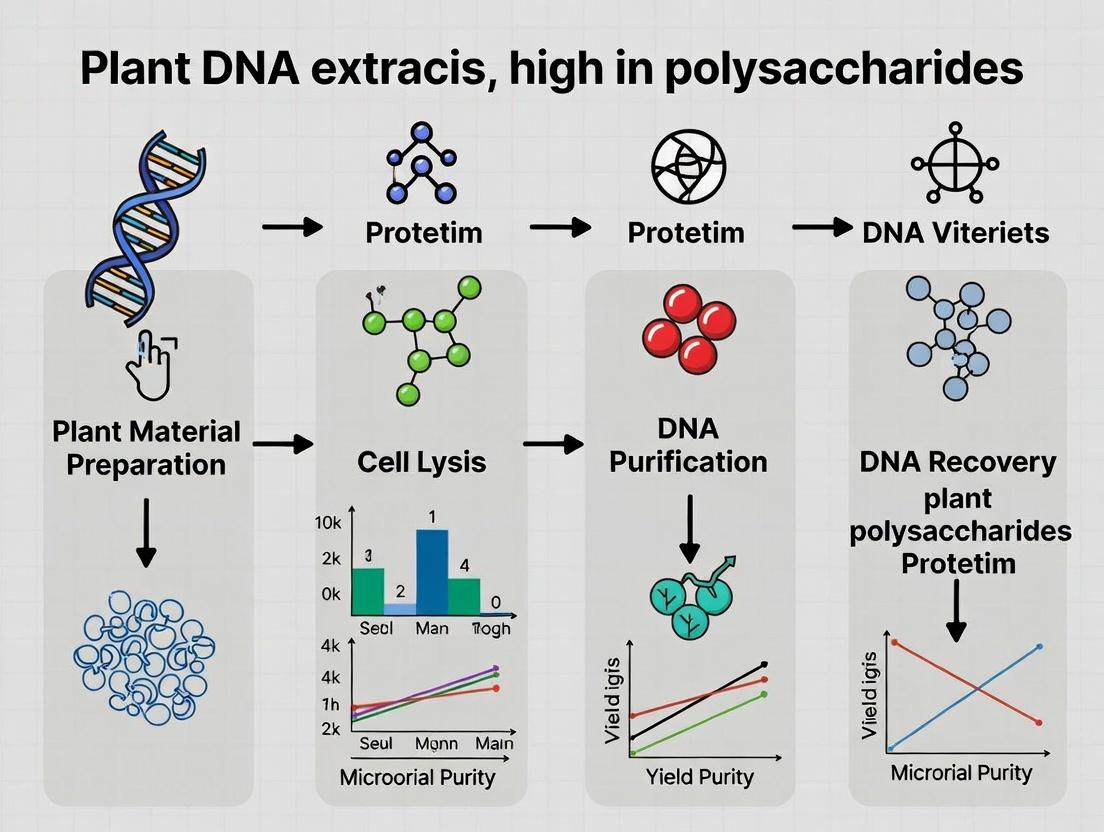
This comprehensive guide details the optimized CTAB method for extracting high-quality genomic DNA from polysaccharide-rich plant tissues—a common challenge in molecular biology.
Mastering Polysaccharide-Rich Plant DNA Extraction: An Optimized CTAB Protocol for Researchers and Drug Development
Abstract
This comprehensive guide details the optimized CTAB method for extracting high-quality genomic DNA from polysaccharide-rich plant tissues—a common challenge in molecular biology. It explores the foundational science behind the protocol, provides a step-by-step methodological guide for scientists and researchers, offers troubleshooting strategies for common pitfalls, and evaluates its validation and advantages over alternative techniques. Designed for professionals in research and drug development, this article synthesizes current best practices to ensure reliable downstream applications like PCR, sequencing, and genomic analysis.
Understanding the Challenge: Why Polysaccharides Complicate Plant DNA Extraction and How CTAB Works
High-quality DNA is a prerequisite for advanced genomic applications, yet its extraction from complex plant tissues remains a significant challenge. Polysaccharide-rich plants, such as cereals, legumes, and medicinal herbs, present formidable matrices that co-precipitate with nucleic acids, inhibiting downstream enzymatic reactions crucial for PCR, sequencing, and genotyping. Within the broader thesis context of optimizing the CTAB (cetyltrimethylammonium bromide) method, this application note details the sources of this challenge and provides refined protocols to overcome them, ensuring DNA of the purity and integrity required for modern drug discovery and genetic research.
The Polysaccharide Problem: Quantitative Impact on Downstream Applications
Polysaccharide contamination directly interferes with molecular biology workflows. The table below quantifies the inhibitory effects on common applications.
Table 1: Impact of Polysaccharide Contamination on Downstream Analyses
| Downstream Application | Performance Metric | With Pure DNA | With Polysaccharide-Contaminated DNA | Inhibition Rate |
|---|---|---|---|---|
| PCR Amplification | Cycle Threshold (Ct) | 22.5 ± 0.8 | 30.1 ± 1.5 (or no amplification) | >34% increase |
| Restriction Digestion | Complete Digestion Time | 1 hour | Incomplete after 3 hours | >200% increase |
| NGS Library Prep | Library Yield (ng/µL) | 45.2 ± 5.1 | 12.8 ± 4.3 | ~72% reduction |
| Microarray Hybridization | Signal-to-Noise Ratio | 12.8 | 3.2 | ~75% reduction |
Optimized CTAB Protocol for Polysaccharide-Rich Plant Tissues
Principle: The CTAB method functions by forming ionic complexes with polysaccharides and other polyphenols at high salt concentrations, which are separated from nucleic acids during chloroform-isoamyl alcohol extraction. The optimized protocol below includes critical modifications to enhance polysaccharide removal.
Materials & Reagents:
- CTAB Extraction Buffer (2X): 2% (w/v) CTAB, 100 mM Tris-HCl (pH 8.0), 20 mM EDTA (pH 8.0), 1.4 M NaCl, 2% (w/v) PVP-40 (Polyvinylpyrrolidone). Prewarm to 65°C.
- β-Mercaptoethanol (β-ME): Add to 0.2% (v/v) just before use.
- Chloroform:Isoamyl Alcohol (24:1)
- RNAse A Solution (10 mg/mL)
- Precipitation Solution: 10 mM Ammonium Acetate in 70% (v/v) Ethanol.
- TE Buffer: 10 mM Tris-HCl, 1 mM EDTA, pH 8.0.
Procedure:
- Tissue Homogenization: Flash-freeze 100 mg of young leaf tissue in liquid nitrogen. Grind to a fine powder using a sterilized mortar and pestle. Transfer powder to a 2 mL microcentrifuge tube.
- Cell Lysis: Add 1 mL of pre-warmed CTAB buffer (with β-ME) to the powder. Vortex vigorously and incubate at 65°C for 45-60 minutes, inverting tubes every 10 minutes.
- Deproteinization & Polysaccharide Removal: Cool to room temperature. Add an equal volume (1 mL) of Chloroform:Isoamyl Alcohol (24:1). Mix thoroughly by inversion for 10 minutes. Centrifuge at 16,000 x g for 15 minutes at 4°C.
- Aqueous Phase Recovery: Carefully transfer the upper aqueous phase to a new 2 mL tube using a wide-bore pipette tip. Avoid the interface.
- Repeat Extraction (Critical Step): Repeat step 3 with a fresh 1 mL of Chloroform:Isoamyl Alcohol to further remove residual polysaccharides.
- DNA Precipitation: To the recovered aqueous phase, add 0.7 volumes of room-temperature isopropanol. Mix by gentle inversion until a DNA thread is visible. Centrifuge at 16,000 x g for 10 minutes at 4°C.
- Polysaccharide Wash (Critical Step): Discard supernatant. Wash the pellet twice with 1 mL of Ammonium Acetate in 70% Ethanol (not standard 70% ethanol). This salt-ethanol wash preferentially removes residual polysaccharides. Centrifuge at 16,000 x g for 5 minutes after each wash.
- Final Wash & Resuspension: Perform a final wash with 1 mL of 70% ethanol. Air-dry the pellet for 10-15 minutes. Dissolve the clean DNA pellet in 50-100 µL of TE buffer containing 5 µL of RNAse A. Incubate at 37°C for 30 minutes. Store at -20°C.
Quality Assessment: Assess yield and purity via spectrophotometry (A260/A280 target: 1.8-2.0; A260/A230 target: >2.0) and integrity by 0.8% agarose gel electrophoresis.
Research Reagent Solutions: The Scientist's Toolkit
Table 2: Essential Reagents for Polysaccharide-Free Plant DNA Extraction
| Reagent | Function in CTAB Protocol | Key Consideration |
|---|---|---|
| CTAB (Cetyltrimethylammonium Bromide) | Ionic detergent that complexes polysaccharides and denatures proteins. | Concentration is critical (typically 2-3%). Higher concentrations aid with tough tissues. |
| PVP-40 (Polyvinylpyrrolidone) | Binds polyphenols and phenolics, preventing oxidation and co-precipitation. | Essential for phenolic-rich plants (e.g., conifers, medicinal herbs). Must be added fresh. |
| β-Mercaptoethanol | Reducing agent that denatures proteins and inhibits RNases and polyphenol oxidases. | Toxic. Use in fume hood. Alternative: 2% ascorbic acid. |
| Chloroform:Isoamyl Alcohol (24:1) | Organic solvent for protein denaturation and lipid removal. Isoamyl alcohol prevents foaming. | Toxic. Use in fume hood. The ratio is key for clean phase separation. |
| High-Salt Buffer (1.4 M NaCl) | Prevents co-precipitation of anionic polysaccharides (e.g., pectin) with DNA. | Ensures polysaccharides remain in the organic phase or interphase. |
| Ammonium Acetate (10 mM in 70% EtOH) | Selective precipitation wash solution. Removes residual polysaccharides and salts without solubilizing DNA. | Superior to sodium acetate for polysaccharide-rich preps. |
| RNAse A | Degrades contaminating RNA, providing accurate DNA quantification. | Must be heat-treated to remove DNase activity prior to use. |
Visualizing the Optimized Workflow and Polysaccharide Interference
Application Notes
Polysaccharides—specifically pectins, hemicelluloses, and starches—are major contaminants in plant nucleic acid extracts. Their co-precipitation and co-elution with DNA inhibit downstream molecular applications. Within the context of optimizing the CTAB (cetyltrimethylammonium bromide) method for polysaccharide-rich tissues, understanding the specific interference mechanisms is critical.
- Inhibition of Enzymatic Reactions: Polysaccharides competitively bind divalent cations (Mg²⁺) required by polymerases and restriction enzymes. They also increase solution viscosity, impeding enzyme diffusion.
- Spectrophotometric Inaccuracy: They cause overestimation of DNA concentration and purity (A260/A230 ratios << 2.0) due to absorbance at 230 nm.
- Gel Electrophoresis Artefacts: Co-isolated polysaccharides can cause smearing, irregular band migration, and hinder DNA staining.
- Interference with Hybridization: In techniques like Southern blotting, polysaccharides can non-specifically bind probes, increasing background noise.
Table 1: Quantitative Impact of Polysaccharides on Downstream Applications
| Downstream Application | Key Interfering Polysaccharide | Observed Effect (Typical Range) | Proposed Mechanism |
|---|---|---|---|
| PCR Amplification | Pectins, Starch | >50-90% reduction in yield; complete inhibition common. | Chelation of Mg²⁺, increased viscosity. |
| Restriction Digestion | Hemicellulose, Pectins | Efficiency reduction of 60-80%. | Enzyme binding site occlusion. |
| Sequencing (NGS) | All three | Failure of library prep; cluster density drops >70%. | Inhibition of ligase/kinase enzymes. |
| Spectrophotometry (NanoDrop) | All three | A260/A230 ratio of 0.5-1.5 (vs. ideal >2.0). | Strong absorbance at 230 nm. |
| Fluorometric Quantitation | Pectins, Starch | Under-quantification by 20-40%. | Dye binding interference. |
Protocol: Enhanced CTAB Extraction for Polysaccharide-Rich Plant Tissues
This protocol modifies the classic CTAB procedure to address the polysaccharide problem.
I. Materials & Reagents
- CTAB Buffer (2%): 2% CTAB, 100 mM Tris-HCl (pH 8.0), 20 mM EDTA (pH 8.0), 1.4 M NaCl. CTAB complexes with nucleic acids and polysaccharides.
- β-Mercaptoethanol (β-ME) or PVP-40: Add 0.1-0.2% v/v β-ME or 1-2% w/v PVP-40 to CTAB buffer before use. Reduces oxidation; PVP binds phenolics/polysaccharides.
- Chloroform:Isoamyl Alcohol (24:1): For protein and lipid removal.
- High-Salt TE Buffer: 10 mM Tris-HCl, 1 mM EDTA, 1 M NaCl. Facilitates polysaccharide precipitation while keeping DNA in solution.
- RNase A (DNase-free): For RNA removal.
- Isopropanol & 70% Ethanol: For DNA precipitation and washing.
II. Procedure
- Homogenization: Grind 100 mg fresh tissue in liquid N₂. Transfer to a 2 ml tube with 1 ml pre-warmed (65°C) CTAB buffer + β-ME/PVP.
- Incubation: Incubate at 65°C for 30-60 min with occasional gentle mixing.
- Deproteinization: Cool, add 1 volume of Chloroform:Isoamyl Alcohol (24:1). Mix thoroughly, centrifuge at 12,000 g for 15 min.
- Polysaccharide Precipitation: Transfer aqueous phase to a new tube. Add 0.5 volumes of High-Salt TE Buffer, mix, and incubate on ice for 30 min. Centrifuge at 4°C, 12,000 g for 20 min. Polysaccharides precipitate; DNA remains soluble.
- DNA Precipitation: Transfer supernatant carefully. Add 0.7 volumes of isopropanol, mix gently. Incubate at -20°C for 30 min. Pellet DNA (12,000 g, 15 min).
- Wash: Wash pellet with 70% ethanol, air-dry briefly.
- Resuspension & RNase Treatment: Resuspend in 100 µl low-salt TE (10 mM Tris, 1 mM EDTA). Add 2 µl RNase A (10 mg/ml), incubate at 37°C for 15 min.
- Purification: For severe contamination, repeat step 3 (chloroform extraction) post-RNase treatment, then re-precipitate with isopropanol and 0.1 volumes of 3M sodium acetate (pH 5.2).
The Scientist's Toolkit: Key Reagent Solutions
| Reagent | Function in Mitigating Polysaccharides |
|---|---|
| CTAB (Cetyltrimethylammonium Bromide) | Cationic detergent; precipitates nucleic acids and acidic polysaccharides together, enabling their subsequent separation via high-salt precipitation. |
| High-Salt Wash/Buffer (e.g., 1M NaCl in TE) | Selectively precipitates hemicelluloses and pectins while keeping DNA in solution. Critical post-CTAB step. |
| Polyvinylpyrrolidone (PVP-40) | Binds and co-precipitates polyphenols and polysaccharides, preventing their co-isolation with DNA. |
| β-Mercaptoethanol | Reducing agent; disrupts disulfide bonds in proteins, inhibits polyphenol oxidase, reducing brown contaminants. |
| Chloroform:Isoamyl Alcohol | Denatures and removes proteins, lipids, and some hydrophobic polysaccharides. |
| Lithium Chloride (LiCl) | Alternative high-salt agent (e.g., 2.5M final); effectively precipitates RNA and many polysaccharides from DNA solutions. |
Diagram: Enhanced CTAB Workflow for Polysaccharide Removal
Diagram: Polysaccharide Interference Mechanisms
Within the framework of a thesis investigating the optimization of the CTAB (cetyltrimethylammonium bromide) method for plant DNA extraction from polysaccharide-rich tissues, understanding the fundamental chemistry of CTAB as a selective precipitation agent is paramount. This application note details the principles, protocols, and practical considerations for leveraging CTAB to separate nucleic acids from contaminating polysaccharides—a critical step for downstream applications like PCR, sequencing, and genetic analysis in drug development research.
Core Chemical Principle
CTAB is a cationic surfactant (quaternary ammonium salt). In low-salt buffers (~0.7 M NaCl), its positively charged head group binds to the negatively charged phosphate backbone of nucleic acids, keeping them in solution. Concurrently, it forms insoluble complexes with acidic polysaccharides (e.g., pectins, gums), which precipitate out. Following this selective precipitation, the nucleic acids are recovered by reducing the salt concentration and using alcohol precipitation, as CTAB-nucleic acid complexes become insoluble.
Key Reagent Solutions & Materials: The Scientist's Toolkit
| Reagent/Material | Function & Rationale |
|---|---|
| 2X CTAB Extraction Buffer | Lysis buffer: CTAB dissolves membranes, while high salt (NaCl) prevents premature CTAB-nucleic acid precipitation. EDTA chelates Mg²⁺, inhibiting nucleases. |
| β-Mercaptoethanol (or PVP) | Reducing agent added fresh. Disrupts disulfide bonds in proteins, inhibits polyphenol oxidases, and reduces polysaccharide viscosity. |
| Chloroform:Isoamyl Alcohol (24:1) | Organic denaturant for phase separation. Removes lipids, proteins, and residual polysaccharide-CTAB complexes. Isoamyl alcohol prevents foaming. |
| CTAB/NaCl Precipitation Solution | Low-salt CTAB solution (e.g., 1% CTAB in 0.05 M NaCl). Selectively precipitates polysaccharides and some proteins from the cleaned lysate. |
| High-Salt TE Buffer (1.2 M NaCl) | Dissolves CTAB-DNA pellets after polysaccharide removal, preparing DNA for final ethanol precipitation. |
| Isopropanol or Ethanol (70%, ice-cold) | Final precipitation and wash steps to recover pure DNA and remove residual salts. |
| RNase A (Heat-treated) | Degrades RNA contaminants to yield pure genomic DNA. Added after the polysaccharide removal step. |
Table 1: Standard CTAB Buffer Formulations for Polysaccharide-Rich Samples
| Component | Standard 2X CTAB Buffer | CTAB/NaCl Precipitation Solution | Function & Critical Concentration |
|---|---|---|---|
| CTAB (w/v) | 2% | 1% | Primary surfactant; critical micelle concentration ~0.1%. |
| NaCl (M) | 1.4 M | 0.05 - 0.1 M | Controls nucleic acid vs. polysaccharide solubility. |
| Tris-HCl (pH) | 100 mM, pH 8.0 | - | Maintains stable pH during lysis. |
| EDTA (mM) | 20 mM | - | Chelates divalent cations, inhibits nucleases. |
| β-Mercaptoethanol (v/v) | 0.2 - 2.0% (added fresh) | - | Reduces oxidation and phenolic compounds. |
| Polyvinylpyrrolidone (PVP) | Optional 1-2% | - | Binds polyphenols; critical for woody/foliar tissues. |
Table 2: Impact of Key Variables on Yield and Purity (A260/A230 & A260/A280)
| Variable | Condition | DNA Yield | A260/A280 (Target ~1.8) | A260/A230 (Target >2.0) | Polysaccharide Contamination |
|---|---|---|---|---|---|
| NaCl in Lysis | < 0.7 M | Low | High | Low | High (co-precipitation) |
| 0.7 - 1.4 M | High | ~1.8 | >2.0 | Low | |
| > 1.4 M | Medium | Low | Low | Medium | |
| CTAB/NaCl Step | Omitted | Very High | < 1.6 | < 1.5 | Very High |
| Included | High | ~1.8 | >2.0 | Negligible | |
| Sample Type | Leaf (young) | High | ~1.8 | >2.0 | Low |
| Tuber / Fruit | Medium | Improves with CTAB/NaCl step | Improves significantly | Initially Very High |
Detailed Protocol: CTAB Method with Polysaccharide Precipitation
Protocol A: Standard CTAB Extraction with Dedicated Polysaccharide Removal
Materials: Pre-warmed 2X CTAB buffer, CTAB/NaCl solution, chloroform:isoamyl alcohol (24:1), high-salt TE buffer, isopropanol, 70% ethanol, RNase A.
Workflow:
- Homogenization: Grind 100 mg fresh tissue in liquid N₂. Transfer to tube with 1 mL pre-warmed (65°C) 2X CTAB buffer and 20 µL β-mercaptoethanol. Vortex.
- Incubation: Incubate at 65°C for 30-60 min with gentle inversions every 10 min.
- Organic Cleanse: Add 1 vol chloroform:isoamyl alcohol. Mix thoroughly (do not vortex). Centrifuge at >12,000 g, 15 min, RT.
- Aqueous Phase Transfer: Carefully transfer the upper aqueous phase to a new tube.
- Polysaccharide Precipitation: Add 0.1 volumes of pre-warmed (65°C) CTAB/NaCl solution. Mix gently and incubate at 65°C for 10 min.
- Chloroform Cleanse: Repeat step 3.
- DNA Precipitation: Transfer aqueous phase. Add 0.7 volumes isopropanol, mix gently. Pellet DNA by centrifugation (12,000 g, 10 min).
- High-Salt Dissolution: Discard supernatant. Dissolve pellet in 200 µL high-salt TE buffer (1.2 M NaCl). Add 2 µL RNase A, incubate 30 min at 37°C.
- Final Precipitation: Add 2 volumes 100% ethanol. Mix and centrifuge (12,000 g, 10 min). Wash pellet with 70% ethanol. Air dry.
- Resuspension: Dissolve DNA in low-salt TE buffer or nuclease-free water.
Protocol B: Microscale Adaptation for High-Throughput Screening
Follow Protocol A, scaling volumes to a 500 µL initial lysis volume in a 1.5 mL tube. After the final polysaccharide precipitation step (step 5), samples can be cleaned using spin-column technology (e.g., silica membrane columns) instead of alcohol precipitation for faster processing.
Visualization: Workflow & Chemical Interactions
Workflow for CTAB-Based DNA Extraction with Polysaccharide Removal
CTAB Binding Mechanism Controlled by Salt Concentration
Key Plant Families and Tissues Notoriously High in Polysaccharides (e.g., Medicinal Plants, Tubers, Seed Endosperm)
Within a broader thesis on optimizing the CTAB (cetyltrimethylammonium bromide) method for DNA extraction from polysaccharide-rich plant tissues, understanding the source material is paramount. Polysaccharides—such as starches, gums, mucilages, and hemicelluloses—co-precipitate with DNA during extraction, forming viscous, inhibitor-laden solutions that impede downstream molecular applications like PCR, restriction digestion, and sequencing. This article details the primary challenging plant sources, provides application notes for their handling, and offers refined CTAB-based protocols validated for these difficult matrices.
Key Polysaccharide-Rich Plant Families and Tissues
The following table categorizes major plant groups and their characteristic high-interference compounds.
Table 1: Key Polysaccharide-Rich Plant Families and Tissues
| Plant Family | Example Genera/Species | Primary Tissue of Interest | Dominant Interfering Polysaccharides & Secondary Metabolites | Typical Polysaccharide Content (Dry Weight %) |
|---|---|---|---|---|
| Araceae | Alocasia, Amorphophallus | Tubers, Corms | Glucomannans, Amylose, Amylopectin (Starch) | 70-80% (Starch) |
| Solanaceae | Solanum tuberosum (Potato) | Tubers | Starch, Pectin | 60-75% (Starch) |
| Poaceae | Oryza sativa (Rice), Zea mays (Maize) | Seed Endosperm | Starch, Arabinoxylans | 70-80% (Starch in endosperm) |
| Lamiaceae | Ocimum sanctum (Holy Basil), Mentha | Medicinal Leaves | Mucilages, Gums, Phenolic glycosides | 10-25% (Mucilage) |
| Zingiberaceae | Curcuma longa (Turmeric), Zingiber officinale (Ginger) | Rhizomes | Starch, Galactomannans, Curcuminoids | 50-70% (Starch) |
| Plantaginaceae | Plantago ovata (Psyllium) | Seed Husk | Highly branched Arabinoxylans (Mucilage) | 85-90% (Mucilage) |
| Leguminosae | Trigonella foenum-graecum (Fenugreek) | Seeds | Galactomannans, Starch | 45-60% (Galactomannans) |
| Orchidaceae | Various medicinal orchids | Tubers (e.g., Salep) | Glucomannans (Glucomannan) | 50-55% (Glucomannan) |
The Scientist's Toolkit: Essential Reagents for Polysaccharide-Rich DNA Extraction
Table 2: Key Research Reagent Solutions
| Reagent / Material | Function in CTAB Protocol for Polysaccharide-Rich Tissues |
|---|---|
| High-Molarity CTAB Buffer (3-4%) | Primary detergent for membrane lysis. Higher concentrations improve polysaccharide complexation. |
| High-Salt Concentration (1.4-2 M NaCl) | Prevents co-precipitation of polysaccharides with nucleic acids by maintaining their solubility. |
| β-Mercaptoethanol or PVP (Polyvinylpyrrolidone) | Reducing agent/Polyphenol absorbent. Critical for denaturing polyphenol-oxidizing enzymes and binding phenolics. |
| RNase A | Degrades RNA to prevent contamination of the DNA pellet, improving purity. |
| Proteinase K | Digests proteins, including nucleases, and helps disrupt tissue further. |
| Chloroform:Isoamyl Alcohol (24:1) | Organic solvent for deproteinization and removal of polysaccharide-CTAB complexes. |
| Isopropanol (Room Temp) | Preferred for DNA precipitation from high-salt solutions; reduces polysaccharide carryover vs. ethanol. |
| 7.5 M Ammonium Acetate | Selective precipitation salt. Added before final alcohol precipitation to remove residual polysaccharides. |
| Silica-based Columns or Magnetic Beads | Optional post-CTAB clean-up for highest purity, binding DNA selectively after extraction. |
Optimized CTAB Protocols for Challenging Tissues
General High-Polysaccharide CTAB Protocol (Baseline)
This protocol is adapted for tough tissues like tubers and seed endosperm.
Protocol 1: CTAB Extraction with Post-Lysis Polysaccharide Precipitation
Materials:
- Pre-warmed (65°C) 3% CTAB Buffer: 3% CTAB (w/v), 2 M NaCl, 100 mM Tris-HCl (pH 8.0), 20 mM EDTA (pH 8.0), 2% PVP-40 (w/v). Add 2% β-mercaptoethanol just before use.
- Liquid Nitrogen, Mortar and Pestle
- Water bath or heating block (65°C and 37°C)
- Chloroform:Isoamyl Alcohol (24:1)
- Isopropanol (at room temperature)
- 70% Ethanol
- 7.5 M Ammonium Acetate
- TE Buffer (pH 8.0)
Procedure:
- Tissue Disruption: Grind 100 mg of fresh tissue or 50 mg of silica-dried tissue to a fine powder in liquid nitrogen.
- Lysis: Transfer powder to a 2 mL tube with 1 mL of pre-warmed 3% CTAB buffer. Vortex vigorously. Incubate at 65°C for 45-60 minutes with gentle inversion every 10 minutes.
- Deproteinization: Cool to room temperature. Add 1 volume of Chloroform:Isoamyl Alcohol. Mix thoroughly by inversion for 10 minutes. Centrifuge at 12,000 x g for 15 minutes at 4°C.
- Polysaccharide Pre-Clearance: Transfer the upper aqueous phase to a new tube. Add 0.5 volume of 7.5 M Ammonium Acetate, mix, and incubate on ice for 30 minutes. Centrifuge at 12,000 x g for 20 minutes at 4°C. This pellet contains polysaccharides.
- DNA Precipitation: Transfer supernatant to a new tube. Add 0.7 volumes of room-temperature isopropanol. Mix gently by inversion until DNA precipitates (often stringy). Incubate at room temperature for 10 minutes.
- Pellet Collection: Centrifuge at 12,000 x g for 10 minutes at room temperature. Discard supernatant.
- Wash: Wash pellet with 1 mL of 70% ethanol. Centrifuge at 12,000 x g for 5 minutes. Air-dry pellet for 10-15 minutes.
- Resuspension: Resuspend DNA in 50-100 µL of TE Buffer. Treat with 2 µL of RNase A (10 mg/mL) at 37°C for 15 minutes. Store at -20°C.
Protocol for Mucilage-Rich Medicinal Plants (e.g.,Plantago,Ocimum)
Key Modification: Includes a pre-wash step to remove soluble mucilage before cell lysis.
Procedure:
- Mucilage Pre-Wash: Place 100 mg of powdered tissue in a tube. Add 1 mL of pre-cooled DNA Extraction Wash Buffer (100 mM Tris-HCl pH 8.0, 20 mM EDTA, 200 mM NaCl). Vortex gently. Incubate on ice for 10 minutes. Centrifuge at 10,000 x g for 5 minutes at 4°C. Carefully discard supernatant.
- Lysis: Proceed with the pellet using Protocol 1, Step 2, but consider increasing CTAB concentration to 4% and incubation time to 90 minutes.
Workflow and Pathway Diagrams
Title: CTAB Workflow for High-Polysaccharide Plants
Title: Thesis Strategy: Overcoming Polysaccharide Challenges
This application note details the core principles of the CTAB-based DNA extraction protocol, specifically optimized for plants high in polysaccharides and polyphenols—a key challenge in phytogenomics and natural product drug development. The efficacy of the method hinges on the synergistic interplay of three critical components: a high-salt buffer, elevated temperature, and chloroform purification. Within the context of a broader thesis on refining nucleic acid isolation from recalcitrant plant tissues, understanding the mechanistic role of each component is essential for troubleshooting, protocol adaptation, and ensuring the yield of high-molecular-weight, PCR-amplifiable DNA suitable for downstream applications like sequencing and marker-assisted selection.
Core Principles & Quantitative Data
Role of High-Salt (CTAB) Buffer
The CTAB buffer is not merely a lysis solution; its composition is precisely engineered to counteract plant secondary metabolites.
- CTAB (Cetyltrimethylammonium Bromide): A cationic detergent that complexes with polysaccharides and denatured proteins in high-salt conditions, precipitating them while leaving nucleic acids in solution.
- High Salt Concentration (1.0-1.4 M NaCl): Shields the negative phosphate backbone of DNA, preventing its co-precipitation with the CTAB-polysaccharide complex. It also inhibits the activity of DNases.
- Other Critical Components: EDTA chelates Mg2+, inhibiting nucleases. A reducing agent (β-mercaptoethanol or PVP) neutralizes polyphenolic compounds by breaking disulfide bonds and binding phenolics, preventing their oxidation which can degrade DNA.
Table 1: Standard CTAB Buffer Composition and Function
| Component | Typical Concentration | Primary Function | Effect on Polysaccharides/Polyphenols |
|---|---|---|---|
| CTAB | 2% (w/v) | Binds polysaccharides & denatured proteins | Forms insoluble complex for removal |
| NaCl | 1.4 M | Stabilizes DNA, prevents co-precipitation | Increases specificity of CTAB-polysaccharide binding |
| EDTA | 20 mM | Chelates divalent cations (Mg2+, Ca2+) | Inactivates Mg2+-dependent nucleases & polyphenol oxidases |
| Tris-HCl (pH 8.0) | 100 mM | Maintains stable pH | Prevents acid hydrolysis of DNA |
| β-mercaptoethanol | 0.2-2% (v/v) | Reducing agent | Disrupts disulfide bonds in proteins, prevents polyphenol oxidation |
Role of Elevated Temperature
Temperature is a critical physical parameter in the lysis step.
- 65°C Incubation: Ensures efficient cell wall disruption, membrane fluidity, and solubilization of CTAB. It facilitates the binding of CTAB to polysaccharides and denatures proteins. For highly polyphenol-rich samples, a higher temperature (up to 70°C) may be used briefly.
Table 2: Temperature Effects on Extraction Efficiency
| Step | Temperature | Duration | Purpose | Consequence of Deviation |
|---|---|---|---|---|
| Lysis & Binding | 65°C | 30-60 min | Optimal CTAB activity & complex formation | <60°C: Inefficient lysis/complexing. >70°C: DNA shearing/denaturation risk. |
| Post-extraction | Room Temp | - | Chloroform:isoamyl alcohol partitioning | Cold temps promote CTAB-DNA precipitation, reducing yield. |
Role of Chloroform
Chloroform (or chloroform:isoamyl alcohol 24:1) is the cornerstone of the purification phase.
- Function: A lipid solvent that denatures and removes residual proteins, removes the CTAB-polysaccharide complex, and dissolves phenol residues.
- Isoamyl Alcohol: Prevents foaming and aids in the separation of organic and aqueous phases. The DNA remains in the upper, aqueous phase after centrifugation.
Experimental Protocols
Protocol 3.1: Standard CTAB DNA Extraction for Polysaccharide-Rich Plants
Research Reagent Solutions Toolkit:
| Item | Function |
|---|---|
| CTAB Extraction Buffer (see Table 1) | Lysis and initial nucleic acid stabilization. |
| β-mercaptoethanol (or PVP-40) | Reducing agent to neutralize polyphenols. |
| Chloroform:Isoamyl Alcohol (24:1) | Organic solvent for protein/polysaccharide removal. |
| Isopropanol (Room Temp & Chilled) | Precipitates nucleic acids from the aqueous phase. |
| 70% Ethanol | Washes salts and residual CTAB from the DNA pellet. |
| RNase A (DNase-free) | Degrades contaminating RNA. |
| TE Buffer (pH 8.0) | Resuspension and storage buffer for purified DNA. |
Procedure:
- Homogenization: Grind 100 mg fresh leaf tissue in liquid N2 to a fine powder. Transfer to a pre-warmed (65°C) 2 ml tube containing 1 ml of CTAB buffer with 2% β-mercaptoethanol.
- Lysis: Incubate at 65°C for 45-60 min with gentle inversion every 10 min.
- Organic Extraction: Cool to room temp. Add 1 volume (1 ml) of chloroform:isoamyl alcohol (24:1). Mix thoroughly by inversion for 5-10 min. Centrifuge at 12,000 x g for 15 min at room temp.
- Aqueous Phase Recovery: Carefully transfer the upper aqueous phase to a new tube using a wide-bore pipette tip. Avoid the interphase.
- DNA Precipitation: Add 0.6-0.7 volumes of room-temperature isopropanol. Mix gently by inversion until DNA is visible as a thread-like precipitate. Centrifuge at 12,000 x g for 10 min at room temp.
- Pellet Wash: Discard supernatant. Wash pellet with 1 ml of 70% ethanol. Centrifuge at 12,000 x g for 5 min. Discard ethanol and air-dry pellet for 10-15 min.
- Resuspension & RNase Treatment: Dissolve pellet in 100 µl TE buffer. Add 2 µl RNase A (10 mg/ml), incubate at 37°C for 15-30 min.
- Optional Second Purification: For very dirty samples, repeat steps 3-6 using a smaller volume of chloroform:isoamyl alcohol.
- Storage: Quantify DNA via spectrophotometry (A260/A280 target: ~1.8) and store at -20°C.
Protocol 3.2: Experiment Comparing Salt Concentrations in CTAB Buffer
Objective: To quantify the impact of NaCl concentration on DNA yield and purity from polysaccharide-rich tissue (e.g., strawberry leaf). Procedure:
- Prepare CTAB buffers with NaCl concentrations of: 0.5 M, 1.0 M, 1.4 M, and 2.0 M.
- Aliquot 100 mg of homogenized tissue from a single source into four tubes.
- Perform Protocol 3.1, using a different buffer for each replicate.
- Quantify DNA yield (ng/µl) and purity (A260/A280, A260/A230) for each sample.
- Perform a standard PCR assay (e.g., using chloroplast or housekeeping gene primers) to assess DNA quality.
Table 3: Expected Results from Salt Concentration Experiment
| [NaCl] in Buffer | Expected DNA Yield | Expected A260/A280 Ratio | Expected PCR Success | Reasoning |
|---|---|---|---|---|
| 0.5 M | Low | Low (<1.6) | Low/None | CTAB-DNA co-precipitation, high polysaccharide carryover. |
| 1.0 M | Moderate | Moderate (~1.7) | Moderate | Partial CTAB-polysaccharide complexing. |
| 1.4 M (Optimal) | High | Good (~1.8-1.9) | High | Optimal salt shield for DNA, efficient polysaccharide removal. |
| 2.0 M | Moderate-High | Variable | Low-Moderate | Excessive salt may inhibit polymerase, harder to pellet DNA. |
Process Visualization
Diagram Title: CTAB DNA Extraction Workflow for Polysaccharide-Rich Plants
Diagram Title: Core Mechanisms of CTAB Method Components
Step-by-Step Optimized CTAB Protocol for Reliable DNA Extraction from Difficult Plant Samples
Application Notes: CTAB DNA Extraction from Polysaccharide-Rich Plants
Within the framework of a thesis investigating the optimization of the CTAB (Cetyltrimethylammonium bromide) method for extracting high-quality DNA from plants with elevated polysaccharide and polyphenol content, meticulous pre-lab preparation is paramount. Success in downstream applications (e.g., PCR, sequencing, genotyping for drug discovery) hinges on the quality of the initial extraction. This protocol details the essential preparatory steps.
The Scientist's Toolkit: Research Reagent Solutions
| Item | Function in CTAB Protocol for Polysaccharide-Rich Tissues |
|---|---|
| CTAB Extraction Buffer | The core lysis solution. CTAB, a cationic detergent, complexes with nucleic acids and polysaccharides in high-salt conditions, separating DNA from polysaccharides. |
| β-Mercaptoethanol (BME) | A reducing agent added to the CTAB buffer to inhibit polyphenol oxidases, preventing oxidation and browning which can co-precipitate with DNA. |
| Polyvinylpyrrolidone (PVP) | Added to the CTAB buffer to bind and remove polyphenols and tannins, which otherwise co-precipitate and inhibit enzymatic reactions. |
| RNase A | An enzyme used post-extraction to digest RNA, ensuring a pure DNA sample. Must be DNase-free. |
| Chloroform:Isoamyl Alcohol (24:1) | An organic solvent mixture used for phase separation. It denatures and removes proteins, lipids, and residual polysaccharides. |
| Isopropanol | Used to precipitate DNA from the aqueous phase after chloroform extraction. Preferred over ethanol for some polysaccharide-rich protocols. |
| High-Salt TE Buffer (or Elution Buffer) | Used to resuspend the final DNA pellet. The TE (Tris-EDTA) stabilizes DNA, while additional salt helps keep residual polysaccharides in solution. |
| Liquid Nitrogen | Used to flash-freeze fresh plant tissue, facilitating mechanical grinding into a fine powder without thawing, which releases polysaccharides. |
Detailed Protocol: CTAB DNA Extraction for Polysaccharide-Rich Tissue
Principle: The CTAB method uses a high-salt buffer to separate DNA from polysaccharides. At high NaCl concentration, CTAB forms ionic complexes with DNA, which precipitate upon reduction of salt concentration, while polysaccharides remain soluble or are removed during organic extraction.
Safety Considerations:
- β-Mercaptoethanol: Extremely toxic. Use in a fume hood. Wear appropriate PPE (lab coat, gloves, safety glasses).
- Chloroform: Toxic and volatile. Use in a fume hood. Avoid skin contact and inhalation.
- Liquid Nitrogen: Can cause severe cryogenic burns. Always use cryogenic gloves and face protection.
- General: Use standard laboratory PPE. Be familiar with Material Safety Data Sheets (MSDS) for all chemicals.
Equipment & Reagents Table:
| Category | Item | Specification/Notes |
|---|---|---|
| Equipment | Mortar and Pestle | Pre-chilled with liquid nitrogen. |
| Water Bath or Heat Block | Capable of maintaining 65°C. | |
| Microcentrifuge | For 1.5-2.0 mL tubes. | |
| Vortex Mixer | ||
| Fume Hood | For steps involving BME/Chloroform. | |
| Nanodrop Spectrophotometer | For A260/A280 & A260/A230 ratios. | |
| Reagents | CTAB Extraction Buffer | 2% (w/v) CTAB, 100 mM Tris-HCl (pH 8.0), 20 mM EDTA (pH 8.0), 1.4 M NaCl. Autoclave. Add 0.2% (v/v) BME just before use. |
| Wash Buffer | 76% Ethanol, 10 mM Ammonium Acetate. | |
| TE Buffer | 10 mM Tris-HCl, 1 mM EDTA, pH 8.0. For high polysaccharide samples: add NaCl to 50 mM. |
Stepwise Protocol:
Buffer Preparation: Prepare CTAB Extraction Buffer (without BME) and autoclave. Cool to room temperature. In a fume hood, add β-mercaptoethanol to a final concentration of 0.2% (v/v) (e.g., 20 µL per 10 mL buffer) just before use. Pre-warm the buffer to 65°C.
Tissue Disruption:
- Weigh 100 mg of fresh, young plant tissue (or 20 mg of silica-dried tissue).
- Using a mortar and pestle pre-chilled with liquid nitrogen, grind the tissue to a fine, homogeneous powder. Keep the tissue frozen throughout.
Lysis:
- Transfer the frozen powder to a 1.5 mL microcentrifuge tube containing 700 µL of pre-warmed (65°C) CTAB buffer.
- Mix thoroughly by inversion and vortexing. Incubate the tube at 65°C for 30-60 minutes, inverting gently every 10 minutes.
Organic Extraction:
- Cool the tube to room temperature. Add an equal volume (~700 µL) of chloroform:isoamyl alcohol (24:1).
- Mix gently by inversion for 5-10 minutes to form an emulsion. Do not vortex.
- Centrifuge at 12,000 x g for 15 minutes at room temperature.
DNA Precipitation:
- Carefully transfer the upper aqueous phase to a new 1.5 mL tube using a wide-bore pipette tip. Avoid the interface.
- Add 0.6-0.7 volumes of room-temperature isopropanol. Mix gently by inversion until the DNA precipitates (often as a stringy mass).
- Incubate at room temperature for 5 minutes, then centrifuge at 12,000 x g for 10 minutes to pellet the DNA.
Wash and Resuspension:
- Discard the supernatant. Wash the pellet with 500 µL of Wash Buffer (76% Ethanol, 10 mM Ammonium Acetate). Centrifuge at 12,000 x g for 5 minutes.
- Discard the supernatant and air-dry the pellet for 10-15 minutes until no ethanol remains. Do not over-dry.
- Resuspend the DNA pellet in 50-100 µL of High-Salt TE Buffer. Incubate at 4°C overnight or at 37°C for 1 hour to fully dissolve.
- Add 2 µL of RNase A (10 mg/mL), mix, and incubate at 37°C for 30 minutes.
Quality Assessment: Quantify DNA using a Nanodrop. For polysaccharide-rich extracts, the A260/A230 ratio is critical; a low ratio (<1.8) indicates polysaccharide/polyphenol contamination. A260/A280 should be ~1.8.
Visualized Workflows
CTAB DNA Extraction Workflow for Polysaccharide-Rich Plants
CTAB Buffer Components and Their Core Functions
Application Notes
Within a research thesis focused on optimizing the CTAB (Cetyltrimethylammonium bromide) method for DNA extraction from polysaccharide-rich plant tissues, the initial steps of sample collection and homogenization are critical determinants of success. The high polysaccharide content, often co-precipitating with nucleic acids, necessitates protocols that minimize their release during cell disruption while maximizing intact DNA yield. Best practices must be tailored to the sampling strategy—destructive (consuming the sample) or non-destructive (preserving the source organism).
- Destructive Sampling for CTAB Protocols: This is standard for bulk tissue analysis. The primary objective is rapid inactivation of nucleases and prevention of polysaccharide gelatinization. Immediate freezing of collected tissue in liquid nitrogen is paramount. Homogenization must be performed while the sample is cryogenically brittle, using pre-chilled equipment to generate a fine, homogeneous powder. This allows for efficient CTAB penetration and subsequent polysaccharide separation during chloroform:isoamyl alcohol steps.
- Non-Destructive Sampling: Essential for rare, endangered, or perennial study subjects. Techniques like leaf punches, needle biopsies, or root hair collection minimize damage. These small samples pose a challenge for CTAB-based extraction due to lower starting material and increased risk of oxidation. Homogenization must be ultra-efficient, often involving micro-pestles in bead-beating tubes, with increased attention to antioxidant additives (e.g., high concentrations of β-mercaptoethanol or PVP) in the CTAB buffer to combat phenolics released from wounded tissue.
Quantitative Data Summary
Table 1: Impact of Homogenization Method on DNA Yield and Quality from Polysaccharide-Rich Leaves
| Homogenization Method | Tissue State | Average DNA Yield (µg/mg tissue) | A260/A280 | A260/A230 | % Inhibition in Downstream PCR |
|---|---|---|---|---|---|
| Mortar & Pestle (LN₂) | Flash Frozen | 0.45 ± 0.05 | 1.89 ± 0.03 | 2.12 ± 0.10 | 5% |
| Bead Beater (Ceramic) | Fresh, Lysis Buffer | 0.38 ± 0.07 | 1.81 ± 0.05 | 1.65 ± 0.15 | 25% |
| Cryo-Mill | Flash Frozen | 0.52 ± 0.04 | 1.92 ± 0.02 | 2.20 ± 0.08 | 0% |
| Manual Grinding (Room Temp) | Fresh | 0.15 ± 0.10 | 1.75 ± 0.10 | 0.95 ± 0.20 | 80% |
Table 2: Comparison of Non-Destructive Sampling Techniques
| Sampling Technique | Approximate Tissue Mass (mg) | Recommended CTAB Buffer Modifications | Success Rate for Microsatellite Genotyping |
|---|---|---|---|
| Leaf Punch (3mm) | 10-15 mg | 2% CTAB, 4% PVP, 3% β-mercaptoethanol | 92% |
| Root Hair Brush | 1-5 mg | 3% CTAB, 5% PVP | 75% |
| Needle Biopsy | 5-10 mg | Standard 2% CTAB, +2% Sodium Metabisulfite | 88% |
Experimental Protocols
Protocol 1: Destructive Sampling & Cryogenic Homogenization for CTAB Extraction
Objective: To obtain high-quality, PCR-ready genomic DNA from polysaccharide-rich plant leaf tissue. Materials: Liquid nitrogen, sterile mortar and pestle, polypropylene tubes, CTAB extraction buffer (2% CTAB, 1.4 M NaCl, 20 mM EDTA, 100 mM Tris-HCl pH 8.0, pre-warmed to 65°C), β-mercaptoethanol (added to 2% v/v just before use). Procedure:
- Collect ~100 mg of leaf tissue into a labeled tube and immediately submerge in liquid nitrogen in the field.
- Pre-chill mortar and pestle by adding liquid nitrogen.
- Transfer frozen tissue to the mortar and grind vigorously to a fine powder. Keep submerged in LN₂.
- Using a pre-chilled spatula, transfer the powder to a tube containing 1 mL of pre-warmed CTAB buffer.
- Vortex vigorously for 10 seconds and incubate at 65°C for 45-60 minutes with occasional gentle inversions.
- Proceed with standard CTAB chloroform extraction and isopropanol precipitation.
Protocol 2: Non-Destructive Leaf Punch Sampling and Micro-Homogenization
Objective: To extract DNA without destroying the source plant. Materials: Sterile 3-mm leaf punch, 1.5 mL microcentrifuge tube containing a 3-mm tungsten carbide bead, modified CTAB buffer (as per Table 2). Procedure:
- Sterilize the leaf punch with ethanol and flame.
- Punch a single disc from a healthy leaf, avoiding major veins.
- Immediately place the disc into the bead tube containing 400 µL of modified CTAB buffer.
- Secure the tube in a bead mill homogenizer and process at 30 Hz for 90 seconds.
- Incubate the homogenate at 65°C for 30 minutes.
- Centrifuge briefly to pellet debris. Transfer supernatant to a new tube for chloroform extraction, reducing volumes proportionally.
Diagrams
Title: Decision Workflow for Plant Sampling Strategy
Title: CTAB Mechanism Against Polysaccharides
The Scientist's Toolkit: Research Reagent Solutions
Table 3: Essential Materials for Sampling & Homogenization in CTAB-based Research
| Item | Function in Context of High-Polysaccharide Tissue |
|---|---|
| Cetyltrimethylammonium Bromide (CTAB) | Primary detergent; complexes with anionic polysaccharides and precipitates them during chloroform extraction, separating them from DNA. |
| Polyvinylpyrrolidone (PVP), insoluble | Binds and removes phenolic compounds released during homogenization, preventing oxidation and DNA degradation. |
| β-Mercaptoethanol (or DTT) | Strong reducing agent added to CTAB buffer; denatures proteins and inhibits RNases/DNases by breaking disulfide bonds. Critical for tough tissues. |
| Liquid Nitrogen | Enables cryogenic grinding, which keeps tissue brittle, produces fine powder for efficient lysis, and instantly halts all enzymatic activity. |
| Chloroform:Isoamyl Alcohol (24:1) | Organic solvent used after CTAB lysis. Removes CTAB-polysaccharide/protein complexes and lipids, leaving DNA in the aqueous phase. |
| Tungsten Carbide Beads | Used in bead-beating homogenizers for rapid, efficient disruption of small or tough samples in micro-tubes. |
| Sodium Chloride (1.4M in CTAB) | High salt concentration promotes the selective precipitation of polysaccharides while keeping nucleic acids in solution. |
| EDTA (in CTAB buffer) | Chelates Mg²⁺ ions, which are cofactors for DNases, thereby inactivating these degrading enzymes. |
This application note details a critical protocol within a broader thesis investigating the optimization of the CTAB (Cetyltrimethylammonium bromide) method for extracting high-quality genomic DNA from plant tissues exceptionally rich in polysaccharides and polyphenols. These secondary metabolites, common in medicinal plants undergoing drug development research, copurify with DNA using standard methods, inhibiting downstream enzymatic applications like PCR and restriction digestion. This walkthrough focuses on the three core mechanistic steps: efficient tissue lysis, selective CTAB-nucleic acid complex formation, and chloroform/isoamyl alcohol purification, which are pivotal for achieving the thesis aim of a scalable, robust DNA extraction protocol for challenging plant species.
Detailed Protocol Walkthrough
A. Lysis
Objective: To completely disrupt plant cell walls and membranes, releasing genomic DNA while inactivating nucleases.
- Grinding: Flash-freeze 100 mg of young leaf tissue in liquid nitrogen. Grind to a fine powder using a pre-chilled mortar and pestle. Maintain tissue in a frozen state to prevent metabolic degradation.
- Lysis Buffer Addition: Transfer the powder to a 2 mL microcentrifuge tube containing 1 mL of pre-warmed (65°C) CTAB Lysis Buffer.
- CTAB Lysis Buffer Composition (100 mL): 2% (w/v) CTAB, 100 mM Tris-HCl (pH 8.0), 20 mM EDTA (pH 8.0), 1.4 M NaCl, 1% (w/v) PVP-40. Add 0.2% (v/v) β-mercaptoethanol just before use.
- Incubation: Mix thoroughly by vortexing and incubate at 65°C for 30-60 minutes with gentle inversions every 10 minutes. Heat denatures proteins, inactivates nucleases, while CTAB and PVP complex with polysaccharides and polyphenols, respectively. β-mercaptoethanol reduces disulfide bonds in secondary metabolites.
B. CTAB Binding
Objective: To selectively precipitate nucleic acid-CTAB complexes in a high-salt environment.
- Cooling: Centrifuge the lysate at 12,000 × g for 10 minutes at room temperature to pellet insoluble debris (polysaccharides, cell wall components). Transfer the supernatant to a new tube.
- Complex Formation: Add an equal volume (~1 mL) of Chloroform:Isoamyl Alcohol (24:1). Mix thoroughly by vigorous inversion for 5 minutes to form an emulsion. This step partitions lipids, proteins, and residual polyphenols into the organic phase.
- Separation: Centrifuge at 12,000 × g for 15 minutes at 4°C. The mixture separates into three phases: a lower organic phase, an interphase (denatured proteins), and a upper aqueous phase containing nucleic acid-CTAB complexes.
- Aqueous Phase Recovery: Carefully transfer the upper aqueous phase to a new 2 mL tube, avoiding the interphase.
C. Chloroform/Isoamyl Alcohol Purification
Objective: To remove trace CTAB, proteins, and contaminants through repeated organic extraction, followed by DNA precipitation.
- Repeat Extraction: Add an equal volume of Chloroform:Isoamyl Alcohol (24:1) to the recovered aqueous phase. Mix by inversion for 5 minutes and centrifuge at 12,000 × g for 10 minutes at 4°C.
- Final Aqueous Recovery: Transfer the upper aqueous phase to a new 1.5 mL tube.
- DNA Precipitation: Add 0.7 volumes of room-temperature isopropanol (or 2 volumes of 100% ethanol) to the aqueous phase. Mix gently by inversion. The nucleic acid-CTAB complex precipitates in the reduced-salt environment. Incubate at -20°C for 30 minutes or overnight for higher yield.
- Pellet Collection: Centrifuge at 15,000 × g for 20 minutes at 4°C to pellet the DNA. Carefully decant the supernatant.
- Wash: Wash the pellet with 1 mL of Wash Buffer (76% ethanol, 10 mM ammonium acetate) to remove residual salts and CTAB. Centrifuge at 15,000 × g for 5 minutes at 4°C. Decant and air-dry the pellet for 10-15 minutes.
- Resuspension: Dissolve the purified DNA pellet in 50-100 µL of TE buffer (10 mM Tris-HCl, 0.1 mM EDTA, pH 8.0) or nuclease-free water.
Data Presentation: Reagent Composition & Quantitative Benchmarks
Table 1: Core CTAB Lysis Buffer Components & Functions
| Component | Concentration | Function in Polysaccharide-Rich Plants |
|---|---|---|
| CTAB | 2% (w/v) | Cationic detergent; lyses membranes, complexes with nucleic acids and anionic polysaccharides. |
| NaCl | 1.4 M | High salt maintains nucleic acids in solution while CTAB-polysaccharide complexes precipitate. |
| EDTA | 20 mM | Chelates Mg²⁺; inactivates Mg²⁺-dependent nucleases. |
| Tris-HCl | 100 mM (pH 8.0) | Buffers solution, maintains stable pH. |
| PVP-40 | 1% (w/v) | Binds and removes polyphenols, preventing oxidation and co-precipitation. |
| β-mercaptoethanol | 0.2% (v/v) | Reducing agent; denatures proteins, disrupts disulfide bonds in polyphenol oxidases. |
Table 2: Expected Yield and Quality Metrics
| Parameter | Target Range | Typical Output (for 100 mg tissue) | Measurement Method |
|---|---|---|---|
| DNA Yield | Species-dependent | 5 - 50 µg | Spectrophotometry (A260) |
| Purity (A260/A280) | 1.8 - 2.0 | 1.75 - 1.9 (Acceptable) | Spectrophotometry |
| Purity (A260/A230) | >2.0 | 1.8 - 2.2 | Spectrophotometry (Indicates salt/organic solvent removal) |
| Fragment Size | >20 kb | 20 - 50 kb | Agarose Gel Electrophoresis (0.8%) |
| PCR Suitability | Amplifiable | 200-1500 bp amplicons | Standard PCR with housekeeping gene primers |
The Scientist's Toolkit: Key Research Reagent Solutions
| Item | Function & Rationale |
|---|---|
| CTAB Lysis Buffer (with β-mercaptoethanol) | The foundational reagent for simultaneous lysis, nuclease inactivation, and sequestration of polysaccharides/polyphenols. |
| Chloroform:Isoamyl Alcohol (24:1) | Organic purification solution. Chloroform denatures and partitions proteins; isoamyl alcohol prevents foaming. |
| Wash Buffer (Ethanol/Ammonium Acetate) | Removes residual CTAB and salts more effectively than standard ethanol/acetate washes, crucial for downstream enzyme compatibility. |
| Polyvinylpolypyrrolidone (PVP-40) | Insoluble polyvinylpyrrolidone; added during grinding to irreversibly bind polyphenols, especially critical for woody or phenolic-rich plants. |
| RNase A (Ribonuclease A) | Enzyme added post-extraction to degrade RNA contamination, ensuring accurate genomic DNA quantification and use. |
| Silica Membrane Spin Columns | Optional post-precipitation step for further purification, removing short-fragment contaminants and residual inhibitors. |
Visualized Workflows
Within the CTAB-based DNA extraction from polysaccharide-rich plant tissues, the optimization of two critical steps—incubation temperature and high-salt washing—is paramount. The broader research thesis posits that precise control of these parameters is the primary determinant for achieving high DNA yield, purity, and polymerase chain reaction (PCR) compatibility, overriding variations in starting plant material. This protocol details the application notes for these pivotal stages.
Application Notes: Rationale and Impact
Incubation Temperature: The standard 65°C incubation serves to denature proteins, inactivate nucleases, and solubilize membranes. For polysaccharide-rich samples, elevated temperatures (e.g., 70-75°C) can more effectively dissociate polysaccharide-DNA complexes. However, excessive heat can degrade DNA. The temperature must be optimized to maximize complex dissociation while minimizing thermal degradation.
High-Salt Washing: Following isopropanol precipitation, the crude DNA pellet is co-precipitated with polysaccharides and other contaminants. Washing with a high-salt ethanol solution (e.g., 70-80% ethanol containing 10mM ammonium acetate or 0.2M sodium acetate) is crucial. The high ionic strength helps to keep polysaccharides soluble in the ethanol, allowing them to be removed in the supernatant, while the DNA pellet remains intact.
Table 1: Impact of Incubation Temperature on DNA Quality from Polysaccharide-Rich Tissue (Leaf Tissue of Camellia sinensis)
| Incubation Temperature (°C) | A260/A280 Ratio | A260/A230 Ratio | DNA Yield (µg/mg tissue) | PCR Success Rate (%) |
|---|---|---|---|---|
| 60 | 1.65 | 1.20 | 0.45 | 25 |
| 65 (Standard) | 1.78 | 1.55 | 0.68 | 75 |
| 70 | 1.82 | 1.95 | 0.72 | 95 |
| 75 | 1.80 | 2.01 | 0.65 | 90 |
| 80 | 1.55 | 1.40 | 0.41 | 30 |
Table 2: Effect of High-Salt Wash Composition on Polysaccharide Removal
| Wash Solution Composition (in 70% Ethanol) | Residual Polysaccharide (µg/µg DNA) | DNA Recovery (%) | Subsequent Restriction Enzyme Efficiency |
|---|---|---|---|
| No salt (Ethanol only) | 0.85 | 100 (Reference) | Inhibited |
| 10mM Ammonium Acetate | 0.22 | 98 | Functional |
| 0.2M Sodium Acetate | 0.18 | 95 | Functional |
| 0.5M Sodium Chloride | 0.15 | 88 | Partially Inhibited |
Detailed Experimental Protocols
Protocol A: Optimized CTAB Incubation
- Grind 100 mg of fresh plant tissue to a fine powder in liquid nitrogen.
- Transfer powder to a 2mL tube containing 1mL of pre-warmed (65°C) 2X CTAB buffer (2% CTAB, 100mM Tris-HCl pH 8.0, 20mM EDTA, 1.4M NaCl, 1% PVP-40).
- Mix by vortexing and incubate in a water bath for 30 minutes at 70°C. Invert tubes gently every 10 minutes.
- Cool to room temperature. Add an equal volume (1mL) of chloroform:isoamyl alcohol (24:1).
- Mix by inversion for 10 minutes. Centrifuge at 12,000 x g for 15 minutes at 4°C.
- Transfer the upper aqueous phase to a new tube.
Protocol B: High-Salt Ethanol Wash Post-Precipitation
- To the aqueous phase from Protocol A, add 0.7 volumes of cold isopropanol. Mix gently by inversion until DNA threads are visible.
- Centrifuge at 12,000 x g for 10 minutes at 4°C. Discard the supernatant.
- Critical Wash Step: Add 1mL of High-Salt Wash Solution (70% Ethanol, 10mM Ammonium Acetate) to the pellet. Do not vortex.
- Incubate at room temperature for 5 minutes, then centrifuge at 12,000 x g for 5 minutes.
- Carefully discard the supernatant. Repeat the wash once.
- Air-dry the pellet for 10-15 minutes. Resuspend in 50µL of TE buffer or nuclease-free water.
Visualization of Workflow and Relationship
Diagram Title: CTAB DNA Extraction with Critical Steps Highlighted
The Scientist's Toolkit: Research Reagent Solutions
Table 3: Essential Materials for Optimized CTAB DNA Extraction
| Reagent/Material | Function & Rationale |
|---|---|
| CTAB (Cetyltrimethylammonium Bromide) | Ionic detergent that solubilizes membranes and forms complexes with polysaccharides, allowing their separation from nucleic acids. |
| PVP-40 (Polyvinylpyrrolidone) | Binds polyphenols and tannins, preventing their co-isolation and oxidation which can degrade DNA and inhibit enzymes. |
| β-Mercaptoethanol (or DTT) | A reducing agent added to the CTAB buffer to denature proteins and inhibit polyphenol oxidases. Critical for recalcitrant tissues. |
| High-Salt CTAB Buffer (1.4M NaCl) | High ionic strength promotes the separation of polysaccharides into the organic phase during chloroform extraction. |
| Chloroform:Isoamyl Alcohol (24:1) | Organic solvent mixture denatures and removes proteins, lipids, and polysaccharides. Isoamyl alcohol prevents foaming. |
| Ammonium Acetate (or Sodium Acetate) | Salt used in the ethanol wash step to increase ionic strength, keeping residual polysaccharides soluble while DNA precipitates. |
| RNase A | Enzyme added post-extraction to degrade RNA, ensuring pure DNA for downstream applications like sequencing or PCR. |
| Isopropanol | Less polar than ethanol, it effectively precipitates DNA from high-salt solutions but also co-precipitates more impurities, necessitating the high-salt wash. |
In the context of a broader thesis on optimizing the Cetyltrimethylammonium Bromide (CTAB) method for extracting high-quality DNA from polysaccharide-rich plant tissues, this application note addresses the critical final purification steps. The standard CTAB protocol effectively co-precipitates DNA while binding polysaccharides and polyphenols. However, residual contaminants, including RNA and salts, often persist. This document details the essential, sequential processes of RNAse A treatment and ethanol precipitation/resuspension, which are paramount for yielding DNA pure enough for stringent downstream applications like PCR, sequencing, and genotyping in pharmaceutical and agricultural research.
Key Research Reagent Solutions & Materials
Table 1: Essential Reagents and Materials for Final DNA Purification
| Item | Function/Benefit |
|---|---|
| RNAse A (10 mg/mL), Thermostable | Degrades contaminating RNA without affecting DNA integrity. Thermostable form ensures activity after possible CTAB carryover. |
| Ammonium Acetate (7.5 M) | A superior salt for ethanol precipitation, effectively excluding residual polysaccharides and nucleotides from the pellet. |
| Absolute Ethanol (Molecular Biology Grade) | Precipitates nucleic acids in the presence of monovalent cations. High purity prevents inhibition in downstream assays. |
| 70% Ethanol (in Nuclease-Free Water) | Washes the DNA pellet to remove excess salt and co-precipitated contaminants without dissolving the DNA. |
| Nuclease-Free Water or TE Buffer (pH 8.0) | Resuspension medium. TE stabilizes DNA long-term but EDTA may inhibit some enzymes (e.g., PCR). |
| Microcentrifuge Tubes (1.5-2 mL, DNase/RNase-Free) | Prevents sample degradation and adsorption. |
| Thermal Shaker or Water Bath | For controlled incubation during RNAse treatment. |
Detailed Protocols
Protocol: RNAse A Treatment for Residual RNA Removal
Objective: To eliminate co-precipitated RNA that can interfere with spectrophotometric quantification and downstream enzymatic reactions.
Materials: RNAse A solution (10 mg/mL, DNase-free), DNA sample in water/TE, thermal shaker.
Method:
- To the purified DNA sample following CTAB extraction and initial resuspension, add RNAse A to a final concentration of 20 µg/mL.
- Example: For a 100 µL DNA sample, add 0.2 µL of 10 mg/mL RNAse A stock.
- Mix gently by flicking the tube. Briefly centrifuge to collect the contents.
- Incubate at 37°C for 15-30 minutes. For DNA with potential CTAB carryover, use a thermostable RNAse A and incubate at 50-60°C.
- Proceed immediately to precipitation or store the RNAse-treated DNA at 4°C short-term.
Protocol: Ethanol Precipitation & Resuspension
Objective: To concentrate the DNA, remove RNAse enzyme, and exchange the buffer into a clean, compatible solution.
Materials: 7.5 M Ammonium acetate, Absolute ethanol, 70% Ethanol, Nuclease-free water/TE buffer, microcentrifuge, sterile pipette tips.
Method:
- To the RNAse-treated DNA, add 0.5 volumes of 7.5 M ammonium acetate. Mix thoroughly by vortexing.
- Add 2.5 volumes of ice-cold absolute ethanol. Mix vigorously by inversion until a uniform milky suspension forms.
- Incubate at -20°C for a minimum of 30 minutes (or -80°C for 15 minutes for low-concentration samples). Overnight incubation at -20°C maximizes recovery.
- Centrifuge at >12,000 x g for 20-30 minutes at 4°C. Orient the tube hinge outward to locate the pellet.
- Carefully decant the supernatant without disturbing the pellet.
- Add 500 µL of ice-cold 70% ethanol to the pellet. Invert the tube several times to wash.
- Centrifuge at >12,000 x g for 5-10 minutes at 4°C.
- Carefully aspirate the ethanol wash. Air-dry the pellet for 5-10 minutes until no visible ethanol remains, but the pellet is not desiccated.
- Resuspend the DNA pellet in an appropriate volume of nuclease-free water or TE buffer (pH 8.0). Gently pipette or tap to mix. Allow resuspension at 4°C for several hours or overnight for complete dissolution.
Data Presentation: Yield & Purity Metrics
Table 2: Impact of Final Purification Steps on DNA Quality from Polysaccharide-Rich Tissue Data is representative of results from *Cannabis sativa (high polysaccharide) leaf tissue post-CTAB extraction (n=3).*
| Purification Stage | Avg. Yield (µg/g tissue) | A260/A280 Ratio | A260/A230 Ratio | PCR Success Rate (285 rRNA amplicon) |
|---|---|---|---|---|
| Post-CTAB, Pre-RNAse | 45.2 ± 5.6 | 1.72 ± 0.05 | 1.85 ± 0.12 | 40% |
| +RNAse A Treatment | 38.1 ± 4.8 | 1.89 ± 0.02 | 1.91 ± 0.08 | 80% |
| +Ethanol Precipitation/Resuspension | 35.5 ± 3.2 | 1.92 ± 0.01 | 2.12 ± 0.05 | 100% |
Interpretation: RNAse treatment significantly improves purity ratios by removing RNA (increases A260/A280 toward ideal 1.8-2.0). The subsequent ethanol precipitation further purifies DNA, markedly improving the A260/A230 ratio (indicating removal of salts/organics) and ensuring 100% PCR compatibility.
Visualized Workflows
Final DNA Purification Workflow for Downstream Use
Contaminant Removal by Each Purification Step
Thesis Context
This work is situated within a comprehensive thesis investigating modifications to the standard Cetyltrimethylammonium Bromide (CTAB) DNA extraction protocol for challenging plant tissues high in polysaccharides and secondary metabolites. The standard CTAB method often yields poor-quality, degraded, or contaminated DNA from such samples, necessitating tailored adaptations to ensure yield and purity suitable for downstream molecular analyses like PCR, sequencing, and genotyping.
Application Notes & Protocol Adaptations
Seeds
Challenge: High lipid and storage protein content, hard seed coats, and often elevated polysaccharides. Adaptation Rationale: A pre-wash with organic solvents removes lipids. An extended incubation with Proteinase K digests storage proteins. Increased β-mercaptoethanol concentration combats elevated phenolics. Key Protocol Modifications:
- Pre-extraction: Grind seeds to a fine powder in liquid nitrogen. Perform a wash with 1:1 (v/v) chloroform:octanol (for lipids) or cold acetone, followed by centrifugation and pellet air-drying.
- Extraction Buffer: Use a high-salt (2.5M NaCl) CTAB buffer to dissociate polysaccharides from DNA.
- Additives: Increase β-mercaptoethanol to 4% (v/v) and add 2% (w/v) PVP-40 to the extraction buffer.
- Post-extraction: Multiple chloroform:isoamyl alcohol (24:1) purifications are crucial. Consider a CTAB precipitation step (adding 0.1 vol of 10% CTAB in 0.7M NaCl) to selectively precipitate polysaccharide-free DNA.
Bark
Challenge: Extremely high levels of polyphenols, tannins, lignins, and complex polysaccharides. Adaptation Rationale: The primary goal is to prevent polyphenol oxidation and co-precipitation with DNA, which creates brown, inhibited DNA. Key Protocol Modifications:
- Extraction Buffer: Use a CTAB buffer with very high levels of chelating agents (e.g., 50mM EDTA) and reductants.
- Additives: Increase β-mercaptoethanol to 4-5% (v/v) and PVP-40 to 4-6% (w/v). Soluble PVP (PVP-40) is more effective than insoluble PVP.
- Temperature & Time: Perform the initial incubation at 65°C for a shorter period (30-45 mins) to minimize phenolic oxidation.
- Post-extraction: A minimum of two chloroform:isoamyl alcohol purifications. DNA is often purified further using commercial silica-column kits after an initial CTAB cleanup.
Mature Leaves
Challenge: High polysaccharide (e.g., starch, pectin) and secondary metabolite content, especially in hardy perennials. Adaptation Rationale: To solubilize and separate viscous polysaccharides from nucleic acids. Key Protocol Modifications:
- Buffer Formulation: Standard high-salt CTAB buffer (2% CTAB, 1.4M NaCl, 20mM EDTA, 100mM Tris-HCl, pH 8.0).
- Additives: 2% (v/v) β-mercaptoethanol and 1% (w/v) PVP-40 are usually sufficient.
- Critical Step: After the first chloroform purification and aqueous phase recovery, add 0.5 volumes of 5M NaCl and 0.6 volumes of cold isopropanol. This high-salt isopropanol precipitation selectively precipitates DNA while leaving many polysaccharides in solution. Incubate at -20°C for 1 hour.
- Post-precipitation: Wash the DNA pellet with 70% ethanol containing 10mM ammonium acetate (helps remove residual polysaccharides).
Callus Cultures
Challenge: High cytoplasmic density, rapid metabolite turnover, and often specific growth regulator residues (e.g., 2,4-D). Adaptation Rationale: Callus is typically the least challenging but requires removal of culture media residues and efficient cell lysis. Key Protocol Modifications:
- Pre-extraction: Rinse callus tissue thoroughly with sterile distilled water or an appropriate buffer to remove media components.
- Buffer Formulation: Standard CTAB buffer is often adequate.
- Additives: 1-2% (v/v) β-mercaptoethanol.
- Process: Due to the soft nature of callus, grinding in liquid nitrogen is highly effective. Incubation time at 65°C can be reduced to 30 minutes.
- Purification: A single chloroform:isoamyl alcohol step is usually sufficient. RNAse A treatment is essential as callus is metabolically active and RNA-rich.
Table 1: Summary of Adapted CTAB Protocol Parameters for Different Sample Types
| Sample Type | Key Challenge | CTAB (%) | NaCl (M) | β-ME (%) | PVP-40 (%) | Key Additive / Step | Avg. Yield (µg/g tissue)* | A260/A280* | A260/A230* |
|---|---|---|---|---|---|---|---|---|---|
| Seeds | Lipids, Proteins | 3% | 2.5M | 4% | 2% | Chloroform:Octanol pre-wash | 15 - 50 | 1.8 - 2.0 | 1.8 - 2.2 |
| Bark | Polyphenols, Tannins | 2-3% | 1.4M | 4-5% | 4-6% | High EDTA (50mM), Short Incubation | 5 - 25 | 1.7 - 1.9 | 1.5 - 2.0 |
| Mature Leaves | Polysaccharides | 2% | 1.4M | 2% | 1% | High-salt Isopropanol Precipitation | 20 - 100 | 1.8 - 2.0 | 1.8 - 2.2 |
| Callus | Media residues, RNA | 2% | 1.4M | 1-2% | 0% | Thorough Rinse, RNAse A | 50 - 200 | 1.9 - 2.1 | 2.0 - 2.4 |
*Yield and purity ratios are representative ranges from compiled literature and can vary significantly by species.
Detailed Experimental Protocol: High-Polysaccharide Mature Leaf Adaptation
Title: Modified CTAB Protocol for Polysaccharide-Rich Mature Leaves
Reagents:
- Extraction Buffer: 2% (w/v) CTAB, 1.4M NaCl, 20mM EDTA (pH 8.0), 100mM Tris-HCl (pH 8.0). Autoclave and store at room temperature. Add β-mercaptoethanol (2% v/v) and PVP-40 (1% w/v) just before use.
- Chloroform:Isoamyl Alcohol (24:1)
- Isopropanol, cold
- 5M NaCl
- 70% Ethanol with 10mM Ammonium Acetate
- TE Buffer: 10mM Tris-HCl, 1mM EDTA, pH 8.0.
- RNase A, 10 mg/ml.
Procedure:
- Homogenization: Weigh 100 mg of leaf tissue, freeze in liquid nitrogen, and grind to a fine powder using a mortar and pestle or a bead mill.
- Lysis: Transfer powder to a 2 ml microcentrifuge tube. Add 1 ml of pre-warmed (65°C) CTAB extraction buffer and mix thoroughly by vortexing. Incubate at 65°C for 60 minutes with gentle inversion every 15 minutes.
- Deproteinization: Cool to room temperature. Add 1 volume of chloroform:isoamyl alcohol (24:1). Mix gently by inversion for 10 minutes. Centrifuge at 12,000 x g for 15 minutes at room temperature.
- Aqueous Phase Recovery: Carefully transfer the upper aqueous phase to a new tube. Critical Step: Measure the volume of the recovered aqueous phase.
- Polysaccharide Removal: To the aqueous phase, add 0.5 volumes of 5M NaCl (final conc. ~1M) and mix. Then add 0.6 volumes of cold isopropanol. Mix gently by inversion. Incubate at -20°C for 1 hour.
- DNA Precipitation: Centrifuge at 12,000 x g for 15 minutes at 4°C. Discard the supernatant.
- Wash: Wash the pellet twice with 500 µl of 70% ethanol containing 10mM ammonium acetate. Centrifuge at 12,000 x g for 5 minutes after each wash. Air-dry the pellet for 15-30 minutes.
- Resuspension & RNAse Treatment: Dissolve the DNA pellet in 100 µl of TE buffer. Add 2 µl of RNase A (10 mg/ml). Incubate at 37°C for 30 minutes.
- Final Purification (Optional): Add 100 µl of chloroform:isoamyl alcohol, mix, centrifuge, and recover the aqueous phase. Precipitate DNA with 0.1 volumes of 3M NaOAc (pH 5.2) and 2.5 volumes of 100% ethanol. Wash with 70% ethanol, dry, and resuspend in 50 µl TE buffer.
- Quantification: Measure DNA concentration and purity using a spectrophotometer (A260/A280, A260/A230) or fluorometer.
Visualizations
Diagram 1: Workflow for CTAB Adaptations by Sample Type
Diagram 2: Molecular Actions of CTAB Buffer Components
The Scientist's Toolkit
Table 2: Essential Research Reagent Solutions for CTAB Adaptations
| Reagent / Material | Primary Function | Key Consideration for Adaptation |
|---|---|---|
| CTAB (Cetyltrimethylammonium Bromide) | Cationic detergent; lyses membranes, complexes with nucleic acids and anionic polysaccharides. | Concentration varied (2-4%) to improve lysis efficiency and polysaccharide sequestration. |
| High-Salt Buffer (1.4-2.5M NaCl) | Neutralizes the negative charges on polysaccharides, preventing their co-precipitation with DNA. | Higher concentrations (≥2M) are critical for starchy seeds and tissues. |
| β-Mercaptoethanol (β-ME) | Strong reducing agent; prevents oxidation of polyphenols into quinones which covalently bind DNA. | Concentration is scaled (1-5%) based on phenolic content (low in callus, very high in bark). |
| Polyvinylpyrrolidone (PVP-40) | Binds to polyphenols and tannins via hydrogen bonds, preventing their interaction with DNA. | Soluble PVP-40 is more effective than insoluble PVPP. Use 1-6% (w/v). |
| Chloroform:Isoamyl Alcohol (24:1) | Organic solvent mixture denatures and removes proteins, lipids, and some polysaccharides. | Isoamyl alcohol reduces foaming. Multiple purification steps are key for complex tissues. |
| RNAse A (Ribonuclease A) | Enzymatically degrades contaminating RNA, which can inflate DNA yield measurements. | Essential for RNA-rich tissues like callus and young leaves. Must be DNase-free. |
| Isopropanol with High Salt | Selectively precipitates DNA while leaving many polysaccharides in solution. | The key step for mature leaves. Use high final [NaCl] (0.5-1M) with cold isopropanol. |
| Ethanol with Ammonium Acetate | Wash solution; removes residual salts and polysaccharides more effectively than plain ethanol. | 10mM Ammonium acetate in 70% EtOH improves polysaccharide removal during pellet wash. |
Troubleshooting the CTAB Method: Solving Common Issues like Low Yield, Polysaccharide Contamination, and Degradation
Within the context of optimizing the CTAB (cetyltrimethylammonium bromide) method for extracting high-quality DNA from polysaccharide-rich plant tissues, the assessment of nucleic acid purity is critical. Contaminants such as residual polysaccharides, phenolic compounds, proteins, and chaotropic salts from the extraction process can severely inhibit downstream applications like PCR, restriction digestion, and sequencing. Spectrophotometric analysis, specifically the examination of A260/A280 and A260/A230 ratios, provides rapid, initial diagnostic cues for identifying these common contaminants, complementing visual inspection of the DNA pellet and dissolved product.
The Significance of Absorbance Ratios in Polysaccharide-Rich Extractions
The CTAB method, while effective for difficult plant tissues, co-precipitates polysaccharides with DNA if not carefully optimized. Spectrophotometric ratios serve as the first-line diagnostic tool.
Table 1: Interpretation of Spectrophotometric Ratios in CTAB Extracts
| Ratio (Sample Type) | Ideal Value | Low Value Indicates | High Value Indicates |
|---|---|---|---|
| A260/A280 (DNA) | ~1.8 (Pure DNA) | Protein/phenol contamination (<1.7) | RNA contamination (>2.0) |
| A260/A230 (DNA) | 2.0 - 2.2 | Polysaccharide, chaotropic salt (e.g., guanidinium), EDTA, or phenol contamination (<1.8) | Uncommon; potential chemical interference |
| Visual Cue (Pellet) | White, fibrous, translucent | Brown (phenolics), gummy/glossy (polysaccharides), crystalline (salts) | N/A |
Detailed Protocol: Diagnosing CTAB-DNA Purity
Protocol 1: Spectrophotometric Assessment (Nanodrop/Microvolume)
- Objective: To quantitatively assess DNA purity and concentration.
- Reagents/Materials: Purified DNA sample, nuclease-free water, spectrophotometer with microvolume capability, lint-free wipes.
- Procedure:
- Blank the spectrophotometer using the same buffer in which the DNA is dissolved (e.g., TE buffer or nuclease-free water).
- Apply 1-2 µL of the DNA sample to the measurement pedestal.
- Lower the arm and initiate the measurement.
- Record the concentration (ng/µL), A260/A280, and A260/A230 ratios.
- Clean the pedestal thoroughly with lint-free wipes and distilled water.
- Diagnosis: Compare results to Table 1. A low A260/A230 is the most common issue in CTAB preps from polysaccharide-rich plants, pointing to insufficient washing during the protocol.
Protocol 2: Visual and Viscosity Inspection
- Objective: To gain qualitative, rapid diagnostic information.
- Procedure:
- After the final precipitation step and before resuspension, inspect the DNA pellet.
- A white, fibrous, and slightly translucent pellet suggests clean DNA.
- A brown or tan pellet indicates polyphenol/pigment contamination.
- A gummy, shiny, or viscous pellet that is difficult to resuspend suggests coprecipitated polysaccharides.
- After resuspension, gently pipet the solution. Excessive viscosity indicates high molecular weight DNA but can also signify polysaccharide contamination.
Visualizing the Diagnostic Workflow
The following diagram outlines the logical decision process for diagnosing problems in a CTAB-based DNA extraction from polysaccharide-rich plant material.
Diagram Title: Diagnostic Workflow for CTAB DNA Extraction Problems
The Scientist's Toolkit: Research Reagent Solutions
Table 2: Essential Reagents for Diagnosing and Solving CTAB DNA Purity Issues
| Reagent/Material | Primary Function in Diagnosis/Remediation |
|---|---|
| Microvolume Spectrophotometer | Provides rapid quantification of DNA concentration and purity via A260/A280 and A260/A230 ratios. |
| Polyvinylpyrrolidone (PVP) / PVPP | Added to CTAB buffer to bind and precipitate polyphenols during homogenization, preventing co-extraction. |
| Beta-Mercaptoethanol (or DTT) | Reducing agent that denatures proteins and inhibits polyphenol oxidases, reducing browning. |
| High-Salt CTAB Buffer (≥1.4M NaCl) | Prevents co-precipitation of polysaccharides with DNA; critical for polysaccharide-rich species. |
| Chloroform:Isoamyl Alcohol (24:1) | Organic solvent for protein denaturation and removal of lipids/polyphenols during phase separation. |
| Guanidinium Thiocyanate | Chaotropic salt sometimes used in modified CTAB buffers to inhibit RNases and aid in polysaccharide separation. |
| RNase A (DNase-free) | Used to treat extracts if a high A260/A280 ratio (>2.0) indicates significant RNA contamination. |
| Silica Column or Magnetic Bead Kits | For post-CTAB cleanup to remove persistent salts, polysaccharides, and other inhibitors. |
| Sodium Acetate (pH 5.2) or Ammonium Acetate | Alternative precipitation salts that can improve selectivity of DNA precipitation over polysaccharides. |
Application Notes & Protocols: CTAB Method for Polysaccharide-Rich Plant DNA Extraction
This protocol is framed within a broader thesis investigating the optimization of the Cetyltrimethylammonium Bromide (CTAB) method for the efficient extraction of high-molecular-weight genomic DNA from plant tissues exceptionally rich in polysaccharides and polyphenols. These secondary metabolites co-precipitate with DNA, leading to poor yield, low purity, and inhibition of downstream enzymatic applications. This document addresses three critical, interrelated variables: tissue input amount, lysis incubation time, and DNA precipitation efficiency, providing optimized parameters to maximize yield and quality.
Table 1: Optimization of Tissue Amount for Polysaccharide-Rich Leaves
Results from serial extractions using a standardized CTAB lysis (2h, 65°C) and isopropanol precipitation.
| Plant Species (High Polysaccharide) | Tissue Fresh Weight (mg) | Mean DNA Yield (µg) | A260/A280 Ratio | A260/A230 Ratio | Observations |
|---|---|---|---|---|---|
| Cannabis sativa (young leaf) | 50 | 12.5 ± 1.8 | 1.82 ± 0.03 | 1.95 ± 0.10 | High purity, optimal for PCR |
| Cannabis sativa (young leaf) | 100 | 22.1 ± 2.5 | 1.80 ± 0.05 | 1.88 ± 0.12 | Recommended optimal input |
| Cannabis sativa (young leaf) | 200 | 35.0 ± 4.1 | 1.75 ± 0.08 | 1.65 ± 0.15 | Yield increase sub-linear, polysaccharide contamination increases |
| Quercus robur (mature leaf) | 50 | 8.2 ± 1.2 | 1.78 ± 0.06 | 1.70 ± 0.18 | Moderate yield |
| Quercus robur (mature leaf) | 100 | 14.5 ± 2.0 | 1.72 ± 0.10 | 1.45 ± 0.20 | Significant polysaccharide carryover |
| Aloe vera (gel) | 100 | 5.5 ± 0.9 | 1.65 ± 0.12 | 1.20 ± 0.25 | Very high polysaccharide content; requires specialized protocol |
Table 2: Effect of Lysis Incubation Time on DNA Yield and Integrity
Extractions from 100mg of fresh *Cannabis sativa leaf using standard CTAB buffer, with varied lysis times at 65°C.*
| Lysis Time (Minutes at 65°C) | Mean DNA Yield (µg) | Genomic DNA Integrity (Gel Electrophoresis) | A260/A280 Ratio | Notes |
|---|---|---|---|---|
| 30 | 15.3 ± 2.1 | Partially sheared, lower MW smear | 1.84 ± 0.04 | Incomplete lysis of some cell types |
| 60 | 20.8 ± 2.3 | High MW, intact band | 1.81 ± 0.05 | Good balance |
| 90 | 22.5 ± 1.9 | High MW, very intact band | 1.80 ± 0.04 | Recommended optimal time |
| 120 | 22.1 ± 2.5 | High MW, slight degradation | 1.78 ± 0.06 | Extended heat may cause nicking |
| 180 | 21.0 ± 3.0 | Noticeable smearing | 1.75 ± 0.08 | Increased degradation and co-extraction |
Table 3: Comparison of DNA Precipitation Methods
Precipitation efficiency following CTAB lysis (100mg tissue, 90min) of polysaccharide-rich plant material.
| Precipitation Method | Protocol Details | Mean Yield Recovery (%) | Pellet Characteristics | Suitability for Downstream PCR |
|---|---|---|---|---|
| Standard Isopropanol | 1 vol supernatant + 0.7 vol isoprop, -20°C, 1h | 100% (Baseline) | Often loose, translucent | Good if washed thoroughly |
| Extended Cold Isopropanol | 1 vol supernatant + 0.7 vol isoprop, -80°C, 1h | 105% ± 5 | Tighter, more opaque | Very good, reduced inhibitors |
| Sodium Acetate + Isopropanol | 0.1 vol 3M NaOAc (pH 5.2) + 0.7 vol isoprop, -20°C, 1h | 115% ± 8 | Very tight, white | Excellent, salts may need careful removal |
| CTAB/NaCl Precipitation | Add 1 vol CTAB/NaCl soln, incubate, then 1 vol isoprop | 95% ± 4 | Fibrous, cleaner | Best for high polysaccharide samples |
| Ethanol (2.5x vol) | 1 vol supernatant + 2.5 vol 100% EtOH, -20°C, O/N | 98% ± 6 | Can be diffuse | Good for high MW DNA |
Detailed Optimized Protocol
Optimized CTAB Extraction for Polysaccharide-Rich Tissues
A. Reagents & Solutions:
- 2X CTAB Extraction Buffer: 2% (w/v) CTAB, 100mM Tris-HCl (pH 8.0), 20mM EDTA (pH 8.0), 1.4M NaCl, 1% (w/v) PVP-40. Add 0.2% (v/v) β-mercaptoethanol just before use.
- Chloroform:Isoamyl Alcohol (24:1)
- CTAB/NaCl Precipitation Solution: 1% CTAB, 50mM Tris-HCl (pH 8.0), 10mM EDTA, 0.7M NaCl.
- High-Salt TE Buffer: 10mM Tris-HCl (pH 8.0), 1mM EDTA, 1M NaCl.
- Isopropanol, 70% Ethanol, Molecular Biology Grade Water.
B. Procedure:
- Tissue Preparation: Harvest 100mg of fresh, young leaf tissue. Flash-freeze in liquid nitrogen and finely grind to a powder using a pre-chilled mortar and pestle or bead mill.
- Lysis: Transfer powder to a 2mL microcentrifuge tube. Add 1mL of pre-warmed (65°C) 2X CTAB buffer and mix thoroughly by vortexing. Incubate at 65°C for 90 minutes, inverting tubes every 20-30 minutes.
- Deproteinization: Cool to room temperature. Add 1 volume (1mL) of Chloroform:Isoamyl Alcohol (24:1). Mix thoroughly by inversion for 10 minutes. Centrifuge at 12,000 x g for 15 minutes at room temperature.
- Polysaccharide Removal (CTAB/NaCl Precipitation): Carefully transfer the upper aqueous phase to a new tube. Add exactly 1 volume of CTAB/NaCl Precipitation Solution. Mix gently by inversion and incubate at room temperature for 30 minutes. Centrifuge at 5,000 x g for 10 minutes to pellet the CTAB-nucleic acid-polysaccharide complex.
- DNA Dissolution: Discard supernatant. Dissolve the pellet in 300-500µL of High-Salt TE Buffer by incubating at 65°C for 15-30 minutes with occasional gentle pipetting.
- Final DNA Precipitation: Add 1 volume of isopropanol (room temperature). Mix by inversion until DNA threads are visible. Centrifuge at 12,000 x g for 10 minutes at 4°C.
- Wash: Discard supernatant. Wash pellet with 500µL of 70% ethanol. Centrifuge at 12,000 x g for 5 minutes. Discard ethanol and air-dry pellet for 10-15 minutes.
- Resuspension: Dissolve DNA pellet in 50-100µL of molecular biology grade water or TE buffer (pH 8.0).
Visualization: Experimental Workflow & Decision Pathway
Diagram 1: CTAB Optimization Workflow
Diagram 2: Decision Path for Precipitation Method
The Scientist's Toolkit: Key Research Reagent Solutions
| Reagent / Material | Function & Rationale |
|---|---|
| CTAB (Cetyltrimethylammonium Bromide) | A cationic detergent that lyses cells and membranes, and complexes with nucleic acids in high-salt conditions, helping to separate them from polysaccharides. |
| PVP-40 (Polyvinylpyrrolidone) | Binds and removes polyphenols and tannins via hydrogen bonding, preventing their oxidation and co-isolation with DNA. |
| β-Mercaptoethanol | A reducing agent added fresh to the CTAB buffer to denature proteins and inhibit polyphenol oxidases, preventing browning. |
| High-Salt Buffer (1.4M NaCl) | Prevents CTAB from precipitating nucleic acids, allowing polysaccharides to be partitioned away during the initial chloroform step. |
| Chloroform:Isoamyl Alcohol (24:1) | Organic solvent mixture for deproteinization. Isoamyl alcohol reduces foaming and facilitates phase separation. |
| CTAB/NaCl Precipitation Solution | Selectively precipitates nucleic acids (and some polysaccharides) out of the high-salt aqueous phase, providing a crucial clean-up step for sugary samples. |
| High-Salt TE Buffer (1M NaCl) | Used to resolubilize the CTAB-nucleic acid pellet; the high salt keeps CTAB in solution while the DNA is precipitated in the final step. |
Within the broader thesis on optimizing the CTAB method for plants high in polysaccharides, this document addresses the critical downstream challenge of purifying DNA from co-extracted contaminants. The standard CTAB protocol effectively denatures proteins and stabilizes nucleic acids, but complex plant tissues often yield DNA that is brown/colored (due to oxidized phenolics), viscous/gelled (from polysaccharides), or inhibited (by secondary metabolites). These contaminants severely compromise downstream applications like PCR, restriction digestion, and sequencing. These application notes provide targeted protocols to remediate such samples post-initial extraction.
Research Reagent Solutions Toolkit
Table 1: Essential Reagents for Contaminant Removal
| Reagent/Material | Primary Function | Application Context |
|---|---|---|
| Polyvinylpyrrolidone (PVP/PVPP) | Binds and precipitates polyphenolics via hydrogen bonding, preventing oxidation. | Added during initial lysis or to purification buffers. Critical for phenolic-rich plants. |
| β-mercaptoethanol or Ascorbic Acid | Reducing agent; prevents oxidation of phenolics to quinones, which covalently bind DNA. | Standard component of CTAB lysis buffer. Ascorbic acid is less toxic. |
| High-Salt CTAB Buffer (≥1.4M NaCl) | Prevents co-precipitation of anionic polysaccharides (e.g., pectins, gums) with DNA-CTAB complex. | Modified lysis buffer for polysaccharide-rich species. |
| RNAse A (DNase-free) | Degrades RNA, which contributes to viscosity and overestimation of DNA yield. | Used post-extraction, before final precipitation. |
| Potassium Acetate (KOAc, ~5M) | Precipitates polysaccharides and proteins in the presence of chloroform. | Added post-lysis, during chloroform:isoamyl alcohol step. |
| CTAB in High Salt (0.5M NaCl) | Selectively precipitates DNA from dilute solution, leaving polysaccharides in supernatant. | Secondary precipitation step after initial extraction. |
| Silica-based Columns/Magnetic Beads | Bind DNA under high chaotropic salt conditions; wash steps remove salts and organics. | Final cleanup step for PCR-ready DNA. |
| Ammonium Acetate (NH4OAc, 2.5-10M) | Preferentially precipitates DNA over polysaccharides and tRNA during isopropanol/ethanol precipitation. | Substitute for sodium acetate in precipitation step. |
Table 2: Efficacy of Different Clean-up Methods on Contaminant Removal
| Clean-up Method | Target Contaminant | Average DNA Yield Loss | PCR Success Rate Increase (vs. dirty sample) | Recommended For |
|---|---|---|---|---|
| CTAB Re-precipitation | Polysaccharides, Humic acids | 20-35% | 65% to 90% | Viscous, slightly colored samples. |
| Silica Column Purification | Phenolics, Salts, Small organics | 15-25% | 70% to 100% | Brown-colored DNA, general cleanup. |
| Dilution + Additives (BSA, PEG) | PCR inhibitors (general) | <5% | 40% to 80% | When DNA is ample but inhibited. |
| Caesium Chloride Gradient | All (comprehensive) | 30-50% | ~95% to 100% | Intractable cases, critical applications. |
| PVP Wash / Column | Polyphenolics, Tannins | 10-20% | 50% to 95% | Deeply brown/black DNA extracts. |
Detailed Experimental Protocols
Protocol 4.1: Modified High-Salt CTAB Extraction with PVP (Preventive)
This foundational protocol from the thesis minimizes contaminant co-extraction.
- Prepare Lysis Buffer: 2% (w/v) CTAB, 1.4M NaCl, 20mM EDTA, 100mM Tris-HCl (pH 8.0), 2% (w/v) PVP-40, 0.4% (v/v) β-mercaptoethanol (added fresh).
- Homogenize: Grind 100mg leaf tissue in liquid N₂, transfer to tube with 1mL pre-warmed (65°C) lysis buffer. Mix vigorously.
- Incubate: 65°C for 30-60 min with occasional gentle mixing.
- Deproteinize/Precipitate Contaminants: Add 1 volume chloroform:isoamyl alcohol (24:1), mix. Centrifuge at 12,000g, 10 min, 4°C.
- Precipitate Nucleic Acids: Transfer aqueous phase. Add 0.7 volumes isopropanol and 0.1 volume 3M NaOAc (pH 5.2). Incubate at -20°C for 30 min. Pellet at 12,000g, 15 min, 4°C.
- Wash: Pellet washed with 70% ethanol, air-dried.
- Resuspend: In TE buffer or nuclease-free water with RNAse A (10μg/mL).
Protocol 4.2: CTAB Re-precipitation for Viscous DNA (Remedial)
Use this on gelled or viscous DNA post-initial extraction.
- Dilute DNA: Dilute the viscous DNA sample 5-10 fold with TE buffer or sterile water.
- Add CTAB Solution: Add 0.1 volume of 5% CTAB solution (in 0.5M NaCl, pre-warmed). Mix gently. Incubate at 65°C for 20 min until solution clarifies.
- Extract: Add 1 volume chloroform:isoamyl alcohol (24:1). Mix, centrifuge (12,000g, 10 min).
- Precipitate DNA: Transfer aqueous phase. Add 0.6-1 volume isopropanol. Mix gently until DNA precipitates (often as a "thread").
- Recover: Spool DNA with a hooked pasteur pipette or pellet by brief centrifugation.
- Wash & Resuspend: Wash spooled DNA in 70% ethanol with 0.2M NaCl, then in 70% ethanol alone. Resuspend in TE buffer.
Protocol 4.3: Silica Column Clean-up for Colored DNA
For phenolic contamination causing brown coloration.
- Adjust Binding Conditions: To your DNA sample (≤400μL), add 5 volumes of commercial binding buffer (e.g., from kit, typically containing guanidine HCl).
- Optional PVP Wash: For severe polyphenolics, pre-treat column by loading and spinning through 500μL of 6% PVP (in binding buffer).
- Bind DNA: Apply sample+buffer mix to column. Centrifuge per kit instructions.
- Wash: Perform two wash steps with the provided ethanol-based wash buffer.
- Dry & Elute: Dry column membrane (centrifuge 2 min). Elute in 30-50μL warm (65°C) TE buffer or nuclease-free water.
Diagrams of Key Workflows
Title: Preventive DNA Extraction & Cleanup Flow
Title: Decision Tree for DNA Cleanup Method
Application Notes
Within the broader thesis investigating the CTAB method for DNA extraction from polysaccharide-rich plant tissues, controlling endonuclease activity is paramount. These enzymes, released upon cellular disruption, rapidly degrade DNA, leading to reduced yield, sheared fragments, and compromised downstream applications (e.g., PCR, sequencing). Effective inhibition is synergistic with CTAB's role in polysaccharide removal. The following data and protocols synthesize current best practices for nuclease suppression.
Table 1: Common Endonuclease Inhibitors and Their Efficacy
| Inhibitor | Target Enzymes | Working Concentration | Mechanism of Action | Notes for Polysaccharide-Rich Samples |
|---|---|---|---|---|
| EDTA | Mg²⁺-dependent DNases (e.g., Dnase I) | 5-10 mM | Chelates Mg²⁺ and Ca²⁺ ions, essential cofactors. | Compatible with CTAB buffer; standard component. High concentrations can inhibit some downstream enzymes. |
| CTAB (Cetyltrimethylammonium Bromide) | Nonspecific protection | 1-3% (w/v) | Denatures proteins, complexes with polysaccharides, and disrupts membrane-bound nucleases. | Primary agent in this thesis; critical for polysaccharide removal and concurrent nuclease denaturation. |
| Proteinase K | Broad-spectrum protease | 50-100 µg/mL | Degrades nucleases and other proteins. | Added during lysis; effective in SDS or CTAB buffers. Requires incubation at 50-65°C. |
| PVP (Polyvinylpyrrolidone) | Phenolic compounds/oxidase | 1-4% (w/v) | Binds phenolics, preventing quinone formation which can inactivate nucleases. | Essential for plants high in polyphenols; often used with CTAB. PVP-40 is common. |
| Ascorbic Acid | Antioxidant | 10-20 mM | Reductive agent, prevents oxidative damage and inhibits some nucleases. | Used alongside PVP for phenolic-rich samples. Add fresh to lysis buffer. |
| High Salt (NaCl) | Dnase I, some RNases | >0.5 M | Disrupts ionic interactions between enzyme and DNA substrate. | CTAB extraction uses 1.4 M NaCl to precipitate polysaccharides and inhibit nucleases. |
| Rapid Processing/Low Temperature | All enzymatic activity | - | Minimizes time for enzyme action. | Keep samples on ice, grind in liquid N₂, and proceed swiftly to lysis. |
Table 2: Impact of Lysis Temperature on DNA Yield and Integrity
| Lysis Condition | Incubation Temp (°C) | Time (min) | Average DNA Yield (µg/g tissue) | DNA Integrity (A260/A280) | Fragment Size (avg. bp) |
|---|---|---|---|---|---|
| Standard CTAB | 65 | 30 | 45 ± 12 | 1.78 ± 0.05 | >23,000 |
| Optimized for Nucleases | 60 | 45 | 68 ± 15 | 1.82 ± 0.03 | >40,000 |
| High Temp (Risky) | 75 | 20 | 32 ± 10 | 1.65 ± 0.10 | <10,000 |
Experimental Protocols
Protocol 1: Optimized CTAB Extraction for Nuclease Inhibition
Objective: To isolate high-molecular-weight genomic DNA from polysaccharide-rich plant tissue while minimizing endonuclease-mediated degradation.
Materials: See "The Scientist's Toolkit" below.
Procedure:
- Pre-Lysis (Critical Step): Pre-chill mortar, pestle, and CTAB lysis buffer on ice. Add 1% (w/v) PVP-40 and 10 mM ascorbic acid (fresh) to the standard CTAB buffer (2% CTAB, 1.4 M NaCl, 20 mM EDTA, 100 mM Tris-HCl, pH 8.0).
- Tissue Disruption: Using liquid nitrogen, grind 100 mg of leaf tissue to a fine powder. Do not let the tissue thaw.
- Immediate Lysis: Transfer the frozen powder to a 2 mL microcentrifuge tube containing 1 mL of pre-warmed (60°C) CTAB/PVP buffer. Mix by vigorous inversion.
- Denaturation Incubation: Incubate at 60°C for 45 minutes with gentle inversion every 10 minutes. The moderate temperature denatures nucleases while preserving DNA integrity better than higher temperatures.
- Protein Removal: Cool to room temp. Add an equal volume of chloroform:isoamyl alcohol (24:1). Mix thoroughly by inversion for 10 minutes. Centrifuge at 16,000 × g for 15 minutes at 4°C.
- DNA Precipitation: Transfer the upper aqueous phase to a new tube. Add 0.7 volumes of cold isopropanol (or 1 vol of room-temperature 100% ethanol). Mix gently by inversion until DNA threads are visible. Incubate at -20°C for 30 minutes.
- DNA Pellet Formation: Centrifuge at 16,000 × g for 15 minutes at 4°C. Decant supernatant.
- Wash: Wash the pellet with 1 mL of 70% ethanol. Centrifuge at 16,000 × g for 5 minutes at 4°C. Carefully decant ethanol.
- Resuspension: Air-dry the pellet for 5-10 minutes (do not over-dry). Resuspend in 50 µL of TE buffer (10 mM Tris, 0.1 mM EDTA, pH 8.0) or nuclease-free water. Store at -80°C.
Protocol 2: Gel-Based Assay for Endonuclease Activity in Crude Lysates
Objective: To qualitatively assess the presence of endonuclease activity in plant tissue lysates under different inhibition conditions.
Procedure:
- Prepare test lysates using a quick-grind method in: a) CTAB buffer (standard), b) CTAB+PVP+Ascorbate buffer, c) Tris-only buffer (positive control for degradation).
- Incubate lysates at 25°C for 0, 5, and 15 minutes.
- Immediately heat-inactivate at 95°C for 10 minutes to stop all enzymatic activity.
- Load equal volumes of each lysate onto a 0.8% agarose gel containing a safe DNA stain.
- Run the gel at 5 V/cm and visualize. Intact high-molecular-weight DNA will remain in the well, while degraded DNA will appear as a low molecular weight smear.
Diagrams
Title: Optimized CTAB Workflow for Nuclease Inhibition
Title: Endonuclease Inhibition Pathways in CTAB Lysis
The Scientist's Toolkit
| Reagent/Material | Function in Minimizing Endonuclease Activity |
|---|---|
| Liquid Nitrogen | Flash-freezes tissue, halting all biochemical activity instantly. Allows for brittle fracture grinding without releasing active nucleases. |
| CTAB (Cetyltrimethylammonium Bromide) | A cationic detergent that denatures and precipitates proteins (including nucleases) and complexes with polysaccharides. |
| EDTA (Ethylenediaminetetraacetic acid) | A chelating agent that binds magnesium and calcium ions, which are essential cofactors for most endonucleases (e.g., Dnase I). |
| PVP-40 (Polyvinylpyrrolidone) | Binds to phenolic compounds, preventing their oxidation to quinones which can inactivate proteins (including nucleases) and covalently damage DNA. |
| Ascorbic Acid (Vitamin C) | A reducing agent that acts as an antioxidant, preventing phenolic oxidation and stabilizing biomolecules. |
| Proteinase K | A broad-spectrum serine protease that digests nucleases and other contaminating proteins during lysis. |
| Pre-heated Lysis Buffer | Applying the tissue to a hot buffer immediately denatures enzymes upon contact, preventing a window of activity. |
| Chloroform:Isoamyl Alcohol (24:1) | Removes denatured proteins (including nucleases) and lipids via phase separation, purifying the DNA-containing aqueous phase. |
| Ice-cold Isopropanol & Ethanol | Precipitates DNA efficiently at low temperatures, conditions unfavorable for any residual nuclease activity. |
| TE Buffer (pH 8.0, low EDTA) | Resuspension buffer. The low concentration of EDTA (0.1 mM) provides continued, mild chelation during storage without inhibiting downstream enzymes. |
The CTAB (cetyltrimethylammonium bromide) method is a cornerstone for isolating genomic DNA from plant tissues. However, its application to polysaccharide- and polyphenol-rich species (e.g., Quercus, Pinus, medicinal herbs) remains challenging. These secondary metabolites co-precipitate with DNA, inhibiting downstream enzymatic applications like PCR and restriction digestion. This document, framed within a broader thesis on optimizing the CTAB protocol for recalcitrant species, details the synergistic integration of three critical additives: Polyvinylpyrrolidone (PVP), Beta-Mercaptoethanol (β-Me), and Proteinase K. These reagents target specific inhibitory compounds, enabling the recovery of high-purity, high-molecular-weight DNA suitable for advanced genomic analyses.
The Scientist's Toolkit: Key Research Reagent Solutions
| Reagent / Material | Primary Function in Optimized CTAB Protocol |
|---|---|
| CTAB Buffer (2% w/v) | The primary detergent; complexes with lipids and polysaccharides, separating them from nucleic acids. |
| Polyvinylpyrrolidone (PVP, 1-2% w/v) | Binds to polyphenols (e.g., tannins) via hydrogen bonding, preventing their oxidation and co-isolation with DNA. |
| Beta-Mercaptoethanol (β-Me, 0.5-2% v/v) | A reducing agent; denatures proteins by breaking disulfide bonds and inhibits polyphenol oxidases, preventing browning. |
| Proteinase K (20 mg/mL stock) | A broad-spectrum serine protease; degrades nucleases and other cellular proteins, enhancing DNA yield and stability. |
| Chloroform:Isoamyl Alcohol (24:1) | Organic solvent for protein denaturation and removal; separates polysaccharides and phenolic compounds into the interphase. |
| Isopropanol & Ethanol (70%) | Precipitation and washing agents for nucleic acids. |
| RNase A (10 mg/mL) | Degrades RNA contamination to ensure pure genomic DNA. |
| High-Salt TE Buffer (TE with 1M NaCl) | Storage buffer; high salt prevents polysaccharide precipitation and maintains DNA solubility. |
Table 1: Comparative analysis of DNA extraction efficiency from polysaccharide-rich plant tissue (e.g., *Pinus taeda needles) using modified CTAB protocols.*
| Protocol Variant | Avg. Yield (µg/g tissue) | A260/A280 Ratio | A260/A230 Ratio | PCR Success Rate (rbcL gene) |
|---|---|---|---|---|
| Standard CTAB | 15.2 ± 4.1 | 1.65 ± 0.12 | 1.30 ± 0.25 | 25% |
| CTAB + β-Me (1%) | 28.5 ± 5.3 | 1.78 ± 0.08 | 1.65 ± 0.20 | 60% |
| CTAB + β-Me + PVP | 42.7 ± 6.8 | 1.85 ± 0.05 | 1.95 ± 0.15 | 90% |
| CTAB + β-Me + PVP + Proteinase K | 55.1 ± 7.2 | 1.92 ± 0.03 | 2.10 ± 0.10 | 100% |
Table 2: Optimized concentration ranges for key additives in the modified CTAB buffer.
| Additive | Final Concentration in CTAB Buffer | Optimal Incubation |
|---|---|---|
| Polyvinylpyrrolidone (PVP-40) | 1-2% (w/v) | Pre-incubated in buffer before tissue homogenization. |
| Beta-Mercaptoethanol (β-Me) | 1-2% (v/v) | Added fresh to warm CTAB buffer just before use. |
| Proteinase K | 100 µg/mL | Added post-homogenization, incubated at 55-60°C for 30-60 min. |
Detailed Experimental Protocol: The Optimized CTAB Method
A. Reagent Preparation
- 2X CTAB Buffer (500 mL): 2% CTAB (10 g), 100 mM Tris-HCl pH 8.0 (50 mL of 1M stock), 20 mM EDTA (20 mL of 0.5M stock), 1.4 M NaCl (40.95 g). Adjust pH to 8.0. Autoclave and store at room temperature.
- Working CTAB Buffer: Warm required volume of 2X CTAB buffer to 65°C. Add β-Mercaptoethanol to a final concentration of 1% (v/v) and PVP-40 to 2% (w/v). Stir until dissolved. Prepare fresh.
B. Tissue Disruption and Lysis
- Grind 100 mg of fresh or silica-dried leaf tissue to a fine powder in liquid nitrogen using a mortar and pestle.
- Transfer powder to a 2 mL microcentrifuge tube containing 1 mL of pre-warmed (65°C) Working CTAB Buffer.
- Vortex vigorously and incubate at 65°C in a water bath for 30 minutes, inverting tubes every 10 minutes.
- Cool sample to ~55°C. Add Proteinase K to a final concentration of 100 µg/mL. Mix gently and incubate at 55°C for 45 minutes.
C. Deproteinization and Purification
- Cool to room temperature. Add an equal volume (1 mL) of Chloroform:Isoamyl Alcohol (24:1). Mix thoroughly by inversion for 10 minutes.
- Centrifuge at 12,000 x g for 15 minutes at room temperature.
- Carefully transfer the upper aqueous phase to a new tube. Repeat the chloroform:isoamyl alcohol extraction once.
- Transfer the final aqueous phase to a new tube. Add 0.7 volumes of room-temperature isopropanol. Mix gently by inversion until DNA precipitates (often as a stringy mass).
- Centrifuge at 12,000 x g for 10 minutes. Carefully decant the supernatant.
D. Washing and Dissolution
- Wash the pellet with 1 mL of 70% ethanol. Centrifuge at 12,000 x g for 5 minutes. Decant ethanol carefully.
- Air-dry the pellet for 10-15 minutes until no ethanol remains (do not over-dry).
- Dissolve the DNA pellet in 100 µL of High-Salt TE Buffer (10 mM Tris, 1 mM EDTA, 1M NaCl, pH 8.0).
- Add 2 µL of RNase A (10 mg/mL). Incubate at 37°C for 30 minutes.
- Store DNA at -20°C. For long-term storage, precipitate DNA with ethanol and store at -80°C.
Visualization: Mechanism of Action and Workflow
Diagram 1: Additive roles in neutralizing plant inhibitors.
Diagram 2: Optimized CTAB workflow for polysaccharide-rich plants.
Within the broader thesis investigating optimizations of the CTAB (cetyltrimethylammonium bromide) method for the extraction of high-quality DNA from polysaccharide-rich plant tissues, the post-extraction clean-up step emerges as a critical determinant of success. The CTAB method effectively complexes polysaccharides and denatures proteins during homogenization. However, residual polysaccharides, polyphenols, and other secondary metabolites often co-precipitate with nucleic acids, leading to viscous, discolored, and enzymatically inhibited DNA. This necessitates a robust post-extraction purification strategy. The two predominant methodologies are silica-column-based purification and additional precipitation steps. This application note delineates the criteria for selecting between these approaches and provides detailed, optimized protocols for each.
Decision Framework: Silica Column vs. Additional Precipitation
The choice between a silica column clean-up and an additional precipitation protocol depends on the sample characteristics, downstream application requirements, and practical constraints such as throughput, cost, and time.
Table 1: Comparative Analysis of Post-Extraction Clean-up Methods
| Parameter | Additional Precipitation (e.g., CTAB/NaCl, Isopropanol) | Silica Column-Based Purification |
|---|---|---|
| Primary Use Case | Moderate polysaccharide/polyphenol contamination; high DNA yield priority. | Severe contamination; requirement for PCR/sequencing-ready DNA. |
| Principle | Differential solubility and complexation of impurities. | Selective binding of DNA to silica membrane in high-salt buffer. |
| Typical Yield | High (80-95% recovery) | Moderate to High (60-85% recovery) |
| Purity (A260/A280) | 1.7-1.9 (may vary with residual organics) | 1.8-2.0 (consistently high) |
| Removal of PCR Inhibitors | Moderate | Excellent |
| Time Investment | Moderate (30-60 mins hands-on) | Low to Moderate (15-30 mins hands-on) |
| Cost per Sample | Very Low | Moderate to High |
| Scalability | High (batch processing) | Moderate (limited by centrifuge/rack space) |
| Suitability for Automation | Low | High |
Decision Logic:
- Use Additional Precipitation if your starting material is not severely contaminated, you are working with bulk tissue requiring maximal yield (e.g., for Southern blotting), or cost is a primary limiting factor.
- Use a Silica Column if the initial extract is brown/viscous, the DNA is intended for sensitive downstream applications (qPCR, NGS, restriction digestion), or you require high-throughput, standardized processing.
Detailed Experimental Protocols
Protocol 3.1: CTAB/NaCl Re-Precipitation for Polysaccharide Removal
This protocol follows the initial isopropanol precipitation in a standard CTAB extraction.
Reagents & Solutions:
- CTAB/NaCl Solution: 1% CTAB (w/v), 0.7 M NaCl. Warm to 55°C to dissolve.
- Wash Buffer: 76% Ethanol, 10 mM Ammonium Acetate.
- TE Buffer: 10 mM Tris-HCl, 1 mM EDTA, pH 8.0.
Procedure:
- Dissolve the crude nucleic acid pellet (from isopropanol precipitation) in 300-500 µL of TE buffer by gentle pipetting and incubation at 55°C for 15-30 minutes.
- Add an equal volume of pre-warmed (55°C) CTAB/NaCl solution. Mix thoroughly by inversion. Incubate at 55°C for 10 minutes.
- Centrifuge at 12,000 x g for 10 minutes at room temperature. The CTAB-nucleic acid complex forms a tight pellet; polysaccharides remain in the supernatant.
- Carefully discard the supernatant. Wash the pellet twice with 500 µL of Wash Buffer (76% ethanol/10 mM ammonium acetate). This step removes residual CTAB and salts.
- Air-dry the pellet for 5-10 minutes and resuspend in 50-100 µL of TE buffer or nuclease-free water.
Protocol 3.2: Silica Column Clean-up of CTAB-Extracted DNA
This protocol is adapted for post-CTAB extracts and is compatible with numerous commercial kits (e.g., Qiagen DNeasy, Macherey-Nagel NucleoSpin).
Reagents & Solutions:
- Binding Buffer (High Salt): e.g., GuHCl (guanidine hydrochloride) or NaI (sodium iodide) based buffer, often provided in kits.
- Wash Buffer 1: High-salt ethanol-based buffer.
- Wash Buffer 2: Low-salt ethanol-based buffer.
- Elution Buffer: TE or nuclease-free water (pre-warmed to 55-65°C for higher yield).
Procedure:
- Adjust the volume and composition of your CTAB-extracted DNA solution. Ensure the sample is in a low-salt condition. If necessary, dilute with water or adjust salt concentration per kit instructions.
- Add 2-3 volumes of Binding Buffer to the sample. Mix thoroughly by vortexing. This creates conditions for DNA to bind to the silica membrane.
- Apply the mixture to the silica column placed in a collection tube. Centrifuge at ≥10,000 x g for 30-60 seconds. Discard the flow-through.
- Add Wash Buffer 1 to the column. Centrifuge as above. Discard flow-through.
- Add Wash Buffer 2 to the column. Centrifuge as above. Discard flow-through. Perform an additional centrifugation with an empty column for 2 minutes to dry the membrane completely.
- Transfer the column to a clean 1.5 mL microcentrifuge tube. Apply 30-100 µL of pre-warmed Elution Buffer directly to the center of the membrane. Incubate at room temperature for 2-5 minutes.
- Centrifuge at full speed for 1 minute to elute the purified DNA.
The Scientist's Toolkit: Essential Research Reagent Solutions
Table 2: Key Reagents for Post-Extraction Clean-up
| Reagent/Solution | Function & Rationale |
|---|---|
| CTAB/NaCl Solution | Secondary precipitation agent; complexes with nucleic acids, pulling them out of polysaccharide-contaminated solutions. |
| Guanidine Hydrochloride (GuHCl) | Chaotropic salt in silica column buffers; disrupts hydrogen bonding, denatures proteins, and enables DNA binding to silica. |
| Sodium Iodide (NaI) | Alternative chaotropic salt; facilitates DNA binding to silica in some protocols. |
| Wash Buffer (Ethanol/Salt) | Removes salts, metabolites, and residual CTAB without eluting DNA from silica or re-solubilizing the pellet. |
| Ammonium Acetate (in Ethanol) | Volatile salt used in wash buffers; facilitates easy drying and removal without interfering with downstream steps. |
| Silica Membrane Column | Provides a solid-phase matrix for selective nucleic acid binding and washing in a convenient,离心-based format. |
| TE Buffer (pH 8.0) | Standard resuspension buffer; Tris stabilizes DNA, EDTA chelates Mg2+ to inhibit nucleases. |
Visualized Workflows
Decision Workflow for Post-CTAB Clean-up Method Selection
Detailed Step-by-Step Protocols for Two Clean-up Methods
CTAB vs. Alternative Methods: Validating DNA Quality for PCR, Sequencing, and Genomic Applications
In a thesis investigating the optimization of the CTAB (cetyltrimethylammonium bromide) method for extracting high-quality DNA from polysaccharide-rich plant tissues, the accurate assessment of DNA yield and purity is paramount. Polysaccharides and phenolic compounds are common co-purifying contaminants that can inhibit downstream molecular applications. This document provides detailed application notes and protocols for three principal quality assessment metrics—spectrophotometry, fluorometry, and gel electrophoresis—tailored to this specific research challenge.
Metric Comparisons and Data Presentation
The following table summarizes the core parameters, strengths, and limitations of each method in the context of assessing CTAB-extracted plant DNA.
Table 1: Comparison of DNA Quality Assessment Metrics for CTAB Extracts
| Metric | Primary Measurement | Sample Volume | Sensitivity | Key Purity Ratios (A260/A280 & A260/A230) | Key Advantage | Key Limitation for Polysaccharide-Rich Samples |
|---|---|---|---|---|---|---|
| UV-Vis Spectrophotometry | Absorbance of UV light | 1-2 µL (for nano-drop) | Low (~2-50 ng/µL) | Directly provides ratios. Ideal: ~1.8 (A260/A280), >2.0 (A260/A230). | Fast, requires minimal sample, provides purity ratios. | Highly prone to interference from contaminants (e.g., residual CTAB, phenolics, RNA), overestimating concentration. |
| Fluorometry | Fluorescence of DNA-binding dyes | 1-10 µL | Very High (~0.2–5 pg/µL) | Does not provide purity ratios. | Highly selective for dsDNA, unaffected by common contaminants, accurate for low-yield extracts. | Requires standard curve, does not assess purity, dye can be inhibited by certain compounds. |
| Agarose Gel Electrophoresis | Size separation and ethidium bromide/DNA binding fluorescence | 5-10 µL of sample + loading dye | Moderate (visual ~5-10 ng/band) | Visual assessment of degradation and contaminant smearing. | Assesses integrity (high molecular weight band), visual detection of RNA, gDNA degradation, or polysaccharide smears. | Semi-quantitative at best, requires more sample and time, toxic stains. |
Table 2: Interpretation of Spectrophotometric Ratios for Plant DNA Post-CTAB Extraction
| A260/A280 Ratio | A260/A230 Ratio | Likely Interpretation & Corrective Action |
|---|---|---|
| ~1.8 | >2.0 | High purity DNA. Suitable for PCR, sequencing. |
| <1.8 | Variable | Protein or phenolic contamination. Consider additional chloroform:isoamyl alcohol steps or PVPP in extraction buffer. |
| >2.0 | Variable | Potential RNA contamination. Consider RNase A treatment. |
| ~1.8 | <2.0 (often <<2.0) | Carbohydrate, salt, or residual CTAB/EDTA contamination. Critical for polysaccharide-rich plants. Increase wash steps with high-ethanol buffers (e.g., 70% EtOH with ammonium acetate). |
Detailed Experimental Protocols
Protocol 3.1: Agarose Gel Electrophoresis for Integrity Assessment
Objective: To visually assess the integrity, approximate molecular weight, and presence of contaminants in CTAB-extracted plant DNA.
Materials:
- TAE or TBE electrophoresis buffer (1x)
- Agarose (molecular biology grade)
- Nucleic acid stain (e.g., Ethidium Bromide, SYBR Safe, GelRed)
- DNA ladder (e.g., 1 kb plus, lambda HindIII)
- Gel loading dye (6x)
- Gel electrophoresis system and power supply
- UV transilluminator or blue light gel doc system
Procedure:
- Prepare a 0.8% agarose gel by dissolving 0.8 g agarose in 100 mL of 1x TAE buffer. Microwave to dissolve completely.
- Cool to ~60°C, add nucleic acid stain as per manufacturer's instructions (e.g., 5 µL of 10 mg/mL EtBr per 100 mL gel). Pour into a cast with a comb and let solidify.
- Prepare samples: Mix 2 µL of 6x loading dye with 10 µL of each CTAB-extracted DNA sample and appropriate DNA ladder.
- Load samples and ladder into wells. Run gel at 4-5 V/cm (distance between electrodes) for 45-60 minutes.
- Visualize using UV transillumination (302 nm). Document image.
- Analysis: High-quality, intact genomic DNA should appear as a single, tight, high-molecular-weight band near the well. Smearing below the main band indicates degradation. A discrete lower band may indicate RNA contamination. Diffuse smearing in the loading well or throughout the lane suggests polysaccharide contamination.
Protocol 3.2: Fluorometric Quantitation using dsDNA-binding Dyes
Objective: To obtain an accurate concentration measurement of double-stranded DNA (dsDNA) in CTAB extracts, free from interference by common contaminants.
Materials:
- Fluorometer (e.g., Qubit, Picogreen)
- dsDNA HS (High Sensitivity) or BR (Broad Range) Assay Kit
- Assay tubes (thin-wall, clear)
- TE buffer (pH 8.0) or the specific buffer provided in the kit
Procedure:
- Prepare the working solution as per the kit protocol. For the Qubit dsDNA HS assay: Dilute the dye 1:200 in the provided Qubit buffer.
- Prepare standards: Pipette 190 µL of working solution into each of two assay tubes. Add 10 µL of standard #1 to tube S1 and 10 µL of standard #2 to tube S2. Vortex 2-3 seconds.
- Prepare samples: Pipette 198 µL of working solution and 2 µL of each CTAB-extracted DNA sample into assay tubes. Vortex 2-3 seconds. Note: Sample dilution may be required for accurate reading.
- Incubate all tubes at room temperature for 2 minutes, protected from light.
- Calibrate the fluorometer using the two standards, then read sample concentrations directly (in ng/µL).
- Analysis: This value represents the most accurate estimate of amplifiable dsDNA. Compare with spectrophotometric values; a large discrepancy (e.g., Nanodrop reading >> Qubit reading) indicates significant contaminant interference.
Protocol 3.3: UV-Vis Spectrophotometric Purity Assessment
Objective: To rapidly assess DNA concentration and obtain purity ratios (A260/A280 and A260/A230).
Materials:
- Microvolume spectrophotometer (e.g., NanoDrop, Take3)
- Deionized water or TE buffer (for blanking)
- Lint-free wipes
Procedure:
- Initialize the instrument and clean the sample pedestal.
- Blank the instrument using 1.5 µL of the same diluent used for your samples (e.g., TE buffer or elution buffer).
- Carefully pipette 1.5 µL of CTAB-extracted DNA sample onto the measurement pedestal. Lower the arm.
- Perform the measurement. Record the concentration (ng/µL), A260/A280 ratio, and A260/A230 ratio.
- Clean the pedestal thoroughly between samples.
- Analysis: Refer to Table 2. Pure DNA has A260/A280 ~1.8 and A260/A230 >2.0. Low A260/A230 is a hallmark of polysaccharide/polyphenol or salt contamination common in CTAB preps and requires additional purification steps.
Visualizations
Title: DNA Quality Assessment Workflow for CTAB Extracts
Title: Metric Selection Guide by Research Goal
The Scientist's Toolkit: Research Reagent Solutions
Table 3: Essential Materials for Quality Assessment of Plant DNA
| Item / Reagent | Function & Role in Assessment | Key Consideration for Polysaccharide-Rich Samples |
|---|---|---|
| High-Sensitivity dsDNA Assay Kit (e.g., Qubit) | Fluorometric quantitation. Binds selectively to dsDNA, ignoring RNA, proteins, and salts. | Critical. Provides the most reliable yield data, as polysaccharides do not interfere. |
| Microvolume Spectrophotometer (e.g., NanoDrop) | Measures UV absorbance to calculate concentration and purity ratios (A260/A280, A260/A230). | Use with caution. Low A260/A230 is diagnostic for polysaccharide contamination. Always corroborate concentration with fluorometry. |
| Molecular Biology Grade Agarose | Matrix for gel electrophoresis to separate nucleic acids by size. | Use at 0.8% for optimal resolution of high-molecular-weight gDNA. |
| Nucleic Acid Gel Stain (e.g., SYBR Safe, GelRed) | Fluorescently stains DNA/RNA for visualization under blue light or UV. | Safer alternatives to ethidium bromide. Staining can be less intense if contaminants quench the dye. |
| DNA Ladder (e.g., 1 kb Plus Ladder) | Provides molecular weight reference bands on agarose gels. | Essential for confirming the high molecular weight of intact genomic DNA versus degraded smear. |
| TE Buffer (pH 8.0: 10 mM Tris, 1 mM EDTA) | Standard storage and dilution buffer for DNA. Low EDTA chelates Mg2+ to inhibit nucleases. | Use to dilute/dissolve DNA for accurate spectrophotometry. The Tris buffer maintains stable pH. |
| RNase A (Ribonuclease A) | Enzyme that degrades RNA. | Used to treat samples if spectrophotometry (A260/A280 > 2.0) or gel shows RNA contamination, improving purity. |
| PVPP (Polyvinylpolypyrrolidone) | Insoluble polymer that binds polyphenols during CTAB extraction. | Preventative. Include in initial CTAB grind buffer for polyphenol-rich tissues to improve final purity ratios. |
| Ammonium Acetate (e.g., 10 M stock) | Salt used to precipitate proteins and polysaccharides. | Adding to the final 70% ethanol wash step helps remove residual polysaccharides and improves A260/A230 ratios. |
1. Introduction Within the scope of a thesis focused on optimizing DNA extraction from polysaccharide-rich plant tissues, selecting an appropriate method is critical. Polysaccharides and polyphenols co-precipitate with DNA, inhibiting downstream applications like PCR and sequencing. This Application Note provides a comparative analysis of four core methodologies: the traditional CTAB protocol, commercial column-based kits, SDS-based methods, and modern magnetic bead protocols, with detailed protocols for implementation.
2. Comparative Data Summary
Table 1: Quantitative Comparison of DNA Extraction Methods for Polysaccharide-Rich Plants
| Parameter | CTAB Method | Commercial Silica-Kits | SDS-Based Method | Magnetic Bead Protocol |
|---|---|---|---|---|
| Avg. Yield (μg/g tissue) | High (50-500) | Moderate (20-200) | High (40-400) | Moderate (15-150) |
| A260/A280 Purity | 1.7-1.9 (Often requires further purification) | 1.8-2.0 | 1.6-1.8 (Polysaccharide contamination common) | 1.8-2.0 |
| A260/A230 Purity | Often low (<2.0) due to polysaccharides | Good (>2.0) | Very low (<1.8) | Good (>2.0) |
| PCR Success Rate (%) | 60-80% (Post purification) | 85-95% | 40-60% | 90-98% |
| Hands-on Time (min) | 120-180 | 60-90 | 90-120 | 45-75 |
| Cost per Sample | Very Low | High | Low | Medium-High |
| Scalability | Low (Manual) | Medium | Low (Manual) | High (Automation Compatible) |
| Key Polysaccharide Removal | Good with multiple CTAB/NaCl washes | Moderate; kits with specific buffers perform better | Poor | Excellent with tailored wash buffers |
3. Detailed Experimental Protocols
3.1. CTAB Protocol for Polysaccharide-Rich Tissues Principle: Cetyltrimethylammonium bromide (CTAB) forms complexes with polysaccharides in high-salt buffer, allowing their separation from DNA upon precipitation in low-salt conditions (e.g., isopropanol). Reagents: CTAB Extraction Buffer (2% CTAB, 1.4M NaCl, 20mM EDTA, 100mM Tris-HCl pH 8.0, 1% PVP-40), Chloroform:Isoamyl Alcohol (24:1), Isopropanol, 70% Ethanol, TE buffer. Procedure:
- Grind 100mg frozen leaf tissue in liquid N2.
- Add 900μL pre-warmed (65°C) CTAB buffer and 20μL β-mercaptoethanol. Vortex. Incubate at 65°C for 45 min, mixing occasionally.
- Cool to room temp. Add 700μL Chloroform:Isoamyl Alcohol. Mix gently for 10 min.
- Centrifuge at 12,000 x g for 15 min at 4°C. Transfer aqueous phase to a new tube.
- Repeat steps 3-4 (a second chloroform extraction) for enhanced purity.
- Precipitate DNA by adding 0.7 volumes of cold isopropanol. Mix gently. Incubate at -20°C for 30 min.
- Pellet DNA by centrifuging at 12,000 x g for 15 min at 4°C.
- Wash pellet twice with 500μL 70% ethanol. Air dry.
- Resuspend in 50μL TE buffer or nuclease-free water. Treat with RNase A if required.
3.2. Protocol for a Typical Commercial Silica-Column Kit Principle: Lysis buffer releases nucleic acids, which bind to a silica membrane in the presence of high chaotropic salt, followed by wash steps and low-salt elution. Procedure (Adapted for polysaccharides):
- Lysis: Follow kit instructions, often using AP1 buffer with added PVP (final conc. 1-2%) and β-mercaptoethanol.
- Optional: Add a Chloroform extraction step post-lysis before loading the aqueous phase onto the column.
- Bind: Transfer supernatant to column. Centrifuge.
- Wash: Perform two washes with provided wash buffers (AW1, AW2). Ensure complete buffer removal.
- Elute: Elute DNA in 30-50μL pre-warmed (65°C) elution buffer or water.
3.3. SDS-Alkaline Lysis Protocol Principle: SDS denatures proteins and alkaline conditions lyses cells, with neutralization precipitating proteins and polysaccharides. Reagents: SDS Lysis Buffer (2% SDS, 200mM NaCl, 100mM Tris-HCl pH 8.0, 50mM EDTA), Potassium Acetate (5M, pH 4.8-5.2), Isopropanol. Procedure:
- Grind tissue. Suspend in 500μL SDS Lysis Buffer + 10μL β-mercaptoethanol.
- Incubate at 65°C for 15 min.
- Add 150μL cold 5M Potassium Acetate. Mix. Incubate on ice for 30 min.
- Centrifuge at 12,000 x g for 15 min at 4°C. Transfer supernatant.
- Precipitate DNA with 0.7 vol isopropanol. Wash with 70% ethanol. Resuspend. Note: This method often yields DNA with significant polysaccharide carryover.
3.4. Magnetic Bead Protocol Principle: Paramagnetic beads with a carboxylate surface bind DNA in the presence of PEG and high salt, allowing magnetic separation and washing. Reagents: Lysis Buffer (e.g., CTAB or SDS-based), Magnetic Beads (e.g., SPRI beads), PEG/NaCl Binding Buffer, 80% Ethanol, Elution Buffer. Procedure:
- Perform lysis as per CTAB or kit protocol (steps 1-4 of CTAB protocol).
- Transfer cleared lysate to a fresh tube. Add 1.0-1.2 volumes of PEG/NaCl Binding Buffer and a calibrated volume of magnetic bead suspension.
- Incubate at room temperature for 10 min to allow DNA binding.
- Place tube on a magnetic stand. Wait until supernatant clears. Discard supernatant.
- Wash beads twice with 80% ethanol while on the magnet. Air dry briefly.
- Elute DNA in 50μL TE buffer or water by incubating at 55°C for 5 min, then capturing beads and transferring the eluate.
4. Diagrams
Title: DNA Extraction Method Decision Workflow
Title: Polysaccharide & Polyphenol Inhibition Pathways
5. The Scientist's Toolkit: Research Reagent Solutions
Table 2: Essential Reagents for DNA Extraction from Polysaccharide-Rich Plants
| Reagent/Material | Function in Polysaccharide-Rich Context |
|---|---|
| CTAB (Cetyltrimethylammonium Bromide) | Primary detergent; complexes with polysaccharides in high-salt conditions to prevent co-isolation. |
| PVP-40 (Polyvinylpyrrolidone) | Binds and neutralizes polyphenols, preventing oxidation and DNA browning. |
| β-Mercaptoethanol (or DTT) | Reducing agent; breaks disulfide bonds in proteins and inhibits polyphenol oxidases. |
| High Salt Buffers (e.g., 1-1.5M NaCl) | Prevents premature polysaccharide precipitation and promotes CTAB-polysaccharide complex formation. |
| Chloroform:Isoamyl Alcohol (24:1) | Organic solvent for protein denaturation and removal of lipid/polysaccharide-CTAB complexes. |
| Silica-Membrane Columns | Selective binding of DNA over polysaccharides in the presence of chaotropic salts (e.g., guanidine HCl). |
| Carboxylated Magnetic Beads | Paramagnetic particles for high-throughput, automatable DNA isolation with tailored wash steps. |
| PEG/NaCl Binding Buffer | Promotes selective DNA binding to magnetic beads, helping to exclude polysaccharides. |
| RNase A | Enzymatic removal of RNA post-extraction to ensure pure DNA for accurate quantification and analysis. |
Within the scope of a thesis investigating the CTAB method for extracting high-quality DNA from polysaccharide-rich plant tissues, validating the extract's functionality in downstream applications is paramount. This protocol details the validation experiments to assess DNA suitability for PCR amplification (including problematic templates), restriction enzyme digestion, and Next-Generation Sequencing (NGS) library preparation, complete with quantitative benchmarks.
Application Notes & Quantitative Benchmarks
Table 1: Validation Benchmark Metrics for Downstream Applications
| Application | Key Metric | Optimal Range (CTAB-Extracted DNA) | Acceptable Threshold | Measurement Method |
|---|---|---|---|---|
| Standard PCR | Amplification Success Rate | 95-100% | ≥90% | Gel electrophoresis / qPCR Cq |
| Difficult Template PCR (e.g., long amplicons, GC-rich) | Amplification Success Rate | 85-95% | ≥80% | Gel electrophoresis |
| Restriction Digestion | Complete Digestion Efficiency | 98-100% | ≥95% | Fragment analysis (TapeStation/Bioanalyzer) |
| NGS Library Prep | Library Yield (nM) | 20-50 nM | ≥10 nM | Fluorometric assay (Qubit) |
| Pass Filter (%) | >85% | ≥80% | Sequencing platform output | |
| Duplicate Read Rate | <10-15% | <20% | Sequencing platform output |
Table 2: Common Inhibitors in Polysaccharide-Rich Extracts & Mitigation
| Inhibitor | Primary Source | Impact on Downstream App | CTAB Mitigation / Validation Check |
|---|---|---|---|
| Polysaccharides | Plant cell wall | Viscosity, enzyme inhibition | A260/A230 ratio >2.0; gel migration check |
| Polyphenols | Secondary metabolites | Nucleic acid oxidation, enzyme inhibition | A260/A230 ratio ~2.0-2.2; dark brown color absent |
| RNA Contamination | Co-extraction | Overestimation of DNA quantity, PCR competition | RNase A treatment; sharp 260 nm peak |
| Salt/CTAB Carryover | Extraction buffers | PCR inhibition, restriction enzyme inefficiency | A260/A280 ratio 1.8-2.0; dialysis/repurification if low |
Experimental Protocols
Protocol 1: Validation via Standard and Difficult Template PCR
Objective: To confirm the absence of PCR inhibitors and assess amplification capability across various template challenges. Reagents: DNA template (CTAB-extracted, 10 ng/µL), high-fidelity PCR master mix, primer sets (standard ~500bp, long-range ~5kb, high-GC >65%), nuclease-free water. Procedure:
- Prepare four 25 µL PCR reactions per DNA sample:
- R1: Standard chloroplast gene (e.g., rbcL, 500bp).
- R2: Low-copy nuclear gene (e.g., waxy, 1.5kb).
- R3: Long-range mitochondrial amplicon (e.g., cox2-3, 5kb).
- R4: High-GC region (e.g., from Actin promoter, 70% GC, 300bp).
- Use a hot-start thermocycler protocol with extended elongation times (1 min/kb).
- Analyze 5 µL of product on a 1% agarose gel (2% for smaller amplicons). A clear, single band of expected size indicates success.
Protocol 2: Validation via Restriction Enzyme Digestion
Objective: To confirm DNA is free of contaminants that inhibit enzyme activity. Reagents: DNA template (CTAB-extracted, 200 ng), high-efficiency restriction enzyme (e.g., EcoRI-HF), appropriate 10x buffer, BSA (if recommended). Procedure:
- Set up a 20 µL digestion: 200 ng DNA, 2 µL 10x buffer, 5-10 units enzyme, BSA if needed. Include an uncut control.
- Incubate at 37°C for 1 hour.
- Heat-inactivate at 65°C for 20 minutes (if required).
- Analyze the entire reaction on a 1% agarose gel. Complete digestion is indicated by a clear fragment pattern distinct from the uncut control's single high-molecular-weight band.
Protocol 3: Validation via NGS Library Preparation and QC
Objective: To assess compatibility with fragmentation, adapter ligation, and amplification steps in NGS workflows. Reagents: CTAB-extracted DNA (100 ng, A260/A230 >2.0), commercial fragmentation kit (e.g., dsDNA Fragmentase), NGS library prep kit (e.g., Illumina TruSeq Nano), size selection beads, Qubit dsDNA HS Assay Kit, Bioanalyzer/TapeStation High Sensitivity DNA kit. Procedure:
- Fragmentation & Library Build: Follow manufacturer protocols for enzymatic shearing, end-repair, A-tailing, and adapter ligation.
- Size Selection: Perform double-sided bead-based clean-up to isolate inserts of 300-500 bp.
- Library PCR: Amplify with indexed primers for 8-10 cycles.
- Quality Control:
- Yield: Quantify final library with Qubit (ng/µL) and convert to nM.
- Size Distribution: Analyze 1 µL on Bioanalyzer High Sensitivity chip. Expect a peak at desired insert size + adapter length (~350-550 bp).
- Functionality: Proceed with sequencing; analyze "Pass Filter %" and "Duplicate Read Rate" from initial sequencing data.
Visualization
Title: Downstream Validation Workflow for CTAB DNA
Title: Mechanism of PCR and NGS Inhibition by Contaminants
The Scientist's Toolkit: Research Reagent Solutions
Table 3: Essential Reagents for Downstream Validation of Problematic Plant DNA
| Reagent / Kit | Primary Function | Consideration for Polysaccharide-Rich DNA |
|---|---|---|
| High-Fidelity & Robust PCR Master Mixes (e.g., Q5, KAPA HiFi) | Amplification of difficult templates; reduces polymerase inhibition. | Contains enhancers and buffers designed to tolerate common plant contaminants. |
| PCR Additives (e.g., Betaine, DMSO) | Reduces secondary structure in GC-rich regions; stabilizes polymerase. | Critical for successful amplification of challenging genomic regions from complex extracts. |
| HF (High-Fidelity) Restriction Enzymes | Clean, complete digestion with minimal star activity. | Engineered for performance in a wider range of conditions, more tolerant of minor impurities. |
| Magnetic Bead-Based Cleanup Kits (e.g., SPRIselect) | Size selection and purification post-digestion or post-ligation. | More effective than column-based methods at removing residual polysaccharides. |
| Fluorometric Quantitation Kits (e.g., Qubit dsDNA HS) | Accurate, specific quantitation of double-stranded DNA. | Unaffected by residual RNA or contaminants that skew UV spectrophotometry (A260). |
| Fragment Analyzer / Bioanalyzer Kits (High Sensitivity DNA) | Precise sizing and quality assessment of DNA fragments and libraries. | Essential for verifying absence of shearing, correct sizing for NGS, and digestion completeness. |
| Commercial NGS Library Prep Kits (e.g., Illumina, NEBNext) | Standardized workflow for library construction. | Select kits optimized for "difficult" or FFPE samples; they often include enhanced cleanup steps. |
Application Notes
This document details practical applications of plant genomics within a research thesis focused on optimizing the CTAB method for DNA extraction from polysaccharide-rich plants. Reliable DNA, free from contaminants like polysaccharides and polyphenols, is foundational for downstream applications in phylogenetics, fingerprinting, and functional genomics.
Case Study 1: Phylogenetic Analysis of Polysaccharide-Rich Desert Plants
Objective: To resolve the evolutionary relationships within the genus Ferula (Apiaceae), known for high gummy polysaccharide content. Modified CTAB Protocol: The standard CTAB buffer was supplemented with 2% (w/v) polyvinylpyrrolidone (PVP-40) and 0.2% (v/v) β-mercaptoethanol. Post-extraction, a high-salt (1.2 M NaCl) precipitation step was added to selectively precipitate polysaccharides before DNA isopropanol precipitation. Application: Extracted DNA was used for PCR amplification of the ITS (Internal Transcribed Spacer) and matK (maturase K) chloroplast regions. Quantitative Data: Table 1: DNA Yield and Purity from Ferula spp.
| Species | Sample Tissue | DNA Yield (ng/µL) | A260/A280 | A260/A230 | PCR Success Rate (ITS) |
|---|---|---|---|---|---|
| F. assa-foetida | Young Leaf | 45.2 | 1.82 | 2.05 | 100% |
| F. gummosa | Root | 38.7 | 1.79 | 1.95 | 95% |
| F. persica | Stem | 52.1 | 1.85 | 2.10 | 100% |
| Standard CTAB (Control) | Root | 15.3 | 1.45 | 0.80 | 20% |
Outcome: High-quality DNA enabled successful sequencing and the construction of a robust phylogenetic tree, clarifying taxonomic ambiguities and identifying a novel clade.
Case Study 2: Genetic Fingerprinting for Cultivar Identification in Sugarcane
Objective: To develop a DNA fingerprinting system for proprietary high-sucrose, polysaccharide-rich sugarcane hybrids. Modified CTAB Protocol: A CTAB buffer with elevated salt concentration (3M NaCl) and two post-lysis chloroform:isoamyl alcohol (24:1) clean-up steps were implemented. RNA was removed using RNase A. Application: DNA was subjected to SSR (Simple Sequence Repeat) and ISSR (Inter-Simple Sequence Repeat) marker analysis. Quantitative Data: Table 2: Marker Polymorphism Analysis in 10 Sugarcane Hybrids
| Marker Type | Primer Sequence (5'-3') | Total Loci | Polymorphic Loci | Polymorphism Rate (%) | PIC (Polymorphism Information Content) |
|---|---|---|---|---|---|
| SSR (SMC 7) | F:AGCCCTGCAAATCGTTAACA | 1 | 1 | 100 | 0.72 |
| ISSR (UBC 808) | AGAGAGAGAGAGAGAGC | 12 | 9 | 75 | 0.61 |
| ISSR (UBC 825) | ACACACACACACACACT | 10 | 8 | 80 | 0.58 |
| Average | 7.7 | 6.0 | 78.3 | 0.64 |
Outcome: Unique genetic profiles were generated for each hybrid, enabling unambiguous legal protection of intellectual property and precise breeding lineage verification.
Case Study 3: Functional Genomics in Polyphenol- and Polysaccharide-Rich Tea Plants
Objective: To identify genes differentially expressed in response to drought stress in Camellia sinensis. Modified CTAB Protocol: Extraction buffer included 4% CTAB, 4% PVP-40, and 100 mM Tris-HCl (pH 8.0). After initial precipitation, DNA was treated with CTAB precipitation solution (1% CTAB, 50 mM Tris, 10 mM EDTA) to remove remaining contaminants. Application: High-integrity DNA was used for Whole Genome Sequencing (WGS) and subsequent RNA-Seq library construction from cDNA. Quantitative Data: Table 3: RNA-Seq Alignment and Differential Expression Metrics
| Sample Condition | Total Reads (Millions) | Alignment Rate (%) | Genes Detected | Differentially Expressed Genes (DEGs) | Up-regulated | Down-regulated |
|---|---|---|---|---|---|---|
| Control (Well-watered) | 42.5 | 95.2 | 28,450 | - | - | - |
| Drought Stress (7-day) | 44.1 | 94.7 | 28,110 | 2,847 | 1,532 | 1,315 |
| Key Pathway Enrichment (DEGs) | P-value | |||||
| Phenylpropanoid Biosynthesis | 3.2e-8 | |||||
| Starch and Sucrose Metabolism | 1.7e-5 |
Outcome: Identified core drought-responsive transcription factors and biosynthetic genes, providing targets for molecular breeding of stress-resilient cultivars.
Detailed Protocols
Protocol 1: Optimized CTAB Extraction for Polysaccharide-Rich Tissues
Reagents: CTAB Buffer (2% CTAB, 1.4 M NaCl, 100 mM Tris-HCl pH 8.0, 20 mM EDTA pH 8.0), 2% β-mercaptoethanol (added fresh), 4% PVP-40 (added fresh), Chloroform:Isoamyl Alcohol (24:1), Isopropanol, 70% Ethanol, TE Buffer. Procedure:
- Grind 100 mg fresh leaf tissue in liquid N₂.
- Add 900 µL pre-warmed (65°C) CTAB buffer + β-mercaptoethanol + PVP to powder. Mix vigorously.
- Incubate at 65°C for 45-60 min with occasional gentle mixing.
- Cool, add equal volume Chloroform:Isoamyl Alcohol. Mix gently for 10 min.
- Centrifuge at 12,000 rpm for 15 min at 4°C.
- Transfer aqueous phase to a new tube. Add 0.7 volume cold isopropanol. Mix gently.
- Centrifuge at 12,000 rpm for 10 min to pellet DNA.
- Wash pellet with 70% ethanol, air dry, and resuspend in 50 µL TE buffer.
- Treat with RNase A (5 µg/µL) for 30 min at 37°C.
- Re-precipitate with isopropanol if necessary, wash, and resuspend.
Protocol 2: SSR/ISSR-PCR for Genetic Fingerprinting
Reagents: PCR Master Mix (Taq DNA polymerase, dNTPs, MgCl₂), SSR/ISSR primers, Template DNA (20 ng/µL), Agarose, TAE Buffer, DNA Gel Stain. Procedure:
- PCR Setup: In a 25 µL reaction: 2.5 µL 10X Buffer, 2.5 mM MgCl₂, 0.2 mM dNTPs, 0.4 µM primer, 1 U Taq Polymerase, 50 ng template DNA.
- Thermocycling: Initial denaturation: 94°C, 5 min. Then 35 cycles of: 94°C for 30s, 48-55°C (primer-specific) for 45s, 72°C for 1 min. Final extension: 72°C, 7 min.
- Analysis: Separate PCR products on a 2% agarose gel in 1X TAE. Visualize under UV light. Score bands as present (1) or absent (0).
Protocol 3: RNA-Seq Library Construction from Plant Total RNA
Reagents: Poly(A) mRNA Magnetic Beads, Fragmentation Buffer, First/Second Strand Synthesis Master Mix, End Repair Mix, Ligation Mix, PCR Master Mix, Size Selection Beads. Procedure:
- Isolate mRNA from total RNA using poly-dT magnetic beads.
- Fragment mRNA using divalent cations at 94°C for 5-7 min.
- Synthesize first strand cDNA using random hexamers and reverse transcriptase.
- Synthesize second strand cDNA using RNase H and DNA Polymerase I.
- Perform end repair and adenylation of 3' ends.
- Ligate sequencing adapters.
- Enrich adapter-ligated DNA with 10-12 cycles of PCR.
- Perform dual size selection with magnetic beads (e.g., 300-500 bp insert).
- Validate library on Bioanalyzer and quantify by qPCR.
Visualizations
Plant Phylogenetics Workflow
Genetic Fingerprinting Analysis Flow
Functional Genomics RNA-Seq Pipeline
The Scientist's Toolkit: Research Reagent Solutions
Table 4: Essential Materials for Plant Genomics Studies
| Item | Function | Key Consideration for Polysaccharide-Rich Plants |
|---|---|---|
| CTAB (Cetyltrimethylammonium Bromide) | Primary detergent to disrupt membranes and form complexes with polysaccharides. | Concentration may be increased to 3-4% for tough tissues. |
| Polyvinylpyrrolidone (PVP-40) | Binds and precipitates polyphenols, preventing co-isolation and oxidation. | Essential for phenolic-rich plants (e.g., tea, conifers). |
| β-Mercaptoethanol | Reducing agent that inhibits polyphenol oxidases, preventing browning. | Add fresh to extraction buffer; can be replaced by safer alternatives like sodium sulfite. |
| High-Salt Buffer (NaCl, 1.4-3M) | Promotes CTAB-polysaccharide complex formation and precipitation, separating them from DNA. | Critical step for gummy plants; allows selective DNA precipitation later. |
| Chloroform:Isoamyl Alcohol (24:1) | Organic solvent for protein denaturation and removal of lipid contaminants. | Multiple clean-up steps may be required for high polysaccharide content. |
| RNase A (Ribonuclease A) | Enzyme that degrades RNA to prevent RNA contamination in DNA samples. | Must be added after initial extraction and purification steps. |
| Magnetic Beads (SPRI) | For size selection and purification of NGS libraries. | More reproducible than manual gel cutting for library preparation. |
| HS Taq Polymerase | Enzyme resistant to common plant PCR inhibitors (polysaccharides, polyphenols). | Increases success rate of PCR from difficult plant extracts. |
Application Notes: Optimizing CTAB-Based DNA Extraction for Polysaccharide-Rich Plants
For labs specializing in plant genomics, particularly of polysaccharide-rich species (e.g., Cannabis sativa, grasses, succulents), the CTAB (Cetyltrimethylammonium bromide) method remains a cornerstone. A rigorous cost-benefit analysis balancing throughput, consistency, and budget is critical for sustainable research and drug development pipelines.
Quantitative Comparison of DNA Extraction Methodologies The following table summarizes key performance and cost metrics for common DNA extraction approaches in this context.
Table 1: Comparative Analysis of DNA Extraction Methods for Polysaccharide-Rich Plants
| Method | Estimated Cost per Sample (USD) | Throughput (Samples per 8-hr day) | DNA Yield (µg/g tissue) | A260/A280 Purity | Consistency (CV for Yield) | Key Limitation for Polysaccharides |
|---|---|---|---|---|---|---|
| Classical CTAB (Manual) | 1.50 - 3.00 | 24 - 48 | 5 - 50 | 1.7 - 1.9 | 15 - 25% | Labor-intensive; requires chloroform. |
| Commercial Kit (Silica-column) | 8.00 - 15.00 | 96 - 192 | 2 - 30 | 1.8 - 2.0 | 8 - 15% | High recurring cost; may require protocol modification. |
| Automated Liquid Handler (CTAB) | 2.50 - 4.00 | 192 - 384 | 10 - 45 | 1.7 - 1.9 | 10 - 18% | High capital investment (~$50k-$150k). |
| Magnetic Bead-Based | 5.00 - 10.00 | 96 - 288 | 3 - 25 | 1.8 - 2.0 | 7 - 12% | Requires specific equipment; sensitive to bead loss. |
Data compiled from recent vendor price lists (2024) and peer-reviewed method comparisons. CV = Coefficient of Variation.
Core Protocol: Modified CTAB Method for High-Polysaccharide Tissues
This detailed protocol is optimized for cost-effective, high-quality DNA extraction.
Materials & Reagents
- CTAB Extraction Buffer: 2% (w/v) CTAB, 100 mM Tris-HCl (pH 8.0), 20 mM EDTA (pH 8.0), 1.4 M NaCl, 1% (w/v) PVP-40. CTAB complexes with polysaccharides and neutralizes pectins.
- β-Mercaptoethanol (β-ME) or 1,4-Dithiothreitol (DTT): Added to buffer just before use (0.2% v/v for β-ME, or 2 mM DTT). Reducing agent that inhibits polyphenol oxidase.
- Chloroform:Isoamyl Alcohol (24:1): For phase separation and protein removal.
- RNAse A: 10 mg/mL, DNase-free.
- Isopropanol and 70% Ethanol: For DNA precipitation and washing.
- TE Buffer: 10 mM Tris-HCl, 1 mM EDTA, pH 8.0, for DNA resuspension.
Procedure
- Tissue Disruption: Flash-freeze 100 mg of young leaf tissue in liquid N₂. Grind to a fine powder using a pre-chilled mortar and pestle.
- Cell Lysis: Transfer powder to a 2 mL microcentrifuge tube containing 1 mL of pre-warmed (65°C) CTAB buffer with β-ME/DTT. Mix thoroughly and incubate at 65°C for 45-60 minutes with occasional gentle inversion.
- De-proteinization: Cool to room temperature. Add 1 volume of Chloroform:Isoamyl Alcohol (24:1). Mix gently by inversion for 10 minutes. Centrifuge at 13,000 x g for 15 minutes at 4°C.
- Aqueous Phase Recovery: Carefully transfer the upper aqueous phase to a new tube. Repeat the chloroform extraction step once to enhance polysaccharide removal.
- DNA Precipitation: Add 0.7 volumes of room-temperature isopropanol to the aqueous phase. Mix by gentle inversion until DNA is visible as a stringy precipitate. Pellet DNA by centrifugation at 13,000 x g for 10 minutes at 4°C.
- Wash: Discard supernatant. Wash pellet twice with 500 µL of 70% ethanol. Air-dry pellet for 15-20 minutes.
- RNAse Treatment & Resuspension: Dissolve DNA pellet in 100 µL of TE buffer with 2 µL of RNAse A (10 mg/mL). Incubate at 37°C for 30 minutes. Quantify DNA yield and purity via spectrophotometry.
The Scientist's Toolkit: Research Reagent Solutions
Table 2: Essential Materials for CTAB-based Plant DNA Extraction
| Item | Function/Role | Key Consideration |
|---|---|---|
| CTAB (Cetyltrimethylammonium bromide) | Ionic detergent that complexes with polysaccharides and lipids, separating them from nucleic acids. | Purity (>99%) is critical for reproducibility. |
| Polyvinylpyrrolidone (PVP-40) | Binds to polyphenols, preventing co-precipitation and oxidation of DNA. | Essential for phenolic-rich tissues (e.g., conifers, mature leaves). |
| β-Mercaptoethanol / DTT | Reducing agent that denatures polyphenol oxidases and disrupts disulfide bonds in proteins. | Toxic (β-ME). DTT is a safer, less odorous alternative. |
| Chloroform:Isoamyl Alcohol (24:1) | Organic solvent for protein denaturation and removal. Isoamyl alcohol reduces foaming. | Toxic, handle in fume hood. A mandatory step for polysaccharide removal. |
| RNAse A (DNase-free) | Degrades contaminating RNA to ensure accurate DNA quantification and downstream application performance. | Must be verified as DNase-free to avoid sample degradation. |
| Silica-coated Magnetic Beads | Alternative to alcohol precipitation for high-throughput, automatable DNA binding and purification. | Reduces hands-on time but increases per-sample cost. |
Visualizing the Workflow and Polysaccharide Interference
CTAB Workflow and Polysaccharide Challenge
Cost-Benefit Decision Logic for Lab Selection
Recent Modifications and Hybrid Protocols Enhancing CTAB Performance
Application Notes Within the broader thesis on optimizing the CTAB method for polysaccharide-rich plant DNA extraction, recent advancements focus on mitigating polysaccharide co-precipitation and improving DNA purity and yield. Key strategies include the integration of supplementary reagents into the classical CTAB lysis buffer and the development of hybrid silica-based protocols. These modifications address the persistent challenge of viscous polysaccharides, which inhibit downstream molecular applications like PCR and sequencing. The following notes detail the rationale and empirical outcomes of these enhancements.
Table 1: Summary of Modified CTAB Buffer Additives and Their Effects
| Additive | Typical Concentration | Primary Function | Reported Effect on DNA Yield (ng/mg tissue) | Reported A260/A280 Ratio | Key Plant Material Tested |
|---|---|---|---|---|---|
| Polyvinylpyrrolidone (PVP) | 1-2% (w/v) | Binds polyphenols | 150-250 | 1.7-1.9 | Quercus spp., Pinus taeda |
| β-Mercaptoethanol (BME) | 0.2-2% (v/v) | Reduces disulfide bonds | Baseline (required) | Baseline | Universal |
| Sodium Chloride (NaCl) | 1.4 M | Reduces polysaccharide co-precipitation | 200-350 | 1.8-2.0 | Aloe vera, Mimosa pudica |
| Proteinase K | 100 µg/mL | Degrades proteins | 220-300 | 1.8-2.0 | Sequoia sempervirens |
| CTAB (Base reagent) | 2-3% (w/v) | Disrupts membranes, complexes polysaccharides | 180-300 | 1.6-1.8 | Universal |
| EDTA | 20 mM | Chelates Mg²⁺, inhibits DNases | Baseline (required) | Baseline | Universal |
| Sarkosyl (Post-lysis) | 1% (v/v) | Anionic detergent, enhances purity | 190-280 | 1.9-2.1 | Ocimum sanctum |
Experimental Protocols
Protocol 1: High-Salt Modified CTAB Extraction for Polysaccharide-Rich Tissues Objective: To extract high-quality genomic DNA from tissues high in polysaccharides (e.g., fruits, tubers, medicinal herbs). Materials: Liquid nitrogen, mortar and pestle, 65°C water bath, centrifuge, chloroform:isoamyl alcohol (24:1), isopropanol, 70% ethanol, TE buffer. Research Reagent Solutions:
- High-Salt CTAB Lysis Buffer: 2% CTAB, 1.4 M NaCl, 20 mM EDTA, 100 mM Tris-HCl (pH 8.0), 2% PVP (MW 40,000), 0.2% β-mercaptoethanol (added fresh).
- RNase A Solution: 10 mg/mL in TE buffer.
- Wash Buffer: 76% ethanol, 10 mM ammonium acetate.
Procedure:
- Grind 100 mg of fresh leaf tissue to a fine powder in liquid nitrogen.
- Transfer powder to a 2 mL tube containing 1 mL of pre-warmed (65°C) High-Salt CTAB Lysis Buffer. Vortex vigorously.
- Incubate at 65°C for 45-60 minutes with occasional gentle mixing.
- Cool to room temperature. Add an equal volume of chloroform:isoamyl alcohol (24:1). Mix thoroughly by inversion for 10 minutes.
- Centrifuge at 12,000 x g for 15 minutes at room temperature.
- Transfer the upper aqueous phase to a new tube. Add 0.7 volumes of room-temperature isopropanol. Mix gently by inversion until DNA precipitates.
- Pellet the DNA by centrifugation at 12,000 x g for 10 minutes.
- Discard supernatant. Wash pellet twice with 500 µL of Wash Buffer, centrifuging for 5 minutes after each wash.
- Air-dry the pellet briefly and dissolve in 100 µL of TE buffer containing 5 µL of RNase A. Incubate at 37°C for 30 minutes.
- Reprecipitate DNA with 0.1 volume of 3 M sodium acetate (pH 5.2) and 2 volumes of 100% ethanol. Wash with 70% ethanol, air-dry, and resuspend in 50 µL TE buffer.
Protocol 2: CTAB-Silica Column Hybrid Protocol Objective: To combine the robust lysis of CTAB with the high-purity binding and wash steps of silica-membrane technology. Materials: As in Protocol 1, plus a commercial silica-column-based nucleic acid purification kit (e.g., DNeasy Plant Mini Kit components from Qiagen). Research Reagent Solutions:
- CTAB-Based Lysis Buffer: 3% CTAB, 1.4 M NaCl, 20 mM EDTA, 100 mM Tris-HCl (pH 8.0), 1% PVP, 0.2% β-mercaptoethanol (fresh).
- Binding Solution (from kit or 5 M GuHCl, 40% Ethanol).
- Wash Buffers (from kit).
Procedure:
- Perform steps 1-5 from Protocol 1 using the CTAB-Based Lysis Buffer.
- After chloroform extraction and centrifugation, transfer the aqueous phase to a new tube.
- Add 1.5 volumes of the provided Binding Solution (or a guanidine hydrochloride/ethanol mix) to the aqueous phase. Mix thoroughly.
- Load the mixture onto the silica column. Centrifuge at ≥10,000 x g for 1 minute. Discard flow-through.
- Wash the column twice with the provided wash buffers as per the kit's instructions.
- Elute DNA in 50-100 µL of pre-warmed (65°C) TE buffer or nuclease-free water.
Visualizations
CTAB Protocol Decision Flow for Polysaccharide-Rich Samples
The Scientist's Toolkit: Key Research Reagent Solutions
| Reagent | Function in CTAB Protocol |
|---|---|
| CTAB (Cetyltrimethylammonium Bromide) | Cationic detergent; lyses cells, complexes anionic polysaccharides and proteins into an insoluble CTAB-polysaccharide/protein complex, allowing DNA to remain in solution. |
| High Salt (NaCl, ~1.4 M) | Prevents co-precipitation of polysaccharides with DNA during isopropanol precipitation by maintaining their solubility. |
| Polyvinylpyrrolidone (PVP) | Binds and removes polyphenols that can oxidize and co-precipitate with DNA, inhibiting enzymes. |
| β-Mercaptoethanol | A reducing agent; breaks disulfide bonds in proteins and helps inactivate RNases and DNases; inhibits polyphenol oxidase. |
| Chloroform:Isoamyl Alcohol (24:1) | Organic solvent mixture denatures and removes proteins, lipids, and the CTAB-polysaccharide/protein complex. Isoamyl alcohol reduces foaming. |
| EDTA (Ethylenediaminetetraacetic acid) | Chelates divalent cations (Mg²⁺, Ca²⁺) that are essential cofactors for DNases, thereby protecting DNA from degradation. |
| Silica Membrane/Column | In hybrid protocols, provides a selective binding surface for DNA in high-salt chaotropic conditions, enabling efficient removal of polysaccharides and salts via ethanol-based washes. |
Conclusion
The optimized CTAB method remains a robust, cost-effective, and scientifically validated cornerstone for extracting high-molecular-weight DNA from polysaccharide-rich plant species. By understanding its foundational principles, meticulously following the tailored protocol, and applying targeted troubleshooting, researchers can overcome a major technical hurdle in plant genomics. For drug development professionals, especially those working with medicinal plants, this reliability is paramount for ensuring the integrity of genetic data used in compound discovery and validation. Future directions point towards further protocol miniaturization for high-throughput applications, integration with automated systems, and adaptations for single-cell or ancient DNA extraction, continuing to bridge foundational molecular biology with cutting-edge biomedical and clinical plant research.