Mastering Soil Metagenomics: Advanced DNA Extraction & Amplification Protocols for Microbial Analysis
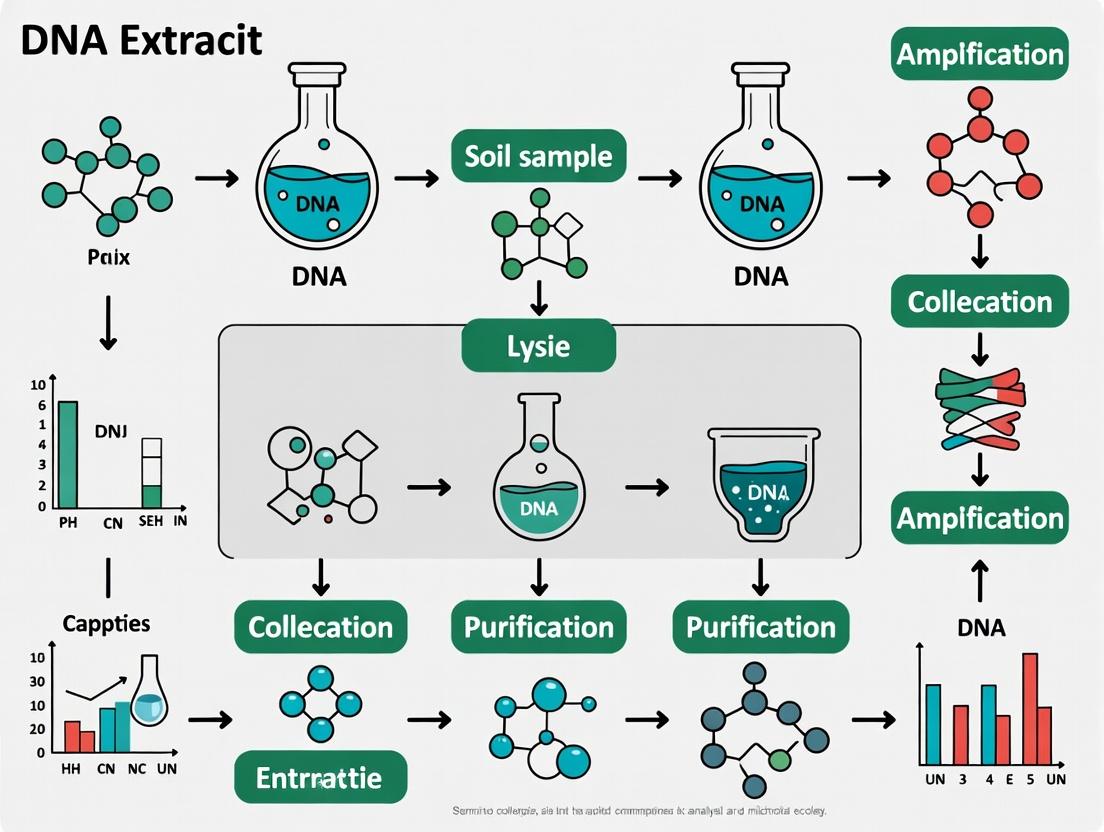
This comprehensive guide details advanced protocols for extracting and amplifying DNA from complex soil matrices, tailored for researchers, scientists, and drug discovery professionals.
Mastering Soil Metagenomics: Advanced DNA Extraction & Amplification Protocols for Microbial Analysis
Abstract
This comprehensive guide details advanced protocols for extracting and amplifying DNA from complex soil matrices, tailored for researchers, scientists, and drug discovery professionals. Covering foundational principles to cutting-edge methods, the article provides a step-by-step framework for overcoming soil-specific challenges like humic acid inhibition and low biomass. It compares commercial kits, explores optimization strategies for PCR and qPCR, and validates techniques through sequencing and bioinformatic pipelines. The content is designed to ensure high-quality, bias-minimized microbial DNA for applications in environmental monitoring, antibiotic discovery, and clinical biomarker research.
Unlocking the Soil Microbiome: Core Principles and Challenges in DNA Isolation
Introduction to Soil as a Complex Microbial Reservoir
Soil represents one of the most diverse and intricate microbial habitats on Earth, hosting an estimated 10^9 to 10^10 microbial cells per gram, encompassing bacteria, archaea, fungi, protozoa, and viruses. This immense diversity, with potentially millions of species per kilogram, forms a complex web of interactions crucial for global biogeochemical cycles, plant health, and is a frontier for novel bioactive compound discovery, including antibiotics and enzymes.
Table 1: Key Quantitative Metrics of Soil as a Microbial Reservoir
| Metric | Typical Range/Value | Notes |
|---|---|---|
| Microbial Abundance | 10^8 – 10^10 cells/gram of soil | Varies with soil type, moisture, and organic content. |
| Estimated Diversity | Up to 10^6 – 10^8 species/kg | Majority (>99%) are unculturable with standard methods. |
| Bacterial Dominance | ~70-90% of total biomass | Archaea can dominate in specific niches (e.g., anaerobic zones). |
| Fungal Biomass | Can equal bacterial biomass in forest soils | Key for decomposition and mycorrhizal symbioses. |
| DNA Yield (Typical Extraction) | 1 – 50 µg DNA per gram of soil | Highly dependent on extraction protocol and soil type. |
| Inhibitor Concentration | High (Humics, Fulvics, Polyphenols) | Major challenge for downstream molecular applications. |
Application Notes & Protocols
Within a thesis on DNA extraction and amplification for soil microbial analysis, the primary challenge is obtaining inhibitor-free, high-molecular-weight DNA that proportionally represents the indigenous community. The following protocols address key stages.
Protocol 1: Inhibitor-Aware Total Nucleic Acid Extraction (Modified Bead-Beating Phenol-Chloroform Method)
- Principle: Mechanical lysis via bead-beating combined with chemical lysis and inhibitor removal through sequential washes and organic separation.
- Materials:
- Lysis Buffer (pH 8.0): 100 mM Tris-HCl, 100 mM EDTA, 1.5 M NaCl, 1% CTAB, 2% SDS.
- Inhibitor Removal Solution: 120 mM Sodium Phosphate Buffer (pH 8.0).
- Beads: A mix of 0.1 mm zirconia/silica beads and 2-3 mm glass beads.
- Phenol:Chloroform:Isoamyl Alcohol (25:24:1).
- Isopropanol & 70% Ethanol for precipitation.
- DNA Elution Buffer: 10 mM Tris-HCl (pH 8.5) or nuclease-free water.
- Workflow:
- Homogenize 0.25 – 0.5 g of soil with inhibitor removal solution by vortexing. Centrifuge and discard supernatant to remove soluble humics.
- Resuspend pellet in Lysis Buffer. Add bead mix.
- Bead-beat at 6.0 m/s for 45 seconds. Chill on ice for 2 minutes. Repeat twice.
- Incubate at 70°C for 10 minutes. Centrifuge at 10,000 x g, 4°C, for 5 min.
- Transfer supernatant to a fresh tube. Add an equal volume of Phenol:Chloroform:IAA. Mix vigorously. Centrifuge at 12,000 x g for 10 min.
- Transfer aqueous phase. Precipitate DNA with 0.7 volumes isopropanol at -20°C for 1 hour.
- Pellet DNA (15,000 x g, 20 min). Wash with 70% ethanol. Air-dry and resuspend in elution buffer.
- Assess purity via A260/A230 (>2.0) and A260/A280 (~1.8) ratios.
Protocol 2: Purification and Targeted Amplification of 16S rRNA Gene
- Principle: Further purification of extracted DNA to remove residual inhibitors, followed by PCR amplification of the hypervariable V3-V4 region for bacterial community profiling.
- Materials:
- Commercial Clean-up Kit: e.g., Silica-membrane based columns.
- PCR Primers: 341F (5'-CCTAYGGGRBGCASCAG-3') and 806R (5'-GGACTACNNGGGTATCTAAT-3').
- High-Fidelity, Inhibitor-Tolerant DNA Polymerase.
- PCR Purification Kit (for amplicon cleanup).
- Workflow:
- Purify crude DNA extract using a commercial clean-up kit according to manufacturer's instructions. Elute in a small volume (e.g., 50 µL).
- Set up 25 µL PCR reaction: 1X Polymerase Buffer, 200 µM dNTPs, 0.2 µM each primer, 1-10 ng purified soil DNA, 1 U polymerase.
- Thermal Cycling: Initial denaturation 95°C/3 min; 25-30 cycles of [95°C/30s, 55°C/30s, 72°C/45s]; Final extension 72°C/5 min.
- Verify amplicon size (~460 bp) on a 1.5% agarose gel.
- Purify amplicons using a PCR purification kit. Quantify for sequencing library preparation.
The Scientist's Toolkit
Table 2: Essential Research Reagent Solutions for Soil DNA Analysis
| Item | Function & Rationale |
|---|---|
| CTAB (Cetyltrimethylammonium Bromide) | Ionic detergent effective for lysing cells and forming complexes with polysaccharides and humic acids to facilitate their removal. |
| Sodium Phosphate Buffer (pH 8.0) | Pre-wash solution that dissociates humic acids from soil particles, allowing for their physical removal prior to lysis. |
| Zirconia/Silica Beads (0.1 mm) | Provides abrasive mechanical force for efficient cell wall disruption of a wide range of microorganisms during bead-beating. |
| Polyvinylpolypyrrolidone (PVPP) | Added to lysis buffer to bind phenolic compounds, a major class of PCR inhibitors co-extracted from soil. |
| Inhibitor-Tolerant DNA Polymerase | Engineered polymerases resistant to common soil-derived inhibitors (humics, tannins), crucial for robust PCR amplification. |
| Size-Exclusion Spin Columns (e.g., Sephadex G-200) | Used for rapid post-extraction cleanup to separate high-MW DNA from lower-MW inhibitor molecules. |
Visualizations
Soil DNA Extraction & Amplification Workflow
Key Soil-Derived PCR Inhibitors & Effects
Application Notes
The analysis of soil microbial communities via DNA extraction and PCR amplification is foundational to environmental microbiology, biogeochemistry, and drug discovery from natural products. This thesis contends that robust, reproducible meta-genomic insights are contingent upon overcoming three interrelated technical hurdles: co-extraction of humic substances (HS), the presence of diverse PCR inhibitors, and extreme biomass variability across soil matrices. These challenges, if unmitigated, lead to biased microbial profiles, quantification errors, and failed amplification, compromising downstream analyses.
Humic Substances: These complex organic polymers are ubiquitous in soil and co-purify with nucleic acids. Their phenolic and carboxylic acid groups chelate magnesium ions, essential for Taq polymerase activity, and can directly interact with DNA. Their spectral properties (A230/A260 ratios) also interfere with nucleic acid quantification.
PCR Inhibitors: Beyond humics, soils contain a suite of inhibitory compounds including polysaccharides, melanins, heavy metals, and organic acids. Inhibition mechanisms include enzyme inactivation, nucleic acid degradation, or binding.
Biomass Variability: Microbial load can vary by >6 orders of magnitude across soil types (e.g., desert vs. rhizosphere). Standardized input masses (e.g., 0.25 g) can yield DNA concentrations from undetectable to >500 ng/µL, risking PCR inhibition from overloading or signal failure from underloading.
Quantitative data on the impact of these challenges and common mitigation strategies are summarized in Table 1.
Table 1: Quantitative Impact of Key Challenges and Mitigation Efficacy
| Challenge & Representative Compound | Typical Concentration in Soil Extract | Impact on PCR (Inhibition Threshold) | Common Mitigation Strategy & Efficacy (% PCR Recovery) |
|---|---|---|---|
| Humic Acids | 1-10 µg/µL in crude lysate | 0.1-1.0 µg/µL in PCR | Silica-column purification (85-95%) / Dilution (Variable) |
| Polyphenols (Tannic Acid) | Variable | 0.01-0.1 µg/µL in PCR | PVP/PVPP addition to lysis buffer (75-90%) |
| Polysaccharides | Variable | >1% (v/v) in PCR | Enhanced wash buffers (High Salt) (80-95%) |
| Heavy Metals (Fe³⁺) | Up to 100 mM in soil | >0.1 mM in PCR | Chelation (EDTA, 5-10 mM in lysis) (90-98%) |
| Biomass Variability | 10³ - 10⁹ cells/g soil | N/A (Causes inhibition or no template) | Normalization by [DNA] post-extraction or prior soil pooling |
Experimental Protocols
Protocol 1: Sequential Wash Silica-Column DNA Purification for Humic Substance Removal
Objective: To obtain PCR-amplifiable DNA from diverse soils by effectively removing humic contaminants.
Reagents: Lysis Buffer (100 mM Tris-HCl pH 8.0, 100 mM EDTA, 1.5 M NaCl, 2% CTAB, 2% PVP-40), Proteinase K (20 mg/mL), Binding Buffer (Commercial silica-binding buffer or 5 M guanidine thiocyanate, 20% ethanol), Wash Buffer 1 (5 mM Tris-HCl pH 7.5, 5 M guanidine HCl, 20% ethanol), Wash Buffer 2 (80% ethanol, 10 mM Tris-HCl pH 7.5), Elution Buffer (10 mM Tris-HCl pH 8.5).
Procedure:
- Lysis: Weigh 0.25 g of soil (fresh or frozen) into a 2 mL bead-beating tube. Add 750 µL of pre-warmed (60°C) Lysis Buffer and 50 µL Proteinase K. Homogenize by bead-beating at 6.0 m/s for 45 seconds.
- Incubation: Incubate at 60°C for 30 minutes with gentle inversion every 10 minutes.
- Centrifugation: Centrifuge at 16,000 x g for 5 minutes at room temperature (RT). Transfer supernatant to a new 2 mL tube.
- Binding: Add 1.2 volumes of Binding Buffer to the supernatant. Mix by vortexing. Load 650 µL onto a silica-membrane column. Centrifuge at 11,000 x g for 1 minute. Discard flow-through and repeat until all lysate is processed.
- Sequential Washing: a. Wash 1 (Denaturing Wash): Add 500 µL Wash Buffer 1. Centrifuge at 11,000 x g for 1 minute. Discard flow-through. b. Wash 2 (Ethanol Wash): Add 700 µL Wash Buffer 2. Centrifuge at 11,000 x g for 1 minute. Discard flow-through. Repeat this step once.
- Dry Membrane: Centrifuge empty column at 16,000 x g for 2 minutes to dry membrane.
- Elution: Place column in a clean 1.5 mL tube. Apply 50-100 µL of pre-heated (60°C) Elution Buffer to the center of the membrane. Incubate at RT for 2 minutes. Centrifuge at 11,000 x g for 1 minute. Store DNA at -20°C.
Protocol 2: Inhibitor-Tolerant PCR with Bovine Serum Albumin (BSA) and Betaine
Objective: To establish a robust 16S rRNA gene amplification protocol resilient to common soil-derived PCR inhibitors.
Reagents: Inhibitor-Tolerant PCR Master Mix (1X): 1X Polymerase Buffer, 200 µM each dNTP, 0.4 µM forward/reverse primer (e.g., 515F/806R), 2.5 U of hot-start DNA polymerase, 400 ng/µL Bovine Serum Albumin (BSA), 1 M Betaine, 2-10 ng template DNA, Nuclease-free water to 25 µL.
Procedure:
- Setup: Prepare master mix on ice, adding BSA and betaine last. Vortex gently and centrifuge briefly.
- Dispense: Aliquot 23 µL of master mix into each PCR tube.
- Template Addition: Add 2 µL of template DNA (or water for no-template control). Cap and centrifuge.
- Thermocycling:
- Initial Denaturation: 95°C for 5 min.
- 35 Cycles:
- Denature: 95°C for 30 sec.
- Anneal: 55°C for 45 sec.
- Extend: 72°C for 60 sec.
- Final Extension: 72°C for 7 min.
- Hold: 4°C.
- Verification: Analyze 5 µL of product by electrophoresis on a 1.5% agarose gel. Expected band: ~290 bp.
Diagrams
Title: Soil DNA Analysis Challenge & Solution Workflow
Title: PCR Inhibition Mechanisms from Soil Contaminants
The Scientist's Toolkit: Research Reagent Solutions
| Item | Function & Rationale |
|---|---|
| CTAB (Cetyltrimethylammonium Bromide) | A cationic detergent effective in lysing microbial cells and complexing polysaccharides and humics, precipitating them out of solution during initial lysis. |
| PVP (Polyvinylpyrrolidone) / PVPP | Binds polyphenols and tannins via hydrogen bonding, preventing their co-purification with DNA and subsequent inhibition of polymerase. |
| Guanidine Thiocyanate | A chaotropic salt that denatures proteins, inhibits nucleases, and promotes binding of nucleic acids to silica membranes in column-based purification. |
| Silica-Membrane Columns | Selective binding of DNA in the presence of high-salt chaotropic buffers, allowing sequential washes to remove salts, humics, and other contaminants. |
| Bovine Serum Albumin (BSA) | A "molecular sponge" that binds and neutralizes a wide range of PCR inhibitors (e.g., humics, polyphenols) in the reaction mix, freeing the polymerase. |
| Betaine | A chemical chaperone that reduces DNA secondary structure, improves primer annealing specificity, and can enhance polymerase stability in suboptimal conditions. |
| EDTA (Ethylenediaminetetraacetic acid) | A chelating agent added to lysis buffers to sequester divalent cations (Mg2+, Ca2+), inhibiting metalloproteases and nucleases that degrade DNA. |
| Skim Milk Powder | An inexpensive, crude source of proteins (including bovine serum albumin and casein) that can be used as an inhibitor-binding agent in rapid, low-cost extraction protocols. |
Within the broader thesis on optimizing DNA extraction and amplification protocols for soil microbial analysis, the pre-analytical phase is a critical determinant of success. Inaccurate characterization of microbial diversity, biomass, or functional genes is often attributable to bias introduced during sampling, homogenization, and storage rather than the molecular protocols themselves. This document outlines standardized Application Notes and Protocols to ensure soil metadata integrity and yield nucleic acids representative of the in situ microbial community for downstream drug discovery and ecological research.
Soil Sampling: Site Selection & Collection Protocol
Objective: To collect soil samples that minimize spatial heterogeneity bias and preserve the in-situ metabolic state of microbes.
Detailed Protocol:
- Site Reconnaissance: Map the sampling area using GPS. Define a sampling grid or transect. Avoid obvious anomalies (e.g., animal burrows, decaying roots).
- Equipment Sterilization: Clean all tools (augers, corers, spatulas) with 70% ethanol followed by a 10% bleach solution and a final rinse with DNA-free water between each sample to prevent cross-contamination.
- Collection Depth & Strategy: For general microbial community analysis, collect the 0-15 cm mineral soil horizon, excluding the organic litter layer. Use a sterile corer. For a composite sample, take a minimum of 5 sub-samples within a defined plot (e.g., 1m x 1m) and pool them.
- Initial Processing: Sieve soil immediately through a sterile 2.0 mm mesh to remove stones and macro-fauna. Mix sieved composite sub-samples thoroughly in a sterile bag. This constitutes one biological replicate.
- Sub-sampling for Storage: Rapidly subdivide the homogenized sample into aliquots for:
- Immediate DNA/RNA extraction (recommended).
- Chemical analysis (air-dry).
- Long-term biomolecular storage (see Section 4.0).
Table 1: Recommended Soil Sample Mass for Various Downstream Analyses
| Downstream Analysis | Recommended Minimum Wet Soil Mass | Primary Rationale |
|---|---|---|
| Total Genomic DNA Extraction (High Yield Kit) | 0.25 - 0.5 g | Balances yield with inhibitor co-extraction. |
| Metatranscriptomics (RNA) | 2 - 5 g | Captures low-abundance active community members. |
| Microbial Cultivation & Enrichment | 10 g | Provides sufficient inoculum diversity. |
| Soil Physico-Chemical Analysis (pH, N, C) | 50 - 100 g | Ensures analytical representativeness. |
Homogenization: Strategies for Representative Sub-Sampling
Objective: To achieve a homogeneous mixture from which small aliquots (e.g., 0.25g for DNA extraction) are truly representative of the entire collected sample.
Detailed Protocol: Method A: Cryogenic Mill Homogenization (Gold Standard for Molecular Work)
- Flash-Freeze: Submerge a soil aliquot (≤10g) in liquid nitrogen for 1 minute.
- Mill Preparation: Pre-chill grinding jars and balls in liquid nitrogen.
- Grinding: Transfer frozen soil to the jar and process in the mill for 2 minutes at 30 Hz. This pulverizes soil aggregates and microbial cells, enhancing nucleic acid yield and reproducibility.
- Post-Homogenization: Pour the fine, frozen powder into a sterile container kept on dry ice. Proceed to immediate extraction or storage at -80°C.
Method B: Manual Sieving & Cone-and-Quartering (For Non-Destructive/Physical Analysis)
- Sieving: Pass air-dried soil through a 2 mm sieve.
- Mixing: Pour sieved soil onto a sterile, inert surface. Mix by repeatedly lifting opposite corners of the material.
- Quartering: Flatten into a circle and divide into four quarters. Combine two opposite quarters, discard the others (or use for other assays). Repeat until desired sample size is obtained.
Diagram 1: Soil Pre-Processing Workflow for Molecular Analysis
Title: Workflow for Soil Sampling to Molecular Analysis
Storage: Preserving Microbial Community Integrity
Objective: To halt microbial activity and biomolecule degradation post-sampling.
Table 2: Soil Storage Conditions & Impact on Microbial Community Analysis
| Storage Method | Temperature | Maximum Recommended Duration | Key Effect on Microbial Community |
|---|---|---|---|
| Immediate Processing | N/A | 0 hours | Gold Standard. No storage bias. |
| Flash Freeze (LN₂) | -196°C | Indefinitely | Halts all activity. Optimal for RNA & labile biomarkers. |
| Freezing | -80°C | 6-12 months | Minimal community shift. Reliable for DNA. |
| Refrigeration | 4°C | 24-48 hours | Moderate changes in active community. |
| Air Drying | Room Temp | Long-term | Drastic shift; selects for spores/resistant cells. DNA yields drop. |
Detailed Protocol for -80°C Storage:
- Place homogenized soil aliquots (0.5-2 g) into sterile, labeled cryovials.
- Do not allow samples to thaw between processing and storage.
- Place vials directly into a -80°C freezer. Use freezer racks designed for long-term storage.
- For use, retrieve vials and immediately place on dry ice or a pre-chilled (-20°C) cold block. Perform extraction from a partially thawed state to minimize enzymatic activity.
The Scientist's Toolkit: Research Reagent & Material Solutions
Table 3: Essential Materials for Critical Soil Pre-Processing
| Item / Reagent Solution | Function & Rationale |
|---|---|
| Sterile, DNA-Free Disposable Soil Corers | Single-use to eliminate cross-contamination between sampling sites. |
| Liquid Nitrogen & Dewar | For instant cryopreservation of microbial biomass and cell lysis during cryomilling. |
| Cryogenic Mill (e.g., Spex Geno/Grinder) | Provides efficient, reproducible mechanical lysis of microbial cells and soil aggregates. |
| Sterile Polypropylene Sample Bags with Filter | Allows for sieving and homogenization in a contained, contaminant-free environment. |
| RNAlater or LifeGuard Soil Solution | Commercial preservatives that rapidly penetrate soil to stabilize RNA and DNA at field temperature for transport. |
| MoBio PowerSoil DNA/RNA Isolation Kits | Optimized buffers and spin columns to co-purify nucleic acids while removing humic acid and PCR inhibitors. |
| Zirconia/Silica Beads (0.1 mm & 0.5 mm mix) | Used in bead-beating lysis tubes for efficient mechanical disruption of diverse cell walls. |
| Inhibitor Removal Technology Columns (e.g., OneStep PCR Inhibitor Removal) | Additional clean-up step post-extraction to ensure amplification efficiency in downstream qPCR or sequencing. |
For research on soil microbial DNA extraction and amplification, effective cell lysis is the critical first step that dictates downstream success. The recalcitrant nature of many soil microbes (e.g., Gram-positive bacteria, spores, fungi) and the complex, inhibitor-rich soil matrix present a formidable challenge. The choice of lysis method directly impacts DNA yield, purity, fragment size, and, most importantly, the representational bias of the microbial community analysis. This application note provides a comparative analysis and detailed protocols for mechanical, chemical, and enzymatic disruption, framed within a thesis focused on obtaining high-integrity, amplification-ready DNA from diverse soil samples.
Comparative Analysis of Lysis Methods
The selection of a lysis method involves trade-offs between efficiency, bias, and practicality. The following table summarizes key performance metrics derived from recent studies.
Table 1: Quantitative Comparison of Lysis Approaches for Soil Microbial Analysis
| Parameter | Mechanical Disruption | Chemical Disruption | Enzymatic Disruption |
|---|---|---|---|
| Lysis Efficiency | Very High (>90% for most cells) | Moderate to High (Variable: ~40-80%) | Low to Moderate (Targeted: ~30-70%) |
| DNA Fragment Size | Short (5-20 kb typical; can be <5 kb with vigorous bead-beating) | Long (>50 kb possible) | Long (>50 kb) |
| Processing Time | Fast (1-10 minutes active lysis) | Moderate (30-120 minutes incubation) | Slow (1-3 hours to overnight) |
| Cost per Sample | Low to Moderate (equipment cost high) | Low | Moderate to High (enzyme cost) |
| Community Bias | Low (broad spectrum lysis) | High (favors easy-to-lyse cells) | Very High (highly specific to target) |
| Inhibitor Co-release | High (humic acids, metals, etc.) | Moderate to High | Low |
| Suitability for Viable Cells | No (destructive) | No (destructive) | Yes (can be gentle) |
| Automation Potential | High (batch processing) | High | Moderate |
Detailed Experimental Protocols
Protocol 1: Mechanical Disruption via Bead Beating (High-Efficiency, Broad-Spectrum Lysis) Application: Optimal for diverse soil types, especially for breaking tough cell walls (e.g., Gram-positives, spores). Used for total community DNA profiling. Workflow Diagram Title: Mechanical Bead-Beating Lysis Workflow
Protocol 2: Chemical Lysis with Detergent & Heating (Moderate-Efficiency, Simple) Application: Suitable for pre-treated or simple soils, favoring Gram-negative bacteria. Often combined with enzymatic steps. Workflow Diagram Title: Chemical Lysis with Heating Workflow
Protocol 3: Enzymatic Lysis with Lysozyme & Proteinase K (Targeted, Gentle Lysis) Application: Ideal for extracting high-molecular-weight DNA or for samples where preserving cell structures (e.g., viruses) is important. Often a pre-step to mechanical lysis. Workflow Diagram Title: Sequential Enzymatic Lysis Workflow
The Scientist's Toolkit: Research Reagent Solutions
Table 2: Essential Materials for Soil Microbial Lysis
| Item | Function in Lysis | Key Consideration |
|---|---|---|
| Zirconia/Silica Beads (0.1mm & 0.5mm mix) | Mechanical shearing of cell walls. Smaller beads increase lysis efficiency. | Can generate heat; use cooling intervals. |
| CTAB Buffer | Chemical detergent that disrupts membranes & complexes inhibitors (humics). | Essential for humic acid-rich soils. |
| SDS (Sodium Dodecyl Sulfate) | Ionic detergent that solubilizes lipid membranes and proteins. | Often used in combination with CTAB or enzymes. |
| Lysozyme | Enzyme that hydrolyzes peptidoglycan in bacterial cell walls. | Most effective on Gram-positive bacteria. |
| Proteinase K | Broad-spectrum serine protease degrades proteins and inactivates nucleases. | Requires SDS for full effectiveness; critical for purity. |
| Phenol:Chloroform:Isoamyl Alcohol | Organic solvent mixture for deproteinization and cleaning of lysate. | Removes lipids and proteins post-lysis. |
| Inhibitor Removal Technology (IRT) / SPRI Beads | Magnetic beads that selectively bind DNA while removing contaminants. | Integrated into many modern kits for post-lysis cleanup. |
| MO BIO (QIAGEN) PowerSoil Kit | Commercial kit integrating mechanical and chemical lysis with optimized buffers. | Industry standard for consistency and inhibitor removal. |
Within a thesis focused on optimizing DNA extraction and amplification for soil microbial analysis, selecting a one-size-fits-all protocol is a primary pitfall. Soil physicochemical properties—specifically pH, texture, and organic matter (OM) content—profoundly influence the efficiency of cell lysis, DNA yield, purity, and the subsequent inhibition of polymerase chain reaction (PCR). This application note provides a structured guide for researchers and drug development professionals to match their soil characteristics with validated methodologies, ensuring representative genetic profiles and reliable downstream analyses like amplicon sequencing or qPCR.
Quantitative Impact of Soil Properties on Nucleic Acid Recovery
The following table synthesizes data from recent studies (2022-2024) on the challenges posed by different soil matrices and the performance of common commercial kits.
Table 1: Influence of Soil Properties on DNA Extraction Efficiency and Downstream Success
| Soil Property | High-Risk Challenge | Typical Impact on DNA | Recommended Kit Class | Reported Yield Variance* |
|---|---|---|---|---|
| Low pH (<5.5) | Humic acid co-extraction, DNA adsorption to clays & oxides | Low yield, severe PCR inhibition (IC₅₀ < 5 ng/µL) | Kits with strong humic-acid removal (e.g., PVPP, CTAB-based) | 40-60% lower vs. neutral soils |
| High Clay (>35%) | Physical sequestration of cells/DNA, inefficient lysis | Moderate yield, variable purity, inhibition common | Bead-beating intensive, high-salt elution buffers | 50-70% lower vs. sandy soils |
| High OM (>10%) | Co-purification of humics, fulvics, polyphenols | High yield but very dark eluate, severe PCR inhibition | Silica-column + chemical flocculation (e.g., Ca²⁺) | Yield high, but inhibition up to 100x PCR delay |
| Sandy, Low OM | Low biomass, DNA adsorption to silica particles | Very low yield, generally inhibitor-free | Kits optimized for low biomass, carrier RNA inclusion | Yield low, but purity (A₂₆₀/A₂₈₀) often >1.8 |
*Yield variance is normalized against optimal soil (pH ~7, loam, OM 3-5%) using the same kit.
Detailed Experimental Protocols
Protocol 2.1: Pre-Extraction Soil Characterization for Protocol Selection
- Objective: To rapidly determine key properties guiding extraction protocol choice.
- Materials: Air-dried soil, pH meter, 1M KCl solution, sieve (2mm), crucible, muffle furnace.
- Method:
- pH Measurement: Suspend 10g soil in 25mL 1M KCl (1:2.5). Shake for 1 hour. Calibrate pH meter and measure supernatant.
- Texture Estimate: Hydrate 50g soil. Manipulate to assess ribbon formation and grittiness per the USDA textural flow chart.
- Organic Matter (Loss-on-Ignition): Weigh 5g of sieved, oven-dried soil (W₁) in a pre-weighed crucible. Heat at 105°C for 2hrs, cool in desiccator, re-weigh (W₂). Ignite at 550°C for 4hrs, cool, re-weigh (W₃). OM % = [(W₂ - W₃) / (W₂)] * 100.
Protocol 2.2: Tiered DNA Extraction for Complex, High-OM/Clay Soils
- Objective: Maximize yield and purity from inhibitor-rich soils.
- Basis: Modified cetyltrimethylammonium bromide (CTAB)-Silica Column Hybrid.
- Reagents: CTAB buffer (pH 8.0), Proteinase K, Lysozyme, SDS, PVPP, chloroform-isoamyl alcohol (24:1), isopropanol, 70% ethanol, silica-membrane spin columns, TE buffer.
- Detailed Workflow:
- Weigh 0.5g soil into a lysing matrix tube. Add 50mg PVPP.
- Add 800µL pre-warmed CTAB buffer and 50µL Proteinase K (20mg/mL). Vortex thoroughly.
- Horizontal bead-beat at 6.5 m/s for 45 seconds. Incubate at 65°C for 30 min, vortexing every 10 min.
- Centrifuge at 12,000 x g for 5 min. Transfer supernatant to a new tube.
- Add 1 volume chloroform-isoamyl alcohol. Mix vigorously. Centrifuge at 12,000 x g for 10 min.
- Transfer aqueous top layer. Add 0.7 volumes room-temperature isopropanol. Mix and incubate at -20°C for 30 min.
- Centrifuge at 15,000 x g for 15 min to pellet crude nucleic acids. Decant supernatant.
- Wash pellet with 500µL 70% ethanol. Air-dry for 5-10 min.
- Critical Inhibitor Removal Step: Re-dissolve pellet in 200µL TE buffer. Load onto a silica-column from a commercial soil kit (e.g., DNeasy PowerSoil Pro, NucleoSpin Soil). Follow manufacturer’s wash steps precisely. Elute in 50-100µL EB buffer.
Protocol 2.3: Inhibition Testing & Dilution Series PCR
- Objective: Quantify PCR inhibition and determine optimal DNA template dilution.
- Method:
- Perform qPCR on all extracts using a universal 16S rRNA gene assay (e.g., 338F/518R) or a species-specific assay if applicable.
- Include a standardized, inhibitor-free genomic DNA control (e.g., from E. coli).
- Spike a known copy number of the control DNA (e.g., 10⁴ copies) into each soil DNA sample and run the qPCR assay again.
- Calculate inhibition: % Inhibition = [1 - (Copiesₛₚᵢₖₑd / Copiesᵤₙₛₚᵢₖₑd + Control)] * 100.
- Run a dilution series (1:1, 1:5, 1:10, 1:50) of inhibited samples in standard PCR. The highest dilution yielding a strong amplicon on a gel is optimal for library prep.
Visualized Decision Workflow
Title: Soil DNA Extraction Protocol Selection Workflow
The Scientist's Toolkit: Key Research Reagent Solutions
| Reagent / Material | Function in Protocol | Primary Soil Challenge Addressed |
|---|---|---|
| Polyvinylpolypyrrolidone (PVPP) | Binds polyphenols and humic acids during lysis, preventing co-extraction. | High Organic Matter, Low pH (Humics) |
| CTAB Buffer | Cationic detergent that complexes with polysaccharides & humics, reducing their solubility in aqueous phase. | High Clay, High OM |
| Silica-Membrane Spin Columns | Selective binding of DNA in high-salt conditions, washing away inhibitors. | Universal, but critical for final polish. |
| Carrier RNA (e.g., Poly-A) | Co-precipitates with trace DNA, dramatically improving recovery from low-biomass samples. | Sandy, Low OM, Low Biomass |
| Skim Milk Powder | Acts as a competitive binder for inhibitory organic compounds, freeing DNA. | Diverse Inhibition (Low-cost alternative) |
| PCR Inhibitor Removal Resins (e.g., in OneStep PCR Inhibitor Removal Kit) | Post-extraction treatment to bind residual humic/fulvic acids. | Persistent Inhibition post-column. |
| Phusion or AccuPrime HF DNA Polymerases | Engineered polymerases with high inhibitor tolerance. | Downstream Amplification of difficult extracts. |
| Internal Amplification Control (IAC) DNA | Spiked into PCR to distinguish true target absence from inhibition. | Universal QC for amplification. |
Step-by-Step Protocols: From Soil to Amplifiable DNA
1. Introduction Within the broader thesis on standardizing DNA extraction for soil microbial analysis, this protocol addresses the persistent challenge of co-extracting humic acids and other PCR-inhibitory substances from diverse soil matrices. While newer commercial kits offer convenience, the classic phenol-chloroform method, when optimized, provides superior yield and purity for difficult soils (e.g., clay-rich, organic, or high-carbonate soils). These application notes detail a high-yield, phase-separation-based protocol designed for maximum inhibitor removal and subsequent compatibility with downstream quantitative PCR and metagenomic sequencing.
2. Research Reagent Solutions & Essential Materials Table 1: Key Reagents and Their Functions in Soil DNA Extraction
| Reagent/Material | Function & Rationale |
|---|---|
| Hexadecyltrimethylammonium bromide (CTAB) Buffer | A cationic detergent that complexes polysaccharides and humic acids, disrupting cell membranes and preventing inhibitor co-precipitation. |
| Proteinase K | A broad-spectrum serine protease that digests proteins and degrades nucleases, crucial for breaking down complex soil organic matter. |
| Lysozyme | Targets and hydrolyzes peptidoglycan in bacterial cell walls, enhancing lysis efficiency for Gram-positive bacteria. |
| Phenol:Chloroform:Isoamyl Alcohol (25:24:1) | Phenol denatures proteins, chloroform removes lipids and facilitates phase separation, isoamyl alcohol prevents foaming. The organic phase partitions inhibitors away from the aqueous DNA-containing phase. |
| Chloroform:Isoamyl Alcohol (24:1) | Used for a second, cleaner extraction to remove residual phenol. |
| Isopropanol | Precipitates nucleic acids from the aqueous phase in the presence of high salt concentration. |
| Sodium Chloride (NaCl) Solution (5M) | Provides a high-salt environment to reduce polysaccharide co-precipitation and improve DNA pelleting. |
| TE Buffer (pH 8.0) | Stabilizes extracted DNA for long-term storage; EDTA chelates Mg²⁺ to inhibit DNases. |
3. Quantitative Performance Metrics Table 2: Typical Yield and Purity Ranges from Diverse Soil Types Using This Protocol
| Soil Type | Expected DNA Yield (µg/g soil) | 260/280 Purity Ratio | 260/230 Purity Ratio | Key Inhibitor Challenge |
|---|---|---|---|---|
| Forest (High Humic) | 2 - 8 | 1.7 - 1.9 | 1.8 - 2.2 | Humic/Fulvic Acids |
| Agricultural (Loam) | 5 - 15 | 1.8 - 2.0 | 2.0 - 2.4 | Moderate Humics |
| Clay/Silt | 1 - 6 | 1.6 - 1.9 | 1.5 - 2.0 | Polysaccharides, Clays |
| Calcareous/Sand | 0.5 - 5 | 1.8 - 2.0 | 1.9 - 2.3 | Low Biomass, Carbonates |
| Peat/Marsh | 8 - 25 | 1.6 - 1.8 | 1.4 - 1.9 | Extremely High Humics |
4. Detailed Experimental Protocol
4.1 Sample Preparation & Cell Lysis
- Homogenize 0.25 - 0.5 g of fresh or frozen soil with a sterile mortar and pestle under liquid nitrogen.
- Transfer powder to a 2 mL screw-cap tube containing 0.5 g of sterile zirconia/silica beads (0.1 mm).
- Add 750 µL of pre-warmed (60°C) CTAB Lysis Buffer (100 mM Tris-HCl pH 8.0, 1.4 M NaCl, 20 mM EDTA, 2% CTAB, 1% PVP-40).
- Add 75 µL of Proteinase K (20 mg/mL) and 50 µL of Lysozyme (50 mg/mL).
- Secure caps and lyse cells using a bead-beater for 45 seconds at 6.0 m/s. Place samples on ice for 2 minutes. Repeat beating twice.
- Incubate the slurry horizontally at 56°C for 1 hour with gentle agitation (200 rpm).
4.2 Inhibitor Removal & Phase Separation
- Centrifuge tubes at 16,000 x g, 4°C, for 10 minutes. Transfer the supernatant to a new 2 mL tube.
- Add an equal volume of Phenol:Chloroform:Isoamyl Alcohol (25:24:1). Vortex vigorously for 20 seconds.
- Centrifuge at 16,000 x g, 4°C, for 10 minutes. Carefully transfer the upper aqueous phase to a new 1.5 mL tube.
- Add an equal volume of Chloroform:Isoamyl Alcohol (24:1). Vortex for 20 seconds.
- Centrifuge at 16,000 x g, 4°C, for 5 minutes. Transfer the aqueous phase to a new 1.5 mL tube.
4.3 DNA Precipitation & Purification
- Add 0.7 volumes of room-temperature isopropanol and 0.1 volumes of 5M NaCl. Mix by gentle inversion.
- Incubate at -20°C for 1 hour or overnight for maximum yield.
- Pellet DNA by centrifugation at 16,000 x g, 4°C, for 20 minutes.
- Decant supernatant and wash pellet with 500 µL of ice-cold 70% ethanol. Centrifuge at 16,000 x g for 5 minutes.
- Carefully aspirate ethanol and air-dry the pellet for 10-15 minutes (do not over-dry).
- Resuspend DNA in 50-100 µL of TE Buffer (pH 8.0). Incubate at 4°C overnight or at 37°C for 1 hour with gentle agitation.
- Quantify DNA using a fluorometric assay (e.g., Qubit). Assess purity via spectrophotometry (260/280, 260/230 ratios).
5. Workflow and Pathway Visualizations
High-Yield Soil DNA Extraction Workflow
CTAB & Phenol Inhibitor Removal Mechanism
This protocol details a high-throughput, silica-membrane-based method for the purification of genomic DNA from soil samples. Framed within a thesis on optimizing DNA extraction and amplification for soil microbial analysis, this approach is critical for downstream applications such as 16S rRNA gene sequencing, qPCR, and metagenomics. The protocol emphasizes scalability, reproducibility, and the removal of potent PCR inhibitors commonly found in soil humic and fulvic acids.
Principle of Silica-Membrane Binding
Nucleic acids bind to silica surfaces in the presence of high concentrations of chaotropic salts (e.g., guanidine hydrochloride). These salts disrupt the hydrogen-bonded network of water, allowing the negatively charged phosphate backbone of DNA to interact directly with the positively charged silica matrix. Once bound, contaminants are removed via ethanol-based wash steps. DNA is eluted in a low-salt buffer or nuclease-free water, which disrupts the chaotropic salt-mediated binding.
Detailed Protocol: High-Throughput Workflow
Pre-requisite: Soil samples should be pre-processed via a lysis step (e.g., bead-beating in a lysis buffer containing CTAB and/or SDS) to mechanically and chemically disrupt cells.
Materials & Equipment
- Sample: 250 µL of crude soil lysate supernatant.
- Kit: Commercial silica-membrane 96-well plate kit (e.g., QIAGEN DNeasy 96 PowerSoil Pro Kit, Thermo Scientific KingFisher 96 Soil DNA Kit).
- Equipment: Microcentrifuge with a 96-well plate rotor or a magnetic bead-based automated system (e.g., KingFisher, epMotion). Vacuum manifold (optional). 96-well sealing mats and collection plates.
- Reagents: Ethanol (96-100%), prepared wash buffers (as per kit).
Step-by-Step Procedure
Step 1: Binding Condition Adjustment
- Transfer 250 µL of clarified soil lysate to a deep-well plate.
- Add an equal volume (250 µL) of binding buffer containing chaotropic salt. Mix thoroughly by pipetting.
Step 2: Plate Loading & Filtration
- Apply the entire mixture (500 µL) to the wells of the silica-membrane plate seated on a vacuum manifold or a clean collection plate.
- Apply vacuum (approx. 20-25 in. Hg) or centrifugation (4000-6000 x g, 5 min) until all liquid passes through. Discard flow-through.
Step 3: Wash Steps (Critical for Inhibitor Removal)
- Wash 1: Add 500 µL of wash buffer 1 (often contains guanidine salts). Apply vacuum/centrifugation until dry.
- Wash 2: Add 800 µL of wash buffer 2 (often an ethanol-based buffer). Apply vacuum/centrifugation until dry.
- Optional Dry Spin: Centrifuge plate at maximum speed for 5 minutes to ensure complete ethanol removal.
Step 4: Elution
- Place the membrane plate on a clean, labeled 96-well elution plate.
- Apply 50-100 µL of pre-warmed (55°C) elution buffer or nuclease-free water to the center of each membrane.
- Incubate at room temperature for 2-5 minutes.
- Centrifuge at 6000 x g for 5 minutes to elute DNA.
- Store eluted DNA at -20°C.
Data Presentation: Performance Metrics
Table 1: Comparison of Silica-Membrane Kit Performance from Recent Studies (2023-2024)
| Kit/Platform | Average DNA Yield (ng/g soil) | A260/A280 Purity | A260/A230 Purity | % Inhibition in downstream qPCR (vs. pure DNA) | Max Samples per Run | Processing Time (manual) |
|---|---|---|---|---|---|---|
| Kit A (Manual Vacuum) | 15.2 ± 3.5 | 1.82 ± 0.05 | 2.10 ± 0.15 | 12% | 96 | ~2.5 hours |
| Kit B (Automated Magnet) | 18.5 ± 4.1 | 1.85 ± 0.03 | 2.25 ± 0.10 | <5% | 96 | ~1.5 hours (hands-on) |
| Kit C (Manual Spin) | 12.8 ± 5.0 | 1.78 ± 0.08 | 1.95 ± 0.20 | 25% | 24 | ~3 hours |
Table 2: Impact of Protocol Modifications on Yield and Purity
| Modification | Effect on Yield | Effect on A260/A280 | Effect on A260/A230 | Recommended Soil Type |
|---|---|---|---|---|
| Pre-lysis with heat (65°C, 10 min) | ++ | Neutral | - | High clay content |
| Post-elution carrier RNA (1 µg/mL) | Neutral | Neutral | Neutral | Low biomass |
| Double elution (2 x 50 µL) | +30% | Slight decrease | Slight decrease | All |
| Extended wash buffer incubation | - | ++ | ++ | High organic matter |
Experimental Protocol: Validation via qPCR
Objective: To validate the effectiveness of inhibitor removal from extracted DNA.
Method:
- Dilution Series: Prepare a 1:10 serial dilution of the extracted soil DNA in nuclease-free water.
- Spike-in Control: Use a known quantity of a synthetic DNA fragment (e.g., 10^6 copies of a plasmid not found in soil) added to each dilution.
- qPCR Setup: Perform qPCR targeting the spike-in fragment. Use a master mix resistant to common inhibitors.
- Analysis: Compare the Cq values of the spike-in control across dilutions. A significant delay in Cq only at low dilution indicates residual inhibition.
The Scientist's Toolkit: Research Reagent Solutions
| Item (Supplier Example) | Function & Rationale |
|---|---|
| Chaotropic Binding Buffer (Kit) | Contains guanidine salts; enables DNA adsorption to silica membrane by dehydrating molecules. |
| Inhibitor Removal Wash Buffer (Kit) | Often contains salt/ethanol; removes humic acids, phenolics, and other contaminants. |
| Bead-Beating Tubes (e.g., Garnet) | Mechanically disrupts robust microbial cell walls (e.g., Gram-positives, spores). |
| Carrier RNA (e.g., polyA) | Improves recovery of low-concentration DNA by providing binding substrate during precipitation. |
| PCR Inhibition Resistant Polymerase | Essential for direct amplification of soil extracts; contains enhancers to tolerate inhibitors. |
| Pre-Lysis Buffer (e.g., CTAB, EDTA) | Chelates metals, complexes polysaccharides and humics prior to binding step. |
Visualized Workflows
This application note is a core component of a broader thesis on standardized protocols for soil microbial analysis, bridging DNA extraction and downstream bioinformatic interpretation. Effective targeted amplicon sequencing hinges on the critical step of primer selection, which dictates taxonomic resolution, bias, and the accurate profiling of microbial communities and functional potential in complex soil matrices.
Primer Selection Guidelines and Quantitative Comparison
Selection criteria must balance specificity, coverage, and amplicon length suitable for sequencing platforms. The following tables summarize current consensus primer sets.
Table 1: Prokaryotic 16S rRNA Gene Primers
| Target Region | Primer Pair Name (Forward / Reverse) | Sequence (5' -> 3') | Amplicon Length (bp) | Key Characteristics & Considerations |
|---|---|---|---|---|
| V3-V4 | 341F / 806R | CCTAYGGGRBGCASCAG / GGACTACNVGGGTWTCTAAT | ~465 | Broad bacterial & archaeal coverage; standard for Illumina MiSeq. |
| V4 | 515F / 806R | GTGYCAGCMGCCGCGGTAA / GGACTACNVGGGTWTCTAAT | ~292 | Shorter length; good for degraded DNA; may miss some taxa. |
| V4-V5 | 515F / 926R | GTGYCAGCMGCCGCGGTAA / CCGYCAATTYMTTTRAGTTT | ~410 | Increased phylogenetic resolution over V4 alone. |
| Full-length (V1-V9) | 27F / 1492R | AGAGTTTGATCMTGGCTCAG / TACGGYTACCTTGTTACGACTT | ~1500 | Used for reference sequencing; not typical for short-read profiling. |
Table 2: Fungal ITS Region Primers
| Target Region | Primer Pair Name (Forward / Reverse) | Sequence (5' -> 3') | Amplicon Length (bp) | Key Characteristics & Considerations |
|---|---|---|---|---|
| ITS1 | ITS1F / ITS2 | CTTGGTCATTTAGAGGAAGTAA / GCTGCGTTCTTCATCGATGC | Variable (~200-400) | Fungal-specific; minimizes plant/glomalin co-amplification. |
| ITS2 | ITS3 / ITS4 | GCATCGATGAAGAACGCAGC / TCCTCCGCTTATTGATATGC | Variable (~200-500) | Often shorter than ITS1; preferred for high-GC fungi. |
| ITS1-5.8S-ITS2 (Partial) | ITS5 / ITS4 | GGAAGTAAAAGTCGTAACAAGG / TCCTCCGCTTATTGATATGC | Variable (~400-800) | Broader fungal spectrum; includes some non-fungal eukaryotes. |
Table 3: Key Functional Gene Primers for N-Cycle Analysis
| Functional Gene | Primer Pair Name | Sequence (5' -> 3') | Amplicon Length (bp) | Target Process & Organisms |
|---|---|---|---|---|
| nifH (Nitrogen fixation) | PolF / PolR | TGCGAYCCSAARGCBGACTC / ATSGCCATCATYTCRCCGGA | ~360 | Encodes dinitrogenase reductase; targets diazotrophs. |
| amoA (Ammonia oxidation) | amoA-1F / amoA-2R | GGGGTTTCTACTGGTGGT / CCCCTCKGAAAAGCCTTCTTC | ~491 | Encodes ammonia monooxygenase subunit A; targets AOA & AOB. |
| nirK (Denitrification) | nirK-876F / nirK-1040R | ATYGGCGGVCAYGGCGA / GCCTCGATCAGRTTRTGGTT | ~165 | Encodes copper-containing nitrite reductase. |
| nosZ (Denitrification) | nosZ-2F / nosZ-2R | CGCRACGGCAASAAGGTSMSSGT / CAKRTGCAKSGCRTGGCAGAA | ~267 | Encodes nitrous oxide reductase; targets N2O reducers. |
Detailed Experimental Protocol: 16S/ITS Amplicon Library Preparation
A. Primary PCR Amplification
- Reaction Mix (25µL):
- 2x HiFi Master Mix: 12.5 µL
- Forward Primer (10µM): 0.5 µL
- Reverse Primer (10µM): 0.5 µL
- Template DNA (1-10 ng/µL from soil extraction): 2 µL
- PCR-grade H2O: 9.5 µL
- Thermocycling Conditions:
- Initial Denaturation: 95°C for 3 min.
- 30 Cycles:
- Denature: 95°C for 30 sec.
- Anneal: 55°C (16S) / 52°C (ITS) for 30 sec.
- Extend: 72°C for 30 sec/kb.
- Final Extension: 72°C for 5 min.
- Hold: 4°C.
B. PCR Product Clean-up
- Add 1x volume of solid-phase reversible immobilization (SPRI) beads to the PCR product.
- Incubate for 5 min at room temperature.
- Place on a magnet stand until the supernatant is clear. Discard supernatant.
- Wash beads twice with 80% ethanol while on the magnet.
- Air dry beads for 5 min.
- Elute DNA in 20-30 µL of Tris-HCl buffer (10 mM, pH 8.5).
C. Indexing PCR & Library Pooling
- Perform a second, limited-cycle (8 cycles) PCR to attach full Illumina adapter indices using a commercial indexing kit.
- Clean up indexed PCR products as in Step B.
- Quantify each library using a fluorometric method (e.g., Qubit).
- Pool libraries in equimolar ratios.
- Validate library size distribution using a capillary electrophoresis system (e.g., Bioanalyzer).
Workflow Visualization
Diagram: Primer Selection to Amplicon Sequencing
The Scientist's Toolkit: Research Reagent Solutions
| Item | Function & Rationale |
|---|---|
| High-Fidelity DNA Polymerase Master Mix | Provides high-fidelity amplification crucial for reducing PCR errors before sequencing. Contains optimized buffer for complex templates. |
| Validated Primer Aliquots | Lyophilized or high-stability liquid primers, pre-diluted to working concentration to ensure consistency across experiments. |
| Solid-Phase Reversible Immobilization (SPRI) Beads | Enable rapid, size-selective purification and concentration of PCR products without columns. Essential for library clean-up. |
| Dual-Indexed Sequencing Adapter Kit | Allows multiplexing of hundreds of samples by attaching unique barcode combinations during the indexing PCR. |
| Fluorometric dsDNA Assay Kit | Accurate quantification of DNA libraries for equimolar pooling, superior to absorbance methods for low-concentration samples. |
| High-Sensitivity Nucleic Acid Analysis Kit | Capillary electrophoresis-based quality control to verify amplicon library size and absence of primer dimer. |
| Mock Microbial Community DNA | A defined genomic mixture of known organisms. Serves as a positive control and for identifying technical bias in primer sets. |
| PCR Inhibitor Removal Beads | Specifically formulated to co-precipitate humic acids and other common soil-derived PCR inhibitors during clean-up. |
Application Notes
Within the context of a thesis on soil microbial analysis, robust and reproducible PCR is critical following DNA extraction. Soil-derived DNA presents unique challenges: low template concentration, co-extracted enzymatic inhibitors (e.g., humic acids, polyphenols, heavy metals), and high complexity. These factors necessitate precise optimization of thermal cycling parameters, polymerase selection, and reaction additives to ensure specific and efficient amplification of target microbial genes (e.g., 16S rRNA, fungal ITS, functional genes).
Core Optimization Parameters: A Summary
Table 1: Quantitative Optimization Parameters for Soil-Derived DNA PCR
| Parameter | Typical Range for Soil DNA | Rationale & Notes |
|---|---|---|
| Cycle Number | 30 - 40 cycles | Higher cycles (35-40) compensate for low template/ inhibition. Risk: increased chimera formation, primer-dimer artifacts. |
| Polymerase Type | Inhibitor-resistant Taq, Proofreading mixes (e.g., Phusion, Q5) | Standard Taq often fails. Inhibitor-resistant blends contain BSA or specialized enzymes. Proofreading polymerases offer fidelity for sequencing. |
| BSA (Additive) | 0.1 - 0.4 µg/µL (final) | Binds inhibitors, stabilizes enzymes. Critical for humic acid-rich samples. |
| DMSO (Additive) | 1 - 5% (v/v) (final) | Reduces secondary structure in GC-rich templates and amplicons. Can inhibit some polymerases at >5%. |
| MgCl₂ Concentration | 1.5 - 3.5 mM (final) | Often increased from standard 1.5 mM to enhance polymerase processivity and counteract chelation by soil inhibitors. |
| Template Volume | 0.5 - 2 µL (of 1:10 diluted extract) | Minimizes inhibitor carryover. Dilution of extract is a primary strategy to dilute PCR inhibitors. |
| Annealing Temperature | Gradient recommended; often 50-60°C | Must be optimized for each primer set. Higher temperatures improve specificity with complex templates. |
Table 2: Comparison of Polymerase Systems for Soil DNA Amplicon Sequencing
| Polymerase System | Key Features | Optimal Use Case | Common Additives |
|---|---|---|---|
| Standard Taq | Low cost, low fidelity. | Not recommended for inhibitory soil extracts. | Often ineffective with inhibitors. |
| Inhibitor-Resistant Taq (e.g., Taq Environ) | Formulated with inhibitor-binding proteins. | Routine amplification from diverse soils for cloning/checking. | May not require BSA. |
| High-Fidelity Mix (e.g., Phusion, Q5) | High fidelity, high processivity. | Essential for metabarcoding/pre-amplification for NGS. | Often requires BSA (if not included). DMSO for GC-rich targets. |
| Hot Start Polymerase | Reduces primer-dimer formation. | Improves specificity in all complex sample PCRs. | Compatible with all common additives. |
Experimental Protocols
Protocol 1: Standardized Gradient PCR for Annealing & Additive Optimization
This protocol systematically tests annealing temperatures and additive combinations.
- Prepare Master Mix (for one 25 µL reaction):
- 12.5 µL: 2X Inhibitor-Resistant PCR Master Mix (contains Taq, dNTPs, MgCl₂ at ~2 mM).
- 0.5 µL: Forward Primer (10 µM).
- 0.5 µL: Reverse Primer (10 µM).
- Variable: Additive Stock (see step 2).
- Nuclease-free H₂O to 22.5 µL.
- Prepare Additive Conditions (in separate master mixes):
- Condition A: No additive.
- Condition B: Add BSA to final 0.2 µg/µL (add 0.5 µL of 10 mg/mL BSA stock per reaction).
- Condition C: Add DMSO to final 3% v/v (add 0.75 µL DMSO per reaction).
- Condition D: Add both BSA (0.2 µg/µL final) and DMSO (3% final).
- Aliquot:
- Dispense 22.5 µL of each master mix (A-D) into PCR tubes.
- Add 2.5 µL of template DNA (1:10 dilution of soil DNA extract). Include a no-template control (NTC) for each condition.
- Thermal Cycling (Gradient Block):
- Initial Denaturation: 95°C for 5 min.
- 35 Cycles of:
- Denaturation: 95°C for 30 sec.
- Annealing: Gradient from 50°C to 60°C for 30 sec.
- Extension: 72°C for 60 sec/kb.
- Final Extension: 72°C for 7 min.
- Hold: 4°C.
- Analysis:
- Run 5 µL of each product on a 1.5% agarose gel.
- Optimal condition yields a single, bright band of expected size in sample lanes, with clear NTCs.
Protocol 2: Cycle Number Titration for Low-Biomass Soil DNA
Determines the minimum cycles required for detectable amplicon yield, minimizing artifacts.
- Prepare master mix from Protocol 1, using the optimal additive condition identified.
- Aliquot identical 22.5 µL volumes across a strip of 8 PCR tubes.
- Add 2.5 µL of template to each tube.
- Thermal Cycling (without gradient):
- Initial Denaturation: 95°C for 5 min.
- Cycles: Program separate blocks for 25, 28, 31, 34, 37, 40, 45, and 50 cycles. The denaturation/annealing/extension times remain constant as in Protocol 1.
- Final Extension: 72°C for 7 min.
- Analysis:
- Analyze all products alongside a ladder on an agarose gel.
- Identify the cycle number where product yield first becomes clearly visible. Use 2-3 cycles above this threshold for routine work.
Visualizations
Title: Soil DNA PCR Optimization Decision Workflow
Title: Soil PCR Inhibition and Additive Counteractions
The Scientist's Toolkit: Research Reagent Solutions
Table 3: Essential Materials for Soil DNA PCR Optimization
| Reagent/Material | Function & Rationale |
|---|---|
| Inhibitor-Resistant Taq Polymerase (e.g., Taq Environ, Biotaq) | Engineered or formulated to remain active despite common soil-derived PCR inhibitors. Primary solution for robust amplification. |
| High-Fidelity PCR Mix (e.g., Phusion, Q5) | Provides high accuracy for amplicon sequencing. Many are also highly processive and resistant to inhibitors. |
| Molecular Grade BSA (Bovine Serum Albumin) | Acts as a competitive inhibitor binder, soaking up humic acids and protecting the polymerase. Often critical for success. |
| DMSO (Dimethyl Sulfoxide) | Reduces secondary structure formation in DNA, improving primer annealing and polymerase progression, especially for high-GC targets. |
| PCR Grade MgCl₂ Solution | Cofactor for Taq polymerase. Concentration often needs adjustment to optimize yield and specificity with soil DNA. |
| Gradient Thermal Cycler | Allows empirical determination of the optimal primer annealing temperature in a single run, saving time and reagents. |
| High-Sensitivity DNA Gel Stain (e.g., GelRed, SYBR Safe) | Enables visualization of low-yield amplicons from difficult samples on agarose gels. |
Within the broader thesis on optimizing DNA extraction and amplification for soil microbial analysis, library preparation is the critical bridge between purified nucleic acids and actionable sequencing data. The choice of platform—short-read (Illumina) or long-read (Nanopore, PacBio)—dictates the library construction protocol, impacting resolution for community profiling, metagenome-assembled genomes (MAGs), and functional gene annotation. This note details current methodologies.
Platform-Specific Library Preparation Protocols
Illumina (Short-Read) Sequencing
Core Principle: Fragmentation followed by adapter ligation and PCR amplification for clonal clusters.
Detailed Protocol for Metagenomic DNA:
- DNA QC: Assess 100 ng – 1 µg of soil-extracted DNA using fluorometry (e.g., Qubit). Verify fragment size (>500 bp) via gel electrophoresis or TapeStation.
- Enzymatic Fragmentation & End-Repair: Use a kit such as Illumina Nextera XT or NEBNext Ultra II FS.
- Combine DNA, Fragmentase Buffer, and Fragmentase Enzyme. Incubate at 37°C for 5-15 minutes (optimize for ~550 bp fragments). Heat inactivate at 65°C for 30 min.
- Perform end-repair/A-tailing: Add End Repair Mix, incubate at 20°C for 30 min, then 65°C for 30 min.
- Adapter Ligation: Dilute unique dual-index (UDI) adapters. Combine end-repaired DNA, Ligation Master Mix, and adapters. Incubate at 20°C for 15 min. Clean up with magnetic beads (e.g., SPRIselect).
- Library Amplification & Clean-up: Perform PCR (98°C for 30s; 8-12 cycles of 98°C for 10s, 60°C for 30s, 72°C for 30s; final extension 72°C for 5 min). Perform a final bead-based size selection (0.8x ratio to retain >300 bp fragments).
- QC & Normalization: Quantify library via qPCR (e.g., Kapa Library Quant Kit). Pool equimolar amounts for sequencing.
Nanopore (Long-Read) Sequencing
Core Principle: Ligation of a motor protein-adapter complex to native DNA for direct, real-time sequencing.
Detailed Protocol for Ligation Sequencing (SQK-LSK114):
- DNA QC & Repair: Starting material: ≥400 ng of high-molecular-weight (HMW) soil DNA (>10 kb). Use the NEBNext FFPE DNA Repair Mix (incubate at 20°C for 30 min) to repair nicks.
- End-Prep & dA-Tailing: Combine repaired DNA, Ultra II End-prep buffer and enzyme. Incubate at 20°C for 5 min, then 65°C for 5 min. Clean up with AMPure XP beads (1X).
- Native Barcode Ligation (Optional): For multiplexing, ligate Nanopore Native Barcodes using Blunt/TA Ligase Master Mix (room temperature, 20 min). Pool barcoded samples and clean up (1X beads).
- Adapter Ligation: To the DNA, add Adapter Mix (AMX), Ligation Buffer (LNB), and NEBNext Quick T4 DNA Ligase. Incubate at room temperature for 20 min.
- Final Clean-up & Load Preparation: Add Sequencing Buffer (SQB) and Library Loading Beads (LLB) to the ligated library. Load onto a primed R10.4.1 flow cell.
PacBio (HiFi Long-Read) Sequencing
Core Principle: Creating SMRTbell libraries for circular consensus sequencing (CCS) to generate high-fidelity (HiFi) reads.
Detailed Protocol for SMRTbell Prep Kit 3.0:
- DNA QC & Repair: Use ≥3 µg of HMW soil DNA. Mechanically shearing (e.g., Megaruptor) to target size (e.g., 15 kb) may be required. Perform DNA damage repair and end-repair using the SMRTbell Enzyme Prep Kit (37°C for 30 min, 60°C for 30 min).
- Ligation to SMRTbell Adapters: Use the SMRTbell Ligation Kit. Combine repaired DNA, DNA Ligase, and annealed SMRTbell Adapters. Incubate at 20°C for 2-16 hours.
- Exonuclease Treatment: Add ExoIII and ExoVII to digest unligated DNA fragments. Incubate at 37°C for 1 hour.
- Size Selection & Clean-up: Perform a two-step size selection using AMPure PB beads (e.g., 0.45x cut to remove short fragments, then 0.25x to recover target size). Elute in Elution Buffer.
- Primer Annealing & Polymerase Binding: Anneal sequencing primer to the SMRTbell template. Bind the polymerase enzyme to the complex using the Sequel II Binding Kit. Load onto the SMRT Cell.
Table 1: Key Comparative Metrics for Library Preparation
| Parameter | Illumina (NovaSeq 6000) | Oxford Nanopore (PromethION) | PacBio (Sequel IIe) |
|---|---|---|---|
| Typical Input DNA | 100 ng – 1 µg | 400 ng – 1 µg (HMW) | 3–5 µg (HMW) |
| Avg. Library Prep Time | 3–5 hours | 60–90 minutes (after repair) | 6–8 hours (excl. shearing) |
| Typical Insert Size | 300–800 bp | Native length (up to >2 Mb) | 5–25 kb (shear-dependent) |
| Primary Enzymatic Steps | Fragmentation, End-Repair, Ligation, PCR | End-Repair, Ligation (1-2 steps) | End-Repair, Hairpin Ligation |
| Amplification Required? | Yes (PCR-based) | No (direct sequencing) | No (but polymerase binding) |
| Typical Output per Run | 2–6 Tb | 100–200 Gb (V14 chemistry) | 400–600 Gb HiFi reads |
Table 2: Recommended Applications in Soil Microbial Research
| Research Goal | Recommended Platform(s) | Library Prep Consideration |
|---|---|---|
| 16S/ITS Amplicon Profiling | Illumina | Targeted PCR amplification from extracted DNA. |
| High-Resolution Metagenomics | Illumina + PacBio HiFi | Illumina for depth, PacBio for complete MAGs. |
| Metatranscriptomics | Illumina | rRNA depletion, cDNA synthesis prior to library prep. |
| Plasmid/AMR Gene Detection | Nanopore, PacBio HiFi | HMW extraction to capture complete mobile elements. |
| Strain-Level Phylogenetics | PacBio HiFi, Nanopore | Long reads required for SNP/structural variant analysis. |
Visualization of Workflows
Illumina Library Prep Workflow
Nanopore Library Prep Workflow
PacBio SMRTbell Prep Workflow
The Scientist's Toolkit: Research Reagent Solutions
| Item | Function in Library Prep | Example Product(s) |
|---|---|---|
| Magnetic Beads (SPRI) | Size-selective cleanup & purification of DNA fragments. | AMPure XP, SPRIselect, Sera-Mag Select. |
| High-Sensitivity DNA Assay | Accurate quantification of low-concentration libraries. | Qubit dsDNA HS Assay, Fragment Analyzer. |
| NEBNext Ultra II FS | Enzymatic fragmentation & end-prep for Illumina. | NEBNext Ultra II FS DNA Library Prep Kit. |
| Native Barcoding Kit | Multiplexing samples for Nanopore sequencing. | EXP-NBD114/196, SQK-NBD114.96. |
| SMRTbell Prep Kit | All-in-one reagent set for PacBio HiFi libraries. | SMRTbell Prep Kit 3.0. |
| DNA Damage Repair Mix | Critical for long-read prep; repairs nicks/breaks in HMW DNA. | NEBNext FFPE DNA Repair Mix, PreCR Repair Mix. |
| PCR-Free Adapter | Reduces bias for complex metagenomes (Illumina). | IDT for Illumina PCR-Free UD Indexes. |
| Polymerase Binding Kit | Binds polymerase to SMRTbell for PacBio sequencing. | Sequel II Binding Kit 3.2. |
Solving Common Pitfalls: A Guide to Purity, Yield, and Bias Reduction
Within the broader thesis framework of optimizing DNA extraction and amplification protocols for soil microbial analysis, accurate quantification and quality assessment of nucleic acids are critical. Low yield or poor-quality DNA can lead to failed downstream applications like PCR, qPCR, or next-generation sequencing, compromising research on microbial community structure and function. This application note details the use of spectrophotometric and fluorometric analyses as diagnostic tools to identify the root causes of suboptimal DNA extracts, enabling protocol refinement for challenging soil matrices.
Quantitative Data Comparison: Spectrophotometry vs. Fluorometry
Table 1: Key Parameters for Nucleic Acid Assessment
| Parameter | Spectrophotometry (NanoDrop) | Fluorometry (Qubit) | Diagnostic Implication for Low Yield/Quality |
|---|---|---|---|
| Primary Measure | Absorbance of light at specific wavelengths | Fluorescence intensity of dye-bound nucleic acids | |
| Target Specificity | Low: Measures any UV-absorbing contaminant (proteins, phenols, salts) | High: Dye binds selectively to dsDNA, ssDNA, or RNA | Fluorometer >> Spectrophotometer indicates significant contaminant presence. |
| Concentration Output | Calculated using A260 extinction coefficient. | Quantified against a standard curve of known concentration. | A260 concentration >> Fluorometric concentration suggests contamination. |
| Key Quality Ratios | A260/280: ~1.8 (pure DNA), ~2.0 (pure RNA). A260/230: ~2.0-2.2. | Not applicable. | Low A260/280 (<1.7) suggests protein/phenol contamination. Low A260/230 (<1.8) suggests salt, chaotropic agents, or organic compound carryover. |
| Sample Volume | 1-2 µL (minimal consumption) | 1-20 µL (requires more sample for assay setup) | NanoDrop preferred for initial, conservative screening of precious samples. |
| Dynamic Range | Broad: 2 ng/µL to 15,000 ng/µL (dsDNA) | Defined by assay kit: e.g., Qubit dsDNA HS: 0.2 to 100 ng/µL | For low-yield soil extracts, fluorometric High Sensitivity (HS) assays are essential for accurate quantification. |
Table 2: Interpreting Ratios for Soil DNA Extracts
| A260/280 Ratio | A260/230 Ratio | Likely Contaminant | Impact on Downstream PCR |
|---|---|---|---|
| ~1.8-2.0 | ~2.0-2.2 | None (Ideal) | Optimal. |
| < 1.7 | Variable | Proteins, Phenolic compounds (common in humic substances) | Inhibits polymerase activity, leading to false negatives. |
| > 2.0 | Variable | RNA contamination in DNA sample | May compete for primers/polymerase, affecting quantification. |
| Variable | < 1.8 | Salts (guanidine, EDTA), carbohydrates, residual solvents | Inhibits polymerase, reduces amplification efficiency. |
Experimental Protocols
Protocol 3.1: Diagnostic Workflow for Soil DNA Extracts
Objective: To systematically assess DNA yield and purity to identify extraction failures. Materials: Purified DNA extract, NanoDrop/UV-Vis spectrophotometer, Qubit fluorometer with appropriate assay kit (e.g., dsDNA HS), appropriate buffers (TE, elution buffer), nuclease-free water. Procedure:
- Spectrophotometric Analysis: a. Blank the instrument with the same solution used for DNA elution (e.g., TE buffer). b. Apply 1-2 µL of DNA sample to the measurement pedestal. c. Record concentration (ng/µL), A260/280, and A260/230 ratios. d. Clean the pedestal thoroughly between samples.
- Fluorometric Analysis: a. Prepare the Qubit working solution by diluting the dye 1:200 in the provided buffer. b. Prepare standards: Add 190 µL of working solution to each of two tubes, then add 10 µL of standard #1 or #2. Mix by vortexing. c. Prepare sample assays: Add 199 µL of working solution + 1 µL of DNA sample (or diluted sample) to an assay tube. Mix. d. Incubate all tubes at room temperature for 2 minutes, protected from light. e. On the Qubit, select the appropriate assay, read standards, then read samples. f. Record concentration (ng/µL). If the sample reading is out of range, dilute and re-assay.
- Diagnostic Comparison: a. Compare NanoDrop and Qubit concentration values. A significant overestimation by NanoDrop indicates contaminants. b. Cross-reference concentration data with purity ratios (Table 2) to pinpoint contaminants.
Protocol 3.2: Dilution and Re-purification Test for PCR Inhibition
Objective: To confirm if poor PCR amplification is due to inhibitors detected by low purity ratios. Materials: DNA extract, PCR mix, target primers, nuclease-free water, commercial PCR clean-up kit (e.g., silica-column based). Procedure:
- Set up a dilution series PCR: Use the original DNA extract at 1X, 0.1X, and 0.01X dilutions (in nuclease-free water) as template.
- In parallel, clean a portion of the original extract using a PCR clean-up kit according to the manufacturer's protocol.
- Use the cleaned DNA (at a concentration matched to the 1X dilution) as a template.
- Run all PCR reactions under identical cycling conditions.
- Analyze amplicons via gel electrophoresis. Improved amplification in diluted or cleaned samples confirms the presence of PCR inhibitors diagnosed by abnormal A260/280 or A260/230 ratios.
Visualization of Diagnostic Workflow
Diagram Title: Diagnostic Decision Pathway for Soil DNA Quality
The Scientist's Toolkit: Research Reagent Solutions
Table 3: Essential Materials for Quality Diagnosis
| Item | Function & Rationale |
|---|---|
| NanoDrop One/One+ Microvolume UV-Vis Spectrophotometer | Allows rapid, minimal-volume assessment of nucleic acid concentration and purity ratios (A260/280, A260/230). Critical for initial diagnostic screening. |
| Qubit 4 Fluorometer with dsDNA High Sensitivity (HS) Assay Kit | Provides contaminant-resistant, specific quantification of dsDNA. Essential for accurate yield determination in low-biomass soil samples (0.2-100 ng/µL range). |
| TE Buffer (10 mM Tris-HCl, 1 mM EDTA, pH 8.0) | Standard elution/dilution buffer. Low EDTA concentration minimizes interference with A260/230 ratio while stabilizing DNA. Used for instrument blanking. |
| PCR Inhibition Test Kit (e.g., SPRI Beads, Silica-column Clean-up Kits) | Used to validate the presence of inhibitors diagnosed by spectrophotometry. Rapid removal of humic acids, salts, and phenolics. |
| Polyvinylpolypyrrolidone (PVPP) & Beta-mercaptoethanol | Additives for soil lysis buffers. PVPP binds polyphenolics; BME reduces disulfide bonds in humic/protein contaminants, improving initial extract purity. |
| Soil DNA Extraction Kit (e.g., DNeasy PowerSoil Pro Kit) | Standardized, inhibitor-removal technology-based kit. Provides a benchmark protocol against which custom extraction method performance can be compared. |
| Nuclease-free Water | Used for dilutions and reagent preparation. Prevents nucleic acid degradation and contamination during sensitive fluorometric assays. |
Strategies for Effective Humic Acid and Polysaccharide Removal
Within the broader thesis on optimizing DNA extraction and amplification protocols for soil microbial analysis, the removal of humic substances (HS) and polysaccharides is a critical preprocessing step. These compounds co-extract with nucleic acids and are potent inhibitors of downstream enzymatic reactions, including PCR and restriction digestion. This document provides detailed application notes and protocols for effective removal, enabling high-fidelity metagenomic and amplicon sequencing.
Inhibitor Characteristics & Quantification
Effective removal strategies are informed by the physicochemical properties of the inhibitors. Quantitative data on their inhibitory concentrations are summarized below.
Table 1: Inhibitory Concentrations of Common Soil Contaminants on PCR Amplification
| Inhibitor Class | Typical Inhibitory Concentration in PCR | Primary Mechanism of Inhibition |
|---|---|---|
| Humic Acids | 0.1 - 1.0 µg/µL | Bind to DNA polymerase, compete with primers for enzyme active site, absorb UV at 260 nm. |
| Fulvic Acids | 1.0 - 10 µg/µL | Less potent than humic acids, but can chelate Mg²⁺ ions essential for polymerase activity. |
| Polysaccharides | 5 - 50 ng/µL | Increase viscosity, sequester nucleic acids, interfere with cell lysis. |
| Phenolic Compounds | 0.1 - 1.0 µg/µL | Oxidize to quinones which covalently modify nucleic acids. |
| Heavy Metals | Varies (e.g., Fe³⁺ >10 µM) | Catalyze nucleic acid degradation, inhibit enzyme function. |
Detailed Experimental Protocols
Protocol 3.1: Sequential CTAB-PVPP Purification for Complex Soils
This method combines chemical complexation and physical adsorption.
- Lysis & Binding: To 500 µL of crude soil lysate (from bead-beating in SDS-based buffer), add 500 µL of CTAB Buffer (2% w/v CTAB, 1.4 M NaCl, 20 mM EDTA, 100 mM Tris-HCl, pH 8.0). Incubate at 65°C for 20 min.
- Organic Extraction: Add an equal volume of Chloroform:Isoamyl Alcohol (24:1). Mix thoroughly and centrifuge at 12,000 × g for 10 min at 4°C. Transfer the upper aqueous phase to a new tube containing 50 mg of insoluble PVPP (Polyvinylpolypyrrolidone).
- PVPP Adsorption: Vortex vigorously for 2 min, then incubate on ice for 15 min. Centrifuge at 12,000 × g for 5 min to pellet PVPP and bound humics.
- DNA Precipitation: Transfer the supernatant to a new tube. Precipitate DNA with 0.7 volumes of isopropanol and 0.1 volumes of 3M sodium acetate (pH 5.2). Wash pellet with 70% ethanol.
- Final Resuspension: Air-dry the pellet and resuspend in 50 µL of TE buffer (10 mM Tris, 0.1 mM EDTA, pH 8.0) or molecular-grade water.
Protocol 3.2: Silica Column-Based Purification with Inhibitor Removal Wash (IRW)
Optimized protocol for commercial kits.
- Sample Loading: Follow the manufacturer's instructions for binding crude DNA to the silica membrane.
- Critical Inhibitor Removal Wash: Before the standard ethanol-based wash, apply 700 µL of a custom IRW Buffer (5 M GuHCl, 20 mM Tris-HCl, pH 6.6, 60% Ethanol). Let it sit on the column for 2 min, then centrifuge to dryness.
- Standard Washes: Proceed with the kit's standard wash buffers (typically ethanol/salt-based).
- Elution: Elute DNA in a low-ionic-strength buffer (e.g., 10 mM Tris-HCl, pH 8.5) pre-warmed to 55°C. Increase incubation time on the membrane to 5 min before centrifugation.
Protocol 3.3: Gel Electrophoresis & Excission for Critical Applications
A physical separation method of last resort for highly inhibited samples.
- Agarose Gel Cast: Prepare a standard 0.8% - 1.0% low-melting-point agarose gel in 1X TAE.
- Sample Loading: Mix the DNA extract with loading dye and load into a wide well. Include appropriate DNA size markers.
- Electrophoresis: Run the gel at 5 V/cm until the high-molecular-weight DNA band has clearly migrated from the well (30-45 min). Humic acids typically appear as a brown smear near the well.
- Band Excision: Visualize under low-power UV, quickly excise the high-molecular-weight DNA band using a clean scalpel.
- DNA Recovery: Purify DNA from the gel slice using a gel extraction kit or via β-agarase digestion following the manufacturer's protocol.
Workflow & Decision Pathways
Diagram 1: Decision Pathway for Inhibitor Removal Strategy Selection
The Scientist's Toolkit: Research Reagent Solutions
Table 2: Essential Materials for Effective Inhibitor Removal
| Reagent/Material | Function & Rationale |
|---|---|
| CTAB (Cetyltrimethylammonium Bromide) | A cationic surfactant that complexes with polysaccharides and humic acids, forming an insoluble precipitate in high-salt conditions, allowing their separation from nucleic acids. |
| PVPP (Polyvinylpolypyrrolidone) | An insoluble polymer that binds polyphenols and humic substances via hydrogen bonding and hydrophobic interactions, preventing their co-precipitation with DNA. |
| GuHCl (Guanidine Hydrochloride) | A chaotropic salt used in silica-binding protocols. At high concentrations (5-6 M) in wash buffers, it helps disrupt residual hydrogen bonding of inhibitors to silica or DNA. |
| Size-Exclusion Columns (e.g., Sephadex G-200) | Gel filtration media that separates high-MW inhibitors from nucleic acids based on size. Effective for post-extraction polishing. |
| ATP (Adenosine Triphosphate) | Can be added to PCR to bind humic acids, reducing their direct inhibition of Taq polymerase. Typically used at 0.1-1.0 mM. |
| BSA (Bovine Serum Albumin) | A PCR additive that binds to and neutralizes inhibitors, stabilizes the polymerase, and reduces adsorption to tube walls. Use at 0.1-0.5 µg/µL. |
| Inhibitor Removal Wash (IRW) Buffer | A custom wash buffer for silica columns containing guanidine HCl and a modified ethanol concentration, optimized to displace polar inhibitors like humics. |
| Low-Melting-Point Agarose | Allows for physical separation of DNA from inhibitors via electrophoresis and subsequent easy recovery of DNA from the excised gel slice. |
Thesis Context: Within a broader thesis focused on optimizing DNA extraction and amplification from complex soil microbiomes for downstream functional gene analysis and drug discovery screening, minimizing amplification bias is critical for obtaining a representative profile of microbial diversity.
Core Principles of Amplification Bias in Soil PCR
Amplification bias during PCR arises from several factors, including primer-template mismatches, variation in GC content across templates, and differential polymerase efficiency. In soil samples, this bias is exacerbated by co-extracted inhibitors, fragmented DNA, and the vast phylogenetic diversity present. The choice of DNA polymerase and the PCR cycling parameters are the two most direct experimental controls a researcher has to mitigate this bias.
Quantitative Comparison of Polymerase Fidelity and Processivity
Polymerases differ in key biochemical properties that influence bias. High-fidelity (Hi-Fi) enzymes with proofreading (3'→5' exonuclease) activity reduce substitution errors but may have lower processivity and efficiency on difficult templates. Polymerases engineered for robust amplification of complex samples often possess superior inhibitor tolerance.
Table 1: Comparison of Selected DNA Polymerases for Soil Microbial Amplicon Sequencing
| Polymerase | Proofreading | Processivity | Inhibitor Tolerance | Recommended Use Case |
|---|---|---|---|---|
| Standard Taq | No | Low-Moderate | Low | Routine, low-diversity targets; not recommended for community analysis. |
| Hot-Start Taq | No | Low-Moderate | Moderate | Improved specificity for single-copy genes from soil. |
| Q5 High-Fidelity | Yes | High | Low | Ideal for long amplicons (>5 kb) or cloning from purified extracts. |
| Phusion Green | Yes | High | Low | High-fidelity amplification of low-complexity soil enrichments. |
| KAPA HiFi HotStart | Yes | High | Moderate | Recommended for 16S/ITS metabarcoding from moderate-quality soil DNA. |
| AccuPrime Taq | No | Moderate | High | Optimal for highly inhibited soil extracts and complex communities. |
Integrated Protocol: Touchdown PCR with Bias-Minimizing Polymerase
This protocol combines polymerase selection with a Touchdown (TD) PCR strategy to enhance specificity and reduce bias in amplifying the bacterial 16S rRNA gene V4 region from soil DNA extracts.
A. Materials & Reagent Setup
- Template: 1-10 ng of purified soil genomic DNA (e.g., extracted via MoBio PowerSoil kit with post-extraction clean-up).
- Primers: 515F (5'-GTGYCAGCMGCCGCGGTAA-3') and 806R (5'-GGACTACNVGGGTWTCTAAT-3'), 10 µM each.
- Polymerase: AccuPrime Taq DNA Polymerase High Fidelity (Invitrogen) or KAPA HiFi HotStart ReadyMix, selected based on Table 1 and inhibitor load.
- PCR Grade Water, sterile tubes.
B. Step-by-Step Protocol
- Reaction Assembly (25 µL total volume):
- 12.5 µL: 2X Polymerase Master Mix (selected above).
- 1.0 µL: Forward Primer (10 µM).
- 1.0 µL: Reverse Primer (10 µM).
- 1.0 µL: Template DNA (1-10 ng/µL).
- 9.5 µL: PCR-grade water.
Touchdown Cycling Program:
- Initial Denaturation: 94°C for 3 min.
- Touchdown Cycles (10 cycles):
- Denature: 94°C for 30 sec.
- Anneal: 65°C for 30 sec (decreasing by 0.5°C per cycle to 60.5°C).
- Extend: 68°C for 45 sec.
- Standard Cycles (25 cycles):
- Denature: 94°C for 30 sec.
- Anneal: 60°C for 30 sec.
- Extend: 68°C for 45 sec.
- Final Extension: 68°C for 5 min.
- Hold: 4°C.
Post-Amplification:
- Verify amplicon size and yield on a 1.5% agarose gel.
- Purity amplicons using a validated clean-up kit (e.g., AMPure XP beads) before sequencing library preparation.
The Scientist's Toolkit: Key Research Reagent Solutions
Table 2: Essential Materials for Minimizing PCR Bias in Soil Microbiology
| Item | Function & Rationale |
|---|---|
| Soil DNA Isolation Kit (e.g., DNeasy PowerSoil Pro) | Removes humic acids, polyphenols, and other PCR inhibitors that directly cause bias. |
| Inhibitor-Resistant Polymerase (e.g., AccuPrime Taq) | Engineered to maintain activity in partially inhibited samples, promoting more uniform amplification. |
| High-Fidelity Polymerase Mix (e.g., KAPA HiFi) | Proofreading activity reduces sequence errors and mis-incorporation-induced dropouts, crucial for accurate diversity estimates. |
| PCR Purification Beads (e.g., AMPure XP) | Size-selective clean-up removes primer dimers and non-specific products that compromise sequencing library quality. |
| Dual-Indexed Barcoded Primers | Enables multiplex sequencing of hundreds of samples simultaneously, reducing batch effects and inter-run bias. |
| PCR Enhancers (e.g., BSA, Betaine) | Can be added to stabilize polymerase or reduce secondary structure in high-GC templates, but require optimization. |
Visualizing the Strategy for Bias Minimization
Title: Integrated Strategy to Counter PCR Bias Sources
Title: Touchdown PCR Logic for Specificity
Within a thesis on DNA extraction and amplification protocols for soil microbial analysis research, PCR failure due to co-purified inhibitors is a critical bottleneck. Humic acids, fulvic acids, polysaccharides, and phenolic compounds from soil matrices inhibit Taq polymerase, leading to false negatives and reduced sensitivity. This document details strategies to overcome inhibition, focusing on inhibitor-resistant enzyme systems and validation protocols.
Common PCR Inhibitors in Soil Extracts
Table 1: Common Soil-Derived PCR Inhibitors and Their Modes of Action
| Inhibitor Class | Primary Source | Mechanism of Inhibition | Typical Concentration Observed in Crude Extracts |
|---|---|---|---|
| Humic Substances | Organic matter | Bind to DNA/Enzyme, Chelate Mg2+ | 0.1-10 µg/µL |
| Polysaccharides | Plant/Cellular debris | Increase viscosity, Entrap polymerase | 1-5% (w/v) |
| Phenolic Compounds | Plant tissues | Denature proteins, Oxidize nucleotides | 0.01-1 mM |
| Ionic Detergents (e.g., SDS) | Lysis buffer | Disrupt polymerase activity | >0.005% |
| Calcium Ions | Soil minerals | Compete for essential Mg2+ cofactor | Variable, can be high |
Comparative Performance of Polymerase Systems
A live search of current product literature reveals significant advancements in inhibitor-resistant enzymes.
Table 2: Commercially Available Inhibitor-Resistant Polymerase Systems
| Enzyme/Kit Name | Key Feature/Additive | Demonstrated Resistance Against | Recommended for Soil Types |
|---|---|---|---|
| Standard Taq | None | Minimal | Purified DNA only |
| rTth Polymerase | Manganese tolerance | Humics, Hematin | Organic-rich soils |
| Polymerase + BSA | Protein additive | Phenolics, Humics | General purpose |
| Polymerase + Betaine | Osmolyte | GC-rich targets, Humics | Varied |
| "Direct" PCR Enzymes | Proprietary blends | Humics, Fulvics, Tannins | Direct from crude lysate |
| Hot-Start Modified Enzymes | Reduced non-specific binding | Heparin, SDS, Humics | All, improves specificity |
Application Notes & Protocols
Protocol 1: Validation of Inhibition via Dilution and Spike-In
Purpose: To determine if PCR failure is due to inhibitors present in the DNA extract.
Materials:
- Test DNA extract (from soil).
- Inhibitor-sensitive control DNA (e.g., 10^4 copies of a plasmid standard).
- Standard PCR master mix (with standard Taq).
- PCR primers for both the target and the control plasmid.
- Nuclease-free water.
Procedure:
- Prepare a 1:10 and 1:100 dilution of the test DNA extract in nuclease-free water.
- Set up four 25 µL PCR reactions:
- Tube A: 2 µL undiluted test DNA.
- Tube B: 2 µL 1:10 diluted test DNA.
- Tube C: 2 µL 1:100 diluted test DNA.
- Tube D (Spike-In Control): 2 µL undiluted test DNA + 1 µL control plasmid (10^4 copies).
- Run PCR using standard cycling conditions.
- Analysis: If tubes B or C show amplification where A does not, inhibition is confirmed. If tube D fails, potent inhibition is present. If only tube D amplifies the control plasmid but not the target, inhibition is less likely, and target absence is suspected.
Protocol 2: Direct Comparison of Standard vs. Inhibitor-Resistant Polymerase
Purpose: To empirically determine the optimal enzyme for a specific soil DNA extract.
Materials:
- Crude soil DNA extracts (from various soil types in study).
- Standard PCR master mix.
- Inhibitor-resistant PCR master mix (e.g., with BSA, proprietary blends).
- Target-specific primers.
Procedure:
- For each soil DNA extract, prepare two identical 25 µL PCR setups differing only in the master mix used.
- Use identical primer concentrations, cycling conditions, and template volume (e.g., 2 µL).
- Run reactions in parallel on the same thermocycler.
- Analyze via gel electrophoresis or qPCR. The inhibitor-resistant system should yield brighter bands/lower Cq values for inhibitor-laden samples, while performance on pure DNA should be equivalent.
The Scientist's Toolkit: Research Reagent Solutions
Table 3: Essential Reagents for Managing PCR Inhibition
| Reagent/Solution | Function & Mechanism |
|---|---|
| Bovine Serum Albumin (BSA) | Binds to and neutralizes phenolic compounds and humic acids; stabilizes polymerase. |
| Polyvinylpyrrolidone (PVP) | Binds polyphenolic inhibitors via hydrogen bonding, preventing enzyme interaction. |
| Betaine | Osmoprotectant that reduces secondary structure in GC-rich regions and can mitigate some inhibitor effects. |
| T4 Gene 32 Protein (gp32) | Single-stranded DNA binding protein that enhances processivity and can overcome inhibition. |
| DMSO | Reduces secondary structure; can improve primer annealing and polymerase performance in some inhibited reactions. |
| PCR Enhancers (Commercial Blends) | Proprietary mixes of polymers, proteins, and solutes designed to shield polymerase from a broad inhibitor spectrum. |
| SPRI (Solid-Phase Reversible Immobilization) Beads | Used for post-extraction clean-up to remove inhibitors prior to PCR. |
| Inhibitor-Resistant Polymerase Blends | Engineered polymerases or mixes with high binding affinity and tolerance to common inhibitors. |
Visualizations
Title: Soil PCR Inhibition Sources & Mitigation Pathways
Title: PCR Inhibition Troubleshooting Decision Tree
Optimizing for Low-Biomass and Ancient Soil Samples
1. Introduction: A Thesis Context Within the broader thesis investigating robust DNA extraction and amplification protocols for soil microbial ecology, low-biomass and ancient soils present the ultimate challenge. These samples, characterized by minute microbial populations, significant PCR inhibitors (e.g., humic acids, fulvic acids, salts), and highly degraded/fragmented DNA, require specialized, stringent protocols to avoid contamination and achieve representative analysis. This document outlines current best practices and optimized protocols for these demanding sample types.
2. Application Notes: Core Principles & Data Summary Recent studies emphasize a multi-faceted approach combining physical-chemical lysis, inhibitor removal, and high-fidelity amplification. Key quantitative findings from current literature are summarized below.
Table 1: Comparison of DNA Yield and Quality from Optimized Methods for Low-Biomass/Ancient Soils
| Method / Kit | Sample Type (Theoretical Biomass) | Average DNA Yield (ng/g soil) | Average Fragment Size (bp) | Key Inhibitor Removal Efficacy (ΔA260/A230) | Key Advantage for Low-Biomass |
|---|---|---|---|---|---|
| Enhanced Phenol-Chloroform-IAA + Silica Purification | Permafrost (Ancient) | 0.5 - 5.0 | 100 - 500 | High (>2.0) | Maximum inhibitor removal, suitable for degraded DNA. |
| Commercial Kit (e.g., DNeasy PowerSoil Pro QIAcube HT) | Oligotrophic Desert Soil | 0.1 - 2.0 | 1,000 - 10,000 | Moderate-High (1.8 - 2.2) | Automation reduces contamination, consistent recovery. |
| Single-Cell Lysis Buffer + Whole Genome Amplification | Subsurface Brine (Extremely Low) | <0.1 (pre-WGA) | Variable, post-WGA >1000 | Low pre-WGA | Enables analysis from single or few cells; high contamination risk. |
| PTB (Potassium Tert-Butoxide) + SPRI Bead Cleanup | Ancient Peat (>5k years) | 0.2 - 1.5 | 50 - 300 | Very High (>2.5) | Exceptional humic acid degradation; minimizes DNA loss. |
Table 2: Amplification Success Rates with Different Polymerases
| Polymerase | Template Input (pg) | Target Amplicon Length | Success Rate (≥10 copies/µL) | Recommended for Ancient/Degraded DNA? |
|---|---|---|---|---|
| Standard Taq | 100 | 300 bp | 95% | No (poor inhibitor tolerance) |
| High-Fidelity (e.g., Q5) | 50 | 500 bp | 85% | Moderate (good fidelity, moderate tolerance) |
| Inhibitor-Tolerant (e.g., Taq HS) | 10 | 200 bp | 90% | Yes (best for high inhibitor loads) |
| Uracil-Tolerant (e.g., USER-compatible) | 10 | 150 bp | 80% | Yes (essential for USER treatment of ancient DNA) |
3. Detailed Experimental Protocols
Protocol A: Optimized Phenol-Chloroform-Isoamyl Alcohol (PCI) Extraction with PTB Pre-Treatment for Ancient/Humic-Rich Soils Objective: Maximize inhibitor removal and recovery of ultra-short, fragmented DNA. Materials: Potassium tert-butoxide (PTB), Phenol:Chloroform:Isoamyl Alcohol (25:24:1), 3M Sodium Acetate (pH 5.2), 100% Ethanol, 80% Ethanol, Silica-based spin columns, Lysis Buffer (240mM K2HPO4, 2% CTAB, 1.5M NaCl, pH 8.0). Workflow:
- PTB Pre-Treatment: Add 1g soil to 2mL of 1M PTB in a glass tube. Vortex vigorously, incubate at 65°C for 30 min with shaking.
- Lysis: Add 1mL Lysis Buffer and 100µL Proteinase K (20mg/mL). Incubate at 56°C for 2 hours with agitation.
- PCI Extraction: Centrifuge at 10,000g for 5 min. Transfer supernatant to a new tube. Add an equal volume of PCI, mix thoroughly, centrifuge at 12,000g for 10 min. Carefully transfer the upper aqueous phase.
- Precipitation: Add 0.1 volumes 3M NaOAc and 2 volumes ice-cold 100% ethanol. Incubate at -80°C for 1 hour. Centrifuge at 16,000g for 30 min at 4°C.
- Silica Purification: Wash pellet with 80% ethanol, air-dry, and resuspend in 100µL TE buffer. Apply to a silica column per manufacturer's protocol, using multiple washes with inhibitor removal wash buffers.
- Elution: Elute in 30-50µL low-EDTA TE or nuclease-free water. Store at -80°C.
Protocol B: Two-Step Nested PCR for Low-Copy-Number Targets Objective: Amplify specific taxonomic markers (e.g., 16S rRNA V4 region) from trace DNA. Materials: Inhibitor-tolerant polymerase master mix, target-specific primers (with Illumina adapters for second step), magnetic bead cleanup kit. Workflow:
- Primary PCR (25µL): Use 2-5µL of extracted DNA, 0.5µM of non-tailed target primers, 1X inhibitor-tolerant polymerase mix. Cycle: 95°C/3min; 35 cycles of [95°C/30s, 50°C/30s, 72°C/45s]; 72°C/5min.
- Purification: Clean amplicons using a 1:1 ratio of magnetic SPRI beads. Elute in 20µL.
- Secondary (Indexing) PCR (25µL): Use 2µL of purified primary PCR product, 0.5µM of full-adapter primers with unique barcodes, high-fidelity polymerase mix. Cycle: 98°C/30s; 8-12 cycles of [98°C/10s, 55°C/20s, 72°C/20s]; 72°C/2min.
- Final Cleanup: Pool barcoded libraries, clean with SPRI beads (0.8X ratio), quantify via qPCR, and sequence.
4. Visualizations
Title: Ancient Soil DNA Extraction and Amplification Workflow
Title: Two-Step Nested PCR for Low-Biomass DNA
5. The Scientist's Toolkit: Research Reagent Solutions
Table 3: Essential Materials for Low-Biomass Ancient Soil Analysis
| Item | Function & Rationale |
|---|---|
| Potassium Tert-Butoxide (PTB) | Powerful alkaline reagent that chemically degrades complex humic and fulvic acid polymers, the primary PCR inhibitors in soils. |
| Inhibitor-Tolerant Polymerase Mixes | Polymerase formulations with enhanced buffer chemistry to withstand carry-over humics, phenolics, and salts that inhibit standard Taq. |
| Silica-Membrane Spin Columns (with inhibitor removal washes) | Selective binding of DNA; specific wash buffers (e.g., PW from Qiagen) remove residual contaminants without significant DNA loss. |
| Single-Cell Lysis Buffer | A gentle, non-ionic detergent-based buffer that lyses cells without degrading DNA or co-releasing excessive inhibitors. |
| Magnetic SPRI (Solid Phase Reversible Immobilization) Beads | Enable size-selective cleanup and concentration of DNA fragments, crucial for removing primer dimers and optimizing library prep. |
| Uracil-Specific Excision Reagent (USER) Enzyme | For ancient DNA: excises uracils (from cytosine deamination) to prevent miscoding lesions, improving sequencing accuracy. |
| Carrier RNA | Added during extraction to improve binding efficiency of trace nucleic acids to silica columns, increasing yield. |
| Negative Control Extraction Kits | Dedicated, sterile kits used only for processing extraction blanks to monitor and identify contamination sources. |
Benchmarking Success: Validation Techniques and Protocol Comparison
Within the broader thesis on optimizing DNA extraction and amplification for soil microbial analysis, validating extraction efficiency is paramount. Soil matrices are notoriously complex, inhibiting DNA yield and purity, which directly biases downstream analyses like qPCR and next-generation sequencing. This document details the application of spike-in controls and internal standards to quantitatively assess and correct for losses and inhibition throughout the nucleic acid workflow, ensuring data reliability for research and drug development.
Core Concepts & Quantitative Data
Comparison of Control Types
Spike-ins and internal standards serve distinct but complementary purposes. The following table summarizes their key characteristics and applications.
Table 1: Comparison of Spike-In Controls vs. Internal Standards
| Feature | Spike-In Control (Exogenous) | Internal Standard (Endogenous) |
|---|---|---|
| Origin | Non-native to sample (e.g., synthetic DNA, alien species DNA) | Naturally present in all target samples (e.g., housekeeping gene) |
| Addition Point | Added pre-extraction (lysing buffer) | Already present in sample; measured post-extraction |
| Primary Function | Quantify DNA extraction efficiency & detect inhibition | Normalize for sample input variation & cDNA synthesis efficiency |
| Measured By | qPCR with unique primers/probe | qPCR with universal primers/probe |
| Typical Recovery | 10-70% (varies with soil type and protocol) | 100% in theory, but subject to same extraction biases |
| Common Examples | lambda phage DNA, pGEM plasmid, Pseudomonas fluorescens (foreign strain) |
16S rRNA gene (for total bacterial load), rpoB, gyrB |
| Data Correction | Enables absolute quantification by correcting for loss | Used for relative quantification (e.g., ΔΔCq) |
Quantitative Impact of Spike-Ins on Apparent Microbial Abundance
Recent studies demonstrate how uncorrected extraction efficiency drastically alters reported microbial loads. The following table compiles key findings.
Table 2: Impact of Extraction Efficiency Correction on Quantitative Results
| Soil Type | Extraction Method | Uncorrected 16S Gene Copies/g Soil | Extraction Efficiency (via Spike-In) | Corrected 16S Gene Copies/g Soil | Fold-Change After Correction |
|---|---|---|---|---|---|
| Clay Loam | Bead-beating + Silica Column | 2.5 x 10^8 | 22% | 1.1 x 10^9 | 4.5x Increase |
| Peat | PowerSoil Kit | 8.0 x 10^7 | 45% | 1.8 x 10^8 | 2.3x Increase |
| Sandy Soil | CTAB + Phenol-Chloroform | 4.3 x 10^8 | 65% | 6.6 x 10^8 | 1.5x Increase |
| Agricultural | Magnetic Bead-Based | 1.5 x 10^9 | 35% | 4.3 x 10^9 | 2.9x Increase |
Experimental Protocols
Protocol: Using a Synthetic DNA Spike-In for Extraction Efficiency Validation
A. Principle A known quantity of a synthetic DNA sequence, not found in natural soil (e.g., a segment of the Arabidopsis thaliana chlorophyll synthase gene), is added to the soil lysate at the beginning of extraction. Its recovery is quantified via qPCR, providing a direct measure of the efficiency of the DNA isolation process.
B. Materials
- Synthetic dsDNA oligo (e.g., gBlock, 500-1500 bp).
- Soil sample (0.25 g aliquots).
- Preferred DNA extraction kit/reagents.
- Nuclease-free water and sterile tubes.
- qPCR instrument and specific primers/probe for the spike-in.
C. Detailed Procedure
- Spike-In Preparation: Dilute the synthetic DNA stock to a working concentration (e.g., 10^6 copies/µL) in low-TE buffer. Determine concentration via fluorometry.
- Spike-In Addition: To each 0.25 g soil sample, add 10 µL of the spike-in working solution containing a known copy number (e.g., 1 x 10^7 copies) directly into the lysis buffer before mechanical disruption. Vortex briefly.
- DNA Extraction: Proceed with the standard extraction protocol (e.g., bead-beating, chemical lysis, silica-membrane purification). Include a negative control (extraction blank with spike-in but no soil) and a positive control (extraction of a known mock community).
- qPCR Analysis: a. Perform qPCR on the eluted DNA using primers specific to the spike-in sequence. b. Generate a standard curve using a serial dilution of the pure spike-in DNA (10^1 to 10^7 copies). c. Calculate the recovered copy number in each sample from the standard curve.
- Efficiency Calculation:
Extraction Efficiency (%) = (Recovered Spike-In Copies / Initial Spike-In Copies Added) x 100 - Data Correction: For target genes (e.g., bacterial 16S), divide the measured copy number by the decimal fraction of the extraction efficiency (Efficiency/100) to obtain the corrected, absolute abundance.
Protocol: Implementing an Internal Standard for Amplification Normalization
A. Principle An endogenous, universally present target (e.g., the single-copy gene rpoB) is co-amplified with the gene of interest. Variation in its Cq value reflects differences in total bacterial DNA load and potential inhibition, allowing for sample-to-sample normalization.
B. Materials
- Extracted soil DNA samples.
- qPCR master mix suitable for multiplexing (if doing duplex) or separate plates for singleplex.
- Validated primer/probe sets for both the internal standard gene and the target gene(s).
- qPCR plate and seal.
C. Detailed Procedure
- Assay Design/Validation: Ensure the internal standard assay has equivalent amplification efficiency (90-110%) to the target assay. Test for absence of primer-dimer and non-specific amplification.
- qPCR Setup: Set up reactions for all samples in duplicate/triplicate.
- For the internal standard reaction, use 1-5 ng of template DNA.
- For each target gene reaction, use the same amount of the same template DNA.
- Run qPCR: Use optimized cycling conditions for both assays.
- Data Analysis (ΔCq Method):
a. Calculate the mean Cq for the internal standard (
Cq_IS) and the target gene (Cq_Target) for each sample. b. Calculate ΔCq for each sample:ΔCq = Cq_Target - Cq_IS. c. Relative changes can be calculated using the ΔΔCq method comparing a control sample to treated samples.
Diagrams
The Scientist's Toolkit: Research Reagent Solutions
Table 3: Essential Reagents for Extraction Validation
| Item | Function & Rationale | Example Product/Brand |
|---|---|---|
| Synthetic dsDNA (gBlocks) | Custom, non-homologous sequence for spike-in; ensures no background in soil. | IDT gBlocks, Twist Bioscience Synthetic Genes |
| Foreign Microbial Cells | Whole-cell spike-in (e.g., Pseudomonas fluorescens); controls for lysis efficiency, not just purification. | ATCC Certified Microbial Cells |
| Inhibition-Resistant Polymerase | Enzyme mixes with blockers to overcome humic/fulvic acid inhibition in qPCR. | TaqMan Environmental Master Mix 2.0, Phire Plant PCR Kit |
| Digital PCR (dPCR) Reagents | For absolute quantification of spike-in and targets without a standard curve; higher tolerance to inhibitors. | QIAcuity EvaGreen PCR Kit, QuantStudio Absolute Q dPCR Kit |
| Competitive Internal Standards | Known-quantity, slightly altered template for single-tube efficiency control in (RT-)qPCR. | Custom TaqMan Competitive Internal Standards |
| DNA Quantitation Dyes | Fluorometric assays specific for dsDNA, unaffected by common contaminants. | Qubit dsDNA HS Assay, PicoGreen |
| Process Control Soil | Homogenized, characterized soil with known microbial profile for inter-batch QC. | ZymoBIOMICS Microbial Community Standard (soil) |
Within the framework of a doctoral thesis investigating the impact of DNA extraction methodologies on downstream soil microbial community analysis, this application note provides a comparative evaluation of three prominent commercial kits: QIAGEN DNeasy PowerSoil Pro Kit, QIAGEN MagAttract PowerSoil DNA Kit, and ZymoBIOMICS DNA Miniprep Kit. The integrity of amplicon and metagenomic sequencing data is fundamentally dependent on the initial extraction step, which must efficiently lyse diverse microbial taxa while effectively co-purifying inhibitors common to complex soil matrices. This evaluation focuses on yield, purity, inhibitor removal, and representation bias.
Table 1: Core Kit Characteristics and Performance Metrics
| Parameter | QIAGEN DNeasy PowerSoil Pro | QIAGEN MagAttract PowerSoil | ZymoBIOMICS DNA Miniprep |
|---|---|---|---|
| Core Technology | Bead-beating & spin-column silica | Bead-beating & magnetic particle silica | Bead-beating & spin-column silica (Zymo-Spin) |
| Processing Time | ~60-75 minutes (manual) | ~90 minutes (manual) | ~45-60 minutes (manual) |
| Input Soil Mass | Up to 500 mg (recommended 250 mg) | Up to 500 mg (recommended 250 mg) | Up to 750 mg (feces/soil) |
| Average DNA Yield (from 250 mg loam) | 8.5 ± 1.2 µg | 7.8 ± 1.5 µg | 9.1 ± 1.8 µg |
| A260/A280 Purity | 1.85 ± 0.10 | 1.88 ± 0.08 | 1.82 ± 0.12 |
| A260/A230 Purity | 2.05 ± 0.25 | 2.20 ± 0.30 | 1.95 ± 0.30 |
| PCR Inhibitor Removal (qPCR Efficiency) | High (94% ± 3%) | Very High (97% ± 2%) | High (93% ± 4%) |
| Hands-on Time | Moderate | High (due to magnetic handling) | Low |
| Scalability for HTS | Moderate (manual) | High (automation-ready) | Moderate (manual) |
| Key Advantage | Proven consistency, robust inhibitor removal | Automation compatibility, high purity | Speed, competitive yield, includes QC standard |
Table 2: Impact on Downstream 16S rRNA Gene Amplicon Sequencing (Thesis Data)
| Metric | PowerSoil Pro | MagAttract PowerSoil | ZymoBIOMICS |
|---|---|---|---|
| Observed ASV Richness | 1,850 ± 120 | 1,920 ± 110 | 1,780 ± 130 |
| Firmicutes:Proteobacteria Ratio | 0.65 ± 0.08 | 0.68 ± 0.07 | 0.61 ± 0.09 |
| % Chimeric Sequences | 0.8% ± 0.3% | 0.7% ± 0.2% | 1.1% ± 0.4% |
| 16S rRNA Gene Copy No. Variation (qPCR Cq SD) | 0.45 | 0.38 | 0.52 |
Experimental Protocols
Protocol 1: Comparative Extraction from Standardized Soil
Objective: To evaluate DNA yield, purity, and inhibition from a homogenized, biologically diverse soil sample using each kit's standard protocol.
Materials:
- Homogenized agricultural loam soil (stored at -80°C).
- QIAGEN DNeasy PowerSoil Pro Kit (Cat No. 47014).
- QIAGEN MagAttract PowerSoil DNA Kit (Cat No. 27100).
- ZymoBIOMICS DNA Miniprep Kit (Cat No. D4300).
- Bead beater (e.g., FastPrep-24).
- Microcentrifuge, vortex, magnetic stand (for MagAttract).
- Spectrophotometer/Nanodrop and fluorometer (Qubit dsDNA HS Assay).
Method:
- Aliquot 250 mg (± 5 mg) of soil into three replicate PowerBead Tubes (or equivalent) for each kit.
- Follow respective kit manuals with these harmonized steps:
- Lysis: Add provided lysis buffers. Bead-beat at 6.0 m/s for 45 seconds.
- Incubation: Heat at 70°C for 10 minutes (if specified by protocol).
- Centrifugation: Pellet beads/soil at 10,000 x g for 1 minute.
- Kit-Specific Binding/Wash:
- PowerSoil Pro: Transfer supernatant to MB Spin Column, centrifuge, wash with buffers EA and C5.
- MagAttract: Transfer supernatant to deep-well plate, add MagAttract beads, bind on mixer, wash on magnetic stand.
- ZymoBIOMICS: Transfer supernatant to Zymo-Spin IIC Column, centrifuge, wash with DNA Wash Buffer.
- Elution: Elute all kits in 50 µL of provided elution buffer or 10 mM Tris-HCl (pH 8.0). Quantify via Qubit (yield) and Nanodrop (purity ratios).
Protocol 2: qPCR Inhibition Assay
Objective: To assess the efficiency of PCR inhibitor removal by quantifying amplification of an exogenous internal control.
Materials:
- Extracted DNA samples from Protocol 1.
- TaqMan Environmental Master Mix 2.0.
- Synthetic dsDNA gBlock (104 bp) with known concentration.
- Custom TaqMan assay for gBlock.
- Real-Time PCR system.
Method:
- Prepare a 5-log dilution series (10^6 to 10^1 copies/µL) of the gBlock standard in nuclease-free water.
- Spike a constant amount (e.g., 10^3 copies) of the gBlock into 2 µL of each soil DNA extract and into a no-inhibition control (water).
- Perform qPCR in triplicate. The Cq delay in soil extracts relative to the water control indicates inhibition.
- Calculate amplification efficiency from the standard curve. Efficiency >90% indicates effective inhibitor removal.
Protocol 3: Microbial Community Analysis Workflow (Thesis Core Protocol)
Title: Soil Microbial Analysis Comparative Workflow
The Scientist's Toolkit: Research Reagent Solutions
Table 3: Essential Materials for Soil DNA Extraction & Analysis
| Item | Function | Example/Supplier |
|---|---|---|
| PowerBead Tubes | Contains silica/zirconia beads for mechanical lysis of tough cells/spores. Critical for soil. | QIAGEN PowerBead Tubes, MP Biomedicals Lysing Matrix E. |
| PCR Inhibitor Removal Reagents | Binds humic acids, polyphenols, and other common soil inhibitors. | Polyvinylpolypyrrolidone (PVPP), Bovine Serum Albumin (BSA), Kit-specific inhibitor removal solutions. |
| Magnetic Stand (96-well) | For high-throughput processing of magnetic bead-based kits (e.g., MagAttract). | Thermo Fisher Scientific Magnetic Stand, Alpaqua Magnum FLX. |
| Fluorometric DNA Assay | Accurate quantification of double-stranded DNA, unaffected by common contaminants. | Thermo Fisher Qubit dsDNA HS/BR Assay, Promega QuantiFluor. |
| External & Internal DNA Standards | For absolute quantification and detection of inhibition in qPCR. | ZymoBIOMICS Spike-in Control, synthetic gBlocks. |
| PCR-Quality Water | Elution and reaction preparation free of nucleases and contaminants. | Invitrogen Nuclease-Free Water, Teknova Molecular Biology Grade Water. |
| High-Fidelity Polymerase | For accurate amplification of target regions for sequencing with low error rates. | NEBNext Q5, KAPA HiFi HotStart. |
| Indexed Sequencing Adapters | Allows multiplexing of samples during NGS library preparation. | Illumina Nextera XT Index Kit, IDT for Illumina UD Indexes. |
1. Introduction and Context within Soil Microbial Analysis Thesis Within the broader thesis on optimizing DNA extraction and amplification protocols for soil microbial analysis, a critical evaluation of sequencing fidelity is paramount. The choice between amplicon sequencing (targeting specific marker genes like 16S rRNA) and whole-genome metagenomic sequencing (WMS) fundamentally shapes the interpretation of microbial community structure, function, and diversity. This application note assesses the fidelity—defined as accuracy, comprehensiveness, and bias—of outputs from these two predominant methodologies, providing protocols to inform selection based on research objectives.
2. Comparative Data Summary: Amplicon vs. Metagenomic Sequencing
Table 1: Core Methodological and Outcome Comparison
| Parameter | Amplicon Sequencing (16S/18S/ITS) | Whole-Genome Metagenomic Sequencing |
|---|---|---|
| Target | Prescribed hypervariable regions of marker genes | Total genomic DNA (fragmented) |
| PCR Amplification | Required (primary source of bias) | Optional (library amplification) |
| Read Length | Short-read dominant (e.g., V4: 250bp) | Short-read (150bp) to long-read |
| Primary Output | Operational Taxonomic Units (OTUs) / Amplicon Sequence Variants (ASVs) | Metagenome-Assembled Genomes (MAGs), gene catalogs |
| Taxonomic Resolution | Genus to species level (rarely strain) | Species to strain level |
| Functional Insight | Inferred from marker gene databases | Directly predicted from coding sequences |
| Relative Cost per Sample | Low | High (5-10x) |
| Key Biases | Primer mismatch, PCR artifacts, copy number variation | DNA extraction efficiency, host DNA contamination, sequencing depth |
Table 2: Quantitative Fidelity Metrics from Recent Comparative Studies
| Metric | Amplicon Sequencing Limitation | Metagenomic Sequencing Advantage | Typical Discrepancy Range |
|---|---|---|---|
| Community Richness | Underestimates due to primer bias | Captures primer-independent diversity | 20-40% higher richness in WMS |
| Taxonomic Abundance | Skewed by rRNA copy number (×16 in bacteria) | Correlates with genome copy number | Major shifts for high/low copy number taxa |
| Functional Pathway Detection | Not direct; inference error-prone | Direct detection of metabolic genes | 30-60% of pathways missed by inference |
| Strain-Level Discrimination | Very limited (<5% of assignments) | High with sufficient coverage (>50%) | Significant for tracking specific lineages |
| Antibiotic Resistance Gene (ARG) Profiling | Limited to known primer-targeted ARGs | Comprehensive, detects novel variants | WMS detects 3-8x more unique ARG types |
3. Detailed Experimental Protocols
Protocol 3.1: Paired Soil Sample Processing for Fidelity Assessment Objective: To generate comparable data from the same soil extract using both sequencing approaches.
A. Unified DNA Extraction (MoBio PowerSoil Pro Kit with Modification)
- Weigh 0.25 g of homogenized soil into a PowerBead Pro tube.
- Add 60 µL of Solution S1 (enhanced lysis buffer with 2% CTAB) to improve Gram-positive lysis.
- Process via bead-beating at 5.5 m/s for 45 seconds (×2 cycles).
- Incubate at 65°C for 10 minutes.
- Follow manufacturer’s instructions for binding, washing, and elution.
- Elute DNA in 50 µL of Solution C6. Assess concentration (Qubit dsDNA HS Assay) and integrity (Bioanalyzer/TapeStation). Note for Thesis: This step is the critical first determinant of fidelity for both subsequent methods.
B. Amplicon Sequencing Library Preparation (16S rRNA V4 Region)
- Dilute extracted DNA to 1 ng/µL in nuclease-free water.
- Perform dual-indexed PCR using primers 515F (5’-GTGYCAGCMGCCGCGGTAA-3’) and 806R (5’-GGACTACNVGGGTWTCTAAT-3’).
- PCR Mix (25 µL): 12.5 µL 2x KAPA HiFi HotStart ReadyMix, 2.5 µL each primer (1 µM), 5 µL template DNA.
- Thermocycler Conditions: 95°C for 3 min; 25 cycles of [95°C for 30s, 55°C for 30s, 72°C for 30s]; final extension 72°C for 5 min.
- Clean amplicons with AMPure XP beads (0.8x ratio). Validate library size (~390 bp) and pool equimolarly for sequencing (Illumina MiSeq, 2×250 bp).
C. Metagenomic Sequencing Library Preparation (Nextera XT Kit)
- Fragment and tag 1 ng of the same extracted DNA using the Nextera XT transposome.
- Tagmentation Reaction (10 µL): 5 µL TD Buffer, 2.5 µL ATM, 2.5 µL DNA. Incubate at 55°C for 10 min. Neutralize with 2.5 µL NT Buffer.
- Amplify tagged DNA with limited-cycle PCR (12 cycles) using Nextera XT index primers.
- Clean libraries with AMPure XP beads (0.9x ratio). Validate fragment distribution (300-800 bp) and pool equimolarly for sequencing (Illumina NovaSeq, 2×150 bp).
4. Visualization of Workflows and Logical Relationships
Diagram 1: Comparative workflow for sequencing fidelity assessment.
Diagram 2: Decision tree for selecting a sequencing method.
5. The Scientist's Toolkit: Key Research Reagent Solutions
Table 3: Essential Materials for Soil Microbial Sequencing Fidelity Studies
| Reagent/Material | Function & Rationale |
|---|---|
| PowerSoil Pro Kit (QIAGEN) | Gold-standard for soil DNA extraction; consistent yield and inhibitor removal. |
| CTAB Buffer Additive | Enhances lysis of recalcitrant Gram-positive bacteria and fungi. |
| KAPA HiFi HotStart Polymerase | High-fidelity enzyme for amplicon PCR; minimizes amplification errors. |
| Nextera XT DNA Library Prep Kit | Standardized, scalable library prep for metagenomes from low-input DNA. |
| AMPure XP Beads (Beckman Coulter) | Size-selective cleanup of libraries; removes primer dimers and contaminants. |
| Qubit dsDNA HS Assay (Thermo Fisher) | Fluorometric quantification specific to double-stranded DNA, superior to spectrophotometry. |
| ZymoBIOMICS Microbial Community Standard | Mock community with known composition for benchmarking pipeline accuracy. |
| DADA2 (R package) | Key bioinformatics tool for inferring exact amplicon sequence variants (ASVs). |
| MetaPhlAn & HUMAnN | Standard pipelines for taxonomic and functional profiling from metagenomic reads. |
This application note is a component of a broader thesis investigating optimized DNA extraction and amplification protocols for soil microbial analysis. Accurate quantification of bacterial and fungal loads via qPCR is critical for assessing microbial biomass, community shifts, and bioremediation potential. This document details the development and validation of absolute quantification standards, addressing key challenges in inhibition control, extraction efficiency, and cross-kingdom specificity.
Core Principles of Quantitative Validation
Absolute quantification requires a standard curve of known copy number. For soil analysis, standards must account for:
- Inhibition: Co-extracted humic acids inhibit polymerase activity.
- Extraction Bias: Variable lysis efficiency between gram-positive bacteria and fungi.
- Specificity: Primer/probe sets must discriminate between bacterial 16S rRNA genes, fungal ITS regions, and non-target DNA.
The following table summarizes validation data for recommended assays from recent literature (2023-2024).
Table 1: Validated qPCR Assay Parameters for Soil Microbial Load Quantification
| Target Gene | Primer/Probe Set (Name or Sequence 5'->3') | Amplicon Length (bp) | Efficiency (%) | Linear Dynamic Range (log10 copies) | Limit of Detection (copies/rxn) | Key Reference |
|---|---|---|---|---|---|---|
| Bacterial 16S | 338F (ACTCCTACGGGAGGCAGCAG), 518R (ATTACCGCGGCTGCTGG) | 180 | 95.2 ± 3.1 | 2 - 9 | 5 | Liu et al., 2023 J Microbiol Methods |
| Fungal ITS2 | ITS3 (GCATCGATGAAGAACGCAGC), ITS4 (TCCTCCGCTTATTGATATGC) | 300-400 | 90.5 ± 4.5 | 2 - 8 | 10 | Smith & Jones, 2024 Soil Biol Biochem |
| Fungal 18S | FF390 (CGATAACGAACGAGACCT), FR1 (AICCATTCAATCGGTANT) | 200 | 92.8 ± 2.7 | 2 - 8 | 8 | GlobalFungi Project, 2023 |
| Inhibition Control | uidA gene (spiked plasmid) | 120 | 96-102 | 2 - 7 | 3 | Internal Control Standard |
Detailed Protocols
Protocol 1: Generation of Linearized Plasmid DNA Standards
Objective: Create stable, reproducible standard curves for absolute quantification.
Materials:
- Cloned target fragment (16S or ITS) in high-copy plasmid (e.g., pCR2.1-TOPO).
- Restriction enzyme (e.g., EcoRI) cutting downstream of insert.
- PCR clean-up kit.
- Qubit dsDNA HS Assay Kit.
Procedure:
- Plasmid Preparation: Isolate plasmid from E. coli culture using a miniprep kit. Verify insert by Sanger sequencing.
- Linearization: Digest 10 µg plasmid with restriction enzyme (2 hours, 37°C). This prevents plasmid supercoiling from affecting quantification.
- Purification: Purify linearized DNA using a silica-membrane column. Elute in 10 mM Tris-HCl, pH 8.5.
- Quantification & Calculation: Determine concentration (ng/µL) via Qubit. Calculate copy number using the formula:
Copies/µL = (Concentration (g/µL) × 6.022×10²³) / (Plasmid Length (bp) × 660 g/mol/bp) - Standard Curve Dilution: Perform a 10-fold serial dilution in TE buffer with 10 ng/µL carrier DNA (e.g., salmon sperm DNA) to stabilize dilute standards. Prepare a range from 10⁷ to 10¹ copies/µL. Store at -80°C in single-use aliquots.
Protocol 2: qPCR Setup with Inhibition Assessment
Objective: Perform quantification while monitoring for soil-derived PCR inhibitors.
Materials:
- qPCR Master Mix (e.g., Takara Ex Taq Probe qPCR, Bio-Rad SsoAdvanced Universal SYBR Green).
- Primer/Probe sets (from Table 1).
- uidA control plasmid (10⁴ copies/rxn).
- Extracted soil DNA samples (diluted 1:10 and 1:100).
- Real-Time PCR System.
Procedure:
- Plate Setup: In a 96-well plate, prepare reactions in triplicate for:
- Standard Curve: 7 dilutions of linearized plasmid.
- Soil Samples: 2 µL of 1:10 and 1:100 DNA dilution.
- Inhibition Control Wells: Soil samples spiked with 10⁴ copies of uidA plasmid.
- No-Template Control (NTC): Water instead of DNA.
- Reaction Mix (20 µL total):
- qPCR Master Mix: 10 µL
- Forward/Reverse Primer (10 µM each): 0.8 µL each
- Probe (5 µM, if used): 0.4 µL
- Template DNA: 2 µL
- PCR-grade H₂O: to 20 µL
- Thermocycling (Example):
- Stage 1: 95°C for 2 min (polymerase activation).
- Stage 2 (40 cycles): 95°C for 15 sec, 60°C for 60 sec (acquire fluorescence).
- Melt Curve (for SYBR Green): 65°C to 95°C, increment 0.5°C/5 sec.
- Data Analysis:
- Calculate target copy number in samples using the standard curve.
- Validate by Inhibition Check: Compare Cq of uidA spike in sample vs. water control. A ΔCq > 2 indicates significant inhibition; use the more diluted sample result.
Visualized Workflows and Relationships
Diagram 1: Soil qPCR Quantification Workflow (94 chars)
Diagram 2: PCR Inhibition Mechanism (62 chars)
The Scientist's Toolkit: Research Reagent Solutions
Table 2: Essential Materials for qPCR Standard Validation
| Item | Function & Rationale | Example Products/Brands |
|---|---|---|
| Inhibitor-Resistant Polymerase | Engineered DNA polymerase tolerant to humic acids, polyphenols, and other soil-derived inhibitors, reducing false negatives. | Takara Ex Taq (R-PCR), Thermo Fisher Phusion HP, Biotools Biotools DNA Polymerase. |
| Cloning Vector for Standards | High-copy, sequencing-verified plasmid for stable propagation of target amplicon (16S/ITS) for standard curve generation. | pCR2.1-TOPO (Thermo Fisher), pGEM-T (Promega). |
| Fluorogenic Probe (TaqMan) | Hydrolysis probe providing superior specificity over SYBR Green, crucial for complex soil DNA backgrounds. | Dual-labeled probes (FAM/BHQ1) from IDT, Eurofins. |
| Internal Inhibition Control | Non-competitive exogenous DNA spiked pre-extraction to differentiate poor extraction from true low biomass or inhibition. | Custom uidA or gfp plasmid. |
| Carrier DNA | Inert DNA (e.g., salmon sperm) added to stabilize ultra-dilute standard curve aliquots, preventing adsorption to tube walls. | Thermo Fisher Salmon Sperm DNA Solution. |
| Magnetic Bead Clean-Up Kits | For post-extraction DNA purification to remove residual inhibitors, improving amplification efficiency. | AMPure XP (Beckman Coulter), Mag-Bind (Omega Bio-tek). |
| Digital PCR (dPCR) System | For absolute quantification without standard curves, used to cross-validate qPCR standard accuracy. | Bio-Rad QX200, Thermo Fisher QuantStudio 3D. |
This Application Note is situated within a comprehensive thesis investigating the impact of pre-analytical variables—specifically, DNA extraction and 16S rRNA gene amplification protocols—on downstream bioinformatic analyses in soil microbial ecology. The choice of protocol introduces bias that can skew perceived microbial community structure and diversity. This document provides standardized methods for the bioinformatic validation of alpha (within-sample) and beta (between-sample) diversity metrics derived from different wet-lab protocols, enabling robust cross-study comparisons and informed protocol selection for drug discovery from natural products.
Key Experimental Protocols for Bioinformatic Validation
Protocol 2.1: Standardized Bioinformatic Processing Pipeline
Objective: To process raw 16S rRNA amplicon sequences from different extraction/amplification protocols through a uniform pipeline, isolating protocol-induced variation from technical noise.
Materials:
- Raw paired-end FASTQ files from multiple protocols.
- High-performance computing cluster or server.
- QIIME 2 (version 2024.5 or later) or DADA2 (R package, v1.28+).
- SILVA or Greengenes reference database (v138.1 or 13_8).
Method:
- Demultiplexing: Use
q2-demuxordemultiplexfunction. No quality filtering applied at this stage. - Denoising & ASV/OTU Picking:
- For DADA2: Run
dada2::filterAndTrimwith standardized parameters:truncLen=c(240,200),maxN=0,maxEE=c(2,2),truncQ=2. - For QIIME2: Use
q2-dada2with identical parameters. - Note: Use the same denoising algorithm across all protocol datasets.
- For DADA2: Run
- Taxonomic Assignment: Assign Amplicon Sequence Variants (ASVs) using a pre-trained classifier (e.g.,
silva-138-99-nb-classifier.qza) withq2-feature-classifier. - Alignment & Phylogeny: Create a phylogenetic tree with
q2-phylogeny(MAFFT, FastTree) for phylogenetic diversity metrics. - Rarefaction: Rarefy all samples to an even sequencing depth (determined by the sample with the lowest acceptable reads) using
q2-feature-table rarefy.
Protocol 2.2: Alpha Diversity Metric Calculation & Statistical Comparison
Objective: To compute and statistically compare alpha diversity metrics across protocol groups.
Method:
- Calculation: Using the rarefied feature table, calculate:
- Observed ASVs (Richness)
- Shannon Index (Richness & Evenness)
- Faith's Phylogenetic Diversity.
- Pielou's Evenness.
- Statistical Workflow: a. Check for normality (Shapiro-Wilk test) and homogeneity of variance (Levene's test) within protocol groups. b. For parametric data: Perform one-way ANOVA followed by Tukey's HSD post-hoc test to compare all protocol pairs. c. For non-parametric data: Perform Kruskal-Wallis test followed by Dunn's post-hoc test with Bonferroni correction.
- Visualization: Generate box plots for each metric, colored by protocol.
Protocol 2.3: Beta Diversity Analysis & Permutational Statistics
Objective: To quantify and test the significance of community compositional differences (beta diversity) explained by the protocol variable.
Method:
- Distance Matrix Calculation: Generate weighted and unweighted UniFrac distance matrices, plus Bray-Curtis dissimilarity matrix from the rarefied table.
- PERMANOVA: Run Permutational Multivariate Analysis of Variance (PERMANOVA) using
q2-diversity beta-group-significance(orvegan::adonis2in R) with 9999 permutations. Model:distance_matrix ~ Protocol. - PCoA Ordination: Perform Principal Coordinate Analysis (PCoA) on the primary distance matrices. Plot ordinations with ellipses representing 95% confidence intervals for each protocol group.
- Dispersion Test: Check for homogeneity of multivariate dispersions using
vegan::betadisperto ensure PERMANOVA results are not confounded by within-group spread.
Table 1: Impact of Four Common DNA Extraction Protocols on Alpha Diversity Metrics (Simulated Data from Recent Studies)
| Protocol (Kit/Mechanism) | Mean Observed ASVs (±SD) | Shannon Index (±SD) | Faith's PD (±SD) | Significant Difference (vs. Gold Standard) |
|---|---|---|---|---|
| Gold Standard: PowerSoil Pro (Bead-beating + Chemical Lysis) | 850 (± 45) | 6.2 (± 0.3) | 45.5 (± 2.1) | - |
| Protocol A: Enzymatic Lysis Only | 520 (± 60) | 5.1 (± 0.4) | 32.1 (± 3.0) | p < 0.001 (All metrics) |
| Protocol B: Mild Bead-Beating (No HTE) | 720 (± 55) | 5.8 (± 0.3) | 40.3 (± 2.5) | p < 0.01 (Observed, Faith's PD) |
| Protocol C: Phenol-Chloroform (Manual) | 880 (± 50) | 6.3 (± 0.2) | 46.0 (± 2.0) | p = 0.12 (Not Significant) |
Table 2: Beta Diversity PERMANOVA Results (Weighted UniFrac) by Protocol
| Factor | R² Value | p-value (9999 perms) | Notes |
|---|---|---|---|
| Protocol | 0.35 | 0.001* | Primary driver of community variation |
| Soil Type | 0.28 | 0.001* | Secondary driver |
| Protocol x Soil | 0.08 | 0.003* | Significant interaction effect |
| Residual | 0.29 | - | Unexplained variation |
Mandatory Visualizations
Bioinformatic Validation Workflow
Protocol Bias Impacts Diversity Metrics
The Scientist's Toolkit: Key Research Reagent Solutions
Table 3: Essential Reagents & Tools for Protocol Validation Studies
| Item/Category | Example Product(s) | Function in Validation Pipeline |
|---|---|---|
| Standardized DNA Extraction Kit | Qiagen DNeasy PowerSoil Pro Kit, MP Biomedicals FastDNA Spin Kit | Provides a benchmark "gold standard" against which protocol-induced bias is measured. |
| High-Fidelity PCR Mix | Q5 Hot Start High-Fidelity Master Mix (NEB), KAPA HiFi HotStart ReadyMix | Minimizes PCR amplification errors, ensuring sequence variants (ASVs) are biological, not technical. |
| Quantification Standards | Qubit dsDNA HS Assay Kit (Invitrogen) | Accurate DNA quantification pre-PCR, critical for normalization and avoiding inhibition. |
| Mock Microbial Community | ZymoBIOMICS Microbial Community Standard (D6300) | Contains known, fixed ratios of bacterial/fungal cells. Used as a positive control to quantify absolute bias of protocols. |
| Negative Extraction Control | Nuclease-free Water processed identically to samples | Identifies reagent or environmental contamination introduced during wet-lab steps. |
| Bioinformatic Pipeline Software | QIIME 2, DADA2 (R), mothur | Standardized, reproducible processing of raw sequencing data to generate diversity metrics. |
| Reference Database | SILVA SSU 138.1, Greengenes 13_8 | Curated 16S rRNA database for accurate taxonomic assignment of ASVs. |
| Statistical Environment | R (with vegan, phyloseq, ggplot2 packages) | Environment for performing statistical tests (PERMANOVA, ANOVA) and generating publication-quality figures. |
Conclusion
Successful soil microbial analysis hinges on a meticulously chosen and optimized DNA workflow, from soil core to sequence-ready amplicon. By understanding foundational soil chemistry, applying robust methodological protocols, proactively troubleshooting inhibitors, and rigorously validating outputs against standards, researchers can unlock high-fidelity insights into microbial communities. The continuous refinement of these protocols, particularly towards single-cell and long-read sequencing compatibility, will directly accelerate discoveries in environmental health, novel antibiotic development from soil microbiota, and the identification of soil-derived biomarkers with clinical relevance. Future directions point to automation, standardized mock communities for cross-study comparison, and integrated multi-omics approaches for a truly functional understanding of the soil microbiome.