Measuring Microbial Diversity: A Comprehensive Guide to Alpha and Beta Metrics for Biomedical Research
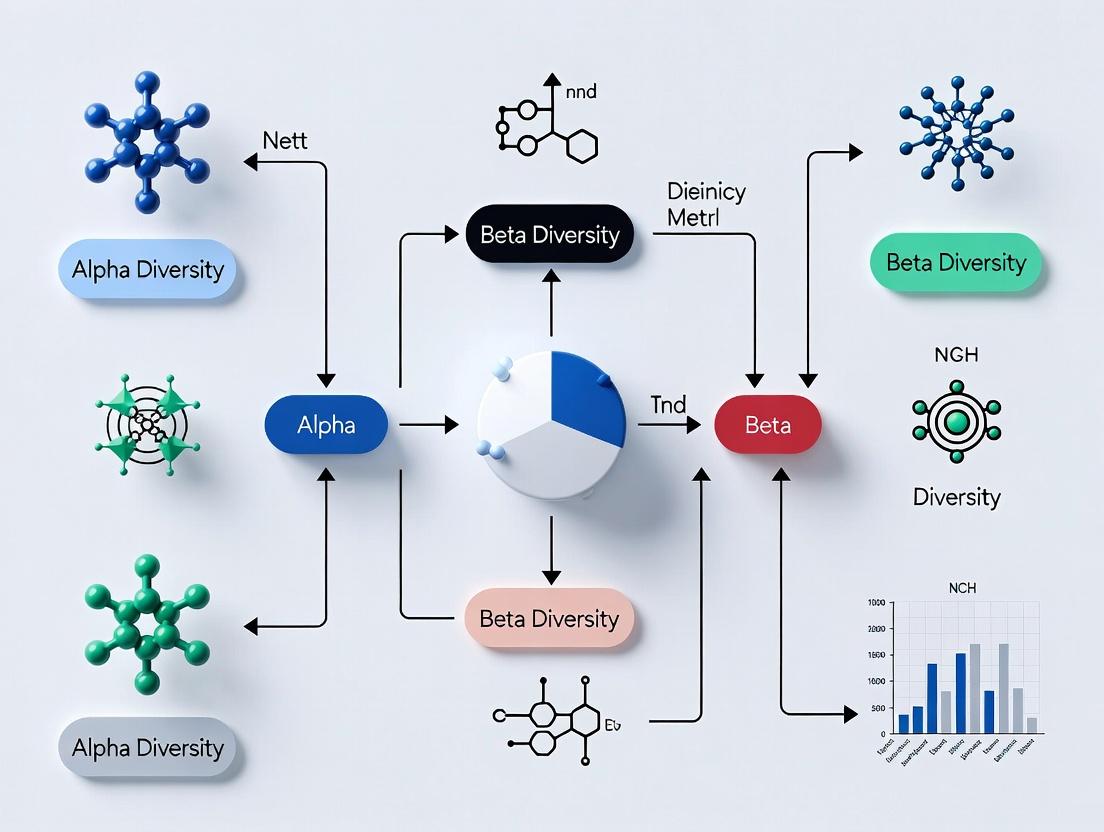
This article provides a targeted guide for researchers, scientists, and drug development professionals on the application of alpha and beta diversity metrics in microbial ecology.
Measuring Microbial Diversity: A Comprehensive Guide to Alpha and Beta Metrics for Biomedical Research
Abstract
This article provides a targeted guide for researchers, scientists, and drug development professionals on the application of alpha and beta diversity metrics in microbial ecology. It progresses from foundational concepts of species richness and community differentiation to practical methodologies for calculating and interpreting metrics like Shannon, Simpson, and Bray-Curtis indices. The content addresses common pitfalls in study design and data analysis, offers optimization strategies for robust results, and presents a comparative framework for validating findings. The goal is to equip the biomedical community with the analytical tools needed to translate complex ecological patterns into insights for therapeutic discovery, clinical diagnostics, and personalized medicine.
Alpha vs. Beta Diversity Demystified: Core Concepts for Ecological Insight
Within the broader thesis of understanding microbial ecology for applications in human health and drug discovery, alpha and beta diversity form the fundamental, complementary pillars of community analysis. These metrics move beyond mere cataloging of species to provide quantitative, interpretable measures of ecological complexity and dissimilarity.
Alpha Diversity is a measure of the diversity within a single, local microbial sample or habitat. It summarizes the "number" and "abundance" of organisms co-existing in that defined environment (e.g., a gut microbiome sample). It does not describe which specific taxa are present, but rather the richness and evenness of the community.
Beta Diversity is a measure of the difference or dissimilarity between microbial communities from different samples or habitats. It quantifies the degree of taxonomic turnover, answering the question: "How different is community A from community B?" It is the cornerstone for comparing patient cohorts, treatment time points, or different body sites.
Deconstructing Alpha Diversity: Components and Calculations
Alpha diversity is not a single metric but a family of indices, each with specific mathematical properties and ecological interpretations. They can be broadly categorized into three types.
| Index Category | Specific Metric | Formula (Simplified) | What it Emphasizes | Typical Range |
|---|---|---|---|---|
| Richness Estimators | Observed ASVs/OTUs | S = Count of distinct types | Pure number of taxa. Sensitive to sequencing depth. | 10s - 1000s |
| Chao1 | S_chao1 = S_obs + (F1²/(2F2))* | Estimates total richness, correcting for unseen rare taxa. | > S_obs | |
| Evenness-Inclusive Indices | Shannon Index (H') | H' = -Σ (p_i * ln p_i) | Combines richness & evenness. Weighted towards abundant taxa. | 1.5 - 7+ |
| Simpson Index (λ) | λ = Σ (p_i²) | Dominance. Probability two random reads are same species. | 0-1 | |
| Inverse Simpson (1/λ) | 1/λ | Effective number of abundant species. | 1 - S | |
| Phylogenetic Indices | Faith's PD | PD = Sum of branch lengths | Evolutionary history contained in a sample. | Varies |
Key Experimental Protocol: 16S rRNA Gene Amplicon Sequencing for Diversity Analysis
Objective: To generate community composition data from microbial samples for calculating alpha and beta diversity metrics.
Detailed Methodology:
- Sample Collection & DNA Extraction: Samples (stool, swab, etc.) are collected using standardized kits. Microbial genomic DNA is extracted using bead-beating for lysis and column-based purification. DNA concentration is quantified via fluorometry (e.g., Qubit).
- PCR Amplification: The hypervariable regions (e.g., V3-V4) of the 16S rRNA gene are amplified using universal primers with overhang adapters. Each sample receives a unique pair of barcodes/indexes in a dual-indexing strategy to enable multiplexing and prevent index hopping errors.
- Library Preparation & Sequencing: PCR products are cleaned, normalized, pooled into an equimolar library, and sequenced on an Illumina MiSeq or NovaSeq platform (2x250 bp or 2x300 bp paired-end reads).
- Bioinformatic Processing (QIIME 2/DADA2 workflow):
- Demultiplexing & Quality Control: Reads are assigned to samples via barcodes. Quality filtering, trimming, and error correction are performed (DADA2 algorithm to infer exact Amplicon Sequence Variants - ASVs).
- Taxonomic Assignment: ASVs are aligned to a reference database (e.g., SILVA, Greengenes) using a classifier (e.g., naive-Bayes) to generate taxonomic lineages.
- Diversity Analysis: A phylogenetic tree is constructed (e.g., with MAFFT/FastTree). A rarefied feature table (subsampled to even depth) is used to calculate alpha diversity indices (Shannon, Faith's PD) and beta diversity distance matrices (Bray-Curtis, Weighted UniFrac).
Deconstructing Beta Diversity: Distance and Dissimilarity
Beta diversity measures are represented as a distance or dissimilarity matrix, where each cell D_{ij} quantifies the difference between sample i and sample j.
| Distance Metric Category | Specific Metric | Formula/Principle | What it Measures | Sensitive To |
|---|---|---|---|---|
| Presence/Absence (Binary) | Jaccard Distance | 1 - (A∩B)/(A∪B) | Taxon turnover based on shared species. | Compositional differences |
| Abundance-Based (Non-Phylogenetic) | Bray-Curtis Dissimilarity | 1 - [2Σ min(Ai, Bi)] / [Σ Ai + Σ Bi]* | Difference in taxon abundance profiles. Most common in ecology. | Abundance shifts |
| Phylogenetic Metrics | Unweighted UniFrac | Unique branch length / Total branch length | Phylogenetic turnover (shared evolutionary history). | Presence/absence of lineages |
| Weighted UniFrac | (Branch length * |A_i - B_i|) / Total abundance-scaled length | Phylogenetic difference weighted by taxon abundance. Gold standard for many studies. | Abundance of lineages |
Key Experimental Protocol: Calculating and Visualizing Beta Diversity
Objective: To statistically compare microbial community structures across sample groups.
Detailed Methodology:
- Distance Matrix Calculation: Using the rarefied ASV/OTU table and phylogenetic tree, calculate pairwise distances (e.g., Bray-Curtis, Weighted UniFrac) for all samples.
- Dimensionality Reduction: Apply an ordination technique to project the high-dimensional distance matrix into 2D/3D space for visualization.
- Principal Coordinates Analysis (PCoA): The primary method for UniFrac/Bray-Curtis distances. Eigen decomposition of the distance matrix.
- Non-Metric Multidimensional Scaling (NMDS): Iterative method that prioritizes rank order of distances; useful when linear assumptions fail.
- Statistical Testing: Use permutational multivariate analysis of variance (PERMANOVA;
adonisfunction in R) to test if centroid distances between pre-defined groups (e.g., Healthy vs. Disease) are statistically significant. Check for homogeneity of dispersion with PERMDISP. - Visualization: Plot the ordination (e.g., PCo1 vs. PCo2), coloring points by sample metadata, and overlay ellipses or hulls to indicate group centroids and confidence intervals.
Visualizing the Logical Framework and Workflows
Title: Alpha & Beta Diversity Analysis Workflow
Title: The Alpha, Beta, Gamma Diversity Relationship
The Scientist's Toolkit: Key Research Reagent Solutions
| Item / Kit Name | Supplier Examples | Primary Function in Diversity Studies |
|---|---|---|
| PowerSoil Pro Kit | QIAGEN, Mo Bio | Gold-standard for efficient microbial lysis (via bead-beating) and inhibitor removal during DNA extraction from complex samples like stool and soil. |
| KAPA HiFi HotStart ReadyMix | Roche | High-fidelity polymerase for accurate amplification of the 16S rRNA gene region with minimal bias, critical for representative community profiling. |
| Illumina 16S Metagenomic Sequencing Library Prep | Illumina | Provides optimized primers targeting the V3-V4 regions and protocol for preparing indexed, sequencing-ready libraries for the MiSeq system. |
| Nextera XT Index Kit v2 | Illumina | Contains unique dual indices (i5 & i7) for multiplexing hundreds of samples in a single sequencing run, essential for cohort studies. |
| ZymoBIOMICS Microbial Community Standard | Zymo Research | Defined mock community of known bacterial strains. Used as a positive control to validate entire workflow from extraction to bioinformatics. |
| MagBind TotalPure NGS Beads | Omega Bio-tek | Magnetic beads for PCR cleanup and library normalization, enabling reproducible size selection and yield. |
| Qubit dsDNA HS Assay Kit | Thermo Fisher | Fluorometric quantification of DNA libraries with high sensitivity and specificity for double-stranded DNA, superior to absorbance (A260) for low-concentration samples. |
| PhiX Control v3 | Illumina | Sequencing control added to runs to assess error rates, calibrate base calling, and improve low-diversity library performance. |
In microbial ecology, community structure (who is there and in what abundance) is intrinsically linked to its biochemical function. Alpha diversity (α-diversity) quantifies the richness, evenness, and phylogenetic breadth within a single sample, providing metrics like Shannon and Faith's Phylogenetic Diversity. Beta diversity (β-diversity) measures the compositional dissimilarity between samples, using metrics like UniFrac or Bray-Curtis. This guide details how these foundational metrics are analytically and experimentally linked to tangible community functions, from nutrient cycling to xenobiotic degradation, providing a critical framework for applications in biotechnology and therapeutic development.
Table 1: Common Alpha Diversity Metrics, Formulae, and Interpretation
| Metric | Formula | Key Components | Interpretation in Function |
|---|---|---|---|
| Observed Features (Richness) | ( S ) | Count of unique operational taxonomic units (OTUs) or amplicon sequence variants (ASVs). | Higher richness may indicate greater functional redundancy or niche complexity. |
| Shannon Index (H') | ( H' = -\sum{i=1}^{S} pi \ln(p_i) ) | ( p_i ): proportion of species ( i ). Balances richness and evenness. | Higher H' suggests stable, resilient communities; links to consistent functional output. |
| Faith's PD | ( PD = \sum{e \in T} Le ) | Sum of branch lengths (( L_e )) of a phylogenetic tree (( T )) for all present species. | Captures phylogenetic breadth; higher PD may indicate broader genetic and thus functional potential. |
Table 2: Beta Diversity Metrics and Their Ecological Meaning
| Metric | Distance Formula | Weighted by Abundance? | Phylogenetic? | Link to Function | ||
|---|---|---|---|---|---|---|
| Bray-Curtis | ( BC{jk} = \frac{\sumi | x{ij} - x{ik} | }{\sumi (x{ij} + x_{ik})} ) | Yes | No | Dissimilarity in abundant taxa directly reflects dominant metabolic profiles. |
| Weighted UniFrac | ( wUF = \frac{\sumi bi | p{ij} - p{ik} | }{\sumi bi (p{ij} + p{ik})} ) | Yes | Yes (( b_i ) = branch length) | Differences influenced by abundant, phylogenetically related groups with shared functional traits. |
| Unweighted UniFrac | ( uUF = \frac{\sumi bi I( | p{ij} - p{ik} | > 0)}{\sumi bi } ) | No (presence/absence) | Yes | Captures turnover in lineages, hinting at gain/loss of distinct functional guilds. |
Experimental Protocols for Linking Diversity to Function
Protocol 1: 16S rRNA Amplicon Sequencing coupled with Metabolomics Objective: Correlate α/β-diversity metrics with community metabolic output.
- Sample Collection & DNA Extraction: Collect microbial community samples (e.g., gut, soil, bioreactor) in triplicate. Use a bead-beating and column-based kit (e.g., DNeasy PowerSoil Pro) for lysis and purification.
- 16S rRNA Gene Amplification & Sequencing: Amplify the V4 hypervariable region using primers 515F/806R. Perform paired-end sequencing on an Illumina MiSeq platform (2x250 bp).
- Bioinformatic Analysis: Process sequences using QIIME 2. Denoise (DADA2), cluster into ASVs. Generate α-diversity (Shannon, Faith's PD) and β-diversity (Bray-Curtis, UniFrac) matrices.
- Metabolite Profiling: For parallel samples, perform untargeted metabolomics via LC-MS. Extract metabolites in 80% methanol, analyze on a high-resolution mass spectrometer.
- Integration: Use Mantel tests to correlate β-diversity distance matrices with metabolomic distance matrices (Euclidean). Apply Procrustes analysis for overall concordance. Use regression models (e.g.,
lmin R) to test if specific α-diversity indices predict concentrations of key metabolites.
Protocol 2: Stable Isotope Probing (SIP) to Identify Functional Taxa Objective: Identify microbial taxa performing a specific function, linking β-diversity shifts to activity.
- Isotopic Labeling: Incubate communities with a ( ^{13}\text{C})-labeled substrate (e.g., glucose, phenol). Include a ( ^{12}\text{C}) control.
- Nucleic Acid Extraction & Density Gradient Centrifugation: After incubation, extract total community DNA. Mix with cesium trifluoroacetate (CsTFA) and centrifuge at 205,000 x g for 40+ hours to separate ( ^{13}\text{C})-heavy from ( ^{12}\text{C})-light DNA.
- Fractionation & Quantification: Fractionate the gradient by density. Measure DNA concentration in each fraction. Pool "heavy" and "light" fractions.
- Sequencing & Analysis: Amplify and sequence 16S rRNA genes from heavy and light fractions. Construct β-diversity PCoA plots (using Weighted UniFrac). Taxa enriched in the heavy fraction (( ^{13}\text{C})-incorporators) are functionally active for that substrate and will drive β-diversity separation.
Visualizations
The Scientist's Toolkit: Research Reagent Solutions
Table 3: Essential Reagents & Kits for Diversity-Function Studies
| Item | Function & Application |
|---|---|
| DNeasy PowerSoil Pro Kit (Qiagen) | Gold-standard for microbial genomic DNA extraction from difficult, high-inhibitor samples (soil, stool). Ensures unbiased lysis for accurate diversity assessment. |
| PCR Primers (515F/806R) | Target the 16S rRNA gene V4 region for robust amplification across Bacteria and Archaea, minimizing bias for diversity surveys. |
| PhiX Control v3 (Illumina) | Spiked into 16S sequencing runs (5-20%) to improve base calling accuracy on low-diversity libraries. |
| 13C-Labeled Substrates (e.g., 13C-Glucose) | Essential for SIP experiments to trace carbon flow from specific compounds into active microbial biomass. |
| Caesium Trifluoroacetate (CsTFA) | Density gradient medium for SIP ultracentrifugation, separating nucleic acids by 13C incorporation. |
| Methanol (LC-MS Grade, 80%) | Solvent for quenching metabolism and extracting polar metabolites in untargeted metabolomics workflows. |
| QIIME 2 Core Distribution | Open-source bioinformatics platform for comprehensive analysis of microbiome sequencing data from raw reads to diversity metrics. |
| Silva or Greengenes Database | Curated 16S rRNA reference databases for taxonomic assignment and phylogenetic tree construction (essential for Faith's PD, UniFrac). |
Alpha diversity metrics are fundamental tools in microbial ecology, providing quantitative measures of species diversity within a single sample or habitat. This in-depth guide explains the mathematical foundations, biological interpretations, and methodological applications of four core metrics: Richness, Shannon, Simpson, and Pielou's Evenness. Framed within a broader thesis on alpha and beta diversity, this whitepaper equips researchers with the technical knowledge to select, calculate, and interpret these indices for robust ecological inference and drug discovery applications.
In microbial ecology research, characterizing community structure is paramount. Alpha diversity describes the "within-sample" diversity, summarizing the complexity of a microbial community. It serves as a critical first step before analyzing beta diversity (differences between communities). This guide details the four pillar metrics, each offering a different perspective on the two core components of diversity: richness (number of species) and evenness (relative abundance distribution).
Metric Definitions & Mathematical Foundations
Richness
Richness (S) is the simplest measure, representing the total count of unique operational taxonomic units (OTUs) or species observed in a sample.
- Formula: ( S = \text{Number of distinct species} )
- Interpretation: A higher S indicates greater species richness. It does not consider species abundances.
Shannon Index (H')
The Shannon Index (or Shannon-Wiener/Shannon-Weaver index) quantifies the uncertainty in predicting the identity of a randomly chosen individual from the sample. It incorporates both richness and evenness.
- Formula: ( H' = -\sum{i=1}^{S} pi \ln(pi) )
- ( pi ) = proportion of the community represented by species i
- S = total species richness
- Interpretation: Ranges from 0 (a single species dominates) to ~ln(S) (all species are equally abundant). Higher H' indicates higher, more evenly distributed diversity.
Simpson's Index (D and 1-D)
Simpson's Index measures the probability that two individuals randomly selected from a sample will belong to the same species. It is more sensitive to dominant species.
- Formula (Dominance Index, D): ( D = \sum{i=1}^{S} pi^2 )
- Formula (Diversity Index, 1-D): ( 1 - D = 1 - \sum{i=1}^{S} pi^2 )
- Interpretation: D ranges from 0 to 1, where 1 indicates complete dominance (low diversity). The inverse (1-D) represents the probability that two individuals are different species, ranging from 0 (no diversity) to nearly 1 (high diversity).
Pielou's Evenness (J')
Pielou's Evenness isolates the evenness component of diversity by comparing the observed Shannon index to the maximum possible Shannon index (when all species are equally abundant).
- Formula: ( J' = \frac{H'}{H'_{max}} = \frac{H'}{\ln(S)} )
- Interpretation: Ranges from 0 (complete unevenness) to 1 (perfect evenness). A community with high evenness has species with similar abundances.
Table 1: Summary of Core Alpha Diversity Metrics
| Metric | Formula | Focus | Range | Sensitivity |
|---|---|---|---|---|
| Richness (S) | ( S ) | Species Count | 0 to ∞ | Insensitive to abundance |
| Shannon (H') | ( -\sum pi \ln(pi) ) | Richness & Evenness | ≥ 0 | Sensitive to rare species |
| Simpson (1-D) | ( 1 - \sum p_i^2 ) | Dominance | 0 to 1 | Sensitive to common species |
| Pielou's (J') | ( H' / \ln(S) ) | Evenness | 0 to 1 | Pure evenness measure |
Experimental Protocol: 16S rRNA Amplicon Sequencing for Alpha Diversity Analysis
This standard workflow generates the species-by-sample abundance table required for calculating alpha diversity metrics.
Step 1: Sample Collection & DNA Extraction
- Collect microbial biomass (e.g., soil, swab, fecal sample) into sterile, DNA-free tubes with appropriate preservative.
- Use mechanical (e.g., bead-beating) and chemical lysis to extract total genomic DNA. Kits like the DNeasy PowerSoil Pro (Qiagen) are standard.
Step 2: PCR Amplification of Target Region
- Amplify the hypervariable regions (e.g., V3-V4) of the 16S rRNA gene using barcoded universal primers (e.g., 341F/806R).
- Use a high-fidelity polymerase (e.g., Phusion) to minimize PCR bias. Include negative controls.
Step 3: Library Preparation & Sequencing
- Purify amplicons and attach sequencing adapters and dual indices via a second limited-cycle PCR.
- Quantify library concentration, pool equimolar amounts, and sequence on an Illumina MiSeq or NovaSeq platform (2x250 bp or 2x300 bp recommended).
Step 4: Bioinformatic Processing (QIIME 2/DADA2 workflow)
- Demultiplexing: Assign reads to samples based on barcodes.
- Quality Control & Denoising: Use DADA2 to filter by quality, remove chimeras, and infer exact amplicon sequence variants (ASVs).
- Taxonomy Assignment: Classify ASVs against a reference database (e.g., SILVA, Greengenes) using a trained classifier.
- Construct Feature Table: Generate an ASV/species count table (BIOM format).
Step 5: Diversity Analysis
- Rarefy the feature table to an even sampling depth to correct for uneven sequencing effort.
- Input the rarefied table into software (e.g., QIIME 2's
diversityplugin, R'sveganpackage) to calculate all alpha diversity metrics.
Title: 16S rRNA Workflow for Alpha Diversity
The Scientist's Toolkit: Essential Research Reagents & Materials
Table 2: Key Reagent Solutions for 16S rRNA Amplicon Sequencing
| Item | Function & Rationale |
|---|---|
| DNA Stabilization Buffer (e.g., RNAlater) | Preserves microbial community structure at point of collection by inhibiting nuclease activity. |
| PowerSoil DNA Isolation Kit (Qiagen) | Standardized kit for efficient lysis of diverse microbial cells and removal of PCR inhibitors (humics, pigments). |
| PCR Primers (341F/806R) | Universal prokaryotic primers targeting the V3-V4 hypervariable regions of the 16S rRNA gene for taxonomic discrimination. |
| Phusion High-Fidelity DNA Polymerase | Minimizes PCR amplification errors and bias, crucial for accurate ASV generation. |
| AMPure XP Beads (Beckman Coulter) | For precise size-selection and purification of amplicon libraries, removing primer dimers and contaminants. |
| Illumina Sequencing Reagents (MiSeq Reagent Kit v3) | Provides chemistry for cluster generation and sequencing-by-synthesis on the Illumina platform. |
| QIIME 2 Core Distribution | Open-source bioinformatics platform providing standardized pipelines for processing sequence data and calculating diversity metrics. |
Interpretation & Application in Drug Development
Alpha diversity metrics are biomarkers in therapeutic discovery. A decrease in gut microbial Shannon diversity is often associated with dysbiosis in diseases like IBD or Clostridioides difficile infection. Drug candidates aimed at restoring a healthy microbiome can be evaluated by measuring increases in Shannon and Evenness indices in pre-clinical models. Simpson's index is particularly useful for tracking the suppression of a dominant pathogenic taxon. Researchers must report multiple metrics to give a complete picture of within-sample diversity changes in response to therapeutic intervention.
Table 3: Example Alpha Diversity Output from a Drug Intervention Study
| Sample Group | Richness (S) | Shannon (H') | Simpson (1-D) | Pielou's (J') |
|---|---|---|---|---|
| Healthy Control (n=10) | 145 ± 12 | 4.1 ± 0.3 | 0.98 ± 0.01 | 0.82 ± 0.04 |
| Disease Model (n=10) | 85 ± 18 | 2.9 ± 0.4 | 0.85 ± 0.08 | 0.66 ± 0.07 |
| Drug-Treated (n=10) | 120 ± 15 | 3.7 ± 0.3 | 0.95 ± 0.03 | 0.78 ± 0.05 |
Title: Decision Logic for Metric Selection
Richness, Shannon, Simpson, and Pielou's Evenness are non-redundant lenses for viewing alpha diversity. Robust application requires understanding their mathematical biases and employing standardized experimental and bioinformatic protocols. Within the framework of partitioning microbial diversity, these alpha metrics provide the essential foundation upon which beta diversity analyses and subsequent ecological inferences are built, directly informing hypotheses in drug discovery and microbial ecology.
Within the comprehensive thesis on alpha and beta diversity metrics in microbial ecology research, beta diversity represents a cornerstone concept. It quantifies the compositional dissimilarity between microbial communities from different samples. This in-depth guide examines four principal metrics—Bray-Curtis, Jaccard, UniFrac, and Weighted UniFrac—that are essential for researchers, scientists, and drug development professionals analyzing microbiome data to understand community dynamics, response to treatment, and ecological drivers.
Bray-Curtis Dissimilarity
Bray-Curtis dissimilarity is a quantitative measure that considers species abundances. It is calculated as:
BC_ij = (1 - (2*C_ij)/(S_i + S_j)) where C_ij is the sum of the lesser abundances for each species found in both samples, and S_i and S_j are the total abundances in each sample. It ranges from 0 (identical communities) to 1 (no shared species).
Jaccard Index (Dissimilarity)
The Jaccard Index is a presence-absence metric. The Jaccard dissimilarity is derived as:
J_dissim = 1 - (A ∩ B)/(A ∪ B) where A ∩ B is the number of species common to both samples, and A ∪ B is the total number of unique species across both samples.
UniFrac Distance
UniFrac incorporates phylogenetic information by measuring the fraction of unique branch length in a phylogenetic tree. The unweighted UniFrac distance is calculated as:
U = (unique branch length) / (total branch length)
It is a qualitative measure, sensitive only to the presence or absence of lineages.
Weighted UniFrac Distance
Weighted UniFrac extends the UniFrac principle by weighting branches based on species abundance differences between samples. The formula incorporates abundance weights, making it a quantitative measure sensitive to changes in taxon relative abundance.
Quantitative Comparison of Beta Diversity Metrics
Table 1: Core Characteristics of Beta Diversity Metrics
| Metric | Data Type | Phylogenetic? | Range | Sensitivity |
|---|---|---|---|---|
| Bray-Curtis | Quantitative (Abundance) | No | 0 to 1 | Abundance changes |
| Jaccard | Qualitative (Presence/Absence) | No | 0 to 1 | Species turnover |
| UniFrac | Qualitative (Presence/Absence) | Yes | 0 to 1 | Phylogenetic turnover |
| Weighted UniFrac | Quantitative (Abundance) | Yes | 0 to 1 | Phylogenetic abundance shifts |
Table 2: Typical Workflow Outputs from 16S rRNA Amplicon Studies (Example Data)
| Metric | Mean Dissimilarity in Healthy Gut Cohorts | Mean Dissimilarity in Disease vs. Control | Primary Driver of Signal |
|---|---|---|---|
| Bray-Curtis | 0.65 - 0.75 | 0.78 - 0.88 | Dominant taxa abundance |
| Jaccard | 0.80 - 0.90 | 0.85 - 0.95 | Rare species presence |
| UniFrac | 0.25 - 0.35 | 0.40 - 0.55 | Deep phylogenetic shifts |
| Weighted UniFrac | 0.15 - 0.25 | 0.30 - 0.45 | Abundance in key clades |
Experimental Protocol: Calculating Beta Diversity from 16S rRNA Data
Protocol 1: Standard Bioinformatic Workflow for Beta Diversity Analysis
- Sequence Processing & OTU/ASV Picking: Demultiplex raw FASTQ files. Use DADA2 or Deblur to generate amplicon sequence variants (ASVs), or USEARCH/VSEARCH for operational taxonomic units (OTUs) at 97% similarity.
- Taxonomic Assignment: Classify sequences against a reference database (e.g., SILVA, Greengenes) using a classifier like QIIME2's
feature-classifieror RDP Classifier. - Phylogenetic Tree Construction: For UniFrac, build a phylogenetic tree. Align sequences with MAFFT or PyNAST, then construct a tree with FastTree or RAxML.
- Normalization: Rarefy all samples to an even sequencing depth (e.g., the minimum library size) for unbiased comparisons, especially for non-weighted metrics. Alternatives include CSS or DESeq2 normalization for specific cases.
- Dissimilarity Matrix Calculation: Input the normalized feature table (and tree for UniFrac) into the appropriate algorithm (e.g.,
vegdistin R for Bray-Curtis/Jaccard;phyloseq::UniFracorqiime2plugins). - Statistical & Visualization Analysis: Perform PERMANOVA (adonis) to test for group differences. Visualize using Principal Coordinates Analysis (PCoA) ordination plots.
Workflow for Beta Diversity Analysis from 16S Data
The Scientist's Toolkit: Essential Research Reagents & Materials
Table 3: Key Research Reagent Solutions for Microbiome Beta Diversity Studies
| Item | Function in Research |
|---|---|
| 16S rRNA Gene Primers (e.g., 515F/806R) | Amplify hypervariable regions for bacterial community profiling. |
| DNA Extraction Kit (e.g., MoBio PowerSoil) | Lyse microbial cells and isolate high-purity genomic DNA from complex samples. |
| PCR Reagents & High-Fidelity Polymerase | Ensure accurate amplification of target sequences with minimal bias. |
| Quant-iT PicoGreen dsDNA Assay | Precisely quantify DNA libraries prior to sequencing for pooling. |
| Illumina MiSeq Reagent Kit v3 (600-cycle) | Provide reagents for paired-end sequencing on the Illumina platform. |
| QIIME 2 Core Distribution | Open-source bioinformatics pipeline for end-to-end microbiome analysis. |
| SILVA or Greengenes Database | Curated rRNA sequence databases for taxonomic classification. |
| Phylogenetic Software (e.g., FastTree) | Generate phylogenetic trees from sequence alignments for UniFrac. |
Methodological Considerations and Comparative Workflow
Decision Logic for Selecting a Beta Diversity Metric
Selecting an appropriate beta diversity metric—Bray-Curtis for abundance-based analysis, Jaccard for species turnover, UniFrac for phylogenetic presence/absence, or Weighted UniFrac for phylogenetic abundance shifts—is fundamental to accurately interpreting microbial ecology data. These metrics, when applied within a robust experimental and computational workflow, provide powerful lenses to test hypotheses in microbial ecology, host-microbiome interactions, and therapeutic development, forming an integral part of the broader alpha and beta diversity thesis.
Within microbial ecology research, a fundamental thesis governs the analysis of diversity: alpha diversity quantifies the richness and evenness of species within a single sample or habitat, while beta diversity quantifies the differences between samples or habitats. Understanding which "lens" to prioritize—the intra-sample (alpha) or inter-sample (beta) perspective—is critical for formulating accurate ecological inferences, from assessing the impact of a drug on gut microbiota to tracking microbial succession in bioremediation. This guide provides a technical framework for making this choice, supported by current methodologies and data.
Core Conceptual Framework and Quantitative Metrics
Alpha and beta diversity are not independent; they are linked components of gamma (total) diversity. The choice of metric directly impacts interpretation.
Table 1: Common Alpha and Beta Diversity Metrics in Microbial Ecology
| Diversity Type | Metric | Formula / Basis | Interpretation & Use Case |
|---|---|---|---|
| Alpha Diversity | Observed ASVs/OTUs | Count of distinct taxa. | Simple richness; sensitive to sequencing depth. |
| Shannon Index (H') | H' = -Σ(pi * ln(pi)); pi = proportion of species i. | Combines richness and evenness; widely generalizable. | |
| Faith's Phylogenetic Diversity | Sum of branch lengths on phylogenetic tree for all taxa in a sample. | Incorporates evolutionary relationships; useful for functional potential inference. | |
| Beta Diversity | Jaccard Distance | (B + C) / (A + B + C); A=shared, B/C=unique to each sample. | Presence/absence based; emphasizes turnover. |
| Bray-Curtis Dissimilarity | (Σ |yi - yj|) / (Σ (yi + yj)); y=abundance. | Incorporates taxon abundance; most common for microbial ecology. | |
| Weighted Unifrac | Phylogenetic distance weighted by abundance differences. | Quantifies community shifts considering both phylogeny and abundance. | |
| Unweighted Unifrac | Phylogenetic distance based on presence/absence. | Highlights changes in lineage composition regardless of abundance. |
Decision Framework: When to Prioritize Alpha vs. Beta Diversity
Diagram 1: Decision Logic for Diversity Analysis Focus
Experimental Protocols for Key Analyses
Protocol 1: 16S rRNA Gene Amplicon Sequencing Workflow for Diversity Analysis
Detailed Steps:
- Sample Collection: Preserve microbial biomass (e.g., gut contents, soil) in RNAlater or immediate -80°C freezing.
- DNA Extraction: Use a kit (e.g., Qiagen DNeasy PowerSoil Pro) with bead-beating for mechanical lysis. Quantify DNA with Qubit.
- PCR Amplification: Amplify the target region (e.g., 515F/806R for V4) using barcoded primers and a high-fidelity polymerase. Clean amplicons with magnetic beads.
- Bioinformatic Processing (DADA2 Pipeline):
a. Demultiplex: Assign reads to samples.
b. Filter & Trim:
filterAndTrim(truncLen=c(240,200), maxN=0, maxEE=c(2,2)). c. Learn Error Rates:learnErrors(). d. Infer ASVs:dada()to resolve exact amplicon sequence variants. e. Merge Paired Reads:mergePairs(). f. Remove Chimeras:removeBimeraDenovo(). g. Assign Taxonomy:assignTaxonomy()against SILVA or Greengenes database. - Phylogenetic Tree: Align ASV sequences (DECIPHER, MUSCLE), filter alignment, and construct a tree (FastTree, RAxML).
- Diversity Calculation: Use QIIME2, phyloseq (R), or scikit-bio (Python) to compute metrics in Table 1 from the ASV table and tree.
Protocol 2: Statistical Testing Workflow for Diversity Data
Detailed Steps for Beta Diversity Analysis (R, phyloseq/vegan):
- Calculate Distance Matrix:
distance(physeq_object, method="bray")orUniFrac(physeq_object, weighted=TRUE). - Ordination (PCoA):
ord <- ordinate(physeq_object, method="PCoA", distance="bray"); plot withplot_ordination(). - PERMANOVA: Test if group centroids differ:
adonis2(distance_matrix ~ Treatment + Time, data=metadata, permutations=999). - Homogeneity of Dispersion Check: Critical for PERMANOVA interpretation:
disp <- betadisper(distance_matrix, metadata$Treatment);anova(disp).
The Scientist's Toolkit: Research Reagent Solutions
Table 2: Essential Materials for Microbial Diversity Studies
| Item | Supplier Examples | Function in Research |
|---|---|---|
| DNA Preservation Buffer | Zymo Research DNA/RNA Shield, Qiagen RNAlater | Stabilizes microbial nucleic acids at ambient temperature during sample transport and storage, preventing degradation. |
| Soil/Difficult Sample DNA Kit | Qiagen DNeasy PowerSoil Pro, MoBio PowerLyzer | Optimized for efficient cell lysis of tough microbial cells (e.g., Gram-positives, spores) and removal of PCR inhibitors (humics, phenols). |
| High-Fidelity PCR Master Mix | NEB Q5, Thermo Fisher Platinum SuperFi | Provides accurate amplification of the 16S rRNA target region with low error rates, crucial for downstream ASV calling. |
| Dual-Index Barcode Primers | Illumina Nextera XT, IDT for Illumina | Enable multiplexing of hundreds of samples in a single sequencing run by attaching unique sample-specific barcodes. |
| Size Selection & Clean-up Beads | Beckman Coulter AMPure XP, KAPA Pure Beads | Perform post-PCR clean-up and precise size selection to remove primer dimers and optimize library fragment size for sequencing. |
| Quantitation Kit (dsDNA) | Thermo Fisher Qubit dsDNA HS Assay | Accurately quantifies low-concentration DNA libraries prior to sequencing, more specific than spectrophotometry. |
| Positive Control (Mock Community) | ZymoBIOMICS Microbial Community Standard | A defined mix of microbial genomic DNA used to assess accuracy, precision, and bias throughout the entire wet-lab and bioinformatic pipeline. |
| Bioinformatic Pipeline Tool | QIIME 2, mothur, DADA2 (R) | Integrated software suites for processing raw sequence data into ASV tables, assigning taxonomy, and calculating diversity metrics. |
The decision to prioritize alpha or beta diversity analysis is dictated by the specific hypothesis. Alpha diversity serves as a vital biomarker for within-habitat conditions, while beta diversity is the principal tool for discerning the impact of treatments, environments, or gradients across the microbial landscape. A robust study will often calculate both, but the statistical framework and visualization should be driven by the primary research question. Employing standardized protocols and the essential toolkit outlined here ensures reproducibility and validity in drawing ecological conclusions critical to fields from drug development to environmental monitoring.
In microbial ecology research, interpreting the human microbiome necessitates robust, quantitative frameworks. The core thesis of this whitepaper is that alpha and beta diversity metrics provide the essential, non-redundant axes for describing microbial communities in health and disease. Alpha diversity quantifies the richness and evenness of species within a single sample (intra-sample diversity), while beta diversity measures the compositional dissimilarity between samples (inter-sample diversity). The systematic application of these metrics transforms complex sequencing data into actionable insights for translational research and therapeutic development.
Quantitative Diversity Metrics: Definitions and Calculations
The selection of appropriate metrics is critical for accurate biological interpretation. The table below summarizes the core alpha and beta diversity metrics used in contemporary human microbiome research.
Table 1: Core Alpha and Beta Diversity Metrics in Microbiome Analysis
| Metric Type | Specific Metric | Mathematical Basis | Interpretation in Health/Disease Context |
|---|---|---|---|
| Alpha Diversity | Observed ASVs/OTUs | Count of unique taxonomic units. | Simple measure of richness; often lower in dysbiotic states. |
| Alpha Diversity | Shannon Index (H') | H' = -Σ (pi * ln(pi)); combines richness and evenness. | Higher values indicate greater diversity; generally associated with stability and health. |
| Alpha Diversity | Faith's Phylogenetic Diversity | Sum of branch lengths on a phylogenetic tree for all species in a sample. | Incorporates evolutionary relationships; sensitive to loss of deep-branching taxa. |
| Beta Diversity | Jaccard Similarity | J = (A∩B) / (A∪B); based on presence/absence. | Measures shared taxa; useful for severe dysbiosis where abundances shift dramatically. |
| Beta Diversity | Bray-Curtis Dissimilarity | BC = Σ|Ai - Bi| / Σ(Ai + Bi); uses abundance data. | Most common metric; sensitive to dominant taxa changes; clusters samples by overall composition. |
| Beta Diversity | Weighted UniFrac | Incorporates phylogenetic distance and abundance. | Differences driven by abundant, phylogenetically related lineages; tracks ecosystem function. |
| Beta Diversity | Unweighted UniFrac | Uses phylogenetic distance and presence/absence. | Sensitive to rare, deep-branching lineages; reveals subtle community shifts. |
Experimental Protocols for Diversity Analysis
Protocol 1: 16S rRNA Gene Amplicon Sequencing Workflow for Diversity Metrics
- Sample Collection & Stabilization: Collect sample (e.g., stool, swab) in DNA-stabilizing buffer (e.g., Zymo DNA/RNA Shield). Store at -80°C.
- DNA Extraction: Use bead-beating mechanical lysis kit (e.g., Qiagen DNeasy PowerSoil Pro Kit) to ensure lysis of Gram-positive bacteria. Include extraction controls.
- PCR Amplification: Amplify hypervariable regions (e.g., V4) using barcoded primers (515F/806R). Use minimal cycles to reduce PCR bias. Include negative (no-template) and positive (mock community) controls.
- Library Preparation & Sequencing: Normalize amplicons, pool, and sequence on an Illumina MiSeq (2x250 bp) to achieve ≥10,000 reads/sample after quality control.
- Bioinformatic Processing (QIIME 2 pipeline):
- Demultiplex sequences.
- Denoise with DADA2 to correct errors and infer exact Amplicon Sequence Variants (ASVs).
- Assign taxonomy using a pre-trained classifier (e.g., SILVA or Greengenes database).
- Diversity Analysis: Rarefy the feature table to an even sampling depth. Calculate alpha diversity (Shannon, Faith's PD) and beta diversity (Bray-Curtis, UniFrac) metrics.
- Statistical testing: Use PERMANOVA on distance matrices for beta diversity; linear models for alpha diversity associations with metadata.
Protocol 2: Metagenomic Shotgun Sequencing for Strain-Level Diversity
- Library Preparation: Fragment genomic DNA (Covaris shearing), perform size selection, and prepare libraries with adapters (Illumina Nextera XT). Do not perform PCR amplification.
- High-Throughput Sequencing: Sequence on Illumina NovaSeq (2x150 bp) for high-depth coverage (≥10 million reads/sample).
- Bioinformatic Analysis:
- Quality trim reads (Trimmomatic).
- Microbial Profiling: Use tools like MetaPhlAn 4 for species-level profiling and HUMAnN 3 for functional pathway analysis.
- Diversity Calculation: Generate species abundance profiles. Calculate alpha diversity (Shannon) on the species table. Calculate beta diversity (Bray-Curtis) based on species or pathway abundances for higher-resolution insights.
Visualization of Analytical Workflows and Biological Relationships
Microbiome Analysis Pipeline from Sample to Diversity
Mechanistic Links Between Diversity Metrics and Disease Phenotypes
The Scientist's Toolkit: Research Reagent Solutions
Table 2: Essential Reagents and Kits for Human Microbiome Diversity Studies
| Item Name | Supplier Examples | Function in Microbiome Research |
|---|---|---|
| DNA/RNA Shield | Zymo Research, Norgen Biotek | Preserves nucleic acid integrity in samples at room temperature, critical for accurate representation. |
| PowerSoil Pro Kit | Qiagen, Mo Bio Laboratories | Standardized DNA extraction with bead-beating for mechanical lysis of tough cell walls. |
| Mock Microbial Community | BEI Resources, ZymoBIOMICS | Defined mix of microbial genomes; essential positive control for extraction, sequencing, and bioinformatics. |
| 16S rRNA PCR Primers (515F/806R) | Integrated DNA Technologies | Amplify the V4 hypervariable region for taxonomic profiling and diversity analysis. |
| Nextera XT DNA Library Prep Kit | Illumina | Prepares sequencing libraries from fragmented DNA for shotgun metagenomic approaches. |
| PhiX Control v3 | Illumina | Sequencing run control for error rate monitoring during amplicon sequencing. |
| Qubit dsDNA HS Assay Kit | Thermo Fisher Scientific | Accurate quantification of low-concentration DNA libraries prior to sequencing. |
| Bioinformatics Pipeline (QIIME 2, MOTHUR) | Open Source | Integrated suite for processing raw sequence data into diversity metrics and statistical results. |
From Theory to Practice: A Step-by-Step Guide to Calculating and Applying Diversity Metrics
Within the study of microbial ecology, the analysis of alpha and beta diversity metrics forms the cornerstone of understanding community structure and dynamics. This technical guide details the complete bioinformatics workflow required to transform raw sequencing data into robust ecological diversity matrices, a critical process for researchers and drug development professionals investigating microbiomes.
Raw Sequence Data Processing
The initial step involves converting raw sequencing output into high-quality, analyzable sequences.
Experimental Protocol: Demultiplexing & Quality Control
- Input: Paired-end FASTQ files from an Illumina MiSeq or NovaSeq run.
- Demultiplexing: Use
bcl2fastq(Illumina) orq2-demux(QIIME 2) to assign reads to samples based on unique barcode sequences. Ensure barcode length (typically 8-12 bp) and error rate (max 1 mismatch) are specified. - Initial QC: Run
FastQCto generate per-base sequence quality, adapter content, and GC distribution reports. - Trimming & Filtering: Use
Trimmomaticorcutadaptwith the following standard parameters:- Remove Illumina adapters (
ILLUMINACLIP:TruSeq3-PE.fa:2:30:10). - Slide-window trimming (
SLIDINGWINDOW:4:20). - Leading/Trailing minimum quality (
LEADING:20,TRAILING:20). - Minimum read length (
MINLEN:100).
- Remove Illumina adapters (
- Output: Trimmed, high-quality paired-end FASTQ files for each sample.
From Reads to Amplicon Sequence Variants (ASVs)
The current best-practice method moves beyond Operational Taxonomic Units (OTUs) to resolve exact biological sequences.
Experimental Protocol: DADA2 Pipeline for 16S rRNA Data
This protocol is implemented in R using the dada2 package (v1.28+).
- Filter and Trim:
filterAndTrim(fwd=fnFs, rev=fnRs, truncLen=c(240,200), maxN=0, maxEE=c(2,2), truncQ=2, compress=TRUE). This truncates forward and reverse reads at specified positions based on quality profiles. - Learn Error Rates:
learnErrors(filtFs, multithread=TRUE). Models the sequencing error profile for sample inference. - Dereplication:
derepFastq(filtFs). Combines identical reads to reduce computation. - Sample Inference:
dada(derepFs, err=errF, multithread=TRUE). The core algorithm infers true biological sequences (ASVs). - Merge Paired Reads:
mergePairs(dadaF, derepF, dadaR, derepR). Aligns forward and reverse reads to create full-length sequences. - Construct Sequence Table:
makeSequenceTable(mergers). Creates an ASV table (rows=samples, columns=ASVs, values=read counts). - Remove Chimeras:
removeBimeraDenovo(seqtab, method="consensus"). Identifies and removes PCR artifacts.
Table 1: Typical Output Metrics from DADA2 Pipeline on a Mock Community Dataset
| Metric | Pre-Filtering | Post-QC & Merging | Post-Chimera Removal | % Retained |
|---|---|---|---|---|
| Total Reads | 1,500,000 | 1,350,000 | 1,275,000 | 85.0% |
| Average Read Length | 301 bp | 250 bp | 250 bp | - |
| ASVs Identified | - | 12,500 | 8,750 | 70.0% (of inferred) |
| Known Mock Taxa | - | - | 20 | 100% (of expected) |
Taxonomic Assignment & Phylogenetic Tree Construction
ASVs are classified to interpret community composition.
Experimental Protocol: SILVA Database Classification
- Database: Download the latest SILVA SSU Ref NR 99 dataset (e.g., release 138.1) formatted for
dada2. - Assign Taxonomy:
assignTaxonomy(seqtab, "silva_nr99_v138.1_train_set.fa.gz", multithread=TRUE). Uses a naive Bayesian classifier with minBoot=80 confidence threshold. - Add Species:
addSpecies(taxtab, "silva_species_assignment_v138.1.fa.gz")for refined species-level assignment where possible. - Phylogenetic Tree: Use
DECIPHERandphangornpackages to align sequences (AlignSeqs), build a distance matrix (Dist.ml), and construct a maximum-likelihood tree (NJfollowed bypmloptimization).
Generation of Diversity Matrices
Core calculations for alpha and beta diversity.
Experimental Protocol: QIIME 2 (q2-diversity)
- Normalization (Rarefaction):
qiime diversity core-metrics-phylogenetic --i-table feature-table.qza --i-phylogeny rooted-tree.qza --p-sampling-depth 10000 --output-dir core-metrics-results. A single rarefaction depth is chosen to standardize sequencing effort across samples. - Alpha Diversity: Calculates within-sample diversity. Key metrics:
- Observed Features (Richness).
- Shannon Index (Richness & Evenness): H' = -Σ(pi * ln(pi)).
- Faith's Phylogenetic Diversity (Evolutionary history).
- Beta Diversity: Calculates between-sample dissimilarity. Key metrics:
- Jaccard Distance: J = 1 - (|A∩B| / |A∪B|). Composition-based, unweighted.
- Bray-Curtis Dissimilarity: BC = (Σ|Ai - Bi|) / (Σ(Ai + Bi)). Abundance-based.
- Unweighted/Weighted UniFrac: Phylogenetic distance; weighted incorporates abundance.
Table 2: Common Alpha Diversity Metrics and Their Interpretation
| Metric | Formula (Simplified) | Measures | High Value Indicates | Sensitive To |
|---|---|---|---|---|
| Observed ASVs | S | Species Richness | Many distinct taxa | Rare species |
| Shannon Index (H') | -Σ(pi * ln(pi)) | Richness & Evenness | Many, evenly distributed taxa | Common species |
| Faith's PD | Sum of branch lengths | Phylogenetic Diversity | Large evolutionary breadth | Deep branching taxa |
Table 3: Common Beta Diversity Metrics and Their Properties
| Metric | Type | Range | Handles Abundance | Incorporates Phylogeny |
|---|---|---|---|---|
| Jaccard | Dissimilarity | 0 (identical) to 1 (no overlap) | No (presence/absence) | No |
| Bray-Curtis | Dissimilarity | 0 to 1 | Yes | No |
| Unweighted UniFrac | Distance | 0 to 1 | No (presence/absence) | Yes |
| Weighted UniFrac | Distance | 0 to 1 | Yes | Yes |
Workflow Visualization
Title: Bioinformatics Pipeline from FASTQ to Diversity
Title: Key Alpha and Beta Diversity Metrics
The Scientist's Toolkit: Research Reagent Solutions
Table 4: Essential Reagents & Materials for 16S rRNA Amplicon Sequencing Workflow
| Item | Function | Example Product/Kit |
|---|---|---|
| PCR Primers (V4 region) | Amplify the target hypervariable region of the 16S rRNA gene. | 515F (Parada) / 806R (Apprill) modified with Illumina adapters. |
| High-Fidelity DNA Polymerase | Perform accurate amplification with low error rate for ASV inference. | KAPA HiFi HotStart ReadyMix or Q5 High-Fidelity DNA Polymerase. |
| Magnetic Bead Cleanup Kit | Purify PCR amplicons and normalize libraries, removing primers and dimers. | AMPure XP Beads. |
| Dual-Index Barcoding Kit | Attach unique sample identifiers (i7/i5 indices) for multiplexing. | Nextera XT Index Kit v2. |
| Library Quantification Kit | Accurately measure library concentration for pooling equimolar amounts. | Qubit dsDNA HS Assay Kit or qPCR-based kits (KAPA Library Quant). |
| Sequencing Reagent Kit | Generate clustered and sequenced reads on the platform. | Illumina MiSeq Reagent Kit v3 (600-cycle) for paired-end 300bp reads. |
| Positive Control (Mock Community) | Assess pipeline accuracy, chimera removal, and taxonomic classification. | ZymoBIOMICS Microbial Community Standard. |
| Negative Extraction Control | Identify contamination introduced during DNA extraction. | Molecular grade water processed alongside samples. |
In microbial ecology, from environmental studies to drug development, the analysis of amplicon sequence variant (ASV) or operational taxonomic unit (OTU) data derived from high-throughput sequencing is foundational. A core challenge is that raw sequence counts are compositional, influenced by variable sequencing depth rather than absolute biological abundance. This biases subsequent diversity analyses. Therefore, data standardization through rarefaction and normalization is a critical preprocessing step before calculating robust alpha (within-sample) and beta (between-sample) diversity metrics. This guide details the technical rationale, protocols, and implementation of these essential methods.
The Problem: Library Size Variation and Compositionality
Sequencing runs often yield different total reads per sample (library size). Without correction, a sample with 100,000 reads will artificially appear more diverse than one with 10,000 reads. Furthermore, the data is compositional; an increase in the relative abundance of one taxon forces an apparent decrease in others, distorting relationships.
Core Standardization Methods
Rarefaction
Rarefaction involves randomly subsampling sequences from each sample without replacement to a common, lower sequencing depth.
Experimental Protocol:
- Input: A feature table (e.g., ASV/OTU table) with samples as rows and taxa as columns, containing raw sequence counts.
- Determine Rarefaction Depth: Analyze the distribution of per-sample sequence counts. The chosen depth should be as high as possible while excluding as few samples as possible. A common approach is to use the minimum library size among samples, though this discards substantial data.
- Subsampling: For each sample, randomly select
nsequences (wherenis the chosen rarefaction depth) from the multinomial distribution defined by the original taxon proportions. - Iteration: The process is stochastic. To ensure stability, the subsampling is often repeated multiple times (e.g., 100-1000x), and diversity metrics are averaged across iterations.
- Output: A standardized feature table where all samples have an equal total count.
Key Limitation: Rarefaction discards valid data, which can reduce statistical power, especially when library sizes vary greatly.
Normalization Methods
Normalization techniques adjust counts using scaling factors without discarding data.
- Total Sum Scaling (TSS): Converts counts to relative abundances by dividing each count by the total library size for its sample. Simple but sensitive to outliers with extremely high counts.
- Cumulative Sum Scaling (CSS) / MetagenomeSeq: Assumes the count distribution in a sample is properly modeled up to a quantile. Scaling factors are derived from the cumulative sum of counts up to this data-derived quantile, making it robust to outliers.
- Median of Ratios (DESeq2): Originally for RNA-Seq, it calculates a sample-specific size factor as the median of the ratios of observed counts to a pseudo-reference sample (geometric mean across all samples). It assumes most features are not differentially abundant.
- Trimmed Mean of M-values (TMM): Also from RNA-Seq, it trims extreme log fold-changes (M-values) and abundance levels (A-values) to compute a robust scaling factor relative to a reference sample.
Impact on Diversity Metrics
The choice of standardization method directly influences downstream alpha and beta diversity estimates.
Table 1: Effect of Standardization on Key Diversity Metrics
| Diversity Type | Metric | Sensitive to Library Size? | Recommended Standardization Approach |
|---|---|---|---|
| Alpha Diversity | Observed Richness (S) | High | Rarefaction or use of richness estimators (Chao1, ACE). |
| Shannon Index (H') | Moderate | Rarefaction, TSS, or other normalization. More robust to compositionality. | |
| Simpson's Index (λ) | Low | Normalization (TSS). Robust to sequencing depth. | |
| Beta Diversity | Jaccard / Bray-Curtis | High | Rarefaction is traditionally common. CSS or other robust normalization is also used. |
| Weighted UniFrac | Moderate | TSS (relative abundance) is required. Rarefaction not necessary. | |
| Unweighted UniFrac | High | Rarefaction is standard. Alternative: use presence/absence from normalized data with high filter threshold. |
Table 2: Comparison of Standardization Methods
| Method | Principle | Discards Data? | Handles Zero-Inflation | Best Suited For |
|---|---|---|---|---|
| Rarefaction | Even sampling effort via subsampling. | Yes | Good, but can increase zeros. | Comparative richness estimates, non-phylogenetic beta diversity. |
| Total Sum Scaling (TSS) | Proportional transformation. | No | Poor (zeros remain). | Weighted phylogenetic metrics (e.g., W-UniFrac), general ordination. |
| CSS (MetagenomeSeq) | Scaling to a stable data-derived quantile. | No | Good. | Datasets with high sparsity and outliers (common in clinical samples). |
| DESeq2 Median of Ratios | Assumption of non-DA features. | No | Fair. | Differential abundance testing, not direct diversity calculation. |
| TMM | Robust log-ratio adjustment. | No | Fair. | Similar samples with few systematic shifts. |
Experimental Workflow
The following diagram illustrates a standard bioinformatics workflow for processing 16S rRNA gene sequencing data through to diversity analysis.
Title: From Raw Reads to Diversity Analysis Workflow
The Scientist's Toolkit: Key Research Reagent Solutions
Table 3: Essential Materials for 16S rRNA Sequencing & Analysis
| Item / Solution | Function in Experiment |
|---|---|
| DNA Extraction Kit(e.g., DNeasy PowerSoil Pro) | Lyse microbial cells and purify total genomic DNA from complex samples (soil, stool, biofilm) while removing PCR inhibitors. |
| PCR Reagents & Primer Set(e.g., 515F/806R for V4 region) | Amplify the target hypervariable region of the 16S rRNA gene with high fidelity for library preparation. |
| Size-Selective Beads(e.g., AMPure XP) | Clean and size-select amplicon libraries to remove primer dimers and non-specific products. |
| High-Throughput Sequencer(e.g., Illumina MiSeq) | Generate paired-end sequence reads (e.g., 2x250 bp) for the amplified libraries. |
| Bioinformatics Pipeline(QIIME2, mothur, DADA2) | Process raw sequences: demultiplex, quality filter, denoise, cluster ASVs/OTUs, assign taxonomy. |
| Reference Database(SILVA, Greengenes) | Classify ASVs/OTUs taxonomically by aligning sequences to a curated database of known 16S sequences. |
| Statistical Software Environment(R with phyloseq, vegan) | Perform rarefaction/normalization, calculate diversity metrics, run statistical tests (PERMANOVA), and create visualizations. |
Within the broader thesis on microbial ecology metrics, alpha and beta diversity serve as foundational pillars. Alpha diversity measures the richness, evenness, and phylogenetic complexity of species within a single sample. Beta diversity quantifies the dissimilarity in community composition between samples, informing on gradients, treatments, or temporal changes. This guide provides executable code for core calculations using three industry-standard tools.
Tool-Specific Implementation Protocols
QIIME 2 (v2024.5)
Protocol 1: Core Diversity Analysis Workflow
- Input Preparation: Start with a Feature Table (
feature-table.qza) and a rooted Phylogenetic Tree (rooted-tree.qza). Rarefy the table to an even sampling depth. - Execute Core Metrics: Run
qiime diversity core-metrics-phylogenetic. This single command computes:- Alpha diversity: Observed Features, Shannon, Faith's Phylogenetic Diversity, Pielou's Evenness.
- Beta diversity: Jaccard, Bray-Curtis, unweighted/weighted UniFrac distances.
- Statistical Testing: Use
qiime diversity alpha-group-significanceandqiime diversity beta-group-significance(PERMANOVA) for hypothesis testing.
mothur (v1.48)
Protocol 2: OTU-Based Diversity Pipeline
- Preprocessing: Align sequences to a reference (e.g., SILVA), screen for chimeras (
chimera.uchime), and cluster into OTUs (cluster.split). - Diversity Calculation: Use
phylo.diversityfor alpha metrics anddist.sharedfor community dissimilarity. - Community Comparison: Perform AMOVA (
amova) and Homova (homova) for formal statistical comparison of beta diversity dispersion.
R (phyloseq & vegan)
Protocol 3: Integrated Analysis in R
- Data Import: Create a
phyloseqobject from OTU table, taxonomy, metadata, and tree files. - Alpha Diversity: Subset, rarefy, and calculate indices. Use non-parametric tests or linear models.
- Beta Diversity: Calculate distance matrices, perform ordination (PCoA/NMDS), and test with PERMANOVA (
adonis2) and dispersion (betadisper).
Table 1: Comparison of Core Diversity Metrics Across Toolkits
| Metric | QIIME 2 Function | mothur Command | R Function (Package) | Primary Use |
|---|---|---|---|---|
| Observed OTUs | core-metrics-phylogenetic |
summary.single(calc=sobs) |
estimate_richness(measures="Observed") (phyloseq) |
Species Richness |
| Shannon Index | core-metrics-phylogenetic |
summary.single(calc=shannon) |
diversity(index="shannon") (vegan) |
Richness & Evenness |
| Faith's PD | core-metrics-phylogenetic |
phylo.diversity |
pd() (picante) |
Phylogenetic Diversity |
| Bray-Curtis | core-metrics-phylogenetic |
dist.shared(calc=braycurtis) |
vegdist(method="bray") (vegan) |
Composition Dissimilarity |
| Weighted UniFrac | core-metrics-phylogenetic |
dist.shared(calc=thetayc) |
UniFrac(weighted=TRUE) (phyloseq) |
Phylogenetic Dissimilarity |
| PERMANOVA | beta-group-significance |
amova |
adonis2() (vegan) |
Group Difference Test |
Table 2: Example PERMANOVA Results for a Treatment Effect (Simulated Data)
| Tool | Distance Metric | Pseudo-F | R² | p-value |
|---|---|---|---|---|
| QIIME 2 | Weighted UniFrac | 8.45 | 0.21 | 0.001 |
| mothur | ThetaYC (≈WUniFrac) | 8.12 | 0.20 | 0.001 |
| R (vegan) | Weighted UniFrac | 8.51 | 0.21 | 0.001 |
Visualized Workflows and Relationships
Title: QIIME 2 Core Diversity Analysis Pipeline
Title: R/phyloseq Analysis Logical Flow
The Scientist's Toolkit: Key Research Reagent Solutions
| Item | Provider/Example | Function in Microbial Ecology Analysis |
|---|---|---|
| DNA Extraction Kit | MoBio PowerSoil Pro Kit | Standardized cell lysis and DNA purification from complex environmental samples. |
| PCR Primers (16S rRNA) | 515F (Parada) / 806R (Apprill) | Amplify the V4 hypervariable region for bacterial and archaeal community profiling. |
| Sequencing Standard | ZymoBIOMICS Microbial Community Standard | Control for bias in extraction, amplification, and sequencing. |
| Bioinformatics Pipeline | QIIME 2, mothur | Reproducible, packaged environments for sequence processing and diversity analysis. |
| Statistical Software | R with phyloseq/vegan | Flexible, open-source platform for advanced statistical testing and visualization. |
| Reference Database | SILVA, Greengenes | Curated rRNA sequence databases for taxonomic assignment and alignment. |
| Positive Control Mock | ATCC MSA-3000 | Validates entire wet-lab and computational workflow accuracy. |
1. Introduction
Within a thesis on microbial ecology and drug development, robust statistical visualization is paramount for communicating the analysis of alpha and beta diversity. Alpha diversity, a measure of within-sample richness and evenness, and beta diversity, a measure of between-sample compositional differences, form the bedrock of community analysis. This guide details effective plotting techniques for these metrics, framed as essential chapters for presenting research findings.
2. Visualizing Alpha Diversity: Boxplots and Violin Plots
Alpha diversity is summarized using indices like Observed Features, Chao1, Shannon, and Simpson. Effective visualization compares these indices across experimental groups (e.g., treatment vs. control, different time points).
2.1 Boxplot Methodology A boxplot displays the distribution of alpha diversity indices per group based on a five-number summary.
- Protocol: 1) Calculate the chosen alpha diversity index for all samples using a tool like QIIME 2, mothur, or the R
veganpackage. 2) For each experimental group, compute the minimum, first quartile (Q1), median, third quartile (Q3), and maximum. 3) Plot a box from Q1 to Q3, with a line at the median. 4) Extend "whiskers" to the furthest data point within 1.5 * Interquartile Range (IQR). 5) Plot outliers beyond the whiskers as individual points. - Statistical Integration: Results from statistical tests (e.g., Kruskal-Wallis, pairwise Wilcoxon) should be annotated directly on the plot.
2.2 Violin Plot Methodology A violin plot combines a boxplot with a kernel density estimation, showing the full distribution shape.
- Protocol: 1) Calculate alpha diversity indices as above. 2) For each group, compute a kernel density estimate (KDE) to smooth the probability distribution. 3) Mirror the KDE around the axis to create the "violin" shape. 4) Overlay a boxplot (or just the median/quartile markers) inside the violin. This is typically accomplished in a single command using R's
ggplot2(geom_violin()) or Python'sseaborn(violinplot()).
2.3 Data Summary: Common Alpha Diversity Indices Table 1: Key alpha diversity indices for microbial ecology.
| Index | Calculation Focus | Sensitivity To | Typical Range | Interpretation |
|---|---|---|---|---|
| Observed Features | Richness | Rare species | 0 - Total ASVs/OTUs | Pure count of unique types. |
| Chao1 | Richness (estimator) | Rare species | ≥ Observed Features | Estimates true richness, correcting for undersampling. |
| Shannon (H') | Evenness & Richness | Abundant & rare species | 0 - ~7 (microbiome) | Increases with richness and evenness. Logarithmic. |
| Simpson (1-D) | Evenness & Dominance | Abundant species | 0-1 (or 0-∞ for λ) | Probability two randomly chosen reads are different. Less sensitive to richness. |
Diagram 1: Alpha diversity analysis and visualization workflow.
3. Visualizing Beta Diversity: PCoA and NMDS
Beta diversity is visualized using ordination plots, where each point represents an entire sample, and distances between points reflect (dis)similarity (e.g., Bray-Curtis, Jaccard, UniFrac).
3.1 Principal Coordinates Analysis (PCoA) Methodology PCoA, also known as Metric Multidimensional Scaling (MDS), finds principal coordinates from a distance matrix.
- Protocol: 1) Compute a pairwise distance matrix between all samples using a phylogenetic (e.g., Weighted UniFrac) or non-phylogenetic (e.g., Bray-Curtis) metric. 2) Perform eigenvalue decomposition on the centered distance matrix. 3) Project samples onto the new axes (principal coordinates) that explain the most variance. 4) Plot samples on the first 2-3 axes. The percentage of total variance explained by each axis is a key output.
3.2 Non-Metric Multidimensional Scaling (NMDS) Methodology NMDS is a rank-based, non-parametric ordination that seeks to preserve the ordinal relationships in the distance matrix.
- Protocol: 1) Compute a distance matrix. 2) Choose a low number of dimensions (k=2 or 3). 3) NMDS places points in k-dimensional space iteratively, minimizing "stress" (a measure of disagreement between point distances and original rank distances). 4) The algorithm runs multiple times from different random starts to find the best solution with the lowest stress. Stress <0.1 is typically considered a good representation.
3.2 Data Summary: Beta Diversity Distance Metrics Table 2: Common distance metrics for beta diversity ordination.
| Metric | Type | Sensitive To | Range | Best For |
|---|---|---|---|---|
| Bray-Curtis | Abundance-based | Composition & Abundance | 0 (identical) - 1 (no overlap) | General community composition. |
| Jaccard | Presence/Absence | Species Turnover | 0 - 1 | Presence/absence (binary) data. |
| Weighted UniFrac | Phylogenetic & Abundance | Abundant, phylogeny-weighted lineages | 0 - 1 | Incorporating phylogeny & abundance. |
| Unweighted UniFrac | Phylogenetic | Lineage presence/absence | 0 - 1 | Incorporating phylogeny, ignoring abundance. |
Diagram 2: Beta diversity ordination analysis and validation workflow.
4. The Scientist's Toolkit: Research Reagent Solutions
Table 3: Essential materials and tools for diversity analysis.
| Item | Function & Application |
|---|---|
| QIIME 2 / mothur | Comprehensive bioinformatics pipelines for processing raw sequencing reads into ASVs/OTUs and calculating diversity metrics. |
| R with vegan, phyloseq, ggplot2 | Statistical computing environment. vegan for ecology analysis, phyloseq for handling microbiome data, ggplot2 for publication-quality plots. |
| Python with scikit-bio, seaborn | Alternative programming environment. scikit-bio for bioinformatics and ordination, seaborn/matplotlib for statistical visualizations. |
| FastTree / MAFFT | Software for generating phylogenetic trees from sequence alignments, required for phylogenetic metrics like UniFrac. |
| Silva / Greengenes Database | Curated 16S rRNA gene reference databases for taxonomic assignment and alignment. |
| DADA2 / Deblur | Algorithms for exact sequence variant (ESV/ASV) inference from amplicon data, reducing sequencing error. |
Within the broader thesis on alpha and beta diversity metrics in microbial ecology research, a critical analytical step involves rigorously linking these ecological measures to clinical covariates. This guide details the statistical framework for testing hypotheses about alpha diversity (the richness and evenness of species within a sample) and beta diversity (the compositional dissimilarity between samples) in relation to clinical metadata, such as disease status, treatment group, or continuous physiological measurements.
Statistical Testing for Alpha Diversity
Alpha diversity indices (e.g., Observed Features, Shannon, Faith's PD) provide a single-number summary per sample. The goal is to test whether diversity differs across groups or correlates with a continuous variable.
Common Statistical Tests
The choice of test depends on the number of comparison groups and the distribution of the data.
Table 1: Statistical Tests for Alpha Diversity Analysis
| Test | Use Case | Assumptions | Key Considerations |
|---|---|---|---|
| Mann-Whitney U / Wilcoxon Rank-Sum | Compare diversity between TWO independent groups. | Independent, ordinal/continuous data. Non-parametric. | Default choice for two-group comparison due to common non-normality. |
| Kruskal-Wallis H | Compare diversity across THREE or more independent groups. | Independent observations, ordinal/continuous data. | An omnibus test; a significant result requires post-hoc pairwise tests. |
| Linear Regression | Associate diversity with ONE OR MORE continuous or categorical predictors. | Linear relationship, independence, homoscedasticity, normality of residuals. | Powerful for modeling multivariate relationships. Transformations (e.g., log) often needed. |
| Mixed-Effects Models | Account for repeated measures or nested design (e.g., longitudinal sampling). | As per linear regression, with correctly specified random effects. | Crucial for paired or longitudinal study designs to avoid pseudoreplication. |
Experimental Protocol: Alpha Diversity Association Workflow
- Calculate Alpha Diversity: Generate indices from the Amplicon Sequence Variant (ASV) or Operational Taxonomic Unit (OTU) table using tools like QIIME 2, mothur, or the R package
phyloseq. - Check Distributions: Visually (histograms, Q-Q plots) and statistically (e.g., Shapiro-Wilk test) assess normality of each index within groups.
- Select and Apply Test:
- For two groups (e.g., Control vs. Treatment): Perform Wilcoxon rank-sum test.
- For three+ groups (e.g., Disease stages I, II, III): Perform Kruskal-Wallis test, followed by Dunn's post-hoc test with p-value adjustment (e.g., Benjamini-Hochberg).
- For continuous predictors (e.g., Age, BMI): Fit a linear model (
lm()in R), check model diagnostics (residual plots), and report coefficient and p-value.
- Visualize: Present data using boxplots (for groups) or scatter plots (for continuous variables).
Diagram Title: Alpha Diversity Statistical Analysis Workflow
Linking Beta Diversity to Clinical Covariates (PERMANOVA)
Beta diversity, quantified via distance matrices (e.g., UniFrac, Bray-Curtis), requires specialized multivariate statistical methods. PERMANOVA (Permutational Multivariate Analysis of Variance) is the cornerstone test.
Core Methodology: PERMANOVA
PERMANOVA tests the null hypothesis that the centroids and dispersion of groups in multivariate space are equivalent for all groups.
Experimental Protocol for PERMANOVA:
- Compute Distance Matrix: Calculate a beta diversity distance matrix (e.g., weighted UniFrac for phylogeny-aware abundance) for all sample pairs.
- Define Model: Formulate the statistical model (e.g.,
Distance ~ Disease_Status + Age + BMI). - Run PERMANOVA: Using software like
vegan::adonis2in R.- Key Parameters:
permutations = 9999: Set a high number of permutations for robust p-value calculation.strata = Subject_ID: For paired/longitudinal designs, constrain permutations within subjects to account for pairing.by = "terms": Assess the significance of each predictor sequentially.
- Key Parameters:
- Check Assumption (Homogeneity of Dispersion): Use PERMDISP2 (
vegan::betadisper) to test if group variances are homogeneous. A significant result (p < 0.05) indicates differing dispersions, which can confound PERMANOVA results. - Interpretation: A significant PERMANOVA result (p < 0.05) indicates that microbial composition differs significantly across levels of the covariate, after accounting for other model terms.
Table 2: Interpreting Key PERMANOVA Output (vegan::adonis2)
| Term | Df | SumOfSqs | R² | F | Pr(>F) |
|---|---|---|---|---|---|
| Disease_Status | 2 | 1.856 | 0.189 | 8.123 | 0.001 |
| Age | 1 | 0.432 | 0.044 | 3.782 | 0.012 |
| BMI | 1 | 0.201 | 0.020 | 1.759 | 0.098 |
| Residual | 45 | 5.141 | 0.747 | ||
| Total | 49 | 6.630 | 1.000 |
Interpretation: Disease_Status and Age are significant drivers of compositional variation, explaining ~19% and ~4% of variance, respectively.
Diagram Title: Beta Diversity PERMANOVA Analysis Workflow
The Scientist's Toolkit: Research Reagent Solutions
Table 3: Essential Tools and Reagents for Diversity-Clinical Analysis
| Item / Solution | Function / Purpose |
|---|---|
| QIIME 2 (2024.5) | End-to-end microbiome analysis platform for generating ASV tables, calculating diversity metrics, and executing core diversity analyses. |
R with phyloseq & vegan |
Primary statistical environment for data manipulation (phyloseq), alpha/beta diversity calculation, and advanced modeling (vegan::adonis2). |
| DADA2 or Deblur | Pipeline for error-correction and inference of exact ASVs from raw 16S rRNA sequencing reads, forming the basis of the feature table. |
| Greengenes or SILVA Database | Curated 16S rRNA gene reference databases for taxonomic assignment of sequences. |
| FastTree | Software for generating phylogenetic trees from aligned sequences, required for phylogenetic diversity metrics (Faith's PD, UniFrac). |
| MiSeq/HiSeq Reagents (Illumina) | Sequencing chemistry for generating paired-end reads of the hypervariable regions of the 16S rRNA gene. |
| ZymoBIOMICS DNA/RNA Kits | Standardized kits for microbial nucleic acid extraction from complex clinical samples (stool, saliva, tissue). |
| PCR Primers (e.g., 515F-806R) | Target-specific primers for amplifying the bacterial 16S V4 region prior to sequencing. |
| PBS Buffer & Ethanol (MoBio) | Essential components for sample preservation, homogenization, and downstream purification steps. |
| Benjamini-Hochberg Procedure | A statistical method (not a physical reagent) for controlling the False Discovery Rate (FDR) when performing multiple hypothesis tests across taxa. |
This case study is situated within a broader thesis investigating the application of alpha and beta diversity metrics in microbial ecology research. Inflammatory Bowel Disease (IBD), encompassing Crohn's disease (CD) and ulcerative colitis (UC), presents a quintessential model for applying these ecological concepts to human health. Dysbiosis—a shift from a healthy, resilient microbiota to a state of impaired diversity and function—is a hallmark of IBD. This analysis demonstrates how quantifying alpha (within-sample) and beta (between-sample) diversity provides critical, actionable insights into disease etiology, patient stratification, and therapeutic monitoring.
Core Ecological Metrics: Alpha and Beta Diversity in IBD
Alpha diversity metrics quantify the microbial richness, evenness, and phylogenetic diversity within a single stool or mucosal sample from an individual.
Table 1: Key Alpha Diversity Metrics in IBD Studies
| Metric | Formula/Description | Typical Finding in Active IBD vs. Healthy Controls | Biological Interpretation |
|---|---|---|---|
| Observed ASVs/OTUs | Count of distinct taxonomic units. | Decreased (~30-50% reduction). | Loss of microbial species richness. |
| Shannon Index (H') | H' = -Σ(pi * ln pi); combines richness & evenness. | Significantly decreased (e.g., H'=2.1 vs. 3.8 in controls). | Reduced community evenness and stability. |
| Faith's Phylogenetic Diversity | Sum of branch lengths in phylogenetic tree spanning taxa. | Decreased. | Loss of evolutionary history and functional potential. |
Beta diversity metrics measure the compositional dissimilarity between samples from different individuals or conditions.
Table 2: Key Beta Diversity Analyses in IBD Cohorts
| Metric | Basis | Typical Finding in IBD Cohorts | Interpretation |
|---|---|---|---|
| Bray-Curtis Dissimilarity | Abundance-based. | IBD samples cluster separately from controls in PCoA. | Major shift in microbial abundance structure. |
| Unweighted UniFrac | Presence/Absence + phylogeny. | Strong separation between IBD and healthy groups. | IBD involves gain/loss of phylogenetically distinct taxa. |
| Weighted UniFrac | Abundance + phylogeny. | Significant separation, often less pronounced than unweighted. | Abundance changes in evolutionarily related groups are key. |
Experimental Protocols for IBD Microbiota Analysis
Standardized Sample Collection & Metadata
Protocol: Prospective cohort studies collect stool samples from diagnosed IBD patients (CD, UC) and matched healthy controls. Metadata must include: disease phenotype (Montreal classification), activity (e.g., Simple Endoscopic Score for CD, Mayo score for UC), medication (antibiotics, biologics, immunosuppressants), diet, and lifestyle. Samples are immediately frozen at -80°C.
DNA Extraction & 16S rRNA Gene Sequencing
Protocol:
- Homogenization: Homogenize 0.25g stool using a bead-beating system (e.g., MP Biomedicals FastPrep) with lysis buffer.
- DNA Extraction: Use a validated kit (e.g., QIAamp PowerFecal Pro DNA Kit) following manufacturer instructions, including inhibitor removal steps.
- PCR Amplification: Amplify the V4 region of the 16S rRNA gene using primers 515F (GTGYCAGCMGCCGCGGTAA) and 806R (GGACTACNVGGGTWTCTAAT) with attached Illumina adapters and barcodes.
- Library Prep & Sequencing: Pool purified amplicons in equimolar ratios. Sequence on Illumina MiSeq (2x250 bp) or NovaSeq platform to achieve >50,000 reads per sample.
Bioinformatic Processing & Diversity Calculation
Protocol (using QIIME 2, 2024.2):
- Demultiplexing & Denoising: Use
q2-demuxandq2-dada2to trim primers, filter errors, merge paired-end reads, and remove chimeras, resulting in Amplicon Sequence Variants (ASVs). - Taxonomy Assignment: Classify ASVs against a curated database (e.g., Silva 138 or Greengenes2) using a naive Bayes classifier (
q2-feature-classifier). - Phylogeny: Align sequences with MAFFT and build a rooted phylogenetic tree with FastTree (
q2-phylogeny). - Diversity Metrics:
- Alpha: Calculate metrics (Observed, Shannon, Faith's PD) on rarefied tables (e.g., 10,000 sequences/sample) using
q2-diversity alpha. - Beta: Compute distance matrices (Bray-Curtis, UniFrac) using
q2-diversity beta. Visualize via Principal Coordinates Analysis (PCoA) withq2-emperor.
- Alpha: Calculate metrics (Observed, Shannon, Faith's PD) on rarefied tables (e.g., 10,000 sequences/sample) using
Signaling Pathways in Dysbiosis and IBD Pathogenesis
The dysbiotic microbiota in IBD drives pathogenesis through altered immune signaling.
Title: Microbial Dysbiosis to IBD Inflammation Pathway
Research Reagent Solutions Toolkit
Table 3: Essential Research Reagents for IBD Microbiota Studies
| Item | Function & Application | Example Product/Catalog |
|---|---|---|
| Stool DNA Stabilizer | Preserves microbial DNA/RNA at room temperature for transport/storage, minimizing bias. | OMNIgene•GUT (OMR-200), Zymo DNA/RNA Shield. |
| Inhibitor-Removal DNA Kit | Extracts high-purity microbial DNA critical for PCR, removing humic acids and other stool inhibitors. | QIAamp PowerFecal Pro DNA Kit, DNeasy PowerSoil Pro Kit. |
| 16S PCR Primers | Amplify hypervariable regions for taxonomic profiling. Must be selected for coverage and bias. | Earth Microbiome Project 515F/806R, 27F/1492R. |
| Mock Community (Control) | Defined mix of known microbial genomes; essential for quantifying technical error and bias. | ZymoBIOMICS Microbial Community Standard (D6300). |
| Absolute Quantification Std | For qPCR of total bacterial load (16S gene copies/g stool), a key covariate often overlooked. | gBlocks Gene Fragments with 16S sequence. |
| Cytokine ELISA/Multiplex | Quantify host inflammatory response (e.g., fecal calprotectin, serum cytokines) to correlate with dysbiosis. | R&D Systems DuoSet ELISA, Luminex Assay Kits. |
| Anaerobic Chamber | For cultivating and manipulating obligate anaerobic gut bacteria in functional validation studies. | Coy Laboratory Vinyl Anaerobic Chamber. |
| Gnotobiotic Mouse | Germ-free or defined-flora mice for causal testing of IBD-associated microbial communities. | Taconic Biosciences, Jackson Laboratory. |
Integrated Analysis Workflow
Title: IBD Dysbiosis Analysis Pipeline
This case study substantiates the thesis that alpha and beta diversity metrics are not merely descriptive but are foundational analytical tools in microbial ecology applied to disease. In IBD, a significant reduction in alpha diversity quantifies the collapse of microbial community stability, while beta diversity analyses objectively demonstrate the profound ecological shift away from a healthy state. This quantitative framework enables researchers to stratify patients, identify biomarker taxa, and evaluate the ecological impact of therapies like fecal microbiota transplantation (FMT) or next-generation probiotics, thereby driving translational advances in drug development and personalized medicine for IBD.
Avoiding Common Pitfalls: Optimizing Study Design and Analysis for Robust Diversity Estimates
Alpha diversity (within-sample richness and evenness) and beta diversity (between-sample compositional differences) are foundational metrics in microbial ecology, crucial for linking microbiome structure to health, disease, and therapeutic outcomes. The accuracy of these metrics is fundamentally dependent on sampling depth—the number of sequences obtained per sample. Insufficient depth fails to capture the true taxonomic richness, leading to skewed ecological inferences. This technical guide dissects the dilemma, providing data, protocols, and solutions for robust research.
The Core Impact of Insufficient Sequencing Depth
Quantitative Data Summary: Impact of Sequencing Depth on Diversity Metrics Table 1: Simulated and Empirical Effects of Rarefaction on Diversity Indices
| Sequencing Depth (Reads/Sample) | Observed ASVs (Alpha) | Shannon Index (Alpha) | Bray-Curtis Dissimilarity (Beta) | Statistical Power (P < 0.05) |
|---|---|---|---|---|
| 1,000 | 45 ± 12 | 2.1 ± 0.4 | High Bias (>15% error) | < 25% |
| 5,000 (Common Minimum) | 120 ± 25 | 3.5 ± 0.3 | Moderate Bias (~5% error) | ~ 60% |
| 15,000 (Recommended) | 185 ± 30 | 4.2 ± 0.2 | Low Bias (<2% error) | > 85% |
| 50,000 (Saturation) | 195 ± 28 | 4.3 ± 0.2 | Minimal Bias | > 95% |
Table 2: Consequences of Inadequate Depth on Common Analyses
| Analysis Type | Primary Skew Caused by Low Depth | Potential False Conclusion |
|---|---|---|
| Differential Abundance | Under-sampling of rare taxa; false zero inflation. | Significant taxa are artifacts of sampling, not biology. |
| Beta Diversity Ordination | Increased perceived distance between samples (beta dispersion). | False clustering or separation of sample groups. |
| Correlation Networks | Missed connections involving low-abundance keystone species. | Incomplete or erroneous model of microbial interactions. |
| Treatment Effect Size | Underestimated true effect due to truncated richness. | Failure to identify a statistically significant intervention. |
Experimental Protocols for Depth Assessment
Protocol 1: Generating and Analyzing Rarefaction Curves Objective: To determine the optimal sequencing depth per sample.
- Sequence: Perform high-depth sequencing (e.g., Illumina MiSeq, 2x300 bp, targeting 16S rRNA V3-V4 or V4 region). Aim for >50,000 raw reads/sample as a starting point.
- Bioinformatic Processing: Process reads through a standard pipeline (e.g., QIIME 2, DADA2, or mothur). Denoise, remove chimeras, cluster into Amplicon Sequence Variants (ASVs) or Operational Taxonomic Units (OTUs).
- Rarefaction: Use the
q2-diversityplugin (QIIME 2) or theveganpackage (R). Subsample (rarefy) the feature table at intervals (e.g., 100, 500, 1000, 5000, 10000... reads). - Calculate Metrics: At each depth, calculate alpha diversity (Observed Features, Shannon, Faith PD) and beta diversity (Unweighted/Weighted UniFrac, Bray-Curtis).
- Plot & Determine Saturation: Plot alpha diversity metrics against sequencing depth. The point where the curve plateaus indicates sufficient depth. For beta, plot pairwise dissimilarities against depth; stabilization suggests minimal bias.
Protocol 2: Conducting a Power Analysis for Sequencing Depth Objective: To determine the depth required to detect a specified effect size.
- Pilot Study: Sequence a subset of samples (n=5-10 per group) at high depth.
- Effect Size Estimation: Calculate the observed effect size (e.g., Cohen's d for alpha diversity, PERMANOVA R² for beta diversity) from the pilot data.
- Simulation: Use tools like
HMP(R) orKronaPowerto simulate community data. Input the pilot study's richness, evenness, and effect size. - Model Parameters: Set desired statistical power (typically 80%) and significance level (α=0.05). Vary the simulated sequencing depth and sample size.
- Output: The analysis yields a curve showing the relationship between depth, sample size, and power. Choose the depth where power reaches an acceptable plateau.
Visualizing the Dilemma and Solutions
Title: Core Impact of Low Sequencing Depth on Diversity
Title: Workflow for Optimizing Sequencing Depth
The Scientist's Toolkit: Research Reagent Solutions
Table 3: Essential Reagents and Materials for Reliable Diversity Studies
| Item | Function & Rationale |
|---|---|
| Mock Microbial Community (ZymoBIOMICS) | Contains known, defined abundances of bacterial/fungal cells. Serves as a positive control to validate sequencing accuracy, pipeline, and depth adequacy. |
| Extraction Kit with Bead Beating (e.g., DNeasy PowerSoil Pro) | Ensures maximal and unbiased lysis of diverse cell wall types (Gram+, Gram-, spores), critical for accurate representation of community structure. |
| High-Fidelity Polymerase (e.g., KAPA HiFi) | Minimizes PCR amplification errors and biases, reducing artificial inflation of diversity metrics due to sequencing errors. |
| Dual-Indexed PCR Primers (Nextera-style) | Enables high-plex multiplexing with minimal index hopping, allowing more samples to be run together for consistent depth without batch effects. |
| Library Quantification Kit (qPCR-based, e.g., KAPA Library Quant) | Provides absolute quantification of amplifiable library fragments, ensuring balanced pooling of libraries to achieve uniform sequencing depth. |
| PhiX Control v3 (Illumina) | Spiked into runs (~1-5%) for monitoring sequencing quality, error rates, and aiding in base calling for low-diversity samples. |
| Bioinformatics Pipelines (QIIME 2, DADA2) | Software with built-in quality filtering, chimera removal, and normalization tools (e.g., rarefaction, CSS) essential for processing depth-dependent data. |
In microbial ecology, alpha and beta diversity metrics are fundamental for characterizing community structure and differences between samples. Alpha diversity measures richness and evenness within a single sample, while beta diversity quantifies dissimilarities between samples. However, the integrity of these ecological inferences is critically threatened by technical noise, primarily from contamination and batch effects. Contamination introduces exogenous microbial signals, inflating alpha diversity estimates and distorting true community composition. Batch effects—systematic technical variations introduced during sample collection, DNA extraction, library preparation, or sequencing—can create spurious beta diversity signals that are falsely interpreted as biological variation. This guide provides a technical framework for identifying, quantifying, and mitigating these confounders to ensure that observed diversity patterns reflect genuine ecology.
2.1 Contamination Sources Contamination can arise at any pre- or post-analytical stage. Common sources include:
- Reagents: DNA extraction kits, PCR master mixes, and water often contain low-biomass microbial DNA.
- Laboratory Environment: Airborne particles, lab surfaces, and personnel.
- Cross-Contamination: Between samples during high-throughput processing.
- Sample Collection Kits: Swabs, preservatives, and tubes.
2.2 Batch Effect Drivers Batch effects are often correlated with:
- Reagent lot number changes.
- Personnel performing the protocol.
- Day/Time of processing.
- Sequencing run (lane, flow cell, instrument).
2.3 Impact on Diversity Metrics Table 1: Impact of Technical Noise on Key Diversity Metrics
| Diversity Metric | Impact of Contamination | Impact of Batch Effects |
|---|---|---|
| Alpha Diversity | Inflates observed richness (Chao1, Observed ASVs); skews evenness (Shannon, Simpson). | Can increase or decrease within-group variance, obscuring true biological differences. |
| Beta Diversity | Introduces non-biological similarity if contaminant is shared, distorting distance matrices (Bray-Curtis, UniFrac). | Can create strong spurious clustering by batch, overwhelming true biological signal in ordinations (PCoA, NMDS). |
| Differential Abundance | Can cause false positive identification of contaminants as differentially abundant taxa. | Confounds treatment effects; can lead to both false positives and false negatives. |
Identification and Diagnostic Protocols
3.1 Experimental Controls The inclusion of control samples is non-negotiable for diagnosis.
- Negative Controls: Include "blank" extraction controls (reagents only) and PCR no-template controls (NTCs). These profile the contaminant background.
- Positive Controls: Use mock microbial communities with known composition to assess accuracy and batch-specific bias.
- Technical Replicates: Process a subset of biological samples across different batches to partition biological vs. technical variation.
3.2 Bioinformatic Detection
Contamination Identification: Tools like
decontam(Davis et al., 2018) use prevalence or frequency methods to identify contaminant sequences by correlating sequence frequency with DNA concentration or identifying sequences prevalent in negative controls.- Protocol:
- Import feature table (ASV/OTU), taxonomy, and metadata into R.
- For prevalence method: Run
isContaminant(seqtab, method="prevalence", neg="is.neg")whereis.negis a logical vector specifying negative control samples. - For frequency method: Use
isContaminant(seqtab, method="frequency", conc="DNA_conc")whereDNA_concis a numeric vector of sample DNA concentrations. - Remove identified contaminants from the feature table.
- Protocol:
Batch Effect Diagnosis:
- Principal Coordinates Analysis (PCoA): Visualize beta diversity (e.g., weighted UniFrac). Color points by batch variables (e.g., extraction date). Clustering by color indicates a batch effect.
- Permutational Multivariate Analysis of Variance (PERMANOVA): Use
adonis2inveganR package to quantify the variance explained by batch (adonis2(distance_matrix ~ Batch + Condition, data=metadata)). A significantBatchterm indicates a systematic effect. - Variation Partitioning: Use
varpartinveganto quantify the unique and shared contributions of biological condition and batch variables to overall community variation.
Mitigation Strategies
4.1 Wet-Lab Mitigation
- Ultra-clean Protocols: Use UV-irradiated hoods, dedicated equipment, and filtered pipette tips.
- Reagent Optimization: Purify enzymes, use high-fidelity polymerases, and aliquot reagents.
- Randomization: Fully randomize sample processing across batches to avoid confounding batch with condition of interest.
- Batch Recording: Meticulously record all potential batch variables (lot numbers, instrument IDs, technician, date).
4.2 Computational Correction
- Contamination Subtraction: Remove taxa identified by
decontamor those present in higher relative abundance in negative controls than in true samples. - Batch Effect Correction:
- Limma / ComBat: Originally for genomics, these can be adapted for centered log-ratio (CLR) transformed abundance data to remove batch means.
- Batch-Corrected Ordination: Use
RDA(Redundancy Analysis) to partial out the effect of batch (rda(CLR_data ~ Condition + Condition(Batch), data=metadata)), then use residuals for downstream analysis.
The Scientist's Toolkit: Research Reagent Solutions
Table 2: Essential Reagents and Materials for Mitigating Technical Noise
| Item | Function & Importance |
|---|---|
| Molecular Grade Water (DNA/RNA-free) | Serves as the solvent for all master mixes and dilutions; a primary source of contamination if not certified nuclease-free and low-biomass. |
| Certified Low-Biomass DNA Extraction Kits (e.g., Qiagen DNeasy PowerSoil Pro, MoBio kits) | Designed to minimize reagent-derived contaminant DNA while efficiently lysing difficult microbial cells (e.g., Gram-positives). |
| UltraPure dNTPs, BSA, and Polymerase | High-purity, quality-tested reagents reduce inhibition and non-specific amplification, improving reproducibility across batches. |
| Quant-iT PicoGreen dsDNA Assay | Fluorometric quantitation of double-stranded DNA. Essential for normalizing input DNA across samples prior to library prep, reducing a major source of technical variation. |
| Synthetic Mock Community (e.g., ZymoBIOMICS) | Defined mix of microbial genomes. Serves as a positive control to track accuracy, detect lot-to-lot reagent variation, and benchmark bioinformatic pipelines. |
| Indexed Adapter Kits with Unique Dual Indexes (UDIs) | UDis drastically reduce index hopping/misassignment artifacts on Illumina platforms, preventing cross-talk between samples sequenced in the same batch. |
| Lysis Bead Tubes (e.g., Garnet Beads) | Standardized mechanical lysis is critical for reproducible cell disruption. Bead composition and size affect efficiency and can be a batch variable. |
Visualized Workflows and Relationships
Title: Technical Noise Introduction in Amplicon Workflow
Title: Decontamination Decision Logic
Title: Batch Effect Correction via Model
The study of microbial ecosystems relies fundamentally on robust metrics of alpha (within-sample) and beta (between-sample) diversity. The "rare biosphere"—comprising low-abundance microbial taxa—poses a significant analytical challenge to these metrics. These taxa are consistently under-sampled due to technical limitations in sequencing depth, leading to sparse data matrices where most entries are zeros. This sparsity artificially inflates beta-diversity distances (e.g., Bray-Curtis, UniFrac) and destabilizes alpha-diversity estimates (e.g., Shannon, Chao1), distorting ecological inference. This technical guide addresses methodologies for accurate detection, quantification, and statistical integration of rare taxa to produce reliable alpha and beta diversity metrics in microbial ecology and drug discovery research.
The impact of the rare biosphere on diversity metrics is quantifiable. The following table summarizes key issues and typical values from current literature (search updated: October 2023).
Table 1: Impact of Rare Taxa on Diversity Metrics and Common Experimental Observations
| Challenge | Effect on Alpha Diversity | Effect on Beta Diversity | Typical Experimental Observation |
|---|---|---|---|
| Insufficient Sequencing Depth | Underestimation of richness; high variance in Chao1 index. | Increased Bray-Curtis dissimilarity (20-35% inflation reported). | Rare taxa (<0.1% abundance) require >50,000 reads/sample for stable detection. |
| PCR & Library Prep Bias | Skewed abundance estimates affecting Shannon entropy. | Artifactual community differences driving PCoA clustering. | Stochastically amplified rare variants can constitute up to 15% of ASVs in a run. |
| Sparse Data Matrix (Excess Zeros) | Overestimation of uniqueness; false endemic species. | Jaccard index overly sensitive to singleton presence/absence. | In a 100-sample study, 60-80% of ASV counts can be zero (sparse). |
| Contamination & Index Hopping | False inflation of richness metrics. | Erosion of true beta-diversity signal through noise. | Index hopping rates ~0.1-2% can generate significant false rare signals. |
Detailed Methodological Protocols
Protocol for Optimized Wet-Lab Processing
Aim: Maximize detection probability of rare but genuine taxa. Steps:
- Biomass Collection: Filter large volume (5-10L water; 1-5g soil) to capture rare cells. Include field replicates.
- Cell Lysis & DNA Extraction: Use mechanical (bead-beating) combined with chemical lysis. Employ extraction kits with inhibitor removal technology. Critical: Include multiple negative extraction controls.
- PCR Amplification: Target variable regions (e.g., V4-V5 of 16S rRNA). Use high-fidelity polymerase. Limit PCR cycles (≤30). Perform triplicate reactions per sample, then pool to reduce stochastic bias.
- Library Quantification: Use fluorometric methods (e.g., Qubit). Avoid qPCR for rare biosphere studies due to bias from standard curves.
- Sequencing: Employ paired-end sequencing (2x300bp MiSeq; 2x250bp NovaSeq) on a high-output platform. Target minimum 100,000 reads per sample after quality control.
Protocol for In-Silico Rarefaction & Data Transformation
Aim: Mitigate sparsity-induced bias in beta-diversity metrics. Steps:
- Quality Control & ASV Denoising: Use DADA2 or Deblur to resolve exact sequence variants (ESVs), preferable over OTU clustering for rare variants.
- Contaminant Removal: Apply
decontam(R package) using prevalence or frequency methods with control samples. - Variance-Stabilizing Transformation (VST): For metrics relying on abundance (Bray-Curtis), apply a VST (e.g., via
DESeq2'svarianceStabilizingTransformation) instead of rarefaction. This uses all data while stabilizing variance across the abundance range. - Alternative: Rarefaction with Threshold: If rarefaction is required, determine the threshold via alpha-diversity saturation curves. Rarefy to the depth where richness estimates plateau, then calculate beta-diversity (e.g., Weighted UniFrac).
Visualizations of Workflows and Relationships
Rare Biosphere Analysis Workflow
Title: End-to-End Analysis Workflow for the Rare Biosphere
Impact of Sparse Data on Beta Diversity
Title: Sparse Data Distorts Beta Diversity Metrics
The Scientist's Toolkit: Research Reagent Solutions
Table 2: Essential Reagents & Kits for Rare Biosphere Research
| Item | Function & Rationale | Example Product/Catalog |
|---|---|---|
| High-Volume Filtration System | Concentrates microbial biomass from large volumes to capture low-abundance cells. | Sterivex-GP 0.22 µm pressure filter unit (Millipore). |
| Inhibitor-Removal DNA Kit | Critical for complex samples (soil, sediment); removes humics that inhibit downstream PCR. | DNeasy PowerSoil Pro Kit (Qiagen). |
| UltraPure PCR Reagents | High-fidelity polymerase minimizes amplification errors critical for distinguishing rare ESVs. | Platinum SuperFi II DNA Polymerase (Thermo Fisher). |
| Unique Dual Index Primers | Drastically reduces index hopping (crosstalk) which creates false rare sequence artifacts. | Nextera XT Index Kit v2 (Illumina). |
| Quant-iT PicoGreen dsDNA Assay | Accurate fluorometric quantification of low-concentration libraries without amplification bias. | Quant-iT PicoGreen (Invitrogen). |
| Mock Microbial Community | Validates entire workflow sensitivity and identifies detection limits for rare taxa. | ZymoBIOMICS Microbial Community Standard (Zymo Research). |
| Negative Control Extraction Beads | Contains lysis reagents but no sample; essential for contaminant identification. | Provided with extraction kits or prepared in-house. |
1. Introduction
In microbial ecology research, accurately characterizing community composition is paramount. High-throughput sequencing of marker genes (e.g., 16S rRNA) produces count data that is inherently compositional and subject to significant technical variation in sequencing depth. This variation directly confounds the calculation of both alpha diversity (within-sample richness and evenness) and beta diversity (between-sample compositional differences), which are central to testing ecological and clinical hypotheses. Therefore, robust data normalization is a critical pre-processing step. This guide evaluates three prominent normalization strategies—Cumulative Sum Scaling (CSS), Trimmed Mean of M-values (TMM), and Rarefaction—within the context of downstream diversity analysis, providing a technical framework for informed methodological selection.
2. Core Normalization Methods: Principles and Protocols
2.1 Cumulative Sum Scaling (CSS)
- Principle: CSS, part of the metagenomeSeq pipeline, assumes observed counts are proportional to a true, unobserved abundance, with the bias increasing with total count. It calculates a scaling factor based on a percentile of the cumulative sum of counts, ordered by increasing median abundance across samples.
- Protocol:
- Input: Raw OTU/ASV count table (features x samples).
- For each sample, sort features by increasing abundance (or by median abundance across samples).
- Calculate the cumulative sum distribution.
- Determine the scaling factor as the cumulative sum at a lower quantile (e.g., the point where the slope of the cumulative sum curve stabilizes, often found via data-driven inflection point detection).
- Divide all counts in a sample by its scaling factor.
- Output: Normalized counts for downstream diversity/metric calculations.
2.2 Trimmed Mean of M-values (TMM)
- Principle: TMM, borrowed from RNA-seq (edgeR), assumes most features are not differentially abundant. It selects a reference sample, then calculates the log-fold change (M-value) and intensity (A-value) for each feature between a sample and the reference. After trimming extreme M and A values, it uses the weighted average of the remaining M-values to calculate a sample-specific scaling factor.
- Protocol:
- Input: Raw OTU/ASV count table.
- Choose a reference sample (e.g., the one with upper quartile closest to the mean).
- For each sample k, for each feature i, compute:
- Mi = log2( countki / countrefi ) - log2( Nk / Nref ) where N is library size.
- Ai = 0.5 * log2( countki * countrefi / Nk / Nref ).
- Trim default 30% of M-values and 5% of A-values.
- Compute the weighted mean (weight = intensity-based) of trimmed M-values. The inverse log2 of this mean is the scaling factor for sample k.
- Apply scaling factors to adjust library sizes for downstream use.
2.3 Rarefaction (Subsampling)
- Principle: Rarefaction involves randomly subsampling sequences from each sample without replacement to a common, minimum sequencing depth. This aims to counteract the positive correlation between observed richness and sequencing effort.
- Protocol:
- Input: Raw OTU/ASV count table.
- Identify the minimum acceptable library size across all samples to retain (e.g., the 90th percentile of the smallest library sizes after quality filtering).
- For each sample, randomly select (without replacement) a number of sequencing reads equal to the chosen rarefaction depth.
- The counts of selected reads for each feature form the rarefied count table.
- Note: This process is inherently stochastic. It is standard practice to repeat the subsampling multiple times and average the resulting diversity metrics.
3. Comparative Analysis & Data Presentation
Table 1: Qualitative & Quantitative Comparison of Normalization Methods
| Aspect | CSS | TMM | Rarefaction |
|---|---|---|---|
| Core Assumption | Bias scales with count; true signal is in low-count features. | Most features are non-differential; bias is multiplicative. | All observed counts are equally trustworthy. |
| Data Output | Normalized counts (continuous). | Normalized/scaled counts (continuous). | Subsampled integer counts. |
| Handles Zero-Inflation | Good (uses quantile). | Moderate (log transformation struggles with zeros). | Poor (may amplify zeros). |
| Information Loss | Low. | Low. | High (discards data). |
| Impact on Alpha Diversity | Stabilizes estimates; less depth-dependent. | Stabilizes estimates. | Forces parity; can inflate variance for low-depth samples. |
| Impact on Beta Diversity | Reduces depth-driven dispersion; good for distance-based metrics (Bray-Curtis). | Reduces composition-driven bias; suitable for log-ratio metrics. | Can introduce spurious heterogeneity; sensitive to depth choice. |
| Recommended Use Case | Microbiome datasets with high sparsity and variable depth. | Datasets with moderate sparsity, expecting few differentially abundant taxa. | Primarily for richness estimation, when depth variation is extreme and uncontrollable. |
Table 2: Empirical Performance Summary (Synthetic & Real Data Benchmarks)
| Metric | CSS | TMM | Rarefaction |
|---|---|---|---|
| False Positive Rate Control | Good (McMurdie & Holmes, 2014). | Good (Paulson et al., 2013). | Variable; often poor (McMurdie & Holmes, 2014). |
| Power to Detect Difference | High for moderate effect sizes. | High, especially for fold-change. | Low, due to data discard. |
| Rank Preservation (vs. True Abundance) | 0.85-0.92 (simulated data). | 0.88-0.95 (simulated data). | 0.70-0.82 (simulated data). |
| Computational Speed | Fast. | Fast. | Slow (requires iteration). |
4. Experimental Workflow for Method Evaluation
Diagram 1: Normalization Method Evaluation Workflow
5. The Scientist's Toolkit: Research Reagent Solutions
Table 3: Essential Materials for Microbiome Data Normalization & Analysis
| Item | Function & Relevance |
|---|---|
| QIIME 2 / DADA2 Pipelines | Standardized workflows for raw sequence processing (demux, denoise, chimera removal) to generate the high-quality ASV/OTU table that is the input for normalization. |
| R/Bioconductor Packages | metagenomeSeq (for CSS), edgeR or DESeq2 (for TMM-like median-of-ratios), phyloseq (for data integration, rarefaction, and diversity calculation), vegan (for additional ecological distance metrics). |
| Mock Community DNA | Genomic DNA from known mixtures of microbial species. Serves as a critical positive control to benchmark normalization performance against a known truth. |
| Synthetic Dataset Generators | Tools like SPARSim or SparseDOSSA to create simulated microbiome datasets with controlled effect sizes, sparsity, and library sizes for rigorous method testing. |
| High-Performance Computing (HPC) Cluster Access | Necessary for processing large cohort studies, running repeated rarefaction iterations, or complex permutation tests for beta diversity. |
6. Conclusion
The choice between CSS, TMM, and Rarefaction is not one-size-fits-all and must be dictated by the specific analytical goals and data properties of a microbial ecology study. For robust alpha and beta diversity analyses that maximize statistical power and minimize bias, CSS and TMM are generally preferred over rarefaction. CSS is particularly well-suited for sparse microbiome data and non-parametric distance measures, while TMM excels in frameworks designed for differential abundance testing. Rarefaction's utility is largely confined to standardizing richness estimates, though even here, its data-discarding nature makes it a suboptimal choice compared to richness estimators that model unobserved taxa. Integrating these normalization nuances into the analytical pipeline is essential for generating reliable, reproducible insights in microbial ecology and translational drug development research.
Within the broader thesis on alpha and beta diversity metrics in microbial ecology research, the selection of an appropriate beta diversity distance metric is a critical analytical decision. This choice fundamentally shapes the interpretation of community dissimilarity and the ecological inferences drawn. Two dominant paradigms exist: phylogenetic metrics, such as UniFrac, which incorporate evolutionary relationships, and non-phylogenetic metrics, like Bray-Curtis, which rely solely on taxonomic abundance profiles. This guide provides an in-depth technical comparison to inform researchers, scientists, and drug development professionals.
Core Conceptual Foundations
Bray-Curtis Dissimilarity is a non-phylogenetic metric quantifying the compositional difference between two samples (j and k) based on species abundances. It is calculated as:
BC_jk = (Σ|A_ij - A_ik|) / (Σ(A_ij + A_ik))
where A_ij and A_ik are the abundances of species i in samples j and k. The result ranges from 0 (identical composition) to 1 (no shared species).
UniFrac measures the phylogenetic distance between communities as the fraction of the branch length of a phylogenetic tree that is unique to one sample or the other. The unweighted version considers only presence/absence, while the weighted version incorporates abundance information.
Quantitative Comparison of Key Metrics
Table 1: Core Characteristics of Bray-Curtis and UniFrac Metrics
| Feature | Bray-Curtis Dissimilarity | Unweighted UniFrac | Weighted UniFrac |
|---|---|---|---|
| Phylogenetic Info | No | Yes | Yes |
| Abundance Sensitivity | Yes (absolute) | No (presence/absence) | Yes (relative) |
| Primary Output Range | 0 to 1 | 0 to 1 | 0 to ~(Tree Length) |
| Sensitivity to Rare Taxa | Low (driven by abundant taxa) | High (any unique lineage) | Moderate (weighted by abundance) |
| Sensitivity to Abundant Taxa | High | Low | Very High |
| Common Use Case | General community turnover, gradient analysis | Detecting unique lineages, dispersal/selection | Detecting shifts in dominant lineages |
| Computational Demand | Low | Moderate to High (requires tree) | Moderate to High (requires tree) |
Table 2: Typical Experimental Scenarios and Recommended Metric (Based on Recent Literature)
| Research Question / Community Characteristic | Recommended Primary Metric | Rationale |
|---|---|---|
| Detecting subtle immigration events or allochthonous taxa | Unweighted UniFrac | Maximizes sensitivity to low-abundance, phylogenetically distinct taxa. |
| Tracking response to a strong abiotic gradient (e.g., pH, drug concentration) | Bray-Curtis or Weighted UniFrac | Both capture abundance shifts; choice depends on whether phylogeny is informative. |
| Comparing communities across vastly different environments (e.g., gut vs. soil) | Both (complementary) | UniFrac contextualizes deep evolutionary differences; Bray-Curtis quantifies raw compositional change. |
| Analyzing highly diverse, undersampled communities | Unweighted UniFrac | Less sensitive to sampling depth artifacts than abundance-based metrics. |
| Focusing on functional potential linked to phylogeny | UniFrac (Weighted) | Assumes close relatives have similar traits; weights by abundance of functional units. |
Experimental Protocols for Metric Calculation
Protocol 4.1: Standard 16S rRNA Amplicon Analysis Workflow for Beta Diversity
- Sequence Processing & OTU/ASV Picking: Process raw FASTQ files through a pipeline (QIIME 2, mothur, DADA2) to generate an Amplicon Sequence Variant (ASV) or Operational Taxonomic Unit (OTU) table.
- Taxonomic Assignment: Assign taxonomy to each feature using a reference database (SILVA, Greengenes, RDP).
- Phylogenetic Tree Construction (For UniFrac):
- Perform multiple sequence alignment (e.g., with MAFFT or PyNAST).
- Mask hypervariable regions to reduce noise.
- Construct a phylogenetic tree (e.g., with FastTree or RAxML).
- Normalization: Rarefy the feature table to an even sampling depth OR use a compositional method like CSS or relative abundance transformation. Note: Choice impacts Bray-Curtis more than Unweighted UniFrac.
- Distance Matrix Calculation:
- Bray-Curtis: Compute directly from the (normalized) feature table using
vegdist()in R (vegan) orskbio.diversity.beta_diversityin Python. - UniFrac: Compute using the normalized feature table and the phylogenetic tree with
GUniFracin R orqiime phylogeny align-to-tree-mafft-fasttreefollowed byqiime diversity beta-phylogeneticin QIIME 2.
- Bray-Curtis: Compute directly from the (normalized) feature table using
- Statistical Analysis & Visualization: Perform PERMANOVA (adonis) to test group differences, and visualize using PCoA (Principal Coordinates Analysis).
Diagram 1: Beta Diversity Analysis Workflow
Protocol 4.2: Direct Comparison Experiment (Bray-Curtis vs. UniFrac)
Objective: Empirically determine the influence of phylogenetic signal on your specific dataset.
- Generate Distance Matrices: Calculate Bray-Curtis, unweighted, and weighted UniFrac matrices for your full sample set.
- Ordination: Perform Principal Coordinates Analysis (PCoA) on each matrix.
- Correlation Analysis: Compute the Mantel test between the distance matrices to assess their correlation.
- Variance Partitioning: Use a method like PERMANOVA to quantify the proportion of variance explained by a primary experimental factor (e.g., treatment, host phenotype) for each distance metric. Compare the R² values.
- Tree Signal Check: Calculate the Phylogenetic Signal (e.g., using Pagel's λ or Blomberg's K) for the abundance of taxa across your key experimental groups. A strong signal suggests UniFrac may be more powerful.
Diagram 2: Metric Comparison Experimental Design
The Scientist's Toolkit: Key Research Reagent Solutions
Table 3: Essential Materials and Tools for Beta Diversity Analysis
| Item / Solution | Function / Description | Example Source / Tool |
|---|---|---|
| 16S rRNA Gene Primer Set | Amplifies hypervariable regions for bacterial/archaeal community profiling. | 515F/806R (Earth Microbiome Project), 27F/338R. |
| DNA Extraction Kit (for stool, soil, etc.) | Standardized cell lysis and purification of microbial community DNA. | MoBio PowerSoil Pro Kit, MagAttract PowerMicrobiome Kit. |
| Reference Sequence Database | For taxonomic assignment of ASVs/OTUs. | SILVA, Greengenes, RDP. Curated and updated regularly. |
| Multiple Sequence Alignment Tool | Aligns sequences for accurate phylogenetic tree construction. | MAFFT, PyNAST. |
| Phylogenetic Tree Builder | Infers evolutionary relationships from aligned sequences. | FastTree (approximate maximum-likelihood), RAxML (rigorous ML). |
| Normalization Software/R Package | Handles uneven sequencing depth prior to beta diversity. | vegan (R), phyloseq (R), qiime2 (Python), DESeq2 (for CSS). |
| Distance Matrix Calculator | Core engine for computing Bray-Curtis and UniFrac. | scikit-bio (Python), GUniFrac (R), qiime2 plugins. |
| Statistical Analysis Package | For PERMANOVA, Mantel test, and visualization. | vegan::adonis() (R), PRIMER-e with PERMANOVA+, STAMP. |
Power and Sample Size Considerations for Longitudinal and Multi-Group Studies
In microbial ecology research, understanding changes in community composition is fundamental. Alpha diversity (within-sample richness and evenness) and beta diversity (between-sample compositional dissimilarity) are cornerstone metrics. Longitudinal studies track these metrics over time within subjects, while multi-group studies compare them across different conditions (e.g., drug treatment vs. placebo). Accurately detecting shifts in these diversity indices with sufficient statistical power requires careful a priori sample size and power calculations. Underpowered studies risk failing to detect true ecological effects (Type II error, β), while poorly controlled Type I error (α) increases false discovery rates. This guide details the methodological framework for power analysis in this specialized context.
Core Statistical Framework and Parameters
Power (1-β) is the probability of correctly rejecting the null hypothesis when it is false. Key parameters influencing power are:
- Effect Size (Δ): The minimum biologically relevant change in a diversity metric (e.g., a 20% increase in Shannon's α-diversity, or a 0.1 unit increase in Bray-Curtis β-diversity distance).
- Significance Level (α): The probability of Type I error, typically set at 0.05.
- Sample Size (N): Number of experimental units (e.g., subjects, samples).
- Variance (σ²): Within-group variability of the diversity metric.
- Correlation (ρ): For longitudinal designs, the correlation between repeated measures from the same subject.
- Number of Time Points (T) and Groups (G): Critical for longitudinal and multi-group designs, respectively.
For longitudinal studies of alpha diversity, a common model is the linear mixed model. For beta diversity, permutational multivariate analysis of variance (PERMANOVA) is standard, requiring specialized power approaches.
Power Analysis Methodologies and Protocols
For Alpha Diversity Longitudinal Studies
Protocol: Using a linear mixed model with random intercepts.
- Define Hypothesis: H0: No change in α-diversity over time across/all groups.
- Specify Model:
Y_it = β0 + β1*Time + b_i + ε_it, whereY_itis the diversity metric for subject i at time t,b_i ~ N(0, σ_subject²), andε_it ~ N(0, σ_residual²). - Estimate Parameters: Obtain estimates of variance components (σsubject², σresidual²) and within-subject correlation (ρ) from pilot data or literature.
- Calculate Power: Use simulation-based power analysis (see Table 1) or software (e.g.,
simrin R, PASS).
For Beta Diversity Multi-Group Comparisons
Protocol: Using PERMANOVA.
- Define Hypothesis: H0: No difference in microbial community composition (β-diversity) between groups.
- Choose Distance Metric: Select (e.g., Bray-Curtis, UniFrac).
- Define Effect Size: Specify expected multivariate dispersion or group separation (e.g., expected R² from PERMANOVA).
- Calculate Power: Use permutation-based simulation. The
PERMANOVA_powerfunction in R (GUniFracpackage) orpowerlycan be employed. This involves: a. Simulating count tables via Dirichlet-multinomial models with prescribed effect sizes. b. Calculating distance matrices. c. Performing PERMANOVA and recording significance. d. Repeating >1000 times; power = proportion of significant tests.
Generalized Workflow for Power Calculation
Diagram Title: Power Analysis Workflow for Study Design
Table 1: Simulated Power for a 2-Group, 3-Time-Point Longitudinal Alpha Diversity Study (LMM, α=0.05, σ_total=1.0, ρ=0.6, 10% attrition)
| N per Group | Effect Size (Δ/σ) | Power (1-β) |
|---|---|---|
| 10 | 0.5 | 0.28 |
| 15 | 0.5 | 0.42 |
| 20 | 0.5 | 0.55 |
| 15 | 0.8 | 0.78 |
| 20 | 0.8 | 0.91 |
| 25 | 0.8 | 0.97 |
Table 2: Power for Multi-Group PERMANOVA on Beta Diversity (Bray-Curtis, α=0.05, 1000 permutations per sim.)
| Groups (G) | N per Group | Expected R² | Power (1-β) |
|---|---|---|---|
| 2 | 30 | 0.05 | 0.65 |
| 2 | 50 | 0.05 | 0.89 |
| 2 | 30 | 0.08 | 0.94 |
| 3 | 25 | 0.07 | 0.82 |
| 3 | 35 | 0.07 | 0.96 |
The Scientist's Toolkit: Research Reagent Solutions
Table 3: Essential Materials for Power Analysis & Associated Microbial Ecology Experiments
| Item / Solution | Function in Research Context |
|---|---|
Statistical Software (R with simr, lme4, vegan, GUniFrac) |
Primary platform for conducting simulation-based power analysis and final diversity statistical modeling. |
| Pilot Study DNA Extraction & Sequencing Kit (e.g., DNeasy PowerSoil, Illumina NovaSeq) | Generates initial 16S rRNA or shotgun metagenomic data for estimating variance components and effect sizes for power calculations. |
| Mock Microbial Community Standards (e.g., ZymoBIOMICS) | Provides controlled, known composition samples for validating sequencing protocols and estimating technical variation. |
| Sample Size Calculation Software (e.g., PASS, G*Power) | Validates or supplements simulation-based power analyses using established formulaic approaches for simpler designs. |
| High-Performance Computing (HPC) Cluster Access | Enables computationally intensive permutations and simulations for multivariate power analysis (e.g., for PERMANOVA). |
Data Simulation Packages (phyloseq, SpiecEasi, HMP in R) |
Simulates realistic microbial count tables with specified effect sizes for power analysis of community-level metrics. |
Advanced Considerations: Correlation Structures and Dropout
Longitudinal power is highly sensitive to the correlation structure (compound symmetry vs. autoregressive) and anticipated dropout (missing at random). A more detailed model is shown below.
Diagram Title: Key Parameters Impacting Statistical Power
Software and Practical Implementation Protocol
Protocol for Simulation-Based Power Analysis in R (Alpha Diversity):
- Install Packages:
install.packages(c("simr", "lme4")) - Build Base Model from Pilot Data:
Extract and Fix Parameters:
Simulate Power Across N:
Benchmarking and Validation: Ensuring Reproducibility and Comparative Analysis Across Studies
The analysis of alpha and beta diversity metrics is fundamental to microbial ecology, underpinning discoveries in human health, environmental science, and drug development. However, a pervasive reproducibility crisis threatens progress. Inconsistent computational pipelines, variable parameter settings, and incomplete reporting of metadata and methodologies render cross-study comparisons unreliable. This whitepaper provides a technical guide for standardizing workflows from raw sequence data to diversity metrics, ensuring robust, comparable, and reproducible research.
Quantitative data from recent meta-analyses highlight the impact of methodological choices on alpha and beta diversity outcomes.
Table 1: Impact of Pipeline Choices on Reported Diversity Metrics
| Pipeline Variable | Effect on Alpha Diversity (e.g., Observed ASVs) | Effect on Beta Diversity (e.g., UniFrac Distance) | Typical Range of Variation Across Studies |
|---|---|---|---|
| Sequencing Platform (Illumina vs. PacBio) | Difference due to read length & error profiles | Moderate impact on phylogenetic resolution | 15-25% variation in richness estimates |
| Primer/Region (V4 vs. V3-V4 16S) | Major impact on taxonomic resolution & observed richness | High impact on community composition (Bray-Curtis) | 30-40% variation in community structure |
| Denoising Tool (DADA2 vs. Deblur vs. QIIME2) | High impact on ASV/OTU count & singletons | Low-Moderate impact on distance matrices | 10-20% variation in ASV tables |
| Clustering Threshold (97% vs. 99% identity) | High impact on OTU count; less on ASVs | Low impact for ASVs; high for OTUs | 5-30% variation in unit counts |
| Database for Taxonomy (Greengenes vs. SILVA vs. GTDB) | Low direct impact | Moderate impact on taxonomic interpretation of distances | NA |
| Rarefaction Depth (Subsampling vs. not) | Critical for richness comparisons; alters variance | Essential for non-compositional metrics; major impact | Can invert ecological conclusions |
| Beta Diversity Metric (Bray-Curtis vs. UniFrac) | NA | Fundamental impact on ecological interpretation | Jaccard distances typically 1.5-2x higher than Bray-Curtis |
Standardized Experimental Protocol for 16S rRNA Amplicon Analysis
The following protocol is designed to maximize reproducibility for cross-study comparison.
Protocol 1: End-to-End Amplicon Sequencing Analysis for Diversity Metrics
Objective: Generate reproducible alpha (Shannon, Faith PD) and beta (Weighted/Unweighted UniFrac, Bray-Curtis) diversity metrics from raw FASTQ files.
Materials & Inputs:
- Paired-end FASTQ files (demultiplexed).
- Sample metadata file (in QIIME2-compatible TSV format).
- Reference database (e.g., SILVA 138 SSU for taxonomy, aligned phylogeny for UniFrac).
- High-performance computing cluster or workstation (min 16GB RAM).
Procedure: Step 1: Primer Removal & Quality Control
- Use
cutadapt(v4.4+) with explicit, documented primer sequences. - Command:
cutadapt -g FORWARD_PRIMER... -e 0.2 --discard-untrimmed... - Critical Reporting: Report exact primer sequences, error rate (e), and % of reads retained.
Step 2: Denoising & Amplicon Sequence Variant (ASV) Inference
- Use
DADA2(v1.26+) within R or QIIME2, applying error model learning. - Parameters:
truncLen=c(240,200), maxN=0, maxEE=c(2,5), truncQ=2. - Critical Reporting: Document truncation lengths, error thresholds, and the resulting read depth per sample post-denoising.
Step 3: Taxonomy Assignment
- Use a pre-trained classifier on a defined database version.
- Command (QIIME2):
qiime feature-classifier classify-sklearn --i-reads rep-seqs.qza --i-classifier silva-138-99-nb-classifier.qza --o-classification taxonomy.qza - Critical Reporting: Specify database name, version, and classifier algorithm.
Step 4: Phylogenetic Tree Construction
- Use
mafft(v7.505+) for multiple sequence alignment andfasttree(v2.1.11+) for tree inference, filtered to ASVs. - Critical Reporting: State alignment and tree-building tools and their parameters.
Step 5: Diversity Analysis
- Rarefaction: Perform rarefaction to an even sampling depth, excluding samples below a justified threshold.
- Alpha Diversity: Calculate metrics (Observed Features, Shannon, Faith PD) on rarefied table.
- Beta Diversity: Generate distance matrices (Bray-Curtis, Weighted/Unweighted UniFrac) from the rarefied table and phylogeny.
- Critical Reporting: State rarefaction depth, number of samples excluded, and exact diversity metrics used.
Standardized Bioinformatics Pipeline for Microbial Diversity
The Scientist's Toolkit: Essential Research Reagents & Materials
Table 2: Key Reagent Solutions for Reproducible Amplicon Sequencing
| Item | Function | Critical Specification for Reporting |
|---|---|---|
| DNA Extraction Kit (e.g., DNeasy PowerSoil Pro) | Lyses microbial cells and purifies genomic DNA. | Kit name, version, lot number (if possible), and elution volume. |
| 16S rRNA Gene Primers (e.g., 515F/806R) | Amplifies the target hypervariable region for sequencing. | Exact nucleotide sequence, provider, and purification grade. |
| PCR Enzyme Mix (e.g., KAPA HiFi HotStart) | Amplifies target region with high fidelity. | Master mix brand, polymerase name, and proofreading capability. |
| Quantitation Kit (e.g., Qubit dsDNA HS Assay) | Accurately quantifies DNA concentration prior to library prep. | Assay name and instrument used. |
| Size Selection Beads (e.g., AMPure XP) | Purifies and size-fragments PCR amplicons. | Bead brand, bead-to-sample ratio used. |
| Indexed Adapters (Illumina Nextera XT) | Adds unique sample barcodes and sequencing adapters. | Kit name and index set (e.g., "Nextera XT Index Kit v2"). |
| Sequencing Control (e.g., ZymoBIOMICS Gut Mock) | Validates entire wet-lab and computational pipeline. | Control community name, expected composition, and catalog number. |
Standardized Reporting Framework (Minimum Information Checklist)
To enable cross-study comparison, all studies must report the following:
Table 3: Minimum Metadata & Parameters for Publication
| Category | Required Information |
|---|---|
| Wet Lab | DNA extraction kit and protocol modifications; primer sequences (5'-3'); PCR cycling conditions; sequencing platform and chemistry (MiSeq v3, 2x300bp). |
| Computational | Raw data repository (SRA/ENA accession); pipeline software & versions (QIIME2 2023.9); denoising tool & parameters (DADA2, --p-trunc-len-f 240); taxonomy database (SILVA 138.1); rarefaction depth (10,000 seqs/sample); diversity metrics calculated. |
| Statistical | Statistical tests for group differences (PERMANOVA for beta, Kruskal-Wallis for alpha); p-value adjustment method; software (R v4.3.1, vegan v2.6-6). |
Reporting Workflow Enabling Cross-Study Comparison
The path out of the reproducibility crisis in microbial ecology is the community-wide adoption of standardized, version-controlled pipelines and comprehensive reporting. By adhering to detailed protocols like those outlined above and mandatorily reporting the contents of Tables 1-3, researchers can transform alpha and beta diversity metrics from isolated, study-specific results into robust, comparable units of knowledge. This is a prerequisite for effective meta-analysis, biomarker discovery, and the translation of microbiome research into clinical and therapeutic applications.
The accurate calculation of alpha (within-sample) and beta (between-sample) diversity metrics is foundational to microbial ecology research, influencing conclusions in fields from environmental science to human drug development. However, these metrics are highly susceptible to bias introduced at every stage, from nucleic acid extraction to bioinformatic processing. This technical guide details the implementation of positive/negative controls and synthetic mock communities as non-negotiable practices for validating experimental findings, ensuring that observed diversity patterns reflect biology rather than technical artifact.
Core Control Concepts and Their Quantitative Impact
Negative Controls
Negative controls (e.g., blank extraction kits, sterile water PCR) identify contamination and index hopping. A 2023 study quantified background noise in 16S rRNA gene sequencing, demonstrating that low-biomass samples are particularly vulnerable.
Table 1: Quantitative Impact of Contamination in Low-Biomass Samples
| Control Type | Median Reads in Control | Taxonomic Features Identified | Recommended Threshold (Max % of Sample Reads) | Impact on Alpha Diversity (Chao1) |
|---|---|---|---|---|
| Extraction Blank | 1,250 | 15-25 genera | 1% | Inflation by up to 30% if ignored |
| No-Template PCR | 85 | 3-5 genera | 0.1% | Marginal if filtered |
| Sterile Collection Swab | 5,400 | 40+ genera | 2% | Severe inflation (>50%) |
Positive Controls and Mock Communities
Synthetic mock communities comprise known, quantifiable strains of bacteria or archaea. They validate accuracy from extraction through bioinformatics.
Table 2: Performance Metrics Using ZymoBIOMICS Microbial Community Standards
| Metric Target | Expected Value (from Strain Mix) | Typical Observation (V1-V3 16S) | Typical Observation (Shotgun Metagenomics) | Primary Source of Bias |
|---|---|---|---|---|
| Expected Alpha Diversity (Richness) | 8 species, 10 strains | 6-7 species | 8 species | Primer bias, genome complexity |
| Evenness (Pielou's) | 1.0 | 0.6 - 0.8 | 0.9 - 1.0 | Differential lysis efficiency |
| Beta Diversity (Bray-Curtis to Expected) | 0.0 | 0.15 - 0.35 | 0.05 - 0.15 | Variable PCR efficiency, bioinformatic errors |
| Quantitative Abundance Correlation (R²) | 1.0 | 0.75 - 0.90 | 0.95 - 0.99 | GC content, copy number variation |
Detailed Experimental Protocols
Protocol: Integrating Mock Communities and Negative Controls in a 16S rRNA Gene Sequencing Workflow
Objective: To co-process experimental samples with a staggered mock community for absolute quantification and contamination tracking.
Materials: See "The Scientist's Toolkit" below. Procedure:
- Experimental Design:
- Include one extraction negative control (lysis buffer only) per extraction batch.
- Include one PCR negative control (nuclease-free water) per PCR plate.
- Spike a known, low concentration (e.g., 10^3 cells) of a mock community (e.g., ZymoBIOMICS D6300) into a subset of samples post-collection for absolute quantification.
- Process a full-strength mock community sample (at a biomass similar to test samples) separately to assess full workflow fidelity.
Wet-Lab Processing:
- Extract all samples (experimental, blanks, mocks) in parallel using the same kit and elution volume.
- Amplify the target hypervariable region (e.g., V4) using dual-indexed primers. Use a minimum of 8 PCR cycles for the full-strength mock, adjusting for experimental samples as needed.
- Clean amplicons, quantify, pool in equimolar ratios, and sequence on an Illumina MiSeq with ≥15% PhiX spike-in.
Bioinformatic Processing & Validation:
- Process raw reads through a pipeline (e.g., QIIME 2, DADA2).
- Contamination Assessment: Tabulate reads and features in negative controls. Apply a prevalence-based filter (e.g.,
decontampackage in R) to remove contaminant sequences from all samples. - Mock Community Analysis: Isolate sequences from the full-strength mock sample. Classify them against the expected reference database. Calculate observed/expected ratios for each strain.
- Metric Calibration: Using the mock results, apply correction factors (if possible) or set acceptability thresholds for alpha/beta diversity metrics derived from experimental samples. Discard experimental runs where mock community beta diversity (Bray-Curtis dissimilarity to expected profile) exceeds 0.2.
Visualizing the Validation Workflow
Diagram 1: Integrated experimental validation workflow.
Diagram 2: Decision logic for run acceptance using mock communities.
The Scientist's Toolkit
Table 3: Essential Research Reagent Solutions for Validation
| Item | Example Product(s) | Function in Validation |
|---|---|---|
| Defined Mock Microbial Community | ZymoBIOMICS D6300/D6320; ATCC MSA-2003 | Provides known composition and abundance for benchmarking alpha/beta diversity calculations and quantifying technical bias. |
| Microbial DNA Standard | Microbial DNA Standard from HM-783D | Serves as a positive control for extraction and PCR efficiency, independent of variable cell lysis. |
| Ultrapure Water (Nuclease-Free) | Invitrogen UltraPure DNase/RNase-Free Water | Used for no-template PCR negative controls to detect reagent contamination. |
| Blank Extraction Kits/Columns | DNeasy PowerSoil Pro Kit (blank included) | Provide extraction-negative controls to identify kit-borne and laboratory contaminants. |
| Indexed PCR Primers & Master Mix | KAPA HiFi HotStart ReadyMix; Illumina Nextera XT Index Kit | Ensure robust, specific amplification. Dual indexing reduces index-hopping artifacts critical for accurate beta diversity. |
| PhiX Control v3 | Illumina PhiX Control v3 | Sequencer run control; improves low-diversity library cluster recognition and calculates error rates. |
| Bioinformatics Contamination Filter | R package decontam (prevalence or frequency mode) |
Statistically identifies and removes contaminant sequences identified in negative controls from experimental samples. |
| Reference Database (Curated) | SILVA, GTDB, mock-specific fasta files | Accurate taxonomic assignment of mock community sequences is essential for calculating observed/expected ratios. |
The analysis of microbial diversity through alpha and beta diversity metrics is a cornerstone of microbial ecology. This whitepaper situates itself within a broader thesis positing that alpha diversity (within-sample richness and evenness) and beta diversity (between-sample compositional dissimilarity) are not merely descriptive statistics but are deeply informative of the ecological forces—selection, drift, dispersal, and speciation—acting on a community. A comparative framework across major human body sites (gut, skin, oral cavity) reveals how starkly differing physicochemical environments and host interactions shape these fundamental diversity patterns, with direct implications for understanding dysbiosis and designing microbiome-based therapeutics.
Core Ecological Drivers and Diversity Patterns
Each body site represents a distinct biome with unique filters that shape its microbial assemblage.
- Gut: A largely anaerobic, nutrient-rich, and spatially structured environment (from stomach to colon). Host diet is a primary driver. Strong host immune selection and low dispersal rates foster a stable, high-biomass community dominated by anaerobes (e.g., Bacteroidetes, Firmicutes). Expect high alpha diversity (especially in the colon) and moderate beta diversity primarily driven by inter-individual differences (e.g., enterotype influences) and longitudinal diet changes.
- Skin: A dry, acidic, aerobic, and highly topographically variable environment. Strong environmental exposure (desiccation, UV, hygiene) and physicochemical gradients (sebaceous, moist, dry regions) create a patchy landscape. Expect low to moderate alpha diversity at any single site (due to harsh conditions) but very high beta diversity across skin regions (e.g., forehead vs. toe web) and between individuals.
- Oral Cavity: A complex, aerobic-to-microaerophilic mosaic of mucosal and hard surfaces (teeth, tongue, gingiva). Constant salivary flow provides nutrients and dispersal. Distinct microniches (subgingival plaque vs. buccal mucosa) form rapidly. Expect moderate alpha diversity per site and high beta diversity across oral niches, though saliva can homogenize communities, leading to a personal signature.
Table 1: Comparative Summary of Diversity Patterns and Drivers
| Parameter | Gut (Colon) | Skin (Forearm) | Oral (Subgingival Plaque) |
|---|---|---|---|
| Dominant Phyla | Bacteroidetes, Firmicutes | Actinobacteria, Firmicutes, Proteobacteria | Firmicutes, Bacteroidetes, Proteobacteria |
| Estimated Avg. Richness | ~1000-1500 ASVs | ~200-500 ASVs | ~500-700 ASVs |
| Typical Alpha Diversity | High (Shannon Index: 4.0 - 6.0) | Low-Moderate (Shannon Index: 2.5 - 4.5) | Moderate (Shannon Index: 3.5 - 5.0) |
| Primary Beta Diversity Driver | Individual host factors, long-term diet | Body site topography, hygiene | Oral microniche (supra/subgingival) |
| Key Ecological Force | Strong host selection, niche specialization | Strong environmental filtering, dispersal limitation | High dispersal (saliva), rapid niche formation |
| Sample Biomass | Very High | Low | Moderate-High |
Experimental Protocols for Cross-Site Comparison
A standardized protocol is essential for valid comparative analysis.
Protocol: Multi-Site Human Microbiome Profiling via 16S rRNA Gene Amplicon Sequencing
- Sample Collection: Gut: Fecal sample in DNA stabilization buffer. Skin: Sterile swab of defined area (e.g., 4 cm²) using pre-moistened swab with neutralizing buffer. Oral: Subgingival plaque collection with sterile curettes or supra-gingival plaque with swabs.
- DNA Extraction: Use a kit validated for low-biomass samples (critical for skin). Include a bead-beating step for robust lysis of Gram-positive bacteria. Use consistent sample input mass or volume; for low biomass, process entire sample. Include extraction controls.
- Library Preparation: Amplify the V4 hypervariable region of the 16S rRNA gene using primers 515F/806R. Perform PCR in triplicate to mitigate stochastic effects, especially for low-biomass skin samples. Use a polymerase with high fidelity and minimal GC bias.
- Sequencing: Perform paired-end sequencing (2x250 bp) on an Illumina MiSeq or NovaSeq platform to achieve >50,000 reads per sample after quality control. Sequence all site samples from the same subject in the same run to minimize batch effects.
- Bioinformatic Analysis: Process sequences through QIIME 2 or DADA2 pipeline for denoising, chimera removal, and Amplicon Sequence Variant (ASV) calling. Assign taxonomy using a curated database (e.g., SILVA or Greengenes). Diversity Analysis: Rarefy all samples to an even sequencing depth (based on the lowest sample depth, often skin). Calculate alpha diversity (Observed ASVs, Shannon, Faith PD). Calculate beta diversity (Weighted/Unweighted UniFrac, Bray-Curtis) and visualize via PCoA. Perform statistical tests (PERMANOVA for beta diversity, Kruskal-Wallis for alpha diversity across sites).
Visualization of Analytical Workflow
Diagram Title: Microbiome Comparative Analysis Workflow
The Scientist's Toolkit: Research Reagent Solutions
Table 2: Essential Materials for Cross-Site Microbiome Studies
| Item | Function & Rationale |
|---|---|
| DNA/RNA Shield (Zymo Research) | Immediate nucleic acid stabilization at point of collection, critical for preserving low-biomass skin and oral samples during transport. |
| PowerSoil Pro Kit (Qiagen) | Gold-standard for DNA extraction from complex, heterogeneous samples; includes bead-beating for mechanical lysis of tough cells. |
| Mock Microbial Community (BEI Resources) | Positive control containing genomic DNA from known bacterial strains; essential for validating extraction, PCR, and sequencing bias. |
| Phusion High-Fidelity DNA Polymerase (Thermo Fisher) | High-fidelity PCR amplification of 16S rRNA gene with minimal error introduction and robust performance across diverse GC content. |
| Nextera XT Index Kit (Illumina) | Provides dual indices for multiplexing hundreds of samples from different body sites and individuals in a single sequencing run. |
| ZymoBIOMICS Microbial Community Standard | Defined microbial cells in a known ratio; used as a process control from extraction through sequencing to assess technical variability. |
Within the broader thesis on alpha and beta diversity metrics in microbial ecology, a critical but often overlooked step is metric sensitivity analysis. A finding may be significant when using one diversity index but disappear when using another, leading to fragile biological conclusions. This guide provides a framework for rigorously testing the robustness of ecological inferences across the spectrum of available indices.
Core Metric Families and Their Sensitivities
Diversity metrics make different assumptions about community structure. Their sensitivity to rare versus abundant species, sample depth, and taxonomic composition varies substantially.
Table 1: Common Alpha Diversity Indices and Key Sensitivities
| Metric Family | Example Indices | Sensitivity Profile | Best Use Case |
|---|---|---|---|
| Species Richness | Observed OTUs/ASVs, Chao1, ACE | Highly sensitive to sampling depth and rare species. Chao1/ACE model unseen species. | Detecting changes in rare biosphere when sampling is sufficient. |
| Dominance-Based | Simpson Index (λ), Berger-Parker | Sensitive to the most abundant species; robust to rare species additions/losses. | Assessing ecosystem stability or dominance by pathogens. |
| Evenness-Incorporating | Shannon (H'), Pielou's Evenness (J') | Balanced sensitivity to richness and relative abundance. Shannon is log-weighted. | General-purpose community comparison; common baseline. |
| Phylogenetic | Faith's PD, Phylogenetic Diversity | Sensitive to evolutionary relationships and branching lengths. | When functional or evolutionary breadth is hypothesized. |
Table 2: Common Beta Diversity Dissimilarity Indices and Key Sensitivities
| Metric Family | Example Indices | Sensitivity Profile | Impact on Ordination |
|---|---|---|---|
| Presence/Absence | Jaccard, Sorensen-Dice | Sensitive only to shared species; ignores abundance. | Clusters samples based on taxonomic overlap. |
| Abundance-Sensitive | Bray-Curtis, Sørensen (quantitative) | Sensitive to dominant species abundance changes; common in ecology. | Often reflects major gradient drivers. |
| Weighted by Abundance | Weighted UniFrac | Sensitive to abundance shifts in phylogenetically related groups. | Clusters samples where abundant lineages are similar. |
| Unweighted by Abundance | Unweighted UniFrac | Sensitive to presence/absence of lineages, regardless of abundance. | Highlights rare but phylogenetically distinct signals. |
Experimental Protocol for a Comprehensive Sensitivity Analysis
Protocol 1: Systematic Alpha Diversity Comparison Workflow
- Data Preparation: Start with a standardized, rarefied ASV/OTU table (or use appropriate variance-stabilizing transformations for non-rarefaction methods).
- Metric Suite Calculation: Compute a panel of indices from each family in Table 1 for all samples. Use tools like QIIME 2,
phyloseq(R), orskbio.diversity. - Statistical Testing: Apply the same group-wise hypothesis test (e.g., PERMANOVA, Kruskal-Wallis) to each index-derived dataset.
- Result Concordance Assessment: Tabulate p-values and effect sizes. Note where conclusions (significant/non-significant) disagree. Calculate pairwise rank correlations (Spearman's ρ) between index results across samples.
- Visualization: Generate a multi-panel figure of boxplots for key indices and a correlation heatmap.
Alpha Diversity Sensitivity Analysis Workflow
Protocol 2: Beta Diversity Ordination and PERMANOVA Robustness Test
- Dissimilarity Matrix Generation: Compute a suite of beta diversity matrices (e.g., Jaccard, Bray-Curtis, Weighted/Unweighted UniFrac).
- Ordination: Perform Principal Coordinates Analysis (PCoA) on each matrix.
- Global Statistical Test: Run PERMANOVA (Adonis) with the same model formula on each matrix. Record pseudo-F and p-values.
- Pairwise Comparison Check: If global test is significant, perform pairwise PERMANOVA tests between groups for each index.
- Visual & Statistical Synthesis: Compare ordination plots for pattern consistency. Tabulate all statistical results. Check if the rank order of between-group effect sizes is consistent across metrics.
Beta Diversity Metric Robustness Testing Protocol
The Scientist's Toolkit: Essential Research Reagents & Solutions
Table 3: Key Computational Tools and Databases for Metric Analysis
| Item | Function/Description | Example/Source |
|---|---|---|
| QIIME 2 | A powerful, extensible microbiome analysis platform with plugins for calculating nearly all diversity metrics. | qiime2.org |
| R phyloseq Package | An R package for handling and analyzing phylogenetic sequencing data; integrates with vegan for diversity calculations. | Bioconductor |
| SILVA / GTDB Databases | Curated taxonomic databases essential for accurate phylogenetic placement, enabling Faith's PD and UniFrac. | SILVA, GTDB |
| vegan (R Package) | Comprehensive suite for ecological multivariate analysis, including PERMANOVA (adonis2) and diversity indices. |
CRAN |
| scikit-bio (Python) | A Python library providing core bioinformatics algorithms, including a wide array of alpha/beta diversity metrics. | scikit-bio.org |
| GUniFrac Package | Implements generalized UniFrac distances, offering a tunable parameter to bridge weighted and unweighted analyses. | CRAN |
Interpretation and Decision Framework
A robust finding is one where the direction and statistical confidence of a comparison (e.g., Group A > Group B) are maintained across a majority of metric families, particularly those theoretically appropriate for the study system. Inconsistencies necessitate deeper investigation into whether the biological signal is driven by rare taxa, dominant taxa, or phylogenetic novelty.
- If results are consistent across all indices: Conclusion is highly robust.
- If results are consistent only within metric families: Report conclusions with the appropriate caveat (e.g., "Treatment affects community evenness but not raw richness").
- If results are starkly contradictory: Re-examine data preprocessing, sampling depth, and biological hypothesis. The effect may be narrow and metric-specific.
Sensitivity analysis is not a mere sanity check but a core component of rigorous microbial ecology. Integrating this practice ensures that biological conclusions reflect true ecosystem phenomena, not artifacts of analytical choices.
1. Introduction and Thesis Context
Within the framework of microbial ecology research, alpha and beta diversity metrics provide the foundational scaffold for understanding community structure. Alpha diversity (e.g., richness, Shannon index) quantifies the complexity within a single sample, while beta diversity (e.g., Bray-Curtis, UniFrac) measures differences between samples. However, these taxonomic and phylogenetic profiles are largely descriptive of who is there. The integration of metatranscriptomics and metabolomics shifts the inquiry to what they are doing and what they are producing. This whitepaper provides a technical guide for moving beyond correlation to causation by methodically linking diversity metrics with functional multi-omics data, a critical advancement for fields like drug discovery and microbiome therapeutics.
2. Quantitative Data Synthesis: Key Diversity Metrics and Their Multi-Omics Correlates
Table 1: Common Alpha and Beta Diversity Metrics and Their Functional Interpretation
| Metric Type | Specific Metric | Ecological Interpretation | Potential Link to Functional Omics |
|---|---|---|---|
| Alpha Diversity | Observed ASVs/OTUs | Species Richness | Correlation with total transcriptional activity or metabolic pathway richness. |
| Alpha Diversity | Shannon Index | Species Evenness & Richness | Link to evenness of gene expression across taxa or metabolite diversity. |
| Alpha Diversity | Faith's Phylogenetic Diversity | Evolutionary History Captured | Correlation with diversity of evolutionarily conserved metabolic pathways. |
| Beta Diversity | Bray-Curtis Dissimilarity | Compositional Difference (Abundance) | Driver for differential gene expression (DGE) and metabolome profiles. |
| Beta Diversity | Weighted UniFrac | Phylogenetic Weighted Difference | Linked to shifts in expression of phylogenetically conserved functions. |
| Beta Diversity | Jaccard Index | Presence/Absence Difference | Association with unique transcript sets or specialized metabolite detection. |
Table 2: Example Correlation Data from Integrated Studies (Hypothetical Summary)
| Study Focus | Diversity Shift | Metatranscriptomic Change | Metabolomic Change | Correlation Strength (r/p-value) |
|---|---|---|---|---|
| Antibiotic Perturbation | ↓ Shannon Index (Alpha) | ↑ Stress response genes (groEL, recA) | ↑ Antibiotic degradation intermediates (e.g., hydrolyzed β-lactams) | r = -0.85, p<0.001 |
| Dietary Intervention | ↑ Beta Diversity (Bray-Curtis) | ↑ Short-chain fatty acid (SCFA) biosynthesis genes (but, ack) | ↑ Butyrate, Acetate concentrations | r = 0.72, p<0.01 |
| Disease State vs. Healthy | ↓ Phylogenetic Diversity (Alpha) | ↑ Virulence factor genes (hly, ltcA) | ↑ Pro-inflammatory metabolites (e.g., 12-HETE) | r = -0.78, p<0.001 |
3. Detailed Experimental Protocols
Protocol 1: Integrated Sample Processing for 16S rRNA Amplicon, Metatranscriptomic, and Metabolomic Analysis
- Sample Collection & Stabilization: Immediately snap-freeze samples in liquid nitrogen or use a stabilization reagent (e.g., RNAlater for nucleic acids, 50% methanol for metabolites). Aliquot if necessary.
- Concurrent Nucleic Acid & Metabolite Extraction:
- Homogenize sample in a mixture of QIAzol Lysis Reagent (for RNA/DNA) and cold 40:40:20 methanol:acetonitrile:water (for metabolites).
- Perform phase separation with chloroform. The upper aqueous phase contains RNA, the interphase contains DNA, and the lower organic phase contains metabolites.
- RNA (for Metatranscriptomics): Recover aqueous phase, purify with silica-membrane columns (e.g., RNeasy kits), include DNase digestion. Assess integrity via Bioanalyzer (RIN >7 desired).
- DNA (for 16S rRNA Amplicon): Recover interphase and organic phase for back-extraction of DNA. Purify using dedicated soil/stool kits (e.g., DNeasy PowerSoil Pro).
- Metabolites: Dry the organic phase under vacuum. Reconstitute in appropriate solvent for LC-MS (e.g., 10% methanol).
- Sequencing & Profiling:
- 16S rRNA Gene: Amplify V4 region with 515F/806R primers. Sequence on Illumina MiSeq (2x250bp). Process via DADA2/QIIME2 for ASV tables and diversity metrics.
- Metatranscriptomics: Deplete rRNA using kits (e.g., MICROBExpress, Ribo-Zero). Generate stranded cDNA libraries (Illumina TruSeq). Sequence on NovaSeq (PE 150bp). Map to reference genomes/transcriptomes (KneadData, HUMAnN3) for gene family/pathway abundance.
- Metabolomics: Analyze via reversed-phase LC-MS (positive/negative ion mode). Align peaks (MS-DIAL, XCMS), annotate using databases (GNPS, METLIN).
Protocol 2: Statistical Correlation and Integration Workflow
- Data Normalization: Normalize omics datasets separately (16S: CSS or TSS; Metatranscriptomics: TPM; Metabolomics: PQN, log-transformation).
- Dimensionality Reduction: Generate principal coordinates (PCoA) plots from beta diversity distance matrices (e.g., Bray-Curtis).
- Multi-Omics Integration: Apply multivariate methods:
- Procrustes Analysis: Test congruence between PCoA plots of diversity and functional data (e.g., transcript PCoA).
- Mantel Test: Correlate overall distance matrices (e.g., Bray-Curtis vs. metabolomic Euclidean distance).
- Multi-Block (s)PLS-DA: Use mixOmics R package to identify latent variables linking diversity features, gene pathways, and metabolite intensities.
- Network Inference: Build correlation networks (e.g., SparCC for taxa-taxa, extend to taxon-transcript-metabolite) using
SpiecEasiorMMINP. Visualize in Cytoscape.
4. Visualizing the Workflow and Relationships
Diagram 1: Multi-omics integration workflow from sample to insight.
Diagram 2: Logical relationship between diversity and functional omics data.
5. The Scientist's Toolkit: Research Reagent Solutions
Table 3: Essential Materials for Integrated Multi-Omics Studies
| Item | Function | Example Product/Category |
|---|---|---|
| Sample Stabilizer | Preserves in-situ molecular state (RNA & metabolites) upon collection. | RNAlater; Methanol-based quenching solutions; Norgen's Stool Nucleic Acid & Metabolite Preserver. |
| Concurrent Extraction Kit | Co-isolates RNA, DNA, and metabolites from a single sample, reducing technical variation. | QIAzol Lysis Reagent; AllPrep PowerFecal DNA/RNA/Protein Kit (modified with metabolite extraction). |
| rRNA Depletion Kit | Removes abundant ribosomal RNA to enrich for mRNA in metatranscriptomic prep. | Illumina Ribo-Zero Plus (Bacteria); NuGEN AnyDeplete; Zymo-Seq RiboFree Total RNA Library Kit. |
| 16S rRNA PCR Primers | Amplify hypervariable regions for taxonomic profiling and diversity calculation. | 515F/806R for V4; 27F/338R for V1-V2; Earth Microbiome Project recommended primers. |
| LC-MS Grade Solvents | Essential for reproducible, high-sensitivity metabolomic profiling. | Methanol, Acetonitrile, Water (LC-MS grade); Formic Acid (Optima grade). |
| Internal Standards (Metabolomics) | Correct for technical variation during metabolite extraction and MS analysis. | Stable isotope-labeled compounds (e.g., Amino acids, Fatty acids); SPLASH LipidoMix. |
| Bioinformatics Pipelines | Standardized software for processing and integrating diverse omics data types. | QIIME 2 (16S); KneadData/HUMAnN 3 (MetaT); XCMS/GNPS (Metabolomics); mixOmics R package (Integration). |
In microbial ecology, assessing diversity is fundamental. Alpha diversity describes the richness and evenness of species within a single sample, while beta diversity quantifies the dissimilarity in community composition between samples. These metrics are central to hypotheses regarding ecosystem health, response to perturbation, or biogeographic patterns. However, the reproducibility and validation of findings based on these metrics are paramount. Public data repositories such as MG-RAST and the EBI Metagenomics platform provide vast, curated datasets that enable researchers to re-analyze existing data to validate methodological approaches, benchmark new tools, or test ecological hypotheses across disparate studies, thereby strengthening the evidence for conclusions drawn from alpha and beta diversity analyses.
Table 1: Core Features of Major Metagenomic Repositories
| Repository | Primary Focus | Data Types Hosted | Primary Analysis Pipeline | Key Access Method |
|---|---|---|---|---|
| MG-RAST | Metagenomics & Metatranscriptomics | Raw sequences (FASTQ), Protein annotations | MG-RAST pipeline (quality control, rRNA removal, annotation) | Web interface, API (v2), direct download |
| EBI Metagenomics | Metagenomics & Amplicon | Raw sequences, assembled contigs, analysis results | Standardized EBI pipeline (including EBI Metagenomic Pipeline for WGS, and the standard 16S rRNA pipeline) | Web interface, FTP, API |
| NCBI SRA | General Sequence Archive | Raw sequencing reads from all domains | No integrated analysis; provides raw data | Web interface, SRA Toolkit, FTP |
| Qiita (with EMP) | Amplicon (16S/ITS) studies | Raw sequences, sample metadata, processed data | Multiple pipelines supported (e.g., QIIME 2, DADA2) via QIITA | Web interface, API |
Experimental Protocols for Data Re-analysis
Protocol 1: Validating Alpha Diversity Metrics Using Repository Data
Objective: To test if a novel alpha diversity metric (e.g., Faith's Phylogenetic Diversity) applied to a new dataset yields results consistent with public benchmark studies.
Dataset Selection:
- Log in to the EBI Metagenomics interface (https://www.ebi.ac.uk/metagenomics/).
- Use the study browser to select a well-characterized study (e.g., "Human gut microbiome of aging twins," Study ID: ERP005534).
- Download the pre-computed OTU/ASV abundance table and the associated sample metadata via the "Download" tab.
Data Processing:
- Import the abundance table into a computational environment (R/Python).
- Filter samples based on metadata (e.g., select only "healthy" subjects).
- Rarefy the abundance table to an even sampling depth to correct for unequal sequencing effort.
Diversity Calculation:
- Using the R package
phyloseqorqiime2, compute multiple alpha diversity indices (Observed Features, Shannon, Simpson, Faith's PD). - Generate summary statistics (mean, variance) for each sample group.
- Using the R package
Validation & Comparison:
- Compare the calculated values against the pipeline-generated alpha diversity results available on the EBI portal.
- Perform a correlation analysis (Pearson/Spearman) between your re-calculated indices and the repository's indices to assess consistency.
Protocol 2: Cross-Study Beta Diversity Analysis for Hypothesis Testing
Objective: To validate a finding of microbial community shift (beta diversity) due to a treatment by combining data from multiple public studies.
Study Identification and Data Acquisition:
- Query MG-RAST API using
mgsatR package or Python scripts to find projects with keyword "antibiotic intervention." - Select at least two studies with similar experimental designs (e.g., pre- and post-antibiotic sampling).
- Download the normalized taxonomic abundance profiles (e.g., at genus level) and metadata for each study via the MG-RAST download manager.
- Query MG-RAST API using
Data Harmonization:
- Merge abundance tables from different studies, keeping only taxonomic features present across all studies.
- Standardize the metadata categories (e.g., map "Pre" and "Post" to a unified "Timepoint" variable).
Beta Diversity Computation and Visualization:
- Calculate a distance matrix (e.g., Bray-Curtis, UniFrac) on the merged, filtered abundance table.
- Perform Principal Coordinates Analysis (PCoA) and visualize using
ggplot2in R ormatplotlibin Python. - Statistically test for group differences using PERMANOVA (
adonis2function in R'sveganpackage).
Interpretation:
- Assess if the primary separation in PCoA space is driven by "Study" or "Timepoint." A consistent "Timepoint" effect across studies validates the treatment's impact on beta diversity.
Visualization of Workflows
Title: Public Data Re-analysis Validation Workflow
Title: Data Flow for Cross-Validation Between Repository and Local Analysis
The Scientist's Toolkit: Research Reagent Solutions
Table 2: Essential Tools for Public Data Re-analysis
| Item/Category | Example/Product | Primary Function in Re-analysis |
|---|---|---|
| Bioinformatics Suites | QIIME 2, mothur, MEGAN | Provide standardized pipelines for processing raw sequence data into taxonomic and functional profiles, enabling direct comparison with repository outputs. |
| Programming Environments | R (with phyloseq, vegan), Python (with biopython, scikit-bio, pandas) |
Enable custom data manipulation, statistical analysis, diversity calculation, and visualization beyond the repository's web interface. |
| Repository Access Tools | MG-RAST API (mgsat package), SRA Toolkit (prefetch, fasterq-dump), ENA API |
Facilitate programmatic search, retrieval, and batch downloading of datasets and metadata, which is essential for large-scale re-analysis. |
| Data Harmonization Tools | tidyr/dplyr (R), pandas (Python), custom scripts |
Clean, merge, and standardize heterogeneous metadata and abundance tables from multiple sources for integrated analysis. |
| Visualization Libraries | ggplot2 (R), matplotlib/seaborn (Python) |
Generate publication-quality plots for alpha diversity (boxplots) and beta diversity (ordination plots like PCoA, NMDS). |
| High-Performance Computing (HPC) | Local cluster (SLURM), Cloud (AWS, GCP) | Supply the computational resources needed for processing large datasets or running intensive algorithms (e.g., phylogenetic placement for UniFrac). |
Conclusion
Mastering alpha and beta diversity analysis is fundamental for extracting meaningful biological signals from complex microbial community data. As outlined, a robust approach moves from a solid conceptual understanding through meticulous methodological application, careful troubleshooting, and rigorous validation. For biomedical and clinical research, these metrics are not merely ecological descriptors but powerful tools for defining dysbiosis, stratifying patient populations, identifying diagnostic biomarkers, and monitoring responses to interventions like probiotics, diet, or drugs. Future directions must focus on developing standardized, validated analytical frameworks to enhance reproducibility across studies, and on deeper integration of diversity metrics with host phenotypic and multi-omics data. This will accelerate the translation of microbial ecology insights into targeted therapies and personalized clinical applications, ultimately bridging the gap between community profiling and mechanistic understanding in human health and disease.