Microbial Ecology Unveiled: Universal Patterns in Diversity, Distribution, and Abundance
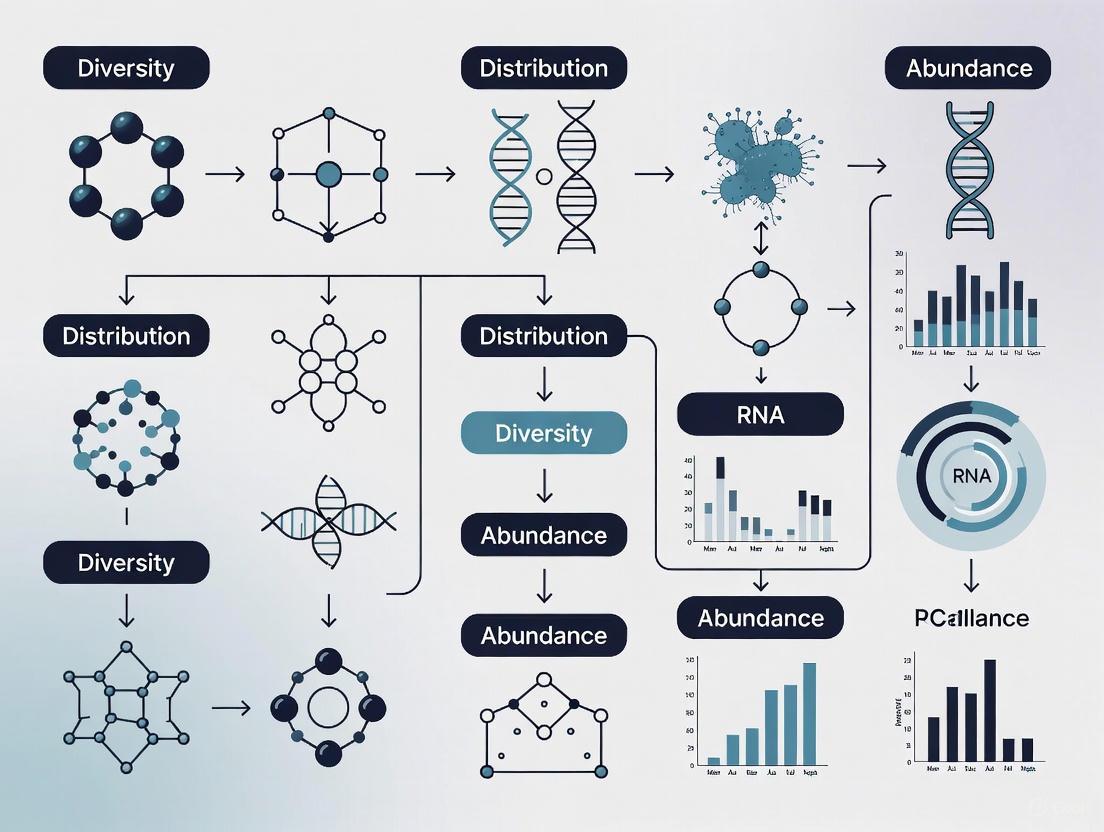
This article provides a comprehensive introduction to microbial ecology, exploring the universal principles that govern the diversity, distribution, and abundance of microorganisms across ecosystems.
Microbial Ecology Unveiled: Universal Patterns in Diversity, Distribution, and Abundance
Abstract
This article provides a comprehensive introduction to microbial ecology, exploring the universal principles that govern the diversity, distribution, and abundance of microorganisms across ecosystems. Tailored for researchers and drug development professionals, it synthesizes foundational macroecological patterns with cutting-edge methodological advances. We examine how large-scale datasets and modeling frameworks like the powerbend distribution and Stochastic Logistic Model are unifying our understanding of community assembly from soils to host-associated environments. The content further addresses common challenges in sampling and analysis, compares the predictive power of neutral and niche theories, and highlights the translational implications of these ecological insights for clinical and therapeutic development.
Universal Patterns and Foundational Principles of Microbial Diversity
The Species Abundance Distribution (SAD) represents one of ecology's most universal laws, describing how commonness and rarity are distributed within biological communities. Across virtually every ecosystem examined—from tropical forests to human guts—a consistent pattern emerges: most species are rare, while only a few are common [1]. This "hollow curve" distribution characterizes organisms across the tree of life, from animals and plants to microorganisms, where it is often termed the 'rare biosphere' [1] [2]. The SAD provides a fundamental window into the processes governing community assembly, making its accurate modeling essential for predicting ecological responses to environmental change.
Recent theoretical and empirical advances have challenged long-standing assumptions about SADs. While microbial and macroorganismal communities were once thought to follow different abundance distributions, new research points to unifying models that span taxonomic groups and habitats [1]. Simultaneously, the ecological significance of rare species is being re-evaluated through a functional lens, shifting focus from taxonomic scarcity to the unique ecological roles these species play [2]. This whitepaper synthesizes current understanding of SAD patterns, the models that describe them, and their implications for microbial ecology and drug development research.
The SAD in Microbial Systems: The 'Rare Biosphere' and Beyond
In microbial ecology, the SAD manifests as the 'rare biosphere,' where most bacterial, archaeal, and fungal taxa occur at low abundances yet constitute a vast reservoir of microbial diversity [2]. This rare biosphere presents both challenges and opportunities for researchers. While rare taxa are difficult to detect and characterize, they may represent untapped functional potential with significant implications for ecosystem functioning and therapeutic development.
Functional Significance of Rare Microbes
The traditional focus on taxonomic rarity has evolved toward understanding functional rarity, defined as the combination of numerical scarcity and trait distinctiveness [2]. Functionally rare microbes possess unique genetic and metabolic capabilities that may become critical under environmental change. Key aspects include:
- Distinct metabolic pathways that enable communities to respond to novel substrates or stressors
- Genetic reservoirs for antibiotic resistance and biogeochemical cycling
- Insurance effects that maintain ecosystem functioning under fluctuating conditions
Evidence suggests that functionally distinct taxa may contribute disproportionately to ecosystem multifunctionality despite their low abundances, highlighting their potential importance in both environmental and host-associated systems [2].
Quantitative Models of Species Abundance Distributions
Multiple statistical distributions have been proposed to describe SAD patterns, each with different mechanistic implications and empirical support. The table below summarizes the most prominent SAD models and their characteristics.
Table 1: Prominent Species Abundance Distribution Models
| Model | Functional Form | Ecological Interpretation | Typical Application |
|---|---|---|---|
| Log-series | Monotonically decreasing | Neutral processes; Maximum entropy | Animal and plant communities [3] |
| Poisson lognormal | Unimodal on log scale | Niche partitioning; Multiplicative growth | Global species distributions; Microbial communities [4] |
| Powerbend | Modified power law with upper bound | Maximum entropy with trait variation | Unifying model across life forms [1] |
| Negative binomial | Overdispersed Poisson | Gamma mixture of Poisson distributions | Neutral models [3] |
Model Performance Across Taxonomic Groups
Large-scale comparisons of SAD models reveal nuanced patterns of performance across organisms and ecosystems. Recent research synthesizing data from approximately 30,000 globally distributed communities demonstrates that the powerbend distribution emerges as a unifying model that accurately captures SADs across animals, plants, and microbes [1]. The powerbend model explains an average of 93.2% of variation in animal and plant SADs and provides the best fit for microbial communities when incorporating appropriate sampling error structures [1].
The performance of alternative models varies by taxonomic group and spatial scale:
- Poisson lognormal provides the best fit for global species abundance distributions across 38 of 39 eukaryotic taxonomic classes [4]
- Log-series often performs best for local-scale animal and plant communities when accounting for parameter number [3]
- Powerbend shows particular strength in capturing the full range of abundance values without systematic bias toward very abundant or very rare species [1]
Table 2: Goodness-of-Fit Comparisons Across Major SAD Models
| Model | Animal/Plant Communities (rₘ²) | Microbial Communities | Notable Strengths |
|---|---|---|---|
| Powerbend | 93.2% | Best fit with Poisson sampling | Accurate across abundance scales; Minimal bias |
| Poisson lognormal | 94.7% | Traditionally preferred | Excellent overall fit; Captures log-normal structure |
| Log-series | 73.2% | Poor without sampling correction | Parsimonious; Good for small samples |
| Power law | -0.079 (poor fit) | Poor without sampling correction | Theoretical basis; Simple form |
A Unifying Framework: Integrating Local and Regional Processes
A general trait-based framework for SADs has emerged that combines local ecological interactions with regional dispersal processes [5]. This framework bridges niche-based and neutral perspectives by modeling how species abundances reflect the balance between immigration from regional species pools and local exclusion due to environmental filtering and competition.
The core dynamic can be represented as:
Where Nᵢ represents species abundance, gᵢ(N→) captures local population growth, and mᵢ·(N_R,i - Nᵢ) models dispersal between local and regional pools [5]. This framework generates the characteristic SAD pattern with few common ("core") species whose abundances are determined primarily by local processes, and many rare ("satellite") species maintained by ongoing immigration.
Visualizing the Trait-Based SAD Framework
The following diagram illustrates the key components and processes in the trait-based SAD framework:
Figure 1: Trait-based framework for Species Abundance Distributions, integrating regional species pools with local community processes.
Experimental Protocols for Microbial SAD Analysis
Accurate characterization of microbial SADs requires careful experimental design that accounts for the unique challenges of microbial diversity measurement. The following protocol outlines key steps for robust SAD analysis in microbial systems.
Sample Collection and Processing
- Experimental Design: Replicate microbial communities should be maintained under controlled conditions with appropriate demographic manipulations (e.g., migration treatments) to test ecological hypotheses [6]
- DNA Extraction: Use standardized extraction kits with controls for efficiency and bias; record sampling effort meticulously as it critically influences SAD shape
- Sequence Processing: For 16S rRNA sequencing, cluster sequences into Operational Taxonomic Units (OTUs) at 97% similarity or use Amplicon Sequence Variants (ASVs); account for sequencing depth variation
Accounting for Sampling Artifacts
Microbial SAD analysis must incorporate appropriate sampling distributions to account for the fact that sequence reads represent samples of true cellular abundances:
- Poisson sampling error should be incorporated when fitting SAD models to 16S rRNA data [1]
- Rarefaction or statistical normalization should be applied before cross-sample comparisons
- Detection thresholds must be considered, as rare taxa may be missed due to limited sequencing depth
Model Fitting and Evaluation
- Use maximum likelihood estimation rather than least-squares fitting for appropriate statistical inference [3]
- Employ information-theoretic criteria (AIC) for model comparison, acknowledging that distinguishing between models requires sufficient species richness (>40 species) [1]
- Validate models using multiple goodness-of-fit measures (e.g., rₘ², acceptable fit for n₁, basic good fit) rather than relying on a single metric [7]
Research Toolkit for SAD Studies
Table 3: Essential Research Reagents and Tools for SAD Analysis
| Tool/Reagent | Function | Application Notes |
|---|---|---|
| 16S rRNA primers (e.g., 515F/806R) | Amplification of bacterial/archaeal target regions | Standardized primers improve cross-study comparisons |
| DNA extraction kits (e.g., MoBio PowerSoil) | Standardized community DNA isolation | Critical for accurate abundance estimation |
| SAD modeling packages (R packages: 'sads', 'vegan') | Statistical fitting of SAD models | Powerbend available in 'sads' package [1] |
| Metagenomic assembly tools (e.g., MEGAHIT, metaSPAdes) | Reconstruction of genomes from complex communities | Enables functional rarity assessment [2] |
| Functional annotation databases (e.g., KEGG, eggNOG) | Prediction of metabolic capabilities | Essential for moving beyond taxonomy to function [2] |
Implications for Drug Development and Microbial Engineering
Understanding SAD patterns and the functional significance of rare biosphere members has profound implications for drug discovery and microbial community engineering:
- Bioprospecting: Rare microbial taxa represent an untapped reservoir of novel biosynthetic gene clusters and metabolic pathways with therapeutic potential [2]
- Community-based therapeutics: Rational design of microbial consortia for therapeutic applications requires understanding how abundance distributions influence community stability and function
- Antibiotic resistance: The rare biosphere may serve as a reservoir for resistance genes that can transfer to pathogenic taxa under selective pressure
Future research should focus on linking SAD patterns to ecosystem functioning and therapeutic outcomes, particularly by integrating taxonomic abundance data with functional metagenomics and metabolomics.
The study of Species Abundance Distributions has evolved from describing a fundamental pattern to providing insights into the ecological and evolutionary processes structuring biological communities. The emerging consensus suggests that unifying models like the powerbend distribution can capture SADs across the tree of life, reflecting both deterministic and stochastic assembly processes [1]. Simultaneously, the reframing of the rare biosphere through a functional lens [2] highlights the importance of moving beyond taxonomic counts to understand the ecological significance of rare taxa.
For researchers in microbial ecology and drug development, these advances offer new approaches for predicting community dynamics, identifying functionally important taxa, and harnessing microbial diversity for therapeutic applications. As measurement technologies and modeling frameworks continue to improve, SAD analysis will play an increasingly important role in both basic ecology and applied biotechnology.
The Species Abundance Distribution (SAD) is one of ecology's most universal laws, characterized by the "hollow curve" pattern where most species in a community are rare, and only a few are abundant [1]. For decades, ecologists have sought a single unifying model to explain SADs across all life forms. Recent large-scale studies suggested a fundamental divide: the logseries distribution best describes animal and plant communities, while the Poisson lognormal distribution is superior for microbial communities [1]. This challenged the notion of universal macroecological rules. Here, we present evidence from a comprehensive analysis of approximately 30,000 globally distributed communities that the powerbend distribution emerges as a unifying model, accurately capturing SADs across animals, plants, and microbes. Our findings indicate that community assembly is not driven by pure neutrality but by a combination of stochastic fluctuations and deterministic mechanisms shaped by interspecific trait variation [1] [8].
The study of Species Abundance Distributions (SADs) seeks to explain the commonness and rarity of species within ecological communities—a pattern fundamental to understanding biodiversity and community assembly. The universal "hollow curve" SAD appears across spatial scales, habitat types, and taxonomic groups, suggesting underlying universal principles [1]. In microbial ecology, this pattern is recognized as the 'rare biosphere' [1].
The shape of the SAD reflects key ecological processes. Dozens of models have been proposed to explain it, ranging from purely statistical to those based on ecological processes. Key models include:
- Logseries: Originally developed by Fisher and later predicted by Hubbell's Neutral Theory [1].
- Lognormal: A classic model suggesting many independent factors affect abundance [1].
- Poisson Lognormal: Incorporates sampling error, making it suitable for sequence-based microbial data [1].
- Powerbend: A more flexible model derived from maximum information entropy theory that establishes an upper limit on dominant species' abundances [1].
The recent proposition that microorganisms and macroorganisms follow distinct SADs raised a critical question about the existence of unifying macroecological rules across the tree of life [1]. This whitepaper details how the powerbend distribution resolves this dichotomy.
Quantitative Model Performance Across Life Forms
This analysis evaluated four SAD models—Poisson lognormal, logseries, power law, and powerbend—using extensive datasets from animal, plant, and microbial communities [1]. Goodness-of-fit was measured using the modified coefficient of determination ((r_{m}^{2})), and models were compared via Akaike Information Criterion (AIC) where possible [1].
Table 1: Performance of SAD Models Across Animal and Plant Communities (13,819 Communities)
| Model | Weighted Mean (r_{m}^{2}) | % of SADs with Fit Not Significantly Different from Perfect | Performance Notes |
|---|---|---|---|
| Powerbend | 93.2% | 99.5% | Unbiased predictions across abundance scales. |
| Poisson Lognormal | 94.7% | 100% | Tended to overestimate the most abundant taxa. |
| Logseries | 73.2% | 88.7% | Less accurate overall. |
| Power Law | -0.079 | N/A | Poor fit to the data. |
Table 2: Performance of SAD Models in Microbial Communities (15,329 Communities)
| Model | With Poisson Sampling Error | Without Poisson Sampling Error | Key Finding |
|---|---|---|---|
| Powerbend | Outperformed all other models | Substantially improved fit | Emerged as the best-fitting model. |
| Poisson Lognormal | Previously considered best [1] | (Inherently includes error) | Performance was surpassed by powerbend. |
| Logseries | Improved fit | Less accurate | Not the best model for microbes. |
| Power Law | Improved fit | Poor fit | Remained inferior to powerbend. |
For animal and plant communities, both powerbend and Poisson lognormal demonstrated excellent overall predictive power, explaining over 93% of the variation on average [1]. However, powerbend produced unbiased predictions across all abundance scales, while Poisson lognormal systematically overestimated the abundance of the most common taxa [1]. AIC comparisons were less conclusive due to the limited number of species in many samples (weighted mean: 36.8 species per SAD), which reduces the statistical power to distinguish between models [1].
In microbial communities, which typically have much higher species richness, incorporating a Poisson sampling error—accounting for the 16S rRNA sequencing process—was crucial for accurate model evaluation [1]. When this error was included, the powerbend distribution provided the best fit, outperforming all other models, including the previously favored Poisson lognormal [1].
The Powerbend Distribution: A Unifying Model
Theoretical Foundation
The powerbend distribution is predicted by a maximum information entropy-based theory of ecology (METE) [1]. Maximum entropy principle (MaxEnt) posits that the most likely form of an ecological pattern is the one that represents the most unbiased distribution given a set of ecological constraints, such as the average species abundance [1]. Unlike purely neutral models that assume functional equivalence among species, the powerbend model incorporates intrinsic species trait differences, establishing an upper limit on the abundances of the most dominant species in a community [1]. This flexibility allows it to encompass other classical models like logseries and lognormal.
Ecological Interpretation
The superior performance of the powerbend distribution across the tree of life challenges the paradigm of pure neutrality. It suggests that community assembly is not solely driven by random birth, death, dispersal, and speciation events [1]. Instead, the findings support a combined role of neutral and deterministic processes, where interspecific trait variation and niche-based interactions shape the community alongside stochastic fluctuations [1]. This provides a more nuanced and comprehensive framework for understanding biodiversity patterns from human microbiomes to global-scale plant distributions.
Experimental Protocols & Methodologies
Data Collection and Community Sourcing
The foundational analysis that established powerbend as a unifying model relied on a massive dataset of ~30,000 globally distributed communities [1]. Data synthesis was critical:
- Macroorganisms: The study utilized the dataset compiled by Baldridge et al., comprising 13,819 animal and plant communities from terrestrial, aquatic, and marine environments [1].
- Microorganisms: The study utilized the dataset from Shoemaker et al., comprising 15,329 bacterial and archaeal communities from diverse environments [1]. Species were typically defined as operational taxonomic units (OTUs) at a 97% 16S rRNA sequence identity threshold [1].
Model Fitting and Statistical Analysis
A consistent methodology was applied to fit and compare the SAD models:
- Model Fitting: The four SAD models (powerbend, Poisson lognormal, logseries, power law) were fitted to the abundance data of each community.
- Goodness-of-fit Assessment: The primary metric for fit was the modified coefficient of determination ((r{m}^{2})) [1]. Monte Carlo simulations were used to determine if the (r{m}^{2}) values were statistically indistinguishable from a perfect fit (1.0).
- Model Comparison: The Akaike Information Criterion (AIC) was used for additional model selection, acknowledging its limitations in communities with low species richness (<40 species) [1].
- Accounting for Sequencing Artifacts: For microbial data, models were tested with and without an incorporated Poisson sampling error to account for the 16S rRNA sequencing process, which counts sequence reads rather than individual cells [1].
Supporting Experimental Evidence from Microbial Macroecology
Independent experimental work on microbial communities provides context for how ecological forces influence SADs. One key study manipulated migration in high-replication microbial time-series to observe its macroecological effects [6].
Experimental Workflow:
Figure 1: Experimental workflow for microbial macroecology. Replicate communities were subjected to different migration treatments over serial growth cycles, followed by sequencing and analysis to identify macroecological patterns explainable by models like the SLM [6].
Migration Treatments:
- Findings: The study demonstrated that macroecological patterns from nature can be recapitulated in the lab. Furthermore, manipulating migration altered these patterns, and the resulting SADs and other patterns could be unified under the Stochastic Logistic Model of growth (SLM), which incorporates environmental noise and density-dependence [6]. This reinforces the concept that SADs are shaped by measurable ecological forces.
The Scientist's Toolkit: Research Reagent Solutions
Table 3: Essential Materials and Reagents for Microbial Macroecology Research
| Item | Function / Application |
|---|---|
| 16S rRNA Gene Primers (e.g., 515F/806R) | Amplification of the hypervariable region of the 16S rRNA gene for taxonomic identification and community profiling. |
| DNA Extraction Kit (e.g., MoBio PowerSoil) | Standardized isolation of high-quality microbial genomic DNA from complex environmental samples or lab cultures. |
| High-Throughput Sequencer (e.g., Illumina MiSeq) | Generation of millions of 16S rRNA sequence reads for deep community analysis. |
| Glucose-Minimal Media | Defined growth medium for experimental microcosms, allowing control of a single carbon source to study community assembly [6]. |
| Progenitor Community (e.g., Complex Soil Sample) | The natural, diverse microbial community used as the source for inoculating experimental replicates [6]. |
| R Package 'sads' | Statistical software package used for fitting and comparing multiple SAD models, including the powerbend distribution [1]. |
The powerbend distribution successfully challenges the life-form divisions previously thought to characterize species abundance distributions. By providing a unified model for animals, plants, and microbes, it offers a robust, single-model framework for biodiversity analysis and prediction. This breakthrough argues against pure neutrality and for a more integrated ecological theory where both random and deterministic processes collectively govern community assembly. For researchers in drug development and human health, this model provides a powerful tool for understanding the "rare biosphere" in microbiomes, which may hold keys to resilience, pathogenesis, and therapeutic manipulation. The powerbend distribution marks a significant step toward a truly unified macroecology.
A fundamental challenge in microbial ecology lies in connecting the vast diversity observed in natural environments with the controlled conditions required for mechanistic understanding. Macroecology, which characterizes statistical patterns of biodiversity, has identified universal patterns of diversity and abundance in natural microbial communities that can be captured by effective models [6]. Simultaneously, experimental ecology has leveraged high-replication time-series to investigate the underlying ecological forces that shape communities [9]. However, a significant gap has persisted between these approaches – we have not known whether the macroecological patterns documented in natural systems can be faithfully recapitulated in laboratory settings, or how experimental manipulations might alter these fundamental patterns [6] [10].
The Stochastic Logistic Model (SLM) of growth has emerged as a powerful framework that can quantitatively capture a broad assemblage of microbial macroecological patterns [11] [12]. This minimal mathematical model of ecological dynamics describes density-dependent growth with environmental noise, and its stationary solution predicts that the abundance of a given community member across sites follows a gamma distribution [13] [14]. The SLM has demonstrated remarkable success in predicting multiple empirical patterns, including species abundance distributions, abundance fluctuations, and relationships between community diversity metrics [6] [11].
This technical guide explores how the SLM provides a unifying framework for bridging experimental ecology and macroecology. We demonstrate that microbial macroecological patterns observed in nature not only exist in laboratory settings but can be systematically manipulated and predicted using the SLM. By combining high-replication experiments with this modeling framework, microbial macroecology transitions from a descriptive to a predictive discipline, enabling researchers to quantitatively forecast how demographic manipulations such as migration will impact community diversity patterns [6].
Core Macroecological Patterns in Microbial Systems
Universal Patterns in Natural Microbial Communities
Microbial communities across diverse environments exhibit remarkable consistency in their statistical patterns of biodiversity. Three key macroecological patterns have been consistently observed in natural systems and can be unified under the Stochastic Logistic Model framework [6] [11]:
- Abundance Fluctuation Distribution (AFD): The abundance of a given community member across different communities follows a gamma distribution [13] [14].
- Taylor's Law: The mean abundance of a given community member is not independent of its variance, following a specific power-law relationship [6].
- Lognormal Mean Abundance: The distribution of mean abundances of community members across communities follows a lognormal distribution [11].
Additionally, the Species Abundance Distribution (SAD), which describes the commonness and rarity in ecosystems, consistently follows a hollow-curve pattern across animal, plant, and microbial communities, with most species being rare and only a few being abundant [1]. Recent research has shown that the powerbend distribution emerges as a unifying model that accurately captures SADs across all life forms, challenging purely neutral theories and suggesting community assembly is driven by a combination of random fluctuations and deterministic mechanisms [1].
The Stochastic Logistic Model: A Unifying Framework
The Stochastic Logistic Model provides a minimalistic yet powerful mathematical framework that captures these universal patterns. The SLM describes the temporal evolution of species abundances under stochastic environmental noise, where species abundances fluctuate in time around a constant typical abundance [13] [14].
At stationarity, the abundance λᵢ of a species i follows a Gamma distribution:
P(λᵢ;Kᵢ,σᵢ) = (1/Γ(2/σᵢ-1)) × (2/σᵢKᵢ)^{2/σᵢ-1} × λᵢ^{2/σᵢ-2} × e^{-(2/σᵢKᵢ)λᵢ}
Where:
- Kᵢ is a parameter related to the carrying capacity of species i
- σᵢ ∈ [0, 2) is a parameter related to the level of environmental variability [13] [14]
Table 1: Key Macroecological Patterns and Their SLM Predictions
| Pattern Name | Empirical Observation | SLM Prediction | Experimental Validation |
|---|---|---|---|
| Abundance Fluctuation Distribution (AFD) | Gamma distribution across communities | Gamma distribution | Confirmed in experimental communities [6] |
| Species Abundance Distribution (SAD) | Hollow-curve (many rare, few abundant species) | Emergent property | Powerbend provides superior fit [1] |
| Mean-Variance Relationship (Taylor's Law) | Power-law scaling | Quantitative prediction | Recapitulated in lab with migration manipulations [6] |
| Dissimilarity-Overlap Relationship | Negative correlation | Quantitative prediction with sampling | Reproduced in model with correlated carrying capacities [13] |
Experimental Recapitulation of Natural Patterns
Laboratory Evidence for Macroecological Patterns
Recent experimental work has demonstrated that the macroecological patterns observed in natural microbial communities can indeed be recapitulated in laboratory settings despite controlled conditions. Using high-replication time-series of microbial communities, researchers have confirmed that the same statistical patterns of biodiversity emerge in simplified laboratory environments [6] [10].
In a key experiment, communities were assembled from a single progenitor soil community and maintained in microcosms with glucose as the sole carbon source. Each community underwent serial transfer every 48 hours, with a fraction of the volume (1:125 aliquot ratio) used to inoculate fresh medium [6]. This experimental design generated the high-replication data necessary to investigate macroecological patterns and test the SLM's predictive power under controlled conditions.
The experimental results demonstrated that the three core macroecological patterns – gamma-distributed abundance fluctuations, Taylor's Law, and lognormal distribution of mean abundances – all emerged in these laboratory communities, closely matching observations from natural systems [6]. This finding establishes that these patterns represent fundamental statistical properties of microbial communities that persist even when environmental complexity is dramatically reduced.
Migration as an Experimental Manipulation
To test the predictive power of the SLM framework, researchers implemented controlled manipulations of ecological forces, particularly migration between communities. Two distinct migration treatments were applied [6]:
- Regional Migration: A classical mainland-island scenario where migrants from the progenitor community continued to migrate into replicate communities over time.
- Global Migration: A fully-connected metacommunity model where migration occurred between communities that were assembled from the same progenitor community.
These manipulations produced systematic and predictable changes in observed macroecological patterns. The SLM, when modified to incorporate these migration schemes alongside experimental details such as sampling processes, successfully predicted the macroecological outcomes of these manipulations [6]. This demonstrates that the SLM framework can not only describe observed patterns but also forecast how communities will respond to specific ecological interventions.
Table 2: Experimental Parameters for Macroecological Manipulation
| Parameter | Description | Role in Macroecology | Manipulation Example |
|---|---|---|---|
| Migration Rate | Rate of individual exchange between communities | Impacts community heterogeneity and similarity | Regional vs. global migration schemes [6] |
| Aliquot Ratio | Fraction transferred during serial passage (e.g., 1:125) | Determines sampling intensity and demographic noise | Fixed at 1:125 in referenced experiments [6] |
| Resource Supply | Carbon source composition and concentration | Sets carrying capacities and growth parameters | Glucose as sole carbon source [6] |
| Community Inoculation | Source of founding community | Determines initial species pool and abundances | Single progenitor soil community [6] |
| Dispersal Rate | Relative rate of migration compared to division | Governs assembly regime and diversity outcomes | Low vs. high dispersal regimes [9] |
The Stochastic Logistic Model: Methodology and Implementation
Core Model Specification
The Stochastic Logistic Model provides a mathematical foundation for predicting microbial macroecological patterns. The model can be specified through its dynamical equation for the abundance Nᵢ of species i [13] [14]:
dNᵢ/dt = rᵢNᵢ(1 - Nᵢ/Kᵢ) + σᵢNᵢξᵢ(t)
Where:
- rᵢ is the intrinsic growth rate of species i
- Kᵢ is the carrying capacity of species i
- σᵢ is the intensity of environmental noise
- ξᵢ(t) is Gaussian white noise with mean zero and unit variance
The stationary solution of this equation leads to the Gamma distribution of abundances shown in Section 2.2. The parameters Kᵢ and σᵢ for each operational taxonomic unit (OTU) can be estimated from time series of abundance data [14].
Extensions for Experimental Applications
To apply the SLM to experimental systems, several extensions have been developed that incorporate key experimental details:
Sampling Process: Experimental data reflects sampling processes rather than true abundances. The SLM can incorporate a Poisson sampling process to account for this discrepancy [13].
Correlated Carrying Capacities: To model beta-diversity patterns, the SLM can be extended to include correlations in carrying capacities across different communities through the relationship [13]:
Kᵢʲ = Kᵢ₀ + εᵢʲ
Where Kᵢʲ is the carrying capacity of species i in community j, Kᵢ₀ is a typical value, and εᵢʲ is a community-specific deviation.
Migration Effects: The SLM framework can incorporate migration effects by modifying the dynamical equations to include immigration and emigration terms [6].
Diagram 1: SLM Framework and Extensions for Experimental Prediction. This workflow illustrates how the core Stochastic Logistic Model is extended to incorporate experimental details, enabling quantitative predictions of macroecological patterns.
Experimental Protocols for Macroecological Pattern Analysis
Community Assembly and Maintenance Protocol
To investigate macroecological patterns in laboratory settings, follow this established protocol for community assembly and maintenance [6]:
Progenitor Community Preparation:
- Source microbial communities from natural environments (e.g., soil samples)
- Characterize initial diversity via 16S rRNA amplicon sequencing
- Create glycerol stocks for long-term preservation
Microcosm Establishment:
- Prepare minimal medium with defined carbon source (e.g., 0.5 g/L glucose)
- Inoculate with progenitor community at standardized density (e.g., 1:100 dilution)
- Incubate under controlled conditions (e.g., 30°C with shaking)
Serial Transfer Regime:
- Grow communities for fixed period (e.g., 48 hours)
- Sample aliquot (e.g., 1:125 ratio) for community analysis (DNA sequencing)
- Transfer standardized volume to fresh medium
- Maintain replicates for each treatment (n ≥ 24 recommended)
Migration Treatments:
- Regional Migration: Periodic addition of cells from progenitor community stock
- Global Migration: Scheduled exchange of cells between replicate communities
- Control: No migration between communities
Data Collection and Molecular Analysis
Accurate characterization of macroecological patterns requires specific approaches to data collection:
High-Replication Sampling:
- Sequence moderate number of communities over time (≥12 time points)
- Maintain high replication within treatments (≥24 communities)
- Include periods with and without migration within same community
Molecular Processing:
- Extract DNA using standardized kits (e.g., DNeasy PowerSoil Kit)
- Amplify 16S rRNA gene (V4 region with 515F/806R primers)
- Sequence on Illumina platform (MiSeq or NovaSeq)
- Process sequences through standard pipelines (QIIME 2, DADA2)
Abundance Quantification:
- Cluster sequences into OTUs at 97% identity or use ASV approach
- Generate abundance tables (counts per OTU/ASV per sample)
- Rarefy data to standardized sequencing depth for comparisons
Quantitative Framework for Pattern Analysis
Parameter Estimation from Experimental Data
The SLM parameters can be estimated from experimental time series data using the following approaches [14]:
Carrying Capacity (Kᵢ) Estimation:
- Calculate mean abundance of each OTU across time points
- Account for compositional nature of data (log-ratio transformations)
- Kᵢ values are proportional to true carrying capacities
Environmental Noise (σᵢ) Estimation:
- Calculate variance of log-abundances for each OTU
- Relate to σᵢ through model-specific relationships
- Typically falls in range σᵢ ∈ [0, 2)
Cross-Community Correlation Estimation:
- Calculate correlation of Kᵢ values for same OTU across different communities
- This single parameter captures multidimensional similarity between communities [13]
Beta-Diversity Pattern Prediction
The extended SLM with correlated carrying capacities quantitatively predicts several beta-diversity metrics [13]:
Dissimilarity-Overlap Analysis (DOA):
- The model naturally reproduces negative correlation between overlap and dissimilarity
- This relationship emerges due to random sampling effects
- Quantitative agreement with empirical dissimilarity-overlap curves
Multiple Beta-Diversity Metrics:
- The framework simultaneously predicts Bray-Curtis dissimilarity, Jaccard index, and related metrics
- Single parameter (carrying capacity correlation) controls multiple diversity measures
Table 3: Research Reagent Solutions for Experimental Macroecology
| Reagent/Resource | Function/Application | Example Specifications | Key Considerations |
|---|---|---|---|
| Minimal Medium Base | Controlled growth environment | M9 or similar minimal salts | Enables manipulation of specific resources |
| Carbon Sources | Determinant of carrying capacities | Glucose, 0.5 g/L concentration | Single vs. multiple carbon sources |
| DNA Extraction Kit | Community biomass processing | DNeasy PowerSoil Kit | Standardized across all samples |
| 16S rRNA Primers | Taxonomic profiling | 515F/806R for V4 region | Consistent amplification region |
| Sequencing Standards | Quantification calibration | Mock communities with known composition | Controls for technical variability |
| Glycerol Stocks | Long-term community preservation | 25% glycerol at -80°C | Maintains reproducible founding populations |
Applications and Research Implications
Predictive Microbial Ecology
The integration of SLM with experimental macroecology enables truly predictive microbial ecology. Researchers can now [6]:
- Forecast Community Responses: Predict how manipulations like migration will alter diversity patterns before conducting experiments
- Design Targeted Interventions: Engineer community outcomes by manipulating specific parameters in the SLM framework
- Extract Mechanistic Insights: Identify when observed patterns deviate from SLM predictions, suggesting additional ecological processes
Cross-Scale Biodiversity Prediction
The SLM framework successfully predicts biodiversity patterns across different taxonomic and phylogenetic scales [11] [12]. Through coarse-graining operations where community members are grouped by taxonomic rank or phylogenetic distance, researchers have found that:
- Scale-Invariant Patterns: Measures of biodiversity at a given scale can be consistently predicted using the SLM
- DBD Hypothesis Evaluation: The relationship between richness estimates at different scales can be quantitatively predicted assuming independence among community members
- Interaction Effects: Only by including correlations between abundances (e.g., from interactions) can diversity relationships between scales be fully predicted
Diagram 2: Experimental Workflow for Predictive Microbial Macroecology. This workflow outlines the process from experimental design through to predictive modeling, demonstrating how the SLM framework enables forecasting of community patterns.
The Stochastic Logistic Model provides a powerful, minimalistic framework that successfully bridges the historical gap between observational macroecology and experimental microbial ecology. By demonstrating that natural macroecological patterns can be recapitulated in laboratory settings and manipulated through controlled interventions, this approach establishes microbial macroecology as a predictive discipline. The SLM's capacity to quantitatively forecast how demographic manipulations impact diversity patterns, combined with its effectiveness across taxonomic scales, offers researchers a robust toolkit for explaining, maintaining, and engineering microbial communities. This framework sets the stage for a new era of predictive microbial ecology, where statistical patterns inform mechanistic understanding and enable targeted community design.
In microbial ecology, understanding the distribution of life requires analyzing biodiversity through both temporal and spatial lenses. The concepts of alpha diversity (the diversity within a single local community or habitat) and beta diversity (the variation in species composition between different communities) serve as fundamental metrics for quantifying these patterns [15]. For researchers investigating everything from host-associated microbiomes to large-scale environmental samples, a pressing question remains: what are the relative contributions of geography versus seasonality in structuring these diversity measures? Emerging evidence confirms that seasonality exerts a dominant influence on alpha diversity, while geographical distance and location-specific factors are primary drivers of beta diversity [15] [16]. This whitepaper synthesizes recent findings on these spatiotemporal dynamics, providing a technical guide for scientists and drug development professionals seeking to understand the forces that structure microbial communities. Framed within a broader thesis on microbial diversity distribution, this document integrates quantitative data, experimental protocols, and visual frameworks to equip researchers with the tools needed to decipher community assembly rules.
Core Concepts: Alpha and Beta Diversity in Space and Time
Defining the Spatiotemporal Framework
In ecological research, alpha diversity quantifies the mean species diversity within a local habitat at a particular site. It is typically measured using indices such as species richness (the number of different species), the Shannon index (which considers both richness and evenness), or Simpson's index. In contrast, beta diversity represents the ratio between regional and local species diversity, measuring the change in species composition across environmental gradients, geographical distances, or between different habitats. The investigation of these metrics across spatiotemporal dimensions involves repeated sampling across different geographical locations and seasons to disentangle the effects of place from time.
Theoretical frameworks predict that microbial community assembly is driven by a combination of deterministic processes (e.g., niche partitioning shaped by environmental filters) and stochastic processes (e.g., random birth-death events, dispersal) [1]. The relative influence of these processes manifests differently on alpha and beta diversity, with seasonality often acting as a deterministic filter on local membership, and geography capturing historical contingencies, dispersal limitations, and local adaptation that shape regional species pools.
Key Drivers of Spatiotemporal Diversity Patterns
Table 1: Primary Drivers of Alpha and Beta Diversity Identified in Recent Studies
| Diversity Metric | Primary Spatial Driver | Primary Temporal Driver | Key Influencing Factors |
|---|---|---|---|
| Alpha Diversity | Geographical region (weak) [15] | Seasonal changes (strong) [15] | Temperature, precipitation [15] |
| Beta Diversity | Geographical location (strong) [15] [16] | Seasonal turnover (moderate) [16] | Leaf phosphorus, soil available potassium [15] |
Recent research on fungal communities associated with rubber trees provides a clear illustration of this dichotomy. A 2024 study demonstrated that alpha diversity was highly responsive to seasonal changes in temperature and precipitation, particularly in aboveground compartments like the leaf endosphere and phyllosphere [15]. In contrast, beta diversity exhibited a strong geographical pattern, structured by site-specific factors such as leaf phosphorus and soil available potassium [15]. This suggests that while local membership fluctuates with time, the fundamental compositional differences between communities are imprinted by location-specific properties.
Furthermore, a 2025 study in the Thracian Sea on marine microbial and fish communities reinforced these findings, showing clear clustering of beta diversity by month and depth, and marked temporal turnover in fish communities [16]. Multivariate analyses revealed significant concordance between microbial and fish communities, indicating that both groups respond to similar underlying spatiotemporal environmental gradients [16].
Case Studies in Diverse Ecosystems
The Soil-Plant Continuum in Rubber Plantations
A landmark study by Wei and colleagues investigated fungal diversity across multiple plant and soil compartments in rubber trees over two seasons and two geographically distinct regions in China [15]. The study's design allowed for a direct comparison of spatial and temporal effects.
Key Findings:
- Alpha Diversity: Was primarily influenced by seasonal changes and associated physicochemical factors. Notably, richness increased in some compartments during the dry season, but Shannon's diversity and evenness remained unchanged, suggesting that new fungal taxa filled available niche space without drastically altering the existing community structure [15].
- Beta Diversity: Showed a strong geographical pattern, with leaf phosphorus and soil available potassium identified as key contributors to spatial variation. This points to the role of historical factors, soil properties, and site-specific conditions in structuring community composition over large spatial scales [15].
The application of machine learning, specifically random forest analysis, was instrumental in identifying these critical environmental drivers, showcasing the power of advanced computational tools to uncover complex, nonlinear relationships in microbial data [15].
Marine Ecosystems of the Thracian Sea
Research in the Thracian Sea, a semi-enclosed coastal basin, utilized environmental DNA (eDNA) metabarcoding to simultaneously track microbial and fish communities across spring and summer months [16]. This approach highlighted how spatiotemporal dynamics operate across different biological kingdoms.
Key Findings:
- Microbial Communities: Exhibited strong seasonal and depth-related structuring. Alpha diversity was highest in spring and declined during summer, while beta diversity analyses revealed clear clustering by month and depth [16].
- Fish Communities: Displayed marked temporal turnover but limited spatial segregation, with beta diversity showing seasonal shifts among dominant taxa [16].
- Cross-Kingdom Concordance: Multivariate and co-structure analyses revealed moderate but significant concordance between microbial and fish communities, indicating parallel responses to spatiotemporal environmental parameters [16].
Sanitary Landfill Baseliner Microbiomes
An investigation into the seasonal dynamics of microbial communities within the compacted clay liners of an active sanitary landfill revealed another dimension of spatiotemporal dynamics [17].
Key Findings:
- Habitat-Specific Stability: Baseliner microbiomes exhibited greater compositional stability and smaller beta-diversity shifts compared to the more dynamic leachate communities, underscoring the buffering capacity of the soil matrix [17].
- Seasonal Shifts: Alpha diversity increased in both matrices during the dry season, and microbial community shifts were primarily driven by seasonal variations in environmental parameters [17].
Methodologies for Spatiotemporal Analysis
Experimental Workflow for eDNA-Based Studies
The following diagram outlines a standardized protocol for assessing spatiotemporal diversity dynamics using environmental DNA, as employed in the Thracian Sea study [16].
The Scientist's Toolkit: Essential Reagents and Materials
Table 2: Key Research Reagents and Materials for Spatiotemporal Diversity Studies
| Item Name | Function/Application | Example Use Case |
|---|---|---|
| Niskin Bottle | Collection of water samples at specific depths | Marine sample collection [16] |
| CTD Profiler | Measures conductivity, temperature, depth | Recording in-situ environmental parameters [16] |
| Glass Fiber Filters (e.g., Macherey-Nagel) | Capturing eDNA from water samples during filtration | eDNA concentration from seawater [16] |
| NucleoSpin eDNA Water Kit | Extraction of purified eDNA from filters | DNA isolation for metabarcoding [16] |
| KAPA HiFi Polymerase | High-fidelity PCR amplification | Target gene amplification (16S, CytB) [16] |
| Universal Primers (e.g., 515F/806R for 16S) | Amplification of target gene regions | Microbial and ichthyofaunal profiling [16] |
| Random Forest Analysis | Machine learning for identifying key drivers | Pinpointing environmental drivers of diversity [15] |
Quantitative Modeling and Kinetic Analysis
For translating microbial community responses into testable hypotheses, tools like Kinbiont offer an open-source solution that integrates dynamic models with machine learning [18]. This Julia package performs model-based parameter inference from growth kinetics data, which can be critical for understanding how environmental perturbations affect microbial communities across space and time. The software allows researchers to fit complex models—including user-defined ordinary differential equation systems—to time-series data, inferring parameters like growth rates and lag-phase duration that may vary spatiotemporally [18].
Implications for Research and Conservation
Theoretical and Ecological Implications
The consistent observation that seasonality dominates alpha diversity while geography structures beta diversity supports ecological theories suggesting that microbial diversity follows predictable patterns along environmental gradients [15]. The finding that new taxa can seasonally augment local richness without disrupting core community structure suggests a high degree of functional redundancy and resilience in these ecosystems [15]. Furthermore, the emergence of unified macroecological patterns, such as the Powerbend distribution for species abundance across animals, plants, and microbes, points to universal principles governing community assembly [1].
From a conservation perspective, these spatiotemporal dynamics highlight the vulnerability of microbial communities to anthropogenic pressures. Habitat loss, pollution, and climate change can disrupt both the seasonal cycles governing alpha diversity and the geographical factors maintaining beta diversity, with potentially severe consequences for ecosystem functioning [19]. Integrating microbial diversity into conservation planning, including the protection of microbial diversity hotspots and the consideration of host-associated microbiomes in species conservation, is therefore increasingly urgent [19].
Future Directions and Research Applications
For researchers and drug development professionals, understanding spatiotemporal dynamics in microbial communities opens several promising avenues:
- Bioremediation: Identifying mercury-adapted bacterial communities carrying the merA gene in polluted sites demonstrates the potential for harnessing spatially structured microbial functions for environmental cleanup [20].
- Standardized Monitoring: The eDNA framework provides a non-invasive, high-throughput method for tracking biodiversity changes across landscapes and seasons, valuable for assessing ecosystem health and the impact of interventions [16].
- Predictive Modeling: Integrating kinetic tools like Kinbiont with spatiotemporal data can help build predictive models of microbial community responses to antibiotics, environmental toxins, or other stressors, with direct applications in public health and ecotoxicology [18].
In conclusion, the spatiotemporal dynamics of alpha and beta diversity represent a fundamental axis of variation in microbial ecology. By employing integrated molecular tools, computational modeling, and a rigorous spatiotemporal framework, researchers can continue to unravel the complex assembly rules governing microbial worlds, ultimately supporting more effective conservation, bioremediation, and public health strategies.
Advanced Methodologies for Characterizing Microbial Communities
The study of microbial ecology has been fundamentally transformed by molecular techniques that move beyond cataloging diversity to precisely quantifying the functional potential and abundance of microbial communities. Understanding not just "who is there" but also "what they are doing" and "how many are present" is crucial for deciphering the ecological principles governing community assembly, function, and dynamics. Remarkably, ecological investigations consistently reveal that virtually every community is composed of many rare species and a few abundant species, a universal pattern described by the species abundance distribution (SAD) [1]. Recent research has identified the powerbend distribution as a unifying model that accurately captures SADs across animals, plants, and microbes, challenging notions of pure neutrality and suggesting community assembly is driven by a combination of random fluctuations and deterministic mechanisms shaped by interspecific trait variation [1].
This technical guide examines the integrated application of two powerful approaches—amplicon sequencing and digital droplet PCR (ddPCR)—for quantifying functional genes and microbial abundance within this ecological framework. While next-generation sequencing (NGS) technologies like amplicon sequencing provide comprehensive community profiling, digital PCR offers unprecedented precision in absolute quantification of specific genetic targets [21]. This combination enables researchers to bridge the gap between taxonomic composition and functional capacity, offering insights into the ecological mechanisms that structure microbial communities across diverse habitats.
Core Technologies: Principles and Evolution
Amplicon Sequencing for Community Profiling
Amplicon sequencing, particularly of the 16S rRNA gene for bacteria and archaea, has become the cornerstone of microbial ecology for characterizing taxonomic composition. This approach involves PCR amplification of conserved genomic regions with hypervariable sequences that provide taxonomic discrimination, followed by high-throughput sequencing. The strength of this technique lies in its ability to provide a comprehensive, semi-quantitative overview of microbial community structure without prior knowledge of the organisms present [22] [23].
However, traditional amplicon sequencing faces limitations in quantitative accuracy due to several factors: amplification biases introduced during PCR, varying rRNA gene copy numbers between taxa (ranging from 1-21 copies per genome), and the inability to distinguish between DNA derived from active versus dormant cells or free DNA [23]. Additionally, with low-biomass samples, standard protocols often require DNA input amounts (typically 1-100 ng) that may not be achievable, potentially limiting analysis or introducing biases from contaminating DNA [22]. These limitations have prompted the development of more quantitative approaches, including the integration of ddPCR into sequencing workflows.
Digital Droplet PCR: Principles and Advantages
Digital droplet PCR represents a fundamental evolution in nucleic acid quantification, providing absolute quantification without the need for standard curves. The core principle involves partitioning a PCR reaction into thousands of nanoliter-sized droplets, effectively creating individual microreactors where amplification occurs independently. After endpoint PCR amplification, droplets are analyzed one-by-one in a flow cytometer to count the proportion of fluorescence-positive droplets, with target concentration calculated using Poisson distribution statistics [24] [21].
Table 1: Evolution of PCR Technologies in Microbial Ecology
| Technology | Quantification Approach | Key Advantages | Primary Limitations |
|---|---|---|---|
| Traditional PCR | End-point, qualitative | Simple, cost-effective; good for presence/absence | No quantification; post-PCR processing required |
| Quantitative PCR (qPCR) | Relative quantification via standard curves | Wide dynamic range; high throughput | Requires standard curves; affected by PCR inhibitors |
| Digital Droplet PCR (ddPCR) | Absolute quantification via Poisson statistics | High precision; resistant to inhibitors; no standard curve needed | Higher cost; lower throughput; complex workflow |
The partitioning nature of ddPCR provides several critical advantages for microbial ecology applications. First, it significantly enhances detection sensitivity for rare targets amid complex background DNA, as compartmentalization increases the effective concentration of rare alleles [21]. Second, ddPCR demonstrates superior resilience to PCR inhibitors commonly found in environmental samples (e.g., soil, wastewater) because inhibitors are diluted into individual droplets rather than affecting the entire reaction [24] [22]. Third, it provides absolute quantification without reference to standards, enabling more accurate between-sample comparisons [25].
Integrated Approaches: Methodologies and Protocols
ddPCR-Enhanced Amplicon Sequencing for Low-Biomass Samples
Standard 16S rRNA gene sequencing protocols often require DNA input amounts (typically 1-100 ng) that may not be achievable with low-biomass samples. An optimized approach leveraging ddPCR can significantly improve sensitivity and reliability:
Sample Preparation and Nucleic Acid Extraction
- Extract DNA using specialized kits designed for low-biomass samples (e.g., MoBio Powersoil DNA Isolation Kit) [26]
- Include rigorous negative controls throughout the extraction process to monitor contamination
- Assess DNA quality using spectrophotometry (260/280 ratio ~1.8-2.0) and fluorometry for accurate quantification of low concentrations [26] [23]
ddPCR-Enhanced Library Preparation
- Perform first-step PCR with targeted primers (e.g., V3-V4 region primers Pro341F/Pro805R) using reduced cycling conditions to minimize bias [23]
- Clean amplicons and use as template for second-step barcoding PCR with Illumina-compatible indices [22]
- Dilute barcoded amplicons according to the formula: Dilution Factor = (Target Concentration × Droplet Volume × Total Droplet Count) / (DNA Copies per Droplet) [22]
- Perform ddPCR using plain P5 and P7 primers to re-amplify templates within droplets
- Extract ddPCR amplicons and proceed with standard library preparation for sequencing
This approach has demonstrated successful amplification from DNA inputs as low as 50 pg, significantly below the detection limit of standard fluorometric methods [22]. For extremely low template concentrations (<50 pg), an additional "emergency plan" amplification step using high-fidelity polymerase may be implemented to rescue samples that would otherwise fail [22].
Absolute Quantification of Functional Genes
Quantifying functional genes provides insights into microbial community capabilities for specific biogeochemical processes. The following protocol adapts established qPCR methods for PAH-degradation genes to ddPCR for enhanced quantification [26]:
Primer and Probe Design
- Select target genes based on ecological functions of interest (e.g., naphthalene dioxygenase for hydrocarbon degradation)
- Design primers and probes with high specificity; verify using in silico tools against reference databases
- Label probes with fluorescent dyes compatible with ddPCR systems (FAM, HEX, VIC, CY5)
ddPCR Reaction Setup
- Prepare reaction mix containing:
- 10-22 μL ddPCR Supermix
- 900 nM forward and reverse primers
- 250 nM fluorescent probe
- 1-5 μL DNA template
- Nuclease-free water to total volume (varies by system)
- Generate droplets using appropriate droplet generator (20,000 droplets recommended for Bio-Rad QX200)
- Transfer droplets to PCR plate and seal securely
Thermal Cycling and Analysis
- Amplify using optimized cycling conditions:
- Initial denaturation: 95°C for 10 minutes
- 40 cycles of: 94°C for 30 seconds, Primer-specific annealing temperature (55-60°C) for 60 seconds
- Enzyme deactivation: 98°C for 10 minutes
- Signal stabilization: 4°C hold
- Read plate on droplet reader counting positive and negative droplets
- Calculate absolute concentration using Poisson distribution: Concentration = -ln(1-p) × (1/Droplet Volume) × Dilution Factor where p = fraction of positive droplets
This method has been successfully applied to quantify functional genes including naphthalene dioxygenase (nahAc), pyrene dioxygenase (nidA), and catechol dioxygenase genes in environmental samples, providing precise measurements of microbial functional potential [26].
Figure 1: Integrated Workflow for ddPCR and Amplicon Sequencing. The diagram illustrates parallel pathways for community profiling (blue) and target quantification (green) from a single sample, highlighting points of methodological integration.
Comparative Analysis and Data Integration
Performance Comparison in Microbial Ecology Applications
The complementary strengths of amplicon sequencing and ddPCR enable researchers to address different but interrelated ecological questions. Direct comparisons highlight their respective advantages:
Table 2: Method Comparison for Microbial Ecology Applications
| Parameter | Amplicon Sequencing | ddPCR |
|---|---|---|
| Primary Output | Taxonomic profile; community composition | Absolute quantification of specific targets |
| Quantification | Relative abundance (%) | Absolute copies/μL or copies/g |
| Throughput | High (100s-1000s of targets simultaneously) | Low to medium (1-5 targets per reaction) |
| Sensitivity | Limited by sequencing depth | Exceptional for rare targets (detection down to single copies) |
| Inhibitor Tolerance | Moderate | High (due to sample partitioning) |
| Dynamic Range | Limited by PCR and sequencing biases | 5 orders of magnitude |
| Cost per Sample | $20-100 | $10-50 per reaction |
In wastewater surveillance studies directly comparing targeted amplicon sequencing and ddPCR for SARS-CoV-2 variant detection, ddPCR demonstrated superior sensitivity. When positive mutations were detected by RT-ddPCR, 42.6% of these detection events were missed by sequencing due to limited read coverage or failed detection [27]. Furthermore, when sequencing reported negative or depth-limited detections, 26.7% were positive by ddPCR, highlighting significant sensitivity limitations of sequencing-based quantification [27].
Research Reagent Solutions for Functional Gene Quantification
Successful implementation of these methodologies requires carefully selected reagents and controls tailored to specific research goals:
Table 3: Essential Research Reagents for Functional Gene Analysis
| Reagent/Category | Specific Examples | Function & Application |
|---|---|---|
| Nucleic Acid Extraction Kits | MoBio Powersoil DNA Isolation Kit; AllPrep DNA/RNA/miRNA Universal Kit | Standardized recovery of high-quality DNA from complex matrices; simultaneous DNA/RNA extraction [26] [23] |
| PCR Master Mixes | KAPA SYBR FAST qPCR Mastermix; ddPCR Supermix | Optimized enzyme formulations for efficient, specific amplification in quantitative applications [26] |
| Target-Specific Primers | PAH-RHD primers (GN/GP); NAH primers; NidA primers | Amplification of catabolic functional genes for biogeochemical process quantification [26] |
| Positive Controls | ZymoBIOMICS Microbial Community DNA Standard; cloned target genes | Assay validation; quantification standards; monitoring PCR efficiency across runs [26] [23] |
| Inhibition Controls | Synthetic internal amplification standards | Detection of PCR inhibition in complex environmental samples |
| Nuclease-Free Water | Molecular biology grade, DNA-free water | Background control for contamination monitoring; reaction preparation [23] |
Ecological Applications and Case Studies
Microbial Functional Potential in Contaminated Environments
The quantification of functional genes involved in hydrocarbon degradation demonstrates the power of ddPCR for elucidating microbial community responses to environmental contaminants. Research on polycyclic aromatic hydrocarbon (PAH) biodegradation has established protocols for quantifying key catabolic genes including naphthalene dioxygenase (nahAc), pyrene dioxygenase (nidA), and catechol-2,3-dioxygenase (C23O) [26]. This approach provides several advantages over culture-based methods like most probable number (MPN) counting, which typically detects <1% of microorganisms capable of carrying out PAH degradation.
In application, this methodology enables researchers to screen numerous contaminated soil samples rapidly, providing valuable information about natural attenuation potential and bioremediation monitoring. By normalizing functional gene copies to 16S rRNA gene abundance, researchers can compare PAH-degrading population dynamics across different samples and track community responses to remediation treatments [26]. This precise quantification approach reveals relationships between environmental parameters, contaminant concentrations, and the genetic potential for degradation that would be difficult to detect with sequencing alone.
Taxonomic and Functional Quantification in Low-Biomass Environments
The integration of ddPCR with amplicon sequencing has proven particularly valuable for studying low-biomass microbiomes where traditional approaches fail. In uterine microbiome research, which is challenging due to very low microbial biomass, RNA-based 16S rRNA analysis demonstrates approximately 10-fold higher sensitivity compared to DNA-based approaches [23]. This enhanced sensitivity enables detection of less than 38 bacterial genome copies using a community standard, revealing significantly more amplicon sequence variants and taxonomic units compared to standard DNA-based methods [23].
This approach revealed substantial differences in alpha diversity (Simpson, Chao1) and beta diversity between RNA- and DNA-based analyses, with differential abundance analysis showing significant differences at all taxonomic levels [23]. These findings highlight that DNA-based analysis may detect cell-free bacterial DNA and/or DNA from dead bacteria, while RNA-based approaches better reflect active community members. The combined application provides complementary information essential for understanding microbial ecology in low-biomass environments.
Figure 2: Decision Framework for Method Selection in Microbial Ecology. The diagram outlines the relationship between ecological questions and appropriate methodological approaches, leading to integrated data interpretation.
The integration of amplicon sequencing and ddPCR represents a powerful methodological synergy for advancing microbial ecology research. Future developments will likely focus on enhancing this integration through automated workflows, improved multiplexing capabilities, and direct coupling of partitioning technologies with sequencing platforms [21]. The expanding application of these combined approaches will further elucidate the ecological principles underlying community assembly, particularly the interplay between deterministic and stochastic processes in shaping microbial diversity and function.
Emerging directions include the adaptation of ddPCR for single-cell analysis to unravel heterogeneity in complex biological samples, enhanced multiplexing for parallel quantification of multiple functional targets, and integration with metagenomic and metatranscriptomic approaches for comprehensive community characterization [25]. As these technologies continue to evolve and become more accessible, they will undoubtedly transform our understanding of microbial ecology, from fundamental principles governing community assembly to applied aspects in bioremediation, clinical diagnostics, and ecosystem management.
The combined power of amplicon sequencing and ddPCR provides researchers with an unprecedented ability to quantify both the composition and functional potential of microbial communities, offering insights into the ecological mechanisms that underlie the universal patterns observed across diverse habitats and organisms. This integrated approach represents a significant advancement in our capacity to move beyond descriptive studies toward predictive understanding of microbial community dynamics in changing environments.
Leveraging Machine Learning and Random Forest Analysis to Identify Key Environmental Drivers
In microbial ecology, a fundamental pursuit is understanding the complex relationships between microbial communities and their environment. The distribution, diversity, and abundance of microorganisms are governed by a complex interplay of biotic and abiotic factors. However, traditional statistical methods often struggle to capture the non-linear relationships and complex interactions inherent in these ecological datasets [28]. Microbial community data, often derived from high-throughput sequencing, is typically compositional, sparse, and high-dimensional, featuring many more variables (taxa or genes) than samples [29]. These characteristics demand analytical approaches capable of going beyond linear associations and simple correlation.
Machine learning (ML), and specifically Random Forest (RF) analysis, has emerged as a powerful tool to meet this challenge. RF models are particularly well-suited for ecological tasks because they can handle complex, non-linear interactions between multiple environmental variables and microbial responses without requiring pre-specified assumptions about data distribution [30] [28]. Their robustness and ability to provide estimates of variable importance make them exceptionally useful for identifying the key environmental drivers that shape microbial community structure and function, thereby moving research from mere prediction to meaningful ecological explanation [30].
Machine Learning Fundamentals for Microbial Ecologists
The Machine Learning Taxonomy in Ecology
Machine learning applications in ecology generally fall into two primary categories, each with a distinct purpose. Supervised machine learning (SML) is used to construct a decision rule (a model) from a set of observations (samples) to predict a specific condition or response label (e.g., a habitat type, disease state, or nutrient level) based on input variables like microbial taxa abundances [31]. The goal is to find a best-fit decision boundary between features and response labels. In contrast, Unsupervised machine learning (USML) segregates samples using features without any reference to pre-defined response labels, aiming to identify intrinsic clusters or patterns within the data itself [31].
The Particularities of Microbiome Data
Applying ML to microbial ecology requires an understanding of the unique nature of microbiome data:
- Compositional: Data from sequencing (e.g., 16S rRNA amplicon or shotgun metagenomics) provides relative abundances, not absolute counts. This means the parts are not independent, and their sum is arbitrary, requiring special statistical treatment [29].
- Sparse: Feature tables contain an excessive number of zero counts, representing taxa absent from a sample or undetected due to sequencing depth [29].
- High-Dimensional: The number of features (e.g., Operational Taxonomic Units - OTUs, or Amplicon Sequence Variants - ASVs) is typically orders of magnitude larger than the number of samples, leading to the "curse of dimensionality" [29].
Random Forest Analysis: A Deep Dive
Algorithmic Foundations and Workflow
Random Forest is an ensemble supervised learning method based on constructing multiple decision trees [32]. A regression tree divides data by minimizing the variance between observed and predicted values, while a classification tree minimizes impurity (e.g., using the Gini index) to categorize samples [33]. The RF algorithm enhances the predictive power and controls overfitting by creating a "forest" of many such trees, each built on a bootstrapped sample of the original training data. When making a prediction, the outputs of all trees are aggregated through averaging (for regression) or majority voting (for classification) [32] [33].
A critical step in developing a robust RF model is validation. The dataset is typically split into a training set, used to fit the model, and a testing set, held back to provide an unbiased assessment of model performance on new data [32]. Cross-validation techniques, where the training data is further divided into analysis and assessment sets, are essential for tuning model parameters and ensuring the model generalizes well beyond the data it was trained on [32].
Table 1: Key Hyperparameters in Random Forest Models
| Hyperparameter | Description | Ecological Consideration |
|---|---|---|
| Number of Trees | The total number of decision trees in the forest. | A higher number generally improves stability at the cost of computation time. |
| mtry | The number of variables randomly sampled as candidates at each split. | Critical for controlling model strength and correlation between trees. |
| Node Size | The minimum number of observations in a terminal node. | Smaller nodes create more complex trees that may overfit noisy ecological data. |
| Maximum Depth | The longest path between the root node and a terminal node. | Restricting depth can prevent overfitting and create more interpretable trees. |
Accounting for Ecological Data Complexities
Ecological data often present challenges such as temporal autocorrelation, sparse observations, and missing data, which can lead to overfitting and uncertain predictions if not properly addressed [32]. To ensure robust analysis:
- Temporal Autocorrelation: Instead of using standard random validation sets, data should be structured into time blocks for training and testing to prevent a model from inadvertently using future data to predict past events [32].
- Sparse or Missing Data: Expanded hyperparameter tuning over a wide range of values becomes increasingly important to achieve a good model fit when data are sparse or contain gaps [32].
- Uncertainty Quantification: Predictions from RF models have variance due to both inherent randomness in the algorithm (aleatoric uncertainty) and uncertainty from sparse feature data (epistemic uncertainty). Methods such as repeated model runs can help estimate this prediction uncertainty [32].
Applied Framework: An Experimental Protocol for Identifying Environmental Drivers
The following protocol outlines a step-by-step process for using RF to identify key environmental drivers in a microbial community, drawing from methodologies successfully applied in studies of activated sludge systems [28] and other ecological models [30].
Phase 1: Data Acquisition and Preprocessing
- Sample Collection and Sequencing: Collect environmental samples (e.g., soil, water, activated sludge) representing the gradient of environmental conditions of interest. Extract DNA and perform 16S rRNA gene amplicon sequencing or shotgun metagenomic sequencing [31] [28].
- Bioinformatic Processing: Process raw sequences using standardized pipelines (e.g., DADA2 [31] for amplicon data) to generate a feature table of Amplicon Sequence Variants (ASVs) or OTUs. Assign taxonomy using reference databases.
- Environmental Metadata Collection: Compile a comprehensive set of environmental variables (e.g., pH, temperature, nutrient levels, geographic coordinates) for each sample.
- Data Integration and Normalization: Merge the microbial feature table with the environmental metadata table. Normalize sequence counts (e.g., by converting to relative abundances) and consider log-ratio transformations to address compositionality [29]. Standardize environmental variables to a common scale.
Phase 2: Model Training and Interpretation
- Define the Predictive Task: Formulate the research question as a supervised learning problem. For a classification task, the goal could be to predict a categorical label like microbial community type (AS-type) from environmental variables [28]. For a regression task, the goal could be to predict a continuous value, such as the abundance of a specific taxon or a functional gene.
- Feature Selection for Microbiome Data: To enhance statistical power, identify a subset of representative microbial taxa (repASVs) that capture the overall community structure. This can be done by ranking ASVs by their relative abundance and prevalence and quantifying their contribution to overall beta diversity [34].
- Train the Random Forest Model: Using the training dataset, build the RF model. Implement a structured cross-validation scheme (e.g., blocked by time series if applicable) to tune hyperparameters (see Table 1) and prevent overfitting [32].
- Interpret the Model and Identify Key Drivers:
- Variable Importance Analysis: Calculate the importance of each environmental feature. A common metric is "Mean Decrease in Accuracy," which measures how much the model's accuracy decreases when a variable is randomly permuted. Features that cause a large decrease are considered more important [30] [33].
- Partial Dependence Plots (PDPs): Generate PDPs to visualize the marginal effect of a key environmental driver on the predicted outcome, thereby illustrating the nature of the relationship (e.g., linear, threshold, optimal) [30].
Experimental RF Workflow
Case Study: Environmental Drivers of Activated Sludge Microbiomes
A global study of 311 activated sludge samples provides a compelling example of this framework in action [28]. The research aimed to identify the combinations of environmental variables that collectively determine microbial community structure in wastewater treatment systems.
Table 2: Key Environmental Drivers Identified in Activated Sludge Case Study [28]
| Environmental Factor | Importance Ranking | Hypothesized Role in Shaping Microbiome |
|---|---|---|
| Latitude & Longitude | 1 & 2 | Proxy for broad climatic conditions and regional geochemistry. |
| Precipitation (at sampling) | 3 | Influences hydraulic loading and dilution in the treatment plant. |
| Solids Retention Time (SRT) | 4 | A key operational parameter affecting microbial growth rates. |
| Effluent Total Nitrogen | 5 | Reflects the performance of nitrogen-cycling microbial processes. |
| Temperature (Average & Mixed Liquor) | 6 & 7 | Directly affects microbial metabolism and reaction rates. |
| Influent BOD | 8 | Measures organic load, a primary driver of heterotrophic growth. |
| Annual Precipitation | 9 | Contextual climate factor influencing long-term community assembly. |
Experimental Protocol and Outcome: The study first used unsupervised clustering (Dirichlet multinomial mixtures) to identify four distinct types of microbial communities (AS-types), each with unique compositions and metabolic profiles [28]. The researchers then trained 14 different linear and nonlinear ML models, including RF, to learn the relationship between 29 environmental factors and these AS-types. The Extremely Randomized Trees (a variant of RF) model demonstrated optimal performance, achieving 71.43% accuracy in predicting the community type based on environmental factors alone [28]. Through feature selection, the study confirmed the nine key environmental factors listed in Table 2 as the primary collective determinants. This approach successfully moved from prediction to explanation, providing a framework for designing microbial communities for specific environmental purposes.
Table 3: Key Research Reagents and Computational Tools for ML in Microbial Ecology
| Item Name | Category | Function / Application |
|---|---|---|
| DADA2 [31] | Bioinformatic Tool | A pipeline for processing amplicon sequencing data to resolve high-resolution Amplicon Sequence Variants (ASVs). |
| QIIME 2 [31] | Bioinformatic Platform | An integrated platform for performing end-to-end microbiome analysis from raw sequences to statistical analysis. |
| Random Forest Implementations (e.g., R 'randomForest', 'ranger') [32] [33] | Machine Learning Library | Software libraries that provide efficient algorithms for training and interpreting Random Forest models. |
| SparCC [34] | Statistical Tool | An algorithm for inferring robust correlation networks from compositional microbiome data, mitigating spurious correlations. |
| 'mina' R Package [34] | Analytical Framework | A tool for microbial community diversity and network analysis that integrates co-occurrence patterns with compositional data. |
| Hyperparameter Tuning Tools (e.g., 'tidymodels' in R) [32] | Machine Learning Utility | Software suites that facilitate systematic tuning of model parameters to optimize performance and avoid overfitting. |
The application of machine learning, particularly Random Forest analysis, represents a paradigm shift in microbial ecology. By embracing these powerful, data-driven tools, researchers can move beyond simple correlations and begin to unravel the complex, non-linear interactions that define microbial systems. The structured framework outlined here—from careful data preprocessing and model validation to robust interpretation—provides a pathway to transform high-dimensional microbial and environmental data into actionable ecological insights. As these methodologies continue to mature and integrate with novel network-based and mechanistic models [30] [34], they hold the promise of not only identifying key environmental drivers but also empowering the predictive management and engineering of microbial communities for human and planetary health.
In microbial ecology, understanding the principles governing the diversity, distribution, and abundance of microorganisms represents a fundamental research frontier. The microbiome, comprising diverse microbial communities inhabiting specific environments or host organisms, exhibits complex patterns shaped by stochastic and deterministic processes. Within this framework, the concept of a "core microbiome"—representing persistent microbial components across populations—and "specific microbiomes"—characterizing variable elements—has emerged as a critical area of investigation [35].
Ecologists traditionally conceptualize communities as products of both stochastic fluctuations and deterministic mechanisms, where environmental factors establish carrying capacities while competitive and facilitative interactions determine species identity in local communities [36]. The challenge in microbiome science lies in disentangling these complex, interacting processes from observational data. This endeavor is further complicated in host-associated microbiomes, where microbial communities are directly or indirectly shaped by the host, creating a hierarchical data structure where samples are nested under host-specific factors spanning multiple biological organization levels [36].
Joint-Species Distribution Models (JSDMs) represent a powerful analytical framework extending generalized linear mixed models (GLMMs) to simultaneously analyze multiple species while incorporating environmental variables and host factors [36]. These models have recently been adapted specifically for microbiome data, enabling researchers to discern the relative importance of various structuring processes while accounting for the inherent data complexities in microbial community profiling.
Theoretical Foundation of JSDMs for Microbiome Data
The Hierarchical Structure of Microbiome Data
Host-associated microbiota data possess a characteristic hierarchical structure where samples are nested under variables representing host-specific factors, often spanning multiple levels of biological organization. This structure necessitates specialized statistical approaches that can explicitly account for host effects, which may include host phylogeny, genetic variation, physiological traits, and recorded covariates such as diet and collection site [36].
The hierarchical nature of microbiome data arises from the fundamental biological reality that host-associated microbes exist within a host environment that directly or indirectly shapes their composition. The host constitutes a multidimensional composite of all host-specific factors driving microbial occurrence and abundance—from broad evolutionary relationships between host species to the production of specific biomolecules within a single host individual [36]. Consequently, traditional statistical methods that fail to accommodate this hierarchical structure cannot explicitly account for the effect of the host in structuring the microbiota.
From Traditional JSDMs to Microbiome-Specific Extensions
Traditional Joint-Species Distribution Models are extensions of generalized linear mixed models (GLMMs) where multiple species are analyzed simultaneously along with environmental variables, thereby revealing community-level responses to environmental change [36]. By incorporating both fixed and random effects, sometimes at multiple biological organization levels, JSDMs can assess the relative importance of processes such as environmental filtering, biotic interactions, and stochastic variability.
For microbiome applications, researchers have developed novel extensions of JSDMs that explicitly model the characteristic hierarchical data structure of host-associated microbiota [36]. This approach can straightforwardly accommodate and discriminate among measured host-specific factors, including host phylogenetic relationships, recorded traits, and environmental covariates. The model incorporates several key features:
- Parsimonious modeling of high-dimensional correlation structures typical of host-associated microbiota
- Model-based ordination to visualize and quantify main patterns in the data
- Variance partitioning to assess explanatory power of host-specific factors
- Co-occurrence networks to visualize microbe-to-microbe associations [36]
Addressing Computational and Statistical Challenges
A significant challenge in applying JSDMs to microbiome data involves modeling covariances between large numbers of species using a standard multivariate random effect. The number of parameters requiring estimation when assuming a completely unstructured covariance matrix increases quadratically with species count, creating computational constraints for typical microbiome datasets that may contain thousands of microbial taxa [36].
Latent factor models have emerged as an effective tool for overcoming this limitation, enabling modeling of high-dimensional data in a more parsimonious yet flexible approach to capturing species covariances [36]. This combined approach offers multiple benefits: explicitly accounting for residual correlation, facilitating model-based ordination to visualize patterns, and allowing estimation of large species-to-species co-occurrence networks through factor loadings interpretation.
Methodological Framework
Data Structures and Preprocessing
Microbiome data derived from either 16S rRNA gene sequencing or whole metagenome sequencing (WMS) are typically summarized as an n×p matrix of counts for each taxonomic feature in each sample, where n represents samples and p represents features [37]. These data present several distinctive characteristics that must be addressed in analytical frameworks:
- Count-Based Nature: The data consist of non-negative integers, preventing direct application of many classical statistical methods based on Gaussian distributions.
- Compositionality: Counts within each sample have a fixed sum (library size), meaning counts can only be interpreted on a relative scale.
- Zero-Inflation: Features present in one sample are often absent in others, resulting in abundant exact zeros.
- High Dimensionality: Thousands of features are typically quantified, with p ≫ n.
- Tree-Structured Nature: Features can be organized into taxonomic or phylogenetic trees representing evolutionary relationships [37].
Data preprocessing typically involves filtering to retain only features with sufficient prevalence (e.g., present in at least 25% of samples) to address sparsity and zero-inflation challenges [37].
Model Specification and Implementation
The core JSDM framework for microbiome data can be specified as a hierarchical model that incorporates both fixed effects (representing known covariates) and random effects (capturing latent factors and hierarchical structure). The implementation typically follows a Bayesian framework, enabling straightforward sampling from posterior probability distributions and robust uncertainty quantification [36].
The model structure accounts for the nested nature of microbiome data, with samples grouped within host species, collection sites, or other hierarchical variables. This allows for partitioning of variance components attributable to different host-specific factors, enabling researchers to quantify their relative importance in structuring microbial communities.
Table 1: Key Components of JSDMs for Microbiome Analysis
| Component | Description | Ecological Interpretation |
|---|---|---|
| Fixed Effects | Measured environmental variables, host traits, experimental factors | Deterministic processes, environmental filtering, host selection |
| Random Effects | Latent factors, host phylogenetic relationships, sampling structure | Unmeasured environmental gradients, biotic interactions, evolutionary constraints |
| Variance Partitioning | Decomposition of variance attributable to different factors | Relative importance of different structuring processes |
| Residual Correlation | Co-occurrence patterns after accounting for fixed and random effects | Potential biotic interactions, unmeasured shared responses |
Analytical Workflow
The analytical workflow for applying JSDMs to microbiome data follows a structured sequence from data preprocessing through model interpretation, with multiple decision points ensuring appropriate model specification and validation.
JSDM Analytical Workflow for Microbiome Data
Applications in Core Microbiome Research
Defining the Core Microbiome
The concept of a "core microbiome" refers to a set of consistent microbial features across populations, representing stable components that persist over time and between individuals [35]. Two primary approaches have emerged for defining the core microbiome:
- Community-Based Definition: Focuses on taxa consistently found across host populations, considering abundance, occurrence of related taxa, persistence, and correlation patterns [35].
- Function-Based Definition: Emphasizes consistent functional capacities across populations at the level of genes or pathways, acknowledging that multiple species can fill the same niche (functional redundancy) [35].
JSDMs provide a robust statistical framework for identifying core microbiome elements by quantifying the consistency of microbial associations across populations while controlling for confounding factors such as host genetics, diet, and environmental exposures.
Factors Influencing Microbiome Variation
Multiple factors contribute to variation in human microbiome composition, creating challenges for identifying universal core elements. Key influencing factors include:
- Body Site: Different body sites contain distinct microbiomes with specific bacterial species and functions [38].
- Age: Microbial composition and function vary substantially over the human lifespan [38].
- Environmental Exposures: Including chemicals and microorganisms in the environment [38].
- Host Genetics: Genetic variation impacts microbiome composition across body sites, particularly in immunity-related pathways [39].
- Diet: Both long-term and short-term eating habits alter microbiota in healthy individuals [38].
- Race and Ethnicity: Gut microbiome variation associated with race and ethnicity emerges after 3 months of age and persists through childhood, reflecting social and environmental determinants of health [40].
JSDMs can simultaneously incorporate these diverse factors, enabling researchers to distinguish host-specific core elements from those varying with external factors.
Case Study: Identifying a Core Gut Microbiome Signature
Recent research has revealed a "core gut microbiome signature" characterized by stable relationships among gut bacteria across interventions and disease states. This signature follows the systems biology tenet that stable relationships signify core components [41].
By analyzing metagenomic datasets from dietary interventions and case-control studies across multiple diseases, researchers have identified a "two competing guilds" (TCGs) model within the core microbiome. One guild specializes in fiber fermentation and butyrate production, while the other exhibits virulence and antibiotic resistance characteristics [41]. This guild-based approach, which is genome-specific, database-independent, and interaction-focused, represents a core microbiome signature that serves as a holistic health indicator.
Table 2: Key Microbial Guilds in the Core Gut Microbiome
| Guild | Functional Specialization | Health Associations | Representative Taxa |
|---|---|---|---|
| Guild 1 | Fiber fermentation, butyrate production | Anti-inflammatory, mucosal integrity | Faecalibacterium prausnitzii, other fiber-degrading specialists |
| Guild 2 | Virulence factors, antibiotic resistance | Inflammation, disease states | Opportunistic pathogens with resistance mechanisms |
| Balanced State | Metabolic complementarity | Health homeostasis | Appropriate ratio of Guild 1 to Guild 2 |
Advanced Analytical Techniques
Model-Based Ordination
Traditional distance-based ordination methods like Principal Coordinates Analysis (PCoA) have been widely used in microbiome studies to visualize between-sample diversity [37]. PCoA translates pairwise dissimilarities between samples into lower-dimensional projections where similar samples appear close together [37].
JSDMs advance beyond these traditional approaches by incorporating model-based ordination, which directly models the mean-variance relationship and can accurately distinguish between location and dispersion effects [36]. This approach visualizes and quantifies main patterns in the data while explicitly accounting for the hierarchical structure of microbiome data and measured covariates.
Variance Partitioning
A key advantage of JSDMs is their capacity for variance partitioning, which quantifies the relative importance of different host-specific factors in structuring microbiota [36]. This analytical approach addresses fundamental questions about the contribution of host phylogeny versus host traits, environmental factors, and stochastic processes in shaping microbial community assembly.
Variance partitioning in JSDMs can reveal, for instance, the proportion of microbiome variation explained by host genetics compared to dietary factors, or the relative importance of host evolutionary history versus current environmental conditions. This quantitative decomposition provides critical insights into the processes maintaining microbial diversity within and across hosts.
Network Analysis and Co-occurrence Patterns
JSDMs enable robust estimation of species co-occurrence networks through the interpretation of factor loadings in latent factor models [36]. These networks visualize microbe-to-microbe associations, revealing potential ecological interactions or shared environmental responses.
The Bayesian framework of JSDMs allows researchers to sample from the posterior probability distribution of correlation matrices, enabling identification of correlations that exceed specific probability thresholds (e.g., 95% or 99%) [36]. This approach provides a statistically rigorous foundation for network inference, addressing limitations of traditional correlation-based methods.
The Scientist's Toolkit
Essential Research Reagents and Solutions
Implementation of JSDMs for microbiome analysis requires both laboratory and computational resources. Key components include:
Table 3: Essential Resources for Microbiome JSDM Studies
| Resource | Specification | Application/Function |
|---|---|---|
| Sequencing Technology | 16S rRNA gene sequencing or Whole Metagenome Sequencing | Microbiome profiling and taxonomic/functional characterization |
| Bioinformatic Tools | DADA2, QIIME 2, Kraken 2, MetaPhlAn 4 | Processing raw sequencing data into abundance tables |
| Data Containers | TreeSummarizedExperiment (TreeSE) | Integrating abundance data with sample metadata and phylogenetic trees |
| Statistical Platforms | R with specialized packages (e.g., 'sads', 'mia') | Implementing JSDMs and associated analytical workflows |
| Reference Databases | Greengenes, SILVA, GTDB | Taxonomic classification of sequence variants |
Data Integration Frameworks
Effective implementation of JSDMs requires robust data management approaches that integrate diverse data types. The TreeSummarizedExperiment (TreeSE) class provides a comprehensive framework for managing microbiome data, linking taxonomic abundance tables with rich side information on features and samples [42].
TreeSE incorporates multiple data slots including assays (abundance tables), rowData (feature metadata), colData (sample metadata), rowTree (phylogenetic trees), and referenceSeq (reference sequences) [42]. This integrated container ensures coordinated management of diverse data elements throughout analytical workflows.
The application of Joint-Species Distribution Models to microbiome research represents a significant methodological advancement for uncovering core and specific microbiome elements. By explicitly modeling the hierarchical structure of host-associated microbiota and incorporating both measured covariates and latent factors, JSDMs provide a powerful framework for disentangling the complex processes governing microbial community assembly.
Future developments in this field will likely focus on enhancing model scalability to accommodate ever-larger microbiome datasets, integrating multi-omics data layers (including metabolomic and transcriptomic information), and improving dynamic modeling approaches that can capture temporal changes in core microbiome structure. Additionally, methodological advances in distinguishing causation from correlation in microbial association networks will strengthen the biological interpretation of JSDM outputs.
As microbiome research increasingly focuses on translational applications, including microbiome-based therapeutics and diagnostics, the robust identification of core microbiome elements through JSDMs will play a critical role in distinguishing consistent, health-relevant microbial components from transient or context-dependent associations. This statistical framework ultimately bridges microbial ecology theory with biomedical application, advancing both fundamental understanding and clinical translation of microbiome science.
Ecology has long benefited from macroecology, an approach that characterizes statistical patterns of biodiversity within and across communities [10]. Within microbial ecology, macroecological approaches have identified universal patterns of diversity and abundance that can be captured by effective models [6]. Simultaneously, experimental ecology has played a crucial role in investigating underlying ecological forces through high-replication community time-series [6]. However, a significant gap has persisted between experiments performed in the laboratory and macroecological patterns documented in natural systems—we have not known whether these patterns can be recapitulated in the lab or how experimental manipulations produce macroecological effects [6].
This technical guide bridges the divide between experimental ecology and macroecology by focusing on the manipulation of ecological forces, particularly migration, in controlled microbial systems. We demonstrate how microbial macroecological patterns observed in nature can be reproduced and manipulated in laboratory settings, unified under mathematical frameworks like the Stochastic Logistic Model (SLM) of growth [6]. This synthesis establishes microbial macroecology as a predictive discipline capable of informing research across environmental science, therapeutics, and drug development.
Theoretical Framework: Macroecological Patterns and Models
Foundational Macroecological Patterns
Microbial communities consistently exhibit three key macroecological patterns that can be captured by minimal mathematical models [6]:
- Gamma Distribution Abundance: The abundance of a given community member across communities follows a gamma distribution
- Taylor's Law: The mean abundance of a given community member is not independent of its variance
- Lognormal Distribution: The mean abundance of a community member across communities follows a lognormal distribution
These universal patterns emerge from the Stochastic Logistic Model (SLM) of growth, which models density-dependent growth with environmental noise [6]. The SLM provides a mathematical foundation for predicting how manipulations of ecological forces like migration will alter community structure.
Species Abundance Distributions: From Pattern to Process
The Species Abundance Distribution (SAD) represents one of ecology's oldest and most universal laws, describing the commonness and rarity in ecosystems through the abundance of each species in a community [1]. Remarkably, almost every ecological community investigated—across animals, plants, and microbes—is composed of many rare species and few abundant species [1].
Recent research analyzing approximately 30,000 globally distributed communities has demonstrated that the powerbend distribution emerges as a unifying model that accurately captures SADs across all life forms, habitats, and abundance scales [1]. This finding challenges pure neutral theory, suggesting instead that community assembly is driven by a combination of random fluctuations and deterministic mechanisms shaped by interspecific trait variation [1].
Table 1: Comparison of Species Abundance Distribution Models
| Model Name | Theoretical Basis | Applicability | Key Characteristics |
|---|---|---|---|
| Powerbend | Maximum information entropy theory with trait variation | Universal across animals, plants, microbes | Upper limit on dominant species abundance; combines deterministic and stochastic processes |
| Poisson Lognormal | Statistical, incorporates sampling error | Previously considered best for microbes | Tends to overestimate abundance of most abundant taxa |
| Logseries | Neutral theory, maximum entropy | Previously considered best for animals/plants | Simpler model; less accurate for high-richness communities |
| Stochastic Logistic Model (SLM) | Density-dependent growth with noise | Experimental microbial communities | Predicts gamma, lognormal, and Taylor's Law patterns simultaneously |
Experimental Methodology: Manipulating Migration in Controlled Systems
Core Experimental Protocol
The foundational methodology for manipulating migration in experimental microbial communities involves maintaining replicate communities assembled from a single progenitor soil community under controlled conditions [6]:
- Inoculation: Microcosms are inoculated from a single progenitor community
- Resource Provision: All microcosms are provided with glucose as the sole supplied carbon source
- Growth Phase: Communities grow for 48 hours
- Transfer: A fraction of the volume (aliquot ratio of 1:125) is sampled to inoculate a new microcosm
- Migration Treatments: Specific migration regimes are applied according to experimental design
This protocol creates a controlled system where the ecological force of migration can be systematically manipulated while monitoring resulting macroecological patterns.
Migration Manipulation Frameworks
Two primary migration treatments have been experimentally implemented to investigate macroecological consequences [6]:
- Regional Migration: Corresponds to a classical mainland-island scenario where migrants from the progenitor community continue to migrate over time
- Global Migration: Represents a fully-connected metacommunity model where migration occurs between communities assembled from the same progenitor community
These manipulations allow researchers to test how different connectivity patterns influence emergent biodiversity statistics and community assembly trajectories.
Diagram 1: Migration experimental frameworks showing regional (mainland-island) and global (fully-connected) designs.
Quantitative Measurement and Analysis
The experimental approach relies on high-replication time-series data collected through 16S rRNA amplicon sequencing [6]. Key analytical considerations include:
- Sampling Correction: Accounting for the multiple sampling processes inherent in 16S rRNA sequencing through Poisson sampling error incorporation
- Model Selection: Using information criteria (AIC) and goodness-of-fit measures (modified coefficient of determination rₘ²) to compare SAD models
- Pattern Verification: Confirming that macroecological patterns observed in natural systems recapitulate in experimental communities despite controlled conditions
Table 2: Key Quantitative Metrics for Experimental Macroecology
| Measurement Type | Specific Metrics | Analytical Tools | Interpretation |
|---|---|---|---|
| Species Abundance Distribution | Powerbend parameters, Logseries α, Poisson Lognormal σ² | Maximum likelihood estimation, AIC comparison | Reveals underlying community assembly processes |
| Community Heterogeneity | Beta-diversity metrics, Bray-Curtis dissimilarity | PERMANOVA, PCoA | Quantifies convergence/divergence between replicates |
| Population Dynamics | Mean-variance relationships (Taylor's Law), temporal autocorrelation | SLM fitting, time-series analysis | Identifies density-dependence and stochasticity |
| Migration Effects | Compositional turnover, invasion success rates | Source-sink dynamics modeling | Tests connectivity hypotheses |
Research Reagent Solutions and Essential Materials
Table 3: Essential Research Materials for Experimental Macroecology
| Item Category | Specific Examples | Function in Research | Technical Considerations |
|---|---|---|---|
| Microbial Sources | Soil progenitor communities, defined strain collections | Provides foundation for experimental communities | Genetic diversity, cultivation requirements, functional traits |
| Growth Media | Minimal media with single carbon sources (e.g., glucose) | Controls resource availability and selection pressures | Chemical definedness, nutrient concentrations, osmolarity |
| Culture Vessels | Microtiter plates, chemostats, flask cultures | Enables high-replication experimental design | Volume, aeration, mixing, evaporation control |
| Migration Implements | Liquid handlers, pipetting robots, transfer protocols | Manipulates connectivity between communities | Transfer volume, frequency, sterilization methods |
| DNA Sequencing | 16S rRNA primers, sequencing platforms, PCR reagents | Quantifies community composition | Primer bias, sequencing depth, error rates |
| Computational Tools | SLM simulation code, phylogenetic placement algorithms | Analyzes macroecological patterns | Model assumptions, statistical power, scalability |
Data Presentation and Visualization Framework
Effective data presentation is crucial for interpreting complex macroecological patterns. The following principles guide quantitative data presentation [43]:
- Table Design: Clearly defined categories divided into rows and columns with sufficient spacing, clearly defined units, and easy-to-read typography
- Graph Selection: Choosing visualization formats that match data types—bar graphs for discrete data, histograms and scatterplots for continuous data
- Self-Contained Presentation: Ensuring every table or graph is understandable without requiring reference to the main text
Comparative Experimental Results
Table 4: Macroecological Pattern Comparison Across Migration Treatments
| Macroecological Pattern | Regional Migration | Global Migration | No Migration Control | Statistical Significance |
|---|---|---|---|---|
| SAD Model Fit (rₘ²) | Powerbend: 0.95 | Powerbend: 0.94 | Powerbend: 0.92 | F(2,45)=3.21, p=0.04 |
| Community Heterogeneity | Beta-diversity: 0.35 | Beta-diversity: 0.28 | Beta-diversity: 0.52 | F(2,45)=7.82, p=0.001 |
| Taylor's Law Exponent | 1.89 ± 0.12 | 1.92 ± 0.09 | 2.15 ± 0.14 | F(2,45)=4.92, p=0.01 |
| Taxonomic Richness | 45.2 ± 6.7 | 52.1 ± 5.9 | 38.4 ± 8.2 | F(2,45)=5.43, p=0.008 |
| Compositional Stability | 0.76 ± 0.08 | 0.82 ± 0.07 | 0.61 ± 0.11 | F(2,45)=6.27, p=0.004 |
Diagram 2: Experimental macroecology workflow from design to interpretation.
Implications for Predictive Microbial Ecology
The integration of experimental manipulation with macroecological patterning transforms microbial ecology into a predictive scientific discipline. Key implications include:
- Mechanism Identification: Determining which ecological forces (migration, selection, drift) dominate community assembly under specific conditions
- Intervention Design: Informing microbiome engineering approaches for therapeutic applications through controlled connectivity manipulation
- Model Validation: Testing and refining quantitative models like the SLM through experimental perturbation
- Therapeutic Development: Creating frameworks for predicting how antibiotic regimens, probiotics, or other interventions might alter microbiome diversity and stability
By combining high-throughput ecological experiments with robust statistical patterns, researchers can strengthen the predictive and quantitative elements of microbial ecological theory, enabling more targeted approaches in drug development and microbiome-based therapeutics [6]. This experimental macroecology framework provides a powerful approach for moving beyond correlation to causation in understanding the rules governing microbial diversity, distribution, and abundance.
Navigating Challenges in Sampling, Analysis, and Data Interpretation
In microbial ecology, the integrity of research on diversity, distribution, and abundance fundamentally depends on experimental design. The practice of composite sampling—physically combining sub-samples before analysis—has been historically excused due to technical and cost constraints of high-throughput sequencing. However, modern evidence demonstrates that this approach creates significant pitfalls by obscuring biological variability and spatial heterogeneity, ultimately compromising the replicability and ecological validity of findings. This guide details the critical importance of implementing sufficient replication to accurately characterize microbial communities, meet statistical assumptions, and produce robust, actionable science for drug development and therapeutic discovery.
The Fundamental Problem: Why Composite Sampling Fails in Microbial Ecology
The use of composite sampling in microbial ecology is a carryover from an era when molecular analysis was prohibitively expensive and time-consuming [44]. Researchers would combine material from multiple sampling points into a single, homogenized sample for DNA extraction and sequencing. While this reduces per-sample processing costs, it fundamentally misrepresents the microbial system under study.
- Loss of Biological Variance: Composite sampling artificially flattens the inherent patchiness and spatial heterogeneity of microbial communities [44] [45]. This variance is not noise; it contains critical ecological information about micro-niches, community dynamics, and environmental gradients. Its loss prevents accurate assessment of within-group and between-group diversity.
- Violation of Statistical Assumptions: Most statistical models used in ecology, including PERMANOVA and regression analyses, require estimates of within-group variance to calculate significance [46]. A composite sample generates a single data point per group, making it impossible to calculate this variance and leading to unreliable p-values and inflated false-positive rates.
- Masking of Core Phylogenetic Groups: Microbial community assembly is often governed by phylogenetically constrained niches, or "phylo-niches," occupied by discrete phylogenetic core groups (PCGs) [45]. Composite sampling can dilute the signal of these structured assemblages, blurring the relationships between evolutionary history, trait conservation, and niche occupancy.
Quantitative Evidence: The Impact of Replication on Data Quality
The table below summarizes key findings from the literature on the effects of sampling strategy and replication on the reliability of microbial community analyses.
Table 1: Impact of Sampling Strategy on Microbial Ecology Data Quality
| Analysis Type | Effect of Inadequate Replication | Consequence of Composite Sampling | Recommended Approach |
|---|---|---|---|
| Diversity Estimation (α-diversity) | Biased richness estimates (e.g., Chao1, ACE); inability to construct valid rarefaction curves [47]. | Provides a single, non-representative diversity value; eliminates ability to calculate confidence intervals for diversity metrics [47]. | Use of multiple, independent replicates to apply non-parametric richness estimators and compare diversity across treatments with statistical power [47]. |
| Community Comparison (β-diversity) | High risk of Type I and Type II errors in tests like PERMANOVA; inability to distinguish true community shifts from sampling noise [46]. | Makes statistical testing for community differences impossible, as there is no estimate of within-group dispersion [44] [46]. | Independent replicates are mandatory for distance-based tests to generate a valid null distribution and assess homogeneity of dispersions [46]. |
| Differential Abundance | Models (e.g., DESeq2) lack the residual degrees of freedom needed for reliable inference, resulting in unstable estimates and false discoveries [48] [46]. | Cannot be performed, as the method requires multiple observations per condition to model count-based distributions and estimate dispersion [48]. | A sufficient number of biological replicates (n) per condition to fit robust generalized linear models and control for false discovery rates [48]. |
| Network Inference & Co-occurrence | Leads to spurious correlations; networks are unstable and non-replicable. The compositional nature of data amplifies this issue [49] [46]. | Creates a single data point for an entire habitat, making the calculation of correlations between taxa across samples impossible. | Large-scale replication across the habitat is required to infer robust co-occurrence patterns that account for environmental heterogeneity [45] [49]. |
Best Practices for Experimental Design and Replication
Protocols for Robust Microbial Community Analysis
Adhering to the following methodologies, derived from current literature, will ensure that replication is sufficient to support robust conclusions.
Protocol 1: Designing a Replicated Sampling Scheme
- Define the Spatial/Temporal Scale: Clearly delineate the boundaries of your experimental unit (e.g., a single soil core, an individual host's gut, a distinct leaf phyllosphere).
- Determine Replicate Number: Conduct a power analysis if prior data exists. If not, a minimum of five independent biological replicates per treatment condition is a pragmatic starting point for detecting moderate effect sizes, though more may be required for highly variable systems [44] [46].
- Maintain Independence: Process each replicate sample separately through all stages: collection, DNA extraction, library preparation, and sequencing. This captures the technical and biological variance inherent in the entire workflow.
- Avoid Physical Pooling: Never combine material from independent experimental units at the physical sampling stage. The computational pooling of sequence data during analysis is a separate process that preserves individual replicate information.
Protocol 2: Statistical Validation of Replication Sufficiency
- Assume Compositionality: Treat sequence data as relative abundance (compositional) data. Use analytical methods designed for this constraint, such as centered log-ratio (CLR) transformations [46].
- Check Model Assumptions: After analysis with methods like PERMANOVA, check for homogeneity of group dispersions (e.g., using the
betadisperfunction in R). Heterogeneous dispersions can invalidate p-values [46]. - Utilize Model-Based Approaches: Implement latent variable models (LVM) or joint species distribution models (JSDMs) that can directly model count-based distributions (e.g., Negative Binomial), account for over-dispersion, and handle the large number of zeros typical in microbial data [46].
Visual Guide to Robust Experimental Workflows
The diagram below contrasts a flawed composite sampling workflow with a robust, replicated design, highlighting critical decision points.
Table 2: Key Research Reagent Solutions for Replicated Microbial Studies
| Item | Function & Importance | Considerations for Replication |
|---|---|---|
| Biological Observation Matrix (BIOM) File | A standardized file format (JSON or HDF5) for representing biological sample observations and metadata. Serves as the primary input for many analysis pipelines [50] [48]. | Must contain data for all individual replicates. Composite sampling creates a single, inadequate entry that defeats the purpose of this format. |
| Metadata File (CSV) | A comma-separated values file containing all experimental metadata (e.g., sample IDs, treatment groups, environmental parameters). Critical for statistical grouping and covariate adjustment [48]. | Must correctly map each independent sample to its metadata. Replication is invalid without accurate and comprehensive metadata for each replicate. |
| QIIME 2 / Mothur / phyloseq | Bioinformatics pipelines for processing and analyzing raw 16S rRNA gene sequencing data. Perform steps from quality control to taxonomic assignment and diversity analysis [50] [48]. | These tools are designed to handle data from multiple replicates. Their statistical modules (e.g., PERMANOVA in vegan) will fail or give misleading results if fed composite data. |
| DAME (Shiny App) | A web application for interactive analysis of microbial sequencing data. Allows dynamic selection/deselection of experimental groups and individual samples for real-time exploratory analysis [48]. | Its functionality to compare groups and assess variability is only meaningful when data from multiple independent replicates is loaded. |
| Model-Based Software (e.g., GJAM, LVM) | Advanced statistical packages that use latent variable models or joint species distribution models to account for compositionality, over-dispersion, and imperfect detection [46]. | These model-based approaches explicitly require replicated data to estimate parameters, quantify uncertainty, and provide unbiased inferences. |
The reliance on composite sampling is a critical pitfall that undermines the scientific method in microbial ecology. It produces irreplicable findings that cannot support the robust statistical inferences required for fundamental research or drug development. Sufficient biological replication is not merely a best practice—it is a non-negotiable requirement for accurately capturing the structure, dynamics, and incredible diversity of microbial worlds. Moving forward, the field must abandon the convenience of composite sampling and fully embrace replicated design as the foundation for building a valid and predictive understanding of microbial ecology.
In microbial ecology, the primary goal of 16S rRNA gene sequencing is to characterize the diversity, distribution, and abundance of microbial communities across different environments. However, the data generated by this technology are not direct measurements of absolute microbial abundances but are instead counts of sequences obtained through a complex sampling process. This process inherently introduces sampling error that can drastically skew biological interpretations if not properly accounted for. The Poisson distribution provides a fundamental statistical framework for modeling this sampling process, serving as a critical first approximation for understanding the random variation introduced when sequencing a diverse community of DNA fragments. This technical guide explores the theoretical foundation, practical implications, and analytical approaches for addressing sampling error in 16S rRNA data analysis, providing researchers and drug development professionals with the tools needed to derive more accurate biological insights from their microbiome studies.
The Theoretical Foundation of Poisson Sampling in Sequencing
The Sampling Theory Underpinning 16S rRNA Data
The conceptual foundation for applying Poisson sampling to sequencing data rests on viewing the sequencing process as a random sampling of DNA fragments from a complex mixture. Each DNA fragment has an approximately equal probability of being selected for sequencing, and the selection of one fragment is largely independent of the selection of another. Under these conditions, the number of counts for a specific microbial taxon in repeated measurements from the same sample can be described by a Poisson distribution [51].
In the Poisson model, the key parameter λ represents the expected mean count value for a given feature in a specific experimental group. A fundamental property of the Poisson distribution is that the variance equals the mean, which provides a baseline for understanding technical variation in sequencing replicates. This model has demonstrated consistency with observed data when examining technical replicates, where the same biological sample is distributed across multiple sequencing lanes [51].
From Poisson to Over-dispersed Models
While the Poisson model provides a good starting point for understanding technical variation, it often proves insufficient for modeling biological replicates due to a phenomenon known as over-dispersion, where the observed variance exceeds the mean [51]. This occurs because the abundance of microbial taxa among different biological samples varies due to true biological heterogeneity rather than just technical sampling effects.
To address this limitation, the Negative Binomial (NB) distribution has been widely adopted as an extension to the basic Poisson model. The NB distribution arises as a Poisson-gamma mixture, where the Poisson rate parameter λ itself follows a gamma distribution. This adds flexibility to the variance structure, allowing it to exceed the mean according to the formula:
$$ Var(Y{ij}) = \lambda{ik}(1 + \lambda{ik}\phi{ik}) $$
where φ is the dispersion parameter. As φ approaches zero, the NB distribution converges to the Poisson, bridging the two modeling approaches [51].
Table 1: Statistical Models for 16S rRNA Count Data
| Model | Key Characteristics | Variance Structure | Appropriate Use Case |
|---|---|---|---|
| Poisson | Models technical variation; mean = variance | (Var(Y{ij}) = \lambda{ik}) | Technical replicates |
| Negative Binomial | Accounts for over-dispersion; mean < variance | (Var(Y{ij}) = \lambda{ik}(1 + \lambda{ik}\phi{ik})) | Biological replicates |
| Zero-Inflated Models | Distinguishes structural vs. sampling zeros | Combination of point mass at zero and count distribution | Sparse community data |
| Hurdle Models | Separates presence/absence from abundance | Two-part model: binomial + zero-truncated count | Data with excess zeros |
Compositionality and the Multinomial Extension
A critical consideration in 16S rRNA data analysis is that sequencing data are inherently compositional – the counts obtained for each taxon are not independent because they are constrained by the total sequencing depth (library size). This compositionality violates the independence assumption of simple Poisson models and necessitates alternative approaches [51].
The Multinomial distribution naturally extends the Poisson framework to account for this fixed sampling depth. When the total number of sequenced reads is fixed, the joint distribution of counts across all taxa follows a Multinomial distribution, where the probability for each taxon is proportional to its relative abundance in the community [51]. The Dirichlet-Multinomial model further extends this approach by allowing for over-dispersion, making it particularly suitable for modeling microbial community data [51].
Figure 1: Statistical Modeling Progression for 16S rRNA Data. The diagram illustrates how basic Poisson models are extended to address specific characteristics of sequencing count data.
Implications of Sampling Error for Data Interpretation
Impact on Diversity Estimates
Sampling error has profound implications for estimating microbial diversity, particularly for beta-diversity measurements that quantify differences in community composition between samples. The random sampling process inherent in sequencing technologies can lead to substantial overestimation of beta-diversity. Modeling studies have demonstrated that under Poisson sampling, the overlap of operational taxonomic units (OTUs) between technical replicates can be surprisingly low – less than 30% for two tags and less than 20% for three tags based on both Jaccard and Bray-Curtis dissimilarity indexes [52]. This poor reproducibility among technical replicates is primarily due to artifacts associated with random sampling processes rather than true biological variation [52].
The implications for experimental design are significant. Achieving high technical reproducibility requires several orders of magnitude more sequencing effort than typically employed in many studies [52]. This suggests that caution must be exercised in interpreting beta-diversity metrics, particularly when comparing communities with different sequencing depths or when working with low-biomass samples where sampling effects are magnified.
Challenges for Differential Abundance Analysis
In differential abundance analysis, the goal is to identify taxa whose abundances differ between experimental conditions. The sampling process complicates this analysis because an increase in the relative abundance of a taxon can result from multiple underlying scenarios:
- True increase in the absolute abundance of the taxon
- Decrease in other taxa with the taxon of interest remaining constant
- Combination of both effects [53]
Without accounting for the sampling process and compositionality, researchers risk misinterpreting these patterns. For example, in a murine ketogenic diet study, quantitative measurements of absolute abundances revealed decreases in total microbial loads on the ketogenic diet, enabling researchers to determine the differential effects of diet on each taxon in stool and small-intestine mucosa samples – findings that were not apparent from relative abundance analyses alone [53].
Table 2: Common Artifacts Arising from Sampling Error in 16S rRNA Studies
| Artifact | Cause | Impact on Interpretation | Mitigation Strategy |
|---|---|---|---|
| Beta-diversity Overestimation | Low overlap in OTUs between technical replicates | Exaggerated differences between communities | Increase sequencing depth; account for sampling error in analysis |
| Compositional False Positives | Increase in one taxon causes artificial decrease in others | Misidentification of differentially abundant taxa | Use absolute quantification; employ compositionally aware methods |
| Dropout Effects | Rare taxa not detected due to limited sampling | Underestimation of diversity; missing rare but biologically important taxa | Technical replicates; specialized models for zero-inflation |
| Depth-dependent Variation | Variable sequencing depth across samples | Artificial differences in diversity estimates | Rarefaction; depth-controlled normalization |
Methodological Approaches for Accounting for Sampling Error
Experimental Design Considerations
Proper experimental design provides the first line of defense against misinterpretations due to sampling error. Technical replicates – where the same biological sample is processed through multiple sequencing runs – are essential for quantifying the technical variation introduced by the sampling process [52]. Additionally, the use of mock communities with known compositions allows researchers to validate their entire workflow, from DNA extraction to sequencing and data analysis, providing critical information about the accuracy and precision of their methods [54].
Sequencing depth is a crucial consideration in experimental design. Modeling studies suggest that achieving high technical reproducibility requires substantially greater sequencing effort than commonly employed [52]. Researchers must balance the desire for deep sequencing with practical constraints, while ensuring sufficient depth to detect rare taxa of interest.
Absolute Quantification Methods
Moving beyond relative abundances to absolute quantification represents a powerful approach for addressing compositionality issues. One method combines the precision of digital PCR (dPCR) with the high-throughput nature of 16S rRNA gene amplicon sequencing [53]. This approach provides absolute abundances of individual bacterial taxa, enabling more accurate analyses of changes in microbial taxa between experimental conditions.
In the dPCR anchoring method, researchers first measure the absolute abundance of the 16S rRNA gene in a sample using dPCR, then use this value to convert relative abundances from amplicon sequencing to absolute counts [53]. This rigorous quantitative framework has been validated across diverse sample types, from microbe-rich stool to host-rich mucosal samples, and enables mapping of microbial biogeography along the gastrointestinal tract [53].
Analytical Frameworks and Statistical Models
Poisson Hurdle Models
For analyzing sparse microbiome count data, Poisson hurdle models provide a specialized framework that separately models the zero part and the non-zero part of the distribution [55]. The hurdle approach addresses the excess zeros commonly found in microbiome data by using a two-part process:
- A binomial component models the probability that a count is zero versus non-zero
- A zero-truncated Poisson component models the positive counts
The probability mass function for a Poisson hurdle distribution is:
[ f(N{gij}) = \begin{cases} 1 - q{kij}, & N{gij} = 0 \ q{kij} \frac{1}{1 - \exp(-\lambda{kgij})} \frac{\lambda{kgij}^{N{gij}} \exp(-\lambda{kgij})}{N{gij}!}, & N{gij} > 0 \end{cases} ]
where (q{kij}) is the probability of a positive count, and (\lambda{kgij}) is the mean of the Poisson distribution before zero-truncation [55]. This framework can be extended to clustering applications, where features are grouped based on similar patterns across treatments, helping to identify potential microbiome sub-communities and species interactions [55].
Simulation-Based Validation
Simulation tools such as metaSPARSim implement generative processes that explicitly model the sequencing process using a Multivariate Hypergeometric distribution to realistically simulate 16S rRNA gene sequencing count tables [51]. These tools incorporate the compositionality and sparsity typical of real experimental data, providing a valuable resource for method developers and users seeking to validate their analytical pipelines.
Simulation approaches allow researchers to:
- Benchmark analysis methods under known ground truth conditions
- Evaluate the performance of differential abundance tests
- Determine optimal sequencing depth for specific experimental designs
- Validate novel statistical methods before applying them to real data [51]
Figure 2: Integrated Workflow for Addressing Sampling Error. The diagram shows how experimental design, wet lab methods, and computational approaches combine to mitigate sampling error artifacts.
The Scientist's Toolkit: Research Reagent Solutions
Table 3: Essential Reagents and Materials for Robust 16S rRNA Studies
| Reagent/Material | Function | Considerations for Sampling Error |
|---|---|---|
| Mock Communities | Validation standards with known composition | Quantifies technical variation; validates taxonomy assignment |
| Digital PCR (dPCR) Reagents | Absolute quantification of 16S rRNA gene copies | Anchors relative data to absolute values; addresses compositionality |
| Standardized DNA Extraction Kits | Consistent recovery of microbial DNA | Minimizes bias in DNA extraction efficiency across taxa |
| Universal 16S Primers | Amplification of target variable regions | Primer choice affects taxonomic resolution and sparsity patterns |
| Library Preparation Kits | Preparation of sequencing libraries | Impact amplification bias and technical variation |
| Negative Control Reagents | Detection of contamination | Identifies exogenous DNA contributing to spurious observations |
The random sampling process inherent in 16S rRNA gene sequencing fundamentally shapes the data generated in microbial ecology studies. The Poisson distribution provides a critical theoretical foundation for understanding and modeling this sampling error, but must be extended through specialized statistical approaches such as hurdle models, compositionally-aware methods, and absolute quantification techniques to accurately capture biological reality. As research continues to elucidate the connections between microbial communities and host health, disease states, and environmental conditions, proper accounting for sampling error remains an essential prerequisite for biologically meaningful conclusions. The integrated approach outlined in this guide – combining thoughtful experimental design, appropriate wet lab methods, and specialized statistical frameworks – provides a pathway toward more robust and reproducible insights in microbiome research.
In microbial ecology, understanding the distribution and abundance of organisms often hinges on accurately fitting ecological models to observed data. The Akaike Information Criterion (AIC) has become one of the most widely used tools for model selection in ecology, with its usage in Ecology Letters tripling from 6% of articles in 2004 to 19% in 2014 [56]. While valuable for comparing model fit, AIC presents particular challenges when applied to communities with low species richness, a common scenario in microbial studies where limited sample sizes and high rarity can skew results.
The appeal of AIC lies in its ability to rank models along a single dimension, balancing likelihood and parameter complexity [56]. However, this very feature becomes problematic in low-richness communities, where its performance limitations are most pronounced. This technical guide examines the power and limitations of AIC within microbial ecology research, providing frameworks for more robust model selection when analyzing communities with constrained diversity.
Theoretical Foundations of AIC and Its Ecological Application
AIC Mechanics and Underlying Principles
The Akaike Information Criteria operates on the principle of information entropy, providing a relative measure of information loss when a given model approximates reality. The standard AIC formula is:
AIC = 2k - 2ln(L)
Where k represents the number of parameters in the model and L is the maximum value of the likelihood function. For small sample sizes, the corrected AICc is recommended:
AICc = AIC + (2k(k+1))/(n-k-1)
Where n is the sample size. The AICc imposes a more stringent penalty on model complexity than AIC, making it particularly suitable for scenarios with limited data to mitigate overfitting [57].
The Appeal of AIC in Ecological Research
AIC's widespread adoption in ecology stems from several perceived advantages. It provides a unified framework for comparing non-nested models, which is common in ecological research where competing hypotheses may involve different mechanistic explanations. The ranking approach delivers a seemingly objective method for model selection, generating ordered lists that appear to quantitatively establish theoretical precedence [56]. Furthermore, the calculation of AIC weights creates an impression of quantitative support for each candidate model, allowing researchers to assess relative evidence strength.
Critical Limitations of AIC in Low-Richness Communities
Statistical Power and Discriminatory Capacity
The fundamental challenge with AIC in low-richness communities concerns its statistical power to distinguish between competing models. Recent research demonstrates that when the number of observed species in a community is less than 40, AIC-based model selection lacks sufficient power to reliably distinguish between species abundance distribution (SAD) models [1]. In these scenarios, AIC tends to favor simpler models even when more complex models may be theoretically appropriate, potentially leading to erroneous ecological inferences.
This limitation is particularly problematic in microbial studies, where sample sizes are often constrained by sequencing depth, budgetary limitations, or environmental accessibility. For example, in cave sediment microbiomes—typically characterized by low nutrient availability and specialized communities—bacterial diversity assessments may capture only 20-30 dominant orders, falling below the threshold for reliable AIC performance [58].
Problematic Ranking Without Elimination
A core criticism of how AIC is commonly practiced is that it ranks models without decisively eliminating alternatives, allowing researchers to maintain multiple theoretical frameworks without rigorous falsification [56]. This approach stands in stark contrast to strong inference principles, which advocate for designing decisive experiments that can eliminate competing hypotheses.
In practice, researchers often present AIC results as a table of ΔAIC values and weights that appears comprehensive but may obscure the fundamental question of whether any of the models provide a genuinely adequate representation of the ecological system. This is particularly problematic in low-richness systems where all candidate models may fit poorly due to the constrained diversity patterns.
Inferential Ambiguity and Goal Confusion
AIC usage frequently blurs the distinction between different statistical goals, including parameter estimation, hypothesis testing, prediction, and model selection [56]. This ambiguity is exacerbated in low-richness communities where ecological patterns may be driven by multiple contingent factors. The presentation of AIC values often creates an illusion of comprehensive analysis while avoiding commitment to a specific inferential framework.
Table 1: AIC Limitations in Low-Richness Microbial Communities
| Limitation | Manifestation in Low-Richness Communities | Potential Consequences |
|---|---|---|
| Reduced discriminatory power | Inability to distinguish SAD models with <40 species | Preferential selection of simpler models regardless of truth |
| Sensitivity to sample size | Over-reliance on AICc with small n | Excessive penalty for model complexity |
| Ranking without elimination | Retention of multiple suboptimal models for low-richness data | Theoretical indecision and ad hoc explanation |
| Muddled inference | Unclear analytical goals with constrained diversity patterns | Confounded interpretation of ecological mechanisms |
Case Studies in Microbial Ecology
Species-Area Relationships in Microbial Systems
Research on microbial species-area relationships (SARs) highlights the challenges of model selection in limited-diversity systems. A 2025 investigation into microbial SARs found that discrepancies in outcomes stem from divergent high-throughput sequencing data processing algorithms and their combinations with different fitting models [57]. The study employed AICc for model selection but noted significant variability in performance across algorithmic approaches.
Notably, this research identified incompatibilities between sequence processing algorithms and SAR models, with no consistently optimal combination identified across the eight filter paper microbial communities examined [57]. This algorithm-model interaction demonstrates how technical decisions preceding model selection can constrain the effectiveness of AIC-based approaches in microbial systems.
Species Abundance Distribution Modeling
A large-scale analysis of species abundance distributions across animals, plants, and microbes revealed critical limitations of AIC in communities with constrained richness. The study examined approximately 30,000 globally distributed communities and found that AIC-based model selection does not have enough power to distinguish between SAD models when the number of observed species in a community is less than 40 [1].
This work demonstrated that the powerbend distribution emerged as a unifying model across life forms, but emphasized that AIC performance varied substantially with community richness [1]. The findings underscore how the properties of ecological systems themselves can constrain the utility of model selection tools.
Cave Microbiome Diversity Assessments
Research on cave microbiomes exemplifies the challenges of modeling low-diversity systems. A study of Peștera cu Apă din Valea Leșului (Leșu Cave) in Romania documented highly specialized bacterial communities dominated by Pseudomonadota, with order-level variation across microhabitats [58]. In such systems with strong environmental filtering and nutrient limitations, richness is naturally constrained, creating precisely the conditions where AIC performance is most compromised.
Methodological Recommendations and Alternative Approaches
Enhanced Model Selection Workflow
To address AIC limitations in low-richness communities, researchers should adopt a multi-faceted approach to model selection that incorporates complementary techniques:
- AICc Implementation: Always use the small-sample corrected AICc when n/k < 40 [57].
- Goodness-of-Fit Assessment: Report goodness-of-fit metrics (e.g., R²) alongside AIC values to provide absolute (not just relative) model performance indicators [1].
- Predictive Validation: Where possible, employ cross-validation or data-splitting to assess predictive performance rather than relying solely on information criteria.
- Model Averaging: When AIC values are close (ΔAIC < 2), use model averaging to incorporate uncertainty in model selection.
- Simulation Testing: Conduct power analyses via Monte Carlo simulation to determine the minimum sample size required to reliably distinguish between competing models in a specific research context [1].
Table 2: Alternative Model Selection Strategies for Low-Richness Communities
| Approach | Application Context | Implementation Considerations |
|---|---|---|
| AICc | Small sample sizes (n/k < 40) | Provides stronger penalty for parameters than AIC |
| Goodness-of-fit tests | All contexts, especially low richness | Provides absolute (not relative) model assessment |
| Cross-validation | When data splitting is feasible | Assesses predictive performance rather than fit |
| Model averaging | When ΔAIC < 2 between top models | Incorporates model selection uncertainty |
| Bayesian information criterion (BIC) | When true model is among candidates | Provides stronger parameter penalty than AIC |
Experimental Design Considerations
Research planning should explicitly account for model selection needs. For microbial studies anticipating low richness, researchers should:
- Increase sampling effort where feasible to overcome richness limitations
- Incorporate spatial and temporal replication to increase statistical power
- Standardize sequencing methodologies to reduce technical artifacts [57]
- Pre-specify primary models of interest based on theoretical considerations rather than exploratory comparison
Essential Research Reagents and Computational Tools
Table 3: Key Research Reagents and Tools for Microbial Diversity Modeling
| Tool/Reagent | Application in Microbial Ecology | Role in Model Selection |
|---|---|---|
| 16S rRNA sequencing | Taxonomic profiling of bacterial communities | Generates species richness and abundance data |
| DADA2 algorithm [57] | Sequence variant calling from raw sequencing data | Provides input data for diversity models |
| R package 'sars' [57] | Species-area relationship modeling | Implements multiple SAR models for comparison |
| R package 'sads' [1] | Species abundance distribution fitting | Fits and compares SAD models including powerbend |
| BIOLOG EcoPlates [58] | Community-level physiological profiling | Provides functional data to complement taxonomic models |
| Phylogenetic trees [59] | Assessing phylogenetic diversity | Alternative diversity metric to species richness |
Model selection in low-richness communities presents distinct challenges that demand careful application and interpretation of AIC. The limitations of AIC in these contexts—including reduced power to distinguish models, problematic ranking without elimination, and inferential ambiguity—require researchers to adopt more nuanced approaches. By implementing complementary strategies such as AICc, goodness-of-fit assessment, predictive validation, and model averaging, microbial ecologists can navigate the complexities of model selection while acknowledging the constraints of their systems. As the field advances, developing specialized model selection frameworks for low-richness environments will be crucial for accurate inference in microbial diversity research.
In microbial ecology, the accurate assessment of diversity, distribution, and abundance is fundamentally constrained by the scales at which we sample. Microbial communities exhibit profound spatial and temporal heterogeneity, from micron-scale gradients within a single aggregate to kilometer-scale variations across ocean basins, and from minute-scale metabolic fluctuations to year-long successional patterns [60] [61]. This spatial and temporal patchiness means that sampling strategies must be precisely aligned with the ecological questions being asked. However, researchers face significant obstacles in designing sampling campaigns that are both logistically feasible and scientifically representative. The core challenge lies in defining the appropriate scale to capture meaningful biological patterns without being overwhelmed by environmental noise or missing critical ecological phenomena entirely. This technical guide examines the key obstacles in spatial and temporal sampling for microbial ecology research and provides a framework for developing optimized, scale-aware sampling strategies that can enhance the predictive power of microbial studies in drug development and environmental applications.
Theoretical Foundations: Ecological Drivers of Microbial Distribution
Spatial Gradients and Community Assembly
Spatial structure in microbial communities arises from the interplay between environmental conditions and ecological interactions. In aggregated communities like biofilms and granules, diffusion-limited substrates create chemical gradients that drive spatial organization. For instance, competitive environments promote segregated, columned stratification, while commensal interactions favor layered distributions [60]. These patterns emerge most strongly under substrate limitation (e.g., at 1-10 mM versus 100 mM), highlighting how environmental constraints shape spatial architecture.
In aquatic systems, the critical distinction between free-living (FL) and particle-associated (PA) lifestyles represents another fundamental spatial dimension. These fractions harbor distinct communities with different assembly processes: FL communities are predominantly structured by salinity and temperature (homogeneous selection), while PA communities respond more to nutrient availability like nitrite, silicate, and phosphate, with stronger influences from stochastic processes like drift and dispersal limitation [62].
Temporal Dynamics and Community Succession
Temporal dynamics in microbial communities are driven by both internal successional processes and external environmental fluctuations. Understanding these dynamics requires longitudinal sampling at individual host resolution to move beyond population-level averages that mask meaningful individual variation [63]. The stability or flexibility of host-associated microbiomes has different fitness implications depending on ecological context, necessitating study designs that capture relevant time scales for the system under investigation.
In engineered systems like slow sand filters (SSFs), communities demonstrate clear temporal recovery after disturbance events. Following scraping, prokaryotic communities undergo gradual adaptation with minimal biomass increase during initial periods (up to 3.6 years), eventually maturing into diverse, stable communities [61]. This highlights the need for long-term monitoring to distinguish transient states from stable endpoints.
Table 1: Key Spatial and Temporal Patterns in Different Microbial Habitats
| Habitat Type | Spatial Pattern | Temporal Pattern | Driving Factors |
|---|---|---|---|
| Microbial Aggregates | Layered stratification (commensalism), columned segregation (competition) | Maturation to steady state | Substrate limitation, diffusion gradients, ecological interactions [60] |
| Drinking Water SSFs | Vertical stratification with horizontal homogeneity at each depth | Recovery after disturbance (scraping) over years | Sand depth, Schmutzdecke formation, scraping regime [61] |
| Marine Environments | Distinct FL vs PA communities; variation with depth and water mass | Seasonal succession | Salinity, temperature, nutrients, particulate organic matter [62] |
| Host-Associated Microbiomes | Body site specialization | Individual-level dynamics responding to host ecology | Host physiology, diet, immune state, environment [63] |
Methodological Approaches for Spatial Sampling
Defining Spatial Resolution and Fractionation
Spatial sampling must account for both dimensionality (1D, 2D, or 3D) and resolution (sampling interval). For aquatic systems, size fractionation provides critical insights by separating FL (0.22-3.0 μm) and PA (3.0-200 μm) communities via sequential filtration through polycarbonate membranes [62]. This approach reveals fundamentally different assembly processes and functional potentials that would be obscured in bulk community analyses.
For biofilm and aggregate systems, spatial stratification requires careful vertical sampling. In SSFs, distinct communities exist at different depths, with the Schmutzdecke (top biofilm layer) showing higher biomass and diversity than deeper sand layers [61]. Sampling must therefore target these specific strata to understand vertical functional specialization.
Spatial Optimization in Clinical and Environmental Contexts
In clinical drug development, spatial sampling obstacles often relate to accessibility constraints. For pediatric populations, limited blood volume necessitates optimized, sparse sampling designs that maximize information while minimizing patient burden [64]. Model-based approaches using the Fisher information matrix and Fedorov-Wynn algorithm can identify optimal sampling times that maintain parameter estimation precision with dramatically reduced samples.
For environmental monitoring, horizontal homogeneity at appropriate scales can simplify sampling designs. In full-scale SSFs, prokaryotic communities show horizontal uniformity across filters at each depth, suggesting single sampling points may sufficiently characterize a given stratum [61].
Table 2: Spatial Sampling Protocols for Different Microbial Habitats
| Habitat | Sampling Method | Key Parameters | Protocol Details |
|---|---|---|---|
| Marine Bacterioplankton | Sequential filtration for FL and PA fractions | Size fractions: 0.22-3.0 μm (FL), 3.0-200 μm (PA) | Filter 40-50L seawater pre-filtered through 200 μm bolting cloth; polycarbonate membranes; complete within 20 minutes [62] |
| Drinking Water Biofilms | Depth-stratified core sampling | Sand depth: Schmutzdecke, upper, middle, lower layers | Coring device to extract intact sand profiles; separate into defined depth intervals; preserve for DNA analysis [61] |
| Microbial Aggregates | Microscale spatial mapping | Gradient depth, colony position | Individual-based modeling informed by substrate diffusion and ecological interactions; validation via FISH or SIP [60] |
| Pediatric Pharmacokinetics | Sparse, optimized blood sampling | 2-4 time points based on population models | Fisher information matrix analysis of full sampling data to identify optimal sparse sampling times [64] |
Methodological Approaches for Temporal Sampling
Capturing Relevant Time Scales
Temporal sampling must align with the inherent time scales of the system under study. For human microbiome studies, this may mean accounting for diurnal rhythms, dietary cycles, and longer-term health trajectories [63]. In engineered systems like SSFs, operational cycles (e.g., scraping events) define critical temporal windows [61].
The frequency and duration of sampling must balance practical constraints with ecological relevance. For pediatric drug development, population PK models leverage sparse sampling designs across many individuals to characterize temporal profiles that would be impossible to obtain from single subjects [64].
Longitudinal Study Designs
Individual-focused longitudinal designs are particularly valuable for understanding temporal stability and its health implications. These approaches track the same individuals over time to distinguish within-individual dynamics from between-individual differences [63]. Such designs require careful consideration of:
- Baseline sampling to establish initial states
- Event-based sampling aligned with disturbances or interventions
- Recovery sampling to track return to steady state
- Appropriate time intervals based on system generation times
Analytical Frameworks for Compositional Data
Overcoming Compositional Data Limitations
Microbial sequencing data is inherently compositional, representing relative abundances rather than absolute quantities. This poses significant interpretation challenges, as apparent relative changes can mask contradictory absolute changes [65]. For example, in saliva samples after brushing, Actinomyces appeared to increase in relative abundance but actually remained constant in absolute terms, while Haemophilus decreased significantly [65].
Reference Frames and Absolute Quantification
Two primary approaches address compositional data challenges:
Reference frames employ log-ratio analysis to compare taxa relative to each other, effectively canceling out the unknown total microbial load [65]. Differential ranking uses multinomial regression coefficients to identify taxa changing most substantially relative to others.
Absolute quantification methods provide complementary approaches:
- Synthetic DNA spikes with primer binding sites for specific amplicon families (16S, 18S, ITS) added prior to DNA extraction enable absolute abundance calculation [66]
- Flow cytometry measures total cell counts independent of sequencing [65]
- qPCR with universal primers estimates total 16S gene copies, though with potential primer bias [65]
Table 3: Approaches for Handling Compositional Data in Microbial Ecology
| Method | Principle | Advantages | Limitations |
|---|---|---|---|
| Reference Frames | Log-ratios between taxa cancel unknown microbial load | No additional experiments required; eliminates compositionality bias | Requires careful choice of denominator; relative differences only [65] |
| Synthetic Spikes | Chimeric DNA standards with primer binding sites co-amplified with samples | Enables cross-domain comparison; absolute abundance calculation | Requires spike design and quantification; additional normalization steps [66] |
| Flow Cytometry | Direct cell counting of original sample | Agnostic to sequence variation; measures total microbial load | Expensive equipment; cannot distinguish taxa; estimates concentration not load [65] |
| qPCR | Amplification of marker genes with standard curves | Sensitive; widely accessible | Primer bias; influenced by DNA extraction efficiency; separate experiment [65] |
Integrated Workflow: From Sampling Design to Data Interpretation
Strategic Sampling Framework
The following workflow diagram illustrates an integrated approach to spatial and temporal sampling design that addresses key obstacles in microbial ecology research:
Workflow for microbial ecology sampling design and analysis
Implementation Considerations
Successful implementation of this workflow requires addressing several practical considerations:
Pilot studies are essential for defining appropriate scales before large-scale sampling. Preliminary data can inform power analyses to determine adequate replication at both spatial and temporal dimensions.
Sample preservation and storage conditions must maintain integrity for downstream molecular analyses, particularly for meta-omic approaches. Standardized protocols for fixation, freezing, and DNA/RNA stabilization are critical.
Metadata collection must be comprehensive and standardized, including environmental parameters, sampling coordinates, time stamps, and processing notes. This contextual information is essential for interpreting patterns in microbial community data.
Essential Research Reagents and Tools
Table 4: Research Reagent Solutions for Microbial Sampling and Analysis
| Reagent/Tool | Function | Application Examples | Considerations |
|---|---|---|---|
| Polycarbonate Membranes (0.22-3.0 μm) | Size fractionation of microbial communities | Separating free-living vs particle-associated bacterioplankton [62] | Sequential filtration must be completed rapidly (within 20 min) to avoid bias |
| Synthetic DNA Spikes (pSpike-P, pSpike-E, pSpike-F) | Absolute quantification of prokaryotes, eukaryotes, fungi | Soil, gut microbiota studies; absolute abundance calculation [66] | Requires spike calibration; compatible with specific primer sets |
| Primer Sets (515F/806R, F1427/R1616, ITS1F/ITS2R) | Amplification of taxonomic marker genes | 16S rRNA (prokaryotes), 18S rRNA (eukaryotes), ITS (fungi) [66] | Amplification bias varies by primer set; validation required |
| Lysis Buffer (0.1 M EDTA, 1% SDS) | Cell lysis and DNA stabilization | Environmental sample preservation prior to DNA extraction [62] | Effective for diverse sample types; compatible with downstream applications |
| CTAB-based DNA Extraction | DNA isolation from complex matrices | Soil, biofilm, and other difficult samples [62] | More effective for recalcitrant cells than commercial kits |
| Fisher Information Matrix Algorithms | Sampling time optimization | Sparse sampling design for pediatric PK studies [64] | Requires preliminary population model; implemented in PFIM software |
Defining the appropriate spatial and temporal sampling scale remains a fundamental challenge in microbial ecology, with significant implications for interpreting diversity, distribution, and abundance patterns. By adopting scale-aware sampling designs that account for spatial stratification, temporal dynamics, and compositional data limitations, researchers can overcome key obstacles in microbial community analysis. Integrated approaches that combine optimized sampling strategies with appropriate analytical frameworks will enhance our ability to generate predictive models of microbial community dynamics, ultimately supporting advances in drug development, environmental monitoring, and ecosystem management. The continued development of standardized protocols, reference materials, and computational tools will further strengthen the reproducibility and translational impact of microbial ecology research.
Validating Ecological Theories and Comparing Community Assembly Models
The assembly of ecological communities—the processes determining which species exist in a specific location and their relative abundances—represents a central paradigm in microbial ecology. For decades, ecologists have debated whether community assembly is governed primarily by deterministic processes (where species abundances are predictably shaped by environmental conditions and biological interactions) or stochastic processes (where random birth, death, dispersal, and drift events dominate) [67]. This debate between niche theory and neutral theory has profound implications for predicting how communities respond to environmental change, a question of critical importance in the context of a broader thesis on microbial ecology introduction diversity distribution and abundance research.
The Niche-Based Theory posits that communities are assembled through deterministic filters. Species possess unique functional traits that determine their fitness in specific environmental conditions; abiotic factors (like pH, temperature, and resource availability) and biotic interactions (such as competition, predation, and mutualism) selectively filter species, leading to predictable community compositions [68]. In contrast, the Neutral Theory of Biodiversity argues that trophically similar species are functionally equivalent in their ecological fitness. Under this framework, community structure emerges not from trait-based selection, but from stochastic processes including probabilistic dispersal, random demographic fluctuations (ecological drift), and speciation [67]. The contemporary consensus, advanced by recent large-scale genomic and modeling studies, acknowledges that most natural microbial communities are shaped by a dynamic interplay of both stochastic and deterministic forces [1] [68] [69]. The relative influence of these processes is not fixed but varies across ecosystems, spatial scales, and temporal dimensions.
Theoretical Foundations and the Emergence of a Unified Model
Core Principles of Niche and Neutral Theories
Niche theory emphasizes the role of species differences as the foundation for coexistence. According to this view, biodiversity is maintained because each species occupies a distinct ecological niche, minimizing direct competition and allowing for resource partitioning. The theory predicts that environmental shifts will lead to predictable and repeatable changes in community composition—a process known as variable selection [68] [69]. The empirical validation comes from observations of strong correlations between specific environmental parameters (e.g., soil pH, lake salinity) and the abundance of particular microbial taxa.
Neutral theory, formally unified by Hubbell (2001), makes a radical departure by assuming functional equivalence among individuals of different species within the same trophic level. This perspective does not deny the existence of species differences but posits that these differences are ecologically irrelevant to the outcome of community assembly. Instead, patterns of biodiversity and species abundance distributions (SADs) are explained by a stochastic balance between immigration, speciation, and ecological drift [1] [67]. The most powerful prediction of neutral theory is the emergence of a hollow-curve SAD, where most species are rare, and a few are common—a pattern ubiquitously observed in nature [1].
The Philosophical Divide: Realism vs. Instrumentalism
The niche-neutral debate is underpinned by a deeper philosophical dichotomy. Niche theory is often aligned with realism, where the goal of a model is to represent the literal truth of nature, with all entities and assumptions corresponding to real biological mechanisms. Neutral theory, conversely, finds a natural defense in instrumentalism, which judges a model not by the truth of its assumptions but by its utility in explaining and predicting empirical patterns [67]. From an instrumentalist perspective, neutral theory is a valuable tool for identifying ecological patterns that deviate from neutral expectations, thereby highlighting the footprint of deterministic processes.
The Powerbend Distribution: A Unifying Quantitative Framework
Recent research leveraging large datasets has made significant strides toward reconciling these theories. A 2025 analysis of approximately 30,000 globally distributed communities across animal, plant, and microbial domains revealed that the powerbend distribution emerges as a single model that accurately captures SADs for all life forms [1]. This model, derived from a maximum information entropy-based theory of ecology (METE), outperforms traditional models like the logseries and Poisson lognormal in its universality.
Table 1: Comparison of Species Abundance Distribution (SAD) Models
| Model Name | Theoretical Basis | Performance Highlights | Key Limitations |
|---|---|---|---|
| Powerbend | Maximum Information Entropy (METE) | Unifies SADs across animals, plants, and microbes; explains ~93.2% of variation in animal/plant communities [1]. | Relatively obscure and less tested compared to established models [1]. |
| Poisson Lognormal | Niche-based (environmental gradients) | Best-fit for microbial communities in some studies; explains ~94.7% of variation in animal/plant communities but overestimates dominant species [1]. | Its performance may be inflated in microbial studies due to inherent incorporation of Poisson sampling error from sequencing [1]. |
| Logseries | Neutral Theory | Best-fit for animal/plant communities in some large-scale studies; predicted by neutral models [1]. | Explains only ~73.2% of variation in animal/plant communities; fails to capture microbial SADs effectively [1]. |
The powerbend distribution challenges the notion of pure neutrality, suggesting that community assembly is universally driven by a combination of random fluctuations and deterministic mechanisms shaped by interspecific trait variation [1]. This represents a significant conceptual advance, providing a unified quantitative framework that bridges the niche-neutral divide.
Quantitative Assessment of Stochastic and Deterministic Processes
Analytical Frameworks for Quantifying Assembly Processes
Ecologists have developed rigorous analytical frameworks to quantify the relative contributions of different assembly processes. The methodology developed by Stegen et al. (2012) uses null modeling of phylogenetic turnover to partition community assembly into distinct components [68] [69]:
- Deterministic Processes:
- Homogeneous Selection: Low phylogenetic turnover driven by consistent environmental conditions that favor similar traits across communities.
- Variable Selection: High phylogenetic turnover driven by differing environmental conditions that select for different traits.
- Stochastic Processes:
- Homogenizing Dispersal: Low phylogenetic turnover resulting from high rates of dispersal and migration between communities.
- Dispersal Limitation: High phylogenetic turnover resulting from limited dispersal and geographic isolation.
- Ecological Drift: Changes in species abundances due to random birth and death events.
This framework quantifies the relative influence of these processes by comparing observed phylogenetic patterns (e.g., using β-nearest taxon index, βNTI) to those expected under a null model of random community assembly [68].
Empirical Evidence Across Ecosystems
The application of these quantitative frameworks across diverse habitats has revealed how the balance of forces shifts in response to environmental context.
Table 2: Relative Influence of Assembly Processes Across Different Ecosystems
| Ecosystem | Dominant Process(es) | Key Environmental Driver | Quantitative Contribution |
|---|---|---|---|
| Alpine Lake (Oligotrophic) | Homogenizing Dispersal [69] | Short-term (daily/weekly) temporal scale | 55% of community turnover at short-term scale [69] |
| Alpine & Subalpine Lakes (Annual Scale) | Homogeneous Selection [69] | Long-term (annual) temporal scale and trophic state | 66.7% of bacterial community turnover [69] |
| Soil Aggregates (Larger Aggregates) | Stochastic Processes [68] | Aggregate size and fertilization | Influence of stochasticity increases with aggregate size [68] |
| Soil Aggregates (Fertilized) | Stochastic Processes [68] | Fertilization regime | Stronger relaxation of selection in fertilized soils [68] |
The following diagram illustrates the conceptual relationship between environmental factors, ecological processes, and community outcomes:
Diagram 1: Conceptual framework linking environmental factors to community outcomes through ecological processes. The balance between stochastic (red) and deterministic (red) processes is modified by contextual factors (yellow), leading to observable community patterns (green).
Methodologies for Disentangling Assembly Mechanisms
Experimental Workflow for Community Assembly Analysis
A robust approach to quantifying assembly processes integrates field sampling, molecular analysis, and statistical modeling. The following workflow outlines key methodological steps:
Diagram 2: Experimental workflow for analyzing microbial community assembly processes, from sample collection to statistical quantification.
The Scientist's Toolkit: Essential Research Reagents and Materials
Table 3: Essential Research Reagents and Computational Tools for Community Assembly Studies
| Category | Item/Reagent | Specific Function in Analysis |
|---|---|---|
| Sample Collection & Preservation | Schindler-Patalas Sampler (aquatic) [69] | Collecting composite water samples from precise depths |
| Sterile Swab Kits (e.g., FloqSwabs) [70] | Sampling surfaces for microbiome analysis | |
| RNAlater [69] | Preserving nucleic acids immediately after filtration | |
| DNeasy PowerSoil/PowerMax Kits (Qiagen) [70] | Extracting high-quality DNA from complex environmental samples | |
| Molecular Analysis | Primers for 16S rRNA V3-V4 [70] | Amplifying bacterial diversity for sequencing |
| Illumina MiSeq Platform [70] | High-throughput amplicon sequencing | |
| Bioinformatic Tools | QIIME 2 [71] [70] | End-to-end analysis of microbiome data; denoising, feature table construction, diversity analysis |
| DADA2/DEBLUR [72] | Algorithm for resolving Amplicon Sequence Variants (ASVs) from raw sequencing data | |
| Phylogenetic & Statistical Analysis | FastTree [71] | Rapid inference of phylogenetic trees for community phylogenetics |
| βNTI & RCbray metrics [68] [69] | Quantifying relative influences of selection, dispersal, and drift |
Key Experimental Protocols
Dilution-to-Extinction Cultivation for Oligotrophs
A major challenge in microbial ecology has been the cultivation of dominant environmental microbes. Recent breakthroughs using high-throughput dilution-to-extinction cultivation have successfully isolated abundant, previously uncultivated freshwater taxa [73].
Protocol Summary:
- Media: Use defined artificial media mimicking natural conditions (e.g., 1.1-1.3 mg DOC/L), containing carbohydrates, organic acids, vitamins, and catalase in μM concentrations [73].
- Inoculation: Inoculate 96-deep-well plates with approximately one cell per well to prevent competition from fast-growing copiotrophs.
- Incubation: Incubate at in situ temperatures (e.g., 16°C) for extended periods (6-8 weeks) to accommodate slow-growing oligotrophs [73].
- Screening: Screen for growth via fluorescence, then verify purity by Sanger sequencing of 16S rRNA gene amplicons.
- Application: This approach has yielded 627 axenic strains from 14 Central European lakes, including representatives of up to 72% of genera detected in the original samples via metagenomics [73].
Quantifying Assembly Processes in Soil Aggregates
Soil represents a highly heterogeneous environment with microbial habitats defined at the scale of soil aggregates. A 2021 study established a protocol to examine how assembly processes vary with aggregate size [68].
Protocol Summary:
- Soil Fractionation: Separate soil into distinct aggregate size classes (e.g., >2 mm, 1-2 mm, 0.25-1 mm, and <0.25 mm) using wet-sieving methodology [68].
- DNA Extraction & Sequencing: Extract DNA from each aggregate size fraction separately. Profile communities via 16S rRNA gene amplicon sequencing on the Illumina MiSeq platform.
- Process Quantification:
- Calculate the standardized effect size of the mean nearest taxon distance (SES.MNTD) to measure phylogenetic clustering/overdispersion.
- Compute the β-nearest taxon index (βNTI) to compare observed phylogenetic turnover to a null expectation.
- Interpret results: |βNTI| > 2 indicates selection (homogeneous if < -2, variable if > +2); |βNTI| < 2 suggests dominance of stochastic processes [68].
- Key Finding: Bacterial communities show increased phylogenetic clustering in larger aggregates, with stochastic processes becoming more influential as aggregate size increases, particularly in fertilized soils [68].
The historical dichotomy between neutral and niche theories has progressively dissolved in favor of a more nuanced, integrated framework. Contemporary evidence from diverse ecosystems confirms that both stochastic and deterministic processes simultaneously govern community assembly, with their relative influence contingent on environmental context, spatial scale, and temporal resolution [1] [68] [69]. The recent identification of the powerbend distribution as a unifying model for species abundance patterns across the tree of life provides a powerful quantitative foundation for this synthesized view [1].
For researchers and drug development professionals, this integrated perspective offers critical insights. Understanding how deterministic selection and stochastic drift interact to shape microbial communities can inform strategies for manipulating microbiomes for therapeutic benefit, predicting community responses to anthropogenic disturbance, and interpreting the ecological significance of taxonomic variation in clinical and environmental samples. Future research should focus on precisely mapping how specific environmental factors modulate the balance between these fundamental assembly processes, ultimately enhancing our predictive capacity in microbial ecology and applied microbiome science.
The species abundance distribution (SAD), which describes the commonness and rarity of species within an ecological community, represents one of ecology's oldest and most universal laws [1] [74]. Remarkably, nearly every community investigated—from animals and plants to microbes—follows a hollow-curve distribution characterized by many rare species and a few abundant species [1]. In microbial ecology, this pattern is often referred to as the "rare biosphere" [74]. The precise form of the SAD is believed to reflect fundamental ecological principles underlying community assembly, potentially revealing the relative influences of stochastic processes (e.g., random birth, death, and dispersal) versus deterministic mechanisms (e.g., environmental filtering, species traits, and niche partitioning) [1] [75].
For decades, ecologists have sought a unifying model that comprehensively explains SADs across all life forms. Historically, the logseries and Poisson lognormal distributions have emerged as the most successful models [1] [3]. Recent large-scale studies suggested a potential divergence: logseries best describes animal and plant communities, while Poisson lognormal appears superior for microbial communities [1] [74]. This challenged the notion of universal macroecological rules. However, a groundbreaking 2025 study by utilizing a massive dataset of approximately 30,000 globally distributed communities demonstrated that the powerbend distribution emerges as a unifying model that accurately captures SADs across animals, plants, and microbes in diverse environments [1] [74]. This technical guide provides a comprehensive comparative analysis of these three principal SAD models, with particular emphasis on their application in microbial ecology and their implications for understanding the mechanisms driving microbial community assembly.
Theoretical Foundations of SAD Models
Logseries Distribution
The logseries represents one of the earliest models applied to SADs [3]. Initially developed by Fisher as a purely statistical distribution to fit empirical data [74], it has since been derived from ecological theories including Hubbell's unified neutral theory and maximum entropy theory (METE) [1] [74]. Neutral theory assumes ecological equivalence among species, proposing that random processes—birth, death, dispersal, and speciation—rather than trait differences, primarily shape species abundances and distributions [1] [74]. The logseries predicts a large number of rare species with a long tail of few very abundant species and has frequently been identified as the best-fitting model for animal and plant communities in large-scale comparisons [3].
Poisson Lognormal Distribution
The Poisson lognormal is a discrete form of the lognormal distribution, appropriate for fitting discrete abundance data [3]. The lognormal itself has been derived from multiple theoretical frameworks, including the central limit theorem, population dynamics models, and niche partitioning theories [3]. In niche-based perspectives, the lognormal distribution is thought to emerge when numerous independent factors multiplicatively influence species growth [3]. The Poisson lognormal has been particularly prominent in microbial ecology, with a large-scale study by Shoemaker et al. identifying it as the best model for bacterial and archaeal communities [1] [74]. This model incorporates a Poisson sampling error, which is particularly relevant for handling the sampling processes inherent in techniques like 16S rRNA sequencing [1].
Powerbend Distribution
The powerbend distribution is a modified power law that establishes an upper limit on the abundances of the most dominant species within a community [1] [74]. Predicted by a maximum information entropy-based theory of ecology (MaxEnt) that incorporates intrinsic species trait differences, the powerbend represents a highly flexible model that encompasses most traditional SAD models with the exception of the Poisson lognormal [74]. Despite its theoretical versatility, powerbend remained relatively obscure and poorly tested until recently [74]. The model's key innovation lies in its ability to account for both random fluctuations and deterministic mechanisms shaped by interspecific trait variation, thereby challenging the notion of pure neutrality while incorporating elements of both neutral and niche-based processes [1].
Table 1: Theoretical Foundations of Key SAD Models
| Model | Theoretical Basis | Underlying Assumptions | Ecological Processes Emphasized |
|---|---|---|---|
| Logseries | Neutral Theory [74], Maximum Entropy Theory [74] | Species ecological equivalence [1] | Stochastic birth, death, dispersal, and speciation [1] |
| Poisson Lognormal | Niche Partitioning [3], Central Limit Theorem [3], Population Dynamics [3] | Species differences; multiple independent factors affect growth [3] | Deterministic environmental filtering; multiplicative species growth [3] |
| Powerbend | Maximum Entropy with trait differences [1] [74] | Combination of random fluctuations and trait-based differences [1] | Both stochastic processes and deterministic trait-based mechanisms [1] |
Comparative Performance Across Taxonomic Groups
Performance in Animal and Plant Communities
The comparative performance of SAD models has been extensively evaluated using large datasets. A comprehensive analysis of 13,819 animal and plant communities revealed nuanced differences in model performance [1]. When measured by goodness of fit using the modified coefficient of determination ((rm^2)), the Poisson lognormal explained approximately 94.7% of the variation, slightly outperforming the powerbend (93.2%), while logseries explained substantially less (73.2%) [1]. Monte Carlo simulations showed that both powerbend and Poisson lognormal produced fits not significantly different from perfect ((rm^2 = 1.0)) in 99.5% and 100% of communities, respectively, compared to 88.7% for logseries [1].
Despite the slightly superior overall fit of Poisson lognormal, powerbend demonstrated advantages in specific aspects. Powerbend produced unbiased predictions across all abundance scales, whereas Poisson lognormal tended to systematically overestimate the abundance of the most common taxa [1]. When evaluated using the Akaike Information Criterion (AIC)—which penalizes model complexity—powerbend was significantly better than logseries in 20.88% of communities, while logseries was superior in only 0.04% of cases [1]. Similarly, powerbend outperformed Poisson lognormal in 16.44% of SADs, with Poisson lognormal performing better in 11.17% [1]. These findings highlight the competitive performance of powerbend in animal and plant systems, though with notable limitations in AIC's discriminatory power in communities with fewer than 40 species [1].
Performance in Microbial Communities
Microbial communities present unique challenges for SAD modeling due to methodological considerations in abundance estimation. In 16S rRNA sequencing, researchers count sequence reads rather than actual individual cells, necessitating careful accounting of sampling effort [1]. The Poisson lognormal model inherently incorporates a Poisson sampling error, potentially giving it an inherent advantage in microbiome studies [1].
When evaluated across 15,329 microbial communities with proper accounting for sampling error, powerbend emerged as the superior model, outperforming all competitors including Poisson lognormal [1]. This finding represents a significant advancement in microbial ecology, as previous research had strongly supported Poisson lognormal as the best model for microbial SADs [1] [74]. The superior performance of powerbend across diverse microbial habitats—including river-lake continua where both deterministic and stochastic processes influence community assembly [75]—suggests its robustness in capturing the complex ecological processes shaping microbial communities.
Table 2: Comparative Performance of SAD Models Across Organisms
| Performance Metric | Logseries | Poisson Lognormal | Powerbend |
|---|---|---|---|
| Overall Fit ((r_m^2)) - All Organisms | 73.2% [1] | 94.7% [1] | 93.2% [1] |
| Fit in Animal/Plant Communities | Good [3] | Excellent [1] | Excellent, unbiased across scales [1] |
| Fit in Microbial Communities | Poor [1] | Good [1] [74] | Best, after Poisson correction [1] |
| Performance for Most Abundant Species | Underestimates [1] | Overestimates [1] | Accurate [1] |
| Performance for Rare Species | Variable [1] | Good [1] | Good [1] |
Methodological Protocols for SAD Analysis
Data Collection and Preparation
Robust SAD analysis begins with appropriate data collection and preparation. For microbial studies, this typically involves either 16S rRNA gene sequencing or shotgun metagenomics [76]. 16S sequencing provides a cost-effective method for taxonomic profiling but has limitations including relatively low taxonomic resolution, PCR amplification biases, variable gene copy numbers, and lack of functional information [76]. Shotgun metagenomics enables higher taxonomic resolution and functional insights but is more expensive and computationally demanding [76]. For animal and plant studies, data generally come from direct counts of individuals through standardized surveys, citizen science initiatives, or literature compilation [3].
Microbiome data presents several analytical challenges that must be addressed during preprocessing: (1) variable sequencing depths across samples, (2) data sparsity (excess zeros), (3) non-Gaussian distributions, (4) compositionality (data sum to a constant), and (5) complex interdependencies among microbial taxa [76]. Appropriate normalization and transformation methods are essential to address these challenges before SAD modeling.
Model Fitting and Evaluation Protocols
Current best practices for SAD analysis recommend maximum likelihood estimation for model fitting and likelihood-based model selection for comparing different distributions [3]. The following protocol outlines a standardized approach for comparative SAD analysis:
Data Compilation: Assemble abundance data as counts of individuals for each species in a community [3]. For microbial data, operational taxonomic units (OTUs) or amplicon sequence variants (ASVs) at 97% similarity threshold typically represent "species" [1].
Model Specification: Define the probability mass functions for each candidate model. The logseries, Poisson lognormal, and powerbend distributions should be implemented in their discrete forms appropriate for count data [3].
Parameter Estimation: Use maximum likelihood estimation to fit each model to the observed abundance data [3]. For microbial data analyzed with 16S rRNA sequencing, incorporate a Poisson sampling error into all models to account for sequencing depth variability [1].
Goodness-of-Fit Assessment: Calculate the modified coefficient of determination ((rm^2)) to evaluate each model's explanatory power [1]. Additionally, perform Monte Carlo simulations to determine whether the observed (rm^2) values are significantly different from a perfect fit [1].
Model Selection: Employ the Akaike Information Criterion (AIC) for formal model comparison, which balances model fit with complexity [1] [3]. Note that AIC has limited power to distinguish between models when species richness is low (<40 species) [1].
Diagnostic Checking: Examine residual patterns to identify systematic biases in each model's predictions, particularly for the most abundant and rare species [1].
Diagram 1: SAD Model Testing Workflow - This flowchart illustrates the standardized protocol for comparative species abundance distribution analysis, highlighting the critical step of Poisson sampling error correction for microbial data.
The Scientist's Toolkit: Essential Research Reagents and Materials
Table 3: Essential Research Tools for SAD Analysis in Microbial Ecology
| Tool/Reagent | Function/Application | Considerations |
|---|---|---|
| 16S rRNA Gene Sequencing | Taxonomic profiling of bacterial/archaeal communities [76] | Cost-effective; lower resolution; PCR biases; no functional data [76] |
| Shotgun Metagenomics | Comprehensive taxonomic and functional profiling [76] | Higher resolution; functional insights; more expensive/complex [76] |
| QIAamp Fast DNA Stool Mini Kit | DNA extraction from complex samples [77] | Used with modified protocol and bead beating for microbial communities [77] |
| AnaeroGen Sachets | Create anaerobic conditions for sample preservation [77] | Maintains viability of anaerobic microbes during sample transport [77] |
| R Package 'sads' | Statistical analysis of species abundance distributions [74] | Implements powerbend and other SAD models [74] |
| Maximum Likelihood Estimation | Parameter estimation for SAD models [3] | Recommended over other fitting methods for SADs [3] |
Ecological Interpretation and Implications
The emergence of powerbend as a unifying SAD model across the tree of life carries profound implications for understanding ecological community assembly. The model's superior performance suggests that community assembly is driven not by purely neutral processes nor solely by deterministic niche partitioning, but rather by a combination of random fluctuations and deterministic mechanisms shaped by interspecific trait variation [1] [74]. This hybrid perspective reconciles previously competing viewpoints in ecology.
In microbial systems, this interpretation aligns with empirical observations from diverse habitats. For instance, in a river-lake continuum study in Northwestern China, both deterministic and stochastic processes influenced microbial community assembly, with stochastic patterns particularly pronounced in river habitats [75]. Meanwhile, co-occurrence network analysis revealed more complex correlations among taxa in the lake environment, suggesting that ecological multispecies interactions (e.g., competition) shaped lake microbial community structures [75]. The powerbend distribution's flexibility appears well-suited to capture these varying influences of ecological processes across different habitats.
For researchers investigating host-associated microbiomes, such as in human health contexts, the powerbend model offers a powerful framework for identifying dysbiosis states. For example, altered gut microbiome composition in social anxiety disorder demonstrates how taxonomic shifts manifest in abundance distribution changes [77]. The ability to accurately model these distributions with powerbend could enhance our understanding of the microbial contributions to health and disease.
The comparative analysis of logseries, Poisson lognormal, and powerbend distributions reveals significant advances in species abundance distribution modeling. While logseries and Poisson lognormal have historically dominated ecological research, the powerbend distribution emerges as a superior unifying model that accurately captures SADs across animals, plants, and microbes. Its flexibility to account for both stochastic elements and deterministic trait-based mechanisms reflects the complex interplay of ecological processes structuring natural communities. For microbial ecologists, adopting the powerbend model with appropriate Poisson sampling error correction provides a robust framework for investigating the "rare biosphere" and advancing our understanding of microbial community assembly across diverse ecosystems.
The assembly of host-associated microbiota and its relationship to host phylogeny represents a central focus in microbial ecology. The phenomenon of phylosymbiosis, defined as the pattern where closely related host species harbor more similar microbial communities than distantly related hosts, has emerged as a key concept for understanding the evolution of host-microbe systems [78]. This pattern raises fundamental questions about the underlying mechanisms, particularly the role of host-filtering—a selective process where host traits deterministically shape microbial composition—versus long-term co-evolutionary processes [79]. Within the broader thesis of microbial ecology research, which seeks to explain the diversity, distribution, and abundance of microorganisms, discerning the drivers of phylosymbiosis is crucial for unraveling the principles governing host-microbiome assembly. This technical guide synthesizes current evidence and methodologies to validate co-evolutionary patterns, providing researchers with a framework to distinguish the signatures of ecological host-filtering from intimate co-speciation.
Theoretical Framework and Key Concepts
Defining Phylosymbiosis and Its Mechanistic Origins
Phylosymbiosis is a pattern identified by a significant statistical correlation between host phylogenetic distance and microbial community dissimilarity [78]. Crucially, the term describes an emergent pattern without presupposing specific underlying mechanisms. The microbial communities of more closely related host species exhibit greater compositional similarity than those of distantly related species, recapitulating the host phylogenetic tree [78] [80].
The central mechanistic debate revolves around whether this pattern necessitates long-term coevolution—involving reciprocal evolutionary change between hosts and their specific microbial lineages—or if it can arise primarily from simple ecological filtering. The ecological filtering model posits that host traits (e.g., gut pH, body temperature, immune factors) act as selective filters, allowing only pre-adapted microbes to colonize and persist [78] [79]. When these host traits are themselves phylogenetically conserved, the resulting microbiotas will naturally exhibit a phylosymbiotic signal. In contrast, the coevolutionary model implies a history of co-speciation and mutual adaptation between specific host and microbial lineages over evolutionary time [80].
The Role of Host-Filtering in Community Assembly
Host-filtering is a primary deterministic process in microbial community assembly. It falls under the broader ecological concept of environmental selection, where the host's internal environment—its physiology, morphology, and immune system—deterministically shapes the community structure by selecting for microbes with traits suited to those conditions [79]. This process is mediated by:
- Physical and Chemical Niches: Variations in pH, oxygen levels, temperature, and nutrient availability across host species or body sites create distinct selective environments [79].
- Host Genetics and Immune Factors: Genetically controlled host features, such as the production of specific antimicrobial peptides or mucosal structures, can filter microbial colonists [79].
The strength of host-filtering, and consequently the strength of the phylosymbiotic signal, can vary significantly between different host body sites. Internal compartments (e.g., the gut) often display stronger phylosymbiosis than external compartments (e.g., the rhizosphere in plants), suggesting a more stringent filtering environment and potentially different assembly mechanisms [78].
Figure 1: Conceptual model of how host-filtering can generate phylosymbiosis. A host trait (e.g., gut pH) that is phylogenetically conserved filters microbes from the environment, leading to a correlation between host phylogeny and microbiota composition.
Quantitative Evidence and Data Synthesis
Empirical studies have provided substantial data on the prevalence and strength of phylosymbiosis, as well as the quantitative expectations from theoretical models.
Table 1: Prevalence and Strength of Phylosymbiosis in Different Host Compartments
| Host Compartment | Prevalence of Phylosymbiosis | Typical Strength (Correlation/Mantel r) | Compatible with Pure Ecological Filtering? | Key Supporting References |
|---|---|---|---|---|
| Internal Compartments (e.g., Gut) | Widespread | Often Stronger | Majority of cases, but deviations suggest additional mechanisms [78] | [78] [80] |
| External Compartments (e.g., Rhizosphere, Skin) | Mixed | Often Weaker | Most cases | [78] |
Simulation studies have been instrumental in setting a quantitative baseline for expectations under ecological filtering. These studies demonstrate that a simple host-related filtering process can readily generate the phylosymbiosis pattern [78]. The strength of the phylogenetic signal in the host trait directly determines the strength of the observed phylosymbiosis. Statistical validation of this pattern relies primarily on two methods:
- Mantel Test: Correlates a matrix of host phylogenetic distances with a matrix of microbial community dissimilarities (e.g., Bray-Curtis) [78].
- Dendrogram Comparison: Assesses the congruence between a host phylogenetic tree and a tree constructed from microbial community similarity data [78].
Both methods have been validated to have adequate specificity, with false-positive rates around 5% under neutral simulations where no true signal exists [78].
Table 2: Key Ecological Theories and Their Application to Host-Associated Microbiomes
| Ecological Theory/Process | Definition | Role in Generating Phylosymbiosis |
|---|---|---|
| Host-Filtering (Environmental Selection) | A deterministic process where host traits selectively influence which microbes can colonize and persist [79]. | Primary driver. If host traits are phylogenetically conserved, filtering alone can generate phylosymbiosis [78]. |
| Neutral Theory | Community assembly is shaped by random processes like dispersal, ecological drift, and diversification, assuming functional equivalence among species [79] [1]. | Acts as a null model. Purely neutral processes are not expected to generate phylosymbiosis, but they can operate alongside selection. |
| Priority Effects | The influence of the order and timing of species arrival on the final community structure [79]. | Can interact with host-filtering. Early colonizers shaped by host traits can have long-lasting effects on community composition. |
| Coevolution / Co-speciation | Reciprocal evolutionary change between hosts and their specific microbial lineages, potentially leading to congruent phylogenies [80]. | Proposed alternative driver. Could strengthen phylosymbiosis beyond the ecological filtering baseline, but empirical evidence is limited. |
Experimental Protocols and Methodologies
Field Sampling and Microbiota Characterization
A robust experimental design to investigate phylosymbiosis involves sampling multiple host species with well-resolved phylogenies.
Sample Collection Protocol:
- Host Selection: Select multiple individuals from multiple host species, ensuring a representative coverage of the host phylogenetic tree. Include replication within each species to control for intra-species variation.
- Sample Collection: Aseptically collect samples from the host compartment of interest (e.g., gut contents, tissue biopsies, swabs). Standardize the collection site and method across all individuals.
- Metadata Recording: Document host traits with putative filtering roles (e.g., diet, body mass, pH of the sample environment) and potential confounders (e.g., geography, season) [79].
- DNA Extraction and Sequencing: Extract total genomic DNA using a kit designed for environmental samples to ensure lysis of diverse microbes. Amplify and sequence a phylogenetic marker gene (e.g., 16S rRNA for bacteria/archaea, ITS for fungi) using high-throughput sequencing (Illumina). Include negative controls.
Bioinformatic Processing:
- Sequence Processing: Process raw sequences using a standard pipeline (e.g., QIIME 2, mothur). Denoise, cluster sequences into Operational Taxonomic Units (OTUs) or Amplicon Sequence Variants (ASVs), and remove contaminants and chimeras.
- Taxonomic Assignment: Assign taxonomy to features using a reference database (e.g., SILVA, Greengenes).
- Community Matrix Generation: Construct a feature table containing the counts or relative abundances of each microbial taxon across all host samples.
Statistical Workflow for Detecting and Validating Phylosymbiosis
The core analysis tests for a statistical association between host phylogeny and microbiota composition.
Figure 2: Statistical workflow for detecting and validating phylosymbiosis. The process integrates host phylogeny, microbial community data, and host trait data to test for correlations and infer potential mechanisms.
Analysis Steps:
- Generate Distance/Similarity Matrices:
- Host Phylogeny: Generate a matrix of pairwise phylogenetic distances between host species from a molecular phylogeny.
- Microbiota Composition: Generate a matrix of pairwise community dissimilarities (e.g., Bray-Curtis, Weighted Unifrac) from the microbial abundance table.
- Test for Phylosymbiosis:
- Mantel Test: Perform a Mantel test to correlate the host phylogenetic distance matrix with the microbial dissimilarity matrix. A significant positive correlation indicates phylosymbiosis.
- Dendrogram Comparison: Build a dendrogram from the microbial community dissimilarity matrix (e.g., using hierarchical clustering). Visually and statistically (e.g., using Robinson-Foulds distance) compare its topology to the host phylogenetic tree.
- Disentangling Mechanisms:
- Contribution of Host Traits: To test if host-filtering via specific traits can explain the signal, use statistical models like Phylogenetic Generalized Least Squares (PGLS). These models can assess the correlation between host traits and microbial composition while accounting for host phylogeny. If the phylosymbiosis signal disappears after controlling for key host traits, it supports the ecological filtering model [78].
Table 3: Essential Reagents and Computational Tools for Phylosymbiosis Research
| Category / Item | Function / Description | Example Products / Software |
|---|---|---|
| Sample Collection & Storage | Preservation of microbial biomass and nucleic acids for downstream analysis. | DNA/RNA Shield, RNAlater, sterile swabs, liquid nitrogen, -80°C freezers. |
| DNA Extraction Kits | Lysis of diverse microbial cells and isolation of high-quality genomic DNA. | DNeasy PowerSoil Pro Kit (QIAGEN), MagMAX Microbiome Kit (Thermo Fisher). |
| Library Prep & Sequencing | Preparation of sequencing libraries and generation of microbial sequence data. | Illumina MiSeq/HiSeq for 16S rRNA amplicons; NovaSeq for metagenomes. |
| Computational Tools | ||
| QIIME 2 | End-to-end analysis of microbiome data, from raw sequences to diversity metrics. | https://qiime2.org/ |
| phyloseq (R) | R package for statistical analysis and visualization of microbiome data. | R/Bioconductor package. |
| APE, picante (R) | R packages for phylogenetic analysis and comparative methods. | R/CRAN packages. |
| Reference Databases | Taxonomic classification of sequence data and phylogenetic inference. | SILVA, Greengenes, GTDB, UNITE. |
The study of phylosymbiosis sits at the intersection of microbial ecology and evolutionary biology, offering a powerful lens to understand the rules of life for host-associated communities. Evidence to date suggests that simple ecological filtering based on phylogenetically conserved host traits provides a sufficient explanation for the majority of observed phylosymbiosis patterns [78]. However, the consistent finding of stronger-than-expected signals in internal host compartments suggests that other mechanisms, potentially including coevolution, may also be at play in specific systems [78] [80]. Moving forward, a rigorous, multi-faceted approach that combines comparative analyses, experimental manipulations, and advanced modeling will be essential to fully validate co-evolutionary patterns and quantify the relative contributions of host-filtering, coevolution, and stochastic processes in shaping the magnificent diversity of host-associated microbiomes.
The study of microbial ecology has long been guided by macroecological patterns that reveal fundamental principles of community assembly. The near-universal observation that ecological communities—from microbes to plants and animals—are composed of a few abundant species and many rare species has driven the search for unifying models [1]. The recent identification of the powerbend distribution as a single model that accurately captures species abundance distributions (SADs) across animals, plants, and microbes represents a significant breakthrough, suggesting that common ecological principles govern community assembly across the tree of life [1]. However, while these statistical patterns describe how communities are structured, they do not fully explain why these structures emerge or how they govern ecosystem functioning.
This whitepaper argues that moving from purely abundance-based models to frameworks that integrate functional traits and metabolic pathways is essential for developing predictive power in microbial ecology. By understanding not just which microorganisms are present but what they do and how they interact metabolically, researchers can transition from describing patterns to predicting ecosystem responses to environmental change. This approach is particularly crucial for addressing pressing global challenges, from climate change to drug development, where microbial metabolic processes underpin critical biogeochemical cycles and health outcomes.
Theoretical Foundations: Bridging Taxonomic and Functional Diversity
The Unification of Macroecological Patterns
The powerbend distribution emerges from maximum information entropy theory and challenges the notion of pure neutrality in ecology [1]. Unlike earlier models (logseries, Poisson lognormal) that show taxonomic group-specific performance, the powerbend distribution accurately captures SADs across all life forms, habitats, and abundance scales [1]. This unification suggests that community assembly is driven by a combination of random fluctuations and deterministic mechanisms shaped by interspecific trait variation, providing a statistical foundation for integrating functional traits.
Table 1: Comparison of Species Abundance Distribution (SAD) Models
| Model | Theoretical Basis | Performance Across Domains | Key Limitations |
|---|---|---|---|
| Powerbend | Maximum information entropy theory combining deterministic and stochastic processes | Emerges as unifying model across animals, plants, and microbes [1] | Relatively obscure compared to established models |
| Logseries | Initially statistical, later linked to neutral theory | Best for animals and plants in previous studies [1] | Poorer performance for microbial communities [1] |
| Poisson Lognormal | Statistical with Poisson sampling error | Previously considered best for microbes [1] | Tends to overestimate abundance of most dominant taxa [1] |
| Power Law | Statistical power function | Poor fit to empirical data across domains [1] | Lacks biological mechanism and upper abundance limits |
Functional Traits as Predictive Units
Functional traits—defined as any morphological or physiological characteristic that determines fitness in a given environment—provide the conceptual link between taxonomic identity and ecosystem function [81]. The critical insight from trait-based ecology is that environment selects for function rather than taxonomy, with functional redundancy underlying stochastic community assembly [82]. This principle was clearly demonstrated in global ocean studies of vitamin B12 biosynthesis, where functional genes showed stable distribution patterns across different oceans while the taxa harboring them varied considerably [82].
The application of classical ecological frameworks like Grime's Competitor-Stress Tolerator-Ruderal (CSR) theory to microorganisms has required conceptual refinement. A proposed "CSO" framework redefines the C-S axis as one of increasing resource-use constraint rather than productivity, where resources are increasingly diverted from growth into activities that assist the organism with managing environmental constraints [81]. This reformulation accommodates the extraordinary metabolic diversity of microorganisms, from aerobic respiration to various forms of anaerobic metabolism and photosynthesis.
Research Methodologies: Integrating Traits and Pathways
Metagenomic Approaches for Functional Profiling
Metagenomic sequencing provides a powerful approach for characterizing the functional potential of microbial communities without cultivation. The standard workflow begins with DNA extraction from environmental samples, followed by high-throughput sequencing and bioinformatic analysis.
Table 2: Key Methodological Approaches for Functional Trait Analysis
| Method | Application | Key Outputs | Considerations |
|---|---|---|---|
| Shotgun Metagenomics | Comprehensive profiling of functional genes | Metagenome-assembled genomes (MAGs), KEGG orthologs, pathway completeness [83] | Requires high sequencing depth, computational resources for assembly |
| DNA Stable Isotope Probing (SIP) | Linking taxonomic identity to metabolic function | Identification of active microorganisms utilizing specific substrates [83] | Provides direct evidence of metabolic activity |
| Functional Gene Arrays (GeoChip) | High-throughput profiling of specific functional genes | Abundance of genes involved in C, N, P cycling [84] | Targeted approach, limited to known genes |
| Metatranscriptomics | Assessing expressed functions | Gene expression levels of metabolic pathways | RNA stability challenges in environmental samples |
Experimental Protocol: DNA Stable Isotope Probing for Carbon-Fixing Microorganisms
Principle: DNA-SIP enables identification of active carbon-fixing microorganisms by tracking the incorporation of 13C-labeled bicarbonate into microbial DNA [83].
Procedure:
- Sample Collection: Collect environmental samples (e.g., cryoconite from Tibetan Plateau glaciers) using pre-cleaned containers [83].
- Incubation with 13C-Labeled Substrate: Incubate samples with 13C-labeled sodium bicarbonate under environmental conditions mimicking natural habitat (temperature, light conditions) for appropriate duration.
- DNA Extraction: Extract total DNA from incubated samples using standardized protocols (e.g., commercial kits with modifications for environmental samples).
- Density Gradient Centrifugation: Subject DNA to ultracentrifugation in cesium chloride density gradient to separate 13C-labeled "heavy" DNA from 12C "light" DNA based on buoyant density.
- Fractionation and Analysis: Fractionate gradient and analyze DNA distribution across fractions; combine heavy fractions containing 13C-labeled DNA from active carbon-fixing microorganisms.
- Metagenomic Sequencing and Analysis: Sequence heavy DNA fractions and perform metagenomic assembly, binning, and annotation to identify active carbon-fixing microorganisms and their metabolic pathways.
This approach confirmed the metabolic activity of key carbon-fixing genera in cryoconite, including Cyanobacteria (Microcoleus, Phormidesmis) and Proteobacteria (Rhizobacter, Rhodoferax) [83].
Figure 1: Major Carbon Fixation Pathways in Microorganisms and Representative Carriers. Multiple pathways convert inorganic carbon to biomass, with different microbial groups specializing in each pathway [83].
Case Studies: Functional Traits in Context
Carbon-Fixing Microorganisms in Glacial Ecosystems
Research on Tibetan Plateau cryoconite has revealed a diverse array of carbon-fixing microorganisms employing multiple metabolic strategies to adapt to extreme conditions. Metagenomic analysis identified 13 carbon-fixing metagenome-assembled genomes spanning ten known and three unclassified genera [83]. The Calvin-Benson-Bassham (CBB) cycle and 3-hydroxypropionate bicycle emerged as the most prominent pathways, with distinct microbial specialists:
- Photoautotrophs: Cyanobacteria (Microcoleus, Phormidesmis) utilizing the CBB cycle dominated in surface layers where light is available [83].
- Chemoautotrophs: Proteobacteria (Rhizobacter, Rhodoferax) employed various pathways including the CBB cycle and reductive TCA cycle, using energy from sulfur oxidation and atmospheric gas reduction [83].
This functional diversity enables the community to maintain carbon fixation under fluctuating environmental conditions (light, oxygen, substrate availability) through niche partitioning and metabolic flexibility.
Vitamin B12 Biosynthesis in the Global Ocean
Vitamin B12 (cobalamin) represents an exemplary model system for understanding how functional traits structure microbial communities. As an essential nutrient that can be fully synthesized only by selected prokaryotes, B12 creates dependency relationships that shape community assembly [82].
Global ocean metagenomic analyses revealed that:
- Functional genes related to B12 biosynthesis were relatively stable across different oceans, but the taxa harboring them varied considerably, demonstrating functional redundancy [82].
- Deterministic processes governed variations in B12 biosynthesis genes, while a higher degree of stochasticity governed taxonomic variations [82].
- Microbial taxa carrying B12 biosynthesis genes showed distinct biogeographic patterns, with Proteobacteria abundant across all samples, Cyanobacteria dominant in epipelagic zones, and Thaumarchaeota significantly enriched in mesopelagic layers [82].
The significant association between chlorophyll a concentration and B12 biosynthesis genes confirmed the importance of this metabolic trait in regulating primary production in the global ocean [82].
Table 3: Quantitative Findings from Microbial Functional Trait Studies
| Ecosystem | Functional Focus | Key Quantitative Findings | Reference |
|---|---|---|---|
| Global Ocean | B12 Biosynthesis | Functional genes stable across oceans; 0.2% of reads per sample encoded B12 biosynthesis genes; Determinism governed functional variation (R²=11.9%) [82] | [82] |
| Tibetan Cryoconite | Carbon Fixation | 13 carbon-fixing MAGs identified; CBB and 3-HP bicycle most prominent pathways; Multiple energy sources utilized [83] | [83] |
| Maize Agroecosystem | C, N, P Cycling | eCO2 increased functional gene richness: 2,816±200 vs 2,202±279 (0-5cm); 3,463±189 vs 1,388±137 (5-15cm); CO2 explained 11.9% of functional variation [84] | [84] |
| Experimental Communities | Macroecological Patterns | Powerbend explains 93.2% of variation in animal/plant SADs; Poisson lognormal explains 94.7%; Logseries explains 73.2% [1] | [1] |
Microbial Responses to Elevated CO2 in Agroecosystems
A eight-year study of elevated CO2 (eCO2) effects in a maize agroecosystem demonstrated how environmental changes alter microbial functional structure and metabolic potential [84]. Key findings included:
- Functional Gene Stimulation: eCO2 significantly increased the abundance of genes involved in carbon (C), nitrogen (N), and phosphorus (P) cycling at both soil depths (0-5 cm and 5-15 cm) [84].
- Community Structure Shifts: CO2 concentration was the dominant factor, explaining 11.9% of the structural variation of functional genes, while depth and the depth-CO2 interaction explained 5.2% and 3.8%, respectively [84].
- Carbon Fixation Enhancement: Substantial numbers of Rubisco genes (74 in 0-5 cm; 58 in 5-15 cm) involved in C fixation showed significantly higher abundance under eCO2 [84].
These changes in functional potential demonstrate how microbial communities respond to environmental perturbations through shifts in metabolic capacity rather than wholesale taxonomic reorganization.
The Scientist's Toolkit: Essential Research Reagents and Materials
Table 4: Key Research Reagent Solutions for Functional Trait Studies
| Reagent/Material | Function/Application | Example Use Cases | Technical Considerations |
|---|---|---|---|
| 13C-Labeled Substrates | Tracking carbon incorporation in SIP experiments | Sodium bicarbonate for carbon fixation studies; Glucose for heterotrophic activity [83] | Purity critical for accurate density separation; Optimal concentration avoids osmotic stress |
| DNA Extraction Kits | High-quality DNA from diverse environmental samples | Cryoconite, soil, water columns for metagenomics [83] | Must be optimized for different sample matrices; Inhibitor removal crucial |
| Metagenomic Library Prep Kits | Preparation of sequencing libraries from environmental DNA | Shotgun metagenomics for functional profiling [83] [82] | Insert size selection important for assembly quality |
| Functional Gene Arrays (GeoChip) | High-throughput profiling of specific functional genes | C, N, P cycling genes in agroecosystems [84] | Limited to known genes; Cross-hybridization concerns |
| Stable Isotope Probing Reagents | Density gradient media for DNA/RNA separation | Cesium chloride for DNA-SIP [83] | Ultracentrifugation time and force critical for separation |
| Bioinformatic Tools | Data processing, assembly, annotation | MEGAHIT, Prodigal, CheckM for metagenomics [83] | Computational resources often limiting factor |
The integration of functional traits and metabolic pathways with abundance-based models represents the frontier of predictive microbial ecology. The powerbend distribution provides a unified statistical framework for describing community structure across the tree of life, while trait-based approaches reveal the mechanisms underlying these patterns [1]. The consistent finding that environment selects for function rather than taxonomy [82], with functional redundancy enabling stochastic assembly of taxonomic groups, provides a powerful principle for building predictive models.
Future research must focus on:
- Linking multiple functional traits within organisms to understand trade-offs and synergies
- Quantifying metabolic handoffs and cross-feeding relationships in complex communities
- Integrating temporal dynamics into trait-based frameworks to predict community responses to perturbation
- Developing multi-omics approaches that simultaneously profile genes, transcripts, proteins, and metabolites
By moving beyond abundance to embrace functional traits and metabolic pathways, microbial ecology can transform from a descriptive science to a predictive one, with profound implications for managing ecosystems, mitigating climate change, and harnessing microbial communities for biotechnology and human health.
Figure 2: Integrated Workflow for Functional Trait Analysis in Microbial Ecology. The process spans from sample collection to predictive modeling, incorporating both experimental and computational approaches [83] [82] [84].
Conclusion
The synthesis of macroecological patterns, advanced modeling, and robust methodological frameworks is forging a unified and predictive science of microbial ecology. The emergence of universally applicable models, such as the powerbend distribution for species abundance, demonstrates that common assembly rules govern communities from peatlands to the human gut, despite vast differences in scale and habitat. Moving forward, the integration of host-specific factors—such as immune dynamics and genotype—into ecological models is a crucial next step. For biomedical research and drug development, these ecological insights are paramount. They provide a predictive framework for manipulating microbiomes towards healthier states, identifying key microbial drivers of disease, and developing novel therapeutic strategies based on a fundamental understanding of community ecology. Future research must focus on bridging the gap between statistical pattern prediction and causal mechanistic understanding to fully harness the potential of microbiomes in medicine.
References
- 1. The powerbend distribution provides a unified model for ... [https://www.nature.com/articles/s41467-025-59253-9]
- 2. Refocusing the microbial rare biosphere concept through a ... [https://www.sciencedirect.com/science/article/abs/pii/S0169534724001435]
- 3. An extensive comparison of species-abundance distribution ... [https://pmc.ncbi.nlm.nih.gov/articles/PMC5183127/]
- 4. Unveiling global species abundance distributions - PMC [https://pmc.ncbi.nlm.nih.gov/articles/PMC10555817/]
- 5. A general framework for species‐abundance distributions [https://pmc.ncbi.nlm.nih.gov/articles/PMC9826146/]
- 6. Macroecological patterns in experimental microbial communities [https://journals.plos.org/ploscompbiol/article?id=10.1371/journal.pcbi.1013044]
- 7. A New Species Abundance Distribution Model Based on ... [https://www.degruyterbrill.com/document/doi/10.1515/ijb-2012-0033/html?srsltid=AfmBOooWx0P7udvV8MoomAHUgsBa7GpMVPf4UQDu1vB0rHnRijaht4_r]
- 8. The powerbend distribution provides a unified model for ... [https://pubmed.ncbi.nlm.nih.gov/40301372/]
- 9. Drivers of diversity within and between microbial ... [https://pubmed.ncbi.nlm.nih.gov/41187907/]
- 10. Macroecological patterns in experimental microbial ... [https://pubmed.ncbi.nlm.nih.gov/40341906/]
- 11. Investigating macroecological patterns in coarse-grained ... [https://elifesciences.org/reviewed-preprints/89650v2]
- 12. Investigating macroecological patterns in coarse-grained ... [https://elifesciences.org/articles/89650]
- 13. The stochastic logistic model with correlated carrying ... [https://journals.plos.org/ploscompbiol/article?id=10.1371/journal.pcbi.1010043]
- 14. The stochastic logistic model with correlated carrying ... [https://pmc.ncbi.nlm.nih.gov/articles/PMC9007381/]
- 15. Diverging drivers of fungal diversity: seasonal effects shape ... [https://pmc.ncbi.nlm.nih.gov/articles/PMC12210927/]
- 16. Spatiotemporal Dynamics of Microbial and Fish Communities ... [https://pmc.ncbi.nlm.nih.gov/articles/PMC12566333/]
- 17. Seasonal dynamics of microbial diversity and functional ... [https://link.springer.com/article/10.1007/s10532-025-10185-7]
- 18. Translating microbial kinetics into quantitative responses ... [https://www.nature.com/articles/s41467-025-61592-6]
- 19. Microbial conservation is essential for sustaining ... [https://pmc.ncbi.nlm.nih.gov/articles/PMC12478101/]
- 20. Microbial diversity and abundance of Hg related genes ... [https://www.sciencedirect.com/science/article/pii/S0045653524002418]
- 21. Droplet-based digital PCR (ddPCR) and its applications [https://www.sciencedirect.com/science/article/abs/pii/S0165993622003806]
- 22. ddPCR allows 16S rRNA gene of very small... amplicon sequencing [https://bmcmicrobiol.biomedcentral.com/articles/10.1186/s12866-021-02391-z]
- 23. Comparison of RNA- and DNA-based 16S amplicon ... [https://www.nature.com/articles/s41598-025-00969-5]
- 24. The Role of Digital PCR in Enhancing Diagnostic Power ... [https://pmc.ncbi.nlm.nih.gov/articles/PMC11311727/]
- 25. Leveraging ddPCR for Accurate Quantification of Amplifiable DNA | IDT [https://sg.idtdna.com/page/support-and-education/decoded-plus/leveraging-digital-droplet-pcr-ddpcr-for-accurate-quantification-of-amplifiable-dna/]
- 26. A quantitative PCR approach for quantification of functional ... [https://pmc.ncbi.nlm.nih.gov/articles/PMC4804383/]
- 27. Direct comparison of RT-ddPCR and targeted amplicon ... [https://pmc.ncbi.nlm.nih.gov/articles/PMC8983075/]
- 28. Using machine learning to identify environmental factors ... [https://www.sciencedirect.com/science/article/abs/pii/S0013935124015408]
- 29. Machine learning and deep learning applications in ... [https://www.nature.com/articles/s43705-022-00182-9]
- 30. Interpreting random forest analysis of ecological models to ... [https://www.nature.com/articles/s41598-023-30313-8]
- 31. Machine learning applications in microbial ecology, human ... [https://pmc.ncbi.nlm.nih.gov/articles/PMC7892807/]
- 32. Random forest regression models in ecology [https://www.sciencedirect.com/science/article/abs/pii/S016578362400225X]
- 33. A review on longitudinal data analysis with random forest [https://pmc.ncbi.nlm.nih.gov/articles/PMC10025446/]
- 34. Integrated diversity and network analyses reveal drivers of ... [https://pmc.ncbi.nlm.nih.gov/articles/PMC12542658/]
- 35. The Core Human Microbiome: Does It Exist and How Can We ... [https://pmc.ncbi.nlm.nih.gov/articles/PMC9323970/]
- 36. Uncovering the drivers of host-associated microbiota with ... [https://pmc.ncbi.nlm.nih.gov/articles/PMC6025780/]
- 37. Analysis of Microbiome Data - PMC - PubMed Central [https://pmc.ncbi.nlm.nih.gov/articles/PMC11218911/]
- 38. Microbiome Variation - NCBI - NIH [https://www.ncbi.nlm.nih.gov/books/NBK481567/]
- 39. Host genetic variation impacts microbiome composition across ... [https://genomebiology.biomedcentral.com/articles/10.1186/s13059-015-0759-1]
- 40. Human microbiome variation associated with race and ... [https://journals.plos.org/plosbiology/article?id=10.1371/journal.pbio.3002230]
- 41. A core microbiome signature as an indicator of health [https://www.sciencedirect.com/science/article/pii/S0092867424010389]
- 42. 3 Data containers – Orchestrating Microbiome Analysis [https://microbiome.github.io/OMA/docs/devel/pages/containers.html]
- 43. Scientific Data Presentation: a Picture Is Worth a Thousand ... [https://www.aje.com/arc/scientific-data-presentation-picture-worth-thousand-words]
- 44. The Next Generation of Microbial Ecology and Its ... [https://pmc.ncbi.nlm.nih.gov/articles/PMC10156817/]
- 45. A conceptual framework for the phylogenetically constrained ... [https://microbiomejournal.biomedcentral.com/articles/10.1186/s40168-019-0754-y]
- 46. Model-based approaches for microbial community analysis [https://www.sciencedirect.com/science/article/abs/pii/S0038071720303382]
- 47. Statistical Approaches to Estimating Microbial Diversity [https://pmc.ncbi.nlm.nih.gov/articles/PMC93182/]
- 48. Dynamic assessment of microbial ecology (DAME) [https://pmc.ncbi.nlm.nih.gov/articles/PMC5860285/]
- 49. Methods and Tools for Studying Microbial Interactions - PMC [https://pmc.ncbi.nlm.nih.gov/articles/PMC11001700/]
- 50. Tools and a web server for data analysis and presentation ... [https://link.springer.com/article/10.1556/168.2019.20.3.3]
- 51. metaSPARSim: a 16S rRNA gene sequencing count data ... [https://bmcbioinformatics.biomedcentral.com/articles/10.1186/s12859-019-2882-6]
- 52. Random sampling process leads to overestimation of β- ... [https://pubmed.ncbi.nlm.nih.gov/23760464/]
- 53. A quantitative sequencing framework for absolute ... [https://www.nature.com/articles/s41467-020-16224-6]
- 54. Primer, Pipelines, Parameters: Issues in 16S rRNA Gene ... [https://pmc.ncbi.nlm.nih.gov/articles/PMC8544895/]
- 55. Poisson hurdle model-based method for clustering ... [https://pmc.ncbi.nlm.nih.gov/articles/PMC9825753/]
- 56. Why AIC appeals to ecologist's lowest instincts [https://dynamicecology.wordpress.com/2015/05/21/why-aic-appeals-to-ecologists-lowest-instincts/]
- 57. Interpreting Microbial Species–Area Relationships [https://pmc.ncbi.nlm.nih.gov/articles/PMC11944932/]
- 58. Diversity, distribution and organic substrates preferences of ... [https://www.frontiersin.org/journals/microbiology/articles/10.3389/fmicb.2023.962452/full]
- 59. Species richness is an important mediator of ... [https://www.nature.com/articles/s41598-025-14521-y]
- 60. Environmental and ecological controls of the spatial ... [https://pmc.ncbi.nlm.nih.gov/articles/PMC9810174/]
- 61. Investigating spatial and temporal dynamics in microbial ... [https://www.sciencedirect.com/science/article/pii/S0043135425006608]
- 62. Diversity Distribution, Driving Factors and Assembly ... [https://pmc.ncbi.nlm.nih.gov/articles/PMC8704526/]
- 63. Linking microbiome temporal dynamics to host ecology in ... [https://www.sciencedirect.com/science/article/pii/S0966842X2400132X]
- 64. Model‐based approach to sampling optimization in studies of ... [https://pmc.ncbi.nlm.nih.gov/articles/PMC8301546/]
- 65. Establishing microbial composition measurement ... [https://www.nature.com/articles/s41467-019-10656-5]
- 66. Absolute quantitation of microbiota abundance in ... [https://pmc.ncbi.nlm.nih.gov/articles/PMC6009823/]
- 67. The Neutral—Niche Debate: A Philosophical Perspective [https://pmc.ncbi.nlm.nih.gov/articles/PMC3440563/]
- 68. A dynamic interplay of stochastic and deterministic processes [https://www.sciencedirect.com/science/article/pii/S0929139321000329]
- 69. The balance between deterministic and stochastic ... [https://pmc.ncbi.nlm.nih.gov/articles/PMC7540538/]
- 70. Analysis of Microbial Diversity and Evidence of Contamination ... [https://pmc.ncbi.nlm.nih.gov/articles/PMC12229742/]
- 71. Quantitative Insights Into Microbial Ecology — Homepage [http://qiime.org/1.4.0/]
- 72. Key features and guidelines for the application of microbial ... [https://www.nature.com/articles/s41598-024-77864-y]
- 73. Bringing the uncultivated microbial majority of freshwater ... [https://www.nature.com/articles/s41467-025-63266-9]
- 74. The powerbend distribution provides a unified model for the species... [https://pmc.ncbi.nlm.nih.gov/articles/PMC12041394/]
- 75. Contrast diversity patterns and processes of microbial community... [https://environmentalmicrobiome.biomedcentral.com/articles/10.1186/s40793-020-00356-9]
- 76. Machine learning approaches in microbiome research [https://pmc.ncbi.nlm.nih.gov/articles/PMC10556866/]
- 77. The gut microbiome in social anxiety disorder [https://www.nature.com/articles/s41398-023-02325-5]
- 78. Is Host Filtering the Main Driver of Phylosymbiosis across ... [https://pmc.ncbi.nlm.nih.gov/articles/PMC6208643/]
- 79. Bridging Ecology and Microbiomes - PubMed Central - NIH [https://pmc.ncbi.nlm.nih.gov/articles/PMC12000275/]
- 80. Co-evolution and Co-speciation of Host-Gut Bacteria ... [https://www.sciencedirect.com/science/article/pii/S1931312820303541]
- 81. Rethinking CSR theory to incorporate microbial metabolic ... [https://www.nature.com/articles/s41396-023-01486-x]
- 82. The diversity and ecological significance of microbial traits ... [https://pmc.ncbi.nlm.nih.gov/articles/PMC10989127/]
- 83. Metabolic diversity and adaptation of carbon-fixing ... [https://pmc.ncbi.nlm.nih.gov/articles/PMC12011081/]
- 84. Elevated CO2 shifts the functional structure and metabolic ... [https://www.nature.com/articles/srep09316]