Microbial Engines: How Bacteria and Archaea Drive Global Carbon, Nitrogen, and Sulfur Cycles
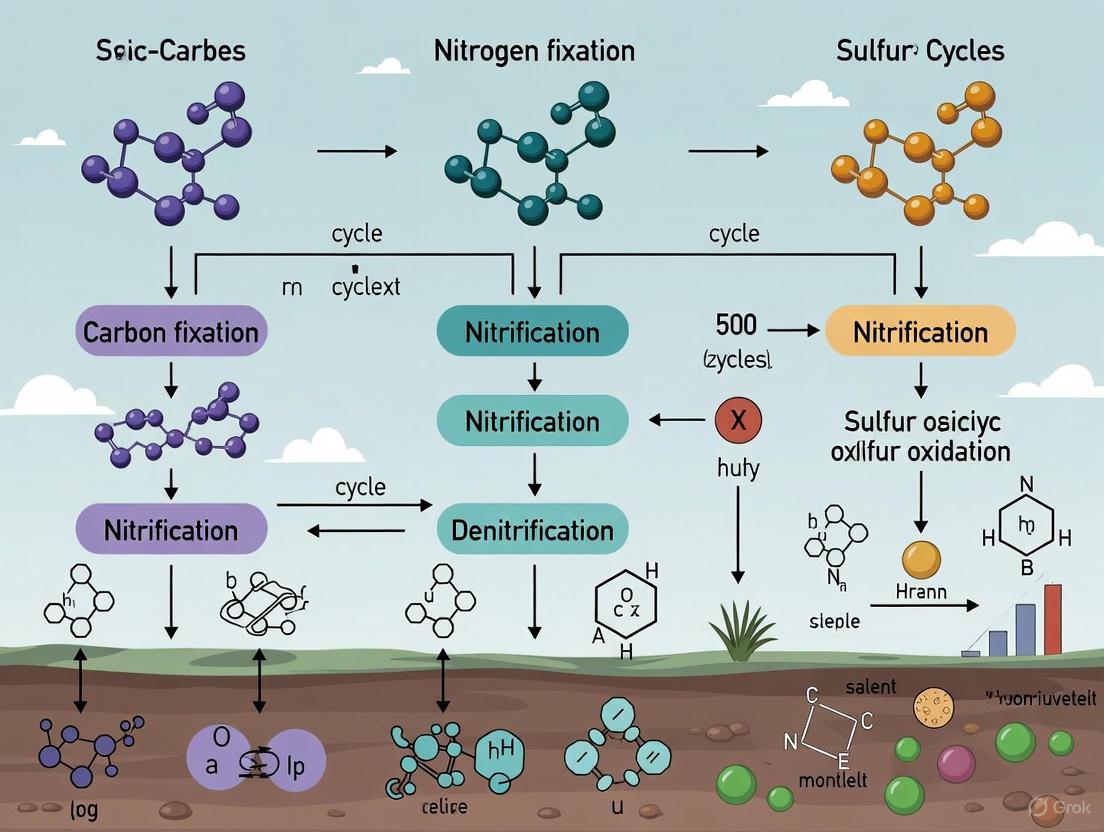
This article provides a comprehensive overview of the indispensable roles microorganisms play in Earth's biogeochemical cycles.
Microbial Engines: How Bacteria and Archaea Drive Global Carbon, Nitrogen, and Sulfur Cycles
Abstract
This article provides a comprehensive overview of the indispensable roles microorganisms play in Earth's biogeochemical cycles. Tailored for researchers and scientists, it explores the foundational mechanisms of microbial carbon, nitrogen, and sulfur transformations, from well-established pathways to newly discovered processes like iron oxide respiration. It delves into advanced methodological approaches, including metagenomics and metatranscriptomics, for studying these communities. The content further addresses challenges in modeling and environmental perturbation, compares microbial functions across diverse ecosystems, and validates their global impact. Finally, it synthesizes key insights and discusses future implications for environmental management and biomedical research, emphasizing the critical interplay between microbial ecology and planetary health.
The Unseen Workforce: Microbial Catalysts of Earth's Elemental Cycles
Biogeochemical cycles are fundamental pathways that describe the movement and transformation of chemical elements and compounds between living organisms (the biosphere) and the abiotic compartments of Earth: the atmosphere, lithosphere, and hydrosphere [1]. These cycles are essential for life, as they recycle and conserve matter, ensuring that vital elements like carbon, nitrogen, and sulfur remain available to organisms [2]. While energy flows unidirectionally through ecosystems, matter is conserved and recycled [2]. Microorganisms are the primary regulators of these biogeochemical systems, driving the metabolic processes that control global cycles [3]. Incredibly, microbial production is so immense that global biogeochemistry would likely remain unchanged even in the absence of eukaryotic life [3]. This guide provides a technical overview of the microbial drivers in the carbon, nitrogen, and sulfur cycles, framing them within contemporary research methodologies and findings.
Microbial Drivers in Key Biogeochemical Cycles
Microorganisms mediate key steps in biogeochemical cycles through diverse metabolic processes. Their collective activities, including nitrogen fixation, carbon fixation, and sulfur metabolism, effectively control global biogeochemical cycling [3]. The following sections detail their roles in the carbon, nitrogen, and sulfur cycles, supported by quantitative data from recent studies.
The Carbon Cycle
Carbon is the fundamental building block of all organic compounds. The carbon cycle involves the storage and fluxes of carbon throughout the Earth system [4]. The transformative process by which carbon dioxide is taken up from the atmosphere and incorporated into organic substances is called carbon fixation, with photosynthesis being a key example [3].
Microorganisms drive multiple pathways in the carbon cycle. For instance, in deep marine sediments of the Kathiawar Peninsula, metagenome-assembled genomes (MAGs) revealed diverse carbon fixation pathways, including the Calvin cycle, Wood-Ljungdahl pathway, and 3-Hydroxypropionate/4-Hydroxybutyrate cycle [5]. In reclaimed water rivers, phytoplankton photosynthesis was identified as a major process, fixing approximately 342.24 tons of carbon, while simultaneous decomposition of sediment organic matter released about 246.21 tons of carbon back into the water [6]. In mangrove ecosystems, functional gene analysis (GeoChip) showed that carbon degradation is the most active process, with carbon degradation genes accounting for 69% of the detected carbon cycle genes [7].
Table 1: Quantitative Microbial Processes in the Carbon Cycle
| Ecosystem | Process | Key Microbial Groups/Genes | Quantitative Measure |
|---|---|---|---|
| Deep Marine Sediments [5] | Carbon Fixation | MAGs from phyla Proteobacteria, Bacteroidota, Planctomycetota, Desulfobacterota | Identified 6 major autotrophic pathways |
| Reclaimed Water River [6] | Phytoplankton Photosynthesis | Phytoplankton | 342.24 t C fixed |
| Reclaimed Water River [6] | Organic Matter Decomposition | Sediment Microbiome | 246.21 t C emitted from SOM degradation |
| Mangrove Soils [7] | Carbon Degradation | Functional gene amyA (for starch degradation) | Highly abundant |
The Nitrogen Cycle
Nitrogen is essential for nucleic acids and proteins. Although the Earth's atmosphere is primarily composed of nitrogen gas (N₂), it is relatively unusable for most organisms [3]. Nitrogen fixation, the process of converting atmospheric N₂ into ammonia, is almost entirely carried out by bacteria possessing the enzyme nitrogenase [3].
Microbial processes dominate the nitrogen cycle. Research in mangrove ecosystems has shown that denitrification is a crucial process, with the functional gene narG (nitrate reductase) being highly abundant [7]. In the deep marine sediments of the Kathiawar Peninsula, MAGs were found to possess complete pathways for key nitrogen transformations, including denitrification and dissimilatory nitrate reduction to ammonium (DNRA) [5]. Furthermore, specific bacterial genera like Neisseria and Pseudomonas were found to synergistically participate in the nitrogen cycle within mangroves [7].
Table 2: Quantitative Microbial Processes in the Nitrogen Cycle
| Ecosystem | Process | Key Microbial Groups/Genes | Quantitative Measure |
|---|---|---|---|
| Deep Marine Sediments [5] | Denitrification & DNRA | MAGs from Proteobacteria, Bacteroidota, Planctomycetota | Complete pathways identified in 275 MAGs |
| Mangrove Soils [7] | Denitrification | Functional gene narG | Highly abundant |
| Mangrove Soils [7] | Synergistic Activity | Genera Neisseria, Pseudomonas | Participated in multiple N-cycle steps |
The Sulfur Cycle
Sulfur is critical for the three-dimensional structure of proteins [1]. The sulfur cycle involves various oxidation and reduction states, and in the deep sea, sulfur compounds can serve as primary energy sources in the absence of sunlight [1].
Microorganisms are central to sulfur transformations. In deep marine sediments, a significant number of MAGs were involved in sulfur redox reactions, including sulfur oxidation, sulfate reduction, and sulfite reduction [5]. The functional gene dsrA (dissimilatory sulfite reductase) was found to be highly abundant in mangrove soils, indicating that sulfite reduction is a crucial process in that environment [7]. Studies also show that bacteria such as Desulfotomaculum can synergistically participate in both the sulfur and carbon cycles [7].
Table 3: Quantitative Microbial Processes in the Sulfur Cycle
| Ecosystem | Process | Key Microbial Groups/Genes | Quantitative Measure |
|---|---|---|---|
| Deep Marine Sediments [5] | Sulfur Redox Reactions | MAGs from Desulfobacterota, Gammaproteobacteria | Key pathways identified |
| Mangrove Soils [7] | Sulfite Reduction | Functional gene dsrA | Highly abundant |
| Mangrove Soils [7] | Synergistic Activity | Genus Desulfotomaculum | Linked S and C cycles |
Essential Experimental Protocols for Microbial Biogeochemistry
Understanding microbial drivers requires advanced molecular techniques that move beyond cultivation, as the vast majority of environmental microorganisms cannot be grown in a lab [5]. The following workflow outlines a standard metagenomic approach.
Sample Collection and Processing
- Sample Collection: Environmental samples (e.g., soil, sediment, water) are collected from the field using sterile equipment. For sediments, a meter-long gravity corer is often used [5]. In studies of shrub expansion, surface soil (0-20 cm depth) is collected from multiple random points within a plot and homogenized to create a composite sample [8].
- Storage: Samples are immediately transported to the laboratory on ice. Subsamples for DNA analysis are stored at -80°C to preserve nucleic acid integrity, while other subsamples are air-dried for physicochemical analysis [8].
Metagenomic DNA Extraction, Sequencing, and Data Processing
This protocol synthesizes methodologies from multiple studies on sediments and soils [5] [8].
- DNA Extraction: Total genomic DNA is extracted from samples using commercial kits (e.g., ALFA-SEQ Advanced Soil DNA Kit). The extracted DNA is checked for integrity via agarose gel electrophoresis and for concentration/purity using instruments like a Qubit Fluorometer and Nanodrop Spectrophotometer [8].
- Library Preparation and Sequencing: Sequencing libraries are prepared using kit-based protocols (e.g., ALFA-SEQ DNA Library Prep Kit). High-throughput paired-end sequencing (e.g., 2 x 150 bp) is performed on platforms such as the Illumina NovaSeq 6000 [8].
- Bioinformatic Analysis:
- Quality Control: Raw sequencing reads are trimmed to remove adapters and low-quality bases using tools like Trimmomatic [8].
- Assembly: Filtered reads are assembled de novo into longer sequences (scaffolds/scaftigs) using assemblers like MEGAHIT [8].
- Gene Prediction and Cataloging: Open Reading Frames (ORFs) are predicted from assembled scaftigs using tools like MetaGeneMark. A non-redundant gene catalog is created using CD-HIT to cluster similar sequences [8].
- Gene Abundance and Annotation: Clean reads from each sample are mapped back to the gene catalog to calculate abundance profiles. The gene sequences are then annotated by comparing them against reference databases (e.g., NCBI NR) using BLASTP [8]. For functional analysis, genes can be matched against specialized databases like Pfam for protein families or CAZy for carbohydrate-active enzymes [5].
- Metagenome-Assembled Genomes (MAGs): High-quality assemblies can be binned into MAGs using tools like MetaBAT, and their taxonomy classified with GTDB-Tk. Metabolic pathways are then reconstructed from the MAGs [5].
The Scientist's Toolkit: Key Research Reagents and Materials
Table 4: Essential Reagents and Materials for Metagenomic Studies
| Item | Specific Example | Function in Protocol |
|---|---|---|
| DNA Extraction Kit | ALFA-SEQ Advanced Soil DNA Kit [8] | Efficiently extracts genomic DNA from complex environmental samples like soil and sediment. |
| DNA Quality Instruments | Qubit Fluorometer, Nanodrop Spectrophotometer [8] | Precisely measure DNA concentration and assess purity (e.g., A260/A280 ratio). |
| Library Prep Kit | ALFA-SEQ DNA Library Prep Kit [8] | Prepares sequencing-ready libraries from extracted DNA by fragmenting, end-repairing, and adding adapters. |
| Sequencing Platform | Illumina NovaSeq 6000 [8] | Performs high-throughput, paired-end sequencing of DNA libraries. |
| Bioinformatic Tools | Trimmomatic, MEGAHIT, MetaGeneMark, CD-HIT, BBMAP [8] | A suite of software for quality control, sequence assembly, gene prediction, redundancy removal, and abundance calculation. |
| Reference Database | NCBI Non-Redundant (NR) Protein Database [8] | Used for annotating the predicted gene sequences and assigning putative functions. |
Interconnected Microbial Networks and Environmental Impact
Microbial biogeochemical cycling is a complex, interconnected network. Microorganisms often participate synergistically in multiple cycles. For example, in mangroves, genera like Neisseria, Ruegeria, and Desulfotomaculum were found to work together in the carbon, nitrogen, and sulfur cycles [7]. This coupling of cycles is a critical aspect of ecosystem functioning.
Human activities and environmental changes significantly impact these microbial drivers and the cycles they control. For instance, shrub expansion in temperate wetlands was shown to alter the abundance of carbon, nitrogen, and sulfur cycle pathways and related functional genes, which may reduce the long-term carbon sequestration potential of these ecosystems [8]. Similarly, the recharge of rivers with reclaimed water, which is often rich in nitrogen and phosphorus, creates a unique and dynamic carbon cycle, promoting algal blooms and altering greenhouse gas fluxes [6]. These disruptions highlight the sensitivity of microbial biogeochemical processes to external pressures. The diagram below illustrates the complex interplay between microbes, elemental cycles, and environmental factors.
The global carbon cycle represents a complex biogeochemical network that regulates the flow of carbon between major Earth systems, including the atmosphere, oceans, terrestrial biosphere, and geological reservoirs. This dynamic cycle plays a fundamental role in controlling planetary climate, with anthropogenic perturbations now creating significant imbalances in natural carbon fluxes. Current assessments indicate that fossil fuel and industrial emissions reached 10.3 ± 0.5 gigatons of carbon per year (GtC yr⁻¹) in 2024, with an additional 1.3 ± 0.7 GtC yr⁻¹ from land-use changes, totaling 11.6 ± 0.9 GtC yr⁻¹ of anthropogenic CO₂ emissions [9]. The atmospheric CO₂ concentration has consequently risen to 422.8 ± 0.1 ppm, approximately 52% above pre-industrial levels [9].
Within this broader context, microbial processes mediate critical transformations between carbon species, particularly in anaerobic environments where methanogenesis occurs. Methane (CH₄) is a potent greenhouse gas with a global warming potential more than 27 times that of CO₂ over a 100-year period [10]. Roughly two-thirds of atmospheric methane emissions originate from microbial activity in oxygen-free environments like wetlands, rice fields, landfills, and the gastrointestinal tracts of ruminants [11]. Understanding the biological mechanisms underlying methane production is therefore essential for accurately quantifying global carbon fluxes and developing targeted mitigation strategies.
Table 1: Major Global Carbon Fluxes (2024 Estimates)
| Flux Component | Symbol | Magnitude (GtC yr⁻¹) | Uncertainty (± GtC yr⁻¹) |
|---|---|---|---|
| Fossil CO₂ Emissions | EFOS | 10.3 | 0.5 |
| Land-Use Change Emissions | ELUC | 1.3 | 0.7 |
| Atmospheric Growth Rate | GATM | 7.9 | 0.2 |
| Ocean Sink | SOCEAN | 3.4 | 0.4 |
| Land Sink | SLAND | 1.9 | 1.1 |
| Budget Imbalance | BI | -1.7 | - |
Microbial Methanogenesis: Pathways and Mechanisms
Methanogenesis represents the terminal step in the anaerobic decomposition of organic matter, exclusively performed by archaeal microorganisms known as methanogens. These organisms inhabit an entirely separate branch of the tree of life from bacteria and are essential for completing carbon mineralization in oxygen-depleted environments [11]. The biomethanation process involves a sophisticated microbial food chain wherein fermentative bacteria first decompose complex organic matter to simpler compounds, which are subsequently converted to methane by methanogenic archaea [12].
Major Methanogenic Pathways
Methanogens employ two primary metabolic pathways for methane production, each with distinct substrate requirements and thermodynamic considerations:
CO₂-Reduction Pathway: This hydrogenotrophic pathway involves the reduction of carbon dioxide (or formate) to methane using hydrogen (H₂) or formate as electron donors according to the stoichiometry: 4H₂ + HCO₃⁻ + H⁺ → CH₄ + 3H₂O (ΔG°′ = -135.6 kJ/mol) [12]. This pathway dominates in many environments, including lake sediments where it can account for >95% of total methanogenesis [10].
Aceticlastic Pathway: This acetoclastic pathway involves the cleavage of acetate into methane and carbon dioxide: Acetate⁻ + H⁺ → CH₄ + CO₂ (ΔG°′ = -36.0 kJ/mol) [12]. In most freshwater environments, aceticlastic methanogenesis accounts for approximately two-thirds of methane production, with CO₂-reduction responsible for most of the remaining one-third [12].
Table 2: Major Methanogenic Pathways and Energy Yields
| Pathway | Reaction | ΔG°′ (kJ/mol) | Common Environments |
|---|---|---|---|
| CO₂-Reduction | 4H₂ + HCO₃⁻ + H⁺ → CH₄ + 3H₂O | -135.6 | Lake sediments, ruminants, natural gas wells |
| Aceticlastic | Acetate⁻ → CH₄ + CO₂ | -36.0 | Wetlands, rice paddies, landfills |
| Formate Reduction | 4Formate⁻ + H⁺ + H₂O → CH₄ + 3HCO₃⁻ | -130.4 | Various anaerobic systems |
Both pathways converge on a common set of final enzymatic steps. The methyl group from methyl-tetrahydromethanopterin (CH₃-H₄MPT) is transferred to coenzyme M (HS-CoM) via a membrane-bound methyltransferase complex (Mtr), generating a sodium ion gradient [12]. The terminal reaction is catalyzed by methyl-coenzyme M reductase (Mcr), which reduces the methyl group of CH₃-S-CoM to methane using coenzyme B (HS-CoB) as the electron donor, producing the heterodisulfide CoM-S-S-CoB as a byproduct [12]. The crystal structure of Mcr reveals two active sites, each containing a nickel-containing cofactor (F430) essential for catalysis [12].
Diagram 1: Microbial Methanogenesis Workflow
Advanced Research: Isotopic Fingerprinting and Environmental Controls
A groundbreaking approach to tracing methane origins involves analyzing the stable isotopic composition of carbon (¹²C vs. ¹³C) and hydrogen (¹H vs. ²H) in methane molecules, which provides distinctive "fingerprints" for different environmental sources [11]. Natural gas from geological deposits, methane from cow guts, and methane produced in deep-sea sediments each exhibit characteristic isotopic signatures [11]. Recent research has demonstrated that the isotopic composition of microbial methane is not solely determined by substrate type but is significantly influenced by environmental conditions and cellular responses to substrate availability [11].
UC Berkeley researchers have employed CRISPR gene editing to manipulate the expression of methyl-coenzyme M reductase (Mcr) in Methanosarcina acetivorans, revealing that when this key enzyme is present at low concentrations, cellular metabolism undergoes significant reorganization [11]. Under these conditions, methane production slows dramatically, and enzymatic reactions begin operating in reverse, leading to increased hydrogen exchange between carbon intermediates and ambient water [11]. This exchange progressively alters the hydrogen isotopic signature of methane to more closely reflect that of environmental water rather than the original food source, challenging traditional assumptions about isotopic fingerprints [11].
Environmental Modulation of Methanogenic Communities
Methanogenic pathways and community structures exhibit remarkable consistency across diverse environments with varying organic matter compositions. Research in Lake Geneva sediments demonstrated that CO₂-reduction dominates methane production (>95%) in both profundal and deltaic locations, despite significant differences in organic matter sources and diagenetic states [10]. Molecular analyses revealed that members of the CO₂-reducing Methanoregula genus dominated both sites, indicating that organic matter quality exerts less influence on methanogenic pathway selection than previously assumed [10].
In ruminant systems, methanogenesis inhibition strategies using compounds like 3-nitrooxypropanol (3-NOP) have demonstrated the remarkable metabolic plasticity of microbial communities. Supplementation with 3-NOP reduced methane emissions by 62% in dairy calves and triggered a substantial remodeling of the rumen microbiota, characterized by a strong reduction in methanogens and stimulation of reductive acetogens, particularly uncultivated lineages like "Candidatus Faecousia" [13]. However, this intervention also induced a shift in major fermentative communities away from acetate production in response to hydrogen accumulation, resulting in net hydrogen build-up that limited potential productivity gains [13].
Experimental Methodologies in Methanogenesis Research
Isotopic Tracing and Molecular Manipulation
The integration of molecular biology with isotope geochemistry has opened new avenues for investigating methanogenesis. The following protocol outlines key methodological approaches for probing the relationship between microbial physiology and methane isotopic signatures:
Protocol 1: CRISPR-Based Enzyme Manipulation and Isotopic Analysis
CRISPR Gene Editing in Methanogens:
- Utilize CRISPR tools developed for methanogens to dial down expression of the mcrA gene encoding methyl-coenzyme M reductase (Mcr) [11].
- Transform methanogens (e.g., Methanosarcina acetivorans) with CRISPR constructs targeting regulatory sequences of mcrA.
Culture Under Defined Conditions:
- Grow CRISPR-edited and wild-type methanogens under standardized conditions with acetate and methanol as substrates [11].
- Monitor growth curves and methane production rates using gas chromatography.
Isotopic Composition Analysis:
- Collect produced methane using gas-tight sampling systems.
- Analyze carbon (δ¹³C) and hydrogen (δ²H) isotopic compositions using isotope-ratio mass spectrometry.
- Compare isotopic signatures between engineered and wild-type strains to quantify enzymatic effects.
Metabolic Flux Analysis:
- Develop computer models of metabolic networks in methanogens [11].
- Integrate isotopic measurements with model predictions to identify key branch points in methanogenic pathways.
Environmental Sampling and Rate Measurements
Field-based studies of methanogenesis require specialized sampling and incubation techniques to preserve natural redox conditions and microbial activities:
Protocol 2: Sediment Core Processing and Methanogenesis Assays
Sample Collection:
- Collect sediment cores using gravity corers (6.5-14 cm inner diameter) from study sites [10].
- Maintain anaerobic conditions during retrieval and transport.
Porewater Extraction:
- Extract sediment porewater using Rhizon samplers connected to syringes through pre-drilled holes in core liners [10].
- Process samples for dissolved inorganic carbon (DIC), acetate, and other volatile fatty acids without headspace.
Radiotracer Rate Measurements:
- Conduct methanogenesis rate measurements using ¹⁴C-labeled bicarbonate and acetate [10].
- Incubate sediment slurries under anaerobic conditions with radiotracers.
- Quantify radiolabeled methane production using liquid scintillation counting.
Molecular Analyses:
- Extract DNA/RNA from sediment samples for quantitative PCR of mcrA genes and 16S rRNA sequencing [10].
- Analyze methanogen community structure and abundance correlations with process rates.
Diagram 2: Methanogenesis Research Integration
Research Reagents and Tools
Table 3: Essential Research Reagents for Methanogenesis Studies
| Reagent/Tool | Application | Function | Example Use |
|---|---|---|---|
| CRISPR-Cas Systems | Genetic manipulation | Targeted reduction of enzyme expression | Dialing down MCR activity in Methanosarcina [11] |
| ¹⁴C-Labeled Bicarbonate/Acetate | Process rate measurement | Radiotracer for methanogenesis pathways | Quantifying CO₂-reduction vs aceticlastic pathways [10] |
| mcrA Primers | Molecular ecology | Amplification of methanogen functional genes | Quantifying methanogen abundance in environments [10] |
| 3-Nitrooxypropanol (3-NOP) | Methanogenesis inhibition | Targeting methyl-CoM reductase | Rumen methane mitigation studies [13] |
| Rhizon Samplers | Porewater extraction | Non-destructive soil solution collection | Obtaining porewater for geochemical analysis [10] |
| Stable Isotope Probes | Metabolic tracking | Identifying active microbial populations | Linking taxa to methane production processes |
The integration of molecular biology, isotope geochemistry, and microbial ecology has dramatically advanced our understanding of methanogenesis within the global carbon cycle. The pioneering work using CRISPR to manipulate key methanogenic enzymes has revealed that isotopic signatures of methane are not merely passive indicators of substrate type but are dynamically shaped by cellular responses to environmental conditions [11]. This finding has profound implications for interpreting methane sources and sinks across diverse ecosystems, from wetland sediments to ruminant digestive systems.
Future research directions will likely focus on harnessing this knowledge to develop targeted strategies for mitigating methane emissions while maintaining critical ecosystem functions. The demonstration that methanogenesis inhibition in ruminants stimulates alternative hydrogenotrophic pathways [13] suggests that microbial community engineering could potentially redirect carbon and electron flow toward valuable products rather than greenhouse gases. Similarly, the detailed understanding of methanogenic pathways in natural gas reservoirs [14] opens possibilities for enhancing biogenic methane production as an energy resource while potentially sequestering CO₂. As methodological innovations continue to bridge disciplinary divides between molecular biology and biogeochemistry, our capacity to predict and manage methane fluxes within the evolving carbon cycle will undoubtedly strengthen.
The nitrogen cycle represents a cornerstone of global biogeochemical processes, primarily orchestrated by microbial entities that transform nitrogen between its various redox states. Framed within a broader context of microbial-mediated elemental cycles, the metabolic versatility of prokaryotes drives the flux of nitrogen through fixation, nitrification, and denitrification pathways. These interconnected processes not only regulate ecosystem productivity but also influence climate feedback mechanisms through the production and consumption of greenhouse gases such as nitrous oxide (N₂O). The sophisticated enzymatic machinery possessed by microorganisms enables them to exploit nitrogen compounds as energy sources, electron acceptors, and cellular building blocks, creating a complex network of biogeochemical interactions that span aerobic and anaerobic environments. Recent discoveries, including complete ammonia-oxidizing (comammox) bacteria and novel pathways like direct ammonia oxidation to nitrogen gas (dirammox), have fundamentally reshaped our understanding of nitrification, revealing greater complexity in the microbial partitioning of these metabolic functions [15]. This technical guide synthesizes current understanding of the core nitrogen transformations, emphasizing the microbial actors, their genetic potential, and the experimental frameworks used to quantify these processes within the broader context of carbon and sulfur cycling.
Microbial Catalysts of Nitrogen Transformation
Functional Guilds and Their Metabolic Niches
Microbial specialists catalyze each step of the nitrogen cycle through substrate-specific enzymatic reactions that are often constrained by redox conditions. Nitrogen-fixing diazotrophs utilize the oxygen-sensitive nitrogenase complex to reduce atmospheric N₂ to ammonia (NH₃), a process that demands substantial energy investment and occurs in either free-living forms (e.g., Azotobacter, Clostridium) or symbiotic associations (e.g., Rhizobium within legume root nodules). Ammonia-oxidizing bacteria (AOB) and archaea (AOA) initiate nitrification by converting ammonia to hydroxylamine (NH₂OH) then to nitrite (NO₂⁻) via the ammonia monooxygenase (AMO) and hydroxylamine oxidoreductase (HAO) enzymes, operating optimally under aerobic conditions [16]. The recent discovery of comammox Nitrospira bacteria, which complete full nitrification (NH₃ to NO₃⁻) within single organisms, has challenged the traditional two-step nitrification paradigm and revealed previously overlooked metabolic flexibility in nitrifying communities [15]. Denitrifying microorganisms constitute a phylogenetically diverse group including Pseudomonas, Paracoccus, and Thiobacillus species that sequentially reduce nitrate (NO₃⁻) to nitrogen gas (N₂) via nitrite (NO₂⁻), nitric oxide (NO), and nitrous oxide (N₂O) as intermediate products, using these transformations as terminal electron acceptors during anaerobic respiration [17].
Table 1: Key Microbial Functional Guilds in the Nitrogen Cycle
| Functional Guild | Primary Metabolic Role | Key Genera | Optimal Environmental Conditions |
|---|---|---|---|
| Nitrogen-fixing bacteria | Reduce N₂ to NH₃ | Rhizobium, Azotobacter, Anabaena | Low O₂, available organic carbon, neutral pH |
| Ammonia-oxidizing bacteria | Oxidize NH₃ to NO₂⁻ | Nitrosomonas, Nitrosospira | Aerobic, 7.5-8.5 pH, 20-30°C |
| Ammonia-oxidizing archaea | Oxidize NH₃ to NO₂⁻ | Nitrosopumilus, Nitrososphaera | Aerobic, low nutrient, 22-29°C |
| Comammox bacteria | Oxidize NH₃ to NO₃⁻ | Nitrospira | Low ammonium, aerobic |
| Nitrite-oxidizing bacteria | Oxidize NO₂⁻ to NO₃⁻ | Nitrobacter, Nitrospina | Aerobic, 7.5-8.5 pH |
| Denitrifying bacteria | Reduce NO₃⁻ to N₂ | Pseudomonas, Paracoccus, Alcaligenes | Anoxic, organic carbon, 30-35°C |
Genomic and Metabolomic Features
The genomic architecture of nitrogen-cycling microorganisms reveals conserved functional genes that serve as molecular markers for process potential and microbial presence. Ammonia monooxygenase genes (amoA) distinguish AOA and AOB, with distinct evolutionary lineages reflecting their adaptation to different environmental conditions [18]. Denitrification involves a suite of metalloenzymes encoded by nap/nar (nitrate reductase), nirK/nirS (nitrite reductase), norB (nitric oxide reductase), and nosZ (nitrous oxide reductase) genes, with the complement of these genes determining the completeness of the denitrification pathway in different microbial taxa [17] [19]. Recent metagenomic and metatranscriptomic approaches have revealed substantial diversity within these genetic markers, with environmental conditions selecting for specific phylogenetic clusters. For instance, studies of isohumosols (Chernozems) have demonstrated that soil depth and available phosphorus content strongly influence the abundance of nitrification (comammox, AOA amoA, AOB amoA) and denitrification (nirK, nirS, nosZ) genes, with a pronounced depth-dependent decline in abundance and distinct stratification between semi-arid (Ustic) and humid (Udic) soil types [19]. Metabolomic investigations further reveal that microbial nitrogen transformations are coupled to central carbon metabolism through metabolites such as amino acids, organic acids, and carbohydrates, which serve as both energy sources and biosynthetic precursors [20].
Quantitative Process Rates and Environmental Drivers
Methodologies for Quantifying Nitrogen Transformation Rates
Advanced methodologies have enabled precise quantification of gross nitrogen transformation rates in environmental samples. ¹⁵N isotopic tracing techniques, employing either ¹⁵NH₄⁺ or ¹⁵NO₃⁻, allow researchers to track the fate of nitrogen through different pools and calculate process rates based on isotope dilution or enrichment principles [21]. Robotic incubation systems (e.g., Robot and Roflow) enable high-throughput measurements of nitrogen flux under controlled conditions, while membrane inlet mass spectrometry (MIMS) provides sensitive detection of gaseous nitrogen products (N₂, N₂O) without headspace extraction [15]. Static chamber methods coupled with gas chromatography remain widely used for measuring N₂O production potentials from soil and sediment samples, typically involving anaerobic incubation of samples followed by periodic headspace sampling [20]. Potential nitrification rate (PNR) measurements quantify the maximum ammonia oxidation capacity of microbial communities by amending samples with ammonium substrates and measuring nitrate/nitrite accumulation, often using KClO₃ to inhibit the second nitrification step [19]. Similarly, potential denitrification rate (PDR) assays measure the capacity for nitrate reduction under anaerobic conditions with excess carbon and nitrate to eliminate substrate limitations [19].
Table 2: Experimental Methods for Investigating Nitrogen Cycle Processes
| Method Category | Specific Techniques | Target Process | Detection Limits/Precision | Key Applications |
|---|---|---|---|---|
| Isotopic Tracer Methods | ¹⁵N pool dilution, ¹⁵N tracing models | Gross N mineralization, nitrification, denitrification | nmol N·g⁻¹·h⁻¹ | Quantifying simultaneous fluxes in complex systems |
| Gas Flux Measurements | Static chamber with GC, MIMS | Denitrification, nitrifier denitrification | 0.1-100 nmol N·g⁻¹·h⁻¹ | Field-based measurements, process partitioning |
| Molecular Approaches | qPCR of functional genes, metatranscriptomics | Microbial abundance and potential activity | Gene copies: 10²-10¹⁰ g⁻¹ soil | Linking microbial presence to process rates |
| Enzyme Assays | Potential nitrification/denitrification rates | Process capacities under optimal conditions | μmol N·g⁻¹·h⁻¹ | Comparing sites, treatment effects |
| Metabolomic Profiling | LC-MS/MS of soil metabolites | Nitrogen metabolite fluxes | pmol-mmol g⁻¹ | Pathway identification, microbial metabolism |
Environmental Modulators of Process Rates
Nitrogen transformation rates respond dynamically to abiotic and biotic factors that regulate microbial activity and enzyme kinetics. Oxygen availability represents a primary control, with nitrification generally inhibited below 2 mg/L dissolved oxygen while denitrification is stimulated under anoxic conditions [16]. Soil pH strongly influences the composition of nitrifying communities, with AOA typically dominating in acidic soils and AOB in neutral to alkaline environments, while denitrification efficiency decreases significantly below pH 6.0 [19]. Temperature regulates reaction rates through its effect on enzyme activity, with nitrification optima between 20-30°C and denitrification optima between 30-35°C [16]. Carbon quantity and quality directly impact denitrification capacity by providing essential electron donors, with simple organic compounds (e.g., glucose, acetate) supporting higher rates than complex substrates [20]. Surprisingly, recent research has identified available phosphorus as a key regulator of nitrogen cycling genes in some systems, with significant positive correlations between AP and the abundance of comammox, AOB amoA, nirK, nirS, and nosZ genes in isohumosols, explaining 61% and 21% of the variation in potential nitrification and denitrification rates, respectively [19]. Moisture content and redox potential interact to create microaerophilic niches that simultaneously support both nitrification and denitrification, particularly in aggregated soils and suspended particulate matter in aquatic systems [21].
Research Reagent Solutions for Nitrogen Cycle Investigations
Table 3: Essential Research Reagents and Materials for Nitrogen Cycle Studies
| Reagent/Material | Primary Function | Application Examples | Technical Considerations |
|---|---|---|---|
| ¹⁵N-labeled substrates (K¹⁵NO₃, (¹⁵NH₄)₂SO₄) | Isotopic tracing of nitrogen pathways | Quantifying gross transformation rates, partitioning N₂O sources | ≥98 atom% ¹⁵N purity; typically used at 5-50 atom% enrichment |
| Chlorate inhibition reagents (KClO₃, NaClO₃) | Selective inhibition of nitrite oxidation | Measuring potential ammonia oxidation rates without NO₃⁻ accumulation | 1-10 mM final concentration; potential non-target effects at high doses |
| DNA extraction kits (e.g., Tiangen magnetic bead kits) | Nucleic acid purification from complex matrices | Molecular analysis of functional genes and microbial community structure | Yield and purity critical for downstream PCR applications |
| qPCR/primer sets for functional genes (amoA, nirS, nirK, nosZ) | Quantification of microbial functional potential | Linking process rates to genetic capacity in environmental samples | Primer selection critical for comprehensive coverage of target groups |
| LC-MS/MS metabolomics reagents | Extraction and analysis of nitrogen metabolites | Profiling amino acids, organic acids, and other N-containing metabolites | 80% methanol extraction; requires internal standards for quantification |
| Continuous flow analyzers (e.g., SAN++) | Automated determination of NH₄⁺, NO₂⁻, NO₃⁻ | High-throughput analysis of inorganic nitrogen species in extracts | Detection limits ~0.1 μM; enables processing of large sample sets |
| Acetylene inhibition reagents (C₂H₂) | Blockade of ammonia monooxygenase and nitrous oxide reductase | Distinguishing nitrification vs. denitrification-derived N₂O | 0.01-1.0% v/v; affects other microbial processes at higher concentrations |
Integrated Experimental Workflows
Coupled Process Studies in Terrestrial Systems
Research on agricultural nitrogen cycling exemplifies integrated approaches to understanding coupled biogeochemical processes. A recent study on straw return practices employed a multi-annual positioning experiment with continuous maize cultivation and fallow systems to elucidate how carbon amendments influence nitrogen dynamics [20]. The experimental workflow involved: (1) establishing controlled field plots with and without straw incorporation; (2) periodic soil sampling across depth profiles; (3) comprehensive analysis of soil nitrogen pools (total N, NH₄⁺, NO₃⁻, organic N fractions); (4) quantification of functional gene abundance via qPCR; (5) metabolic profiling using LC-MS/MS; and (6) determination of process rates through incubation experiments. This integrated approach revealed that straw return facilitates nitrogen availability by altering metabolic distribution and nitrogen cycling processes, specifically enhancing metabolic pathways for arginine biosynthesis and amino acid metabolism while increasing the abundance of nitrogen-fixing bacteria like Bradyrhizobium and Altererythrobacter despite reducing the relative abundance of nitrifying microorganisms [20].
Diagram 1: Straw Return Influence on Soil Nitrogen Dynamics (Title: Straw Effects on N Cycle)
Aquatic Nitrogen Transformation Studies
Investigations of marine nitrogen cycling employ sophisticated incubation designs to capture process dynamics across redox gradients. A study on suspended particulate matter (SPM) in Jiaozhou Bay demonstrated how particle-associated microenvironments influence denitrification potential in oxygenated waters [21]. The experimental protocol included: (1) collection of sediment cores and overlying water from estuarine and bay mouth stations; (2) simulation of different SPM concentrations (50-400 mg/L) in laboratory incubations; (3) measurement of denitrification rates using ¹⁵NO₃⁻ tracing techniques with membrane inlet mass spectrometry; (4) quantification of denitrification genes (narG, nirS) via real-time PCR; and (5) correlation of process rates with environmental parameters. This approach revealed that denitrification rates and functional gene abundances increased with SPM concentration, indicating that suspended particles create anoxic microsites that expand the spatial domain of denitrification in coastal ecosystems, with significant implications for nitrogen removal and eutrophication control [21].
Diagram 2: SPM Effects on Aquatic Denitrification (Title: SPM Enhances Denitrification)
Interconnections with Carbon and Sulfur Cycling
The nitrogen cycle does not operate in isolation but rather intersects profoundly with carbon and sulfur transformations through microbial metabolic networks. Chemoautotrophic nitrifiers couple ammonia oxidation to carbon fixation via the Calvin cycle, contributing to primary production in dark environments while simultaneously acidifying their surroundings through proton release [16]. Denitrifying microorganisms utilize organic carbon compounds as electron donors during anaerobic respiration, creating a direct stoichiometric linkage between carbon oxidation and nitrogen reduction that typically requires a C:N ratio of 1-2 for complete denitrification [17]. Sulfur-oxidizing bacteria such as Thiobacillus denitrificans couple denitrification to sulfide oxidation, simultaneously removing reduced sulfur compounds and nitrate while generating acidity that influences nutrient bioavailability [16]. These cross-element interactions create complex feedback loops wherein, for example, the organic carbon added through agricultural practices like straw amendment stimulates denitrification while also enhancing nitrogen fixation through heterotrophic diazotrophs [20]. Understanding these interconnected cycles is essential for predicting ecosystem responses to anthropogenic perturbations and designing effective environmental management strategies.
Emerging Research Frontiers and Methodological Innovations
The field of nitrogen cycle research is rapidly advancing through the application of novel technologies and conceptual frameworks. High-resolution isotopic techniques now enable tracing of nitrogen fluxes at molecular levels, revealing pathway-specific transformations within complex microbial communities [15]. Single-cell metabolomics provides insights into the functional heterogeneity of nitrogen-cycling microorganisms, while nanoscale secondary ion mass spectrometry (NanoSIMS) allows visualization of isotopic incorporation at the subcellular level [15]. The discovery of comammox bacteria has fundamentally altered nitrification models and prompted re-examination of nitrification control mechanisms in various ecosystems, with evidence suggesting these complete nitrifiers dominate under low-ammonium conditions [15]. Integrated modeling approaches that couple human and natural systems (CHANS), combined with remote sensing and artificial intelligence, now enable high-resolution tracking of nitrogen flows across scales from individual microbial habitats to regional landscapes [15]. These advances are increasingly applied to develop sustainable nitrogen management strategies such as Integrated Soil-Crop System Management (ISSM) and Nitrogen Credit Systems (NCS) that balance agricultural productivity with environmental protection [15]. Future research directions include incorporating microbial processes into large-scale biogeochemical models, engineering microbial communities for enhanced nitrogen use efficiency, and developing early warning systems for nitrogen-related ecosystem perturbations.
The microbial sulfur cycle is a critical component of Earth's biogeochemical systems, intimately linked with the cycles of carbon, nitrogen, and other essential elements [22]. Sulfur, the tenth most abundant element in the universe and the sixth most abundant in microbial biomass, exhibits a wide range of stable redox states that facilitate its role in central biochemistry as a structural element, redox center, and carbon carrier [22]. This technical guide examines the biological mediation of sulfur transformations, with particular emphasis on the microorganisms and molecular mechanisms that drive sulfur oxidation and reduction processes across diverse environments. Understanding these processes is fundamental to modeling biogeochemical cycles and harnessing microbial capabilities for environmental biotechnology [23].
Microbial transformation of both inorganic and organic sulfur compounds has profoundly influenced the properties of the biosphere throughout Earth's history and continues to affect contemporary geochemistry [22]. Recent advances in molecular techniques have revealed novel metabolic pathways and characterized the organisms that facilitate them, fundamentally changing our understanding of microbially driven biogeochemical cycles [22]. This whitepaper provides an in-depth analysis of these processes, framed within the context of a broader thesis on the role of microbes in biogeochemical cycles, with specific relevance to researchers and scientists investigating microbial ecology, biogeochemistry, and environmental biotechnology.
Microbial Mechanisms of Sulfur Oxidation
Key Microbial Taxa and Their Metabolic Pathways
Sulfur oxidation refers to the process by which microorganisms oxidize reduced sulfur compounds to obtain energy, often supporting autotrophic carbon fixation [24]. This process is primarily carried out by chemolithoautotrophic sulfur-oxidizing prokaryotes, which use compounds such as hydrogen sulfide (H₂S), elemental sulfur (S⁰), thiosulfate (S₂O₃²⁻), and sulfite (SO₃²⁻) as electron donors [24]. The oxidation of these substrates is typically coupled to the reduction of oxygen (O₂) or nitrate (NO₃⁻) as terminal electron acceptors, though under anaerobic conditions, some sulfur-oxidizing bacteria can use alternative oxidants [24].
Several key microbial groups involved in sulfur oxidation include genera such as Beggiatoa, Thiobacillus, Acidithiobacillus, and Sulfurimonas, each adapted to specific redox conditions and environmental niches [24]. Metabolic pathways like the Sox (sulfur oxidation) system, reverse dissimilatory sulfite reductase (rDSR) pathway, and the SQR (sulfide:quinone oxidoreductase) pathway serve as central mechanisms through which these microbes mediate sulfur transformations [24].
Table 1: Major Sulfur-Oxidizing Microorganisms and Their Characteristics
| Microbial Group | Metabolic Type | Electron Donors | Electron Acceptors | Environmental Niches |
|---|---|---|---|---|
| Thiobacillus spp. | Chemolithoautotroph | H₂S, S⁰, S₂O₃²⁻ | O₂, NO₃⁻ | Terrestrial, freshwater |
| Beggiatoa spp. | Chemolithoautotroph, Mixotroph | H₂S, S⁰ | O₂, NO₃⁻ | Marine sediments, sulfidic environments |
| Acidithiobacillus spp. | Chemolithoautotroph | S⁰, S₂O₃²⁻ | O₂ | Acidic environments |
| Sulfurimonas spp. | Chemolithoautotroph | H₂S, S⁰, S₂O₃²⁻ | NO₃⁻, O₂ | Hydrothermal vents, oxygen minimum zones |
| Purple Sulfur Bacteria | Phototroph | H₂S, S⁰ | Light (anaerobic) | Anoxic aquatic layers |
| Green Sulfur Bacteria | Phototroph | H₂S, S⁰ | Light (anaerobic) | Anoxic aquatic layers |
| Cable Bacteria | Electrogenic | H₂S | O₂ (via electron conduction) | Marine sediments |
Ecological Adaptations of Sulfur-Oxidizing Microorganisms
Sulfur-oxidizing microorganisms (SOM) have developed sophisticated adaptations to thrive across environmental gradients. In marine sediments, where concentrations of oxygen, nitrate, and sulfide are typically separated in depth profiles, many SOM cannot directly access their electron sources (reduced sulfur species) and terminal electron acceptors (O₂ or nitrate) simultaneously [24]. This limitation has led to remarkable evolutionary innovations:
Large sulfur bacteria (LSB) of the family Beggiatoaceae, particularly model gradient organisms like Beggiatoa, internally store large amounts of nitrate and elemental sulfur to overcome spatial separation between electron donors and acceptors [24]. Some filamentous species can glide between oxic/suboxic and sulfidic environments, while non-motile species rely on nutrient suspensions, fluxes, or attachment to larger particles [24]. Some aquatic, non-motile LSB represent the only known free-living bacteria utilizing two distinct carbon fixation pathways: the Calvin-Benson cycle and the reverse tricarboxylic acid cycle [24].
Electrogenic sulfur oxidation (e-SOx) represents another sophisticated adaptation, recently discovered in filamentous "cable bacteria" [24]. These organisms form multicellular bridges that connect sulfide oxidation in anoxic sediment layers with oxygen or nitrate reduction in oxic surface sediments, generating electric currents over centimeter-long distances [24]. Cable bacteria belong to the family Desulfobulbaceae and are currently represented by two candidate genera, "Candidatus Electronema" and "Candidatus Electrothrix" [24]. This process significantly influences elemental cycling at aquatic sediment surfaces, including iron speciation [24].
Symbiotic relationships between SOM and motile eukaryotic organisms represent another evolutionary strategy, where symbiotic SOM provide carbon and sometimes bioavailable nitrogen to hosts in exchange for enhanced resource access and shelter [24]. This lifestyle has evolved independently in sediment-dwelling ciliates, oligochaetes, nematodes, flatworms, and bivalves [24].
Microbial Reduction of Sulfur Compounds
Sulfate-Reducing Microorganisms and Their Metabolic Diversity
Sulfate reduction represents the reductive branch of the sulfur cycle, primarily carried out by sulfate-reducing bacteria (SRB) and archaea in anoxic environments. These microorganisms utilize sulfate (SO₄²⁻) as a terminal electron acceptor during anaerobic respiration, coupling its reduction to the oxidation of organic compounds or hydrogen [22]. The process results in the production of hydrogen sulfide (H₂S) as a waste product, which profoundly influences the chemistry and ecology of sedimentary environments.
SRB exhibit remarkable metabolic flexibility, utilizing diverse electron donors including lactate, acetate, propionate, fatty acids, and hydrogen [22]. This metabolic versatility enables SRB to occupy diverse ecological niches from marine sediments to the human gut. The energy metabolism and electron flow in sulfate-reducing bacteria have been extensively studied, revealing complex regulatory mechanisms that allow these organisms to adapt to fluctuating environmental conditions [22].
Table 2: Sulfur Reduction Processes and Associated Microorganisms
| Reduction Process | Reduced Product | Key Microorganisms | Environmental Significance |
|---|---|---|---|
| Dissimilatory Sulfate Reduction | H₂S | Desulfovibrio, Desulfobacter, Desulfobulbus | Major pathway in marine sediments, accounts for ~50% of organic matter mineralization in anoxic marine environments |
| Assimilatory Sulfate Reduction | Organic sulfur compounds | Most microorganisms | Incorporation of sulfur into biomass (cysteine, methionine) |
| Sulfite Reduction | H₂S | Desulfovibrio, Desulfotomaculum | Intermediate in sulfate reduction pathway |
| Elemental Sulfur Reduction | H₂S | Desulfuromonas, Wolinella | Important in hypersaline environments, synergistic relationships with phototrophic sulfur oxidizers |
Environmental Significance of Sulfur Reduction
Sulfate reduction plays a crucial role in organic matter mineralization, particularly in marine sediments where sulfate is abundant [22]. Sulfate-reducing microorganisms are responsible for approximately 50% of organic carbon mineralization in anoxic marine sediments, making them key players in carbon cycling [22]. The sulfide produced through sulfate reduction can precipitate with iron minerals to form iron sulfides (FeS) or pyrite (FeS₂), effectively removing sulfur from biological cycling and influencing iron availability [24].
In extreme environments such as soda lakes, which combine high salinity with high pH, sulfidogenesis exhibits unique characteristics with implications for both the reductive and oxidative arms of the sulfur cycle [22]. Recent research has provided new insights into sulfidogenesis in these fascinating systems, expanding our understanding of the limits of microbial sulfur cycling [22].
Methodologies for Studying Microbial Sulfur Cycling
Experimental Approaches and Analytical Techniques
Research in sulfur microbiology employs diverse methodologies spanning molecular biochemistry of single enzymes to community-level metagenomics and metatranscriptomics [22]. The following experimental protocols represent key approaches for investigating microbial sulfur transformations:
Enzyme Activity Assays: Structural and functional analyses of sulfur-transforming enzymes provide fundamental insights into catalytic mechanisms. Recent structural analyses have been reported for disproportionating sulfur oxygenase/reductase and dissimilatory sulfite reductase [22]. Independent studies have focused on tetrathionate hydrolase of both bacterial and archaeal origin, while electron flow for the Sor pathway of thiosulfate oxidation has been further defined in Sinorhizobium meliloti [22]. Functional evidence in phototrophic bacteria has demonstrated the role of quinone-interacting membrane-bound oxidoreductase in sulfite oxidation [22].
Stable Isotope Probing: Using ¹³C-labeled carbon dioxide or ³⁵S-labeled sulfate allows researchers to track carbon fixation by chemolithoautotrophic sulfur oxidizers or sulfur transformations in complex environments. Isotope tracing experiments have been crucial for examining substrate exchange in symbiotic associations [22].
Molecular Ecological Analyses: Metagenomic and metatranscriptomic approaches enable characterization of microbial community structure and gene expression patterns without cultivation. Transcriptomic analysis of uncultured microbial symbionts has provided insights into their metabolic capabilities and interactions with hosts [22]. Quantitative PCR targeting functional genes such as dsrAB (dissimilatory sulfite reductase) and soxB (sulfur oxidation) allows quantification of specific microbial groups involved in sulfur cycling [25].
The Scientist's Toolkit: Research Reagent Solutions
Table 3: Essential Research Reagents for Studying Microbial Sulfur Cycling
| Reagent/Material | Composition/Type | Function in Research |
|---|---|---|
| RNA Later | Aqueous, non-toxic storage solution | Preserves RNA integrity in environmental samples for transcriptomic studies of sulfur cycling genes |
| SYBR Green/Probes | Fluorescent nucleic acid stains | Detection and quantification of functional genes (e.g., dsrB, soxB) in qPCR assays |
| ³⁵S-Labeled Sulfate | Radiotracer with ³⁵S isotope | Tracing sulfate reduction pathways and rates in sediment incubations |
| ¹³C-Labeled Bicarbonate | Stable isotope-labeled inorganic carbon | Tracking autotrophic carbon fixation by chemolithoautotrophic sulfur oxidizers |
| Tetrathionate | K₂S₄O₆ or Na₂S₄O₆ | Substrate for studying tetrathionate hydrolase activity in sulfur oxidizers |
| Sulfide-Specific Microsensors | Glass microelectrodes with sulfide-sensitive chemistry | High-resolution measurement of sulfide gradients in microbial mats and sediments |
| Anoxic Culture Media | Pre-reduced media with resazurin indicator | Culturing anaerobic sulfur-reducing microorganisms |
| DAPI Stain | 4',6-Diamidino-2-phenylindole dye | Total cell counting and visualization of microbial communities in sulfur-rich environments |
Environmental Significance and Applications
Biogeochemical Cycling and Ecosystem Functioning
Microbial sulfur cycling plays a fundamental role in biogeochemical processes across diverse environments, from deep-sea hydrothermal vents to terrestrial soils [22] [24]. In marine systems, sulfur-oxidizing microorganisms are particularly important in environments where abundant reduced sulfur species coexist with low oxygen concentrations, including marine sediments, hydrothermal vents, cold seeps, sulfidic caves, oxygen minimum zones (OMZs), and stratified water columns [24]. Through their metabolic versatility and ecological distribution, sulfur-oxidizing microorganisms help maintain redox balance and influence the chemistry of their surrounding environments, supporting broader ecosystem functioning [24].
The competition between biological and abiotic sulfur oxidation has significant environmental implications. While iron-mediated oxidation of sulfide to iron sulfide (FeS) or pyrite (FeS₂) occurs abiotically [24], thermodynamic and kinetic considerations suggest that biological oxidation far exceeds chemical oxidation in most environments [22]. Experimental data indicate that microorganisms may enhance sulfide oxidation by three or more orders of magnitude compared to abiotic processes [24]. This biological dominance stems from kinetic restrictions on abiotic oxidation, meaning biotic sulfide oxidation almost always occurs at significantly faster rates [22].
Anthropogenic Influences and Environmental Biotechnology
Human activities increasingly influence sulfur cycling through habitat fragmentation, pollution, and urbanization. Recent research demonstrates that habitat fragmentation in urban remnant forests significantly affects microbial functional genes associated with sulfur cycling [25]. Smaller and more isolated forest patches exhibit reduced abundance of key functional genes involved in nutrient cycling, with fragmentation altering microbial community composition and potentially disrupting fundamental ecosystem functions [25]. These findings highlight the vulnerability of soil microbial communities to human-driven landscape changes, with potential consequences for sulfur and other elemental cycles.
The microbial sulfur cycle offers promising applications in environmental biotechnology, including wastewater treatment, soil bioremediation, and toxic pollutant degradation [24]. Sulfur-oxidizing bacteria demonstrate particular utility in detoxifying hydrogen sulfide, offering advantages over conventional chemical oxidation methods employing hydrogen peroxide (H₂O₂), chlorine gas (Cl₂), and hypochlorite (NaClO) [24]. In wastewater treatment, Beggiatoa species effectively oxidize sulfur compounds in microaerophilic up-flow sludge beds and can be combined with nitrogen-reducing bacteria to remove chemical accumulations in industrial settings [24].
In agricultural systems, sulfur-oxidizing bacteria like Thiobacillus thiooxidans can increase soil pH from extremely acidic levels (pH 1.5) to neutral conditions (pH 7.0), while simultaneously increasing phosphorus and sulfur availability for plants [24]. This capability makes SOB valuable for managing alkaline and low-sulfur soils, potentially increasing crop yields in various ecosystems worldwide [24]. Certain SOB also show potential as biotic pesticides and anti-infectious agents for crop protection [24].
Microbial mediation of sulfur oxidation and reduction processes represents a fundamental component of Earth's biogeochemical architecture, with far-reaching implications for ecosystem functioning, climate regulation, and environmental management. The intricate metabolic pathways employed by sulfur-cycling microorganisms, their sophisticated adaptations to environmental gradients, and their complex interactions with other elemental cycles underscore the importance of integrating sulfur microbiology into broader models of Earth system science.
Recent advances in molecular techniques, analytical approaches, and conceptual frameworks have dramatically expanded our understanding of microbial sulfur transformations, revealing novel metabolic capabilities, previously unrecognized microbial groups, and unexpected ecological relationships. This knowledge provides a foundation for harnessing microbial capabilities to address pressing environmental challenges, from wastewater treatment and soil remediation to climate change mitigation.
As research continues to uncover the diversity, mechanisms, and ecological significance of sulfur-cycling microorganisms, integration of this knowledge into interdisciplinary frameworks will be essential for advancing our understanding of Earth's biogeochemical cycles and developing sustainable strategies for environmental management. The microbial sulfur cycle, once a specialized niche within environmental microbiology, now emerges as a central player in the co-evolution of Earth's geosphere and biosphere, with profound implications for the past, present, and future of our planet.
The interplay between sulfur and iron cycles represents one of the most fundamental redox processes in anoxic environments, with profound implications for global biogeochemical cycling. For decades, scientific consensus held that the reaction between hydrogen sulfide and iron(III) oxides occurred exclusively through abiotic mechanisms, producing elemental sulfur and iron monosulfide as intermediate products [26] [27]. This paradigm has been fundamentally reshaped by the recent discovery of Microorganisms that couple Iron Sulfide Oxidation (MISO)—a novel microbial metabolism that directly couples sulfide oxidation to iron(III) oxide reduction [26] [28] [29]. This biological process not only outperforms its chemical counterpart in speed but also follows a distinct pathway that directly generates sulfate, bypassing intermediate sulfur species [26] [27]. The emergence of MISO metabolism reveals a previously overlooked biological mechanism that profoundly connects the cycling of sulfur, iron, and carbon in oxygen-free environments, with far-reaching implications for our understanding of elemental fluxes in marine sediments, wetlands, and aquifers [26] [29].
Table 1: Fundamental Characteristics of MISO Metabolism
| Characteristic | Abiotic Process | MISO Biological Process |
|---|---|---|
| Primary Products | Elemental sulfur, iron monosulfide (FeS) | Sulfate |
| Reaction Rate | Slower at environmentally relevant sulfide concentrations | Faster, biologically catalyzed |
| Energy Capture | Not applicable | Supports microbial growth |
| Carbon Fixation | Not applicable | Autotrophic carbon fixation |
| Global Significance | Limited | ~7% of global sulfide oxidation in marine sediments |
Genomic and Metabolic Foundations of MISO Microorganisms
Phylogenetic Diversity and Distribution
Comprehensive genomic analysis has revealed that the capacity for MISO metabolism spans an astonishing phylogenetic breadth across the microbial world. Through the development of a sophisticated computational framework involving phylogenetic analyses of 116 proteins involved in sulfur redox transformations and hidden Markov models for monophyletic clades, researchers systematically queried 42 key sulfur-cycling enzymes across representative bacterial and archaeal genomes [26]. This analysis demonstrated that more than half of all prokaryotic species encode at least one sulfur-cycling marker protein, with this capability distributed across 120 (80.5%) of 149 known bacterial and archaeal phyla [26]. Most significantly, the co-occurrence of genetic determinants for sulfur compound oxidation and extracellular iron(III) reduction was identified in diverse members of 37 prokaryotic phyla, indicating that MISO metabolism represents a widespread and phylogenetically diverse metabolic strategy [26].
Among the 5,561 species identified with sulfur-cycling potential, many are represented exclusively by genomes from uncultured microorganisms, highlighting the vast unexplored diversity of sulfur-cycling microbes and underscoring the limitation of culture-dependent approaches in characterizing microbial metabolic potential [26]. The genomic potential for MISO metabolism has been identified across diverse environments including marine sediments, terrestrial wetlands, and underground aquifers, suggesting this metabolic strategy provides a competitive advantage across a spectrum of anoxic habitats [26] [27].
Molecular Mechanisms and Metabolic Pathways
Genome-based metabolic reconstructions have elucidated three distinct metabolic options for coupling sulfur oxidation to extracellular iron(III) reduction, each employing different enzymatic systems [26]:
Complete sulfide oxidation to sulfate coupled to iron(III) reduction, employed by organisms like Desulfurivibrio alkaliphilus utilizing the reverse dissimilatory sulfite reductase pathway (rDsr) with sulfate adenylyltransferase (Sat) and adenosine-5'-phosphosulfate reductase (AprAB) [26].
Sulfide oxidation to elemental sulfur via sulfide:quinone oxidoreductase (Sqr) and FccBA complexes, coupled to iron(III) reduction through MtrCAB-type multi-heme protein complexes, as identified in uncultured Rhodoferax species [26].
Thiosulfate oxidation coupled to iron(III) reduction via MtrCAB systems in known thiosulfate oxidizers within families including Burkholderiaceae, Sulfurifustaceae, and Ectothiorhodospiraceae [26].
The diagram below illustrates the electron transfer pathway for complete sulfide oxidation to sulfate coupled to iron(III) reduction as characterized in Desulfurivibrio alkaliphilus:
Diagram 1: MISO Electron Transfer Pathway (Title: MISO Electron Transfer in D. alkaliphilus)
Thermodynamic calculations confirm that all three metabolic reactions provide sufficient energy to support microbial growth, with iron(III)-dependent sulfide oxidation under natural conditions yielding -20 to -40 kJ per mole electron, which exceeds the minimum energy quantum considered necessary for biological energy conservation [26]. This energetic feasibility, combined with the phylogenetic diversity of microorganisms encoding these pathways, explains the widespread distribution and environmental significance of MISO metabolism.
Experimental Validation and Methodologies
Physiological Characterization of MISO Activity
The genome-predicted potential for MISO metabolism was experimentally validated using Desulfurivibrio alkaliphilus as a model organism, selected based on its genetic repertoire for complete sulfide oxidation coupled to iron(III) reduction [26]. Physiological experiments employed several complementary approaches to demonstrate and quantify MISO activity:
Cultivation Conditions: D. alkaliphilus was grown in anoxic media with ferrihydrite as the sole electron acceptor and either formate, poorly crystalline FeS, or dissolved sulfide as electron donors [26]. The stoichiometry of formate-dependent iron reduction followed the reaction: HCOO⁻ + 2Fe(III) → CO₂ + 2Fe(II) + H⁺, confirming the capacity for extracellular solid iron(III) oxide reduction [26].
Analytical Measurements: Iron reduction was quantified by measuring Fe(II) production over time using the ferrozine assay after extraction with 0.5 N HCl [26]. Sulfide oxidation was tracked by monitoring sulfide depletion and sulfate production via ion chromatography. Formate consumption and carbon dioxide production were measured to establish stoichiometric relationships and confirm energy conservation from the coupled redox process [26].
Comparative Rate Measurements: The biological MISO reaction was directly compared to abiotic controls under identical environmental conditions, demonstrating that the enzymatically catalyzed process outpaced the chemical reaction at environmentally relevant sulfide concentrations [26].
Table 2: Key Experimental Findings from D. alkaliphilus Cultivation
| Experimental Parameter | Result | Environmental Significance |
|---|---|---|
| Electron Donors Supported | Formate, dissolved sulfide, FeS | Metabolic versatility in different environments |
| Iron Reduction Rate | Biologically enhanced | Faster sulfide removal than abiotic processes |
| Growth Coupling | Autotrophic growth demonstrated | Carbon fixation linked to S/Fe cycling |
| Final Sulfur Product | Sulfate | Direct pathway without S(0) accumulation |
| pH Range | Neutral to alkaline | Relevant to diverse natural systems |
Transcriptomic Analysis of MISO Metabolism
To complement physiological experiments and confirm the genetic basis of MISO metabolism, transcriptomic analyses were performed on D. alkaliphilus under iron(III)-reducing conditions with sulfide as the electron donor [26]. This approach revealed:
Differential Gene Expression: Upregulation of genes encoding the reverse dissimilatory sulfite reductase system (rDsrAB) during growth on sulfide and ferrihydrite, confirming the operation of this pathway in the oxidative direction [26].
Electron Transport Components: Significant expression of genes encoding multi-heme c-type cytochromes homologous to those used by Geobacter species for extracellular electron transfer, providing the molecular machinery for electron flow from sulfide to solid-phase iron(III) oxides [26].
Energy Conservation Systems: Expression of genes associated with proton translocation and ATP synthesis, confirming the energy-yielding nature of the MISO process and its capacity to support cellular growth [26].
The transcriptomic data provided conclusive evidence that D. alkaliphilus actively transcribes the genetic machinery necessary for direct electron transfer from sulfide to extracellular iron(III) oxides, validating the metabolic model predicted from genomic analyses.
Environmental Significance and Global Implications
Quantitative Impact on Global Element Cycles
The discovery of MISO metabolism necessitates revision of existing biogeochemical models describing sulfur and iron cycling in anoxic environments. Quantitative assessments suggest that MISO activity in marine sediments could be responsible for approximately 7% of all global sulfide oxidation to sulfate [28] [29] [27]. This significant flux is fueled by the continuous input of reactive iron from rivers and melting glaciers into marine systems, providing a steady supply of electron acceptors for MISO microorganisms [28] [29]. The direct biological oxidation of sulfide to sulfate represents a streamlined pathway that bypasses the intermediate sulfur species characteristic of abiotic reactions, fundamentally altering the expected speciation of sulfur compounds in iron-rich anoxic environments [26] [27].
The coupling of sulfide oxidation to iron reduction also influences carbon cycling through multiple mechanisms. MISO microorganisms like D. alkaliphilus grow autotrophically, fixing carbon dioxide into biomass and thus linking the iron and sulfur cycles to carbon sequestration [26] [27]. Additionally, by controlling sulfide concentrations, MISO bacteria indirectly influence methane emissions, as sulfide toxicity can inhibit methane-consuming archaea in anoxic environments [28] [29].
Ecological Applications and Environmental Protection
Beyond their fundamental biogeochemical importance, MISO microorganisms play crucial roles in maintaining ecosystem health and preventing environmental degradation:
Mitigation of Oceanic Dead Zones: By efficiently removing toxic hydrogen sulfide, MISO bacteria may help prevent the expansion of oxygen-depleted "dead zones" in aquatic ecosystems [28] [29] [27]. Hydrogen sulfide accumulation poses serious threats to aquatic life through direct toxicity and oxygen depletion, and the rapid biological removal of sulfide by MISO microorganisms represents a natural control mechanism that helps maintain ecological balance [28] [29].
Biogeochemical Engineering Applications: The rapid kinetics of biologically catalyzed sulfide oxidation suggest potential applications in engineered systems for treating sulfide-contaminated waters or managing sulfide generation in industrial processes [26]. The ability of MISO microorganisms to immobilize arsenic through iron sulfide oxidation has also been demonstrated in related systems, suggesting potential applications for remediation of heavy metal contamination [30].
Research Toolkit: Essential Methodologies and Reagents
Table 3: Essential Research Reagents and Methodologies for MISO Research
| Reagent/Technique | Function/Application | Example Use in MISO Research |
|---|---|---|
| Ferrihydrite | Model iron(III) oxide electron acceptor | Physiological experiments with D. alkaliphilus |
| Ferrozine Assay | Quantification of Fe(II) production | Measurement of iron reduction rates |
| Anoxic Cultivation Systems | Maintain oxygen-free conditions | Cultivation of strict anaerobes |
| Hidden Markov Models (HMMs) | Protein family identification | Phylogenetic analysis of sulfur-cycling genes |
| Metagenomic Sequencing | Assessment of microbial community potential | Identification of MISO capacity in uncultured lineages |
| RNA Sequencing | Transcriptome analysis | Verification of gene expression under MISO conditions |
| Ion Chromatography | Sulfate quantification | Tracking sulfide oxidation to sulfate |
The experimental workflow for investigating MISO metabolism integrates cultivation-based physiological studies with genomic and transcriptomic approaches, as illustrated below:
Diagram 2: MISO Research Methodology (Title: Integrated MISO Research Workflow)
The discovery of MISO metabolism represents a fundamental advance in our understanding of how microorganisms drive Earth's elemental cycles. By demonstrating that sulfide oxidation coupled to iron(III) reduction supports biological energy conservation, this research has revealed a previously overlooked mechanism that shapes global biogeochemical fluxes. The phylogenetic diversity of microorganisms encoding MISA potential, combined with the demonstrated physiological capability in cultivated representatives, establishes this process as a significant component of the Earth's metabolic repertoire.
From a broader perspective, MISO metabolism exemplifies the profound interconnectedness of elemental cycles, demonstrating how microorganisms forge direct links between sulfur, iron, and carbon transformations. This discovery not only expands our fundamental knowledge of microbial metabolism but also reveals new mechanisms for natural ecosystem protection against sulfide toxicity. As research continues to explore the distribution, regulation, and environmental impact of MISO metabolism across diverse ecosystems, our understanding of Earth's biogeochemical engines will continue to evolve, revealing ever-deeper complexity in the microbial processes that sustain our planet's habitability.
Extremophiles and Their Unique Metabolic Contributions
Extremophiles are organisms that thrive in physically or geochemically extreme conditions detrimental to most life on Earth [31]. These microorganisms inhabit environments characterized by extreme temperatures, pH values, ionic strength, pressure, or scarce nutrients [31]. The study of extremophiles has gained significant importance due to their remarkable adaptations that enable survival in harsh conditions, their role in biogeochemical cycles, and their potential applications in biotechnology and astrobiology [31] [32].
These resilient organisms play crucial roles in all biogeochemical cycles on Earth, particularly in the nitrogen cycle, which is essential for converting nitrogen into multiple chemical forms that circulate among atmospheric, terrestrial, and aquatic ecosystems [31]. Recent research has revealed that extremophilic microbes, especially members of the Archaea domain, are key players in nitrogen transformations in extreme environments, with potential implications for global warming, nitrogen balance, and biotechnological applications [31].
This review comprehensively examines the classification of extremophiles, their unique metabolic capabilities, their roles in biogeochemical cycles, and the experimental approaches used to study these remarkable organisms, with a particular focus on their contributions to carbon, nitrogen, and sulfur cycling.
Classification of Extremophiles
Extremophiles can be broadly categorized into two groups: extremophilic organisms, which require one or more extreme conditions to grow, and extremotolerant organisms, which can tolerate extreme values of one or more physicochemical parameters though growing optimally at "normal" conditions [31]. In contrast, mesophile refers to microbes growing best in moderate temperatures (typically between 20 and 45°C) and usually at pH between 6 and 8 [31].
Table 1: Classification of Extremophiles Based on Growth Conditions
| Term | Defining Factor | Growth Limits | Examples of Environments |
|---|---|---|---|
| Acidophile | pH | ≤ 3 | Volcanic lakes, acidic mine drainage [31] |
| Alkaliphile | pH | ≥ 9 | Alkaline/soda lakes, limestone caves [31] [32] |
| Halophile | High salt concentration | 1-4 M | Salt lakes, salt mines [31] [32] |
| Thermophile | High temperature | 45-80°C [33] | Hot springs, geothermally heated soil [33] |
| Hyperthermophile | Very high temperature | >80°C [33] | Deep-sea hydrothermal vents [33] |
| Psychrophile | Low temperature | ≤ -15°C [31] | Polar regions, deep oceans [31] [32] |
| Piezophile (Barophile) | High pressure | ~1100 bar [31] | Deep ocean sediments [31] [32] |
| Radiophile (Radiotolerant) | Ionizing radiation | 1500-6000 Gy [31] | Radioactive environments [31] |
| Xerophile | Desiccating conditions | ≤ 50% relative humidity [31] | Deserts, endolithic habitats [31] [32] |
Some extremophiles are adapted simultaneously to multiple stresses and are classified as "polyextremophiles" [31]. Examples include haloalkalophiles (combining halophilic and alkalophilic profiles with salt concentration between 2-4 M and pH values of 9 or above) and thermoacidophiles (combining thermophilic and acidophilic profiles with temperatures of 70-80°C and pH between 2-3) [31]. The archaeon Sulfolobus acidocaldarius, which thrives at pH 3 and 80°C, represents a classic example of a polyextremophile [34].
Although extremophiles include members of all three domains of life, most belong to Archaea, with some archaea representing the most hyperthermophilic, acidophilic, alkaliphilic, and halophilic microorganisms known [31]. For instance, Methanopyrus kandleri strain 116 grows at temperatures up to 122°C, the highest recorded temperature for any organism [31] [33].
Metabolic Capabilities and Biogeochemical Roles
Extremophiles have evolved unique metabolic strategies that enable them to drive biogeochemical cycles under conditions previously considered inhospitable for life. Their activities significantly influence carbon, nitrogen, and sulfur cycling in extreme environments, often through coupled metabolic pathways.
Carbon Cycle Contributions
Extremophiles utilize diverse carbon fixation pathways adapted to extreme conditions. In shallow-water hydrothermal vent ecosystems, Gammaproteobacteria and Epsilonbacteraeota serve as core players in carbon cycling, fixing dissolved inorganic carbon (DIC) through the Calvin-Benson-Bassham (CBB) or reverse tricarboxylic acid (rTCA) cycles [35]. Chemoautotrophs in hydrothermal vent habitats act as important primary producers, transferring energy from geothermal sources to higher trophic levels through various microbial chemosynthetic processes [33].
Unlike deep-sea systems where chemosynthesis dominates, shallow-water hydrothermal ecosystems support both chemolithoautotrophy and photoautotrophy, with cyanobacteria actively participating in major metabolic pathways [35]. These photosynthetic extremophiles contribute significantly to carbon fixation in environments with fluctuating light conditions and extreme chemical parameters.
Nitrogen Cycle Transformations
The nitrogen cycle is one of the most important biogeochemical cycles in nature, and extremophiles play crucial roles in its various transformations [31]. Recent research has revealed that extreme microorganisms, particularly members of the Archaea domain, contribute significantly to nitrogen cycling in extreme ecosystems [31].
Table 2: Nitrogen Cycle Processes Mediated by Extremophiles
| Process | Description | Key Extremophile Groups | Environmental Significance |
|---|---|---|---|
| Ammonia Oxidation | Conversion of ammonia to nitrite | Ammonia-oxidizing Archaea (AOA), Thaumarchaeota [35] | Nitrogen mineralization in extreme habitats |
| Denitrification | Reduction of nitrate/nitrite to gaseous N₂ | Sulfur-oxidizing bacteria (e.g., Thiomicrospira, Sulfurovum) [35] | Major pathway for nitrogen loss in anaerobic environments |
| Nitrite Oxidation | Conversion of nitrite to nitrate | Nitrospina [35] | Completes nitrification process |
| DNRA | Dissimilatory Nitrate Reduction to Ammonium | Sulfur-reducing bacteria [36] | Nitrogen retention in ecosystems |
| Nitrogen Fixation | Conversion of N₂ to biologically available forms | Cyanobacteria (e.g., Chroococcidiopsis) [37] | Introduces new nitrogen into ecosystems |
In eutrophic lake sediments, studies have revealed tight coupling between nitrogen and sulfur cycles, where concentrations of NH₄⁺ and NO₂⁻ are key factors shaping microbial community structure and the expression of functional genes involved in these processes [36]. The thiosulfate oxidation (SOX) system often couples with denitrification, while dissimilatory sulfur oxidation tends to couple with dissimilatory nitrate reduction to ammonium (DNRA) [36].
Sulfur Cycle and Coupled Processes
Sulfur cycling represents another crucial biogeochemical process where extremophiles play dominant roles. In hydrothermal ecosystems, sulfur-oxidizing bacteria such as Thiomicrospira, Thiomicrorhabdus, Thiothrix, and Sulfurovum derive energy from oxidation of reduced sulfur compounds [35]. Sox-dependent and reverse sulfate reduction pathways serve as main energy generation mechanisms, often coupled to denitrification by providing electrons for nitrate and nitrite reduction [35].
The coupling of sulfur and nitrogen cycles is particularly important in extreme environments. Sulfide-driven denitrification can contribute to nearly 30% of nitrogen loss in certain ecosystems [36]. Sulfate-reducing microorganisms obtain energy through multistep dissimilatory sulfate respiration, using sulfate as electron acceptors and organics as electron donors to favor biological reduction of sulfur to sulfide [36].
Experimental Approaches and Methodologies
Genomic and Metagenomic Analyses
Modern studies of extremophile metabolism increasingly rely on genomic and metagenomic approaches. Machine learning analysis of genomic signatures has revealed that adaptations to extreme temperatures and pH imprint a discernible environmental component in the genomic signature of prokaryotic extremophiles [38]. For k-mer values of 3 ≤ k ≤ 6, genomic signatures show medium to medium-high accuracies for environment category classifications, indicating shared genetic adaptations to extreme conditions [38].
Shotgun metagenomics has become particularly valuable for studying extremophile communities in environments where cultivation is challenging. This approach allows researchers to generate genome-resolved understanding of environmental microbial communities and their influence on biogeochemical cycles without the need for prior sequence information [5]. Metagenomic studies of deep marine sediments have successfully reconstructed hundreds of Metagenome-Assembled Genomes (MAGs), revealing their metabolic potential and roles in carbon, nitrogen, and sulfur cycling [5].
Figure 1: Workflow for Genomic Analysis of Extremophile Communities
Metatranscriptomic Approaches
Metatranscriptome analysis provides insights into actively expressed metabolic pathways in extremophile communities. This approach involves extracting total RNA from environmental samples, removing DNA contamination, reverse transcribing to cDNA, and high-throughput sequencing [35]. For hydrothermal vent studies, water samples are typically pre-filtered through 3 μm pore-size membranes and then collected in 0.22 μm filter units to capture microbial biomass [35].
Functional gene analysis focuses on key metabolic markers, including:
- Carbon fixation: rbcL gene (CBB cycle), aclB gene (rTCA cycle)
- Nitrogen cycling: amoA gene (ammonia oxidation), nirK and nirS genes (denitrification)
- Sulfur metabolism: soxB gene (sulfur oxidation), dsrA gene (sulfate reduction)
This methodology allows researchers to identify actively expressed pathways and understand how extremophiles mediate coupled biogeochemical cycles in real-time under natural conditions.
Laboratory Cultivation and Simulation Studies
While molecular approaches dominate extremophile research, cultivation-based studies remain important for validating metabolic capabilities. Laboratory simulations of Martian conditions have been particularly valuable for astrobiological research, reproducing near-vacuum atmospheric pressure (~0.6 kPa), CO₂-dominated atmosphere (~95%), temperature fluctuations (-125°C to +20°C), high radiation levels, and desiccation [37].
Studies using these simulation chambers have demonstrated the remarkable resilience of extremophiles like Deinococcus radiodurans, which can survive acute doses of ionizing radiation exceeding 15,000 Gy, and cyanobacteria such as Chroococcidiopsis, which retain membrane integrity and photosynthetic pigment structure even after 1.5 years of space exposure when partially shielded by Martian regolith analogs [37].
The Scientist's Toolkit: Research Reagent Solutions
Table 3: Essential Research Reagents and Materials for Extremophile Studies
| Reagent/Material | Application | Function | Example Use Case |
|---|---|---|---|
| RNAlater RNA Stabilization Solution | Nucleic acid preservation | Stabilizes RNA immediately after sample collection | Preservation of metatranscriptomic samples from hydrothermal vents [35] |
| TRIzol Reagent | RNA extraction | Maintains RNA integrity during extraction from difficult samples | RNA extraction from low-biomass extremophile communities [35] |
| DNase Treatment Kits | Molecular biology | Removes DNA contamination from RNA samples | Preparation of pure RNA for metatranscriptomic studies [35] |
| SuperScript III Reverse Transcriptase | cDNA synthesis | Synthesizes cDNA from RNA templates with high efficiency | Reverse transcription of extremophile RNA for sequencing [35] |
| KAPA HiFi HotStart ReadyMix | PCR amplification | High-fidelity amplification of target genes | Amplification of 16S rRNA genes from extremophile cDNA [35] |
| AMPure XP Beads | Nucleic acid purification | Size-selection and purification of DNA fragments | Purification of sequencing libraries for extremophile genomes [35] |
| GTDB (Genome Taxonomy Database) | Bioinformatics | Gold-standard database for taxonomy | Classification of extremophile genomes [38] |
| Pfam Database | Protein family annotation | Identifies and annotates protein domains | Functional annotation of extremophile metagenomes [5] |
| KEGG Database | Pathway analysis | Maps genes to metabolic pathways | Reconstruction of biogeochemical pathways in extremophiles [5] |
Biotechnological Applications and Future Directions
The unique enzymes and metabolic pathways of extremophiles have significant biotechnological potential. Extremozymes—enzymes derived from extremophiles—are particularly valuable for industrial processes due to their ability to remain active under severe conditions typically employed in these processes [31]. Notable examples include thermostable DNA polymerases from Pyrococcus furiosus (Pfu) and Thermococcus litoralis (Vent), which have revolutionized molecular biology and created a market exceeding $2 billion [33].
Beyond enzyme applications, extremophiles show promise in:
- Biohydrogen and biobutanol production [33]
- Biomining for metal extraction from ores [33]
- Bioremediation of contaminated environments [31]
- Biopharmaceuticals including antimicrobials and antitumor molecules [33]
Recent research has also explored the potential use of extremophiles in terraforming Mars, as these organisms could provide tools for resource mobilization and atmospheric engineering [37]. Cyanobacteria capable of fixing CO₂ and N₂ under low atmospheric availability are particularly promising candidates for creating life-supporting systems on Mars [37].
Figure 2: From Extremophile Discovery to Biotechnological Application
Future research directions include developing synthetic microbial communities (SynComs) tailored to specific biotechnological applications or extraterrestrial habitats [37], engineering extremophiles with enhanced capabilities through synthetic biology [37], and integrating microbial dormancy studies to understand how extremophiles persist over geological timescales [39].
Extremophiles represent remarkable examples of life's adaptability, thriving in conditions once considered incompatible with biological processes. Their unique metabolic capabilities not only drive essential biogeochemical cycles in extreme environments but also offer tremendous potential for biotechnological innovation. Through coupled carbon, sulfur, and nitrogen cycling, these organisms maintain ecosystem functioning in habitats ranging from deep-sea hydrothermal vents to acidic lakes and polar regions.
Advances in genomic and metatranscriptomic methodologies have revolutionized our understanding of extremophile metabolism, revealing intricate coupling between elemental cycles and identifying key microbial players in these processes. As research continues to unravel the molecular mechanisms underlying extremophile adaptations, the potential applications of these organisms in industry, environmental management, and even space exploration will continue to expand, highlighting the importance of these extraordinary microorganisms in both fundamental science and applied biotechnology.
Decoding Microbial Black Boxes: Omics, Cultivation, and Bioremediation
The critical roles of microbial communities in driving global biogeochemical cycles of carbon, nitrogen, and sulfur have long been recognized, yet traditional cultivation-based methods have provided access to only a small fraction of environmental microorganisms. The emergence of metagenomics and metatranscriptomics has fundamentally transformed our ability to investigate microbial communities in situ, bypassing cultivation limitations and offering unprecedented insights into their genetic potential and in situ activities [40]. These culture-independent approaches enable researchers to directly sequence nucleic acids from environmental samples, providing access to the functional gene repertoire and expressed activities of entire microbial ecosystems [41]. The integration of these meta-omics approaches has proven particularly powerful for linking microbial identity with function across diverse environments, from agricultural soils and freshwater systems to extreme habitats like acidic pit lakes and hypersaline environments [40] [41] [42].
When applied to biogeochemical cycling research, metagenomics and metatranscriptomics provide complementary perspectives. Metagenomics reveals the genetic blueprint of microbial communities—the potential for specific metabolic pathways involved in carbon fixation, nitrogen transformation, and sulfur oxidation/reduction [40] [41]. Metatranscriptomics captures the RNA transcripts actually being expressed from this genetic potential, revealing which metabolic pathways are actively operating under specific environmental conditions [43]. This multi-layered approach has unveiled previously unrecognized microbial diversity and novel metabolic capabilities that are reshaping our understanding of elemental cycling in diverse ecosystems [44].
Methodological Foundations
Experimental Workflows and Protocols
Implementing metagenomic and metatranscriptomic analyses requires careful attention to each step of the experimental workflow, from sample collection to computational analysis. The specific protocols vary significantly depending on the environment being studied (soil, water, sediment), but share common foundational principles.
Sample Collection and Preservation: For comprehensive biogeochemical cycling studies, researchers typically collect multiple sample types to capture spatial and temporal variations. In aquatic environments like Lake Barkol, water samples are sequentially filtered through polycarbonate membranes of decreasing pore sizes (10-μm, 3-μm, and 0.22-μm) to capture different microbial size fractions, while sediment samples are collected from the sediment-water interface [41]. For river sediment studies focusing on nutrient cycling, samples are immediately flash-frozen in liquid nitrogen to preserve nucleic acid integrity and maintain accurate representations of in situ microbial activity [43]. The critical importance of standardized collection methods is highlighted by ongoing intercomparison efforts like the Meta-eukomic project, which aims to quantify variability introduced by different metatranscriptomic pipelines [45].
Nucleic Acid Extraction and Sequencing: DNA and RNA are typically co-extracted from the same sample to enable direct comparison between genetic potential and expressed functions. For metagenomics, extracted DNA undergoes library preparation and shotgun sequencing on platforms such as Illumina, generating short-read data suitable for gene cataloging and genome reconstruction [41]. For metatranscriptomics, RNA samples undergo ribosomal RNA depletion to enrich messenger RNA, followed by cDNA synthesis and sequencing [43]. A key consideration is the depth of sequencing required, with typical metagenomic studies aiming for 10-50 million reads per sample depending on community complexity.
Bioinformatic Analysis: The computational workflow involves multiple steps including quality control, assembly, gene prediction, and functional annotation. For metagenomics, contigs are assembled from sequenced reads, followed by gene calling and taxonomic assignment using reference databases [41]. Metagenome-assembled genomes (MAGs) are reconstructed through binning strategies that group contigs based on sequence composition and abundance patterns [41]. For metatranscriptomics, sequenced reads are mapped to reference genomes or metagenomic assemblies to quantify gene expression levels [43]. Functional annotation pipelines like METABOLIC or Tabigecy then map identified genes to specific metabolic pathways in biogeochemical cycles [46].
The following diagram illustrates the integrated multi-omics workflow for studying microbial biogeochemical cycling:
The Scientist's Toolkit: Essential Research Reagents and Materials
Successful metagenomic and metatranscriptomic studies require carefully selected reagents and materials optimized for different sample types and research objectives. The following table summarizes key solutions and their specific applications in biogeochemical cycling research:
Table 1: Essential Research Reagents and Materials for Meta-Omics Studies
| Reagent/Material | Specific Function | Application in Biogeochemical Studies |
|---|---|---|
| Polycarbonate Membranes (0.22-10μm) | Size-fractionation of microbial communities | Sequential filtration to capture different microbial size classes; particularly useful in water column studies [41] |
| ALFA-SEQ DNA/RNA Extraction Kits | Co-extraction of DNA and RNA from environmental samples | Maintains paired genetic potential and activity measurements from same sample; critical for correlating metagenomes and metatranscriptomes [41] [43] |
| Ribosomal RNA Depletion Kits | Enrichment of messenger RNA from total RNA | Improves resolution of active metabolic genes in metatranscriptomics; essential for detecting expressed genes in nitrogen, sulfur cycling [43] |
| MMseqs2 Software | Rapid clustering of metagenomic sequences | Identifies protein families and functional genes; enables detection of novel genes in biogeochemical pathways [46] |
| eggNOG Database | Functional annotation of predicted genes | Provides standardized functional assignments for genes involved in carbon, nitrogen, sulfur cycling [46] |
| METABOLIC/Tabigecy Pipeline | Mapping genes to biogeochemical pathways | Specialized tools for connecting identified genes to specific steps in elemental cycling pathways [46] |
Applications to Biogeochemical Cycling
Carbon Cycling
Metagenomic approaches have revealed unprecedented diversity in microbial carbon cycling pathways across ecosystems. In Lake Barkol, a hypersaline environment, researchers reconstructed 309 metagenome-assembled genomes (MAGs) and identified multiple carbon fixation pathways operating simultaneously, including the Calvin-Benson-Bassham (CBB) cycle, the reductive tricarboxylic acid (rTCA) cycle, and the Wood-Ljungdahl pathway [41]. This metabolic redundancy suggests complementary strategies for carbon assimilation under extreme salinity, with different microbial groups specializing in different pathways based on their energy requirements and ecological niches.
Metatranscriptomic analyses provide insights into the expression dynamics of these carbon cycling pathways. In plant-microbe symbioses, metatranscriptomics has revealed how microbial communities associated with plant roots respond to carbon inputs from root exudates, activating specific degradation pathways for complex organic compounds [40]. The expression of genes involved in methanol oxidation by phyllosphere bacteria demonstrates how even leaf-associated microbes contribute significantly to atmospheric carbon processing [40]. Furthermore, viral communities influence carbon cycling through auxiliary metabolic genes (AMGs) that reprogram host metabolic pathways, as demonstrated in freshwater mesocosm experiments where stressors altered the abundance and composition of viral AMGs involved in carbon metabolism [47].
Table 2: Metagenomic Insights into Carbon Cycling Pathways Across Ecosystems
| Ecosystem | Key Microbial Taxa | Carbon Cycling Pathways | Metagenomic Evidence |
|---|---|---|---|
| Hypersaline Lake Barkol [41] | Pseudomonadota, Bacteroidota, Halobacteriota | CBB cycle, rTCA cycle, Wood-Ljungdahl pathway | Reconstruction of 309 MAGs revealed multiple parallel carbon fixation pathways operating under extreme salinity |
| Agricultural Soils [40] | Rhizobium, Bradyrhizobium, Mycorrhizal fungi | Root exudate degradation, soil organic matter turnover | Identification of functional genes for decomposition of complex organic compounds and carbon sequestration |
| Acidic Pit Lake Cueva de la Mora [42] | Acidiphilium, Coccomyxa onubensis | Photosynthetic carbon fixation, heterotrophic carbon processing | Green alga Coccomyxa dominated upper layer primary production; heterotrophic archaea processed organic carbon in deep layer |
| Paddy Soils & Wetlands [48] | Diverse bacterial communities, viral AMGs | Carbon fixation, methane metabolism, organic matter decomposition | Viral auxiliary metabolic genes (AMGs) identified that influence host carbon metabolism and greenhouse gas fluxes |
Nitrogen Transformation
Nitrogen cycling represents one of the most complex and critical biogeochemical processes, with metagenomics revealing novel nitrogen-transforming microorganisms and pathways. In Lake Barkol, metagenomic analysis identified Gammaproteobacteria as the primary mediators of both nitrogen fixation and denitrification processes, with distinct spatial separation between these pathways in water versus sediment habitats [41]. The reconstruction of nitrogen cycling pathways from 279 bacterial and 30 archaeal MAGs demonstrated how complementary metabolic capabilities are partitioned across different microbial groups in this extreme environment.
Metatranscriptomic approaches have been particularly valuable for understanding how nitrogen cycling responds to environmental perturbations. In agriculturally impacted freshwater sediments, integrated DNA and RNA sequencing revealed that inorganic fertilizer inputs promoted the expression of dissimilatory nitrate reduction to ammonia (DNRA) pathways, coupled with sulfur oxidation genes [43]. This coupling between nitrogen and sulfur cycling was only apparent at the transcript level, highlighting the importance of moving beyond gene presence to actual expression. Similarly, manure-amended sites showed elevated expression of genes involved in nitrosative stress response, indicating incomplete microbial processing of reactive nitrogen species [43].
The following diagram illustrates the major nitrogen transformation pathways identifiable through meta-omics approaches:
Sulfur and Other Element Cycling
Sulfur cycling represents another crucial element transformation where meta-omics approaches have revealed novel microorganisms and metabolic strategies. In the acidic pit lake Cueva de la Mora, metagenomic and metatranscriptomic analyses identified distinct microbial populations conducting sulfur oxidation in the chemocline (primarily mediated by Ca. Acidulodesulfobacterium, Ferrovum, and Leptospirillum) versus sulfate reduction in deeper layers (driven by Desulfomonile and other uncultured populations from Actinobacteria, Chloroflexi, and Nitrospirae) [42]. The expression of sulfur oxidation genes was tightly coupled to iron oxidation in the chemocline, creating a direct link between these two elemental cycles.
Metagenomic studies of plant-microbe symbioses have identified key functional genes involved in sulfur oxidation and reduction in rhizosphere microbiomes, with significant implications for plant nutrient acquisition and soil health [40]. Sulfur-oxidizing microorganisms enhance sulfur bioavailability to plants through the sox and dsr gene systems, while sulfate-reducing bacteria influence sulfur immobilization and availability [40]. The Tabigecy computational pipeline has been developed specifically to reconstruct these coarse-grained sulfur cycling representations from metabarcoding data, demonstrating how bioinformatics tools are evolving to better capture complex biogeochemical transformations [46].
Table 3: Sulfur Cycling Pathways Identified Through Meta-Omics Approaches
| Transformation Process | Key Genes Identified | Microbial Mediators | Ecosystem Context |
|---|---|---|---|
| Sulfur Oxidation | sox genes, dsrA | Ca. Acidulodesulfobacterium, Ferrovum, Leptospirillum | Acidic pit lake chemocline; coupled with iron oxidation [42] |
| Sulfate Reduction | dsrB, aprA | Desulfomonile, Desulfobacterota, Actinobacteria, Chloroflexi | Anoxic layers of pit lakes; linked to organic carbon degradation [42] |
| Sulfur Assimilation | cys genes | Diverse rhizosphere bacteria | Plant-microbe symbioses in agricultural soils [40] |
| Organic Sulfur Metabolism | ssuD, msuD | Pseudomonadota, Bacteroidota | Marine and freshwater sediments; degradation of sulfonates [40] |
Current Challenges and Future Perspectives
Despite the transformative potential of metagenomic and metatranscriptomic approaches, significant challenges remain in their application to biogeochemical cycling studies. The inherent complexity of environmental samples, particularly soils and sediments, creates difficulties in nucleic acid extraction and introduces inhibitory substances that can interfere with downstream applications [40]. The rare microbial taxa that often harbor key functional genes may remain undetected due to sequencing depth limitations or biases in amplification and extraction protocols [40].
Bioinformatic challenges include the lack of standardized pipelines for data analysis, which limits comparability across studies [40] [45]. This issue is particularly relevant for metatranscriptomics, where the absence of gold standard practices for sample collection, preservation, and processing introduces variability that complicates cross-study comparisons [45]. Computational limitations also arise when attempting to assemble complex metagenomes from highly diverse environments or when working with microorganisms that have atypical genomic characteristics.
Future methodological advances are likely to focus on integrated multi-omics approaches that combine metagenomics, metatranscriptomics, metaproteomics, and metabolomics to obtain a more complete picture of microbial biogeochemical cycling [44] [40]. Emerging technologies such as CRISPR-based functional validation, long-read sequencing, and artificial intelligence-driven modeling show promise for addressing current limitations [40]. The development of computational tools like the Tabigecy pipeline, which connects metabolic functions to coarse-grained representations of biogeochemical cycles, represents an important step toward making these approaches more accessible and interpretable [46].
For researchers investigating microbial roles in biogeochemical cycles, the strategic integration of metagenomic and metatranscriptomic approaches provides powerful tools for moving beyond genetic potential to understand actual microbial activities in situ. As these technologies continue to evolve and standardize, they will increasingly enable predictive understanding of how microbial communities drive elemental cycling and respond to environmental changes at scales from cellular to planetary.
A central challenge in modern microbial ecology is moving beyond cataloging microbial diversity to understanding the functional roles of microorganisms within complex communities, particularly their contributions to global biogeochemical cycles. These cycles—the fluxes of carbon, nitrogen, and sulfur between living organisms and their environment—are largely driven by microbial activity [49] [7]. However, the vast majority of environmental microbes resist laboratory cultivation, making their specific metabolic functions difficult to ascertain [50]. This technical gap has been bridged by the development of Stable Isotope Probing (SIP), a powerful suite of techniques that directly links microbial identity to function within an environmental context [51] [52]. By providing substrates enriched with heavy, non-radioactive isotopes (e.g., 13C, 15N, 18O) and subsequently tracking the incorporation of these isotopes into microbial biomarkers, researchers can pinpoint exactly which members of a community are actively engaged in specific metabolic processes, such as carbon degradation, nitrification, or sulfate reduction [51]. This in-depth technical guide explores how SIP, when integrated with gene expression analysis and other meta-omics technologies, is revolutionizing our understanding of microbial roles in biogeochemical cycles, providing researchers with robust methodologies to uncover the functional engine of microbial ecosystems.
Core Principles of Stable Isotope Probing
Stable Isotope Probing functions on a simple yet powerful principle: when a microorganism metabolizes a substrate containing a heavy stable isotope, the isotope is incorporated into its biomass. This assimilation creates a measurable increase in the density of the organism's cellular components. The core strength of SIP lies in its ability to connect phylogeny ("who is there?") with activity ("what are they doing?") without the need for cultivation [51].
The technique typically involves several key stages. First, an environmental sample is incubated with an isotope-labeled substrate relevant to the biogeochemical cycle of interest—for example, 13C-CO2 for autotrophs, 13C-methane for methanotrophs, or 15N-ammonium for nitrifying organisms [53]. After a carefully determined incubation period that allows for sufficient isotope incorporation, biomarkers are extracted from the sample. These biomarkers can include DNA, RNA, proteins, or even phospholipid fatty acids (PLFAs) [51] [54]. The labeled "heavy" biomarkers, now enriched with the stable isotope, are then separated from the unlabeled "light" biomarkers using density gradient ultracentrifugation. Finally, the heavy fraction is analyzed using a suite of molecular techniques to identify the active microorganisms and their functional genes [51].
Table 1: Common Stable Isotopes and Their Applications in Microbial Ecology
| Stable Isotope | Common Tracer Form | Target Microbial Processes |
|---|---|---|
| 13C (Carbon-13) | 13C-CO2, 13C-bicarbonate, 13C-labeled organic compounds (e.g., methane, glucose, pollutants) | Carbon fixation, methanotrophy, degradation of organic pollutants, overall carbon flow in food webs |
| 15N (Nitrogen-15) | 15N2, 15N-ammonium, 15N-nitrate, 15N-amino acids | Nitrogen fixation, nitrification, denitrification, ammonium assimilation |
| 18O (Oxygen-18) | H218O | Cellular growth and biosynthesis, metabolic activity |
| 2H (Deuterium) | D2O (Heavy Water) | General metabolic activity, growth rates, lipid synthesis |
Methodologies and Experimental Protocols
DNA-, RNA-, and Protein-Based SIP
SIP can be applied to different classes of biomarkers, each offering unique insights and suited for different experimental questions.
DNA-SIP: This method targets genomic DNA and is ideal for identifying actively growing microorganisms that have replicated their DNA while consuming the labeled substrate. Its strength lies in allowing for subsequent metagenomic sequencing of the heavy DNA, which facilitates the binning, assembly, and exploration of genomes from labeled microorganisms, thereby generating hypotheses about their metabolic capabilities [51]. A key consideration is that DNA replication is a slower process, requiring longer incubation times and higher levels of isotope enrichment, which can risk cross-feeding where secondary consumers incorporate isotopes from the primary degraders [51].
RNA-SIP: Ribonucleic acid (RNA) turns over rapidly in active cells, making RNA-SIP a more sensitive technique for identifying active microorganisms over shorter time scales. This allows for the use of substrates at ecologically relevant concentrations and reduces the potential for cross-feeding artifacts. The extracted heavy RNA can be used for metatranscriptomic analysis, which not only identifies the active populations but also provides insight into the microbial metabolism at the time of sampling by revealing the abundance of mRNA transcripts for key enzymes [51].
Protein-SIP (Pro-SIP): This approach involves tracking the incorporation of stable isotopes into microbial proteins. As proteins are direct products of gene expression, Pro-SIP offers a strong functional link. The analysis is typically performed using mass spectrometry, which can identify and quantify the labeled peptides. This allows for the direct association of specific metabolic functions with phylogenetic markers (e.g., a key enzyme in the nitrogen cycle) [51].
The following workflow diagram illustrates the generalized process for these biomarker-specific SIP approaches:
Single-Cell SIP (SC-SIP) and Advanced Applications
To overcome limitations of bulk SIP, such as the challenge of cross-feeding and the loss of spatial and individual cell information, advanced single-cell SIP techniques have been developed. The two primary technologies are:
Raman Microspectroscopy: This technique uses a laser to probe molecular vibrations in a cell. The incorporation of a heavy isotope like 13C causes a measurable shift in the Raman spectrum, allowing for the detection of active cells without destroying them. This is ideal for assessing cell-to-cell heterogeneity in activity and for sorting active cells for further cultivation or analysis [53].
Nanoscale Secondary Ion Mass Spectrometry (NanoSIMS): NanoSIMS provides extremely high spatial resolution and sensitivity for mapping isotope incorporation. It bombards the sample with a primary ion beam to generate secondary ions that are analyzed by a mass spectrometer. This allows for quantitative imaging of isotope enrichment at the subcellular level and is powerful for studying metabolic interactions between symbiotic partners or within structured biofilms [53].
Quantitative SIP (qSIP) is another recent advancement that goes beyond simply identifying labeled organisms to quantifying the degree of isotope incorporation. By measuring the density shift of a target gene (like the 16S rRNA gene) in a treatment versus a control, qSIP can calculate the atom percent isotope composition of each taxon's DNA, providing a more nuanced view of microbial activity and biomass synthesis [52].
Quantitative Data in Biogeochemical Cycling
The application of SIP and related functional gene analyses has yielded critical quantitative data on the microbial drivers of biogeochemical cycles. For instance, a large-scale study of mangroves in Southern China used GeoChip functional gene arrays to quantify the abundance of genes involved in key cycles, revealing that carbon degradation is the most active process in these ecosystems [7].
Table 2: Relative Abundance of Key Functional Genes in Mangrove Ecosystems
| Biogeochemical Cycle | Key Process | Example Functional Gene | Relative Gene Abundance | Function of Encoded Enzyme |
|---|---|---|---|---|
| Carbon Cycle | Carbon Degradation | amyA |
High (~69% of C-cycle genes) | Starch degradation (Alpha-amylase) |
| Carbon Fixation | cbbL |
Medium | CO2 fixation (RuBisCO large subunit) | |
| Methane Metabolism | pmoA |
Low | Methane oxidation (Particulate methane monooxygenase) | |
| Nitrogen Cycle | Denitrification | narG |
High | Nitrate reduction (Nitrate reductase) |
| Nitrogen Fixation | nifH |
Medium | Dinitrogen reduction (Nitrogenase) | |
| Nitrification | amoA |
Low | Ammonia oxidation (Ammonia monooxygenase) | |
| Sulfur Cycle | Sulfite Reduction | dsrA |
High | Sulfite reduction (Dissimilatory sulfite reductase) |
| Phosphorus Cycle | Polyphosphate Degradation | ppx |
High | Polyphosphate degradation (Exopolyphosphatase) |
Furthermore, SIP-based studies have identified specific bacterial genera that synergistically participate in multiple biogeochemical cycles. For example, in mangroves, the genera Neisseria, Ruegeria, Rhodococcus, Desulfotomaculum, and Gordonia were found to be synergistically involved in the carbon, nitrogen, and sulfur cycles [7]. This highlights the interconnectedness of these elemental cycles and the multifunctional roles of many microorganisms.
Integration with Omics and Network Analysis
The true power of SIP is realized when it is integrated with other meta-omics technologies and computational analyses. This integrated approach allows researchers to build a comprehensive picture of microbial community structure and function.
Coupling with Metagenomics and Metatranscriptomics: After SIP isolates the DNA or RNA of active microorganisms, metagenomic sequencing of the heavy fraction can reconstruct the genomes of these active players and elucidate their metabolic potential [51]. Similarly, metatranscriptomics on labeled RNA provides a direct snapshot of the genes being expressed by the active community at the time of sampling, revealing the real-time metabolic orchestration within the community [51]. For example, this can show which genes for denitrification (
narG,nirS,nosZ) are being highly expressed in response to anoxic conditions.Microbial Network Analysis: Sequencing data from SIP experiments can be used to infer microbial interaction networks. In these networks, nodes represent microbial taxa, and edges represent statistically significant co-occurrence or co-exclusion patterns [55]. These networks help visualize and test hypotheses about microbial interactions such as mutualism, competition, and commensalism. Understanding these relationships is key to deciphering the causes and effects of community organization and how they collectively drive biogeochemical processes [55].
The following diagram illustrates this integrated multi-omics framework:
The Scientist's Toolkit: Essential Research Reagents and Materials
Successful SIP experiments require careful selection of reagents and materials. The following table details key components and their functions.
Table 3: Essential Research Reagents and Materials for SIP
| Reagent/Material | Function and Application Notes |
|---|---|
| Isotope-Labeled Substrates | Core of the SIP experiment. Must be selected based on the biogeochemical process under investigation (e.g., 13C-CH4 for methanotrophy, 15N-NO3 for denitrification). Purity and chemical form are critical. |
| Density Gradient Medium | A dense, inert medium for ultracentrifugation (e.g., Cesium Chloride for DNA/RNA, Iodixanol for RNA). It forms the density gradient that separates "heavy" and "light" biomarkers. |
| Ultracentrifuge and Rotors | Specialized equipment for high-speed centrifugation required to form the density gradient and separate biomarker fractions. Fixed-angle or vertical rotors are typically used. |
| DNA/RNA/Protein Extraction Kits | Robust kits designed for complex environmental matrices (e.g., soil, sediment) to ensure high yield and purity of biomarkers, free from contaminants that could inhibit downstream applications. |
| Primers and Probes | For targeted amplification (16S/18S/ITS rRNA genes) or quantitative PCR (qPCR) of functional genes (e.g., amoA, mcrA, dsrA) to quantify and identify active community members. |
| Next-Generation Sequencing Kits | Library preparation kits for metagenomic, metatranscriptomic, or amplicon sequencing on platforms like Illumina, to analyze the composition and functional potential of the labeled community. |
Stable Isotope Probing has fundamentally transformed our ability to link microbial identity to function within the complex tapestry of natural ecosystems. By moving beyond correlation to demonstrate causation, SIP provides an unmatched window into the active participants of biogeochemical cycles. The ongoing evolution of SIP—from bulk nucleic acid approaches to sophisticated single-cell and quantitative methods—continues to enhance its resolution and sensitivity. When integrated with metagenomics, metatranscriptomics, and network inference analyses, SIP forms the cornerstone of a powerful methodological framework. This framework is essential for tackling pressing scientific challenges, from understanding the microbial response to climate change to harnessing microbial communities for bioremediation of polluted environments. For researchers and drug development professionals, mastering these techniques is key to unlocking the functional secrets of the microbial world.
Acid Mine Drainage (AMD) represents one of the most severe environmental consequences of mining activities worldwide, characterized by extremely low pH and elevated concentrations of sulfuric acid, heavy metals, and sulfate [56]. These extreme conditions create a unique habitat for specialized microorganisms that accelerate AMD formation through their metabolic activities while simultaneously developing adaptive mechanisms for survival [56]. The study of microbial communities in AMD systems provides critical insights into microbial ecology under extreme stress and reveals fundamental biological processes governing biogeochemical cycles of carbon, nitrogen, sulfur, and iron [57] [42]. This case study examines microbial community dynamics within AMD environments, with particular emphasis on the Khala Chatta mine in Pakistan and the Cueva de la Mora pit lake in Spain, framing these dynamics within the broader context of elemental cycling in extreme ecosystems. Understanding these complex interactions is essential for developing effective bioremediation strategies and elucidating the fundamental principles of microbial adaptation to environmental extremes.
Microbial Diversity in AMD Systems
Community Composition and Structure
AMD environments host specialized, low-complexity ecosystems dominated by acidophilic bacteria, archaea, and eukaryotes that have adapted to extreme conditions of acidity and metal toxicity [57]. The microbial life in these systems thrives in various micro-environments including water columns, sediments, and macroscopic growths such as streamers, mats, snottites, and drapes, with these distinct habitats present in approximately 30% of AMD sites globally [57].
Molecular analyses of AMD sites reveal a consistent pattern of microbial community structure shaped primarily by environmental parameters. Research from the Khala Chatta mine demonstrated that Proteobacteria and Firmicutes dominated the bacterial communities across all sampling sites, while archaeal populations, particularly Thaumarchaeota and Euryarchaeota, were more abundant outside the mine area [58] [56]. A comparative analysis of three distinct sites (inside the mine, entrance, and outside) revealed significant variations in operational taxonomic units (OTUs), with the highest diversity observed outside the mine, though overall diversity indices did not show significant differences across sites [56]. This distribution pattern suggests that heterogeneous selection drives community composition outside the mine, whereas stochastic processes become more prominent inside the mine environment [56].
Table 1: Dominant Microbial Taxa in AMD Environments and Their Metabolic Characteristics
| Taxonomic Group | Relative Abundance | Metabolic Functions | Environmental Preference |
|---|---|---|---|
| Proteobacteria | High (23-76%) | Iron/sulfur oxidation, heterotrophy | Wide distribution across AMD gradients |
| Firmicutes | High | Metal resistance, organic matter degradation | Variable across sites |
| Nitrospirae | Moderate | Iron oxidation | Acidic, metal-rich waters |
| Actinobacteria | Moderate | Heterotrophy, organic matter decomposition | Less acidic conditions |
| Acidobacteria | Moderate | Mixotrophy, sulfur cycling | Variable |
| Archaea (Euryarchaeota) | Low-Moderate (higher outside mine) | Methanogenesis, extreme acidophily | Specific niche adaptations |
| Archaea (Thaumarchaeota) | Low-Moderate (higher outside mine) | Ammonia oxidation, carbon fixation | Specific niche adaptations |
Spatial Distribution and Ecological Drivers
Microbial community composition in AMD systems exhibits distinct spatial patterns correlated with environmental gradients. In the stratified Cueva de la Mora pit lake, researchers observed clear vertical zonation of microbial populations: Eukaryotes dominated the upper layer (primarily the green alga Coccomyxa onubensis), a mixture of Bacteria and Eukaryotes characterized the chemocline, and Archaea dominated the deep layer [42]. This distribution reflects strong differences in geochemistry and light availability through the water column [42].
The principal environmental factors shaping AMD-associated microbial communities include pH, temperature, concentrations of dissolved metals and other solutes, total organic carbon (TOC), and dissolved oxygen (DO) [57]. Among these, pH serves as the primary driver of prokaryotic taxonomic beta-diversity variations among AMD sites, whereas dissolved oxygen represents the principal factor shaping community composition in microbial growths, biofilms, and snottites [57]. Research at the Khala Chatta mine demonstrated that dissolved metal concentrations followed the order SO₄²⁻ > Fe > Cu > Zn > Mg > Pb > Co > Cr > Ni, creating a selective environment for metal-tolerant microorganisms [56].
Microbial Roles in Biogeochemical Cycling
Carbon Cycling
Carbon cycling in AMD systems involves complex interactions between autotrophic and heterotrophic microorganisms. In the upper layers of AMD environments, primary production is driven mainly by acidophilic algae such as Coccomyxa onubensis and autotrophic bacteria that fix inorganic carbon [42]. These primary producers form the foundation of the food web, providing organic carbon that supports heterotrophic communities throughout the ecosystem.
The flow of carbon through AMD systems exhibits distinct patterns in different zones. In the Cueva de la Mora system, dissolved organic carbon concentrations increase with depth from 10 μM in the upper layer to 29 μM in the deep layer [42]. This vertical gradient results from multiple transport mechanisms including adsorption to Fe(III) minerals, physical settling of particulate organic matter, and release via reductive dissolution of Fe(III) minerals [42]. Heterotrophic archaeal populations with predicted activity for sulfide oxidation, related to uncultured Thermoplasmatales, dominate the deep layers and utilize this organic carbon [42].
Table 2: Microbial Metabolic Pathways in AMD Biogeochemical Cycling
| Element Cycle | Metabolic Process | Key Microbial Genera | Biogeochemical Significance |
|---|---|---|---|
| Carbon | Photosynthesis | Coccomyxa | Primary production in upper layers |
| CO₂ Fixation (Calvin cycle) | Acidithiobacillus | Autotrophic carbon assimilation | |
| Heterotrophic utilization | Acidiphilium, Thermoplasmatales | Organic matter decomposition | |
| Sulfur | Sulfide oxidation | Acidithiobacillus, Ferrovum | Acid generation, energy conservation |
| Sulfate reduction | Desulfomonile, Ca. Acidulodesulfobacterales | Alkalinity generation, metal precipitation | |
| Sulfur disproportionation | Desulfocapsa | Intermediate sulfur transformation | |
| Iron | Iron(II) oxidation | Leptospirillum, Ferrovum, Acidithiobacillus | Iron cycling, energy conservation |
| Iron(III) reduction | Proteobacteria | Iron mineral dissolution | |
| Nitrogen | Nitrogen fixation | Uncultured bacteria | Nitrogen input to N-limited systems |
| Nitrate reduction | Diverse community | Nitrogen transformation |
Sulfur and Iron Cycling
Sulfur and iron cycling represent the core biogeochemical processes in AMD systems, intimately connected through chemical and biological interactions. Iron-oxidizing bacteria such as Acidithiobacillus ferrooxidans, Leptospirillum ferrooxidans, and Ferrovum species catalyze the oxidation of ferrous iron [Fe²⁺] to ferric iron [Fe³⁺], which in turn oxidizes sulfide minerals in acidic environments [57] [56]. This process generates additional acidity and releases more metals from mineral structures, creating a self-perpetuating cycle of acid generation.
Simultaneously, sulfur-oxidizing microorganisms target inorganic sulfur compounds in reduced forms as electron donors, contributing to acid production through the generation of sulfuric acid [56]. In the Cueva de la Mora system, the chemocline exhibits significant activity for iron(II) oxidation carried out by populations of Ca. Acidulodesulfobacterium, Ferrovum, Leptospirillum, and Armatimonadetes [42]. Countering these oxidative processes, sulfate-reducing bacteria (e.g., Desulfomonile and Ca. Acidulodesulfobacterium) in anoxic zones generate alkalinity through the reduction of sulfate to sulfide, which can precipitate heavy metals as insoluble metal sulfides [42].
Figure 1: Microbial and Chemical Iron-Sulfur Cycling in AMD Formation. This diagram illustrates the interconnected chemical and biological processes that create a self-sustaining cycle of acid generation in AMD environments.
Nitrogen Cycling
While less prominent than sulfur and iron cycling, nitrogen transformations play crucial roles in AMD ecosystems, which are often nitrogen-limited. Metagenomic studies of the Cueva de la Mora system revealed that predicted activity for dissimilatory nitrogen cycling, including nitrogen fixation and nitrate reduction, was primarily located in the chemocline [42]. This strategic positioning allows nitrogen-transforming organisms to intercept nutrients settling through the water column and make them biologically available.
The limited diversity of AMD systems creates simplified nitrogen cycles compared to neutral-pH environments, with certain processes potentially carried out by microorganisms that primarily specialize in other element cycles. For instance, some iron- and sulfur-oxidizing autotrophs may also contribute to nitrogen transformations through secondary metabolic capabilities, though these relationships require further investigation.
Research Methodologies for AMD Microbial Studies
Field Sampling and Physicochemical Characterization
Comprehensive analysis of AMD microbial communities begins with systematic field sampling across environmental gradients. At the Khala Chatta mine site, researchers collected samples from three distinct locations: inside the mine tunnels (site 1), at the entrance (site 2), and outside the mine (site 3) [56]. This sampling design enabled comparisons across spatially defined physicochemical gradients, revealing significant differences in parameters such as pH (ranging from 1.7 inside to 2.2 outside), sulfate concentration, and metal content [56].
Standard physicochemical analyses of AMD samples include measurements of pH, temperature, dissolved oxygen, oxidation-reduction potential (ORP), and concentrations of sulfate, heavy metals, and total organic carbon [56] [59]. Advanced analytical techniques such as Inductively Coupled Plasma Spectrometry (ICP-MS) provide precise quantification of metal(loid) concentrations, while various spectrophotometric methods determine nutrient levels including nitrogen and phosphorus species [59].
Table 3: Essential Research Reagents and Materials for AMD Microbial Studies
| Reagent/Material Category | Specific Examples | Application in AMD Research |
|---|---|---|
| Nucleic Acid Extraction Kits | Commercial soil/metagenome kits | DNA/RNA extraction from low-biomass acidic samples |
| PCR Reagents | 16S/18S rRNA gene primers, polymerase mixes | Amplification of taxonomic markers for community analysis |
| Sequencing Reagents | Illumina-compatible library prep kits, | Preparation of amplicon and metagenomic libraries |
| Microbiological Media | Acidic oligotrophic media, R2A agar at low pH | Cultivation of acidophilic microorganisms |
| Chemical Analytes | Standards for ICP-MS, ion chromatography | Quantification of metals and anions in AMD water |
| Stable Isotopes | ¹³C-labeled substrates, ¹⁵N-ammonium | Tracing biogeochemical pathways and process rates |
| Fixation/Preservation | RNAlater, glutaraldehyde, ethanol | Sample preservation for molecular and microscopic analyses |
Molecular Approaches and Bioinformatics
Modern AMD microbial ecology relies heavily on culture-independent molecular methods that provide comprehensive insights into community composition and function. High-throughput 16S rRNA gene amplicon sequencing enables taxonomic profiling of bacterial and archaeal communities, while 18S rRNA targeting facilitates characterization of eukaryotic members [56] [42]. At the Khala Chatta site, this approach revealed that 23.12% of genera represented unclassified and unknown taxa, highlighting the significant unexplored microbial diversity in AMD systems [56].
Advanced multi-omics approaches provide deeper functional insights. Metagenomics reveals the genetic potential of microbial communities, metatranscriptomics identifies actively expressed genes, and metaproteomics confirms the translation of genetic information into functional proteins [57] [42]. In the Cueva de la Mora system, integration of these methods demonstrated that algal primary production in the upper layer fueled both oxidative and reductive redox reactions in the chemocline, with the deep layer microbial community carrying out an unexpected array of oxidative and reductive processes [42].
Figure 2: Integrated Workflow for AMD Microbial Community Analysis. This workflow illustrates the multidisciplinary approach required to comprehensively characterize microbial communities in AMD environments, from initial sampling to data integration.
Recent computational advances have further enhanced analytical capabilities for AMD microbial studies. Tools such as Kinbiont integrate dynamic models with machine learning methods for data-driven discovery in microbiology, enabling researchers to translate microbial growth datasets into quantitative characterizations of responses to environmental perturbations [60]. This approach facilitates the identification of mathematical relationships underlying microbial responses to extreme conditions, supporting theoretical formulation in AMD microbiology.
Implications for Bioremediation and Environmental Management
Understanding microbial community dynamics in AMD systems provides the scientific foundation for developing effective bioremediation strategies. Microbe-based remediation approaches leverage the natural capabilities of acidophilic microorganisms to neutralize acidity, precipitate heavy metals, and reduce sulfate concentrations [56] [61]. These strategies can be broadly categorized into active treatments (requiring continuous chemical input and management) and passive treatments (relying on natural microbial processes with minimal intervention) [62] [61].
Passive treatment systems harness the metabolic activities of native AMD microorganisms through constructed wetlands, anoxic limestone drains, and sulfate-reducing bioreactors [62]. These systems promote the growth of sulfate-reducing bacteria (SRB) that generate bicarbonate alkalinity and precipitate metals as sulfides, effectively neutralizing acidity and removing dissolved metals [61]. Research has demonstrated that these approaches can achieve 70-95% contaminant removal with lower operational costs compared to active chemical treatments [62]. The success of these bioremediation strategies depends critically on understanding microbial community dynamics and optimizing environmental conditions to support the desired metabolic processes.
This case study demonstrates that AMD systems host dynamic microbial communities whose composition and function are shaped by extreme physicochemical conditions. These specialized microorganisms drive biogeochemical cycles of carbon, nitrogen, sulfur, and iron through interconnected metabolic networks that both generate and remediate environmental contamination. The spatial distribution of microbial taxa across environmental gradients reflects niche specialization and adaptive strategies that enable survival and functionality under extreme stress. Advanced molecular techniques coupled with computational modeling provide powerful tools for elucidating the complex relationships between microbial community dynamics and ecosystem function in these extreme environments. Understanding these relationships is essential for developing effective bioremediation strategies and contributes fundamental knowledge about microbial life under extreme conditions, with implications for environmental management, biotechnology, and basic science.
Bioremediation represents a cornerstone application of microbial ecology, leveraging the innate capacity of microorganisms to transform environmental pollutants through fundamental biogeochemical processes. This technical guide delineates the principles and methodologies of bioremediation, framing them within the context of microbial-driven carbon, nitrogen, and sulfur cycles. It provides a detailed examination of microbial strategies for detoxifying contaminants such as heavy metals, hydrocarbons, and chlorinated compounds, underpinned by quantitative performance data from field-scale applications. The document further offers standardized experimental protocols for bench-scale testing and introduces a structured "Scientist's Toolkit" of essential reagents. By integrating advanced concepts like microbial consortia design and the application of omics technologies, this review serves as a comprehensive resource for researchers and environmental scientists developing sustainable remediation strategies.
Bioremediation is a novel and promising technology that uses microorganisms for the environmentally friendly and cost-effective removal of hazardous substances from contaminated environments [63]. Its principle relies on biodegradation, where microorganisms utilize contaminants as sources of nutrients or energy, converting them into carbon dioxide, biomass, water, or other non-toxic materials [63]. This process is intrinsically linked to global biogeochemical cycles—the natural pathways by which essential elements circulate between living organisms and their nonliving environment [49]. Microorganisms play essential roles at each step of these cycles, most frequently interconverting oxidized and reduced versions of molecules, a process directly harnessed in bioremediation to degrade pollutants [49]. Effectively, bioremediation accelerates nature's own waste management systems, and its success depends on the proliferation and activity of microorganisms as well as local environmental conditions [63].
Theoretical Foundations: Biogeochemical Cycles in Bioremediation
Microbial bioremediation strategies are fundamentally rooted in the reactions that drive the planet's biogeochemical cycles. Understanding these cycles is therefore critical to designing effective remediation protocols.
The Carbon Cycle
The carbon cycle is central to the degradation of organic pollutants. Photoautotrophs and chemoautotrophs fix carbon dioxide into organic molecules. Heterotrophs, including a vast diversity of bacteria and fungi, then respire or ferment these organic molecules, a process that is harnessed to break down hydrocarbon contaminants [49]. Key microbial players include:
- Methanotrophs: Bacteria and archaea that use methane as their carbon source, potentially oxidizing other hydrocarbons co-metabolically [49].
- Methanogens: Archaea that produce methane in anaerobic environments during the final steps of organic matter mineralization [49].
The Nitrogen Cycle
The nitrogen cycle involves several microbial transformations that can be co-opted for remediation. Key processes include:
- Nitrogen Fixation: Carried out by specialized bacteria (e.g., Rhizobium, Azotobacter), which incorporate atmospheric nitrogen (N₂) into ammonia (NH₃) [49].
- Nitrification: The oxidation of ammonia to nitrite (NO₂⁻) and then to nitrate (NO₃⁻) by soil bacteria such as Nitrosomonas [49].
- Denitrification: The anaerobic reduction of nitrate to nitrogen gas (N₂) by bacteria like Pseudomonas and Clostridium, which is crucial for removing nitrate from contaminated groundwater [49].
The Sulfur Cycle
Microbes involved in the sulfur cycle can transform heavy metals and other inorganic contaminants. Key functional genes like dsrA (for sulfite reduction) are highly abundant in environments like mangroves, indicating crucial roles in these ecosystems [7]. Furthermore, genera like Desulfotomaculum can synergistically participate in multiple cycles, linking sulfur transformation to the fate of carbon and nitrogen [7].
Table 1: Key Microbial Functional Genes in Biogeochemical Cycles
| Biogeochemical Cycle | Key Functional Gene | Gene Function | Ecological Role |
|---|---|---|---|
| Carbon Cycle | amyA | Alpha-amylase encoding | Carbon degradation [7] |
| Nitrogen Cycle | narG | Nitrate reductase | Denitrification [7] |
| Sulfur Cycle | dsrA | Dissimilatory sulfite reductase | Sulfite reduction [7] |
| Phosphorus Cycle | ppx | Exopolyphosphatase | Polyphosphate degradation [7] |
Core Bioremediation Applications and Methodologies
This section details specific bioremediation technologies and their implementation, supported by quantitative data from field applications.
In Situ Bioremediation of Groundwater
In situ bioremediation treats contamination without excavating the soil or extracting groundwater. A representative case study involves the co-remediation of hexavalent chromium and perchlorate [64].
Experimental Protocol:
- Site Characterization: Conduct a high-resolution site characterization to understand geological strata (e.g., gravel, sand, silt, clay fractions) and determine critical parameters like groundwater flow velocity [64].
- Bench-Scale Testing:
- Batch Microcosm: Prepare serum bottles with site groundwater, soil, and contaminants. Amend with different carbon substrates (e.g., Emulsified Vegetable Oil - EVO, molasses) and monitor contaminant concentration over time [64].
- Column Studies: Pack columns with site sediment to simulate aquifer conditions. Perfuse with contaminated groundwater and injected substrates to validate degradation under flow conditions [64].
- Field Implementation:
- Injection Well Installation: Install wells in a transect configuration perpendicular to groundwater flow.
- Substrate Injection: Perform multiple injection events (e.g., 3 months apart) of the selected substrate (e.g., EVO). Micronutrients like phosphorus may be added to reduce microbial acclimation time [64].
- Performance Monitoring: Establish a network of monitoring wells. Conduct weekly, biweekly, and monthly groundwater sampling to track dissolved oxygen, oxidation-reduction potential (ORP), and contaminant concentrations [64].
Summary of Results: This approach created an anaerobic biologically active zone, achieving over 90% reduction of perchlorate in several monitoring wells. First-order biodegradation rate constants were estimated between -0.25 day⁻¹ and -0.51 day⁻¹, leading to a mass removal of 4.1 to 17.4 pounds of perchlorate per day [64].
Bioremediation of Petroleum Hydrocarbons (BTEX)
Petroleum hydrocarbons like Benzene, Toluene, Ethylbenzene, and Xylenes (BTEX) are common targets for bioremediation.
Experimental Protocol (as applied to a large gas plant site):
- Site Subdivision: Divide a large plume (e.g., 30 acres) into smaller regions based on constituent concentrations [64].
- Remedy Formulation: Prepare a slurry containing granular activated carbon, cultured facultative microbes, electron acceptors (e.g., nitrate, sulfate), and nutrients (nitrogen, phosphorus) [64].
- Injection Program: Execute a large-scale injection program (e.g., ~4,800 injections at 1,230 locations) over multiple phases (e.g., 15 months) to ensure distribution in low-permeability soils and fractured rock [64].
- Iterative Monitoring and Adjustment: Use confirmatory borings and groundwater sample analysis to evaluate remedy distribution and effectiveness, adjusting subsequent injections until cleanup goals are met [64].
Table 2: Quantitative Performance of Field-Scale Bioremediation Case Studies
| Contaminant/Target | Location | Technology & Amendment | Key Performance Metric | Result |
|---|---|---|---|---|
| Perchlorate & Cr(VI) | Henderson, Nevada | In Situ Bioreduction / EVO [64] | Mass Removal Rate | 4.1 - 17.4 lbs/day [64] |
| Biodegradation Rate Constant | -0.25 to -0.51 day⁻¹ [64] | |||
| Sr-90 | Hanford, Washington | Permeable Reactive Barrier / Apatite [64] | Concentration Reduction | 71% - 98% [64] |
| BTEX | Large Gas Plant | In Situ Carbon-Based Injection [64] | Site Area | 30 acres [64] |
| Treatment Duration | 15 months [64] |
The Scientist's Toolkit: Essential Reagents and Materials
Successful bioremediation relies on a suite of reagents that stimulate and support native microbial populations.
Table 3: Research Reagent Solutions for Bioremediation
| Reagent/Material | Function in Bioremediation | Example Use Case |
|---|---|---|
| Emulsified Vegetable Oil (EVO) | Slow-release carbon substrate that creates sustained anaerobic conditions for reductive processes [64]. | Perchlorate and Chromium(VI) reduction [64]. |
| Molasses / Industrial Sugar Waste | Readily degradable carbon source to rapidly boost microbial biomass and activity [64]. | General enhancement of microbial metabolism in contaminated zones. |
| Zero-Valent Iron (ZVI) | Acts as an electron donor for reductive dechlorination; used in In Situ Chemical Reduction (ISCR) [64]. | Treatment of chlorinated solvents (e.g., TCE, PCE) in groundwater. |
| Calcium Polysulfide | Chemical reducing agent for the direct chemical reduction of hexavalent chromium [64]. | Immobilization of Chromium(VI) as less toxic Cr(III). |
| Granular Activated Carbon (GAC) Slurry | Sorb contaminants; provides a stable surface for microbial colonization (Bio-GAC) [64]. | Treatment of petroleum hydrocarbons (BTEX) in complex geology [64]. |
| Nutrients (N, P) | Essential macronutrients supplied as nitrate, ammonium, or phosphate to support microbial growth [64]. | Added to prevent nutrient limitation and accelerate biodegradation. |
| Electron Acceptors (Nitrate, Sulfate) | Terminal electron acceptors for microbial respiration in anaerobic conditions [64]. | Used to sustain biodegradation of contaminants when oxygen is depleted. |
Advanced Concepts and Future Directions
The field of bioremediation is rapidly evolving with the integration of advanced molecular techniques and innovative technologies.
- Omics Technologies: Genomics, proteomics, and metabolomics are being used to optimize microbial consortia for enhanced bioremediation by providing a deep understanding of microbial community structure and function [63].
- Synergistic Microbial Consortia: Research highlights that genera like Neisseria, Ruegeria, and Desulfotomaculum can work synergistically in the carbon, nitrogen, and sulfur cycles, suggesting the potential for designing more robust consortia [7].
- Advanced Biotechnologies: Biofilm reactors, microbial fuel cells, and membrane bioreactors represent advanced systems that enhance pollutant removal efficiency [63].
- Emerging Tools: The future points toward the integration of Artificial Intelligence (AI) for system optimization and CRISPR-based approaches for engineering specialized microbial strains [63].
Bioremediation stands as a powerful, sustainable, and economically viable technology for environmental restoration, directly leveraging the principles of microbial biogeochemical cycling. Its successful application requires a methodical approach, from detailed site characterization and bench-scale testing to carefully monitored field implementation. While challenges such as inconsistent efficiency in heterogeneous environments and scaling difficulties persist, the integration of advanced molecular tools and a deeper ecological understanding of synergistic microbial communities paves the way for more predictable and powerful bioremediation strategies. As this field advances, it will continue to play a critical role in mitigating anthropogenic pollution and restoring ecosystem health.
The Challenge of Modeling Microbial Processes in Biogeochemical Models
Abstract Integrating the immense complexity of soil microbial communities and their functions into predictive biogeochemical models remains a paramount challenge for environmental science. Microorganisms are the primary engines of Earth's carbon, nitrogen, and sulfur cycles, yet their representation in ecosystem and climate models is often rudimentary [65]. This whitepaper details the core obstacles—from microbial diversity and data integration to technical limitations—and outlines advanced methodologies, including metagenomics and stable isotope techniques, that are paving the way for more mechanistic and predictive models essential for climate change mitigation and sustainable ecosystem management [66] [65].
Core Challenges in Microbial Modeling
The transition from conceptual understanding to quantitative prediction of microbial impacts on biogeochemistry is fraught with technical and conceptual hurdles, as summarized in the table below.
Table 1: Key Challenges in Integrating Microbial Processes into Biogeochemical Models
| Challenge Category | Specific Obstacle | Impact on Model Fidelity |
|---|---|---|
| Microbial Complexity | Immense taxonomic and functional diversity; functional redundancy among species [65]. | Difficult to accurately represent the entire community with simplified parameters. |
| Data Integration | Over-reliance on relative abundance data from sequencing (non-quantitative); lack of standardized meta-data archiving [65]. | Hampers cross-study comparisons and integration of community data into models. |
| Scale Disconnect | Microbial processes occur at micron scales, while models operate at ecosystem or global scales [65]. | Creates a fundamental gap in linking microscale activity to macroscale phenomena. |
| Dynamic Interactions | Modularity and versatility in microbial pathways; complex networks of interacting organisms [65]. | Challenging to capture non-linear feedbacks and coupled elemental cycles (e.g., C-N-S). |
Methodologies: Bridging the Gap from Correlation to Causation
Overcoming these challenges requires a suite of advanced experimental and computational approaches designed to move beyond descriptive correlation to mechanistic, causal understanding.
Metagenomics and Multi-Omics Integration
Metagenomics involves the high-throughput sequencing of total DNA extracted from environmental samples, allowing for the reconstruction of microbial genomes and annotation of functional genes without the need for cultivation [66]. This approach provides unparalleled insights into the taxonomic diversity and metabolic potential driving biogeochemical cycles.
Protocol Outline: Metagenomic Sequencing for Functional Profiling
- Sample Collection & DNA Extraction: Collect soil samples under sterile conditions, preserving them at -80°C. Use commercial kits optimized for environmental samples to extract high-molecular-weight DNA.
- Library Preparation & Sequencing: Fragment the DNA and prepare sequencing libraries following manufacturer protocols. Perform sequencing on an appropriate platform (e.g., Illumina, PacBio) to achieve sufficient depth and coverage.
- Bioinformatic Analysis:
- Quality Control: Use tools like FastQC to assess read quality and Trimmomatic to remove adapters and low-quality bases.
- Assembly & Binning: Assemble quality-filtered reads into contigs using metaSPAdes. Bin contigs into Metagenome-Assembled Genomes (MAGs) with tools like MaxBin.
- Functional Annotation: Annotate genes against databases such as KEGG and COG to predict metabolic pathways (e.g., nitrogen fixation, sulfate reduction) [66].
Quantitative Techniques for Assessing Activity
To address the limitation of relative abundance data, techniques that measure actual process rates and single-cell activity are critical.
Protocol Outline: Stable Isotope Probing (SIP)
- Principle: Introduce a stable isotope-labeled substrate (e.g., ¹³C-CO₂, ¹⁵N-ammonium) into a soil microcosm. Active microbes incorporating the substrate will have their biomass (DNA, RNA, lipids) become "heavy."
- Experimental Steps:
- Incubation: Incimate soil samples with the labeled substrate under controlled environmental conditions (temperature, moisture) for a defined period.
- Biomarker Separation: Extract the target biomarker (e.g., DNA) and separate "heavy" from "light" fractions via density gradient ultracentrifugation.
- Analysis: Sequence the heavy DNA to identify the active taxa and link them directly to the specific biogeochemical process [65]. Advanced techniques like NanoSIMS mass spectrometry can further quantify isotope incorporation at the single-cell level [65].
The Scientist's Toolkit: Essential Research Reagents & Materials
Success in this field relies on a specific set of reagents, tools, and software platforms.
Table 2: Key Research Reagents and Tools for Microbial Biogeochemistry
| Item | Function/Application |
|---|---|
| Stable Isotopes (e.g., ¹³C, ¹⁵N) | Tracer for quantifying process rates and identifying active microorganisms via SIP [65]. |
| DNA/RNA Extraction Kits (optimized for soil) | Isolation of high-quality genetic material from complex environmental matrices for metagenomics. |
| DADA2 (R package) | Processing of 16S rRNA amplicon sequencing data to resolve exact Amplicon Sequence Variants (ASVs) [67]. |
| Snowflake (R package) | Visualization of microbiome composition graphs to identify core and sample-specific taxa without aggregation [67]. |
| Growth Predictor Software | Predictive modeling and quantitative microbial risk assessment (QMRA) under dynamic environmental conditions [68]. |
Visualizing the Workflow and Modeling Challenge
The following diagrams, created using the specified color palette, illustrate the core experimental workflow and the conceptual structure of the modeling challenge.
Diagram 1: Experimental workflow from sampling to simulation.
Diagram 2: The core challenge of representing microbial complexity in models.
The path forward requires a concerted effort to balance high-throughput descriptive studies with hypothesis-driven mechanistic research [65]. Key priorities include the development of standardized methods for generating and archiving quantitative data, the creation of interoperable databases that link microbial community structure with environmental metadata and process rates, and the continued refinement of models that can incorporate microbial functional traits and their dynamic responses to environmental change [66] [65]. By leveraging the methodologies and tools outlined in this guide, researchers can systematically dismantle the barriers to accurate microbial modeling, ultimately enhancing our ability to predict and manage the biosphere's response to global change.
Perturbations and Solutions: Microbial Responses to Environmental Stress
Microorganisms are fundamental architects of Earth's biogeochemical cycles, responsible for the transformation and movement of carbon, nitrogen, sulfur, and other essential elements that sustain planetary health. These microbial processes maintain the dynamic balance of ecosystems, from vast oceans to coastal mangroves. However, human activities are now profoundly disrupting these microscopic engineers. Anthropogenic pressures, primarily pollution and climate change, are altering microbial community structure, diversity, and function, with cascading consequences for global biogeochemical cycles. This whitepaper synthesizes current research to provide an in-depth technical analysis of these disruptions, framing them within the critical context of microbial roles in elemental cycling. It aims to equip researchers and scientists with a detailed understanding of the mechanisms, methodologies, and data underpinning this field.
Climate Change Impacts on Microbial Diversity and Function
Global Reductions in Diazotroph Diversity
Climate change is exerting selective pressure on microbial communities, leading to measurable declines in the diversity of key functional groups. A recent large-scale analysis projects a alarming global decline in the diversity of diazotrophs—microorganisms responsible for biological nitrogen fixation. This process is vital for converting inert atmospheric dinitrogen (N₂) into biologically available ammonia, contributing approximately 200 Tg N annually to Earth's ecosystems and representing over 90% of natural nitrogen fixation [69].
The study, which leveraged a dataset of 1352 potential diazotrophs from 137,672 environmental samples, used random forest modeling to construct a global diversity map. The model identified mean annual temperature and precipitation as the dominant drivers, explaining 54.2% of the variation in global diazotroph distribution [69]. Projections under different Shared Socioeconomic Pathways (SSPs) indicate:
- An overall global decline in diazotroph diversity of 1.5%–3.3% by the end of the century.
- The decline is further exacerbated by development patterns that increase carbon emissions, highlighting the importance of sustainable development for preserving these vital microbial communities [69].
Table 1: Projected Global Decline in Diazotroph Diversity under Climate Change
| Scenario/Species | Key Predictive Variable | Projected Diversity Change | Spatial Variation |
|---|---|---|---|
| Global Diazotrophs | Mean Annual Temperature & Precipitation | 1.5% - 3.3% overall decline | Decline further exacerbated by high carbon emission scenarios [69] |
| Latitudinal Gradient | Absolute Latitude | Significant negative correlation with diversity | Terrestrial: r = -0.061, P = 2.73×10⁻⁸⁰; Marine: r = -0.031, P = 2.85×10⁻⁷ [69] |
Microbial Feedbacks on Climate
Microbes are not merely passive victims of climate change; they actively participate in climate feedback loops through greenhouse gas metabolism. Methanogenic archaea in ruminant guts, wetlands, and landfills produce methane (CH₄), a greenhouse gas approximately 25 times more potent than CO₂ at trapping heat. Conversely, methanotrophic bacteria consume methane, serving as a critical biological filter [70]. Climate warming can enhance microbial respiration rates in soils, potentially releasing vast stored carbon reservoirs. Warmer temperatures also influence the evolutionary trajectory and geographic range of pathogens. For instance, warmer ocean temperatures have facilitated the expansion of Vibrio spp. into higher latitudes, increasing the incidence of vibriosis in previously non-endemic areas [70].
Pollution as a Driver of Microbial Dysregulation
The Emerging Threat of Microplastics
Microplastics (MPs) have been identified as a significant anthropogenic pollutant altering microbial communities in sedimentary environments. Forecast models suggest concentrations of MPs released into the environment could rise by 1.5–2.5 times by 2040 [71]. These MPs are not inert; they directly affect microbial ecosystems.
MPs in sediments interfere with biogeochemical cycles by altering microbial community structure, enzyme activity, and gene abundance. For example:
- Polyvinyl chloride (PVC) MPs have been shown to inhibit nitrification by reducing the abundance of the ammonia-oxidizing gene (amoA) [71].
- Polylactic acid (PLA) MPs, often considered biodegradable, can increase the abundance of sulfate-reducing bacteria and their associated genes, potentially altering the sulfur cycle [71].
- MPs act as new substrates for microbial colonization, forming distinct biofilms where Proteobacteria is often the dominant phylum due to its strong capacity for secreting extracellular polymeric substances (EPS) [71].
Table 2: Documented Impacts of Microplastics on Sediment Microbial Communities and Functions
| Pollutant Type | Impacted Microbial Process | Key Experimental Finding | Method of Analysis |
|---|---|---|---|
| Microplastics (General) | Community Colonization | Distinct biofilm formation; Proteobacteria often dominant phylum [71] | 16S rRNA sequencing, CLSM |
| PVC Microplastics | Nitrification (Nitrogen Cycle) | Lowest abundance of the amoA gene, indicating inhibited nitrification [71] | GeoChip, qPCR |
| PLA Microplastics | Sulfate Reduction (Sulfur Cycle) | Increased abundance of sulfate-reducing bacteria and sulfate-reducing genes [71] | GeoChip, 16S rRNA sequencing |
| Heavy Metals, Nutrients | Carbon, Nitrogen, Sulfur Cycles | Nutrient overload reduces microbial diversity & functional complexity in seagrass phyllosphere [72] | Metagenomic sequencing, Metabolic prediction |
Coastal Pollution and Nutrient Loading
Coastal regions are hotspots of anthropogenic activity, experiencing cumulative pressures from industrial pollutants, aquaculture, and tourism. Key impacts include:
- Nutrient Pollution: Excess nutrients from aquaculture (e.g., fish excreta, residual feed) and riverine inputs can trigger algal blooms, leading to oxygen depletion (eutrophication). This destabilizes the balance of carbon storage and release and reduces the biodiversity and functional complexity of critical microbial communities, such as those associated with seagrass (phyllosphere) [72].
- Seasonal Shifts: Research in northern Chinese estuaries shows that summer tourism and riverine inputs increase nutrients, favoring photosynthetic bacterioplankton. This leads to distinct seasonal metabolic adaptations: carbon fixation in spring, glycolysis in summer to meet high energy demands, and accelerated organic matter turnover via amino acid metabolism in autumn [72].
Experimental Methodologies for Analysis
Researchers employ a suite of advanced techniques to decipher the complex interactions between anthropogenic stressors and microbial cycles.
Omics and Functional Gene Analysis
- 16S rRNA Amplicon Sequencing: Used to characterize microbial community composition and diversity across different environments, such as the seven mangroves in southern China [7].
- GeoChip Analysis: A functional gene array that provides insights into the potential metabolic capabilities of a microbial community. It has been pivotal in identifying that carbon degradation genes (e.g., amyA) are the most abundant in mangroves, followed by genes for denitrification (narG), sulfite reduction (dsrA), and polyphosphate degradation (ppx) [7].
- Metagenomic and Metatranscriptomic Sequencing: Allows for the assembly of genomes from environmental samples and analysis of gene expression patterns, providing a direct view of active metabolic pathways and their response to environmental stressors [72].
Statistical Modeling and Data Analysis
The high-throughput data generated in microbial ecology requires powerful multivariate statistical techniques for interpretation [73].
- Ordination Methods: Techniques like Principal Component Analysis (PCA) and Redundancy Analysis (RDA) are used to visualize and identify the major gradients of variation in complex microbial community datasets.
- Regression Models: Random Forest models, a machine learning technique, have been successfully used to predict global diazotroph diversity based on climatic variables and project future changes [69].
- Network Analysis: Used to uncover co-occurrence patterns and potential synergistic interactions between microbial taxa and environmental parameters. For example, in mangroves, genera like Neisseria and Pseudomonas have been identified as synergistically involved in multiple biogeochemical cycles [7].
Deep Learning for Image Analysis
Deep learning (DL) is revolutionizing the analysis of microbial microscopy data. Open-source platforms like ZeroCostDL4Mic and tools such as BactMAP make these technologies accessible [74] [75]. Key applications include:
- Image Segmentation: Using networks like U-Net and StarDist to automatically identify and outline individual bacterial cells in microscopy images, enabling high-throughput morphological analysis [75].
- Object Detection and Classification: Differentiating cells based on growth stages or phenotypic alterations induced by antibiotic treatment [75].
- Image Enhancement: Employing models like CARE for denoising low-signal-to-noise images, allowing for lower light doses and reduced phototoxicity in live-cell imaging [75].
The Scientist's Toolkit: Research Reagent Solutions
Table 3: Essential Reagents and Tools for Studying Microbial Biogeochemical Cycles
| Reagent / Tool | Function / Application | Example in Research |
|---|---|---|
| GeoChip Microarray | Detects & quantifies functional genes involved in biogeochemical cycles (C, N, S, P) | Identified high abundance of amyA (C degradation), narG (denitrification), dsrA (sulfite reduction) in mangroves [7] |
| 16S rRNA Gene Primers | Amplifies conserved bacterial gene for community composition and diversity analysis | Profiling bacterial communities in seven mangroves across Southern China [7] |
| Random Forest Models | Machine learning algorithm for predicting microbial diversity and mapping global distributions | Constructing a global map of diazotroph diversity and projecting future declines under climate scenarios [69] |
| DeepBacs/ZeroCostDL4Mic | Open-source deep learning platform for bacterial image analysis (segmentation, classification) | Segmenting bacterial cells in bright field and fluorescence images; classifying antibiotic-induced phenotypes [75] |
| BactMAP (R Package) | Transforms cell segmentation & spot detection data into plots and analysis | Visualizing cell cycle parameters and subcellular localization of proteins in Gram-positive bacteria [74] |
| Methane Inhibitors | Compounds that target key archaeal enzymes (e.g., in rumen microbiomes) to reduce methane production | A specific inhibitor reduced enteric methane emissions in cattle by 30% [70] |
The evidence is clear: anthropogenic activities are fundamentally disrupting the microbial engines that drive Earth's biogeochemical cycles. Climate change is projected to cause a measurable decline in the global diversity of critical nitrogen-fixing bacteria, while pollution—from microplastics to nutrient overload—is reshaping microbial community structure and function in coastal and sedimentary environments. These disruptions risk creating feedback loops that further accelerate climate change and degrade ecosystem health. Addressing these challenges requires a multidisciplinary approach, leveraging cutting-edge tools from genomics, deep learning, and advanced statistical modeling. Protecting these invisible "carbon engineers" and understanding the intricate web of microbial interactions is not merely an ecological imperative but a critical necessity for preserving planetary stability and human well-being.
Nutrient imbalances, particularly of nitrogen and phosphorus, disrupt aquatic ecosystems primarily by driving eutrophication. This process stimulates excessive algal growth, depleting dissolved oxygen and causing biodiversity loss and ecosystem degradation. The role of microorganisms is central, as they mediate key biogeochemical cycles—carbon, nitrogen, and sulfur—that are fundamentally altered under conditions of nutrient overload. This whitepaper synthesizes the consequences of eutrophication, evaluates modern assessment methodologies, and explores the complex microbial interactions that govern these environmental responses, providing a technical guide for researchers and environmental managers.
Eutrophication, the process by which water bodies become overly enriched with nutrients, is a primary consequence of nutrient imbalances. Nitrogen (N) and phosphorus (P) are the major nutrients responsible for the degradation of coastal ecosystems [76]. Human activities, including agricultural runoff, wastewater discharge, and industrial pollution, significantly contribute to nutrient loading in coastal waters [77]. The global modification of the nitrogen cycle, particularly through the creation of reactive nitrogen (Nr) via the Haber-Bosch process, has exacerbated this issue, leading to a cascade of environmental effects [78]. The role of microorganisms in these processes is critical, as they are the key agents in biogeochemical cycles, mediating the transformation and fate of nutrients in the environment [7] [5] [35]. Understanding the interplay between nutrient imbalances, microbial activity, and ecosystem health is therefore essential for developing effective mitigation strategies.
Mechanisms and Consequences of Nutrient Imbalances
The Eutrophication Process and Nitrogen Cascade
The trajectory of eutrophication begins with nutrient enrichment, which stimulates the rapid growth of phytoplankton and macroalgae. Upon the death of this biomass, microbial decomposition consumes dissolved oxygen, leading to hypoxic or anoxic conditions detrimental to aquatic life [76]. This can result in fish kills, biodiversity loss, and the formation of "dead zones" [78]. Furthermore, nutrient imbalances can favor the proliferation of harmful algal blooms (HABs). Many HAB species produce biotoxins that can accumulate in seafood, posing serious risks to food safety and public health, and cause syndromes such as amnesic, diarrhetic, neurotoxic, and paralytic shellfish poisoning [77].
The concept of the "nitrogen cascade" elucidates how a single atom of reactive nitrogen can sequentially trigger multiple negative environmental impacts [78]. For instance, an Nr molecule may first contribute to the formation of ground-level ozone, then be deposited into a water body to cause eutrophication, and later be converted to nitrous oxide (N₂O), a potent greenhouse gas, before being finally denitrified back to inert N₂. This cascade means that the environmental cost of Nr release is cumulative, affecting air quality, terrestrial ecosystems, freshwater systems, and coastal marine environments in turn.
Nutrient Limitation and Stoichiometric Imbalances
While an overabundance of nutrients is the core problem, the type of imbalance dictates the ecological response. The Redfield ratio (C:N:P = 106:16:1) represents the optimal nutrient stoichiometry for phytoplankton growth [76]. Deviations from this ratio lead to nutrient limitations.
Table 1: Types of Nutrient Limitation in Aquatic Systems
| Limiting Nutrient | Indicator Ratio | Environmental Condition | Ecological Consequence |
|---|---|---|---|
| Phosphorus (P) Limitation | N:P > 22 [76] | Widespread in studied estuaries (e.g., 44.4–94.4% of sites in Yellow River estuary) [76] | Restricts total biomass production; can shift phytoplankton community structure. |
| Nitrogen (N) Limitation | N:P < 10 and Si:N > 1 [76] | Less common in the studied coastal areas | Can limit the growth of certain algal species. |
| Silicon (Si) Limitation | Si:P < 10 and Si:N < 1 [76] | Indicated by declining SiO3-Si trends [76] | Can disadvantage diatoms, altering the base of the food web. |
As shown in studies of the Yellow River estuary, phosphorus limitation is widespread, with the N/P ratio significantly exceeding the Redfield ratio [76]. This imbalance not only influences which species thrive but also affects the entire ecosystem's structure and function.
Impacts on Human Health and Ecosystem Services
The consequences of nutrient pollution extend directly and indirectly to human health:
- Air Quality: Nr contributes to the formation of particulate matter (PM) and ground-level ozone, which are linked to respiratory diseases, asthma, inflammation of airways, and premature mortality [78]. In the EU27, pollution from fine particles is associated with over 455,000 premature deaths annually [78].
- Drinking Water: Nitrate (NO₃⁻) pollution of groundwater poses a direct health risk, with the World Health Organization (WHO) setting strict standards for concentrations in drinking water to prevent conditions like methemoglobinemia [78].
- Economic Impacts: Eutrophication negatively affects fisheries, aquaculture, and tourism sectors through HABs and habitat degradation [77].
Assessment and Methodologies for Studying Eutrophication
Accurate assessment of eutrophication is critical for management. The following methods and indices are commonly used.
Evaluation Indices and Their Application
Table 2: Key Methods for Evaluating Eutrophication and Nutrient Status
| Method Name | Formula / Key Parameters | Interpretation | Application Context |
|---|---|---|---|
| Eutrophication Index (EI) | ( EI = \frac{COD \times DIN \times DIP}{4500} \times 10^6 ) [76] | EI > 1 indicates eutrophication. Classified as Mild (1-2), Moderate (2-5), or Severe (>5) [76]. | Widely used for coastal water quality assessment in China; provides a single-figure index. |
| Potential Eutrophication Assessment | N and P concentrations; N/P ratio vs. Redfield ratio (16:1) [76] | Classifies water bodies based on nutrient levels and their balance, identifying potential for future blooms. | Identifies nutrient-limiting conditions and assesses the risk of eutrophication before visible symptoms occur. |
| Nutrient Limitation Identification | Relative Method: Uses N:P, Si:N, and Si:P ratios. Absolute Method: Based on minimum uptake thresholds (N: 1 μmol/L, P: 0.1 μmol/L, Si: 2 μmol/L) [76]. | Determines whether N, P, or Si is the primary factor limiting phytoplankton growth. | Provides a mechanistic understanding for predicting ecosystem responses to nutrient inputs. |
Advanced Molecular and Isotopic Techniques
Modern microbial ecology employs advanced techniques to understand the functional roles of microorganisms in nutrient cycles.
- GeoChip Analysis: A functional gene array used to detect and quantify genes involved in biogeochemical processes. For example, it has revealed high abundances of functional genes like
amyA(carbon degradation),narG(denitrification), anddsrA(sulfite reduction) in mangrove ecosystems, indicating the most active nutrient cycling pathways [7]. - Metatranscriptomics: The sequencing of total RNA from an environment reveals the actively expressed metabolic pathways. This approach has been used in shallow-water hydrothermal vents to identify Gammaproteobacteria and Epsilonbacteraeota as active in sulfur oxidation and carbon fixation via the Calvin-Benson-Bassham cycle, and to demonstrate coupling between sulfur-driven denitrification and nitrification [35].
- Nuclear and Isotopic Techniques: The International Atomic Energy Agency (IAEA) promotes using isotopic techniques to trace nutrient sources, understand toxin biosynthesis and transfer in HABs, and reconstruct historical HAB events by correlating cyst records in sediments with human-induced environmental changes [77].
The following diagram illustrates a generalized experimental workflow for assessing nutrient imbalances and their effects, integrating the methodologies discussed.
The Microbial World: Drivers of Biogeochemical Cycles
Microorganisms are the engine of Earth's biogeochemical cycles. Their immense metabolic diversity allows them to transform carbon, nitrogen, sulfur, and phosphorus, often coupling these cycles in complex ways.
Microbial Coupling of Elemental Cycles
Microbes rarely operate on a single element; their metabolisms often link major biogeochemical cycles.
- In a shallow-water hydrothermal ecosystem, Gammaproteobacteria and Epsilonbacteraeota (e.g., Thiomicrospira, Sulfurovum) oxidize reduced sulfur compounds. This process provides electrons that can be used to fix dissolved inorganic carbon (DIC) via the Calvin-Benson-Bassham cycle and is often coupled to denitrification, where the same bacteria reduce nitrate and nitrite [35].
- Synergistic interactions between different bacterial genera are crucial. In mangroves, genera like Neisseria, Ruegeria, and Desulfotomaculum were found to synergistically participate in the carbon, nitrogen, and sulfur cycles [7]. Similarly, sulfur-reducing bacteria from the Nautiliaceae family can oxidize hydrogen, potentially supplying metabolic energy for sulfur-oxidizing bacteria, demonstrating a syntrophic relationship [35].
- The nitrogen cycle itself is heavily dependent on microbial processes, including nitrification (ammonia oxidation by Thaumarchaeota and nitrite oxidation by Nitrospina) and denitrification, which can be coupled with sulfur oxidation [35].
The diagram below illustrates the complex interplay and coupling between these key biogeochemical cycles mediated by microorganisms.
The Scientist's Toolkit: Key Research Reagents and Materials
Research into microbial biogeochemistry relies on a suite of specialized reagents and tools.
Table 3: Essential Research Reagents and Materials for Microbial Biogeochemistry
| Reagent / Material | Function / Application | Example Use Case |
|---|---|---|
| Primers (e.g., 343F/798R) | Amplify specific hypervariable regions of the 16S rRNA gene for community analysis via high-throughput sequencing. | Used to characterize active bacterial communities in hydrothermal vent water columns via cDNA [35]. |
| GeoChip Microarray | A functional gene array containing probes for thousands of genes involved in biogeochemical cycles, virulence, and antibiotic resistance. | Detected high abundances of carbon degradation (e.g., amyA), denitrification (narG), and sulfite reduction (dsrA) genes in mangrove sediments [7]. |
| Stable Isotope Tracers (e.g., ¹⁵N) | Track the incorporation and flow of specific elements through metabolic pathways and food webs. | Employed by IAEA CRPs to understand toxin transfer in HABs and to trace nutrient sources in coastal zones [77]. |
| RNAlater | An RNA stabilization solution that preserves RNA integrity in field-collected samples by inhibiting RNase activity. | Used to preserve water samples filtered for metatranscriptomic analysis from a shallow-water hydrothermal vent prior to RNA extraction [35]. |
| Pfam / KEGG Databases | Curated databases of protein families (Pfam) and metabolic pathways (KEGG) used for annotating gene functions in metagenomic/metatranscriptomic data. | Essential for the functional annotation of metagenome-assembled genomes (MAGs) from marine sediments to determine their metabolic potential [5]. |
| Prodigal Software | A bioinformatics tool for predicting protein-coding genes in prokaryotic genomes from metagenomic or genomic sequences. | Used in the annotation of MAGs from the Gulf of Kathiawar Peninsula sediments to identify genes involved in biogeochemical cycles [5]. |
Nutrient imbalances pose a significant threat to aquatic ecosystems globally, driving eutrophication, altering microbial community structures and functions, and causing widespread ecological and economic damage. Addressing this challenge requires a multifaceted approach that integrates advanced monitoring techniques, such as the Eutrophication Index and molecular tools like GeoChip and metatranscriptomics, with a deep understanding of the microbial processes that underpin biogeochemical cycles. Effective management strategies must focus on reducing nutrient loads from anthropogenic sources while accounting for the stoichiometric balances that dictate ecological outcomes. Future research should continue to elucidate the complex couplings between carbon, nitrogen, and sulfur cycles and integrate these findings into predictive models to better inform policy and mitigation efforts in an era of global change.
Challenges in Studying Rare Taxa and Non-culturable Microorganisms
Microorganisms are the primary engineers of Earth's biogeochemical cycles, responsible for the transformation of carbon, nitrogen, and sulfur essential for all life [79]. However, a vast portion of the microbial world, often termed the "rare biosphere," remains a scientific frontier. This segment comprises rare taxa and the multitude of non-culturable microorganisms that elude standard laboratory growth techniques. Understanding these elusive microbes is critical, as they constitute the majority of microbial diversity and are believed to be key reservoirs for community stability and novel metabolic functions [80] [81]. This whitepaper details the specific challenges in studying these populations and outlines advanced methodological approaches to illuminate their indispensable roles in global biogeochemical processes.
Core Challenges in Research and Analysis
Research into rare and non-culturable microorganisms is fraught with technical and conceptual hurdles that span from detection to functional characterization.
- The "Great Plate Count Anomaly" and Cultivation Bias: A long-standing challenge is the significant disparity between the number of microbial cells observed under a microscope and those that can be grown in a laboratory. Historically, it was believed that less than 1% of marine microorganisms were culturable [81]. While recent studies suggest a higher proportion may have culturable relatives, a significant fraction remains uncultured due to unidentified growth requirements, slow growth rates, and nutrient specificity that are difficult to replicate in vitro [81].
- Low Abundance and "Conditionally Rare" Dynamics: Rare taxa make up the majority of observed microbial membership in most communities but exist at very low proportional abundances, making them difficult to detect with standard sequencing depths [80]. Furthermore, their populations are dynamic; so-called "conditionally rare taxa" (CRT) can periodically bloom to high abundance under specific, often unknown, environmental conditions [80]. This temporal variability means a single snapshot of a community can easily miss these functionally important members.
- Metabolic Interdependence and Growth Factor Requirements: Many microorganisms exist in complex, interdependent metabolic networks. The inability to culture them alone often stems from the absence of biologically produced growth-promoting factors, such as specific metabolites, that are supplied by other community members in their natural habitat [81].
The tables below summarize the primary challenges and the quantitative insights gained from studying rare biosphere dynamics.
Table 1: Key Challenges in Studying Rare and Non-Culturable Microbes
| Challenge | Description | Impact on Research |
|---|---|---|
| Cultivation Barrier | Inability to replicate natural growth conditions (e.g., specific nutrients, metabolites, pressure, temperature) in the lab [81]. | Precludes functional study via pure cultures, limits biotechnological application. |
| Low Abundance & Detection | Rare taxa constitute most of the community membership but at very low counts [80]. | Requires deep, costly sequencing; prone to being overlooked or considered background noise. |
| Conditionally Rare Taxa (CRT) Dynamics | Typically rare taxa that can become abundant under specific conditions [80]. | Single time-point surveys fail to capture their full ecological role and contribution. |
| Metabolic Unknowns | Lack of knowledge about essential metabolic pathways and growth factors [81]. | Hinders the design of targeted cultivation media and functional assays. |
Table 2: Insights from Conditionally Rare Taxa (CRT) Studies
| Metric | Finding | Research Implication |
|---|---|---|
| Community Membership | CRT constituted 1.5% to 28% of community membership across 42 time series from nine ecosystems [80]. | CRT are a ubiquitous and substantial component of microbial communities globally. |
| Contribution to Community Change | CRT explained up to 97% of temporal Bray-Curtis dissimilarity in microbial communities [80]. | CRT are disproportionate drivers of temporal shifts in diversity, not merely passive passengers. |
| Phylogenetic Diversity | CRT represented a broad diversity of bacterial and archaeal lineages [80]. | The CRT phenomenon is not restricted to a few microbial families but is a widespread strategy. |
Advanced Experimental Protocols and Methodologies
To overcome these challenges, researchers employ a combination of sophisticated cultivation-independent and enhanced cultivation-dependent techniques.
Protocol: Metagenomic Analysis of Rare Biosphere Function
This protocol is used to assess the genetic potential and functional roles of microbial communities without cultivation.
- Sample Collection and Environmental DNA (eDNA) Extraction: Collect biomass from the target environment (e.g., deep-sea sediment, soil, water). Immediately preserve samples at -4°C or lower to maintain DNA integrity. Extract total genomic DNA using kits designed for complex environmental samples, which include steps to lyse difficult-to-break cell walls [81].
- High-Throughput Sequencing: Prepare sequencing libraries from the extracted eDNA. For assessing taxonomic diversity and rare taxa, target the 16S rRNA gene. For functional analysis (e.g., of carbon, nitrogen, and sulfur cycles), perform whole-genome shotgun metagenomic sequencing [81].
- Bioinformatic Processing:
- Quality Filtering: Remove low-quality reads and sequencing adapters.
- Assembly: Co-assemble quality-filtered reads into longer contiguous sequences (contigs).
- Binning: Group contigs into Metagenome-Assembled Genomes (MAGs) based on sequence composition and abundance.
- Annotation: Use specialized databases (e.g., KEGG, eggNOG) to annotate predicted genes, with a focus on functional genes involved in biogeochemical cycles (e.g., amoA for nitrification, dsrA for sulfur reduction) [25] [79].
- Analysis of Rare Taxa: Identify low-abundance taxa by their 16S rRNA signatures or from MAGs with low coverage. Their functional potential is inferred from the annotated genes within their respective genomic bins.
Protocol: Enhanced Cultivation Using Spent Culture Medium (SCM)
This method improves the recovery of previously unculturable bacteria by supplementing growth media with metabolites from other microbes.
- Preparation of Spent Culture Medium (SCM): Culture a "helper" microbial strain, such as Candidatus Bathyarchaeia, known for producing diverse metabolites. Grow the culture to a late-log or stationary phase. Remove the microbial cells via centrifugation (e.g., at 8,000 x g for 15 minutes) and subsequent sterile filtration (0.22 µm pore size) to obtain the cell-free supernatant, which is the SCM [81].
- Media Formulation: Create a base cultivation medium that mimics the chemical conditions of the target environment. For deep-sea sediments, this may include resistant organic substrates like humic acid or lignin. Supplement this base medium with 10% (v/v) of the prepared SCM [81].
- Inoculation and Incubation: Inoculate the SCM-supplemented medium with a sample from the target environment (e.g., deep-sea sediment slurry). Incubate under conditions that simulate the native environment (e.g., high pressure, low temperature) for extended periods, as some target microbes may have slow growth rates [81].
- Isolation and Identification: As colonies appear, repeatedly sub-culture them on fresh SCM-supplemented media to obtain pure isolates. Identify the isolated strains using phylogenetic analysis of the 16S rRNA gene. This method has been shown to achieve a novel strain ratio of ~35%, significantly higher than the ~10% from traditional cultivation [81].
Visualizing Research Workflows
The following diagram illustrates the integrated methodological approach for studying non-culturable microorganisms, combining the protocols described above.
The Scientist's Toolkit: Essential Research Reagents and Materials
Table 3: Key Reagents and Materials for Advanced Microbial Ecology Studies
| Item | Function & Application |
|---|---|
| Spent Culture Medium (SCM) | Cell-free supernatant from a helper microbe; provides essential, unidentified growth factors to support the growth of previously unculturable bacteria [81]. |
| Resistant Organic Substrates (e.g., Humic Acid, Lignin) | Complex organic carbon sources added to cultivation media to mimic the recalcitrant nutrient conditions found in environments like deep-sea sediments [81]. |
| Environmental DNA (eDNA) Extraction Kits | Specialized kits optimized for lysing diverse and tough microbial cell walls in complex environmental samples to obtain high-quality, representative DNA for sequencing [81]. |
| Functional Gene Databases (e.g., KEGG, eggNOG) | Curated bioinformatic databases used to annotate metagenomic sequences and identify genes involved in specific biogeochemical processes (e.g., carbon fixation, nitrification) [25] [79]. |
| 16S rRNA Gene Primers | Universal primers that bind to conserved regions of the 16S rRNA gene, used for PCR amplification and sequencing to determine microbial community composition and identify rare taxa [80] [81]. |
Optimizing Bioremediation Strategies through Microbial Community Engineering
Bioremediation, which uses microorganisms to degrade environmental pollutants, is a cornerstone of sustainable environmental management. Traditional approaches often relied on single microbial strains, facing limitations in efficiency, stability, and the ability to degrade complex pollutant mixtures [82]. The emerging paradigm of microbial community engineering leverages the power of synthetic microbial consortia to overcome these bottlenecks, offering enhanced functional robustness, metabolic division of labor, and superior adaptability in dynamic environments [83] [84] [85].
This shift aligns with a deeper understanding of the role of microbes in biogeochemical cycles. Microbes are fundamental drivers of the carbon, nitrogen, and sulfur cycles, and their metabolic networks can be harnessed and optimized for bioremediation [86] [87] [27]. By strategically designing microbial communities, we can direct these natural cycles toward the accelerated detoxification of contaminated sites, thereby integrating remediation goals with the broader context of ecosystem function and stability.
Foundational Principles of Microbial Community Engineering
Engineering microbial consortia for bioremediation involves assembling microorganisms to perform coordinated, complex tasks that a single strain cannot accomplish efficiently. Two primary engineering strategies are employed.
Table 1: Comparison of Top-Down and Bottom-Up Engineering Approaches
| Feature | Top-Down Engineering | Bottom-Up Engineering |
|---|---|---|
| Core Principle | Applying selective pressure to shape a natural microbiome [83] [85] | De novo construction from well-characterized strains [83] [84] |
| Process | Inoculation of degrading strains and/or application of pollutants to drive community succession [83] | Rational combination of strains based on known metabolic interactions [85] |
| Key Advantage | Leverages naturally adapted communities; simpler execution [85] | High controllability and predictability [83] |
| Key Limitation | Less controllable; community structure may be overly complex [83] | Relies on extensive pre-existing knowledge of strain characteristics [83] |
| Ideal Use Case | In-situ remediation where native microbes are already adapted | Ex-situ treatment or for well-defined, specific pollutant mixtures |
A critical mechanism underpinning consortium function is metabolic cross-feeding, the exchange of metabolites among community members. These interactions can be:
- Syntrophic: Where the product of one strain's metabolism is a nutrient for another, promoting cooperative degradation of pollutants [82] [88].
- Cross-protective: Where one strain modifies the microenvironment (e.g., by neutralizing a toxic intermediate or altering pH) to the benefit of the degrader strain [82].
The "degrader & helper" strategy is a prime example of this principle, where pollutant-degrading strains are co-inoculated with non-degrading "helper" strains that provide essential nutrients, alleviate abiotic stresses, or consume inhibitory intermediates [82].
A Framework for Designing Synthetic Bioremediation Microbiomes
A systematic, multi-phase framework is essential for the rational design of effective synthetic microbiomes. The following workflow outlines the key stages from conceptualization to deployment.
Phase 1: Strategy and Strain Identification
The initial phase involves selecting an appropriate strategy and identifying key microbial players. The "degrader & helper" strategy is often employed, where the goal is to find a proficient pollutant-degrading strain and partners that support its function [82]. Degrading strains for common pollutants are often available from culture collections. To identify potential indigenous helper strains from a contaminated site, Stable Isotope Probing (SIP) can be used. This technique involves introducing a 13C-labeled version of the target pollutant, which becomes incorporated into the DNA of active degraders and their metabolic partners, allowing for their identification via sequencing [82]. For pollutants where isotopic labeling is challenging, monitoring the dynamic changes in a microbial consortium after exposure to the pollutant and a degrader inoculum can reveal responsive native strains that increase in abundance, indicating a potential helper role [82] [83].
Phase 2: Single-Strain Modeling and Characterization
Once candidate strains are isolated, their metabolic capabilities must be thoroughly characterized. This is achieved through the development and analysis of Genome-Scale Metabolic Models (GSMMs). A GSMM is a computational representation of the entire metabolic network of a microorganism, detailing all known enzymatic reactions, metabolic pathways, and gene-protein-reaction associations [82] [83]. These models provide critical insights into:
- Metabolic network topology and stoichiometry.
- Potential nutrient requirements and metabolic secretions.
- Identification of auxotrophies that could form the basis for cooperative interactions.
Phase 3: Community Simulation and Optimization
With GSMMs for individual strains, the next step is to simulate their behavior in a community context. Tools like SuperCC have been developed specifically for this purpose [82] [83]. SuperCC is a metabolic modeling pipeline that can simulate the growth and metabolic performance of different strain combinations, predicting optimal consortia for efficient pollutant degradation. It can handle both syntrophic and competitive interactions and has no limitation on the number of strains in the simulated microbiome, making it suitable for both simple and complex communities [83]. These simulations can also predict nutrient additives that could enhance degradation, providing a basis for targeted biostimulation.
Phase 4: Synthesis and Experimental Validation
The final design phase involves physically constructing the predicted optimal synthetic microbiome and testing its performance in controlled laboratory experiments and, ultimately, in field trials [82] [83]. This experimental validation is crucial for confirming model predictions and refining the consortium design.
Essential Methodologies and Reagents
Translating the engineering framework into practice requires a suite of sophisticated methodological and analytical tools.
Table 2: Key Experimental Protocols for Community Engineering and Analysis
| Method Category | Protocol / Technique | Key Application in Bioremediation Community Engineering |
|---|---|---|
| Community Assembly & Cultivation | Repeated High-Dose Inoculation | Drives convergent succession of different natural microbiomes toward a functional microbiome with enhanced degrading capability [83]. |
| Chemostat Enrichment | Maintains microbial consortia under constant environmental conditions and nutrient supply for selection of stable, cooperative communities [85]. | |
| Community Analysis | 16S rRNA & ITS Amplicon Sequencing | Profiles bacterial and fungal community structure, revealing taxonomic shifts in response to treatment [89]. |
| Metagenomic Sequencing | Reveals the functional gene potential of the entire microbiome, allowing reconstruction of metabolic pathways [89] [83]. | |
| Stable Isotope Probing (SIP) | Identifies active microbial members involved in pollutant degradation in situ by tracking incorporation of 13C from labeled pollutants [82]. | |
| Functional Characterization | Genome-Scale Metabolic Modeling (GSMM) | Mathematically simulates the metabolic network of a single strain to predict nutrient needs, secretions, and growth [82] [83]. |
| Metabolic Flux Analysis | Measures the rates of metabolic reactions through a system, often using isotopic tracers. | |
| Chemical Analysis | Gas Chromatography-Mass Spectrometry (GC-MS) | Quantifies pollutant concentrations and identifies metabolic intermediates. |
| Ion Chromatography | Measures concentrations of inorganic ions (e.g., NO3-, SO42-) relevant to biogeochemical cycling [86]. |
The successful application of these protocols depends on a foundational set of research reagents and computational tools.
Table 3: Research Reagent Solutions for Microbial Community Engineering
| Reagent / Tool Type | Specific Examples | Function in Research |
|---|---|---|
| Molecular Biology Kits | DNA Extraction Kits (e.g., for soil, water) | High-quality DNA extraction from complex environmental samples for subsequent sequencing. |
| 16S/ITS Amplicon Library Prep Kits | Preparation of genetic libraries for profiling bacterial and fungal communities. | |
| Metagenomic Library Prep Kits | Preparation of libraries for shotgun sequencing of total community DNA. | |
| Bioinformatics Software | QIIME 2, Mothur | Processing and analysis of 16S/ITS amplicon sequencing data. |
| MetaWRAP, HUMAnN2 | Processing and functional profiling of metagenomic data. | |
| SuperCC, MICOM | Metabolic modeling pipelines for simulating interactions and performance in microbial communities [82] [83]. | |
| Culture Media Components | Defined Minimal Salts Media | Base for constructing controlled cultivation environments. |
| 13C-Labeled Pollutant Substrates | Tracer for SIP experiments to identify active degraders and helpers [82]. | |
| Specific Nutrient Supplements (e.g., amino acids, vitamins) | For biostimulation or to force cross-feeding interactions in synthetic consortia. |
Integrating Biogeochemical Cycles into Bioremediation Design
Advanced bioremediation strategies explicitly harness the interconnectedness of elemental cycles. A key example is the coupling of the sulfur and iron cycles, a process recently discovered to be biologically mediated.
The MISO (Microbial iron oxide respiration coupled to sulfide oxidation) metabolism, discovered in bacteria from marine sediments and wetlands, provides a groundbreaking model for this integration [27]. These bacteria "breathe" iron minerals by oxidizing toxic sulfide, directly converting hydrogen sulfide back to sulfate. This biological process is faster than the equivalent chemical reaction and effectively detoxifies sulfide, which could otherwise expand oxygen-free "dead zones" in aquatic environments, while simultaneously fixing carbon dioxide for growth [27]. This direct microbial link between sulfur and iron cycling offers a new mechanism for managing toxic sulfur compounds in anoxic ecosystems.
Furthermore, microbial life strategies, which determine how organisms allocate resources, significantly influence biomass carbon stocks in ecosystems like dryland biological soil crusts. The synthesis of microbial biomass carbon (MBC) is coupled with assimilatory sulfate reduction (ASR), while the decomposition of organic carbon is linked to dissimilatory sulfate reduction (DSR) [86]. Understanding these strategies (e.g., resource-acquisition (A-strategy) versus stress-tolerant (S-strategy)) and their regulation by environmental factors like the C/S ratio is essential for predicting and engineering the long-term carbon sequestration outcomes of bioremediation interventions [86].
The engineering of microbial communities represents a paradigm shift in bioremediation, moving from the application of single organisms to the rational design of multifunctional, robust ecosystems. The integration of top-down and bottom-up strategies, powered by advanced computational modeling and a deep understanding of cross-feeding interactions, provides a powerful framework for constructing synthetic microbiomes with enhanced degradative capabilities. The future of this field lies in further elucidating the complex relationships between microbial metabolism, community ecology, and biogeochemical cycling. By viewing contaminated environments through this integrated lens, we can design bioremediation strategies that are not only highly effective at pollutant removal but also contribute to the restoration of fundamental ecosystem processes.
The Role of Land-Water Ecotones in Nutrient Filtering and Contaminant Transformation
Land-water ecotones, the transitional zones between terrestrial and aquatic ecosystems, function as critical biogeochemical hotspots that regulate the flow of nutrients and transformation of contaminants. These interfaces, including riparian buffers, wetlands, and hyporheic zones, provide natural wastewater treatment services through coupled physical, chemical, and biological processes. Within the broader context of microbial roles in biogeochemical cycles, these ecotones support diverse microbial communities that drive the cycling of carbon (C), nitrogen (N), sulfur (S), and phosphorus (P) [79]. The degradation of these ecotones contributes significantly to freshwater eutrophication globally, making their study and preservation essential for water security and ecosystem health [90]. This technical guide examines the mechanisms, measurement methodologies, and management implications of ecotone functionality, providing researchers with a comprehensive framework for investigating these complex ecosystems.
Core Filtration Mechanisms in Land-Water Ecotones
Physical and Biological Filtration Processes
Land-water ecotones mitigate nonpoint source pollution through sequential filtration mechanisms that operate across multiple spatial and temporal scales:
Physical filtration: Dense vegetation in ecotones slows surface runoff, promoting sedimentation of suspended particles and associated pollutants [90] [91]. The complex architecture of plant roots stabilizes soil aggregates, reduces erosion, and creates preferential flow paths that increase water residence time for contaminant processing.
Biological uptake: Vascular plants assimilate dissolved nutrients (primarily nitrogen and phosphorus) through root systems, incorporating them into biomass and sequestering them for varying temporal scales [90]. Harvesting plant biomass provides a mechanism for permanent nutrient removal from ecosystems.
Microbial transformations: Diverse microbial consortia in ecotone soils drive biogeochemical cycling through redox-mediated reactions including denitrification, anaerobic ammonium oxidation (anammox), sulfate reduction, and methanogenesis [79] [27]. These processes transform contaminants into less bioavailable or volatile forms, effectively removing them from aquatic systems.
Table 1: Primary Filtration Mechanisms in Land-Water Ecotones
| Mechanism Type | Process Description | Key Pollutants Affected |
|---|---|---|
| Physical | Sedimentation, filtration, adsorption | Suspended solids, particle-associated phosphorus, heavy metals |
| Chemical | Adsorption, precipitation, oxidation-reduction | Phosphates, heavy metals, sulfides |
| Biological | Plant uptake, microbial transformation, microbial respiration | Nitrates, ammonium, phosphorus, organic contaminants, sulfates |
Microbial Drivers of Biogeochemical Cycling
Microorganisms serve as the enzymatic engines of ecotone filtration, mediating critical steps in element transformations through specialized metabolic pathways:
Carbon cycling: Microbial communities regulate carbon flux through decomposition of organic matter, methanogenesis, and methane oxidation, influencing both water quality and atmospheric greenhouse gas concentrations [79].
Nitrogen transformation: Diverse N-cycling microorganisms perform nitrification, denitrification, anammox, and nitrogen fixation, determining the fate of reactive nitrogen in watersheds [79]. Complete ammonia oxidizers (comammox) have recently been identified in engineered systems and may play unrecognized roles in ecotone nitrogen cycling [79].
Sulfur and iron coupling: Novel microbial metabolisms such as the recently discovered MISO process (microbial iron oxide respiration coupled to sulfide oxidation) demonstrate how specialized bacteria "breathe" iron minerals while oxidizing toxic sulfide to sulfate, preventing the expansion of oxygen-deficient dead zones in aquatic environments [27].
The functional gene repertoire of these microbial communities, including abundance and diversity of genes encoding key enzymes such as narG (nitrate reductase), amyA (α-amylase), dsrA (dissimilatory sulfite reductase), and ppx (exopolyphosphatase), responds to environmental parameters including pH, temperature, and sulfate concentration, shaping the overall filtration capacity of the ecotone [92].
Quantitative Performance of Ecotone Filtration
Nutrient Removal Efficiencies
The filtration efficacy of land-water ecotones varies by vegetation type, hydrology, and specific nutrient. Research demonstrates significant variability in removal capacities across ecosystem types and plant species:
Table 2: Nutrient Removal Efficiencies by Aquatic Plant Species
| Plant Species | Total Nitrogen Removal (%) | Total Phosphorus Removal (%) | Reference |
|---|---|---|---|
| Vallisneria natans | 81.2 | 90.8 | [90] |
| Potamogeton distinctus | 86.6 | 86.2 | [90] |
| Hydrilla verticillata | 75.6 | 81.3 | [90] |
| Eichhornia crassipes | 42.4 | 96.4 | [90] |
| Nelumbo nucifera | 76.9 | 76.5 | [90] |
| Phragmites australis | 69.0 | - | [90] |
Ecotone width significantly influences filtration performance, with optimal dimensions depending on specific ecosystem functions:
Table 3: Ecotone Width Efficiency for Pollution Mitigation
| Ecotone Function | Effective Width (m) | Efficiency (%) | Reference |
|---|---|---|---|
| Nitrate-N removal | 8-16 | 20-50 | [90] |
| Sediment retention | >10 | >80 | [90] |
| Total phosphorus retention | >10 | >50 | [90] |
| Biodiversity conservation | 30-500 | Variable | [90] |
Research indicates that the first 8 meters of riparian zones typically remove the majority of nitrate, with interception rates exceeding 80% for sediment and 50% for total phosphorus in buffer zones wider than 10 meters [90]. Mixed vegetation communities consistently outperform monocultures; terrestrial areas combining tree-shrub-grass patterns demonstrate enhanced pollutant retention compared to single vegetation types [90].
Methodologies for Investigating Ecotone Function
Field Sampling and Experimental Design
Rigorous assessment of ecotone filtration capacity requires interdisciplinary approaches combining hydrology, microbiology, and biogeochemistry:
Streambed assemblage characterization: Sample benthic and hyporheic zones using modified Kajak corers (6 cm diameter) collected to 35 cm depth and sliced into discrete 5-cm layers [93]. Preserve samples in sterile containers for biological and chemical analysis, maintaining cold chain until processing.
Vertical hydrodynamic assessment: Install thermal sensor lances at multiple depths (e.g., 2.5, -2.5, -12.5, -17.5, -22.5, -27.5, -37.5, -57.5 cm) to measure temperature gradients at 10-minute intervals [93]. Analyze time series data with VFLUX 2 (MATLAB toolbox) to calculate vertical water flux using one-dimensional advection-diffusion equations [93].
Redox condition profiling: Measure porewater ferrous iron concentrations at depth intervals to identify biogeochemical gradients and redox transition zones [93]. Couple with dissolved oxygen, organic carbon, and nutrient profiling to establish comprehensive biogeochemical conditions.
Molecular and Bioinformatics Approaches
Modern molecular techniques enable unprecedented resolution of microbial functional potential in ecotones:
Functional gene microarray analysis: Utilize GeoChip technology to profile microbial functional genes involved in C, N, S, and P cycling [92]. Hybridize extracted community DNA to microarray chips containing probes for key enzymes including amyA (C cycle), narG (N cycle), dsrA (S cycle), and ppx (P cycle).
Shotgun metagenomic sequencing: Employ platforms such as Illumina for untargeted sequencing of community DNA. Annotate using KEGG and NCBI non-redundant databases, followed by CNPS.cycle R package analysis to interpret biogeochemical cycling potential [94].
Quantitative PCR: Target key functional genes (e.g., amoA for ammonia oxidation, nirS/K for denitrification, mcrA for methanogenesis) to quantify abundance of specific microbial populations across ecotone gradients.
Ecotone Research Workflow: Interdisciplinary methodology for investigating filtration capacity
Research Reagent Solutions and Essential Materials
Table 4: Essential Research Materials for Ecotone Investigation
| Category/Item | Specific Application | Function in Research |
|---|---|---|
| Field Sampling | ||
| Modified Kajak corer (6 cm diameter) | Streambed sediment collection | Retrieves undisturbed sediment cores with depth stratification |
| CTD-Diver water level loggers | Hydrological monitoring | Measures water pressure/temperature at 10-min intervals |
| Multi-depth temperature sensor lances | Vertical hydrodynamic characterization | Records thermal gradients for water flux calculation |
| Molecular Analysis | ||
| GeoChip functional gene microarrays | Microbial metabolic potential assessment | Simultaneously detects thousands of genes in biogeochemical cycles |
| - KofamScan | KEGG orthology annotation | Functional annotation of metagenomic sequences |
| - DIAMOND | NR database alignment | Rapid protein sequence search for taxonomic classification |
| Bioinformatics | ||
| CNPS.cycle R package | Biogeochemical cycle interpretation | Streamlines analysis of C, N, P, S cycling genes from metagenomics |
| VFLUX 2 (MATLAB toolbox) | Vertical water flux calculation | Analyves streambed thermal profiles to quantify groundwater-surface water exchange |
| MetaSPAdes/MEGAHIT | Metagenomic assembly | Assembles contigs from shotgun metagenomic sequencing reads |
Management Implications and Future Directions
The strategic preservation and restoration of land-water ecotones represents a nature-based solution for water quality improvement and climate resilience. Management approaches should incorporate:
Width optimization: Design ecotones with sufficient width (typically >10m) to maximize nutrient retention while considering land use constraints [90]. Implement tiered vegetation zones from deep-water to terrestrial habitats for sequential filtration.
Vegetation community selection: Combine emergent, floating-leaf, and submerged aquatic vegetation with terrestrial buffer species to create diverse metabolic pathways for contaminant transformation [90]. Prioritize native species with complementary root architectures and seasonal growth patterns.
Hydrodynamic consideration: Account for vertical water exchange directions (downwelling vs. upwelling), as ecotone functionality differs significantly between these hydrologic regimes [93]. Downwelling conditions typically support greater biogeochemical activity due to higher dissolved oxygen and organic matter inputs.
Future research should prioritize understanding how climate change alters ecotone filtration capacity through temperature increases, precipitation pattern shifts, and sea-level rise [91]. Similarly, the development of advanced molecular tools like the CNPS.cycle package will enable more comprehensive assessments of microbial functional potential across environmental gradients [94]. Integrating multi-omics approaches with high-resolution hydrological monitoring will yield predictive models of ecotone functionality under changing environmental conditions, informing conservation strategies for these critical ecosystems.
Ecosystem Comparisons and Quantitative Impact Assessments
Microorganisms are the primary engineers of biogeochemical cycles, driving the transformation of carbon, nitrogen, and sulfur across Earth's ecosystems. However, the specific functions, community structures, and metabolic pathways of microbial communities differ profoundly between aquatic and terrestrial environments due to fundamental differences in physical and chemical conditions. In aquatic systems, factors such as buoyancy, light attenuation, dissolved oxygen availability, and viscosity create a unique milieu for microbial processes [95]. In contrast, terrestrial systems, characterized by greater physicochemical heterogeneity, soil structure, and moisture limitations, impose different constraints and opportunities for microbial biogeochemistry. This review synthesizes current knowledge on the distinct and shared microbial roles in these ecosystems, with a focus on coupled carbon, nitrogen, and sulfur cycling. We provide a comparative analysis structured around key metabolic functions, supported by quantitative data, experimental methodologies, and visualizations of critical pathways to serve as a resource for researchers in microbial ecology and geobiology.
Environmental Constraints and Microbial Adaptations
The fundamental differences in physical and chemical parameters between aquatic and terrestrial ecosystems dictate microbial community structure and function.
Table 1: Key Abiotic Factors Influencing Microbial Processes in Aquatic vs. Terrestrial Ecosystems
| Abiotic Factor | Aquatic Ecosystems | Terrestrial Ecosystems |
|---|---|---|
| Light Availability | Decreases rapidly with depth; limiting factor in deep waters [95]. | Generally abundant at surface; seldom limiting for phototrophs [95]. |
| Water/Osmotic Pressure | Readily available, though osmotic balance is critical [95]. | Availability varies with precipitation and groundwater; major limiting factor [95]. |
| Gases (O₂, CO₂) | Dissolved oxygen decreases with depth and temperature [95]. | Readily available in air (∼20% O₂, 0.03% CO₂) [95]. |
| Ions & Nutrients | Dissolved ions (e.g., Na⁺, Cl⁻) readily available in seawater [95]. | Ions present in soil; availability tied to weathering and organic matter [95]. |
| Buoyancy & Viscosity | High buoyancy; more viscous than air, supporting suspended life [95]. | Low viscosity; gravity is a dominant force for organisms [95]. |
| Temperature & Pressure | Less variation in temperature; pressure increases significantly with depth [95]. | Experiences wide daily and seasonal temperature variations [95]. |
These divergent conditions shape microbial life strategies. Aquatic microbes often exist in a suspended state, with nutrient uptake directly from the water column, while soil microbes are frequently surface-associated, forming complex biofilms on soil particles and organic matter. The stability of aquatic environments, with smaller fluctuations in temperature and other variables, contrasts with the more dynamic terrestrial habitat, which in turn influences the evolution of microbial metabolic versatility and resilience [95].
Microbial Mediation of Carbon Cycling
Carbon cycling forms the backbone of biogeochemistry, and microbes are central to both organic carbon transformation and inorganic carbon fixation.
Carbon Flow Pathways and Key Microbes
Across all ecosystems, the core carbon cycle involves photosynthesis, respiration, and decomposition. However, the dominant players and the balance of these processes differ.
Table 2: Microbial Processes and Key Taxa in Carbon Cycling
| Ecosystem | Primary Production / Carbon Fixation | Decomposition & Respiration | Key Microbial Taxa |
|---|---|---|---|
| Aquatic | • Photoautotrophy: Phytoplankton (e.g., Coccomyxa), Cyanobacteria.• Chemoautotrophy: Sulfur-oxidizing bacteria (e.g., Thiomicrospira, Sulfurovum) fix DIC via rTCA/CBB cycles [35] [42]. | • Aerobic respiration by heterotrophic bacteria is a major pathway for CO₂ emission [96].• Methanogenesis by archaea in anoxic sediments [97]. | • Cyanobacteria, Coccomyxa (algae).• Gammaproteobacteria, Epsilonbacteraeota (chemolithoautotrophs).• Methanogenic archaea [35] [42]. |
| Terrestrial | • Photoautotrophy by plants, cyanobacteria in biological soil crusts (BSCs) [98].• Chemoautotrophy in specific niches (e.g., nitrifiers). | • Aerobic and anaerobic decomposition by soil bacteria and fungi.• Fermentation and methanogenesis in anoxic microsites (e.g., landfills) [96]. | • Cyanobacteria in BSCs.• Heterotrophic bacteria (e.g., Clostridiales, Bacteroidales).• Methanogenic archaea (e.g., Methanosarcinales) [98] [96]. |
In aquatic systems, particularly in the water column, the "microbial loop" is a critical process where dissolved organic carbon (DOC) is utilized by bacteria and subsequently transferred to higher trophic levels [99]. In terrestrial systems, carbon is stabilized through the formation of soil organic matter, a complex matrix derived from plant debris and microbial necromass, with fungi playing a particularly crucial role in decomposing recalcitrant organic compounds.
Experimental Analysis of Carbon Cycling
Methodology for Tracking Carbon Fluxes:
- Stable Isotope Probing (SIP): Incubating environmental samples (water, soil) with
¹³C-labeled substrates(e.g.,¹³CO₂for autotrophs,¹³C-acetatefor heterotrophs). This allows for tracing the incorporation of labeled carbon into microbial biomass and respiratory products [98]. - Metatranscriptomics: Total RNA is extracted from samples and sequenced. Key steps include:
- RNA Extraction & DNase Treatment: Using reagents like
TRIzolandDNase (Qiagen)to obtain pure RNA [35]. - cDNA Synthesis: Reverse transcription using
SuperScript III First Strand Synthesis System kit [35]. - Sequencing & Analysis: Illumina sequencing platforms are used. Expression of genes involved in the CBB cycle (e.g., cbbL, cbbM), rTCA cycle (e.g., aclB), and methane metabolism (e.g., mcrA, pmoA) is quantified to identify active metabolic pathways [35] [42].
- RNA Extraction & DNase Treatment: Using reagents like
- Biogeochemical Profiling: Measuring concentrations of DIC, CH₄, and CO₂ in water or soil pores, coupled with δ¹³C isotopic analysis to distinguish microbial sources and sinks.
Figure 1: Simplified overview of core microbial carbon cycling processes, highlighting the interplay between autotrophic (green) and heterotrophic (red) processes. The specific pathways and microbes involved vary significantly between ecosystems.
Microbial Mediation of Nitrogen Cycling
The nitrogen cycle, comprising redox reactions that transform nitrogen between various oxidation states, is predominantly driven by microbes in both aquatic and terrestrial ecosystems.
Key Nitrogen Transformations and Associated Microbes
Table 3: Microbial Processes and Key Taxa in Nitrogen Cycling
| Process | Ecological Role | Key Aquatic Taxa | Key Terrestrial Taxa |
|---|---|---|---|
| Nitrogen Fixation | Converts N₂ to bioavailable NH₃. | Cyanobacteria (e.g., in open ocean), free-living bacteria [100]. | Symbiotic Rhizobium in root nodules, free-living Azotobacter [100]. |
| Nitrification | Oxidizes NH₃ to NO₂⁻ and NO₃⁻. | Ammonia-oxidizing Thaumarchaeota; nitrite-oxidizing Nitrospina [35]. | Ammonia-oxidizing bacteria (e.g., Nitrosomonas) and archaea; nitrite-oxidizing Nitrobacter [100]. |
| Denitrification | Reduces NO₃⁻ to N₂ under anoxia. | Sulfur-oxidizing bacteria (e.g., Thiomicrospira) coupled to denitrification; general heterotrophs [35]. | Heterotrophic bacteria (e.g., Pseudomonas, Clostridium) [100]. |
| Assimilatory Nitrate Reduction | Incorporates NO₃⁻ into biomass. | Prevalent in phytoplankton and bacteria [98]. | Prevalent in plants and soil microbes [98]. |
| Anammox | Anaerobic ammonium oxidation to N₂. | Planctomycetes in anoxic water columns. | Planctomycetes in waterlogged soils. |
A critical difference lies in the spatial coupling of processes. In terrestrial soils, nitrification and denitrification can occur in close proximity within aerobic and anaerobic microsites, respectively, leading to significant N₂O emissions. In stratified aquatic systems (e.g., lakes, oceans), these processes are often physically separated by depth and oxygen gradients [35]. Furthermore, the coupling of nitrogen and sulfur cycles is particularly prominent in certain aquatic environments, where sulfur-oxidizing bacteria like Thiomicrospira and Sulfurovum can use nitrate or nitrite as terminal electron acceptors, simultaneously driving sulfur oxidation and denitrification [35].
Experimental Analysis of Nitrogen Cycling
Methodology for Investigating N-Cycle Pathways:
- ¹⁵N Isotope Tracer Techniques:
- Nitrogen Fixation: Incubating samples with
¹⁵N₂gas and measuring¹⁵Nincorporation into biomass. - Denitrification: Amending samples with
¹⁵NO₃⁻and tracking the production of²⁹N₂and³⁰N₂gases via gas chromatography-mass spectrometry (GC-MS). - Nitrification: Using
¹⁵NH₄⁺to track its conversion to¹⁵NO₂⁻and¹⁵NO₃⁻.
- Nitrogen Fixation: Incubating samples with
- Molecular Analysis of Functional Genes:
- DNA/RNA is extracted, and key functional genes are quantified via qPCR or sequenced.
- Key Functional Genes:
- Nitrogen fixation: nifH
- Ammonia oxidation: Bacterial amoA, Archaeal amoA
- Denitrification: nirK, nirS (NO₂⁻ reduction), nosZ (N₂O reduction)
- Metagenomic and Metatranscriptomic Analysis: Reconstruction of nitrogen metabolic pathways from sequence data to determine genetic potential and expression in situ [98] [42].
Figure 2: Core pathways of the microbial nitrogen cycle. The redox reactions are often coupled to other element cycles (e.g., sulfur) and are strongly influenced by oxygen availability, which differs between aquatic and terrestrial habitats.
Microbial Mediation of Sulfur Cycling
Sulfur cycling is intrinsically linked to carbon and nitrogen cycles through the activities of microorganisms that use sulfur compounds as either electron donors or acceptors.
Key Sulfur Transformations and Associated Microbes
In both ecosystems, the core of the sulfur cycle involves the oxidation of reduced sulfur compounds (e.g., H₂S, S⁰) and the reduction of oxidized sulfur compounds (e.g., SO₄²⁻). However, the environmental drivers and key microbial players differ.
Aquatic Systems: Sulfur cycling is particularly intense in anoxic marine sediments and stratified water bodies like acid mine drainage (AMD) lakes [42]. Sulfate reduction is a major anaerobic respiration process, carried out by bacteria like Desulfomonile and Candidatus Acidulodesulfobacterales in the chemocline of AMD lakes [42]. The resulting H₂S is then oxidized by phototrophic sulfur bacteria in anoxic, illuminated zones or by chemolithoautotrophic bacteria (e.g., Sulfurovum, Thiomicrospira) at oxic-anoxic interfaces, often coupling sulfide oxidation to nitrate reduction [35].
Terrestrial Systems: Sulfur transformations occur in waterlogged soils, wetlands, and landfills. In landfills, the decomposition of organic matter generates H₂S through sulfate reduction, a process where key bacterial orders like Clostridiales are implicated [96]. Sulfur-oxidizing bacteria in soils help to oxidize H₂S back to sulfate, and this process can generate acidity, contributing to soil weathering.
Experimental Analysis of Sulfur Cycling
Methodology for Investigating S-Cycle Pathways:
- Radiotracer Studies: Using
³⁵SO₄²⁻to measure sulfate reduction rates (SRR) in sediments and soils. The incorporation of³⁵Sinto acid-volatile sulfide (AVS) and chromium-reducible sulfur (CRS) is quantified. - Geochemical Profiling: Measuring porewater or water column profiles of SO₄²⁻, H₂S, and S⁰ using ion chromatography and spectrophotometric methods.
- Molecular Analysis: Targeting functional genes key to sulfur metabolism.
- Sulfate Reduction: dsrAB (dissimilatory sulfite reductase)
- Sulfur Oxidation: soxB (sulfur oxidase), fccAB (sulfide dehydrogenase)
- Metagenomics/Metatranscriptomics: Used to reconstruct nearly complete sulfur metabolic pathways in complex environments, identifying novel taxa and coupling mechanisms [42].
The Scientist's Toolkit: Key Reagents and Methodologies
Table 4: Essential Research Reagents and Materials for Microbial Biogeochemistry Studies
| Reagent / Material | Function / Application | Example Use Case |
|---|---|---|
| RNAlater | RNA stabilization solution; preserves in vivo gene expression profiles immediately upon sampling. | Preserving water column microbial RNA for metatranscriptomics of hydrothermal vents [35]. |
| TRIzol Reagent | Monophasic solution for simultaneous isolation of RNA, DNA, and proteins from complex samples. | Total RNA extraction from water and soil samples for downstream cDNA synthesis [35]. |
| DNase (Qiagen) | Enzyme that degrades genomic DNA to prevent DNA contamination in RNA-based studies. | Treatment of extracted RNA before reverse transcription [35]. |
| SuperScript III RT Kit | Reverse transcriptase system for synthesizing stable cDNA from RNA templates. | Generating cDNA from environmental RNA for PCR amplification of 16S rRNA and functional genes [35]. |
| Illumina MiSeq | High-throughput sequencing platform for amplicon, metagenomic, and transcriptomic analysis. | Sequencing 16S rRNA amplicons and metatranscriptomes to profile community structure and function [35]. |
| ¹³C/¹⁵N-labeled substrates | Stable isotope tracers (e.g., ¹³CO₂, ¹⁵NH₄⁺) to track element flow in microbial communities. |
Quantifying carbon fixation rates and identifying active autotrophs via SIP [98]. |
| Polycarbonate Membranes | Filters of defined pore size (e.g., 0.22 μm, 3 μm) for size-fractionation of microbial communities. | Concentrating microbial cells from large volumes of water for molecular analysis [35]. |
Microbial functions in aquatic and terrestrial ecosystems, while sharing a common biochemical foundation, have diverged significantly in response to their distinct environmental milieus. Aquatic systems are characterized by a strong coupling of carbon, nitrogen, and sulfur cycles, often mediated by chemolithoautotrophic bacteria at redox interfaces, with energy flows significantly influenced by light and stratification. In contrast, terrestrial systems feature a tighter spatial coupling of oxidative and reductive processes within soil microsites, with carbon cycling dominantly driven by plant-microbe interactions and fungal involvement in decomposition. Understanding these distinctions is not merely an academic exercise; it is critical for modeling global climate change, managing water resources, designing bioremediation strategies for contaminated sites, and advancing our knowledge of life's adaptability. Future research, leveraging advanced 'omics' tools and single-cell techniques, will continue to uncover the vast diversity of microbial metabolic networks and their integrated role in maintaining Earth's biogeochemical balance.
Microbial sulfide oxidation is a cornerstone process in Earth's biogeochemical cycles, intricately linking the sulfur cycle to carbon, nitrogen, and iron transformations. While traditionally studied in the context of aerobic and nitrate-reducing metabolisms, recent paradigm-shifting research has confirmed the significant role of anaerobic sulfide oxidation coupled to iron reduction, a process now known to be mediated by a phylogenetically diverse range of microorganisms [26]. This whitepaper synthesizes current understanding and presents novel quantitative frameworks for assessing the global impact of microbial sulfide oxidation, providing researchers with advanced methodological approaches and contextualizing these findings within the broader scope of microbial biogeochemistry.
Microbial oxidation of sulfur refers to the process by which microorganisms oxidize reduced sulfur compounds such as hydrogen sulfide (H₂S), elemental sulfur (S⁰), and thiosulfate (S₂O₃²⁻) to obtain energy, often supporting autotrophic carbon fixation [24]. These processes are primarily carried out by chemolithoautotrophic sulfur-oxidizing prokaryotes, which utilize electron acceptors including oxygen, nitrate, and, as recently discovered, solid-phase iron(III) oxides [26] [24]. The ecological significance of sulfur-oxidizing microorganisms (SOM) spans diverse environments including marine sediments, hydrothermal vents, cold seeps, sulfidic caves, oxygen minimum zones (OMZs), and stratified water columns, where they function as critical mediators of redox balance and nutrient dynamics [24].
The recent discovery that sulfide oxidation can be coupled to extracellular iron(III) oxide reduction represents a fundamental shift in our understanding of anaerobic respiration [26]. This process, previously considered strictly abiotic, is now known to be biologically catalyzed by diverse microbial taxa, with profound implications for global sulfur and iron cycling in anoxic environments [26] [101].
Quantitative Scales of Sulfide Oxidation
Rate Measurements Across Environments
Quantitative assessments of sulfide oxidation rates provide critical data for modeling global biogeochemical cycles. The following table summarizes measured rates across different environmental settings:
| Environment | Sulfide Oxidation Rate | Methodology | Reference |
|---|---|---|---|
| Aarhus Bay Marine Sediment (Surface) | Up to 84 nmol·cm⁻³·day⁻¹ | Radioactive sulfide (³⁵S) tracer | [102] |
| Aarhus Bay Marine Sediment (Below 20 cm) | Below detection | Radioactive sulfide (³⁵S) tracer | [102] |
| Desulfurivibrio alkaliphilus cultures with ferrihydrite | Biological process outpaces abiotic oxidation at environmental sulfide concentrations (~50 µM) | Physiological experiments with ferrihydrite as electron acceptor | [26] |
These quantitative measurements demonstrate that sulfide oxidation is most vigorous in surface sediments where oxidants are readily available, with rates reaching up to twice the concurrent sulfate reduction rates in oxidized surface layers [102]. The significantly faster rates of biologically catalyzed sulfide oxidation compared to abiotic processes highlight the crucial role microorganisms play in controlling sulfide concentrations in natural environments [26] [24].
Comparative Process Rates in Marine Sediments
The following table compares various sulfur transformation processes in marine sediments to contextualize the scale of sulfide oxidation:
| Process | Rate | Proportion of Sulfide Budget | Environment |
|---|---|---|---|
| Sulfate Reduction | ~210 nmol·cm⁻³·day⁻¹ (at 5-10 cm depth) | Primary sulfide production pathway | Aarhus Bay sediments [102] |
| Sulfide Oxidation (Surface) | Up to 84 nmol·cm⁻³·day⁻¹ | ~40% of sulfate reduction rate at same depth | Aarhus Bay surface sediments [102] |
| Sulfide Burial as Pyrite | 5-20% of sulfide produced | Minor sink | Continental shelf sediments [102] |
This comparative analysis reveals that sulfide oxidation represents a major pathway in the sedimentary sulfur cycle, consuming a significant proportion of the sulfide produced by microbial sulfate reduction and thus preventing its accumulation or release to the water column [102].
Microbial Diversity and Metabolic Pathways
Taxonomic Diversity of Sulfur-Oxidizing Microorganisms
Sulfide oxidation capacity is distributed across remarkably diverse microbial lineages. Genomic analyses reveal that sulfur-cycling potential exists in most bacterial and archaeal phyla, with metabolic reconstructions predicting co-occurrence of sulfur compound oxidation and iron(III) oxide respiration in diverse members of 37 prokaryotic phyla [26]. Key microbial groups involved in sulfur oxidation include:
- Gamma- and Alphaproteobacteria: Including genera such as Beggiatoa, Thiobacillus, and Acidithiobacillus, with cell abundances reaching ~10⁸ cells/m³ in organic-rich marine sediments [24].
- Desulfobacterota: Including anaerobic sulfur-oxidizers such as Desulfurivibrio alkaliphilus and cable bacteria candidates Candidatus Electronema and Candidatus Electrothrix [24].
- Archaeal Sulfolobales: Aerobic, extremely acidophilic and thermophilic archaea [24].
- Phototrophic Sulfur Bacteria: Including purple sulfur bacteria (Chromatiaceae), green sulfur bacteria (Chlorobiaceae), and purple non-sulfur bacteria (Rhodospirillaceae) [24].
Remarkably, genomic surveys have identified 5,561 species with sulfur-cycling potential, affiliated to 71 phyla, that are represented exclusively by genomes from uncultured microorganisms, highlighting the vast unexplored diversity of sulfur-cycling microorganisms [26].
Metabolic Pathways for Sulfide Oxidation
Microorganisms employ several specialized enzymatic systems for sulfide oxidation, with three primary mechanisms identified for coupling sulfide oxidation to iron reduction:
Pathway 1: Complete Sulfide Oxidation to Sulfate This pathway employs the reverse dissimilatory sulfate reduction (rDSR) pathway, utilizing sulfate adenylyltransferase (Sat), adenosine-5'-phosphosulfate reductase (AprAB), and dissimilatory sulfite reductase (DsrAB) to oxidize sulfide completely to sulfate [26]. Electron transfer to solid-phase iron(III) oxides is facilitated by Geobacter-type cytochromes, including extracellular OmcS and porin-cytochrome complexes (OmaB-OmbB-OmcB) [26]. This pathway is exemplified by Desulfurivibrio alkaliphilus and yields substantial energy (-20 to -40 kJ per mole electron) under environmental conditions [26].
Pathway 2: Partial Sulfide Oxidation to Elemental Sulfur This mechanism involves sulfide:quinone oxidoreductase (Sqr) and FccBA for sulfide oxidation to elemental sulfur, coupled with a multi-heme protein complex (MtrCAB) for extracellular iron(III) oxide respiration [26]. This pathway is predicted in uncultured Rhodoferax species and related organisms [26].
Pathway 3: Thiosulfate Oxidation Coupled to Iron Reduction This pathway utilizes the MtrCAB complex for electron transfer during thiosulfate oxidation, a metabolism predicted in known thiosulfate oxidizers within Burkholderiaceae, Sulfurifustaceae, Thiohalomonadaceae, and Ectothiorhodospiraceae [26].
Experimental Protocols and Methodologies
Radioactive Tracer Method for Quantifying Sulfide Oxidation Rates
The following detailed protocol for direct measurement of sedimentary sulfide oxidation rates has been adapted from established methodologies [102]:
Principle: This method uses amendment of radioactive sulfide (³⁵S) to obtain quantitative measurements of sulfide oxidation rates to sulfate concurrent with sulfate reduction in undiluted sediment incubations.
Materials and Reagents:
- Sediment cores from study site (e.g., Aarhus Bay Station M5)
- Carrier-free ³⁵S-sulfate
- Zinc acetate (2% w/v) for sulfide fixation
- Chromous chloride solution for sulfate reduction rate determination
- Cold chromium distillation setup
- Scintillation cocktail and counter
Procedure:
Core Collection and Processing:
- Collect sediment cores (e.g., 70 cm long) from the study site using appropriate coring equipment.
- Section cores under anaerobic conditions at appropriate depth intervals (e.g., 0-1, 1-2.5, 2.5-5, 5-7.5, 7.5-10, 10-12.5 cm).
Radiotracer Incubation:
- Inject 2 μL of carrier-free ³⁵S-sulfate per cm³ sediment into each section.
- Incubate sediments for 6-10 hours at in situ temperature.
- Terminate incubation by fixing sediments in 2% zinc acetate.
Sulfur Species Separation:
- Conduct cold chromium distillation to separate reduced inorganic sulfur species including ΣH₂S, FeS, Sₓ²⁻, and S⁰.
- Recover ³⁵S-sulfate produced during incubation by precipitation as BaSO₄.
- Measure radioactivity in both reduced sulfur and sulfate fractions by scintillation counting.
Rate Calculations:
- Calculate sulfate reduction rates (SRR) from the incorporation of ³⁵S into reduced inorganic sulfur pools.
- Calculate sulfide oxidation rates (SOR) from the appearance of ³⁵S in sulfate according to the formula: SOR = (SO₄²⁻-radioactivity × SRR) / (ΣH₂S-radioactivity + FeS-radioactivity)
Validation and Limitations: This method provides the first direct measurements of sulfide oxidation rates in sediments, overcoming previous limitations of rapid isotope exchange among reduced sulfur species [102]. The approach has revealed that sulfide oxidation rates can reach up to twice sulfate reduction rates in oxidized surface sediments and decrease to below detection in deeper sediment layers (>10-20 cm) [102].
Physiological Validation of Iron-Coupled Sulfide Oxidation
For laboratory validation of sulfide oxidation coupled to iron reduction in pure cultures, the following protocol has been established [26]:
Principle: This method demonstrates the capability of microorganisms such as Desulfurivibrio alkaliphilus to grow autotrophically by oxidizing dissolved sulfide or iron monosulfide (FeS) to sulfate with ferrihydrite as an extracellular iron(III) electron acceptor.
Materials and Reagents:
- Anaerobic culture medium appropriate for target microorganisms
- Sterile, synthetic ferrihydrite (Fe(OH)₃) as electron acceptor
- Electron donors: formate, poorly crystalline FeS, or dissolved sulfide
- Anaerobic chamber for oxygen-free manipulations
- HPLC or IC systems for sulfate quantification
- Spectrophotometric methods for Fe(II) quantification
Procedure:
Culture Setup:
- Prepare anaerobic media with ferrihydrite (∼20 mM) as sole electron acceptor.
- Add electron donors: formate (∼10 mM), FeS, or dissolved sulfide (∼50 μM).
- Inoculate with pure culture (e.g., D. alkaliphilus).
- Include sterile controls for abiotic reactions.
Process Monitoring:
- Monitor electron donor consumption (e.g., formate) via HPLC.
- Quantify Fe(II) production spectrophotometrically.
- Measure sulfate production via ion chromatography.
- Verify stoichiometry of reaction: HCOO⁻ + 2Fe(III) → CO₂ + 2Fe(II) + H⁺.
Transcriptomic Analysis:
- Conduct RNA sequencing to confirm upregulation of key metabolic genes.
- Verify expression of reverse dissimilatory sulfite reductase pathway (rDSR).
- Confirm expression of multiheme cytochromes for extracellular electron transfer.
Key Findings: Physiological experiments with D. alkaliphilus have demonstrated that the biological process of iron-coupled sulfide oxidation outpaces the abiotic process at environmentally relevant sulfide concentrations (~50 μM), highlighting the ecological significance of this metabolism [26].
Research Reagent Solutions Toolkit
The following table details essential research reagents and materials for investigating microbial sulfide oxidation:
| Reagent/Material | Function/Application | Example Use |
|---|---|---|
| Ferrihydrite (Fe(OH)₃) | Model solid-phase Fe(III) oxide electron acceptor | Physiological experiments with D. alkaliphilus [26] |
| ³⁵S-labeled sulfate/sulfide | Radioactive tracer for rate measurements | Quantifying sulfide oxidation and sulfate reduction in sediments [102] |
| Zinc acetate (2% w/v) | Fixative for sulfide preservation | Terminating incubations and preserving sulfur species [102] |
| Chromous chloride solution | Reducing agent for sulfur species distillation | Separation of reduced inorganic sulfur compounds [102] |
| Multiheme cytochrome components | Molecular markers for extracellular electron transfer | Transcriptomic validation of iron reduction pathways [26] |
| rDSR pathway enzymes (Sat, AprAB, DsrAB) | Markers for reverse dissimilatory sulfate reduction | Confirming complete sulfide oxidation to sulfate [26] |
| Sqr/FccBA complexes | Markers for partial sulfide oxidation | Differentiating complete vs. partial sulfide oxidation pathways [26] |
Integration with Broader Biogeochemical Cycles
Microbial sulfide oxidation represents a critical nexus point in global biogeochemical cycles, with far-reaching connections to carbon, nitrogen, and climate dynamics:
Carbon Cycle Coupling: Sulfide oxidation in marine sediments significantly influences carbon sequestration and remineralization. Some models suggest that sulfur-dependent carbon fixation in marine sediments could account for nearly half of total dark carbon fixation in the oceans [24]. Furthermore, the balance between sulfate reduction, sulfur burial, and sulfide oxidation affects alkalinity, which subsequently influences the capacity of marine systems to absorb atmospheric CO₂ [102].
Nitrogen Cycle Interactions: Sulfur-oxidizing microorganisms often co-occur with nitrogen-cycling bacteria in wastewater treatment systems, where combined processes effectively remove chemical buildup in industrial settings [24]. The metabolic versatility of sulfide oxidizers enables their participation in complex nutrient removal cascades.
Iron Cycle Interdependence: The recently discovered coupling between sulfide oxidation and iron(III) reduction creates a direct biological link between the sulfur and iron cycles [26] [101]. This process significantly influences iron speciation in aquatic systems and may drive cryptic sulfur cycling in the iron-rich methane zone of marine sediments [102].
Evolutionary Context: Phylogenomic analyses suggest that sulfur metabolisms were among the earliest microbial processes on Earth, with sulfide oxidation genes emerging in the Archean era [103]. The deep evolutionary history of these pathways underscores their fundamental role in shaping Earth's biogeochemical evolution and redox state.
Research Implications and Future Directions
The quantification of microbial sulfide oxidation at global scales has transformative implications for multiple research domains:
Biogeochemical Modeling: Incorporating recently discovered processes like iron-coupled sulfide oxidation improves the accuracy of global sulfur cycle models and their coupling to carbon and iron cycles [26] [101]. Future models must account for both biological and abiotic sulfide oxidation pathways and their differential kinetics.
Environmental Management: Understanding sulfide oxidation dynamics is crucial for managing sulfidic environments, preventing fish kills from sulfide release, and optimizing wastewater treatment systems that employ sulfur-oxidizing bacteria [24] [102].
Climate Projections: Quantifying sulfide oxidation rates improves predictions of oceanic carbon sequestration potential and alkalinity generation, with direct relevance to climate change mitigation strategies [102].
Evolutionary Reconstruction: The expanding knowledge of sulfur cycle enzymes and their distribution across microbial lineages provides new insights into the early evolution of life and the progressive oxygenation of Earth's surface environments [104] [103].
Future research priorities should include expanding rate measurements across diverse ecosystem types, developing molecular probes for in situ detection of active sulfide oxidizers, and integrating multi-omics approaches to elucidate the regulatory networks governing sulfide oxidation pathways. The remarkable phylogenetic diversity of recently discovered sulfur-cycling microorganisms highlights the vast potential for uncovering novel metabolic strategies and enzymes with biotechnological applications [26] [104].
Shallow-water hydrothermal vent ecosystems are unique environments driven by a dual energy source: both geothermal energy and sunlight [105]. Located at depths of less than 200 meters, these systems host microbial communities that differ significantly from their deep-sea counterparts due to the potential co-occurrence of chemosynthesis and photosynthesis [105] [106]. The mixing of reduced hydrothermal fluids with oxidized seawater creates steep geochemical gradients, facilitating a series of redox reactions that drive the linked biogeochemical cycles of carbon, sulfur, and nitrogen [105]. This case study examines the microbial community composition, metabolic pathways, and experimental methodologies used to investigate these coupled cycles in the shallow-water hydrothermal system off Kueishantao Islet, Taiwan. Understanding these processes is crucial, as the metabolic byproducts of vent microbes are disseminated throughout the ocean, contributing significantly to global geochemical cycles [107].
Site Description & Geochemical Context
The shallow hydrothermal vents near Kueishantao Islet (approximately 24.83°N, 121.96°E) are characterized by the emission of gases composed primarily of CO₂, N₂, methane (CH₄), and small amounts of hydrogen sulfide (H₂S) [105]. The hydrothermal fluids originate from a mixture of deep magmatic matter, meteoric water from the islet, and seawater [105]. The active mixing creates a dynamic environment where electron donors (e.g., sulfur S⁰, thiosulfate S₂O₃²⁻, hydrogen H₂, organics) meet electron acceptors (e.g., nitrate, oxygen O₂) [105]. Two distinct vent types have been studied: moderately acidic white vents (pH ~5.6) and extremely acidic yellow vents (pH ~2.2) [106].
Table 1: Key Geochemical Parameters of Kueishantao Hydrothermal Vents
| Parameter | Description | Significance |
|---|---|---|
| Location | Kueishantao Islet, Taiwan [105] | Shallow-water system (<200m depth) |
| Primary Gases | CO₂, N₂, CH₄, H₂S [105] | Sources of carbon, nitrogen, and sulfur for microbial metabolism |
| pH Range | 2.2 (yellow vent) to 5.6 (white vent) [106] | Creates extreme conditions selecting for acid-tolerant microbes |
| Energy Sources | Geothermal chemical energy + Sunlight [105] | Supports both chemosynthesis and photoautotrophy |
Active Microbial Community Structure
High-throughput 16S rRNA sequencing and metatranscriptome analyses of waters directly above and adjacent to a white vent revealed a metabolically active community dominated by specific bacterial phyla.
Table 2: Dominant Active Microbial Taxa and Their General Roles in Kueishantao Vents
| Taxonomic Group | Relative Activity | Postulated Ecological Role |
|---|---|---|
| Gammaproteobacteria(e.g., Thiomicrospira, Thiomicrorhabdus, Thiothrix) | Major [105] | Sulfur oxidation, carbon fixation via CBB or rTCA cycle [105] |
| Epsilonbacteraeota(Campylobacteria; e.g., Sulfurovum, Arcobacter) | Major [105] | Sulfur oxidation, carbon fixation, denitrification [105] [106] |
| Nautiliales(e.g., Caminibacter) | Active, especially at higher temperatures [106] | Hydrogen oxidation, sulfur reduction, carbon fixation via rTCA cycle [106] |
| Cyanobacteria | Active [105] | Photoautotrophy, participation in major metabolic pathways [105] |
| Thaumarchaeota/Crenarchaeota | Present [105] | Ammonia oxidation |
| Nitrospina | Present [105] | Nitrite oxidation |
Metabolic Pathways and Biogeochemical Coupling
Microbial metabolism in this ecosystem effectively couples the carbon, sulfur, and nitrogen cycles. The core processes involve energy generation from the oxidation of reduced sulfur compounds or ammonia, which is then used to fix dissolved inorganic carbon (DIC) into biomass [105].
The Sulfur Cycle and Energy Generation
- Sulfur Oxidation: This is the primary energy-generating process. Key genera like Thiomicrospira and Sulfurovum oxidize reduced sulfur compounds (e.g., H₂S, S⁰, S₂O₃²⁻) [105]. The Sox-dependent system is a major pathway for sulfur oxidation [105].
- Reverse Sulfate Reduction: This pathway is also identified as a significant mechanism for energy generation [105].
- Sulfur Reduction: A minor pathway conducted by some Nautiliaceae members, who obtain energy by oxidizing hydrogen and reducing sulfur compounds [105].
Carbon Fixation Pathways
Autotrophs fix carbon using energy derived from sulfur oxidation via two key pathways:
- Calvin-Benson-Bassham (CBB) Cycle: Utilized by many Gammaproteobacteria [105].
- Reverse Tricarboxylic Acid (rTCA) Cycle: Utilized by Epsilonbacteraeota (Campylobacteria) and Nautiliales. Nautiliales lack the Sox system and use NAD(H)-linked glutamate dehydrogenase to boost the rTCA cycle [106].
The Nitrogen Cycle and Coupling to Sulfur
The nitrogen cycle is integrated with sulfur oxidation, primarily through denitrification.
- Ammonia and Nitrite Oxidation: Ammonia oxidation is carried out by Thaumarchaeota/Crenarchaeota, and nitrite oxidation by Nitrospina. These processes generate nitrate and nitrite [105].
- Denitrification: Sulfur-oxidizing bacteria (e.g., Sulfurovum, Arcobacter) can use nitrate and nitrite as terminal electron acceptors in the absence of oxygen, reducing them to nitric oxide or nitrogen gas [105]. This process provides an electron sink, facilitating sustained sulfur oxidation and carbon fixation under microaerophilic or anoxic conditions.
The following diagram illustrates the coupling of these key metabolic pathways:
Key Experimental Methodologies
Research into these coupled cycles employs a suite of sophisticated molecular and isotopic techniques to identify active microbes and quantify their metabolic processes.
In-Situ Sampling and Physicochemical Analysis
- Sample Collection: Water samples are collected directly from the vent environment using specialized samplers. For RNA analysis, large volumes (e.g., 15 L) are filtered through sequential 3.0 μm and 0.22 μm pore-size membranes under low pressure to capture microbial biomass and limit RNA degradation [105]. Samples are preserved in RNAlater and flash-frozen.
- Geochemical Measurements: In-situ temperature is measured by divers. Parameters like pH, total alkalinity, and concentrations of nitrate, nitrite, silicate, and dissolved inorganic carbon (DIC) are measured shipboard or in the laboratory using flow injection analysis and other precise instruments [105].
Molecular Techniques for Community and Activity Analysis
- RNA-based Community Profiling: Total RNA is extracted, treated with DNase, and reverse-transcribed to cDNA. The V3-V4 region of the 16S rRNA gene is amplified and sequenced via Illumina MiSeq. This targets the active portion of the community, as rRNA is linked to protein synthesis [105].
- Metatranscriptomics: Total community mRNA is sequenced, providing direct insight into genes being expressed and metabolic pathways actively operating in the environment [105].
Stable Isotope Probing (SIP) Incubations
To unequivocally link specific microorganisms to biogeochemical functions, incubation experiments with stable isotopes are conducted.
- Protocol: Hydrothermal fluids are collected and incubated in the dark at various temperatures (e.g., 30°C, 45°C, 65°C) with
^13C-labeled sodium bicarbonate (NaH^13CO₃) and/or^15N-labeled ammonium chloride (^15NH₄Cl) [106]. - Cross-Feeding Controls: Multiple controls are established (e.g.,
^13C+^15N,^13C+^14N,^12C+^14N) to account for heterotrophic consumption (^15N-labeling) of organic matter produced by autotrophs (^13C-labeling) [106]. - Isotopically Labeled DNA Separation: After incubation, microbial DNA is extracted and subjected to cesium chloride (CsCl) density gradient ultracentrifugation. The "heavy" DNA, enriched in
^13C from active carbon-fixing microbes, is separated from "light" DNA and sequenced [106].
The workflow for these key experiments is summarized below:
The Scientist's Toolkit: Essential Research Reagents and Materials
Table 3: Key Reagents and Materials for Hydrothermal Vent Microbiome Research
| Reagent / Material | Function / Application |
|---|---|
| RNAlater RNA Stabilization Solution | Preserves RNA integrity by inhibiting RNases immediately after sample collection [105]. |
^13C-Labeled Sodium Bicarbonate (NaH^13CO₃) |
Stable isotope tracer used in SIP experiments to identify active autotrophs fixing inorganic carbon [106]. |
^15N-Labeled Ammonium Chloride (^15NH₄Cl) |
Stable isotope tracer used to identify microbes assimilating nitrogen and to monitor cross-feeding [106]. |
| TRIzol Reagent | Used for the simultaneous extraction of RNA, DNA, and proteins from microbial samples [105]. |
| Cesium Chloride (CsCl) | Forms the density gradient for ultracentrifugation in SIP, separating isotopically "heavy" DNA from "light" DNA [106]. |
| Primers 343F & 798R | Target the V3-V4 hypervariable region of the bacterial 16S rRNA gene for high-throughput amplicon sequencing [105]. |
| Polycarbonate (PC) Filters(0.22 μm pore-size) | Standard for collecting microbial cells from water samples for subsequent molecular analysis [105] [106]. |
The shallow-water hydrothermal vents at Kueishantao Islet serve as a model system for understanding coupled biogeochemical cycles. The interplay between Gammaproteobacteria, Epsilonbacteraeota (Campylobacteria), and other taxa drives a complex network where energy derived from sulfur oxidation powers carbon fixation, facilitated by nitrogen-based denitrification as an electron sink. The application of advanced molecular techniques like metatranscriptomics and DNA-SIP has been instrumental in moving beyond community composition to reveal the active metabolic roles of these microbes and their adaptations to extreme conditions. This detailed understanding of a localized system contributes to a broader model of how microbial life mediates elemental cycling at the intersection of the geosphere and biosphere.
Validating Microbial Pathways through Isotopic and Geochemical Data
Microorganisms are the primary engineers of Earth's biogeochemical cycles, acting as critical drivers of carbon, nitrogen, sulfur, and other elemental transformations [108]. Validating the metabolic pathways these microbes employ is fundamental to understanding ecosystem functioning, microbial ecology, and biogeochemical feedbacks to environmental change. Within the context of a broader thesis on the role of microbes in biogeochemical cycles, this technical guide details how isotopic and geochemical data serve as powerful tools for tracing microbial metabolic activities in natural environments. By integrating stable isotope analysis with geochemical measurements, researchers can move beyond correlative inferences to directly validate the specific pathways microorganisms use to process elements, thereby illuminating the microbial engine that drives global element cycles [108] [109].
The power of this approach lies in the principle that many microbial metabolic processes impart characteristic isotopic fractionations—preferential utilization of lighter or heavier isotopes—on their substrates and products [109]. These fractionation patterns, when measured against a background of geochemical parameters, provide a diagnostic fingerprint of active metabolic pathways. This guide provides an in-depth examination of the core concepts, methodologies, and applications of this integrated approach, with a specific focus on carbon and sulfur cycles where these techniques are most extensively developed and applied.
Fundamental Principles of Isotopic Fractionation
Stable isotope analysis provides a window into microbial metabolism because enzymes often react more readily with molecules containing the lighter, more kinetically labile isotope of an element (e.g., ^12^C versus ^13^C, ^32^S versus ^34^S). This process, known as kinetic isotope effect (KIE), results in the product of a reaction being isotopically "lighter" (depleted in the heavier isotope) compared to the substrate [108]. The extent of this fractionation is often pathway-specific, allowing researchers to distinguish between different microbial processes.
The isotopic composition of a sample is reported in delta (δ) notation, expressed in parts per thousand (‰), relative to an international standard:
δX = [(Rsample/Rstandard) - 1] * 1000, where X is the heavy isotope (e.g., ^13^C, ^2^H, ^34^S) and R is the ratio of the heavy to light isotope (e.g., ^13^C/^12^C).
The isotopic fractionation between a product and substrate is often expressed as epsilon (ε), calculated as: ε ≈ δsubstrate - δproduct. This value is characteristic for different metabolic processes under specific conditions.
Figure 1: The foundational principle of using isotopic signatures to trace microbial processes. Microbial metabolism transforms substrates into products, imparting a characteristic isotopic fractionation that serves as a diagnostic fingerprint for the active pathway.
Validating Microbial Carbon Pathways
Carbon cycling forms the backbone of organic matter transformation in ecosystems, with microbes utilizing a diverse array of autotrophic and heterotrophic pathways. The stable carbon isotopic composition (δ^13^C) of microbial biomarkers and bulk materials has been extensively studied to trace these pathways [108].
The δ^13^C values of microbial biomarkers, such as phospholipid-derived fatty acids (PLFAs), are controlled by the δ^13^C of the carbon source and the kinetic isotope effects during assimilation and biosynthesis [108]. Different microbial metabolic guilds exhibit characteristic isotopic fractionations:
Table 1: Characteristic δ13C Ranges and Fractionations for Microbial Carbon Metabolic Pathways
| Metabolic Pathway / Organism Group | δ13C Range (‰) or εCFA/substrate | Key Carbon Sources | Typical Biomarkers |
|---|---|---|---|
| Heterotrophic Bacteria | Small fractionation (ε ~0 to -5‰) [108] | Organic matter | PLFAs |
| Calvin-Benson-Bassham Cycle | Δδ13C ~20-30‰ [110] [111] | DIC | rRNA, lipids |
| Reverse TCA Cycle | Δδ13C ~20-30‰ [110] [111] | DIC | rRNA, lipids |
| Wood-Ljungdahl Pathway | Large fractionation (Δδ13C up to 80‰) [110] [111] | DIC, CO, H2 | rRNA, lipids, PLFAs |
| Methanotrophs | Product strongly 13C-depleted [108] | Methane | PLFAs, rRNA |
| ANME Archaea | Variable (can assimilate DIC or methane) [110] | Methane, DIC | Lipids, rRNA |
A detailed study of Guaymas Basin hydrothermal sediments demonstrates the application of δ^13^C analysis of bacterial and archaeal rRNA to trace carbon sources across a gradient of hydrothermal activity [110] [111].
Experimental Protocol:
- Site Description and Sampling: Sediment cores were collected from the Guaymas Basin using HOV Alvin during research cruises AT15-40 and AT15-56. Sampling targeted hydrothermal sediments and non-hydrothermal background sediments for comparison [110] [111].
- Geochemical Characterization: Porewater and sediment were analyzed for total organic carbon (TOC) content, δ^13^C of bulk organic carbon (δ^13^C~bulk~), dissolved inorganic carbon (DIC) concentration and its δ^13^C (δ^13^C~DIC~), methane concentration and its δ^13^C (δ^13^C~CH4~), and short-chain alkane concentrations and their isotopic compositions [110] [111].
- rRNA Extraction and Isotopic Analysis: Bacterial and archaeal rRNA was extracted from sediments. The 16S rRNA was targeted using selective oligonucleotide probes (bead capture) to separate bacterial and archaeal rRNA pools. The δ^13^C of the purified rRNA was then determined using isotope-ratio mass spectrometry (IRMS) [110] [111].
- Data Interpretation: The δ^13^C~rRNA~ values of bacteria and archaea were compared directly to the δ^13^C of potential carbon sources (TOC, DIC, CH~4~, alkanes) to infer dominant carbon assimilation pathways.
Key Findings:
- In hydrothermal sediments rich in ^13^C-depleted methane (δ^13^C ~ -43‰), both bacterial and archaeal δ^13^C~rRNA~ values were consistently lighter than TOC and DIC, indicating that methane-derived carbon permeates the microbial food web without a strong preference for either domain [110] [111].
- In non-hydrothermal background sediments lacking methane, δ^13^C~rRNA~ values were heavier and reflected the predominant use of detrital organic matter of photosynthetic origin (δ^13^C ~ -20 to -25‰) [110] [111].
- In sediments where ^13^C-depleted methane co-occurred with ^13^C-enriched (heavier) short-chain alkanes, δ^13^C~rRNA~ values were noticeably heavier than in methane-rich, alkane-poor sediments. This suggested microbial incorporation of the alkanes, with consistent differences between bacterial and archaeal δ^13^C~rRNA~ hinting at distinct domain-specific assimilation pathways [110] [111].
Validating Microbial Sulfur Pathways
The biogeochemical sulfur cycle in marine sediments is a complex network of microbial transformations, primarily driven by the dissimilatory sulfate reduction (DSR) to sulfide by anaerobic microorganisms, and the subsequent re-oxidation of sulfide back to sulfate via various intermediates [112].
Key Microbial Processes and Associated Isotope Effects
Sulfur isotope fractionation is particularly diagnostic because the range of fractionations is large and specific to the enzymatic pathways and environmental conditions.
Table 2: Microbial Sulfur Transformation Pathways and Associated Isotope Effects
| Microbial Process | Reaction | Typical δ34S Fractionation (ε, ‰) | Key Microorganisms |
|---|---|---|---|
| Dissimilatory Sulfate Reduction (DSR) | SO42- → H2S | -5 to -70‰ [112] | Sulfate-reducing bacteria (e.g., Desulfovibrio) and archaea |
| Sulfide Oxidation | H2S → S0 → SO42- | Small, often < -10‰ [112] | Sulfide-oxidizing bacteria (e.g., Beggiatoa, cable bacteria) |
| Disproportionation of S intermediates | S0, S2O32- → SO42- + H2S | Large for sulfide product (> -20‰) [112] | Sulfur-disproportionating bacteria |
Figure 2: The microbial sulfur cycle in marine sediments, highlighting major transformation pathways and their characteristic sulfur isotope fractionations (ε). DSR is the key terminal oxidation process, while re-oxidation pathways and disproportionation of intermediate sulfur species create a complex network.
Experimental Approach for Sulfur Cycle Analysis
Integrated Geochemical and Isotopic Profiling:
- Porewater Geochemistry: Collection of sediment cores and sectioning under anoxic conditions. Porewater is extracted via centrifugation or squeezing. Sulfate (SO~4~^2-~) and chloride (Cl^-) concentrations are measured by ion chromatography. Sulfide (H~2~S, HS^-) is fixed and measured spectrophotometrically [112].
- Sulfur Isotope Ratio Analysis (δ^34^S): The δ^34^S of sulfate is measured on precipitated BaSO~4~ (barite). The δ^34^S of sulfide is typically measured on Ag~2~S precipitated from the porewater. Both are analyzed using elemental analyzer-isotope ratio mass spectrometry (EA-IRMS) [112].
- Radiotracer Rate Measurements: Sulfate reduction rates (SRR) are quantified by injecting sediment slices with a known activity of ^35^SO~4~^2-~. After incubation, the reduced ^35^S-sulfide is trapped as ZnS or Ag~2~S and counted by liquid scintillation. The SRR is calculated from the fraction of sulfate reduced [112].
- Microbial Community Analysis: DNA/RNA is extracted from sediment samples. The abundance of key functional genes, such as dsrAB (dissimilatory sulfite reductase) for sulfate reducers, is quantified by qPCR. Community composition is assessed via 16S rRNA gene amplicon sequencing and/or sequencing of functional genes [112].
A Framework for Methane Cycle Validation
Methane (CH~4~) cycling is a critical component of the global carbon cycle, especially in high-latitude ecosystems which are vast reservoirs of organic carbon [113]. Validating the microbial pathways controlling its production and consumption is essential for predicting climate feedbacks.
Integrated Microbial and Biogeochemical Datasets
A comprehensive study across high-latitude regions (Alaska, Siberia, Patagonia) exemplifies a holistic framework for validating methane pathways [113]. The concerted sampling and analytical strategy included:
Multi-Parameter Analytical Suite:
- Physicochemical Parameters: pH, temperature, water table depth, redox potential.
- Greenhouse Gas Fluxes: Atmospheric CH~4~ and CO~2~ concentrations and fluxes measured using chamber methods.
- Carbon Species and Isotopes: Concentrations and δ^13^C of CH~4~, dissolved inorganic carbon (DIC), and dissolved organic carbon (DOC). δ^2^H-CH~4~ can further distinguish methanogenic pathways.
- Nutrients and Trace Elements: Quantification of nitrogen (NO~3~^-~, NH~4~^+~), phosphorus, sulfate, and metals (Fe, Mn) that serve as electron acceptors.
- Microbial Community Analysis: Quantification of microbial abundances (qPCR for 16S rRNA, mcrA for methanogens, pmoA for methanotrophs) and community composition via 16S rRNA gene amplicon sequencing [113].
This integrated dataset allows researchers to correlate specific microbial groups and their metabolic potentials, as inferred from genetic data, with in-situ process rates and geochemical conditions, thereby validating their functional role in the methane cycle.
The Scientist's Toolkit: Essential Reagents and Materials
Table 3: Key Research Reagent Solutions and Materials for Isotopic and Geochemical Validation of Microbial Pathways
| Item / Reagent | Function / Application | Key Considerations |
|---|---|---|
| Oligonucleotide Probes/Beads | Selective capture of bacterial or archaeal 16S rRNA for compound-specific isotope analysis (e.g., δ13C-rRNA) [110] [111]. | Specificity for target groups; requires careful design and validation. |
| 35S-Sulfate Radiotracer | Quantifying in-situ sulfate reduction rates (SRR) in sediments [112]. | Requires radiological safety protocols; short half-life demands timely use. |
| ZnAc or AgNO3 Solutions | Trapping of sulfide (as ZnS or Ag2S) for concentration measurements or isotopic (δ34S) analysis [112]. | Must be prepared oxygen-free to prevent sulfide oxidation. |
| Helium (He) or Nitrogen (N2) Gloves Bag | Maintaining anoxic conditions during sediment processing to preserve native geochemistry and microbial activities [113] [112]. | Essential for studying anaerobic processes like sulfate reduction and methanogenesis. |
| Isotope Standards (Reference Gases, Carbonates) | Calibration of isotope-ratio mass spectrometers (IRMS) for accurate δ13C, δ15N, δ34S values [108] [112]. | Traceable to international standards (e.g., VPDB, VCDT). |
| DNA/RNA Extraction Kits | Isolation of high-quality nucleic acids from complex environmental matrices (soils, sediments) for molecular analysis. | Must be optimized for cell lysis efficiency and inhibitor removal. |
| PCR Reagents (Primers, Polymerase) | Amplification of taxonomic (16S rRNA) or functional genes (dsrB, mcrA, pmoA) for community analysis and quantification. | Primer selection is critical for coverage and specificity of target groups. |
The validation of microbial pathways through isotopic and geochemical data represents a powerful paradigm for moving from the "who is there" of microbial diversity to the "what are they doing" of ecosystem function. As demonstrated across carbon, sulfur, and methane cycles, the integration of compound-specific isotope analysis, targeted rate measurements, and modern molecular tools provides an unambiguous line of evidence for the metabolic pathways operating in situ. This mechanistic understanding is indispensable for building predictive models of biogeochemical cycles, especially in the context of a rapidly changing climate where microbial feedbacks can have global consequences. The methodologies and frameworks outlined in this guide provide a foundation for researchers to design robust experiments that can validate microbial pathways across the diverse ecosystems that make up our planet.
Functional Redundancy vs. Specialization Across Different Microbial Communities
The interplay between functional redundancy and specialization is a fundamental principle governing the structure and function of microbial communities. While microbial taxonomic composition can vary dramatically across environments, the functional capacity of these communities often remains remarkably conserved, a phenomenon largely attributed to functional redundancy [114]. This property is hypothesized to underlie the stability and resilience of microbiomes in response to perturbations [114] [115]. Conversely, functional specialization is critical for specific, often rate-limiting, steps in biogeochemical cycles and is typically associated with lower redundancy [116]. Understanding the balance between these two forces is essential for predicting ecosystem responses to environmental change and for harnessing microbial communities in applied settings. This review synthesizes current knowledge on functional redundancy and specialization across diverse microbial systems, with a specific focus on their roles in the biogeochemical cycling of carbon, nitrogen, and sulfur.
Theoretical Frameworks and Definitions
Quantifying Functional Redundancy
Functional redundancy (FR) can be quantitatively defined for a local microbial community (within-sample or alpha functional redundancy) as the component of taxonomic diversity that is not explained by functional diversity [114]. Formally, it is expressed as:
FRα ≡ TDα - FDα
Where TDα represents alpha taxonomic diversity (often measured by the Gini-Simpson index) and FDα represents alpha functional diversity (often measured by Rao's quadratic entropy, which characterizes the mean functional distance between any two randomly chosen members in the community) [114]. This relationship highlights that FR emerges from the functional similarity or overlap between different taxa within a community.
Recent advances have introduced more specific metrics for quantifying different aspects of redundancy. The Functional Redundancy Index (FRI) can be calculated both within (FRIa) and between (FRIb) communities [115]. The within-community FRIa is based on the Shannon index and quantifies the diversity of prokaryotes encoding the same metabolic function:
FRIa = -∑Pi ln Pi
where Pi is the relative frequency of functional genes encoded by a specific taxon. The between-community FRIb is calculated according to the Bray-Curtis index and quantifies differences in the identity of taxa encoding the same metabolic function across different communities [115].
The Specialization-Redundancy Continuum
Microbial functions exist along a continuum from "broad" to "narrow" [116]. Broad functions, such as basic carbon decomposition and protein metabolism, are performed by a wide phylogenetic range of microorganisms and typically exhibit high functional redundancy [116]. In contrast, narrow functions, such as nitrification, sulfur metabolism, and methanogenesis, are restricted to specific phylogenetic clades and demonstrate lower functional redundancy, making them more vulnerable to disturbance [116].
Table 1: Characteristics of Broad vs. Narrow Functions in Microbial Communities
| Feature | Broad Functions | Narrow Functions |
|---|---|---|
| Definition | Functions performed by diverse microbial taxa | Functions restricted to specific phylogenetic clades |
| Examples | Carbon decomposition, protein metabolism [116] | Nitrification, sulfur metabolism, methanogenesis [116] |
| Functional Redundancy | High | Low |
| Taxonomic Diversity | Lower taxonomic diversity of functional carriers | Higher taxonomic diversity of functional carriers [116] |
| Microbial Interactions | Mostly positive co-occurrence [116] | Mostly negative co-occurrence [116] |
| Sensitivity to Disturbance | More stable | More vulnerable |
Functional Redundancy Patterns in Biogeochemical Cycles
Carbon Cycle
In the carbon cycle, the degradation of complex organic molecules demonstrates significant functional redundancy, particularly for broad substrate categories. Global analyses of soil metagenomes reveal that functional categories related to carbohydrate metabolism (CHO) and amino acids and derivatives (AAD) display high functional redundancy, with these functions distributed across numerous taxonomic groups [116].
The degradation of complex polysaccharides exemplifies this pattern. Prokaryotic communities encoding glycoside hydrolases (GHs) for cellulose, xylan, and chitin degradation show high levels of both within-community and between-community functional redundancy [115]. Within a single community, multiple taxonomically distinct prokaryotes typically encode the same GHs, and the specific taxa carrying these functions vary between different communities [115]. This redundancy contributes to the resilience of carbon degradation processes across diverse ecosystems.
Nitrogen Cycle
The nitrogen cycle demonstrates a mix of specialized and redundant processes. Key steps such as nitrogen fixation and denitrification involve both redundant and specialized components. Metagenomic studies of plateau saline-alkaline wetlands have shown that despite dramatic variations in taxonomic composition, functional genes involved in nitrogen cycling distribute relatively evenly, indicating functional redundancy [117].
However, certain narrow functions within the nitrogen cycle, categorized simply as "nitrogen metabolism" (N) in subsystem analyses, show lower functional redundancy [116]. These specialized processes are typically restricted to specific phylogenetic groups and exhibit stronger coupling between taxonomic composition and functional capacity. The recently discovered nod gene, responsible for the disproportionation of nitric oxide into dinitrogen and oxygen, represents a highly specialized function found only in specific bacterial lineages, including Candidatus Methylomirabilis oxyfera and members of Alphaproteobacteria, Gammaproteobacteria, and Planctomycetia [117].
Sulfur Cycle
Sulfur cycling microorganisms demonstrate a clear evolutionary progression of functional redundancy and specialization. Phylogenomic analyses reveal that sulfur cycling genes have undergone extensive horizontal transfer across deep evolutionary timescales, leading to widespread distribution of certain sulfur transformation capabilities [103].
Key sulfur cycling processes show varying degrees of specialization:
- Sulfide oxidation: Emerged in the Archean era and is now widely distributed [103]
- Thiosulfate metabolism: Emerged later, only after the Great Oxidation Event [103]
- Organic sulfur cycling: Showed innovation from the Mid-Proterozoic onwards [103]
In mangrove ecosystems, sulfur cycle-related genes such as dsrA (involved in sulfite reduction) are highly abundant, but the functional redundancy of sulfur metabolism is generally lower than that of carbon cycle functions [7] [116]. Microbial genera like Desulfotomaculum specialize in sulfur cycling and often form synergistic relationships with nitrogen- and carbon-cycling bacteria [7].
Table 2: Functional Redundancy in Major Biogeochemical Cycles
| Biogeochemical Cycle | Representative Functional Genes | Degree of Functional Redundancy | Specialized Microbes/Categories |
|---|---|---|---|
| Carbon Cycle | amyA (carbon degradation), GH genes (cellulose, xylan, chitin degradation) [7] [115] | High (Broad function) [116] [115] | Cellulolytic bacterial species [115] |
| Nitrogen Cycle | narG (denitrification), nod (nitric oxide disproportionation) [117] [7] | Mixed (Broad and Narrow) | Nitrogen fixers, anammox bacteria, NC10 phylum, Candidatus Methylomirabilis oxyfera [117] [7] |
| Sulfur Cycle | dsrA (sulfite reduction), sox (thiosulfate oxidation/reduction) [103] [7] | Lower (Narrow function) [116] | Sulfate-reducers, sulfur oxidizers, purple and green sulfur bacteria [103] [118] |
Methodologies for Assessing Functional Redundancy
Genomic Content Network Analysis
The Genomic Content Network (GCN) approach provides a framework for quantifying functional redundancy by mapping the relationship between microbial taxa and their gene content [114]. This bipartite network links microbes to the genes in their genomes, represented by an incidence matrix G = (Gia), where Gia indicates the copy number of gene a in the genome of taxon i [114].
The functional profile of a microbial community can be derived from its taxonomic profile through the GCN: f(ν) = cp(ν)G, where p(ν) is the taxonomic profile, G is the incidence matrix, and c is a normalization constant [114]. This approach enables researchers to calculate functional redundancy based on the functional distances between taxa present in a community.
Metagenomic and Phylogenomic Approaches
Modern metagenomic sequencing allows for comprehensive characterization of both taxonomic and functional profiles of microbial communities [117] [115]. Key steps include:
- DNA extraction and shotgun metagenomic sequencing from environmental samples
- Quality control of sequences using tools like Trimmomatic [115]
- Assembly of effective sequences using software such as Megahit [115]
- Gene prediction and construction of non-redundant gene sets using Prodigal and CD-HIT [115]
- Functional annotation by aligning against databases (e.g., CAZy, SEED Subsystems) using Diamond [115]
Phylogenomic reconciliation methods track the timing of speciation, duplication, loss, and horizontal gene transfer events for specific functional genes across a time-calibrated tree of life [103]. This approach helps determine when specific metabolic pathways first arose and proliferated, informing our understanding of how functional redundancy evolved for different biogeochemical processes.
Null Models and Statistical Considerations
Recent research highlights challenges in interpreting functional redundancy, particularly the confounding effect of statistical averaging [119]. Simply summing the abundances of individual taxa in functional units can reduce functional variability without any actual selection for functional units. Empirical null models are necessary to separate this effect from genuine functional selection [119].
Another important consideration is abundance bias - functions whose bacterial hosts have higher abundances tend to exhibit reduced variability regardless of community context [119]. specialized statistical frameworks that account for these confounding factors are essential for accurate interpretation of functional redundancy patterns.
Research Workflow and Visualization
The following diagram illustrates the integrated experimental and computational workflow for assessing functional redundancy in microbial communities:
Table 3: Essential Research Reagents and Computational Tools for Functional Redundancy Research
| Category | Item/Resource | Function/Application |
|---|---|---|
| Wet Lab Materials | DNA Extraction Kits (e.g., MoBio PowerSoil) | High-quality metagenomic DNA extraction from environmental samples [117] |
| Shotgun Metagenomic Sequencing Platforms (Illumina) | Comprehensive profiling of taxonomic and functional genes [117] [115] | |
| 16S rRNA Amplicon Sequencing Primers | Taxonomic profiling of microbial communities [115] | |
| Bioinformatics Tools | MG-RAST Server | Metagenomic analysis pipeline for functional and taxonomic profiling [116] |
| Trimmomatic | Quality control of raw sequencing reads [115] | |
| MEGAHIT | Metagenomic sequence assembly [115] | |
| Prodigal | Gene prediction from assembled metagenomes [115] | |
| DIAMOND | Fast alignment of sequencing reads to functional databases [115] | |
| Databases | CAZy (Carbohydrate-Active enZYmes) Database | Annotation of glycoside hydrolases and other carbohydrate-active enzymes [115] |
| SEED Subsystems | Hierarchical functional annotation of metabolic pathways [116] | |
| RefSeq Database | Reference genome database for taxonomic classification [116] [115] | |
| NCBI Taxonomy | Standardized taxonomic classification [115] |
The balance between functional redundancy and specialization in microbial communities is a fundamental determinant of ecosystem stability and function. While redundancy provides resilience to environmental perturbations, specialization enables the execution of critical, often rate-limiting, biogeochemical transformations. This balance varies significantly across different microbial systems and biogeochemical cycles, with carbon cycling generally exhibiting higher redundancy than nitrogen and sulfur cycling. Understanding these patterns is essential for predicting ecosystem responses to environmental change and for harnessing microbial communities in biotechnology and medicine. Future research should focus on standardized quantification methods, improved null models to account for statistical artifacts, and integrated multi-omics approaches to better elucidate the relationships between taxonomic composition and ecosystem function.
Conclusion
Microorganisms are the fundamental architects and engineers of Earth's biogeochemical cycles, with newly discovered processes like MISO respiration continually reshaping our understanding [citation:1]. The integration of advanced 'omics' technologies has been pivotal in moving from descriptive studies to a mechanistic, predictive understanding of these complex systems. However, significant challenges remain, including accurately modeling these processes and mitigating human-induced disruptions. For biomedical and clinical research, the enzymes and unique metabolic pathways discovered in environmental microbes, particularly extremophiles, represent an immense and largely untapped resource for novel drug discovery, biosensing, and understanding the fundamental biochemistry of life. Future research must focus on cross-ecosystem comparisons, long-term monitoring of microbial responses to global change, and the translation of microbial ecology principles into sustainable biotechnological and therapeutic applications.
References
- 1. Biogeochemical cycle [https://en.wikipedia.org/wiki/Biogeochemical_cycle]
- 2. 7.3: Biogeochemical Cycles [https://bio.libretexts.org/Bookshelves/Ecology/Environmental_Science_(Ha_and_Schleiger)/02%3A_Ecology/2.04%3A_Ecosystems/2.4.03%3A_Biogeochemical_Cycles]
- 3. 16.1C: Role of Microbes in Biogeochemical Cycling [https://bio.libretexts.org/Bookshelves/Microbiology/Microbiology_(Boundless)/16%3A_Microbial_Ecology/16.01%3A_Microbial_Ecology/16.1C%3A_Role_of_Microbes_in_Biogeochemical_Cycling]
- 4. Biogeochemical Cycles [https://www.earthdata.nasa.gov/topics/biosphere/biogeochemical-cycles]
- 5. Microbial drivers of biogeochemical cycles in deep ... [https://www.sciencedirect.com/science/article/abs/pii/S0048969725002438]
- 6. Process-based quantitative description of carbon ... [https://www.sciencedirect.com/science/article/abs/pii/S0013935124026215]
- 7. Ecological Role of Bacteria Involved in the Biogeochemical ... [https://pmc.ncbi.nlm.nih.gov/articles/PMC8754168/]
- 8. Shrub Expansion Impacts on Carbon, Nitrogen, and Sulfur ... [https://pmc.ncbi.nlm.nih.gov/articles/PMC12471810/]
- 9. ESSDD - Global Carbon Budget 2025 [https://essd.copernicus.org/preprints/essd-2025-659/]
- 10. Methanogenesis by CO 2 reduction dominates lake sediments ... [https://bg.copernicus.org/articles/22/4449/2025/]
- 11. Scientists hack microbes to identify environmental sources ... [https://news.berkeley.edu/2025/08/14/scientists-hack-microbes-to-identify-environmental-sources-of-methane/]
- 12. Fundamentals of methanogenic pathways that are key to the ... [https://pmc.ncbi.nlm.nih.gov/articles/PMC3606815/]
- 13. Methanogenesis inhibition remodels microbial ... [https://pubmed.ncbi.nlm.nih.gov/41052332/]
- 14. Metaproteomics and metagenomics reveal microbial ... [https://www.nature.com/articles/s43247-025-02776-2]
- 15. New review unveils breakthroughs in soil nitrogen cycle ... [https://www.eurekalert.org/news-releases/1098806]
- 16. 硝化与反硝化工艺(浅谈) [http://www.360doc.com/content/23/1211/09/50786598_1107132912.shtml]
- 17. 反硝化反應- 維基百科,自由的百科全書 [https://zh.wikipedia.org/wiki/%E5%8F%8D%E7%A1%9D%E5%8C%96%E5%8F%8D%E5%BA%94]
- 18. Dissimilatory Nitrite Reductase Genes from Autotrophic ... [https://pmc.ncbi.nlm.nih.gov/articles/PMC92858/]
- 19. 东北黑土剖面硝化和反硝化基因的空间分布特征 [https://www.ecoagri.ac.cn/cn/article/doi/10.12357/cjea.20240751]
- 20. 秸秆还田通过改变土壤中氮的代谢分布和循环过程 [https://www.ebiotrade.com/newsf/2025-11/20251123090544594.htm]
- 21. 悬浮颗粒物对胶州湾海域沉积物上覆水体反硝化作用潜力的 ... [http://www.hyxbocean.cn/cn/article/id/da0fa331-636f-41f2-b222-ccb7e8a2c2b1]
- 22. The Microbial Sulfur Cycle - PMC - PubMed Central - NIH [https://pmc.ncbi.nlm.nih.gov/articles/PMC3228992/]
- 23. Harnessing the potential of the microbial sulfur cycle for ... [https://www.sciencedirect.com/science/article/pii/S0958166924001009]
- 24. Microbial oxidation of sulfur [https://en.wikipedia.org/wiki/Microbial_oxidation_of_sulfur]
- 25. Shifts in biogeochemical cycles driven by soil microbial ... [https://www.sciencedirect.com/science/article/abs/pii/S0929139325006444]
- 26. Microbial iron oxide respiration coupled to sulfide oxidation [https://www.nature.com/articles/s41586-025-09467-0]
- 27. Bacteria that "breathe" rocks and Sulfur [https://www.univie.ac.at/en/news/detail/bacteria-that-breathe-rocks-and-sulfur]
- 28. Microbes that breathe rust could help save Earth's oceans [https://www.sciencedaily.com/releases/2025/11/251109013252.htm]
- 29. Scientists Discover Microbes That “Breathe” Iron to Detoxify ... [https://scitechdaily.com/scientists-discover-microbes-that-breathe-iron-to-detoxify-the-planet/]
- 30. oxidizing bacteria under micro-oxygen and acidic conditions [https://www.sciencedirect.com/science/article/abs/pii/S0304389425006090]
- 31. Microorganisms and Their Metabolic Capabilities in the ... [https://pmc.ncbi.nlm.nih.gov/articles/PMC7349289/]
- 32. The Extremophiles: Adaptation Mechanisms and ... [https://pmc.ncbi.nlm.nih.gov/articles/PMC12024854/]
- 33. Extremophiles: the species that evolve and survive under ... [https://pmc.ncbi.nlm.nih.gov/articles/PMC10457277/]
- 34. Overview of Extremophiles and Geomicrobiology [https://www.auctoresonline.org/article/extremophiles-and-geomicrobiology-in-overview]
- 35. Coupled Carbon, Sulfur, and Nitrogen Cycles Mediated by ... [https://www.frontiersin.org/journals/microbiology/articles/10.3389/fmicb.2018.02718/full]
- 36. Nitrogen and sulfur cycling and their coupling mechanisms ... [https://www.sciencedirect.com/science/article/abs/pii/S0048969724026640]
- 37. The role of extremophile microbiomes in terraforming Mars [https://www.nature.com/articles/s42003-025-08973-1]
- 38. Environment and taxonomy shape the genomic signature ... [https://www.nature.com/articles/s41598-023-42518-y]
- 39. Microbial dormancy as an ecological and biogeochemical ... [https://www.nature.com/articles/s41467-025-59167-6]
- 40. Metagenomics and plant-microbe symbioses: Microbial ... [https://www.sciencedirect.com/science/article/abs/pii/S0734975025000667]
- 41. Metagenomics-assembled genomes reveal microbial ... [https://pmc.ncbi.nlm.nih.gov/articles/PMC12174138/]
- 42. Microbial carbon, sulfur, iron, and nitrogen cycling linked to ... [https://pmc.ncbi.nlm.nih.gov/articles/PMC9666448/]
- 43. Combined DNA/RNA Amplicon Sequencing and ... [https://pmc.ncbi.nlm.nih.gov/articles/PMC12475508/]
- 44. Using meta-omics to unravel biogeochemical changes ... [https://egusphere.copernicus.org/preprints/2025/egusphere-2025-1716/]
- 45. Intercomparison of metatranscriptomic methods for ... [https://www.us-ocb.org/metat-intercomparison/]
- 46. Predicting coarse-grained representations of ... [https://pmc.ncbi.nlm.nih.gov/articles/PMC12261419/]
- 47. Metagenomic analysis reveals how multiple stressors ... [https://www.nature.com/articles/s41467-025-63162-2]
- 48. Metagenomic analysis reveals global landscape of viruses ... [https://www.sciencedirect.com/science/article/abs/pii/S0304389425033898]
- 49. 8.7: Biogeochemical Cycles [https://bio.libretexts.org/Bookshelves/Microbiology/Microbiology_(OpenStax)/08%3A_Microbial_Metabolism/8.07%3A_Biogeochemical_Cycles]
- 50. Analysing Microbial Community Composition through ... [https://www.frontiersin.org/journals/microbiology/articles/10.3389/fmicb.2017.01561/full]
- 51. DNA-, RNA-, and Protein-Based Stable-Isotope Probing for ... [https://pubmed.ncbi.nlm.nih.gov/27900684/]
- 52. Advances and perspectives of using stable isotope probing ... [https://www.sciencedirect.com/science/article/pii/S2589914723000233]
- 53. Single-cell stable isotope probing in microbial ecology [https://www.nature.com/articles/s43705-022-00142-3]
- 54. Microbial biomarkers for detection of environmental pollution [https://www.sciencedirect.com/science/article/pii/B9780443138607000069]
- 55. Modeling Microbial Community Networks: Methods and Tools [https://pmc.ncbi.nlm.nih.gov/articles/PMC8822226/]
- 56. Acidic fire with dissolved heavy metals [https://www.sciencedirect.com/science/article/pii/S0048969723072637]
- 57. Microbial diversity and metabolic networks in acid mine ... [https://pmc.ncbi.nlm.nih.gov/articles/PMC4448039/]
- 58. Acidic fire with dissolved heavy metals [https://pubmed.ncbi.nlm.nih.gov/37981161/]
- 59. Effects of acid mine drainage on microbial ... [https://www.nature.com/articles/s41598-025-05799-z]
- 60. Translating microbial kinetics into quantitative responses ... [https://pmc.ncbi.nlm.nih.gov/articles/PMC12254256/]
- 61. Microbial Community Diversity Dynamics in Acid Mine ... [https://www.frontiersin.org/journals/sustainable-food-systems/articles/10.3389/fsufs.2021.701870/full]
- 62. Acid Rock Drainage: 7 Powerful Treatment Methods for 2025 [https://farmonaut.com/mining/acid-rock-drainage-7-powerful-treatment-methods-for-2025]
- 63. Microbial Bioremediation Strategies for Sustainable ... [https://scifiniti.com/3079-1421/1/2025.0005]
- 64. Appendix E. Case Studies [https://ois-isrp-1.itrcweb.org/appendix-e-case-studies/]
- 65. Grand Challenges in Terrestrial Microbiology - PubMed Central [https://pmc.ncbi.nlm.nih.gov/articles/PMC7243610/]
- 66. Metagenomics and plant- microbe symbioses: Microbial community... [https://pubmed.ncbi.nlm.nih.gov/40246210/]
- 67. Snowflake: visualizing microbiome abundance tables as ... [https://pmc.ncbi.nlm.nih.gov/articles/PMC10875061/]
- 68. “Growth Predictor”: A new predictive modelling and ... [https://www.sciencedirect.com/science/article/pii/S0963996925006672]
- 69. Anthropogenic climate change may reduce global ... [https://www.nature.com/articles/s41467-025-62843-2]
- 70. Climate Change Experts Tap Microbes to Protect the Planet [https://asm.org/magazine/2023/spring/climate-change-experts-microbes-to-protect-planet]
- 71. Microbial Community Dynamics and Biogeochemical ... [https://pmc.ncbi.nlm.nih.gov/articles/PMC12196237/]
- 72. Editorial: Effects of human activities on microorganisms ... [https://www.frontiersin.org/journals/microbiology/articles/10.3389/fmicb.2025.1594821/full]
- 73. Application of multivariate statistical techniques in ... [https://pmc.ncbi.nlm.nih.gov/articles/PMC4769650/]
- 74. BactMAP: An R package for integrating, analyzing and ... [https://pmc.ncbi.nlm.nih.gov/articles/PMC7027861/]
- 75. DeepBacs for multi-task bacterial image analysis using ... [https://www.nature.com/articles/s42003-022-03634-z]
- 76. Nutrient Distribution Characteristics and Eutrophication ... [https://www.mdpi.com/2073-4441/17/16/2469]
- 77. New CRP: Assessing Effects of Nutrient Pollution on ... [http://www.iaea.org/newscenter/news/new-crp-assessing-effects-of-nutrient-pollution-on-harmful-algal-blooms]
- 78. Consequences of human modification of the global nitrogen ... [https://pmc.ncbi.nlm.nih.gov/articles/PMC3682738/]
- 79. Microbes in Global Carbon, Sulfur, and Nitrogen Cycles [https://www.mdpi.com/journal/life/special_issues/Microbes_GlobalCycles]
- 80. Conditionally rare disproportionately contribute to temporal... taxa [https://pubmed.ncbi.nlm.nih.gov/25028427/]
- 81. Darkness to Discovery: A Comprehensive Mini-Review on Culturable ... [https://link.springer.com/article/10.1007/s00248-025-02527-y]
- 82. Engineering microbiomes for enhanced bioremediation - PMC [https://pmc.ncbi.nlm.nih.gov/articles/PMC11649104/]
- 83. Engineering natural microbiomes toward enhanced ... [https://www.nature.com/articles/s41467-024-49098-z]
- 84. Microbial biotechnology: from synthetic biology to synthetic ... [https://pmc.ncbi.nlm.nih.gov/articles/PMC11740846/]
- 85. Engineering Microbial Consortia towards Bioremediation [https://www.mdpi.com/2073-4441/13/20/2928]
- 86. Sulfur Cycling and Life Strategies in Successional ... [https://www.mdpi.com/2076-2607/13/11/2594]
- 87. Microbial sulfur cycling across a 13 500-year-old lake ... - BG [https://bg.copernicus.org/articles/22/5483/2025/]
- 88. Harnessing bacterial consortia for effective bioremediation ... [https://enveurope.springeropen.com/articles/10.1186/s12302-025-01103-y]
- 89. Microbial community dynamics and bioremediation ... [https://www.frontiersin.org/journals/microbiology/articles/10.3389/fmicb.2025.1544233/full]
- 90. Role of Lake Aquatic–Terrestrial Ecotones in the ... [https://pmc.ncbi.nlm.nih.gov/articles/PMC10385339/]
- 91. What Role Do Wetlands Play in Filtering Water? → Question [https://pollution.sustainability-directory.com/question/what-role-do-wetlands-play-in-filtering-water/]
- 92. GeoChip-Based Microbial Functions in Biogeochemical ... [https://link.springer.com/article/10.1007/s12583-024-0009-0]
- 93. Environmental filtering and community delineation in the ... [https://www.nature.com/articles/s41598-018-34206-z]
- 94. CNPS.cycle: streamlining shotgun metagenomic data analysis ... [https://pmc.ncbi.nlm.nih.gov/articles/PMC12625701/]
- 95. Similarities and Differences between Aquatic and Terrestrial ... [https://www.slideshare.net/slideshow/similarities-and-differences-between-aquatic-and-terrestrial-ecosystems/75798897]
- 96. Microbial Mediation of Carbon, Nitrogen, and Sulfur Cycles ... [https://pubmed.ncbi.nlm.nih.gov/35705745/]
- 97. Editorial: Microbial ecology and function of the aquatic ... [https://www.frontiersin.org/journals/microbiology/articles/10.3389/fmicb.2022.1109221/full]
- 98. Soil microbe-mediated carbon and nitrogen cycling during ... [https://www.sciencedirect.com/science/article/abs/pii/S0048969723035921]
- 99. The role of microbial communities on primary producers in ... [https://www.sciencedirect.com/science/article/abs/pii/S0013935122016802]
- 100. 8.7: 生物地球化学循环 - Global [https://query.libretexts.org/%E7%AE%80%E4%BD%93%E4%B8%AD%E6%96%87/%E5%BE%AE%E7%94%9F%E7%89%A9%E5%AD%A6_(OpenStax)/08%3A_%E5%BE%AE%E7%94%9F%E7%89%A9%E4%BB%A3%E8%B0%A2/8.07%3A_%E7%94%9F%E7%89%A9%E5%9C%B0%E7%90%83%E5%8C%96%E5%AD%A6%E5%BE%AA%E7%8E%AF]
- 101. 陈松灿研究员团队在Nature揭示硫化物氧化与三价铁矿还原耦合 ... [http://www.cers.zju.edu.cn/cercn/2025/0828/c38991a3080077/page.htm]
- 102. Quantification of sulphide oxidation rates in marine sediment [https://www.sciencedirect.com/science/article/abs/pii/S0016703720302349]
- 103. The evolution and spread of sulfur cycling enzymes reflect the ... [https://pmc.ncbi.nlm.nih.gov/articles/PMC10328410/]
- 104. Microbial Diversity and Sulfur Cycling in an Early Earth ... - PMC [https://pmc.ncbi.nlm.nih.gov/articles/PMC9040765/]
- 105. Coupled Carbon, Sulfur, and Nitrogen Cycles Mediated by ... [https://pmc.ncbi.nlm.nih.gov/articles/PMC6282030/]
- 106. Strategies of chemolithoautotrophs adapting to ... - Microbiome [https://microbiomejournal.biomedcentral.com/articles/10.1186/s40168-023-01712-w]
- 107. Microbial metabolic potential of hydrothermal vent ... [https://www.frontiersin.org/journals/microbiology/articles/10.3389/fmicb.2024.1399422/full]
- 108. The stable carbon and hydrogen isotopic composition of ... [https://www.sciencedirect.com/science/article/abs/pii/S0016703723006105]
- 109. Isotope Biogeochemistry - an overview [https://www.sciencedirect.com/topics/earth-and-planetary-sciences/isotope-biogeochemistry]
- 110. Tracing microbial carbon sources in hydrothermal ... [https://www.frontiersin.org/journals/microbiology/articles/10.3389/fmicb.2025.1680337/full]
- 111. Tracing microbial carbon sources in hydrothermal ... [https://pmc.ncbi.nlm.nih.gov/articles/PMC12574382/]
- 112. The Biogeochemical Sulfur Cycle of Marine Sediments - PMC [https://pmc.ncbi.nlm.nih.gov/articles/PMC6492693/]
- 113. A combined microbial and biogeochemical dataset from ... [https://www.nature.com/articles/s41597-022-01759-8]
- 114. Deciphering functional redundancy in the human microbiome [https://www.nature.com/articles/s41467-020-19940-1]
- 115. Quantifying functional redundancy in polysaccharide ... [https://microbiomejournal.biomedcentral.com/articles/10.1186/s40168-024-01838-5]
- 116. Lower functional redundancy in “narrow” than “broad ... - SOIL [https://soil.copernicus.org/articles/8/297/2022/]
- 117. Environment selected microbial function rather than taxonomic ... [https://pmc.ncbi.nlm.nih.gov/articles/PMC12285268/]
- 118. Sulfur cycle [https://en.wikipedia.org/wiki/Sulfur_cycle]
- 119. Challenges in interpreting functional redundancy and ... [https://www.sciencedirect.com/science/article/abs/pii/S2405471225001838]